

SUBSCRIBE TO OUR FREE NEWSLETTER
Daily news & progressive opinion—funded by the people, not the corporations—delivered straight to your inbox.
5
#000000
#FFFFFF
To donate by check, phone, or other method, see our More Ways to Give page.
Daily news & progressive opinion—funded by the people, not the corporations—delivered straight to your inbox.
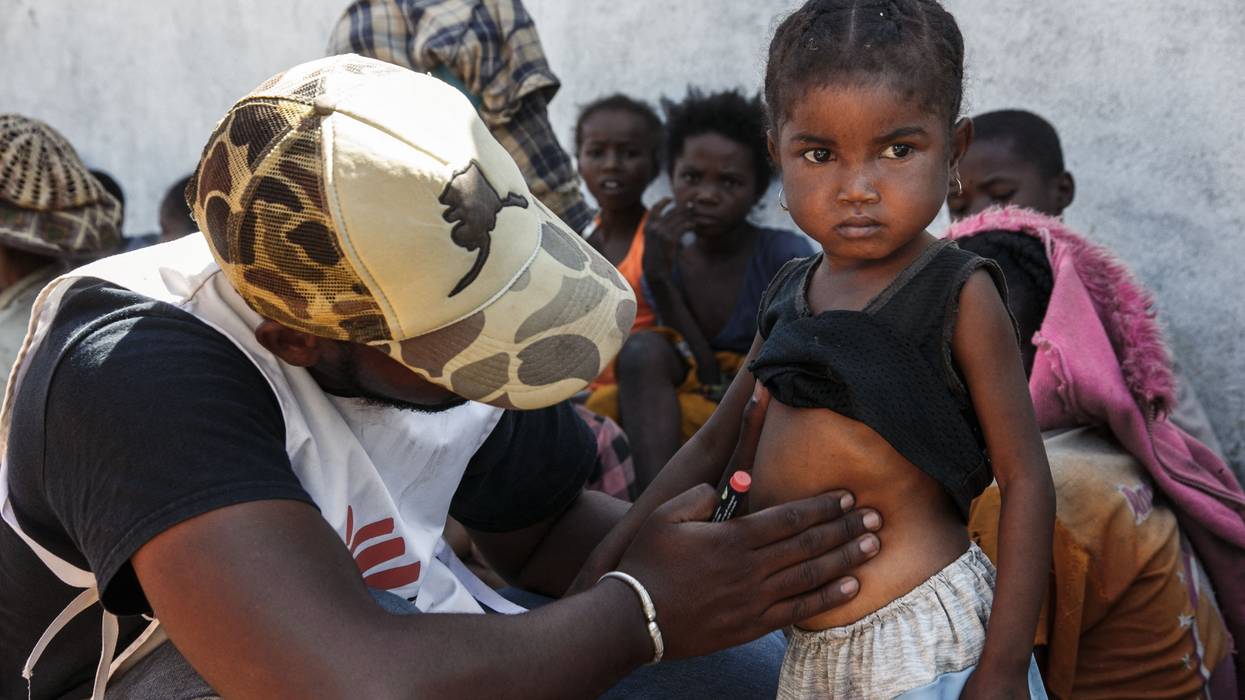
"It will be patients who will pay the ultimate price," said one global health advocate.
The US Congress has pushed back against President Donald Trump's efforts to slash foreign aid, which has long been supported by Democrats and Republicans alike—but a new report on more than a dozen Memoranda of Understanding that the White House has reached with countries that have long relied heavily on healthcare assistance shows that the administration is underspending "congressionally appropriated global health funds by potentially billions of dollars," as it pushes its "America First Global Health Strategy."
That's according to Public Citizen, which on Sunday joined Partners In Health in releasing an analysis of documents that the two nonprofits obtained after suing the Trump administration and filing a Freedom of Information Act (FOIA) request.
The groups reviewed the MOUs that have been signed for 18 out of 34 countries whose agreements have been negotiated by the US State Department, including Rwanda, Liberia, Burundi, and Madagascar.
Although Congress has voted to keep foreign aid levels relatively constant—rejecting a budget that called to slash global health spending by $6.2 billion before approving one that proposed a $615 million decrease in spending—the report finds that the MOUs cut foreign health aid by about $2 billion by 2030, compared to 2024 levels.
“These documents suggest that the Trump administration is on course to underspend on global health by billions of dollars compared to what Congress has ordered, risking lives and allowing diseases to spread,” said Peter Maybarduk, director of the Access to Medicines program at Public Citizen. “The administration must answer how and when it intends to invest the missing billions for health.”
Overall, funding for programs that aim to prevent the spread of diseases including HIV/AIDS, tuberculosis, and Ebola—which is currently spreading in the Democratic Republic of Congo's fastest-spreading outbreak on record—is set to be reduced by 59% from historical spending, according to the MOUs viewed by Public Citizen and Partners in Health.
Some countries would see their health assistance from the US plummet even more, with Rwanda's MOU stipulating a 97% reduction in US health aid. Liberia is set to receive 84% less funding for health initiatives by 2030, and Burundi is set to lose 78% of its aid.
"Partners In Health provides direct care in Rwanda, Liberia, and Sierra Leone, along with seven other countries, and expects under-spending of these funds to impact patients’ access to care," said Public Citizen.
The MOUs also demand that the countries meet strict co-financing requirements to make up for their lost funding, and governments in poor countries across Africa could face penalties "which could worsen funding cuts" if they miss the co-financing targets.
"The planned decreases in US funding are larger for several countries than the funding increases from partner governments," reads the report. "For more than half of countries (11 out of 18), co-financing commitments fall short of the US government’s cuts over five years compared to baseline US government funding."
Countries are likely to struggle to meet the co-financing requirements in the MOUs, warned Public Citizen and Partners In Health.
Malawi would be required to secure new healthcare funding equal to 56% of the country's total health expenditure, the report found. With Uganda also facing co-financing requirements from international health organizations including the Global Fund and Gavi, the East African country would be required to mobilize funds equal to 44% of its total health budget.
"These funding cuts will cause death and disease that is preventable,” said Vincent Lin, associate director of health policy and advocacy for Partners In Health. “The State Department is setting up other countries for failure with the co-financing requirements outlined in these agreements, but it will be patients who will pay the ultimate price.”
Maybarduk told The Washington Post that Sierra Leone will be required under its MOU to fill a 71% health funding gap by 2030.
“It’s going to be very difficult, and if a country like that falls behind, and then is punished for that, then of course the health problems compound," said Maybarduk.
The State Department denied to the Post that the Trump administration will not spend all the foreign health assistance funds appropriated by Congress; it suggested that more of the money than usual may go to religious organizations as well as an "innovation fund" to support US technology that aims to fight disease.
Last week, Public Citizen sued the Trump administration under FOIA to obtain the rest of the MOUs that remain hidden from the public.
The White House, said the group, "has kept the public in the dark about the full details of its plans for the future of US support for global health."
"The State Department has negotiated these bilateral agreements," the group said, "on rushed timelines with limited participation from civil society and affected communities."
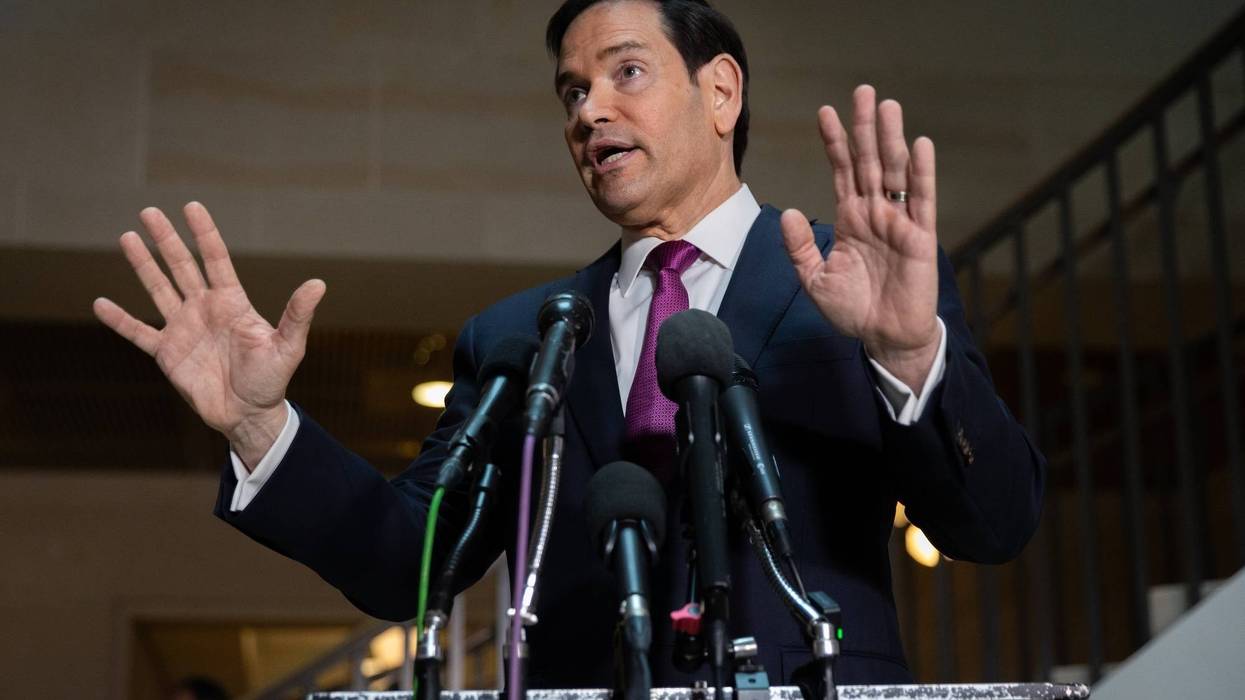
While Rubio has spent much of his political career fighting the Cuban regime, it is almost unbelievable that even he would lend his name to such a report filled with lies and threats against American citizens.
Marco Rubio's State Department has just issued a frightening 99-page report accusing many prominent liberal and progressive organizations and individuals of being agents of Cuban government intelligence.
The report claims that the liberal groups and individuals it names "have been involved in a disproportionate share of the total left-wing political activity in the United States over the past decade, organizing hundreds of protests and street actions, from anti-ICE clashes in Minnesota to the 'No Kings' demonstrations across the nation... At the same time, many of the network’s nodes have become fused with the Cuban influence infrastructure... modern Cuba plays a key role in supporting major foreign terror networks. At the same time, the regime continues to operate an extensive hard intelligence network in the United States, with significant penetration into sensitive civilian and military institutions on American territory."
Among those named in the report as de facto or de jure Cuban agents are Mayors Zohran Mandami and Karen Bass; Congresswoman Maxine Waters (D-Calif.); Ben & Jerry's founder Ben Cohen; liberal journalist Karen Goodman; the Democratic Socialists of America (DSA); The National Lawyers Guild; and organizers of Black Lives Matters, anti-ICE, and No Kings demonstrations.
Cuba, with a population of 10.9 million people which can barely keep electricity running or provide basic nutrition presents a danger of conquering the US?
The Report describes DSA as "a mass membership organization operating openly in American electoral politics, with chapters across the country, a growing bench of elected officials, and real influence inside the Democratic Party coalition. The DSA has built a national infrastructure dedicated to moving extreme-left politics from the margins into the mainstream—and with it, a deep and abiding devotion to the Cuban regime."
It describes the National Lawyers Guild (NLG) as "one of the most persistently relevant—and insidious—organizations in Cuba’s US network. The association of extreme-left lawyers and radical street activists has played a key role in a disproportionate share of the far-left terror and violence that has plagued the United States from the 1960s up to today. Throughout its history, it has maintained intimate ties to Cuba and other communist regimes and has explicitly sought to advance the causes of the international far left, including by working to defend and facilitate terrorism and extremist violence."
It describe he NLG's mission as "manipulating and undermining the law to keep far-left terrorists and other violent 'revolutionaries' on the streets. Through its Mass Defense and Legal Observer programs, the NLG trains and deploys so-called 'legal observers'—easily recognizable in their distinctive neon-green hats or helmets at many of today’s notable left-wing demonstrations—to radical protests and 'direct actions.' In this capacity, Guild lawyers serve as an on-demand jailbreak force, capable of providing immediate support for arrested rioters and militants, mobilizing a network of bail funds and allied NGOs to secure their quick release... Today, the NLG is actively involved in radical anti-ICE street actions."
At a meeting last week about "far-left" extremism with 60 foreign government officials, Secretary of State Marco Rubio proclaimed, "The Cuban regime's sprawling intelligence and ideological networks helped build the far-left in our country and in our hemisphere... It remains inextricably linked to far-left groups and movements across and beyond the West."
The State Department Report concludes, "These various threads can only be understood through the prism of the Cuban regime’s ideological foundation, imbued by its founder with the singular goal of conquering the neighboring United States."
REALLY??? Cuba, with a population of 10.9 million people which can barely keep electricity running or provide basic nutrition presents a danger of conquering the US?
I must admit that, while Rubio has spent much of his political career fighting the Cuban regime, I find it almost unbelievable that even he would lend his name to such a report filled with lies and threats against American citizens. Is it part of a campaign to gain support for a US invasion to overthrow the Cuban government and attack all opponents as "communist agents"?
In response, ten US Congresspeople issued a statement denouncing the report as "an attack on Americans' constitutional rights to free speech and assembly. We denounce this administration's irresponsible attacks against civil society organizations, activists, journalists, labor leaders, Members of Congress, elected officials, and private individuals based on their advocacy for peaceful foreign policy and social justice at home."
"We stand firmly against this report and other efforts by the Trump administration to weaponize the federal government against dissent, which is a patriotic tradition."
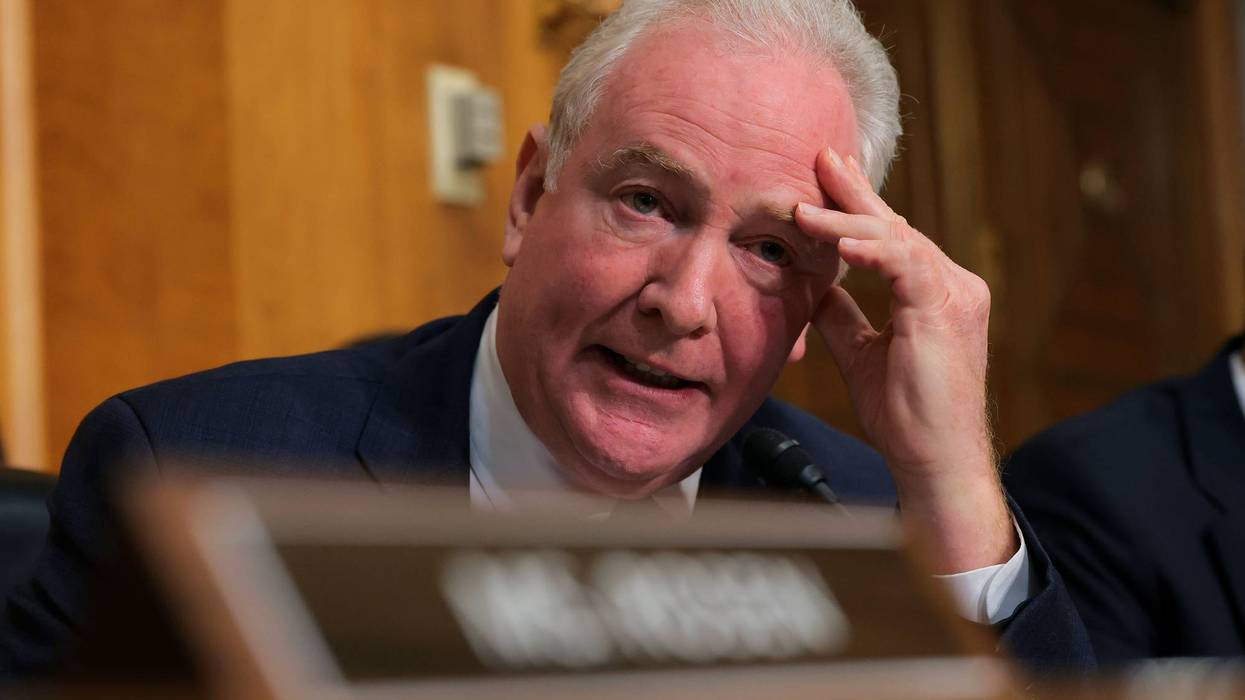
"The United States shouldn't just be talking about ending the slaughter in Sudan," the senator said. "We should actually be using our leverage."
After the US State Department warned earlier this week of imminent “atrocities” by Sudan’s Rapid Support Forces, Sen. Chris Van Hollen on Tuesday criticized the US Senate for missing a recent opportunity to cut off weapons to the United Arab Emirates, which has supplied the genocidal paramilitary group.
On Monday, the State Department warned that RSF forces were massing near the city of El-Obeid and could commit “mass atrocities” against civilians if allowed to take the city.
"The belligerents must uphold their obligations under international humanitarian law to protect civilians and ensure that those seeking safety can do so without fear or obstruction," the department said.
The statement echoed concerns expressed last week by a coalition of states at the United Nations Human Rights Council (UNHRC), which said that roughly 500,000 civilians, including more than 100,000 displaced people, could be at risk of violence if RSF escalated its assault.
UN human rights experts have said RSF's October offensive in Darfur bore the "hallmarks of genocide," with more than 6,000 people killed and numerous civilians tortured, raped, and starved during a three-day rampage across the city of El-Fasher.
But while Trump's State Department has sanctioned some entities accused of supplying fighters for the RSF, the Monday statement made no mention of the UAE, which rights groups point out is the group’s principal foreign backer.
A report issued last year by Van Hollen (D-Md.) and Rep. Sara Jacobs (D-Calif.) found that the UAE was continuing to provide weapons to the RSF despite telling the US that it was not.
Following previous failed attempts at pushing Congress to impose an arms embargo on Sudan through standalone legislation, Van Hollen attempted to do so again last week by tacking a pair of amendments onto the bipartisan PEACE in Sudan Act, which requires the State Department to assess designating armed Sudanese groups as terrorists and allows Trump to impose optional sanctions on foreign actors funding the war, but stopped short of introducing any hard leverage.
At a markup session for the Senate Foreign Relations Committee last week, Van Hollen introduced an amendment banning the US from selling or transferring military equipment to the UAE as long as it continues supporting the RSF. The amendment failed in a 15-7 vote, with four Democrats—Sens. Jeanne Shaheen (NH), Chris Coons (Del.), Tammy Duckworth (Ill.), and Jacky Rosen (Nev.)—joining every Republican on the committee, aside from Sen. Rand Paul (Ky.), in opposition.
A second amendment, which did not single out the UAE specifically but restricted arms sales to any country arming either side of the conflict, also failed 13-9, but received support from Shaheen and Rosen.
Coons said he'd have "enthusiastically" supported the amendment, but voted no because he believed it would "bring down" the broader Sudan bill in a GOP-controlled Senate. Duckworth did not explain her reasoning for voting no.
In light of the State Department's warning this week about RSF's march toward El-Obeid, Van Hollen told a Drop Site News reporter on Tuesday that he believed the no vote on his amendments "was a missed opportunity."
"The United States shouldn't just be talking about ending the slaughter in Sudan. We should actually be using our leverage," he said.
Noting that Trump likely would not support a restriction on arms to the UAE given his extensive financial entanglements with the Emiratis and his previous policy of fast-tracking weapons to the country without any strings attached, Van Hollen said his goal was simply to "keep the pressure on."
He said, "We need to keep showing the hypocrisy of the Trump administration policy, where they claim they want to do something but refuse to take some of the basic actions we can take as a country."
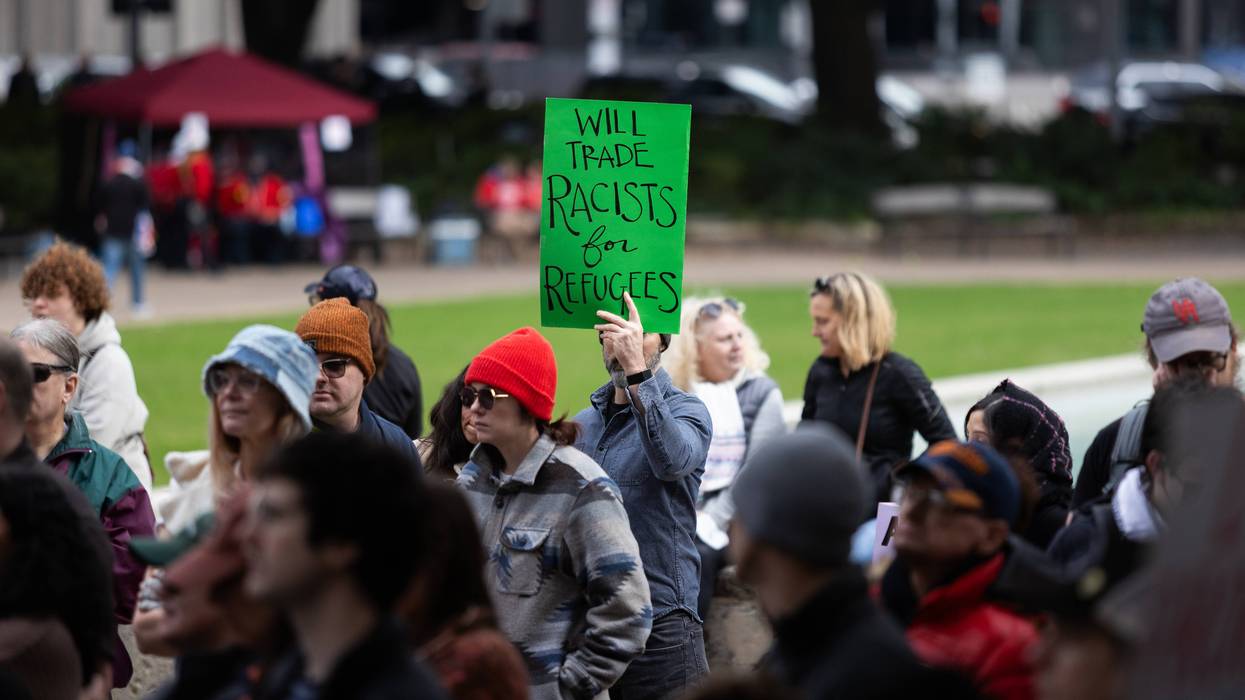
"This kind of quota system mirrors the kind of policies that white supremacist groups, including the Klan, pushed for 100 years ago."
Not a single refugee who isn't a white South African has been legally resettled in the United States since October, according to the State Department's most recent arrivals report.
The report, published last month, shows that from the start of October 2025 and the end of January 2026, just 1,651 people were admitted under the US Refugee Admissions Program (USRAP), which allows those fearing persecution based on race, religion, nationality, political opinion, or social group to apply for refuge in the United States.
Aside from just three, every single one of them was from South Africa.
Three Afghan refugees were also reported to have been settled in Colorado in November. But since then, their admission has been indefinitely suspended, and those who have entered may be at risk of deportation.
During that same period a year earlier—the final months of the Biden administration—a total of 37,596 refugees arrived in the US, with the greatest numbers coming from the Middle East, South Asia, and Africa.
The Trump administration dramatically curbed refugee admissions during its first year in power. On his first day back in office last January, President Donald Trump suspended USRAP processing, leaving around 600,000 people in the pipeline suddenly stranded, including roughly 10,000 who'd already booked flights.
Around 130,000 of those refugees had already been through the State Department's meticulous and taxing vetting process, and were instead "left to languish in refugee camps around the world after being given the promise of safety and a new life in America,” as a group of Democrats in Congress put it.
The next month, however, Trump carved out an exception to the suspension exclusively for white South Africans, who he has falsely claimed face a "genocide," and severe "discrimination" from land redistribution policies intended to correct extreme apartheid-era inequalities.
After previously discussing a cap of 40,000 refugee admissions for the fiscal year 2026---already a reduction by over two-thirds from the Biden administration---Trump announced on September 30 that he would lower admissions to just 7,500, a historic low.
He announced the change without consultation with Congress, which is required under the 1980 Refugee Act, leading Democrats to accuse him of acting in "open defiance of the law."
But in late February, Reuters reported on an internal State Department document showing that the administration was planning to welcome as many as 4,500 white South Africans to the US per month and detailed plans to install trailers on US Embassy property in the country to expedite more immigrant approvals.
All the while, refugees fleeing war, government oppression, and genocide in countries including Syria, Sudan, Ukraine, Afghanistan, and others have been locked out or face threats of arrest by the US Department of Homeland Security (DHS) under a new policy requiring them to be reinspected to determine their ability for “assimilation.”
Many critics have pointed out the dramatic gulf in treatment between white immigrants from South Africa and members of other, largely nonwhite groups of immigrants, whom it has undertaken extreme measures to remove from the country with expediency.
Last month, a Rohingya refugee, who fled genocide in Myanmar and legally entered the US as a refugee, was found dead on the streets of Buffalo, New York, after being detained and then left outdoors in the freezing cold by immigration agents.
The policy was revealed as part of a case in which a federal judge halted a DHS effort to detain thousands of refugees in Minnesota who did not seek green cards after their first year of residency in the United States.
"While the Trump administration is trying to convert warehouses at home into massive prisons to jail and deport immigrants swept up in its racist crackdown, it is also working to build trailers in Pretoria so it can rapidly increase the number of white South Africans," wrote Ja'han Jones in an opinion piece for MS NOW.
Likening it to the 1924 Immigration Act, which created strict ethnic quotas for entry into the US, Jones said: "It’s the kind of immigration policy the Ku Klux Klan dreamed of. Literally. This kind of quota system mirrors the kind of policies that white supremacist groups, including the Klan, pushed for 100 years ago."
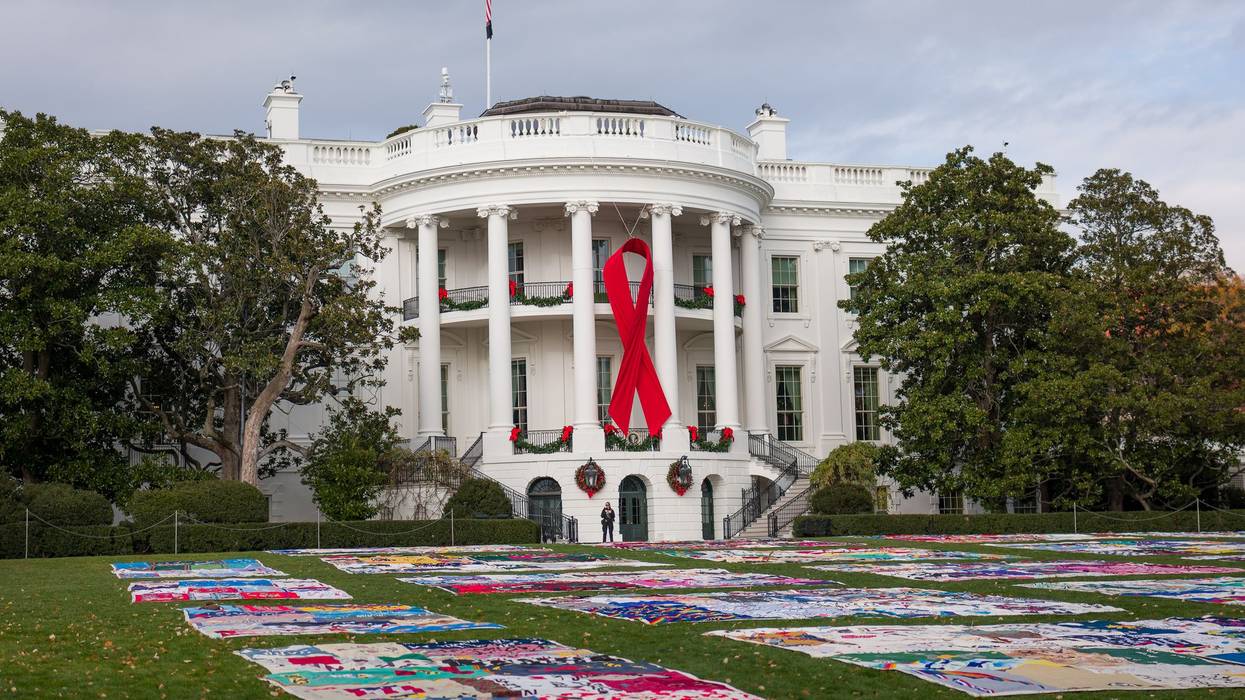
The move came on the heels of a report detailing how the Trump administration's foreign aid cuts set off a crisis in global AIDS response efforts.
The Trump administration drew outrage this week for ending formal US commemoration of World AIDS Day, directing US State Department officials to "refrain from publicly promoting" it through social media or other communication channels.
The decision was reported after the Joint United Nations Program on HIV and AIDS (UNAIDS) released an analysis detailing the harms done by the Trump administration's sweeping foreign assistance cuts.
Earlier this year, the Trump administration temporarily halted HIV-related funding, sending global response efforts into "crisis mode," USAID said. Though President Donald Trump ultimately dropped a proposal to slash hundreds of millions of dollars from the President’s Emergency Plan for AIDS Relief (PEPFAR), the administration's throttling of funds forced clinics to shut down and disrupted key community programs, the report states.
"The funding crisis has exposed the fragility of the progress we fought so hard to achieve,” said Winnie Byanyima, executive director of UNAIDS. “Behind every data point in this report are people—babies and children missed for HIV screening or early HIV diagnosis, young women cut off from prevention support, and communities suddenly left without services and care. We cannot abandon them. We must overcome this disruption and transform the AIDS response."
In its reporting on the Trump administration's decision to halt official commemoration of World AIDS Day, which is on December 1, the New York Times pointed to studies suggesting that "cuts by the United States and other countries could result in 10 million additional HIV infections, including one million among children, and three million additional deaths over the next five years."
Today, @realDonaldTrump gave a middle finger to the LGBTQ community. His deplorable cancellation of World AIDS Day commemoration was unconscionable and unforgivable. This action was fueled by raw bigotry and fealty to his Project 2025 masters.
FIGHT.https://t.co/PcyduBcbkI
— Truth Wins Out (@truthwinsout) November 26, 2025
Rep. Mark Pocan (D-Wis.), head of the Congressional HIV/AIDS Caucus, said in a statement that "silence is not neutrality; it is harm."
"I'm calling on the administration to immediately reverse this decision and recommit our fight against HIV/AIDS," he added.
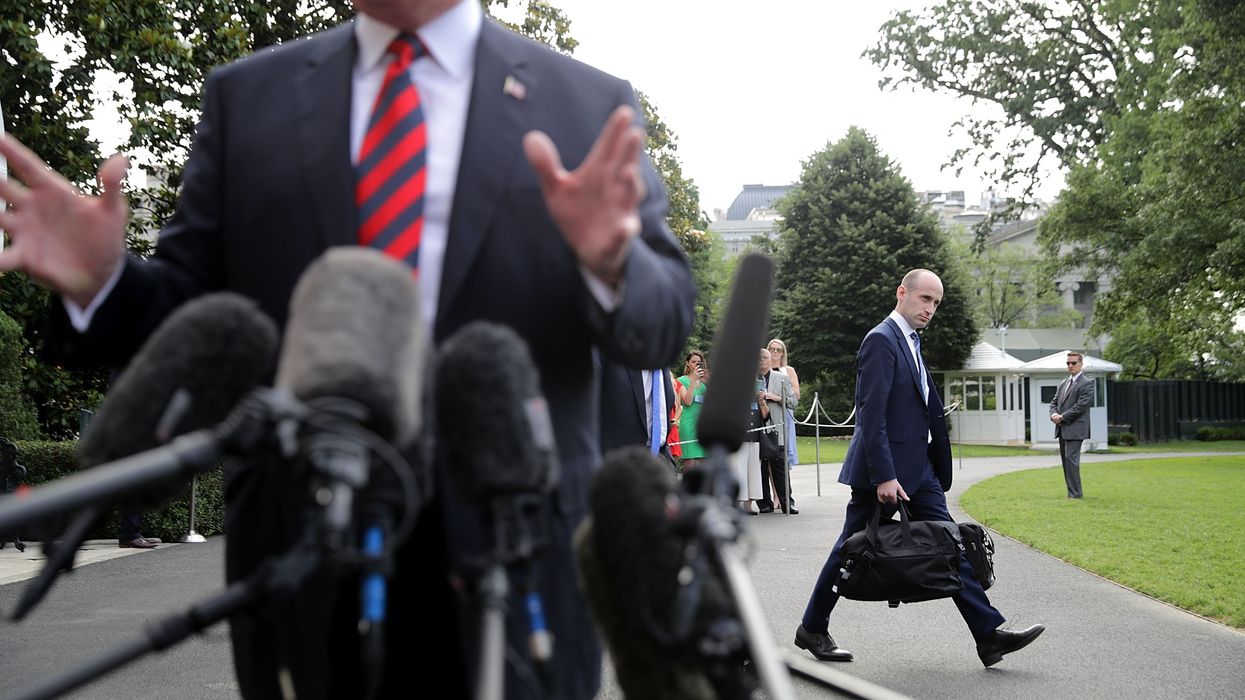
"For all intents and purposes, the most powerful person in the federal government is Stephen Miller," said one legal scholar.
The deputy chief of staff to President Donald Trump, Stephen Miller—who once reportedly advocated for the US to launch drone strikes against unarmed migrants—has played a leading role in the US’s campaign of extrajudicial airstrikes on Venezuelan boats in recent weeks.
As The Guardian reported Monday, Miller has been heavily involved in directing the strikes, at times superseding the role of Secretary of State Marco Rubio. These strikes have been orchestrated by the Homeland Security Council (HSC), which Miller leads as the president's homeland security adviser.
In a notable departure from previous administrations, Miller has turned HSC into an autonomous entity within the second Trump administration. During previous administrations, the HSC operated under the national security council umbrella and reported to the US national security adviser, who is also currently Rubio.
In recent weeks, Trump has carried out attacks on three boats in the Caribbean that the administration has alleged were carrying drugs. Legal experts from across the spectrum have contended that even if this were the case, such strikes—which have killed at least 17 people in total—are patently illegal.
The administration has provided no evidence to indicate that the people on these boats were smuggling drugs to the US. Meanwhile, one former senior law enforcement official with years of experience fighting cartels told the New York Times that the first boat struck in September—which killed 11 people—was more likely carrying migrants, since it is unusual for a drug smuggling operation to require so many people on board.
On Friday, it was reported that the US military was considering launching more strikes inside Venezuelan territory against alleged members and leaders of drug trafficking groups, as well as drug laboratories. Many commentators have said that such strikes would be an act of war and a potential prelude to a regime change operation.
That Miller is a driving force behind the boat attacks squares with previous reporting that, in 2018, while serving as one of Trump's top immigration advisers, Miller had allegedly advocated for the president to launch predator drones to blow up boats carrying unarmed migrants.
Those comments appeared in a book written by former Trump Department of Homeland Security official Miles Taylor, who said that Miller argued for the mass killing of civilians by suggesting that they were not protected under the US Constitution because they were in international waters. After it was initially reported by Rolling Stone in 2023, Miller denied having made the comment.
As The Guardian notes, "Miller’s role also opens a window into the dubious legal justification that has been advanced for the strikes." This rationale is centered around the Trump administration's designation of the Venezuelan gang Tren de Aragua as a "terrorist" organization, which Miller has also used to justify the unlawful deportation of Venezuelans under the 1798 Alien Enemies Act.
Miller has portrayed Venezuelan President Nicolás Maduro as the leader of the organization, suggesting—again with little evidence—that “it is not a government, it is a drug cartel, a narco-trafficking organization that is running Venezuela.”
As Common Dreams reported in May, a declassified memo showed that US intelligence agencies have rejected the Trump administration's claim that Tren de Aragua works with Maduro.
Miller's central role in the strikes carried out this past month is another sign of an outsized and growing role in the second Trump White House.
He has been a primary architect of Trump's "mass deportation" crusade, which has also involved carrying out extrajudicial deportations of Venezuelan nationals accused of membership in Tren de Aragua, often with little to no evidence.
In June, following a directive from Miller to reach a "quota" of 3,000 immigration arrests per day, Immigration and Customs Enforcement has overwhelmingly targeted undocumented immigrants without criminal convictions.
Miller is also leading the White House's efforts to label left-wing organizations in the US as "terrorist organizations" in the aftermath of the assassination of conservative activist Charlie Kirk as part of efforts to "dismantle" the president's opposition.
Following the news of Miller's intimate involvement in the Venezuelan boat strikes, American Immigration Council senior fellow Aaron Reichlin-Melnick commented that, "For all intents and purposes, the most powerful person in the federal government is Stephen Miller, not Trump."
"He is dictating military strikes, overriding cabinet secretaries, running mass deportation, and more," he said, "all while Trump golfs and occasionally signs executive orders he hasn’t read.”
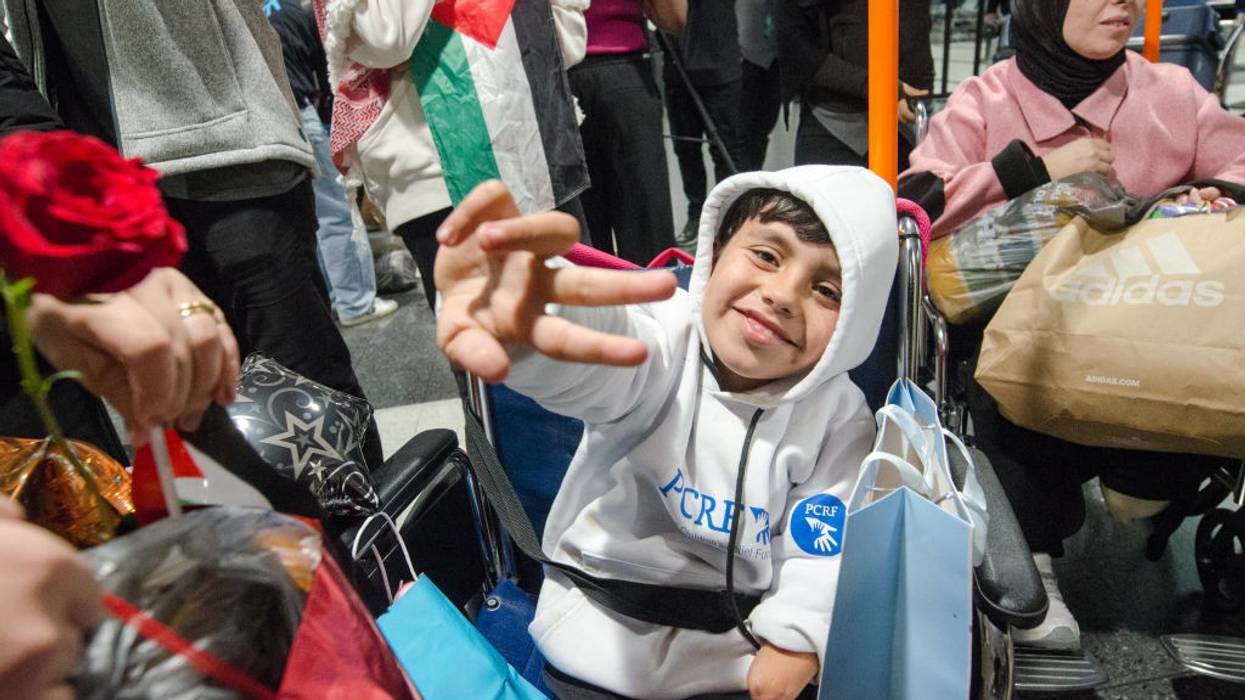
This is Muslim Ban 2.0: treating every Palestinian from Gaza as a threat, as if even wounded children were anything other than victims of Israeli genocide.
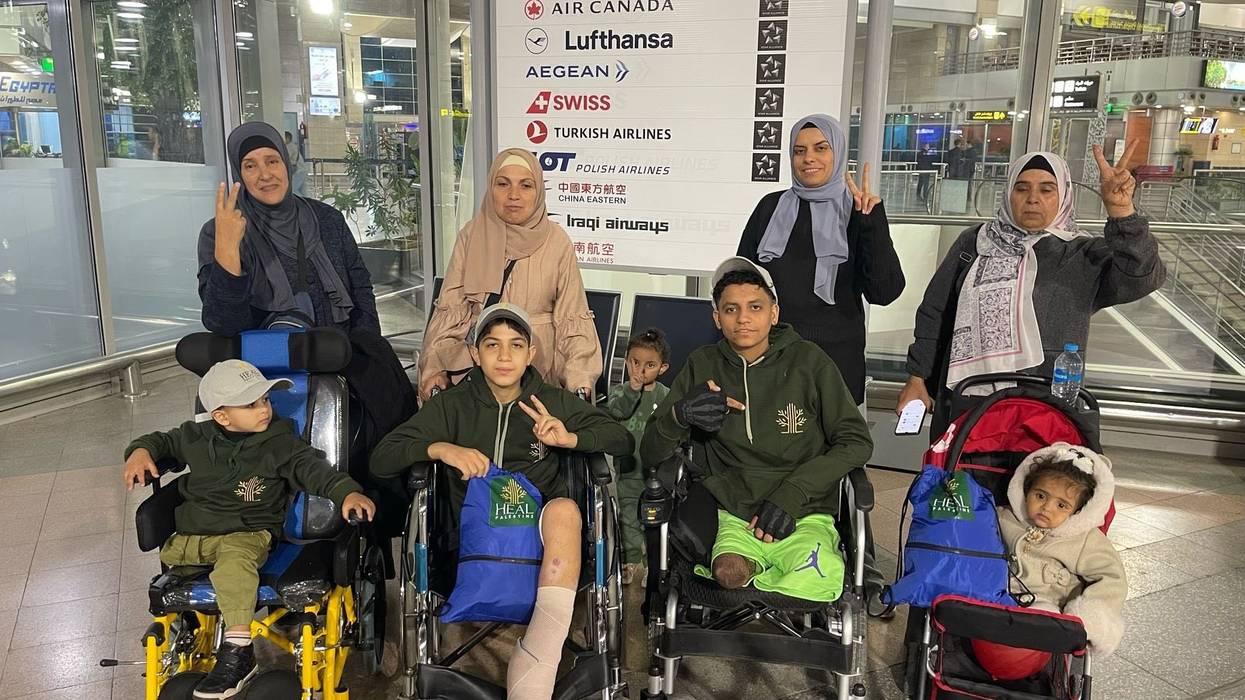
Farah doesn’t know me. I was just one of 100 people who gathered at San Francisco International Airport when she arrived last year. I work for the Council on American-Islamic Relations, and we had invited the media to cover her story. HEAL Palestine, a humanitarian nonprofit, had arranged for her medical treatment in the Bay Area after she lost her eye and leg in an Israeli bombing in Gaza.
Now, the State Department has announced it is blocking new visas for Palestinians from Gaza. On X, the department stated: “All visitor visas for individuals from Gaza are being stopped while we conduct a full and thorough review of the process and procedures used to issue a small number of temporary medical-humanitarian visas in recent days.”
In plain terms, this means slamming the door on children like Farah and others I’ve seen arrive in the Bay Area. Ahmed came through San Francisco carrying his own war injuries and trauma, clinging to the hope that here, at least, he could heal. Just weeks ago, three more children made it through: Layan, 14, burned and struck by shrapnel when her school was bombed. Anas, 8, who lost his father in an airstrike that crushed his leg. Ghazal, 6, wounded when an Israeli bomb exploded while her family was displaced in Rafah.
These are the children that Laura Loomer and Rep. Randy Fine (R-Fla.) call “terrorists.” Loomer posted videos of some of the most recent arrivals and demanded that the State Department ban entry to “Islamic invaders.” That’s not just cruelty—it’s Islamophobia, plain and simple.
The same government that funds and arms Israel’s bombardment of Gaza is now moving to stop even the few wounded children who might otherwise reach safety and care.
And it worked. The State Department’s move to stop visas for Gazans echoes the same fearmongering behind US President Donald Trump’s Muslim Ban. This is Muslim Ban 2.0: treating every Palestinian from Gaza as a threat, as if even wounded children were anything other than victims of Israeli genocide.
That is what dehumanization looks like: You stop seeing children as children. You don’t see the burns on their skin, the missing limbs, the trauma etched into their faces. You don’t see the mothers and fathers carrying them through bombed-out streets, desperate just to keep them alive.
The same government that funds and arms Israel’s bombardment of Gaza is now moving to stop even the few wounded children who might otherwise reach safety and care. The cruelty is staggering.
When Layan, Anas, and Ghazal arrived at the San Francisco airport, I saw Farah again—this time with her prosthetic eye and leg. She cried as she welcomed the newcomers.
These children are our shared responsibility, and to deny that is to deny our own humanity. James Baldwin understood this truth when he wrote: “The children are always ours, every single one of them, all over the globe; and I am beginning to suspect that whoever is incapable of recognizing this may be incapable of morality.”
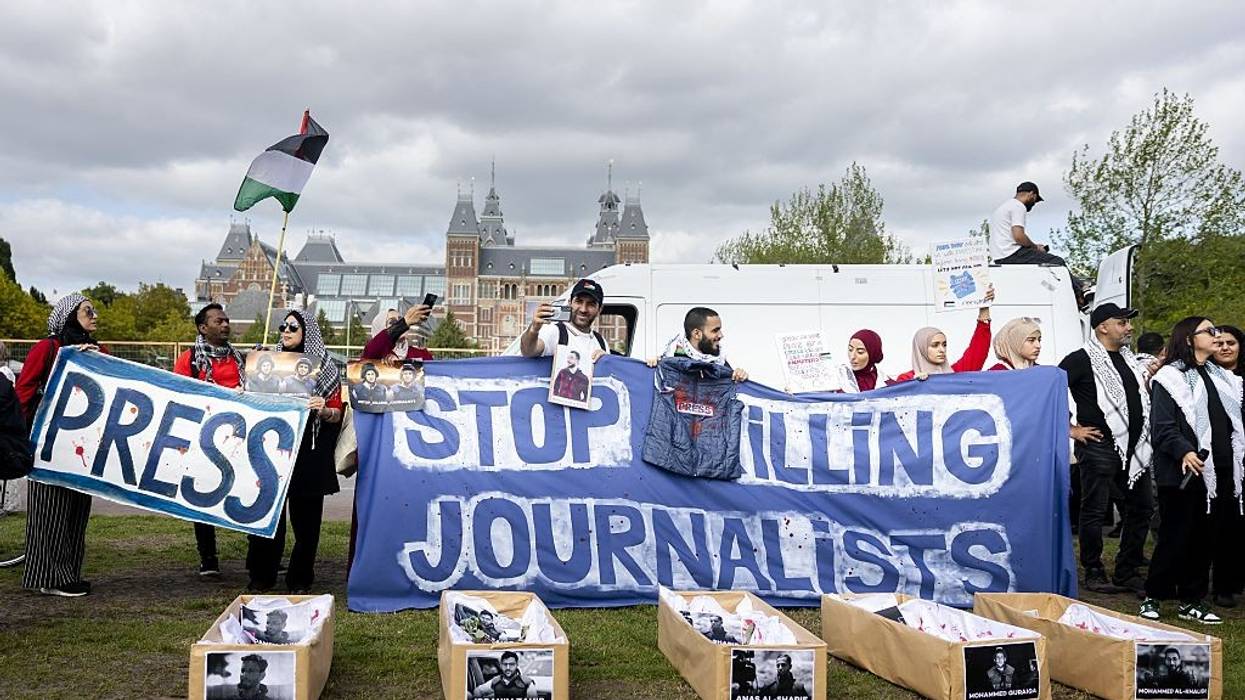
"There really are no words left for the debasement of US policy in supporting, arming, enabling, and justifying Israel's genocide and ethnic cleansing."
Human rights advocates and critics of the Trump administration are denouncing the US State Department's firing of a top media relations official who reportedly recommended "expressing condolences" for journalists killed by Israeli forces in Gaza and drafted a statement articulating US government opposition to what amounts to ethnic cleansing in the besieged enclave.
According to the Washington Post, Shahed Ghoreishi, the department's lead press officer on Israeli-Palestinian affairs, was fired Monday after a series of internal debates over how to characterize aspects of White House policy regarding Gaza, including over the release of a statement which simply said: "We do not support forced displacement of Palestinians in Gaza."
The Post's reporting, based on unnamed officials familiar with the situation as well as documents the newspaper reviewed, also included comments from Ghoreishi:
Ghoreishi told The Post he was not given an explanation for his firing, which the State Department was not required to provide due to his status as a contractor. He said the incident raised troubling questions about the department's position on the potential expulsion of Palestinians from Gaza.
"Despite a strong reputation and close working relationship with many of my colleagues, I was unable to survive these disputes," he said, noting the language he recommended for the media statement had been previously cleared by the State Department since Trump took office on Jan. 20.
A separate recent dispute was over the targeted assassination by Israel of Al-Jazeera journalist Anas al-Sharif earlier this month, killed by a missile strike alongside four other journalists: correspondent Mohammed Qreiqeh; photojournalists Ibrahim Al Thaher and Moamen Aliwa; and Mohammed Noufal, an Al-Jazeera staff member.
The Israeli military has claimed, without providing evidence, that al-Sharif was a Hamas soldier, but Al-Jazeera and others who know his work have repeatedly denounced that assertion as a baseless lie intended only to discredit the award-winning journalist who reported relentlessly from the frontlines of the horrors taking place in Gaza, including broadcasting reports of starving children to the world over recent months. Notably, the other journalists killed in the attack were not accused of being Hamas members.
When Ghoreishi drafted a statement that included the phrase, "We mourn the loss of journalists and express condolences to their families," higher-ups in the department told him that no such comment was needed.
"If you needed more evidence [President Donald] Trump has totally contracted out US policy in the Middle East to Netanyahu, look no further," said Sen. Chris Van Holen (D-Md.). "It's now apparently a fireable offense to say America opposes forced displacement of Palestinian civilians and regrets the killings of journalists. Shameful."
Progressive critics, like veteran labor organizer Chuck Idelson, said the firing speaks volumes about the administration overall under President Donald Trump and the US State Department under Secretary of State Marco Rubio.
"There really are no words left for the debasement of US policy in supporting, arming, enabling and justifying Israel’s genocide and ethnic cleansing," said Idelson in a social media post responding to the reporting. "It rivals every past horror in US policy, no wonder Trump wants to whitewash our nation’s history as he recreates every crime."
Arif Rafiq, an editor and frequent writer on foreign affairs, wrote: "There's never been so extensive a purge of Americans from public life for criticizing a foreign government."
Named as a key figure in the disputes that led to Ghoreishi's firing was David Milstein, a senior adviser to Mike Huckabee, the US ambassador to Israel.
The Post reports, citing unnammed officials they spoke with on the matter, that Milstein is viewed as someone "overly eager to please Israeli officials and frequently involves himself in matters that are beyond the scope of his responsibilities."
As one official put it: "Milstein is an adviser to an ambassador. That's it, yet he has his hands in everything."
"This goes far beyond 'wrong side of history,'" said journalist Ryan Grim.
The US State Department announced Saturday that it would halt the issuing of visas to children from Gaza in urgent need of medical care.
The decision came after a frenzied campaign by the racist online provocateur and close Trump confidante Laura Loomer, who raged over the weekend about the arrival of badly injured Palestinian children in Houston and San Francisco earlier this month.
The arrival of these children had been arranged by the US nonprofit group HEAL Palestine, which has helped at least 63 children "receive lifesaving surgeries, prosthetics, and rehabilitative care in the US."
In what she claimed was an "exclusive" report, Loomer—who has described herself as a "Proud Islamophobe," and as "pro-white nationalism"—shared a video posted by HEAL Palestine of children on crutches and wheelchairs arriving with their families at a US airport.
She falsely claimed that the children's shouts of joy were "jihadi chants" and that they were "doing the HAMAS terror whistle" and referred to the children as "Islamic invaders from an Islamic terror hot zone."
Loomer tagged Secretary of State Marco Rubio and the State Department in another post: "How did Palestinians get Visas under the Trump administration to get into the United States? Did @StateDept approve this? How did they get out of Gaza? Is @SecRubio aware of this?"
The day after Loomer's tirade began, the State Department announced that "all visitor visas for individuals from Gaza are being stopped while we conduct a full and thorough review of the process and procedures used to issue a small number of temporary medical-humanitarian visas in recent days."
HEAL Palestine issued a statement Sunday saying it was "distressed" by the State Department's decision. Contrary to claims by Loomer that the children would become "like leeches on welfare," HEAL clarified that the children in the country were here "on temporary visas for essential medical treatment not available at home."
"After their treatment is complete," the organization said, "the children and any accompanying family members return to the Middle East."
Rhana Natour, the director and producer of All That Remains—a documentary for Al Jazeera's Fault Lines on a 13-year-old Palestinian girl who traveled to the US to receive treatment after losing her leg in an Israeli airstrike—told Drop Site News that the humanitarian visas canceled by the State Department are granted "exclusively to burned and disabled children and their parents."
(Video: Al Jazeera English)
Loomer took credit for the department's cancellation of the visas, thanking Rubio and calling it "fantastic news."
"Hopefully, all GAZANS will be added to President Trump's travel ban," Loomer wrote. "There are doctors in other countries. The US is not the world's hospital!"
In response, the X account for Drop Site, which has frequently highlighted the work of HEAL Palestine, responded to Loomer, saying that "Your taxes aren't funding the care for these Palestinian children," and that their treatment was being funded entirely through private support from donors.
"The only role of US tax dollars in the picture," Drop Site said, "is the costly review the State Department will now be forced to conduct because of a deranged racist's ravings to block children from lifesaving treatment."
Loomer later suggested that the wounded Palestinian children were being treated "for free," at the expense of US taxpayers, while "US Veterans are homeless on the street, unable to get healthcare."
Journalist Ryan Grim, Drop Site's co-founder, responded: "Trump slashed Medicaid, slashed the [Department of Veterans Affairs], slashed [Affordable Care Act] exchange subsidies, and increased the military budget to over a trillion dollars but Loomer wants people to think that the reason they don't have healthcare is that a Palestinian child got treated thanks to donations from people heartbroken at what Israel is doing to children."
"The trillion dollars being spent to blow the arms and legs off of children is the problem," Grim continued. "Not the children themselves."
In July, the UN Children's Fund (UNICEF) reported that since October 2023, at least 17,000 children have been killed and 33,000 injured across Gaza, many of them attacked by Israeli forces "as they [lined] up for lifesaving humanitarian aid."
The UN reported Friday that "10 children were losing one or both legs every day," making Gaza "home to the largest group of child amputees in modern history."
Despite having no formal position, Loomer is one of the most influential figures in the Trump administration—reportedly having spearheaded the hiring and firing of aides for key roles, including in the National Security Council.
Loomer has said that the US is a "Judeo-Christian ethnostate" being "destroyed" by immigration, and—following the opening of Trump's immigrant detention camp "Alligator Alcatraz"—joked that the "alligators are guaranteed at least 65 million meals," a number referring to the total population of Latinos in the United States.
Following news of the State Department's decision to cancel visas for injured Palestinians, Grim wrote that it "looks like [Loomer] is also setting visa policy."
"So we want to arm Israel to the teeth, allow them to block food and medical aid from getting into Gaza, and also condemn those facing medical emergencies to death," he said. "This goes far beyond 'wrong side of history.'"
"Bolsonaro and Donald Trump are plotting a coup against Brazil," said a Brazilian geopolitics scholar.
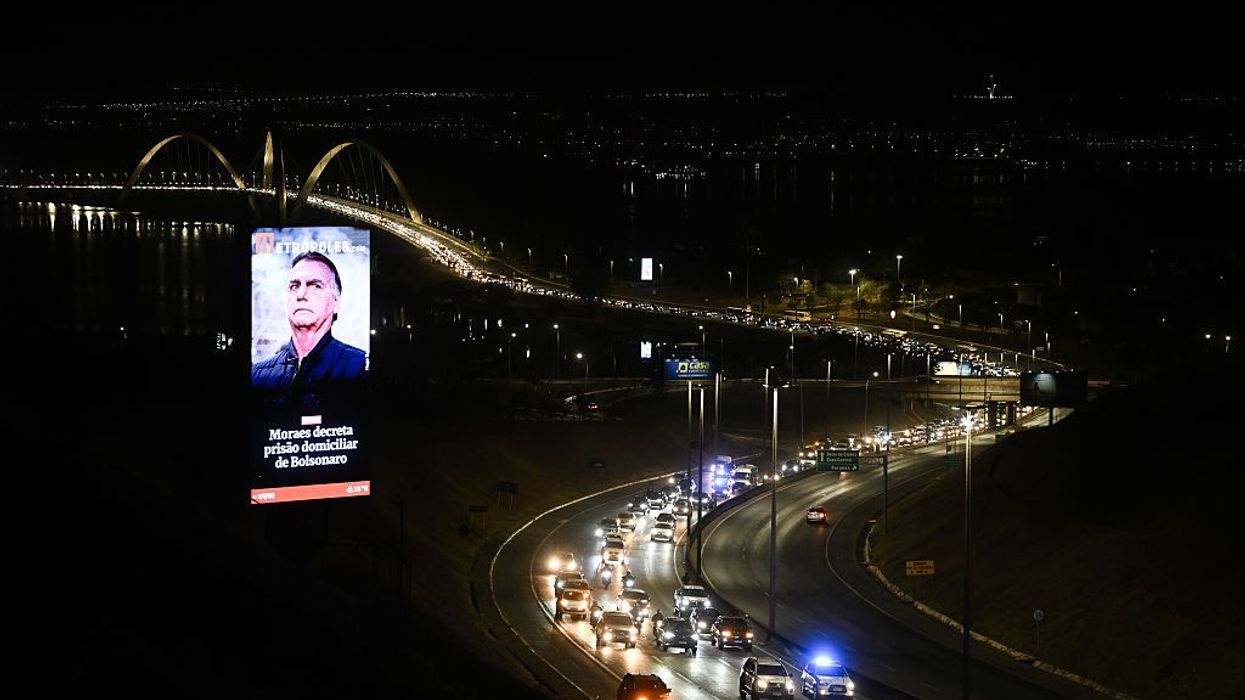
Brazil's Supreme Court placed far-right former President Jair Bolsonaro under house arrest Monday in anticipation of his trial for allegedly attempting a coup following his loss in the 2022 election.
The order has heightened the current government's already simmering tensions with U.S. President Donald Trump, who has imposed high tariffs on some Brazilian imports over what he calls a "witch hunt" against his ally.
Bolsonaro's house arrest was ordered by Justice Alexandre de Moraes, who says the former president had violated restrictions imposed last month banning him from using social media, which he'd been using to rile up supporters to attack the Supreme Court.
The justice said Bolsonaro had used the accounts of allies, including his politician sons, to send "clear encouragement and incitement to attack the Supreme Federal Court, and overt support for foreign intervention in Brazil's judiciary."
The Associated Press reports that Bolsonaro had his phones seized from his Brasilia residence.
Trump slapped Moraes, who is presiding over Bolsonaro's trial, with Magnitsky sanctions—typically reserved for major human rights abusers—last week, which supporters of Brazil's left-wing president Luiz Inácio Lula da Silva called "a direct attack on Brazilian democracy."
Brazilian journalist Brian Mier says Bolsonaro has been emboldened by Trump's support to defy Moraes' orders, assuming that threats from the U.S. would cause the judge "to back down."
"It backfired," Mier said.
The U.S. State Department's Bureau of Western Hemisphere Affairs issued a furious condemnation of Bolsonaro's arrest, promising to "hold accountable all those aiding and abetting sanctioned conduct."
The department hinted that it may place more sanctions on other members of the Supreme Court.
Maria do Rosário, a federal deputy for Lula's Workers' Party (PT), hit back in a post on X.
"With what authority does this attempt to interfere in Brazil's judiciary power, and the threat to Brazilian authorities and citizens persist?" she asked. "None."
The charges against Bolsonaro, often called the "Trump of the tropics," bear a striking resemblance to those leveled against the U.S. president following his 2020 election loss.
Like Trump, Bolsonaro flagrantly spread false claims that his election loss was the result of rampant fraud, which prompted a mob of supporters to attack the legislature in hopes of overturning the "stolen" election.
Brazilian state police have accused Bolsonaro of going even further—allegedly enlisting military officers in a plot to assassinate Lula and forcibly retake power.
Trump has nevertheless drawn parallels between his own legal struggles and those faced by Bolsonaro.
"This is nothing more, or less, than an attack on a Political Opponent – Something I know much about! It happened to me, times 10," Trump wrote last month on Truth Social.
Vinicios Betiol, a geopolitics scholar from the University of Rio de Janeiro, says that "Bolsonaro and Donald Trump are plotting a coup against Brazil."
While he said the arrest of Bolsonaro is worth celebrating, he cautioned that provoking the Supreme Court was part of his strategy "to fuel the narrative of persecution" and whip up civil unrest among his supporters.
"Radical Bolsonarists," he said, "are already talking about blocking roads, toppling power towers, and attacking the [Supreme Court]."
Video: Terra Brasil
Following the announcement of Bolsonaro's arrest, supporters of the former president flooded the streets and drove around the capital Brasilia, with some chanting, "Brazil will stop."
Many of Bolsonaro's supporters view Trump as a key cog in the effort to shield Bolsonaro from prosecution. As The Guardian reports:
On Monday night, hundreds of followers flocked to the gates of Bolsonaro's upmarket condominium to vent their anger, some carrying U.S. flags.
"We want Trump to help us," said one protester, Ricardo, who wore a red MAGA cap and declined to give his second name as he stood outside Bolsonaro's compound holding up a star-spangled banner. "Our solution can no longer come from within [Brazil]. It has to come from abroad. The sanctions are working. More people need to be hit with Magnitsky."
"They know that Bolsonaro will be convicted and have thus gone all-in," Betiol said. "They are willing to cause civil unrest, force the [Supreme Court] to act, and then seek a coup with Trump's help."
"We must indeed celebrate Bolsonaro's arrest," he continued, "but we cannot lower our guard at this decisive moment in our country's history."