

SUBSCRIBE TO OUR FREE NEWSLETTER
Daily news & progressive opinion—funded by the people, not the corporations—delivered straight to your inbox.
5
#000000
#FFFFFF
To donate by check, phone, or other method, see our More Ways to Give page.
Daily news & progressive opinion—funded by the people, not the corporations—delivered straight to your inbox.
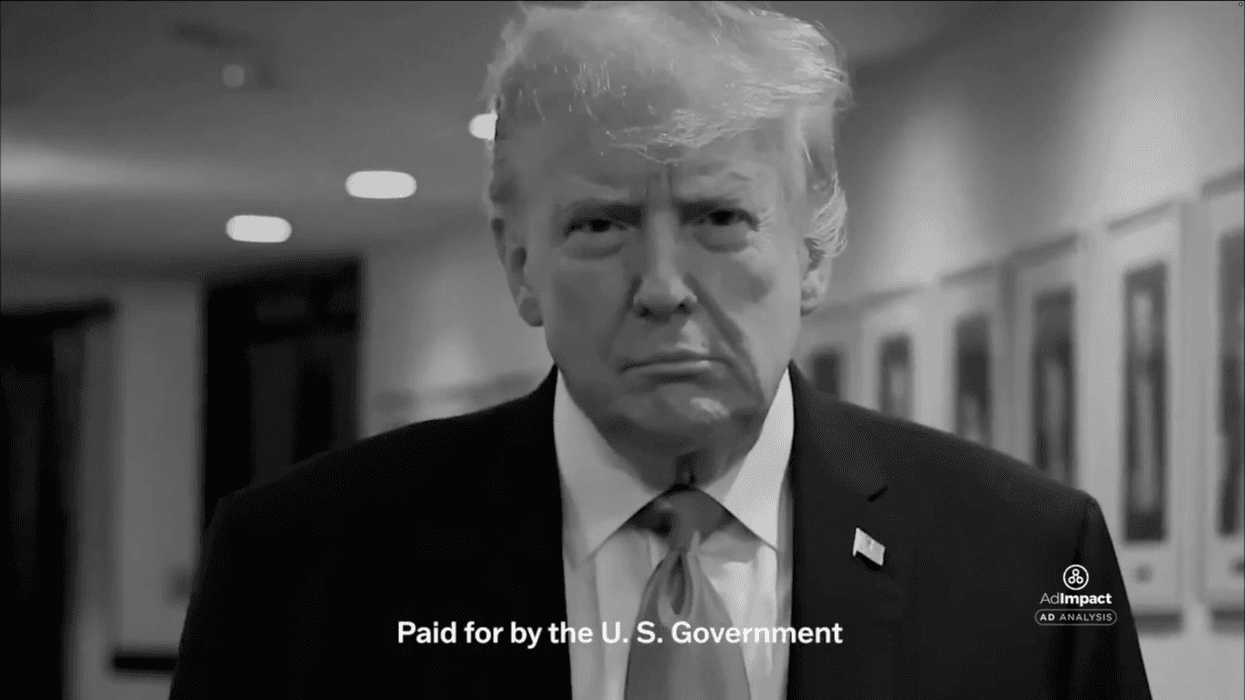
"So your hosts are on air all day saying this is illegal while you are taking the money and running the ads? Just gross," said one MS NOW critic.
CNN and MS NOW are both airing taxpayer-funded ads that promote President Donald Trump, who last month tried to ban the cable news networks from White House grounds.
As The Washington Post reported on Wednesday, two pro-Trump ads have aired on MS NOW and CNN this week in select markets, even though legal experts and government watchdogs say the ads violate laws prohibiting taxpayer funds for political propaganda.
In a statement provided to the Post, MS NOW spokesperson Richard Hudock defended the decision to run the ads.
"We know the size, engagement, and influence of the MS NOW audience, and apparently the White House does, too," said Hudock. "The decision to spend taxpayer dollars to reach our audience speaks for itself."
The MS NOW spokesperson also emphasized that "accepting an advertisement is not an endorsement of its message, and purchasing airtime will never purchase favorable coverage."
This justification drew an angry rebuke from Ron Filipkowski, editor-in-chief of MeidasTouch.
"This is just despicable by MS NOW, which has accepted stolen taxpayers dollars for 38 illegal ads," Filipkowski wrote in a Thursday social media post. "Give me a break with this bullshit statement too. So your hosts are on air all day saying this is illegal while you are taking the money and running the ads? Just gross."
According to a Wednesday report from Status, some MS NOW insiders are "pissed" about the decision to air the Trump ads, with some noting that the network's viewers will "hate" seeing them.
Government watchdog Public Citizen on Tuesday filed complaints with the Federal Communications Commission (FCC) and the Federal Trade Commission (FTC) demanding that the government-funded Trump ads be taken off the air.
However, Trump-appointed Trump FCC Chairman Brendan Carr told reporters on Wednesday that he is not planning any investigation into the ads, which he described as "public service announcements" despite the fact that they feature audio of the president personally vowing to "defeat communism, socialism, and Marxism in America."
"I don’t think there’s anything unique or different about it," said Carr. "There’s nothing in there that strikes me that merit any sort of FCC review."
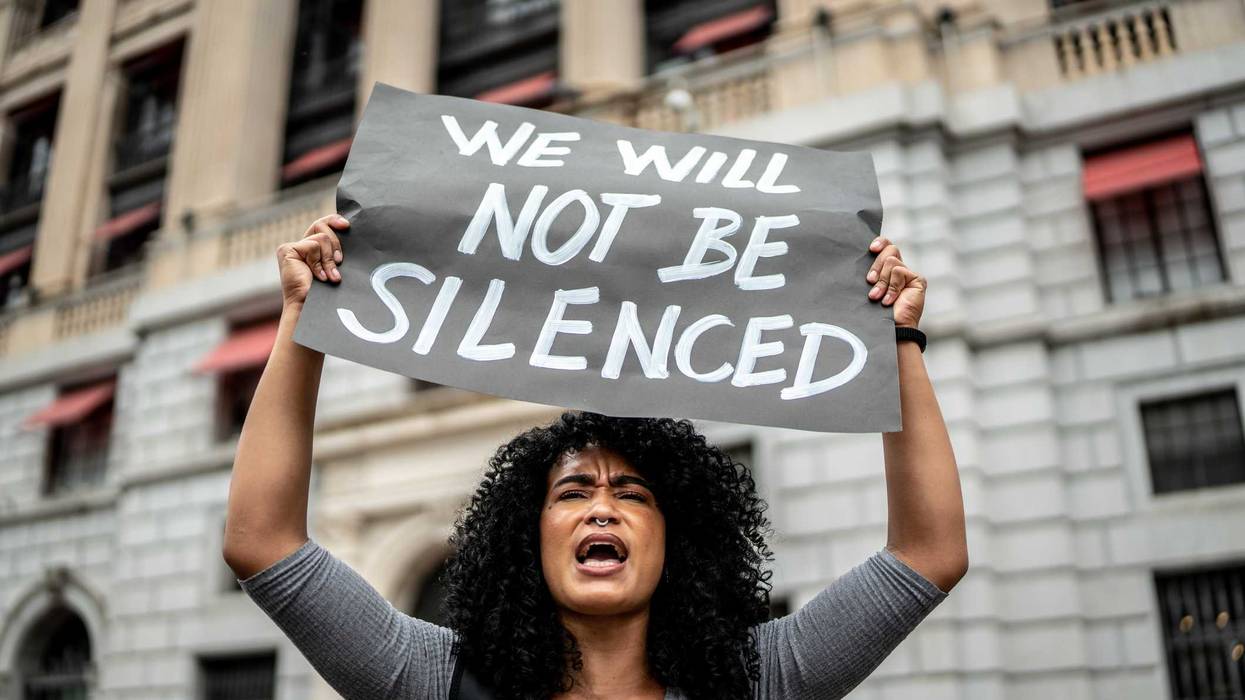
The moment is urgent. If we don't speak up and rise up now, we may not get another chance.
This is a threshold moment, this stifling of Jimmy Kimmel. It’s the last laugh before the silence.
The attack on him is something everyone can understand.
People didn’t know what it meant that Trump was getting billions for his bitcoin company or a jet airplane in exchange for essentially giving favors to other countries. They didn’t understand how inappropriate, illegal, and unconstitutional that is unless they understand the word “emoluments,” and few do; they didn’t get it.
His hustling Teslas from the White House in violation of the Hatch act (that would put a normal person in jail for two years) didn’t seem a big deal to most Americans because they’d never seen it before.
They had no idea how bad it was. Only former presidents and people who’d read the Constitution and the law knew.
And that’s a very small percentage of people. Meaningless.
So along comes Jimmy Kimmel, who everybody knows. He’s even more popular than Stephen Colbert, or at least at that level. Everybody knows who he is. And Trump takes aim at him for things he said — his First Amendment-protected free speech — and is explicit and public about it.
Then comes his toady FCC Chairman Brendan Carr — the guy who wrote the part of Project 2025 about how the FCC should be run — threatening to go after the licenses of stations that are trying to merge with Nextstar for what may well be a billion dollar payout for everybody involved.
They’re referencing a comment Kimmel made about Kirk‘s killer as an excuse for censoring him, but that doesn’t make any sense. It’s apparently really because Donald Trump is offended by comedians making fun of him. You can’t make fun of the Dear Leader in Russia, Hungary, Turkey, China, Saudi Arabia, North Korea, or any other country where the men Trump admires rule.
And Kimmel was relentless in making fun of Trump.
Here’s what Carr — a government regulator — said, doing his best imitation of a mafia bone-breaker:
“This is a very, very serious issue right now for Disney. We can do this the easy way or the hard way. … These companies can find ways to take action on Kimmel, or there is going to be additional work for the FCC ahead.”
The station owners freaked out, because some may get even richer through the merger with TV giant billionaire-owned Nextstar (ABC), and threatened to take Kimmel off their stations. The merger would’ve been profitable for the people at Nextstar (ABC), as well.
And that merger requires Carr’s approval because it requires breaking or changing the anti-monopoly rules that forbid any company to own stations that reach more than 39% of Americans.
So, here’s how it looks to the average person: Trump and Carr threatened the Nextstar (ABC) deal if they didn’t shut up Kimmel, and the company (CBS) said, “OK,” and took him off the air “indefinitely.”
And everybody gets it. It’s not anywhere near as complicated as shady cryptocurrency deals or golf courses or Trump Towers in foreign lands.
This is a classic example of how mob-like corruption works; we’ve all seen it in movies like The Godfather or shows like The Sopranos. We don’t need law or business degrees. We have TVs.
The average person totally gets where Trump’s leverage is and why he’s using it to shut up people who irritate him; this is relatable to the life of anybody who’s ever been bullied or shaken down.
“Nice little TV network you’ve got there, we’d hate to see something happen to it.”
They get how bad the crime is. And it’s all happening to a guy — Jimmy Kimmel — who everybody knows and most people like!
Remember when Mark Twain said, “Never pick a fight with people who buy ink by the barrel”? This is the same thing: “Never pick a fight with a popular figure who can created a press conference with a quip.” It’s why Putin outlawed comedians (and puppets) who ridiculed him.
The reason we’re only now realizing that we’re at a pivotal moment in America is because most people didn’t know how to answer this question:
“How do you know when you’re really and truly no longer living in a democracy?”
How do you know when you’re definitely no longer living in a free nation?
Most people think it’s when the tanks are rolling down the streets, and, while people in Washington DC are seeing that right now, it’s not most people‘s lived experience. They haven’t confronted a tank, been asked for their papers, or been locked up in an ICE detention center.
But everybody knows Jimmy Kimmel. So the new understanding is:
“You know you don’t live in a free country any more when comedians can no longer criticize the president.”
That’s a criteria for the end of freedom that everybody understands.
Up until the last few days, most Americans didn’t think we’d lost our freedoms or are about to. Didn’t think that we’d become a tyranny or are on the verge, where the King will come against you no matter who you are, no matter what political party you vote for (just ask registered Republicans Comey, Milley, or Miller), or how obscure you may be (just ask the Columbia students).
Don’t get me wrong: many Americans, perhaps a majority, thought things were bad. They hated inflation and the joblessness going up and all that stuff from the tariffs and Trump’s erratic foreign policy and his constant sucking up to or deferring to Putin.
They didn’t like all their hard-earned tax dollars going into the pockets of the morbidly rich like Trump and his friends and the 13 billionaires in his cabinet. People in America generally realize that pretty much everything Trump has done is either for himself, the billionaire class, or to punish people of color and queer people. They’re generally unhappy about it and pretty much every metric of every study shows it.
But they didn’t realize that we had lost what makes this country great: our personal freedom of speech. Our ability to speak our minds. Our freedom to have multiple viewpoints, and multiple voices and news sources to listen to or watch.
But when this happened to Jimmy Kimmel, everybody suddenly understood. That’s why this is an earthquake moment for the United States.
If the Democrats fail to seize on this opportunity, they are completely incompetent. This has to be the number one issue going forward. Every American understands what it means to be told to, “Shut up!“
And no Americans like it. We didn’t like it as kids; we don’t like it as adults.
In fact, Trump‘s suppression of free speech is already starting, in a small way, to “hit the regular people.” Folks are getting fired, doxed, and even having their lives and homes threatened with violence for things they said online about Charlie Kirk and his shooter. We’re starting to bleed into that “civil war” bottom of the pyramid that I wrote about yesterday.
So, the moment is urgent.
Let your elected representatives know your thoughts on this. That Brendan Carr must go. That the president must stop talking like this. That Pam Bondi must stop talking like this. That they should take the masks off the monsters in the streets so they’re once again human.
To stop making America unfree.
It’s time to stand up and speak out. Because if we don’t now, like Jimmy Kimmel, we may not be able to speak out at all in the near future.
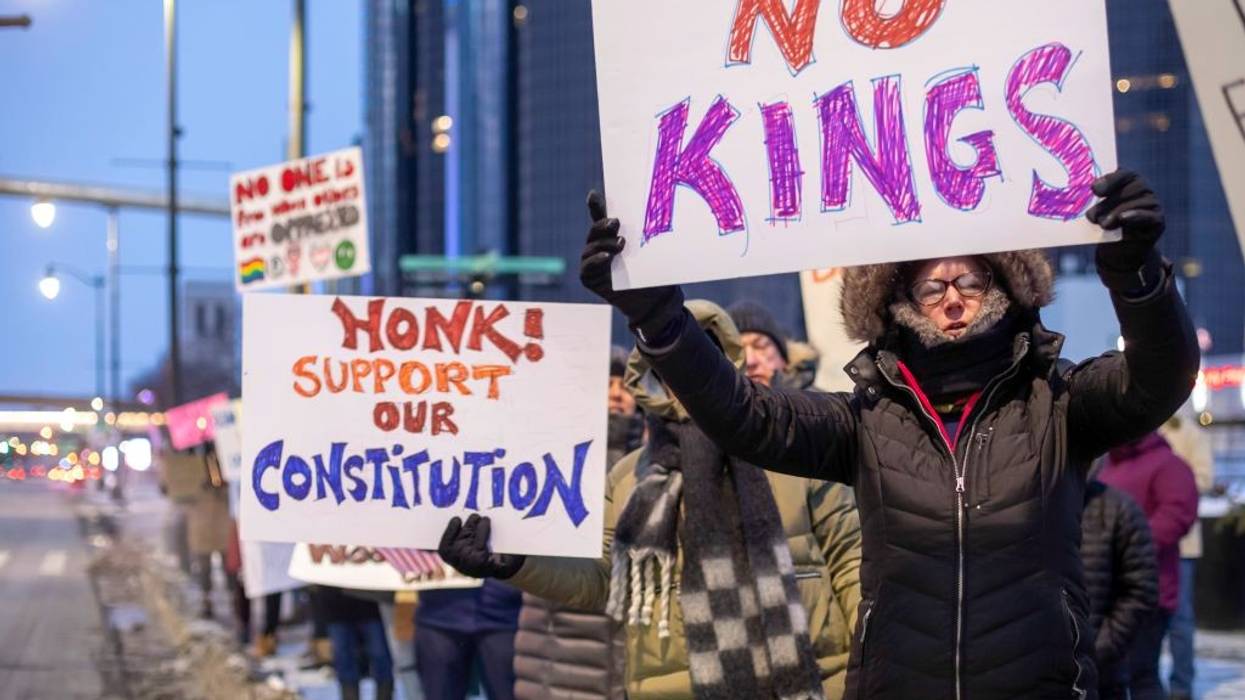
We are a nation of laws, and we cannot be ruled by executive fiat.
President Donald Trump on Tuesday signed an executive order that purports to place independent regulatory agencies, such as the Federal Communications Commission and the Federal Trade Commission, under his direct control. Based on the so-called “unitary executive” theory, which claims that any congressional limits on presidential control of every lever of government power are unconstitutional, this action poses a grave threat to the rule of law and the separation of powers—cornerstones of our constitutional system.
This executive order states that the president is charged with ‘faithfully executing the laws.’ This is true. However, the laws of our nation include the existence of independent regulatory agencies, the power of Congress to appropriate funds and direct how they are spent, and protection for certain government employees and officers from arbitrary dismissal.
Executive orders are not the law—they are statements of policy, and memos from the president about how the Executive Branch conducts its internal affairs. By attempting to use executive orders to override actual laws—the kinds that are passed by Congress, not issued on a whim from the Resolute Desk—the Trump administration is effectively asserting that it stands above the law. Indeed, that it is the law. But the role of the executive branch is not to decide what the law is, or to pick and choose which ones it likes, but to carry out and enforce the law, as written. Donald Trump is a high-ranking government employee—not a king. If there are laws he does not like, he can work with Congress to change them.
Donald Trump is a high-ranking government employee—not a king.
A nebulous and broad understanding of the phrase ‘executive power’ cannot prevail over duly enacted statutes passed by Congress and signed into law by presidents of both parties, over the course of decades. The U.S. Constitution did not change its meaning when President Trump took office. That this ‘unitary executive’ theory has made its way from the fringes of academia to the halls of power, and that it has even been accepted by some credulous judges, does not mean that it is right. Many legal observers have pointed out the shoddy scholarship and selective history that underpins it. We are a nation of laws, and we cannot be ruled by executive fiat.
In the order, the Trump administration purports to seize for itself the power Congress delegated to independent regulatory agencies, and as written, declares the White House’s interpretation of the law as ‘authoritative,’ with no mention of the courts. Of course, the president is not, and never has been, the final arbiter of what is lawful. Lawyers working for the government owe their allegiance to the American people, not to President Donald J. Trump. The many government lawyers who have already resigned rather than follow illegal or unethical directives from Trump's appointed political operatives are an inspiration, despite how frightening a hollowed-out Department of Justice might seem.
As for independent regulatory agencies, in addition to being the law of the land, they are often good policy. While I have sometimes disagreed with decisions taken by the FCC or FTC, under both Republican and Democratic control, I understand the importance of expert agencies that are free from day-to-day political interference. The FCC’s control over broadcast licenses, and its unenviable role of coordinating spectrum use between different industries and other government agencies, among other things, means it should be free to try to come to the best answer – not the one with the loudest political support. This applies to enforcement activities as well. Under the Biden administration, for instance, the FTC frequently investigated politically powerful companies, to the ire of many prominent Democrats and Democratic donors.
While I have sometimes disagreed with decisions taken by the FCC or FTC, under both Republican and Democratic control, I understand the importance of expert agencies that are free from day-to-day political interference.
President Trump, like other presidents have done, is free to express his views as to what the agencies should prioritize, and to nominate like-minded commissioners as vacancies arise. But, as directed by Congress, and reflected in commissioners' protection from being fired due to policy or political differences with the president, such agencies must make the final call on policy decisions.
The notion that independent agencies are ‘unaccountable’ is, on its face, absurd. The president nominates all agency commissioners, including ones of the opposite party, and names the Chair from among them. Agencies regularly answer to Congress, which controls their budget, and enacts the statutes that spell out the limited scope of their authority. Independent agencies cannot issue regulations without following the strict guidelines of the Administrative Procedure Act, and their rules and enforcement actions are regularly challenged in the courts, and occasionally reversed by Congress.
The wisdom of having independent agencies and tenure protections for certain government officials has been confirmed in recent weeks by the disastrous and irresponsible actions of the lawless Trump administration. One president should not be able to nullify statutes passed into law by past presidents and past Congresses with the stroke of a sharpie. Congress must re-assert its central constitutional role. Further, one hopes that federal judges and Supreme Court justices who, in the past, have lent their support to an imperial vision of the presidency, can see where this is going and act to limit the ability of the president to subvert our democracy and constitutional order.
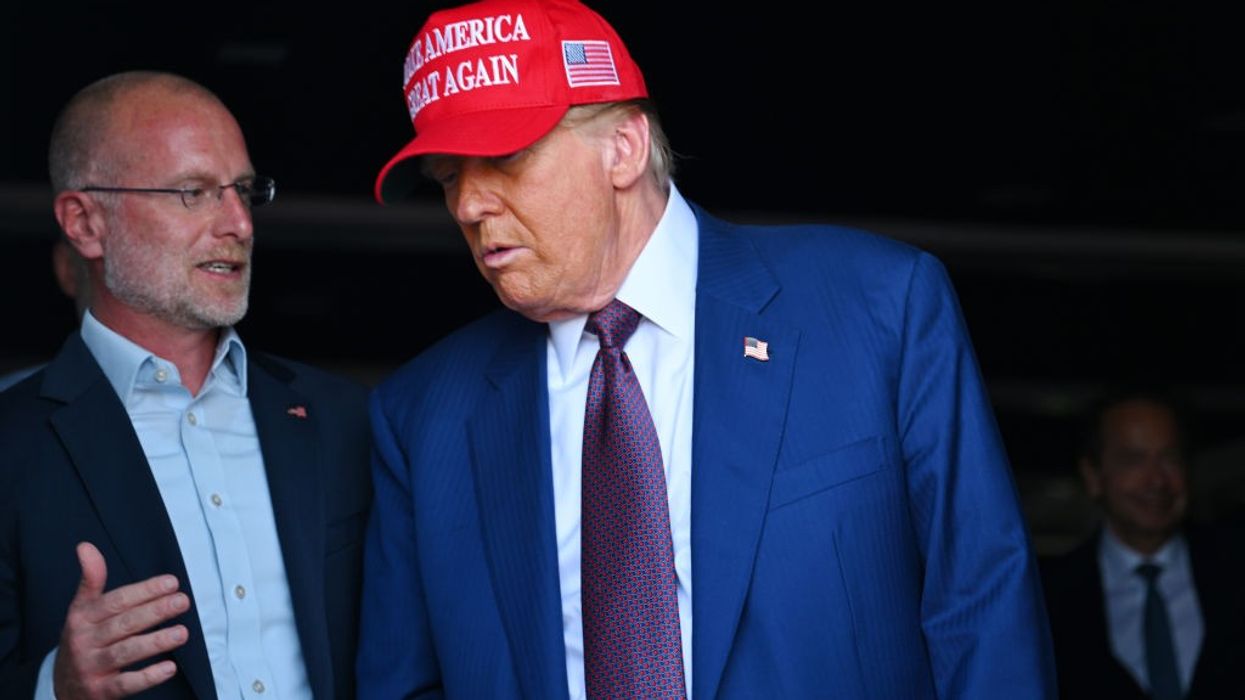
"The FCC chair is clearly undertaking an effort to bully and intimidate independent journalism, which is a hallmark of authoritarian regimes where democracy is under siege," said one critic.
U.S. press freedom advocates this week forcefully condemned Republican Federal Communications Commission Chair Brendan Carr's investigation into National Public Radio and Public Broadcasting Service that could lead to stripping them of government funding.
"If they weren't ringing already, alarm bells should be going off loudly," said Tim Richardson, program director for journalism and disinformation at PEN America, in a Thursday statement. "By using its investigatory powers, the FCC chair is clearly undertaking an effort to bully and intimidate independent journalism, which is a hallmark of authoritarian regimes where democracy is under siege."
"The Trump administration is clearly embracing such tactics and putting independent media at risk by undermining accountability of elected leaders and risking a less informed public," Richardson added. "We call on the FCC to dispense with such politically motivated investigations."
Jenna Leventoff, senior policy counsel at the ACLU, was similarly critical, saying that "the commission should not bring frivolous investigations into media outlets simply because they do not like their coverage. Investigations like this can chill coverage and threaten the independence of the press, making it harder to hold the government accountable and keep us all informed."
I told @nytimes.com that Carr's claim that NPR and PBS broke sponsorship disclosure rules is an obvious pretext to attack their funding and independence. Carr was appointed to do Trump's censorial bidding. All his moves should be viewed through that lens.This “investigation” is a sham and meant to terrorize NPR and PBS. They have *rigorous* oversight on vetting the “this program brought to you by” statements and literally pages of documentation about it that they give to filmmakers like me. Support your local stations, they’re going to need it.
[image or embed]
— Ariel Waldman (@arielwaldman.com) January 30, 2025 at 2:39 PM
Free Press co-CEO Craig Aaron declared that "his seat as FCC chairman is barely warm, but Brendan Carr is already abusing his power and harassing public broadcasters with a sham investigation designed to scare journalists into silence. This is all part of Carr's far-right, Project 2025-inspired agenda."
"This bogus investigation is an attack on the freedom of the press and a bungling attempt to bash public broadcasters and further weaken their resolve to question the extremism, corruption, and cruelty of the Trump administration," Aaron warned. "This unjustified investigation isn't based on any genuine concern about whether there's too much advertising on public media. It's a blatant attempt to undermine independent, rigorous reporting on the Trump administration."
"Carr may not like public media—and that's no surprise given that he isn't a fan of journalism that holds public officials and billionaires accountable. In this, as in so many other areas under his purview, Chairman Carr is far out of step with the American public and their needs," he continued. "Communities all across the country rely on their local public radio and TV stations to provide trustworthy news reporting and a diversity of opinions. In every survey, the American public indicates it wants more support for public and community media, not less."
Aaron added that "in a healthy democracy, we would be investing enough in our public-media system that it wouldn't need to seek any corporate underwriting. Unfortunately, Carr's cronies in Congress and the Big Media barons they serve have instead for decades tried to zero out funding for public media. They have repeatedly failed because millions of viewers and listeners opposed them."
Carr—whom President Donald Trump first appointed to the FCC in 2017 and recently elevated to chair after he contributed to the Heritage Foundation-led Project 2025—announced the probe in a Wednesday letter to NPR president and CEO Katherine Maher and PBS president and CEO Paula Kerger.
"I am concerned that NPR and PBS broadcasts could be violating federal law by airing commercials," Carr wrote. "I have asked the FCC's Enforcement Bureau, with assistance from the FCC's Media Bureau, to initiate an investigation into the underwriting announcements and related policies of NPR, PBS, and their broadcast member stations."
The chair added:
I will be providing a copy of this letter to relevant members of Congress because I believe this FCC investigation may prove relevant to an ongoing legislative debate. In particular, Congress is actively considering whether to stop requiring taxpayers to subsidize NPR and PBS programming. For my own part, I do not see a reason why Congress should continue sending taxpayer dollars to NPR and PBS given the changes in the media marketplace since the passage of the Public Broadcasting Act of 1967.
To the extent that these taxpayer dollars are being used to support a for-profit endeavor or an entity that is airing commercial advertisements, then that would further undermine any case for continuing to fund NPR and PBS with taxpayer dollars.
Some federal lawmakers have already responded on social media. Sen. Ed Markey (D-Mass.) said that "the letter from Chairman Carr announcing a new FCC investigation into NPR and PBS member stations is baseless. He cites no evidence at all. Instead, this investigation is a dangerous attack on public media and local journalism."
Rep. Doris Matsui (D-Calif.) said that "public television and radio are essential for their local communities. The FCC must not be weaponized to intimidate and silence broadcast media. We should be supporting, not undermining, their contributions to journalism and the marketplace of ideas."
I told @nytimes.com that Carr's claim that NPR and PBS broke sponsorship disclosure rules is an obvious pretext to attack their funding and independence. Carr was appointed to do Trump's censorial bidding. All his moves should be viewed through that lens. www.nytimes.com/2025/01/30/b...
[image or embed]
— Seth Stern (@seth-stern.bsky.social) January 30, 2025 at 5:27 PM
The two Democratic members of the FCC have also responded critically to Carr's move. Commissioner Anna Gomez said that "this appears to be yet another administration effort to weaponize the power of the FCC. The FCC has no business intimidating and silencing broadcast media."
Commissioner Geoffrey Starks said that "public television and radio stations play a significant role in our media ecosystem.
Any attempt to intimidate these local media outlets is a threat to the free flow of information and the marketplace of ideas. The announcement of this investigation gives me serious concern."
Maher said in statement that "NPR programming and underwriting messaging complies with federal regulations, including the FCC guidelines on underwriting messages for noncommercial educational broadcasters, and member stations are expected to be in compliance as well."
"We are confident any review of our programming and underwriting practices will confirm NPR's adherence to these rules," she added. "We have worked for decades with the FCC in support of noncommercial educational broadcasters who provide essential information, educational programming, and emergency alerts to local communities across the United States."
In a statement to NPR media correspondent David Folkenflik, who reported on the probe, Kerger said that "PBS is proud of the noncommercial educational programming we provide to all Americans through our member stations... We work diligently to comply with the FCC's underwriting regulations and welcome the opportunity to demonstrate that to the commission."
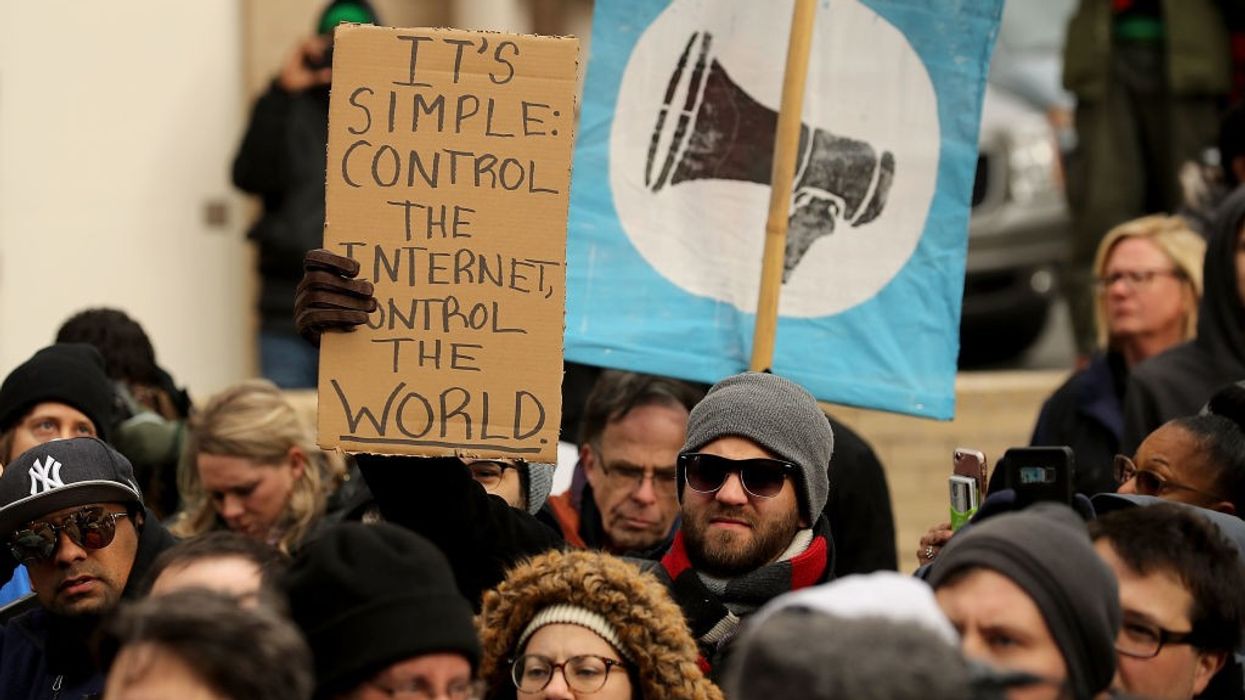
The powerful telecom industry did what they always do when the FCC does anything good or important on behalf of consumer: They sued to overturn the rules.
Happy New Year to everyone but the U.S. Court of Appeals for the 6th Circuit.
On Thursday, this federal court in Cincinnati threw out the Federal Communication Commission’s Net Neutrality rules, rejecting the agency’s authority to protect broadband consumers and handing phone and cable companies a major victory just weeks before the Trump administration returns to power.
The ruling against the FCC by three Republican judges isn’t shocking, but their reasoning is shoddy, a mish-mash of tired industry claims paired with a willful misrepresentation of how the internet actually works.
As Matt Wood, an experienced telecommunications attorney and my colleague at Free Press, explains: “Beyond being a disappointing outcome, the 6th Circuit’s opinion is just plainly wrong at every level of analysis. The decision missed the point on everything from its granular textual analysis and understanding of the broader statutory context, to the court’s view of the legislative and agency history, all the way to its conception of Congress’s overarching policy concerns.”
Our job now is to channel the growing outrage over this appalling decision into the long-term changes we need to keep the internet safe, reliable, accessible, affordable and free from unlawful discrimination.
Under the leadership of Chairwoman Jessica Rosenworcel, the FCC moved in April 2024 to restore Net Neutrality and the essential consumer protections that rest under Title II of the Communications Act, which had been gutted under the first Trump administration. This was an all-too-rare example in Washington of a government agency doing what it’s supposed to do: Listening to the public and taking their side against the powerful companies that for far too long have captured and called the shots in D.C.
And the phone and cable industry did what they always do when the FCC does anything good or important: They sued to overturn the rules.
This time, however, the lawyers for the biggest phone and cable companies had two things working in their favor. First, they got lucky: They won the forum-shopping lottery and got their case moved outside of Washington, D.C., where previous rounds of the Net Neutrality fight had been decided.
Second, the Supreme Court handed down a ruling in June in the Loper Bright Enterprises vs. Raimondo case that overturned the so-called Chevron doctrine that gave deference to expert agencies in complex matters like environmental and telecommunications regulations.
Unfortunately, the lawyers representing massive companies like AT&T, Comcast and Verizon found an eager audience in Cincinnati for their debunked arguments.
Despite extensive legal and economic analysis provided by Free Press and our allies in the case and at oral arguments in October, the court ruled against the FCC and deemed internet access to be an “information service” largely free from FCC oversight.
In a post-Chevron world where courts no longer have to defer to expert agencies, we’ve replaced years of evidence and argument with revelations like this from Judge Griffin: “The existence of a fact or thought in one’s mind is not ‘information’ like 0s and 1s used by computers.”
In the short term, this decision will let the incoming Trump FCC abdicate its responsibility to protect internet users so it can focus on its new priority of threatening TV broadcasters and social-media sites to carry more pro-Trump views.
I’ll spare you the rest. This court’s warped decision scraps the common-sense rules the FCC restored in April. The result is that throughout most of the country, the most essential communications service of this century will be operating without any real government oversight, with no one to step in when companies rip you off or slow down your service.
This ruling is far out of step with the views of the American public, who overwhelmingly support real Net Neutrality and despise the cable companies. They’re tired of paying too much, and they hate being spied on when they surf (or talk, thanks Siri). Now they’ll have even less recourse to deal with unscrupulous and abusive business practices.
Incoming FCC Chair Brendan Carr and his old boss Ajit Pai, who’s part of the Trump transition team, are crowing everywhere about the decision and cheering this strike against “regulatory overreach.” Of course, Carr and his ilk have never been interested in protecting the public interest, only private profits.
In the short term, this decision will let the incoming Trump FCC abdicate its responsibility to protect internet users so it can focus on its new priority of threatening TV broadcasters and social-media sites to carry more pro-Trump views. The hypocrisy of crushing light-touch regulations while aggressively pursuing government censorship is something to behold.
In the weeks ahead, the FCC, as well as Free Press and the other parties who intervened in the case, will consider our legal options and decide whether to appeal the case to the Supreme Court. In Congress, we’ll start laying the groundwork for a future bill that restores Net Neutrality and FCC authority. Meanwhile, we’ll look to the states to hold the line, with laws like California’s strong Net Neutrality regulations thankfully still on the books.
Our job now is to channel the growing outrage over this appalling decision into the long-term changes we need to keep the internet safe, reliable, accessible, affordable and free from unlawful discrimination.
It may have gotten harder, but the fight for the free and open internet is far from over.
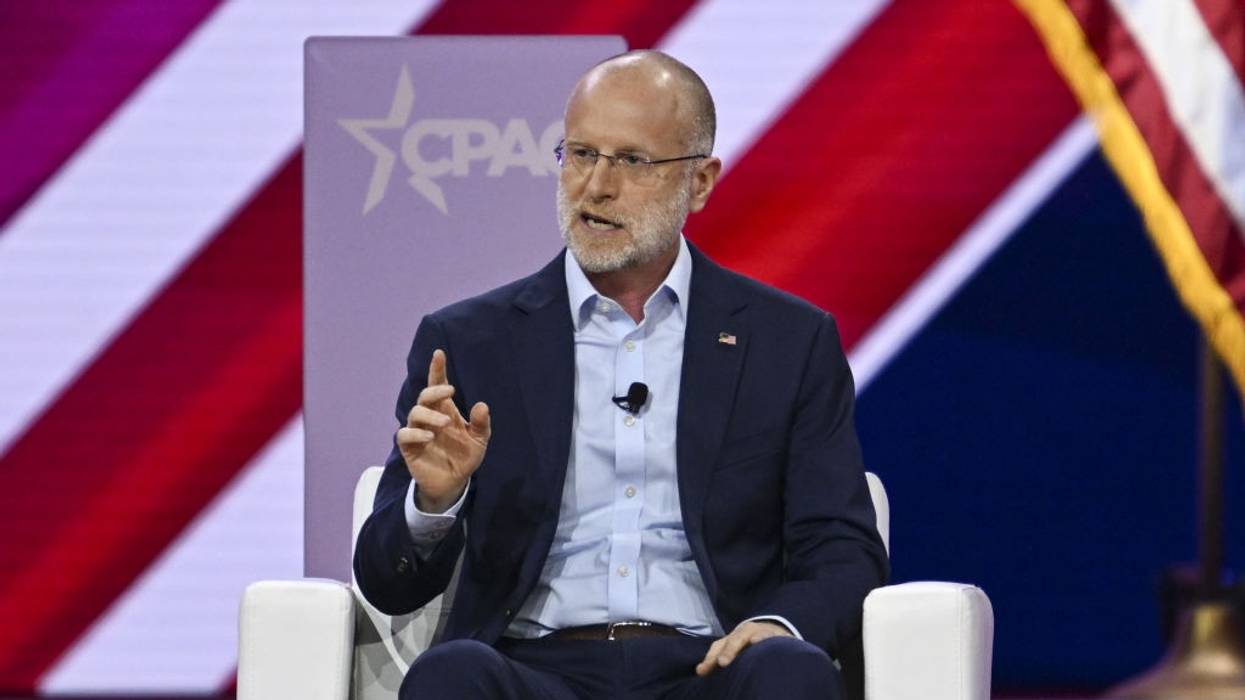
Brendan Carr pretends to be a defender of free-speech rights when it suits his right-wing agenda but disappears into the ether when he should be protecting expression that doesn’t align with Trump’s authoritarian aims.
President-Elect Donald Trump’s pick to head the Federal Communications Commission has an on-again/off-again relationship with the First Amendment.
Brendan Carr pretends to be a defender of free-speech rights when it suits his right-wing agenda but disappears into the ether when he should be protecting expression that doesn’t align with Trump’s authoritarian aims.
His mind-bending inconsistencies on free-speech rights would sound alarms under normal circumstances, especially for someone tapped to lead the federal agency that oversees the media sector. But these aren’t normal times. And Carr’s dodgy doublespeak on government censorship seems designed to please an incoming president who’s intent on undermining the essential freedoms that flow from the First Amendment.
During a September hearing before the House of Representatives, Carr refused to speak out against Trump’s suggestion that ABC should lose its broadcast licenses because two of its journalists had fact checked the former president during his debate with Vice President Kamala Harris. Instead he told members of the House Commerce Committee that the law and the First Amendment guide all of his decisions — an assertion that doesn’t withstand even the slightest scrutiny.
Carr has already weaponized his future role as the government’s top media regulator by threatening to shut down the speech of anyone who questions Trump’s leadership.
In an October Fox News interview, Carr came after CBS for airing an edited interview with Harris during 60 Minutes. Editing interviews is a standard practice of television journalism, but Carr suggested that CBS violated the FCC’s seldom-invoked news-distortion policy, adding that the government could punish the network. In particular, he said that the 60 Minutes interview could factor into the agency’s review of the Skydance-Paramount merger (Paramount is CBS’ parent company).
Carr then took to Twitter to attack NBC after Kamala Harris appeared on Saturday Night Live, wrongly calling it “a clear and blatant effort to evade the equal time rule” — even though NBC did provide Trump equal time later that same weekend. Carr suggested on a subsequent Fox News appearance that the FCC should “keep every remedy on the table,” including revoking the broadcast licenses of local television stations owned by NBC and Telemundo, subsidiaries of Comcast.
“The FCC traditionally avoids regulating broadcast radio and television content except in extremely narrow circumstances, such as indecency,” Free Press Co-CEO Jessica J. González wrote in a commentary for The Hill. “ … Carr has shown that he is willing to break with [this] longstanding and bipartisan FCC precedent to punish Trump’s detractors.”
In November, Carr went on the attack again. In a letter addressed to the CEOs of the world’s largest technology platforms, he argues that they are facilitating “censorship” by allowing fact checking on their sites — something they as private companies have an unambiguous First Amendment right to do. In Carr’s distorted view, however, such fact checking violated Americans’ right to be misinformed.
Carr is “rushing to be America’s top censor,” Mike Masnick, a widely read champion of the First Amendment, wrote at Techdirt. “Threatening to revoke broadcast licenses over unfavorable coverage is a blatant First Amendment violation. The government cannot use its licensing power to control or punish the speech of private actors. Carr surely knows this but doesn’t seem to care.”
It’s hard to comprehend how anyone who’s read the 45 words of the First Amendment could come away with such a blatant misunderstanding of its intent. Carr’s recent actions have made it necessary to repeat the obvious: The First Amendment protects people from government censorship; it does not protect government actors like Trump and Carr from criticism and fact checking.
Carr has already weaponized his future role as the government’s top media regulator by threatening to shut down the speech of anyone who questions Trump’s leadership.
But it wasn’t long ago that Carr was preaching from a different pulpit, although with the same aim: to silence opposing views and advance his highly partisan agenda.
In March 2020 — as the global pandemic set in — Free Press called on the FCC to offer guidance on its interpretation of the agency’s “broadcast-hoax rule.” At the time a number of licensed broadcasters had aired false and misleading information about the COVID-19 crisis without providing the kinds of context or disclaimers the rule suggests.
Rather than take up Free Press’ good-faith suggestion, Carr went on the attack, making the false claim that our media-democracy organization “want[ed] to turn the FCC into a roving speech police empowered to go after the left’s political opponents” (emphasis added).
In actuality, the Free Press petition merely asks the FCC to issue guidance on the broadcasting of disinformation about COVID-19 at a time when thousands of Americans had already succumbed to the disease.
Carr auditioned for the lead part at the FCC by repeatedly threatening to do what he once falsely accused Free Press of doing: turning the agency into the “roving speech police.” And his anti-free-speech stridency has captured the attention of Elon Musk, who has leveraged his control of X’s algorithms to amplify Carr’s tweets — while positioning his broadband access company Starlink to benefit from potentially hundreds of millions of dollars in government grants that flow through the FCC.
As Masnick wrote: “Carr is smart and he knows exactly what he’s doing here. He is couching his extreme censorial desires in the language of free speech, knowing that most people won’t know enough or understand the details and nuances to recognize what he’s doing.”
Free Press is tracking Carr’s First-Amendment flip flops very closely, and exercising our right to call out Trump’s pick to chair the FCC whenever he fails to honor his sworn oath “to support and defend the Constitution of the United States.”
Carr is duty bound to ensure that government forces don’t restrict the speech of private individuals and entities. As the recent past shows, however, he routinely fails to protect free speech with any consistency, preferring to wrap himself in dishonest rhetoric about the First Amendment as he pursues his — and Trump’s — desire to censor others.
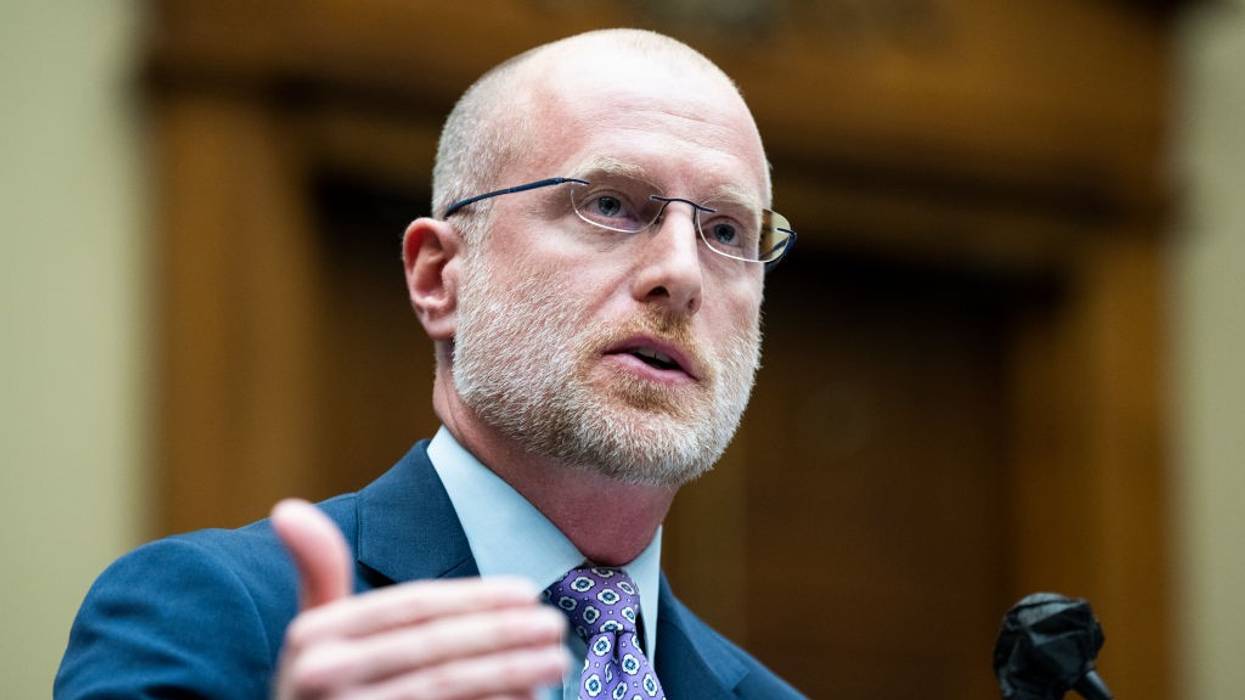
Brendan Carr knows who’s calling the shots in the modern GOP, so when he’s not fawning over Trump — a prerequisite for any potential appointee — he’s busy buttering up the world’s richest internet troll: Elon Musk.
By now you’ve probably heard of Project 2025 — the not-so-secret plan the Heritage Foundation cooked up for the next Republican administration, complete with a 900-page authoritarian playbook for overturning civil-rights laws, gutting environmental and labor protections, criminalizing abortion, and purging the federal government of any career workers who aren’t partisan loyalists.<
Project 2025’s contents are so noxious, unpopular and anti-democratic that even Donald Trump has repeatedly tried to distance himself from them — though at least 140 former Trump officials contributed to the plan.
What you might not know is that just one of Project 2025’s authors currently works for the federal government: Brendan Carr, the senior Republican on the Federal Communications Commission.
Carr has sided with big companies and against the public interest on nearly every important issue to come before the FCC. He’s also learned what it takes to get ahead in Trumpworld: telling lies, cozying up to the far right, insisting Trump can do no wrong, sucking up to billionaires and telling more lies.
Angling to be FCC chairman in a possible Trump administration, this once mild-mannered government lawyer has gone full-on Fox News fire-breather in a despicable-if-calculated attempt to get a promotion.
There are serious ethical concerns about a sitting commissioner participating in Project 2025, with no clear lines as to where Carr’s government role ends and his role as a private citizen working in his “personal capacity” begins. That’s why in July a group of 16 House members called for the FCC’s inspector general to investigate whether Carr “may be misusing his official position as an executive-level employee of the FCC to craft and advance a political playbook to influence the presidential election in favor of Donald Trump.”
Commissioner Carr’s contribution to Project 2025’s “Mandate for Leadership” is wrongheaded if relatively milquetoast compared to other chapters. He rants TikTok (which is not under the FCC’s jurisdiction) and China, unwisely calls for the elimination of Section 230 of the Communications Act, and endorses ways to enrich Elon Musk’s Starlink and right-wing broadcasters like Sinclair.
He makes it clear that under a future Chairman Carr, the FCC would do the bidding of big business unencumbered by notions of serving the public interest, helping those experiencing poverty or addressing racial disparities.
In a vacuum, this wouldn’t look too different from the reliably terrible ideas and complete corporate capture of previous Republican FCC chairs.
But Project 2025 isn’t a vacuum. It’s a cesspool.
The priorities of the Heritage Foundation, which organized Project 2025, include banning the teaching of “critical race theory” (i.e., “accurate descriptions of U.S. history”) in public schools and universities, defaming the Black Lives Matter movement, denying climate change, amplifying false claims of voter fraud and attacking transgender kids.
Project 2025’s advisory board, organizational supporters and their known associates include an array of anti-abortion zealots, anti-vaxxers, Big Liars, book banners, climate deniers, conspiracy theorists, immigrant bashers and other assorted haters.
To achieve their Christian-nationalist goals, Heritage and its allies seek to undermine democratic checks and balances in favor of a system where near-absolute power is vested in the office of a strongman president. To quote the watchdogs at the Global Project Against Hate and Extremism, Project 2025 is “an authoritarian roadmap to dismantling a thriving, inclusive democracy for all.”
This is the company Carr keeps, and that alone should be reason enough to disqualify him from leading a future FCC.
But if you’re looking for more reasons, he’s providing plenty.
While the FCC is technically an independent agency, Carr’s binary worldview is simple: Democrats can do no right, and Trump can do no wrong.
Witness his recent appearance at a House hearing where he refused to speak out against Trump’s preposterous and dangerous suggestion that ABC should lose its broadcast licenses because its journalists tried to fact check the former president during a debate.
To be fair, fact-checking isn’t Carr’s forte. In an appearance on Fox Business’ Mornings with Maria show, the commissioner happily agreed with the host while she made numerous misleading claims — several of which originated from Carr’s Twitter feed — about the efforts of the FCC and the Biden administration to expand affordable broadband access.
While Carr wrongly claims the Biden administration has “connected no one,” the reality is that the administration’s Affordable Connectivity Program helped 1-in-6 U.S. households connect to the internet before congressional intransigence interrupted its funding.
Congress and the Biden Treasury Department also have awarded $10 billion for broadband deployment, but that’s not even half of it. A bipartisan majority in Congress committed another $42 billion to expand high-speed Internet access in every state to support infrastructure and adoption programs. Under the infrastructure law that Congress passed, each state and U.S. territory had to design a plan to receive its slice of the funds. The job of Biden’s National Telecommunications and Information Administration (NTIA) is to collect data, ensure state plans are in line with the law and allocate the funds to viable projects serving the communities that need it most.
Infrastructure projects like these take time, as they should given their historic nature — think rural electrification or the building of the U.S. highway system — but the benefits last far beyond a single presidential term.
For Carr and his partisan allies, the historic and popular effort underway to close the digital divide looks too much like a win for the other side, so they’ll say anything to undermine its progress. Fox — whose corporate bosses want a Republican-controlled FCC to do them special favors — is always ready to provide a platform.
Carr knows who’s calling the shots in the modern GOP, so when he’s not fawning over Trump — a prerequisite for any potential appointee — he’s busy buttering up the world’s richest internet troll: Elon Musk.
Carr is constantly caping for the would-be efficiency czar. At every opportunity, Carr bemoans “a campaign of regulatory harassment” the FCC is allegedly waging against Musk. The truth is that the FCC stepped in to prevent billions in taxpayer dollars from being wasted fattening Elon’s wallet while failing to get anyone better service — unless they were on a golf course or living on a highway median.
The background: During the waning days of the Trump administration, Musk’s Starlink satellite company snagged nearly $900 million in government subsidies with a promise to provide internet service to rural communities as part of a program known as the Rural Digital Opportunities Fund (RDOF).
Free Press was the first group to sound the alarm that a huge amount of taxpayer money was being wasted under RDOF to allegedly deploy internet service to uninhabited areas, big-box retail stores, airport runways and luxury resorts. Because the Trump FCC did such a shoddy job of designing the initial program, many of the beneficiaries — including Musk — were poised to cash in by promising to serve little pockets of land that already had service or where it was unlikely they’d ever sign up a single customer.
When FCC Chairwoman Jessica Rosenworcel took leadership of the agency and scrutinized the plans, officials identified $2.5 billion about to be wasted on projects that didn’t meet the program’s basic requirements. So they took the money back.
I’m old enough to remember a time when Republicans claimed they cared about saving taxpayer dollars and fighting government waste. But Brendan Carr is too busy licking Musk’s cybertruck shoes to worry about his hypocrisy.
Fortunately, Carr’s record is beginning to get some attention from members of Congress — but more need to speak out about his dalliances with the far right and his trouble telling the truth. His actions and associations should disqualify him from ever serving as FCC chairman, no matter who the president is in 2025.

As a physician delivering telemedicine-based addiction care to rural and low-income communities, the program has been the essential linchpin for creating access to lifesaving medications for opioid use disorder.
In an ironic twist, people recovering from opioid addiction recently gained permanently expanded access to telemedicine services through a new federal policy—but many are likely to be among the 22 million low-income households losing access to affordable internet.
The Federal Communications Commission recently began to wind down the Affordable Connectivity Program, the country’s largest, most successful internet affordability program. This government-sponsored benefit program, introduced during the pandemic, provides low-income Americans with a one-time subsidy to purchase an internet-capable device and monthly subsidies for broadband services.
As a physician delivering telemedicine-based addiction care to rural and low-income communities, the Affordable Connectivity Program has been the essential linchpin for creating telemedicine access to lifesaving medications for opioid use disorder.
I urge Congress to renew funding for the Affordable Connectivity Program and pursue legislative pathways to permanently expand internet access to all.
Substance use disorders are life-threatening chronic conditions, but they’re treatable. More than 70% of people with substance use disorders transition into recovery. However, early recovery is fragile. When people are ready to engage in care, low-barrier, rapid access to care is vitally important to support treatment success, especially during reentry from incarceration when the overdose risk is up to 129 times greater than community-based populations. Nearly half of people using opioids in rural areas were recently incarcerated, emphasizing the need for expanded rural access to treatment.
Yet, in-person addiction care is disproportionately limited in rural communities, requiring long drive times to access care. This is simply not an option for most of my patients, particularly those in early recovery. Most are trying to rebuild their lives while confronting significant financial debts incurred during past periods of expensive, prolonged substance use and incarceration. Stigma locks them out of high-earning positions, effectively segregating them to low-wage positions with limited opportunities for advancement and usually no access to benefits like paid time off to engage in care.
Many of us can get a leg up during hard times from family or peers. However, most patients in early recovery are at the starting line of repairing social relationships weakened by trust lost during active substance use and prolonged absence during incarceration. Often, the social supports they can access are facing similar resource-limited circumstances, with minimal ability or bandwidth to help with transportation or finances.
Every day, my patients choose what they can afford from a menu of necessities.
What will you have today?
Rarely can they cover more than one or two at a time. How could expensive, time-intensive travel to distant healthcare ever compete?
It shouldn’t have to. And thanks to the relaxation of telemedicine rules and the Affordable Connectivity Program, it hasn’t had to.
While the Affordable Connectivity Program’s $30 monthly subsidy sounds inconsequential, the true value of costs saved is much higher, as the collateral costs (e.g., transportation, lost-wages) of in-person services are avoided. With reliable access to data plans, my patients attend their medical appointments from their worksites during their lunch breaks or easily negotiate alternative breaks with their bosses, who are more willing to be flexible because work can quickly resume when patients remain on-site. This has allowed patients to consistently receive addiction treatment without incurring lost wages and transportation costs during the two-to-four-hour long process of in-person care. With their financial distress tempered, my patients have more quickly transitioned from survival mode to future planning.
The Affordable Connectivity Program also enabled internet access to key social resources that promote health and stability. My patients have taken online classes, searched and prepared for jobs, and built healthy social connections with online recovery communities, the latter particularly key for rural patients with limited in-person social options.
Funding for the Affordable Connectivity Program is projected to run out in April unless Congress acts quickly to renew funding. Amidst the Affordable Connectivity Program’s wind down, my team has begun switching patients to the remaining alternative telecommunication benefits for low-income households, like the Lifeline program. However, this inferior program provides only $9.95 monthly toward internet service—insufficient to cover the entire cost of a plan—and limited options of qualifying service providers. For my patients battling homelessness living in tents, cars, and motel room rentals while working tireless hours to survive and endeavor toward stable thriving, a $20 increase in monthly expenses is insurmountable.
The communities with significantly limited internet access—rural, low-income, Black—are also disproportionately impacted by the opioid crisis and low access to in-person treatment. Their precarious internet access falsely positions the internet as a luxury, rather than an essential resource for healthcare, education, employment, transportation, and social belonging. Internet access is a health equity issue.
I urge Congress to renew funding for the Affordable Connectivity Program and pursue legislative pathways to permanently expand internet access to all. Without swift action, I fear that losing the Affordable Connectivity Program will lead to more lives lost to treatable substance use disorders.

While welcoming the rule, one advocate said it is "not enough to safeguard citizens and our elections."
Just over two weeks after New Hampshire voters were inundated with artificial intelligence-generation robocalls featuring U.S. President Joe Biden's fake voice telling them not to vote in their state's primary, the Federal Communications Commission on Thursday announced what one adocate called a "desperately needed" rule declaring such calls are illegal under federal law.
The FCC unanimously voted to adopt the declaratory ruling, saying calls like those made in New Hampshire are "artificial" under the Telephone Consumer Protection Act (TCPA).
The new rule goes into effect immediately, prohibiting people or groups from using voice cloning technology to create robocalls and giving state attorneys general civil enforcement authority.
According to the FCC, under the TCPA, the commission can also "take steps to block calls from telephone carriers facilitating illegal robocalls" and individual consumers or groups can bring a lawsuit against robocallers in court.
On Tuesday, the New Hampshire Department of Justice announced it had traced the robocalls from last month to a company called Life Corporation in Texas. The company made up to 25,000 of the calls.
Ishan Mehta, media and democracy program director for Common Cause, said the calls in New Hampshire last month represented "only the tip of the iceberg" and warned that "it is critically important that the FCC now use this authority to fine violators and block the telephone companies that carry the calls."
FCC Chairwoman Jessica Rosenworcel said that "bad actors are using AI-generated voices in unsolicited robocalls to extort vulnerable family members, imitate celebrities, and misinform voters. We're putting the fraudsters behind these robocalls on notice."
Robert Weissman, president of consumer advocacy group Public Citizen, said the rule will "meaningfully protect consumers from rapidly spreading AI scams and deception" and urged other federal agencies "follow suit and apply the tools and laws at their disposal to regulate AI."
"We need Congress to prohibit bad actors from using deceptive AI to disrupt our elections. The FEC, too, must clarify regulatory language to ban the use of deliberately deceptive AI in campaign communications."
The TCPA, however, is "not enough to safeguard citizens and our elections" from the larger threat of deepfakes and AI, warned Weissman.
"The Telephone Consumer Protection Act applies only in limited measure to election-related calls," he said. "The act's prohibition on use of 'an artificial or prerecorded voice' generally does not apply to noncommercial calls and nonprofits. So the FCC's new rule will not cure the problem of AI voice-generated calls related to elections."
Public Citizen has repeatedly demanded that the Federal Election Commission (FEC) promptly regulate deepfake images and videos, which have already been used in campaign materials by former President Donald Trump, who is running for the Republican nomination.
Last month, the FEC said a decision on deepfakes is likely several months away.
On Thursday, Nick Penniman, founder of CEO of political reform group Issue One, called the FCC's decision "a positive step" that is "not enough."
"The unregulated use of AI as a means to target, manipulate, and deceive voters is an existential threat to democracy and the integrity of our elections. This is not a future possibility, but a present reality that demands decisive action," said Penniman. "We need Congress to prohibit bad actors from using deceptive AI to disrupt our elections. The FEC, too, must clarify regulatory language to ban the use of deliberately deceptive AI in campaign communications."
"These guardrails are vital to ensure we have the necessary tools to effectively counter this growing threat," he added, "and protect our elections."
Mehta called on Congress to pass the Protect Elections from Deceptive AI Act, which would prohibit the distribution of deceptive AI-generated audio, images, or video relating to federal candidates in political ads.
"We hope that both the House and the Senate will follow the example of the FCC," said Mehta, "whose Democratic and Republican commissioners recognized the threat posed by AI and came together in a unanimous vote to outlaw robocalls utilizing AI voice-cloning tools."
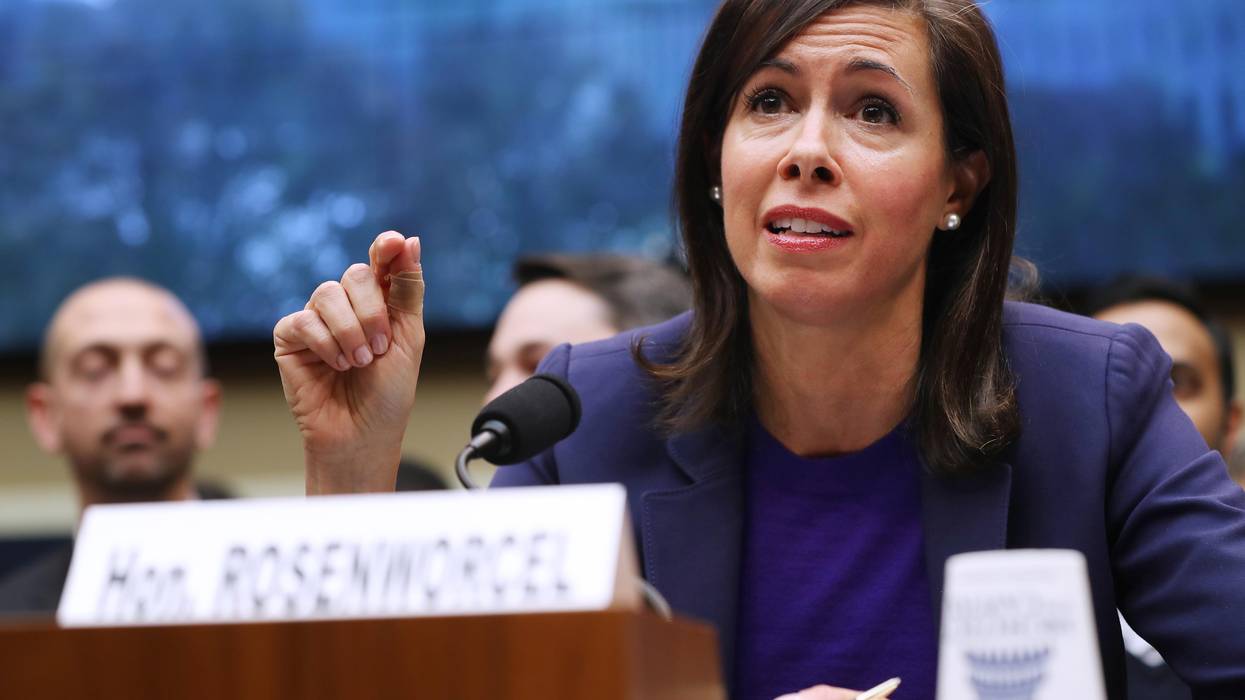
If Gomez, Starks, and Rosenworcel prove ready to follow President Biden’s lead in cracking down on dangerous concentrations of private power and control, there is no shortage of items they can quickly address.
After spending the last two and half years deadlocked 2 to 2, the Federal Communications Commission, or FCC, has reentered the policy battlefield with the confirmation of new commissioner Anna Gomez last week. Democratic appointees now hold a majority for the first time since the Obama administration. The standoff has meant that few regulatory decisions of importance have been made since President Joe Biden took office.
Gomez’s quiet ascension follows a year-plus-long battle over former nominee Gigi Sohn, who withdrew from consideration in March, after a scorched-earth campaign against her nomination by large technology and telecommunications corporations undermined support among centrist members of the Senate Democratic caucus.
In recent months, FCC Chair Jessica Rosenworcel has shown signs she is willing to challenge platform and telecom monopolists, and Democratic commissioner Geoffrey Starks has demonstrated strong reformist instincts. This means the FCC’s direction appears to hinge on Gomez’s appetite for taking on these powerful corporations. Gomez’s mix of experience in both the public and private sectors smoothed her path to confirmation but led to some questions about whether she is up for big fights.
With every Democratic commissioner previously voicing support for re-reclassification, the restoration of net neutrality appears to be a foregone conclusion.
If Gomez, Starks, and Rosenworcel prove ready to follow President Biden’s lead in cracking down on dangerous concentrations of private power and control, there is no shortage of items they can quickly address, including:
In most advocates’ view, the commission’s top priority is to again categorize the internet as a “common carrier service” under Title II of the Communications Act of 1934. The 2015 implementation of net neutrality provisions under Obama-era FCC chair Tom Wheeler was the crowning achievement of the open internet movement, before being reversed by Trump-appointed FCC chair Ajit Pai in 2018. Net neutrality is a rare issue where public advocates and large tech companies mostly align, sharing distrust of a regulatory regime that gives ISPs the power to discriminate against some internet content by controlling the speed at which it is accessed. With every Democratic commissioner previously voicing support for re-reclassification, the restoration of net neutrality appears to be a foregone conclusion.
In a November 2017 speech sponsored by the Open Markets Institute, Senator Al Franken said the FCC’s authority under the Federal Communications Act of 1934 can also serve as a model for regulating big tech platforms. A reinvigorated FCC could swiftly move to take up this challenge from Franken, who earlier had been a leading champion of net neutrality, by declaring the platforms to be essential online communications infrastructure, and regulating them accordingly. Most importantly this would include requiring them to provide the same service at the same price to all users.
Taking this path would also enable the FCC to work more effectively with the Department of Justice (DOJ) and Federal Trade Commission (FTC) in addressing some of the threats to democracy posed by Facebook and Google. For instance, the FCC could target Facebook’s threat to block access to news in California, as Facebook is already doing in Canada, as punishment for legislation to force the platforms to pay the news publishers who employ the journalists who actually create the information that gives the platforms value. Such a move would also enable the FCC to join the DOJ and FTC in addressing the threats to democracy posed by Elon Musk’s control of Twitter and Starlink, as the Open Markets Institute called for them to do last November. Since taking control of Twitter, Musk has moved to throttle access to news sites and competing platforms and to directly interfere in Ukraine’s war of defense against Russia.
Under former chair Ajit Pai, the FCC drastically cut restrictions limiting cross-ownership of print media and television broadcast entities, allowing for greater concentration in smaller media markets. Building on the Obama-era FCC’s questionable decision to scale back restrictions on foreign investments in broadcast stations, the Trump-era FCC also took broad steps to make it easier for American television stations to bring on foreign investors, and weakened rules for reporting their identities. Rosenworcel has recently demonstrated an interest in combatting consolidation in the sector: When hedge fund Standard General moved to buy broadcast television giant Tegna Inc., Rosenworcel used regulatory maneuvers to block the deal without a full vote of the deadlocked commission.
The FCC can also ensure that the expansions of telecom infrastructure under the Infrastructure Investment and Jobs Act and the Inflation Reduction Act are implemented equitably. Pending rulemaking around “digital discrimination of access” language in the infrastructure bill will clearly indicate whether the new Democratic majority is willing to challenge telecommunications providers and large platforms on behalf of the public.