SUBSCRIBE TO OUR FREE NEWSLETTER
Daily news & progressive opinion—funded by the people, not the corporations—delivered straight to your inbox.
5
#000000
#FFFFFF
To donate by check, phone, or other method, see our More Ways to Give page.
Daily news & progressive opinion—funded by the people, not the corporations—delivered straight to your inbox.
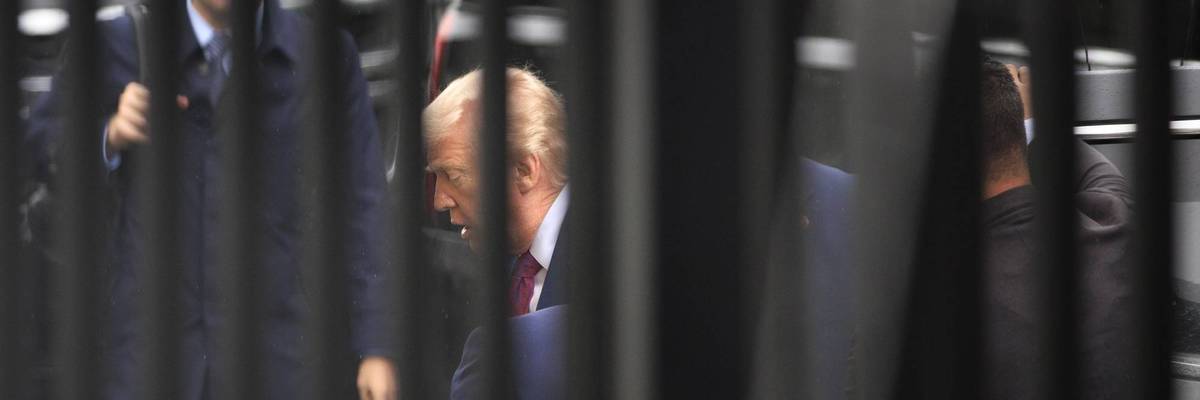
US President Donald Trump arrives at the White House on May 26, 2026 in Washington, DC. Trump returned to the West Wing following a physical exam at Walter Reed National Military Medical Center in Bethesda, Maryland.
The lone intent of the new policy, said one watchdog, "would be to protect the administration from the leak of embarrassing, politically damaging, or unlawful information.”
The Trump administration—the self-styled “most transparent administration in history”—plans to require all federal government employees to sign nondisclosure agreements in what it claims is an effort to stop damaging information from leaking, but what critics warn is a cynical effort to subvert accountability and hide malfeasance.
The Washington Post reported Tuesday on a draft notice posted to the Federal Register by the US Office of Personnel Management (OPM), which is expected to be published on Wednesday.
Consistent with the Trump administration’s efforts to squash negative reporting on its endeavors, the new rule contains a sweeping order that would ban federal employees from going to the press with any information deemed “confidential.”
Notably, this is different from the typical designation of "classified" vs. "unclassified." It encompasses “non-public, confidential, or proprietary information” or “any sensitive, pre-decisional or deliberative material that is not currently publicly available and should not be disclosed under applicable law.”
Both current and former employees would need "written permission from an authorized agency official" to speak to the press about matters deemed "confidential" under the draft's terms, or they could be subject to civil and criminal penalties.
It will be up to individual agencies whether they require employees to sign the NDAs, but the document said doing so would "promote consistency across government, better protect confidential information, and better inform federal employees of their rights and obligations regarding confidential information."
Under Defense Secretary Pete Hegseth, the Pentagon has already enacted a strict NDA that “prohibits the release of non-public information without approval or through a defined process," which it enacted late last year along with random lie-detector testing aimed at finding leakers.
The draft notice reported on Tuesday suggests a similar requirement will become blanket policy across a wide swath of agencies. The notice gives an idea of what sorts of information the administration wants to shield from journalistic scrutiny.
The document cites the unauthorized leak in February 2025 of information about the Department of Homeland Security's mass deportation targets in Los Angeles and Aurora, Colorado, which led then-Secretary Kristi Noem to start subjecting employees to polygraph tests to root out leakers.
Another whistleblower in January published identifying information for about 4,500 Immigration and Customs Enforcement (ICE) and Border Patrol employees.
The draft also pointed to disclosures to the New York Times and Washington Post, giving the outlets advanced notice of the planned US raid on Venezuela to kidnap President Nicolás Maduro in January, which the outlets waited to publish until after the illegal operation was complete.
The NDA proposal is the latest attack on critical journalism by the Trump administration, part of a pattern to assert stricter control over the flow of information to the public.
The Pentagon has sought to strip credentials from outlets unless they agree to only publish approved information. Trump and Federal Communications Commission (FCC) Chair Brendan Carr have threatened the broadcast licenses of networks that give Trump negative coverage and opened investigations into them. Trump, meanwhile, has personally launched unprecedented multi-billion-dollar lawsuits against media outlets, many of which judges have thrown out of court due to lack of merit.
In a statement sent to Common Dreams on Tuesday, Lauren Harper, the Daniel Ellsberg Chair on Government Secrecy at the Freedom of the Press Foundation, called the proposed NDA requirement "not just absurd" but "unnecessary and dangerously secretive."
“This policy, from a president who has previously attempted to impose oppressive, corporate-style confidentiality and nondisclosure agreements on federal employees," Harper said, "would kneecap whistleblower protections, undermine the First Amendment, and wrongly inhibit the public’s right to know.”
OPM Director Scott Kupor defended the requirement. “In much of the private sector," he told the Post, "employees handling sensitive business or customer information are routinely required to sign confidentiality agreements, and the federal government should not be held to a lower standard.”
But critics argue that the federal government doing the same poses potential First Amendment violations. Although federal whistleblower laws protect employees’ ability to go to the press about waste, fraud, and abuse, experts told the Post that the NDA proposal could, in practice, be used as a “catchall gag order” that could lead employees to feel their jobs are in danger if they speak out.
“Trying to force the entire federal government to adopt the Trump organization’s aggressive use of NDAs won’t make anybody safer and won’t improve agency processes," Harper said. "Its sole intent would be to protect the administration from the leak of embarrassing, politically damaging, or unlawful information.”
Everett Kelley, president of the American Federation of Government Employees (AFGE), said the NDA proposal shows the Trump administration is continuing "its efforts to silence federal employees.”
“This proposed rule," said Kelley, "sweeps in an extraordinarily broad category of information, extending restrictions to the very material the public relies on to learn when an administration is causing harm. Federal employees do not surrender their First Amendment rights when they accept federal employment."
"OPM claims the form will be ‘optional’ for agencies to use and merely restates existing law," Kelley added. "We know that will not be true. OPM will pressure agencies to make the NDA mandatory and then fire employees who refuse to sign it."
He said the rule change was unnecessary because there are already "extensive policies and procedures" to prevent classified and privileged info from being leaked.
Kelley said, "This proposed rule sweeps in an extraordinarily broad category of information, extending restrictions to the very material the public relies on to learn when an administration is causing harm."
Dear Common Dreams reader, It’s been nearly 30 years since I co-founded Common Dreams with my late wife, Lina Newhouser. We had the radical notion that journalism should serve the public good, not corporate profits. It was clear to us from the outset what it would take to build such a project. No paid advertisements. No corporate sponsors. No millionaire publisher telling us what to think or do. Many people said we wouldn't last a year, but we proved those doubters wrong. Together with a tremendous team of journalists and dedicated staff, we built an independent media outlet free from the constraints of profits and corporate control. Our mission has always been simple: To inform. To inspire. To ignite change for the common good. Building Common Dreams was not easy. Our survival was never guaranteed. When you take on the most powerful forces—Wall Street greed, fossil fuel industry destruction, Big Tech lobbyists, and uber-rich oligarchs who have spent billions upon billions rigging the economy and democracy in their favor—the only bulwark you have is supporters who believe in your work. But here’s the urgent message from me today. It's never been this bad out there. And it's never been this hard to keep us going. At the very moment Common Dreams is most needed, the threats we face are intensifying. We need your support now more than ever. We don't accept corporate advertising and never will. We don't have a paywall because we don't think people should be blocked from critical news based on their ability to pay. Everything we do is funded by the donations of readers like you. When everyone does the little they can afford, we are strong. But if that support retreats or dries up, so do we. Will you donate now to make sure Common Dreams not only survives but thrives? —Craig Brown, Co-founder |
The Trump administration—the self-styled “most transparent administration in history”—plans to require all federal government employees to sign nondisclosure agreements in what it claims is an effort to stop damaging information from leaking, but what critics warn is a cynical effort to subvert accountability and hide malfeasance.
The Washington Post reported Tuesday on a draft notice posted to the Federal Register by the US Office of Personnel Management (OPM), which is expected to be published on Wednesday.
Consistent with the Trump administration’s efforts to squash negative reporting on its endeavors, the new rule contains a sweeping order that would ban federal employees from going to the press with any information deemed “confidential.”
Notably, this is different from the typical designation of "classified" vs. "unclassified." It encompasses “non-public, confidential, or proprietary information” or “any sensitive, pre-decisional or deliberative material that is not currently publicly available and should not be disclosed under applicable law.”
Both current and former employees would need "written permission from an authorized agency official" to speak to the press about matters deemed "confidential" under the draft's terms, or they could be subject to civil and criminal penalties.
It will be up to individual agencies whether they require employees to sign the NDAs, but the document said doing so would "promote consistency across government, better protect confidential information, and better inform federal employees of their rights and obligations regarding confidential information."
Under Defense Secretary Pete Hegseth, the Pentagon has already enacted a strict NDA that “prohibits the release of non-public information without approval or through a defined process," which it enacted late last year along with random lie-detector testing aimed at finding leakers.
The draft notice reported on Tuesday suggests a similar requirement will become blanket policy across a wide swath of agencies. The notice gives an idea of what sorts of information the administration wants to shield from journalistic scrutiny.
The document cites the unauthorized leak in February 2025 of information about the Department of Homeland Security's mass deportation targets in Los Angeles and Aurora, Colorado, which led then-Secretary Kristi Noem to start subjecting employees to polygraph tests to root out leakers.
Another whistleblower in January published identifying information for about 4,500 Immigration and Customs Enforcement (ICE) and Border Patrol employees.
The draft also pointed to disclosures to the New York Times and Washington Post, giving the outlets advanced notice of the planned US raid on Venezuela to kidnap President Nicolás Maduro in January, which the outlets waited to publish until after the illegal operation was complete.
The NDA proposal is the latest attack on critical journalism by the Trump administration, part of a pattern to assert stricter control over the flow of information to the public.
The Pentagon has sought to strip credentials from outlets unless they agree to only publish approved information. Trump and Federal Communications Commission (FCC) Chair Brendan Carr have threatened the broadcast licenses of networks that give Trump negative coverage and opened investigations into them. Trump, meanwhile, has personally launched unprecedented multi-billion-dollar lawsuits against media outlets, many of which judges have thrown out of court due to lack of merit.
In a statement sent to Common Dreams on Tuesday, Lauren Harper, the Daniel Ellsberg Chair on Government Secrecy at the Freedom of the Press Foundation, called the proposed NDA requirement "not just absurd" but "unnecessary and dangerously secretive."
“This policy, from a president who has previously attempted to impose oppressive, corporate-style confidentiality and nondisclosure agreements on federal employees," Harper said, "would kneecap whistleblower protections, undermine the First Amendment, and wrongly inhibit the public’s right to know.”
OPM Director Scott Kupor defended the requirement. “In much of the private sector," he told the Post, "employees handling sensitive business or customer information are routinely required to sign confidentiality agreements, and the federal government should not be held to a lower standard.”
But critics argue that the federal government doing the same poses potential First Amendment violations. Although federal whistleblower laws protect employees’ ability to go to the press about waste, fraud, and abuse, experts told the Post that the NDA proposal could, in practice, be used as a “catchall gag order” that could lead employees to feel their jobs are in danger if they speak out.
“Trying to force the entire federal government to adopt the Trump organization’s aggressive use of NDAs won’t make anybody safer and won’t improve agency processes," Harper said. "Its sole intent would be to protect the administration from the leak of embarrassing, politically damaging, or unlawful information.”
Everett Kelley, president of the American Federation of Government Employees (AFGE), said the NDA proposal shows the Trump administration is continuing "its efforts to silence federal employees.”
“This proposed rule," said Kelley, "sweeps in an extraordinarily broad category of information, extending restrictions to the very material the public relies on to learn when an administration is causing harm. Federal employees do not surrender their First Amendment rights when they accept federal employment."
"OPM claims the form will be ‘optional’ for agencies to use and merely restates existing law," Kelley added. "We know that will not be true. OPM will pressure agencies to make the NDA mandatory and then fire employees who refuse to sign it."
He said the rule change was unnecessary because there are already "extensive policies and procedures" to prevent classified and privileged info from being leaked.
Kelley said, "This proposed rule sweeps in an extraordinarily broad category of information, extending restrictions to the very material the public relies on to learn when an administration is causing harm."
The Trump administration—the self-styled “most transparent administration in history”—plans to require all federal government employees to sign nondisclosure agreements in what it claims is an effort to stop damaging information from leaking, but what critics warn is a cynical effort to subvert accountability and hide malfeasance.
The Washington Post reported Tuesday on a draft notice posted to the Federal Register by the US Office of Personnel Management (OPM), which is expected to be published on Wednesday.
Consistent with the Trump administration’s efforts to squash negative reporting on its endeavors, the new rule contains a sweeping order that would ban federal employees from going to the press with any information deemed “confidential.”
Notably, this is different from the typical designation of "classified" vs. "unclassified." It encompasses “non-public, confidential, or proprietary information” or “any sensitive, pre-decisional or deliberative material that is not currently publicly available and should not be disclosed under applicable law.”
Both current and former employees would need "written permission from an authorized agency official" to speak to the press about matters deemed "confidential" under the draft's terms, or they could be subject to civil and criminal penalties.
It will be up to individual agencies whether they require employees to sign the NDAs, but the document said doing so would "promote consistency across government, better protect confidential information, and better inform federal employees of their rights and obligations regarding confidential information."
Under Defense Secretary Pete Hegseth, the Pentagon has already enacted a strict NDA that “prohibits the release of non-public information without approval or through a defined process," which it enacted late last year along with random lie-detector testing aimed at finding leakers.
The draft notice reported on Tuesday suggests a similar requirement will become blanket policy across a wide swath of agencies. The notice gives an idea of what sorts of information the administration wants to shield from journalistic scrutiny.
The document cites the unauthorized leak in February 2025 of information about the Department of Homeland Security's mass deportation targets in Los Angeles and Aurora, Colorado, which led then-Secretary Kristi Noem to start subjecting employees to polygraph tests to root out leakers.
Another whistleblower in January published identifying information for about 4,500 Immigration and Customs Enforcement (ICE) and Border Patrol employees.
The draft also pointed to disclosures to the New York Times and Washington Post, giving the outlets advanced notice of the planned US raid on Venezuela to kidnap President Nicolás Maduro in January, which the outlets waited to publish until after the illegal operation was complete.
The NDA proposal is the latest attack on critical journalism by the Trump administration, part of a pattern to assert stricter control over the flow of information to the public.
The Pentagon has sought to strip credentials from outlets unless they agree to only publish approved information. Trump and Federal Communications Commission (FCC) Chair Brendan Carr have threatened the broadcast licenses of networks that give Trump negative coverage and opened investigations into them. Trump, meanwhile, has personally launched unprecedented multi-billion-dollar lawsuits against media outlets, many of which judges have thrown out of court due to lack of merit.
In a statement sent to Common Dreams on Tuesday, Lauren Harper, the Daniel Ellsberg Chair on Government Secrecy at the Freedom of the Press Foundation, called the proposed NDA requirement "not just absurd" but "unnecessary and dangerously secretive."
“This policy, from a president who has previously attempted to impose oppressive, corporate-style confidentiality and nondisclosure agreements on federal employees," Harper said, "would kneecap whistleblower protections, undermine the First Amendment, and wrongly inhibit the public’s right to know.”
OPM Director Scott Kupor defended the requirement. “In much of the private sector," he told the Post, "employees handling sensitive business or customer information are routinely required to sign confidentiality agreements, and the federal government should not be held to a lower standard.”
But critics argue that the federal government doing the same poses potential First Amendment violations. Although federal whistleblower laws protect employees’ ability to go to the press about waste, fraud, and abuse, experts told the Post that the NDA proposal could, in practice, be used as a “catchall gag order” that could lead employees to feel their jobs are in danger if they speak out.
“Trying to force the entire federal government to adopt the Trump organization’s aggressive use of NDAs won’t make anybody safer and won’t improve agency processes," Harper said. "Its sole intent would be to protect the administration from the leak of embarrassing, politically damaging, or unlawful information.”
Everett Kelley, president of the American Federation of Government Employees (AFGE), said the NDA proposal shows the Trump administration is continuing "its efforts to silence federal employees.”
“This proposed rule," said Kelley, "sweeps in an extraordinarily broad category of information, extending restrictions to the very material the public relies on to learn when an administration is causing harm. Federal employees do not surrender their First Amendment rights when they accept federal employment."
"OPM claims the form will be ‘optional’ for agencies to use and merely restates existing law," Kelley added. "We know that will not be true. OPM will pressure agencies to make the NDA mandatory and then fire employees who refuse to sign it."
He said the rule change was unnecessary because there are already "extensive policies and procedures" to prevent classified and privileged info from being leaked.
Kelley said, "This proposed rule sweeps in an extraordinarily broad category of information, extending restrictions to the very material the public relies on to learn when an administration is causing harm."