SUBSCRIBE TO OUR FREE NEWSLETTER
Daily news & progressive opinion—funded by the people, not the corporations—delivered straight to your inbox.
5
#000000
#FFFFFF
To donate by check, phone, or other method, see our More Ways to Give page.
Daily news & progressive opinion—funded by the people, not the corporations—delivered straight to your inbox.
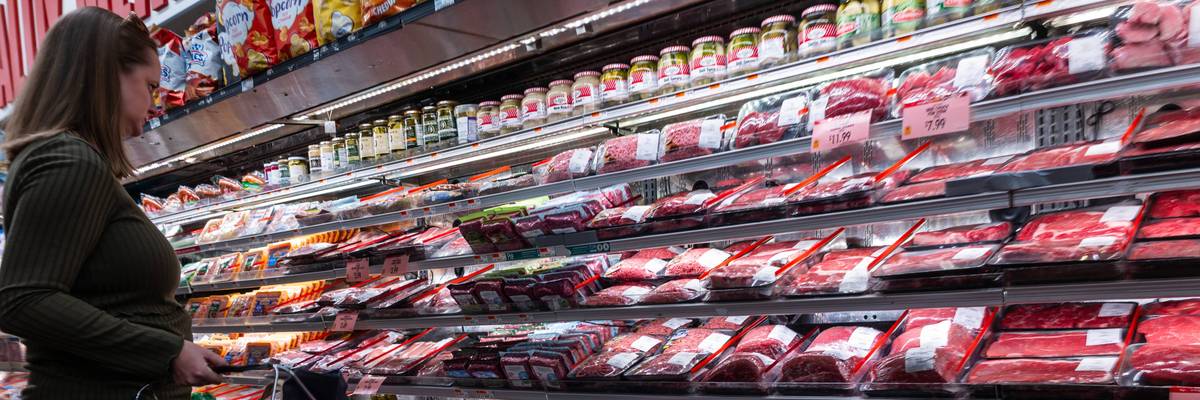
Meat is displayed at a grocery store in Brooklyn on May 12, 2026, in New York City.
After the president made clear he doesn't "think about" Americans' financial struggles, a report highlights rising costs of beef, produce, and other supplies for backyard barbecues due to Trump's policies.
With the US-Israeli war on Iran pushing gas prices up past $4.50 per gallon and American households already having spent nearly $300 that they wouldn't have otherwise on fuel, some families may opt to stay home this coming Memorial Day weekend—but a new analysis released Thursday shows that even without travel expenses, celebrations are likely to be more costly than they were last year thanks to President Donald Trump's policies.
Both Trump's assault on Iran—and the predictable result of the Iranians closing the Strait of Hormuz, a key trade waterway, in retaliation—and his tariff and trade policies are likely to make the holiday more expensive, with prices for barbecue classics up 13% on average since last year, more than four times the inflation rate, according to two think tanks, Groundwork Collaborative and The Century Foundation (TCF).
Ground beef for hamburgers is up 20%, while Johnsonville bratwursts are up 28%, Kraft hot dogs are up 12%, and Martin's rolls are 19% more expensive than they were in 2025.
Those shopping for produce won't fare much better, with the average price of a head of iceberg lettuce up 19% over last year, seedless watermelon costing 17% more, and six ears of yellow corn costing a whopping 98% more than it did in 2025.
"Higher fresh-produce prices in particular reflect Trump’s mishandling of the economy," reads the report. "Last year, the number of farmers filing for bankruptcy rose 46%, as Trump’s tariffs unleashed chaos and uncertainty in the industry. Fertilizer is an essential component for growing every item of produce and tariffs in place for much of 2025 drove fertilizer prices ever higher; these prices have remained elevated even after the Trump administration was forced to roll them back due to backlash."
"From the ticket counter to the cookout, consumers are scaling back and going without in the face of Trump’s summer sticker shock."
Janelle Jones, senior fellow at TCF, emphasized that both the tariffs and the war are "two decisions the president made and can undo whenever he wants but by his own admission he doesn’t spend any time thinking about Americans’ financial situation."
"Families are getting squeezed on the price of everything, and leaders in Washington don’t seem to be paying attention," said Jones.
Higher tomato costs—which are up 22% over last year—come after Trump ended the US-Mexico tomato trade agreement that had been in place for decades. Instead, he imposed a 17% tariff on tomatoes that come from the country's southern neighbor.
Even the act of serving food and packing it up as leftovers will be more expensive this year, with heavy-duty aluminum foil costing 18% more—also thanks to the tariffs—and disposable plasticware up 20%.
"The Middle East is a major producer of oil and petrochemicals, which is used to produce plastic," reads the report. "Increases in the price of plastic will ripple across grocery bills for months to come as packaging gets more expensive as well."
Less than two weeks after the president—who campaigned on reducing the cost of living—proudly stated that he doesn't "think about Americans’ financial situation" when it comes to the unprovoked Iran conflict, Groundwork and TCF also highlighted the impact the war of choice has had on jet fuel prices, and in turn, air travel.
"Jet fuel has soared to record highs and companies are passing these costs on to consumers," the report states. "The average domestic airfare ticket is now 31% more expensive than in January, according to industry data. For a family of four, this equates to an extra $360 on plane tickets for a typical flight."
Fuel prices contributed to Spirit Airlines' decision to shut down entirely, leaving larger carriers with no budget airline to compete with.
“Trump’s senseless tariffs and illegal war are robbing American families of their relaxing summer vacation," said Breyon Williams, chief economist for Groundwork. "From the ticket counter to the cookout, consumers are scaling back and going without in the face of Trump’s summer sticker shock.”
Dear Common Dreams reader, It’s been nearly 30 years since I co-founded Common Dreams with my late wife, Lina Newhouser. We had the radical notion that journalism should serve the public good, not corporate profits. It was clear to us from the outset what it would take to build such a project. No paid advertisements. No corporate sponsors. No millionaire publisher telling us what to think or do. Many people said we wouldn't last a year, but we proved those doubters wrong. Together with a tremendous team of journalists and dedicated staff, we built an independent media outlet free from the constraints of profits and corporate control. Our mission has always been simple: To inform. To inspire. To ignite change for the common good. Building Common Dreams was not easy. Our survival was never guaranteed. When you take on the most powerful forces—Wall Street greed, fossil fuel industry destruction, Big Tech lobbyists, and uber-rich oligarchs who have spent billions upon billions rigging the economy and democracy in their favor—the only bulwark you have is supporters who believe in your work. But here’s the urgent message from me today. It's never been this bad out there. And it's never been this hard to keep us going. At the very moment Common Dreams is most needed, the threats we face are intensifying. We need your support now more than ever. We don't accept corporate advertising and never will. We don't have a paywall because we don't think people should be blocked from critical news based on their ability to pay. Everything we do is funded by the donations of readers like you. When everyone does the little they can afford, we are strong. But if that support retreats or dries up, so do we. Will you donate now to make sure Common Dreams not only survives but thrives? —Craig Brown, Co-founder |
With the US-Israeli war on Iran pushing gas prices up past $4.50 per gallon and American households already having spent nearly $300 that they wouldn't have otherwise on fuel, some families may opt to stay home this coming Memorial Day weekend—but a new analysis released Thursday shows that even without travel expenses, celebrations are likely to be more costly than they were last year thanks to President Donald Trump's policies.
Both Trump's assault on Iran—and the predictable result of the Iranians closing the Strait of Hormuz, a key trade waterway, in retaliation—and his tariff and trade policies are likely to make the holiday more expensive, with prices for barbecue classics up 13% on average since last year, more than four times the inflation rate, according to two think tanks, Groundwork Collaborative and The Century Foundation (TCF).
Ground beef for hamburgers is up 20%, while Johnsonville bratwursts are up 28%, Kraft hot dogs are up 12%, and Martin's rolls are 19% more expensive than they were in 2025.
Those shopping for produce won't fare much better, with the average price of a head of iceberg lettuce up 19% over last year, seedless watermelon costing 17% more, and six ears of yellow corn costing a whopping 98% more than it did in 2025.
"Higher fresh-produce prices in particular reflect Trump’s mishandling of the economy," reads the report. "Last year, the number of farmers filing for bankruptcy rose 46%, as Trump’s tariffs unleashed chaos and uncertainty in the industry. Fertilizer is an essential component for growing every item of produce and tariffs in place for much of 2025 drove fertilizer prices ever higher; these prices have remained elevated even after the Trump administration was forced to roll them back due to backlash."
"From the ticket counter to the cookout, consumers are scaling back and going without in the face of Trump’s summer sticker shock."
Janelle Jones, senior fellow at TCF, emphasized that both the tariffs and the war are "two decisions the president made and can undo whenever he wants but by his own admission he doesn’t spend any time thinking about Americans’ financial situation."
"Families are getting squeezed on the price of everything, and leaders in Washington don’t seem to be paying attention," said Jones.
Higher tomato costs—which are up 22% over last year—come after Trump ended the US-Mexico tomato trade agreement that had been in place for decades. Instead, he imposed a 17% tariff on tomatoes that come from the country's southern neighbor.
Even the act of serving food and packing it up as leftovers will be more expensive this year, with heavy-duty aluminum foil costing 18% more—also thanks to the tariffs—and disposable plasticware up 20%.
"The Middle East is a major producer of oil and petrochemicals, which is used to produce plastic," reads the report. "Increases in the price of plastic will ripple across grocery bills for months to come as packaging gets more expensive as well."
Less than two weeks after the president—who campaigned on reducing the cost of living—proudly stated that he doesn't "think about Americans’ financial situation" when it comes to the unprovoked Iran conflict, Groundwork and TCF also highlighted the impact the war of choice has had on jet fuel prices, and in turn, air travel.
"Jet fuel has soared to record highs and companies are passing these costs on to consumers," the report states. "The average domestic airfare ticket is now 31% more expensive than in January, according to industry data. For a family of four, this equates to an extra $360 on plane tickets for a typical flight."
Fuel prices contributed to Spirit Airlines' decision to shut down entirely, leaving larger carriers with no budget airline to compete with.
“Trump’s senseless tariffs and illegal war are robbing American families of their relaxing summer vacation," said Breyon Williams, chief economist for Groundwork. "From the ticket counter to the cookout, consumers are scaling back and going without in the face of Trump’s summer sticker shock.”
With the US-Israeli war on Iran pushing gas prices up past $4.50 per gallon and American households already having spent nearly $300 that they wouldn't have otherwise on fuel, some families may opt to stay home this coming Memorial Day weekend—but a new analysis released Thursday shows that even without travel expenses, celebrations are likely to be more costly than they were last year thanks to President Donald Trump's policies.
Both Trump's assault on Iran—and the predictable result of the Iranians closing the Strait of Hormuz, a key trade waterway, in retaliation—and his tariff and trade policies are likely to make the holiday more expensive, with prices for barbecue classics up 13% on average since last year, more than four times the inflation rate, according to two think tanks, Groundwork Collaborative and The Century Foundation (TCF).
Ground beef for hamburgers is up 20%, while Johnsonville bratwursts are up 28%, Kraft hot dogs are up 12%, and Martin's rolls are 19% more expensive than they were in 2025.
Those shopping for produce won't fare much better, with the average price of a head of iceberg lettuce up 19% over last year, seedless watermelon costing 17% more, and six ears of yellow corn costing a whopping 98% more than it did in 2025.
"Higher fresh-produce prices in particular reflect Trump’s mishandling of the economy," reads the report. "Last year, the number of farmers filing for bankruptcy rose 46%, as Trump’s tariffs unleashed chaos and uncertainty in the industry. Fertilizer is an essential component for growing every item of produce and tariffs in place for much of 2025 drove fertilizer prices ever higher; these prices have remained elevated even after the Trump administration was forced to roll them back due to backlash."
"From the ticket counter to the cookout, consumers are scaling back and going without in the face of Trump’s summer sticker shock."
Janelle Jones, senior fellow at TCF, emphasized that both the tariffs and the war are "two decisions the president made and can undo whenever he wants but by his own admission he doesn’t spend any time thinking about Americans’ financial situation."
"Families are getting squeezed on the price of everything, and leaders in Washington don’t seem to be paying attention," said Jones.
Higher tomato costs—which are up 22% over last year—come after Trump ended the US-Mexico tomato trade agreement that had been in place for decades. Instead, he imposed a 17% tariff on tomatoes that come from the country's southern neighbor.
Even the act of serving food and packing it up as leftovers will be more expensive this year, with heavy-duty aluminum foil costing 18% more—also thanks to the tariffs—and disposable plasticware up 20%.
"The Middle East is a major producer of oil and petrochemicals, which is used to produce plastic," reads the report. "Increases in the price of plastic will ripple across grocery bills for months to come as packaging gets more expensive as well."
Less than two weeks after the president—who campaigned on reducing the cost of living—proudly stated that he doesn't "think about Americans’ financial situation" when it comes to the unprovoked Iran conflict, Groundwork and TCF also highlighted the impact the war of choice has had on jet fuel prices, and in turn, air travel.
"Jet fuel has soared to record highs and companies are passing these costs on to consumers," the report states. "The average domestic airfare ticket is now 31% more expensive than in January, according to industry data. For a family of four, this equates to an extra $360 on plane tickets for a typical flight."
Fuel prices contributed to Spirit Airlines' decision to shut down entirely, leaving larger carriers with no budget airline to compete with.
“Trump’s senseless tariffs and illegal war are robbing American families of their relaxing summer vacation," said Breyon Williams, chief economist for Groundwork. "From the ticket counter to the cookout, consumers are scaling back and going without in the face of Trump’s summer sticker shock.”