SUBSCRIBE TO OUR FREE NEWSLETTER
Daily news & progressive opinion—funded by the people, not the corporations—delivered straight to your inbox.
5
#000000
#FFFFFF
To donate by check, phone, or other method, see our More Ways to Give page.
Daily news & progressive opinion—funded by the people, not the corporations—delivered straight to your inbox.
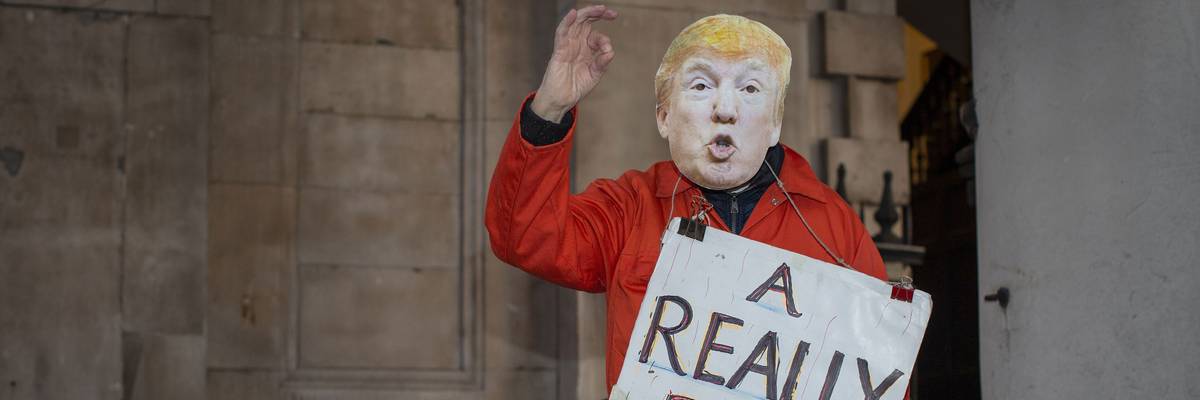
A man wearing an orange prison outfit and a Donald Trump mask during a protest against U.S. President Donald Trump UK visit to attend the NATO (North Atlantic Treaty Organisation) summit on the 3rd December 2019 in London in the United Kingdom.
Creation of a $1.776 billion fund to compensate individuals who claim to have been victims of the government’s “weaponization” of law represents the culmination of the president’s six-year effort to claim that he won an election that he so clearly lost.
During the past week, the Trump administration announced three separate but connected decisions that are so outrageous they may lead to his comeuppance. Collectively, they reward lawlessness and undermine the very foundations of our democracy.
The first of these was the announcement by the Department of Justice that a $1,776,000,000 fund was being established to compensate “victims” of the previous administration’s “weaponization” of the law by “unfairly investigating and punishing them.” As a quid pro quo, Mr. Trump agreed to drop his questionable $10 billion lawsuit against the Internal Revenue Service for what he charged was their role in failing to stop a contractor from leaking one of his tax returns to the media in 2019. To cap off the president’s trifecta, the DOJ added an amendment to the “victims’ fund” stating: “The United States releases, waives, and forever discharges [Trump, his family, his business] and is hereby forever barred and precluded from prosecuting or pursuing, any and all claims [that] have been or could have been asserted [by the IRS against them or] related or affiliated individuals.”
As problematic as each of the three may be, it’s the ways they are connected that is most troubling. The Trump lawsuit against the IRS was set to be dismissed by the judge who was hearing the case. She had argued that it was improper for the White House to sue a federal agency it controlled, as this put the administration in the position of being both plaintiff and defendant. The decision was to be announced by May 20th, forcing the White House to act to drop their suit before it was dismissed. It was, therefore, no coincidence that the DOJ announced on May 18th and 19th both the “victims’ fund” and the ban on any future IRS action against the president.
But the story doesn’t end there as serious questions must be asked about the entire IRS affair. The contractor who leaked the document has already been arrested and convicted for his crime. There was no connection between his admittedly criminal act and the IRS as an institution. Therefore, the president’s lawsuit against the institution and the $10 billion award in damages he was seeking was both unwarranted and excessive. Like many of Mr. Trump’s previous suits against media outlets, it was meant to intimidate in order to seek some sort of settlement.
The DOJ’s handling of the matter validated the judge’s concern that the head of government couldn’t sue an agency he oversees (not to speak of trying to secure a massive payout from that agency). It simply didn’t pass the smell test. Finally, the DOJ addendum giving the president, his family, and business a free pass from any further tax audits, investigations, or prosecution for any claims against them raises the obvious question: What tax problems are they covering up?
The creation of the $1.776 billion fund to compensate individuals who claim to have been victims of the government’s “weaponization” of law represents the culmination of the president’s six-year effort to go beyond just defending the violent insurrectionists of January 6th, 2021. This is important to Mr. Trump, because by defending them he is defending his claim that he won the 2020 election and, therefore, the violent mobs that stormed the Congress weren’t lawbreakers. They were heroes and persecuted martyrs who deserve compensation.
In this regard, it’s important to examine what Trump has done.
Just over six years ago we witnessed the horrifying scenes of violent mobs storming the US Capitol in an effort to stop Congress from certifying outcome of the 2020 election. They struck out at Capitol police who were doing their jobs protecting the members of Congress and the building itself. Some were injured; a few died. The scenes of what these rioters did were broadcast to a shocked nation.
Because the president egged on the mob, he was impeached by Congress. Ten Republican members of Congress voted to impeach Trump and seven Republican senators voted to convict and remove him from office.
After Mr. Trump’s relentless campaign mobilizing his supporters to demand loyalty, most of the 17 senators and representatives who voted against him are gone. They either resigned because the heat was too great or were defeated by Trump loyalists.
And the polls tell this story. In 2021, most Republicans were outraged by the mob violence. A poll from January of 2021 found that 78% of Trump supporters disapproved of the insurrection. A more recent poll reveals a dramatic shift that has taken place. When asked to describe the events of January 6th, 2021, 60% of Republicans say they were “people participating in legitimate political discourse.” Only 18% said that it was “people participating in a violent insurrection.”
Believing that he had set the stage to allow for his complete rewriting of history, the president, who had already commuted the sentences and/or pardoned more than 2,000 of the insurrectionists, now felt emboldened to have the government reward them for their blind loyalty to him. But in doing so, he may have pushed too far. Republican senators who consider themselves law-and-order, fiscal conservatives recoiled in horror over what a few called “utterly stupid,” “morally wrong,” and an abuse of power. Instead of acting to pass some of Mr. Trump’s legislative priorities, they criticized the president’s actions and took an early recess.
Dear Common Dreams reader, It’s been nearly 30 years since I co-founded Common Dreams with my late wife, Lina Newhouser. We had the radical notion that journalism should serve the public good, not corporate profits. It was clear to us from the outset what it would take to build such a project. No paid advertisements. No corporate sponsors. No millionaire publisher telling us what to think or do. Many people said we wouldn't last a year, but we proved those doubters wrong. Together with a tremendous team of journalists and dedicated staff, we built an independent media outlet free from the constraints of profits and corporate control. Our mission has always been simple: To inform. To inspire. To ignite change for the common good. Building Common Dreams was not easy. Our survival was never guaranteed. When you take on the most powerful forces—Wall Street greed, fossil fuel industry destruction, Big Tech lobbyists, and uber-rich oligarchs who have spent billions upon billions rigging the economy and democracy in their favor—the only bulwark you have is supporters who believe in your work. But here’s the urgent message from me today. It's never been this bad out there. And it's never been this hard to keep us going. At the very moment Common Dreams is most needed, the threats we face are intensifying. We need your support now more than ever. We don't accept corporate advertising and never will. We don't have a paywall because we don't think people should be blocked from critical news based on their ability to pay. Everything we do is funded by the donations of readers like you. When everyone does the little they can afford, we are strong. But if that support retreats or dries up, so do we. Will you donate now to make sure Common Dreams not only survives but thrives? —Craig Brown, Co-founder |
During the past week, the Trump administration announced three separate but connected decisions that are so outrageous they may lead to his comeuppance. Collectively, they reward lawlessness and undermine the very foundations of our democracy.
The first of these was the announcement by the Department of Justice that a $1,776,000,000 fund was being established to compensate “victims” of the previous administration’s “weaponization” of the law by “unfairly investigating and punishing them.” As a quid pro quo, Mr. Trump agreed to drop his questionable $10 billion lawsuit against the Internal Revenue Service for what he charged was their role in failing to stop a contractor from leaking one of his tax returns to the media in 2019. To cap off the president’s trifecta, the DOJ added an amendment to the “victims’ fund” stating: “The United States releases, waives, and forever discharges [Trump, his family, his business] and is hereby forever barred and precluded from prosecuting or pursuing, any and all claims [that] have been or could have been asserted [by the IRS against them or] related or affiliated individuals.”
As problematic as each of the three may be, it’s the ways they are connected that is most troubling. The Trump lawsuit against the IRS was set to be dismissed by the judge who was hearing the case. She had argued that it was improper for the White House to sue a federal agency it controlled, as this put the administration in the position of being both plaintiff and defendant. The decision was to be announced by May 20th, forcing the White House to act to drop their suit before it was dismissed. It was, therefore, no coincidence that the DOJ announced on May 18th and 19th both the “victims’ fund” and the ban on any future IRS action against the president.
But the story doesn’t end there as serious questions must be asked about the entire IRS affair. The contractor who leaked the document has already been arrested and convicted for his crime. There was no connection between his admittedly criminal act and the IRS as an institution. Therefore, the president’s lawsuit against the institution and the $10 billion award in damages he was seeking was both unwarranted and excessive. Like many of Mr. Trump’s previous suits against media outlets, it was meant to intimidate in order to seek some sort of settlement.
The DOJ’s handling of the matter validated the judge’s concern that the head of government couldn’t sue an agency he oversees (not to speak of trying to secure a massive payout from that agency). It simply didn’t pass the smell test. Finally, the DOJ addendum giving the president, his family, and business a free pass from any further tax audits, investigations, or prosecution for any claims against them raises the obvious question: What tax problems are they covering up?
The creation of the $1.776 billion fund to compensate individuals who claim to have been victims of the government’s “weaponization” of law represents the culmination of the president’s six-year effort to go beyond just defending the violent insurrectionists of January 6th, 2021. This is important to Mr. Trump, because by defending them he is defending his claim that he won the 2020 election and, therefore, the violent mobs that stormed the Congress weren’t lawbreakers. They were heroes and persecuted martyrs who deserve compensation.
In this regard, it’s important to examine what Trump has done.
Just over six years ago we witnessed the horrifying scenes of violent mobs storming the US Capitol in an effort to stop Congress from certifying outcome of the 2020 election. They struck out at Capitol police who were doing their jobs protecting the members of Congress and the building itself. Some were injured; a few died. The scenes of what these rioters did were broadcast to a shocked nation.
Because the president egged on the mob, he was impeached by Congress. Ten Republican members of Congress voted to impeach Trump and seven Republican senators voted to convict and remove him from office.
After Mr. Trump’s relentless campaign mobilizing his supporters to demand loyalty, most of the 17 senators and representatives who voted against him are gone. They either resigned because the heat was too great or were defeated by Trump loyalists.
And the polls tell this story. In 2021, most Republicans were outraged by the mob violence. A poll from January of 2021 found that 78% of Trump supporters disapproved of the insurrection. A more recent poll reveals a dramatic shift that has taken place. When asked to describe the events of January 6th, 2021, 60% of Republicans say they were “people participating in legitimate political discourse.” Only 18% said that it was “people participating in a violent insurrection.”
Believing that he had set the stage to allow for his complete rewriting of history, the president, who had already commuted the sentences and/or pardoned more than 2,000 of the insurrectionists, now felt emboldened to have the government reward them for their blind loyalty to him. But in doing so, he may have pushed too far. Republican senators who consider themselves law-and-order, fiscal conservatives recoiled in horror over what a few called “utterly stupid,” “morally wrong,” and an abuse of power. Instead of acting to pass some of Mr. Trump’s legislative priorities, they criticized the president’s actions and took an early recess.
During the past week, the Trump administration announced three separate but connected decisions that are so outrageous they may lead to his comeuppance. Collectively, they reward lawlessness and undermine the very foundations of our democracy.
The first of these was the announcement by the Department of Justice that a $1,776,000,000 fund was being established to compensate “victims” of the previous administration’s “weaponization” of the law by “unfairly investigating and punishing them.” As a quid pro quo, Mr. Trump agreed to drop his questionable $10 billion lawsuit against the Internal Revenue Service for what he charged was their role in failing to stop a contractor from leaking one of his tax returns to the media in 2019. To cap off the president’s trifecta, the DOJ added an amendment to the “victims’ fund” stating: “The United States releases, waives, and forever discharges [Trump, his family, his business] and is hereby forever barred and precluded from prosecuting or pursuing, any and all claims [that] have been or could have been asserted [by the IRS against them or] related or affiliated individuals.”
As problematic as each of the three may be, it’s the ways they are connected that is most troubling. The Trump lawsuit against the IRS was set to be dismissed by the judge who was hearing the case. She had argued that it was improper for the White House to sue a federal agency it controlled, as this put the administration in the position of being both plaintiff and defendant. The decision was to be announced by May 20th, forcing the White House to act to drop their suit before it was dismissed. It was, therefore, no coincidence that the DOJ announced on May 18th and 19th both the “victims’ fund” and the ban on any future IRS action against the president.
But the story doesn’t end there as serious questions must be asked about the entire IRS affair. The contractor who leaked the document has already been arrested and convicted for his crime. There was no connection between his admittedly criminal act and the IRS as an institution. Therefore, the president’s lawsuit against the institution and the $10 billion award in damages he was seeking was both unwarranted and excessive. Like many of Mr. Trump’s previous suits against media outlets, it was meant to intimidate in order to seek some sort of settlement.
The DOJ’s handling of the matter validated the judge’s concern that the head of government couldn’t sue an agency he oversees (not to speak of trying to secure a massive payout from that agency). It simply didn’t pass the smell test. Finally, the DOJ addendum giving the president, his family, and business a free pass from any further tax audits, investigations, or prosecution for any claims against them raises the obvious question: What tax problems are they covering up?
The creation of the $1.776 billion fund to compensate individuals who claim to have been victims of the government’s “weaponization” of law represents the culmination of the president’s six-year effort to go beyond just defending the violent insurrectionists of January 6th, 2021. This is important to Mr. Trump, because by defending them he is defending his claim that he won the 2020 election and, therefore, the violent mobs that stormed the Congress weren’t lawbreakers. They were heroes and persecuted martyrs who deserve compensation.
In this regard, it’s important to examine what Trump has done.
Just over six years ago we witnessed the horrifying scenes of violent mobs storming the US Capitol in an effort to stop Congress from certifying outcome of the 2020 election. They struck out at Capitol police who were doing their jobs protecting the members of Congress and the building itself. Some were injured; a few died. The scenes of what these rioters did were broadcast to a shocked nation.
Because the president egged on the mob, he was impeached by Congress. Ten Republican members of Congress voted to impeach Trump and seven Republican senators voted to convict and remove him from office.
After Mr. Trump’s relentless campaign mobilizing his supporters to demand loyalty, most of the 17 senators and representatives who voted against him are gone. They either resigned because the heat was too great or were defeated by Trump loyalists.
And the polls tell this story. In 2021, most Republicans were outraged by the mob violence. A poll from January of 2021 found that 78% of Trump supporters disapproved of the insurrection. A more recent poll reveals a dramatic shift that has taken place. When asked to describe the events of January 6th, 2021, 60% of Republicans say they were “people participating in legitimate political discourse.” Only 18% said that it was “people participating in a violent insurrection.”
Believing that he had set the stage to allow for his complete rewriting of history, the president, who had already commuted the sentences and/or pardoned more than 2,000 of the insurrectionists, now felt emboldened to have the government reward them for their blind loyalty to him. But in doing so, he may have pushed too far. Republican senators who consider themselves law-and-order, fiscal conservatives recoiled in horror over what a few called “utterly stupid,” “morally wrong,” and an abuse of power. Instead of acting to pass some of Mr. Trump’s legislative priorities, they criticized the president’s actions and took an early recess.