

SUBSCRIBE TO OUR FREE NEWSLETTER
Daily news & progressive opinion—funded by the people, not the corporations—delivered straight to your inbox.
5
#000000
#FFFFFF
To donate by check, phone, or other method, see our More Ways to Give page.
Daily news & progressive opinion—funded by the people, not the corporations—delivered straight to your inbox.
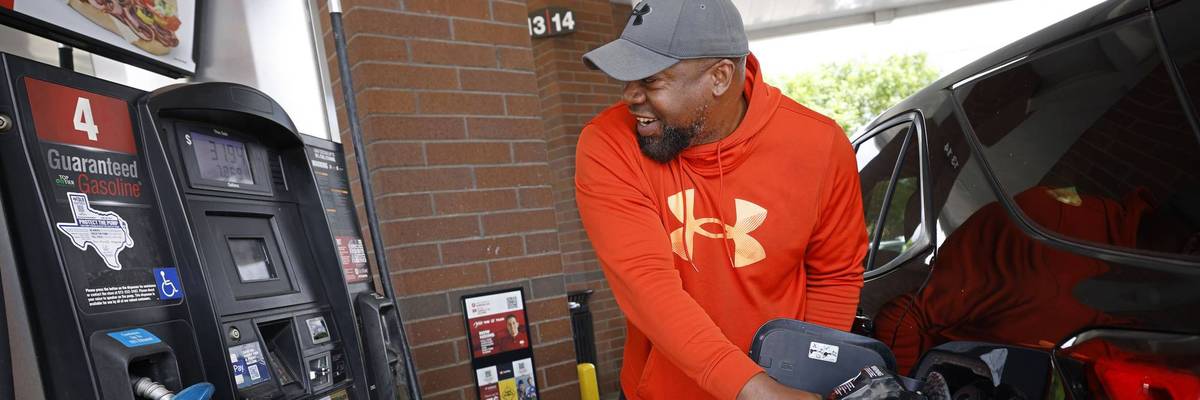
A man pumps gas at a QuikTrip gas station on May 11, 2026, in Irving, Texas.
The average household has already paid an additional $291 for gas since the war began and could spend $1,450 by year's end.
Americans' travel plans for this Memorial Day weekend have gotten a lot more expensive as a result of President Donald Trump's war with Iran.
A tracker released on Wednesday by the Institute on Taxation and Economic Policy (ITEP) projects that Americans will collectively spend an extra $3.5 billion on gas over the holiday weekend due to the global rise in oil costs.
The costs of gas have risen sharply, to above $4.50 per gallon across the US on average, as a result of Iran's restriction of travel through the Strait of Hormuz in retaliation for the war that the US and Israel launched at the end of February.
“Americans were already struggling with the high cost of living before this war started,” said Carl Davis, research director at ITEP. “The fact that their summer travel plans just got a whole lot more expensive isn’t going to help with that.”
Using publicly available data and price forecasts from the US Energy Information Administration, the Federal Highway Administration, and the US Census Bureau, ITEP determined that as a result of the war, Americans have paid about $39.6 billion in additional gas costs in less than three months since the war began.
It is projected that if current conditions continue, the total cost would be about $193 billion by the end of the year.
The average household has already paid an additional $291 for gas since the war began and could spend $1,450 by year's end. However, the cost varies by region, and the tool allows users to estimate their household's added cost based on where they live and how many family members they have.
The tracker only accounts for increased gasoline prices. It does not include price hikes caused by the war on other essentials, such as home utilities and food. Federal data released earlier this month showed that inflation has surged to its highest level since May 2023.
It also does not account for the amount of taxpayer dollars spent on the war. Pentagon officials said that it had cost $25 billion in April, though other independent estimates have placed the total cost much higher.
As Trump flails in response to rising prices, which have driven his approval ratings to their lowest low of his second term, he has proposed suspending federal gas taxes. Lawmakers in both parties have introduced bills that would temporarily suspend the tax, which adds an extra 18.4 cents per gallon of gasoline and 24.4 cents per gallon of diesel.
However, ITEP argued that these proposals would be "ineffective as they offer very little relief to families" and that they "also run the risk of straining public budgets at a time when governments at all levels are facing some of the same higher costs as the public brought on by this war."
Dear Common Dreams reader, It’s been nearly 30 years since I co-founded Common Dreams with my late wife, Lina Newhouser. We had the radical notion that journalism should serve the public good, not corporate profits. It was clear to us from the outset what it would take to build such a project. No paid advertisements. No corporate sponsors. No millionaire publisher telling us what to think or do. Many people said we wouldn't last a year, but we proved those doubters wrong. Together with a tremendous team of journalists and dedicated staff, we built an independent media outlet free from the constraints of profits and corporate control. Our mission has always been simple: To inform. To inspire. To ignite change for the common good. Building Common Dreams was not easy. Our survival was never guaranteed. When you take on the most powerful forces—Wall Street greed, fossil fuel industry destruction, Big Tech lobbyists, and uber-rich oligarchs who have spent billions upon billions rigging the economy and democracy in their favor—the only bulwark you have is supporters who believe in your work. But here’s the urgent message from me today. It's never been this bad out there. And it's never been this hard to keep us going. At the very moment Common Dreams is most needed, the threats we face are intensifying. We need your support now more than ever. We don't accept corporate advertising and never will. We don't have a paywall because we don't think people should be blocked from critical news based on their ability to pay. Everything we do is funded by the donations of readers like you. When everyone does the little they can afford, we are strong. But if that support retreats or dries up, so do we. Will you donate now to make sure Common Dreams not only survives but thrives? —Craig Brown, Co-founder |
Americans' travel plans for this Memorial Day weekend have gotten a lot more expensive as a result of President Donald Trump's war with Iran.
A tracker released on Wednesday by the Institute on Taxation and Economic Policy (ITEP) projects that Americans will collectively spend an extra $3.5 billion on gas over the holiday weekend due to the global rise in oil costs.
The costs of gas have risen sharply, to above $4.50 per gallon across the US on average, as a result of Iran's restriction of travel through the Strait of Hormuz in retaliation for the war that the US and Israel launched at the end of February.
“Americans were already struggling with the high cost of living before this war started,” said Carl Davis, research director at ITEP. “The fact that their summer travel plans just got a whole lot more expensive isn’t going to help with that.”
Using publicly available data and price forecasts from the US Energy Information Administration, the Federal Highway Administration, and the US Census Bureau, ITEP determined that as a result of the war, Americans have paid about $39.6 billion in additional gas costs in less than three months since the war began.
It is projected that if current conditions continue, the total cost would be about $193 billion by the end of the year.
The average household has already paid an additional $291 for gas since the war began and could spend $1,450 by year's end. However, the cost varies by region, and the tool allows users to estimate their household's added cost based on where they live and how many family members they have.
The tracker only accounts for increased gasoline prices. It does not include price hikes caused by the war on other essentials, such as home utilities and food. Federal data released earlier this month showed that inflation has surged to its highest level since May 2023.
It also does not account for the amount of taxpayer dollars spent on the war. Pentagon officials said that it had cost $25 billion in April, though other independent estimates have placed the total cost much higher.
As Trump flails in response to rising prices, which have driven his approval ratings to their lowest low of his second term, he has proposed suspending federal gas taxes. Lawmakers in both parties have introduced bills that would temporarily suspend the tax, which adds an extra 18.4 cents per gallon of gasoline and 24.4 cents per gallon of diesel.
However, ITEP argued that these proposals would be "ineffective as they offer very little relief to families" and that they "also run the risk of straining public budgets at a time when governments at all levels are facing some of the same higher costs as the public brought on by this war."
Americans' travel plans for this Memorial Day weekend have gotten a lot more expensive as a result of President Donald Trump's war with Iran.
A tracker released on Wednesday by the Institute on Taxation and Economic Policy (ITEP) projects that Americans will collectively spend an extra $3.5 billion on gas over the holiday weekend due to the global rise in oil costs.
The costs of gas have risen sharply, to above $4.50 per gallon across the US on average, as a result of Iran's restriction of travel through the Strait of Hormuz in retaliation for the war that the US and Israel launched at the end of February.
“Americans were already struggling with the high cost of living before this war started,” said Carl Davis, research director at ITEP. “The fact that their summer travel plans just got a whole lot more expensive isn’t going to help with that.”
Using publicly available data and price forecasts from the US Energy Information Administration, the Federal Highway Administration, and the US Census Bureau, ITEP determined that as a result of the war, Americans have paid about $39.6 billion in additional gas costs in less than three months since the war began.
It is projected that if current conditions continue, the total cost would be about $193 billion by the end of the year.
The average household has already paid an additional $291 for gas since the war began and could spend $1,450 by year's end. However, the cost varies by region, and the tool allows users to estimate their household's added cost based on where they live and how many family members they have.
The tracker only accounts for increased gasoline prices. It does not include price hikes caused by the war on other essentials, such as home utilities and food. Federal data released earlier this month showed that inflation has surged to its highest level since May 2023.
It also does not account for the amount of taxpayer dollars spent on the war. Pentagon officials said that it had cost $25 billion in April, though other independent estimates have placed the total cost much higher.
As Trump flails in response to rising prices, which have driven his approval ratings to their lowest low of his second term, he has proposed suspending federal gas taxes. Lawmakers in both parties have introduced bills that would temporarily suspend the tax, which adds an extra 18.4 cents per gallon of gasoline and 24.4 cents per gallon of diesel.
However, ITEP argued that these proposals would be "ineffective as they offer very little relief to families" and that they "also run the risk of straining public budgets at a time when governments at all levels are facing some of the same higher costs as the public brought on by this war."

