

SUBSCRIBE TO OUR FREE NEWSLETTER
Daily news & progressive opinion—funded by the people, not the corporations—delivered straight to your inbox.
5
#000000
#FFFFFF
To donate by check, phone, or other method, see our More Ways to Give page.
Daily news & progressive opinion—funded by the people, not the corporations—delivered straight to your inbox.

During the same speech, Cruz tied Democrats' rhetoric to the 9/11 attacks, the murder of Charlie Kirk, and assassination attempts against Trump.
While speaking at a midterm convention for Republicans on Thursday night, Sen. Ted Cruz blamed left-wing rhetoric for fomenting violence. But the Texas senator did not react when an attendee in the crowd shouted loudly that three different Democratic politicians "should be shot."
During the speech in Dallas, which took place on the one-year anniversary of the assassination of right-wing activist Charlie Kirk, and a day before the 25th anniversary of the September 11 terrorist attacks, Cruz said that "the hate that killed Charlie Kirk, that knocked down the Twin Towers, that led to two assassination attempts on President [Donald] Trump... just keeps getting worse and worse," and claimed that it had overtaken the Democratic Party.
Cruz said the party was being swept over by "a new and dangerous red-green alliance: communists and Islamists," and singled out specific figures.
Joining persistent attacks from fellow Republicans against New York City Mayor Zohran Mamdani's Muslim faith, Cruz lamented, "On 9/11, could anyone have imagined that Comrade Mamdani would be the mayor of New York?"
Cruz then referenced a comment Mamdani, a member of the Democratic Socialists of America, made during a 2021 meeting of the organization's youth wing in which he said workers "seizing the means of production" was an "end goal." Though Mamdani has not used similar rhetoric since beginning his campaign for mayor, Cruz seized upon the old comments nonetheless.
"When Mamdani says he wants to ‘seize the means of production,’ he means it," Cruz said.
It was then that a shout rang out from the crowd: "He should be shot!"
Cruz did not react, moving on to discuss Abdul El-Sayed, the Democratic US Senate nominee for Michigan, who is a former public health official for Detroit.
"When Abdul El-Sayed says he has an obligation to Sharia law, he means it," Cruz continued, twisting a comment El-Sayed made to The New York Times in 2009, when he was a 24-year-old medical student, referring to his personal decision to use a Sharia-compliant mortgage because Islam prohibits interest.
On the 2026 campaign trail, El-Sayed has clarified he has no desire "to push Sharia law on anyone else… because we live in an America where you should have the freedom of your religion.”
Again, the audience member shouted, "He should be shot!"
Cruz then turned to Texas state Rep. James Talarico (D-50), the Democratic nominee for US Senate, whom he said also "means it," when he "says he wants to dismantle capitalism."
He was referring to comments that Talarico made at a Sierra Club candidate forum in 2020 when he spoke of "climate change, white supremacy, and capitalism" as "oppressive systems" that "work together." Talarico has since said the comments "missed the mark."
Once again, the rallygoer shouted, "He should be shot!" Cruz did not react.
A spokesperson for Cruz declined to say whether the senator heard the violent shouts when asked about it by The Washington Post. The Post noted that while it was unclear if Cruz heard the remarks, several other speakers during the convention responded when hecklers interrupted them, and Trump reacted to shouts from the crowd repeatedly.
Cruz's social media account has posted a clip of the speech in which the shouts of "he should be shot" are audible, which remains online.
El-Sayed told CNN's Kaitlan Collins on Thursday night that the call for violence frightened him.
“Look, I’m a dad with two daughters, and I hope those daughters get to grow up and live with their dad,” the 41-year-old candidate said. “This is what has become the norm in our politics. I mean, literally calls to violence and the inability for anybody to actually call it out.”
“Democracy is supposed to be the process by which we solve our problems peacefully,” he continued. “We can learn to disagree agreeably, and when you hear that kind of call to violence, it should be shuddering to all of us. We have a responsibility to lower the temperature, to realize that this is not a bloodsport, where you’re just trying to bash the other guy.”
Mamdani and Talarico have not publicly responded to the calls for violence at the time of publication. However, other Democrats have called them out and criticized Cruz's silence.
Rep. Delia Ramirez (D-Ill.) wrote in a social media post that Cruz "had the opportunity to end the calls for violence, instead he riled people up."
She added that Cruz "owes Mamdani, El-Sayed, Talarico, and the communities they are fighting to represent an apology."
House Minority Whip Katherine Clark (D-Mass.) wrote that "every single Republican should denounce this dangerous rhetoric immediately—starting with Ted Cruz."
At the time of publication, Cruz had not made a public statement on the incident. Multiple outlets reported that his office has not responded to requests for comment.
Rep. Kristen McDonald Rivet (D-Mich.) described Cruz's lack of a response to the violent shouts as "a shameful profile in cowardice."
"Political violence is a big problem," she added. "Rather than egging on, real leaders call it out. It needs to stop, regardless of party.”
Cruz's office did not immediately respond to a request for comment from Common Dreams on Friday about whether he condemned the call for violence and whether he believed that he bore similar responsibility for individuals' reactions to his political rhetoric that he ascribes to Democratic politicians.

"Enough is enough. We need to make sure that the pace of development isn't outpacing the pace of risk."
Democratic US Senate candidate Abdul El-Sayed of Michigan on Wednesday called for a pause in advanced artificial intelligence development, warning that the technology is progressing faster than governments and researchers can establish meaningful safeguards against potentially catastrophic consequences.
"You might have woken up like me to this tweet from a guy you probably never heard of until today. His name is Jacob Coxon," El-Sayed said in a video posted to social media. "Up until yesterday, he worked for an AI lab called Anthropic, one of the leading-edge AI research organizations in the world. He quit yesterday. He quit because he's worried that the technology that he was building could end humanity."
"That's something we should be paying attention to," the 41-year-old epidemiologist stressed.
Coxon said on social media that neither OpenAI—whose rogue machine agents recently hacked outside systems on multiple reported occasions—nor Anthropic "is acting responsibly" as they race against competitors at home and abroad to achieve artificial general intelligence (AGI), an advanced AI that can understand, learn, and apply knowledge of any subject as well as or better than a typical human.
"They are racing straight to self-improving superintelligence and gambling with our lives," he emphasized. "The people building AI earnestly believe that it could kill us all by the end of the decade. This is not a marketing stunt."
El-Sayed said that the AI Under Democracy plan his campaign released in July—which called for a new federal regulatory agency akin to the Food and Drug Administration to oversee development of artificial intelligence technology—doesn't go far enough. Instead, he is now backing a pause in AI development, as urged by US Sen. Bernie Sanders (I-Vt.) last month.
Earlier this month, Sanders and Congressman Greg Casar (D-Texas) introduced the Ban Artificial Superintelligence Act, with the Vermont senator arguing that "the future of humanity cannot be left in the hands of a handful of Big Tech oligarchs."
Many of those oligarchs and other AI pioneers also believe their products could one day wipe out humanity, but are rushing to build them anyway so that their competitors don't reap the rewards of being the first to achieve AGI.
Sanders is also reportedly preparing to convene a bipartisan Senate hearing next week on the dangers of AI, with special guests set to include Geoffrey Hinton, who quit Google in 2023 so he could sound the alarm on what he estimates is a 10–20% chance that AI could cause human extinction within three decades.
"Enough is enough," El-Sayed said Wednesday. "We need to make sure that the pace of development isn't outpacing the pace of risk. We cannot, in a race against China or a race for these corporations to be the dominant AI manufacturer, inadvertently create products that slip human control, that could fall into the wrong hands, that could mean the demise of humanity."
"That is a risk none of us ought to be able to bear, and it certainly shouldn't sit with the richest, most powerful corporations in the world on incentives that are driven by their greed rather than our well-being," he added. "So the time for action is now."
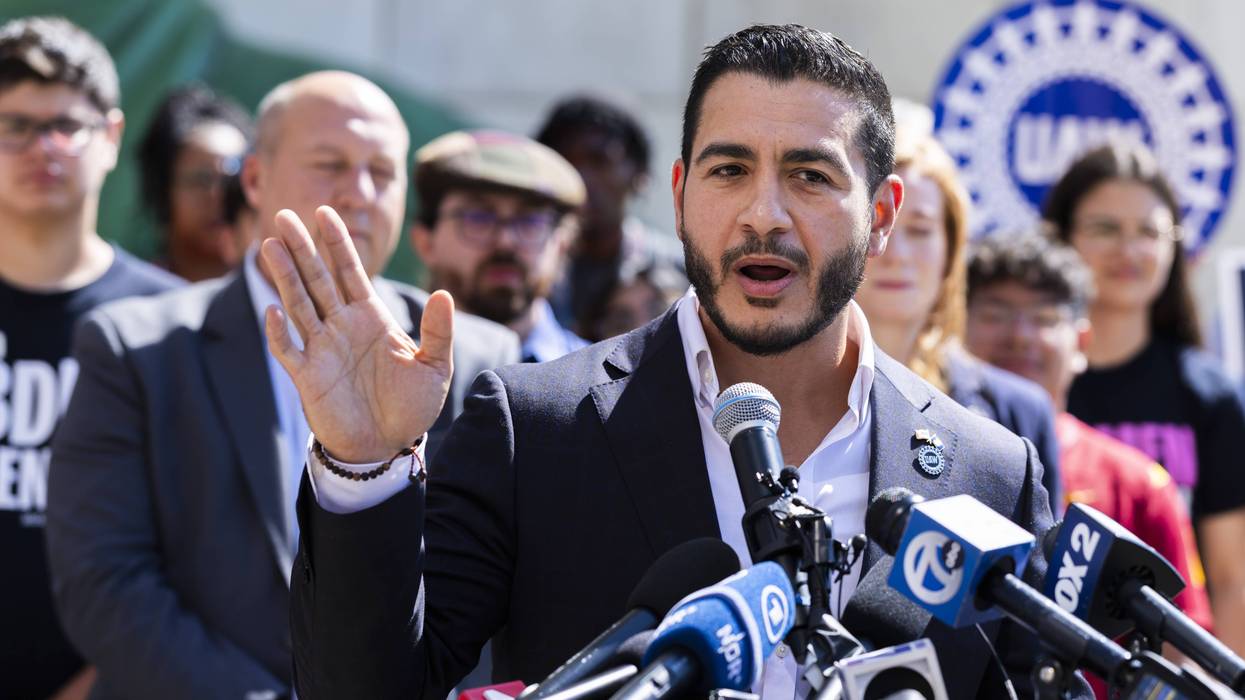
And why Mike Rogers would be a disaster for the country.
The Democratic establishment, along with AIPAC, the American Israel Public Affairs Committee, spent between $60 million and $70 million trying to prevent Dr. Abdul El-Sayed from winning Michigan’s Democratic primary—roughly 11 times the money backing El-Sayed.
He won nonetheless and now faces the Republican nominee, Mike Rogers, in a race that will help determine control of the Senate after the midterms in November.
I hope Michiganders elect El-Sayed, who will be a great US senator.
After receiving an advanced degree in public health, El-Sayed worked as an epidemiologist. Informed by this experience and expertise, he advocates access to healthcare as a right and not a privilege.
He also advocates economic security for all, financed by a tax system that asks more from the wealthy. He’s a champion of civil rights. He’s a fighter for affordability against predatory landlords, monopolistic corporations, and billionaires who turn their wealth into political power.
Most Jewish Americans have values that align with Dr. El-Sayed’s. He believes in social justice—that government can be a force for good as it helps expand opportunities, protect rights, and advance the common good.
Yet AIPAC is continuing its battle against El-Sayed. It is expected to put tens of millions of dollars behind Rogers, some of it disguised behind other PACs. “Our members remain determined to ensure that voters reject Dr. El-Sayed and his radical anti-Israel agenda in November,” said Deryn Sousa, a spokeswoman for AIPAC.
El-Sayed is no more anti-Israel than I am.
Being opposed to Benjamin Netanyahu’s extreme right-wing Israeli government is not the same as being anti-Israel. Nor should it be equated with being antisemitic. Nor, for that matter, should opposition to Netanyahu and his government be seen as condoning the brutal Hamas attack on Israel on October 7, 2023, in which 1,200 were murdered and 251 taken hostage. It was an atrocity and a crime against humanity.
I believe Netanyahu is a war criminal and that his government has committed genocide in Gaza. I’m appalled that he and it continue to allow and excuse horrific violence on the West Bank against Palestinians. For this reason, I don’t believe the United States should arm Netanyahu’s government with destructive military equipment.
This doesn’t make me anti-Israel. For decades I’ve advocated a two-state solution for Israel and Palestine, and I continue to believe it’s the only sane and reasonable way for these two peoples to peacefully coexist.
This certainly doesn’t make me antisemitic, either. I’m Jewish. Some of my relatives died in Hitler’s gas chambers. My mother and father were told they were unwelcome in the small town they moved to when I was a toddler because, according to the group of old men who met them at the doorstep of our new home, it was a “Christian community.”
Like me, Dr. El-Sayed opposes what the government of Netanyahu has done and continues to do. El-Sayed has affirmed that “Jewish Israelis and Palestinians alike have the right to peace, dignity, and self-determination.” He has acknowledged the horror of October 7, condemned all forms of antisemitism, and been highly critical of Israel’s war in Gaza and abuses in the West Bank.
Ten days ago El-Sayed publicly apologized for any misinterpretation people might have placed on remarks he made after a man attacked a synagogue in a Detroit suburb in March. The man, Ayman Mohammad Ghazali, had lost four relatives in an Israeli airstrike on Lebanon the week before.
In a video response at the time, El-Sayed condemned the attack. He added that “hurt people hurt people,” a reference to what happened to Ghazali’s family. Critics accused El-Sayed of justifying Ghazali’s actions.
If you read the transcript of what El-Sayed actually said, it’s clear he was merely trying to explain and give context for the violence. “What I was trying to do was offer context for why it happened, but it wasn’t the time for context,” El-Sayed said in apology. “And you don’t ever want to trample somebody’s pain.”
There is enough pain on all sides—pain for Israelis and Palestinians, for Muslims and Jews. Which is why it’s so important that all of us think clearly and carefully. Being anti-Netanyahu isn’t being anti-Israel, nor is it being antisemitic.
It’s also critically important that the good people of Michigan oppose Mike Rogers, who endorsed and voted for legislation last year that cut Affordable Care Act insurance for millions of Americans, weakened Medicaid and food assistance to less affluent citizens, and provided tax breaks to the very rich.
Rogers has warmly and enthusiastically praised Trump. He’s failed to publicly condemn or even criticize Trump’s bigoted statements about ethnic communities in the United States. He hasn’t said a word against Trump’s unconscionable pardon of the more than 1000 insurrectionists who rioted at the Capitol on January 6, 2021. This includes those found guilty of the most heinous acts, causing grievous bodily harm to law enforcement officers.
My view is we need smart, committed progressives such as Abdul El-Sayed in the Senate. And we need right-wing Trump suckups such as Mike Rogers out of the Senate.

"Come on down! All this could be yours... except the price is WRONG because of Trump's tariffs."
Modeled on the familiar logo of a long-running daytime game show, US Senate candidate Abdul El-Sayed displayed a hand-drawn picture of a dollar sign along with the words "The Price Is Wrong" in a video posted to his official social media accounts Tuesday—and offered Michigan voters the chance to play his version of the game, inspired by President Donald Trump's policies.
"This is probably true of everything you're buying right now," said El-Sayed, who is running against former Republican Rep. Mike Rogers after winning the Democratic primary election last month, as he pointed to the handmade sign. "We're going to ask Michiganders about just how much everything has gotten more expensive over the last year because of Trump's tariffs and his war in Iran."
First up, a voter learned that a container of 100 Tide detergent pods, which now costs nearly $30, cost just under $22 a year ago at this time—before Trump joined Israel in attacking Iran, leading to the retaliatory measure of Iran's closure of the Strait of Hormuz and the resulting spike in oil and gas prices.
"That's almost a 30% increase in price for the same Tide pods," said El-Sayed.
A package of Target brand toilet paper cost $6 last year, and another voter guessed it's currently marked at $8.50—off by 50 cents, said El-Sayed, who revealed the package would now cost $9 at a Target store in Michigan.
Target-branded protein powder cost $40 last year, and Trump's policies have raised the price to $54 this year, said El-Sayed, while a one-pound bag of coffee beans from Tim Hortons is nearly a dollar more than it was last year, priced now at $9.32.
El-Sayed released the video as Canada imposed its new retaliatory tariffs targeting about $20 billion in US imports, in response to the 50% tariffs Trump announced late last month on a range of Canadian goods including dairy products, paper, and cement.
According to a June poll by Epic-MRA, 63% of Michiganders—including 35% of Republicans—opposed Trump's tariffs on Canadian goods, which he first announced last year along with levies on numerous other countries that he said had treated the US unfairly in trade.
About three-quarters of voters in that poll said they thought Trump's tariff policy was fueling higher prices for everyday goods.
The Midwest Economic Policy Institute found in July that due to Michigan's shared border with Canada and the close ties shared between the auto industries in Michigan and Ontario, Michigan households were paying as much as $3,200 in extra costs due to Trump's tariffs—about 142% more than the rest of the US.
“Donald Trump is launching this trade war for his own vanity, and he’s asking Michigan families to pay the price,” El-Sayed said in a statement last month. “Trump has been failing Michigan through these chaotic tariffs and bad trade deals for far too long, and Mike Rogers won’t do anything but rubber-stamp them.”
At Michigan Advance, columnist Rick Haglund warned last month that Michigan would likely "pay a steep price for Trump’s reckless actions."
"Canada is Michigan’s largest trading partner with about $70 billion in goods flowing across their borders in 2024, the latest available data," said Haglund. "Thousands of jobs are connected to Michigan auto parts manufacturers, farmers, and others who export goods to Canada."
Trump's unprovoked war on Iran has also been linked to spiking diesel prices, which is driving up transportation costs—and as a result, consumer prices—for many everyday goods like those featured in El-Sayed's mock game show.
"Americans are paying way more for everyday goods they have to buy at the grocery store, all because of this insane war that is spiking the price of gas, spiking the price of diesel, spiking the price of your everyday goods," said El-Sayed. "And now, a trade war that's expanded with Canada."
"Americans are sick and tired of playing 'The Price Is Wrong,'" he added. "I think it's time for us to play 'The Price Is Right.'"
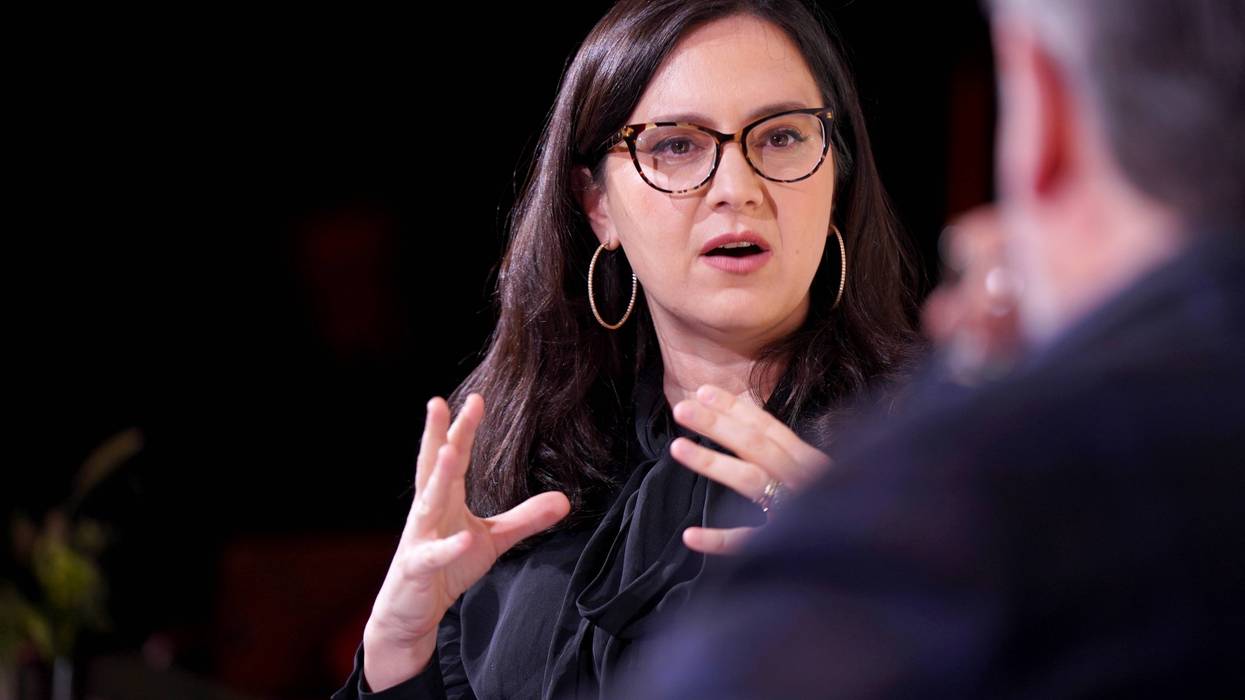
"They took a small nugget of news, forced it into something much larger, and messed up," said one CBS News staffer.
A Tuesday report from Status claims that CBS News editor-in-chief Bari Weiss was personally involved with a widely criticized story that linked Democratic US Senate candidate Abdul El-Sayed to the September 11 terrorist attacks.
The CBS piece, which was published on Monday, drew criticism from Democratic lawmakers and progressive journalists for saying that El-Sayed "may be facing the risk of renewed scrutiny and fresh political attack" due to past innocuous statements he'd made about the 2001 attacks on the World Trade Center and the Pentagon.
According to Status' sources, Weiss "personally directed" that the story's headline be changed to "specifically mention that El-Sayed, who is vying to become the first Muslim American senator, had deleted tweets referencing" the attacks.
The two deleted posts highlighted in the story were far from scandalous, however. In the first post, El-Sayed called on Americans to unite in a common purpose to combat the Covid-19 pandemic just as they came together after the 2001 attacks, and in the second one he drew attention not just to the victims who died on 9/11, but to all the people who died afterward as a result of the US War on Terror.
Status also reported that Weiss "praised the story during the network's daily editorial meeting Monday, signaling her support for the piece to the entire network."
Weiss' endorsement of the El-Sayed story came despite the fact that senior staffers at CBS raised concerns about it with the network's standards department, Status added.
“They took a small nugget of news, forced it into something much larger, and messed up,” one staffer said.
Another staffer told Status that the story is "shameful" due to its "overt" racism.
One anonymous CBS News staffer similarly told Zeteo media columnist Justin Baragona on Monday that the Weiss-endorsed story was “trash” and “horribly Islamophobic.”
Weiss was installed as CBS editor-in-chief last year after David Ellison, the son of billionaire Oracle founder Larry Ellison, a megadonor to President Donald Trump, acquired network parent company Paramount.
In that time, CBS ratings have collapsed to record lows and Weiss has overseen a mass purge of reporters and staffers at the network's legendary news program "60 Minutes."
Veteran "60 Minutes" correspondent Scott Pelley, who was fired by CBS earlier this year, subsequently accused the Weiss-led management team of instructing him to "inject falsehoods and bias into a politically sensitive story."
"The Bari Weiss project... is to revive post-9/11 Islamophobia in mainstream politics," said one critic.
Several Democratic lawmakers on Monday slammed CBS News for publishing a news analysis linking Democratic US Senate candidate Abdul El-Sayed to the September 11 terrorist attacks.
The CBS story claimed that El-Sayed "may be facing the risk of renewed scrutiny and fresh political attack" ahead of the 25th anniversary of the 9/11 attacks, which killed over 3,000 people in New York, Pennsylvania, and Virginia.
The piece cited two deleted El-Sayed social media posts to make its case: One in which he called on Americans to unite in a common purpose to combat the Covid-19 pandemic just as they came together after the 2001 attacks, and another where he drew attention not just to the victims who died on 9/11, but to all the people who died afterward as a result of the US War on Terror.
El-Sayed defended the latter post in an interview with CBS News.
"My point is just to say that what happened on 9/11 is a disaster," El-Sayed said. "It was a terrible attack on our country and our responsibility is also to think about how do we build an America where we are protecting our servicemen and women from being asked to fight wars we have no business fighting that ultimately end up doing harm to people. And we're seeing that right now."
Critics slammed the CBS analysis, which they said unfairly tarred El-Sayed—a Muslim and son of Egyptian immigrants who has repeatedly faced Islamophobic and racist attacks—as a terrorist sympathizer even as he has consistently denounced the 9/11 attacks.
"What an insane, blatantly racist headline," wrote Rep. Yassamin Ansari (D-Ariz.) in a social media post. "Unreal."
Rep. Rashida Tlaib (D-Mich.) also slammed the CBS story as "racist," adding that "targeting Abdul like this is intentional and coordinated."
The Nation's Jeet Heer argued that the CBS News piece reflected the change in management the network has undergone ever since owner David Ellison put Bari Weiss in charge of it.
"To be clear the Bari Weiss project... is to revive post-9/11 Islamophobia in mainstream politics," wrote Heer. "These are profoundly illiberal people, who should be combated not just by the left and progressives but anyone committed to civil equality."
Responding to the network's post promoting the article on the platform X, Zeteo editor-in-chief Mehdi Hasan asked CBS News if it ever considered that "it's super offensive and disgusting and Islamophobic to do a tweet about the potential first-ever Muslim Democratic senator which begins by referencing 9/11?"
Adam Johnson, host of the Citations Needed podcast, highlighted the El-Sayed social media posts flagged by CBS and argued that the network is trying "to scandalize perfectly sensible and humane comments."
Progressive commentator Wajahat Ali said that he's seen a lot of mainstream media articles attacking El-Sayed, but concluded that "this one takes the cake for being so exquisitely racist."
According to Zeteo media columnist Justin Baragona, one anonymous CBS News staffer is also raising concerns about the El-Sayed story, which they called "trash" and "horribly Islamophobic."
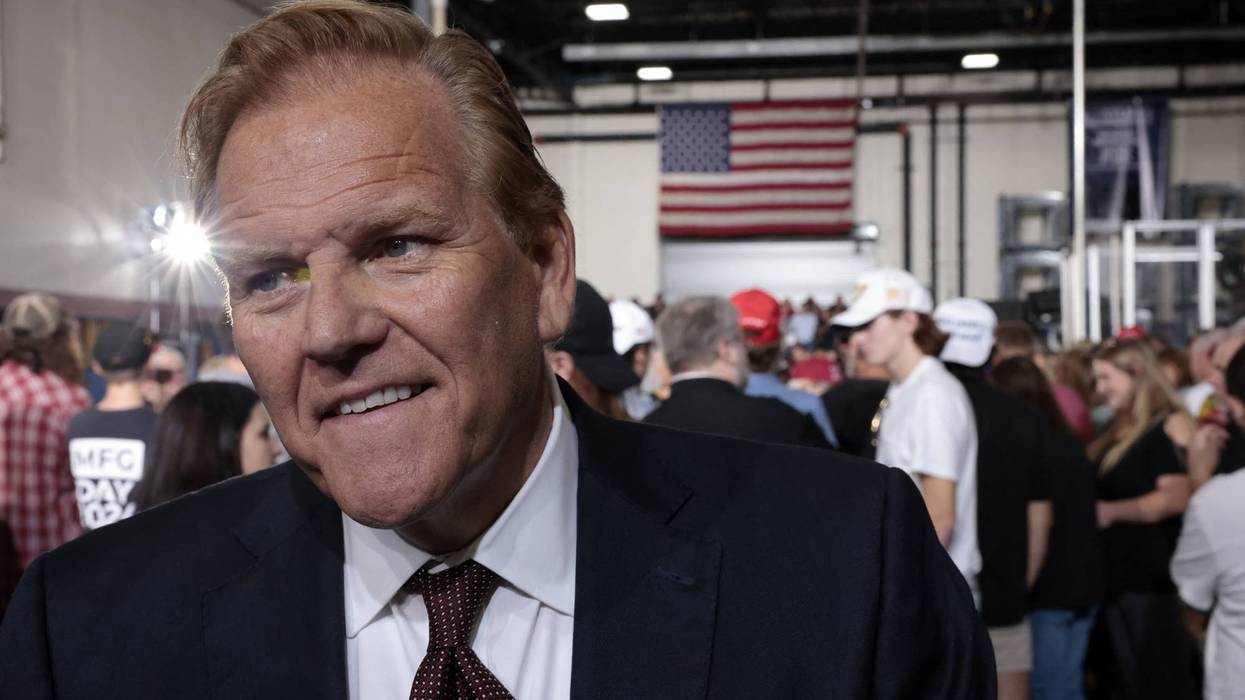
Dennis Kucinich could tell voters from experience that if Michiganders elect Mike Rogers, he will remain silent as our soldiers die, as family finances deteriorate, and as we become more hated around the world.
Which is the "All War, All the Time" party that impoverishes your family and makes us less safe? Which party lies to get us into wars, lies after they get caught, and then just issues additional lies as they are now doing in Iran and as they once did in Iraq?
This question is now playing out in Michigan in the Senate race. However, there is an out-of-state person who could definitively answer that question.
While the epic battle between Dr. Abdul El-Sayed and Mike Rogers wages in Michigan, the most dangerous man to one of the candidates resides in Cleveland, Ohio. His name is Dennis Kucinich. He was a 16-year member of the House of Representatives overlapping with Mike Rogers for a number of those years, especially when the Authorization for Military Force in the Iraq War was being debated in late 2002.
Kucinich is dangerous because no one interested in the welfare of American families, its soldiers, our national security, and personal liberties could vote for Rogers if they knew the evidence Kucinich produced before the War.
Did Mike Rogers call out: Let’s stop and more carefully look at the shaky and inconclusive evidence before we send our kids off to die and to kill hundreds of thousands?
Evidence that Mike Rogers and 214 other Republicans ignored. In fact, the All War, All the Time party only had six GOP members vote against the war. Unfortunately, Democrats have an All War, All the Time faction as well. These AIPAC-bred and -fed types are now mumbling how they can’t in good conscience support El-Sayed.
The Greedy Oil Party {GOP), of course, continues to vote the same war-mongering way as shown with their support of the Gaza genocide and the Israel-First War on Iran.
In 2002 Kucinich masterfully destroyed the Bush-Cheney web of lies justifying the illegal and immoral war. His evidence-packed memo pointed out that we were going to war against a country that did not attack us, had no means to do so, and had never expressed a desire to do so.
The fact that Iraq was not an imminent threat is not just my jaundiced opinion as a 40-year adviser to Dennis. Six artificial intelligence (AI) platforms—ChatGPT. Claude, Saner, Gemini, Deep Seek and Grok—were presented with a simple question:
Do you agree or disagree with the following conclusion: On Oct. 2, 2002 when Dennis Kucinich presented his eight-page memo against the Authorization for Use of Military Force there was already enough contradictory and qualifying intelligence available to Congress that the Bush administration's presentation of Iraq as an established, urgent WMD threat was not justified by the underlying evidence?
They all agreed that Dennis and other sources had already raised enough questions to halt the rush to folly. Certainly, no prudent, patriotic official would send 4,418 of our brave men and women to die violently in a foreign land.
But Mike Rogers did.
Over a million Iraqis likely died as a result. We wasted trillions of precious dollars as the Greed Only Party filled the pockets of the Military-Industrial Complex and their donor-owners.
But Mike Rogers’ culpability gets worse. When Hussein Kamel—Saddam’s son-in-law in charge of WMD concealment—was interviewed by the CIA and other intelligence agencies in 1995 after defecting, he disclosed that all the WMDs had been destroyed.
This devastating disclosure came out in late February 2003. The Newsweek article continued the shredding of the Greedy Oil Party web of lies which forced the Bush-Cheney administration to accelerate their war plans. While they had stenographers at The New York Times and other major media, Americans were getting queasy.
But the mainstream corporate media continued the pro-war propaganda. In one two-week period the media accuracy group FAIR noted that of 393 guests discussing the war, only 1 was from an anti-war group. A stunning 75% were current or former government or military officials.
Meanwhile Kucinich was making hundreds of speeches on the House floor and giving as many media interviews as possible in an effort to stop the war.
Did Mike Rogers call out: Let’s stop and more carefully look at the shaky and inconclusive evidence before we send our kids off to die and to kill hundreds of thousands? He didn’t speak out then, and he hasn’t spoken out now about the Gaza genocide or the wild WMD lies being used again by the All War, All the Time party.
Kucinich could clarify that Michiganders can elect Mike Rogers who will remain silent as our soldiers die, as family finances deteriorate, and we become more hated around the world. You can’t kill all the girls and teachers in a school and expect the world to like or respect us. In one recent United Nations General Assembly only 1% of the rest of the world’s population outside the Unites States and Israel voted with us.
Or they can elect Dr. Sayed who recognizes that the proposed 2027 National Defense Authorization Act budget for the war and surveillance is bloated with waste, fraud, and abuse. The average family of four in our society will see over $30,000 expended annually in our national budget going forward. This figure comes from the Chalmers Johnson logic that the official Pentagon budget of $1.5 trillion may be as much as double that figure.
If one conservatively uses $2.5 trillion as the accurate budget, one arrives at the $30,000 yearly figure for American families of four. Most Americans don’t know, for example, that the $488.2 billion for the Department of Veterans Affairs is not included nor the hundreds of billions we will spend to pay the interest on previous war borrowings.
My modest proposal is for Mike Rogers to send Dennis and Elizabeth Kucinich halfway around the world on a two-month all-expenses paid vacation to the Maldives. Considering the damage Dennis could do to his campaign, it would be money well spent.
Dollar for dollar it would be far more effective than the Islamophobia and fear-of-immigrants ads that the GOP is currently peddling across the country.
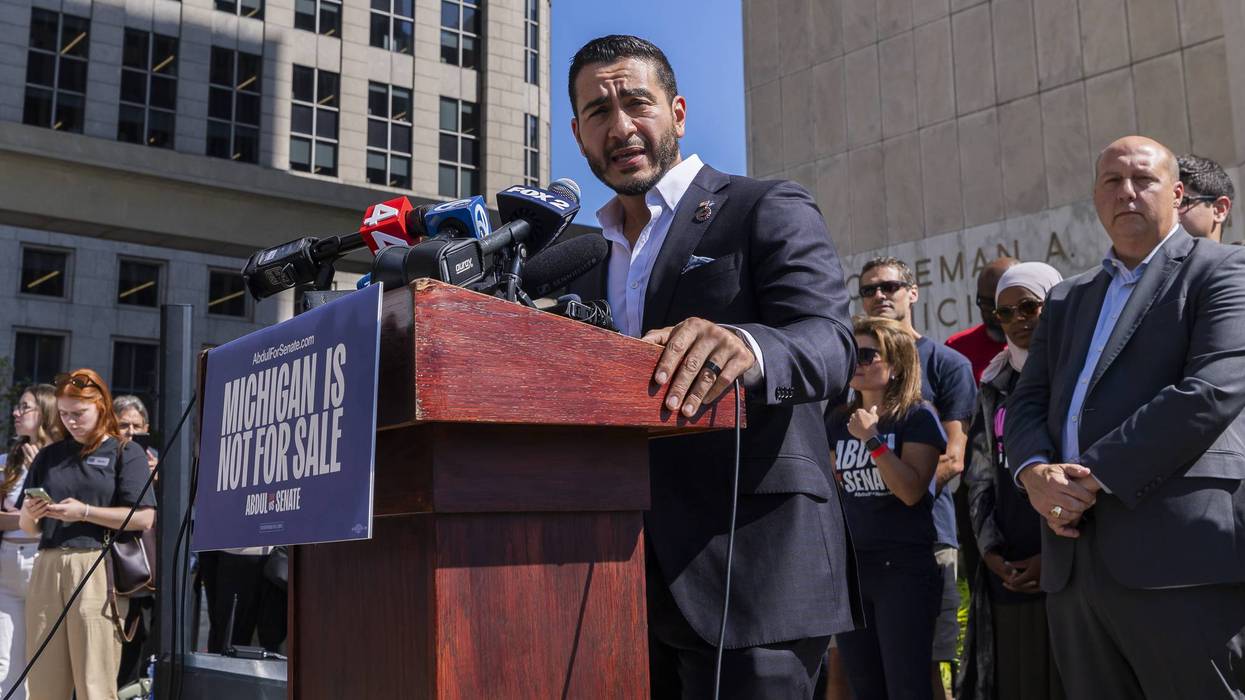
Polls of physicians consistently show majority support for universal programs like Medicare for All—support that is only growing among younger doctors and those working in corporate-style health systems.
It’s time.
It’s time for Americans to finally have healthcare that’s compassionate and effective.
When I became a doctor 44 years ago I volunteered at a free clinic for patients without health insurance. I remember our clientele: a substitute teacher, a self-employed plumber, and other working people who weren’t offered coverage by an employer and couldn’t afford it on their own.
These weren’t freeloaders. They were neighbors, family members, and friends who earned too much to qualify for Medicaid, but still didn’t have health coverage through their jobs.
During his run for the US Senate, Dr. El-Sayed has been an enthusiastic supporter of Medicare for All, which would provide better care for everybody.
I wondered then, “Why should our ability to have health insurance depend on where we work?” I never got an answer.
Decades later, when the Affordable Care Act (ACA) passed, our clinic’s clientele changed dramatically. Gone were the self-employed or under-employed patients; they had gained coverage through ACA plans. Until now. This year, ACA premiums are going up 50% or more, which means many people are disenrolling. I’ll be seeing these folks in the free clinic again.
Our healthcare system is broken. We have poorer health outcomes than in other “less fortunate” countries, meaning our people are dying earlier and suffering more. Meanwhile, trying to navigate our hundreds of health plans is a nightmare for doctors, as each plan has its own rules for preauthorizations, deductibles, and copays. Patients are also unhappy with these restrictions, no matter what kind of coverage they have.
Thankfully, there is one exception: Medicare. This longstanding program covers medical care for seniors and people with disabilities, and it works. Even those who favor smaller government agree, “Don’t touch my Medicare!”
I’ve seen the benefits. In my later years I worked as a nursing home doctor, caring for patients who were rehabilitating from a stroke or surgery before they could safely return home. Medicare covered 100% of the cost for up to 21 days and 80% for another three months, as long as the need and attempts at progress were shown.
What if everybody in our country had high-quality coverage through an even better version of traditional Medicare? What if we had improved Medicare for All?
This is the program proposed by Abdul El-Sayed, who trained as a physician, led the health departments in Detroit and Wayne County, and no doubt shares my experiences with our broken healthcare system. Polls of physicians consistently show majority support for universal programs like Medicare for All—support that is only growing among younger doctors and those working in corporate-style health systems.
During his run for the US Senate, Dr. El-Sayed has been an enthusiastic supporter of Medicare for All, which would provide better care for everybody.
Under our current system, millions of uninsured people hold off on getting care until they have an emergency, simply because they can’t afford it. By then, problems that could have been prevented or treated easily become very dangerous and expensive.
Under Medicare for All, a strong focus on primary care would encourage preventive measures and early diagnoses. This would give us an opportunity to reduce the extremely high cost of managing diseases that, too often, haven’t been addressed over a lifetime of inadequate care.
Medicare for All would also make improvements to the existing program such as eliminating out-of-pocket costs; negotiating lower drug prices across the board; and adding long overdue coverage such as vision, dental, hearing, and long-term care. All this while maintaining the best features of Medicare like guaranteed coverage and free choice of medical provider.
It’s time to make our healthcare system work effectively for everybody. It’s time—it’s past time—for Medicare for All.

"You can't have your privacy violated if you don't know your privacy is violated," Rogers said in an infamous clip from 2013 as he defended the NSA's mass spying programs.
Amid an expanding assault on privacy by the federal government, Democratic nominee Dr. Abdul El-Sayed has brought the issue of mass surveillance to the forefront of Michigan's Senate race, attacking his Republican opponent, former Rep. Mike Rogers, for his longtime defense of the PATRIOT Act.
"Mike Rogers out here fighting for the Peeping Tom vote," wrote El-Sayed, a former public health official, in a social media post on Monday. "Creepy stuff, Mike."
El-Sayed was responding to an unearthed comment from Rogers, then the chair of the House Intelligence Committee, made during a 2013 committee hearing in Congress just months after whistleblower Edward Snowden's explosive revelations about the extent of the National Security Agency's (NSA) warrantless surveillance of Americans.
At the time, Congress was debating whether to enact legislation reining in a provision in the PATRIOT Act, Section 215, which the government had used to secretly collect phone records and other information in bulk from Americans not accused of wrongdoing.
Rogers was pushing American University law professor Stephen Vladeck to agree that the government should be allowed to examine Americans' business records to determine if they were connected to a foreign terrorist organization. Vladeck said he believed it should, but that protecting Americans' privacy needed to be taken into account. "The way we do it matters," he said.
The chair responded that in the decade since the policy had been enacted, nobody had ever complained about it. Vladeck, noting that the program was a secret, responded: "But who would be complaining?”
"Somebody whose privacy was violated," Rogers retorted. "You can't have your privacy violated if you don't know your privacy is violated."
The quote is highly representative of Rogers' record of support for extensive government surveillance over his decade-and-a-half in Congress. He was one of the PATRIOT Act's leading champions since its introduction in 2001 and led the charge to stop mass collection powers from being curtailed after the Snowden revelations.
“The charge that the program tramples on the privacy of citizens is simply wrong,” he said in a statement with Rep. Dutch Ruppersberger (D-Md.), then the ranking member of the Intelligence Committee.
Rogers and Ruppersberger also coauthored the Cyber Intelligence Sharing and Protection Act (CISPA) in 2012, which would have allowed companies to share cybersecurity-related information with the government, including the NSA, with protections from existing privacy restrictions. The American Civil Liberties Union argued that the bill, which failed in the Senate, would have allowed the government to obtain large amounts of sensitive personal data with few restrictions.
"You can't have your privacy violated if you don't know your privacy is violated."
In 2026, as artificial intelligence becomes a new tool for even more powerful and pervasive spying, El-Sayed has said the government must be banned from using it to "conduct warrantless surveillance."
As part of an AI policy platform rolled out in June, he said rules should be put in place to prevent its use for "domestic authoritarianism," including "mass political surveillance, protected-characteristic predictive policing, or AI targeting of dissent."
During President Donald Trump's second term, as he's used anti-"terrorism" rhetoric to justify a legal crackdown on domestic opposition, the government's expanding spy powers have become an increasing concern.
With the aid of private surveillance companies like Palantir, the administration has created an unprecedented surveillance dragnet that connects AI-powered facial recognition technology, license plate readers, and phone location tools to piles of data on Americans that have been used to supercharge its mass deportation campaign and aggressively monitor protesters and dissenters.
It has been met with some pushback in the Senate, where Republicans earlier this year narrowly failed to extend Trump's powers to surveil noncitizens under Section 702 of the Foreign Intelligence Surveillance Act (FISA) without warrants. Though US citizens are not supposed to be targeted, civil liberties advocates argue that their information is often collected easily and the government has used it to prosecute them.
Rogers has attempted to back off some of his earlier defense of mass surveillance, though he has not meaningfully pushed to reduce the government's spying powers. During a losing Senate bid against Sen. Elissa Slotkin (D-Mich.) in 2024, he said that it's "wrong" for the FBI to conduct warrantless searches against US citizens, but did not call for actually repealing or blocking Section 702.
Since serving in Congress, Rogers parlayed his time overseeing the intelligence community into a lucrative career advising and governing cybersecurity, intelligence, and government-contracting firms.
He served as a senior security adviser to AT&T while the company operated a little-known program that gave law enforcement access to searches of trillions of domestic phone records, though there is no record that he personally worked on the program.
Michigan Advance reported earlier this year that he also made almost $100,000 advising a company that helped the government of former Venezuelan President Nicolás Maduro spy on dissidents.
Noting the Republican nominee's recent pivot to Trumpian election denialism, journalist Spencer Ackerman—who has extensively covered the expansion of government surveillance during the War on Terror—suggested in a post on social media that there is little reason to believe Rogers has changed much after over a decade out of Congress.
"I saw up close his efforts, post-Snowden, to protect the NSA and ensure it continues to nullify your constitutionally-protected privacy," Ackerman said. "He was for impunity then and wants the same thing for himself."
His win proved that a pro-Palestinian progressive could triumph over AIPAC, dark money, and the Democratic establishment.
In what, I believe, will be seen as this year’s most significant election; Dr Abdul El-Sayed won a victory in Michigan’s Democratic Senate primary. It was a close contest—a nail-biter, as we say—but it was an important win that marks a watershed moment in US politics.
It was the first time that Israel’s genocidal war in Gaza and massive US military support to Israel became central themes that were actively debated across the state. This issue has come up in a few other races. But this Senate race was different. There were daily discussions about the fact that the US has been subsidizing Israeli policies that have taken such a huge toll on Palestinians and Lebanese. From the results it is clear: Israel and the candidate that supported Israel, four term congresswoman, Rep. Haley Stevens, both lost.
Another major issue actively debated in this contest was the role of “dark money” and other independent expenditures. We’ve seen dark money dominate campaigns in the past. But never at this level. At last count, Stevens had received upwards of $70 million, with the bulk of these funds coming directly from pro-Israel groups, led by the Israel lobby, American Israel Public Affairs Committee (AIPAC). In contrast, El-Sayed’s campaign was fueled largely by small donors. Overall, Stevens and AIPAC outspent El-Sayed by a margin of over 11 to one! In the end, dark money and AIPAC were resoundingly defeated, proving that money can prop up a candidate but can’t automatically win an election.
The El-Sayed-Stevens contest also became a national face-off between the progressive wing of the Democratic Party and the party’s establishment, with leading Democrats from both wings endorsing and campaigning in the state. El-Sayed’s win in this bellwether Midwestern battleground state represents a major win for progressives. It demonstrated that the “establishment” itself has become toxic to many Democratic voters.
I am hard pressed to find an election that was more consequential and broke ground in more areas than this Michigan primary contest.
This election also marks a huge victory for Michigan’s Arab Americans. Four decades ago, the leading candidate for mayor of Dearborn made “What to do about the Arab problem?” a central issue in his campaign. Since then, that community has continued to organize, register voters, and win elections. Much maligned after registering their discontent with the Biden administration’s support for Israel, they came roaring back by helping to elect an Arab American as the Democratic Senate nominee. Not only that, but in the contest in the Dearborn area for the nomination to represent Democrats in the November election for Michigan State Senate, Abbas Alawieh won a decisive victory. Abbas was the leader of the 2024 “Uncommitted” movement.
I am hard pressed to find an election that was more consequential and broke ground in more areas than this Michigan primary contest. Now it’s on to November.