SUBSCRIBE TO OUR FREE NEWSLETTER
Daily news & progressive opinion—funded by the people, not the corporations—delivered straight to your inbox.
5
#000000
#FFFFFF
To donate by check, phone, or other method, see our More Ways to Give page.

Daily news & progressive opinion—funded by the people, not the corporations—delivered straight to your inbox.
The ultimate betrayal will be if AI succeeds in making America vastly wealthier while leaving working Americans with less economic security, less political power, and with the bill for another generation of financial speculation wiping out our retirement accounts.
The AI bubble and it’s possible disintegration gives us some pretty grim insights into the question of what happens when the richest people in the world rebuild the economy in a way that it no longer needs working people, but still expects them to pay their bills.
Reuters reported this week that China’s AI and semiconductor stock boom has suffered a sudden and staggering reversal: Their STAR50 index of Beijing’s AI and chip champions (like our NASDAQ) has plunged 40% in less than four months, wiping out roughly $480 billion in market value.
Their robotics company Unitree's IPO just three months ago was oversubscribed 8,000 times by Chinese small investors and has lost half its value. Dong Baozhen, a Beijing fund manager, told Reuters:
And now we see the bubble bursting.
The same day (Monday) here in America Microsoft offered voluntary buyouts to 60,000 employees, about 27% of its global workforce, as it’s planning to replace them with AI. And when Anthropic (Claude) filed to go public, they disclosed an $80.7 billion net loss and some $657 billion in infrastructure deals with companies including Microsoft, Amazon, and SpaceX; fully $498 billion of that is noncancelable even if the company never uses the computing capacity it’s reserved.
Things got even weirder on Wednesday, when Microsoft and Alphabet reported some striking “earnings” numbers. Alphabet burned through $9.1 billion in free cash flow for the second straight quarter. NPR’s 1A tallied up Monday’s AI deals alone at roughly $235 billion, nearly 1% of American GDP, all in just one single day.
While Wall Street has been pouring massive sums into AI companies, data centers, chips, and power infrastructure, Economist Dean Baker reports at his weekly AI Bubble Monitor that CoreWeave’s debt (the company rents computing power to the AI giants) is now considered so deep in junk bond territory that they’re having to pay 16% interest on their long-term debt to get investors to bite.
In 1965, Intel co-founder Gordon Moore postulated that every two years the number of transistors in an integrated circuit would double. Not only was his “Moore’s Law” right, but as the power of digital hardware increases, costs also reliably drop by a similar factor.
Most of today’s frenzy of data center and power plant construction is based on the current state of the AI chip-and-software art, but Moore’s Law dictates that over time—and not a lot of time, probably just a matter of months or years at the most—the size and power needs of these AI data centers will decrease exponentially.
Already, entire buildings filled with computers are on the verge of being replaced by a single “wafer” disc that will carry the computing power of billions of today’s red-hot chips. The Wall Street Journal broke the news with an article titled and subtitled:
The Microchip Era Is About to End. The future is in wafers. Data centers will be the size of a box, not vast energy-hogging structures.
Author George Gilder noted we’re not just on the verge of the breakthrough; it’s nearly in production:
Cerebras of Palo Alto, Calif., used the concept in its WSE-3 wafer-scale engine. The WSE-3 boasts some four trillion transistors—14 times as many as Nvidia’s Blackwell chip—with 7,000 times the memory bandwidth. Cerebras inscribed the memory directly on to the wafer rather than relegating it to distant chips and chiplets in high-bandwidth memory mazes. The company stacked up its wafer-scale engines 16-fold, thereby reducing a data center to a small box with 64 trillion transistors.
A data center—a 700,000 square-foot building drawing gigawatts of electricity and chugging millions of gallons of water for cooling—replaced by “a small box” that could be powered by rooftop solar and a good battery bank.
Meanwhile, multiple companies have rolled out AI products that can run on a desktop PC, eliminating the need for data centers altogether. Perplexity introduced one just last month with the headline:
Perplexity Computer now runs fully local on Mac.
Ya think that may have an impact on our economy?
Places booming today as AI and other data facilities and the power plants and transmission lines to feed them are being built—if Moore’s Law applies to data centers as it has proven to apply to all things digital from computers to cell phones to TVs and satellites—will soon look like Flint, Michigan when Ronald Reagan’s free trade policies began to seriously bite in the 1990s.
It sure looks like we’re seeing a repeat of previous bubbles and bursts ranging from Dutch tulips to the 19th century railroads to this century’s dot-com and home mortgage collapses. And the people running the show seem just fine with creating a world where the rich get mindbogglingly richer while working people and 401k investors are out on the street.
JD Vance’s sugar daddy, Peter Thiel, wrote in a 2009 essay for the Cato Institute that “I no longer believe that freedom and democracy are compatible.” Marc Andreesen, the billionaire who helped Elon recruit young men for DOGE to take apart our government, complained on a podcast this year that government workers have both civil service protections and public-sector unions, giving them “two layers of insulation against ever getting fired.”
Unions, of course, are actual democracy in the workplace that generations of workers have literally fought and died for, but these guys don’t seem to appreciate or even understand that.
Meanwhile, OpenAI CEO Sam Altman wrote in a 2021 essay that as AI advances, “even more power will shift from labor to capital.” His warning points out how easily AI could dramatically increase the power of people who own businesses and tech while gutting the bargaining power of people who work for a living.
And, indeed, that’s already happening. Like Microsoft this week, Amazon has cut roughly 30,000 corporate jobs since last October, all after CEO Andy Jassy warned his employees that AI would “reduce our total corporate workforce.” One AI-related layoff tracker counts nearly 119,000 layoffs so far this year tied explicitly to AI automation, roughly four and a half times last year’s total.
And now the robotics business is exploding, with AI built into local machines that can assemble cars, sew clothing, clean streets, and drive you around town. It’s opened an entirely new industry: outfitting humans with sensors to track their movements to train robots to replace them.
So, if machines replace our workers, who’s going to have enough money to buy the goods and services the machines are putting out?
I grew up in a union family; my dad worked in a tool-and-die shop in Lansing, Michigan and was able to raise four boys with a three-bedroom home, a new car every few years, and had a decent retirement. Henry Ford increased his workers’ pay so they’d be able to buy the cars they were making.
This isn’t rocket science. Workers are also customers, taxpayers, homeowners, and parents; they’re the ultimate economic base of their communities. If AI destroys their purchasing power, we’re gnawing away at the foundation of America’s historic economic greatness.
We’ve seen versions of this before.
Reagan deregulated the Savings & Loan industry leading to predatory behavior that produced a massive crash; it cost taxpayers over $100 billion to clean up the mess (a trillion in today’s money). But Reagan also sent those banksters to prison: His regulators made more than 30,000 criminal referrals to the Justice Department, which won more than 1,000 felony convictions.
Since then, times have changed; it appears that the morbidly rich have acquired near-total immunity, no matter how badly they screw up things, because five corrupt Republicans on the Supreme Court legalized billionaires and corporations owning judges and politicians.
Congress and Bill Clinton deregulated our banks in the late 1990s and the bill came due in 2008 when it all fell apart and millions of Americans lost their homes, families watched retirement accounts evaporate, and workers who’d done absolutely nothing wrong lost their livelihoods.
Nepo-baby George W. Bush chose to hold nobody accountable, and even let the banksters keep their billion-dollar bonuses pulled out just before all the dominoes collapsed. He made zero criminal referrals against the big banks, in a crisis that was 70 times larger than Reagan’s S&L mess.
It appears that the AI gods tech bros think that’s the new normal and are betting on getting the same or better from the Trump regime. After all, in his first term he put “Foreclosure King” Steve Mnuchin, who’d thrown an estimated 36,000 Californians out of their homes during the 2008 crash, in charge of the entire economy as Treasury Secretary.
And this time the stakes are even larger than the banking system’s freeze-up; AI is now deeply entangled with America’s military, intelligence agencies, national security infrastructure, and the rivalry with China.
And in their arrogance, they’re saying the quiet part out loud: Last November, OpenAI’s chief financial officer, Sarah Friar, told a Wall Street Journal conference that her company wanted a federal “backstop” for the financing behind its data centers. When a reporter asked whether she meant a government guarantee, she answered, “Exactly.”
And pouring gasoline on this particular bonfire, President Donald Trump’s One Big Beautiful Billionaire’s Bill lets these companies write off the full cost of their data center hardware the year they buy it rather than the normal depreciation schedules every other industry in America has to stick to.
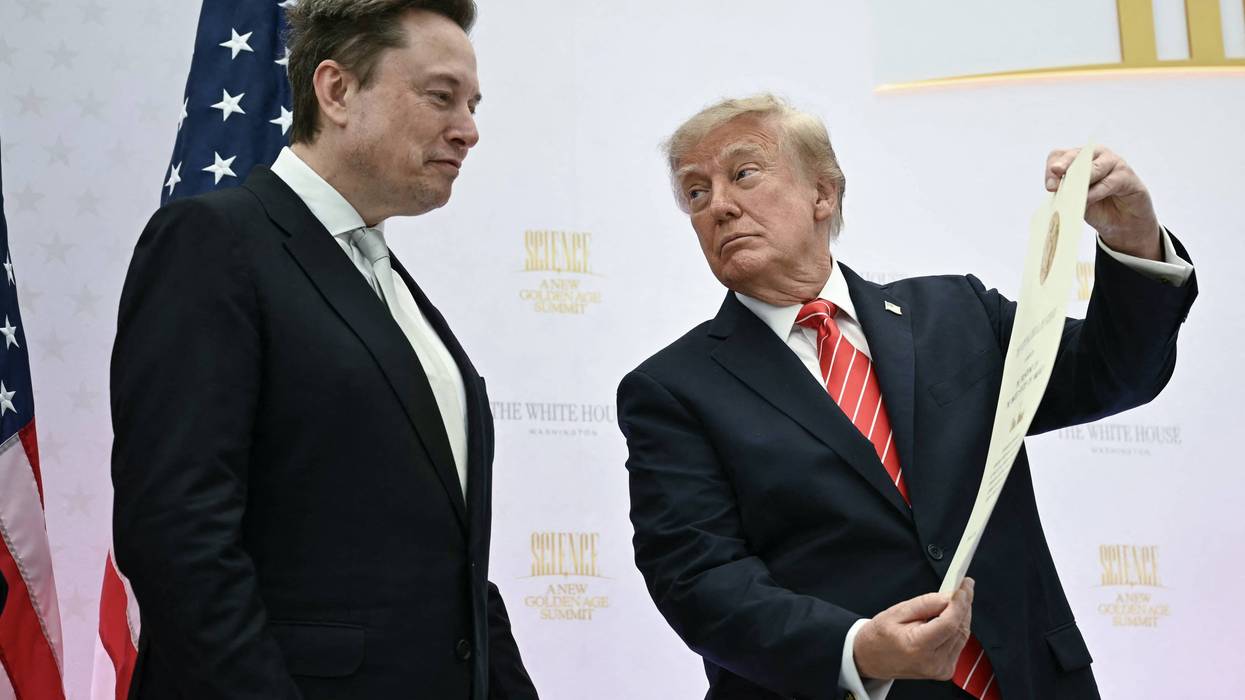
Perhaps that’s because the Trump family is so well-invested now in this, and he’s depending on tech bro billions to keep Republicans in office; Elon alone is spending almost a half-billion so far this year to that end.
Meanwhile, ordinary Americans are already paying. Residential electricity prices rose 6.9% last year, more than double the inflation rate, and Goldman Sachs’ analysts say they expect data centers to drive a massive 40% of electricity demand growth through the end of the decade.
The 13 mid-Atlantic and Midwest states have been hit with $23 billion in consumer electricity price increases through at least 2028, driven by AI data centers. A homeowner in Manassas, Virginia opened a $281 electric bill in January, up from about $100 the month before.
If today’s boom goes bust, who’s going to be left stuck with the bills for the half-built transmission lines, data centers, and power plants? Apparently it won’t be the morbidly rich tech bro masters of the universe, any more than it was Bush’s billionaire bankers.
None of this is to diminish the power and importance of AI. But the internet was real, too, and look what happened in the 1999-2002 period when that industry took down people’s retirement accounts while creating billionaires out of Zuck, Bezos, and Gates.
In 1983, Reagan instructed his Department of Justice, Federal Trade Commission, and Securities and Exchange Commision to stop enforcing the Sherman Anti-Trust and other anti-monopoly laws, leading to a decade of “Mergers & Acquisitions Mania” as was documented in Michael Douglas’ “greed is good” movie, Wall Street.
Add that to Reagan decriminalizing share buybacks and you have the perfect storm of perverse incentives that end up with doors falling off airplanes, workers and communities being screwed, and a new low standard of crappy customer service—all fed by a lack of competition. And we see that consolidation now happening in AI.
This is what happens when the people who own the machines accumulate more economic—and, thus, political—power than the people who depend on wages. It’s the old question: “Is the economy here to serve us, or are we here to serve the small number of mostly white men who control the economy?”
The AI revolution is going to force that debate back into the open.
The ultimate betrayal will be if AI succeeds in making America vastly wealthier while leaving working Americans with less economic security, less political power, and with the bill for another generation of financial speculation wiping out our retirement accounts.
If that happens, we need to be ready to force the issue of the concentration of wealth and power that grew up around it. We failed with the internet giants in 2000 and the banksters in 2008. We need to prepare—politically and economically—for the next cycle of boom and bust that’s increasingly seeming inevitable.
The banging of war drums in France and the student protests there for better schools bring to the fore the class interests of the rulers and the ruled.
A recent Al Jazeera piece entitled, “Can Protests in Europe Bring About Change?” is instructive. A guest from academia shared a key assumption behind the budget priorities of the Macron government in France, as high school students protested for improved learning and teaching conditions, amid a drop in living standards; the affordability crisis of rising fuel, food, and rent prices; and stagnating wages.
The economic crisis of neoliberal capitalism for the poor and working classes, with youth protesters pushing back against this order, is playing out in the streets of Austria, Belgium, France, Greece, Ireland, Italy, and Spain, along with Albania and Serbia (non-European Union nations). Back to “Can protests in Europe bring about change?” Rainbow Murray, a professor of politics at Queen Mary University of London, stated in the Al Jazeera piece that there are obstacles to the French government increasing its investments in public services such as education.
Why? The professor cited Russia's threat to France. The corporate and upper class control of the national government is not a threat to the working class majority, apparently.
The political donor class in France’s private sector benefits from Macron's budget priorities. High school students and their teachers don’t benefit. This contradiction seeks a resolution, one that is impossible to predict.
That ideology serves the economic interests of a tiny minority against a laboring many across neoliberal capitalist governments in the Global North. EU student protests for more government spending on public services such as education have no parallel in the US. American student protests that have come the closest to the French uprising have been walkouts against school shootings, such as the recent one in Bend, Oregon.
In the meantime, France is stepping up military spending to defend against apparent threats from Russia, despite or because of its war with Ukraine. President Emmanuel Macron has called for French rearmament to accelerate, doubling military spending in the 2027 budget from its level in 2017, when the first of his two terms began.
French high school students see their government’s funneling money into the military instead of their education as unacceptable. Students' rejection of that budget priority brings its importance to the national but also global radar screen. That's an important development, broadening the boundaries of the possible outcomes for the poor and working class across the Global North.
In the meantime, the political donor class in France’s private sector benefits from Macron's budget priorities. High school students and their teachers don’t benefit. This contradiction seeks a resolution, one that is impossible to predict.
It's easier to look back at government budget decisions. Here's one. “French carmaker Renault has agreed to cooperate with French defence company Turgis Gaillard to produce drones for Ukraine in a move supported by the French Ministry of Defence,” according to the Financial Times. For Renault, profits in drone making versus car making are fine.
Meanwhile, the Russian bear is threatening France. The same bear that lost 27 million people defeating the German Nazis in World War II also threatened the US during the Cold War. In both cases, a threat from Russia has fueled increased military spending.
The geopolitical context of France’s student protests is the unprovoked and unpopular US-Israel attack on Iran and Ukraine’s US- and NATO-backed war with Russia. Geopolitics flows from the profit interests of the domestic donor class. Look no farther than the tech billionaires profiting from fat government contracts after donating millions of dollars to the president, GOP politicians, and so-called opposition Democrats who support forever wars now and in the post-World War II past.
The banging of war drums in France and the student protests there for better schools bring to the fore the class interests of the rulers and the ruled. Will protests in Europe yield social change that improves the lives of protesters? To say that's a heavy lift is an understatement, given the resources that the prosperous few have—beginning with government violence, a fascist option—to maintain a status quo.
In media appearances and at public rallies, progressive candidates should pledge to Impeach Trump and authentically summarize what they will fight for—that resonates with left and right voters struggling to have decent livelihoods.
The Democrats will probably gain control of Congress, but by a small margin rather than a landslide. Donald Trump, the worst, most unpopular outlaw, cruel, lying, corrupt, bigoted, violent, self-enriching, and devastating dictator harming the American people in our history, has greatly helped the Dems in the midterm elections.
Unfortunately, corporate consultants dominate Democratic campaigns—and have failed to capitalize on the political ammunition Trump hands them every day. This allowed Trump to get away with campaigning for toady Republican candidates and to monopolize media attention that should be focused on how the Republicans in Congress allowed the savagery of his egomaniacal and corporatist regime to undermine democracy and harm the American people.
What should progressive candidates highlight between now and election day?
You can assume that what Trump did to wreck, endanger, and weaken America will intensify his efforts to wreck, endanger, and weaken America.
First, they should alert people to the reality that the second two years of Trump’s term will be much worse for them, their children, and many millions of innocent families abroad. The poor from less developed countries were cut off from key medicines, food supplements, and other inexpensive lifesaving supplies when he and Elon Musk illegally shut down the Agency for International Development. They actually bragged about their deadly deed.
Smarting from an electoral rejection that puts him on the defensive, a vengeful, puerile Trump will likely foment upheaval at home and wage war abroad to reclaim center stage. Note, the White House is defiled daily by Trump, who has a dangerously unstable personality and is driven to do whatever he wants, regardless of laws, the Constitution, Congress, the courts, and norms of common decency. He got away with this law-breaking big time in 2025-2026, so get ready for his further unleashing of corporate polluters from the oil and gas and coal industries, smashing what’s left of laws protecting you, the consumer; you, the worker; and you, the ill patient. He will further impede millions of Americans’ access to food stamps, Medicaid, Obamacare, and other social safety nets, like Meals on Wheels and Head Start.
He’ll turn the White House into an even bigger source of gigantic personal enrichment for himself and his family, using the office to coerce, extort, and bribe companies into abject submission. From his own 2025 financial disclosures, his bribe-extort dealings with seedy collaborators netted him $2.1 billion, or, broken down on a 40-hour week, $1.1 million AN HOUR!
Rather than extend this list, you can assume that what Trump did to wreck, endanger, and weaken America will intensify his efforts to wreck, endanger, and weaken America. Expect more wars, more attacks on critical scientific protections and research, more suppression of renewable energy, more punishment of free speech, and more intensely shattered readiness to deal with pandemics, climate catastrophes, and out-of-control generative AI Frankenstein monsters rampaging on their own. This imposter has called these three omnicides a “hoax.”
So, candidates do portray Trump and his Trump Dump as becoming ever more lethally toxic to humanity. Unless, that is, the voters elect a pro-Impeachment Congress to Fire Trump and begin building a lawful country that works for the People. (See my book Let’s Start the Revolution: Tools for Displacing the Corporate State and Building a Country that Works for the People.)
As of last April, 90% of the Democrats and almost two-thirds of Independents want to Impeach Trump. Probably higher now!
In media appearances and at public rallies, Progressive candidates should authentically summarize what they will fight for—that resonates with left and right voters struggling to have decent livelihoods.
For more practical ideas, see the attached piece by former Secretary of Labor and current popular blogger Robert Reich, titled "10-Point Plan to Make America Affordable."
This weekend is the perfect time for Midnight Campaigning to reach the many midnight shift workers who keep the country going while we sleep. They are ignored by political candidates. A “thank-you” news release describing the major occupations on the midnight shift and a three-hour series of campaign stops should get candidates recognition for caring. Favorable last-minute news coverage can encourage more voters to turn out.
And finally, a word to registered voters: Political pundits predict that more than half of you will stay home. Don’t! Vote for the candidate of your choice—including write-in candidates. Otherwise, the rascals will be happy to fill the vacuum.
Then watchdog your members of Congress to turn their promises into legislative enactments.
We constantly hear warnings about the rising tide of antisemitism in this country. But what about the tsunami of anti-Arab racism and anti-Muslim hatred that is not just coming from ordinary citizens, but from the highest levels of our government?
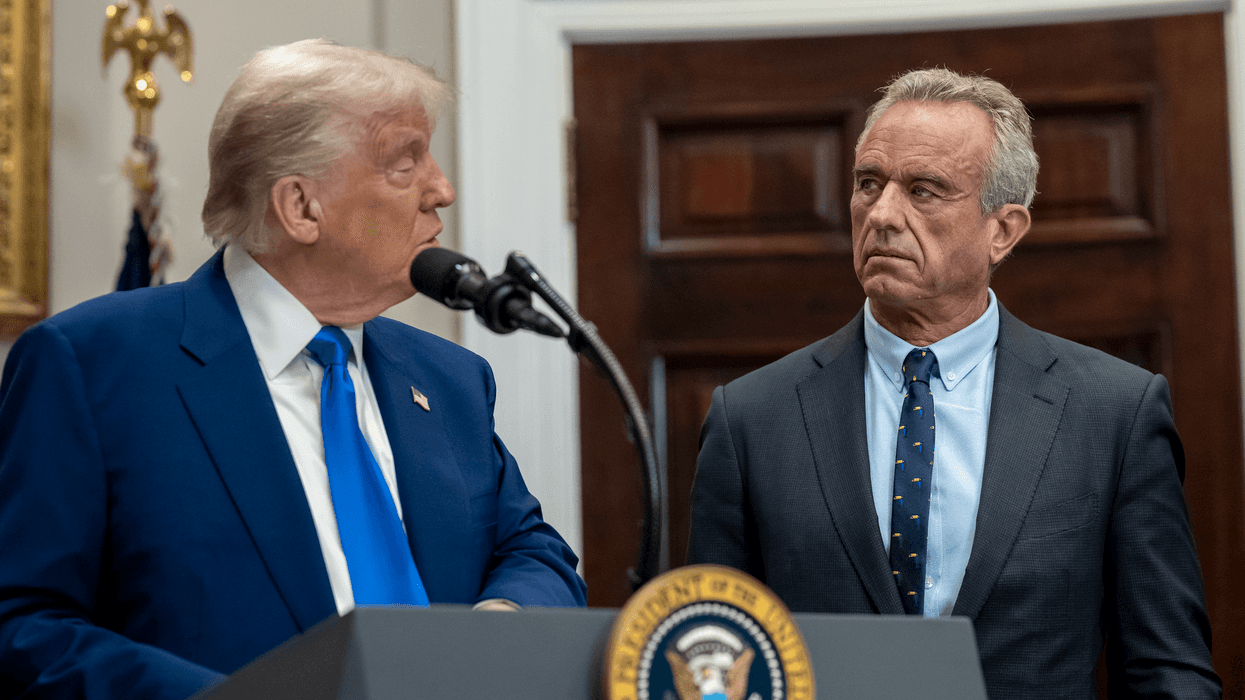
The Islamophobia and anti-Arab hate coming from the highest levels of our government are absolutely outrageous. From President Donald Trump to Health Secretary Robert F. Kennedy Jr. to members of Congress, including Sen.Ted Cruz and Rep. Nancy Mace, we are hearing vile, ignorant and dangerous attacks that must be denounced not just by the communities and individuals under attack, but by all of us.
When RFK Jr. was campaigning in Michigan for Republican Senate candidate Mike Rogers, he insulted the entire Arab community worldwide—all 500 million of them—saying that Arabs “don't produce science, they don't produce literature, and they don't win Nobel Prizes or other prestigious international awards.”
His remarks were not only incredibly racist, but absolutely false. In fact, Egyptian scientist Ahmed Zewail won the Nobel Prize in Chemistry. Egyptian writer Naguib Mahfouz won the Nobel Prize in Literature. Yemeni activist Tawakkol Karman won the Nobel Peace Prize. Palestinian-American chemist Omar Yaghi won the 2025 Nobel Prize in Chemistry, and mathematician Michael Atiyah, whose father was Lebanese, won the Fields Medal.
There is a fundamental difference between Islamophobia and antisemitism in America today: Islamophobia is being promoted by the state.
And let's not forget the extraordinary contributions of Arab scholars to mathematics, medicine, astronomy, and philosophy over the centuries.
Then there's Donald Trump, who has been on the campaign trail spewing racist diatribes against Abdul El-Sayed, the Democratic candidate for Senate in Michigan. Trump has been deliberately calling him Mohammad. When told that his name is Abdul, Trump responded, "I'm the president. I can call him whatever the hell I want."
He has accused El-Sayed of being a “Muslim Brotherhood Jihadist, who hates Jews and Blacks and AMERICANS.” He's even said El-Sayed “would be the only senator that will have to go through a metal detector before he's allowed to go into the Senate.”
Republican Senator Ted Cruz has joined in the hatefest. At a campaign event in Michigan, Cruz announced that his nickname for Abdul El-Sayed is "the jihadist leprechaun." Cruz then claimed that if El-Sayed were elected to the Senate, he could gain access to classified intelligence and pass it to terrorists. He warned that if El-Sayed is a "passionate supporter of the Muslim Brotherhood," there is "a very real risk that Americans will die as a result." El-Sayed has repeatedly denied any connection to the Muslim Brotherhood.
And then there's Republican Congresswoman Nancy Mace, who declared that "Every single Muslim holding public office in America is a Trojan Horse, and a threat to both national security and our republic." Imagine if someone said this about Jewish officials!
On March 9, 2026, Tennessee Republican Congressman Andy Ogles declared that "Muslims don't belong in American society" and that "Pluralism is a lie." He has also advocated stripping naturalized Muslim Americans of their citizenship and deporting them.
The attacks on New York Mayor Zohran Mamdani, the city's first Muslim mayor, have been relentless. Ogles called him "little Muhammad" and demanded that he be stripped of his citizenship and deported. Senator Tommy Tuberville posted a photo of Mamdani celebrating Ramadan alongside a photo of the September 11 attacks, with the chilling caption, "The enemy is inside the gates." Mace also associated Mamdani with 9/11, while Congresswoman Elise Stefanik called him a "jihadist." How can we tolerate politicians treating an entire religious community as terrorists and enemies of our country?
Let's not forget the Trump administration's chilling raid on Congresswoman Ilhan Omar's home, even though no criminal charges had been filed against her. Over and over again, Trump has attacked Omar, telling her to go back to Somalia, calling her homeland a "shithouse," accusing her of hating America, and even suggesting she could be deported or jailed.
Antisemitism is certainly unacceptable, but so are Islamophobia and anti-Arab racism.
We constantly hear warnings about the rising tide of antisemitism in this country. But what about the tsunami of anti-Arab racism and anti-Muslim hatred that is not just coming from ordinary citizens, but from the highest levels of our government?
Where is the outrage? Where are the political leaders demanding accountability? Where are the congressional hearings? In the past two years, I have seen 14 hearings about antisemitism, compared with just two that discussed anti-Arab hate and Islamophobia.
CAIR's 2026 Civil Rights Report recorded 8,683 complaints of anti-Muslim and anti-Arab discrimination in 2025, the highest annual number since it began collecting these figures in 1996.
As Jewish writer and political commentator Peter Beinart has argued, there is a fundamental difference between Islamophobia and antisemitism in America today: Islamophobia is being promoted by the state. Beinart points to the attacks on Muslim elected officials, the congressional campaign against Sharia law, and Trump's Muslim immigration bans as evidence that anti-Muslim prejudice is being promoted by the very people entrusted with protecting Americans' constitutional rights.
Antisemitism is certainly unacceptable, but so are Islamophobia and anti-Arab racism. And it's time we confronted all three with the same outrage, the same urgency, the same call for accountability, and the same commitment to justice.
The Trump administration's priorities are all wrong: We want our veterans to have healthcare, our local hospitals to stay open, and our first responders to help in emergencies, not more reckless and poorly trained federal agents on our streets.
Since President Donald Trump took the oath of office for a second time, he got to work helping billionaires get richer, while families across southern Minnesota are stretched thin. They’ve struggled to feed their families, fill their gas tank, and pay for their healthcare. Instead of taking action to lower costs, Trump and federal officials invaded our communities and used our tax dollars to fund mass deportations.
As a United States Army and Military Police Corps veteran, I know what it means to uphold an oath to serve and protect. What I can’t understand is betraying that oath, which is what our president and too many leaders have done. That’s why I was especially angered learning how much we stand to lose because of these federal deportation policies, according to a new cost calculator. Across southern Minnesota. $374 million of our taxes, or $1,520 per taxpayer, could continue funding the mass deportations. Knowing that our tax dollars are fueling this, while we are getting by with less, makes me sick.
I dedicated my career to our country, serving 32 years in the criminal justice system as a deputy sheriff, a jail administrator, consultant trainer, and policy writer for the National Institute of Corrections. As a former administrator, I know the cost of public safety, the value of every taxpayer dollar, and right from wrong.
When the Trump administration chooses to spend $374 million on ICE operations, that decision takes money away from programs that can improve the lives of folks in southern Minnesota.
The actions from Immigration and Customs Enforcement (ICE) and Customs and Border Protection officers during “Operation Metro Surge” and the subsequent Department of Homeland Security proceedings should sicken every law enforcement and correctional officer who takes pride in upholding the law. Not since the insurrection on January 6, 2021 have I been so angry and disillusioned with our government. Our country watched as public servants who swore an oath condemned the attacks of January 6. But after a corrupt president pressured them, too many of our leaders changed their tune, blurred the lines between right and wrong, and seemingly forgot their oath entirely. Watching “Operation Metro Surge” resurfaced feelings of disappointment, disgust, and betrayal of trust I hadn’t felt since January 6.
Officers depriving anyone of their civil rights, including due process, is wrong.
Officers brandishing firearms without articulable cause is wrong.
Officers detaining people without the ability to communicate with legal counsel within a reasonable amount of time is wrong.
And forcing working Minnesotans to pay for this chaos is wrong.
When the Trump administration chooses to spend $374 million on ICE operations, that decision takes money away from programs that can improve the lives of folks in southern Minnesota. That’s 6,900 veterans who won't get their medical care paid for. That’s 1,260 teachers in our public schools and 2,053 firefighters in our communities.
These numbers, while disturbing, are consistent when it comes to how Donald Trump harms working families. The president’s “One Big, Beautiful Bill” slashed the budget for lifesaving programs like Medicaid, the Affordable Care Act, and the Supplemental Nutrition Assistance Program to provide massive tax cuts for billionaires and large corporations. While CEOs pick out their newest vacation home, more people have to forgo doctor’s visits to cover their electricity bill or car payment.
These priorities are all wrong. We want our veterans to have healthcare, our local hospitals to stay open, and our first responders to help in emergencies, not more reckless and poorly trained federal agents on our streets.
As taxpayers, we have a responsibility to speak up when lawmakers have betrayed our trust. I encourage everyone to speak to their friends and family about how Trump will always be in the business of helping the ultra wealthy while making us pay for it.
If the Gulf states announced that their territory and airspace will not be used for another war on Iran, and that normalization with Israel is off the table until a Palestinian state exists, the calculations in Washington and Tel Aviv would have to change quickly.
The war that Israel and the United States launched against Iran on February 28 is in a lull, not at an end. Major combat has paused, diplomacy has stalled, and both sides are preparing for the next round. To understand why the fighting will soon resume, we need to understand the motivations of the two governments that started it. Neither of them wants peace. Israel’s leadership seeks domination over the Middle East, and the United States seeks to preserve its domination over the world. Simply to state these aims is to underscore that both governments are operating in a world of delusion.
Israel’s political leadership is consumed by the belief that Israel’s survival depends on its military supremacy over the Arab world and on the permanent subjugation or elimination of the Palestinian people. This belief is a form of collective madness, yet it is the doctrine that governs Israeli policy. Israel’s leaders cannot accept that peace is within reach. In the Arab Peace Initiative of 2002, the Arab states offered Israel full normalisation in return for a Palestinian state on the 1967 borders, and that offer still stands. Peace cannot be built on genocide in Gaza or on hatred of the Palestinian people and the drive to remove them from their land. Yet that is the path Prime Minister Benjamin Netanyahu has chosen, and he now campaigns on it openly, with his “national religious” allies, including Itamar Ben-Gvir and Bezalel Smotrich, who twist religion in the service of hatred and killing.
The United States is consumed by its declining power. Iran has been a target for more than 70 years. In 1953, the CIA and British intelligence overthrew Iran’s elected prime minister, Mohammad Mossadegh, after he nationalized Iran’s oil. The United Sates then installed the shah and backed his police state until the Iranian people overthrew it in 1979. The US has never forgiven Iran for escaping from US domination. The US backed Saddam Hussein’s deadly war against Iran in the 1980s, and followed with four decades of economic warfare, covert operations, cyberattacks, and assassinations. US President Donald Trump tore up the 2015 nuclear agreement in 2018, bombed Iran’s nuclear sites in June 2025, and then, in February of this year, joined Israel in open war, killing Iran’s supreme leader in the opening strikes.
The only way to stop this madness is for the Arab world to tell the United States that enough is enough.
Washington’s fixation on Iran is in the service of American hegemony. In The Grand Chessboard (1997), Zbigniew Brzezinski named Iran 1 of 5 “geopolitical pivots,” states that matter less for their own power than for where they sit. Iran commands the Gulf and the Strait of Hormuz. Brzezinski wrote that an “antihegemonic” coalition of China, Russia, and Iran could emerge “only if the United States is shortsighted enough to antagonize China and Iran simultaneously.” Well, yes, Washington has been that shortsighted and reckless.
The signs that the war will restart are not hidden. This week, War Secretary Pete Hegseth visited Israel to discuss renewed joint strikes, and Israeli sources report that the plans target Iran’s petrochemical facilities and nuclear sites. The White House has promised that the United States will not attack Iran before the November 3 midterm elections, which is another way of announcing a timetable for war. The US naval blockade of Iran’s ports has passed its 100th day. Trump rejected Iran’s proposal for a seven-day ceasefire in September, even though Tehran says the offer remains on the table.
Israel’s October 27 election adds fuel to the fire. On October 18, Trump endorsed Netanyahu, saying the United States would “finish the job” against Iran only with Netanyahu in charge. On October 21, at a rally in Dimona (home to the reactor where Israel secretly built its own nuclear arsenal), Netanyahu declared that the only way to end the Iranian threat is to overthrow the regime and said he had issued that directive to the army, Mossad, and the security services.
Iran has understandably drawn its own conclusions. Its commanders have announced a new offensive doctrine that includes preemptive strikes and attacks on bases in neighboring countries used for operations against Iran, and they warn that renewed attacks would bring a global energy crisis. Attacks on shipping in the Strait of Hormuz reached a new peak this month.
This is the reality that the Arab world, especially the Gulf countries, now faces. The US bases across the Gulf did not bring security in this war. They turned their host nations into targets. The US-Israeli strategy of divide and conquer, which cast Iran as the region’s permanent enemy and invited the Arab states to shelter under American power while accepting Israeli hegemony, has brought war to the region, economic loss to the Gulf, and mass killings in Palestine and Lebanon.
The only way to stop this madness is for the Arab world to tell the United States that enough is enough. The Arab states should declare that they will never accept Israeli hegemony, that there must be a sovereign State of Palestine, and that the region’s security will come from regional cooperation rather than from Washington. The solution could be two states, as in the Arab Peace Initiative, or one binational democratic state, or a confederation. What matters is that Israeli Jews and Palestinian Arabs, each about 8 million people, live in peace, safety, and self-determination. What is not possible is the perpetuation of Israel’s brutal apartheid state.
The beginnings are visible. Qatar has called for a regional dialogue among the Gulf Cooperation Council states, Turkiye, and Pakistan, and Qatar, Pakistan, and Oman have kept the channels of mediation with Tehran open throughout the war. These efforts should grow into a standing regional security framework that includes Iran, the Gulf states, Egypt, Turkiye, Iraq, and Pakistan, built on mutual non-aggression, freedom of navigation, and a zone free of nuclear weapons that must eventually include Israel.
The Arab states have far more leverage than they recognize. If Saudi Arabia, the United Arab Emirates, Qatar, and their neighbors announced that their territory and airspace will not be used for another war on Iran, and that normalization with Israel is off the table until a Palestinian state exists, the calculations in Washington and Tel Aviv would have to change quickly. And the American people, who hate the war on Iran and side with Palestine, would cheer.
The era of US-led divide and conquer, with Iran cast as the permanent enemy of the Arab world, is over, even if Washington and Tel Aviv refuse to admit it. The Arab states should say so openly now before the next round of war begins, and in doing so, open the way to a region that provides for its own security and peace.
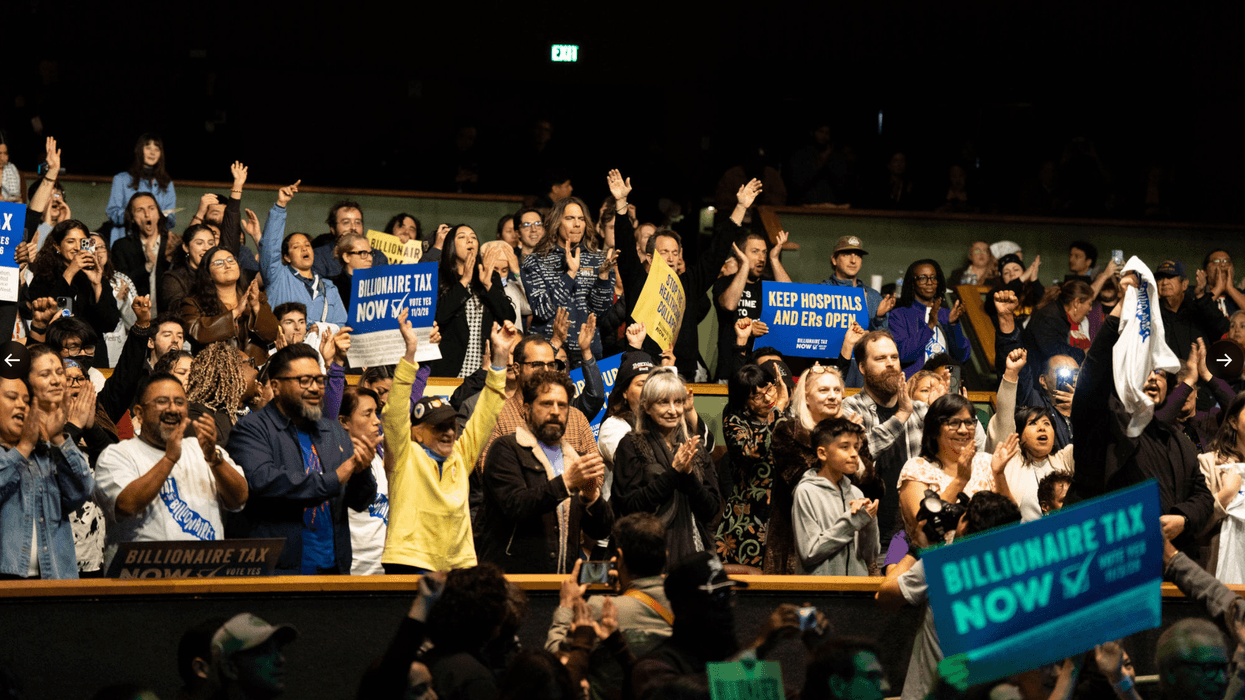
The 22 billionaires who have spent or spoken against California's Prop 40 have seen their combined wealth increase 64% in the last 20 months, yet you’d think from their reaction the sky was falling.
Americans overwhelmingly support taxing billionaires more. But some of those billionaires, including those who’ve seen their wealth balloon in recent years, are spending big to stop it.
Voters in California, for example, are considering a ballot initiative called Prop 40—a one-time, 5% wealth tax exclusively on the state’s 200-plus billionaires. But a few dozen billionaires are ponying up tens of millions to fight the tax and threatening to run away if they lose.
In an analysis for Tax the Ultra Rich Now (TURN), the Institute for Policy Studies identified 22 Golden State billionaires who have contributed substantial funds or been outspoken opponents of Prop 40. This group has seen their combined wealth increase 64% in the last 20 months. Yet you’d think from their reaction the sky was falling.
When you hear their baleful cries, echoing from the superyachts and private jets, you want to take their hands and reassure them: “It’s all going to be OK."
The 22 billionaire snowflakes include a bunch of tech bros and crypto barons making billions off developing an AI future for the rest of us.
Several are chums of Jeffrey Epstein, including Palantir’s Peter Thiel. In the last 20 months, Thiel’s wealth increased a whopping 120.27%, from $14.8 billion to $32.6 billion. That puts his wealth at 11,319 times the median wealth of a Californian household, which is $303,000. To protect his gains, Thiel has given $3 million to the No on 40 campaign and has called on other billionaires to move out of California. (Thiel himself recently moved to Argentina.)
Venture capitalist John Doerr, an early investor in Google, Amazon, and DoorDash, gave $10 million to No On 40. In the last 20 months, Doerr’s wealth increased 47.97%, from $14.8 billion on January 1, 2025, to $21.9 billion on September 1, 2026. Doerr’s wealth is 7,227 times that of the median Californian.
Google’s Sergey Brin has been the single largest opposition donor, chipping in over $102 million to fight Prop 40. From the deck of his $450 million yacht, the Dragonfly, Brin has seen his personal wealth grow a whopping 70% in the last 20 months, from $148 billion to $253 billion. Brin’s wealth is a stratospheric 83,498 times the median wealth of a Californian household.
Not all the billionaires are cowering in the corner.
Billionaire Tom Steyer said he would vote for the billionaire wealth tax and wished it went further to reduce inequality. Jensen Huang, the co-founder and CEO of Nvidia, is worth an estimated $190 billion and supports the one-time wealth tax. He told CBS News that “it’s a privilege, it’s a responsibility” to pay taxes—and that “nothing would give me more joy” than to pay more.
California’s 231 billionaires held approximately $2.3 trillion as of September 22, 2026 and pay incredibly low taxes on their riches. According to economists Gabriel Zucman and Emmanuel Saez, from 2019 to 2025, while California billionaires’ wealth grew an average of over 15% per year, they paid on average just 0.26% of their wealth annually in state income taxes. Sergey Brin and his fellow Google co-founder Larry Page paid even less—just 0.07% of their wealth annually.
We can see why these billionaire snowflakes don’t want anything to change. Still, the one-time wealth tax would be just a small fraction of their gains in the last few years—and nevermind of their overall wealth, which will remain massive.
When you hear their baleful cries, echoing from the superyachts and private jets, you want to take their hands and reassure them: “It’s all going to be OK. You’ll have 95% of your billions and tens of thousands of your neighbors will have healthcare. You will get over this one quickly.”
Californians will decide their fate in November: a vote for oligarchy or a first step toward rebalancing our democracy? And Americans elsewhere will be watching.
The bulk of political dark money flows directly back into media companies that the nation’s richest donors control. We can break the cycle.
There’s a drama playing out across American screens in 2026. But not the sort you might expect. There are villains and heroes, yes, high finance and political intrigue, too. There may even be a surprise ending—but we’ll have to wait until the Nov. 3 season finale to find out.
The actual plot, though, is not unfolding on television screens or streaming platforms but in corridors of political power and extreme wealth, far from public view. It’s a tale about the hijacking of US elections by the world’s richest people.
According to the Federal Election Commission, as of early October a record-setting $16 billion and counting had been plowed into the 2026 midterm-election cycle. Hundreds of millions more have been added to that tally in the weeks since. Much of this money comes from the world’s richest oligarchs, many who built their unlimited wealth from ownership stakes in massive tech and media conglomerates.
So much for the idea that our news-and-information systems should foster the public exchange of diverse ideas that are the lifeblood of civic society.
Elon Musk has contributed just shy of half-a-billion dollars to Republican-aligned political campaigns and Super PACs for the 2026 midterms. That’s more than his total political contributions during the 2024 presidential election. With no limit on how much he can spend, Musk made the biggest electoral donation in American history—$158 million—to help one candidate (senatorial hopeful Ken Paxton of Texas).
Lesser known are the contributions lower-ranking multibillionaires have made: Mike Bloomberg, Reid Hoffman, and George Soros have contributed a combined $227 million to Democratic-aligned campaigns; GOP election initiatives have received hundreds of millions of dollars from the likes of Marc Andreessen and Ben Horowitz ($92 million); Elizabeth and Richard Uihlein ($150 million); and Jeff and Janine Yass ($110 million) .
Hundreds of millions more have found their way into the accounts of shadowy Super PACs that are not required to disclose their donors.
Most of this whopping cash infusion pays for political ads: The media-tracking firm AdImpact projects a record-breaking $11.6 billion of that $16 billion total—or approximately 73 percent of all political contributions—will buy ads on broadcast and cable-TV stations, radio outlets, streaming services and social-media platforms.
Viewers are left with little to help them separate fact from fiction before they head to the polls. That’s because the media outlets that serve up campaign spots have zero legal obligation to reject ads that peddle lies. While nearly half of this money goes to air political ads on broadcast outlets, the Communications Act of 1934 prohibits television and radio stations from censoring or editing candidate-sponsored ads, even when they know the content is false.
And while the Federal Communications Commission does require a degree of transparency regarding who paid for a given broadcast ad, it does not monitor or regulate the accuracy of an ad’s claims.
Since 2024, the owners of social-media platforms like Facebook, X and YouTube—which account for a growing piece of the ad-spending pie—have largely abandoned efforts to fact check the political ads that course across their networks.
That’s a lot of data points to digest. But the information on political-ad spending leads to one disturbing conclusion: The bulk of money spent to manipulate and even misinform viewers flows back to media companies that many of the nation’s richest donors control. This cycle of money and influence is turning people away from meaningful political engagement, put off by the deluge of dishonest attack ads that will have aired hundreds of thousands of times before viewers become voters on Nov. 3.
It’s a toxic combination of ingredients that Free Press co-founders Robert W. McChesney and John Nichols called the “money and media election complex,” in which wealthy donors, giant corporations, politicians, regulators and corporate media align their interests against a public seeking to legitimately engage in democracy.
“The complex has tremendous gravitational power,” McChesney and Nichols wrote more than a decade ago, “which increases the degree of difficulty for those wishing to participate in elections in a manner not conducive to wealthy funders, corporate media or preservation of the status quo.”
So much for the idea that our news-and-information systems should foster the public exchange of diverse ideas that are the lifeblood of civic society. Instead we have a political system that’s beholden to billionaire donors, and a hyper-commercial media that are getting rich off keeping voters in the dark.
Media outlets must take their obligations more seriously. In exchange for First Amendment freedoms, they need to cover the money that’s poisoning our politics, expose the groups and individuals funding political ads and address the falsehoods presented in many of these spots. With little time remaining before the midterms, the time to do this reporting is now.
Public policy must also address the media’s systemic failings. And while communications regulation may look fuzzy when viewed from 30,000 feet, at the ground level the consequences of bad rules and regulations come into sharper focus. Nowhere is this more evident than during elections.
Instead of nurturing democracy and free speech, commercialized media today threaten to distort it.
The lack of adequate diversity and competition in media has encouraged industry owners to think of their outlets as profit-making machines with no obligation to disclose to viewers the political money and special interests that make them tick. And the lack of local reporters holding candidates to account—the consequence of runaway media consolidation in turn spurring newsroom cutbacks and closures—in many ways explains the rise of a class of politicians who spend more time wooing wealthy contributors than attending to the needs of voters back home.
This has created a dependency between those who control political power (and need access to the media to keep it) and those who control the media (and need access to political power to keep it). This cycle has gotten so toxic that instead of nurturing democracy and free speech, commercialized media today threaten to distort it.
These systemic remedies include making political ad-spending information easily available, including exposing the true funders bankrolling Super PACs. Such disclosure should happen in the body of the ads themselves. We must also get serious about strategies and policies that foster independent, local political journalism. Free Press Action has made a number of promising inroads here through state-level legislation to fund civic media.
And we need to right-size massive media conglomerates, using existing antitrust law and media-ownership limits while strengthening other rules that have been gutted at the urging of a powerful media lobby and far-too compliant lawmakers and regulators.
There’s a growing backlash against billionaire control of our political and media systems that could make these reforms possible.
The failures of corporate media have undercut the First Amendment goal of creating, in the words of the Supreme Court in 1969, an “informed public capable of conducting its own affairs.” True participatory democracy will have no chance at survival if we fail to insist on serious changes now.
The debate over major permitting reform legislation hinges around the fact that as long as Trump is in charge, it will empower his pro-fossil fuel rampage.
As we head towards the midterms, the president’s closing argument has mostly been about various people’s posteriors, but he has also taken the time to make several, um, substantive points.
One is his theory that solar panels become incredibly hot to the touch during their operation, and hence will kill “all the animals.” As he explained his theory, "The animals jump on them and they fry because those black panels are hotter than your stove.” This is not true, as anyone with a functioning brain should be able to easily figure out; there are of course tens of millions of homes and apartments with solar panels, and no reports of burns from touching them. Literally here is a video of a goat dancing on a solar panel. It turns out in fact there are dozens of these pictures online—goats on solar panels are an entire genre.
The second point he’s been making this week is that he is going to lower diesel costs by buying some of the fuel from Russia, thereby abrogating our country’s own sanctions and replenishing the Kremlin’s war budget. Indeed, the diesel is traveling on previously sanctioned tankers. As Svitlana Romanko, the intrepid leader of Ukraine’s Razom We Stand points out, this is utter betrayal: "Every barrel on board these ships exporting Russian fossil fuels is money for the missiles and drones Russia fires at Ukrainian homes every night, bringing more civilian casualties.” But since it’s President Donald Trump, it’s also utterly stupid, in that the quantities are too small to budge the high price of diesel, which, as the zealots at that radical website OilPrice.com write, is “set to persist well into 2027.” Of course, there’s another possible explanation—it’s all part of the grand corruption scheme that the Times has begun to unravel: as Anton Troianvoski and Eric Lipton document:
An American energy company intends to buy Russian technology and use it to access a massive supply of natural gas in Alaska, liquefy it, and export it to allies abroad.
The Kremlin and the White House were interested in the idea. President Vladimir V. Putin discussed the plan last month with President Trump’s peace envoys, Steve Witkoff and Jared Kushner, people familiar with the negotiations said, speaking on condition of anonymity to discuss sensitive diplomacy. It is one of a series of energy deals White House officials believe could help smooth relations with Moscow and eventually pave the way to end the war in Ukraine.
But it turns out that the company was not an all-American affair. The multibillion-dollar project has received secret funding from the same powerful Russian company that was to provide the technology, according to the energy executive who until last month led the US firm and two others involved in company negotiations.
Anyway, there was a third point the president made this week, this one purely monstrous. It came in a speech in oil-patch Lubbock, Texas, where, in an effort to boost flailing Senate candidate Ken Paxton, he declared an end to any real federal oversight of methane emissions from the fossil fuel industry. As Sara Sneath reports:
At a Trump rally in Corpus Christi earlier in the day, Trump shouted out Harold Hamm, saying the founder of Continental Resources was in the audience. In April, Continental Resources wrote a letter to the EPA [Environmental Protection Agency] pushing back against measures in the methane rule that prohibit routine flaring of associated gas.
Hamm, careful readers will remember, was the president’s chief donation bundler from the oil and gas industry during the last presidential campaign. Anyway, it’s worth remembering that
Last year, the US emitted more methane from its oil and gas sector than any other country in the world. Methane is responsible for at least a quarter of today’s warming.
Julia Kane, a researcher for Fieldnotes, said the Trump Environmental Protection Agency was giving oil and gas corporations exactly what they want. “The oil and gas industry says it’s a ‘good-faith’ partner eager to help craft regulations, but time and time again it’s worked behind the scenes to delay and weaken them,” she said.
All of this, of course, is pretty much par for the course. You could pick any week in the last two years and come up with roughly the same kind of idiocy and perfidy and graft; the Trump presidency is an ongoing evil MadLibs.
The trouble with his current gust of malignity, however, is that right now a pair of Democrats in the Senate—Sheldon Whitehouse of Rhode Island and Martin Heinrich of New Mexico—have been trying to persuade their colleagues, and by extension the rest of the country, to support a “permitting reform” bill that would make it easier to build energy stuff. It’s traveling under the name BAAJA, for Bipartisan American Affordability and Jobs Act, I guess on the grounds that “affordability” is something all right-minded people support (except, of course, for Trump who thinks it, like global warming, is a “hoax.”) Anyway, the grand bargain these two senators have struck with the oil industry is hundreds of pages long, and would overturn much of the environmental review process in America.
If you have any doubts about the necessity of making changes in how we review things, read Ezra Klein and Derek Thompson’s Abundance. But the devil comes in the details—or rather, the devil is Donald Trump, and the pertinent detail is whether he can be contained in a meaningful way. Obviously Whitehouse and Heinrich knew that this would be an issue, and they did their best to build in some guarantees that it wouldn’t be able for him to use it push dirty energy at the expense of clean. But from the start there have been questions about this—I wrote two weeks ago about Harvard professor Jody Freeman, so centrist in this work that she actually served on the board of a major oil company, who said:
A close read suggests it's structurally designed to lock in and subsidize natural gas & other fossil projects over cleaner renewables for years to come, using the courts and taxpayer dollars.
Since then, what you might call normie Democrats have been sounding increasingly urgent alarms in increasingly urgent language, and urging the drafters of this massive legislation—currently scheduled for a vote five days after the election—to figure out how to amend key provisions. Exhibit No. 1 here would be John Podesta, the insider’s insider. White House chief of staff for Bill Clinton, counselor to Barack Obama on climate and to Joe Biden on energy policy, chair of Hillary Clinton’s presidential campaign—I think it’s safe to say he understands presidential power as well as anyone alive. So it landed with a thud two days ago when he told Jael Holzman that the bill as written would hand Trump a “loaded howitzer.” He focused on the sections around “permitting certainty,” which were written to try and keep the president from interfering (as obviously he has been doing) with clean energy projects. But:
This was “one place where I think they made a huge mistake,” Podesta said, calling the restriction on revoking or rescinding decisions “one of the worst provisions of the bill.” He complimented lawmakers for trying to address Trump’s attacks on already-permitted renewable energy projects, including stop-work orders on offshore wind facilities under construction, and for seeking commitments from the administration to continue permitting projects in exchange for a deal.
However, Podesta said they are “going to have to take it out” or significantly revise it because he believes this language would allow Trump to illegally approve projects on sensitive or protected lands and courts would not be able to force the government to undo approvals that violate the law. He argued this would mean Trump could permit development in many areas land conservation groups, tribes, and anti-drilling advocates have long fought to protect from industry, including the Chaco Culture National Historic Park in New Mexico, the Boundary Waters Canoe Area Wilderness in Minnesota, and the Bears Ears National Monument in Utah.
“I think they have handed Trump not just a loaded gun, but they’ve handed him a loaded Howitzer to go after public lands, to permit stuff that even if it’s illegal can’t be reversed by the courts,” Podesta said. “They’re going to have a permit gorge like you’ve never seen, not really caring about whether they’re going through the legal steps to do it, and under this bill, those can’t be reversed. That’s got to change if this bill’s going to pass.”
Abigail Dillen, president of EarthJustice, who have been leading the legal fight against Trump’s environmental extremism, followed up Podesta’s warning:
Over the next two years, BAAJA would create more legal runway for this president to make corrupt deals and green-light harmful projects of all kinds, and it would constrain any future president from repairing the damage. People can reasonably differ on long-term projections. But once you know what’s in this bill, how BAAJA plays under Trump should be clear as glass…
Most sweepingly, the bill’s certainty provisions would render Trump permitting decisions irrevocable with very limited exceptions. The next administration would likely inherit a raft of destructive and unpopular projects, and BAAJA would make it wildly risky financially and even impossible for the next president to revisit them. To be clear, the damage would not be confined to energy-related projects. Think detention centers, petrochemical complexes, data centers on public lands—whatever kinds of projects appeal to this president.
And here’s Carl Pope, former executive director of the Sierra Club and an environmentalist so centrist he once barnstormed the country with fracking executives touting the desirability of natural gas:
Title IV, “Permit Certainty,” is the draft’s most troubling section. Environmental policy has historically improved through two linked processes: identifying new risks and applying existing clean up technologies to abate them; in parallel, pushing research on clean up technology options and then adopting stronger standards as science and technology advance. Title IV works to obstruct both.
For example, a data center permitted to use fossil-fuel power could claim protection even after cleaner, cheaper alternatives become available for their needs. Likewise, if regulators later discovered dangerous contamination—such as PFAS, or “forever chemicals” in a watershed—the provision could impede stronger water-quality standards needed to protect nearby residents.
What BAAJA describes as a regulatory floor may function as a public-health ceiling. Instead of preserving agencies’ ability to respond to new evidence, it could lock in yesterday’s permits and yesterday’s pollution standards, under which millions of tons of unnecessary pollution are emitted by outmoded power plants.
For the first few weeks, this fight has been mostly confined to very elite and in-the-know circles. Earlier this week, for instance, Tom Steyer came out for the bill on the grounds that it “beats the status quo.” When I saw it, I flashed back to a gathering convened on his ranch 15 years ago: I shared a cabin there with… John Podesta and Carl Pope. We shouldn’t have this closed a political circle on questions this large.
So it’s good to see that policy is increasingly joined by politics in this debate: Given that we’re hoping for a blue wave in next Tuesday’s election, it may be hard to persuade Democrats to go along with the Whitehouse-Heinrich plan, because the conventional wisdom is starting to harden around the Ossoffian ideal that the best way to deal with Trump is to stand up to him.
A fairly important straw in the wind came earlier this week when four key Senators—Oregon’s Jeff Merkley and Ron Wyden, Ed Markey from Massachusetts, and Tammy Duckworth from Illinois—wrote a letter to Whitehouse, Heinrich, and their Republican co-sponors arguing that the Trump administration has clearly enforced environmental laws unfairly over the last two years and there is every indication they will keep trying to do so. As they pointed out, the Department of Energy has admitted to canceling billions of dollars in grants to states that had voted for Kamala Harris:
This vindictive, partisan discrimination based on whether a grantee is in a State represented by two Democratic Senators that President Trump lost in the 2024 election is disgraceful. It violates core constitutional protections, harms communities comprised of Americans from across the political spectrum, and, ironically, harms millions of Trump voters who live in these States. No American should be caught in the crosshairs of such a brazenly corrupt scheme. No one has explained why a Senator from a targeted State should help the Trump administration fast-track fossil fuel projects while it refuses to restore funding that Trump officials admitted was terminated on an illegal, partisan basis.
They propose a test of whether or not the Trump administration is serious going forward:
It would be compelling if, before the motion to proceed vote, the Trump administration directed DOE to 1) reinstate every award it terminated in October 2025 that it has not already restored, 2) to allow recipients to draw down those funds under the original award terms, and 3) to commit in writing that it will not terminate an award because of the political identity of the recipient’s State or the party affiliation of its elected officials.
While such action may not fully address the wide range of concerns individual Senators have about various portions of this complex legislation, it would represent an important first step and carry far more weight with us and, more importantly, our constituents whose awards were illegally terminated, than mere informal assurances that the Trump administration will stop interfering with clean energy projects.
As Rachel Frazin notes in The Hill, this constitutes a high bar, especially since Merkley is likely to succeed Whitehouse as the chair of the Senate’s Environment Committee should the Dems win the chamber—it’s considerably higher than the sign off on a few wind projects that former DOE Secretary Jennifer Granholm suggested this week would be signal enough. (And as Heatmap reported this week, Trump hasn’t been signing off on those anyway—in fact, it appears that they’re thinking of banning the importation of wind turbine equipment on “national security grounds”). According to Frazin, the letter from the four Senators
represents a fracture in the Democratic caucus. It’s not entirely clear how widespread the sentiment is among Democrats, but if enough of them vote against the bill, it could hamper its chances.
And the odds of that happening seem to me to be increasing, because news of the bill seems to be escaping DC containment. Remember—this election is being largely fought over data centers, which Americans truly hate. Paul Krugman Thursday morning called the polling on these data factories “astonishingly negative” and provided a nifty little chart to drive the point home.
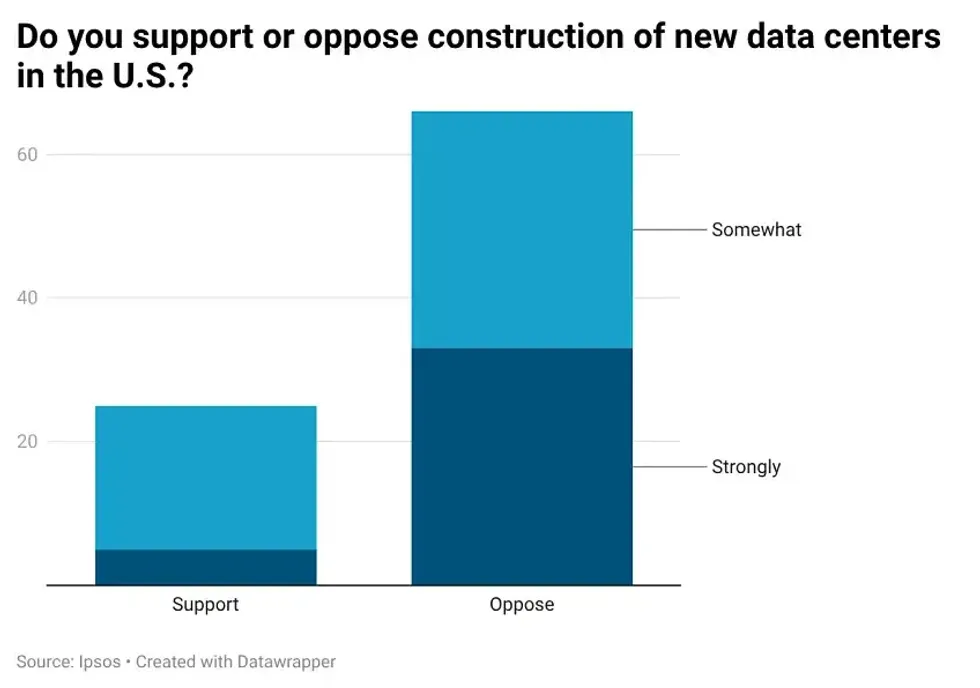
Essentially, no one (who isn’t an oligarch) strongly supports them, and most of the country hates them. So if the permitting bill might make it easier to build them—well, my guess is that many politicians in both parties are a little wary now of the data center issue, and don’t want to get crosswise on it. Too many traditional allies are up in arms—here, for instance, is the new NAACP resource for Black voters opposing data centers, complete with a great picture of Justin Pearson waging a remarkable campaign for Congress on the issue. Here’s the letter from the Climate Justice Alliance, with more than a hundred frontline groups coming together to say:
Your closed-door deal bolsters the work of the Trump administration which is hell-bent on dismantling environmental justice at every turn, and we are beyond outraged at what you are saying our lives are worth. Reject this travesty.
Equally pointedly, in Heinrich’s New Mexico this week, students walked out of classes to protest data centers and they linked their protest directly to the permitting bill:
“We will not get back the last 20 years of climate progress Project Jupiter will undo,” Isabelle Taylor-Ault, a student organizer and junior at NMSA, said to the crowd outside the Roundhouse in Santa Fe. “You, the adults, the ones supposed to be fighting for us, you may get the privilege of dying of old age, but our children will die from climate change.”
A handful of state lawmakers sitting on the interim Water and Natural Resources Committee—which was meeting on the Capitol’s third floor—headed down to watch the protest unfold.
In Albuquerque, protesters directed much of their ire toward US Sen. Martin Heinrich (D-NM), who recently unveiled a sweeping, bipartisan permitting reform bill that protesters say reduces tribal input and empowers fossil fuel companies to quickly break ground on more harmful projects.
More than 100 protesters marched from the UNM bookstore down Central Avenue to Heinrich’s downtown Albuquerque office. In front of a large sign that read, “Heinrich is a sellout,” protesters with YUCCA, as well as Indigenous and environmentalist groups, described the bill as a betrayal by a longtime champion for tribal and environmental causes.
Indeed, it didn’t take long after that demonstration for one of Heinrich’s colleagues—New Mexico congresswoman Melanie Stansbury—to come out swinging against the bill, saying she was “adamantly opposed” in what the New Mexico Political Report called a “rare public split” between members of the delegation.
The stakes are of course enormous. If the data center buildout continues (and in New Mexico, for instance, Oracle’s Project Jupiter depends on a gas pipeline), then a Sierra Club analysis just released says the new facilities would soon produce more greenhouse gas emissions than Mexico. As Eric Roston and Olivia Raimonde write:
The US power sector would emit 2.1 billion metric tons of carbon dioxide by 2030, after factoring in planned AI projects. That’s 618 million tons more than 2025 levels, by the Sierra Club’s calculations, or about a 42% increase.
A year and a half ago, researchers at the nonprofit environmental group would have estimated that the buildout and its impact would have been a quarter or half of current projections, said Jeremy Fisher, the Sierra Club’s principal adviser for climate and energy. “The numbers continue to sort of boggle our minds,” he said.
It’s hard to predict exactly how BAAJA would affect that, which is part of the problem: The bill is a bit of a black box, and the only thing we know for certain is that for the next two years Donald Trump occupies that black box, snarling about solar panels that kill all the animals and eager to do any favor that the fossil fuel industry demands.
So the key thing, of course, far beyond debate on this bill, is to try and defang that monster, and the chief method for that is simple: Win the elections Tuesday in as sweeping a fashion as possible. If you’re looking for a way to pitch in, there are plenty. For those of us of a certain age, Third Act’s Party Line senior-to-senior phone and text banking is operating day and night; if you’re a youngster, Seed the Vote can figure out ways to put you to work. I’m hunkered down for one last long weekend of all-out effort, and I hope you are too. We could come out of next week a different country, and wouldn’t that be sweet!
What is needed from the opposition leaders? Nothing beyond decency. The government that ousts Netanyahu is the one that accepts the votes of Arab citizens.
Benjamin Netanyahu, Itamar Ben-Gvir, and Bezalel Smotrich decisively lost Israel’s election on October 27. The governing coalition of Likud, the far right, and the ultra-Orthodox parties fell from 64 seats in 2022 to 53, eight short of a majority in the 120-seat Knesset. The other 67 seats went to parties that campaigned to replace the government: 48 to the Jewish-led opposition headed by Gadi Eisenkot, a former army chief of staff, and 19 to the two Arab parties. Turnout was 77.9 percent, the highest since 1999, and Arab citizens, who make up about one-fifth of Israel’s population, voted at an estimated rate of about 80 percent, up from 53 percent in 2022. The results make it clear: Israeli voters chose to end the Netanyahu government. The solution to Israel’s political crisis is in plain view. The only thing standing in the way of ousting the government is racism: the refusal of Israel’s Jewish opposition leaders to treat Arab citizens as part of the political community.
The racism is not hidden. On election night Netanyahu claimed a “decisive majority among the Zionist and Jewish public,” a formula that simply subtracts the votes of one citizen in five. His Likud party then viciously and absurdly declared that the election had been “stolen” by the Arab parties and demanded investigations by the police and the Shin Bet, Israel’s internal security service. The purpose, of course, is to brand Arab votes as illegitimate, so that no government resting on them can be accepted.
The tragedy is that the opposition leaders have adopted the same premise. Naftali Bennett, a former prime minister, has said that the Arab parties “are not Zionist, and therefore we will not rely on them.” Avigdor Liberman has ruled out any government that depends on Arab votes, even a temporary one. Eisenkot has said that Ra’am’s leader “won’t be part of my next government,” and that he does not “see any Arab or Haredi parties who accept” his conditions for partnership. These leaders do not object to anything the Arab parties would do in government. With good will, they could easily negotiate a governing arrangement.
The consequences of the racism are predictable. If the opposition leaders hold to their refusal, only two outcomes remain. Israel will go to another election, with the current murderous government remaining for many more months, or the opposition will join a unity government in which Netanyahu stays in power. Netanyahu has ruled out abandoning his far-right partners. Either way, the opposition leaders would hand Netanyahu and his murderous colleagues the victory that the voters denied him.
There are no real policy obstacles to cooperation. Ra’am, the United Arab List, has already served in an Israeli government. In 2021 it joined the coalition led by Bennett and Yair Lapid, the first independent Arab party ever to do so. The other Arab party, the Joint List, has said it would vote with an Eisenkot-led government to establish an official inquiry into the failures of October 7, which is the opposition’s own first priority. Israel’s voters appear to be ahead of their leaders. A Hebrew University survey on election night found that more than 61 percent of opposition voters want Eisenkot to form a government with Ra’am, while only 20 percent prefer new elections. Arab and Jewish opposition voters want the same thing, which is to oust Netanyahu, Ben-Gvir, and Smotrich.
A practical plan should follow directly from the arithmetic. First, when the new Knesset convenes, the 67 members opposed to the Netanyahu government should elect a new Speaker, giving the new majority control of the parliamentary agenda even before a government is formed. Second, Eisenkot should form a true coalition in which Ra’am sits as a full partner with ministerial posts, giving 56 seats, with the Joint List supporting the government from outside to reach 67.
The program of such a government would not be hard to negotiate, because the parties that would be in it already share most of it. The government would establish an official inquiry into the failures of October 7. It would adopt an emergency plan against the crime and violence that have devastated Arab towns, and it would invest in housing and services for Arab communities, including the unrecognized Bedouin villages of the Negev. It would restore the independence of the courts and the attorney general.
The government might last a year. Questions of borders and the Palestinian territories would not be settled by this government, but a non-racist coalition government now would move Israel toward a lasting peaceful solution, perhaps toward a binational democratic state or toward the two-state solution of the long-standing Arab Peace Initiative. In the meantime, and crucially, Netanyahu and the other war criminals would be ousted.
Israel’s leaders should also understand what is at stake beyond Israel’s borders. Israel’s racism and murderous campaign in Gaza and the occupied West Bank have profoundly alienated people all over the world. A Pew Research Center survey of 36 countries this spring found that a median of 67 percent of respondents view Israel unfavorably, including 60 percent of Americans. In Pew’s surveys this year, Israel was viewed more negatively than any other country it asked about. More Americans now sympathize with the Palestinians than with the Israelis. The alienation extends to Jews all over the world. If the politicians double down on their racism now, they will confirm the world’s harshest judgments of Israel.
What is needed from the opposition leaders? Nothing beyond decency. The government that ousts Netanyahu is the one that accepts the votes of Arab citizens. Israel’s president has asked the party leaders to come to his consultations with an open mind. The majority to remove Netanyahu exists, provided that the leaders drop their racism
Let no one mistake the moment. Historians will look back at the conditions under which Americans voted in 2026, and they will find no midterm quite like it.
I have studied American elections for more than four decades, and I am wary of the word "unprecedented." Pundits use it for every news cycle. But as the country heads toward the November 3 midterms, I cannot find another word that fits. Never in the era of modern polling has a president taken his party into a midterm with all four of these burdens at once: a deeply unpopular presidency, an economy most Americans say is failing them, an unpopular war, and pervasive public alarm about corruption.
Any one of these can cost a party dearly. Two or three together have produced some of the worst midterm defeats in our history. All four, simultaneously, is new territory.
Consider the numbers. Donald Trump's job approval now averages in the mid-to-high 30s, with several major polls finding it at 30 or 31 percent. That is roughly where he stood when he left office in January 2021, after January 6. On the economy, the AP-NORC poll finds about three in four Americans disapproving of his performance, and nearly four in five disapproving of his handling of the cost of living. Even among Republicans, fewer than half approve of how he has handled prices.
The war with Iran began with less public support than any major American war in polling history, and it has lost ground since. Surveys now show it as unpopular as Iraq in 2006 and Vietnam in the early 1970s. One analysis of more than 150 surveys across seven major conflicts concluded that it is the most unpopular major war the United States has fought.
And corruption, long a background complaint, has moved to the foreground. In a recent Fox News poll, 88 percent of voters said they were concerned about corruption in government, ranking it above inflation and gas prices. Nearly two in three Americans tell pollsters the president uses his office to enrich himself, with the fastest increase among Republican-leaning voters over the past year.
Now look at history. In 1946, Harry Truman's approval sank to about one-third amid postwar inflation and strikes. Democrats lost 54 House seats, 11 Senate seats, and control over both chambers. But there was no unpopular war and no corruption scandal at the center of the campaign. In 1966, Lyndon Johnson’s Democrats lost House 47 seats, and 3 Senate seats, yet Vietnam had not yet turned a majority of Americans against it. In 1974, after Watergate and amid double-digit inflation, Republicans lost 48 House and 4 Senate seats. But American combat in Vietnam was largely over, and Gerald Ford had been president for only three months.
The closest parallel is 2006. George W. Bush stood in the high 30s, Iraq was going badly, and Republicans were mired in the Abramoff and Foley scandals. Republicans lost 30 House seats, 6 Senate seats, and like the Democrats in 1946, control over both chambers. Yet even then, the economy was middling rather than broadly seen as broken. Bush had three strikes, not four.
Harry Truman's Republican opponents did eventually assemble a four-part indictment of Korea, communism, corruption and a sputtering presidency. But that was the presidential election of 1952, not a midterm.
My Keys to the White House predict presidential elections, not midterms. But they rest on the simple principle that American elections are referendums on the governance of the party in power. Several of the keys measure exactly the forces at work today: the short-term economy, scandal, and foreign or military failure. When those turn against the party holding the White House, voters notice. This year, they have turned all at once.
Still, a historic environment does not guarantee a historic seat count. The House map is far less elastic than it was in 1946 or 1974. Two rounds of partisan line-drawing have shrunk the number of competitive districts. The Cook Political Report estimates Democrats must win 57 of 77 competitive seats to take the majority. Partisan polarization is also stronger than it was in Truman's day; a president at 35 percent keeps most of his own voters. And the Senate map leans Republican, with Democrats needing to win in Republican states to regain Senate control. When the president’s party is on defense in Texas, Ohio, and even Kansas, which hasn’t elected a Democratic Senator since 1932, the national environment is doing the work.
So four strikes may not pull the Republican Party completely under. A large popular-vote rebuke may yield a more modest shift in seats than the national mood would suggest.
But let no one mistake the moment. Historians will look back at the conditions under which Americans voted in 2026, and they will find no midterm quite like it. Whatever the final tally, the verdict on this presidency is already written in the polls. On November 3, voters will decide how loudly to deliver it.