
SUBSCRIBE TO OUR FREE NEWSLETTER
Daily news & progressive opinion—funded by the people, not the corporations—delivered straight to your inbox.
5
#000000
#FFFFFF
To donate by check, phone, or other method, see our More Ways to Give page.


Daily news & progressive opinion—funded by the people, not the corporations—delivered straight to your inbox.
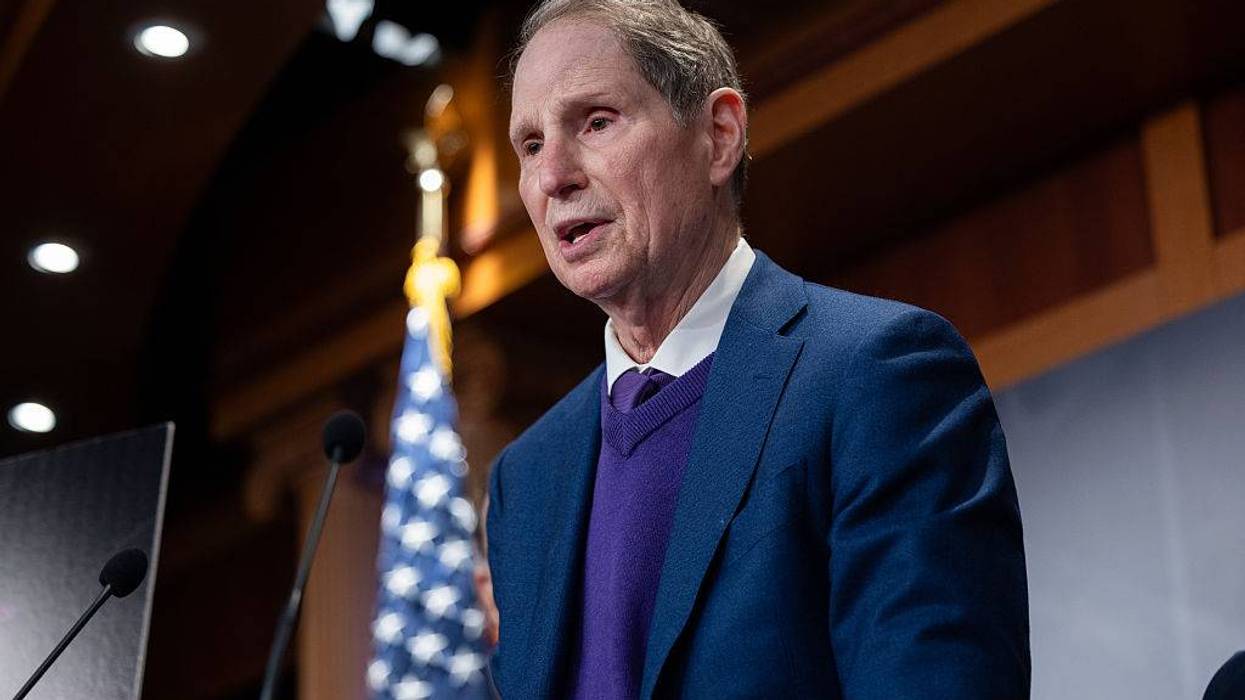
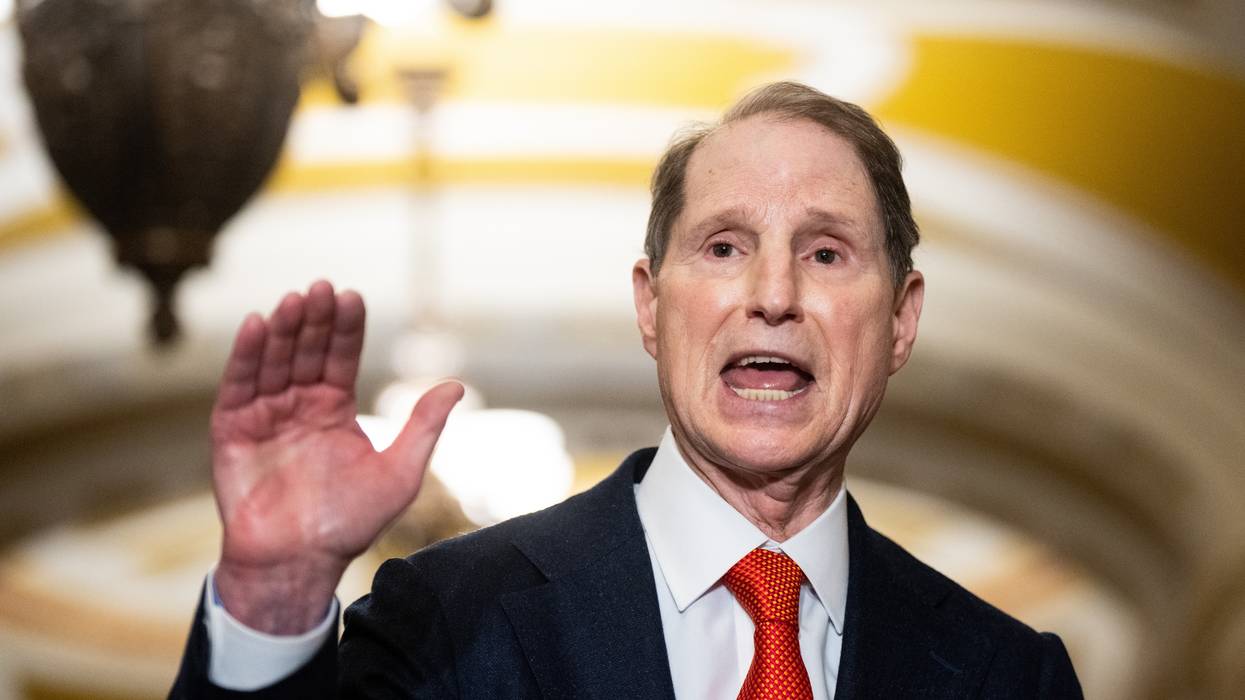
Sen. Ron Wyden said the bill "increases military spending by tens of billions of dollars and fails to include guardrails against Donald Trump and Hegseth’s authoritarian abuses."
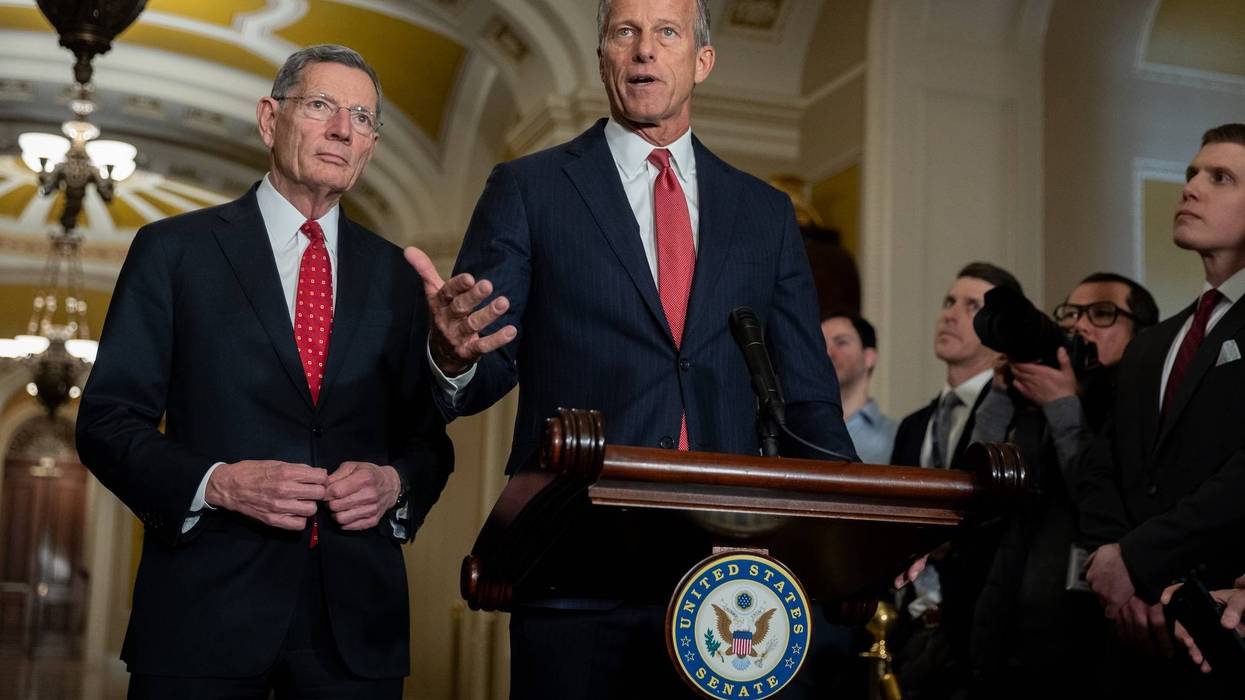
A majority of Democratic senators joined Republicans on Wednesday to pass the largest military spending bill in US history, handing President Donald Trump the bulk of his demands, even as he enacts steep cuts across nearly every other sector of the federal budget.
The more than $900 billion National Defense Authorization Act (NDAA) passed by a vote of 77-20, with 27 Democrats, as well as the independent Sen. Angus King (Maine), in support. Just three members of the Republican majority voted against the bill, along with 16 Democrats and independent Sen. Bernie Sanders (Vt.).
Among many other items on Trump's wish list, the bill provides funds for weapons meant to counter China, full funding for Trump's National Guard deployments to support the US immigration agents, and more funds for what are described as "counternarcotics operations."
It also removes a measure that would have restored collective bargaining rights that Trump stripped earlier this year from Pentagon employees, permanently ends Defense Department initiatives to curb climate change, and excludes a measure that would mandate healthcare coverage for in vitro fertilization.
Combined with $156 billion in the GOP's One Big Beautiful Bill Act this July, the package passed by the Senate pushes military spending for fiscal year 2026 into the trillions—a new record in absolute terms and a relative level unseen since World War II.
The bill will head to Trump's desk just a day after he announced a “total and complete blockade" on Venezuelan oil tankers, a major escalation described by Rep. Joaquin Castro (D-Texas) as "unquestionably an act of war."
The bill contains a measure demanding that the Pentagon release the unedited video of a September 2 "double-tap" strike on a boat in the Caribbean that members of both parties have suggested may violate international law.
On Tuesday, Defense Secretary Pete Hegseth and Secretary of State Marco Rubio declined another congressional request to release the video. The defense bill ramps up the pressure for transparency, mandating a 25% cut to Hegseth's travel budget if the administration does not comply.
Senate Democrats have previously voted in support of war powers resolutions to require congressional approval for Trump's boat strikes and for further military action against Venezuela. These measures have repeatedly fallen just short in the Republican-controlled Senate.
But Stephen Semmler, a co-founder of the Security Policy Reform Institute, argued that "if the Senate truly cared about Trump seeking congressional approval before starting a war with Venezuela, it wouldn't have passed a bill authorizing $901 billion in military spending."
Sen. Ron Wyden (D-Ore.), who voted no on the defense spending bill, said, "I cannot support a bill that increases military spending by tens of billions of dollars and fails to include guardrails against Donald Trump and Hegseth’s authoritarian abuses."
“Donald Trump has repeatedly used the military to occupy major US cities, including Portland—endangering our service members, disrupting our economy, and eroding trust in our communities," Wyden continued. “He has also shown that he will use the Department of Defense to conduct deadly military operations without congressional authorization to intimidate political opponents and immigrants through the military, to purge senior military leaders without cause, to funnel billions of dollars in contracts to his personal supporters, and to waste billions of taxpayer dollars."
The defense spending bill passed the US House last week, with support from 115 Democrats. This was despite opposition from the Congressional Progressive Caucus, whose deputy chair, Rep. Ilhan Omar (D-Minn.), said it was "enabling unchecked executive war powers."
The House is expected to vote Wednesday evening on a pair of war powers resolutions. One, introduced by Rep. Gregory Meeks (D-NY), would block Trump's extrajudicial airstrikes on boats in the Caribbean. Another bipartisan resolution would require Trump to receive congressional approval before taking direct military action, including land strikes, against Venezuela.
The lawmakers accused the Social Security Administration of "a slash-first, think-later approach," for which "beneficiaries will pay the price."
Leading Senate Democrats and Independent US Sen. Bernie Sanders this week pressed the Trump administration for answers following reports that the Social Security Administration is planning to dramatically reduce visits to its field offices.
"We write with concerns regarding recent reports that the Social Security Administration is reorganizing its field office operations, and has established a goal of cutting the number of field office visits in half—amounting to 15 million fewer visits annually," Sens. Elizabeth Warren (D-Mass.), Ron Wyden (D-Ore.), Kirsten Gillibrand (D-NY), and Sanders (I-Vt.) wrote in a letter to SSA Administrator Frank Bisignano.
"Given that beneficiaries are already waiting months for field office appointments, and the agency has not shared with Congress or the public on how it plans to achieve this goal, we are concerned that these efforts are in fact part of a plan to 'quietly kill field offices,' implementing a backdoor cut in benefits by making it harder for Americans to access the Social Security customer services they need," the senators said.
"The Trump administration has relentlessly attacked Social Security."
Earlier this month, Nextgov/FCW revealed that the Social Security Administration said in internal documents that it wants “no more than 15 million total” in-person visits to its field offices in fiscal year 2026—or about half the current number of such visits. An anonymous SSA staffer told the outlet that senior agency officials are aiming for “fewer people in the front door" and for "all work that doesn’t require direct customer interactions to be centralized.”
As Warren's office noted Thursday:
The Trump administration has relentlessly attacked Social Security. Under Commissioner Bisignano, the administration has implemented policy changes that make it harder for Americans to get their benefits, including by implementing burdensome in-person and bug-prone identification processes that force millions more beneficiaries to visit field offices each year—at the same time they are slashing SSA’s workforce by around 7,000 and closing regional offices.
Instead of staffing up to meet these needs, SSA’s field office capacity has significantly declined. Beneficiaries are being forced to wait hours to get help—only to be told they will need to call to schedule an appointment.
"We are concerned that your plan is to force beneficiaries onto SSA’s bug-prone website or push them into customer service phone tree 'doom-loops'—which will almost certainly result in delayed or missed benefits for some individuals," the letter adds. "Once again, you seem to have adopted a slash-first, think-later approach to 'modernizing' SSA, and beneficiaries will pay the price."
The senators are asking Bisignano if the reports of proposed SSA office visit reductions are accurate, and if so, how and when the plan will be implemented, how the agency will "provide services to beneficiaries that would otherwise go to field offices," and how the reductions will affect already lengthy wait times and service online users and callers to the agency's 1-800 number.
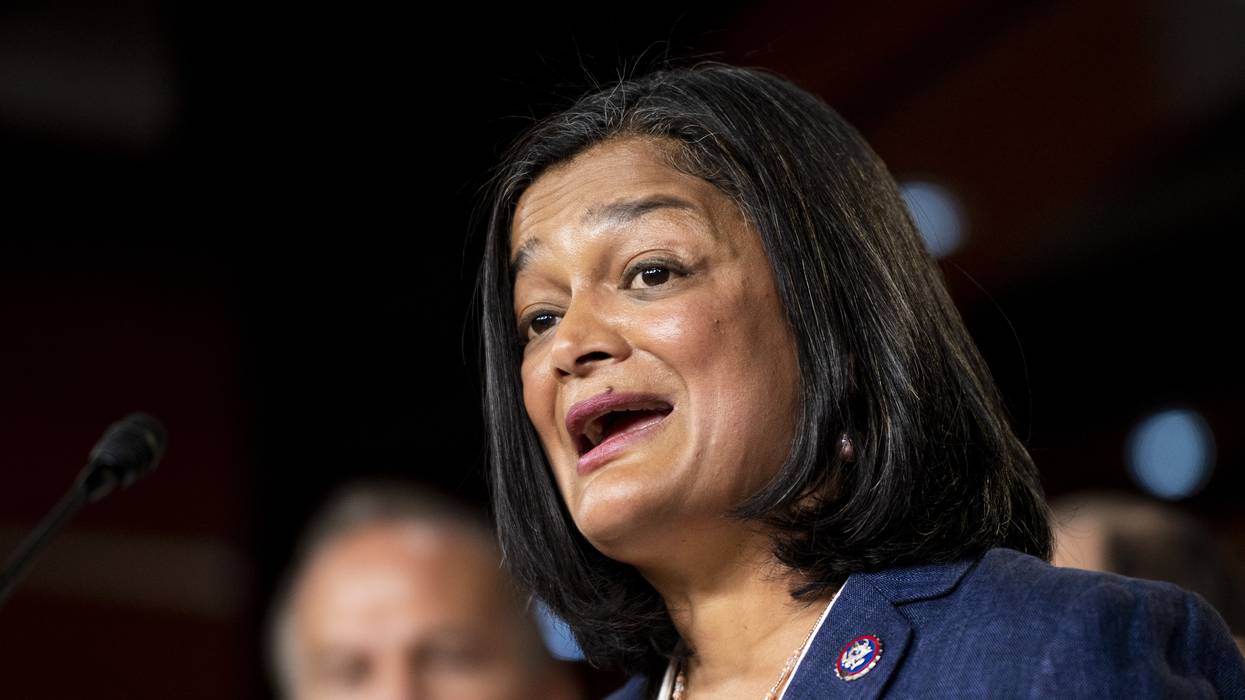
The lawmakers' letter comes as Republican senators on Thursday voted down a proposed three-year extension of Affordable Care Act subsidies, a move that is expected to result, on average, in a doubling of health insurance premiums for around 22 million people. Critics said the vote underscores the need for single-payer healthcare legislation like the Medicare for All Act reintroduced by Sanders and Reps. Pramila Jayapal (D-Wash.) and Debbie Dingell (D-Mich.) earlier this year.
"Donald Trump’s trade war is taxing families, killing markets for our farm goods, and driving farmers into bankruptcy," said Democratic Sen. Ron Wyden.
Democratic US Sen. Ron Wyden was among those who emphasized Monday that President Donald Trump's erratic tariff policies have helped create the very conditions the White House is now citing to justify its new $12 billion relief plan for American farmers.
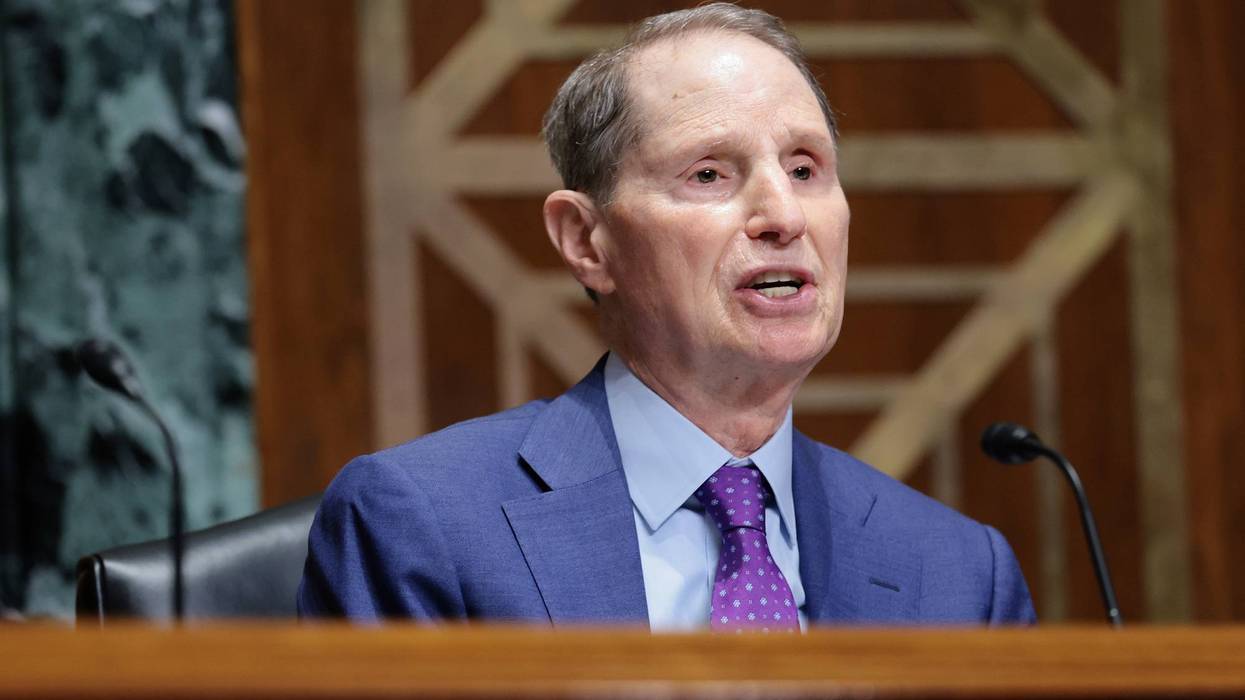
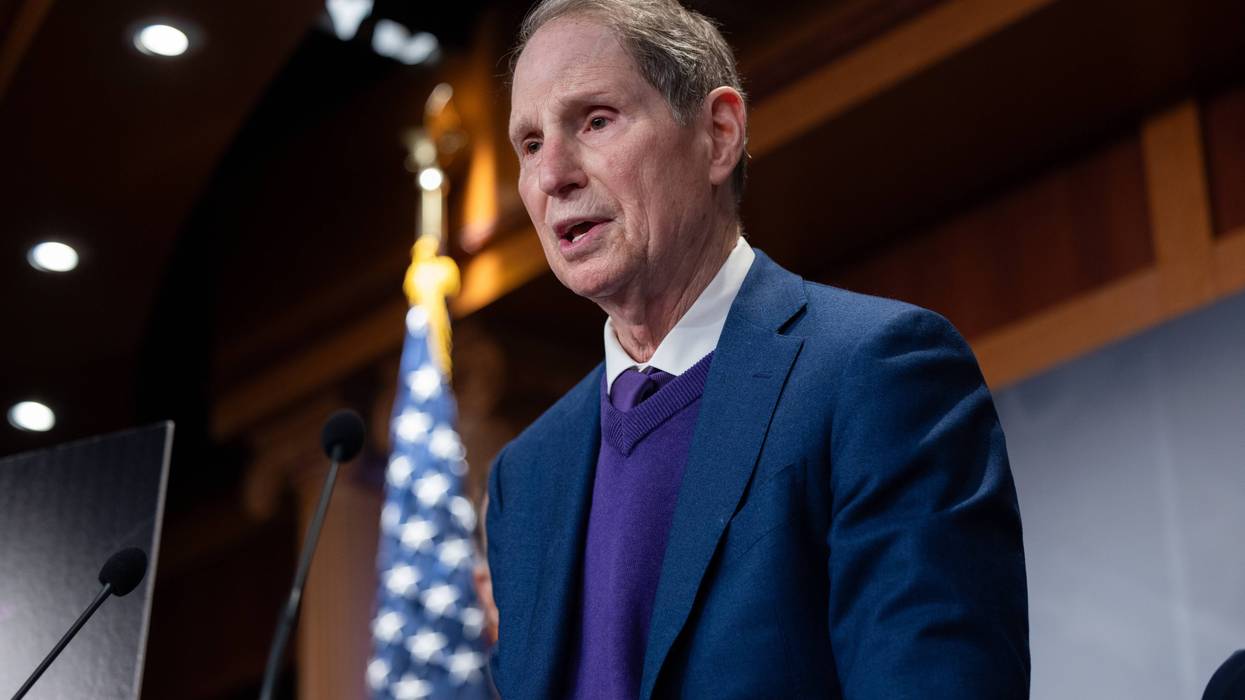
“Instead of proposing government handouts, Donald Trump should end his destructive tariff spree so American farmers can compete and win on a level playing field," said Wyden (D-Ore.), the top Democrat on the Senate Finance Committee. "Donald Trump’s trade war is taxing families, killing markets for our farm goods, and driving farmers into bankruptcy."
"Trump’s plan to bail out farmers won’t even get agriculture communities back to even," the senator added. "They’re still paying more for fertilizer, equipment, and seeds, while grown-in-the-USA farm goods are facing more obstacles than ever in foreign markets. Don’t forget that all of this trade destruction and taxing was to raise money for Trump’s massive handouts to billionaires and the ultra-wealthy.”
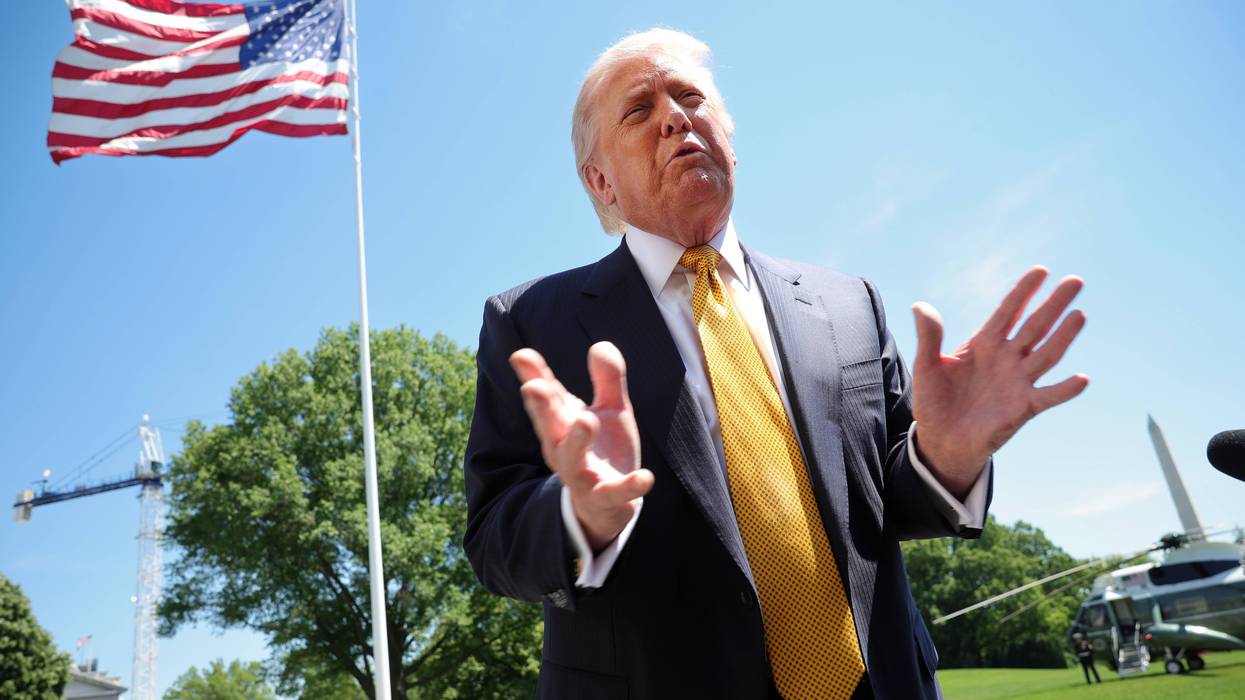
Trump formally unveiled the relief plan Monday afternoon at a White House roundtable with top officials, lawmakers, and farmers of corn, soybeans, and other crops. Reuters reported that up to $11 billion of the funds are "meant for a newly designed Farmer Bridge Assistance program for row crop farmers hurt by trade disputes and higher costs." The other $1 billion is earmarked for commodities not covered by the program.
"Quite an admission that his policies have hurt Americans," economist Justin Wolfers wrote in response to the plan.
Farm Action, a farmer-led agricultural watchdog group, welcomed the relief package but said it's not enough to end suffering caused by "tariffs, soaring input costs, and years of volatile markets."
"The current problems facing our agriculture system have been decades in the making due to failed policy that prioritizes commodity crops for export, which only benefits global grain traders and meatpackers," said Joe Maxwell, Farm Action’s co-founder and chief strategy officer. "Without addressing the root causes of this issue, farmers will be left to continue relying on government assistance into the future. That is why Congress must take action and fix our failed subsidy system in the next farm bill."
Rebecca Wolf, senior food policy analyst at Food & Water Watch, said that "bailouts are a denigrating Band-Aid to farmers whom decades of misguided domestic policy have left vulnerable to trade wars."
"Trump’s tariff tantrum and belittling bailouts will deepen agricultural sector consolidation, funneling money to a powerful few corporations, while running farmers further into the ground," said Wolf. "If Trump is serious about helping farmers, lowering sector consolidation and dropping food prices, he needs to look in the mirror. Chaotic tariff tantrums are no way to run farm policy. US farmers need fair prices, regional food markets, and policies that reward sustainable, humane production models—not trade wars.”
The $12 billion relief program comes after months of Trump tariffs and retaliatory actions by key nations—particularly China—that have amplified challenges facing US farmers, a key political constituency for the president.
Farmers and organizations representing them have been vocal in their criticism of Trump's tariffs and his proposed policy responses to the problems that the duties have intensified. As the Washington Post summarized:
Earlier this spring, Trump’s tariffs on China prompted the country to halt purchases of US soybeans. Then, the president offered a $20 billion bailout to Argentina, whose soybean crop sales to China have replaced those from US farmers. Later, Trump announced that the United States would buy beef from Argentina to bring down prices for US consumers, opening a new rift between Trump and cattle ranchers.
The new assistance package is particularly aimed at helping soybean farmers, who have seen a precipitous drop in sales this year, leaving them with extra supply, as the price of soybeans fell.
In October, Illinois soybean producer John Bartman said in a message to the Trump administration that "we don't want a bailout, we want a market."
"Bailouts don't work. Bailouts are band-aids," Bartman added. "What Trump is doing is destroying our markets, and when those markets disappear, we're not gonna get them back."
Ryan Mulholland and Mark Haggerty of the Center for American Progress echoed that sentiment in an analysis last month, noting that "writing a check to farmers helps in the short term, but even in the most optimistic scenario, input costs are likely to remain high, demand volatile, the climate ever-changing, and corporate consolidation and investor ownership of land firmly entrenched."
"Planning for next year’s planting season will be extremely difficult, but without a comprehensive plan to make farming a more sustainable, more prosperous enterprise, planning in subsequent years likely will not be any easier," they added. "President Trump’s 'solution' is to simply pay off farmers. Farmers want trade, not aid. And they want government policy that supports farmers and the communities where they live over the long term."