
SUBSCRIBE TO OUR FREE NEWSLETTER
Daily news & progressive opinion—funded by the people, not the corporations—delivered straight to your inbox.
5
#000000
#FFFFFF
To donate by check, phone, or other method, see our More Ways to Give page.


Daily news & progressive opinion—funded by the people, not the corporations—delivered straight to your inbox.
Party leadership needs to study and learn from what the Wall Street wing has cost in terms of lost elections and the increasing tilt of the playing field.
In his stumbling explanation of the muddled autopsy report on the 2024 election debacle, Democratic National Committee chair Ken Martin uttered two pieces of wisdom that regrettably, neither he nor the party has heeded: “The Democratic brand is in trouble and needs repair,” and “I agree with folks who have said we have to learn from the past to win the future.” Had they followed that advice, they would have seen how history tells a neglected and important story.
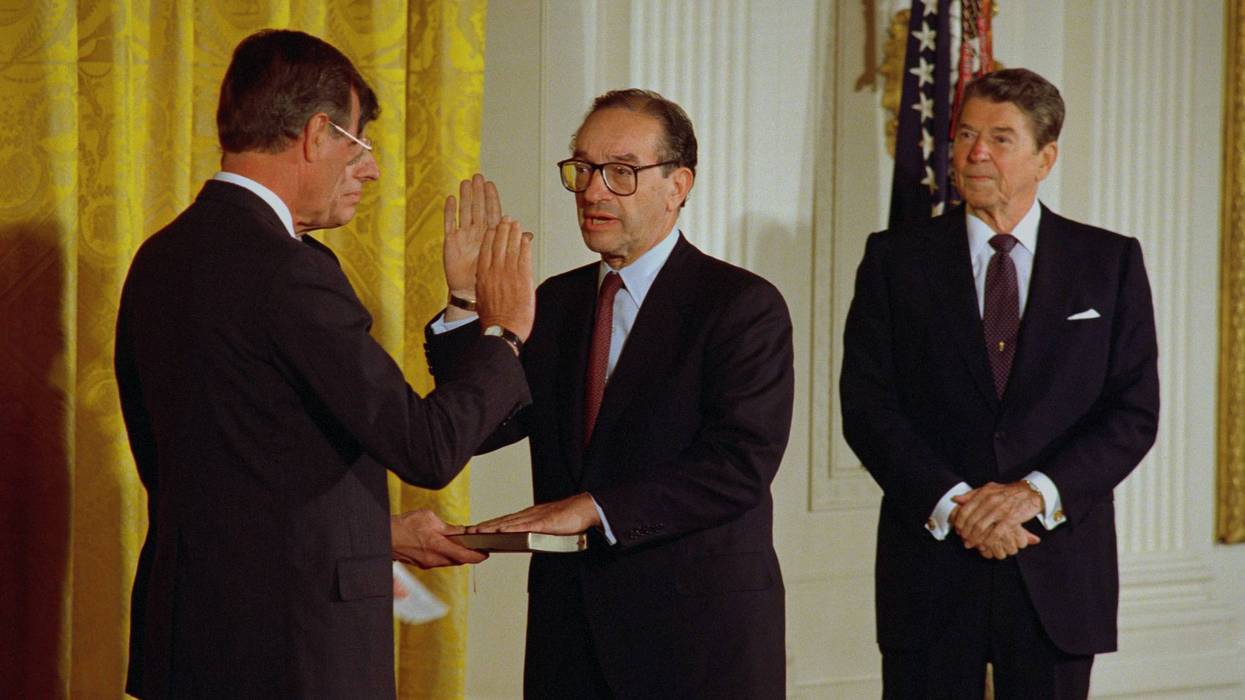
It begins when Bill Clinton was handed the keys to the White House by a group of largely Southern officials who formed the New Democrats with the mission of putting a Southern, pro-business candidate in the White House. With its pointed references to Reagan speeches and policies, Clinton’s Second Inaugural signaled a devil’s bargain that ended a century of Democratic Party policies.
In 1896, William Jennings Bryan had articulated the level playing field principles that served as the Democrats’ North Star for much of the last century: “There are those who believe that, if you will only legislate to make the well-to-do prosperous, their prosperity will leak through on those below. The Democratic idea, however, has been that if you legislate to make the masses prosperous, their prosperity will find its way up through every class which rests upon them.” In the term following his inaugural rejection of those principles, Clinton repealed one of the crown jewels of the New Deal, the Glass-Steagall Act regulating banks, and handed social media the gift of the Communications Decency Act of 1996, exempting them from the rules governing print and broadcasting.
In the years since Bill Clinton left the White House for a comfortable retirement, the New Democrats asserted control of the party, courting big donors with the pro-Wall Street policies resembling those of his second term. Their strategy uncannily mirrored that of Donald Trump’s Republicans by offering positions on social issues that appeased elements of the base while supporting economic policies benefiting corporate America. In their fight for the soul of the party, the New Democrats pulled no punches, blocking Sen. Bernie Sanders (I-Vt.) in 2016 and primarying 2026 opponents with the zeal of Donald Trump.
One lesson history teaches us is that if inequalities are allowed to fester, things can get very ugly.
Their biggest failure may be that in abandoning the level playing field principle, the New Democrats offered no substitute, save triangulation. Today most of us would stumble over trying to define the Democratic Party in one sentence, but one can easily do that for the Republicans—less taxes, less government. With the midterms six months away, this lack of a unified message already has the faithful worried.
The historical data missing from the autopsy and Martin’s explanations tells the story of what the ascension of the Wall Street Democrats has cost their party and the country. Since 2000, the Democrats have controlled the House only 4 out of 15 terms and the Senate only 6 out of 15. For only four years have Democrats held a majority of state governerships. Democratic presidential victories were anomalies. Barack Obama benefited from a record turnout of BIPOC voters. Joe Biden won because of the mishandling of Covid-19. Even allowing for gerrymandering and voter suppression, it appears clear that the Democratic Party has been in decline for some time.
Given the pro-Wall Street leanings of both parties, we should not be surprised that we have essentially been governed by a minority. Since 2000, the winning presidential candidate has only averaged 30.18% of the voting-eligible population. Today, only 27% of voters identify with either party, while 45% identify as independents. That is the lowest total ever for Democrats.
The numbers in various data and reports tell how the tilt of the playing field continues to widen. Although real total wealth has tripled since 1989, the share of the top 10% has increased from 63% to 72%, but the bottom 50% saw their share decline from 4% to 2%. Meanwhile, labor’s share of production has declined ominously. According to the St. Louis Federal Reserve, it fell from 64% in 2001 to 56% in 2023. During most of the 1950s and 60s it hovered around 60%.
Business concentration recalls the trusts that sparked such widespread discontent during the late 19th century. The best figures come from a study by the Democratic staff of the House Committee on Small Business that was mothballed after its release in December 2023—and goes unmentioned in the autopsy. Bristling with footnotes, the eye-opening Report on Competition in the Small Business Economy cites a Boston Federal Reserve study that shows the economy is 50% more concentrated today than in 2005. It goes on to state, “The dramatic increase in income and wealth inequality seen over the past four decades in the US can also be largely attributed to higher levels of concentration across industries.” Sounding like an outraged 1890 Farmers’ Alliance tract, the study paints a grim picture of today’s farmers: “From the seeds they plant, to the fertilizer in the soil to the machinery that allows them to make it all happen at scale, the price they pay at every step is at the whim of a handful of companies.”
Faced with similar conditions during the Gilded Age, discontented workers and farmers organized to press for the Sherman, Interstate Commerce, and Safety Appliance Acts; laid the groundwork for the 16th, 17th, and 19th amendments; initiated bureaus of labor statistics and factory inspections; and enhanced access to higher education. Because they feared both parties were the tools of tycoons, the discontented also formed new parties, of which the Greenbackers and Populists are the most notable. Most of all, in a flurry of civic engagement, they founded groups like the Grange, Knights of Labor, Women’s Christian Temperance Movement, and Farmers’ Alliance.
Whether today’s discontent will have a similar impact remains an open question. A good part of the answer will depend on whether people like Ken Martin continue to support the Wall Street wing of the party or realize what that support has cost in terms of lost elections and the increasing tilt of the playing field. What is clear is that the drastically tilted playing field has become extremely volatile. One lesson history teaches us is that if inequalities are allowed to fester, things can get very ugly. During the discontent of the Gilded Age, lynchings averaged 150 per year between 1881 and 1900, or one every 2.4 days. Another 1,400 people perished in riots, in the most violent three decades in our history. All of us can see and fear the growling, anvil-shaped clouds that threaten to darken our lives, as they did over a century ago.
These former presidents should mobilize the citizenry from the grassroots to the Capitol and take on the unpopular Tyrant Trump; instead, they are living luxurious lives and are largely AWOL.
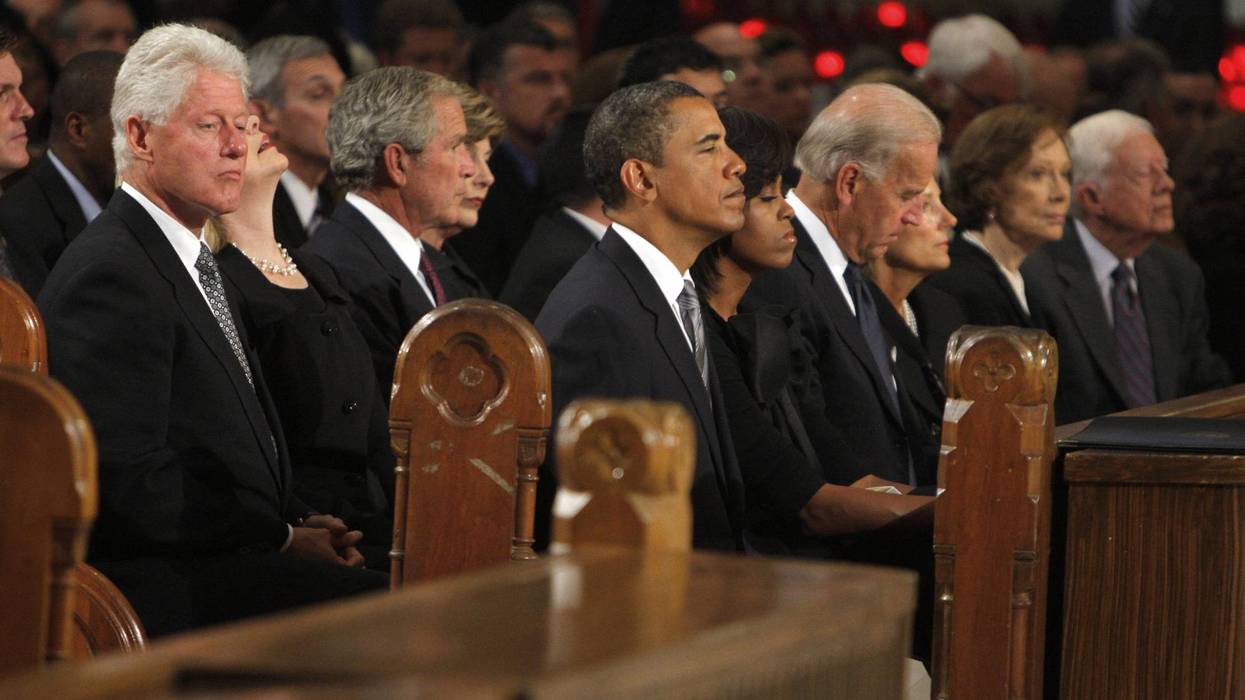
What should the American people, especially the hundreds of millions of their voters, expect Presidents Bill Clinton, George W. Bush, Barack Obama, and Joe Biden to do against the vicious, serial law-violating, violent, corrupt, agency-dismantling Donald Trump and the crony Trumpsters who are wrecking our government and our economy?
These former presidents should mobilize the citizenry from the grassroots to the Capitol and take on the unpopular Tyrant Trump. Having sworn to uphold the Constitution and “…take Care that the Laws be faithfully executed,” they should strongly uphold their patriotic duty to resist tyranny and save our Republic and our besieged democratic institutions, and stop the assault on our civil liberties and civil rights.
Our former presidents all get along with each other. They have the stature to:
Instead, they are living luxurious lives and are largely AWOL from connecting with the existing but overwhelmed civic opposition to Trump. Bush is painting landscapes as Trump has destroyed his AIDS program in Africa, and the Bush wing of the Republican Party. Obama has campaigned for Abigail Spanberger and Mikie Sherrill as governors of Virginia and New Jersey, satirizing Trump in some of his speeches. His present passion, however, is the March Madness basketball championships. Clinton has left it up to Hillary, who wrote a guarded New York Times op-ed back on March 28, 2025, taking Trump to task for jeopardizing our national security and not “preparing for real fights with America’s adversaries.”
Then there is Joe Biden, who received then President-elect Trump and Melania on the morning of January 20, 2025, with the gracious “welcome home.” In return, Biden got that afternoon and every day since hundreds of foul epithets from Trump, scapegoating him for almost everything he could fabricate, including solar energy and wind power projects. Delaware Joe managed a few critical replies at a Democratic Party dinner in Nebraska on November 7, 2025. “Trump has taken a wrecking ball not only to the people’s house but to the Constitution, to the rule of law, to our very democracy.” Unfortunately, Biden has mostly been silent.
Credit these retired presidents with knowing the historic dangers and existing damages of the TRUMP DUMP in Washington and around the country. They also know their supporters would be very receptive to their organized, persistent leadership from them to send Trump back to Mar-a-Lago. Why are they AWOL?
First, they fear Trump’s retaliation, upsetting their comfortable lives. Trump is now deep in the QUICKSAND of the Middle East. He is being pilloried by a million stickers at gas pumps picturing Trump pointing to the booming price per gallon and saying, “I did that.” He is openly declaring there should be no elections in November and continues to send or keep his storm troopers in America’s cities. An expanding police state is not exactly a credible perch for effective profanity. Show a modest bit of moxie!
A second excuse is that they have done some of what Trump is doing:
True enough. But people live in the present and are most worried about what Dangerous Donald is doing NOW to their livelihoods, freedoms, health and safety, and the consequences in casualties and their tax dollars of another endless war.
Our former presidents have no excuses. They simply lack a modicum of courage. Remember Aristotle declared, “Courage is the first of human qualities because it is the quality which guarantees the others.”
The current political climate demands the powerful emergence of the four previous presidents of our country. The federal district courts are ruling heavily against Trump’s “Injustice Department,” though Trump retains a slightly weakening claim on six Supreme Court Injustices. People of all backgrounds are marching and demonstrating in huge numbers. This weekend, the “No Kings” rallies (he’s already a dictator) anticipate 10 million people nationwide.
The business community, particularly small businesses, are feeling serious harm from Trump’s tariffs, wars, cancelled contracts, and inflationary policies. The labor unions have never been under such attack (notably the federal employees’ union members whose contracts he has torn up), and they are simmering with anger. The universities are also under His illegal shakedown attacks.
What explains the mainstream media’s virtual ignoring of this ABDICATION by these ex-presidents? The reporters mostly despise Trump, who has slandered them (calling them “deranged and demented” for starters) and has extortionately sued news organizations and journalists for millions of dollars and coerced settlements.
The media have reported that some ex-agency officials under the former presidents have excoriated Trump, such as Samantha Power, for closing the major lifesaving Agency for International Development. The formidable Rohit Chopra, who directed the Consumer Financial Protection Bureau under Biden, is not reticent to verbally defend his nearly closed-down agency, which had saved consumers many billions of dollars.
However, they are not covering the abdication by BIG GUYS—our former presidents. I have tried in vain to find out why by calling reporters and editors. Maybe you’ll have better luck. Try calling these numbers: The Washington Post: 202-334-6000; The New York Times: 800-698-4637; Associated Press: 212-621-1500; NPR: 202-513-2000; The Wall Street Journal: 212-416-2000.
You may break through and help save our Republic!
Trump has consistently tried to change the subject whenever the issue of the Epstein scandal crops up, but nothing as dramatic as starting a war... until now.
On Christmas Day in 1997, Wag the Dog, a dark political satire directed by Barry Levinson and co-written by David Mamet, opened in theaters across the country. Hardly typical Christmas fare, the movie centered on crisis-management expert Conrad Brean, played by Robert De Niro, and Hollywood producer Stanley Motss, played by Dustin Hoffman, who fabricate a war to distract public attention from a presidential sex scandal.
Sound familiar?
In the film’s opening scene, presidential adviser Winifred Ames (Anne Heche) and other administration staff summon Brean to the White House to help clean up a mess. The president had just met with a group of teenage Firefly Girls from Santa Fe, they explain, and one of them expressed an interest in seeing a Frederick Remington sculpture in the Oval Office. The president escorted her there and sexually assaulted her.
The story leaked, and not only was The Washington Post about to run with it, but the president’s opponent also was about to air a TV commercial referencing it. With less than two weeks to go until election day, the story could derail the president’s reelection bid.
His attack on Iran will always be remembered as Trump’s war, a war started, in his own words, by a president who apparently “has absolutely no ability to negotiate.”
“We have to distract them” with a fake crisis, Brean tells the staffers, and after brainstorming a bit, hits upon a solution: “We have to go to war with somebody.” He concocts a story that Albania, a “shifty” country that “wants to destroy our way of life,” has smuggled a nuclear suitcase bomb into Canada and plans to sneak it across the border. He then enlists the help of Motss, and together they bamboozle the news media, the CIA, and the general public into believing the country is at war. The Oval Office sex scandal story gets lost in the shuffle and the president’s approval ratings rebound in time to win the election.
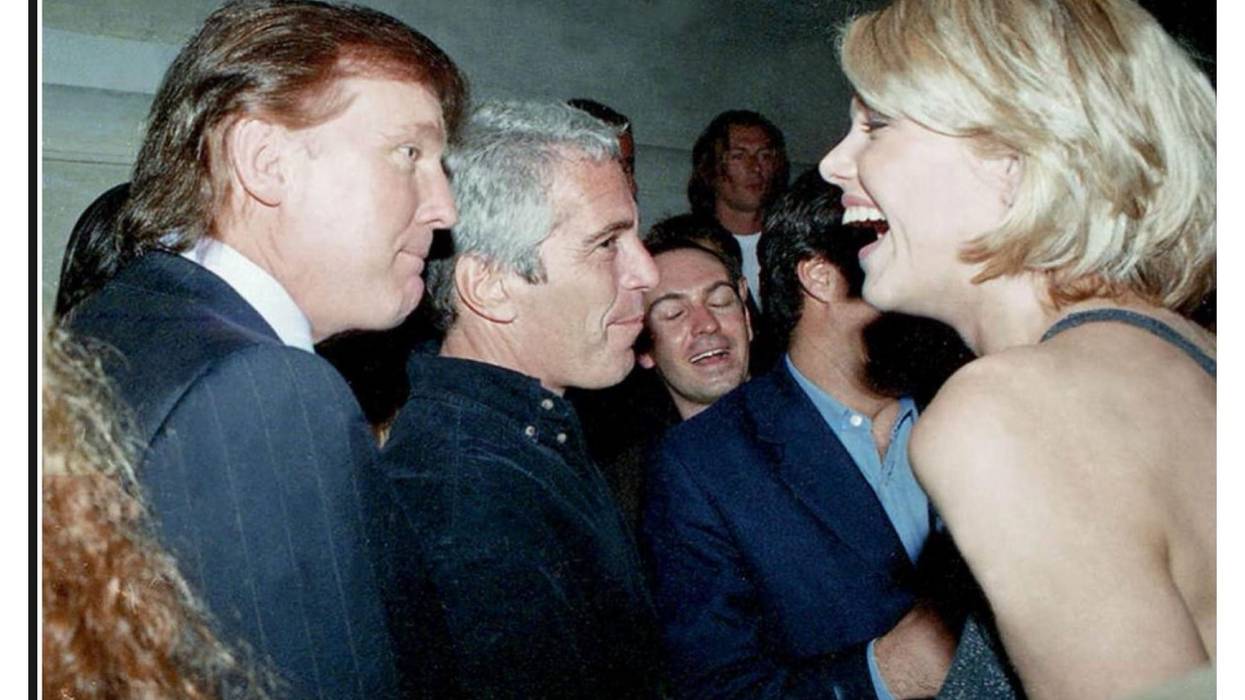
President Donald Trump also has a sex scandal that he wants to go away.
After simmering for months, the Jeffrey Epstein sex-trafficking story reached a full boil in February following the Justice Department’s January 30 release of 3.5 million additional file pages. On February 9, the department granted members of Congress access to unredacted files for the first time, and the next day, Rep. Jamie Raskin (D-Md.) told Axios that he found more than a million references to Trump. On February 11, Raskin and other members of the House Judiciary Committee grilled Attorney General Pam Bondi about the files, attracting quite a bit of attention even though she avoided answering their questions.Then, on February 24, came the potential coup de grâce. NPR reported that the Justice Department removed documents that mention Trump from the public Epstein database, including files related to allegations that Trump had sexually abused a minor.
NPR’s investigation found that a specific allegation only appeared in copies of the FBI list of claims and a Justice Department slideshow. Its details are explosive. As spelled out by NPR: “The woman who directly named Trump in her abuse allegation [to the FBI] claimed that around 1983, when she was around 13 years old, Epstein introduced her to Trump, ‘who subsequently forced her head down to his exposed penis which she subsequently bit. In response, Trump punched her in the head and kicked her out.’”
Four days after the NPR story ran, the United States and Israel attacked Iran and poof, the Epstein sex scandal story disappeared from the headlines. Unlike Wag the Dog, however, Trump started a real war, and as of this writing Al Jazeera was reporting that more than 1,000 Iranians are dead and more than 6,000 are wounded, according to Iranian state media.
Of course, the launch of Trump’s war at a time of heightened public interest in the Epstein files could be merely coincidental. The administration has offered various rationales for the attack, from regime change to eliminating Iran’s nuclear program and ballistic missiles, neither of which posed an imminent threat. Others have speculated that Trump is retaliating for alleged Iranian attempts on his life or squeezing China’s oil supplies to force it to rely more heavily on Saudi Arabia. Even so, there are at least two other notable examples of presidential attempts to divert attention from a politically damaging event by attacking another country.
One example was cited in Wag the Dog. In a scene in which Brean reassures Ames that a fake crisis would distract the public, he says, “That was the Reagan administration’s M.O.: Change the story.” Twenty-four hours after 240 Marines were killed in Beirut, he explains, Reagan invaded the tiny Caribbean nation of Grenada.
It is doubtful that many people are going to forget about Trump’s role in the Epstein saga. His victims are certainly not going to forget.
Brean was referring to an incident that happened on October 23, 1983, when a truck bomb destroyed the US Marine barracks in Beirut, Lebanon, killing 241 American servicemen. That same day, President Ronald Reagan approved final plans to invade Grenada during an attempted coup, ostensibly to protect 600 American medical students who, as it turned out, were not in any danger. On October 25, just two days after the Beirut bombing, US forces invaded Grenada. Story changed.
The second example falls into the category of life imitating art. According to Michael De Luca, production head at New Line Cinema when the studio released Wag the Dog, screenwriter David Mamet “was trying to think of something that would never happen in real life, like a president diddling a Girl Scout.” Just a few weeks after the film opened in US theaters, however, news of an eerily similar incident broke.
On January 17, 1998, the Drudge Report reported that Newsweek editors had killed a story exposing President Bill Clinton’s relationship with a 22-year-old White House intern, Monica Lewinsky. Four days later, the story of their tryst appeared in, ironically, The Washington Post.
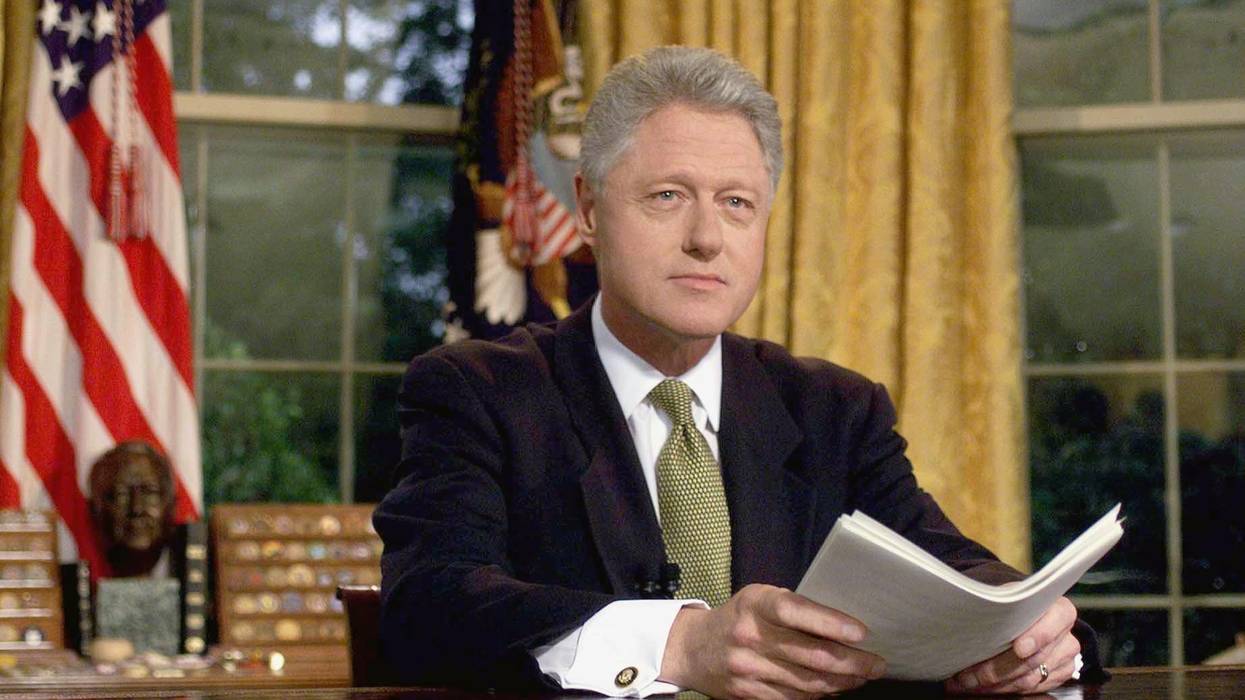
On August 17, 1998, Clinton appeared on television following his testimony before a grand jury and finally acknowledged that he had “inappropriate intimate contact” with Lewinsky. Three days after that—the same day Lewinsky testified for a second time to the grand jury—Clinton launched 75 to 100 Tomahawk missiles at al-Qaeda targets in Afghanistan and Sudan in retaliation for the terrorist group’s August 7 bombings of US embassies in East Africa. Many said the timetable was more than a mere coincidence.
Trump has consistently tried to change the subject whenever the issue of the Epstein scandal crops up, but nothing as dramatic as starting a war. Even abducting Venezuela’s president doesn’t compare. But the stakes are now much higher than when Reagan invaded Grenada or Clinton hit back at al-Qaeda. The Iran conflict has quickly spiraled out of control. In less than a week, it involves at least 11 countries besides the main combatants Iran, Israel, and the United States.
It is more than ironic that Trump, who fancies himself a virtuoso dealmaker, started this unnecessary war. After all:
From the looks of it, Trump lied that Iran posed an imminent threat and—like Bush—has just destabilized the Middle East. It’s reminiscent of that line about the “Pottery Barn rule” attributed to Bush’s secretary of state, Colin Powell: “You break it, you own it.” His attack on Iran will always be remembered as Trump’s war, a war started, in his own words, by a president who apparently “has absolutely no ability to negotiate.”
Finally, keep in mind that despite Clinton’s attack on al-Qaeda, no one forgot that he perjured himself about his affair with Monica Lewinsky, which ultimately led to his impeachment. Likewise, it is doubtful that many people are going to forget about Trump’s role in the Epstein saga. His victims are certainly not going to forget. It only remains to be seen if it—along with his other transgressions—brings down his presidency.
This article first appeared at the Money Trail blog and is reposted here at Common Dreams with permission.