

SUBSCRIBE TO OUR FREE NEWSLETTER
Daily news & progressive opinion—funded by the people, not the corporations—delivered straight to your inbox.
5
#000000
#FFFFFF
To donate by check, phone, or other method, see our More Ways to Give page.
Daily news & progressive opinion—funded by the people, not the corporations—delivered straight to your inbox.
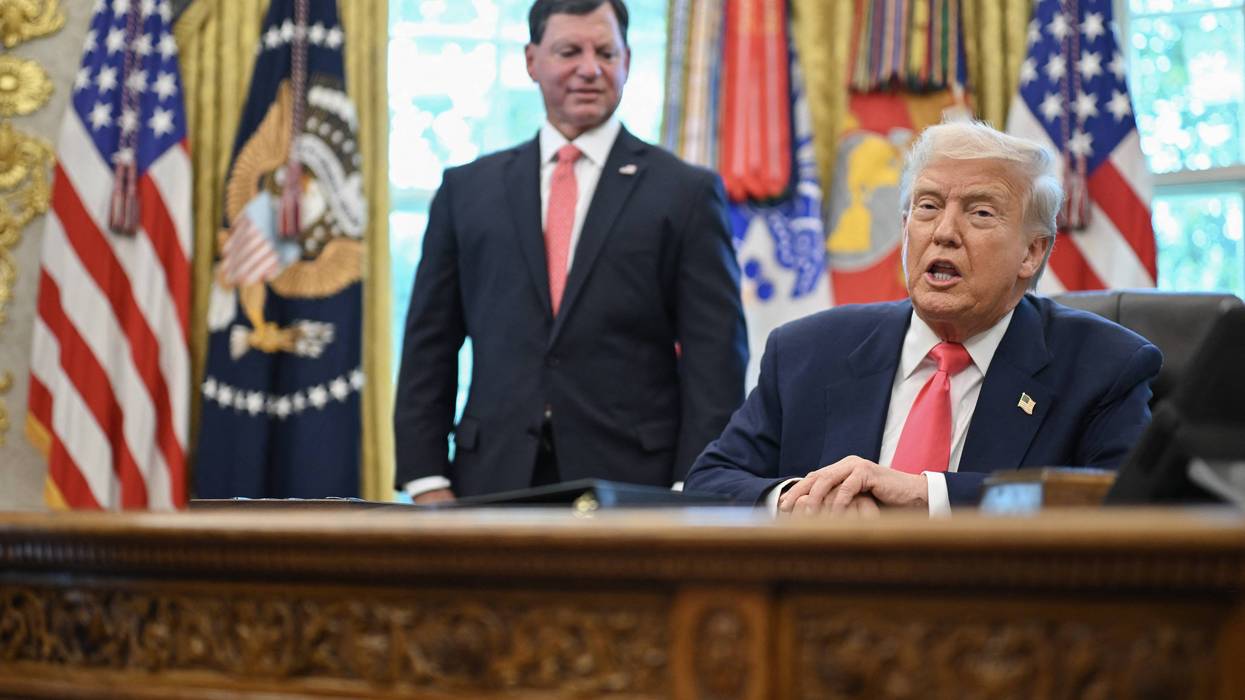
Like the reflecting pool, the Kennedy Center, and the White House, Social Security is a sacred American institution that Trump is abusing for his own financial and political gain.
The Trump administration is illegally using the Social Security email list to spew political propaganda. That email list likely includes everyone with an online Social Security account—over 100 million people, both current and future Social Security beneficiaries. The purpose of the list is for the government to share important information about Social Security benefits.
On July 2, the Trump administration sent an email from Commissioner Frank Bisignano, ostensibly to mark America’s 250th birthday. The email, like a similar one sent a year ago, is a fully political document.
Bisignano begins by bragging about President Donald Trump’s tax bill without mentioning:
Bisignano then goes on to tout allegedly improved customer service. Widespread media reports show that customer service has massively deteriorated since Musk’s DOGE pushed out more than 8,000 of Social Security’s most experienced, knowledgeable workers. These reports include first-person stories where even highly educated people with Social Security expertise have faced months-long nightmares to resolve simple errors that cut themselves or their family members off from benefits.
Shortly after Bisignano was confirmed last year, Social Security removed longstanding customer service metrics from its website. Since then, Bisignano has cherry-picked his own metrics and used them to mislead.
Bisignano moved many of the remaining Social Security office workers to answering phones, while other essential work piles up. Then, he brags about shorter waits on the phone. What he doesn’t mention is that if you hang up in frustration, or talk to someone who can’t help you because they aren’t adequately trained, it still counts toward a short wait on the phone. The only metric that really matters is if people are getting the help they need. On that count, Bisignano is failing miserably.
The situation is particularly dire for people who need help in person. The country is dotted with Social Security “ghost offices” that aren’t officially closed (because that’s bad publicity for Trump and Bisignano) but have only a skeleton crew of workers remaining. These offices can’t meaningfully serve the community, and people are losing their hard-earned benefits as a result.
The same week that Bisignano sent out his political propaganda email, the Social Security Administration announced that the Freedom 250 logo will appear on the Social Security Cards of all babies born for the rest of 2026.
Freedom 250 is a semi-private, partisan entity. Trump and his allies are using it to turn the celebration of our nation’s 250th anniversary into profit for themselves. Freedom 250 has a history of harvesting data, and employs former DOGE operatives. Bisignano claims that the Social Security Administration isn’t paying Freedom 250 a licensing fee, or sharing data with it. But we already know that Bisignano lies as easily as he breathes.
Trump’s hijacking of Social Security is just the latest example of his corruption. Like the reflecting pool, the Kennedy Center, and the White House, Social Security is a sacred American institution that Trump is abusing for his own financial and political gain.
Social Security is a nonpartisan program, with overwhelming support from Democrats, Republicans, and independents. By using it for political purposes, Trump and Bisignano are betraying the American people.
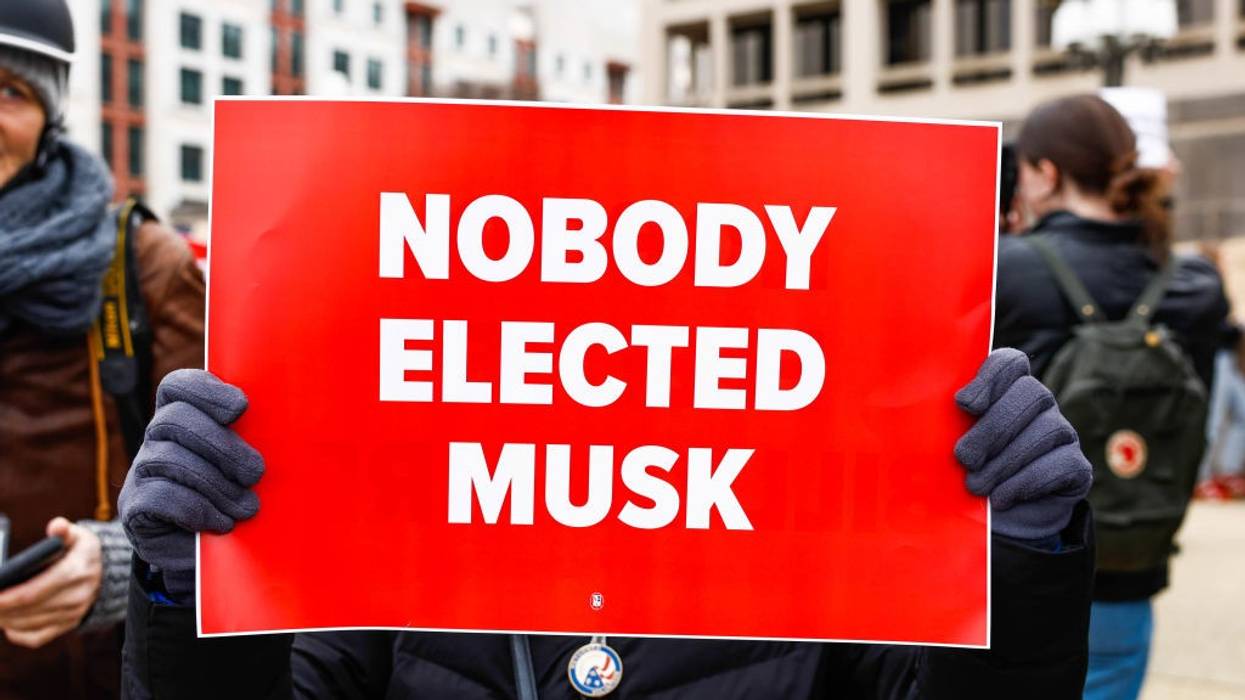
Our campaign is unrelenting because Musk and Donald Trump will not stop.
When the current presidential administration took office on January 20, 2025, the authoritarian firestorm they ignited was, sadly, rapid but somewhat expected.
Funding cuts to childcare, housing, healthcare, and food were swift, as were escalated and targeted attacks towards immigrants nationwide. Much of these reckless cuts were led by Elon Musk. Aside from Musk’s billions in government contracts and showering Trump’s campaign with hundreds of millions of dollars, he had no actual government experience. Musk’s tech bro ethos, and firestarter mentality resemble, in retrospect, that of a young Trump. A terrifying resemblance that made him the perfect actor to wreak total havoc on our federal government.
The proximity to Trump that Musk paved for himself laid the groundwork for creating the Department of Government Efficiency, better known by its tongue-in-cheek name of DOGE. The false promise that DOGE would save US taxpayers trillions was, of course, nothing but a disastrous ploy that cost us money, destroyed vital agencies, decimated regulation, and exposed the personal data of nearly every American. And to date, neither Musk or DOGE officials have been held accountable.
Americans from across the country were quick to protest outside of Tesla showrooms to show Musk that we wouldn’t stand by as DOGE callously dismantled our government. We immediately partnered with Tesla Takedown and organized our supporters to join Tesla showroom protests. We began building a network of activists across the country, and worked alongside Communications Workers of America (CWA), who were motivated by the idea of making Musk feel the real-time impact of the consequences of his actions.
We soon organized with activists from across the country to lead Divest Public Money from Musk campaigns aimed at hurting Musk's bottom line. We pushed local governments to pass resolutions instructing government agencies to not do business with companies owned by Elon Musk and urged public pensions to divest from Tesla or pause all new investments in Tesla.
Starting with the pension board of Lehigh County, PA, whose comptroller signed on to our campaign early on, they paused Tesla investments in their actively managed funds; the city of Davis, CA passed a resolution blocking contracts with Musk and his companies. And, as Musk eyes the launch of his own interagalactic mobile network, we have targeted T-Mobile with a boycott urging them to drop their contract with Starlink which resulted in thousands ending their T-Mobile contracts.
Accountability is necessary, and our elected officials have always held the power to step in and address the Doge destruction. This daily dumpster fire catalyzed our organization, Stop The Money Pipeline, to band together with thousands of other Americans, CWA, and Tesla Takedown, to call on Members of Congress to hold DOGE accountable. We are urging them to make public commitments to hold Congressional hearings and investigations into DOGE and Elon Musk’s role in potentially illegal and unconstitutional activities.
Our DOGE Accountability Campaign has garnered the support of more than 50,000 individuals who signed the Investigate DOGE petition. The campaign has also earned the backing of 54 unions and organizations. Just last month, we hand delivered our petition to the district offices of 26 Members of Congress. The goal is to get 75 Members of Congress to subpoena Musk and DOGE officials for hearings and investigations. Representative Ro Khanna (D-CA) recently called for an investigation; Rep. John B. Larson (D-CT) has also vocally called Musk out; Rep. Robert Garcia (D-CA) released an extensive report detailing many of DOGE's failures. We are hopeful more members will commit. Others can keep calling on members to commit, join our campaign, and get involved in upcoming actions and organizing.
There is no rhyme or reason for Musk’s rampage. He targets the vulnerable, and moves fast and breaks our government simply because he can. While at the helm of DOGE, he fired federal workers who had been regulating or investigating his companies. If he gets sued he can throw money at the problem. People believe the hype because of how hard he allegedly works—but in reality it’s quite the opposite. His work ethic is power and greed, pure and simple.
Our campaign is unrelenting because Musk will not stop anytime soon. We encourage others who want to be on the right side of history to do the same.
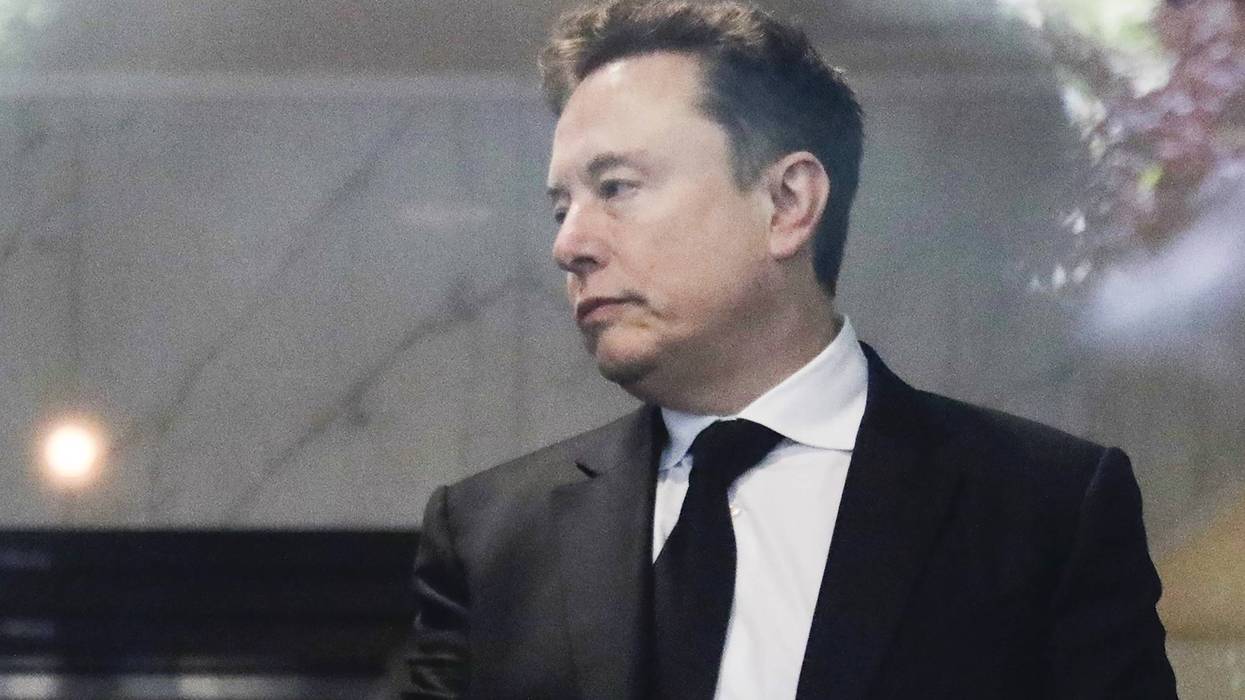
"Someone confident he did nothing wrong shows up and clears his name," Khanna said. "Elon Musk is doing the opposite because he genuinely believes the law does not apply to him."
In the face of lawsuit threats from the richest man in the world, Rep. Ro Khanna on Monday renewed his call for Elon Musk to testify before Congress and defend his dramatic cuts to foreign aid against the claim that they are killing millions of children.
Earlier this week, Musk threatened to sue Khanna (D-Calif.) for defamation and said he “should be in prison” after the congressman said that the trillionaire’s Department of Government Efficiency (DOGE) had “possibly sentenced” 4.5 million children “to death” through its dismantling of the United States Agency for International Development (USAID) last year at the start of the second Trump administration.
Khanna's assertion was based on the findings of a July 2025 Lancet study, which found that DOGE's cancellation of roughly 83% of the programs run by USAID—including 88% cuts to child health aid, 87% cuts to epidemic and disease surveillance, and 94% cuts to family planning assistance—could result in the deaths of 14 million people by 2030, including 4.5 million children under five.
"That number is not mine," Khanna explained in a Substack post on Monday. "It comes straight from the first comprehensive analysis of its kind into what American foreign aid actually does. Over the past two decades, The Lancet found USAID-funded programs helped prevent more than 91 million deaths, 30 million of them children."
While at the time Musk boasted that he was "feeding USAID into the wood chipper," he claimed on Tuesday that all DOGE actually did was "require... contact information of the recipients to confirm that funding was not fraudulent. No validated medical funding was stopped."
He added that "anything that appeared to be legitimate lifesaving funding continued and is now administered by the State Department."
This is broadly not true. While some funds were restored, according to an April 2025 analysis by KFF, about 80% of USAID identifiable global health awards—including ones for polio vaccination, HIV treatment, malaria, and tuberculosis prevention—were still listed as terminated after the review.
In another video posted Tuesday, Musk claimed that when organizations requested that their lifesaving aid be restored, he rebuffed them because they refused to let him personally speak with the children whom they serve. This, he claimed, was evidence of an "enormous amount of fraud and graft."
Khanna said on Monday that if Musk's actions were truly harmless as he claims, he "should sit before the House Oversight Committee," of which the congressman is a member, and "testify, under oath, about what he did."
He said Musk's belligerent response to being called to testify was damning.
"He could have shown up and made his case. He could have argued the study was wrong. Instead, he called me 'an evil liar.'" Khanna said. "When that did not work, he reached for something uglier. He announced he would sue me. He called for my arrest. He said I belong in prison."
"The richest man in human history answered a request to testify by trying to put the person who asked behind bars. Someone confident he did nothing wrong shows up and clears his name," Khanna continued. "Elon Musk is doing the opposite because he genuinely believes the law does not apply to him."
The congressman accused Musk of attempting to use his wealth, and the threat of "years of litigation, paid for by the deepest pockets on the planet," to scare him "into silence."
"It won’t," Khanna said.
"Here is my answer to Elon Musk. I have already challenged him to a televised debate on the rule of law," he said. "Come testify before the Oversight Committee and answer under oath, the way every other person who has held this kind of power has had to."
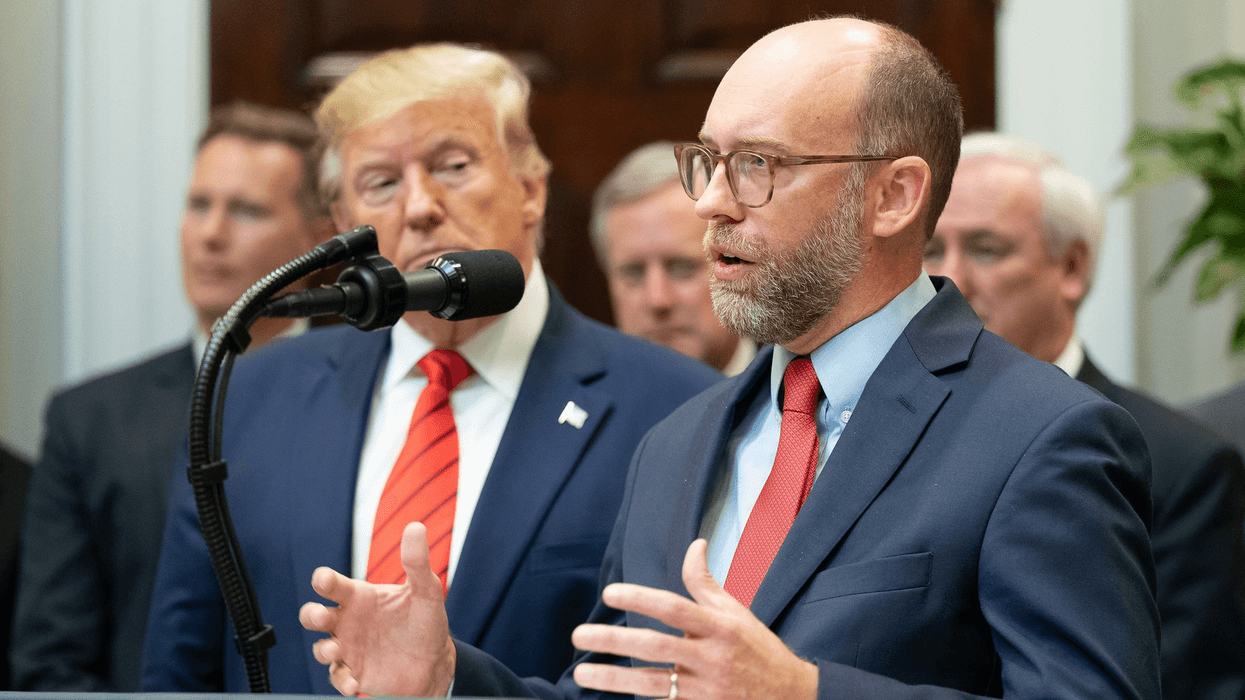
The 2028 Democratic nominee will be running, in part, on a platform of de-Trumpification and pro-democracy reconstruction. To make that transformative project tangible, voters need to understand what was destroyed, how systematically it was destroyed, and by whom.
Although the 2026 midterm elections present the most immediate opportunity for Democrats to capitalize on widespread public discontent with the current Republican-controlled Congress, unofficial preparation for the 2028 presidential race has already started to take shape.
Gavin Newsom is rallying Democrats in Texas; Josh Shapiro is flexing his battleground state bona fides across Pennsylvania; Pete Buttigieg is headlining town halls in Iowa; while Ro Khanna and AOC are jockeying to consolidate the progressive lane.
Whatever their differences on policy and posture, these candidates share a common blind spot: they are not talking nearly enough about Russell Vought.
Whether we’re recounting the Department of Government Efficiency’s infiltration of the federal government or tracking the day-to-day material harms created by Trump administration policymaking, RDP has urgently sought to classify Vought as Trump 2.0’s top villain.
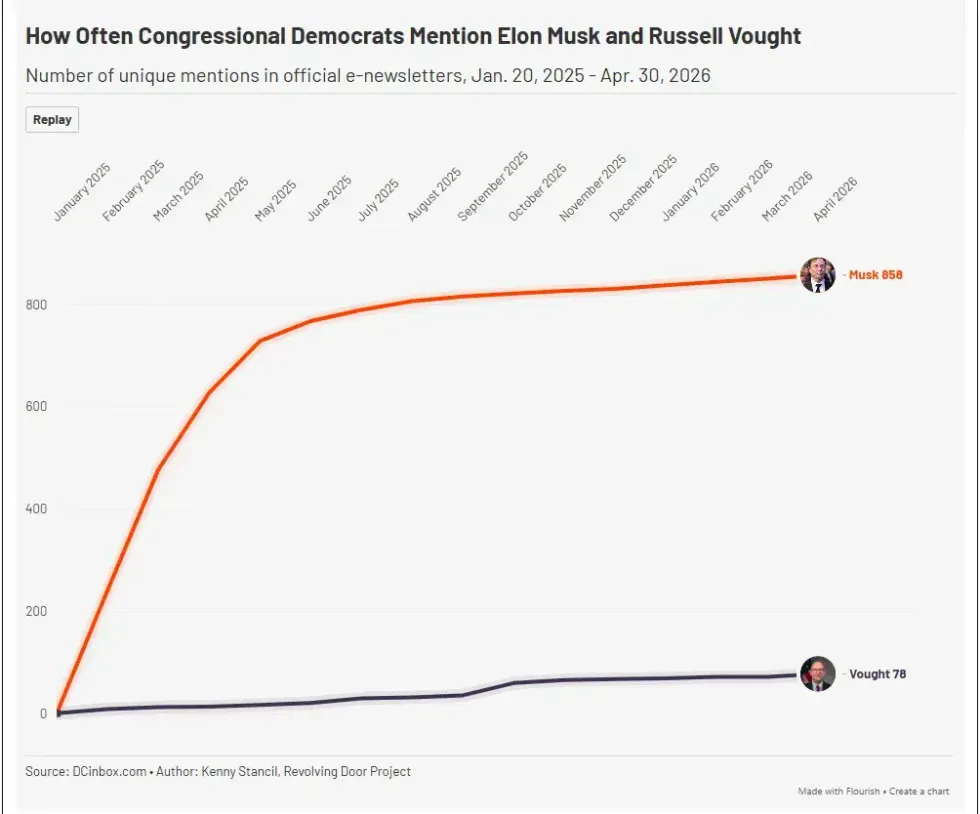
Democrats, however, have badly underinvested in making Vought as infamous as Elon Musk, his former DOGE co-lead. Our Kenny Stancil recently examined this reality in a Talking Points Memo op-ed, where he observed that:
“Democrats sent 478 unique emails mentioning Musk from January 27 to March 31, 2025—including 91 sent during the week of January 31 to February 7, the zenith of Musk’s D.C. rampage when DOGE infiltrated the Treasury Department and shuttered the U.S. Agency for International Development. In comparison, Democrats mentioned Vought in just 28 emails between October 1 and November 12, 2025, even as the OMB director used the government shutdown to intensify his longstanding efforts to gut federal agencies and block the disbursement of congressionally appropriated funds [...] In all, Democratic lawmakers mentioned Vought in just 78 e-newsletters sent between January 20, 2025 and April 30, 2026. Musk, by contrast, was invoked in 858 emails during the same period—11 times more often.”
The ambitious politicians quietly auditioning for the Democratic presidential nomination have no reason to continue making this mistake. Any candidate serious about their presidential bid has both a strategic and moral imperative to build a coherent narrative against Vought—the main engineer behind the GOP’s government power grab.
The case for candidates to make Vought a central villain in their 2028 campaigns is not merely because he deserves the attention. It’s also a political layup hiding in plain sight.
Presidential campaigns are, at their core, exercises in narrative construction. The most durable campaigns provide a compelling explanation of what went wrong and—most importantly—who’s at fault. FDR had his “economic royalists;” Obama had the financial industry that cratered the economy; and Biden had the chaotic Trump 1.0 administration and its lethal mishandling of the Covid-19 pandemic and economic crisis.
The 2028 Democratic presidential nominee will need a similarly coherent villain. Vought embodies that role more completely than any other figure in the Trump administration, including Trump himself.
What makes Vought so uniquely suited for this role is his position as both the connective tissue between Trump’s two terms and the architect of a right-wing political project that will outlast Trump. Vought was a principal architect of Project 2025, the Heritage Foundation-led blueprint for restructuring the executive branch around (Trump’s) unchecked presidential power. Vought’s fingerprints are on the document’s most radical chapters, including the one laying out a strategy to dismantle the administrative state. When Trump is gone, the devastation Vought wrought—gutted agencies, traumatized civil servants, impounded funds, weakened congressional oversight—will remain.
The 2028 Democratic nominee will be running, in part, on a platform of de-Trumpification and pro-democracy reconstruction. To make that transformative project tangible, voters need to understand what was destroyed, how systematically it was destroyed, and by whom. Vought is the answer to all three questions.
Moreover, the Republican nominee will be able to point to the fact that they are (presumably!) not Trump and seek to distance themselves from Trump. But Vought, the glue that binds each of the disparate elements of the GOP together, and Voughtism will still be around. The Republican party is not going to disavow corporate funded right wing think tanks, Christian nationalism, or boring but incredibly powerful white guys. Vought and Voughtism, unlike Trump, will not be disavowed.
One advantage that 2028 candidates have over their counterparts in prior cycles is that the evidence against Vought is not abstract or speculative; it is documented, voluminous, and in many cases already adjudicated as illegal.
Consider the impoundment campaign alone. Since the start of Trump’s second term, the Government Accountability Office has identified at least six instances in which the administration committed clear violations of the Impoundment Control Act—the post-Nixon law passed specifically to prevent presidents from unilaterally withholding congressionally approved spending.
When Vought isn’t handwaving away these violations as “non-events with no consequence,” he’s blatantly lying to the American public about his illegal activity. At his April 2026 Senate Budget Committee testimony, Vought flatly denied having impounded any funds.
2028 hopefuls should be rallying around the negative consequences of Vought’s efforts to veto socially useful spending and harm government workers:
None of this is the product of partisan gridlock or legislative failure. It is the deliberate handiwork of one man operating with a coherent ideological agenda, largely outside public view. Presidential campaigns exist to bring that kind of structural harm into public view.
Another aspect of Vought’s record that has direct implications for 2028 campaign strategy is what historian Colin Gordon calls “vindictive federalism:” the systematic withholding of federal funds from Democratic-led states and cities as a coercive tool to force compliance with the administration’s agenda. Our Aya Dardari explores this topic in detail in a new report.
This is not a peripheral concern for governors like Newsom or Shapiro. It is a direct attack on their executive authority and their constituents’ livelihoods. When Vought’s OMB freezes Medicaid reimbursements in California, or holds up SNAP payments in Pennsylvania, he isn’t engaging in abstract federal policy disputes. Vought’s actions inflict tangible harm upon real communities, which governors eyeing a 2028 run are well-positioned to document, personalize, and prosecute politically.
Any governor in the field should be holding press conferences that connect Vought’s funding maneuvers to closed roads, delayed medical treatments, and disrupted social services in their states. The argument writes itself: this is what a shadow president operating without accountability looks like, and this is what a Democratic administration will undo.
The 2026 midterms will consume most of the political oxygen between now and the formal start of the 2028 presidential race. But the pre-campaign period is precisely when narratives get built. Voters aren’t introduced to presidential candidates fresh in a general election; they encounter them having already absorbed years of framing and counter-framing about the state of the country.
The framing that will serve Democrats best in 2028 is one that identifies the damage, names the responsible party, and makes a credible case for restoration—and Vought gives the 2028 field everything they need to construct that framing:
The political process for building that case is not glamorous. It requires sustained attention to a man who is deliberately uncharismatic and strategically obscure. It also requires candidates to make the OMB directorship feel as urgent as any Cabinet post with a higher public profile.
But the alternative—arriving at the 2028 general election without having made Russell Vought a known, notorious quantity—is a gift to the Republican Party and the man who has spent decades reshaping the federal government in ways that no single election can easily reverse.
The 2028 Democratic nominee will be asking voters to believe that government can work for them again. The most compelling version of that argument starts with explaining, in detail, who broke it.

"Trump has deliberately left us the opposite of prepared by gutting Ebola and pandemic-preparedness infrastructure at home and abroad," said one public health advocate.
As predicted in early 2025, when US President Donald Trump unleashed the world's richest man Elon Musk to enact ill-informed and devastating cuts to key federal agencies and programs, those decisions would have real and deadly consequences for the nation and the world.
With a new outbreak of the Ebola virus already claiming over a 131 lives as it sweeps through the Democratic Republic of Congo and Uganda, and with World Health Organization (WHO) Director General Tedros Adhanom Ghebreyesus hosting an emergency media Tuesday to stem the global threat, videos of Musk bragging about how Trump's so-called Department of Government Efficiency (DOGE) targeted programs related to Ebola prevention efforts are resurfacing this week.
In February of 2025, for example, this clip shows Musk telling Trump's cabinet that DOGE "accidentally" cancelled Ebola prevention funding.
Elon Musk: "We will make mistakes. We won't be perfect ... so for example, with USAID, one of the things we accidentally canceled very briefly was ebola prevention." pic.twitter.com/bq4Ipp4Zvj
— Aaron Rupar (@atrupar) February 26, 2025
While Musk claims in his remarks that the mistake was quickly identified—"I think we all want Ebola prevention," he said—and that the funding was restored "immediately" and that there were "no interruptions" in the prevention efforts or program, later reporting found this was not the case.
As the Washington Post later reported, "current and former USAID officials said that Musk was wrong: USAID’s Ebola prevention efforts have been largely halted since Musk and his DOGE allies moved [...] to gut the global-assistance agency and freeze its outgoing payments."
Dr. Craig Spencer, an emergency physician and professor at Brown University School of Public Health who worked on Ebola for more than a decade and responded to Ebola outbreaks in Africa, spoke about the issue with NPR at the time.
"I disagree fully, completely, wholly, that they recognized the mistake and put it back," Spencer told NPR.
Spencer described how officials with the Centers for Disease Control (CDC) were no longer "allowed to go to meetings with the [WHO], something they would have done in every single outbreak of Ebola—or other viral hemorrhagic fever disease–to date," Spencer says. "From top to bottom, none of the things that they have canceled have been put back in place."
Elon Musk says DOGE accidentally cut USAID's Ebola prevention efforts but then they were restored with "no interruption."
That's an outright LIE.
The state of USAID plainly shows that any disease prevention efforts supported by the U.S. at this point are merely symbolic. pic.twitter.com/cOKk6wWGFK
— Senator Patty Murray (@PattyMurray) March 1, 2025
Jeremy Konyndyk, the former lead of USAID's Ebola response team that handled an outbreak of the disease in 2024, said the same.
Konyndyk, now president of Refugees International, explained last year to NPR that nearly every member of highly-trained team focused on high risk outbreaks was "pushed out of the agency, and they have not been brought back."
"The whole disaster response capability at USAID no longer exists," he said. "All of those people are gone. The operation centers that they worked out of are shut down. They can't even access the Ronald Reagan Building where those operation centers sit. That lease has been handed over to Customs and Border Protection."
HealthDay News reported in March of 2025 that while USAID previously "had more than 50 staffers dedicated to outbreak response," the cuts enforced by DOGE "left just six people to handle Ebola, Marburg virus, mpox and bird flu" preparedness operations.
As Bloomberg reported Monday, the impacts of Trump's attack on foreign assistance and outbreak prevention likely had devastating consequences:
The Trump administration’s withdrawal of health funding that once helped support outbreak detection across parts of Africa represents the kind of cuts that contribute to the erosion of disease-surveillance systems.
Health officials say the Bundibugyo strain of Ebola may have circulated undetected for six to eight weeks in northeastern Congo before lab testing confirmed the virus.
By the time Ebola was identified, suspected cases and unexplained deaths had already spread across multiple health zones near the Ugandan border.
Such systems built with international aid often serve multiple purposes: tracking outbreaks, transporting laboratory samples and monitoring unexplained illnesses in remote regions. When funding disappears, those networks weaken quickly.
According to Leslie Dach, founder and chair of Protect Our Care and who served in the Obama administration as the Health and Human Services global Ebola coordinator, said Trump's failures are already plain to see and that the ongoing public health threat, whether abroad or in the United States, is dire.
“If history is any guide, the administration must be fully vigilant and prepared to deal with the potential of this deadly disease reaching America’s shores, or the situation could get ugly fast,” said Dach in a statement on Monday.
“Without proper procedures and guardrails in place, people could get very sick and die," Dach continued. "But Donald Trump has deliberately left us the opposite of prepared by gutting Ebola and pandemic-preparedness infrastructure at home and abroad. The CDC is now flying blind after Trump and Republicans shuttered USAID and cut themselves off from WHO’s global resources—destroying our disease surveillance and response capability just so billionaires could have another tax break."
"Whether it’s measles, Hantavirus, or Ebola," he said, "the deep Trump cuts to research, public health staff and infrastructure have left the nation ten steps behind–always putting out public health fires rather than preventing them.”
As Sen. Patty Murray said back in February of 2025: "If Ebola, Margurg, or any other infectious disease makes it to our shores, it will be thanks to Elon and Trump—two billionaires without a clue, who are positively smug about their own ignorance."
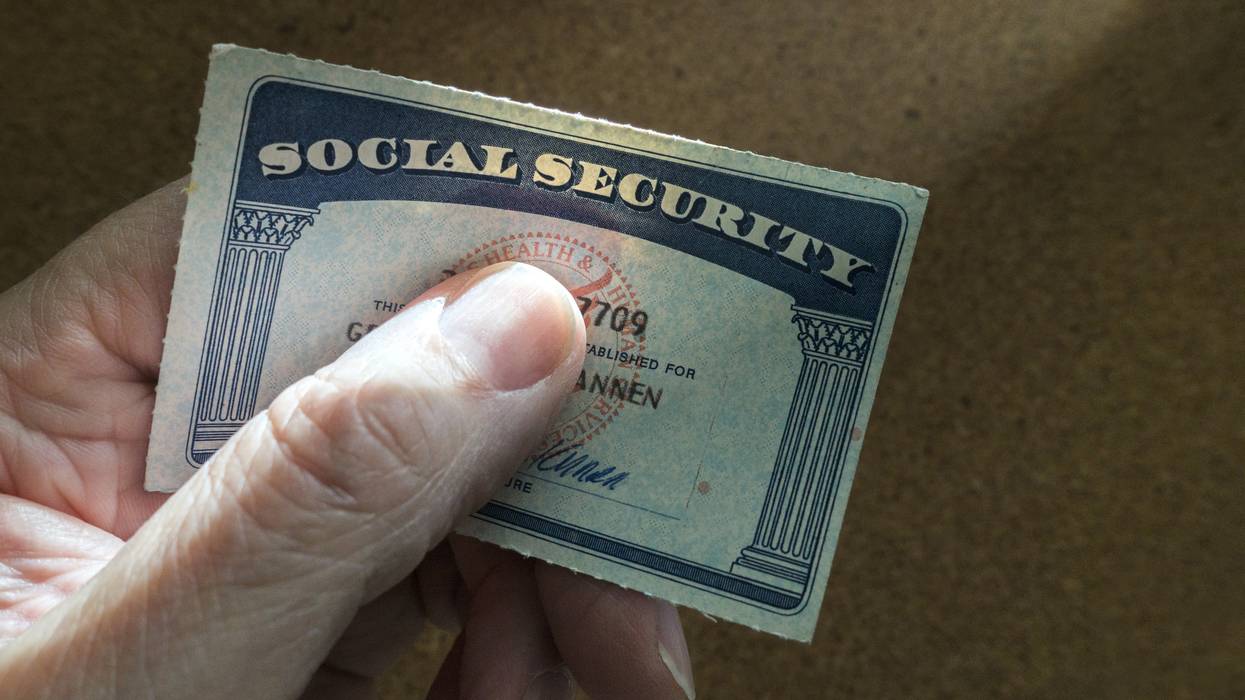
"Over and over again, the Trump administration is exposing private Social Security data," said one watchdog group who called the leak of personal information "a goldmine for identity thieves" and other fraudsters.
A newly reported failure of the Trump administration's ability to handle sensitive private information in the social programs it is tasked with operating triggered a fresh wave of anger over the weekend after it was revealed that healthcare providers' Social Security numbers were made public as part of a faulty Medicare portal rollout.
The Washington Post discovered the compromised database and alerted the administration last week, before publishing a story about it on Friday, after efforts had been made to protect the sensitive information from further compromise.
According to the Post:
The Centers for Medicare and Medicaid Services (CMS) last year created a directory to help seniors look up which doctors and medical providers accept which insurance plans, framing it as an overdue improvement and part of the Trump administration’s initiative to modernize health care technology.
But a publicly accessible database used to populate the directory contains some of the providers’ Social Security numbers, linked to their names and other identifying information. For at least several weeks, CMS made the database available for public use as part of its data transparency efforts.
While the reporting noted that the files were "not immediately visible to users who [visited] the provider directory," lawmakers and experts said the compromised information would be a treasure trove for fraudsters.
“The more we learn about how the Trump Administration handles the people’s most sensitive data, the clearer their incompetence becomes."
Critics pounced on the new reporting, calling it "yet another mess-up by the Team Trump" and only the latest evidence that the administration cannot and should not be trusted to protect the nation's most successful anti-poverty programs or the sensitive personal data of the American people who entrust the government with that information.
"Over and over again, the Trump administration is exposing private Social Security data," said Social Security Works, an advocacy group that serves as a public watchdog for the nation's social programs.
The compromised database, said the group, "is a goldmine for identity thieves, scammers, and foreign governments. And it is undermining the very foundation of our Social Security system."
"This is a failure by this administration," said Sen. Ruben Gallego (D-Ariz.) in response to the reporting. "Exposing Social Security numbers, whether patients or providers, is unacceptable."
Rep. Richard Neal (D-Mass.), the ranking member of the House committee that oversees the Medicare program, put the onus on his Republican colleagues in Congress.
“The more we learn about how the Trump Administration handles the people’s most sensitive data, the clearer their incompetence becomes,” Neal told the Post in a statement. “Do House Republicans need to see their own data exposed before they do right by their constituents and act?”
In March, as Common Dreams reported at the time, a whistleblower filed a complaint with the Social Security Administration accusing a former staffer with Trump's Department of Government Efficiency (DOGE), run for a time by right-wing billionaire Elon Musk, of trying to share information from SSA databases with his private employer.
Since the outset of Trump's second term, DOGE's meddling with Social Security and Trump's undermining of the program have been the source of deep anger and concerns among the program's defenders.
In a social media post on Saturday citing the whistleblower allegations from March, Rep. John Larson (D-Conn.) said, "For more than a year, 'DOGE' has been combing through the American people's records. They want to use your data to overturn elections and profit in the private sector. Enough! This administration must be held accountable for this massive data breach!
On Friday, responding to the Post's new reporting about the compromised database of physicians' private information, Larsen condemned Republicans for their ongoing and pervasive failures in the face of Trump's malfeasance and incompetence.
DOGE, said Larsen, "has been in your data for more than a year. We just learned that physicians' Social Security numbers were publicly exposed in an online portal launched by ‘DOGE’ officials."
"If this isn't enough for Republicans to act," he asked, "where will they draw the line?"

"Government must deliver for working people—and every dollar in our budget should work as hard as they do," said the mayor.
Cutting government "waste" and increasing "efficiency" have long been rallying calls of the right, most recently with President Donald Trump's "slash-and-burn" methods through the so-called Department of Government Efficiency—which rapidly cut hundreds of thousands of federal jobs and threatened lives across the Global South by terminating billions in foreign aid—and his cuts to Medicaid and federal food assistance.
But New York City Mayor Zohran Mamdani on Wednesday appeared intent on "co-opting" the idea of efficiency, as one organizer said, as the progressive Democrat provided an update on his plan to save more than $1.7 billion in public funds "without compromising essential services."
The targets of Mamdani's savings plan aren't crucial healthcare programs like Medicaid—which even some Democrats like his erstwhile rival, former Gov. Andrew Cuomo, have attacked as "wasteful"—and education, but major government contracts with companies like consulting firm McKinsey.
Cutting the Department of Social Services IT contract will save the city $9 million per year, said Mamdani. McKinsey has contracted with the New York City government several times, including between 2014-17 when it was paid $27.5 million to reduce violence at the jail complex on Rikers Island—only to report "bogus" numbers as the problem worsened—and in 2022 when it was paid $1.6 million to research garbage disposal.
"The city was paying for a lot of work from outside contractors that was costing us far too much, so we're bringing a lot of that work in-house and saving our budget millions on things like IT services and software," said Mamdani in a video he posted to social media. "A contract with McKinsey at the Department of Social Services: no more. That's $9 million that we won't be spending next year.
Government must deliver for working people—and every dollar in our budget should work as hard as they do.That’s why I directed every agency to cut waste and help close our budget gap.Here’s some of what we found.
[image or embed]
— Mayor Zohran Kwame Mamdani (@mayor.nyc.gov) March 25, 2026 at 10:14 AM
Other savings identified by city agencies, which were directed by Mamdani to find $1.7 billion in public funds that could be saved to fill what city Comptroller Mark Levine called "the biggest budget gap since the Great Recession," include $1.15 million at the Department of Health and Mental Hygiene, which has been "overcharged for lifesaving medicine like naloxone."
"We're renegotiating that contract and saving another million dollars," said Mamdani.
Millions will be saved on leases as the city shrinks its "physical footprint" and stops renting spaces it doesn't need, and an estimated $13 million per year will be saved as officials strengthen its verification process to make sure homeowners are actually living in homes for which they get tax breaks.
Other contracts will be terminated or renegotiated at New York City Public Schools, generating more than $30 million in savings next year; the city's public hospitals system, saving about $40 million over the next two years; and the Department of Corrections, resulting in $4.3 million in savings.
Mamdani emphasized that to confront the city's deficit, "we need to tax the rich and end the drain that's been our relationship with the state for far too long."
"As we pursue that, though, we also have to take a close look at our own spending and cut waste wherever we can," the mayor said. "Because to deliver public goods you have to first deliver public excellence."
Organizer and writer Cole Sandick said Mamdani's "co-opting of efficiency from the right will be seismic for the American socialist project" and expressed hope that the mayor could begin "a national campaign against The Contractor State—neoliberalism's grand, massively inefficient outsourcing of government functions to private contractors."
Alex Jacquez, chief of policy and advocacy at the think tank Groundwork Collaborative, said it was "really exciting that NYC is generating operational efficiencies by in-sourcing needlessly outsourced public services and functions, building city capacity."
"More of this!" he added.
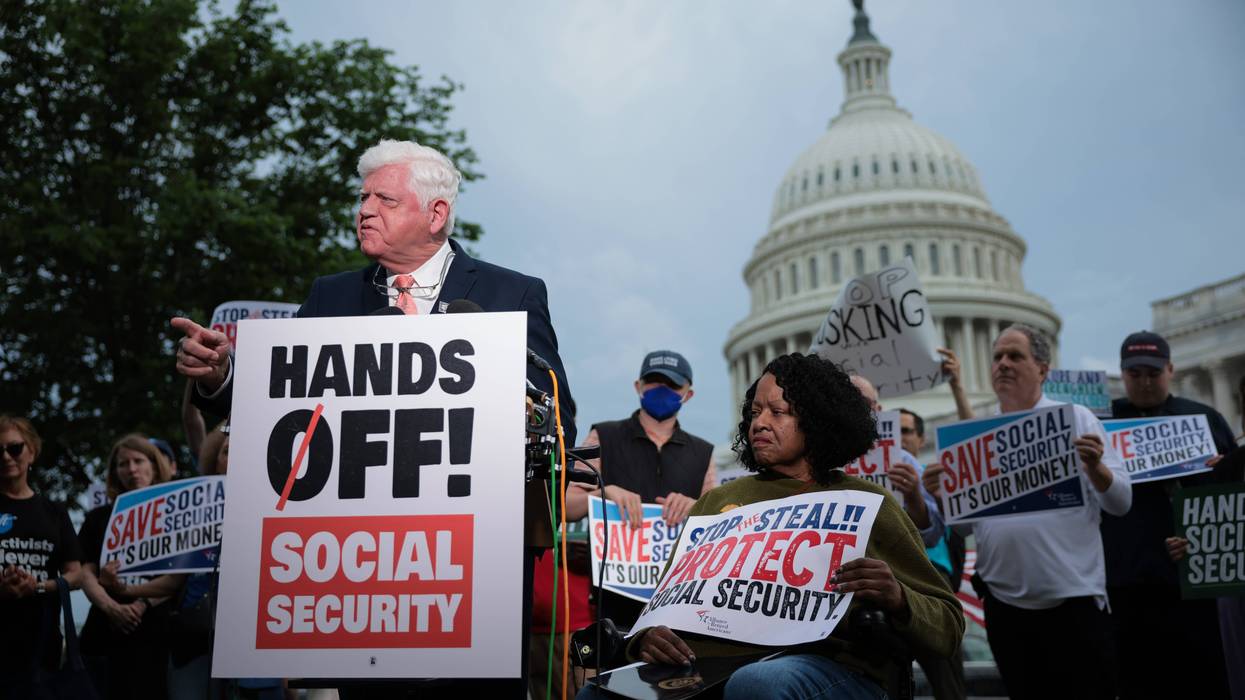
"This week’s revelations are just the tip of the iceberg," said the executive director of Social Security Works. "We need to know exactly who has our data and what they are doing with it."
Advocates and Democratic members of Congress are calling for a criminal investigation after a court filing revealed that operatives at the Department of Government Efficiency—previously headed by Elon Musk—pilfered and leaked Social Security data through a non-secure private server.
Max Richtman, president and CEO of the National Committee to Preserve Social Security and Medicare, said Wednesday that his organization supports Reps. John Larson (D-Conn.) and Richard Neal (D-Mass.) in their call for "a full criminal investigation into DOGE leaks of private Social Security data to Elon Musk’s associates and immediate congressional action to safeguard Americans’ privacy."
"This reported malfeasance was enabled by a culture created by the Trump administration, Elon Musk, and DOGE soon after the president took office—a culture of recklessly interfering in the legitimate functions of the federal government with questionable intent and zero accountability," said Richtman, calling the data abuses part of a "relentless attack on the functioning of the Social Security Administration."
Richtman's statement came a day after the Trump administration acknowledged that DOGE operatives accessed and divulged highly sensitive Social Security data in ways that "were potentially outside of" SSA policy and in violation of a March 2025 court order. The Justice Department maintains that SSA doesn't know data was shared on the third-party server.
As the New York Times reported, the Trump DOJ also disclosed that "a political advocacy group contacted two members of the DOGE Social Security team, asking for an analysis of state voter rolls the advocacy group obtained."
"One of the DOGE employees signed an agreement with the advocacy group, which the Social Security Administration appeared to learn through a review of emails," the Times noted. "The Justice Department did not provide details about what came of the agreement and whether sensitive data was shared inappropriately."
In a joint statement responding to the revelations, Larson and Neal said that "we have been warning about privacy violations at Social Security and calling out Elon Musk’s ‘DOGE’ for months."
"DOGE signed an agreement to share Social Security data with an organization trying to undermine state election results, sent 1,000 Americans’ personal records directly to one of Elon Musk’s top consiglieres, and shared the confidential data of Americans on a private server," the Democratic lawmakers continued. "The 'DOGE' appointees engaged in this scheme—who were never brought before Congress for approval or even publicly identified—must be prosecuted to the fullest extent of the law for these abhorrent violations of the public trust."
Alex Lawson, executive director of Social Security Works, echoed that call on Wednesday, saying that "those who have committed illegal acts must be prosecuted."
Lawson also demanded that Congress launch "a long-overdue investigation into just what DOGE is doing with our earned benefits and our private data."
"Thanks to Donald Trump and the Supreme Court, Elon Musk’s DOGE minions have access to our private Social Security data. So does anyone they choose to share it with—and anyone who can hack the unsecured server they’ve stored it on," said Lawson. "This week’s revelations are just the tip of the iceberg. We need to know exactly who has our data and what they are doing with it."
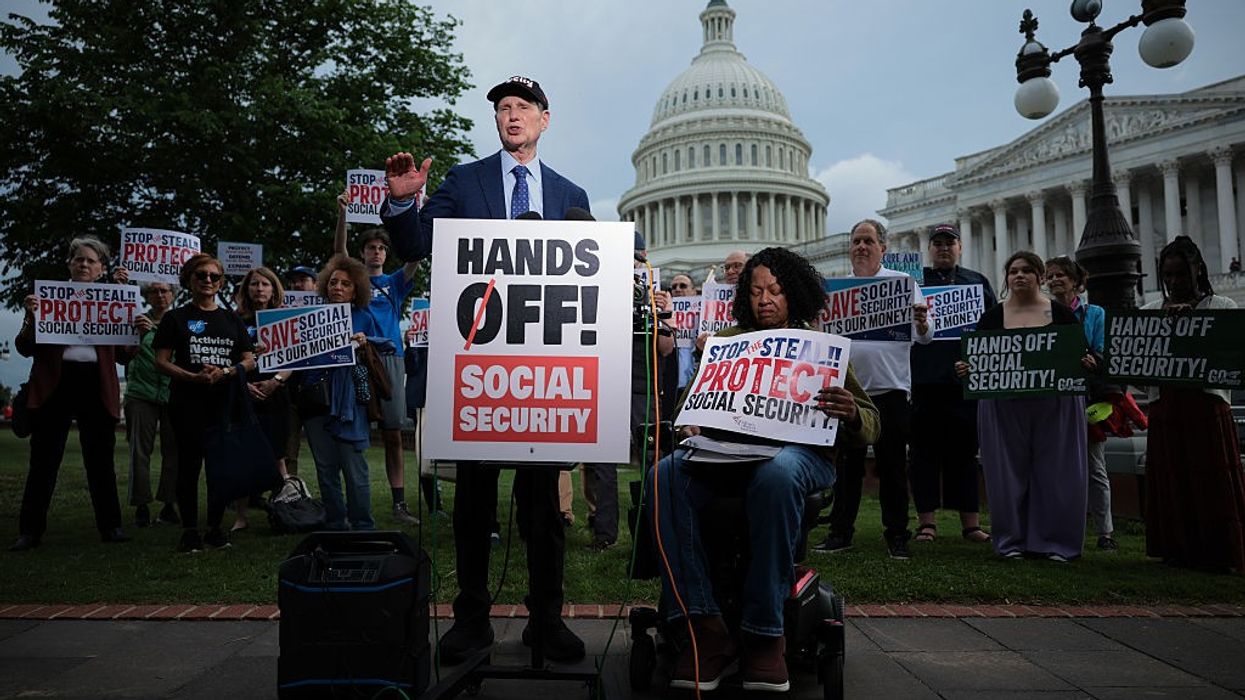
While Republicans are saying they don’t want a shutdown, their actions show otherwise.
Republicans control the White House, the Senate, and the House of Representatives. Yet despite this unified control, they are steering us towards a wasteful, destructive government shutdown.
Though Democrats don’t control the government, they are committed to protecting Americans’ access to health care. Republicans are trying to bully them, but Democratic leaders are standing strong. They have told Trump and his MAGA allies in Congress that they want to protect Medicare, Medicaid, and the Affordable Care Act as part of any budget bill.
Democrats are also fighting to reverse the devastating cuts that Elon Musk’s DOGE made to the Social Security Administration and other critical government programs. They refuse to vote for a budget that enshrines those cuts into law. They will vote for a budget that helps working people, but not for one that only benefits the ultra-wealthy.
While Republicans are saying they don’t want a shutdown, their actions show otherwise. Trump and his allies are refusing to even meet with Democratic leaders. They are determined to rip away Americans’ health care and make their earned benefits inaccessible. Indeed, they are willing to shut down the government, rather than give an inch.
A prolonged Republican government shutdown could easily become the straw that breaks the camel’s back at the Social Security Administration.
Republicans have already cut $1 trillion from Medicaid and $500 billion from Medicare. They are about to allow huge cuts to the Affordable Care Act (ACA). They are clearly hostile to these programs, despite their efforts to pretend otherwise.
Trump’s Secretary of the Treasury had a moment of honesty when he revealed the Trump plan to privatize Social Security. Similarly, Trump’s Commissioner of Social Security had a moment of candor when he expressed openness to cutting Social Security by raising the retirement age.
Trump’s Republican cronies in Congress are partners in the destruction, refusing to hold Trump’s DOGE accountable for gutting vital programs and stealing our most personal, sensitive data. They are refusing to reverse DOGE’s decimation of the Social Security Administration, which is making it increasingly difficult for Americans to receive their earned benefits. They are asking Democrats to provide the votes to keep the government open, in return for absolutely nothing.
Republicans have spent months terrorizing the federal workforce, just as they promised to do in Project 2025. The workers that remain after Elon Musk’s DOGE rampage are exhausted and demoralized. If Republicans force a shutdown, these workers will still have to come to work, incurring commuting, childcare and other expenses, while not receiving their pay. They will be forced to figure out how to pay their mortgages, rent, and other bills with no money coming in.
This is what Trump’s OMB director and architect of Project 2025, Russell Vought, wants. In a speech prior to the November election, he made the outrageous goal explicit:
“We want the bureaucrats to be traumatically affected. When they wake up in the morning, we want them to not want to go to work, because they are increasingly viewed as the villains. We want their funding to be shut down … We want to put them in trauma.” (Emphasis added.)
So when federal workers — including air traffic controllers who keep us safe when we fly and Social Security Administration civil servants who ensure we receive the benefits we are owed — stop getting paid, starting October 1, you will know whose fault it is.
The Republicans are barrelling towards a shutdown at a time when the Social Security Administration is already at the brink of catastrophe. The agency has lost thousands of experienced staff, and the Trump administration is creating chaos with haphazard and misguided policy changes. As I wrote in early September, “The only reason the system hasn’t already collapsed is that the mission-driven staffers who remain are each doing the work of five people. They are holding Social Security together with shoestrings and chewing gum — but they can’t do it forever.”
Indeed, a just-published New York Times article interviewed one of those employees.
“In my 24 years, I have never seen it so bad to the point that a lot of us are medicated,” said one Social Security technical expert who works in a field office in the Midwest and takes an anti-anxiety medication daily….“We openly talk about it,” she said. “We joke about it, because what else can you do?”
Now, these staffers will be expected to continue working themselves to the bone, without even getting paid. Who could blame them if they look for other opportunities? And that’s if they even get a choice. Vought is openly threatening to use a shutdown as an excuse for mass firings of even more civil servants. He’s taking federal workers hostage, including those who keep Social Security and Medicare running.
Trump and his Republican cronies will try to blame Democrats, as they always do. But don’t let their misdirection distract you.
A prolonged Republican government shutdown could easily become the straw that breaks the camel’s back at the Social Security Administration. Social Security’s nearly 70 million beneficiaries will pay the price in the form of ever-lengthening wait times — and potential benefit disruptions.
Trump and his Republican cronies will try to blame Democrats, as they always do. But don’t let their misdirection distract you. It is essential that Democrats win back control of Congress in the midterm elections in November 2026, so that they can check Trump’s relentless efforts to become a dictator.
Until then, they must stop bowing down to Republican demands. It is the only way to fight against the Republicans stripping away the health care of 15 million Americans, forcing hospitals around the country to close, and making it harder and harder for Americans to access their earned Social Security benefits.
Trump's cruel and misguided destruction of global public health is a horrific sight to behold.
The totalitarian playbook that Donald Trump seems to follow lacks a chapter. Power-crazed the president may be, but he fails to grasp soft power. Wise military and diplomatic minds understand it well. George C. Marshall, the nation’s top general through World War II and later secretary of state and secretary of defense, lent his name and his energies to the greatest exercise of soft power in American history, the Marshall Plan. Such was his stature that, with help from President Harry Truman and Senator Arthur Vandenberg, he persuaded an isolationist post-World War II Congress to approve the costly program and so secured western Europe from Soviet political control, while defining the preeminent battle line of the Cold War.
More than six decades later, Jim Mattis, a retired four-star Marine Corps general who served as secretary of defense in the first Trump administration (when experience and professionalism were sometimes entertained in the Oval Office), championed soft power as Marshall had done. In testimony to Congress in 2013, he said, “If you don’t fund the State Department fully, then I have to buy more ammunition.” He was endorsing the soft power of diplomacy — to which he might have added the soft power of non-military assistance and moral and cultural influence. Soft power is the ability to “obtain the outcomes one wants through attraction and persuasion rather than coercion and payment” — through means, that is, other than bullets, bullying, and bribery.
The United States Agency for International Development (USAID) was a lineal descendant of the Marshall Plan and an embodiment of soft power. Its abandonment and ultimate destruction by the second Trump administration marks a watershed moment in the projection of American influence globally. Next to its headstone in the graveyard of institutions, one might also place a marker for the era that publisher Henry Luce once labelled “the American Century.” Like a married couple, the agency and its century deserve to be buried together, their lives having been intertwined and their dates nearly the same.
The Murder Was Not Premeditated
A possibly ketamine-pumped Elon Musk, brandishing a chainsaw at the Conservative Political Action Conference in February, proved an apt image for the Trumpist demolition of government institutions this year. The hideously misnamed Department of Government Efficiency, then led by Musk, performed no meaningful analysis of which government functions were essential to preserve, let alone which civil servants had the expertise and experience to make such functions viable. Employees were simply fired en masse in the bureaucratic equivalent of a meat-cleaver amputation (no scalpels involved).
Initially, there was no plan to demolish USAID, just shrink it. However, what began as layoffs and the appointment of unqualified individuals to positions of authority led to resistance from employees loyal to their agency and their mission. That, in turn, prompted further cycles of layoffs and demolition. When the red mist of fighting finally lifted, there wasn’t much left of the agency. Its remains were swept into the State Department, accompanied by solemn assurances that vital humanitarian programs had not been and would not be compromised, assurances no more real than an invitation to buy the Brooklyn Bridge.
Yes, USAID had problems. What $30-billion-a-year organization doesn’t? Some of its long-term advocates decried its faults as loudly as any MAGA cheerleader. In the words of one veteran partner of the agency, “The bureaucracy… was legion, hugely frustrating. In order to donate/spend a dollar you had to spend three, just to make sure the treasury wasn’t getting ripped off.”
It’s vital to understand that the agency’s sclerotic procedures and glacially slow decision-making resulted not from the rampant waste, fraud, and abuse alleged by Trumpists but in order to avoid those evils. As a top executive of one of USAID’s largest contractors told me, “Outside auditors were never not in our offices.” Every expenditure was examined, checked against the highly detailed contract and program of work, and verified.
In cases where speed was necessary or where arrangements in some back-of-beyond province were too fragile, USAID bypassed its labyrinthine contracting process and made direct grants to non-governmental organizations, or NGOs, that were locally based and staffed whenever possible. Admittedly, in those cases financial controls were looser, usually because scant infrastructure and operational uncertainties made bean-counting impossible. Sometimes, to build capacity or save lives, a relief organization simply has to wing it. It’s tough to have it both ways.
Condoms for Hamas!
The Trump administration’s diligent researchers wasted no time in unearthing the most egregious examples of abuse. In her first White House briefing, Press Secretary Karoline Leavitt bragged that the administration had blocked a lunatic plan to buy $50 million worth of condoms for Palestinians in Gaza. A victory for common sense, right?
Wrong! The Gaza in question was a province of Mozambique, 29,000 square miles in size and supporting a population of about 1.4 million. The USAID grant would have funded family planning services in that poverty-stricken region. The confusion no doubt derived from a DOGE word search, similar to the one that caused photos of the B-29 that dropped the atomic bomb on Hiroshima to be marked for deletion from Defense Department websites because, well, the plane’s name was Enola Gay, which to Elon Musk’s whiz kiddies sounded DEI-ish. (Actually the plane was named for the pilot’s mother.)
Even after the mistake was reported to the White House, Trump repeated it (with elaboration): “We identified and stopped $50 million being sent to Gaza to buy condoms for Hamas… They’ve used them as a method for making bombs.”
Possibly his staff lacked the guts to tell him the boast wasn’t true. Possibly he thought it was just too good a line not to use.
HIV, Malaria, Malnutrition
The humanitarian consequences of USAID’s destruction have not gone unnoticed. Issue-specific websites have sprung up to tally the cost in money and lives. The New York Times, Washington Post, and other leading news outlets have published dispatches from impacted areas documenting the harm being done. Esteemed journals like the Lancet and Science have published reports from on-going field studies predicting dire outcomes. When I’ve brought such sources to the attention of ostensibly intelligent members of the MAGA faithful, I’ve been told that the estimated losses can’t be modeled, or that ChatGPT says the models are flawed, or that domestic humanitarian needs should take priority over foreign ones. Sound familiar? It’s climate-change denial in a new suit of clothes.
Such debating tactics track well with Dietrich Bonhoeffer’s analysis of stupidity. In his telling, stupidity is “not an intellectual defect but a human one.” Bonhoeffer deemed stupidity “more dangerous” than evil because, unlike evil, it cannot be directly contested. Bonhoeffer, a German anti-fascist who died for his heroism in 1945, described the characteristics of stupidity this way: “reasons fall on deaf ears; facts that contradict one’s prejudgment simply need not be believed… and when facts are irrefutable they are just pushed aside as inconsequential.”
Zambia provides some consequential facts: USAID assistance to Zambia peaked in 2024 at $409 million. Assistance under the Trump regime for 2025 has plummeted to $61.6 million, a decrease of 85%. More than half of those funds ($34 million) are marked for combatting HIV/AIDS, which sounds reassuring. Essential stuff will still get done, right? Oops, sorry, the previous 10-year average for USAID’s Zambia HIV/AIDS program was $147.7 million (and those years included both the first Trump administration and the chaos of the Covid pandemic years).
When you slash a program by 85%, what happens to the mothers and children who depend on it for life-saving therapies? Even if you continue to buy some of the drugs, you still have to deliver them to widely dispersed patients in countries with limited transportation infrastructure. So, if the administrators, warehousemen, truck drivers, and clinicians who make the system work have been fired, and if the warehouse and office leases have been terminated, and now fuel-less, unrepaired trucks remain mothballed, maybe the drugs will find their way to the dump or the black market, but they surely won’t be going where originally intended or most needed.
Something similar happened to 500 metric tons of high-energy food bars stockpiled in Dubai in the United Arab Emirates and intended for mothers and children facing malnutrition. Trump officials, with a customary lack of accountability, blamed the Biden administration for having bought too much, creating an unneeded surplus. Now that the use period for the bars has expired, they will be burned, dumped, or converted to animal feed. Evidently, the Trump administration failed to find any people who needed nourishment. One wonders if they looked in South Sudan. Or in Gaza. No, not that Gaza! The other one.
Applying a Wrecking Ball to Multiple Successes
USAID wasn’t the only U.S. agency fighting HIV/AIDS in Zambia, nor was the U.S. the only nation in the fight, but the U.S. provided about 44% of overall funding for the program. Here’s what we and our global partners, including Zambia itself, managed to accomplish: “Despite population increase, AIDS-related deaths in Zambia dropped from 120,000 in 2001 to 19,000 in 2022” — that’s a drop of 84%. Elizabeth Burleigh, an international health expert with nearly three decades of experience with USAID in Latin America and Africa, provided me with those numbers. As she put it, “This was due to global efforts in prevention, particularly the use of condoms and reduction in the practice of multiple concurrent partnerships, and to increased access to anti-retroviral therapy.” The near-conquest of HIV/AIDs in Zambia is a great story and it’s not the only one.
In Africa, malaria kills far more people than AIDS, but the fight against that grim disease has been hugely successful, too. Its incidence in Zambia has dropped by two thirds since 1996, when the U.S. began funding malaria control. Children under five and pregnant mothers, both of whom are especially vulnerable, have seen their rates of infection drop by half in those years. Currently, the U.S. provides about a third of anti-malarial funding in that country. President Trump’s current budget proposal for FY 2026, however, would cut that contribution by half.
The story of tuberculosis, Dr. Burleigh points out, is another chronicle of reduced infection rates and lives saved. But here’s the catch: if you’re serious about controlling infectious disease, as the U.S. used to be, you commit to the long haul. You don’t turn the funding on and off like a spigot. If you do turn it off, as the Trump administration has indeed done, you have to expect significantly more people to get sick and many of them to die, while hard-earned progress in reversing the spread of debilitating and often fatal diseases will itself be reversed. You can visualize the outcome of funding cuts for HIV/AIDS, malaria, and tuberculosis in a two-line graph: long-term funding gradually rises over a period of decades until 2025, when it suddenly plunges, while the long-term trend of diminishing deaths, inversely proportionate to funding, ceases its decline and begins to leap upward.
At Least the Trumpists Are Being No Less Cruel to American Citizens
One might sensibly strive to reform and improve USAID or, if termination were imperative, to at least devise a thoughtful and compassionate strategy for weaning countries, patients, and other beneficiaries from its programs. What stands out amid the carnage wrought by the Trumpists, however, is its sheer meanness. In the mob world, “making your bones” is shorthand for establishing your bona fides. Part of the mythology of gangsterdom is that an entry-level thug makes his bones by murdering someone. Contemporary bro culture features an analog to this. A true bro cultivates a harsh, insouciant machismo. He’s no softie and he’s not afraid to be cruel. He’s Joe Rogan. He’s Stephen Miller. He’s Pete Hegseth. He’s Russell Vought, Trump’s director of the Office of Management and Budget and an architect of Project 2025. Vought has said publicly of federal employees: “We want to put them in trauma.” Within the bro culture now ascendant in the Oval Office, compassion has become a form of squeamishness — and the people USAID used to serve are paying the price.
Should we care about the deaths caused by abrogating our commitments? Should the abandonment of possibly hundreds of thousands of individual human beings in mid-treatment trouble our sleep? Well, for perspective, it may be worth knowing that Trump’s crew is doing the same thing to thousands of as-yet-uncounted American citizens, thanks to chainsaw cuts to the budget of the National Institutes of Health, the largest funder of biomedical research on the planet. NIH has been forced to terminate research-funding affecting at least 113 clinical trials around the country involving thousands of patients. Some of those participants were being kept alive by the therapies the trials provided. Some have devices planted in their bodies, including experimental brain implants, that will no longer be serviced or monitored. Good luck to them.
And let’s not even talk about the impacts on non-human subjects in terminated medical research programs. No one wants to think about the millions of laboratory rodents and the thousands of macaques and other primates that will be euthanized because the government has reneged on their support. In some cases, the animals represent genetic strains that have been developed over many years and their loss will compromise prospects for future research for many years to come. Bones, indeed. The Trump administration is making a lot of bones.
What Used to Be in It for Us
Let’s talk, for a moment, about self-interest. What good did USAID do for this country? For starters, it created markets for our goods, especially agricultural surpluses, which USAID was still purchasing to the tune of several billion dollars annually before the recent chainsaws arrived. The shopping list grew longer with time and lately included billions of dollars-worth of drugs, test kits, contraceptives, medical equipment, personal protective equipment, computers (to help curb all that waste, fraud, and abuse), construction equipment, and goodness knows what else — the whole catalog of things that people, institutions, and developing nations need. Buy America!
Add to that the friends (or in some cases the non-enemies we made): the millions of refugees in camps around the world who saw “USDA” (United States Department of Agriculture) stamped on the bags of meal and beans that kept them alive; the patients and staff of the clinics and medical programs we funded; the in-county employees of not just USAID and its contractors but the NGOs that carried out so much of the agency’s programmatic work; the government officials whose agendas we advanced (and with our money also shaped); and our global partners, both other nations and multinational alliances, to whom we made what seemed to be solemn, multi-year commitments. Can you blame any of them for now feeling betrayed?
The list of benefits also included intelligence, the kind not gathered by spies but by something better: having eyes and ears in places where it’s hard to go, having a network of care and reciprocity that wrapped around the world, creating a “distant early warning” system for everything from epidemics to grassroots discontent. And yes, there were other, unquantifiable gains to be made for national security, because where misery and instability decline, peace can grow. That’s good for America and good for American businesses.
And then there’s the issue of influence, if not hegemony. In the capitals and far corners of the developing world, which superpower will people and their governments favor when a choice is to be made? Now that the many nations and populations that USAID once cultivated, provisioned, and cared for feel double-crossed by the Trump regime, who will benefit most? (Xi Jinping, is that a smile on your face?)
Donald J. Trump and his minions think they’re right to put America first. What they don’t understand is that, defined in their narrow way, “America First” is America Alone. In an interconnected world, those who are alone, to use a favorite word of the president’s, are losers.