

SUBSCRIBE TO OUR FREE NEWSLETTER
Daily news & progressive opinion—funded by the people, not the corporations—delivered straight to your inbox.
5
#000000
#FFFFFF
To donate by check, phone, or other method, see our More Ways to Give page.
Daily news & progressive opinion—funded by the people, not the corporations—delivered straight to your inbox.
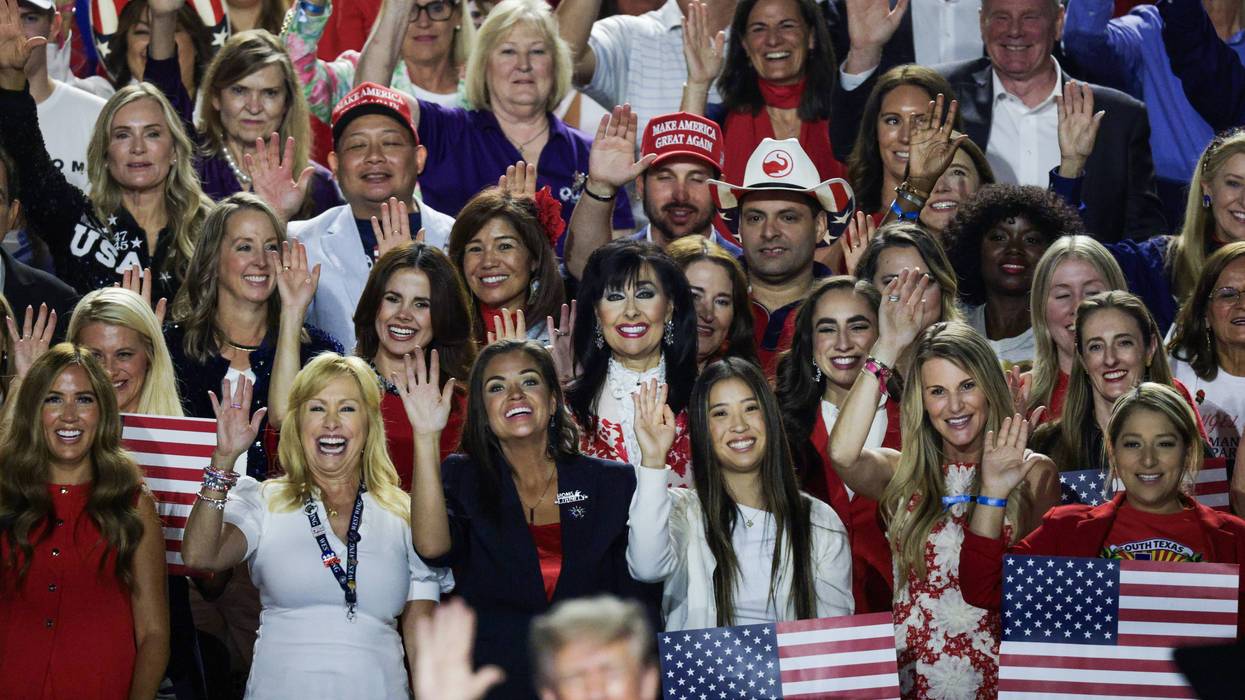
Trump last week once again lied like hell as he repeated again and again his standard lies about the economy and US standing in the world. Take a minute and ponder why the Democratic Party is befuddled without a coherent way of responding to the crazy person and his GOP cult.
In his rambling and incoherent remarks for nearly two hours over two nights before a knee-jerk crowd in Dallas last week, Trump provided ample evidence that he is a dangerously unstable, delusional, egomaniacal, and megalomaniacal personality. He pushed for this unusual midterm GOP convention to shore up his dwindling faithful followers and get out the votes in what is likely to be a losing midterm election for Republicans in the House and maybe the Senate on November 3, 2026.
That is, if Trump fails to steal the election, as a 22 single-spaced-page account published by the Washington Spectator documented in alarming detail (See Dancing in the Dark, Part 4 by Mark Medish and Joel McCleary).
CNN reported that Trump brazenly urged his followers “to ‘cheat like hell’ to help Republicans keep control of Congress… and asked supporters to treat November’s elections as if he were on the ballot.”
Trump certainly lied like hell as he repeated again and again his standard lies about the Trump economy and the United States’ standing in the world. He lied about the number of illegal aliens entering the U.S. and the crimes they have committed during the Democratic administration. He lied about “bringing food prices and almost every other item rapidly coming down,” … “no tax on Social Security,” “the U.S. is producing more oil and gas than Russia and Saudi Arabia combined,” “sixty-five billion barrels [of oil] in Venezuela are ours,” “raking in trillions of dollars in tariffs” “making [America] richer than we ever thought,” “we now pay the lowest prices in the entire world for prescription drugs,” labeled the Democrats “communists” when he extorted companies to give the federal government part ownership as he courts and praises two communist dictators – Russian President Vladimir Putin and North Korea’s Supreme Leader Kim Jong Un,
Then there are the legally questionable and unfunded fake promises to give every adult $5,000 if the GOP wins Congress in November. He boasts of having the greatest military in the world as he approves the firing of seasoned, experienced Generals and Admirals who might question the sanity of his Defense Secretary Pete Hegseth, who calls himself “a warrior of God in the service of Jesus Christ,” while running out of ammunition in the service of Israel’s mass murdering genocide of Gaza’s civilian children, mothers, and fathers.
Trump lied about named Democratic politicians and wildly praised Ken Paxton as the greatest state attorney general in history. Paxton is a crook, having been impeached by his own Party in the state House, but was acquitted by the Senate. Conviction on any article required a two-thirds vote—21 of the 30 eligible senators. Paxton escaped conviction by seven votes.
Trump viciously exaggerated Joe Biden’s physical mobility and mental condition and falsely claimed the Biden administration wrecked America in all ways. This is the same polite Joe Biden who transferred power in the White House on January 20, 2025, greeting Trump with “Welcome Home.” Because Biden backed the same genocidal Netanyahu, Trump avoids accurately accusing Biden of aiding and abetting genocide. Tyrant Trump has continued providing powerful weapons and unconditional political backing.
Trump’s practice is to mix lavish praise for loyalists by name while assailing opponents with scurrilous libels, including two Senate Democratic candidates, Roy Cooper of North Carolina and Abdul El-Sayed (typically mocking his last name) of Michigan.
On frantic zig zag displays at his podium, faithfully played on Newsmax—the very biased and often slanderous channel built for Trumpism—were vivid demonstrations of his megalomania and egomania. Trump told the crowd on September 9, 2026, that “everybody loves me, and I love everybody.” The following evening, he asked supporters to raise their right hands and recite a pledge to “the greatest president in the history of the United States”—a reference to himself.
Perhaps these are his greatest lies, as he wrecks the lives of the poor, federal civil servants, firefighters, scientists, the sick and injured who needed insurance and benefits, and key protective and nurturing programs for children in both Red and Blue states and overseas in Africa and Asia. For some reason needing psychiatric explanation, he hates and undermines wind power and solar energy, while embracing oil and gas, “clean, beautiful coal” to worsen global omnicidal warming.
With his polls plunging and his postings on his misnamed “Truth Social” further bolstering the assessment of his worsening mental stability by 30 credentialed mental health professionals – both Democrats and Republicans (see April 30, 2026 of Congressional Record), Trump is running out of words like “lunatics,” “fanatics,” and “maniacs” to tarnish his critics with descriptions that apply to his own zany, lying, corrupt, violent, treacherous, law-violating, vengeful, obsessive, reality-faking daily impeachable behaviors. His endless self-naming mania went viral with his planting American flags on a map covering Canada, Greenland, Mexico, Iceland, Cuba and Jamaica.
The man, with his finger on the nuclear trigger, who calls violent climate intensities “a hoax” and scoffs at scientists’ warning of coming pandemics, is openly and proudly out of control. It is time to fire Duplicitous Doubling-down Donald.
Ponder why the Democratic Party is befuddled without a coherent way of responding to “crazy Donald” or a coherent, authentic pledge to the American people about what they intend to do for and with them should they regain control of Congress and the Presidency.
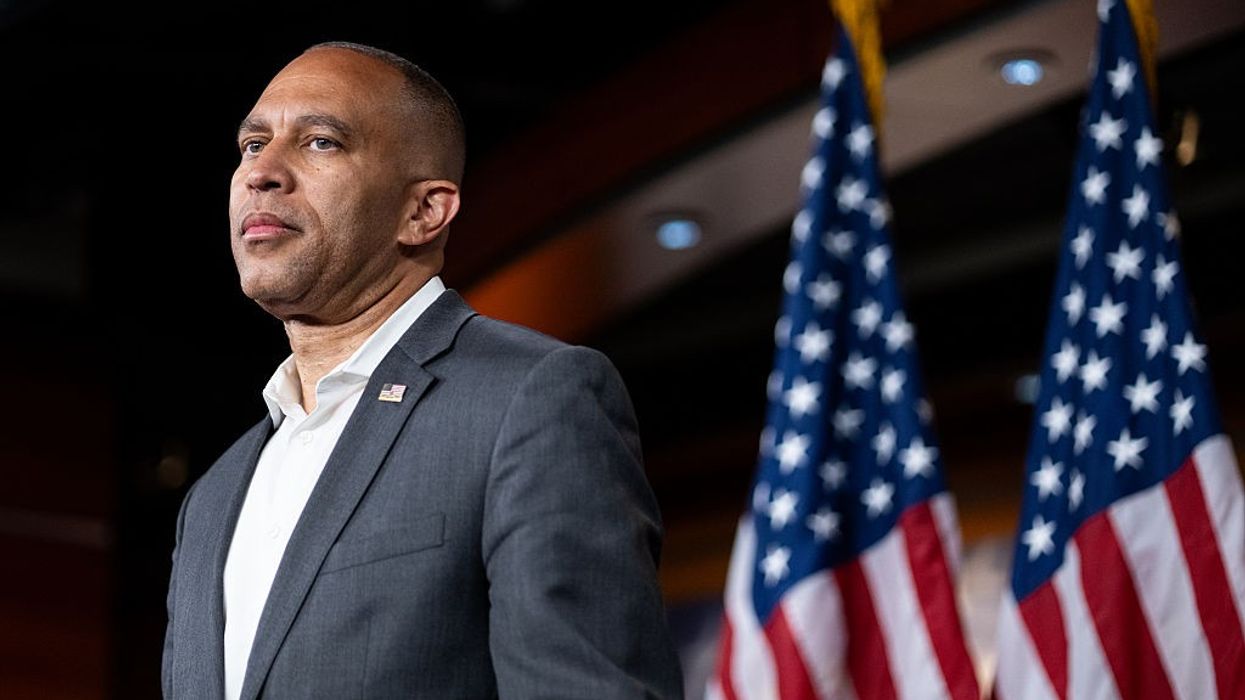
Twice Democrats lost to the corrupt, chronically lying, corporatist, and failed gambling czar Donald Trump when you should have defeated him and his GOP handily. It is time for serious introspection, a change of attitude, and tactics.
August 31, 2026
Rep. Hakeem Jeffries
U.S. House of Representatives
2267 Rayburn House Office Building
Washington, DC 20515
Dear Rep. Jeffries,
Like other civic advocates, I read the New York Times and Wall Street Journal articles about your private meeting with Jared Kushner, Trump’s amateur Ambassador at Large, who is also furiously seeking investment opportunities while abroad. It is not difficult to read between the lines. You’re seeking a deal, should you be chosen as House Speaker in January. Trump also wants a deal as—you will hold off any Impeachment initiative, and in exchange, he will not oppose some undefined bills that you want to pass.
You can rebut this supposition by announcing very soon that you will seek to impeach Trump once the Democrats take over the House. About 90% of Democratic voters and two-thirds of independent voters want “Impeachment Now” (see Celinda Lake’s polls.) This is what the Bar of the City of New York urgently concluded, following two detailed reports on Trump’s executive violations of law in December and March. (See “The Abuse of Presidential Power and Breach of Public Trust” and “The Crisis Deepens: Congress Must Act Now to Address Escalating Abuses of Executive Power”.)
When asked about your stand on Impeachment in April by a reporter, you replied: “I don’t want to get ahead of that discussion.” What? Don’t want to get ahead of 90% of Democratic voters? Don’t want to move to fire an outlaw, corrupt, violent, raving racist, and serial sexual abuser of women? A dangerously unstable dictator (see April 30, 2026 Congressional Record) who is wrecking, endangering, and weakening America, making life more unaffordable for tens of millions of lower-income Americans and their children, many of whom are losing their Medicaid, food stamps, and health and safety protections? You are signaling that Trump has two more unchallenged years to destroy our Republic and the Constitution for which it stands. Adamant in drafting our Constitution to block any “monarchs,” what would our Founding Fathers have done?
Observers of your brand of politics know your game, Mr. Jeffries. Nonetheless, some weeks ago, your Executive Director Gideon Bragin told a respected intermediary that he was okay with receiving my suggestions for landsliding the GOP. You were sent a few pages, which your office received, but did not even courteously acknowledge, much less respond substantially. This is typical of the Democratic leadership’s incommunicado attitude toward independent citizen groups. (See the report The Incommunicados.)
Being control freaks, the Democratic leadership does not like “mandates.” Which is why they do not like popular Pledges, Compacts, or Contracts for the American People or for American Workers. When former Secretary of Labor, bestselling author, and popular podcaster Robert Reich sent his Party’s leaders a list of “What Democrats Must Pledge to America,” in December 2025, he probably expected a response. To date, not a single response from anyone in the so-called leadership of the Party. Many of his proposals are New Deal updates that test well with liberals and many conservative families where they live, work, and raise their families. NO RESPONSE!
We know the game, Mr. Jeffries. But in these times and with some stunning primary elections, it is a game that won’t be as easily played with impunity as in previous years under Speaker Pelosi. You may wish to refine your political antennae and answer the question most asked by voters, which is, “What does the Democratic Party stand for?” other than scapegoating when it loses to the most cruel, corrupt, anti-worker, corporatist GOP in history.
Having huddled with the genocide-backer Kushner, how can you continue not to meet with National citizen groups like Public Citizen, Common Cause, People for the American Way, Pension Rights Center, and others familiar to you as long-time advocates for policies that the past Democratic Party used to find commendable and support on Capitol Hill? No more excluding them, despite what your corporate-conflicted consultants advise. Also, no more of your silencing House Democrats from even talking about Impeachment. Under Rule 9, there will be a vote on an impeachment resolution after Labor Day, which you should support and NOT join Trump in opposing. (See Rep. John Larson’s H.Res 1155 and the April and July citizen impeachment symposiums on Capitol Hill.)
Ask yourself, is Trump going to continue becoming worse—violently and cruelly worse—both domestically and abroad without a mounting deterrence as in a fast-rising Impeachment Drive?
Would not such an Impeachment Drive led by the Democratic Party galvanize its voters—seeking fighters on their behalf—and increase voter turnout for a decisive November victory, not a marginal, unworkable majority?
If your answer is YES to both questions, what are you waiting for? If your answer is NO, what are you waiting for? More destruction of the living conditions of the American people, including loss of life to blatantly neglected natural disasters, the closure or depletion of crucial scientific alert and research programs, political brutalities, Trump’s inflation and job losses, and his “endless wars” and attacks and crazed military threats abroad? So you can cut deals with a treacherous Trump with his record of betrayals?? (See New York Times: “The Autocracy Index: The editorial board tracks 12 markers of democratic erosion” and “Trump’s Broken Promises, in 11 Charts”.)
You and your Party need to be seriously introspective about your mounting political disasters, the independent exclusion of input from progressive citizen groups and progressive labor unions that decades ago so assisted the Party’s better angels in enacting key legislation. (See When the Senate Worked for Us: The Invisible Role of Staffers in Countering Corporate Lobbies by Michael Perschuk, Vanderbilt University Press).
First introspection: Twice Democrats lost to the corrupt, chronically lying, corporatist, and failed gambling czar when you should have defeated him and his GOP handily. You and the Party stubbornly want to win, having years ago electorally abandoned almost half the country (red states), but without upsetting your paymasters. These are principally Wall Street, AIPAC and the military industry. Your corporate-conflicted consultants, to whom you have contracted out so much of the Party’s campaigns, lean strongly in that direction.
Back in 1994, I called the savvy Elizabeth Moynihan. She told me she had just fired Senator Pat Moynihan’s re-election consultants and is taking over management of his campaign. She firmly added: “These consultants are destroying the Democratic Party.”
How do you explain the Democratic Party’s failure at numerous critical junctures to stop Trump’s presidential campaigns? Trump’s energy levels to overcome impossible odds in 2016 and even more in 2024 tower above the feeble, indecisive ways of the Democratic Party. Your Party totally bungled, letting Trump continue to destroy our Democracy despite serious indictments, becoming a convicted felon, being sued, and being credibly charged with sexually abusing five dozen women. Trump is a foul-mouthed racist/bigot who constantly used defamatory language, such as against fallen GIs in World War II (a serial draft dodger, no less), and who was profiteering in suspect manners. He was low in the polls, and was widely condemned for his initiatory role inciting the January 6, 2020 insurrection in Congress, taking lives and causing injuries of many defending Capitol Police and other casualties. Still, he defeated your Party in 2024!
Who could overcome such odds and win the presidency? Someone with towering egomaniacal energy, opposed by the anemic, indentured Democratic Party that refuses to replace losers with new progressive energy. Indeed, losers get promoted, such as heading the Democratic National Committee, while presumptive presidential winners like Bernie Sanders in 2016 and 2020 are sabotaged by Party apparatchiks and their large donors.
More basically, the Party has become about raising money in place of credibly advancing progressive policies and programs. The almighty campaign dollars leave raising the paltry federal minimum wage ($7.25 per hour) to one-liners that your voting public doesn’t believe, or not taking up authentic full Medicare for all – which you just stunningly came out against!! Throwaway one-liners, like cracking down on corporate crooks, are not believable, because of the Party’s terrible record regarding corporate crime waves and massive corporate welfare. The same is true for not challenging Trump’s enormous 2017 tax cuts for the rich and big corporations when the Democrats took the House in January 2019. House Ways and Means Chair Richard Neal (D-MA), astonishingly announced on opening day that he was not going to reopen these deficit-ballooning tax cuts, depriving investments in public works and services throughout communities nationwide.
Then, of course, there is the long-sustained Democratic Party of overseas Empire, of a runaway unaudited – as long required by federal law – military budget and the aiding and abetting of Netanyahu’s genocidal mass murder and starvation of infants, children, mothers and fathers in Gaza, using U.S. bombs you voted for to drop the TNT equivalent of over eight Hiroshima bombs on that tiny enclave, the geographical size of Philadelphia, crowded with defenseless families having nothing to do with October 7, 2023, and the prior bombing raids by Israeli F-16s in the previous decades. Still, you proudly remain one of the top beneficiaries of AIPAC, which is the reason you and Senator Chuck Schumer (D-NY) didn’t endorse your newly elected Mayor, Zohran Mamdani.
More introspection may lead you to ask yourself whether you are up to leading the House Democrats in their immense and immediate tasks of policy and program restorations and adopting our Constitution’s mandated Congressional independence from the Presidency for the protection and advancement of the livelihoods, peace and freedoms of the American people. There is no indication that you are so willing and prepared. Unfortunately.
Your response is invited.
Sincerely,
Sincerely,
Ralph Nader
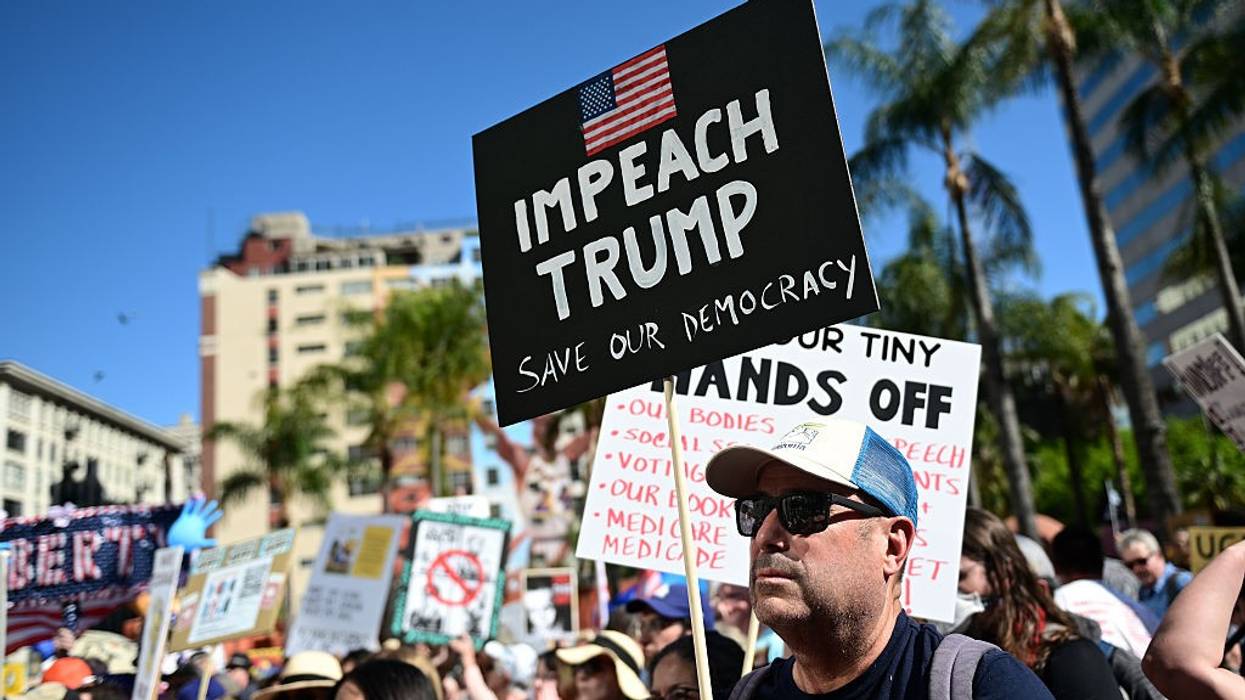
"The framers anticipated this kind of abuse of executive power," said one legal expert. "They gave Congress the remedy: impeachment."
Congressman Al Green on Monday filed articles of impeachment against President Donald Trump over the twice-impeached Republican's violent campaign to round up and deport immigrants, which has killed citizens of various countries, including the United States.
Green, a Texas Democrat who has repeatedly pushed to impeach Trump for a range reasons during his two terms, argued in his new resolution that "our country and the lives of people within it are at risk as President Donald John Trump is a great threat to the United States democratic republic, its Constitution, and democracy."
"He is abusing the powers of the presidency by operating United States Immigration and Customs Enforcement (ICE) and Customs and Border Protection (CBP) as his vicious, quota-driven, unaccountable paramilitary police forces," Green's resolution states, "transgressing with anonymity and secrecy, assaulting people, committing and covering up unjustified killings of civilians (including Renée Good, Alex Pretti, Lorenzo Salgado Araujo, and Johan Sebastián Durán Guerrero) with impunity (acting as judge, jury, prosecutor, and executioner), terrorizing communities, and brazenly and wantonly devolving the United States democratic republic into an authoritarian regime, where unjustified killings and coverups by ICE and CBP are normalized."
Despite agents with ICE and CBP killing Good and Pretti, both US citizens, as part of Trump's anti-immigrant operation in Minnesota's Twin Cities in January, the Republican-controlled Congress passed and the president signed a $70 billion bill for the Department of Homeland Security agencies in June.
Roughly a month later, an ICE agent fatally shot Salgado Araujo, a Mexican man, in Houston, Texas. Less than a week after that, another agent similarly killed Johan Sebastián Durán Guerrero, of Colombia, in Biddeford, Maine. Deaths on US streets and in immigrant detention centers have fueled anger and calls for reform—or even abolishing ICE—from the public and some elected Democrats.
The resolution introduced Monday is the first from Trump's second term to mention his anti-immigrant policies. Green—who has served in the House of Representatives for over two decades but is set to leave his seat at the end of this session after losing a May primary—has introduced articles of impeachment three other times since the president's return to power last year. Reps. Shri Thanedar (D-Mich.) and John Larson (D-Conn.) have separately put forward resolutions during this term.
Green and other Democrats also introduced impeachment articles during Trump's first term. The president was first impeached for abuse of power and obstruction of Congress in December 2019, then again after his supporters stormed the US Capitol on January 6, 2021. However, Trump—the only president to be impeached twice—was not convicted by the Senate either time.
Polling conducted in March by Lake Research Partners for Free Speech for People (FSFP)—a legal advocacy group behind a campaign to impeach Trump again—found that 52% of US voters support a third impeachment, including 84% of Democrats, 55% of Independents, and 14% of Republicans. Leaders at the organization welcomed Green's new articles on Monday.
"The president of the United States has no authority to wield armed federal agents to intimidate communities, suppress constitutional rights, or consolidate political power on American soil," said FSFP chairman and senior legal adviser. "The framers anticipated this kind of abuse of executive power. They gave Congress the remedy: impeachment."
John Bonifaz, FSFP's president and co-founder, declared that "this is an existential moment for our nation and our democracy. We either have a Constitution, or we don't."
"Donald Trump has already engaged in multiple abuses of power," he stressed. "We call on our elected officials in Congress to carry out the mandate of their oath to protect the Constitution at this critical time by standing up and demanding impeachment proceedings against this lawless president."

Trump’s plans to steal the 2026 midterm elections are already underway. It's not alarmism to say this. He is saying it out loud and the Republican Party has shown just how far they will go for this fascist. If people do not mobilize now, it may be too late.
You’d never know it by the title “Dancing in the Dark,” but the Washington Spectator’s recent investigation is about the various steps (mostly illegal) Trump is taking, including the use of enforcement tools and violence, to prepare to reverse any overall Democratic victory in the November Congressional races. The authors, Mark Medish and Joel McCleary, believe Trump needs such a coup to save himself from impeachment, congressional investigations and subpoenas seeking more proof of crimes throughout his lawless, corrupt, dictatorial regime.
Currently, Trump’s polls are so low that he is endangering enough Republican seats in the House and Senate to give the feeble, corporate money-indentured Democratic Party a chance to win control of Congress. This is precisely what Trump fears, even though he has control of the Executive Branch and the immunity given him by six Injustices of the Supreme Court. Take note, he knows that impeachment and removal from office in the Senate are final, not reviewable in the federal courts.
In 23 single-spaced pages, Medish and McCleary walk readers through the events, directives, ballot seizures, and draft emergency orders Trump could use to assert federal control over a midterm election and use a domestic paramilitary force of unprecedented size and budget. Trump and his minions have already expanded their dictatorial control of our democratic institutions. (See: The V-Dem Institute’s Democracy Report 2026.)
To obstruct the vote in key precincts, then fabricate a need for national-security powers to purge and miscount ballots, falsely charge fraud, illegally seize ballots, threaten precinct workers, and claim without evidence foreign interference are preparations for instant escalation.
They then describe the “Devil’s Accordion File” meaning “the elements of a ramified, radical strategy to hold on to power at almost any cost as we approach the test of the 2026 elections…” Although they describe Trump as a brilliant mastermind concentrating extraordinary power in his hands, they remind us that he is also in “full command of his office, directing the Justice Department, the FBI, ICE (the largest new federal police force in American history) the IRS, the Securities and Exchange Commission and the Federal Communications Commission, the intelligence community and the armed forces. [Under total acolyte Pete Hegseth.] He is using each agency in a coordinated attack on his political adversaries in ways that would have been dismissed as fantasy only a few years ago.”
Trump’s iron grip on institutional controls was further strengthened by the Trump/Musk DOGE criminal enterprise which tore through federal agencies in 2025, closing some, shredding others, grabbing huge troves of personal data on Americans, and destroying the non-partisan civil service that could have used federal laws to resist his coup d’état.
Focusing on swing electoral districts—including those politically redistricted earlier this year—and on the various junctures between now and the final certification process in the House of Representatives on January 3, 2027, the authors write that “the political will, personal motivation, legal architecture and technical infrastructure by now [are] all in place.” They could have added Trump’s unlimited pardon power to facilitate the violence and theft by his criminal operatives.
Trump has also precluded any opposition from corporations and the “contented classes” with tax cuts, non-regulation, subsidies and other inducements from which his family also lavishly benefits. (In 2025 Trump took in $1.1 million an hour when measured over a 40-hour workweek —see my column $1.1 MILLION AN HOUR!!—Trump’s Personal Profit in 2025.)
To obstruct the vote in key precincts, then fabricate a need for national-security powers to purge and miscount ballots, falsely charge fraud, illegally seize ballots, threaten precinct workers, and claim without evidence foreign interference are preparations for instant escalation.
Trump tried a dress rehearsal in his July 16 national televised address, pushing his Save America Act, which is stalled in Congress. The speech “bombed” drawing widespread criticism, ridicule and dismissal even by the mainstream media along with some of his Republican partisans.
Undeterred and personally deeply fearful of losing, Trump plunges ahead. He makes the notion that “it can’t happen here” the Achilles heel of Democratic Party opposition, which had better prepare—and work overtime.
The authors warn: “The full election subversion strategy mixes subtlety and brutality, subterfuge and open tactics. It represents unprecedented intensification and escalation of the attack on our once seemingly settled Constitutional order…”
Led by Stephen Miller, his fascistic White House adviser, Trump and his Injustice Department have already launched attacks on so-called “antifa” advocates labeling them “domestic terrorists.” Trump could falsely use this moniker to include any of his selected political opponents. Remember, in 2025, he called for the execution of six Democratic Members of Congress, including two Senators, for reminding U.S. soldiers that they have under Army law a legal obligation to resist illegal orders from their superiors. Hegseth filed charges against Senator Mark Kelly (Dem. Ariz.), a retired Navy Captain for making such a statement; the case was dismissed in federal court.
Trump has often mentioned using the vaguely worded Insurrection Act, which he claims could enable him to quell unrest, including by using unrest as the pretext for his own false-flag operation. Imagine the chilling effect of Trump arbitrarily and illegally deploying federal soldiers to a city or region.
In their conclusion, “What Is to be Done,” the authors have numerous suggestions for the citizenry and state officials. However, they omit the need to mount an Impeachment drive, which, as it intensifies, can serve as a deterrent to Trump. He knows that his blatant disregard for the Constitution and his mounting impeachable offenses could further provoke the public and Congress to use this final remedy provided by our Founding Fathers—telling Trump: “You’re Fired.” This is Trump’s biggest nightmare. Remember the stubborn Richard Nixon, who after winning 49 of 50 states in 1972, was forced to resign when his Republican base collapsed in Congress before the 1974 elections.
In my podcast interview with Joel McCleary, I suggested that he and his allies (he served in the Carter White House) press some House Democrats to conduct a public “shadow hearing” on Impeaching Trump, an effort that polling shows is already supported by 90% of Democratic voters and two-thirds of Independents. (See our July 22, 2026 Symposium on Impeachment.) He replied: “I think that’s a fantastic idea.” We’ll see if these savvy authors can move from words to action. As a 14th century Chinese philosopher once wrote: “To Know and Not to Do is Not to Know.”
Furthermore, the group Indivisible seems to be planning another mass protest march in the Fall. It should replace its weak, obsolete name of “No Kings” with “Impeach Trump Now.”
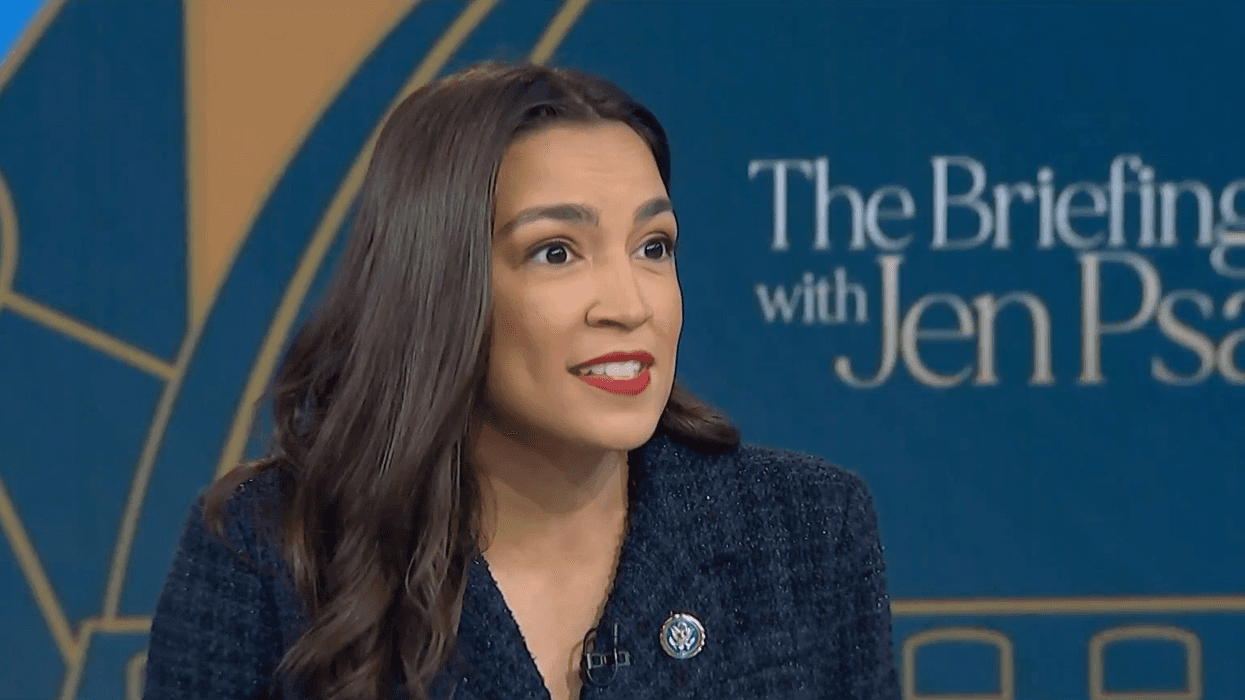
The New York Democrat's comments came in response to the Republican Speaker of the House telling a group of right-wing supporters he "runs the protection program" for the president.
Democratic Congresswoman Alexandria Ocasio-Cortez of New York ripped into Republican Speaker of the House Mike Johnson on Friday night for saying that Republican control of Congress is the only thing keeping President Donald Trump from being held to account for his numerous scandals and abuses of power during his second term in the White House.
Asked about comments made by the Speaker earlier in the day, Ocasio-Cortez told MS-NOW's Jen Psaki that Johnson characterized future efforts to investigate or accountability for possible misdeeds or corruption by Trump, his family members, or members of his administration "as though it’s some partisan witch hunt," she said. "But if you don’t want to be prosecuted for crimes, don’t do crimes."
Ocasio-Cortez, often referred to by her initials AOC, had been asked about remarks Speaker Johnson made at the annual summit of the right-wing Faith and Freedom Coalition, a group with close ties to Trump and the Christian nationalist movement that supports him.
“If we lose the midterms, heaven forbid, these Democrats—y’all, impeachment isn’t even the real concern,” Johnson told the crowd. “They will turn every committee of Congress into an investigative body, and they’ll go after the president’s family, the Cabinet, his donors, friends, half of you in this room will be targeted.”
The House speaker added, “I run the protection program. We’ll take care of you, OK?”
Johnson: If we lose the midterms, these Democrats will turn every committee of Congress into an investigative body, and they'll go after the president's family, the cabinet, his donors, friends, half of you in this room will be targeted. I run the protection program. We’ll take…
— Acyn (@Acyn) June 26, 2026
Johnson's remarks unsurprisingly sparked a series of critical reactions, including AOC's.
"Mike Johnson saying the quiet part out loud: protect the powerful. Screw everyone else," said Rep. Malcolm Kenyatta (D-Pa.).
"The Speaker of the House just talked like a guy guarding a operation that can’t survive daylight," said Rep. Mike Levin (D-Calif.). "Because that’s exactly what he’s doing."
"You don’t need a 'protection program' for people who did nothing wrong," Levin continued. "You need one when you’re afraid of what the books would show. Congress is supposed to be a check on power, not the muscle protecting it. Johnson is a total disgrace to the office. November can’t come fast enough."
What Johnson is "talking about," explained AOC in her interview with Psaki, is a Republican Party in Congress "running a protection racket" for Trump and his cronies, both in and out of government.
"And we are already seeing that this Trump administration has run what some have called one of the largest pedophile protection programs in American history," she continued, referencing the scandal surrounding the disgraced convicted sexual predator Jeffrey Epstein.
AOC: Mike Johnson paints this as though it’s some partisan witch hunt. But if you don’t want to be prosecuted for crimes, don’t do crimes.
And he’s talking about running a protection racket. And we are already seeing that this Trump administration has run what some have called… pic.twitter.com/ZscwBUJNgA
— Acyn (@Acyn) June 27, 2026
"And so when Mike Johnson tells a group of wealthy donors, I'm the only thing standing between you, and a consequence that should rattle at the conscience of every American," she said. "What he wants to do is create—or rather, not even create, because it’s already been created—but protect a class of impunity in America that says, 'You can commit whatever crime, and so long as you pay a check to us, we will protect you.' And that is a model of extortion in American politics. And you know what? That’s their pitch."
Melanie D'Arrigo, executive director of the Campaign for New York Health, responded to Johnson's comments by detailing just a few examples of possible corruption by Trump that deserve much more scrutiny and congressional oversight.
"Trump has almost tripled his net worth during this term. His sons bought drone companies and immediately received military contracts right before Trump started another war. Trump threw a crypto contest to see who could buy the most of his meme coin, with the prize being exclusive access to him in his presidential capacity," D-Arrigo noted.
"His son-in-law is getting billions in business deals from the countries and oligarchs wanting political favors. Large donors are spending millions to get pardons and investigations dropped. Trump is still actively covering up the Epstein files," she added. "And these are just a handful of the things that were publicly reported on—imagine what we don't know about yet."
D'Arrigo called on voters to help "flip the House" away from the Republicans and investigate these examples of grift and corruption as well as others.

As wild and crazy Trump becomes more of a political disaster for the GOP in November, Republicans will want to save their own political skins over Trump’s.
Public support for the Impeachment of Donald J. Trump is growing by the day. A March 9, 2026 Task Force report by the New York City Bar – dominated by powerful corporate lawyers – was titled “The Crisis Deepens: Congress Must Act Now to Address Escalating Abuses of Executive Power.” The recommendation – Immediate Impeachment of Donald Trump. I don’t recall a division on such a serious domestic policy stand between citizen groups, allied with the Democratic Party on one side and the public and a major corporate bar association on the other side.
Several leaders of national progressive citizen groups are counseling delaying such a drive until after the election in anticipation of a Democratic Party victory in both the House and the Senate. This mirrors what the feeble Democratic Party leadership (Hakeem Jeffries and Chuck Schumer) are telling their increasingly restless rank and file in the House and Senate (see the April 11, 2026 article in the New York Times by Annie Karni, “Democrats Warm to Idea of Removing the President”).
Meanwhile, as Trump’s illegal and erratic daily behavior and executive dictates worsen the wrecking of our country, the present majority of Americans favor impeaching Trump and removing him from office is nearing 60 percent.
Consider the pluses for launching an Impeachment drive supported by the people focused on Capitol Hill and a Congress controlled by the Republicans, who are likely to block any vote or formal Committee hearings.
1. It is a great campaign issue – tying together in an authentic way – see Res.1155 – all of Trump’s vicious shredding of the people’s health, safety and economic benefits and constitutional freedoms. Majorities despise openly corrupt Trump, whose support in polls is slumping, but many voters also don’t trust or believe in the wavering Democratic Party, which can’t come up with a credible compact that addresses the needs of the people and a set of political commitments embodied in specific pending bills. A compact with voters should be convincingly advanced and emblazoned across the land.
H.Res.1155’s thirteen Impeachment Articles, introduced by Cong. John Larson (D-CT) and their connection to “kitchen-table necessities” must be highlighted in this year’s political campaigns.
The people want fighters for them who care for them in Washington, D.C., using the citizens’ delegated powers and tax revenues in the interest of the people, the families, and the children. “Impeachment” is our founding fathers’ word for “YOU’RE FIRED,” a phrase used by Tyrant Trump against millions of civil servants, contractors, and other people working to help make a better country.
Regardless of their political labels, just about all families want fair play, justice, protections, and opportunities where they live, work, and raise their children. Articles of Impeachment are constitutional-level MANDATES for a political party and candidates to run on, replacing insincere throw-away lines and bloviating rhetoric so despised by a disgusted populace.
2. Making Impeachment front and center educates and inspires people about how central this Constitution of ours is to their daily lives. The mission of our government is to “promote the general welfare.” Only Congress can spend your money, not the president. Only Congress can take us from peace to war, not the president. Only Congress can define the authority entrenched in the executive branch, not the president or six “Injustices” on the Supreme Court for life. Only Congress can tax or not tax, not the president wielding arbitrary tariffs, charging fees, or riddling the tax code with loopholes and escapes for the super-rich and powerful.
Only “We the People,” not “We the Corporations,” nor “We the Congress,” is in the Preamble to our Constitution, making us the fundamental sovereign power in our country.
3. A grassroots Impeachment movement – already petitions are circulating (see impeachtrumpagain.org) – signals deterrence if Trump, with his rabid, dangerous personality, is thinking of more major disruptions of the November elections. Foreshadowing his invoking the Insurrection Act to take over the gears of the states’ election machinery, the fevered Trump said in January, “…we shouldn’t even have an election” in November. This is subversion of our Republic, and the Constitution for which it stands, beyond the wildest imaginations of our historic overseas enemies.
The most promising reform movements are often sparked and strengthened by the perpetrating outlaws providing continual, incriminating evidence of their own lawlessness. That is the essence of the foul-mouthed, lying, violent, corrupt, delusional, egomaniacal Trump. (See the April 30, 2026 statement from medical professionals in the Congressional Record – “Medical Concerns About President Donald J. Trump and His Fitness For Office.” Remember, with Trump the worst is yet to come as he continues to double down. Even a conservative columnist for the Washington Post, military historian Max Boot, is fearful of what might come abroad from the zigzag actions of an impulsive, fact-deprived Trump with his finger on the nuclear trigger.
All this is to say that what the Democratic Party leadership thinks is prudent to delay until after the election is in reality a very risky position. They are barely in contention to recover the Senate, even with the advantage of having far fewer seats (12) up for election than do the Republicans (20).
The Democrats, who are comfortable taking big bucks from giant corporate PACs, should run WITH and FOR the people. The time for political posturing is over. If their “loser leaders” don’t step aside, they should at least free the rank and file, including the progressive primary winners, to show the way to landslide, by far, the worst GOP in history. That means, for starters, let a willing Rep. Jamie Raskin, ranking member of the House Judiciary Committee, have “shadow hearings” on Trump’s many ongoing impeachable offenses. Such a hearing would draw prominent witnesses and great media attention to further galvanize the people.
Since all Democrats on Capitol Hill, if asked, would say “Yes,” Trump should be impeached, but the Party’s upper echelons say taking it to a vote can’t go anywhere so long as the GOP runs Congress. The push for Impeachment doesn’t have to reach a vote. As wild and crazy Trump becomes more of a political disaster for the GOP in November, Republicans will want to save their own political skins over Trump’s.
That’s what happened with defiant Nixon in 1974, after the one-time Watergate scandal, when the GOP jumped ship and forced his resignation. Trump’s crimes are far worse than Nixon’s and intensifying every day. As in 1974, it is before the elections when the GOP feels more insecure. Today Republican members of Congress know their majority is at risk.
In raw politics, sometimes it doesn’t take a vote. It just takes pressure from a President’s Congressional base and, for Tiring Trump, the public humiliation that comes with abandonment.
In addition to all its collateral benefits, an impeachment drive is a road to Trump’s resignation.

Trump is an unstable lame duck outlaw, including violating congressional authorities. He must be stopped.
Give Dangerous Donald credit. Coming off the floor of his 2020 defeat, under several federal and state indictments, a convicted felon, accused by over sixty women of sexual abuse or worse, his endorsed candidates having lost in the 2022 elections, the Trump business brand wilting along with his polls, Trump displayed more vengeful energy and cunning than the entire feeble, defeatist Democratic Party apparatus. He roared back against all odds in 2024 as an elected dictator to implement his declaration that he “can do whatever I want as president.”
Trump’s wrecking, endangering, and weakening of America worsens by the day, as he doubles down and calls his critics “deranged,” “demented,” “wackos,” “weak,” “low-IQ,” “crazy,” and “treasonous.” Moreover, his vicious expletives expand by the day.
However, the tide is finally turning against the failed gambling Czar and Netanyahu dittohead. Trump’s relentless greed is starting to undermine his dwindling support, despite his control of the Republican primaries. The headlines tell the story of his decline, and not just in the polls, with approval ratings down to 35%. The majority of Americans polled—nearing 60%—want him impeached and removed from office. This demand comes without the backing of the Democratic Party leadership, still skittish about mounting an Impeachment Drive. The case for Impeachment is aided and abetted daily by Trump’s outrages.
Let’s go to the revealing Headlines:
“Millions are Expected to Lose ACA Coverage” (Washington Post, May 20, 2026).
Due to Trump’s GOP ending subsidies.
“Fast-Moving Ebola Outbreak May Prove Difficult to Contain” (Washington Post, May 20, 2026). “People Will Die of Ebola Because of U.S. Cuts to Global Health” (New York Times, May 22, 2026).
Significantly due to Trump cutting USAID’s funding, monitoring, and disbanding critical expert teams.
“Mosque killings follow rise in anti-Islam voices” (Washington Post, May 20, 2026).
Led by chief Islamophobe, Donald Trump, from Day One in 2017.
“Trump’s Deal with Trump,” and “Prison to Pardons to Payouts: Rioters Rejoice” (New York Times, May 21, 2026). “I.R.S. Ordered to Drop Audits Against Trump as Part of Payout Deal” (New York Times, May 20, 2026).
Trump uses the government to reward his lawless supporters and wants to put himself above the law.
“Trump’s War is Punishing the Working Class” (New York Times, May 18, 2026).
Trump cares far more about the super-rich than the working class.
“EPA Wants to Repeal Limits on ‘Forever Chemicals’ in drinking water” (Washington Post, May 19, 2026), “Coal’s Comeback Fouls the Air With Resurgent Levels of Toxic Mercury” New York Times, May 13, 2026), “Chemical Board That Trump Wants to Remove Warns on Disaster Rules’ Rollback” (New York Times, May 18, 2026).
While a deadly chemical spill in California forces evacuation of 50,000 residents in Orange County.
“Trump Ramps UP Lawlessness on the Seas” (Washington Post, May 5, 2026).
Speaks for itself.
Now comes the headline, “A tough week for Trump on Capitol Hill, as Republicans deal him setbacks” (Washington Post, May 23, 2026) that must worry Trump. The $1.8 billion slush fund for violent, convicted felons and immunity for Trump and his extended family from IRS audits and enforcement proved too much for Trump lackey Majority Leader John Thune (R-SD). At the same time, Trump endorsed Texas Attorney General Ken Paxton, a crook impeached by his own Party in the Texas House, an adulterer under suit by his wife for divorce (see the Post article of May 19, 2026) over former judge, Sen. John Cornyn, popular with the Senate GOP. Earlier, Trump came out against Sen. Bill Cassidy (R-LA), helping Cassidy lose the primary. To Thune and allies, a president coming out against his own incumbents is treachery.
So, the water in the Senate GOP’s cauldron may be starting to boil. They know about Nixon’s experience in 1974 coming off winning 49 out of 50 states in the 1972 election. With Nixon’s polls sinking after the Watergate scandal (a quaintly modest one-time crime, compared to Trump’s hundreds of continuing scandals), the Congressional GOP saw itself sinking in the 1974 elections. A delegation of GOP Senators went to the White House and told Nixon, “Mr. President, your time is up.” Nixon resigned days later.
One can envision something similar today. Trump is an unstable lame duck outlaw, including violating congressional authorities. Republicans have to face the voters in November. They are likely to lose the House. The Senate has 20 Republican Senators up for election compared to only 12 Democrats. They have a three-vote margin now. Trump, given his economy, his chosen wars, his unrestrained greed and self-enrichment, is making prospects of a Democratic win in the Senate more possible.
Had the Democrats not ceded half the states (the red states) to the Republicans decades ago, leaving behind remnants of their organized presence, almost all the Republican Senators running this year could be at risk. Instead, only about six have competitive races—thank you, obtuse Democratic Party.
In any event, most politicians, however servile they may have been to a President, prefer saving their own political skins to falling on their swords for an unpopular president losing his cognitive grip and voter sensitivity by the day. (See the April 30, 2026 statement from medical professionals in the Congressional Record – “Medical Concerns About President Donald J. Trump and His Fitness For Office.” Do you know any other president who would say “I don’t care about the financial condition of Americans” in the midst of surging inflation, rising food, health care, rental, and gasoline prices? A president who is using the White House to massively enrich himself and his family. (See Cashing in on the presidency: here).
Unless Hakeem Jeffries and Chuck Schumer open the Party to input from labor and advocacy groups to help sharpen a stronger, authentically advanced agenda (Compact for America, anyone?), the Democrats may eke out a 51 to 49 win, with erratic John Fetterman (D-PA) playing the role of Senator Joe Manchin (D-WV) as the swing vote. This will give the tie-breaking power to Vice President J.D. Vance.
One slim ray of hope: The Washington Post reported on May 17, 2026, that “House Minority Leader Hakeem Jeffries (D-New York) has directed the chamber’s Democratic policy committee to host listening sessions with members, with voters and with advocacy groups to inform a party-wide agenda…”
Even if you don’t believe Jeffries, rush through that open door with your proposals, as we will with the recommendations of 24 civic leaders (see winningamerica.net). My winning get-out-the-vote agenda is there as well. (See my column: “Somersaulting Voters: Stopping Rabid Gerrymandering,” May 15, 2026).
Contact Rep. Hakeem Jeffries – https://jeffries.house.gov/ / 202-225-5936.
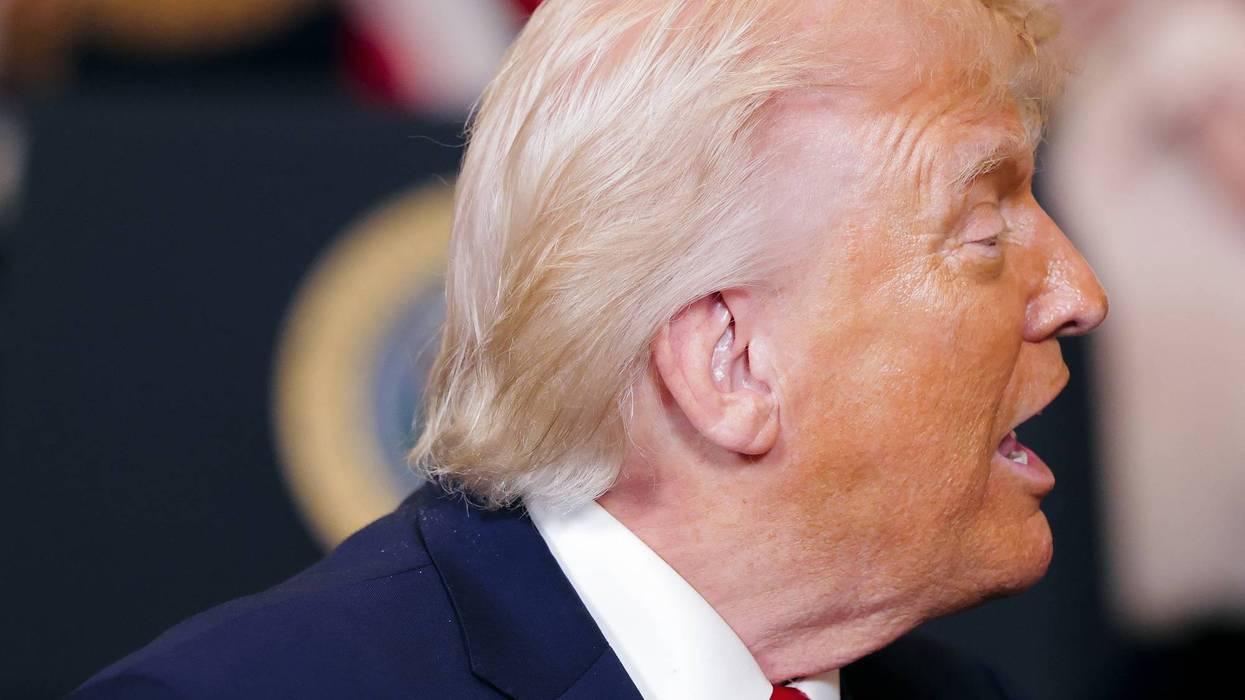
He’s been losing it for a while now, but in the last few months it’s become far worse.
It’s a catastrophe on the way to becoming a cataclysm.
Trump is rapidly going stark-raving mad. He’s a clear and present danger to the United States and the world.
Earlier this week he lashed out at The New York Times after its chief White House correspondent questioned his mental health and stability and pointed to his “erratic behavior and extreme comments.”
“HAVE THEY NO SHAME? HAVE THEY NO SENSE OF DECENCY?” Trump posted in CAPITAL LETTERS about the Times, inadvertently echoing the famous words of Joseph Welch when standing up to Joseph McCarthy during the Army-McCarthy hearings of 1954. Trump went on to take issue with the Times’s coverage of his war in Iran rather than his mental state, as if to prove the Times’s point.
He keeps saying he’s “won” the war with Iran, although he’s never said what “winning” means. At one moment his goal is to free Iran’s people. At another, it’s to end Iran’s capacity to produce a nuclear weapon. At another, to destroy Iran’s missiles. At another, to achieve “regime change.” At another, to open the Strait of Hormuz (which was open before Trump started his war). At another, he says he’ll know the U.S. military operation in Iran is over when he feels it "[in] my bones.”
We are all endangered. What happens if, in a demented rage, he hurls a nuclear bomb? Who is watching the “football” with the nuclear codes? Who’s ready to stop him to save the world?
He can’t even stay on the same subject for more than a few minutes. In the middle of a high-level Cabinet meeting about the war, he spends five minutes talking about his preference for Sharpie pens. He interrupts another Iran war update to praise the White House drapes.
He threatens that if Iran doesn’t reopen the strait, “a whole civilization will die tonight.” Then he says America doesn’t need the strait reopened. Then he says: “Open the Fuckin’ Strait, you crazy bastards, or you’ll be living in Hell - JUST WATCH! Praise be to Allah. President DONALD J. TRUMP.”
He calls the Pope “WEAK on Crime, and terrible for Foreign Policy” because the Pope wants peace. He posts an AI-generated picture of himself as Jesus, then says he was only depicting himself as a physician.
He won’t give up on his illegal and dangerous (for the economy) criminal investigation of Fed Chief Jerome Powell, claiming it’s not just about Powell’s renovations at the Fed but also a “probe on incompetence,” adding he’ll fire Powell if he doesn’t resign after his term as chair ends.
He claims that the United States “needs” Greenland. He confuses Greenland with Iceland. He says whales are being killed by windmills. He claims that he won all 50 states in 2020. That he defeated Barack Obama in 2016. He says the former chair of the Joint Chiefs of Staff should be executed. He goes on an eight-minute ramble about poisonous snakes in Peru. He boasts of ending a fictional war between Cambodia and Armenia.
After Robert Mueller’s death, he says, “Good, I’m glad he’s dead.” He blames the murders of Rob Reiner and his wife Michelle on “the anger [Rob Reiner] caused others through his massive, unyielding, and incurable affliction with a mind crippling disease known as TRUMP DERANGEMENT SYNDROME.” After Joe Biden is diagnosed with an aggressive form of Stage 4 prostate cancer, Trump says, “I’m surprised that the public wasn’t notified a long time ago because to get to Stage 9, that’s a long time” (there is no Stage 9 cancer).
He’s been losing it for a while now, but in the last few months it’s become far worse.
In 2017, 27 psychiatrists, psychologists, and other mental health professionals concluded in The Dangerous Case of Donald Trump that Trump’s mental condition posed a “clear and present danger” to the nation.
In 2021, members of Trump’s own Cabinet — horrified by the January 6, 2021, violence at the Capitol and Trump’s lack of urgency in stopping it — discussed whether to invoke the 25th Amendment to remove him from office due to mental incompetence.
During his 2024 campaign, he attacked Kamala Harris and then went into the stratosphere of his bonkers mind:
“She destroyed the city of San Francisco, it’s – and I own a big building there – it’s no – I shouldn’t talk about this, but that’s OK, I don’t give a damn because this is what I’m doing. I should say it’s the finest city in the world – sell and get the hell out of there, right? But I can’t do that. I don’t care, you know? I lost billions of dollars, billions of dollars. You know, somebody said, ‘What do you think you lost?’ I said, ‘Probably two, three billion. That’s OK, I don’t care.’ They say, ‘You think you’d do it again?’ And that’s the least of it. Nobody. They always say, I don’t know if you know. Lincoln was horribly treated. Uh, Jefferson was pretty horribly. Andrew Jackson, they say, was the worst of all, that he was treated worse than any other president. I said, ‘Do that study again, because I think there’s nobody close to Trump.’ I even got shot! And who the hell knows where that came from, right?”
It’s no longer possible to overlook his conspiracy-obsessed paranoia, his uncontrolled rage, his emotional volatility, his delusional claims, his vengeful rantings, his foul-mouthed posturing, his increasing detachment from reality.
Yet his Cabinet members and aides keep their heads down. Republican members of Congress pretend not to notice. His billionaire supporters dare not speak of his rapid decline. The media tries to “sanewash” his growing incoherence.
But some voices on the right — people who have long been supporters of Trump — have had enough.
Former Representative Marjorie Taylor Greene says Trump’s threat to destroy Iran’s civilization is “not tough rhetoric, it’s insanity.” Far-right podcaster Candace Owens calls him “a genocidal lunatic.” Conspiracy theorist Alex Jones says Trump “does babble and sounds like the brain’s not doing too hot.” A White House lawyer in Trump’s first term, Ty Cobb, says Trump is “clearly insane.” Former Trump White House press secretary Stephanie Grisham says “he’s clearly not well.”
The public is catching on. Fully 61 percent of Americans think he’s become more erratic with age, while just 45 percent say he is “mentally sharp and able to deal with challenges” (down from 54 percent in 2023).
For the good of the nation and the world, it’s time we face the reality: The most powerful man in the world does not have the mental capacity to do the job. Donald Trump — who has a family history of dementia — is increasingly unhinged.
We are all endangered. What happens if, in a demented rage, he hurls a nuclear bomb? Who is watching the “football” with the nuclear codes? Who’s ready to stop him to save the world?
Don’t wait. Impeach him now.

President Trump exhibits what forensic mental health experts have identified as the “Dark Triad” of personality traits: narcissism, Machiavellianism, and psychopathy. What this represents is a constitutional emergency.
Editor's note: The following letter was sent to the bipartisan leadership of Congress on Monday, April 13, 2026 in regard to recent rhetoric and actions taken by US President Donald J. Trump.
Senator John Thune
Senate Majority Leader, US Senate
Senator Charles E. Schumer
Senate Minority Leader, US Senate
Representative Mike Johnson
Speaker of the House, USHouse of Representatives
Representative Hakeem Jeffries
House Minority Leader, US House of Representatives
Dear Senate Majority Leader Thune, Senate Minority Leader Schumer, Speaker Johnson, and House Minority Leader Jeffries:
We write to you today with a sense of urgency that we do not use lightly. The behavior and rhetoric of President Donald Trump have crossed a threshold that demands the immediate and bipartisan attention of Congress. This is not a partisan assessment. It is a judgment grounded in observable fact, consistent professional assessment, and the constitutional responsibilities that your offices carry.
President Trump exhibits what forensic mental health experts have, across dozens of independent assessments, identified as the “Dark Triad” of personality traits: narcissism, Machiavellianism, and psychopathy. Rather than constituting a clinical diagnosis, this trait-based assessment is grounded in behavioral observation and is particularly useful for assessing the level of danger an individual poses in a political leadership position. We do not offer this as a clinical verdict. We offer it as the considered judgment of a substantial body of professional opinion, based on well-researched evidence that is consistent, accumulating, and impossible to dismiss.
What makes this more than an academic matter is what predictably happens when this personality structure collides with immovable obstacles. The clinical literature is clear: individuals with Dark Triad profiles, when confronted with situations they cannot control or escape, do not recalibrate. They escalate. The psychological imperative to relieve narcissistic collapse overrides strategic calculation, concern for consequences, and ordinary self-restraint. Rage surges to domination. Impulsivity overrides caution. The urgent need to extinguish psychological pain eclipses every other consideration.
We are watching this dynamic unfold in real time.
The President’s recent public communications have been, by any normal standard of political discourse, alarming. His posts demanding that Iran “open the fuckin’ strait, you crazy bastards” and his threat to bomb Iran “back to the stone ages,” adding that “a whole civilization will die tonight, never to be brought back again,” are not the rhetoric of calculated geopolitical pressure. They are the expressions of a man in profound psychological distress who is reaching for the most extreme retaliatory threats available to him. That these statements were addressed to an adversary in the context of an active military confrontation makes them not merely shocking but profoundly dangerous.
President Trump has now ordered a US naval blockade of Iran — an action that has sent world oil prices soaring and placed the United States in direct opposition to the international community. His ongoing actions carry the potential to trigger a global economic catastrophe, draw in regional and great powers, and ignite a wider conflict with consequences that no one can bound. These orders are being issued without adequate deliberation, without congressional authorization, and in a context in which the President’s judgment is, by every visible measure, severely compromised.
We urge three specific actions.
First, Congress must immediately retake its constitutional authority over war. The bombing of Iran and the initiation of a naval blockade — acts of war under both US and international law — cannot be authorized by presidential fiat. Article I of the Constitution vests in Congress the sole power to declare war and to regulate commerce with foreign nations. The Framers intended Congress to deliberate upon and be accountable for precisely such consequential actions. Congress must assume its constitutional authority now, before further escalation renders the question moot.
Second, congressional leadership — on a bipartisan basis — must convene urgent consultations with senior administration officials, including the Secretary of Defense, the Chairman of the Joint Chiefs, the Secretary of State, and the Director of National Intelligence. The purpose is not routine oversight. It is to create a circuit breaker capable of preventing escalation toward catastrophe, including the potential use of nuclear weapons. Those officials have their own constitutional and statutory obligations. Congress should insist on those obligations and provide a forum in which they can be exercised.
Third, Congress should formally initiate consultation with the Vice President and Cabinet regarding the President’s fitness for office under Section 4 of the Twenty-Fifth Amendment. We do not prejudge the outcome. We are not calling for the President’s immediate removal. We are calling for the process that the Constitution itself provides for this contingency: when a President’s capacity to discharge the duties of office is in question and poses a potential imminent danger to the nation. The Amendment exists because those who drafted it recognized that the question of presidential incapacity would occasionally arise, and that it required a constitutional answer rather than a political improvisation.
He is a constitutional emergency. The mechanisms for addressing such an emergency exist. They were placed in the Constitution and its amendments for moments precisely like this one.
We recognize the gravity of what we are asking. We ask it because the gravity of the situation demands it.
A President who publicly threatens to destroy a foreign civilization, who launches a bombing campaign and then imposes a naval blockade without congressional authorization, and who shows every behavioral sign of a personality in acute crisis is not merely a political problem. He is a constitutional emergency. The mechanisms for addressing such an emergency exist. They were placed in the Constitution and its amendments for moments precisely like this one.
The war with Iran will not wait. The escalation dynamics of this active military confrontation will not wait. The psychological conditions driving the President’s decisions will not improve under pressure — they will worsen.
We urge you to act without delay. The Constitution gives you the tools. Your oath of office assigns you the responsibility.
Respectfully,
James Gilligan, M.D.
Clinical Professor of Psychiatry, New York University School of Medicine
Adjunct Professor of Law, New York University School of Law
Former Faculty of Psychiatry, Harvard Medical School
Former President, International Association of Forensic Psychotherapy
Prudence L. Gourguechon, M.D.
Former President, American Psychoanalytic Association
Former Vice President, World Mental Health Coalition
Bandy X. Lee, M.D., M.Div.
President, World Mental Health Coalition
Co-Founder, Preventing Violence Now
Former Faculty of Social Medicine, Harvard Medical School
Former Faculty of Law and Psychiatry, Yale School of Medicine
James R. Merikangas, M.D.
Clinical Professor of Psychiatry and Behavioral Science, George Washington University
Research Consultant, National Institute of Mental Health
Co-Founder, American Neuropsychiatric Association
Former President, American Academy of Clinical Psychiatrists
Jeffrey D. Sachs, Ph.D.
University Professor, Columbia University

"He’s a clear and present danger to America and the world," wrote one critic. "We’ve got to do whatever we legally can to remove him from office."
US President Donald Trump's flurry of increasingly deranged late-night social media posts over the weekend—combined with his continued violent belligerence overseas—prompted fresh calls on Monday for congressional Democrats to immediately force an impeachment vote.
Rep. John Larson (D-Conn.) introduced 13 articles of impeachment against Trump last week, accusing the president of usurping congressional war powers by waging unauthorized assaults on Iran and other nations, illegally deploying National Guard troops in US cities, unlawfully detaining and deporting citizens and immigrants on the basis of their political views, lawlessly dismantling worker- and consumer-protection agencies, and other offenses.
In a statement on Monday, constitutional attorney John Bonifaz applauded Larson for introducing the impeachment articles but said that "we need the congressman to now take the next step and force an immediate floor vote on these articles at this critical hour for our nation."
"And, Democratic leaders in the Congress should stop standing in the way of such a vote," said Bonifaz, co-founder and president of Free Speech for People (FSFP). The group's petition urging the US House to impeach Trump a third time has received more than a million signatures, but the Democratic leadership has so far shown no willingness to push ahead with another impeachment process—which would require some Republican support to be successful.
"Momentum is on the side of action," FSFP said Monday, warning that "further delay only emboldens the president."
Bruce Fein, a constitutional scholar who served in the Reagan Justice Department, said Monday that the "impeachment of President Donald Trump is urgent."
"How can any decent person indulge Mr. Trump’s Hitler-like declaration that ‘a whole civilization will die tonight’ with our tax dollars-paid weapons?" asked Fein, referring to the US president's genocidal threat against Iran last week.
By one count, more than 85 Democrats in the Republican-controlled US House have called for Trump's removal via the impeachment process or the 25th Amendment in recent days. Last week, Rep. Jamie Raskin (D-Md.) said he would introduce legislation to establish a commission tasked with removing the president if he is deemed unfit to serve.
“This is plainly out of the realm of normal politics," said Raskin, the top Democrat on the House Judiciary Committee, urging the White House physician to immediately evaluate Trump's cognitive fitness. "When the president of the United States threatens to extinguish a civilization on social media, rants about combat missions with children at the Easter Egg Roll, and drops profane tirades on Easter morning, we have indisputably entered the realm of profound medical difficulty and concern."
Growing calls for Trump's impeachment and removal came after the president launched into an unhinged social media tirade late Sunday, hours after high-level talks with Iran ended without an agreement to halt the war that the US president and his Israeli counterpart started in late February.
Trump is having a mental health episode right now. He’s been posting on social media all night. He posted at:
9:49pm (Ai Jesus photo)
9:50pm (Trump tower on moon)
10:10pm (dumb meme)
10:32pm (news clip)
10:53pm (news clip)
12:43am (announcing Hormuz blockade)
2:35am (article…
— Harry Sisson (@harryjsisson) April 13, 2026
Trump said Sunday that he would impose a naval blockade on the Strait of Hormuz—an illegal act of war—and is reportedly considering a resumption of aerial strikes on Iran.
After the talks concluded, Trump posted a lengthy attack on Pope Leo XIV, a vocal critic of the war on Iran. The president then posted an artificial intelligence-generated image depicting himself as a Jesus-like figure.
"Beyond mentally unstable," Rep. Yassamin Ansar (D-Ariz.) wrote in response to Trump's post.
Robert Reich, the former US labor secretary, wrote in a blog post on Monday that "the president of the United States is stark-raving mad."
"He’s a clear and present danger to America and the world. The American public is beginning to see it," Reich continued. "We’ve got to do whatever we legally can to remove him from office. The 25th Amendment would be useful if Trump’s Cabinet and key advisers had any integrity, but they don’t. They’re ambitious, unprincipled traitors. Which leaves impeachment."