SUBSCRIBE TO OUR FREE NEWSLETTER
Daily news & progressive opinion—funded by the people, not the corporations—delivered straight to your inbox.
5
#000000
#FFFFFF
To donate by check, phone, or other method, see our More Ways to Give page.

Daily news & progressive opinion—funded by the people, not the corporations—delivered straight to your inbox.
"What we see here are the consequences of a rampaging climate change," the prime minister of one impacted country said, as the storm now bears down on Jamaica.
Hurricane Beryl—the earliest Category 4 and Category 5 storm to ever form in the Atlantic Basin—killed at least seven people as it tore through the southeastern Caribbean nations of St. Vincent and the Grenadines and Grenada on Monday, leaving behind devastation that the leaders of both countries compared to "Armageddon."
Scientists say that the record-breaking storm intensified so rapidly and so early in the season due to above-average ocean temperatures heated primarily by the burning of fossil fuels.
"What we see here are the consequences of a rampaging climate change," Prime Minister of St. Vincent and the Grenadines Ralph Gonsalves toldDemocracy Now! on Wednesday morning. "We are in the era of the Anthropocene, and the developed countries—the major emitters—are not taking this matter seriously."
" Big Oil must be held to account for worsening extreme weather disasters."
Beryl made landfall on Carriacou Island in Grenada at around 11:00 am EDT on Monday as a Category 4 storm before strengthening to a Category 5 later in the day. With winds blowing as high as 150 miles per hour, it was the strongest hurricane to hit the Grenadines since at least 1851.
The storm flattened Carriacou in half an hour, Grenadian Prime Minister Dickon Mitchell said in a press briefing late Monday.
"Having seen it myself, there is really nothing that could prepare you to see this level of destruction," Mitchell told reporters. "It is almost Armageddon-like. Almost total damage or destruction of all buildings, whether they be public buildings, homes, or private facilities. Complete devastation and destruction of agriculture, complete and total destruction of the natural environment. There is literally no vegetation left anywhere on the island of Carriacou."
The hurricane also pummeled the Grenadian island of Martinique. On the two islands, which are home to around 6,000 people, the storm damaged or destroyed 98% of structures, including Carriacou's marinas, airport, and main hospital, The New York Times reported. It also wiped out electricity and communications on the two islands, damaged crops, downed trees and power lines, and flattened Carriacou's mangroves.
In St. Vincent and the Grenadines, the hardest-hit islands were Canouan, Mayreau, and Union Island, where 90% of homes were flattened or seriously damaged, according to The Guardian. The outlet said social media footage of the damage showed "apocalyptic scenes."
Speaking on Democracy Now!, Gonsalves compared conditions in the south of the country to "Armageddon."
"Union Island is flattened," he said, adding that everyone on Union and Mayreau were homeless.
One woman who survived the storm described the experience to Vincentian journalist Demion McTair, saying, "Just imagine stoves flying in the air, house flying, lifting up, tearing apart, and just going in the wind. Just like that… Just imagine."
Despite the devastation, the death toll has remained low for now, with three reported dead in Grenada, one in St. Vincent and the Grenadines, and three in Venezuela, according to The New York Times.
However, the task of rebuilding from the storm will be "Herculean," Gonsalves told Democracy Now!, adding that he estimated the damage was in the hundreds of millions of dollars.
"We are in a sense going up a down escalator," he said. "Every time we make some progress, we get hit by these natural disasters and we have to start afresh."
Yet, given the role that the fossil fuel-driven climate crisis plays in supercharging storms and hurricanes, these disasters expose the deep guilt of powerful corporations who have profited from the continued consumption of coal, oil, and gas.
"Seriously, at what point do we get crimes against humanity trials for the fossil fuel execs and economists, like Nobel winner William Nordhaus, who minimized climate impacts for decades?" climate advocate Julia Steinberger wrote on social media in response to the storm's devastation.
Greenpeace International agreed.
"Big Oil must be held to account for worsening extreme weather disasters," the group wrote on social media.
Both Gonsalves and Mitchell criticized wealthier nations for leaving Caribbean countries to bear the brunt of a crisis they did little to cause.
In Monday's press briefing, Mitchell said he expected recovery to cost tens of billions of dollars and called for climate justice:
We are no longer prepared to accept that it's OK for us to constantly suffer significant, clearly demonstrated loss and damage arising from climatic events and be expected to rebuild year after year while the countries that are responsible for creating this situation—and exacerbating this situation—sit idly by with platitudes and tokenism.
Grenada's economy, Grenada's environment, both physically built and natural, has taken an enormous hit from this hurricane.
It has put the people of Carriacou and Petit Martinique light years behind, and they are required to pull themselves by the boot strap, on their own.
This is not right, it is not fair, and it not just.
Mitchell promised to establish a task force to address the issue involving other small island developing states and the international community.
Gonsalves, speaking from his residence late on Monday, said that developed countries who have contributed the most to the crisis were "getting a lot of talking, but you are not seeing a lot of action—as in making money available to small-island developing states and other vulnerable countries."
He also referred to the United Nations climate negotiations, or COPs, as "largely a talkshop."
He expressed hope that seeing such a strong hurricane form so early in the season "will alert them to our vulnerabilities, our weaknesses and encourage them to honor the commitments they have made on a range of issues, from the Paris accord to the current time."
However, he also expressed concern that the climate crisis was not a larger point of discussion in the upcoming U.K. elections, or in other elections worldwide this year.
"The same thing is happening in other parts of the election in Western Europe and the United States as countries move to the right," Gonsalves said. "It's a terrible time for small-island developing states and vulnerable countries."
Meanwhile, Beryl's potential path of destruction is not over, as it approaches Jamaica as a Category 4 hurricane with winds of up to 140 miles per hour, the National Weather Service (NWS) wrote at 2:00 pm EDT Wednesday.
"We are very concerned about a wide variety of life-threatening impacts in Jamaica."
"On the forecast track, the center of Beryl will pass near or over Jamaica during the next several hours. After that, the center is expected to pass near or over the Cayman Islands tonight or early Thursday and move over the Yucatan Peninsula of Mexico Thursday night or early Friday," NWS said.
While the agency predicted the storm would weaken somewhat over the next two days, it "is forecast to be at or near major hurricane intensity while it passes near Jamaica during the next several hours and the Cayman Islands tonight or early Thursday."
"We are very concerned about a wide variety of life-threatening impacts in Jamaica," AccuWeather's chief meteorologist Jon Porter said, adding that Beryl was "the strongest and most dangerous hurricane threat that Jamaica has faced, probably, in decades."
Oliver Mair, Jamaica's consul general in Miami, told The Washington Post that the hurricane was "almost like a game-changer."
"To have this size hurricane so early in the season, it's frightening," Mair said.
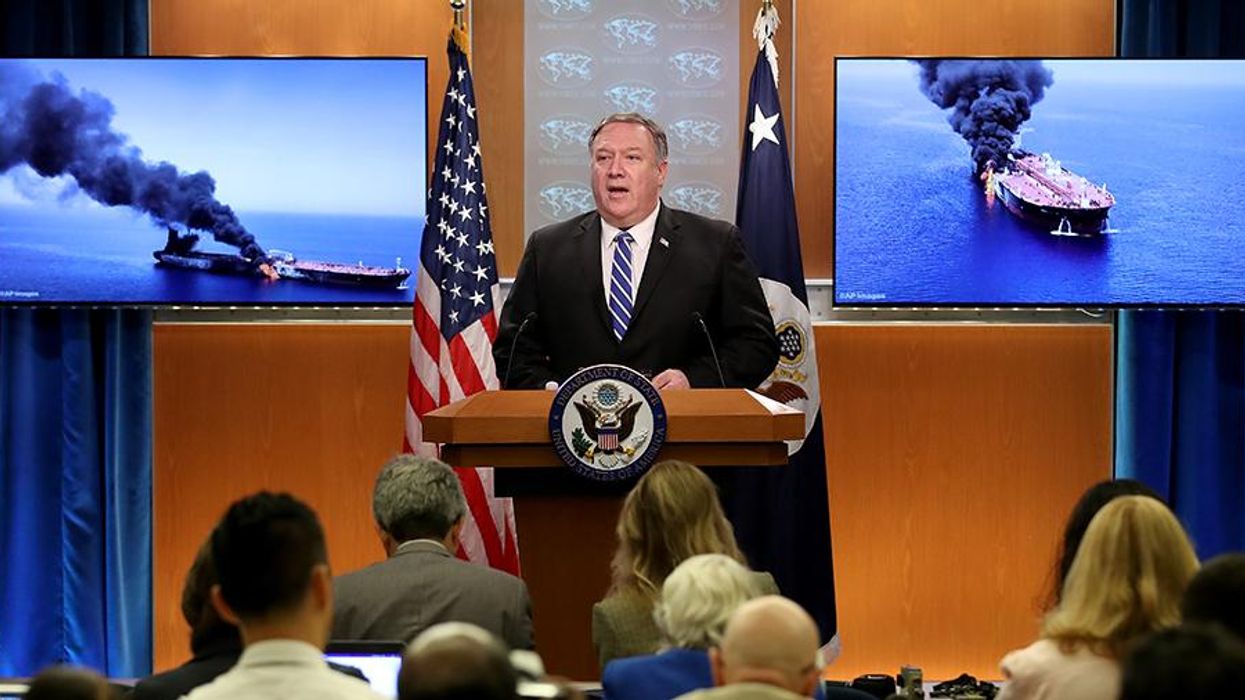
Who is attacking oil tankers in the Gulf between Oman and Iran? So far, the answer is still a mystery. The US, of course, accuses Iran. Iran says it's the US or its local allies Saudi Arabia and the United Arab Emirates.
Magnetic mines are blamed for the damage, though there have been claims of torpedo use. Last month, four moored tankers were slightly damaged, though none seriously. This time the attacks were more damaging but apparently not lethal.
Who is attacking oil tankers in the Gulf between Oman and Iran? So far, the answer is still a mystery. The US, of course, accuses Iran. Iran says it's the US or its local allies Saudi Arabia and the United Arab Emirates.
Magnetic mines are blamed for the damage, though there have been claims of torpedo use. Last month, four moored tankers were slightly damaged, though none seriously. This time the attacks were more damaging but apparently not lethal.
A few cynics have even suggested Israel may be behind the tanker attack in order to provoke war between Iran and the United States - a key Israeli goal. Or maybe it's the Saudis whose goal is similar. The Gulf is an ideal venue for false flag attacks.
One thing appears certain. President Donald and his coterie of neocon advisers have been pressing for a major conflict with Iran for months. The US is literally trying to strangle Iran economically and strategically. By now, Israel's hard right wing dominates US Mideast policy and appears to often call the shots at the White House and Congress.
However, this latest Iran 'crisis' is totally contrived by the Trump administration to punish the Islamic Republic for refusing to follow American tutelage, supporting the Palestinians, and menacing Saudi Arabia. Most important, the Gulf fracas is diverting public attention from Trump's war with the lynch mob of House Democrats and personal scandals.
Many Americans love small wars. They serve as an alternative to football. Mussolini's popularity in Italy soared after he invaded primitive Ethiopia. Americans cheered the invasions of Grenada, Haiti and Panama. However, supposed 'cake-walk' Iraq was not such a popular success. Memories of the fake Gulf of Tonkin clash used to drive the US into the Vietnam War are strong; so too all the lies about Iraq's supposed weapons of mass destruction.
Curiously, Trump's undeclared war against Iran has had unanticipated effects. Japan, which relies on Iranian oil, is furious at Washington. Last week, Japan's very popular prime minister, Shinzo Abe, flew to Tehran to try to head off a US-Iranian confrontation and assure his nation's oil supply - the very same reason Japan attacked the US in 1941. Abe warned an accidental war may be close.
Canada used to have warm relations with China. They are now in shambles. Canada 'kidnapped' Chinese bigwig Meng Wanzhou, the crown princess of technology giant Huawei, at Vancouver airport while changing planes on a US arrest warrant for allegedly trading with...wait for it...Iran. Canada foolishly arrested Meng on a flimsy extradition warrant from the US.
This was an incredibly amateurish blunder by Ottawa's foreign affairs leaders. If they had been smarter, they would have simply told Washington that Meng had already left Canada, or they could not find her. Now Canada's relations with Beijing are rock bottom, Canada has suffered very heavy trade punishment and the world's biggest nation is angry as a wet cat at Canada, a nation whose state religion is to be liked by everyone.
Now, Japan's energy freedom is under serious threat. China mutters about executing the two Canadians it arrested for alleged espionage. Meanwhile, US-China relations have hit their nadir as Trump's efforts to use tariffs to bully China into buying more US soya beans and to trim its non-trade commerce barriers have caused a trade war.
The US-China trade war is badly damaging the economies of both countries. President Trump still does not seem to understand that tariffs are paid by American consumers, not Chinese sellers. Trump's nincompoop foreign policy advisers don't understand how much damage they are doing to US interests. Putting gambling mogul Sheldon Adelson in charge of US foreign and trade policy is not such a good idea.
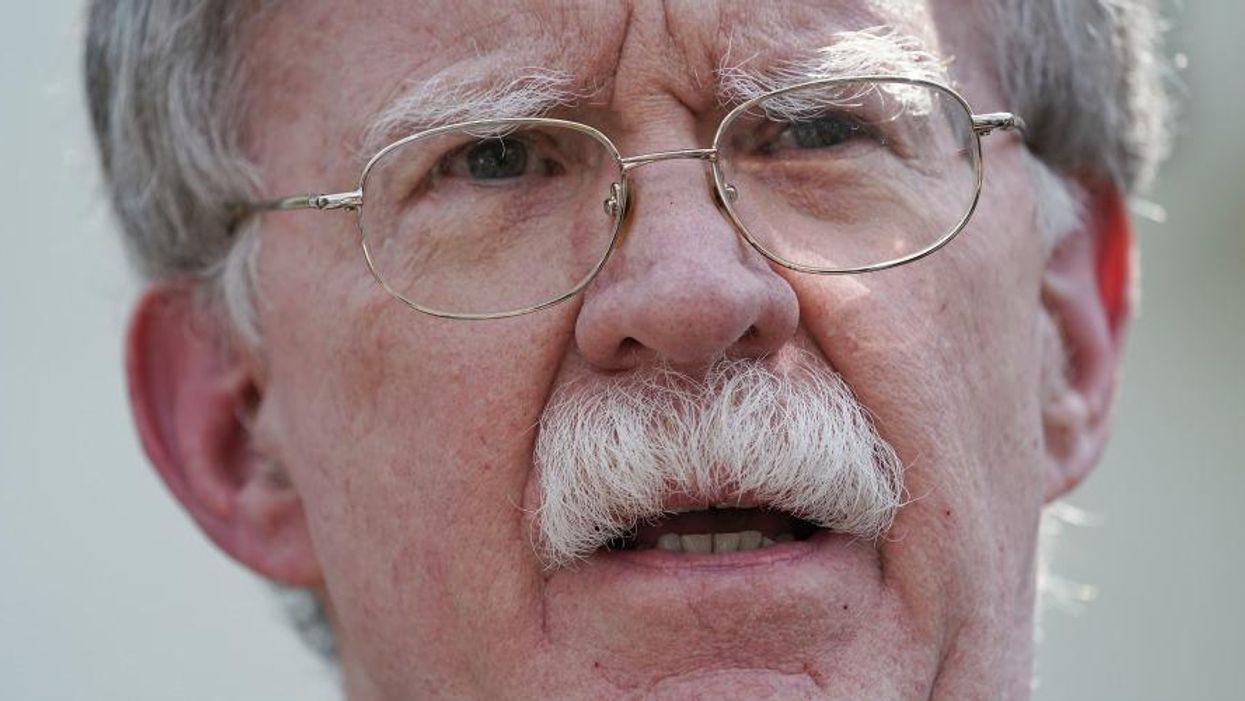
A good way to end this growing mess is to fire war-lover and Iran-hater John Bolton, send Mike Pompeo back to bible school, and tell Iran and Saudi Arabia to bury the hatchet now. Instead, the White House is talking about providing nuclear capability to Saudi Arabia, one of our world's most backwards and unpleasant nations. Maybe Trump will make a hell of a 'deal' and have North Korea sell nukes to Saudis.
And now we wait the all-time bad joke, the so-called 'Deal of the Century,' which Trump and his boys hope will get rich Arabs to buy off poor Palestinians in exchange for giving up lots more land to Israel. It's hard to think of a bigger or more shameful betrayal by Arabs of fellow Arabs, or a more stupid policy by the US. But, of course, it's not a made-in-the-USA policy at all.
Sure. Let's invade Venezuela. Another jolly little war. It's full of commies and has a sea of oil. The only thing those Cuban-loving Venezuelans lack are weapons of mass destruction.
This week, leading US neocons openly threatened that if the CIA's latest attempts to stage a coup to overthrow Venezuela's Maduro government failed, Washington might send in the Marines.
Well, the coup was a big fiasco and the Venezuelan army didn't overthrow President Maduro. The CIA also failed to overthrow governments in Moscow, Tehran and Damascus. Its only 'success' to date has been in overthrowing Ukraine's pro-Moscow government and putting a bunch of corrupt clowns in its place at a cost near $10 billion.
The US has not waged a major successful war since World War II - unless you count invading Grenada, Panama and Haiti, or bombing the hell out of Iraq, Syria, Somalia and Libya. That's a sobering thought given the Pentagon's recent announcement that it is cutting back on little colonial wars (aka 'the war on terror') to get ready for real big wars against Russia and China, or even North Korea.
Venezuela is in a huge economic mess thanks to the crackpot economic policies of the Chavez and Maduro governments - and US economic sabotage. But my first law of international affairs is: 'Every nation has the absolute god-given right to mismanage its own affairs and elect its own crooks or idiots.'
Now, however, the administration's frenzied neocons want to start a war against Venezuela, a large, developed nation of 32.7 million, at the same time we are threatening war against Iran, interfering all around Africa, and confronting Russia, China and perhaps North Korea. Large parts of the Mideast and Afghanistan lie in ruins thanks to our 'liberation' campaigns.
Invading Venezuela would not be much of a problem for the US military: half the population hates the current government and might welcome the Americans. Venezuela's military has only limited combat value. Right-wing regimes in neighboring Colombia and Brazil might join the invasion.
But what then? Recall Iraq. The US punched through the feeble Iraqi Army whose strength had been wildly exaggerated by the media. Once US and British forces settled in to occupation duties, guerilla forces made their life difficult and bloody. Iraqi resistance continues today, sixteen years later. The same would likely happen in Venezuela.
There is deep anti-American sentiment in Latin America that existed long before Col. Chavez. Recall, for example, the large anti-American riots that greeted Vice President Nixon's visit to Caracas in 1958.
'Yankees Go Home' is a rallying cry for much of Latin America. Blundering into Venezuela, another nation about which the Trump administration knows or understands little, would stir up a hornet's next. Their ham-handed efforts to punish Cuba and whip up the far right Cuban-American vote in Florida would galvanize anti-American anger across Latin America. Beware the ghost of Fidel.
Talks over Venezuela are underway between Washington and Moscow. Neither country has any major interest in Venezuela. Moscow is stirring the pot there to retaliate for growing US involvement in Russia's backyard and Syria. Both the US and Russia should get the hell out of Venezuela and mind their own business.
Instead, we hear crazy proposals to send 5,000 mercenaries to overthrow the Maduro regime. How well did the wide-scale use of US-financed mercenaries work in Iraq and Afghanistan? A complete flop. The only thing they did competently was wash dishes at our bases, murder civilians, and play junior Rambos.
For those who don't like the American Raj, a US invasion of Venezuela would mark a step forward in the crumbling of the empire. More aimless imperial over-reach, more lack of strategy, more enemies generated.
The big winner would, of course, be the Pentagon and military industrial complex. More billions spent on a nation most Americans could not find on a map if their lives depended on it, more orders for 'counter-insurgency' weapons, more military promotions, and cheers from Fox News and wrestling fans.
Worst of all, the US could end up feeding and caring for wrecked Venezuela. How did we do with storm-ravaged Puerto Rico? It's still in semi-ruin. Few want Venezuela's thick, heavy oil these days.
Venezuela could turn out to be a big, fat Tar Baby.
I spent last week at Angelo State University in remote central Texas as a panelist for the annual All-Volunteer Force (AVF) Forum. It was a strange forum in many ways, but nonetheless instructive. I was the youngest (and most progressive) member, as well as the lowest-ranking veteran among a group of leaders and speakers that included two retired generals, the chief of staff to former Secretary of State Colin Powell, a few former colonels and several academics. Despite having remarkably diverse life experiences and political opinions, all concluded that America's all-volunteer military is not equitable, efficient or sustainable. The inconvenient truth each of the panel participants had the courage to identify is that the end of the draft in the U.S. had many unintended--and ultimately tragic--consequences for the republic.
The oft-praised U.S. military is, disturbingly, the most trusted public institution in the country.
The oft-praised U.S. military is, disturbingly, the most trusted public institution in the country. These days, active service members and veterans are regularly paraded before an otherwise apathetic citizenry at nearly every sporting event. Public figures and private citizens alike fawn over and obsessively thank the troops at every possible opportunity. It seems strange, however, that Americans are so hyperproud of their military, seeing as it neither reflects society nor achieves national objectives overseas. After all, the military only accounts for about 0.5 % of Americans and, as recent statistics indicate, the Army is falling well short of its recruiting goals. Not to mention that for all the vacuous pageantry and celebrations of a military that is increasingly divergent from civil society, few seem to ask an important question: When was the last time the AVF won a war?
The AVF is ultimately an unfair, ineffective and unsustainable organization charged with impossible, ill-advised missions by policymakers and a populace that actually care rather little for the nation's soldiers. As the AVF nears its 50th anniversary, there's no better time than now to assess the model's flaws and its effect on American democracy.
Way back when the U.S. military was bogged down in an unwinnable, immoral and ill-advised war in Vietnam, newly elected President Nixon faced a serious problem. Tricky Dick, as he is sometimes known, wanted to prolong and escalate the war into Cambodia and Laos in order to achieve "peace with honor"--in other words, seem tough and save some American face. Only the growing domestic anti-war movement that was gaining influence in Congress stood in his way. No doubt cynically, but also astutely, Nixon surmised that fear of individual conscription largely motivated youthful anti-war activists. Thus, in a Faustian devil's bargain, he helped end the draft and usher in a brand-new all-volunteer force. Surprisingly, his gambit worked, and the steam blew out of the anti-war movement over time. Today, it is with the same all-volunteer force Nixon left us with that the U.S. wages war across the breadth of the planet.
Terribly Unfair
Proponents of the volunteer military force promised equity. No longer would the poorest Americans be forced to serve in foreign wars. Rather, only those who truly wanted to serve the nation would do so. On the surface, this seemed intuitive. What actually happened was a different matter entirely. In a sort of economic draft, the military mostly began to draw servicemen from the third and fourth income quintiles. Those who needed the money the military offered and were lured by modest cash bonuses would serve, while the wealthiest, perhaps unsurprisingly, opted out. This meant the U.S. elites would no longer serve and, in fact, would become almost totally absent from the new AVF. The tiny percentage that would serve America's neo-imperial war machine wouldn't reflect U.S. society at all. Today, volunteers are far more rural, Southern and likely to hail from military families than their civilian peers. Thus, an unrepresentative warrior caste--not the citizens' Army that won World War II--became the norm.
While most Americans and their political leaders seem completely fine with the glaring injustice inherent in such a system, those who serve have had to deal with the consequences. America's soldiers have been subject to multiple combat tours, while reserve and National Guard troops have been activated for war at record rates. As a result, post-traumatic stress disorder and suicide rates have skyrocketed, topping off recently at 22 self-inflicted veteran deaths per day. To keep these soldiers "in the fight," damaged individual troopers were loaded up with psychotropic medications and sent back overseas. What's more, a dangerous civil-military gap opened between the vast majority of Americans--who are rarely exposed to real soldiers--and a military that has learned to resent the populace. And when a military becomes so professionalized and distant as to resemble a Roman Praetorian Guard, the republic is undoubtedly in peril.
Wildly Inefficient
Contrary to early optimistic promises, the U.S. military since 1973 sports a poor efficiency record. Especially since 9/11--the real first test of the new system--American armed forces have produced exactly zero victories. Prior to the World Trade Center attack, it can be argued that a much larger AVF crushed Saddam Hussein's poorly led and equipped Iraqi army in 1991, but it's important to remember that that war was an anomaly--Saddam's troops fought us in an open desert, without any air support, and according to the conventional tactics the U.S. military had been training against for years. I also refuse to count the imperial punishments inflicted on Panama (1989) and Grenada (1983) as victories, because neither was a necessary or even a fair fight. Besides, the invasion of the tiny island of Grenada was more fiasco than triumph.
Worst of all, the AVF is inefficient because it enables the militarization of U.S. foreign policy, ensuring high costs and much wear and tear on equipment and personnel. The lack of a draft means the loss of what the co-founder of the AVF Forum, retired Maj. Gen. Dennis Laich, calls "skin in the game." When the citizenry isn't subjected to the possibility of military service, it becomes apathetic, ignores foreign affairs and fails to pressure Congress to check presidential war powers. Without this check, president after president--Democrats and Republicans--have centralized control of foreign affairs in what has resulted in increasingly imperial presidencies. With its huge budget, professional flexibility and can-do attitude, the military has become the primary--in some ways, the only--tool in America's arsenal as presidents move living, breathing soldiers around the world like so many toy soldiers.
Completely Unsustainable
The AVF could also bankrupt us, or, at the very least, crash the economy. Thanks to the influence of the military-industrial complex and the militarization of foreign policy, U.S. defense budgets have soared into the stratosphere. At present, America spends more than $700 billion on defense--a figure greater than all domestic discretionary spending and larger than the combined budgets of the next seven largest militaries. As the Vietnam War should have taught us, skyrocketing military spending without concurrent tax increases often results in not only massive debt but crippling inflation. After 18 years of forever global war without any meaningful increase in taxation on the nation's top earners, get ready for the next crash. Trying to stay a hegemon (a dubious proposition in the first place) with rising deficits and a paralyzing national debt is a recipe for failure and, ultimately, disaster.
In sum, throughout this century the U.S. military has won zero wars, achieved few, if any, "national goals" and cost Americans $5.9 trillion tax dollars, more than 7,000 troop deaths, and tens of thousands more wounded soldiers. It has cost the world 480,000 direct war-related deaths, including 244,000 civilians, and created 21 million refugees. As recent recruitment shortfalls show, getting volunteers may not be a sustainable certainty either. This also increases costs--the military has had to train more full-time recruiters, pay cash bonuses for enlistment and retention, and hire extremely expensive civilian contractors to fill in operational gaps overseas. Nor can the AVF count on getting the best and brightest Americans in the long term. With elites opting out completely and fewer Americans possessing the combination of capacity--only 30 percent of the populace is physically/mentally qualified for the military--and propensity to serve, where will the military find the foot soldiers and cyberwarriors it needs in the 21st century?
In sum, throughout this century the U.S. military has won zero wars, achieved few, if any, "national goals" and cost Americans $5.9 trillion tax dollars, more than 7,000 troop deaths, and tens of thousands more wounded soldiers. It has cost the world 480,000 direct war-related deaths, including 244,000 civilians, and created 21 million refugees. Talk about unsustainable.
An Unpopular Proposal
At the recent forum, Laich proposed an alternative to the current volunteer system. To ensure fairness, efficiency and sustainability, the U.S. could create a lottery system (with no college or other elite deferments) that gives draftees three options: serve two years on active duty right after high school, serve six years in the reserves or go straight to college and enroll in the ROTC program. Whether or not one agrees with this idea, it would create a more egalitarian, representative, affordable and sustainable national defense tool. Furthermore, with the children of bankers, doctors, lawyers and members of Congress subject to service, the government might think twice before embarking on the next foolish, unwinnable military venture.
Few Americans, however, are likely to be comfortable delegating the power of conscription to a federal government they inherently distrust. Still, paradoxically, the move toward a no-deferment, equitable lottery draft might result in a nation less prone to militarism and adventurism than the optional AVF has. Parents whose children are subject to military service, as well as young adults themselves, might prove to be canny students of foreign policy who would actively oppose the next American war. Imagine that: an engaged citizenry that holds its legislators accountable and subsequently hits the streets to oppose unnecessary and unethical war. Ironic as it may seem, more military service may actually be the only workable formula for less war. Too bad returning to a citizens' military is as unpopular as it is unlikely.
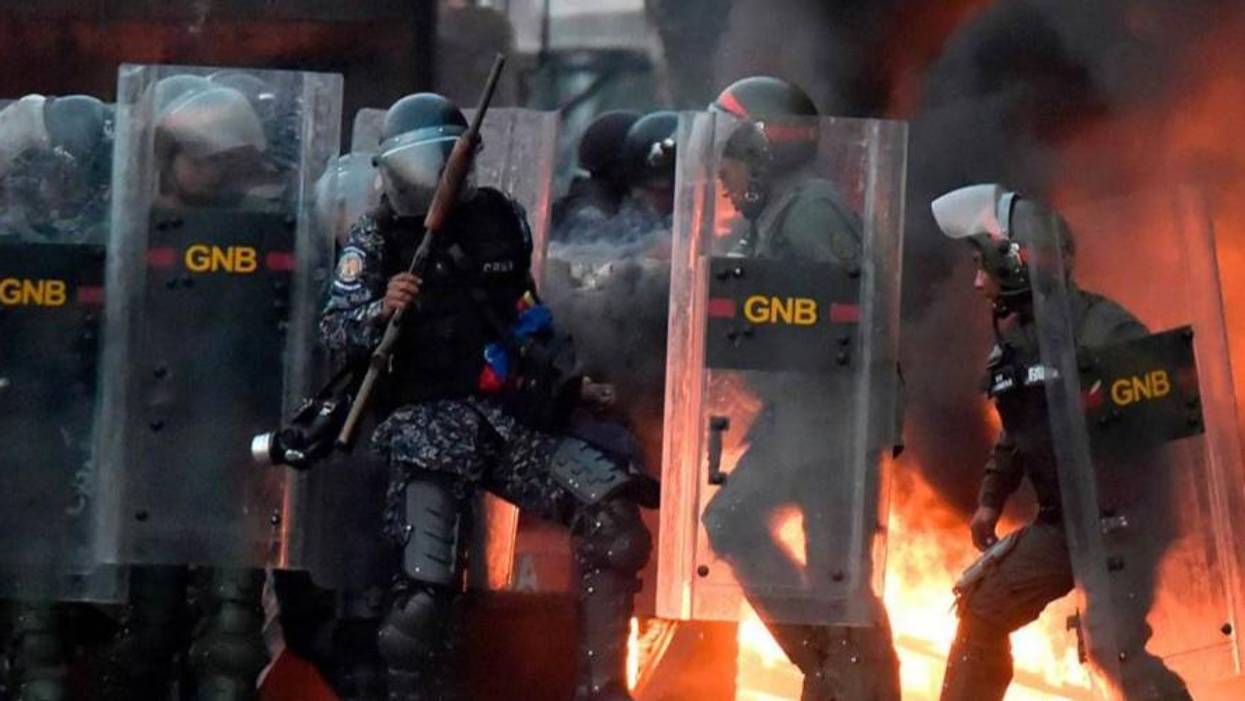
One month after Juan Guaido, the speaker of Venezuela's National Assembly, said he was assuming the powers of the Venezuelan presidency, currently held by Nicolas Maduro, the country's political crisis remains far from over. Tensions have escalated to the point that a full-blown civil war--a seemingly implausible scenario just weeks ago--is now becoming increasingly possible. At least four people died and hundreds were injured in violent clashes at Venezuela's borders last weekend as government forces opened fire on an attempt by the opposition to bring aid convoys into the country.
The Maduro regime is authoritarian, militarized, and ready to kill civilians to maintain power. The society is bitterly divided between the revolutionaries inspired by Hugo Chavez, Maduro's predecessor, and a large and aggrieved opposition. Each side despises the other. The question is therefore a complex and practical one: what to do to help guide Venezuela away from civil war and toward a peaceful and democratic future?
On this great challenge, US President Donald Trump's administration has gravely miscalculated. When the United States chose to recognize Guaido as Venezuela's president - along with a group of Latin American countries - and ban oil trade with the Maduro government, it was betting that the pressure would be sufficient to topple the regime. As a former senior US official told the Wall Street Journal, "they thought it was a 24-hour operation."
"Venezuela's neighbors and world leaders must put aside the US military option. Venezuela needs mediation leading to new elections, not war."
This type of miscalculation predates the Trump administration. In mid-2011, President Barack Obama and Secretary of State Hillary Clinton announced that Syrian President Bashar al-Assad must "step aside." Similarly, in 2003, George W. Bush declared "Mission Accomplished" shortly after the US invasion of Iraq. All of these cases reflect the arrogance of a superpower that repeatedly overlooks local realities.
Maduro's ability to withstand intense US pressure is not a surprise to close observers of Venezuela's military. The centralized structures of command and control of military intelligence, as well as the personal interests of senior officers who control major chunks of the economy, make it highly unlikely that the army will turn on Maduro. US provocation might create a schism between military commanders and more junior officers, but that would only make the plunge into a bloody civil war more likely. To date, there have been no defections among high-ranking officers with direct control of troops.
Faced with the prospect that regime change will not come quickly, the Trump administration and some parts of Venezuela's opposition have begun seriously considering military action. Echoing language recently used in a speech by Trump, Guaido wrote on Saturday that he would formally request the international community to "keep all options open." Similarly, Republican Senator Marco Rubio, who has acted as a self-appointed guru for Trump on Venezuela, warned on Twitter that Maduro's actions had opened the door to "multilateral actions not on the table just 24 hours ago."
Actually, these ideas appear to have been on Trump's mind for some time. As former acting FBI director Andrew G. McCabe revealed recently in his book The Threat, Trump said in a 2017 meeting that he thought the US should be going to war with Venezuela. McCabe quotes Trump as sayin:: "They have all that oil and they're right on our back door." The comments echo Trump's 2011 statement that Obama let himself get "ripped off" by not demanding half of Libya's oil in exchange for US help in overthrowing dictator Muammar el-Qaddafi.
US military interventions are not driven only by economic and business interests. Being tough on Maduro is also highly popular with many Cuban-American and Venezuelan-American voters in Rubio's home state of Florida, which will be a key battleground in the 2020 presidential election.
Advocates of US military intervention regularly cite the cases of Panama and Grenada as precedents for rapid US-led regime change. Yet, in contrast to those two countries, Venezuela has a well-armed military of more than 100,000 soldiers. Of course, the US could defeat the Venezuelan army, but one need not be blind to the atrocities of authoritarian regimes to understand that, as has happened repeatedly in US wars in the Middle East, attempts to overthrow such regimes often end in catastrophe.
Even without military intervention, US sanctions policies, if sustained, are bound to create a famine. By cutting off Venezuela's oil trade with the US and threatening to sanction non-US firms that do business with Venezuela's state-owned oil company, the Trump administration has created one of the most punitive economic sanctions regimes in recent history. But rather than provoking a coup, economically isolating a country that essentially feeds itself with its oil export revenues could lead to mass hunger instead.
Venezuela's neighbors and world leaders must put aside the US military option. Venezuela needs mediation leading to new elections, not war. It also needs an urgent, interim period of political truce in 2019 to end the devastating hyperinflation, restore flows of foodstuffs and medicines, and reconstitute the electoral rolls and institutions for a peaceful and credible election in 2020.
A pragmatic approach might involve the current government continuing to control the army, while technocrats backed by the opposition take control over finances, the central bank, planning, humanitarian relief, health services, and foreign affairs. Both sides would agree to a timeline for a national election in 2020, and to an internationally supervised demilitarization of daily life, with a restoration of civil and political rights and physical security in the country.
The United Nations Security Council should oversee such a solution. Chapter VII of the UN Charter gives the Security Council the mandate to "determine the existence of any threat to the peace, breach of the peace, or act of aggression" and to take actions to "restore international peace and security." The Security Council is also the right venue pragmatically, as the US, China, and Russia all have financial and political interests in finding a peaceful solution in Venezuela. All three countries could readily agree to a path to elections in 2020. Encouragingly, Pope Francis and the governments of Mexico and Uruguay have also offered to help facilitate mediation to find a peaceful way forward.
Trump and other US leaders say that the time for negotiation has passed. They believe in a short, quick war if necessary. World leaders--and those in Latin American countries first and foremost--should open their eyes to the risks of a devastating war, one that could last for years and spread widely.
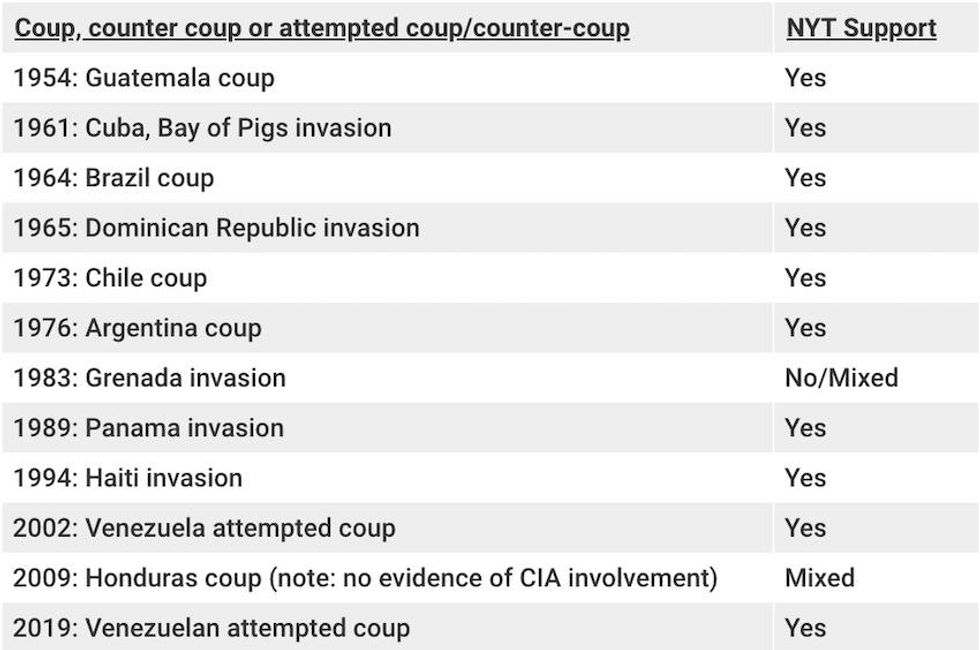
On Friday, The New York Times continued its long, predictable tradition of backing U.S. coups in Latin America by publishing an editorial praising Donald Trump's attempt to overthrow Venezuelan President Nicolas Maduro. This will be the 10th such coup the paper has backed since the creation of the CIA over 70 years ago.
A survey of The New York Times archives shows the Times editorial board has supported 10 out of 12 American-backed coups in Latin America, with two editorials--those involving the 1983 Grenada invasion and the 2009 Honduras coup--ranging from ambiguous to reluctant opposition. The survey can be viewed here.
Covert involvement of the United States, by the CIA or other intelligence services, isn't mentioned in any of the Times' editorials on any of the coups. Absent an open, undeniable U.S. military invasion (as in the Dominican Republic, Panama and Grenada), things seem to happen in Latin American countries entirely on their own, with outside forces rarely, if ever, mentioned in the Times. Obviously, there are limits to what is "provable" in the immediate aftermath of such events (covert intervention is, by definition, covert), but the idea that the U.S. or other imperial actors could have stirred the pot, funded a junta or run weapons in any of the conflicts under the table is never entertained.
More often than not, what one is left with, reading Times editorials on these coups, are racist, paternalistic "cycle of violence" cliches. Sigh, it's just the way of things Over There. When reading these quotes, keep in mind the CIA supplied and funded the groups that ultimately killed these leaders:
See, it didn't matter! It's worth pointing out the military junta put in power by the CIA-contrived coup killed 10,000 to 30,000 Argentines from 1976 to 1983.
There's a familiar script: The CIA and its U.S. corporate partners come in, wage economic warfare, fund and arm the opposition, then the target of this operation is blamed. This, of course, isn't to say there isn't merit to some of the objections being raised by The New York Times--whether it be Chile in 1973 or Venezuela in 2019. But that's not really the point. The reason the CIA and U.S. military and its corporate partisans historically target governments in Latin America is because those governments are hostile to U.S. capital and strategic interests, not because they are undemocratic. So while the points the Times makes about illiberalism may sometimes be true, they're mostly a non sequitur when analyzing the reality of what's unfolding.
Did Allende, as the Times alleged in 1973 when backing his violent overthrow, "persist in pushing a program of pervasive socialism" without a "popular mandate"? Did, as the Times alleged, Allende "pursue this goal by dubious means, including attempts to bypass both Congress and the courts"? Possibly. But Allende's supposed authoritarianism isn't why the CIA sought his ouster. It wasn't his means of pursuing redistributive policies that offended the CIA and U.S. corporate partners; it was the redistributive policies themselves.
Hand-wringing over the anti-democratic nature of how Allende carried out his agenda without noting that it was the agenda itself--not the means by which it was carried out--that animated his opponents is butting into a conversation no one in power is really having. Why, historically, has The New York Times taken for granted the liberal pretexts for U.S. involvement, rather than analyzing whether there were possibly other, more cynical forces at work?
The answer is that rank ideology is baked into the premise. The idea that the U.S. is motivated by human rights and democracy is taken for granted by The New York Times editorial board and has been since its inception. This does all the heavy lifting without most people--even liberals vaguely skeptical of American motives in Latin America--noticing that a sleight of hand has taken place. "In recent decades," a 2017 Times editorial scolding Russia asserted, "American presidents who took military action have been driven by the desire to promote freedom and democracy, sometimes with extraordinary results." Oh, well, good then.
What should be a conversation about American military and its covert apparatus unduly meddling in other countries quickly becomes a referendum on the moral properties of those countries. Theoretically a good conversation to have (and one certainly ongoing among people and institutions in these countries), but absent a discussion of the merits of the initial axiom--that U.S. talking heads and the Washington national security apparatus have a birthright to determine which regimes are good and bad--it serves little practical purpose stateside beyond posturing. And often, as a practical matter, it works to cement the broader narrative justifying the meddling itself.
Do the U.S. and its allies have a moral or ethical right to determine the political future of Venezuela? This question is breezed past, and we move on to the question of how this self-evident authority is best exercised. This is the scope of debate in The New York Times--and among virtually all U.S. media outlets. To ante up in the poker game of Serious People Discussing Foreign Policy Seriously, one is obligated to register an Official Condemnation of the Official Bad Regime. This is so everyone knows you accept the core premises of U.S. regime change but oppose it on pragmatic or legalistic grounds. It's a tedious, extortive exercise designed to shift the conversation away from the United States' history of arbitrary and violent overthrows and into an exchange about how best to oppose the Official Bad Regime in question. U.S. liberals are to keep a real-time report card on these Official Bad Regimes, and if these regimes--due to an ill-defined rubric of un-democraticness and human rights--fall below a score of say, "60," they become illegitimate and unworthy of defense as such.
While obviously not in Latin America, it's also worth noting that the Times cheerled the CIA-sponsored coup against Iran's President, Mohammad Mossadegh, in 1953. Its editorial, written two days after his ouster, engaged in the Times' patented combination of victim-blaming and "oh dear" bloviating:
Again, no mention of CIA involvement (which the agency now openly acknowledges), which the Times wouldn't necessarily have had any way of knowing at the time. (This is part of the point of covert operations.) Mossadegh is summarily demonized, and it's not until decades later the public learns of the extent of U.S. involvement. The Times even gets in an orientalist description of Iranians, implying why a strong Shah is necessary:
[The average Iranian] has nothing to lose. He is a man of infinite patience, of great charm and gentleness, but he is also--as we have been seeing--a volatile character, highly emotional, and violent when sufficiently aroused.
Needless to say, there are major difference between these cases: Mossadegh, Allende, Chavez and Maduro all lived in radically different times and championed different policies, with varying degrees of liberalism and corruption. But the one thing they all had in common is that the U.S. government, and a compliant U.S. media, decided they "needed to go" and did everything to achieve this end. The fundamental arrogance of this assumption, one would think, is what ought to be discussed in the U.S. media--as typified by the Times' editorial board--but time and again, this assumption is either taken for granted or hand-waved away, and we all move on to how and when we can best overthrow the Bad Regime.
For those earnestly concerned about Maduro's efforts to undermine the democratic institutions of Venezuela (he's been accused of jailing opponents, stacking the courts and holding Potemkin elections), it's worth pointing out that even when the liberal democratic properties of Venezuela were at their height in 2002 (they were internationally sanctioned and overseen by the Carter Center for years, and no serious observer considers Hugo Chavez's rule illegitimate), the CIA still greenlit a military coup against Chavez, and the New York Times still profusely praised the act. As it wrote at the time:
With yesterday's resignation of President Hugo Chavez, Venezuelan democracy is no longer threatened by a would-be dictator. Mr. Chavez, a ruinous demagogue, stepped down after the military intervened and handed power to a respected business leader, Pedro Carmona.
Chavez would soon be restored to power after millions took to the streets to protest his removal from office, but the question remains: If The New York Times was willing to ignore the undisputed will of the Venezuelan people in 2002, what makes anyone think the newspaper is earnestly concerned about it in 2019? Again, the thing that's being objected to by the White House, the State Department and their U.S. imperial apparatchiks is the redistributive policies and opposition to the United States' will, not the means by which they do so. Perhaps the Times and other U.S. media--living in the heart of, and presumably having influence over, this empire--could try centering this reality rather than, for the millionth time, adjudicating the moral properties of the countries subject to its violent, illegitimate whims.
Surrounded by his top military aides in a White House meeting less than a year ago, the Associated Press on Wednesday reports that President Donald Trump wanted to know why the U.S. military couldn't "just simply invade" the country of Venezuela.
Based on the account of "a senior administration official familiar with what was said," AP reports that the president's comments "stunned" those at the meeting, including U.S. Secretary of State Rex Tillerson and national security adviser H.R. McMaster, both of whom have now left the administration.
From AP:
In an exchange that lasted around five minutes, McMaster and others took turns explaining to Trump how military action could backfire and risk losing hard-won support among Latin American governments to punish President Nicolas Maduro for taking Venezuela down the path of dictatorship, according to the official. The official spoke on the condition of anonymity because of the sensitive nature of the discussions.
But Trump pushed back. Although he gave no indication he was about to order up military plans, he pointed to what he considered past cases of successful gunboat diplomacy in the region, according to the official, like the invasions of Panama and Grenada in the 1980s.
While some of those around him continued attempts to ignore or dissuade the president, reportedly Trump could not let the idea go and AP cites "two high-ranking Colombian officials" who confirmed that he brought the idea of a military overthrow up with Colombian President Juan Manuel Santos during a closed-door meeting in August of 2017.
A month later, during a dinner with other Latin American leaders on the sidelines of the U.N. General Assembly meeting in New York, the reporting says that Trump--despite warnings not to do so--once more brought up the subject.
"The U.S. official said Trump was specifically briefed not to raise the issue and told it wouldn't play well," AP reports, "but the first thing the president said at the dinner was, 'My staff told me not to say this.' Trump then went around asking each leader if they were sure they didn't want a military solution, according to the official, who added that each leader told Trump in clear terms they were sure. Eventually, McMaster would pull aside the president and walk him through the dangers of an invasion, the official said."
The Pentagon made a decision that "beggars belief," human rights groups said Friday, when it tossed out its plan to ban certain cluster bombs that leave a large percentage of lethal, unexploded munitions, which pose a significant risk to civilians.
"This is a profoundly retrograde step that puts the U.S. way out of line with the international consensus--cluster munitions are banned by more than 100 countries due to their inherently indiscriminate nature and the risks they pose to civilians," said Patrick Wilcken, researcher on arms control and human rights at Amnesty International.
The Cluster Munition Coalition also condemned the change, calling the decision "shocking."
A ban on cluster bombs that leave more than 1 percent unexploded ordnance--a smattering of bomblets that can explode and kill or maim any adult, child, or creature--was set to take effect on Jan. 1, 2019.
But on Thursday, the Trump administration scrapped that deadline, arguing that "the weapons are legitimate, not necessarily a humanitarian hazard, and important for wartime attacks on 'area targets' like enemy troop formations."
The Defense Department memorandum, obtained by CNN states, "The Department will retain cluster munitions currently in active inventories until the capabilities they provide are replaced with enhanced and more reliable munitions," and calls the weapons "an effective and necessary capability."
Contrasting the 2008 and 2017 policies, Mary Wareham, advocacy director Human Rights Watch's arms division, writes that the former "recognized the need to minimize civilian harm from unexploded submunitions while 2017 policy prioritizes ensuring the nation's security by ensuring the U.S. is 'ready to fight adversaries now'."
According to Amnesty's Wilcken, "by keeping older types with dud rates of 20 percent or more," the U.S. is "raising serious questions about its regard for the lives of civilians in war zones."
An international treaty banning cluster bombs, the Convention on Cluster Munitions, went into force in 2010. The United States is not a signatory. According to (pdf) data complied by the Cluster Munitions Monitor, the U.S. has used cluster munitions in Afghanistan, Albania, Bosnia and Herzegovina, Cambodia, Grenada, Iran, Iraq, Kuwait, Lao, Lebanon, Libya, Saudi Arabia, Sudan, Vietnam, Yemen, and the former Yugoslavia.
Corporate media have a long history of lamenting wars they themselves helped sell the American public, but it's rare so many wars and so much hypocrisy are distilled into one editorial. On Monday, the New York Times (10/22/17) lamented the expansion of America's "forever wars" overseas, without once noting that every war mentioned is one the editorial board has itself endorsed, while failing to oppose any of the "engagements" touched on in the editorial.
The Times began by noting the sheer scope of US military reach:
The United States has been at war continuously since the attacks of 9/11 and now has just over 240,000 active-duty and reserve troops in at least 172 countries and territories.... American forces are actively engaged not only in the conflicts in Afghanistan, Iraq, Syria and Yemen that have dominated the news, but also in Niger and Somalia, both recently the scene of deadly attacks, as well as Jordan, Thailand and elsewhere. An additional 37,813 troops serve on presumably secret assignment in places listed simply as "unknown." The Pentagon provided no further explanation.
The editorial stops short of actually opposing anything specific, instead insisting, "It's time to take stock of how broadly American forces are already committed to far-flung regions and to begin thinking hard about how much of that investment is necessary." They are vaguely concerned; here we have this massive global empire, fighting an ever-changing nebulous enemy of "terrorism," with no end in sight. What can be done? It's unclear--but let's "take stock."
Left unmentioned in the editorial: from Afghanistan (both the 2001 invasion and Obama's 2009 surge) to Iraq (the 2003 invasion and Obama re-entering the country in August 2014 to fight ISIS) to Syria (both CIA-backed regime change and bombing ISIS) to Korea to our drone wars in Pakistan, Yemen and Somalia, the New York Times has endorsed and often cheered every of these "forever wars." And the "engagements" the Times didn't expressly support (Thailand, Jordan, etc.), because they're so routine as to not merit mention, there's no record of them opposing. Indeed, as FAIR (3/27/17) has noted previously, the New York Times editorial board has not opposed a single US war since its equivocal and lukewarm opposition to Reagan's invasion of Grenada 34 years ago (10/30/83).
When confronted with this fact on Twitter, New York Times foreign and defense policy editorial writer Carol Giacomo responded, "In last decade, NYT editorial board has raised many questions about US military engagements." Raised many questions? Well, then, never mind; let's leave the Times' role in the creation of said global empire unexamined.
The Times spends a great deal of time trying to market itself as not being the rubber stamp pro-war outlet it manifestly is. To do this, it employs two main genres of nominal anti-war posturing. The first--previously commented on by FAIR (3/27/17)--is to call for congressional approval of a war, without actually opposing it or arguing against its underlying moral or political validity. It's a process complaint that permits the New York Times to look Very Concerned without the messy work of actually opposing anyone in power. The argument is never "this war is wrong or unjust"; it's "this war may be great, but we have a legal problem of not getting congressional buy-in--the absence of which is not problematic enough to make us actually oppose the war."
The second is the morally half-assed "no boots on the ground" argument, like the one the Times employed in support of bombing ISIS in Iraq in 2014 (8/8/14) and the Syrian government in 2013 (8/27/13). They insisted, for example, that Obama "best follow through" on his threat to bomb the Syrian government, while still opposing "deep American involvement," whatever that meant. This genre supports bombing people--typically brown and poor--from afar, but draws the line at using US troops to augment the long-distance killing.
The "no boots on the ground" pseudo-opposition is an admission that the only lives that matter are American, and that the PR pitfalls of body bags returning home on national TV are the only moral limit to the US invading and occupying other countries. Cruise missiles, drones, special forces raids, and covert funding and arming of dodgy rebel groups are A-OK, so long as there are no "boots on the ground"--a cliche, as FAIR has noted (5/19/15), that itself has an increasingly boutique definition.
Both of these genres permit the New York Times to look like Conflicted Liberals, distressed about war without ever opposing it in any meaningful sense. Both modes typically involve appeals to gather more willing nations, other vague appeals to "international support" or running through legal motions, but, ultimately, after all the tortured language and qualifications, the Times always--always--ends up back at supporting the bombing. The Times acts not as an outside voice holding power to account, but as US empire's internal compliance officer--there to warn of excesses and problems around the margins, but always with the best interest of their NatSec client at heart.
No such heavy-hearted qualifications, needless to say, exist for US enemies. Russia is "engaging in aggressive and dangerous behavior in the air and on the high seas," the Times (5/19/16) insisted in an editorial condemning the "duplicity of President Vladimir Putin." Iran's "destabilizing role in the Mideast" is simply taken for granted (4/24/17); its actions routinely "deserve condemnation" (4/7/17).
Meanwhile, the US is presented as a good-faith arbiter of human rights and peacekeeping, with no broader military or cynical aims. "At least in recent decades," the Times editorial board (2/7/17) childishly put it earlier this year, "American presidents who took military action have been driven by the desire to promote freedom and democracy." Funny how that worked out.
In a sense, human history could be seen as an endless tale of the rise and fall of empires. In the last century alone, from the Hapsburgs and Imperial Japan to Great Britain and the Soviet Union, the stage was crowded with such entities heading for the nearest exit. By 1991, with the implosion of the USSR, it seemed as if Earth's imperial history was more or less over. After all, only one great imperial power was left. The Russians were, by then, a shadow of their former Soviet self (despite their nuclear arsenal) and, though on the rise, the Chinese were, in military terms at least, no more than a growing regional power. Left essentially unchallenged was the United States, the last empire standing. Even though its people rejected the word "imperial" as a descriptive term for their "exceptional" country--just as, until oh-so-recently, they rejected the word "nationalist" for themselves--the world's "sole superpower" was visibly the only game in town.
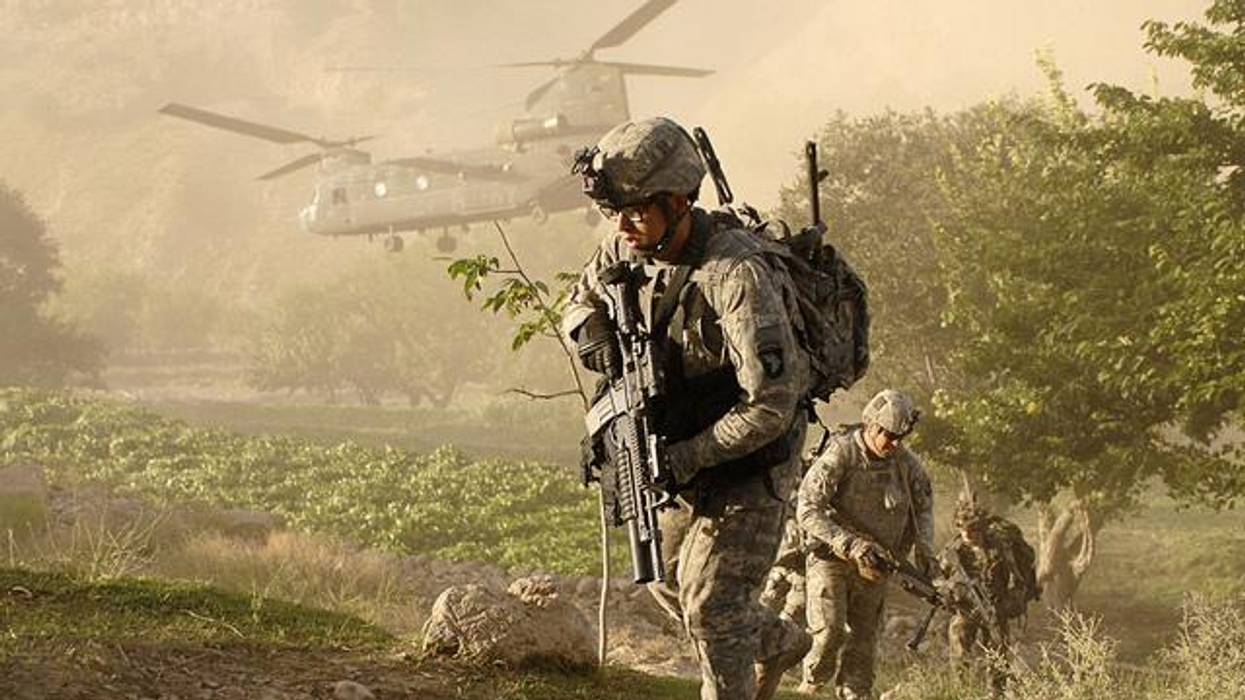
Its military, which already garrisoned much of the planet, was funded at levels no other country or even groups of them combined could touch and had destructive capabilities beyond compare. And yet, with the mightiest military on the planet, the United States would never again win a significant war or conflict. Though its forces would be quite capable of taking the island of Grenada or briefly invading Panama, in the conflicts that mattered--Korea and Vietnam--victory would never come into sight. And it only got worse in the twenty-first century as that military fought an endless series of conflicts (under the rubric of "the war on terror") across the Greater Middle East and Africa. In those years, it left in its wake a series of brutal sectarian struggles, ascendant terror movements, and failed or failing states and yet, despite its stunning destructive power and its modestly armed enemies, it was nowhere victorious. Never perhaps had an empire at its seeming height attempted to control more while winning less. (The power of its economy was, of course, another matter.)
Now, its losing generals--under the circumstances, there could be no other kind--are, as TomDispatch regular retired Lieutenant Colonel William Astore points out in his latest column, "Too Many Generals Spoil the Democracy," being elevated to positions of power. The man doing so only recently derided their skills, claiming that American generalship had been "reduced to rubble" and was "embarrassing for our country." At the moment, his chosen generals are preparing themselves to take over key civilian positions in the country's ever more powerful national security state, now essentially its fourth branch of government.
And let's add to this one more curious aspect of the coming age of Trump: a phenomenon until now restricted to the military and its distant wars seems about to spread to what's left of the civilian part of our government. By the look of things, Trump's cabinet is being assembled along eerily familiar lines. Its members are unlikely to have the power to "win" (despite the president-elect's deification of that concept), but they will indeed have an unprecedented power to destroy.
They seem, in fact, to have been chosen largely for their desire to dismantle whatever agency or department will be in their care or to undermine the major tasks it is to carry out. Former Texas governor Rick Perry, recently picked to head the Energy Department, an agency he previously wanted to eliminate (and whose name he infamously forgot in a televised presidential debate), is typical. See also Scott Pruitt, prospective head of the Environmental Protection Agency; Betsy DeVos, the Department of Education; and Tom Price, Health and Human Services. The question, of course, is: Will the civilian part of our future government, in the end, add another country to the count of failed states the U.S. military has already chalked up?
As our first declinist candidate, Donald Trump seems determined to ensure that the once sole superpower will join that endless human tale of felled empires. He's already working hard to make certain that its government will be hollowed out or simply dynamited in the coming years, while his covey of retired generals will undoubtedly do their damnedest to create further havoc on planet Earth, as they give new meaning to the latest American "principle" being put in place (see Astore): military control over the military (and much else).