SUBSCRIBE TO OUR FREE NEWSLETTER
Daily news & progressive opinion—funded by the people, not the corporations—delivered straight to your inbox.
5
#000000
#FFFFFF
To donate by check, phone, or other method, see our More Ways to Give page.
Daily news & progressive opinion—funded by the people, not the corporations—delivered straight to your inbox.
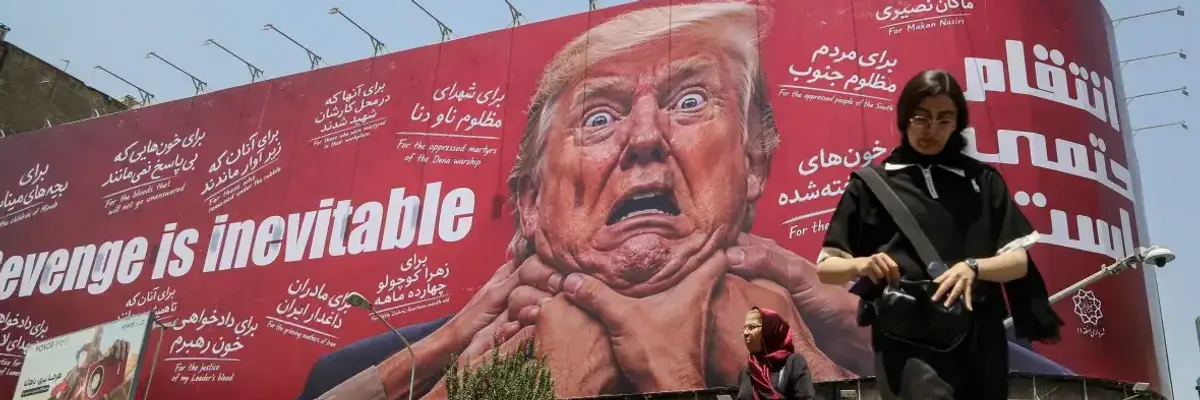
Most people do not know that the term “checkmate” in chess is a loan from Persian. “Shah-mat” means the king is confused and helpless. Trump may learn this hard way—but not without bringing much pain and suffering on people at home and worldwide.
US President Donald Trump, born with a golden spoon in his mouth, has been used throughout his life to buying his way out of any jams into which he got himself. He gave money to women (and probably girls) he assaulted in return for non-disclosure agreements. If he went bankrupt, he could find investors to float his next purchase, even if they were disreputable, or he could find a way to raise cash through money laundering. In rashly launching an illegal and aggressive war on Iran on February 28, however, he may have painted himself into a corner from which there is no escape.
In fact, this may be the end of Donald Trump. Not because Iran can directly harm him. But because it can keep gasoline prices and inflation high through the November 3 midterms. If there is a Democratic “blue wave,” Trump and his corrupt cabinet will face endless hearings on the Hill and he’d likely be impeached again. Moreover, it isn’t clear that, as an unpopular lame duck, he could keep Republicans in line.
Recent opinion polls find Trump is enormously unpopular, with approval ratings plummeting among independents, and that he is even being deserted by some of his base. Rural Americans with limited incomes who drive gas-guzzling trucks were blindsided when Trump raised the price of gasoline from $2.70 a gallon to over $4 a gallon nationally this spring and summer. For many of them, that is a reduction in their standard of living. Rural people spend 9% of their income on gasoline because they have longer commutes and they need trucks for hauling, whereas for urban people it is closer to 5%. By picking a fight with Iran in the cockpit of the world’s energy production, the Gulf, Trump took food out of the mouths of people in Appalachia and Kansas. And it isn’t just gasoline. Fertilizer shortages because of the blockade of the Strait of Hormuz affect the price of food, which is going to go up over the next year. A shortage of sulfur hurts mining and mineral processing and makes many goods more expensive. A shortage of helium puts up the cost of anything with computer chips in them.
In short, this generation of Iranian revolutionaries may be planning to do to Trump what an earlier clique in Tehran did to Jimmy Carter. It is widely thought that Khomeini and radicals around him refused to release US embassy hostages, taken in autumn 1979, until Ronald Reagan was inaugurated. The revolutionaries had a grudge with Carter because they saw him as having supported Mohammad Reza Pahlavi, whom they overthrew. They thus played a role in making Carter look weak in the lead-up to the November 1980 election, helping install Reagan. It was all about political revenge then, as it is now.
Last week, Iran’s clerical Leader, Mojtaba Khamenei, shook up the security apparatus with a raft of new appointments. He brought to the forefront veterans of the Iran-Iraq War, 1980-1988, who had suffered through WW I-style trench warfare and Iraqi use of mustard and sarin gas. That generation of leaders of the Islamic Revolutionary Guards Corps (IRGC) fought on for 6 years after Iraq offered an armistice. Iraqi dictator Saddam Hussein had launched a war of aggression on Iran in 1980, aiming to grab the oil-rich Khuzistan province for himself, but quickly was drawn into a quagmire that some wags called a “sitzkrieg.” One reason Ayatollah Ruhollah Khomeini and those loyalists who followed “the Line of the Imam” refused the offer of an end to hostilities is that they wanted revenge. They did not want to let Saddam walk away unscathed. They may even have hoped to take important Iraqi cities such as the southern port of Basra or the shrine cities of Karbala and Najaf, where Shia holy figures are buried.
One of these maximalists is Mohsen Rezai, a former commander of the IRGC, who was named secretary of the Supreme National Security Council (SNSC) and liaison for Khamenei with that body.
It may not be very useful to talk about a big division between moderates and hard liners in Iran right now on the issue of relations with the US. All the major political figures are furious with Trump for attacking them. The divide is between those who think it is better to squeeze Trump in the short term (as with the now-lapsed Memorandum of Understanding) to achieve a good result for Tehran, and those who are determined to go for a bigger win, of destroying Trump politically and then extracting maximum concessions from Washington.
As soon as he came to head the Supreme National Security Council, Rezai signaled that the Strait of Hormuz would remain closed until the US accepted his maximalist demands. He wants the billions of dollars in Iranian funds sequestered by the US to be released immediately. He wants the US military to withdraw from the Gulf region. He wants Washington to strong-arm the Israelis into ceasing their occupations of and attacks on Lebanon, the West Bank and Gaza. He wants a US recognition of Iranian control of the Strait.
He isn’t a fool. He knows that the US won’t acquiesce in these demands in the short term.
But what if US and European oil reserves start getting so low that it is unwise to release further petroleum? What if China, which nearly halved its petroleum imports since March, comes back into the market and starts importing 11.5 million barrels a day, the way it did last year? In short, what if all the cushions run out that have kept a dire energy crisis from breaking out even though over a billion barrels of oil have been taken off the market?
In August, 2008, the world economy looked pretty good. By September 15 of that year the credit markets had locked up and there was no way for firms to do the day to day borrowing of money on which commerce depends. Too many bad loans had been repackaged as derivatives and there was a mortgage crisis.
Rezai thinks that we’re in a building crisis similar to that of 2008, and that by keeping Hormuz closed, Iran can pull the trigger on the US economy. He is betting that, although Iran is hurting, it can take the pain in a way that the US won’t be able to if the full energy crisis hits home.
And if that happens, he is betting, Trump will be like a burglar trapped in a back yard by the owners’ pit bulls (resurgent Democrats), and will be too harried or bloody to even think about striking Iran again. And while Washington turns inward to a piranha-like frenzy of political infighting, Iran will nail down permanently its control of Hormuz, ensuring that the Israelis and Americans will never again risk a global energy crisis by attacking Iran.
And then Trump and his entire legacy would enter a seven-spiral crash. Most people do not know that the term “checkmate” in chess is a loan from Persian. “Shah-mat” means the king is confused and helpless. Tehran is going for a checkmate.
Dear Common Dreams reader, It’s been nearly 30 years since I co-founded Common Dreams with my late wife, Lina Newhouser. We had the radical notion that journalism should serve the public good, not corporate profits. It was clear to us from the outset what it would take to build such a project. No paid advertisements. No corporate sponsors. No millionaire publisher telling us what to think or do. Many people said we wouldn't last a year, but we proved those doubters wrong. Together with a tremendous team of journalists and dedicated staff, we built an independent media outlet free from the constraints of profits and corporate control. Our mission has always been simple: To inform. To inspire. To ignite change for the common good. Building Common Dreams was not easy. Our survival was never guaranteed. When you take on the most powerful forces—Wall Street greed, fossil fuel industry destruction, Big Tech lobbyists, and uber-rich oligarchs who have spent billions upon billions rigging the economy and democracy in their favor—the only bulwark you have is supporters who believe in your work. But here’s the urgent message from me today. It's never been this bad out there. And it's never been this hard to keep us going. At the very moment Common Dreams is most needed, the threats we face are intensifying. We need your support now more than ever. We don't accept corporate advertising and never will. We don't have a paywall because we don't think people should be blocked from critical news based on their ability to pay. Everything we do is funded by the donations of readers like you. When everyone does the little they can afford, we are strong. But if that support retreats or dries up, so do we. Will you donate now to make sure Common Dreams not only survives but thrives? —Craig Brown, Co-founder |
US President Donald Trump, born with a golden spoon in his mouth, has been used throughout his life to buying his way out of any jams into which he got himself. He gave money to women (and probably girls) he assaulted in return for non-disclosure agreements. If he went bankrupt, he could find investors to float his next purchase, even if they were disreputable, or he could find a way to raise cash through money laundering. In rashly launching an illegal and aggressive war on Iran on February 28, however, he may have painted himself into a corner from which there is no escape.
In fact, this may be the end of Donald Trump. Not because Iran can directly harm him. But because it can keep gasoline prices and inflation high through the November 3 midterms. If there is a Democratic “blue wave,” Trump and his corrupt cabinet will face endless hearings on the Hill and he’d likely be impeached again. Moreover, it isn’t clear that, as an unpopular lame duck, he could keep Republicans in line.
Recent opinion polls find Trump is enormously unpopular, with approval ratings plummeting among independents, and that he is even being deserted by some of his base. Rural Americans with limited incomes who drive gas-guzzling trucks were blindsided when Trump raised the price of gasoline from $2.70 a gallon to over $4 a gallon nationally this spring and summer. For many of them, that is a reduction in their standard of living. Rural people spend 9% of their income on gasoline because they have longer commutes and they need trucks for hauling, whereas for urban people it is closer to 5%. By picking a fight with Iran in the cockpit of the world’s energy production, the Gulf, Trump took food out of the mouths of people in Appalachia and Kansas. And it isn’t just gasoline. Fertilizer shortages because of the blockade of the Strait of Hormuz affect the price of food, which is going to go up over the next year. A shortage of sulfur hurts mining and mineral processing and makes many goods more expensive. A shortage of helium puts up the cost of anything with computer chips in them.
In short, this generation of Iranian revolutionaries may be planning to do to Trump what an earlier clique in Tehran did to Jimmy Carter. It is widely thought that Khomeini and radicals around him refused to release US embassy hostages, taken in autumn 1979, until Ronald Reagan was inaugurated. The revolutionaries had a grudge with Carter because they saw him as having supported Mohammad Reza Pahlavi, whom they overthrew. They thus played a role in making Carter look weak in the lead-up to the November 1980 election, helping install Reagan. It was all about political revenge then, as it is now.
Last week, Iran’s clerical Leader, Mojtaba Khamenei, shook up the security apparatus with a raft of new appointments. He brought to the forefront veterans of the Iran-Iraq War, 1980-1988, who had suffered through WW I-style trench warfare and Iraqi use of mustard and sarin gas. That generation of leaders of the Islamic Revolutionary Guards Corps (IRGC) fought on for 6 years after Iraq offered an armistice. Iraqi dictator Saddam Hussein had launched a war of aggression on Iran in 1980, aiming to grab the oil-rich Khuzistan province for himself, but quickly was drawn into a quagmire that some wags called a “sitzkrieg.” One reason Ayatollah Ruhollah Khomeini and those loyalists who followed “the Line of the Imam” refused the offer of an end to hostilities is that they wanted revenge. They did not want to let Saddam walk away unscathed. They may even have hoped to take important Iraqi cities such as the southern port of Basra or the shrine cities of Karbala and Najaf, where Shia holy figures are buried.
One of these maximalists is Mohsen Rezai, a former commander of the IRGC, who was named secretary of the Supreme National Security Council (SNSC) and liaison for Khamenei with that body.
It may not be very useful to talk about a big division between moderates and hard liners in Iran right now on the issue of relations with the US. All the major political figures are furious with Trump for attacking them. The divide is between those who think it is better to squeeze Trump in the short term (as with the now-lapsed Memorandum of Understanding) to achieve a good result for Tehran, and those who are determined to go for a bigger win, of destroying Trump politically and then extracting maximum concessions from Washington.
As soon as he came to head the Supreme National Security Council, Rezai signaled that the Strait of Hormuz would remain closed until the US accepted his maximalist demands. He wants the billions of dollars in Iranian funds sequestered by the US to be released immediately. He wants the US military to withdraw from the Gulf region. He wants Washington to strong-arm the Israelis into ceasing their occupations of and attacks on Lebanon, the West Bank and Gaza. He wants a US recognition of Iranian control of the Strait.
He isn’t a fool. He knows that the US won’t acquiesce in these demands in the short term.
But what if US and European oil reserves start getting so low that it is unwise to release further petroleum? What if China, which nearly halved its petroleum imports since March, comes back into the market and starts importing 11.5 million barrels a day, the way it did last year? In short, what if all the cushions run out that have kept a dire energy crisis from breaking out even though over a billion barrels of oil have been taken off the market?
In August, 2008, the world economy looked pretty good. By September 15 of that year the credit markets had locked up and there was no way for firms to do the day to day borrowing of money on which commerce depends. Too many bad loans had been repackaged as derivatives and there was a mortgage crisis.
Rezai thinks that we’re in a building crisis similar to that of 2008, and that by keeping Hormuz closed, Iran can pull the trigger on the US economy. He is betting that, although Iran is hurting, it can take the pain in a way that the US won’t be able to if the full energy crisis hits home.
And if that happens, he is betting, Trump will be like a burglar trapped in a back yard by the owners’ pit bulls (resurgent Democrats), and will be too harried or bloody to even think about striking Iran again. And while Washington turns inward to a piranha-like frenzy of political infighting, Iran will nail down permanently its control of Hormuz, ensuring that the Israelis and Americans will never again risk a global energy crisis by attacking Iran.
And then Trump and his entire legacy would enter a seven-spiral crash. Most people do not know that the term “checkmate” in chess is a loan from Persian. “Shah-mat” means the king is confused and helpless. Tehran is going for a checkmate.
US President Donald Trump, born with a golden spoon in his mouth, has been used throughout his life to buying his way out of any jams into which he got himself. He gave money to women (and probably girls) he assaulted in return for non-disclosure agreements. If he went bankrupt, he could find investors to float his next purchase, even if they were disreputable, or he could find a way to raise cash through money laundering. In rashly launching an illegal and aggressive war on Iran on February 28, however, he may have painted himself into a corner from which there is no escape.
In fact, this may be the end of Donald Trump. Not because Iran can directly harm him. But because it can keep gasoline prices and inflation high through the November 3 midterms. If there is a Democratic “blue wave,” Trump and his corrupt cabinet will face endless hearings on the Hill and he’d likely be impeached again. Moreover, it isn’t clear that, as an unpopular lame duck, he could keep Republicans in line.
Recent opinion polls find Trump is enormously unpopular, with approval ratings plummeting among independents, and that he is even being deserted by some of his base. Rural Americans with limited incomes who drive gas-guzzling trucks were blindsided when Trump raised the price of gasoline from $2.70 a gallon to over $4 a gallon nationally this spring and summer. For many of them, that is a reduction in their standard of living. Rural people spend 9% of their income on gasoline because they have longer commutes and they need trucks for hauling, whereas for urban people it is closer to 5%. By picking a fight with Iran in the cockpit of the world’s energy production, the Gulf, Trump took food out of the mouths of people in Appalachia and Kansas. And it isn’t just gasoline. Fertilizer shortages because of the blockade of the Strait of Hormuz affect the price of food, which is going to go up over the next year. A shortage of sulfur hurts mining and mineral processing and makes many goods more expensive. A shortage of helium puts up the cost of anything with computer chips in them.
In short, this generation of Iranian revolutionaries may be planning to do to Trump what an earlier clique in Tehran did to Jimmy Carter. It is widely thought that Khomeini and radicals around him refused to release US embassy hostages, taken in autumn 1979, until Ronald Reagan was inaugurated. The revolutionaries had a grudge with Carter because they saw him as having supported Mohammad Reza Pahlavi, whom they overthrew. They thus played a role in making Carter look weak in the lead-up to the November 1980 election, helping install Reagan. It was all about political revenge then, as it is now.
Last week, Iran’s clerical Leader, Mojtaba Khamenei, shook up the security apparatus with a raft of new appointments. He brought to the forefront veterans of the Iran-Iraq War, 1980-1988, who had suffered through WW I-style trench warfare and Iraqi use of mustard and sarin gas. That generation of leaders of the Islamic Revolutionary Guards Corps (IRGC) fought on for 6 years after Iraq offered an armistice. Iraqi dictator Saddam Hussein had launched a war of aggression on Iran in 1980, aiming to grab the oil-rich Khuzistan province for himself, but quickly was drawn into a quagmire that some wags called a “sitzkrieg.” One reason Ayatollah Ruhollah Khomeini and those loyalists who followed “the Line of the Imam” refused the offer of an end to hostilities is that they wanted revenge. They did not want to let Saddam walk away unscathed. They may even have hoped to take important Iraqi cities such as the southern port of Basra or the shrine cities of Karbala and Najaf, where Shia holy figures are buried.
One of these maximalists is Mohsen Rezai, a former commander of the IRGC, who was named secretary of the Supreme National Security Council (SNSC) and liaison for Khamenei with that body.
It may not be very useful to talk about a big division between moderates and hard liners in Iran right now on the issue of relations with the US. All the major political figures are furious with Trump for attacking them. The divide is between those who think it is better to squeeze Trump in the short term (as with the now-lapsed Memorandum of Understanding) to achieve a good result for Tehran, and those who are determined to go for a bigger win, of destroying Trump politically and then extracting maximum concessions from Washington.
As soon as he came to head the Supreme National Security Council, Rezai signaled that the Strait of Hormuz would remain closed until the US accepted his maximalist demands. He wants the billions of dollars in Iranian funds sequestered by the US to be released immediately. He wants the US military to withdraw from the Gulf region. He wants Washington to strong-arm the Israelis into ceasing their occupations of and attacks on Lebanon, the West Bank and Gaza. He wants a US recognition of Iranian control of the Strait.
He isn’t a fool. He knows that the US won’t acquiesce in these demands in the short term.
But what if US and European oil reserves start getting so low that it is unwise to release further petroleum? What if China, which nearly halved its petroleum imports since March, comes back into the market and starts importing 11.5 million barrels a day, the way it did last year? In short, what if all the cushions run out that have kept a dire energy crisis from breaking out even though over a billion barrels of oil have been taken off the market?
In August, 2008, the world economy looked pretty good. By September 15 of that year the credit markets had locked up and there was no way for firms to do the day to day borrowing of money on which commerce depends. Too many bad loans had been repackaged as derivatives and there was a mortgage crisis.
Rezai thinks that we’re in a building crisis similar to that of 2008, and that by keeping Hormuz closed, Iran can pull the trigger on the US economy. He is betting that, although Iran is hurting, it can take the pain in a way that the US won’t be able to if the full energy crisis hits home.
And if that happens, he is betting, Trump will be like a burglar trapped in a back yard by the owners’ pit bulls (resurgent Democrats), and will be too harried or bloody to even think about striking Iran again. And while Washington turns inward to a piranha-like frenzy of political infighting, Iran will nail down permanently its control of Hormuz, ensuring that the Israelis and Americans will never again risk a global energy crisis by attacking Iran.
And then Trump and his entire legacy would enter a seven-spiral crash. Most people do not know that the term “checkmate” in chess is a loan from Persian. “Shah-mat” means the king is confused and helpless. Tehran is going for a checkmate.