

SUBSCRIBE TO OUR FREE NEWSLETTER
Daily news & progressive opinion—funded by the people, not the corporations—delivered straight to your inbox.
5
#000000
#FFFFFF
To donate by check, phone, or other method, see our More Ways to Give page.
Daily news & progressive opinion—funded by the people, not the corporations—delivered straight to your inbox.
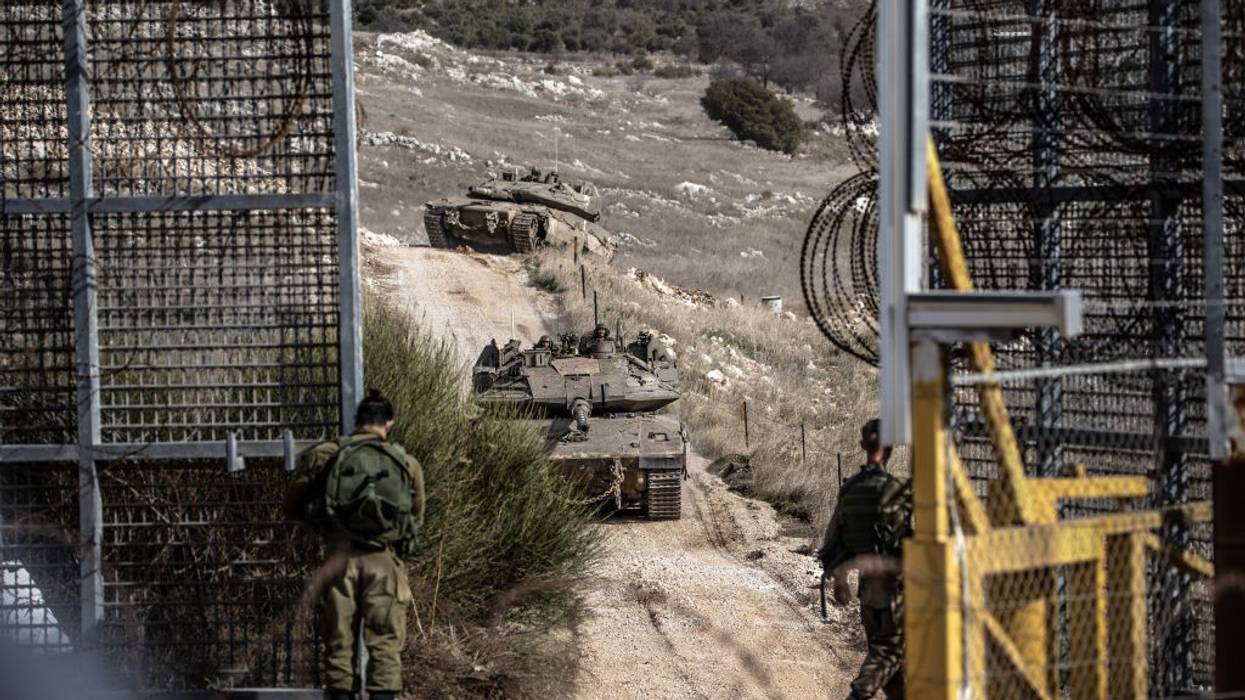
It is up to the U.N. and other governments around the world to intervene, and to hold Israel and the United States accountable for their actions.
The United States, Turkey, and Israel all responded to the fall of the Assad government in Damascus by launching bombing campaigns on Syria. Israel also attacked and destroyed most of the Syrian Navy in port at Latakia, and invaded Syria from the long-occupied Golan Heights, advancing to within 16 miles of the capital, Damascus.
The United States said that its bombing campaign targeted remnants of Islamic State in the east of the country, hitting 75 targets with 140 bombs and missiles, according to Air Force Times.
A long-standing force of 900 U.S. troops illegally occupies that part of Syria, partly to divert Syria’s meager oil revenues to the U.S.’s Kurdish allies and prevent the Syrian government from regaining that source of revenue. U.S. bombing badly damaged Syria’s oil infrastructure during the war with the Islamic State, but Russia has been ready to help Syria restore full output whenever it recovers control of that area. U.S. forces in Syria have been under attack by various Syrian militia forces, not just the Islamic State, with at least 127 attacks since October 2023.
Meanwhile, Turkiyë is conducting airstrikes, drone strikes, and artillery fire as part of a new offensive by a militia it formed in 2017 under the Orwellian guise of the “Syrian National Army” to invade and occupy parts of Rojava, the autonomous Kurdish enclave in northeast Syria.
Israel, however, launched a much broader bombing campaign than Turkey or the U.S., with about 600 airstrikes on post-Assad Syria in the first eight days of its existence. Without waiting to see what form of government the political transition in Syria leads to, Israel set about methodically destroying its entire military infrastructure, to ensure that whatever government comes to power will be as defenseless as possible.
Israel claims its new occupation of Syrian territory is a temporary move to ensure its own security. But while Israel bombed Syria 220 times over the past year, killing about 300 people, Syria showed restraint and did not retaliate for those attacks.
The pattern of Israeli history has been that land grabs like this usually turn into long-term illegal Israeli annexations, as in the Golan Heights and the Occupied Palestinian Territories. That will surely be the case with Israel’s new strategic base on top of Mount Hermon, overlooking Damascus and the surrounding area, unless a new Syrian government or international diplomacy can force Israel to withdraw.
Egypt, Jordan, Iraq, Saudi Arabia, Qatar, Iran, Russia, and the U.N. have all joined the global condemnation of the new Israeli assault on Syria. Geir Pedersen, the U.N. Special Envoy to Syria, called Israel’s military actions “highly irresponsible,” and U.N. peacekeepers have removed Israeli flags from newly-occupied Syrian territory.
The Qatari Foreign Ministry called Israel’s actions “a dangerous development and a blatant attack on Syria’s sovereignty and unity as well as a flagrant violation of international law… that will lead the region to further violence and tension.”
The Saudi Foreign Ministry reiterated that the Golan Heights is an occupied Arab territory, and said that Israel’s actions confirmed “Israel’s continued violation of the rules of international law and its determination to sabotage Syria’s chances of restoring its security, stability and territorial integrity.”
The only country in the world that has ever recognized Israel’s annexation of the Golan Heights is the United States, under the first Trump administration, and it is part of Biden’s disastrous legacy in the Middle East that he failed to stand up for international law and reverse Trump’s recognition of that illegal Israeli annexation.
As people all over the world watch Israel ignore the rules of international law that every country in the world is committed to live by, we are confronted by the age-old question of how to respond to a country that systematically ignores and violates these rules. The foundation of the UN Charter is the agreement by all countries to settle their differences diplomatically and peacefully, instead of by the threat or use of military force.
As Americans, we should start by admitting that our own country has led the way down this path of war and militarism, perpetuating the scourge of war that the UN Charter was intended to provide a peaceful alternative to.
"While the United States bears a great deal of responsibility for this crisis, U.S. officials remain in collective denial over the criminal nature of Israel's actions and their instrumental role in Israel’s crimes."
As the United States became the leading economic power in the world in the 20th century, it also built up dominant military power. Despite its leading role in creating the United Nations and the rules of the U.N. Charter and the Geneva Conventions, it came to see strict compliance with those rules as an obstacle to its own ambitions, from the U.N. Charter’s prohibition against the threat or use of military force to the Geneva Conventions’ universal protections for prisoners of war and civilians.
In its “war on terror,” including its wars on Iraq and other countries, the United States flagrantly and systematically violated these bedrock foundations of world order. It is a fundamental principle of all legal systems that the powerful must be held accountable as well as the weak and the vulnerable. A system of laws that the wealthy and powerful can ignore cannot claim to be universal or just, and is unlikely to stand the test of time.
Today, our system of international law faces exactly this problem. The U.S. presumption that its overwhelming military power permits it to violate international law with impunity has led other countries, especially U.S. allies but also Russia, to apply the same opportunistic standards to their own behavior.
In 2010, an Amnesty International report on European countries that hosted CIA “black site” torture chambers called on U.S. allies in Europe not to join the United States as another “accountability-free zone” for war crimes. But now the world is confronting a U.S. ally that has not just embraced, but doubled down on, the U.S. presumption that dominant military power can trump the rule of law.
The Israeli government refuses to comply with international legal prohibitions against deliberately killing women and children, by military force and by deprivation; seizing foreign territory; and bombing other countries. Shielded from international accountability behind the U.S. Security Council veto, Israel thumbs its nose at the world’s impotence to enforce international law, confident that nobody will stop it from using its deadly and destructive war machine wherever and however it pleases.
So the world’s failure to hold the United States accountable for its war crimes has led Israel to believe that it too can escape accountability, and U.S. complicity in Israeli war crimes, especially the genocide in Gaza, has inevitably reinforced that belief.
U.S. responsibility for Israel’s lawlessness is compounded by the conflict of interest in its dual role as both Israel’s military superpower ally and weapons supplier and the supposed mediator of the lopsided “peace process” between Israel and Palestine, whose inherent flaws led to Hamas’s election victory in 2006 and now to the current crisis.
Instead of recognizing its own conflict of interest and deferring to intervention by the UN or other neutral parties, the U.S. has jealously guarded its monopoly as the sole mediator between Israel and Palestine, using this position to grant Israel total freedom of action to commit systematic war crimes. If this crisis is ever to end, the world cannot allow the U.S. to continue in this role.
While the United States bears a great deal of responsibility for this crisis, U.S. officials remain in collective denial over the criminal nature of Israel’s actions and their instrumental role in Israel’s crimes. The systemic corruption of U.S. politics severely limits the influence of the majority of Americans who support a ceasefire in Gaza, as pro-Israel lobbying groups buy the unconditional support of American politicians and attack the few who stand up to them.
Despite America’s undemocratic political system, its people have a responsibility to end U.S. complicity in genocide, which is arguably the worst crime in the world, and people are finding ways to bring pressure to bear on the U.S. government:
Members of CODEPINK, Jewish Voice For Peace and Palestinian-, Arab-American and other activist groups are in Congressional offices and hearings every day; constituents in California are suing two members of Congress for funding genocide; students are calling on their universities to divest from Israel and U.S. arms makers; activists and union members are identifying and picketing companies and blocking ports to stop weapons shipments to Israel; journalists are rebelling against censorship; U.S. officials are resigning; people are on hunger strike; others have committed suicide.
It is also up to the U.N. and other governments around the world to intervene, and to hold Israel and the United States accountable for their actions. A growing international movement for an end to the genocide and decades of illegal occupation is making progress. But it is excruciatingly slow given the appalling human cost and the millions of Palestinian lives at stake.
Israel’s international propaganda campaign to equate criticism of its war crimes with antisemitism poisons political discussion of Israeli war crimes in the United States and some other countries.
But many countries are making significant changes in their relations with Israel, and are increasingly willing to resist political pressures and propaganda tropes that have successfully muted international calls for justice in the past. A good example is Ireland, whose growing trade relations with Israel, mainly in the high-tech sector, formerly made it the fourth largest importer of Israeli products in the world in 2022.
Ireland is now one of 14 countries who have officially intervened to support South Africa’s genocide case against Israel at the International Court of Justice (ICJ) - the others are Belgium, Bolivia, Chile, Colombia, Cuba, Egypt, Libya, the Maldives, Mexico, Nicaragua, Palestine, Spain and Turkiyë. Israel reacted to Ireland’s intervention in the case by closing its embassy in Dublin, and now Israeli Foreign Minister Gideon Saar has smeared Ireland’s Taoiseach (prime minister) Simon Harris as “antisemitic.”
The Taoiseach’s spokesperson replied that Harris “will not be responding to personalized and false attacks, and remains focused on the horrific war crimes being perpetrated in Gaza, standing up for human rights and international law and reflecting the views of so many people across Ireland who are so concerned at the loss of innocent, civilian lives.”
If the people of Palestine can stand up to bombs, missiles, and bullets day after day for over a year, the very least that political leaders around the world can do is stand up to Israeli name-calling, as Simon Harris is doing.
Spain is setting an example on international efforts to halt the supply of weapons to Israel, with an arms embargo and a ban on weapons shipments transiting Spanish ports, including the U.S. naval base at Rota, which the U.S. has leased since it formed a military alliance with Spain’s Franco dictatorship in 1953.
Spain has already refused entry to two Maersk-owned ships transporting weapons from North Carolina to Israel, while dockworkers in Spain, Belgium, Greece, India, and other countries have refused to load weapons and ammunition onto ships bound for Israel.
The U.N. General Assembly (UNGA) has passed resolutions for a ceasefire in Gaza; an end to the post-1967 Israeli occupation; and for Palestinian statehood. The General Assembly’s 10th Emergency Special Session on the Israel-Palestine conflict under the Uniting for Peace process has been ongoing since 1997.
The General Assembly should urgently use these Uniting For Peace powers to turn up the pressure on Israel and the United States. The International Court of Justice (ICJ) has provided the legal basis for stronger action, ruling that the Israeli occupation of the Palestinian territories Israel invaded in 1967 is illegal and must be ended, and that the massacre in Gaza appears to violate the Genocide Convention.
Inaction is inexcusable. By the time the ICJ issues a final verdict on its genocide case, millions may be dead. The Genocide Convention is an international commitment to prevent genocide, not just to pass judgment after the fact. The U.N. General Assembly has the power to impose an arms embargo, a trade boycott, economic sanctions, a peacekeeping force, or to do whatever it takes to end the genocide.
When the U.N. General Assembly first launched its boycott campaign against apartheid South Africa in 1962, not a single Western country took part. Many of those same countries will be the last to do so against Israel today. But the world cannot wait to act for the blessing of complacent wealthy countries who are themselves complicit in genocide.
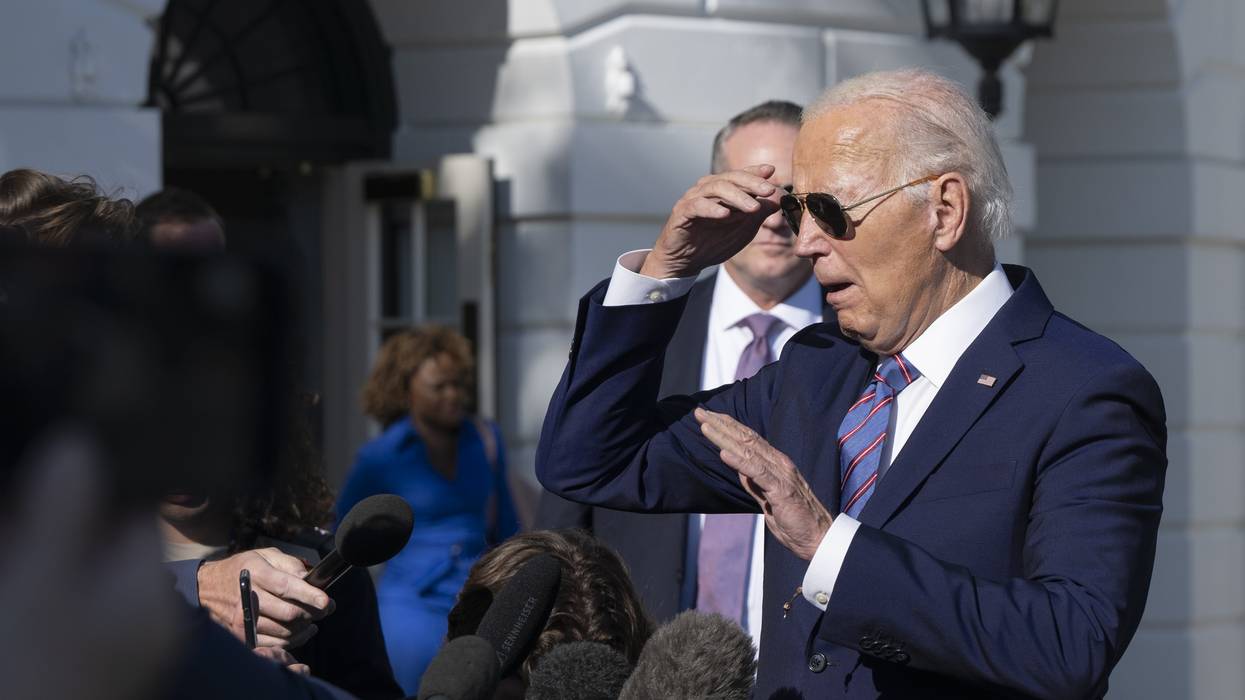
Rather than being open about the implications of “catastrophic success,” Biden has taken pride in how he and his predecessors have implemented policies that enabled a U.S.-designated terrorist organization to force Assad from the country.
Officials in the Biden administration are taking credit for creating conditions in Syria that enabled opposition forces to overthrow the Syrian government.
Now that opposition forces have ousted Syrian President Bashar al-Assad, administration officials are insisting that longstanding U.S. policies, including actions taken by the Biden administration against Assad’s supporters, made the overthrow of the Syrian government possible. Administration officials deny that they aided Hayat Tahrir al-Sham (HTS), the U.S.-designated terrorist organization that led the drive to overthrow Assad, but they insist that they facilitated the opposition’s victory, citing years of U.S. efforts to empower the opposition and weaken the Syrian government.
Just as U.S. officials have claimed, the United States played a central role in creating the conditions that led to Assad’s ouster.
U.S. policy “has led to the situation we’re in today,” State Department Spokesperson Matthew Miller said in a December 9 press briefing, the day after Assad fled the country. It “was developed during the latter stages of the Obama administration” and “has largely carried through to this day.”
White House Spokesperson John Kirby agreed, giving credit to the president. “We believe that developments in Syria very much prove the case of President Biden’s assertive foreign policy,” Kirby said in remarks to the press on December 10.
For over a decade, the United States has sought regime change in Syria. Officials in Washington have openly called for an end to the rule of Syrian President Bashar al-Assad, the repressive and authoritarian leader who first began ruling Syria in 2000, following decades of rule by his father, Hafez al-Assad.
U.S. efforts to oust Assad date back to 2011, when Syria descended into a civil war. As Assad responded to popular uprisings with violent crackdowns, the United States began supporting multiple armed groups, several of which were seeking the overthrow of the Syrian government.
The Obama administration designed the initial U.S. strategy to oust Assad. Hoping to avoid “catastrophic success,” or a situation in which extremists ousted Assad and seized power, the administration decided on a stalemate strategy. The United States provided opposition forces with enough support to keep pressure on Assad but not enough to overthrow him.
The administration’s goal was “a political settlement, a scenario that relies on an eventual stalemate among the warring factions rather than a clear victor,” U.S. officials explained at the time, as reported by The Washington Post.
The Obama administration came close to achieving its objectives in 2015, when opposition forces began moving into areas around Damascus. With Assad under growing pressure, it appeared that he might lose his grip on power and be forced to negotiate or surrender.
As opposition forces gained momentum, however, Assad received a lifeline from Russia, which intervened to save him. By coming to Assad’s assistance with airstrikes and military support, Russia enabled Assad to turn the tide against the rebels and remain in power.
Following Russia’s intervention, the civil war largely settled into stalemate, which left Syria divided into different areas of control. Assad consolidated his control of Damascus and the surrounding areas with support from Russia, Iran, and Hezbollah. Many opposition forces regrouped in northwestern Syria, where they received support from Turkey. Kurdish-led forces, which were separate from the opposition, carved out an autonomous region in northeastern Syria, keeping another part of the country outside of Assad’s control.
As the civil war cooled, U.S. officials maintained its strategy of stalemate. Although they believed that Assad had secured his position in Damascus, they remained convinced that they could still pressure him into resigning, primarily by keeping him weakened and denying him a victory.
U.S. policies to keep Assad weakened spanned the administrations of Barack Obama, Donald Trump, and Joe Biden. These policies included the diplomatic isolation of Assad, severe economic sanctions on Syria, ongoing military strikes inside Syria, and additional support to opposition groups.
With Syria becoming a “cadaver state,” as an official in the Trump administration described it, U.S. policies also kept the country dismembered. By preventing Assad from regaining control of areas that he had lost in the war, U.S. officials hoped to pressure him into accepting a political transition.
Since the Obama administration first devised the strategy of stalemate, which helped transform Syria into a dismembered cadaver state, Assad ruled over a devastated country, one that may never recover.
U.S. officials focused much of their efforts on the Kurdish-led forces in the northeast, an area that includes strategically important wheat fields and oil reserves. Although the Kurds did not seek to overthrow Assad, wanting instead official recognition for their autonomous region inside Syria, U.S. officials knew they could undermine Assad by keeping northeastern Syria outside his control.
At the same time, U.S. officials worked to ensure that opposition forces remained in control of northwestern Syria. Even with the region controlled by HTS, a U.S.-designated terrorist organization, U.S. officials abetted the group’s operations, viewing HTS as “an asset” and believing it was critical to keeping Syria dismembered.
“I just did everything I could to be able to monitor what they were doing and ensuring that those people who spoke to them knew what our policy was, which was to leave HTS alone,” former U.S. diplomat James Jeffrey acknowledged in a 2021 interview with the PBS program Frontline.
Since the Biden administration entered office in 2021, however, it has been largely quiet about its intentions for Syria. Although the administration appeared to continue the strategy of stalemate, mainly by keeping Assad weakened and Syria dismembered, administration officials rarely expressed a great deal of interest in the country.
As administration officials grew quiet, some lawmakers grew suspicious, wondering whether the Biden administration was abandoning the project of ousting Assad. During a 2022 congressional hearing, congressional leaders criticized the administration for creating an impression that it had accepted Assad’s rule.
“I remain concerned this administration has accepted Assad’s rule as a foregone conclusion,” U.S. Senator James Risch (R-Idaho) remarked.
From 2022 to 2023, a number of U.S. allies in the Middle East began moving to restore relations with Assad. In May 2023, Arab leaders welcomed Syria back into the Arab League, ending its suspension from the organization. Officials in the Biden administration criticized the moves, but they did not express any interest in returning to the more volatile dynamics of the civil war.
In fact, recent news reports indicate that the Biden administration was working to forge a deal in which Assad cut ties to Iran in exchange for reductions in pressure on his government. This major diplomatic push, which involved the United States and its Gulf allies, preceded the recent armed uprising that ousted Assad, leading to speculation that the Biden administration had been anticipating a future in which the Syrian leader remained in power.
After HTS began its offensive in late November 2024, the Biden administration revived a familiar playbook. Resorting to the ideas and tactics of its predecessors, the administration presented HTS’s maneuvers in a manner that fit with a policy of stalemate.
In a December 1 interview with CNN, National Security Advisor Jake Sullivan pointed to the stalemate framework by making two basic points. The first was that the Biden administration had concerns about HTS, which Sullivan placed “at the vanguard” of the uprising. “We have real concerns about the designs and objectives of that organization,” he said, acknowledging it is a U.S.-designated terrorist organization.
His second point was that the Biden administration did not see the actions taken by HTS as particularly worrisome, as they could potentially weaken the Syrian government. “We don’t cry over the fact that the Assad government, backed by Russia, Iran and Hezbollah, [is] facing certain kinds of pressure,” Sullivan said.
The Biden administration’s resurgent American empire has also had major consequences for Syria.
Even as administration officials saw advantages to be gained from the stalemate strategy, however, it remained unclear just how much pressure the Biden administration wanted HTS to put on Assad. Once HTS began making rapid gains, officials appeared to grow concerned.
“These are not good folks,” White House Spokesperson John Kirby said on December 2, referring to HTS.
Still, some observers indicated that there was a strategic logic to HTS’s moves. Former U.S. official Andrew Tabler, who worked on U.S. policy toward Syria in the Trump administration, suggested at a policy forum hosted by The Washington Institute that the uprising could test Assad’s capabilities.
“They just decided to sort of poke the front lines, so to speak, in a very dramatic way,” Tabler said.
Tabler acknowledged that HTS’s uprising revealed significant weaknesses in Assad’s capabilities, but he anticipated that it would take several years to pressure Assad into leaving office. Like many officials in Washington, he saw the offensive as a way to increase pressure on the Syrian government rather than the beginning of the end to Assad’s rule.
“This is a challenge to the regime, but it’s not going to lead to its immediate collapse,” Tabler said.
In fact, many U.S. officials did not anticipate that the offensive would lead to a sudden collapse of the Syrian government. Given that Assad had previously survived a comparable challenge in 2015, there were strong beliefs both inside and outside of Washington that Assad and his supporters would continue to repel opposition forces.
“I think the entire international community was surprised to see that the opposition forces moved as quickly as they did,” Secretary of Defense Lloyd Austin later noted. “Everybody expected to see a much more stiff resistance from Assad’s forces.”
It was only once opposition forces began to take control of Aleppo in early December, about a week before Assad fled the country, that the Biden administration began planning for the possibility of Assad’s downfall, according to U.S. officials.
When “we saw the fall of Aleppo, we started to prepare for all possible contingencies,” a senior official in the Biden administration explained.
Indeed, the speed of the opposition’s movement caught many of the highest-level officials in the Biden administration by surprise, as they had been working on the assumption that Assad would remain in power for the immediate future.
“We didn’t directly see the fall of Assad,” State Department Spokesperson Matthew Miller acknowledged.
Regardless of the ebb and flow of the Biden administration’s Syria policy, years of U.S. actions have clearly taken a toll on Syria. Just as U.S. officials have claimed, the United States played a central role in creating the conditions that led to Assad’s ouster.
Since the Obama administration first devised the strategy of stalemate, which helped transform Syria into a dismembered cadaver state, Assad ruled over a devastated country, one that may never recover.
The Biden administration’s resurgent American empire has also had major consequences for Syria. By spending the past two years supporting Ukraine against Russia and the past year backing Israel’s military offensives across the Middle East, the Biden administration has implemented policies that have imposed major costs on Assad’s supporters, especially Russia, Iran, and Hezbollah. Without external support, the longtime Syrian leader could no longer withstand violent challenges to his rule.
Shortly after the fall of Assad, President Biden recognized the implications of his administration’s actions, claiming in a major address that U.S. policies set the stage for Assad’s downfall. Even while acknowledging that “some of the rebel groups that took down Assad have their own grim record of terrorism and human right abuses,” he proudly insisted that his administration’s actions had made regime change possible.
Indeed, President Biden has been quick to take credit for the overthrow of another government in the Middle East. Rather than being open about the implications of “catastrophic success,” Biden has taken pride in how he and his predecessors have implemented policies that enabled a U.S.-designated terrorist organization to force Assad from the country.
“Our approach has shifted the balance of power in the Middle East,” Biden said. Through a “combination of support for our partners, sanctions, and diplomacy and targeted military force when necessary, we now see new opportunities opening up for the people of Syria and for the entire region.”
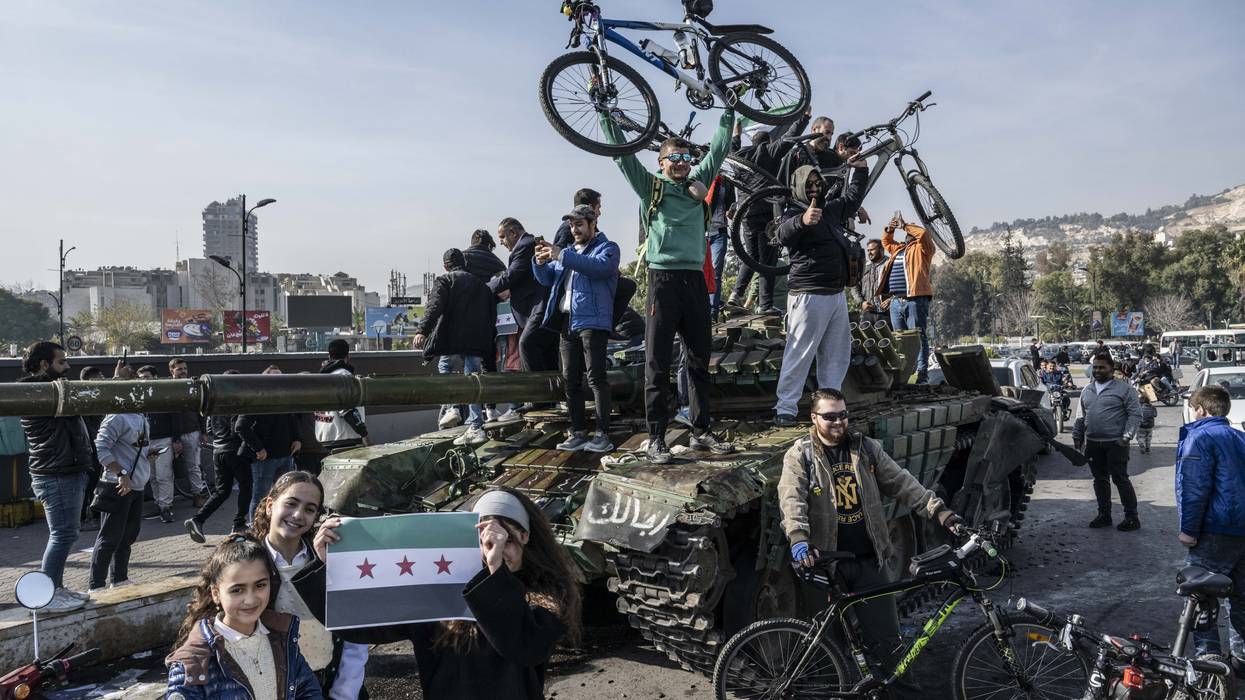
After decades of oppression and 14 years of war, it will take much more to heal these wounds and guarantee a new era of freedom, justice, prosperity, and reconciliation.
Syria, known throughout history as the “crossroads of civilization,” now finds itself at a crossroads of its own. After 54 years, the Assad family’s brutal dictatorship in Syria has finally ended.
“I never thought I’d live to see this day,” said my dad, who left Aleppo as a teenager. My parents grew up there.
After Bashar al-Assad fled to Russia, elated Syrians rejoiced in the streets. Moving videos emerged of political prisoners being freed after enduring decades of torture in the regime’s notorious prisons. The whereabouts of many still remain unknown.
In addition to respecting Syria’s territorial integrity and the aspirations of its people in a future government, the U.S. should immediately lift all sanctions on Syria to help with reconstruction and economic recovery.
Assad’s fall is undeniably worth celebrating—it’s a rare unifying force for a deeply fractured country. But after decades of oppression and 14 years of war, it will take much more to heal these wounds and guarantee a new era of freedom, justice, prosperity, and reconciliation.
The popular uprising for Syrian dignity that ignited in March 2011 was violently crushed by Assad and morphed into several proxy wars involving Russia, Iran, Israel, the U.S., Turkey, and numerous armed groups, including al Qaeda-linked terrorists.
Heinous war crimes and other human rights violations were committed by all parties throughout the war, which has killed over 350,000 people. In the world’s largest forced displacement crisis, over 13 million Syrians have either fled their country or have been displaced within its borders.
The war has damaged Syria’s infrastructure while Western sanctions have further shattered Syria’s economy. Poverty is widespread, and more than half of the population currently grapples with food insecurity.
Hayat Tahrir al-Sham (HTS), once allied with al Qaeda in Syria, was largely responsible for Assad’s overthrow on December 8. Designated by the U.S as a terrorist organization, HTS has its own track record of brutality in Syria. The rebel group’s leader, Abu Mohammed al-Jolani, founded the Al Nusra Front, once had ties to ISIS, and still has a $10 million U.S. bounty on his head.
Jolani has since renounced his ties with al Qaeda and recently said he supports religious pluralism in Syria. But it’s reasonable to be skeptical that HTS and its allies are now truly committed to freedom, justice, and human rights for all long-suffering Syrians.
Still, foreign occupation and intervention are antithetical to a sovereign and “free” Syria.
Following Assad’s fall, Israel has launched hundreds of airstrikes and unlawfully seized more territory beyond its illegal, 57-year occupation of Syria’s Golan Heights. Whether Turkey gives up occupied land in northern Syria also remains to be seen, especially if Syrian Kurds end up forming an autonomous region within the country.
Meanwhile, the U.S. military still occupies part of Syria, including the oil fields in the northeast, and it’s unclear when the U.S. will withdraw its remaining 900 soldiers. In addition to respecting Syria’s territorial integrity and the aspirations of its people in a future government, the U.S. should immediately lift all sanctions on Syria to help with reconstruction and economic recovery.
As a Syrian American, I try to remain hopeful as I think about my relatives in Aleppo, friends in Damascus, and the generous strangers who’ve taken care of me as their own when I’ve visited. I look forward to returning to a Syria where people can finally breathe, rebuild, and live in dignity. But I also fear for the future.
Syrians have always taken pride in their rich ethnic and religious diversity. An inclusive and democratic government that guarantees the equal rights of all Syrians is essential to ensuring that the country stays unified and doesn’t plunge into sectarian chaos. It would be tragic if one authoritarian ruler is replaced by another or the country becomes balkanized into armed factions.
While much remains uncertain and immense challenges are ahead, prioritizing the immediate needs of Syrians is a logical first step. And, more than anything else, we must ensure that the Syrian people are the ones who steer the destiny of a peaceful, post-war Syria that reflects their remarkable resilience, courage, hopes, and dreams.
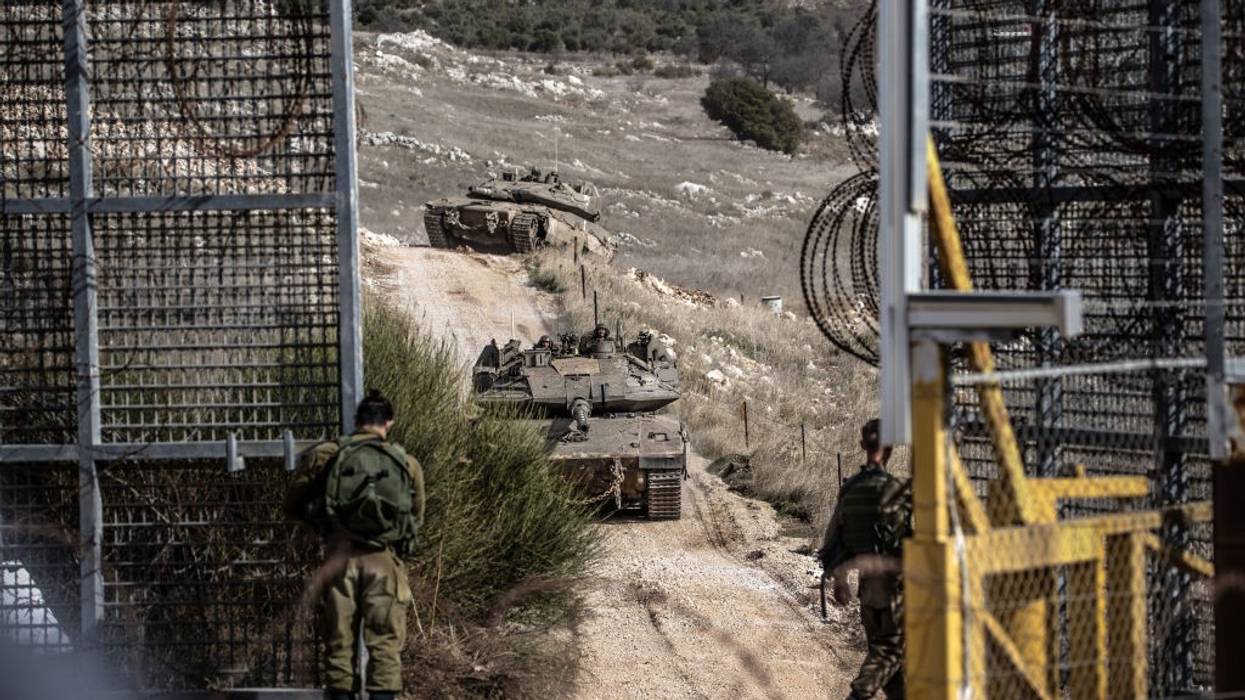
United Nations Secretary-General António Guterres stressed the "urgent need" for Israel to "de-escalate violence on all fronts."
United Nations Secretary-General António Guterres said Thursday that he is "deeply concerned" by Israel's "recent and extensive violations of Syria's sovereignty and territorial integrity," including a ground invasion and airstrikes carried out by the Israel Defense Forces in the war-torn Mideastern nation.
Guterres "is particularly concerned over the hundreds of Israeli airstrikes on several locations in Syria" and has stressed the "urgent need to de-escalate violence on all fronts throughout the country," said U.N. spokesperson Stephane Dujarric.
Israel claims its invasion and bombardment of Syria—which come as the United States and Turkey have also violated Syrian sovereignty with air and ground attacks—are meant to create a security buffer along the countries' shared border in the wake of last week's fall of former Syrian President Bashar al-Assad and amid the IDF's ongoing assault on Gaza, which has killed or wounded more than 162,000 Palestinians and is the subject of an International Court of Justice genocide case.
While Israel argues that its invasion of Syria does not violate a 1974 armistice agreement between the two countries because the Assad dynasty no longer rules the neighboring nation, Dujarric said Guterres maintains that Israel must uphold its obligations under the deal, "including by ending all unauthorized presence in the area of separation and refraining from any action that would undermine the cease-fire and stability in Golan."
Israel conquered the western two-thirds of the Golan Heights in 1967 and has illegally occupied it ever since, annexing the seized lands in 1981.
Other countries including France, Russia, and Saudi Arabia have criticized Israel's invasion, while the United States defended the move.
"The Syrian army abandoned its positions in the area... which potentially creates a vacuum that could have been filled by terrorist organizations," U.S. State Department spokesperson Matthew Miller said at a press briefing earlier this week. "Israel has said that these actions are temporary to defend its borders. These are not permanent actions... We support all sides upholding the 1974 disengagement agreement."
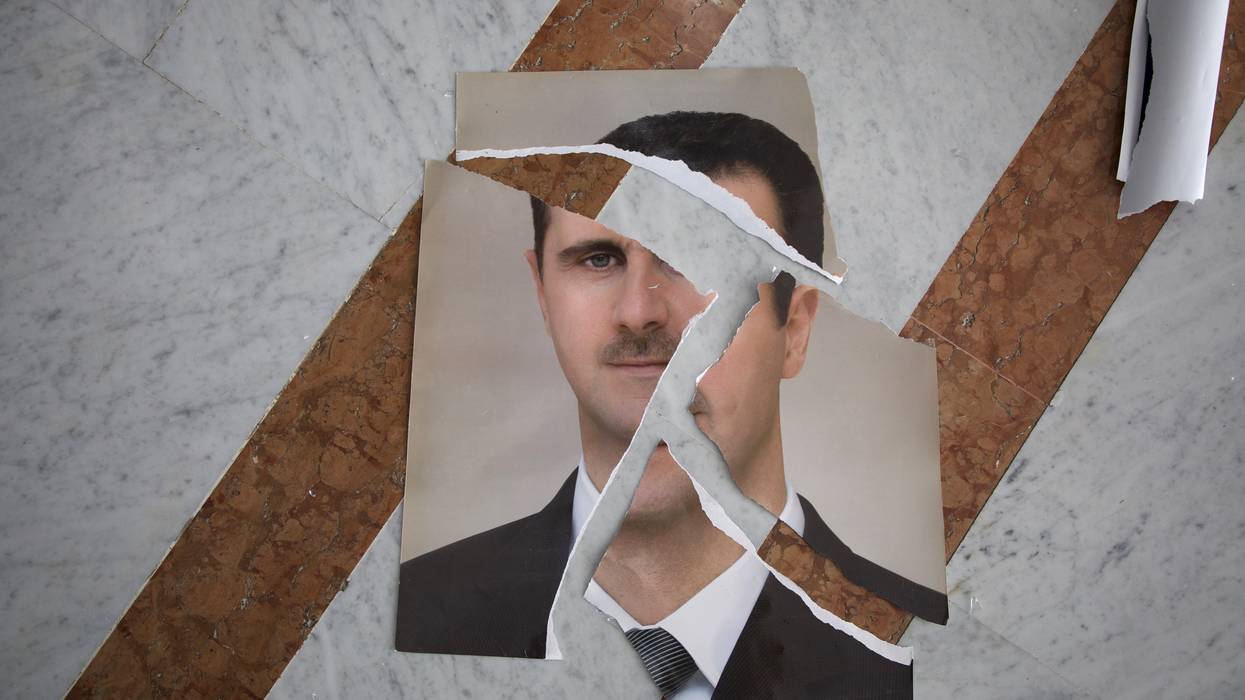
How can the fall of the admittedly brutal Assad regime create a “historic opportunity” for the Syrian people when the country is now under the control of jihadists?
The toppling of Bashar al-Assad in Syria was cheered by U.S. President Joe Biden and other major Western leaders, like French President Emmanuel Macron and German Chancellor Olaf Scholz, as it ended the reign of a brutal regime more than 13 years after Assad’s crackdown on anti-government protests ignited Syria’s civil war.
Indeed, Biden described Assad’s fall as a “historic opportunity” for the Syrian people, echoing Abu Mohammed al-Jolani, the leader of the Islamist Hayat Tahrir al-Sham group (HTS) that took over Syria, who said, “This victory, my brothers, is historic for the region.”
But wait. Isn’t HTS on the list of banned terrorist groups and Jolani a jihadist militant whose journey began in Iraq with links to al Qaeda and later to the Islamic State of Iraq (ISI)? So why is the West cheering for al Qaeda and its allies?
When all is said and done, forcing regime change rarely succeeds.
The European Union Agency for Asylum describes HTS as a coalition of Islamist Sunni armed groups that “frequently commit serious human rights abuses, including harassment, assassinations, kidnapping, and torture, as well as unlawful detention of civilians.” It goes on to say that “civilians have also been extorted and kidnapped for ransom” and that “the group has conducted formal military campaigns, assassinations, hostage takings, and ‘lone wolf’ operations, including suicide bombings,” while “members of religious minorities have been forced to convert to Islam and adopt Sunni customs.”
So, what is going on here? How can the fall of the admittedly brutal Assad regime create a “historic opportunity” for the Syrian people when the country is now under the control of jihadists? But we’ve been witness to this comedy drama before. From 1979 to 1989, the United States (along with Saudi Arabia and Pakistan) armed and financed the Afghan Islamist fighters known as the mujahideen who were fighting the Soviet Union. The plan from the beginning was to keep the Islamist insurgency going for as long as possible, thus sucking the Soviets into a Vietnam-style quagmire.
The Islamist fight in Afghanistan against the Soviets was “the good jihad,” according to Washington. The mujahideen were fighting for peace against an enemy of the Western world and deserved U.S. support. Of course, we know how that turned out.
The Bush administration embarked on a campaign against terrorism following the 9/11 attacks, with the first phase of the campaign focusing on “capturing or killing bin Laden, destroying his al Qaeda network in Afghanistan, and deposing the Taliban-regime.”
Undoubtedly, bombing into oblivion the Islamists in Syria if the new government, headed by Mohammed al-Bashir who has been appointed as interim prime minister, fails to lead a new path is a contingency plan that Washington has probably already considered. The job, in fact, could be given to Israel, for whom bombing is second nature. Since the fall of Assad, Israel has already carried out hundreds of airstrikes across Syria, targeting airports, naval bases, and military infrastructure. And the U.S. Central Command announced that it has struck more than 75 targets, including ISIS leaders, operatives, and camps.
Hypocrisy and duplicity, followed in the end by astonishing moral and political somersaults, are trademarks of the way Washington and its Western allies approach world affairs and conduct diplomacy. And these elements have been in full display since the start of Syria’s civil war. The Obama administration provided support to the anti-Assad forces, primarily to the Free Syrian Army forces and its affiliates, but the CIA began to support other groups as early as 2013 even though they had jihadi orientations. CIA’s covert operation against the Syrian regime, known as Timber Sycamore, was a joint effort with Saudi Arabia that had long ties with radical Islamist groups. But regime change is what Washington was after in Syria, so everything else was of secondary concern.
The fall of the Assad regime has staggering implications for security in the region, but the speed with which it collapsed suggests that, in the end, it may have been mainly internal rather than external pressures that made the difference. Syria was under imperialist attack for the past 13 years. The U.S. (along with Turkey) backed and funded mercenaries and terrorist forces against Assad’s regime, imposed economic isolation of the country through sanctions, and denied plans that would have contributed to reconstruction even though aid was desperately needed for civilians. In April 2017, the U.S. even ordered direct military action against Syria in retaliation for the alleged use of chemical weapons by the Assad regime. The Trump administration claimed to have been moved by the deaths of some 80 civilians; yet then-President Donald Trump refused to lift his ban on accepting Syrian refugees into the U.S.
But the Assad regime had created a hellish place, with 90% of Syrians living in poverty and widespread malnutrition. The country was in a vicious downward spiral. The economy had plummeted by 85% due to nearly 14 years of civil war. The inflation rate had risen to over 120% in 2024 while electricity production had dropped by 80%, with power outrages having become a common phenomenon. And the only thing that the Assad’s regime had to offer was more repression.
Still, the collapse of the regime, now celebrated throughout the Western world, raises more questions than answers. There are too many actors, both inside and outside Syria, with diverse interests and conflicting goals and aims. Assad’s regime used secularism as a tool to repress opponents, but there should be no expectations for the emergence of stable secular nationalism in Syria anytime soon. The fear that Syria will face the same fate as Afghanistan is also unfounded. The country has too many hostile factions for a dominant group like the Taliban to take complete control of the country. If anything, it is probably destined to become a failed state like Libya following the overthrow of Moammar Gadhafi in 2011 with the help of NATO, an event that was also widely celebrated by the Western leaders of the time.
Indeed, when all is said and done, forcing regime change rarely succeeds. In fact, U.S. foreign policy has been an unmitigated disaster in the post-Cold War period, creating more problems that it tried to solve. Think of the Balkans, Libya, Afghanistan, Iraq, and the Middle East.
Syria will be no different. It was a hellish place under Assad but will more likely than not end up next as another “black hole” in the lost list of U.S. "achievements" in forcing regime change.
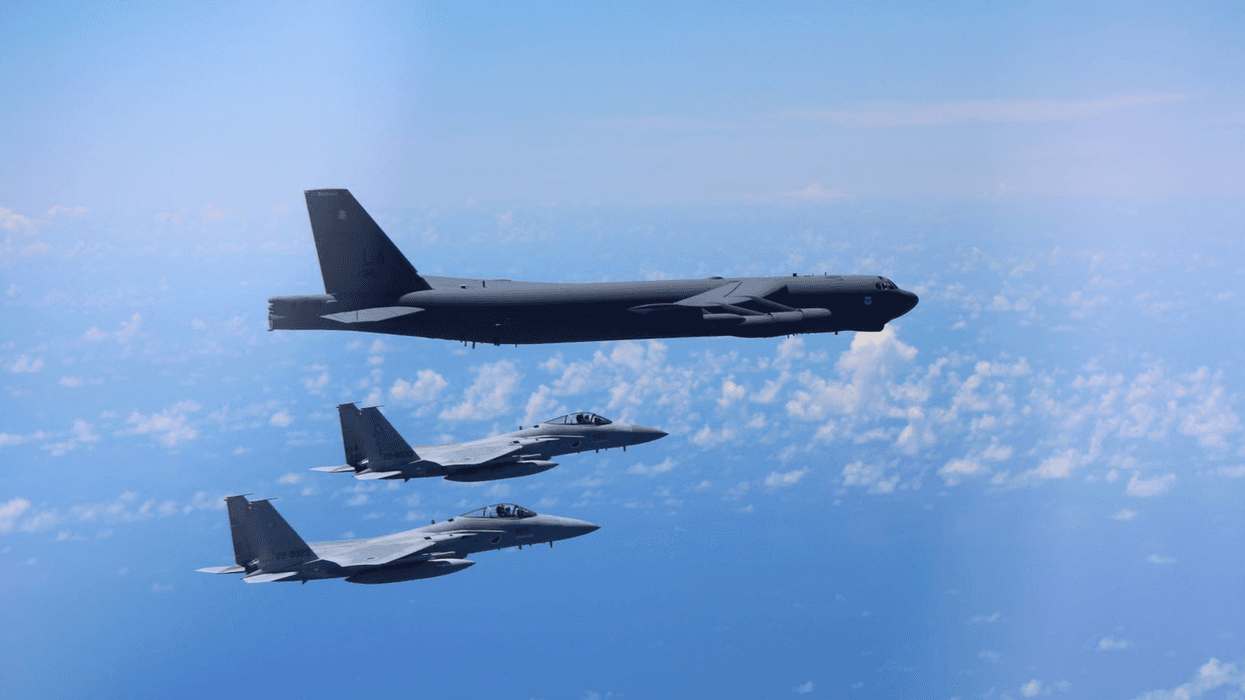
"The Western press are waxing lyrical about the new Syria being born—but not a word on the U.S. and Israeli bombs falling from the sky," said Yanis Varoufakis.
U.S. military forces launched dozens of airstrikes on more than 75 Islamic State targets in Syria on Sunday after the fall of longtime Syrian President Bashar al-Assad and amid ongoing Israeli and Turkish attacks on the war-torn Middle Eastern nation.
According to U.S. Central Command (CENTCOM), warplanes including B-52 bombers, F-15 fighters, and A-10 ground attack aircraft "conducted dozens of precision airstrikes targeting known ISIS camps and operatives in central Syria."
CENTCOM called the strikes "part of the ongoing mission to disrupt, degrade, and defeat ISIS in order to prevent the terrorist group from conducting external operations and to ensure that ISIS does not seek to take advantage of the current situation to reconstitute in central Syria."
The U.S., "together with allies and partners in the region, will continue to carry out operations to degrade ISIS operational capabilities even during this dynamic period in Syria," CENTCOM added.
"The Biden administration ordering ongoing airstrikes is a disappointing sign that they have no intent on reversing their deadly policy of interventionism."
Responding Monday to the latest attacks on Syria by U.S. forces, Danaka Katovich, national co-director of the peace group CodePink, told Common Dreams: "We condemn the U.S. airstrikes in Syria. The U.S. has sowed chaos in Syria and the entire region for years and the Biden administration ordering ongoing airstrikes is a disappointing sign that they have no intent on reversing their deadly policy of interventionism."
U.S. and coalition forces have killed and maimed at least tens of thousands of Syrians and Iraqis during the Obama, Trump, and Biden administrations as part of the anti-ISIS campaign and wider so-called War on Terror.
Commenting on the dearth of coverage of the strikes by the corporate media, prominent Greek leftist Yanis Varoufakis said on social media that "the Western press are waxing lyrical about the new Syria being born—but not a word on the U.S. and Israeli bombs falling from the sky."
"Is there no bottom to the moral void of the Western press?" he added.
Sunday's U.S. strikes came as al-Assad and relatives fled to Russia—where they have been granted asylum—amid the fall of the capital, Damascus, to rebel forces.
Also on Sunday, Israeli forces seized more territory in Syria's Golan Heights and ordered residents of five villages to "stay home and not go out until further notice" if they want to remain safe. Israel conquered the western two-thirds of the Golan Heights in 1967 and has unlawfully occupied it ever since. In 1981, Israel illegally annexed the occupied lands.
"We will not allow any hostile force to establish itself on our border," right-wing Israeli Prime Minister Benjamin Netanyahu—who is wanted by the International Criminal Court for alleged war crimes and crimes against humanity in Gaza—said in a video posted on social media.
Numerous Israelis celebrated the seizure on social media, while others cautioned against boasting about what is almost certainly an illegal conquest.
Meanwhile in northern Syria, Turkish airstrikes in support of Syrian National Army rebels—who are battling U.S.-backed Syrian Democratic Forces (SDF) fighters in and around the Kurdish-controlled city of Manbij—reportedly killed numerous civilians along with dozens of militants.
In what it called a "horrific massacre," the London-based Syrian Observatory for Human Rights said Monday that 11 civilians from the same family, including women and six children, were killed in a Turkish drone strike on the SDF-controlled village of Al-Mustariha in northern Raqqa Governate.
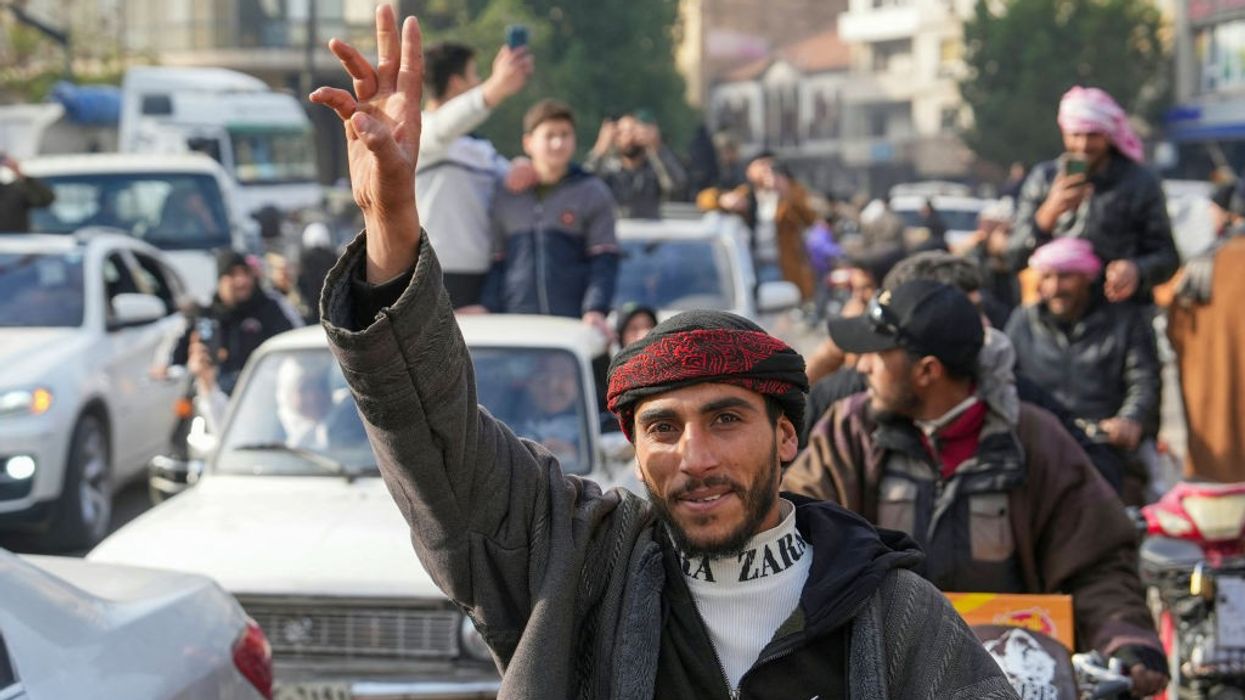
Overthrowing a dictator is very difficult, but it is no guarantee of liberty.
The Syrian Revolution of 2024 has succeeded in deposing the al-Assad dynasty, in power since 1970, throwing off the rule of the once mighty Syrian Socialist Baath Party, a feared and murderous one-party state. Rebel forces streamed into the capital, Damascus, Sunday morning, facing no significant resistance from government troops, amid rumors that dictator Bashar al-Assad had departed the country for parts unknown a day or two ago.
The tip of the spear of the revolution was the fighters of the Levant Liberation Council (Hay’at Tahrir al-Sham or HTS), a hard-line fundamentalist organization that had run the province of Idlib in an authoritarian manner in recent years. It is not ISIL (ISIS, Daesh), though that is one path the victors could take if they were so inclined. So far, their behavior in Aleppo has presented a mixed picture, with some killing of Kurds but less turmoil, including for Christians, than some had feared.
The revolution has, however, now become a mass movement, and despite the Fundamentalist Vigilante (“Salafi Jihadi”) shape of the more effective militias, all sorts of people have joined in. Many of the expatriate supporters of the revolution are businessmen and liberals, who had hoped to come to power in 2011 before al-Assad deliberately provoked a civil war and drove the opposition into the arms of Turkey and the Gulf.
Syria is not well placed for a democratic transition, though stranger things have happened. It would be a shame if the people had to trade one form of authoritarianism for another, as happened in Egypt, Libya, Tunisia, Yemen, and Sudan. Overthrowing a dictator is very difficult, but it is no guarantee of liberty.
Al-Assad is the seventh long-ruling Arab dictator to fall since January 2011. The strongmen of Tunisia, Egypt, Libya, and Yemen fell in 2011-2012. The Bahrain monarchy, however, managed to stay in power, as did Al-Assad in Syria, though the cost to the Syrian people was a years-long civil war that left hundreds of thousands dead and half the country homeless.
I wrote a book about these “Arab Spring” youth revolts, based on field work, The New Arabs, which is still good background reading — if I do say so myself.
"Syrians are better off with the possibility of social evolution than with being locked in a political iron cage, even if the ride may turn very bumpy."
Another shoe dropped when a coalition of leftist labor unions, Sufi orders, and reformist officers overthrew Omar al-Bashir in Sudan on 11 April 2019.
Of the revolts, in Egypt the youth provoked a military coup and then pressured the army to go back to the barracks. In 2013, the army made a counter-coup and Egypt has been run in an even more authoritarian fashion ever since.
In Tunisia, there was a successful democratic transition with regular elections in which the losers went home, until 25 July 2021, when elected President Qais Saied made a self-coup and abolished democracy. Tunisia is now as authoritarian or more as under Zine El Abidine Ben Ali, the general overthrown in mid-January, 2011.
Libya fell into civil war and a kind of partition. Nationalist forces led by Khalifa Hafter control the eastern part of the country, and Muslim fundamentalist forces control the West, along with the capital of Tripoli. They say they have made a government of national unity, but its success is murky. Egypt, the United Arab Emirates, the CIA, and Russia support Hafter. Turkey supports Tripoli.
Yemen fell into civil war, with 80% of the population now ruled by the Houthi Shiite Zaydi militia, which has attracted some Iranian support. A southern separatist militia and Muslim Brotherhood militias have positions in southern and eastern provinces, backed by the UAE and Saudi Arabia, respectively.
Sudan saw wrangling between civilians and the officer corps, which dragged its feet on going to the barracks. On October 25, 2021, General Abdel Fattah al-Burhan staged a coup and arrested many civilian officials. Then the officer corps split, with the conventional forces backing al-Burhan and the Rapid Support Forces (RSF) special operations forces mutinying, with the support of the United Arab Emirates (they get around). The country has plunged into civil war and the humanitarian disaster rivals Gaza in its intensity.
One reason these attempts at a democratic transition failed is that all these countries are desperately poor, except for Libya and Bahrain, which only have oil money, which functions anti-democratically to strengthen the state. Adam Przeworski at NYU, now emeritus, found that middle-income countries like Spain and Taiwan had a better chance of pulling off a transition from an authoritarian to a democratic system. Why is not clear. My guess is that in societies where the government is wealthier than the society, central state actors can overwhelm the public. Where a society has a lot of middle-class people and business interests that value democracy, as in South Korea, they just tell attempted coup-makers “no!”
It also matters what bargains elites make with each other and with the public. One problem everyone ran into in the aftermath of the Arab Spring was that a strong rural-urban divide emerged, which made it difficult to reach a satisfactory compromise. It was paralleled by a nationalist – Muslim fundamentalist divide.
In 2012-13, rural Egypt wanted the Muslim Brotherhood. Urban Egypt mostly hated the Muslim Brotherhood. Abdel Fattah El-Sisi took advantage of the split to make a coup that might satisfy both demographics.
The officer corps has collapsed in Syria, so it doesn’t look like Egypt. If it can move to elections and establish a representative government, Syrians could have a shot at a better life. But if it takes the path of Yemen or Libya, with fundamentalist militias fighting for power, then it will become (even more of) a basket case.
The fate of the 2.4 million Kurds in the northeast, and of 3.5 million Alawites in the northwest, and of possibly a million Christians — plus millions of secular-minded, nationalist Sunnis in Damascus and Aleppo, is very much up in the air. The danger of reprisals against the Alawites for having been the backbone of the Baath Party for 55 years is real.
Those considerations are for another day. Today, let the Syrians bask in the overthrow of a horrid dictatorship that tortured 10,000 prisoners to death, kept thousands of prisoners of conscience locked up, and killed hundreds of thousands of people with indiscriminate fire and barrel bombs, and sometimes chemical weapons. Syrians are better off with the possibility of social evolution than with being locked in a political iron cage, even if the ride may turn very bumpy.

"The city of Damascus has been liberated," rebel fighters declared on state TV.
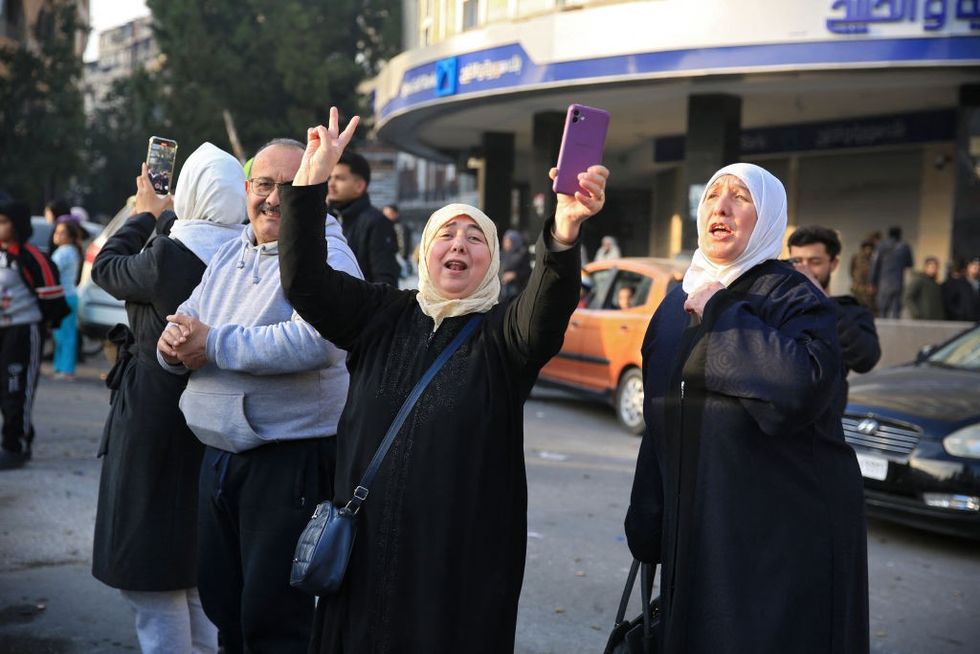
The government of Syrian President Bashar al-Assad collapsed Sunday after rebels seized control of the capital following a stunning advance through major cities, prompting celebrations in the streets as the country's ousted leader fled.
"The city of Damascus has been liberated," rebel fighters declared on state TV. "The regime of the tyrant Bashar al-Assad has been toppled."
Video footage posted to social media showed rebels escorting Syrian Prime Minister Mohammad Ghazi al-Jalali to meet with their leaders. The prime minister said that "we are ready to cooperate" and called for free elections and the preservation of "all the properties of the people and the institutions of the Syrian state."
"They belong to all Syrians," he said.
A video captured outside the Syrian Prime Minister's residence shows rebel forces escorting Mohamad Al Jalali to a meeting with their leaders at the Four Seasons Hotel pic.twitter.com/WkT2IZAJLi
— The National (@TheNationalNews) December 8, 2024
The rebel movement was led by Hayat Tahrir al-Sham (HTS)—an Islamist organization that was once an affiliate of al-Qaeda—along with Turkish-backed Syrian militias. HTS is led by Abu Mohammad al-Jolani; the U.S. State Department has deemed him a "Specially Designated Global Terrorist" and is offering a reward of up to $10 million for information that results in his capture.
After the Assad government fell, ending a decades-long family dynasty, The Associated Press reported that "revelers filled Umayyad Square in the city center, where the Defense Ministry is located."
"Men fired celebratory gunshots into the air and some waved the three-starred Syrian flag that predates the Assad government and was adopted by the revolutionaries," the outlet reported. "A few kilometers (miles) away, Syrians stormed the presidential palace, tearing up portraits of the toppled president. Soldiers and police officers left their posts and fled, and looters broke into the Defense Ministry. Videos from Damascus showed families wandering into the presidential palace, with some emerging carrying stacks of plates and other household items."
Prisons, including a notorious facility on the outskirts of Damascus that Amnesty International described as a "human slaughterhouse," were reportedly opened in the wake of Assad's ouster, with video footage showing detainees walking free.
"Literally seeing hundreds of people across Damascus, friends, family people I've known to be neutral and not involved in politics, all post green flags, all support this movement, people are tired, broken and angry, they want change and change is what they've got," Danny Makki, a non-resident scholar at the Middle East Institute who was on the ground in Damascus as the government fell, wrote on social media.
 (Photo: Aref Tammawi/AFP via Getty Images)
Assad's whereabouts are not known; he left the country without issuing a statement. Reuters reported that the ousted president, "who has not spoken in public since the sudden rebel advance a week ago, flew out of Damascus for an unknown destination earlier on Sunday." (Update: Citing Russian state media, AP reported that "Assad has arrived in Moscow with his family" and has been given asylum.")
Russia's Foreign Ministry said in a statement that "as a result of negotiations between B. Assad and a number of participants in the armed conflict on the territory of the Syrian Arab Republic, he decided to resign from the presidency and left the country, giving instructions for a peaceful transfer of power."
The explosion of Syria's civil war in recent days brought renewed focus to the current role of United States troops in the country. There are currently around 900 American forces in Syria alongside an unknown number of private contractors—troop presence that the Pentagon said it intends to maintain in the wake of Assad's ouster.
The U.S. has said it was not involved in the rebel offensive. In a social media post, a spokesperson for the White House National Security Council wrote that President Joe Biden and his team "are closely monitoring the extraordinary events in Syria and staying in constant touch with regional partners."
"The astonishing speed at which the Assad regime has crumbled exposes once again the inherent fragility of seemingly ironclad dictatorships, and of all governments whose rule is based on repression and corruption."
The U.S.-backed Israeli military said Sunday that it has "taken up new positions" in the occupied Golan Heights "as it prepared for potential chaos following the lightning-fast fall" of Assad, The Times of Israel reported.
"Syrian media reports said Israel had launched artillery shelling in the area," the outlet added.
Geir Pedersen, the United Nations' special envoy for Syria, said in a statement Sunday that Assad's fall "marks a watershed moment in Syria's history—a nation that has endured nearly 14 years of relentless suffering and unspeakable loss."
"The challenges ahead remain immense and we hear those who are anxious and apprehensive," said Pedersen. "Yet this is a moment to embrace the possibility of renewal. The resilience of the Syrian people offers a path toward a united and peaceful Syria."
Nancy Okail, president and CEO of the Center for International Policy, said Sunday that "today belongs to the people of Syria."
"The astonishing speed at which the Assad regime has crumbled exposes once again the inherent fragility of seemingly ironclad dictatorships, and of all governments whose rule is based on repression and corruption," said Okail. "The regime's fast disintegration shows how autocracy, resistance to political transitions, and gross atrocities and the lack of accountability for committing them ultimately doomed Assad's brutal rule. Ritualistic elections cannot replace legitimacy, which remains crucial for stability."
"True sovereignty cannot be attained under the influence of foreign powers that exploit nations as arenas for their own geopolitical competition," Okail added. "While Syria's future is for its people to determine, the United States and its partners should take immediate steps to facilitate delivery of humanitarian and reconstruction aid, and help ensure that future is free and democratic, and the rights of all of its communities are protected."
This story has been updated to include a statement from the Center for International Policy.
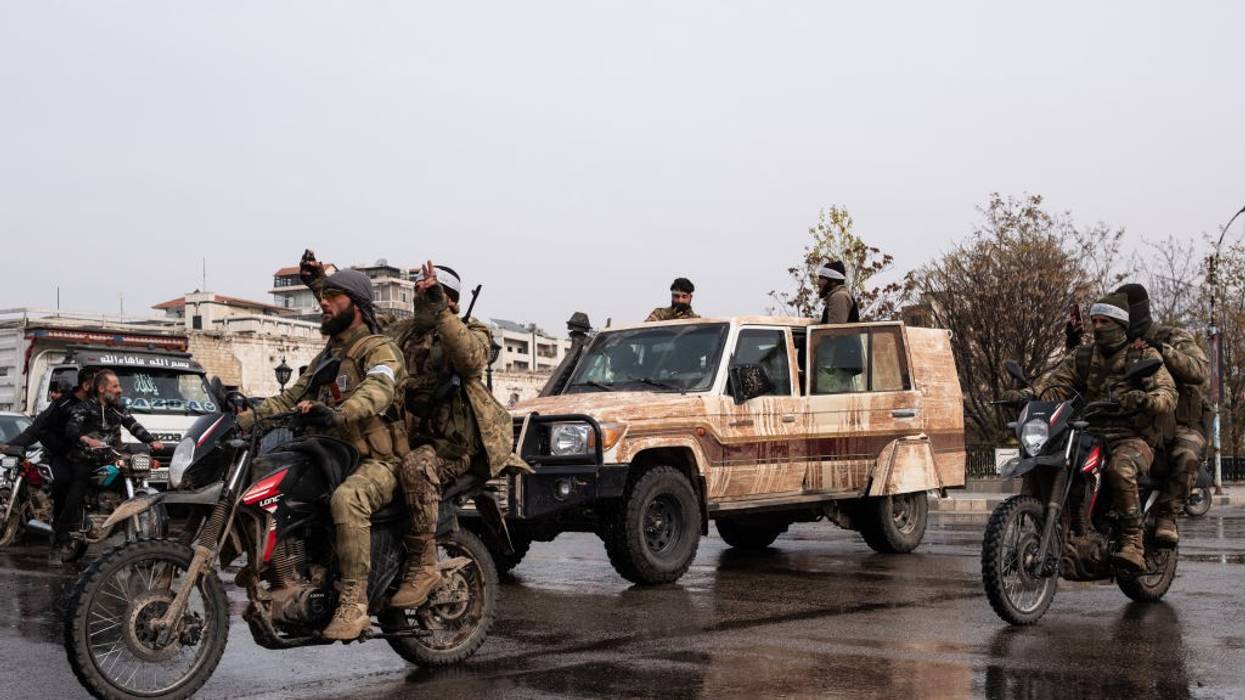
"Whether the Pentagon wants to admit it or not," U.S. troops "are likely involved in the broader conflict unfolding there right now," warned one analyst.
Syrian rebel groups' rapid advance on the nation's capital city of Damascus and the possible collapse of President Bashar al-Assad's government after more than a decade of civil war has brought renewed attention to the continued presence of U.S. forces in the country, despite the absence of a clear legal authorization.
The U.S. is believed to have around 900 troops deployed to Syria, mostly in the northeast, as well as an unknown number of private contractors. Nick Turse, a contributing writer for The Intercept, observed Thursday that American forces in Syria "have, on average, come under fire multiple times each week since last October," according to internal Pentagon statistics.
"Keeping military personnel in harm's way for the sake of foreign policy credibility has become increasingly risky with the Gaza war and the flare-up of the Syrian civil war," Turse wrote.
Kelley Vlahos, senior adviser to the Quincy Institute for Responsible Statecraft, wrote Saturday morning that "whether the Pentagon wants to admit it or not," U.S. troops "are likely involved in the broader conflict unfolding there right now."
Reuters reported Tuesday that as rebels advanced toward the city of Hama, "fighters from a U.S.-backed, Kurdish-led coalition battled government forces in the northeast, both sides said, opening a new front along a vital supply route" and "compounding Assad's problems."
As the coalition of groups led by the Islamist organization Hayat Tahrir al-Sham (HTS) and factions of the Turkey-backed Syrian National Army has quickly seized control of large swaths of territory, the White House National Security Council (NSC) said in a statement last weekend that the U.S.—which has previously armed and trained Syrian rebels—"has nothing to do with this offensive."
"The United States, together with its partners and allies, urge de-escalation, protection of civilians and minority groups, and a serious and credible political process that can end this civil war once and for all with a political settlement consistent with UNSCR 2254," said NSC spokesperson Sean Savett. "We will also continue to fully defend and protect U.S. personnel and U.S. military positions, which remain essential to ensuring that ISIS can never again resurge in Syria."
On Friday, the White House said in a letter to Congress that "a small presence of United States Armed Forces remains in strategically significant locations in Syria to conduct operations, in partnership with local, vetted ground forces, to address continuing terrorist threats emanating from Syria."
President-elect Donald Trump, who during his first term opted to keep U.S. troops in Syria for the openly stated purpose of exploiting the country's oil fields, wrote in a social media post on Saturday that "the United States should have nothing to do with" the current conflict.
"This is not our fight," he wrote in all caps. "Let it play out. Do not get involved!"
Trump's post, as The Associated Press reported, came as rebels' "stunning march across Syria gained speed... with news that they had reached the suburbs of the capital and with the government forced to deny rumors that President Bashar al-Assad had fled the country."
Hassan Abdul-Ghani, an insurgent commander, said in a Telegram post that rebels are entering the "final stage" of their offensive as they began to encircle Syria's capital. Citing unnamed local sources, Al Jazeera reported that "a state of panic has spread as army troops withdraw from their positions around Damascus."
"They also confirmed that opposition forces had advanced in the western Damascus countryside and the withdrawal of army forces from cities and towns in Eastern Ghouta," the outlet added. "There was a rush for food items in markets in the capital."
Government forces have been backed by Russian airstrikes, Hezbollah, and Iraqi militia fighters.
Reuters reported that "Iranian Foreign Minister Abbas Araqchi said in an Arabic-language interview that Tehran would consider sending troops to Syria if Damascus asked, and Russian President Vladimir Putin urged an end to 'terrorist aggression' in Syria."
In a video statement on Saturday, a Syrian military commander said that "our valiant army continues to carry out its operations against terrorist gatherings at high rates in the directions of the Hama and Homs countrysides and the northern Daraa countryside, inflicting hundreds of deaths and injuries on the terrorists."
Anti-war lawmakers in the U.S. have repeatedly questioned the role of American troops in Syria in recent years and launched efforts to force their withdrawal.
In March 2023, a bipartisan group of lawmakers in the U.S. House put forth a resolution that would have required full withdrawal of American forces from Syria within 180 days of passage in the absence of congressional action authorizing their continued presence.
The resolution was voted down by 170 Republicans and 150 Democrats.
Months later, the U.S. Senate tanked a similar effort.
Erik Sperling, executive director of the advocacy group Just Foreign Policy, told The Intercept on Thursday that the Biden administration hasn't "put the war in Syria up for debate because they know the American people don't want another war in the Middle East."
"They know there is no popular support for putting U.S. troops at risk for this," said Sperling, who warned that "many of Trump's advisers will try to drag him deeper into this regional conflict in the Middle East."
The explosion of Syria's civil war in recent days has been disastrous for civilians in the crossfire.
Human Rights Watch (HRW) said Wednesday that "the outbreak of major hostilities... raises concerns that civilians face a real risk of serious abuses at the hands of opposition armed groups and the Syrian government."
"The bloody record of atrocities by all parties to the conflict in Syria is bound to persist until leaders go beyond words and support accountability efforts," said Adam Coogle, HRW's deputy Middle East director. "Without credible justice, there will be no end in sight to the suffering Syrians have endured, no matter who controls the land."

A United Nations human rights expert on Tuesday called for the removal of unilateral U.S. sanctions targeting the government of Syrian President Bashar al-Assad, warning that despite claims by the Trump administration and congressional leaders that the measures aren't intended to harm the people of war-torn Syria, they may do just that.
"The sanctions violate the human rights of the Syrian people, whose country has been destroyed by almost 10 years of ongoing conflict," said Alena Douhan, U.N. special rapporteur on the negative impact of the unilateral coercive measures on the enjoyment of human rights. "The conflict and violence have already had a dire impact on the ability of the Syrian people to realize their fundamental rights, having extensively damaged houses, medical units, schools, and other facilities."
Douhan's statement follows a new round of sanctions that the outgoing U.S. administration announced last week--just over a year after President Donald Trump signed into law annual defense spending legislation that included the bipartisan Caesar Syria Civilian Protection Act, named for a Syrian defector who smuggled out of his country tens of thousands of photos revealing torture by the Assad government.
When the law took effect in June 2020, Secretary of State Mike Pompeo said, "The Treasury Department and State Department are releasing 39 designations under the Caesar Act and Executive Order 13894 as the beginning of what will be a sustained campaign of economic and political pressure to deny the Assad regime revenue and support it uses to wage war and commit mass atrocities against the Syrian people."
Last week, while announcing the latest sanctions, the secretary acknowledged the recent one-year anniversary of the president signing the Caesar Act and said that "the United States will also continue to pressure the Assad regime and its enablers to prevent them from amassing the resources to perpetuate their atrocities."
Douhan, meanwhile, expressed alarm about the potential consequences of wide-ranging U.S. sanctions--which could target any foreigner helping the Assad government, even with rebuilding infrastructure--especially given the country's ongoing forcible displacement crisis (pdf) and bread lines "so long thatchildren have to skip school to wait in them," which is "perhaps the most visible and painful manifestation of Syria's economic meltdown," as the Washington Post reported Saturday.
In a Sunday tweet noting the bread crisis, Medea Benjamin, co-founder of the peace group CodePink, condemned U.S. sanctions on Syria as "collective punishment."
Douhan said Tuesday that "I am concerned that sanctions imposed under the Caesar Act may exacerbate the already dire humanitarian situation in Syria, especially in the course of [the] Covid-19 pandemic, and put the Syrian people at even greater risk of human rights violations."
"When it announced the first sanctions under the Caesar Act in June 2020, the United States said it did not intend for them to harm the Syrian population," she continued. "Yet enforcement of the act may worsen the existing humanitarian crisis, depriving the Syrian people of the chance to rebuild their basic infrastructure."
Concerns remain about the Assad government's rebuilding efforts. As Human Rights Watch's World Report 2020--which detailed human rights violations by the Syrian-Russian military alliance, non-state armed groups, Turkey and Turkish-backed forces, and U.S.-backed forces and the U.S.-led coalition--explained:
The Syrian government enforced a legal and policy framework that enables it to co-opt millions of dollars of international funding earmarked for humanitarian aid and reconstruction. The government restricted humanitarian organizations' access to communities that needed or allegedly received aid, selectively approved aid projects to punish civilians in anti-government held areas, and required that humanitarian groups partner with security-vetted local actors. Based on past incidents, there is a continuing risk that aid be siphoned through the abusive state apparatus to punish civilian populations it perceived as opponents and reward those it perceived as loyal.
Rather than focusing on the various abuses by all parties involved in the Syrian civil war that followed the 2011 Arab Spring protests, Douhan emphasized the extensive humanitarian need across the nation--where millions still depend on international assistance--and that the Caesar Act raises concerns under international law.
"What particularly alarms me is the way the Caesar Act runs roughshod over human rights, including the Syrian people's rights to housing, health, and an adequate standard of living and development," she said. "The U.S. government must not put obstacles in the way of rebuilding of hospitals because lack of medical care threatens the entire population's very right to life."
"Impeding access to supplies needed to repair infrastructure damaged by the conflict," Douhan said, "will have a negative impact on human rights of the Syrian people and may preserve the trauma of the decade-long conflict."