

SUBSCRIBE TO OUR FREE NEWSLETTER
Daily news & progressive opinion—funded by the people, not the corporations—delivered straight to your inbox.
5
#000000
#FFFFFF
To donate by check, phone, or other method, see our More Ways to Give page.
Daily news & progressive opinion—funded by the people, not the corporations—delivered straight to your inbox.
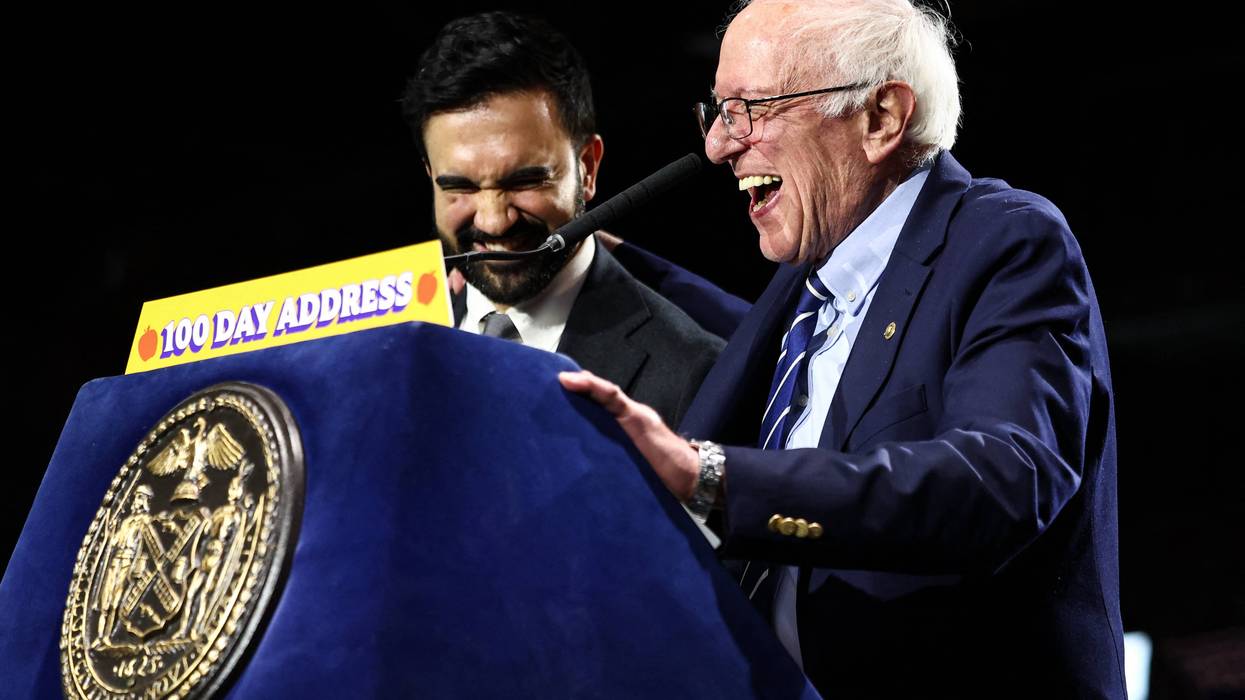
"Tax flight is nothing more than a myth, and should be given as much credence as flat-earthers.”
The threats came in a steady stream last year from Fox News, hedge fund manager Bill Ackman, and Gristedes grocery chain CEO John Catsimatidis, who insisted that wealthy New York City residents were "panicking" at the possibility that then-state Rep. Zohran Mamdani, a democratic socialist, could become the mayor and ensure rich locals pay more in taxes to help fund crucial services.
"It only takes a handful of successful people to leave to decimate the city’s tax base," cautioned Ackman, while Catsimatidis suggested many rich New Yorkers would likely join him in fleeing to "the promised land": Florida, which has no state income tax.
But the progressive think tank Groundwork Collaborative said Thursday that new Internal Revenue Service (IRS) data should be "the final nail in the coffin" of the evidence-free, perennial claim that higher taxes cause wealthy residents to leave their cities and states.
The agency released its 2023 Statistics of Income (SOI) data, covering the period before Mamdani became mayor and introduced a tax on second homes, ranging from 0.8% to 1.3% for properties valued at $5 million or more, which he estimated will raise $500 million annually.
The data shows how the tax base was impacted after the state imposed a separate tax policy in 2022, raising its top tax rate on the highest earners.
Poking a giant hole in the persistent theory that wealthy people won't want to live in states that require more from them in taxes, the number of New Yorkers reporting more than $1 million in income grew by about 3% after the tax rate was raised, the SOI data shows.
"If there was any merit to the myth that tax increases on New York’s wealthy drive them away, the new IRS data should show it. It doesn’t."
The number of millionaires nationwide went down in 2023, but New York counted 2,000 more than it had the previous year. The number of tax filers earning between $500,000 and $1 million also grew by over 8,500—more than 7%.
The average adjusted gross income of New Yorkers who left the state from 2022-23 fell 15%, from over $125,000 to $106,900.
"If the past is prologue, the SOI data suggest few, if any, of the city’s wealthiest residents will leave as a result of a modest tax. Instead they are likely to remain rooted in the social, business, and economic networks that make New York uniquely valuable to them," said Groundwork Collaborative. "The New Yorkers actually at risk of leaving the city are the lower-income workers who power the economy."
Lindsay Owens, president and CEO of Groundwork Collaborative, said the new data makes clear that "tax flight is nothing more than a myth, and should be given as much credence as flat-earthers.”
"If there was any merit to the myth that tax increases on New York’s wealthy drive them away, the new IRS data should show it," said Owens. "It doesn’t—New York’s millionaire population kept climbing years after the state raised taxes on top earners."
Wealthy New Yorkers, said Groundwork, are shown by the data to be "a settled population that may squawk about a tax increase, but not pack up and leave."
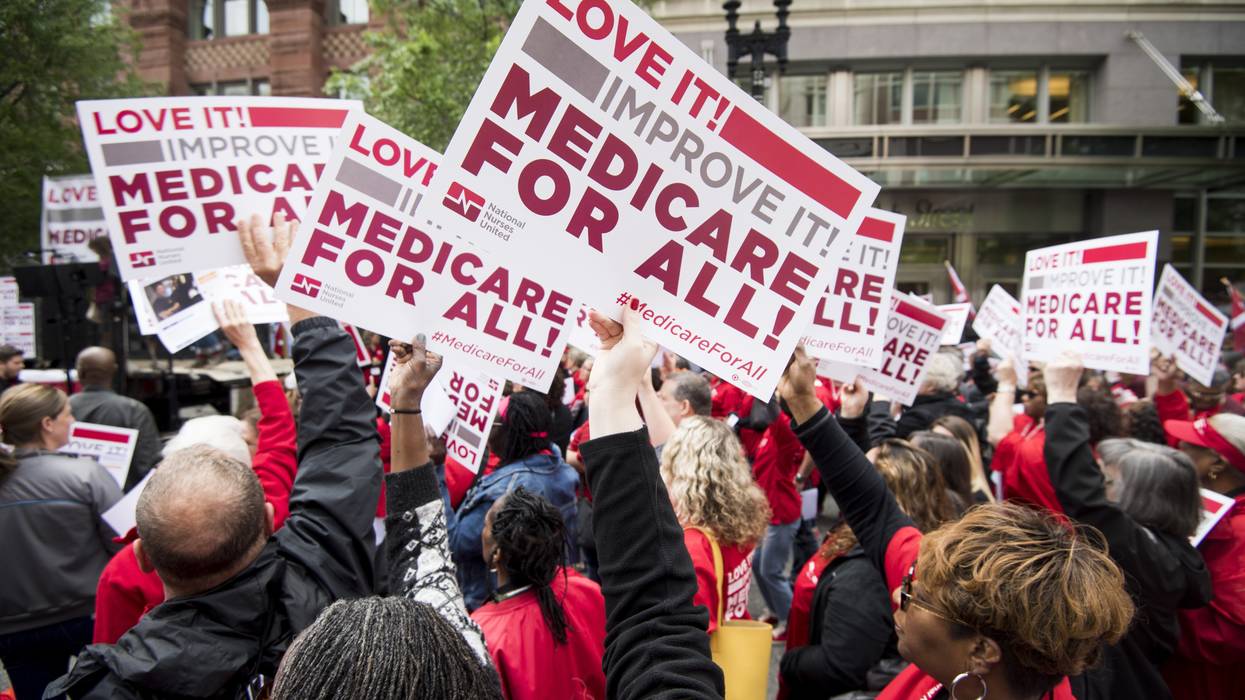
The wrong question is how can we afford Improved Medicare for All. Rather, the right question is how can we afford not to enact it.
Editor's Note: The following is the second excerpt from Nancy J. Altman's latest book, The Road to Medicare for All: A Call to Action (Routledge, 2026), now available for purchase wherever quality books are sold. Read the first excerpt published by Common Dreams here. As the United States continues to spend substantially more on health care than other wealthy nations but with poorer health outcomes, Altman's book analyzes the dysfunction of the current system and sets forth the solution. "Medicare for All won’t happen without a fight," she argues, "but it is a fight we can win."
Imagine having more money in your pocket. Imagine being able to see any doctor you want without checking whether the provider is in your network and covered by your insurance. Imagine having more time with your doctor and, at the end of the appointment, simply walking out the door without having to take out your wallet or even ask what you owe for the visit. Imagine being free of filing insurance claims. Imagine being able to simply get any medicine your doctor prescribes without discovering it is exorbitantly expensive and asking your doctor what, if anything, they can prescribe that is covered by your insurance. Imagine no such thing as medical debt. Imagine simply getting the care, procedures, hospital stays, therapies, and medications your doctor prescribes with your only focus and thought being on how to restore and optimize your health. That is what you will experience.
Where is that destination? It is tantalizingly close. In fact, those who, on average, have the greatest medical needs—seniors and people with disabilities—are already almost there. Medicare, having recently celebrated its 61st anniversary, is well known to Americans. Most people are either covered by Medicare or know someone who is. It already covers Americans from age 65 to the grave. To reach the destination that health care is a right, not a privilege, with all those imaginations a reality, it has to be extended back to the cradle and improved, so that its coverage is completely comprehensive and available without premiums, co-payments, co-insurance, or deductibles. (To be clear, the destination is the expansion of traditional Medicare, not privatized Medicare—the deceptively named Medicare Advantage—whose serious shortcomings are discussed throughout this book.)
As important as Medicare is... it should be improved.
Medicare, which currently covers only seniors and people with disabilities—those who, on average, have the highest healthcare costs—does so more efficiently, comprehensively, and fairly than commercial insurance does, or indeed can. Medicare is the most important birthday gift those turning age 65 get. Too many Americans in their late fifties and early sixties lack adequate health insurance and desperately seek to hang on until they reach that special birthday that brings Medicare. As important as Medicare is, though, it should be improved. As Chapter 3 explains, soon after Medicare was enacted and expanded to people with disabilities, the most powerful forces organized against it. They succeeded in stopping further expansion of its coverage and the services and treatment it provides. They also stood in the way of reducing the costs of those it covers.
On the road to Improved Medicare for All, traditional Medicare should be expanded to cover all essential services. As the nation is driving toward Improved Medicare for All, traditional Medicare should be expanded to cover all safe and effective prescription drugs, also. Under the current system, without Medicare simply covering all safe and effective prescription drugs automatically at no cost, beneficiaries must repeatedly answer the following impossible, ludicrous questions: What illnesses will you contract next year? What medications will your doctor prescribe to treat those yet-to-be-contracted illnesses? Only if you know the answers to those unanswerable questions, can you intelligently decide, in today’s dysfunctional system, which insurance plan has the right drug formulary or list of covered drugs at a price you can afford.
Expanding traditional Medicare to cover all prescription drugs will mean that people can fill all of their prescriptions without worry about their cost. In addition, Medicare should be expanded to cover long-term care—both care at home and in nursing homes.
If Medicare were expanded to cover in-home services and supports as well as nursing home care for those who had no other alternatives, people who were able could age at home, as most want, with the security to know that they would not be a financial burden to those they love. An expanded Medicare for All would meet Americans’ needs today and their unforeseeable needs in the future. As it does today for seniors who have traditional Medicare, it would pool risk among everyone so that everyone is protected; people with costly and complex medical conditions would not be saddled with huge costs.
Under today’s patchwork system, out-of-pocket costs in the form of deductibles, co-pays and co-insurance force people into the arms of commercial insurance, whether they like it or not. Those with traditional Medicare must buy, if they can afford it, private supplemental insurance, colloquially known as Medigap, since traditional Medicare lacks an overall cap on out-of-pocket expenses. Those who can’t afford Medigap may be forced to purchase an inadequate Medicare Advantage plan which includes an overall cap, one more thumb on the scale placed by those who are hostile to single-payer health insurance.
With comprehensive coverage, without co-pays, co-insurance, deductibles, or premiums, there will be no need for supplemental, so-called Medigap, private insurance. We do not pay out of pocket for public libraries, schools, fire protection, or the military. Rather, those services are paid from taxes. We should not be required to pay out of pocket for health care, either. Like those other services, we should have universal, national health insurance, paid for completely out of taxes. The United States is the wealthiest nation in the world at the wealthiest moment in its history. It doesn’t feel that way to many, because so much of that wealth is concentrated in the hands of the very few. A fairer system of taxation which finances an Improved Medicare for All would allow all of us to share the wealth that all of us have created.
We do not pay out of pocket for public libraries, schools, fire protection, or the military. Rather, those services are paid from taxes. We should not be required to pay out of pocket for health care, either.
The nationwide network of Improved Medicare for All providers, which would likely cover all doctors and hospitals nationwide, would ensure that people can continue to get care from the doctors they know and trust. Everyone would be free to see doctors and use hospitals anywhere in the nation. There would be no restrictive networks that keep people from using centers of excellence and seeing the doctors they want to see, including the best specialists. Improved Medicare for All would ensure that everyone—people with costly and complex conditions, people who want good specialty care from doctors and hospitals they know and trust, people who need continuity of care, and those who are currently in excellent health—could get needed health care without financial stress or anxiety.
Improved Medicare for All is fully affordable. Given the unsustainability of the current system, as described in the last chapter, the wrong question is how can we afford Improved Medicare for All. Rather, the right question is how can we afford not to enact it. Relatedly, Improved Medicare for All will cost less than we pay currently. Consequently, the other correct question is not how are we going to pay for Improved Medicare for All, but, rather, how should we divvy up the savings!
Improved Medicare for All will save the nation trillions of dollars while covering everyone comprehensively. In addition to money saved, Improved Medicare for All will save lives. It will result in a higher quality of life for individuals and also a healthier population overall, generating greater productivity for the nation as a whole. Doctors will have more freedom and flexibility. They will be free from the micro-management of commercial insurance companies, concerned about turning a profit.
An Improved Medicare for All system will provide dependable income to healthcare providers. They can count on their bills being paid in a timely manner without the need to chase patients or, even more dispiriting, seek the assistance of loan collection agencies.
Part of the savings should go to doctors, nurses, and other providers to ensure that they are well compensated. They should do better under Improved Medicare for All, not just financially, but also in terms of job satisfaction and time to focus on healing, not paperwork.
Hospitals and those they serve will do better, as well. Improved Medicare for All can reduce physician shortages in underserved areas, often described as healthcare deserts, and help to reduce shortages in areas of medicine where they exist now or are projected to exist. Rural hospitals too often have limited staff without backup. The loss of a surgeon can cause the surgical unit to close, which, in turn, can have a cascading effect, ultimately resulting in the inability to receive care close by, quickly, in an emergency.
Despite all the advantages, Improved Medicare for All won’t happen without a fight.
Like the need to reimburse doctors fairly, in a timely manner, hospitals must be, as well. Whether for-profit, nonprofit, or governmental, hospitals want to remain state-of-the-art, with the latest equipment, and be fully staffed. Consequently, they need to cover their costs and ideally, maintain reserves. Under Improved Medicare for All, hospitals will have reduced costs along with more certainty and dependability of payments, free from charitable cases, which will become a thing of the past. In addition to fairly reimbursing hospitals and other facilities, the costs of maintaining, updating, and constructing them should be a priority, so that all communities are adequately served. At base, under Improved Medicare for All, hospitals, physicians, nurses, and other practitioners should be paid generously. They can and should be paid fully and on a timely basis for care given to every patient. Improved Medicare for All can and should be structured to ensure that providers have the ability to spend the time required to see patients.
In addition to all of the health and health-related advantages that Improved Medicare for All will bring, it can also usher in improvements unrelated to health care. They include a fairer federal tax system, together with reduced income and wealth inequality; more revenue for Social Security; an improved system of workers’ compensation, and more funds for state governments. Improved Medicare for All will provide intangible benefits for everyone, including reduced stress, less paperwork with the accompanying added free time, and, most importantly, greater peace of mind. All of those byproducts are explained at length in the book. They are just some of the fortuitous byproducts that will accompany the enactment of Improved Medicare for All.
Despite all the advantages, Improved Medicare for All won’t happen without a fight. The special interests will fight ferociously, but they will be no match for the hundreds of millions of Americans who will be benefited, as long as the public is engaged and active.
The future of this critical program will be determined by the midterm election.
The future of Social Security, the government program that touches the lives of more Americans than any other, will be determined by the results of the November elections. Let us explain. The Social Security program faces a funding shortfall. As ABC News reported back in June:
Social Security's trust fund that pays retiree and survivor benefits is expected to begin running low on money earlier than previously expected, leading to questions from Americans who rely on the benefits for their living expenses. Without congressional action, the fund is now expected to begin depleting by the fourth quarter of 2032, according to a report issued Tuesday by Social Security's trustees, the body that manages the trust fund.
This does not mean that, as some who for their own political purposes argue, Social Security is going “bankrupt.” Those who depend on Social Security (roughly 68 million Americans) do not have to worry about their checks stopping. Instead, they need to be concerned about a very significant cut to their benefits.
But know this: The reduction can be avoided with courageous political action. Congress and the president can make adjustments that will close the gap and pay out promised benefits. Back in 1983, Congress and President Ronald Reagan hammered out a solution to do just that.
Right now, there are a number of steps that Congress can take that will strengthen Social Security’s finances for today and for future generations. One of the most talked about solutions is raising the cap on the amount of income subject to the Social Security tax—otherwise called “busting the cap.” The Economic Policy Institute points out that:
Earnings above a cap aren’t subject to the payroll taxes that fund Social Security. As a result, billionaires pay the same tax as someone earning $176,100 in 2025 (the cap is indexed to the average wage, so it changes every year). “Scrapping the cap” is a popular and effective way to address Social Security’s funding gap. Nearly three-fourths of Social Security’s projected long-term shortfall would be eliminated if the cap were scrapped without increasing benefits.
Believe it or not there is a bipartisan proposal out there from Massachusetts Democratic Sen. Elizabeth Warren and Republican Sen. Bernie Moreno of Ohio. Sens. Warren and Moreno argue that “instead of cutting benefits for the retirees who count on Social Security, we need to take bipartisan action to protect those benefits, reward work, and restore fairness. That starts with a common-sense solution: lifting the Social Security payroll tax cap.”
Other bipartisan members of Congress argue that the best way to address Social Security’s challenges is through the creation of a bipartisan commission made up of 13 members appointed by the president and congressional leaders in both parties. Reps. Tom Cole (R-Okla.) and Representative Tom Suozzi (D-NY) introduced the Bipartisan Social Security Commission Act which would create such a commission. Congress would then only be given an expedited up-or-down vote on the recommendations with no amendments—bypassing regular legislative order. How is public input included in this process? Hint: It isn’t.
It seems to us that raising the tax on income subject to Social Security is a much better step toward securing Social Security’s future than creating a commission that operates outside the public view. Supporters of the commission idea will argue that this is exactly what happened in 1983. This is true, but it ignores the political realities of 1983. An agreement came about because Democrats and President Reagan came together to hammer out an agreement. There is no leadership on this issue from our president.
Creating a commission may sound good to inside the beltway players like the Committee for a Responsible Federal Budget but to the millions of Americans who depend on Social Security, creating a commission to deal with the program’s fiscal challenges is just another way of Congress not doing its job.
There can be no doubt that the members of Congress elected this November will chart Social Security’s future. If you care about your retirement security and that of future generations, you have an obligation to ask some tough questions about Social Security. The two questions that we would put to members of Congress are:
During this election, ask your candidates where they stand on Social Security’s future, and what solutions they support to ensure that our benefits are not cut because of inaction or because of political fear. And tell them what Social Security means to you and to your families. Social Security is the only guaranteed inflation-protected retirement income source for millions of Americans—and that guarantee must be honored by our elected political leaders.

"While working families struggle to afford groceries, housing, and gas," said Sen. Chris Van Hollen, the Trump administration "focuses on tax breaks for billionaires—including tax breaks for private jets."
A group of Democratic Caucus members in the US Senate on Thursday denounced the US Treasury Department under President Donald Trump over its refusal to close a gaping loophole in the federal tax code that allows some of the wealthiest people in the country to reap tax benefits from their ownership and use of private jets—even as working people and the middle class families struggle to make ends meet in Trump's economy.
In response to a previous request made in July by Sens. Sheldon Whitehouse (D-RI), Elizabeth Warren (D-Mass.), Chris Van Hollen (D-Md.), Ed Markey (D-Mass.), and Bernie Sanders (I-Vt.) to close a rule that allows the wealthy "to substantially undervalue the taxable cost of personal travel on a corporate private jet," a letter from a top Treasury official on Thursday said such an effort would be too "burdensome," including for the uber-rich taxpayers subject to it.
Known as the Standard Industry Fare Level (SIFL) loophole, the lawmakers have argued that it has been exploited by the extremely wealthy to lower their tax burden even as they travel the country—and the world—in the least energy efficient and most polluting way possible.
"President Trump’s 2017 tax law and Big, Beautiful-for-Billionaires bill handed billionaires and big corporations massive tax breaks on private jets," said Sen. Whitehouse in a statement. "The Trump administration now says it would be ‘burdensome’ to close the private jet tax loophole because this is an administration hell-bent on using the powers of government to make the ultra-rich even richer, and they don’t care if middle-class taxpayers get stuck with the tab."'
Alongside their July letter, the lawmakers shared analyses detailing the loss of the revenue made possible by the SIFL loophole. According to the Whitehouse's office,
analyses by the nonpartisan Joint Committee on Taxation detailing the boom in private jet sales after passage of Republicans’ tax cut for corporate jets and highlighting the extent of the tax revenue lost by the abuse of the SIFL loophole. One analysis responds to an inquiry from the senators on the tax consequences of the SIFL loophole, finding that a wealthy executive would pay roughly between $1,577 and $1,804 less in taxes for a flight from JFK airport in New York City to DCA airport in Washington, D.C. under the SIFL method. The fair market value of that flight could range from $4,500 to $5,112, but under SIFL, that executive would only have to report a value of $235.77.
Van Hollen on Thursday denounced the shamefulness of yet another Trump administration position that rewards the wealthy and powerful at the expense of working people.
"Trump’s priorities revolve around enriching himself and his billionaire friends. While working families struggle to afford groceries, housing, and gas, this Administration focuses on tax breaks for billionaires—including tax breaks for private jets," said Van Hollen.
"What a disgrace,” he added.
"While working families are expected to pay their fair share, Trump is making it easier for the rich to get away with not paying theirs."
A report published Monday by an independent federal watchdog shows that Internal Revenue Service audit revenue plummeted last fiscal year as the Trump administration gutted the chronically understaffed and underfunded tax agency's workforce, rolling back recent Democratic efforts to bolster enforcement.
The Treasury Inspector General for Tax Administration (TIGTA) found that IRS audit revenue fell by 35% last year compared to fiscal year 2024, when enforcement revenue reached a historic high. The report notes that the audit revenue plunge followed the Trump administration's 27% cut to the agency's examination and collection staff, the effects of which "are likely to become more apparent over time." Among the gutted IRS units was one tasked with auditing billionaires and other super-rich individuals.
Rep. Don Beyer (D-Va.), a member of the House's chief tax-writing committee, wrote in response to the new figures that "Trump gutted the IRS and wealthy tax cheats are reaping the benefits."
"While working families are expected to pay their fair share," Beyer wrote on social media, "Trump is making it easier for the rich to get away with not paying theirs."
The huge decline in audit revenue comes years after congressional Democrats and then-President Joe Biden approved nearly $80 billion in additional funding for the IRS, including more than $45 billion for enforcement.
But Biden and congressional Democrats subsequently cut a deal with Republicans that rescinded much of the funding boost, which the IRS had said could yield roughly $560 billion in federal revenue over a decade—largely from rich tax cheats and large corporations.
"We know who benefits the most when the IRS doesn't have enough staff to dedicate to audits," the Institute on Taxation and Economic Policy said in response to the TIGTA report. "It's the richest Americans."
We know who benefits the most when the IRS doesn't have enough staff to dedicate to audits. It's the richest Americans. pic.twitter.com/bVvK23k1eU
— ITEP (@iteptweets) September 1, 2026
The IRS is currently headed by scandal-plagued former financial services executive Frank Bisignano, whom Treasury Secretary Scott Bessent picked to serve as the agency's first "CEO."
Bisignano has defended the Trump administration's massive IRS staffing cuts, insisting that there is "no staffing shortage here."
But the TIGTA report notes that "staffing reductions starting in January 2025 significantly reduced enforcement staffing," leaving the agency less equipped to audit the often complex returns of ultra-rich Americans and big corporations.
"An obvious fact: If you get rid of auditors, you raise less money from audits," Natasha Sarin, president of Yale University's Budget Lab, said Tuesday.
"Winners are tax cheats, losers are those who are playing by the rules," Sarin added.
No one should be confused: cutting Social Security and Medicare benefits to reduce the deficit is not a moderate position. It’s one that attacks hundreds of millions of ordinary workers to avoid taxing the rich or reducing waste in our health care system.
An extreme position does not become less extreme just because someone can put forward one that’s even more extreme. Massacring 100 children doesn’t become a moderate position just because someone is advocating killing 200 children.
This is how we should view the line being pushed by “moderate” voices that we have to deal with the $40 trillion debt with both spending cuts and tax hikes. The reality is that, apart from the military and Homeland Security, there is little fat in spending to be cut, as even Elon Musk inadvertently acknowledged. Insofar as we have a deficit problem, the issue is on the tax side, as can be easily shown. The rich have been taking an ever-larger share of national income over the last half-century, and they don’t feel like paying taxes on their winnings.
The major media outlets, which are all controlled by rich people, are pretending to be moderate by saying that we need to both raise taxes and cut spending. But there is nothing moderate about saying that we have to cut programs like Social Security, Medicare, and Medicaid because Republicans have given big tax breaks to their campaign contributors.
Republicans pushed these tax cuts, knowing they would increase the deficit, but did not make any corresponding cuts in spending because the cuts would be incredibly unpopular. Now they are using their control over the media to insist that these cuts are now absolutely necessary to offset all the lost tax revenue from tax cuts put in place by Reagan, Bush II, and Trump.
The Jeff Bezos-owned Washington Post gave us a great example of this fake moderate position in its editorial, “To get the national debt under control, start with the retirement state.” The piece makes its case by taking the example of a two-earner couple, with average earnings of $100,000 a year. It shows that the couple, turning 65 in 2025, can expect lifetime Social Security benefits of $739k compared with tax contributions of just $597k. A couple with the same income retiring in 2045 can expect lifetime benefits of $987k compared to tax contributions of $735k.
After laying out this disparity for Social Security (it has a similar story for Medicare, which I’ll come to), it then makes an argument for reducing Social Security for high-income people. This is three-card Monte level deception.
If the idea is that we should reduce the benefits of high-income workers, honest people would look at the relative taxes and benefits for high-income workers. Social Security is explicitly designed to have a progressive payback structure, which means that relatively moderate-income workers, like the ones highlighted in the WaPo editorial, have higher paybacks relative to their taxes.
If the editors were interested in doing an apples- to-apples comparison, here’s what the picture would look like. (This is taken from the exact same source.)
As can be seen, high-income people pay considerably more in taxes than they get back in benefits. For a high-income woman retiring in 2025, the gap is $263k. For a high-income man, the gap is $336k. (The gap is larger for men than women because their life expectancy is shorter.) For a high-income woman retiring in 2045, the gap is $259k. For a high-income man, the gap is $346k.
If the point is to make an argument for reducing the benefits of high-income retirees, then show the taxes and benefits for high-income retirees. No one disputes that Social Security looks like a pretty good deal for more moderate-income retirees, but these people don’t typically have much income in retirement. I guess Jeff Bezos’ paper would have been too embarrassed to argue that we have to reduce the average monthly Social Security benefit of $2,071.
The Post’s editorial makes the push that while cutting Social Security, we should expect people to be more reliant on private 401(k)s. In addition to increasing risk, this is also enormously inefficient. Private 401(k)s cost more than 40 times as much to administer per dollar of benefits as Social Security. It is understandable that Mr. Bezos would be happy to see more money going to his rich friends in the financial industry, but most of us would rather see the money going to ordinary workers.
Medicare Benefits: Big Bucks to Hospitals and Drug Companies Are Not Benefits to Workers
The Post’s graphs do show a huge imbalance between the taxes paid out for Medicare and the cost of the benefits received. This is also deceptive.
In the United States, we pay almost twice as much per person for healthcare as the average for other wealthy countries. This is not because we get more or better healthcare. Our life expectancy ranks near the bottom for wealthy countries.
The big bucks for healthcare go to the income of drug companies, insurers, hospitals, medical equipment makers, and doctors. In each case, we pay two times as much, or more, than people in other wealthy countries. A paper that was not answerable to one of the richest people in the world would suggest bringing our payments in line with the rest of the world. But instead, the WaPo wants to beat up on the country’s retirees.
No one should be confused: cutting Social Security and Medicare benefits to reduce the deficit is not a moderate position. It’s one that attacks hundreds of millions of ordinary workers to avoid taxing the rich or reducing waste in our health care system. That is extreme, but the rich media owners pushing this position will do everything they can to convince us they are being fair and balanced.
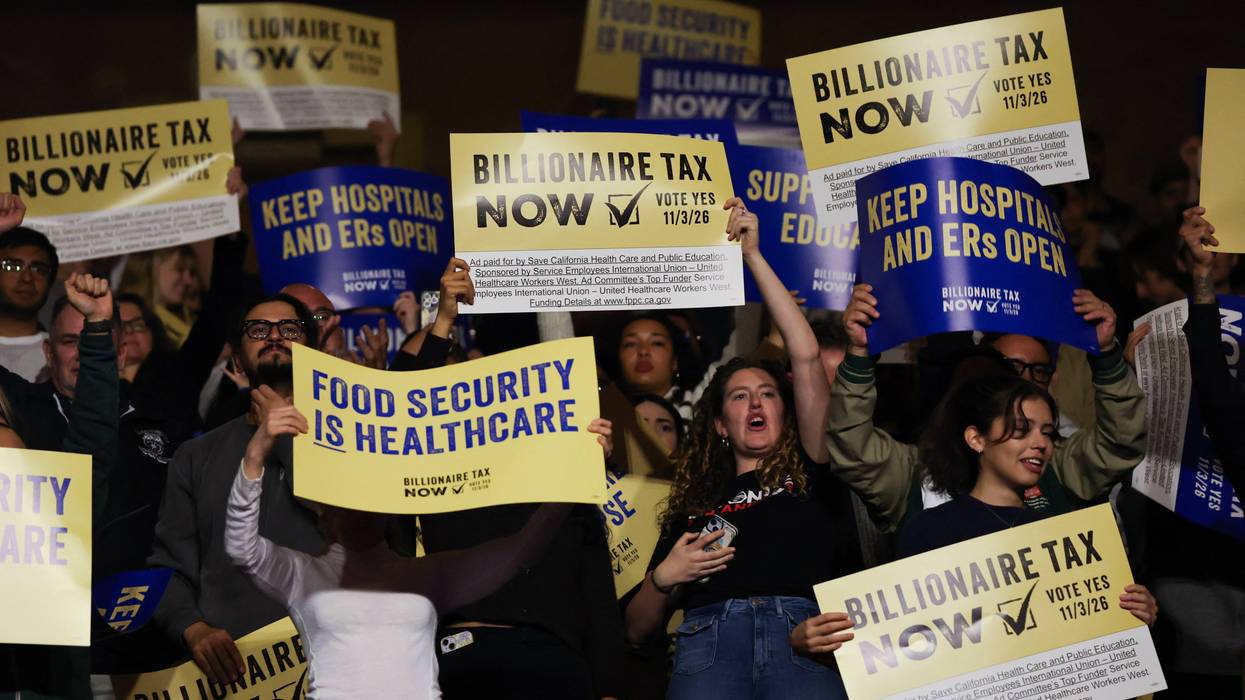
Google co-founder Sergey Brin and venture capitalist Peter Thiel are among the billionaires bankrolling ads against a proposed one-time tax on the wealthiest Californians.
Organizations backed by mega-billionaires, including Google co-founder Sergey Brin and notorious venture capitalist Peter Thiel, have launched an advertising blitz aimed at convincing California voters to oppose a one-time, 5% wealth tax targeting the very richest people in the state.
The two most prominent groups fighting the tax, which will appear on California's November ballot as Proposition 40, are Building a Better California and Californians Against Wasteful Spending and Higher Taxes. The former group, funded in large part by Brin, debuted its first television ad on Tuesday, just the start of what's expected to be a massive propaganda push against the proposed tax.
The New York Times reported that the first ad from Building a Better California "emphasizes that unions representing teachers and firefighters oppose the tax, along with the state’s top politicians, including Gov. Gavin Newsom, a Democrat."
"The ad makes no mention of the billionaires who vigorously oppose the tax," the Times added.
The coalition spearheading the wealth tax campaign is led by Service Employees International Union-United Healthcare Workers West (SEIU-UHW). The tax proposal has won endorsements from the California Federation of Labor Unions, the California Nurses Association, and the California Democratic Party, along with high-profile progressive lawmakers including Rep. Ro Khanna (D-Calif.) and Sen. Bernie Sanders (I-Vt.).
Dave Regan, president of SEIU-UHW, told the Times that supporters of the tax are "not going to try to compete at all with the billionaires on broadcast television." Brin's group is reportedly set to spend more than $90 million on ballot initiatives this year.
Instead, the Times reported, "the union plans to spread its message through text messages, social media, door-knocking and slate mailers, making the most of the powerful endorsements it recently won from the California Democratic Party and the California Federation of Labor Unions."
Last week, the Thiel-backed group Californians Against Wasteful Spending and Higher Taxes launched an online ad that falsely characterized the proposed billionaire levy as "an everyone tax" and a "Trojan horse."
The ad features a menacing, AI-generated caricature of Sanders and other supporters of the tax, who are shown forcibly seizing residents' property, including a boat, a kid's scooter, and an elderly woman's television set.
1. The billionaires fighting a billionaire tax in California have created an AI-slop ad that shows the tax’s supporters assaulting kids and stealing their stuff. pic.twitter.com/L6PgmfUFAM
— Judd Legum (@JuddLegum) August 25, 2026
Journalist Judd Legum, author of the Popular Information newsletter, noted that the "fundamental premise of the ad is false."
"It claims that the initiative’s drafters included a provision that allows them to 'turn the tax on you,'" Legum wrote. "The initiative says that the tax can only be amended by the Legislature through a two-thirds vote of both houses. Even then, any changes must be 'consistent with and further... the purposes of the 2026 Billionaire Tax Act.'"
"The ad claims that 'every Californian will have to report all their assets to the state tax board,'" Legum observed. "Under the initiative, Californians just have to certify that they do not have $1 billion or more in assets by checking a box. This will be an easy calculation for nearly all Californians."
Somehow, many people talk about Republicans as the party of fiscal responsibility. That's insane.
I have never been a deficit hawk, and I’m not about to change my religious affiliation now. But whatever we think of debt and deficits, there is one point that should be very clear: it has been run up almost entirely due to Republican tax cuts and their inept management of the economy.
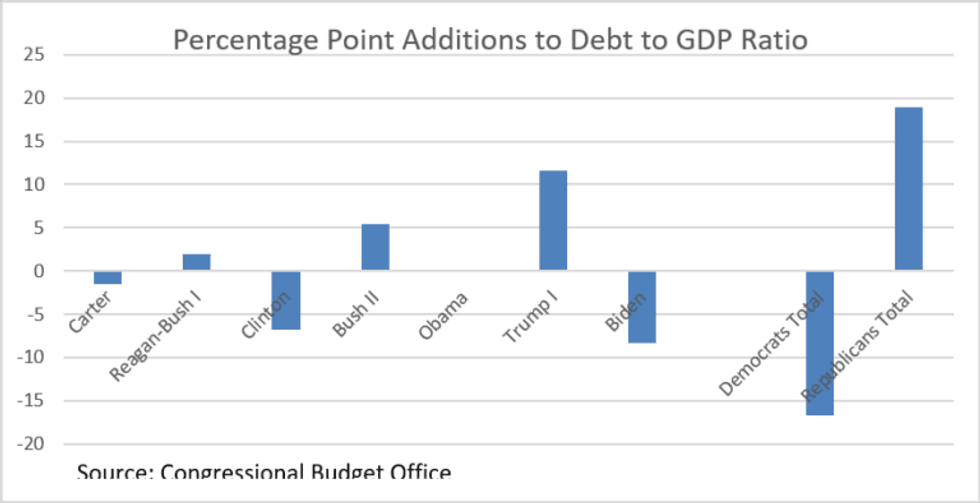
Every Democratic president of the last half century has left with a deficit that was lower, measured as a share of GDP, than the one they came in with, except Obama, who left it unchanged. By contrast, every Republican president has left with a considerably higher deficit than what they inherited.
Starting with Carter, the deficit for fiscal year 1976 was 4.1% of GDP. When he left office in 1980, it was down to 2.5% of GDP, despite a recession that year. That was the starting point for Reagan. (These figures refer to fiscal years, which end on October 1 of the year.) Reagan’s tax cuts, along with a big military buildup, were most of the story of higher deficits. When his successor, George H.W. Bush, left the White House in 1992, the deficit was 4.5% of GDP.
For better or worse, Clinton took deficit reduction seriously. He was helped by an explosion of tax revenue associated with the tech bubble, but he both made budget cuts and increased taxes. When he left office in 2000, the government was running a surplus equal to 2.3% of GDP.
George W. Bush quickly reversed the picture. A big part of the story was the collapse of the tech bubble in 2001-2002, which both led to a recession and a plunge in tax revenue from capital gains. He also had big tax cuts and a military buildup associated with his invasions of Afghanistan and Iraq. When Bush left office after 2008, he handed Obama a deficit equal to 3.1% of GDP, as well as a financial crisis and severe recession, resulting from the collapse of the housing bubble.
The deficit initially exploded in 2009 under Obama, as the country faced the worst recession since the Great Depression. As the economy gradually recovered, the deficit came down, falling back to 3.1% of GDP in 2016, just as Obama was leaving the White House.
Trump’s tax cuts caused the deficit to rise again. It hit 4.6% in 2019, but it really took off the following year, as a result of the pandemic. It reached 14.7% of GDP in 2020, the largest since World War II. The recovery and some modest increases in tax collections brought the deficit down to 6.3% of GDP in 2024.
Taking the cumulative changes from Democratic and Republican presidents, Democratic presidents have reduced deficits by 16.7 percentage points of GDP during their terms in office, while Republican presidents have raised them by 18.9 percentage points. Somehow, many people talk about Republicans as the party of fiscal responsibility.
As I said earlier, I am not hugely troubled by the debt. It would be better to be paying less money in interest, but 3.0% of GDP going to interest is not a disaster. The more important issue is to have a healthy economy with solid growth.
Here is where the big failure is. Trump’s war is leading to shortages, most importantly of oil, but also fertilizer and other products. His tariffs have led to higher prices for a wide range of products, as has his mass deportations. Perhaps most importantly, Trump’s open corruption and self-dealing undermine confidence in the U.S. financial markets and business system more generally.
In the past, investors could view the United States markets as relatively clean and stable. Unlike in some other countries, getting your investment back didn’t depend on staying in the good graces of the political leadership. Under Trump, this is no longer true. He has openly threatened companies and their management for saying and doing things he does not like. That is not a good recipe for a stable economy with solid growth.
If there is a run on the dollar, and interest rates soar higher, it is far more likely to be the result of Trump’s corruption and incompetence than the high debt. This is what people should be losing sleep over, not the debt crossing the $40 trillion mark.
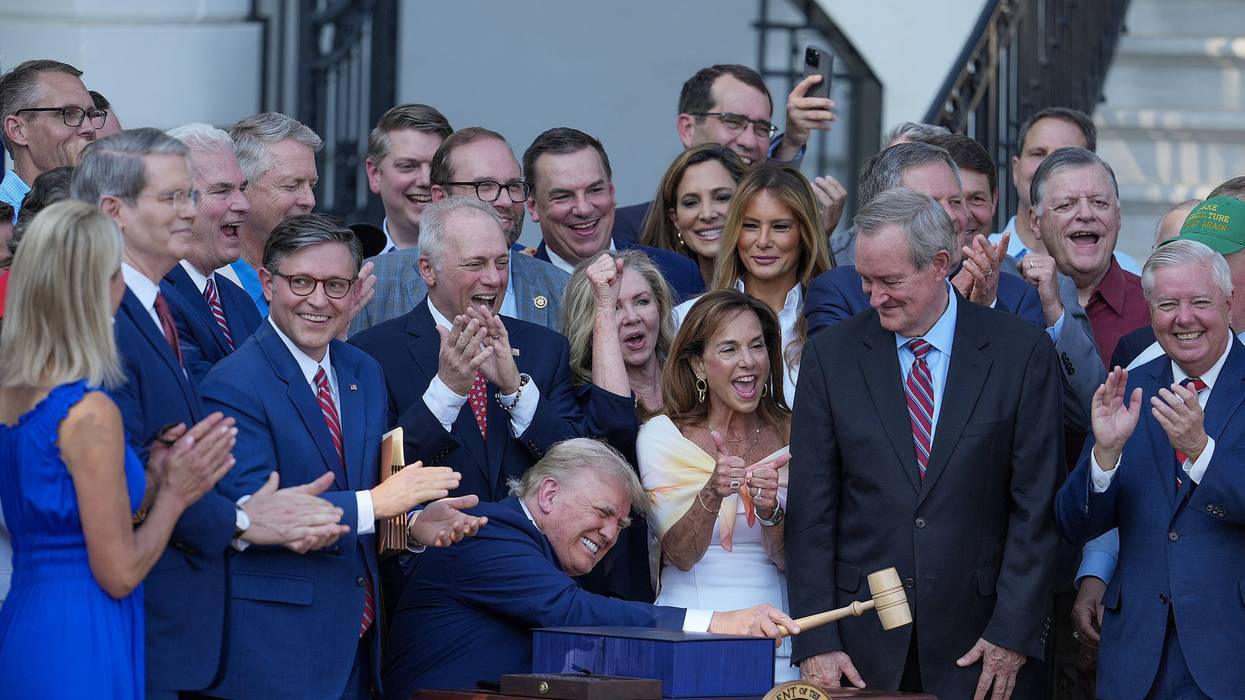
"There is one point that should be very clear: It has been run up almost entirely due to Republican tax cuts and their inept management of the economy."
Congressional Republicans have seized upon news that the US national debt reached $40 trillion to bash what they described as "unaffordable socialist policies" and out-of-control spending.
But economists and policy analysts say Republican policy decisions—from massive tax cuts for the rich to disastrous wars of choice in the Middle East—are primarily responsible for the explosion of the national debt over the past quarter-century. President Donald Trump, who has repeatedly promised to eliminate the national debt, has so far overseen an $11.6 trillion debt surge across his two White House terms.
"I have never been a deficit hawk, and I’m not about to change my religious affiliation now," Dean Baker, senior economist at the Center for Economic and Policy Research, wrote Thursday. "But whatever we think of debt and deficits, there is one point that should be very clear: It has been run up almost entirely due to Republican tax cuts and their inept management of the economy."
Economist Paul Krugman similarly wrote that while the $40 trillion figure "has no special significance," it underscores "the incredible irresponsibility of the Trump administration, with its unfunded tax cuts that overwhelmingly benefit the wealthy, billions in wasteful military spending—redesigning aircraft carriers because Trump doesn’t like the way they look!—and more."
"As Jared Bernstein and Bobby Kogan have shown, our deficit would be far more manageable if first [George W.] Bush, then Trump, hadn’t rammed through tax cuts that hugely favored high-income Americans," Krugman added.
Kogan, senior director of federal budget policy at the Center for American Progress, estimated in 2023 that tax cuts enacted during the Bush administration and Trump's first term were "responsible for 57% of the increase in the debt ratio since 2001, and more than 90% of the increase in the debt ratio if the one-time costs of bills responding to Covid-19 and the Great Recession are excluded."
You can’t talk about debt without talking about how we got into a bad predicament, and there’s only one correct answer: tax cuts enacted this century
[image or embed]
— Bobby Kogan (@bbkogan.bsky.social) 5:13 PM · Aug 19, 2026
Last summer, Trump signed into law another massive tax cut package that will disproportionately benefit the rich and large corporations—and add trillions of dollars more to the national debt over the next decade.
"From now on, whenever you hear someone fret about how huge, horrible, and out-of-control the national debt is, explain to them that it’s largely because of tax cuts to the wealthy—who are also the major recipients of interest on that debt," former US Labor Secretary Robert Reich wrote on Thursday.
The US national debt reached $40 trillion months earlier than forecasters expected, partially due to lost federal revenue from Trump's court-invalidated tariffs.
"Before his second term is even over, Donald Trump is responsible for more than $10 trillion of this," Rep. Chris Deluzio (D-Pa.) wrote on Thursday. "Just INTEREST on this debt is now sucking up more of our public money than even the military and Medicare. DC Republicans are leaving our kids a colossal mess to clean up."
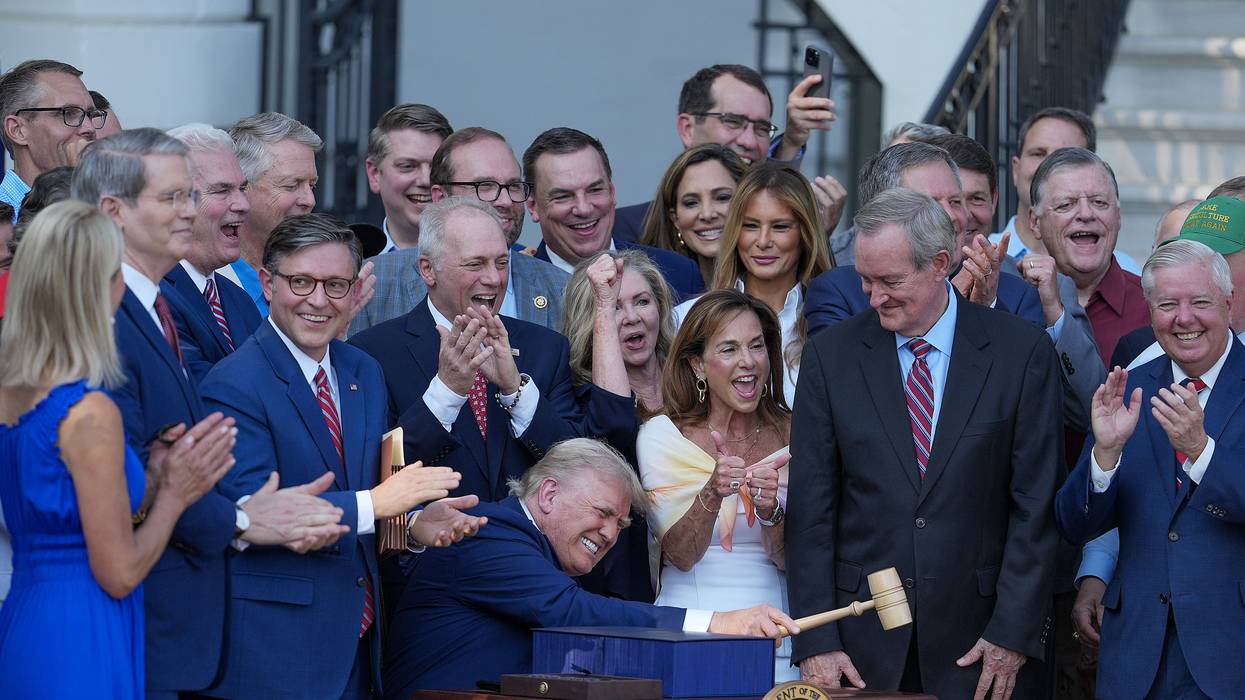
Keep following the money and you'll see where it leads: into the pockets of the wealthy.
The U.S. national debt has officially surpassed $40 trillion, months earlier than forecasters had expected — because of billions of dollars in lost revenue from Trump’s invalidated tariffs, Trump’s tax cuts (mostly to big corporations and the very wealthy), and the soaring costs of Trump’s war.
Trump’s hair-brained treasury secretary, Scott Bessent, says there’s nothing to worry about because the fiscal trajectory will stabilize. Investors obviously don’t believe him because they’re demanding much higher compensation for buying and holding American bonds. The yield on 30-year U.S. Treasuries hit its highest level in nearly two decades this week, reflecting those growing concerns.
Should you worry? Well, it’s not as if we’re heading into a depression. Passing the $40 trillion threshold doesn’t suddenly cause the world to lose confidence in the dollar.
The problem is that an increasing portion of our nation’s budget — and your tax dollar — is dedicated to paying interest on this growing debt. Annual net interest payments on the federal debt have surpassed $1 trillion, making servicing the debt one of the largest of all federal budget expenditures.
That’s money we don’t spend on schools, healthcare, roads and bridges, and social safety nets. We’ll soon be paying more in interest on the federal debt each year than we spend annually on Medicare.
So, who exactly receives these interest payments? This is an issue you hear very little discussion about, because the wealthy and powerful of this country would rather you not know. (And don’t expect Trump suck-up Bessent* to tell you, because he’s too busy denying that economic inequality is worsening.)
Foreign governments and foreign investors hold only about 30 percent of our debt. The rest — roughly 70 percent — is held domestically. That is, we pay the interest to ourselves.
And who, exactly, is the “ourselves” who receive these interest payments? The Federal Reserve holds part of this debt, state and local governments hold part.
But the biggest chunk — nearly half — is held by mutual funds, pension funds, insurance companies, and banks.
And who owns them? Americans who invest in these funds — and who thereby, directly or indirectly, hold Treasury bills.
And who, exactly are these Americans — the Americans who are directly or indirectly collecting a large amount of the interest we’re paying on the national debt?
People at the top.
The richest 1 percent of U.S. households hold about 35.6 percent of all financial assets — shares of stock, corporate bonds, and Treasury bills — so it’s safe to assume they hold at least a third of all Treasury bills.
Here’s where things get really interesting.
Decades ago, wealthy Americans financed the federal government mainly by paying taxes. Their tax rate was far higher than it is today.
In the 1950s, under President Dwight Eisenhower, the richest Americans paid a marginal tax rate of 91 percent. (Tax deductions and tax credits lowered this top effective marginal rate somewhat.)
Today, the tax rate on wealthy Americans is far lower. The richest 400 Americans pay an average effective total tax rate of about 24 percent — including federal, state, local, and corporate taxes. Jeff Bezos — America’s second or third richest person — paid no federal income taxes in 2018. Trump paid no federal taxes for years before he became president.
So now, wealthy Americans finance the federal government mainly by lending it money and collecting interest payments on those loans.
As I said, interest payments on the national debt this year have surpassed $1 trillion, and a big chunk of that is going to wealthy Americans.
Keep following the money.
One of the biggest reasons the federal debt has exploded is that tax cuts — starting with the George W. Bush administration in 2001 and extending through Trump’s 2018 and 2024 tax cuts — have reduced government revenues by $10.6 trillion.
Most of the benefits from those tax cuts are also going to the wealthy.
Since 2000, 65 percent of the benefits from tax cuts have gone to the richest fifth of Americans — 22 percent to the top 1 percent.
So, you see what’s happened?
Decades ago, the wealthiest Americans financed the government by paying higher taxes. Now, the government pays wealthy Americans interest on a swelling debt, caused largely by lower taxes on wealthy Americans.
Which means a growing portion of your taxes and mine is now paying wealthy Americans interest on those loans instead of paying for government services everyone needs.
So, from now on, whenever you hear someone fret about how huge, horrible, and out-of-control the national debt is, explain to them that it’s largely because of tax cuts to the wealthy — who are also the major recipients of interest on that debt.
America’s wealthy have never been wealthier. Scott Bessent* may deny we’re in a K-shaped economy, but he’s dead wrong. If the wealthy paid their fair share of taxes, we wouldn’t have such a huge federal debt. And we wouldn’t be paying them so much interest on that debt.