

SUBSCRIBE TO OUR FREE NEWSLETTER
Daily news & progressive opinion—funded by the people, not the corporations—delivered straight to your inbox.
5
#000000
#FFFFFF
To donate by check, phone, or other method, see our More Ways to Give page.
Daily news & progressive opinion—funded by the people, not the corporations—delivered straight to your inbox.
Amnesty International says Big Tech's consolidation of power "has profound implications for human rights, particularly the rights to privacy, nondiscrimination, and access to information."
One of the world's leading human rights groups, Amnesty International, is calling on governments worldwide to "break up with Big Tech" by reining in the growing influence of tech and social media giants.
A report published Thursday by Amnesty highlights five tech companies: Alphabet (Google), Meta, Microsoft, Amazon, and Apple, which Hannah Storey, an advocacy and policy adviser on technology and human rights at Amnesty, describes as "digital landlords who determine the shape and form of our online interaction."
These five companies collectively have billions of active users, which the report says makes them akin to "utility providers."
"This concentration of power," the report says, "has profound implications for human rights, particularly the rights to privacy, nondiscrimination, and access to information."
The report emphasizes the "pervasive surveillance" by Google and Meta, which profit from "harvesting and monetizing vast quantities of our personal data."
"The more data they collect, the more dominant they become, and the harder it is for competitors to challenge their position," the report says. "The result is a digital ecosystem where users have little meaningful choice or control over how their data is used."
Meanwhile, Google's YouTube, as well as Facebook and Instagram—two Meta products—function using algorithms "optimized for engagement and profit," which emphasize content meant to provoke strong emotions and outrage from users.
"In an increasingly polarized context, the report says, "this can contribute to the rapid spread of discriminatory speech and even incitement to violence, which has had devastating consequences in several crisis and conflict-affected areas."
The report notes several areas around the globe where social media algorithms amplified ethnic hatred. It cites past research showing how Facebook's algorithm helped to "supercharge" dehumanizing rhetoric that fueled the ethnic cleansing of the Rohingya in Myanmar and the violence in Ethiopia's Tigray War.
More broadly, it says, the ubiquity of these tech companies in users' lives gives them outsized influence over access to information.
"Social media platforms shape what millions of people see online, often through opaque algorithms that prioritize engagement over accuracy or diversity," it says. "Documented cases of content removal, inconsistent moderation, and algorithmic bias highlight the dangers of allowing a handful of companies to act as gatekeepers of the digital public sphere."
Amnesty argues that international human rights law requires governments worldwide to intervene to protect their people from abuses by tech companies.
"States and competition authorities should use competition laws as part of their human rights toolbox," it says. "States should investigate and sanction anti-competitive behaviours that harm human rights, prevent regulatory capture, and prevent harmful monopolies from forming."
Amnesty also calls on these states to consider the possible human rights impacts of artificial intelligence, which it describes as the "next phase" of Big Tech's growing dominance, with Microsoft, Amazon, and Google alone controlling 60% of the global cloud computing market.
"Addressing this dominance is critical, not only as a matter of market fairness but as a pressing human rights issue," Storey said. "Breaking up these tech oligarchies will help create an online environment that is fair and just."
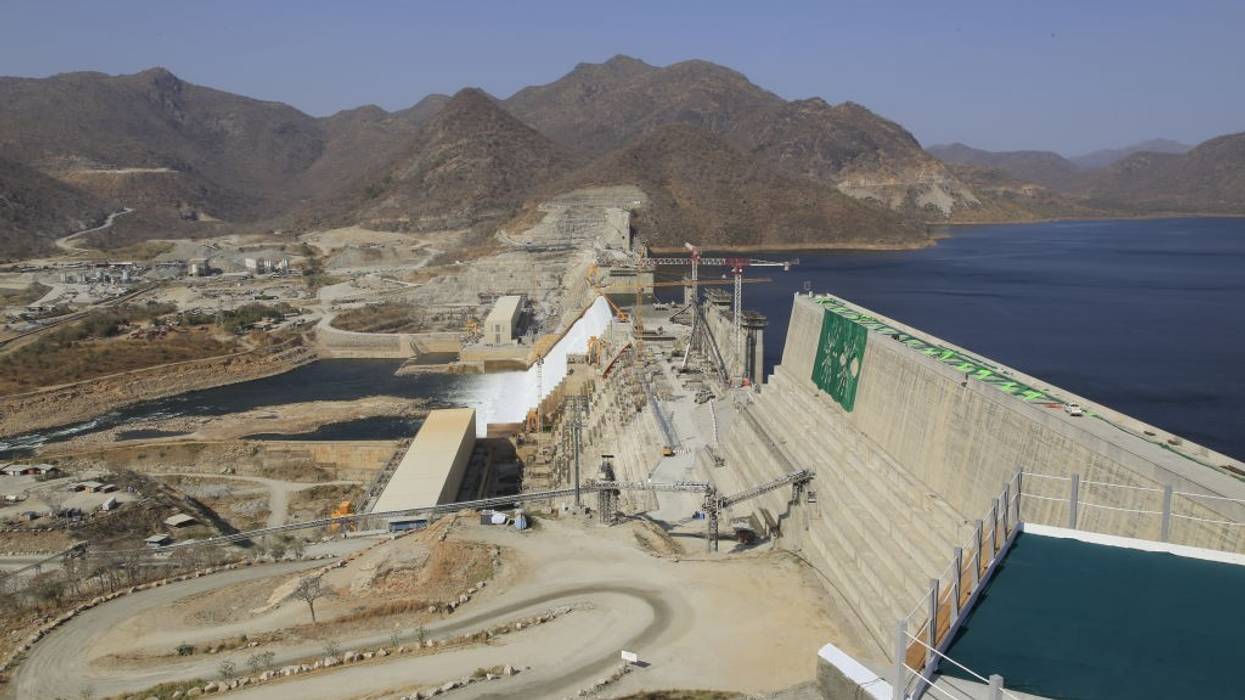
Driven by dwindling water resources, the global hydropower crisis has become a flashpoint in the far reaches of Northern Africa, where the creation of a giant dam could very well lead to a regional war and worse.
We live in a world of dangerous, deadly extremes. Record-breaking heat waves, intense drought, stronger hurricanes, unprecedented flash flooding. No corner of the planet will be spared the wrath of human-caused climate change and the earth’s fresh water is already feeling the heat of this new reality. More than half of the world’s lakes and two-thirds of its rivers are drying up, threatening ecosystems, farmland, and drinking water supplies. Such diminishing resources are also likely to lead to conflict and even, potentially, all-out war.
“Competition over limited water resources is one of the main concerns for the coming decades,” warned a study published in Global Environmental Change in 2018. “Although water issues alone have not been the sole trigger for warfare in the past, tensions over freshwater management and use represent one of the main concerns in political relations between… states and may exacerbate existing tensions, increase regional instability and social unrest.”
The situation is beyond dire. In 2023, it was estimated that upwards of three billion people, or more than 37% of humanity, faced real water shortages, a crisis predicted to dramatically worsen in the decades to come. Consider it ironic then that, as water is disappearing, huge dams — more than 3,000 of them — that require significant river flow to operate are now being built at an unprecedented pace globally. Moreover, 500 dams are being constructed in legally protected areas like national parks and wildlife reserves. There was a justification for this, claimed the U.N.’s Intergovernmental Panel on Climate Change (IPCC) some years ago. Such projects, it believed, would help battle climate change by curbing carbon dioxide emissions while bringing electricity to those in the greatest of need.
“[Hydropower] remains the largest source of renewable energy in the electricity sector,” the IPCC wrote in 2018. “Evidence suggests that relatively high levels of deployment over the next 20 years are feasible, and hydropower should remain an attractive renewable energy source within the context of global [greenhouse gas] mitigation scenarios.”
The IPCC acknowledged that unceasing droughts impact stream flow and that climate change is unpredictably worsening matters. Yet its climate experts still contended that hydropower could be a crucial part of the world’s energy transition, arguing that an electric dam will produce seemingly endless energy. At the same time, other renewable sources like wind and solar power have their weather- and sunlight-bound limitations.
A Crack in the Dam Logic
Well-intentioned as it may have been, it’s now far clearer that there is a crack in the IPCC’s appraisal. For one thing, recent research suggests that hydro-powered dams can create an alarming amount of climate-altering greenhouse gas emissions. Rotting vegetation at the bottom of such reservoirs, especially in warmer climates (as in much of Africa), releases significant amounts of methane, a devastating greenhouse gas, into the atmosphere.
“Most of this vegetation would have rotted anyway, of course. But, without reservoirs, the decomposition would occur mostly in the atmosphere or in well-oxygenated rivers or lakes,” explains Fred Pearce in the Independent. “The presence of oxygen would ensure the carbon in the plants formed carbon dioxide. But many reservoirs, particularly in the tropics, contain little oxygen. Under those anaerobic conditions, rotting vegetation generates methane instead.”
While CO2 also seriously harms the climate, methane emissions are far worse in the short term.
“We estimate that dams emit around 25% more methane by unit of surface than previously estimated,” says Bridget Deemer of the School of Environment at Washington State University in Vancouver, lead author of a highly-cited study on greenhouse gas emissions from reservoirs. “Methane stays in the atmosphere for only around a decade, while CO2 stays several centuries, but over the course of 20 years, methane contributes almost three times more to global warming than CO2.”
And that’s hardly the only problem dams face in the twenty-first century. At the moment, Chinese financing is the most significant global driver of new hydropower construction. China has invested in the creation of at least 330 dams in 74 countries. Each project poses its own set of environmental quandaries. But above all, the heating of the planet — last year was the warmest in human history and January 2024 the hottest January on record — is making many of those investments look increasingly dubious. On this ever-hotter globe of ours, for instance, a drought in Ecuador has all too typically impacted the functionality of the Amaluza Dam on the Paute River, which provides 60% of that country’s electricity. Paute was running at 40% capacity recently as its river flow dwindled. Similarly, in southern Africa, water levels at the Kariba Dam’s reservoir, located between Zambia and Zimbabwe, have fluctuated drastically, impairing its ability to produce consistent energy.
“In recent years, drought intensified by climate change has caused reservoirs on all five continents to drop below levels needed to maintain hydroelectric production,” writes Jacques Leslie in Yale E360, “and the problem is bound to worsen as climate change deepens.”
Even in the United States, the viability of hydropower is an increasing concern. The Hoover Dam on the Colorado River, for example, has been impacted by years of drought. Water levels at its reservoir, Lake Mead, continue to plummet, raising fears that its days are numbered. The same is true for the Glen Canyon Dam, which also holds back the Colorado, forming Lake Powell. As the Colorado dries up, Glen Canyon may also lose its ability to produce electricity.
Driven by dwindling water resources, the global hydropower crisis has become a flashpoint in the far reaches of Northern Africa, where the creation of a giant dam could very well lead to a regional war and worse.
A Crisis on the Nile
The lifeblood of northeastern Africa, the Nile River, flows through 11 countries before emptying into the Mediterranean Sea. Measured at 6,650 kilometers, the Nile may be the longest river on Earth. For millennia, its meandering waters, which run through lush jungles and dry deserts, have been irrigating farmlands and providing drinking water for millions of people. Nearly 95% of Egypt’s 109 million people live within a few kilometers of the Nile. Arguably the most important natural resource in Africa, it’s now at the epicenter of a geopolitical dispute between Egypt, Ethiopia, and Sudan that’s brought those countries to the brink of military conflict.
A major dam being built along the Blue Nile, the river’s main tributary, is upending the status quo in the region, where Egypt has long been the preeminent nation. The Grand Ethiopian Renaissance Dam (GERD for short) is to become one of the largest hydroelectric dams ever constructed, stretching more than 1,700 meters and standing 145 meters tall, a monument many will love and others despise.
There’s no question that Ethiopia needs the electricity GERD will produce. Nearly 45% of all Ethiopians lack regular power and GERD promises to produce upwards of 5.15 gigawatts of electricity. To put that in perspective, a single gigawatt would power 876,000 households annually in the United States. Construction on the dam, which began in 2011, was 90% complete by last August when it began producing power. In total, GERD’s cost is expected to eclipse $5 billion, making it the largest infrastructure project Ethiopia has ever undertaken and the largest dam on the African continent.
It will not only bring reliable power to that country but promises a culture shift welcomed by many. “Mothers who’ve given birth in the dark, girls who fetch wood for fire instead of going to school — we’ve waited so many years for this — centuries,” says Filsan Abdi of the Ethiopian Ministry of Women, Children, and Youth. “When we say that Ethiopia will be a beacon of prosperity, it starts here.”
While most Ethiopians may see the dam in a positive light, the downstream countries of Egypt and Sudan (itself embroiled in a devastating civil war) were never consulted, and their officials are indignant. The massive reservoir behind GERD’s gigantic cement wall will hold back 74 billion cubic meters of water. That means Ethiopia will have remarkable control over the flow of the Nile, giving its leaders power over how much access to water both Egyptians and Sudanese will have. The Blue Nile, after all, provides 59% of Egypt’s freshwater supply.
As it happens, fresh water in Egypt has long been growing scarcer and so the country’s leadership has taken the threat of GERD seriously for years. In 2012, for instance, Wikileaks obtained internal emails from the “global intelligence” firm Stratfor revealing that Egypt and Sudan were even then considering directing the Egyptian Special Forces to destroy the dam, still in the early stages of construction. “[We] are discussing military cooperation with Sudan,” a high-level Egyptian source was quoted as saying. While such a direct attack never transpired, Stratfor claimed that Egypt might once again lend support to “proxy militant groups against Ethiopia” (as it had in the 1970s and 1980s) if diplomacy were to hit a dead end.
Unfortunately, the most recent negotiations to calm the hostility around GERD have gone distinctly awry. Last April, the embittered Egyptians responded to the lack of any significant progress by conducting a three-day military drill with Sudan at a naval base in the Red Sea aimed at frightening Ethiopian officials. “All options are on the table,” warned Egyptian Foreign Minister Sameh Shoukry. “[All] alternatives remain available and Egypt has its capabilities.”
Seemingly unfazed by such military threats, Ethiopia plans to finish building the dam, claiming it will provide much-needed energy to impoverished Ethiopians and limit the country’s overall carbon footprint. “[GERD] represents a sustainable socio-economic project for Ethiopia: replacing fossil fuels and reducing CO2 emissions,” the Ethiopian embassy in Washington has asserted.
GERD, however, falls squarely into the category of being a major problem dam — and not just because it could lead to a bloody war in a region already in horrific turmoil. Once filled, its massive reservoir will cover a staggering 1,874 square kilometers, making it more than three-quarters the size of Utah’s Great Salt Lake (after it started to shrink).
Unfortunately, GERD never underwent a proper environmental impact assessment (EIA) despite being legally required to do so. No EIA was ever carried out because the notoriously corrupt Ethiopian government knew that the results wouldn’t be pleasing and was unwilling to let any roadblocks get in the way of the dam’s construction, something that became more obvious when upwards of 20,000 indigenous Gumuz and Berta natives began to be forced from their homes to make way for the monstrous dam.
Publicly coming out against the dam has proven a risky business. Employees of International Rivers, a nonprofit that advocates for people endangered by dams, have been harassed and received death threats in response to their opposition. Prominent Ethiopian journalist Reeyot Alemu, a critic of the dam and the government’s actions concerning it, was imprisoned for more than four years under draconian anti-terrorism laws.
Electric Water Wars
While GERD has created a dicey conflict, it also has international ramifications. China, which has played such a pivotal role in bankrolling hydropower projects globally in these years, has provided $1.2 billion to help the Ethiopians build transmission lines from the dam to nearby towns. Since it has also heavily invested in Egypt, it’s well-positioned, if any country is, to help navigate the GERD dispute.
Military analysts in the United States argue that China’s involvement with the dam is part of a policy meant to put the U.S. at a distinct disadvantage in the race to exploit Africa’s abundant rare earth minerals from the cobalt caverns of the Congo to the vast lithium deposits in Ethiopia’s hinterlands. China, the world’s “largest debt collector,” has indeed poured money into Africa. As of 2021, it was that continent’s largest creditor, holding 20% of its total debt. The growth of Chinese influence internationally and in Africa — it has large infrastructure projects in 35 African countries — is crucial to understanding the latest version of the globe’s imperial geopolitics.
Most of China’s African ventures are connected to Beijing’s “Belt and Road Initiative,” a program of this century to fund infrastructure deals across Eurasia and Africa. Its economic ties to Africa began, however, with Chinese leader Mao Zedong’s push in the 1950s and 1960s for an “Afro-Asian” alliance that would challenge Western imperialism.
So many decades later, the idea of such an alliance plays second fiddle to China’s global economic desires, which, like so many past imperial projects in Africa, have significant downsides for those on the receiving end. Developing countries desperately need capital, so they’re willing to accept rigid terms and conditions from China, even if they represent the latest version of the century’s old colonialism and neo-colonialism that focused on controlling the continent’s rich resources. This is certainly true in the case of China’s hydropower investments in places like Ghana’s Bui Dam and the Congo River Dam in the Republic of Congo, where multi-billion-dollar loans are backed by Congo’s crude oil and Ghana’s cocoa crops.
In 2020, the U.S. belatedly inserted itself into the GERD feud, threatening to cut $130 million in aid for Ethiopia’s anti-terrorism efforts. The Ethiopians believed it was related to the dam controversy, as they also did when, in June 2023, the Biden administration directed USAID to halt all food assistance to the country (upwards of $2 billion), claiming it wasn’t reaching Ethiopians, only to reverse course months later.
The dispute over Ethiopia’s enormous dam should be a warning of what the future holds on a hotter, drier planet, where the rivers that feed dams like GERD are drying up while the superpowers continue to jockey for position, hoping to control what remains of the world’s resources. Hydropower won’t help solve the climate crisis, but new dam projects may lead to war over one thing key to our survival — access to fresh, clean water.

Citing the alleged "systematic murder, rape, and torture" of Ethiopian migrants by Saudi border guards, the Minnesota progressive urged the U.S. to pursue "full accountability and justice for those responsible."
Congresswoman Ilhan Omar on Tuesday called for an end to U.S. security assistance—including arms sales—to Saudi Arabia following the publication of a Human Rights Watch report in which Ethiopian migrants describe massacres, torture, and rape allegedly committed by Saudi border guards.
The HRW report alleges Saudi forces killed at least hundreds of migrants including many women and children seeking to enter the wealthy kingdom from Yemen between March 2022 and June 2023. Witnesses said Saudi border guards used both small arms and light artillery to kill migrants. Some survivors claim that scores of migrants were massacred at a time; others said they were subjected to or witnessed torture or were forced to rape other migrants.
HRW said that if the attacks were carried out as official policy of the Saudi government—which has denied allegations of mass migrant killings in the past—they would amount to crimes against humanity.
"The systematic murder, rape, and torture of migrants is a ghastly violation of international law and a potential crime against humanity," Omar (D-Minn.) said on the social platform formerly known as Twitter. "If we truly put human rights at the center of our foreign policy, we should be pursuing full accountability and justice for those responsible, and ending all security assistance (including weapons sales) to the Saudi regime."
Omar has repeatedly pushed to hold Saudi Arabia—a key Middle Eastern ally governed by a fundamentalist monarchy and widely considered one of the world's worst human rights violators—accountable. In 2021 she introduced legislation to sanction Saudi Crown Prine Mohammed bin Salman over his role in the murder of journalist and U.S. resident Jamal Khashoggi. That same year she unveiled a resolution to block a $650 million U.S. arms sale to the kingdom over its documented and alleged atrocities in Yemen, a war backed by the United States. Neither measure passed.
Most recently, Omar in March introduced the Stop Arming Human Rights Abusers Act, which would impose "universal human rights and humanitarian conditions on security cooperation with the United States."
"I cannot remain silent in the face of children being bombed in buses in Yemen," she explained.

"If committed as part of a Saudi government policy to murder migrants, these killings, which appear to continue, would be a crime against humanity," said Human Rights Watch.
Saudi border guards allegedly killed at least hundreds of Ethiopian migrants and asylum-seekers—including women and children—who tried to enter the kingdom from Yemen between March 2022 and June 2023, sometimes by blowing them to bits with mortars and rockets, Human Rights Watch revealed Monday.
In a report entitled 'They Fired on Us Like Rain': Saudi Arabian Mass Killings of Ethiopian Migrants at the Yemen-Saudi Border, HRW described how "Saudi border guards have used explosive weapons to kill many migrants and shot other migrants at close range, including many women and children, in a widespread and systematic pattern of attacks."
"In some instances, Saudi border guards asked migrants what limb to shoot, and then shot them at close range," the report states. "Saudi border guards also fired explosive weapons at migrants who were attempting to flee back to Yemen."
"I saw people killed in a way I have never imagined. I saw 30 killed people on the spot."
"If committed as part of a Saudi government policy to murder migrants, these killings, which appear to continue, would be a crime against humanity," HRW said.
One 14-year-old Ethiopian girl from the Oromia region said: "I saw people killed in a way I have never imagined. I saw 30 killed people on the spot."
One migrant said that out of 150 people in their group, "only seven people survived that day" after they came under heavy fire, and that "there were remains of people everywhere, scattered everywhere."
Another survivor said he was part of a group of 170 Ethiopian migrants who were attacked while trying to cross the border.
"I know 90 people were killed, because some returned to that place to pick up the dead bodies—they counted around 90 dead bodies," he said.
One Ethiopian interviewed by HRW said he went to the Saudi border to retrieve the body of a girl from his village who was killed while trying to enter the kingdom.
"Her body was piled up on top of 20 bodies," he said. "It is really impossible to count the number. It is beyond the imagination. People are going in different groups day to day. The dead bodies are there."
A 17-year-old boy said Saudi border guards "forced him and other survivors to rape two girl survivors after the guards had executed another migrant who refused to rape another survivor."
Mustafa Soufia Mohammed, a 21-year-old Ethiopian who is not in the HRW report, told the BBC he attempted to enter Saudi Arabia last July in a group of about 45 people seeking work in the wealthy kingdom when border guards opened fire on them.
"The shooting went on and on," Mohammed said. "I didn't even notice I was shot, but when I tried to get up and walk, part of my leg was not with me."
Mohammed lost one of his legs and is now back in Ethiopia.
"I went to Saudi Arabia because I wanted to improve my family's life," the father of two said, "but what I hoped for didn't materialize. Now my parents do everything for me."
Last year, a group of United Nations experts wrote to the Saudi government expressing alarm over "what appears to be a systematic pattern of large-scale, indiscriminate cross-border killings, using artillery shelling and small arms fired by Saudi security forces against migrants."
In July, the Mixed Migration Center—an independent branch of the Danish Refugee Council—said in a report that Ethiopians were being "systematically" killed by Saudi state forces.
The Saudi monarchy rejects reports of mass migrant killings by its border guards.
"Based on the limited information provided, authorities within the kingdom have discovered no information or evidence to confirm or substantiate the allegations," the government said in response to the U.N. experts' letter.
HRW refugee and migrant rights researcher Nadia Hardman said in a statement Monday that "Saudi officials are killing hundreds of migrants and asylum-seekers in this remote border area out of view of the rest of the world."
"Spending billions buying up professional golf, football clubs, and major entertainment events to improve the Saudi image should not deflect attention from these horrendous crimes," asserted Hardman, who in a separate BBC interview described "sites that sounded like killing fields."
Connor Echols of the Quincy Institute for Responsible Statecraft wrote Monday that "the accusations come at a particularly sensitive time for the Saudi monarchy, which has embarked on a massive public relations push in order to burnish a global image tarnished by alleged war crimes in Yemen and the grisly 2018 murder of Saudi journalist and Washington Post opinion writer Jamal Khashoggi."
Echols continued:
The report also raises uncomfortable questions for the Biden administration, which is considering giving "security guarantees" to Saudi Arabia in order to entice its leaders to normalize relations with Israel. Among the proposals on the table is a mutual defense treaty that would obligate U.S. troops to defend Saudi Arabia in case of attack. American officials are also mulling whether to help Riyadh develop a civilian nuclear program, a move that many experts worry could be a first step toward a Saudi nuclear weapons push.
Sarah Leah Whitson, executive director of Democracy for the Arab World Now, told Echols that U.S. backing emboldens Saudis to commit atrocities with impunity.
"Saudi Arabia feels empowered to act as recklessly, inhumanely, and unlawfully as it wants—including lobbing mortar attacks on desperate migrants seeking safety—because it knows it has U.S. support," she said.
"We can expect that its reckless belligerence will only increase with the added security of a U.S. security guarantee," Whitson added. "The Biden administration should take responsibility for its role in knowingly aiding and abetting Saudi security forces."
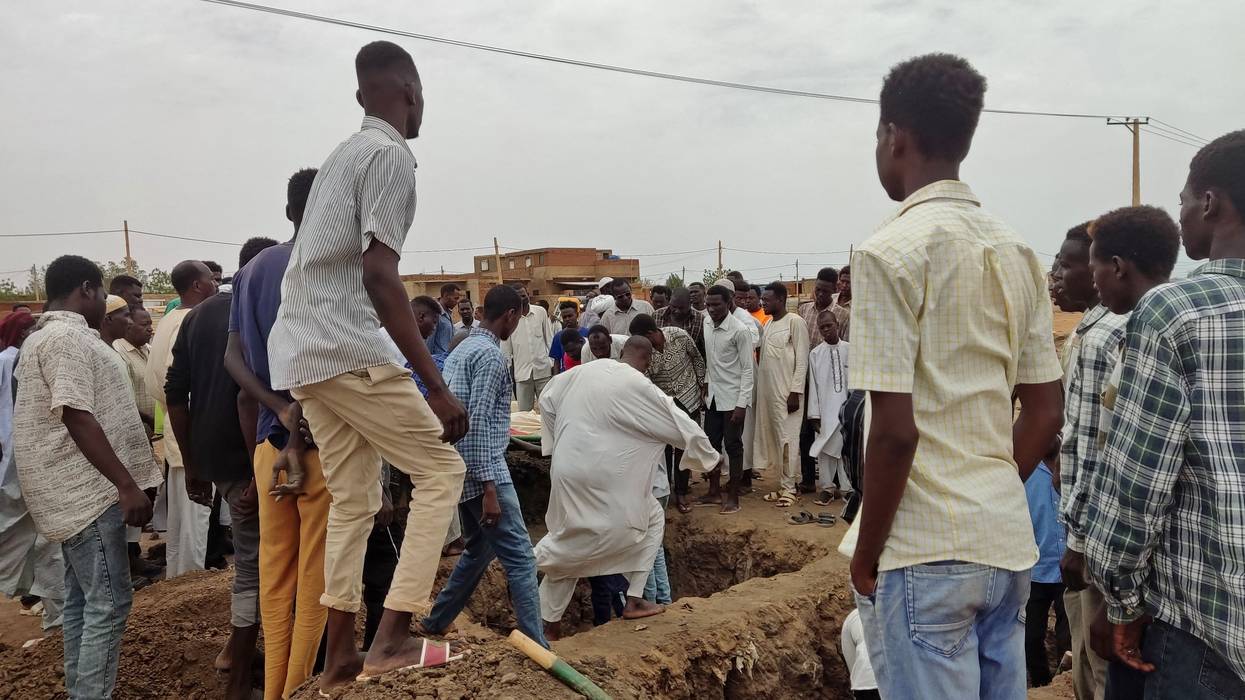
News of the upcoming meeting in Cairo followed U.N. Secretary-General António Guterres' warning that an ongoing armed conflict in Sudan could destabilize "the entire region."
Egypt announced Sunday that it plans to host a summit of Sudan's neighbors on July 13 to discuss how they might help broker an end to the 12-week battle between the Sudanese Armed Forces (SAF) and the paramilitary Rapid Support Forces (RSF)—an ongoing conflict that has exacerbated humanitarian crises in North Africa.
News of Thursday's meeting in Cairo came after United Nations Secretary-General António Guterres warned—in a Saturday statement issued by his deputy spokesperson Farhan Haq—that intensified fighting between the two factions "has pushed Sudan to the brink of a full-scale civil war, potentially destabilizing the entire region."
Since combat began on April 15 in the Sudanese capital of Khartoum, hundreds of people have been killed and nearly three million have been displaced, including almost 700,000 who have fled to neighboring countries, many of which are already grappling with extreme poverty and the impacts of local armed conflicts.
Speaking from a refugee camp in Adre, on the Sudan-Chad border, Al Jazeera correspondent Ahmed Idris noted Sunday that "cases of malnutrition are on the rise in camps in eastern Chad and other parts of Chad where Sudanese refugees have moved to."
Reuters reported Sunday that previous diplomatic efforts to halt fighting between SAF and RSF "have so far proved ineffective, with competing initiatives creating confusion over how the warring parties might be brought to negotiate."
As the news outlet explained:
Neither Egypt, seen as the Sudanese army's most important foreign ally, nor the United Arab Emirates, which has had close ties to the RSF, have played a prominent public role.
The two countries were also not involved in talks in Jeddah led by the United States and Saudi Arabia that adjourned last month after failing to secure a lasting ceasefire.
Sudan's two largest neighbors, Egypt and Ethiopia, have been at odds in recent years over the construction of a huge hydroelectric dam on Ethiopia's Blue Nile, close to the border with Sudan.
The upcoming summit in Cairo "aims to 'develop effective mechanisms' with neighboring states to settle the conflict peacefully, in coordination with other regional or international efforts," Reuters reported, citing a statement from Egyptian President Abdel Fattah El-Sisi.
The current fighting in Sudan erupted following weeks of tensions between SAF commander Abdel Fattah al-Burhan, chair of Sudan's Transitional Sovereign Council, and RSF commander Mohamed Hamdan Dagalo, or "Hemedti," the council's deputy chair.
The former allies joined forces to take control of Sudan in October 2021, two years after a 2019 military coup that occurred in the wake of a popular uprising to oust Omar al-Bashir, who had ruled Africa's third-largest country since leading the 1989 overthrow of a democratically elected government. However, during talks to establish a new transitional government, a dispute emerged over security force reform, turning al-Burhan and Dagalo—both of whom have long records of human rights abuses, including the brutal repression of pro-democracy activists—into rivals.
On Saturday, Guterres condemned a fresh air strike that killed at least 22 people in Omdurman, Sudan. After offering his condolences to the families of the victims and wishing a swift recovery to the dozens who were injured, the U.N. chief made clear that he is "appalled by reports of large-scale violence and casualties across Darfur" and "concerned about reports of renewed fighting in North Kordofan, South Kordofan, and Blue Nile States."
"There is an utter disregard for humanitarian and human rights law that is dangerous and disturbing," said Guterres' spokesperson. The U.N. chief reiterated his call for SAF and RSF "to cease fighting and commit to a durable cessation of hostilities." He also urged both sides "to abide by their obligations under international humanitarian and human rights law to protect civilians and to enable humanitarian action."
According to Reuters, "Sudanese delegations, including from civilian parties that shared power with the army and RSF after the overthrow of former President Omar al-Bashir four years ago, are expected to meet on Monday in the Ethiopian capital Addis Ababa for exploratory talks."

"One person is likely to die of hunger every 28 seconds between now and July across Ethiopia, Kenya, Somalia, and South Sudan alone—the highest on record," said one advocate.
A pledging event convened by the United Nations on Wednesday fell far short of the $7 billion that was called for to aid countries in the Horn of Africa, where more than 23.5 million people are currently suffering from hunger brought on by one of the worst droughts in recent history.
U.N. Secretary-General António Guterres said as he announced the pledge drive that "action will make all the difference" to avert a catastrophic famine in Kenya, Somalia, and Ethiopia, where 43 million people have faced five consecutive rainy seasons which brought vastly insufficient rain.
The High-Level Pledging Event brought in only $2.4 billion, with the United States making the largest donation—an additional $524 million, making its total contribution to humanitarian efforts in the region $1.4 billion this year. By contrast, the country's military budget for the current fiscal year—which includes funding for military activity in Somalia—is $858 billion.
Guterres on Thursday called the failed pledging event "unacceptable."
Without an immediate injection of more aid, he said, "emergency operations will grind to a halt, and people will die."
"We must act now to prevent crisis from turning into catastrophe," Mr. Guterres said. "Let us act together now—with greater urgency and far greater support."
The U.N. chief said in a statement that on a recent trip to the Horn of Africa, he met families who have been driven from their homes in Northern Kenya "in search of water, food, and incomes" as the ongoing drought has left them with "parched landscapes and perished livestock."
As scientists at the World Weather Attribution wrote in a report in April, the five consecutive failed rainy seasons in East Africa would not have occurred without the climate emergency and continued fossil fuel emissions, 92% of which come from the Global North.
Guterres said the Horn of Africa has become "the epicenter of one of the world's worst climate emergencies."
The international humanitarian group Oxfam said it was "deeply disappointed" by the failure of wealthy countries to contribute enough money to avert famine in the region, noting that much of the funding included in the $2.4 billion was previously pledged.
"This was a vital moment for rich donors to step up and show their commitment to saving lives," said Fati N'Zi Hassane, director of Oxfam in Africa. "They have failed millions of people caught up in this vicious spiral of hunger, displacement, and insecurity."
"One person is likely to die of hunger every 28 seconds between now and July across Ethiopia, Kenya, Somalia, and South Sudan alone—the highest on record," said Hassane. "To wait for a fully declared famine before donors act decisively is both complicit and immoral."
"We cannot continue drip-feeding aid to keep the worst of the crisis at bay while each day millions are being pushed further to starvation," she added. "What East Africa urgently needs is a drastic global collective effort not only to save lives now but to scale up programs that help people become more resilient to shocks like climate change and food price inflation."
The World Food Program noted on Wednesday that a basket of food in the Horn of Africa costs 40% more than it did a year ago.
The U.N. Office for the Coordination of Humanitarian Affairs said the pledges that were made this week will help humanitarian agencies to sustain supplies of food, water, healthcare, and nutrition services, but said "additional resources are urgently required to prevent a return to the worst-case scenario."
"We must persist in pushing for stepped-up investments," said U.N. deputy emergency relief coordinator Joyce Msuya, "especially to bolster the resilience of people already bearing the brunt of climate change."
With wars raging in Ukraine, Yemen, Somalia and elsewhere, Roe v. Wade overturned and our resources being wasted on militarism instead of addressing the climate crisis, it can be hard to remember the hard-won progress being made. As we end a difficult year, let's pause to remind ourselves of some of the positive changes that happened in 2022 that should inspire us to do more in the year to come. While some are only partial gains, they are all steps towards a more just, peaceful and sustainable world.
1. The growth of Latin America's "Pink Tide." Continuing the wave of progressive wins in 2021, Latin America saw two new critical electoral victories: Gustavo Petro in Colombia and Luiz Inacio Lula da Silva in Brazil. When President Biden's June Summit of the Americas excluded Cuba, Nicaragua and Venezuela, several Latin American leaders declined to attend, while others used the opportunity to push the United States to respect the sovereignty of the countries in the region. (Stay tuned for CODEPINK's spring forum "In Search of a New U.S. Policy for a New Latin America.")
2. The U.S. labor movement caught fire. In 2022 we witnessed the brilliant organizing of Chris Smalls and the Amazon workers, Starbucks reached nearly 7,000 unionized workers and close to 300 unionized stores. Requests to the National Labor Relations Board to hold union elections were up 58% in the first eight months of 2022. Labor is back and fighting the good fight.
3. Despite assaults on our elections, people fought back and gained some notable wins.
Voters delivered victories for progressives in districts across the country, including in Texas, Illinois, Michigan, Florida, Hawaii, California, Pennsylvania and Vermont, and Democrats kept control of the Senate. Young people showed up at the polls in record numbers--one out of eight voters in the midterms was under the age of 30. Abortion rights won in states where it was on the ballot (California, Michigan and Vermont) and in the "red" state of Kentucky, voters rejected a proposed amendment to the Kentucky constitution that would declare there is no constitutional right to an abortion. Another plus: Every election denier running to oversee state elections lost.
4. Peace comes to Ethiopia. After a devastating two-year civil war that left hundreds of thousands dead and millions displaced and facing starvation, the federal government of Ethiopia and the Tigray People's Liberation Front (TPLF) signed a peace treaty on November 2, 2022. The surprise deal came out of peace talks convened by the African Union. So far, the fighting has ceased, and both parties vowed that they are determined to make the peace deal last.
5. Mainstream media finally did right by Julian Assange, as his international support grew.
The New York Times, The Guardian, Le Monde, El Pais and Der Spiegel-the media outlets that published WikiLeaks' revelations 12 years ago--finally called on President Biden to free Assange. Australian Prime Minister Anthony Albanese (Assange is an Australian citizen) also finally said he has personally urged the U.S. government to end its pursuit of Assange. More enthusiastic has been his support in Latin America, with calls for his release coming from President Gustavo Petro in Colombia, Mexico's President Lopez Obrador, Nicaragua's President Daniel Ortega, Venezuela's President Nicolas Maduro, and Brazil's President-elect Lula da Silva.
6. Indigenous and Global South voices were finally heard at the largest climate summit, COP27.
Thanks to the relentless work of Indigenous peoples and organizers from the Global South, marginalized communities not only got into COP27 this year but their voices were finally heard and a historic loss and damage fund was established to help vulnerable countries cope with the destructive impacts of climate change. The development marks an important achievement for civil society and collective action in the Global South that has been nearly three decades in the making. Now we have to push the wealthier countries to come through with the funds, and to finally get serious about our own transition to clean energy before it is too late to avoid global catastrophe.
7. Some 200 countries (minus the U.S. and the Vatican) commit to stemming the loss of nature worldwide. Another critical environmental gathering, the COP15 Biodiversity Summit in Canada, reached a watershed agreement pledging to protect nearly one-third of Earth's land and oceans as a refuge for the planet's remaining wild plants and animals by 2030-dubbed "30 by 30." This agreement is critical to stemming the massive loss of diversity--about a million species are at risk of disappearing forever. But it will take constant grassroots pressure, and significant resources from the wealthier countries, to put this 30 by 30 goal into practice.
8. The passage of the Respect for Marriage Act. The U.S. Supreme Court legalized same-sex marriage nationwide in 2015 but the court's June decision overturning a right to abortion at the federal level raised concerns that federal protections for same-sex marriage might be in jeopardy. The Respect for Marriage Act was passed to address this by guaranteeing federal recognition of any marriage between two individuals if the union was valid in the state where it was performed. It won't force states to issue same-sex marriage licenses should nationwide marriage equality be overturned by the Supreme Court but it will extend equality under the law to all same-sex couples, no matter which state they got married in. It also protects interracial marriages.
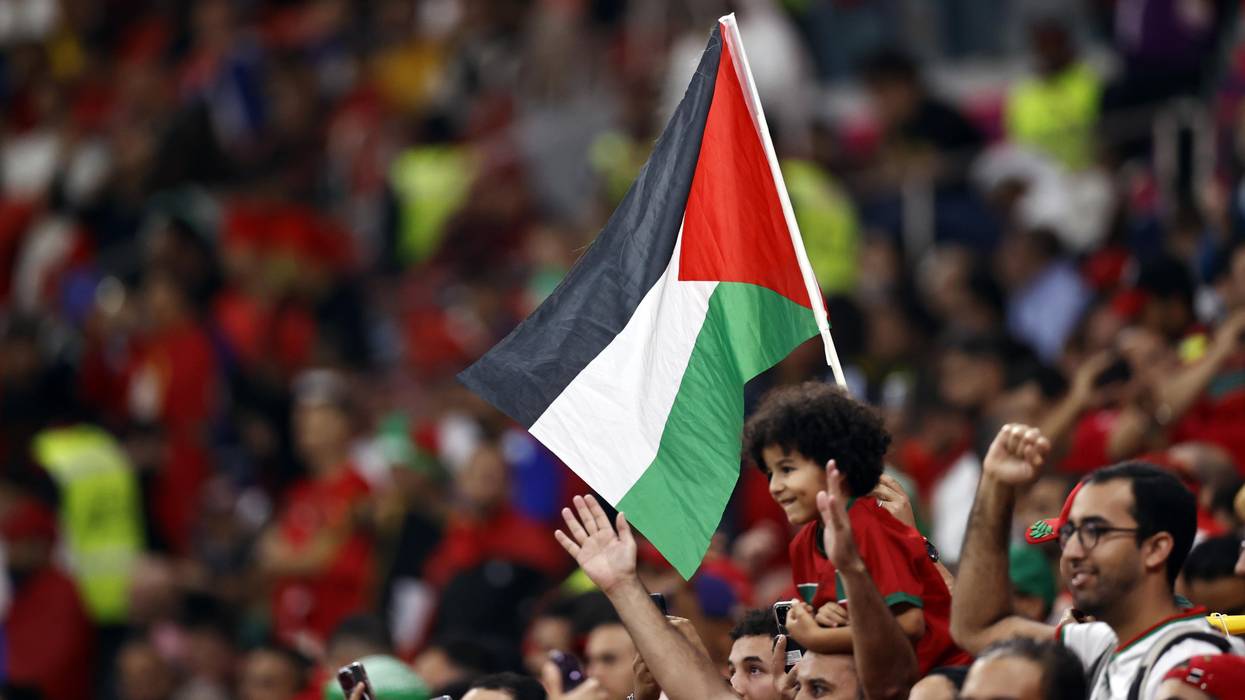
9. The World Cup put the spotlight on Palestine. The World Cup was a spectacular event that created a sense of global solidarity and joy, with Argentina's win lifting up all of Latin America. But the fans, especially from Muslim and Arab countries, put the spotlight on another place in the world: Palestine. Palestinian flags and chants popped up everywhere-on the field, in the bleachers, on the streets, while videos showing Israeli journalists being ostracized went viral. At least for the month of these games, the call to "Free Palestine" went global.
10. A multi-polar world is here. China's enormously ambitious Belt and Road Initiative now encompasses over 80 countries. And with the U.S. abusing its economic power by imposing extraterritorial sanctions against countries all over the globe, the push for alternatives to the dollar has exploded. Over a dozen countries have asked to join BRICS (the alliance of the powerful economies of Brazil, Russia, India, China and South Africa), whose countries account for 40 percent of the global population and 25 percent of the world's GDP. BRICS members are already transacting their bilateral trade in local currencies. And new or strengthened non-aligned movements have emerged in Latin America and Africa. A multi-polar world is already a reality for much of the world, and this is actually better for people everywhere-even for Americans-than one where the U.S. keeps using war, militarism and coercive financial sanctions to try to prolong its post-Cold War unipolar moment into our new century.

Armed conflict, climate change, economic stressors, and humanitarian aid shortfalls are among the leading drivers of increased gender-based violence, the head of the United Nations' refugee agency said on Friday, International Day for the Elimination of Violence Against Women and Girls.
"There is a shocking, pernicious cycle of hunger and insecurity, each exacerbating the other and fueling risks to women and girls."
"A toxic mix of crises--conflicts, climate, skyrocketing costs, and the ripple effects of the Ukraine war--are inflicting a devastating toll on the forcibly displaced. This is being felt across the world, but women and girls are particularly suffering," U.N. High Commissioner for Refugees (UNHCR) Filippo Grandi said in a statement.
The U.N. agency said that many refugees and internally displaced people can't meet their basic needs due to price inflation and diminished humanitarian aid caused by inadequate funding and supply chain disruptions caused by the Covid-19 pandemic and other disruptors like the Russian invasion of Ukraine.
"With savings depleted, many are skipping meals, children are being sent to work instead of school and some may have no options but to beg or engage in the sale or exchange of sex to survive," said Grandi. "Too many are facing heightened risks of exploitation, trafficking, child marriage, and intimate partner violence."
As UNHCR details:
Among refugee populations in Algeria, Bangladesh, Cameroon, Chad, Ethiopia, Kenya, Sudan, South Sudan, Niger, Tanzania, Uganda, Republic of the Congo, and Zambia, UNHCR has recorded serious nutrition concerns. These include acute malnutrition, stunting, and anemia. Across eastern and southern Africa, more than three-quarters of refugees have seen food rations cut and are unable to meet their basic needs. Inside Syria, 1.8 million people in displacement camps are severely food insecure, while nine in 10 Syrian refugees in Lebanon are unable to afford essential food and services.
Across the Americas, half of those forcibly displaced eat only two meals a day, with three-quarters reducing the quantity or quality of their food, according to UNHCR data. Major deteriorations in food security are projected in Yemen and the Sahel, and millions of internally displaced people in countries like Somalia and Afghanistan live in situations where 90% of the population are not consuming enough food.
"There is a shocking, pernicious cycle of hunger and insecurity, each exacerbating the other and fueling risks to women and girls, as harmful coping strategies are adopted across communities," the agency said.
UNHCR highlighted the case of one South Sudanese refugee who in 2018 fled to Ethiopia's Gambella region, where she is forced to make dangerous forays for food because of a 50% reduction in monthly aid.
"In the camp, the food is not enough, so the only option for some women is to go to the forest to collect firewood to sell," the woman--who did not give her real name but called herself "Roda"--explained. "As women, we face a lot of risks by going to the forest. You need to walk for at least four hours to arrive at a very distant place where you can gather some sticks to bring home."
One day while going to get wood, Roda was attacked by a man. She was able to escape, but he followed her as she hurried back toward the refugee camp and she remains truamatized by the incident.
"This is not an isolated occurrence," Roda stressed. "Many women have found themselves in these sorts of situations many times. If food was available at home, women would not need all these risks."

The United States--whose military has killed more foreign civilians than any other armed force on the planet since the end of World War II--on Friday joined 79 other nations in signing a declaration aimed at protecting civilians from explosive weapons in populated areas.
"It is time for all states to endorse and implement the declaration to help civilians and their communities during and after conflict."
The signing of the declaration at the Explosive Weapons in Populated Areas (EWIPA) Conference in Dublin, Ireland follows three years of international negotiations. While the U.S., U.K., France, and 20 other NATO members signed the agreement, major military powers including Russia, China, India, and Israel did not.
The declaration's signatories committed to "strengthening the protection of civilians and civilian objects during and after armed conflict, addressing the humanitarian consequences arising from armed conflict involving the use of explosive weapons in populated areas, and strengthening compliance with and improving the implementation of applicable international humanitarian law."
Irish Foreign Minister Simon Coveney said in a statement that "today's political declaration sets out actions to be taken in military operations to strengthen the protection of civilians."
"Its implementation will change how militaries operate in populated areas, including a commitment around restricting or refraining from the use of explosive weapons when their use may be expected to cause harm to civilians or civilian objects," he added.
Laura Boillot, coordinator for the International Network on Explosive Weapons (INEW), which includes 49 advocacy groups, said that "this declaration sends a clear message that using explosive weapons in populated areas causes unacceptable civilian suffering and devastation and must stop."
"It is time for all states to endorse and implement the declaration to help civilians and their communities during and after conflict," she added.
According to the U.K.-based group Action on Armed Violence (AOAV), an INEW member, over 90% of the people killed or injured by explosive weapons around the world are civilians.
AOAV explained:
The declaration requires states to impose limits on the use of explosive weapons in populated areas, which is the leading cause of harm to civilians in conflicts today. It also requires states to assist victims and affected communities both during and after conflict and to address the long-term suffering that stems from the use of explosive weapons in populated areas.
Of note, of the 80 countries who signed up to the declaration, 57 have witnessed explosive violence in their own territories since 2010. Over two-thirds of explosive violence incidents witnessed by the signatory countries were in populated areas, and in those incidents 87% of victims have been civilians--almost 25,000 people.
The new declaration comes as civilians are being killed, injured, displaced, and traumatized in countries around the world in conflicts and actions including Russia's invasion of Ukraine; Russian, Turkish, and U.S.-led coalition bombing and artillery bombardment of Syria; Syrian government attacks; Saudi-led coalition airstrikes in Yemen; Houthi rebel attacks; bombing and shelling by Myanmar forces targeting Kachin, Karen, and Rohingya people; Israeli attacks on Palestine; and, until recently, French bombing of Mali and the Tigray war in Ethiopia.
Unmanned aerial drone and other airstrikes by U.S. forces also continue in nations including Afghanistan, Somalia, and Syria during the 21-year, open-ended War on Terror--in which more than 387,000 civilians have been killed, according to the Costs of War Project at Brown University's Watson Institute for International and Public Affairs.
"We are encouraged by the number of countries that have signed the declaration today," Federico Borello, executive director of the Washington, D.C.-based Center for Civilians in Conflict, another INEW member, said in a statement. "However the protection of civilians is the responsibility of all states. We call on countries that have not signed yet the political declaration to join in this international effort to protect civilians from bombing and shelling in towns and cities."
INEW's Boillot asserted that "the adoption of this declaration is a milestone, but it is not the end of the journey. We have a long path ahead of us--one that will require committed and sustained work from all of us, in the spirit of partnership and collaboration that has been the hallmark of the process to date."
"Only by continuing to work together in a collaborative, committed, and transparent manner, and by never forgetting the people at the heart of our efforts, can we ensure that the declaration's goals will be pursued with the urgency and unwavering commitment they deserve," she added.

As a new analysis revealed that the global ranks of the superrich soared to a record number, a coalition of charity groups said Tuesday that hundreds of millions of people around the world are hungry--and that someone starves to death every four seconds.
"This is about the injustice of the whole of humanity."
At least 238 international and local charities from 75 countries signed an open letter noting that "a staggering 345 million people are now experiencing acute hunger, a number that has more than doubled since 2019."
"Despite promises from world leaders to never allow famine again in the 21st century, famine is once more imminent in Somalia," the signers stated. "Around the world, 50 million people are on the brink of starvation in 45 countries."
The letter--which was timed to coincide with the annual meeting of the United Nations General Assembly in New York--asserts that "the global hunger crisis has been fueled by a deadly mix of poverty, social injustice, gender inequality, conflict, climate change, and economic shocks, with the lingering impacts of the Covid-19 pandemic and the crisis in Ukraine further driving up food prices and the cost of living."
"Those with the power and money to change this must come together to better respond to current crises and prevent and prepare for future ones," the signatories argued.
The number of those with the most money grew to a record number last year.
According to an analysis published Tuesday by Credit Suisse, there were 218,200 ultra-high net worth (UHNW) people in the world in 2021, an increase of 46,000 from the previous year. The share of the world's wealth held by the richest 1% of people also increased from 44% to 46% last year.
Credit Suisse said there were 62.5 million U.S. dollar millionaires on Earth, and that all the wealth in the world added up to $463.6 trillion, while attributing what one of the report's authors called the "explosion of wealth" to soaring home and stock values.
A separate report published in July by letter signatory Oxfam revealed that profits from soaring food prices have enriched billionaires around the world by a collective $382 billion.
Meanwhile, Sumaya, a 32-year-old mother of four living in a camp for internally displaced people in Ethiopia's Somali region, lamented her family's dire situation in the charity groups' letter: "No water, no food, a hopeless life."
"Above all, my children are starving," she said. "They are on the verge of death. Unless they get some food, I'm afraid they will die."
Last week, Oxfam published a report underscoring how the climate emergency is exacerbating extreme hunger. The report examined 10 of the world's worst climate hot spots, where 18 million people are on the brink of starvation.
Mohanna Ahmed Ali Eljabaly of the Yemen Family Care Association, which also signed the charities' letter, said that "it is abysmal that with all the technology in agriculture and harvesting techniques today we are still talking about famine in the 21st century."
Related Content

"This is not about one country or one continent and hunger never only has one cause. This is about the injustice of the whole of humanity," she continued. "It is extremely difficult to see people suffering while others sharing the same planet have plenty of food."
"We must not wait a moment longer to focus both on providing immediate lifesaving food and longer-term support," Elhjabaly added, "so people can take charge of their futures and provide for themselves and their families."