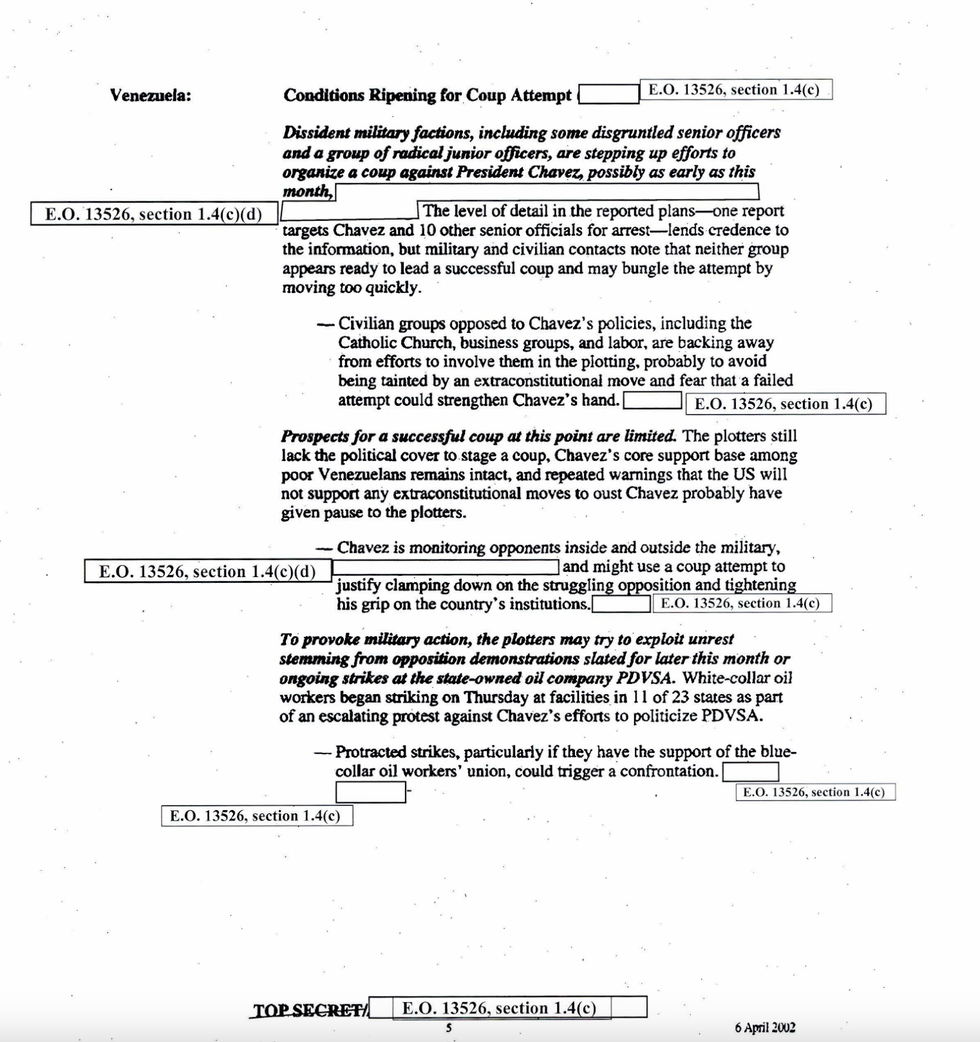
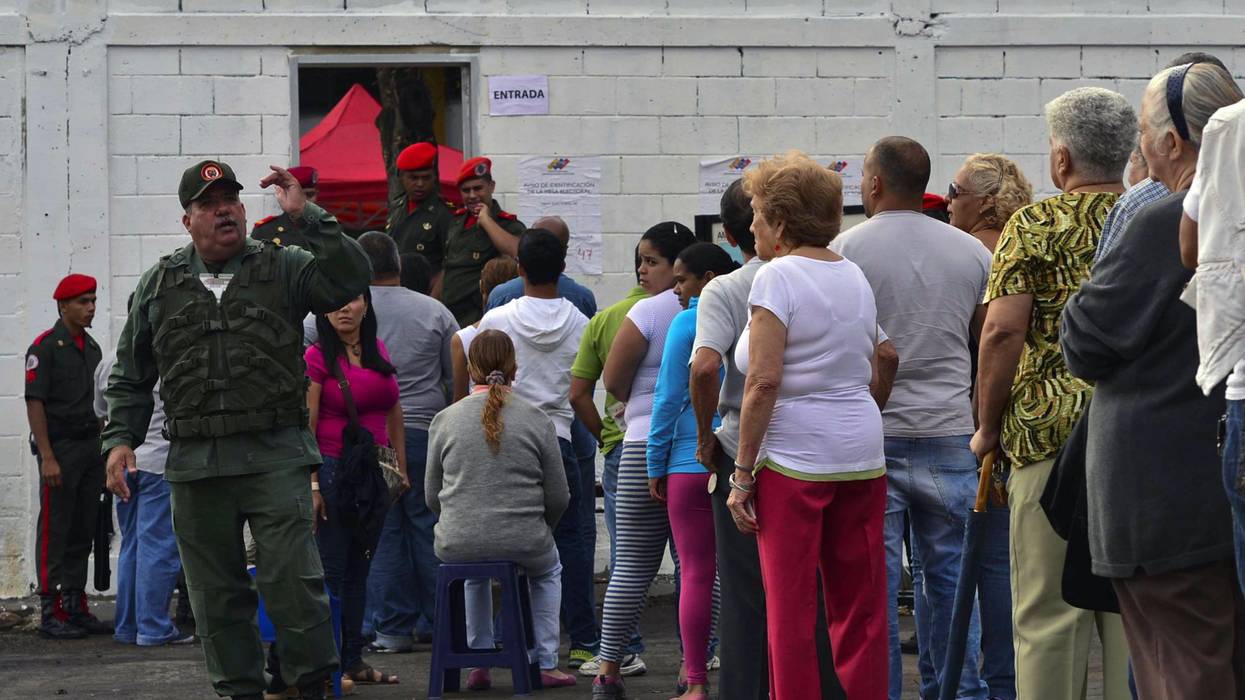
The US propaganda assault plays a large part in generating these two opposing reactions regarding President Maduro’s abduction among Venezuelans, outside (celebration), especially among the US-based diaspora, compared with inside (condemnation) Venezuela. The US propaganda assault refers to the US’(or its aligned entities’) deployment of its vast ideological apparatus (White House communications, corporate media, academia, social media, NGOs, and international organizations) to impose narratives about Venezuela, especially its economic and political conditions, that undermine the Bolivarian Revolution to justify US intervention.
The US propaganda assault shapes how Venezuelans make sense of their experiences in and—for those who left—out of Venezuela, generating more support for the illegal kidnapping of President Maduro among those living abroad compared with those living inside Venezuela, where the propaganda assault faces reality and a stronger counteroffensive, undermining its effectiveness.
The Venezuelan Diaspora
In general, Venezuelans in the United States are more likely to support the illegal kidnapping of President Maduro because of their adherence and susceptibility to US-deployed narratives about the Bolivarian Revolution, often linked to their socioeconomic background in Venezuela.
Venezuelans in the United States, as a group, “have higher rates of educational attainment than either native- or overall foreign-born populations” and they are, on average, more educated than their compatriots in Venezuela. Because education is a common marker of socioeconomic status, the Venezuelan diaspora tends to be more socioeconomically advantaged than compatriots who stayed in Venezuela. Moreover, some members of Venezuela’s upper class and elites migrated to the US after Hugo Chavez came to power in 1999, as they are the most vociferous opponents to his political project, a socialism of the 21st century. Thus, middle- and upper-class (and elite) segments of Venezuelan society are overrepresented in the Venezuelan diaspora in the United States. These individuals led comfortable lives in Venezuela until US economic attacks induced economic deterioration and emigration; they carry all of the disappointment, anger, hurt, and resentment associated with economic difficulties—or reduced advantaged among the upper-class and elites—and subsequent displacement.
The neoliberal imperial worldview is a crucial part of the propaganda assault against the Bolivarian Revolution, as it dictates the parameters, including premises and assumptions, that structure debates about Venezuela, including the legitimate role of the US in its affairs.
Venezuelans with middle- and upper-class backgrounds—and especially elites—tend to adhere most closely to a US-centric, neoliberal, and imperial worldview, a prevalent perspective among more advantaged individuals all over Latin America. Two dimensions of this worldview are imperative. First, the state should be subordinated to capital. Secondly, the US’ unruly “rules-based order”—with its related economic, political, and cultural dimensions—should have hegemony over the world, especially the Western Hemisphere. According to this worldview, US neoliberal imperial hegemony is morally superior to other arrangements; thus, US intervention in foreign nation-states to maintain its hegemony is justified. More advantaged, usually light-skinned sectors of Latin America, including in Venezuela, see themselves as part of a US-aligned cosmopolitan milieu, whose perspective they enforce, often violently, in their countries of birth.
US Propaganda for a Receptive Venezuelan Diaspora
The New York Times, the most powerful and effective mouthpiece of the US empire’s propaganda, recently acknowledged that US economic and financial attacks “crushed the Venezuelan economy and led to a humanitarian crisis.” As the US destroyed the Venezuelan economy and created a humanitarian crisis, it deployed (and continues to deploy) a propaganda assault that minimizes or outright obscures the role that US attacks have played in the economic devastation and political troubles in Venezuela. The propaganda assault shifts blame away from the US government onto Chavismo’s leadership, suggesting that the economic duress in Venezuela was primarily—or even exclusively—a result of “mismanagement and corruption” endemic to socialism, in general, and Chavismo, in particular, led by its “narco-trafficker” leader, Nicolás Maduro.
For instance, the claim that Maduro is a narco-trafficker who heads the nonexistent Cartel de los Soles was taken as fact in the most recent Rubio hearings about Venezuela, even though the US government itself has jettisoned this accusation from the “legal” proceedings against President Maduo, a tacit admission that it is false. The fact that corporate media knew about the military attacks ahead of time and refused to publish or sound the alarm is perhaps the best evidence that they are a complicit player in the assault against Venezuela.
The neoliberal imperial worldview is a crucial part of the propaganda assault against the Bolivarian Revolution, as it dictates the parameters, including premises and assumptions, that structure debates about Venezuela, including the legitimate role of the US in its affairs. For instance, at the referenced Rubio hearings, questioning from most senators relied on the premise that the US has the right to intervene in Venezuela’s internal affairs and kidnap its sitting president, a blatant violation of international law. Stunningly, though not surprisingly, some congressmen reprimanded Secretary of State Marco Rubio for not going further and targeting other high-profile Chavista leaders and installing opposition figure María Corina Machado as president, demands only conceivable under a neoliberal imperial worldview. The parameters of the debate that the US propaganda assault delimits is found in most debates about Venezuela, regardless of its interlocutors.
Moreover, when the Bolivarian Revolution defends itself against US attacks, including limiting US influence through opposition proxies, it is labeled “authoritarian.” For example, the US propaganda assault paints US-funded guarimberos as “political prisoners.” These criminals destroyed public and private property, including schools, and killed Venezuelans and targeted Chavistas, including by burning them alive in an attempt to dislodge the Bolivarian Revolution from power. When the Chavista government jailed these “political prisoners,” the US propaganda assault accused the Bolivarian Revolution of authoritarianism, noting that these actions are proof that President Maduro (and Chavez before him) is a dictator. The US propaganda assault does not acknowledge the heinous crimes these guarimberos committed. Due to Chavismo’s alleged authoritarianism, a neoliberal imperial worldview demands that the United States has a duty to intervene in order to “liberate” the allegedly “oppressed” people to clear the way for foreign capital with its subservient “democracy,” a “common sense” solution to its hardships.
The more privileged segment of the Venezuelan society diaspora, who strongly adhere to a neoliberal imperial worldview, is exposed to nothing but anti-Chavismo narratives in the United States. Notably, the US propaganda assault politicizes some members of the diaspora to such a degree that the “MAGAzolano” emerges as a political actor: Venezuelans who ardently support Trump, even though Trump is attacking their country, killing their compatriots with illegal military incursions, and making life unbearable for Venezuelan immigrants through oppressive immigration enforcement and the deportation regime in the US. Although the MAGAzolano is often found among more privileged Venezuelans—who tend to be light-skinned descendants of European immigrants who consider themselves white—they are not limited to this group.
Economic difficulties and subsequent emigration, refracted through a US propaganda assault, including a neoliberal imperial worldview, feeds and deepens these middle-class, upper-class, and elite Venezuelans’ disappointment, anger, hurt, and resentment about their situation, thereby hardening their views against Chavismo, including blaming Maduro for their personal difficulties. Consequently, these Venezuelans in the diaspora celebrate the military attack that led to Maduro’s illegal abduction.
Chavismo finds most support among working-class Venezuelans. For this reason, working-class Venezuelans are the primary target of the US propaganda assault. For instance, when Chavistas appear in corporate media, Chavismo is presented as a failed boogeyman. One corporate media report, which featured a Chavismo-supporting family who lost a son to the US military attack, describes the socialist Bolivarian Revolution as “faded” and “handicapped by corruption cronyism, and incompetence and”—wait for it, at the end of the list—“US-led sanctions.” Notably, the story articulates the lofty aims of the Bolivarian revolution that Chavez started but only to highlight its failures.
Due to the absence of forceful and consistent counternarratives in corporate-owned legacy and social media against US propaganda, arguments against Chavismo—largely unopposed— gain ground. Consequently, support for Chavismo weakens among this segment of the population in the US. Moreover, the propaganda assault is coupled with incentives to sing an anti-Maduro tune in the US, especially in co-ethnic communities like Miami, a hotbed of anti-socialist sentiment. In these locales, employment and other opportunities may vanish if one articulates support for the Bolivarian revolution. Furthermore, legalization incentives decrease articulating support for President Maduro, as a pathway to legalization might be more likely if one argues political persecution by the Chavista government. Thus, the US propaganda assault and material incentives undermine support for Chavismo, even among its followers. At the very least, every anti-Chavismo story in the press—in the absence of counternarratives—sows doubt, leading these working-class individuals who support the Bolivarian Revolution in the diaspora to ask: Is it true?
The Limits of the US Propaganda Assault Inside Venezuela
Condemnation for President Maduro’s illegal kidnapping is stronger and more visible inside Venezuela, largely because Chavismo is the strongest political movement inside the country, because these Venezuelans had to deal with bombs landing on their heads, and because the US propaganda assault encounters reality and a stronger narrative counteroffensive.
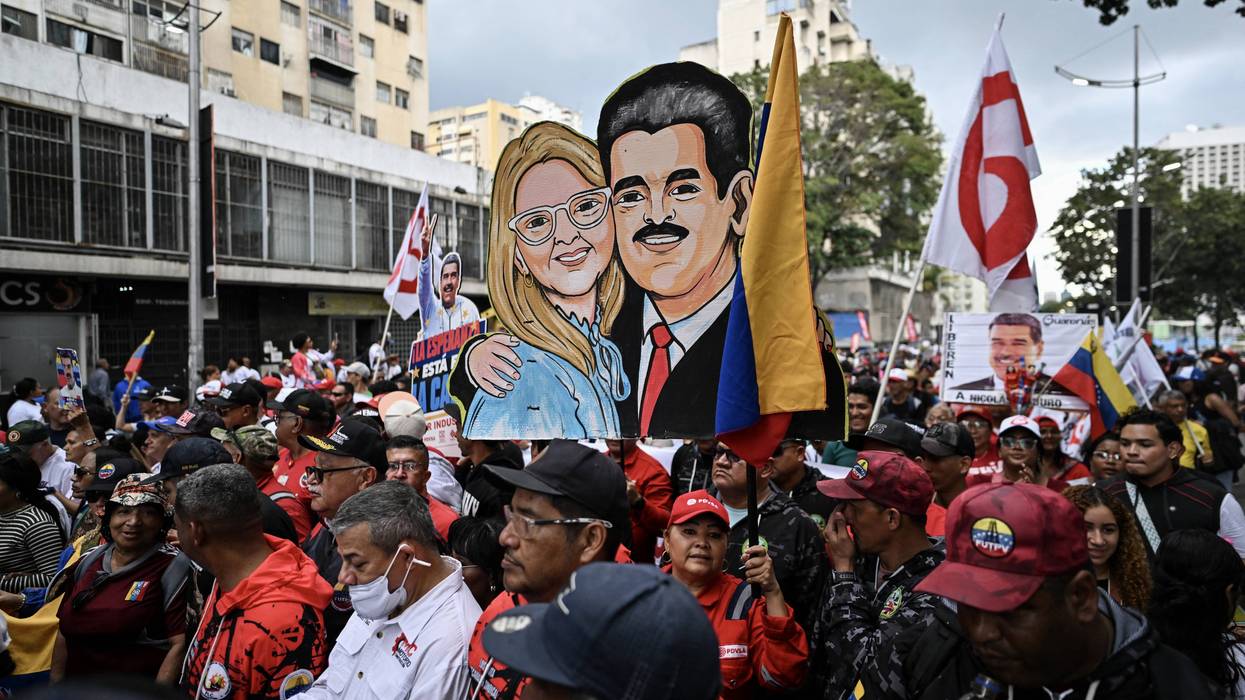
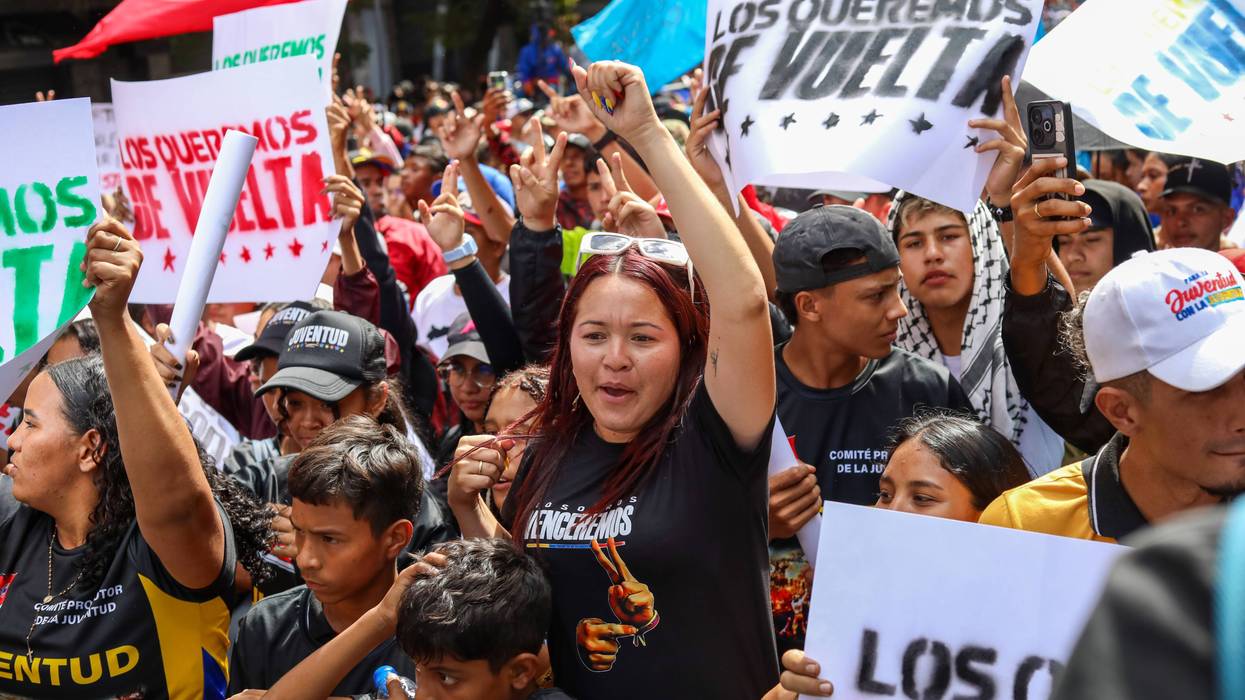
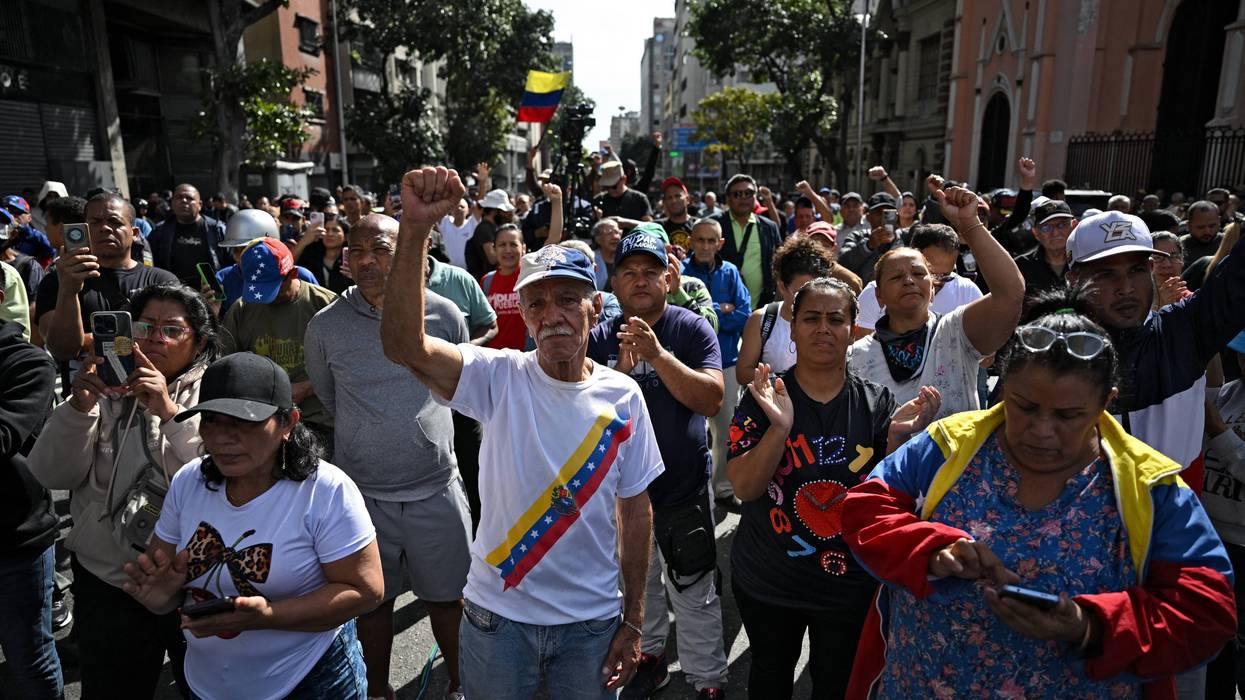
Chavismo is the strongest social movement in Venezuela. Since Chavez came to power, Chavismo has won most of the over 30 elections Venezuela has held at different levels of governance. They control all of the levers of power and enjoy the most mobilized base compared to other political movements, including the fractured political right. Notably Chavismo has empowered communes, which strengthen support for Chavismo on the ground. For instance, in November 2025, a national election took place so that communes could vote to prioritize projects whose support is provided by the federal government. The PSUV (Socialist Party) is the largest and most organized political organization in the country. Central to the US propaganda assault is to refuse to acknowledge, attempt to obscure, or outright deny this fact. While US propaganda buries this fact from a US-based (and Western) audience, including the Venezuelan diaspora, it cannot disguise it from Venezuelans inside the country, who see—with their own eyes—Chavismo mobilized on the streets, thereby undermining the US propaganda assault’s effectiveness.
The fact that the Bolivarian Revolution did not crumble after the kidnapping of its president, as many other societies have done after a US strike, reveals the Bolivarian Revolution’s strength.
Notably, the military attack against Venezuela generated a “rally-behind-the-flag” effect. The aggression against Venezuela affected all of its citizens, regardless of political ideology, leading Chavistas and non-Chavistas alike to condemn the intervention. For instance, bombs landed on La Boyera, a historically stronghold for the opposition, destroying homes and harming individuals. The attack also destroyed a medical warehouse that stored supplies for dialysis patients in La Guaira and damaged a research center in Miranda state. (In a show of solidarity, the Brazilian government donated medical supplies to help these patients.) Venezuelans of all political stripes are dealing with the psychological and emotional toll of Trump’s attack.
Among Venezuelans inside Venezuela, there is no confusion as to who bombed them and who defended them, heightening patriotism in defense of their sovereignty. Because Chavismo is in charge of the government, it emerged as the unequivocal defender of Venezuela sovereignty, generating sympathy (or quelling animosity), if not support, among some detractors. Maria Corina Machado’s gifting of her Nobel “peace” medal to Trump as a sign of gratitude for bombing Venezuela highlighted a contrast between those who support (extreme right-wing opposition) and those who reject (Chavismo) the US military attacks, defining the latter as the protector of the Venezuelan people. Importantly, the rally-behind-the-flag effect reveals why the propaganda assault was launched first, as it undermines and diffuses patriotic cohesion by concealing the US as the unequivocal aggressor. It is not surprising that some non-Chavistas have joined the demonstrations condemning the illegal attack. Having experienced the attack firsthand, they are not eager to stand in a town square and celebrate bombs raining down on them and the killing of their compatriots and neighbors.
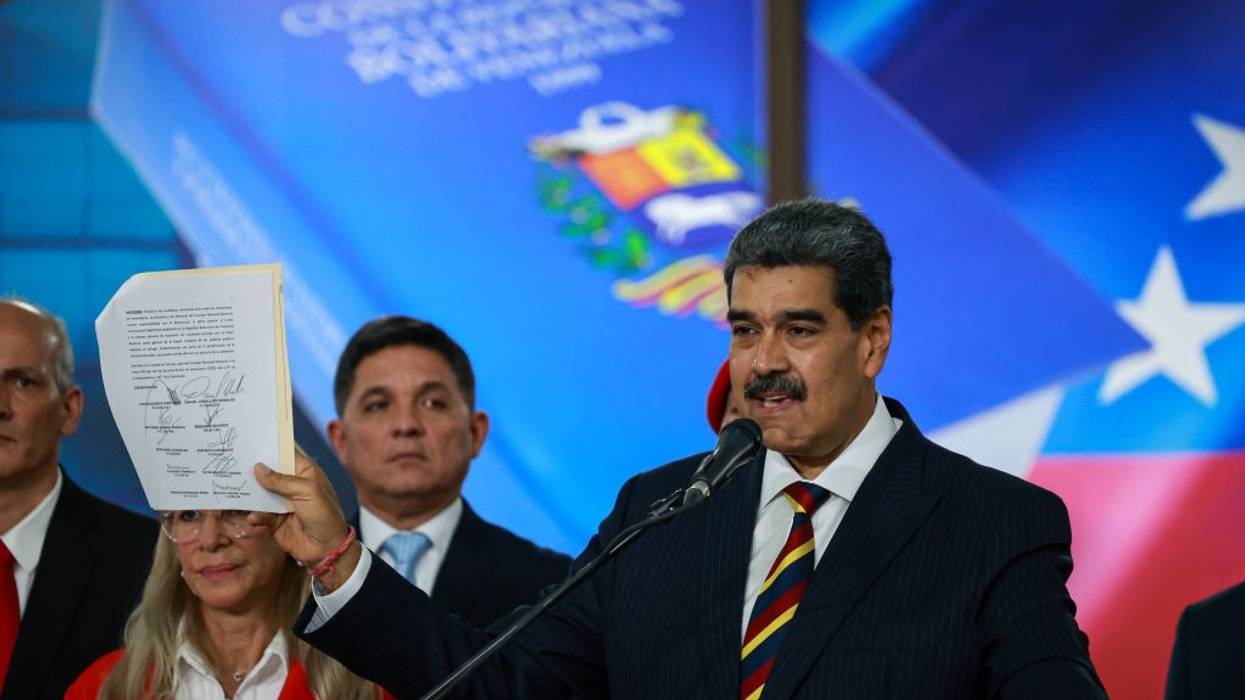
Inside Venezuela, Chavismo supporters offer counternarratives to the US propaganda assault. Social media, state-sponsored media, and the pulpit of the presidency—among other avenues—are deployed to help people understand the US assault and what the Bolivarian Revolution is doing about it. For example, these outlets point out that the US attacked to steal their natural resources, not for democracy or any other excuse. Importantly, they debunk a range of narratives that attempt to divide and, therefore, weaken Chavismo (see below). They highlight how the extreme right-wing opposition has called for US military intervention and how they have celebrated the bombing of their compatriots; in doing so, they highlight how unpatriotic these right-wing sectors are and how little they care for the Venezuelan population. Importantly, they highlight the importance of socialist principles to understand and resist this attack, and how a deepening of socialism is the only answer to US pressure.
The US Propaganda Assault Doubles Down
After the military aggression, the US propaganda assault against the Bolivarian Revolution has jumped into hyperdrive to generate division and weaken Chavismo in an effort to dislodge the socialist project from controlling the Venezuelan government. The US propaganda assault continues to try to break Chavismo, targeting Delcy Rodriguez, the vice president who is now in charge in President Maduro’s absence, Jorge Rodriguez, the head of the assembly (and Delcy’s brother), and, most importantly, Diosdado Cabello, the interior minister. These narratives include:
- “Chavistas did not fight back against the US attack; they are weak.”
- “The ‘capture’ was an exacting, clean, and without resistance.”
- “The abduction is legal.”
- “Traitors collaborated with the US; Chavismo is ready to collapse from within.”
- “Delcy and her brother betrayed Maduro; Chavismo is fractured.”
- “Delcy is an opportunist ready to give up her Chavista roots for power.”
- “Delcy has expensive taste; she is a hypocrite and not committed to the Bolivarian revolution.”
- “Diosdado Cabello is the real motor behind Chavismo; Delcy must be weary of him.”
- “Diosdado Cabello betrayed Maduro.”
- “Diosdado is a narco-terrorist.”
- “Chavista leadership has abandoned the Bolivarian revolution.”
- “Trump runs the United States.”
- “Delcy is subservient to Trump and CIA.”
- “Chavista leaders have millions in offshore banks; they are not real socialists.”
One of these narratives—“Delcy is a narco-trafficker”—is a rehashing of US accusations against Maduro. The Bolivarian Revolution’s resistance to these nefarious narratives is also working overtime, undermining the attacks’ effectiveness, providing almost instantaneous rebuttals. Many of these US propaganda narratives have been thoroughly debunked. But new ones emerge, and old ones are recycled, almost on a daily basis. As Vijay Prashad notes, “Every single Western corporate newspaper has run a story on how the Venezuelan leadership made a deal with US to hand over Maduro.” The evidence? Boogeyman “anonymous sources,” who almost always turn out to be US intelligence campaigns that feed corporate media the narrative the US wants to impose. The corporate media, for their part, does little to investigate and corroborate the anonymous sources’ claim; they just print them without proof or verification, acting as a propaganda arm of the US government. Note that as the Chavismo leadership negotiates with the US, the latter is engaged in a ferocious propaganda assault to undermine the Bolivarian government.
Finally, Venezuelans abroad try to silence support for Maduro by arguing that those who did not experience the economic hardships that they experienced do not have a right to speak. As a rebuttal, those inside the country argue that Venezuelans who left during the most difficult times as a result of the US financial attacks did not experience the subsequent economic upward swing that Chavismo engineered, despite US-imposed crippling sanctions. Venezuela has experienced continued economic growth from 2020-2025, which is one of the primary reasons the United States used the military to encircle and attack it; the Bolivarian Revolution was outmaneuvering US economic sanctions. Those who stayed in Venezuela experienced, firsthand, economic recovery, however slow, a reality that cannot be denied to those who experienced it.
A Note on the Imperial Left: The Reach of the US Propaganda Assault
US propaganda assault deploys narratives to undermine the Bolivarian Revolution that face few counternarratives in the United States, including among self-professed “progressives,” “leftists,” or “democratic socialists.” One of the most despicable arguments that emerges out of this group, which I refer to as the “imperial left,” is the ever self-serving “both-sideism” claim. It states that both of the following claims are true: Maduro—and Chavismo more generally—is “corrupt” and “authoritarian” and “mismanaged” the economy and the US carried out an illegal attack and abduction against Venezuela and its leader. These imperial leftists reject both Chavismo and the United States’ actions, thereby projecting a seemingly “neutral,” “objective,” and “unbiased” perspective.
Although “both-sideism” appears as a “neutral,” “unbiased,” and “objective” stance, it is actually in alignment with US aggression against the Bolivarian Revolution. This narrative creates a moral equivalence between the victim (Venezuela and its Bolivarian revolution) and its aggressor (the United States) that renders them both objectionable, which undermines support for Chavismo and, consequently, demobilizes anti-imperial resistance inside the US and strengthens Venezuelan diaspora support for the illegal kidnapping of President Maduro. Notably, for this “equivalence” to work, imperial leftists accept narratives deployed by the US government, including that Chavismo’s mismanagement, corruption, and authoritarianism is primarily responsible for Venezuela’s economic duress, ignoring actual evidence.
In doing so, “both-sideism” legitimizes US government claims and, consequently, its purported reasoning for intervention. For the imperial left, self-defense under imperial aggression is dictatorship; concessions forced under imperial attacks exemplify lack of revolutionary commitment; and neutralization of US proxies reveals authoritarianism. If not a perfect socialist utopia, the imperial left is more than happy to join right-wing forces against revolutionary governments working toward socialism, including in Latin America. All they accomplish is undermining solidarity and resistance against imperial aggression.
Will the Real Venezuelan Please Stand Up!
By highlighting Venezuelans abroad who celebrated the January 3 military attack against their birth country, the US propaganda assault seeks to impose the narrative that all Venezuelans support the illegal kidnapping of President Maduro. To do so, it obscures Venezuelans inside and outside the country who disagree. Even outside of Venezuelan, however, opposition to the illegal kidnapping of President Maduro is alive and well—and ignored by US corporate media. For instance, in a demonstration in Paris, France a Venezuelan migrant raised her voice and spoke thus:
I lived in Venezuela until 2017 and had to leave—not because I wanted to, but because of the economic sanctions the US imposes against my country for the fact that Venezuela dared to nationalize its resources, including oil. But corporate media will not tell you this; its propaganda—along with the far-right extremist elements of the Venezuelan opposition—want you to believe that Venezuela is a failure. But this is not true. Venezuela is a country that, despite imperialist sanctions, endures. When are we going to believe Yanquí propaganda? It’s time to stop legitimizing narratives that justify invasions. History is on our side.
Although ignored, voices like these ring out all over the world, despite having a difficult time finding a public platform for dissemination. Inside Venezuela, these voices are loud and find themselves in every nook and cranny of the national territory, which make them hard to ignore or obscure.
US violence against Venezuelans is intentionally obscured by the US propaganda assault, but it inevitably becomes apparent, often in the midst of dire circumstances, especially in the United States. At the end of one of Maduro kidnapping celebrations, for instance, Immigration and Customs Enforcement (ICE) agents showed up and detained some Venezuelans. One of those individuals captured articulates the reality that the propaganda assault conceals. He says: “We were only celebrating Maduro’s capture. And they brought us here [to an ICE detention center]. It's unjust. Now that I am in this condition, I don’t know who the bad guy is. I thought Maduro was the dictator, but it is Donald Trump who has jailed us.”
Chavismo is Alive and Continues Fighting
The analyst Diego Sequera describes the successful US military aggression that led to the kidnapping of President Maduro as a “sugar-high victory,” suggesting it is momentary and fleeting. Right now, the Trump administration and the extreme right-wing opposition is overcome with glee, expecting the abduction to signal the beginning of the end of Chavismo. However, events subsequent to the abduction call for a different interpretation. Chavismo endures. In the aftermath of the attacks, Venezuelan institutions held their ground, with Chavismo controlling all levers of power. Organizational capacity is strong. For instance, buildings destroyed by the attack were rapidly renovated, highlighting how the Bolivarian Revolution’s primary goals are to serve all Venezuelans. Moreover, due to the limited sanction relief, economic growth under the leadership of Delcy Rodriguez may generate more sympathy for Chavismo among skeptics and deepen commitment for the Bolivarian Revolution among its supporters. As it stands, approval for Rodriguez is high.
The US propaganda assault will continue to try splinter Venezuelan society, including sowing divisions between those who live inside and outside the country. This propaganda assault obscures the fact the military attack was a violation of Venezuelan sovereignty, not just aggression against the Bolivarian Revolution, a point the Bolivarian Revolution makes over and over again. Chavismo is absorbing the attack as a singular moment of vulnerability; it is re-grouping, re-organizing, and now re-energized, as it has done time and time again after each illegal, immoral, unjust US attack over its history. The fact that the Bolivarian Revolution did not crumble after the kidnapping of its president, as many other societies have done after a US strike, reveals the Bolivarian Revolution’s strength.
The time ahead is full of uncertainty, sometimes necessitating temporary changes and strategic deceleration or concessions—as Chavez once said in a previous moment of political vulnerability—“por ahora” (for now). But the process continues. As the movement’s chant reminds us, “Chavez Vive! La Lucha Sigue!” For Chavistas, the Bolivarian Revolution está en marcha (marches on). There is never a final defeat or a final victory. Just temporary battles won or lost on the path toward a different world. Chavismo is now a structural feature of Venezuelan society, part of its DNA. Whatever happens in the coming days, something is assured: Chavismo is here to stay—working, building, organizing to unite Venezuelans, which the US propaganda assault has divided, and building, slowly, toward its next leap forward.