
SUBSCRIBE TO OUR FREE NEWSLETTER
Daily news & progressive opinion—funded by the people, not the corporations—delivered straight to your inbox.
5
#000000
#FFFFFF
To donate by check, phone, or other method, see our More Ways to Give page.


Daily news & progressive opinion—funded by the people, not the corporations—delivered straight to your inbox.
A leader at the human rights group called the proposal "a dangerous and dramatic step backwards and a product of ongoing impunity for Israel’s system of apartheid and its genocide in Gaza."
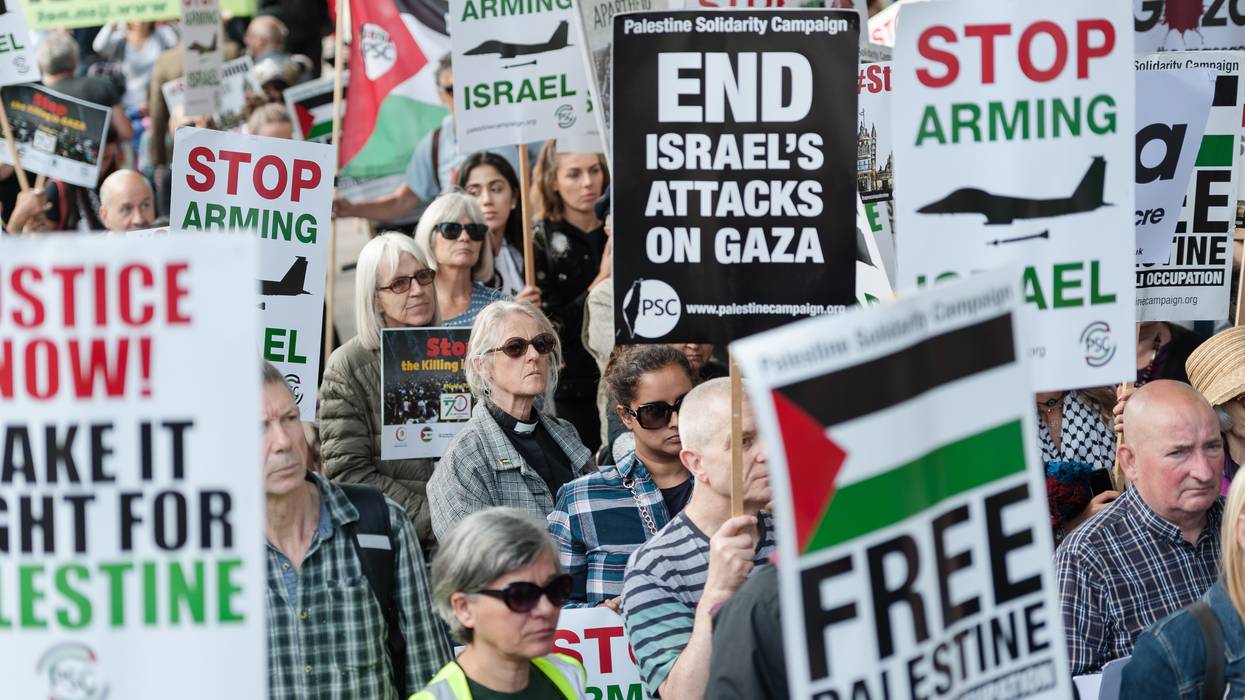
As Israel continues its "silent genocide" in the Gaza Strip one month into a supposed ceasefire with Hamas and Israeli settler attacks on Palestinians in the illegally occupied West Bank hit a record high, Amnesty International on Tuesday ripped the advancement of a death penalty bill championed by far-right National Security Minister Itamar Ben-Gvir.
Israel's 120-member Knesset "on Monday evening voted 39-16 in favor of the first reading of a controversial government-backed bill sponsored by Otzma Yehudit MK Limor Son Har-Melech," the Times of Israel reported. "Two other death penalty bills, sponsored by Likud MK Nissim Vaturi and Yisrael Beytenu MK Oded Forer, also passed their first readings 36-15 and 37-14."
Son Har-Melech's bill—which must pass two more readings to become law—would require courts to impose the death penalty on "a person who caused the death of an Israeli citizen deliberately or through indifference, from a motive of racism or hostility against a population, and with the aim of harming the state of Israel and the national revival of the Jewish people in its land."
Both Hamas—which Israel considers a terrorist organization—and the Palestine Liberation Organization slammed the bill, with Palestinian National Council Speaker Rawhi Fattouh calling it "a political, legal, and humanitarian crime," according to Reuters.
Amnesty International's senior director for research, advocacy, policy, and campaigns, Erika Guevara Rosas, said in a statement that "there is no sugarcoating this; a majority of 39 Israeli Knesset members approved in a first reading a bill that effectively mandates courts to impose the death penalty exclusively against Palestinians."
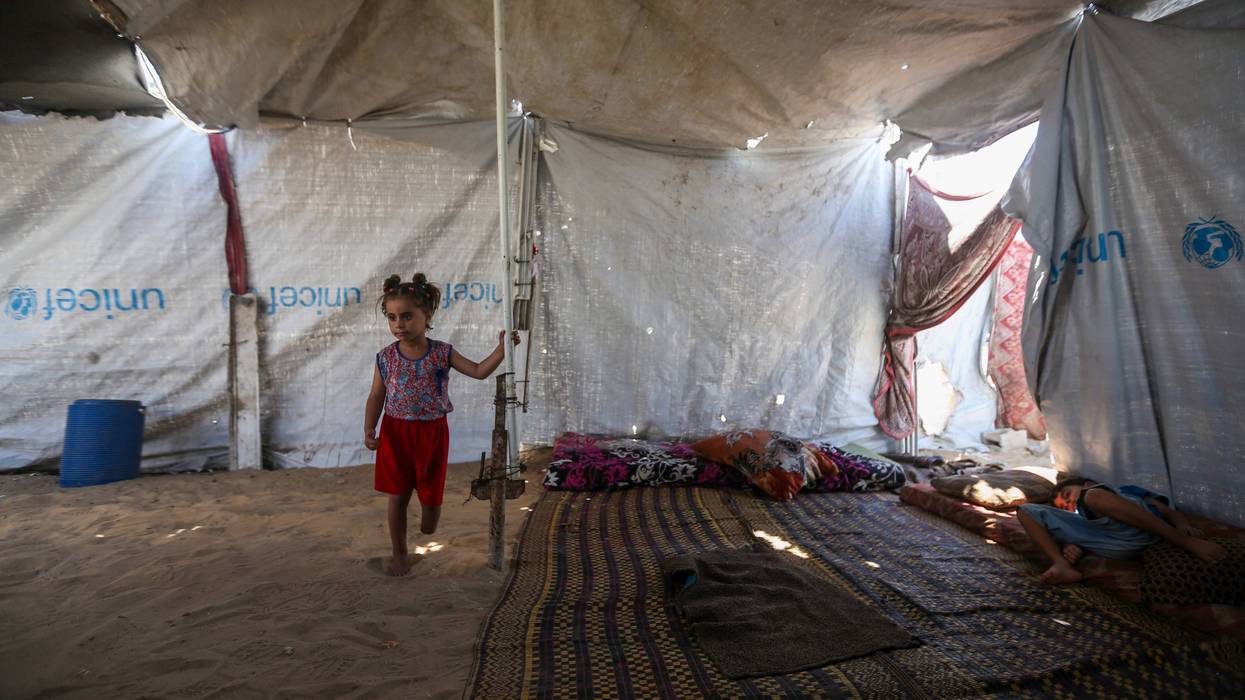
Amnesty opposes the death penalty under all circumstances and tracks such killings annually. The international human rights group has also forcefully spoken out against Israeli abuse of Palestinians, including the genocide in Gaza that has killed over 69,182 people as of Tuesday—the official tally from local health officials that experts warn is likely a significant undercount.
"The international community must exert maximum pressure on the Israeli government to immediately scrap this bill and dismantle all laws and practices that contribute to the system of apartheid against Palestinians."
“Knesset members should be working to abolish the death penalty, not broadening its application," Guevara Rosas argued. "The death penalty is the ultimate cruel, inhuman, and degrading punishment, and an irreversible denial of the right to life. It should not be imposed in any circumstances, let alone weaponized as a blatantly discriminatory tool of state-sanctioned killing, domination, and oppression. Its mandatory imposition and retroactive application would violate clear prohibitions set out under international human rights law and standards on the use of this punishment."
"The shift towards requiring courts to impose the death penalty against Palestinians is a dangerous and dramatic step backwards and a product of ongoing impunity for Israel's system of apartheid and its genocide in Gaza," she continued. "It did not occur in a vacuum. It comes in the context of a drastic increase in the number of unlawful killings of Palestinians, including acts that amount to extrajudicial executions, over the last decade, and a horrific rise of deaths in custody of Palestinians since October 2023."
Guevara Rosas noted that "not only have such acts been greeted with near-total impunity but with legitimacy and support and, at times, glorification. It also comes amidst a climate of incitement to violence against Palestinians as evidenced by the surge in state-backed settler attacks in the occupied West Bank."
Prime Minister Benjamin Netanyahu launched the devastating assault on Gaza in response to the Hamas-led attack on southern Israel on October 7, 2023. Since then, Israeli soldiers and settlers have also killed more than 1,000 Palestinians in the West Bank, according to the United Nations Office for the Coordination of Humanitarian Affairs.
Netanyahu is now wanted by the International Criminal Court for war crimes and crimes against humanity, and Israel faces an ongoing genocide case at the International Court of Justice. The ICJ separately said last year that Israel's occupation of Gaza and the West Bank, including East Jerusalem, is unlawful and must end; the Israeli government has shown no sign of accepting that.
The Amnesty campaigner said Tuesday that "it is additionally concerning that the law authorizes military courts to impose death sentences on civilians, that cannot be commuted, particularly given the unfair nature of the trials held by these courts, which have a conviction rate of over 99% for Palestinian defendants."
As CNN reported Monday:
The UN has previously condemned Israel's military courts in the occupied West Bank, saying that "Palestinians' right to due process guarantees have been violated" for decades, and denounced "the lack of fair trial in the occupied West Bank."
UN experts said last year that, "in the occupied West Bank, the functions of police, investigator, prosecutor, and judge are vested in the same hierarchical institution—the Israeli military."
Pointing to the hanging of Nazi official and Holocaust architect Adolf Eichmann, Guevara Rosas highlighted that "on paper, Israeli law has traditionally restricted the use of the death penalty for exceptional crimes, like genocide and crimes against humanity, and the last court-ordered execution was carried out in 1962."
"The bill's stipulation that courts should impose the death penalty on individuals convicted of nationally motivated murder with the intent of 'harming the state of Israel or the rebirth of the Jewish people' is yet another blatant manifestation of Israel's institutionalized discrimination against Palestinians, a key pillar of Israel’s apartheid system, in law and in practice," she asserted.
"The international community must exert maximum pressure on the Israeli government to immediately scrap this bill and dismantle all laws and practices that contribute to the system of apartheid against Palestinians," she added. "Israeli authorities must ensure Palestinian prisoners and detainees are treated in line with international law, including the prohibition against torture and other ill-treatment, and are provided with fair trial guarantees. They must also take concrete steps towards abolishing the death penalty for all crimes and all people."
The group's leader called for rejecting "attempts to curtail funding for renewable energy projects" along with "the bullying efforts by the USA and others to weaken policies and regulations to combat climate change."
Nearly 10 months after President Donald Trump ditched the Paris Agreement for a second time, a leading human rights organization on Wednesday urged the remaining parties to the landmark treaty to defy his dangerous example when they come together next week for the United Nations Climate Change Conference in Belém, Brazil.
"Amnesty International is urging governments to resist aligning with the Trump administration's denial of the accelerating climate crisis and instead demonstrate true climate leadership," said the group's secretary general, Agnès Callamard, in a statement. "In the face of President Trump's rejection of science coupled with the intensified lobbying for fossil fuels, global leaders must redouble their efforts to take urgent climate action—with or without the US."
Callamard, who plans to attend COP30, stressed that "the global climate crisis is the single biggest threat to our planet and demands a befitting response. The effects of climate change are becoming more pronounced across the whole world. We confront increasingly frequent and severe storms, wildfires, droughts, and flooding, as well as sea-level rise that will destroy some small island states."
"COP30 in Brazil presents an opportunity for collective resistance against those trying to reverse years of commitments and efforts to keep global warming below 1.5°C," she continued, referring to a primary goal of the Paris Agreement. "The fact that levels of carbon dioxide in the atmosphere soared by a record amount last year should ring alarm bells for world leaders at COP30."
Further elevating fears for the future, the UN Environment Programme warned Tuesday that Paris Agreement parties' latest pledges to cut greenhouse gas emissions—officially called Nationally Determined Contributions (NDCs)—could push global temperatures to 2.3-2.5°C above preindustrial levels, up to a full degree beyond the treaty's key target for this century.
Greenpeace demands world leaders agree on a global response plan at #COP30 as a new major UN report warned the global temperature is projected to rise to 2.3-2.5°C above pre-industrial era global temperatures, putting the Paris Agreement limit of 1.5°C at risk in the short-term.
[image or embed]
— Greenpeace International 🌍 (@greenpeace.org) November 4, 2025 at 11:20 AM
Oil Change International highlighted in a report released last week that the United States—which is responsible for the biggest share of planet-heating pollution since the Industrial Revolution—plus Australia, Canada, and Norway are now "overwhelmingly responsible for blocking global progress on phasing out oil and gas production."
The group's global policy lead, Romain Ioualalen, said that "10 years ago in Paris, countries promised to limit warming to 1.5°C, which is impossible without putting an end to fossil fuel expansion and production. The rich countries most responsible for the climate crisis have not kept that promise. Instead, they've poured more fuel on the fire and withheld the funds needed to put it out."
"The fact that a handful of rich Global North countries, led by the United States, have massively driven up their oil and gas production while people around the world suffer the consequences is a blatant mockery of justice and equity," Ioualalen added. He called on governments attending COP30 "to deliver a collective roadmap for equitable, differentiated fossil fuel phaseout dates, and address the systemic barriers preventing Global South countries from transitioning to renewable energy, including finance."
Some experts are concerned that Trump—who's pursuing a pro-fossil fuel agenda that includes but is far from limited to exiting the Paris Agreement—may interfere with the talks, even though a White House official confirmed to Reuters last week that he doesn't plan to send a delegation to Belém.
The official said that Trump made his administration's views on global climate action clear in his September speech at the UN General Assembly—during which the president said the fossil fuel-driven crisis was "the greatest con job ever perpetrated on the world," and the scientific community's predictions about the global emergency "were wrong" and "were made by stupid people."
Pointing to Trump's global tariff war that was debated before the US Supreme Court on Wednesday, the official added that "the president is directly engaging with leaders around the world on energy issues, which you can see from the historic trade deals and peace deals that all have a significant focus on energy partnerships."
As CNN reported Tuesday:
This practice of linking trade and climate so closely is an innovation of the Trump administration, said Kelly Sims Gallagher, dean of the Fletcher School at Tufts University who worked on US climate negotiations with China for the Obama administration.
In the absence of US leadership, she said that China, which is the world's top emitter, may seek to assume more of a prominent, steering role at the talks. The European Union is also likely to take a strong role, though internal rifts have emerged within the EU regarding how aggressively to cut its own emissions.
While Gallagher and other experts who spoke with CNN don't necessarily expect that COP30 will feature the same kind of disruptive behavior that Trump engaged in during last month's International Maritime Organization meeting to delay a new set of global regulations to slash shipping industry emissions, they acknowledged that it is possible. Already, the Tufts professor suggested, Trump's abandonment of the Paris treaty appears to be having an impact.
"I think there's an undeniable fact, which is that with the US withdrawal for a second time, it's definitely seeming to undermine ambition," Gallagher said. "I think it's just getting harder to make the case that global ambition is going to rise without pretty substantial engagement from the United States."
Despite not sending a high-level delegation to the COP30 Climate Summit in Brazil, the presence of the US will still be felt by negotiators there. The US will be the elephant in the room, and could seek to disrupt the talks from afar, depending on how they're trending... www.cnn.com/2025/11/04/c...
[image or embed]
— Andrew Freedman (@afreedma.bsky.social) November 4, 2025 at 9:42 AM
Callamard argued Wednesday that those attending COP30 "must push back against attempts to curtail funding for renewable energy projects and resist the bullying efforts by the USA and others to weaken policies and regulations to combat climate change."
"Humanity can win if states commit at COP30 to a full, fast, fair, and funded fossil-fuel phase-out and just transition to sustainable energy for all, in all sectors, as recently confirmed by the International Court of Justice's recent advisory opinion," she said. "These commitments must go hand-in-hand with a significant injection of climate finance, in the form of grants, not loans, from states that are the worst culprits for greenhouse gas emissions."
"Crucially, states must take steps to protect climate activists and environmental defenders," the Amnesty leader added. "This is the only way to secure climate justice and protect the human rights of billions of people."
According to an annual Global Witness report published in September, at least 142 people were killed and four were confirmed missing last year for "bravely speaking out or taking action to defend their rights to land and a clean, healthy, and sustainable environment," bringing the total to at least 2,253 land defenders slaughtered or disappeared since the group started tracking such cases in 2012.
"We won’t give up until the death penalty is abolished everywhere," said Amnesty International on World Day Against the Death Penalty. "Change is possible."
Human rights defenders marked World Day Against the Death Penalty on Friday by renewing pleas to end capital punishment—calls that came amid a surge in US executions and the Trump administration's extrajudicial high-seas massacres of alleged drug traffickers.
"The death penalty does little to deter crime or serve victims," the United Nations said on social media. "It has no place in the 21st century."
Noting that two-thirds of the world's countries have abolished capital punishment, the UN human rights office asserted that "it's time to end it—everywhere, for everyone."
"You can free a prisoner. You can clear a conviction. But you can’t correct an execution," the office said. "Innocent people are sentenced to death, in many regions of the world. And those who are executed are rarely the powerful. It’s the poor, the marginalized, those with the fewest means to defend themselves."
"The death penalty doesn’t prevent crime," it added. "It doesn’t deliver justice. It only repeats violence, in the name of the law."
We must end the death penalty, once and for all.On this World Day Against the Death Penalty, add your name to the growing number of people calling for an end to capital punishment.
[image or embed]
— ACLU (@aclu.org) October 10, 2025 at 7:19 AM
Amnesty International said on social media, "Over the past year, executions have significantly increased in countries such as Singapore, Kuwait, Iran, and the USA, while people continue to be executed at an alarming rate in Saudi Arabia."
"Among these rises, some governments have shown renewed determination to use this cruel punishment as a tool of repression and control," Amnesty continued. "They continue to ignore international human rights law.
The group noted on a hopeful note that "the number of countries resorting to the death penalty is decreasing.”
"We won’t give up until the death penalty is abolished everywhere," Amnesty added. "Change is possible."
European Parliament Human Rights Subcommittee Chair Mounir Satouri reaffirmed lawmakers' "absolute opposition to the death penalty, under all circumstances and without exception."
"The death penalty constitutes a cruel punishment that fundamentally denies human dignity and is incompatible with the right to life and with the prohibition of torture," he said.
“Today, more than two-thirds of all countries have either abolished the death penalty in law or no longer implement it in practice. 113 countries had abolished the death penalty in law by the end of 2024," Satouri noted. "I urge the remaining 55 states that continue to impose or carry out death sentences to establish a moratorium as an initial step toward its complete abolition."
“It has been proven that the death penalty does not deter crime and that its imposition disproportionately affects vulnerable groups," he added. "Moreover, in today's more authoritarian global environment, the death penalty and assassinations sponsored by authoritarian regimes are used as a political tool against political opponents, independent journalists, and human rights defenders."
Those remarks came as US President Donald Trump faces condemnation at home and abroad for ordering a series of extrajudicial assassinations of what his administration claims are drug traffickers transporting narcotics in small boats in the Caribbean Sea off the Venezuelan coast.
Trump—who oversaw a resurgence of federal executions during his first term—signed an executive order on his first day back in the White House affirming capital punishment as "an essential tool for deterring and punishing those who would commit the most heinous crimes," despite study after study showing it does not deter criminal activity.
Capital punishment abolitionists earlier this year denounced US Attorney General Pam Bondi's decision to seek the death penalty for Luigi Mangione, the 26-year-old man accused of killing UnitedHealthcare CEO Brian Thompson in December 2024. More recently, Bondi has also ominously threatened to take the "same approach" to anti-fascist protesters as the administration has taken against drug cartels.
However, human rights defenders are currently most alarmed by a surge in executions in Republican-controlled states, where Indiana death row inmate Roy Lee Ward—who was killed by lethal injection on Friday—was the first of five scheduled executions in the coming week.
Next Tuesday, Lance Shockley in Missouri and Samuel Lee Smithers in Florida are set to be executed. Smithers would be the 14th person to be killed this year under the direction of Republican Florida Gov. Ron DeSantis, whose expansion of the state's capital punishment regime has raised constitutional concerns.
On Wednesday, Charles Ray Crawford is scheduled to be executed in Mississippi, while Arizona is set to put Richard Djerf to death on October 17.
In a rare reprieve, the Texas Court of Criminal Appeals on Thursday blocked next week's scheduled execution of Robert Roberson—who was convicted of murdering his 2-year-old daughter on the basis of scientifically debunked "shaken baby syndrome"—by sending his case back to court.
Update: The Texas Court of Criminal Appeals granted Robert Roberson a stay of execution October 9, a week before he was set to be killed. A lower court will now reconsider Roberson’s case.
[image or embed]
— Texas Observer (@texasobserver.org) October 9, 2025 at 4:00 PM
Two more executions—Anthony Todd Boyd in Alabama and Norman Mearle Grim in Florida—are planned for later this month.
There have been 35 executions in the United States so far this year, up from 25 in 2024 and the most since 2017, according to the Death Penalty Information Center.
Noting that October is "Respect Life Month" in the United States, Catholic Mobilizing Network executive director Krisanne Vaillancourt Murphy told Vatican News Friday that “it's a stark contrast to honoring all human life that we see such an affront to the dignity of the human person."
"We need to value the dignity of every human person," Vaillancourt added. "That includes people who are sitting on death row. So we will not give up this fight. And the progress that we've made has been hard-won. We will move forward and continue in order to end the death penalty in the United States.”