

SUBSCRIBE TO OUR FREE NEWSLETTER
Daily news & progressive opinion—funded by the people, not the corporations—delivered straight to your inbox.
5
#000000
#FFFFFF
To donate by check, phone, or other method, see our More Ways to Give page.
Daily news & progressive opinion—funded by the people, not the corporations—delivered straight to your inbox.

"For consistency's sake, the Biden admin now also needs to end weapons transfers to Israel," said one analyst.
The Biden administration on Friday reversed a Trump-era policy shift known as the Pompeo Doctrine, under which the U.S. no longer officially viewed Israeli settlements in the West Bank, Golan Heights, and East Jerusalem as "inconsistent with international law."
Experts and Palestinian rights advocates welcomed the return to the longstanding U.S. position on settlements but said it was overdue and ultimately amounted to very little in the face of the Biden administration's ongoing military and diplomatic support for Israel's catastrophic war on Gaza.
Josh Ruebner, an adjunct lecturer at Georgetown University and former policy director of the U.S. Campaign for Palestinian Rights, said the Biden administration's decision "is good news" but added that he's "not sure why it took... three years."
" Genocide is also inconsistent with international law," Ruebner added. "So for consistency's sake, the Biden admin now also needs to end weapons transfers to Israel and demand Israel comply with [the International Court of Justice's] provisional measures."
Following the ICJ's interim ruling last month that Israel is plausibly committing genocide in Gaza, a White House spokesperson told reporters that there's "no indication" that Israel's government is engaged in genocidal acts, despite the overt statements of top Israeli officials and actions of the nation's soldiers.
Trita Parsi, executive vice president of the Quincy Institute for Responsible Statecraft, said Friday that the settlement move is "potentially very good" but also "perplexing," given that the Biden administration defended Israel's occupation of Palestinian territory during an ICJ hearing earlier this week.
The Biden administration's formal recognition that Israeli settlements run counter to international law came after Bezalel Smotrich, the country's far-right finance minister, announced that Israel plans to build more than 3,300 new homes in West Bank settlements.
In response to the announcement, U.S. Secretary of State Antony Blinken said that "Republican and Democratic administrations alike" have seen the construction of new settlements as "counter-productive to reaching an enduring peace."
"They're also inconsistent with international law," said Blinken. "Our administration maintains a firm opposition to settlement expansion and in our judgment this only weakens, it doesn't strengthen, Israel's security."
As Axios noted Friday, the Pompeo Doctrine "was a major shift in U.S. policy because it overturned a legal position held by the U.S. State Department since 1978, when the Carter administration determined that the settlements were a violation of international law"—a view also held by most of the international community.
Critics lamented that it took over three years and a massive Israeli assault on the Gaza Strip for the Biden State Department to walk back the Trump administration's outlier position on settlements.
Earlier this week, an attorney from the U.S. State Department told the ICJ that it should not issue an opinion stating that "Israel is legally obligated to immediately and unconditionally withdraw from occupied territory."
As U.S./Middle East Project president Daniel Levy observed in an analysis of the State Department attorney's presentation, "The U.S. testimony conspicuously refused to reassert the illegality of Israel's settlements—one of the central questions the court has already ruled on and on which there is near total international unanimity."
"The U.S. position was essentially to endorse the notion of permanent belligerent occupation," Levy wrote. "It talked about conditions for withdrawal, but of course its own policies prevent the most important condition for that withdrawal, namely the U.S. guaranteeing Israeli impunity and avoidance of costs or consequences for Israel's continued illegal actions. The [U.S. government] therefore ends up defending and owning Israel's ongoing drift toward ever-greater extremism."

If only the CIA’s rogue operations had been consigned to history as a result of the crimes exposed by the Church Committee, or at the least had brought the CIA under the rule of law and public accountability. But that was not to be.
There are three basic problems with the CIA: its objectives, methods, and unaccountability. Its operational objectives are whatever the CIA or the President of the United States defines to be in the U.S. interest at a given time, irrespective of international law or U.S. law. Its methods are secretive and duplicitous. Its unaccountability means that the CIA and president run foreign policy without any public scrutiny. Congress is a doormat, a sideshow.
As a recent CIA Director, Mike Pompeo, said of his time at the CIA: "I was the CIA director. We lied, we cheated, we stole. We had entire training courses. It reminds you of the glory of the American experiment."
The CIA was established in 1947 as the successor to the Office of Strategic Services (OSS). The OSS had performed two distinct roles in World War II, intelligence and subversion. The CIA took over both roles. On the one hand, the CIA was to provide intelligence to the US Government. On the other, the CIA was to subvert the “enemy,” that is, whomever the president or CIA defined as the enemy, using a wide range of measures: assassinations, coups, staged unrest, arming of insurgents, and other means.
It is the latter role that has proved devastating to global stability and the U.S. rule of law. It is a role that the CIA continues to pursue today. In effect, the CIA is a secret army of the U.S., capable of creating mayhem across the world with no accountability whatsoever.
When President Dwight Eisenhower decided that Africa’s rising political star, democratically elected Patrice Lumumba of Zaire (now the Democratic Republic of Congo), was the “enemy,” the CIA conspired in his 1961 assassination, thus undermining the democratic hopes for Africa. He would hardly be the last African president brought down by the CIA.
The extent of the continuing mayhem resulting from CIA operations gone awry is astounding.
In its 77-year history, the CIA has been held to serious public account just once, in 1975. In that year, Idaho Senator Frank Church led a Senate investigation that exposed the CIA’s shocking rampage of assassinations, coups, destabilization, surveillance, and Mengele-style torture and medical “experiments.”
The expose by the Church Committee of the CIA’s shocking malfeasance has recently been chronicled in a superb book by the investigative reporter James Risen, The Last Honest Man: The CIA, the FBI, the Mafia, and the Kennedys―and One Senator's Fight to Save Democracy.
That single episode of oversight occurred because of a rare confluence of events.
In the year before the Church Committee, the Watergate scandal had toppled Richard Nixon and weakened the White House. As successor to Nixon, Gerald Ford was unelected, a former Congressman, and reluctant to oppose the oversight prerogatives of the Congress. The Watergate scandal, investigated by the Senate Ervin Committee, had also empowered the Senate and demonstrated the value of Senate oversight of Executive Branch abuses of power. Crucially, the CIA was newly led by Director William Colby, who wanted to clean up the CIA operations. Also, FBI Director J. Edgar Hoover, author of pervasive illegalities also exposed by the Church committee, had died in 1972.
In December 1974, investigative reporter Seymour Hersh, then as now a great reporter with sources inside the CIA, published an account of illegal CIA intelligence operations against the U.S. antiwar movement. The Senate Majority Leader at the time, Mike Mansfield, a leader of character, then appointed Church to investigate the CIA. Church himself was a brave, honest, intelligent, independent-minded, and intrepid Senator, characteristics chronically in short supply in U.S. politics.
If only the CIA’s rogue operations had been consigned to history as a result of the crimes exposed by the Church Committee, or at the least had brought the CIA under the rule of law and public accountability. But that was not to be. The CIA has had the last laugh —or better said, has brought the world to tears—by maintaining its preeminent role in U.S. foreign policy, including overseas subversion.
Since 1975, the CIA has run secretive operations backing Islamic jihadists in Afghanistan that utterly wrecked Afghanistan while giving rise to al-Qaeda. The CIA has likely run secretive operations in the Balkans against Serbia, in the Caucuses against Russia, and in Central Asia targeting China, all deploying CIA-backed jihadists. In the 2010s, the CIA ran deadly operations to topple Syria’s Bashir al-Assad, again with Islamic jihadists. For at least 20 years, the CIA has been deeply involved in fomenting the growing catastrophe in Ukraine, including the violent overthrow of Ukraine’s President Viktor Yanukovych in February 2014 that triggered the devastating war now engulfing Ukraine.
What do we know of these operations? Only the parts that whistleblowers, a few intrepid investigative reporters, a handful of brave scholars, and some foreign governments have been willing or able to tell us, with all of these potential witnesses knowing that they might face severe retribution from the U.S. government. There has been little to no accountability by the U.S. government itself, or meaningful oversight or restraint imposed by Congress. On the contrary, the government has become ever-more obsessively secretive, pursuing aggressive legal actions against disclosures of classified information, even when, or especially when, that information describes the illegal actions by the government itself.
Once in a while, a former U.S. official spills the beans, such as when Zbigniew Brzezinski revealed that he had induced Jimmy Carter to assign the CIA to train Islamic jihadists to destabilize the government of Afghanistan, with the aim of inducing the Soviet Union to invade that country.
In the case of Syria, we learned from a few stories in the New York Times in 2016 and 2017 of the CIA’s subversive operations to destabilize Syria and overthrow Assad, as ordered by President Barack Obama. Here is the case of a dreadfully misguided CIA operation, blatantly in violation of international law, that has led to a decade of mayhem, an escalating regional war, hundreds of thousands of deaths, and millions of displaced people, and yet there has not been a single honest acknowledgment of this CIA-led disaster by the White House or Congress.
In the case of Ukraine, we know that the U.S. played a major covert role in the violent coup that brought down Yanukovych and that swept Ukraine into a decade of bloodshed but to this day, we don’t know the details. Russia offered the world a window into the coup by intercepting and then posting a call between Victoria Nuland, then U.S. Assistant Secretary of State (now Under-Secretary of State) and U.S. Ambassador to Ukraine Geoffrey Pyatt (now Assistant Secretary of State), in which they plot the post-coup government. Following the coup, the CIA covertly trained special operations forces of the post-coup regime the U.S. had helped bring to power. The U.S. government has been mum about the CIA’s covert operations in Ukraine.
We have good reason to believe that CIA operatives carried out the destruction of the Nord Stream pipeline, as per Seymour Hersh, who is now an independent reporter. Unlike in 1975, when Hersh was with the New York Times at a time when the paper still tried to hold the government to account, the Times does not even deign to look into Hersh’s account.
Holding the CIA to public account is of course a steep uphill struggle. Presidents and the Congress don’t even try. The mainstream media don’t investigate the CIA, preferring instead to quote “senior unnamed officials” and the official cover-up. Are the mainstream media outlets lazy, suborned, afraid of advertising revenues from the military-industrial complex, threatened,
ignorant, or all of the above? Who knows.
There is a tiny glimmer of hope. Back in 1975, the CIA was led by a reformer. Today, the CIA is led by William Burns, one of America’s long-standing leading diplomats. Burns knows the truth about Ukraine, since he served as Ambassador to Russia in 2008 and cabled Washington about the grave error of pushing NATO enlargement to Ukraine. Given Burns’ stature and diplomatic accomplishments, perhaps he would support the urgently needed accountability.
The extent of the continuing mayhem resulting from CIA operations gone awry is astounding. In Afghanistan, Haiti, Syria, Venezuela, Kosovo, Ukraine, and far beyond, the needless deaths, instability, and destruction unleashed by CIA subversion continues to this day. The mainstream media, academic institutions, and Congress should be investigating these operations to the best of their ability and demanding the release of documents to enable democratic accountability.
Next year is the 50th anniversary of the Church Committee hearings. Fifty years on, with the precedent, inspiration, and guidance of the Church Committee itself, it’s urgently time to open the blinds, expose the truth about the U.S.-led mayhem, and begin a new era in which U.S. foreign policy becomes transparent, accountable, subject to the rule of law both domestic and international, and directed towards global peace rather than subversion of supposed enemies.

By prioritizing fossil fuel production and great power politics over the findings of climate scientists, they are creating a future in which “we’re doomed.”
The United States is producing record amounts of oil and natural gas, despite the fact that the ongoing use of these fossil fuels poses an existential threat to the planet.
Even today, as the planet faces catastrophic warming, leaders in both the Democratic and Republican Parties keep pushing for more oil and natural gas production, believing that most of the world will continue to rely on these fossil fuels for decades to come.
“You can write this down, you can go to every NGO, and they’ll tell me I’m nuts, but I predict this,” former Secretary of State Mike Pompeo said at the Aspen Security Forum last month. “There will be more crude oil consumed 30 years from now than there is today.”
For the past decade, the United States has been a fossil fuel powerhouse. Since 2011, the United States has been the world’s top producer of natural gas, and since 2018, the United States has been the world’s top producer of oil.
The United States became a fossil fuel powerhouse by embracing hydraulic fracturing. The technique, also known as “fracking,” uses a high-powered spray of water and chemicals to break apart underground rock formations. It has enabled U.S. energy companies to gain access to previously inaccessible deposits of oil and natural gas.
Environmental groups have criticized fracking for contaminating groundwater and triggering earthquakes, leading some states to ban it.
Exuberance over energy dominance remains widespread in the Biden administration. Officials boast that the United States is continuing to break new records in oil and natural gas production.
In Washington, top officials have embraced the fracking boom. During the Obama administration, officials boasted that the United States was becoming an “energy superpower” and the “energy center of the world.” Officials in the Trump administration were even more enthusiastic, saying that they were leading the world into a new era of “energy dominance.”
Exuberance over energy dominance remains widespread in the Biden administration. Officials boast that the United States is continuing to break new records in oil and natural gas production.
“There is actually record [oil] production from the United States,” Secretary of State Antony Blinken explained late last year. “We’re producing more and selling more around the world than we ever have.”
The U.S. move to become a fossil fuel powerhouse has come with major costs to the environment. By continuing to produce oil and natural gas at record levels, the United States is leading the world into the climate crisis.
There is a direct connection between the use of fossil fuels and the warming of the planet. The burning of fossil fuels creates greenhouse gases, such as carbon dioxide, which are emitted into the atmosphere, where they have the effect of warming the planet. Climate scientists calculate that the Earth has warmed by 1.2°C (2.1°F) since the late 19th century.
Unchecked global warming poses an existential threat to the planet. Already, people in many parts of the world are grappling with extreme weather events, including record-breaking heat, rain, droughts, floods, storms, and wildfires. This past July was the planet’s hottest month on record.
Global average temperature rise is on track to reach 1.5°C (2.7°F) in the early 2030s, about a decade away.
“Climate change is here,” U.N. Secretary-General António Guterres said in a July 27 press conference. “It is terrifying. And it is just the beginning.”
For decades, world leaders have been familiar with the problem of human-caused climate change. Repeatedly, they have created arrangements for reducing carbon emissions, including the U.N. Framework Convention on Climate Change (1992), the Kyoto Protocol (1997), the Green Climate Fund (2010), and the Paris agreement (2015).
Under the Paris agreement (2015), nearly every country in the world created voluntary emissions targets with the goal of limiting global average temperature rise to 1.5°C (2.7°F) and keeping it well below 2°C (3.6°F). Participants agreed to meet every five years to review their progress.
Despite these steps, the world is no closer today than it was in the early 1990s to preventing catastrophic global warming. In many ways, things are much worse, despite some progress in countries such as the United States that have shifted away from coal, a fossil fuel that generates more carbon emissions than oil or natural gas.
Not only is the world producing and consuming fossil fuels at or near record levels, but the world’s greenhouse gas emissions continue rising at a record pace. According to the Intergovernmental Panel on Climate Change, an international body of climate experts, global average temperature rise is on track to reach 1.5°C (2.7°F) in the early 2030s, about a decade away.
The issue of whether the world will be able to avert climate doom will largely depend on the actions of some of the world’s most powerful countries, including China and the United States. Together, China and the United States account for nearly half of the world’s carbon dioxide emissions. Although China is the world’s top emitter of carbon dioxide, largely due to its burning of coal, the United States is responsible for the largest amount of historical emissions and remains the world’s second largest emitter of carbon dioxide.
“We have a responsibility, a major responsibility, around this climate issue, for two reasons,” Blinken explained last year. “First of all, today we are unfortunately the number two emitter in the world after China.” And second, “what we did for our own development, we did things that we are asking other countries not to do today,” such as use coal.
Officials in Washington have been slow to take responsibility, however. Leaders in both political parties continue to prioritize U.S. dominance in oil and natural gas over a global just transition to clean energy. The Biden administration has set a goal of reducing U.S. greenhouse gas emissions to half of the country’s 2005 levels by 2030, but the country is not on track to meet the administration’s target.
Even as the administration has supported a transition to clean and sustainable energy, backing unprecedented investments in batteries and renewable energies in the Inflation Reduction Act, the administration has empowered U.S. energy companies to keep setting records in oil and gas production, leading to record profits.
Republican leaders have largely dismissed the climate threat, falsely claiming that climate science is unclear and inconclusive. Republicans are organizing around Project 2025, a plan to increase drilling and eliminate environmental protections.
Natural gas is going to be “the most important energy resource for the next 40 years,” Pompeo said at last month’s event. Both oil and natural gas, he insisted, “are going to continue to be very important.”
Many U.S. officials see oil and natural gas as strategic assets. They believe that U.S. energy dominance will enable the United States to maintain influence over countries that have fewer resources, such as China.
“China has almost none of them, so we have an enormous amount of leverage with respect to that,” Pompeo said, referring to oil and natural gas.
In contrast to their Republican counterparts, Democratic leaders have been more willing to acknowledge the climate threat, sometimes describing the climate crisis as the greatest challenge of our time, but they share many of the same priorities. Not only do they view oil and natural gas as strategic assets against China, but they remain committed to increasing the production and consumption of these two fossil fuels.
For years, the Biden administration has been pushing for more oil production. Even as the administration has supported a transition to clean and sustainable energy, backing unprecedented investments in batteries and renewable energies in the Inflation Reduction Act, the administration has empowered U.S. energy companies to keep setting records in oil and gas production, leading to record profits.
“There is nothing standing in the way of domestic oil and gas production,” Secretary of Energy Jennifer Granholm commented earlier this year.
What U.S. leaders and oil companies are doing, in short, is leading the world toward a climate catastrophe. By prioritizing fossil fuel production and great power politics over the findings of climate scientists, they are creating a future in which “we’re doomed,” as U.S. climate envoy John Kerry once put it.
“The world is not living sustainably, and if you look at history, civilizations have disappeared due to that reality,” Kerry said earlier this year.
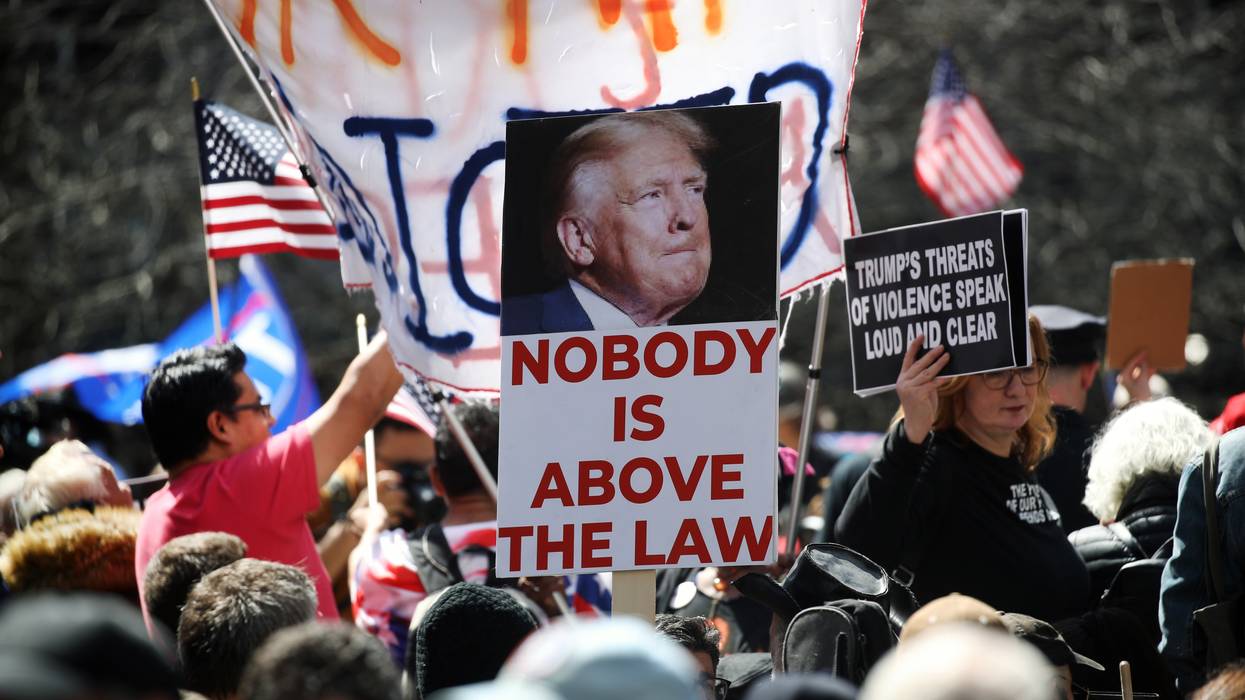
"While Trump and his allies continue their bluster, the media should focus on the facts of the indictment and the unprecedented obstruction it outlines."
A top official at the consumer advocacy group Public Citizen on Tuesday issued a resounding repudiation of Republicans who draw false equivalencies between the alleged misdeeds of former President Donald Trump—who faces scores of federal and state criminal charges—and those of President Joe Biden and his son.
Earlier this month, Trump was charged with 37 federal felony counts related to his alleged possession and sharing of classified government documents after he left office. Additionally, the Manhattan district attorney's office in April charged Trump with 34 felony counts involving alleged hush money payments during the 2016 election cycle to cover up sex scandals.
Fulton County, Georgia District Attorney Fani Willis has signaled that Trump could also be charged for alleged "criminal interference in the administration of Georgia's 2020 general election" during the state superior court's upcoming term, which runs from July 11 through the end of August.
"Key Republicans and former Trump administration officials who have looked at the facts admit that these charges are credible, serious, and necessary."
While numerous Republicans have condemned Trump's actions, the former president and many of his supporters have called his prosecution a "witch hunt" while claiming he's a victim of a legal double standard. Trump's backers point to the classified documents improperly held by Mike Pence, his former vice president and 2024 GOP presidential rival, 2016 Democratic presidential nominee Hillary Clinton, and Biden—who is currently under investigation by a special counsel appointed by Attorney General Merrick Garland.
Some right-wing observers also contend that the plea deal announced Tuesday under which Hunter Biden, the president's son who holds no government office, will avoid prosecution—an outcome common to about 97% of federal criminal cases—proves a legal double-standard favoring Democrats.
However, legal and other experts reject such comparisons, pointing to Trump's refusal to hand over documents in his possession and his showing of the secret files to at least several people, an act that critics say could jeopardize national security.
"There is no both-sidesing this indictment. Key Republicans and former Trump administration officials who have looked at the facts admit that these charges are credible, serious, and necessary," Public Citizen executive vice president Lisa Gilbert said in a statement.
Gilbert cites Trump administration officials including Attorney General William Barr—who called the Espionage Act charges against the former president "solid" and the evidence in the case "very, very damning"—Secretary of State Mike Pompeo, and White House Chief of Staff John Kelly to underscore how even former members of Trump's inner circle acknowledge the validity and gravity of the federal indictment.
Former Defense Secretary Mike Esper said "clearly, it was unauthorized, illegal, and dangerous" for Trump to allegedly take classified national security documents to his Mar-a-Lago resort in Florida and show them to aides, a writer, and at least one supporter.
Esper compared Trump's alleged actions to those of Jack Teixeira, a Massachusetts Air National Guardsman arrested in April for allegedly leaking sensitive documents online.
According to Gilbert:
While Trump and his allies continue their bluster, the media should focus on the facts of the indictment and the unprecedented obstruction it outlines: Trump repeatedly blocked federal law enforcement officials who were attempting to retrieve approximately 300 classified documents that endanger our national security; and he directed his staff and lawyers to hide evidence, lie, and obstruct the FBI and grand jury in an attempt to keep them from recovering these documents—which contained highly classified national security information.
"As the overwhelmingly bipartisan response to the seriousness of this indictment shows, Americans are united in the belief that no one is above the law, not even a former president of the United States," Gilbert added.
Other observers have also decried comparisons of Trump and Biden's alleged misdeeds.
Equating Trump's alleged crimes with Democrats' purported misdeeds may hold water with Trump's staunchest supporters, "but it's false," Vox politics reporter Nicole Narea recently wrote.
"None of those figures ignored a subpoena to turn over classified material concerning highly sensitive matters of national security and then sought to conceal it from federal officials and their own attorneys, as is alleged of Trump," she argued. "And in fact, history suggests that if Trump complied with that request, as some of his peers did, prosecutors may not have pressed charges."
"The case against Trump is not so much about the fact that he retained documents he had no right to keep—but that he allegedly did so knowingly and brazenly defying the federal government while putting U.S. interests at risk," Narea added. "That puts Trump in a class of his own."
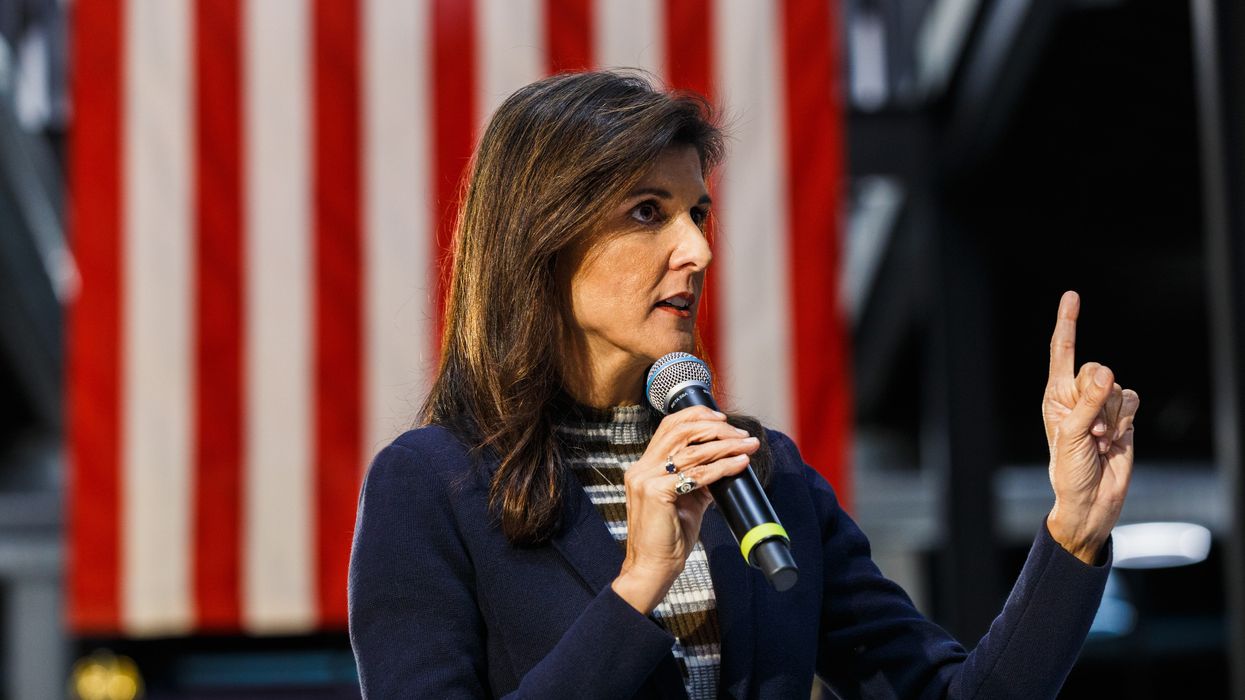
As this year's CPAC conference made clear, there are no moderate Republican presidential candidates.
One of the common—and in my view, valid—criticisms of U.S. political journalism is that it tends to cover electoral politics as if they were horse races, with TV talking heads and print journalists ginning up the public's excitement via exaggerated emphasis on any and every point that can service a narrative of entertaining competition.
We can already observe this pattern in coverage of the primary elections that will determine the Republican Party's presidential candidate for 2024. The primaries won't be held for almost a year (between February and June next year), but potential candidates are already beginning to campaign, and journalists are already busy crafting an exciting story about whether anyone can realistically defeat Donald Trump.
For many of us, the prospects for 2024 are not exciting but terrifying, and the main questions are: which Republican presidential candidate, if any, would be least bad/most likely to lose? And how do we make sure that the Democrats keep the White House and gain as much power in Congress as possible? The stakes are particularly high for the transgender community, amid a national climate of increasing anti-trans hostility.
The U.S. Republican Party is, and will remain for the foreseeable future, a serious threat to democracy and human rights.
That hostility was on display at this year's CPAC (Conservative Political Action Conference), held in National Harbor, Maryland in early March. A major political event since its inception in 1974, this annual conference brings the GOP's base together with key right-wing influencers and Republican politicians for a few days of speeches and networking.
Fortunately, some journalists noted the anti-trans rhetoric at the conference, especially this explicitly eliminationist comment by prominent right-wing pundit Michael Knowles: "Transgenderism must be eradicated from public life entirely."
Many have rightly called this comment genocidal, but Knowles denies this by claiming that "genocide refers to genes, it refers to genetics, it refers to biology." This is incorrect, according to international law, which stipulates, for example, that a group defined by religion can be a target of genocide. But, more to the point in this case, it is also simply false to claim that being transgender is an ‘ideology,' and that it is possible to distinguish a call for the eradication of this supposed ‘ideology' from a call for the eradication of trans people.
Unfortunately, much of the mainstream coverage of CPAC wasn't concerned with such hateful behavior. Instead, following the typical ‘horse race' pattern, the punditocracy fixated on other topics—such as whether the conference is still ‘relevant' (attendance was down compared to previous years) and whether the potential presidential candidates who aren't named Trump made the right choice either by attending the conference or staying away from it.
There were scandals, too, including a sexual assault accusation against Matt Schlapp, who heads the American Conservative Union, the organization behind CPAC. And stories about presidential hopefuls such as ex-U.N. ambassador Nikki Haley, who was heckled with jeers and chants of "We love Trump."
My concern is not that these things are reported on, but how they are framed. The coverage often suggests, implicitly or explicitly, that there are real alternatives to Trump's authoritarian approach in today's Republican Party when there clearly are not. Regardless of whether Trump clinches a shot at a second presidential term (regardless even of whether he is effectively removed from the competition by being indicted for a serious crime), the mainstream of today's Republican Party will follow the same path of Christian nationalist extremism Trump came to embody in 2016.
Among the confirmed Republican presidential candidates so far, Nikki Haley and ex-secretary of state Mike Pompeo, who mixes evangelical Christian apocalypticism with foreign policy (and both of whom served in the Trump administration), are not ‘moderate' alternatives. And Ron DeSantis—the clear frontrunner among Trump's opponents for the 2024 nomination, who, pointedly, did not attend this year's CPAC—is currently out-trumping Trump as the governor of Florida.
In other words, as German journalist and keen observer of the U.S. Christian right Annika Brockschmidt argued, there is no significant ideological divide within the Republican Party, even if there are superficial, essentially aesthetic differences between the hardcore MAGA (‘Make America Great Again') types who continue to show up at CPAC and the Republicans who want to "move past Trump."
' Trumpism', which we might as well call fascism, will continue to animate the Republican Party, with or without Trump at its head, and a Republican with a more sophisticated understanding of political manoeuvering than Trump may even be more dangerous as president.
CPAC has always been a right-wing spectacle, but it morphed into a specifically MAGA circus over the last few years and clearly remains the same today. The same old characters—Fox News host Tucker Carlson, ex-Trump strategist Steve Bannon, and Trump himself—showed up, as did a right-wing foreign leader to lend an air of international solidarity to the culture wars cause.
This year, it was Brazil's ex-president and far-right favorite Jair Bolsonaro, who arrived in Florida at the very end of last year (just days before the failed, election-denying insurrection in Brasilia on January 8, an event undoubtedly inspired by the failed, election-denying insurrection at the U.S. Capitol on January 6, 2021).
But if, as numerous pundits maintain, CPAC has lost its luster as a launching pad for the GOP's rising stars, there is no reason to believe that this heralds a serious shift in the party's current Christian nationalist direction. What many have called 'Trumpism', but which we might as well plainly and truthfully call fascism, will continue to animate the Republican Party, with or without Trump at its head, and a Republican with a more sophisticated understanding of political manoeuvering than Trump may even be more dangerous as president.
That Trump's potential competitors are afraid to directly criticize him now is evidence of the GOP's authoritarian character, rather than evidence of serious division. The topics on which competitors do risk mild criticisms—for example, Pompeo's reference at CPAC to "celebrity leaders" who "cannot accept reality"—are much more aesthetic and superficial than substantive.
The U.S. Republican Party is, and will remain for the foreseeable future, a serious threat to democracy and human rights. That's where our focus should be, and not on treating GOP politics and the 2024 election cycle like sporting events, as if their value is primarily entertainment and their outcomes will not have a serious impact on the lives of millions of Americans.

"I am confident that the Lord is at work here," said former President Donald Trump's secretary of state, invoking history's most famous Palestine native.
Former U.S. Secretary of State Mike Pompeo—who once suggested that his boss, then-President Donald Trump, may have been sent by "God" to save Israel—waxed biblical again this week in defense of Israel's illegal occupation and apartheid regime in Palestine.
Interviewed by Julia Macfarlane and Richard Dearlove for an episode of the "One Decision" podcast that aired Wednesday, Pompeo—a potential 2024 Republican presidential candidate who also previously served in Congress and as CIA director—denied that Israel is even occupying Palestine.
Mcfarlane noted that as secretary of state, Pompeo "undid the Hansel memo that called Jewish settlements in the West Bank against international law," a U.S. position that had been in place since 1978.
Under the Fourth Geneva Convention and other international law affirmed by numerous United Nations bodies, both Israel's 52-year occupation and ongoing settler colonization of the West Bank and East Jerusalem are illegal.
Pompeo—who played a leading role in negotiating the historic Abraham Accords between Israel and multiple Arab dictatorships—countered that Israel "is not an occupying nation."
"As an evangelical Christian," he asserted, "I am convinced from my reading of the Bible" that "this land... is the rightful homeland of the Jewish people."
"I am confident that the Lord is at work here," added Pompeo—who refused to say whether he supported a so-called two-state solution to the crisis caused by Israel's occupation, apartheid, and ongoing usurpation of Palestinian land.
According to a 2017 survey by LifeWay Research, a Christian polling group, 80% of U.S. evangelicals believe the creation of the modern state of Israel in 1948, largely through terrorism and ethnic cleansing, was a fulfillment of biblical prophecy that would hasten the second coming of Jesus Christ.
Around two-thirds of respondents said that the Bible says "God" gave Israel to the Jews, while more than half said Israel is important for fulfilling biblical prophecy.
Many evangelicals believe that Jews must rule Israel in order for Christ to return, but once he does nonbelievers including most Jews will be wiped out. Knowing this, numerous Jews and others have decried what has been called the "unholy alliance" linking Christian and Jewish Zionists.

"Policy—and electoral—concerns appear to have always kept Cuba on the SSOT list, rather than actually meeting the legal requirements to be on there," the attorneys argue.
A group of 160 mostly American lawyers recently urged President Joe Biden to remove Cuba from the U.S. State Sponsors of Terrorism list, a designation acknowledged as meritless and politically motivated by critics and proponents of the policy alike.
Noting that numerous former Latin American and Caribbean heads of state, as well as "hundreds of civil society organizations and thousands of citizens" have asked the Biden administration to lift Cuba's State Sponsors of Terrorism (SSOT) status, the attorneys called on the president "to immediately initiate a review and notification process to remove Cuba from the SSOT list."
"There is no legal or moral justification for Cuba to remain on the State Sponsors of Terrorism list," the attorneys argued in an Alliance for Cuba Engagement and Respect (ACERE) letter. "Given the tremendous economic, social, humanitarian, and commercial effect placement on the SSOT list has had for the Cuba people, maintaining it for such pretextual reasons continues to be a stain on U.S. foreign policy."
In 2015, then-President Barack Obama removed Cuba from the SSOT during a promising but ultimately short-lived rapprochement between the two countries that abruptly ended when former President Donald Trump took office in 2017. The lawyers' letter is a point-by-point refutation of the criteria cited by then-U.S. Secretary of State Mike Pompeo when the outgoing Trump administration re-listed Cuba as an SSOT in January 2021.
These include Cuba's refusal to extradite members of the National Liberation Army, a leftist rebel group from Colombia, who traveled to Havana for peace negotiations with the Colombian government. Such an extradition, the lawyers noted, would have violated Cuba's obligation to ensure the safety and well-being of all participants in the peace talks.
Pompeo also cited the fact that Cuba harbors U.S. fugitives wanted for acts of political violence committed nearly half a century ago, even though no other country has been placed on the SSOT list for such a reason. Aside from ignoring all the Cuban exile terrorists who enjoy not only citizenship but sometimes even heroic status in the United States, the lawyers note that "international law clearly prohibits extradition for acts of political violence."
As the letter states:
To the extent that the 1904 extradition treaty between Cuba and the United States remains in effect and continues to be honored by both parties, it contains a standard political offense exemption. This exception is premised upon a concept familiar to the United States, which is that "individuals have a right to resort to political activism to foster political change." Indeed, this is precisely the sort of "activism" that the United States designates millions of dollars to each year for regime change in Cuba.
"Policy—and electoral—concerns appear to have always kept Cuba on the SSOT list, rather than actually meeting the legal requirements to be on there," the lawyers' letter contends, citing a former Clinton administration Cuba expert who admitted that "frankly, I don't know anyone inside or outside of government who believes in private that Cuba belongs on the terrorist list."
"People who defend it know it is a political calculation," the expert added. "It keeps a certain part of the voting public in Florida happy, and it doesn't cost anything."
Much of that "certain part of the voting public in Florida" consists of Cuban-Americans, who—especially among the older generations—vehemently support isolating Cuba as long as it remains socialist.
"Frankly, I don't know anyone inside or outside of government who believes in private that Cuba belongs on the terrorist list."
Earlier this month, Rep. María Elvira Salazar (R-Fla.)—the daughter of Cuban exiles who believes that even the sort of democratic socialism found in many of the world's freest and most developed nations brings "misery, oppression, and exile"—introduced the FORCE Act. The proposed legislation would bar Biden from removing Cuba from the SSOT list "until the regime grants basic human rights protections."
Cuba was first placed on the SSOT list by the Reagan administration in 1982. By that time, the island nation and its socialist government had endured a decadeslong campaign of U.S.-backed exile terrorism, attempted subversion, failed assassination attempts, economic warfare, and covert operations large and small in a fruitless policy of toppling longtime leader Fidel Castro. Cuba says U.S.-backed terrorism has killed or wounded more than 5,000 Cubans and cost its economy billions of dollars.
There is no comparable—or any—history of Cuban terrorism against the United States.
In stark contrast, the Reagan administration removed Iraq, then ruled by the dictator Saddam Hussein, from the SSOT list just days before Cuba was added. This was so that the U.S. could supply Hussein's forces with weaponry used to kill both Iranians and Iraq's own restive Kurdish and Shi'a people. Top officials in the Reagan and George W. Bush administrations knew that Iraqi forces were using chemical weapons—some of whose components came from the United States and its allies—against both Iranians and against Iraqi Kurds in the genocidal Anfal campaign, but gave Hussein diplomatic cover until he ordered an invasion of Kuwait in August 1990.
More than 100 progressive groups and over 10,000 people have signed petitions and open letters urging Biden to lift Cuba's SSOT designation.
Last October, leftist Colombia President Gustavo Petro asked U.S. Secretary of State Antony Blinken to end the "injustice" of Cuba being listed as a sponsor of terrorism.
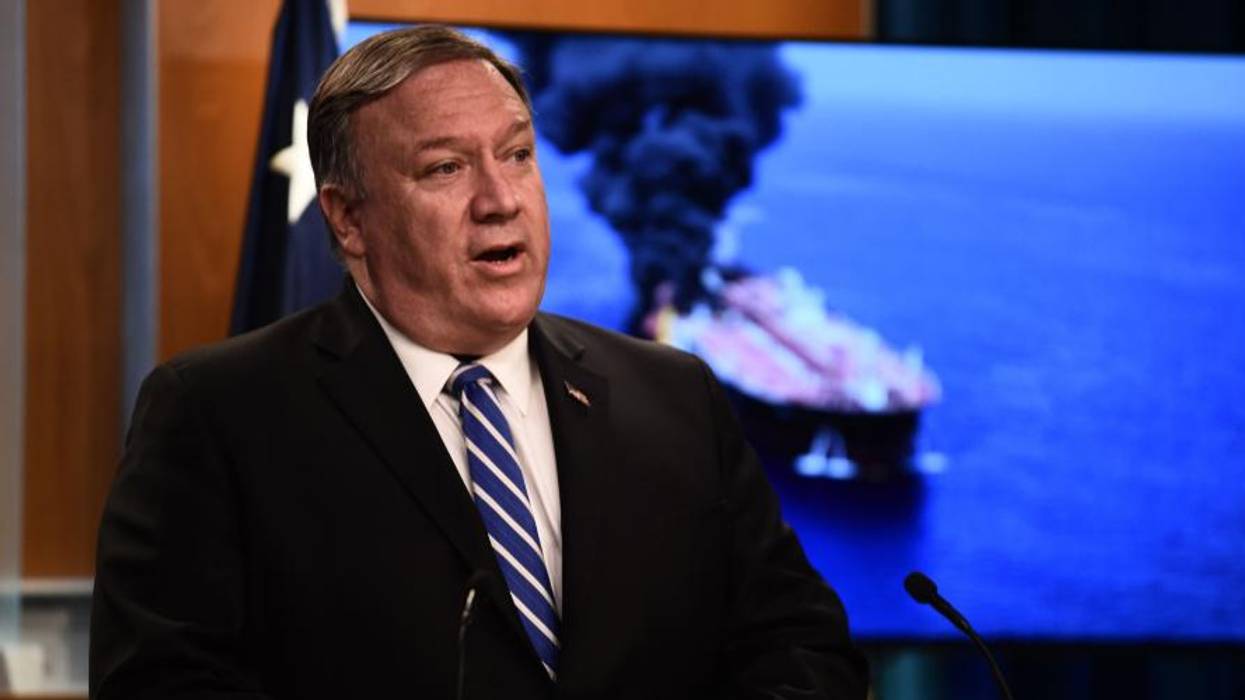
"Astonishing use of 'but' that enables the efforts of the Saudi regime to blame Khashoggi for his own murder," said one journalist.
The widow of murdered Washington Post journalist Jamal Khashoggi on Monday denounced former U.S. Secretary of State Mike Pompeo for his comments about her husband in Pompeo's upcoming memoir, in which he questions Khashoggi's journalism credentials and his allegiances.
As excerpts from Pompeo's book, Never Give an Inch: Fighting for the America I Love, became public a day before its publication date, Hanan Elatr Khashoggi told NBC News she wishes she were able "to silence all of these people who publish books, disparage my husband, and collect money from it."
Elatr Khashoggi fired back after NBC News reported that in Pompeo's book, he writes of Jamal Khashoggi, "He didn't deserve to die, but we need to be clear about who he was—and too many in the media were not."
The book contains accusations that Khashoggi "was cozy with the terrorist-supporting Muslim Brotherhood," alludes to his coverage of and friendship with Osama bin Laden when both were young, and says he was an "activist" rather than a journalist.
Elatr Khashoggi, whom the Saudi national married in 2018 in an Islamic ceremony, told NBC that "Jamal Kashoggi is not part of the Muslim Brotherhood" and that he "always condemned" the September 11, 2001 attacks masterminded by bin Laden.
"Whatever Mike Pompeo mentions about my husband Jamal Khashoggi, he doesn't know my husband," Elatr Khashoggi tweeted.
Khashoggi, who wrote critically of the Saudi government, was killed in October 2018 by a group of assassins in Istanbul. Khashoggi's family sued Saudi Crown Prince Mohammed bin Salman and accused him of personally ordering the execution in 2020, and a United Nations report found that "high-level officials" in Saudi Arabia were responsible for the murder, but last year the Biden administration recommended that bin Salman, as prime minister, be shielded from U.S. lawsuits regarding the case.
While attacking Khashoggi for his loyalties, Pompeo, a Republican who has said he is considering a 2024 presidential run, notes in the book that the U.S. has a "strategic" relationship with the Saudis to consider.
"Shame on you, Mike Pompeo, HarperCollins, and Broadside Books for publishing these lies about my husband," tweeted Elatr Khashoggi.

Randi Weingarten, president of the American Federation of Teachers, defended the egalitarian legacy and aspirations of public education on Monday after former U.S. Secretary of State Mike Pompeo accused her of being "the most dangerous person in the world."
In an interview with Semafor, Pompeo said: "I tell the story often--I get asked, 'Who's the most dangerous person in the world? Is it Chairman Kim, is it Xi Jinping?' The most dangerous person in the world is Randi Weingarten."
"It's not a close call," Pompeo, who worked in the Trump administration and is considered a potential Republican presidential candidate, continued. "If you ask, 'Who's the most likely to take this republic down?' It would be the teachers' unions, and the filth that they're teaching our kids, and the fact that they don't know math and reading or writing."
While the news outlet failed to push back on Pompeo's absurd claims, Weingarten took to Twitter to defend her union and the institution of public education.
Admitting that she wasn't sure whether to characterize Pompeo's remarks "as ridiculous or dangerous," Weingarten noted that he defended tyrants in various parts of the world during his tenure with the State Department.
Pompeo "was more focused on pleasing Trump than fighting for freedom, national security, and democracy," said Weingarten.
The American Federation of Teachers (AFT), by contrast, fights "for freedom, democracy, and an economy that works for all," Weingarten continued. "We fight for what kids and communities need: Strong public schools that are safe and welcoming, where kids learn how to think and work with others."
"And we fight against this kind of rhetoric and hate," she added. "Maybe spend a minute in one of the classrooms with my members and their students and you will get a real lesson in the promise and potential of America."
Pompeo's attack on teachers' unions and inclusive curriculum comes amid an ongoing right-wing censorship campaign and broader assault on public school students and employees.
A recent analysis by PEN America detailed how 138 school districts across 32 states have prohibited more than 1,600 titles in classrooms and libraries since July 2021. The vast majority of banned books deal with LGBTQ+ themes, address racism, contain sexual content, or are related to activism.
In addition, according to PEN America, Republican lawmakers in 42 states have introduced more than 190 bills since January 2021 that seek to limit the ability of educators and students to discuss gender, racial inequality, and other topics--including a growing number of proposals to establish so-called "tip lines" that would empower parents to discipline teachers. Nearly two dozen educational gag orders have been enacted in more than a dozen states.
In an opinion piece published before far-right Florida Gov. Ron DeSantis signed the state's infamous "Don't Say Gay" bill, Washington Post columnist Greg Sargent argued that the GOP's tidal wave of repressive education legislation has "an obvious purpose: to make teachers feel perpetually on thin ice, so they shy away from difficult discussions about our national past rather than risk breaking laws in ways they cannot themselves anticipate."
"But there's another, more pernicious goal driving these bills that might well succeed politically precisely because it remains largely unstated," Sargent continued. "The darker underlying premise here is that these bills are needed in the first place, because subversive elements lurk around every corner in schools, looking to pervert, indoctrinate, or psychologically torture your kids."
The "combination of... vagueness and punitive mechanisms such as rights of action and tip lines" is intentionally designed to promote self-censorship, wrote Sargent. "Precisely because teachers might fear that they can't anticipate how they might run afoul of the law--while also fearing punishment for such transgressions--they might skirt difficult subjects altogether."
He added that "calls for maximal parental choice and control in schools have been used by the right for decades as a smoke screen to sow fears and doubts about public education at its ideological foundations."
On Tuesday, U.S. Rep. Jamaal Bowman (D-N.Y.), a former middle school principal, called Pompeo's comments about Weingarten "outrageous, dangerous, and asinine."
"Radical republicans hate education," he said, "because it cripples their lies and fear-mongering. I stand with Randi Weingarten and all teachers in the fight for our kids, our democracy, and our planet."
American Federation of State, County, and Municipal Employees (AFSCME) president Lee Saunders, meanwhile, said in a statement that "if Mike Pompeo really thinks Randi Weingarten is 'the most dangerous person in the world,' then he is the most clueless person in the world."
"More likely, though, this is just a stunt by a politician desperate to get attention for a longshot presidential run," said Saunders. "Either way, what a relief that a man who calls an educator a greater security threat than global dictators is no longer in charge of our diplomatic relations around the world. While Pompeo continues to bluster, Randi will keep working for safe, vibrant schools that enrich our children and strengthen our communities."
This article has been updated to include a statement from AFSCME president Lee Saunders.
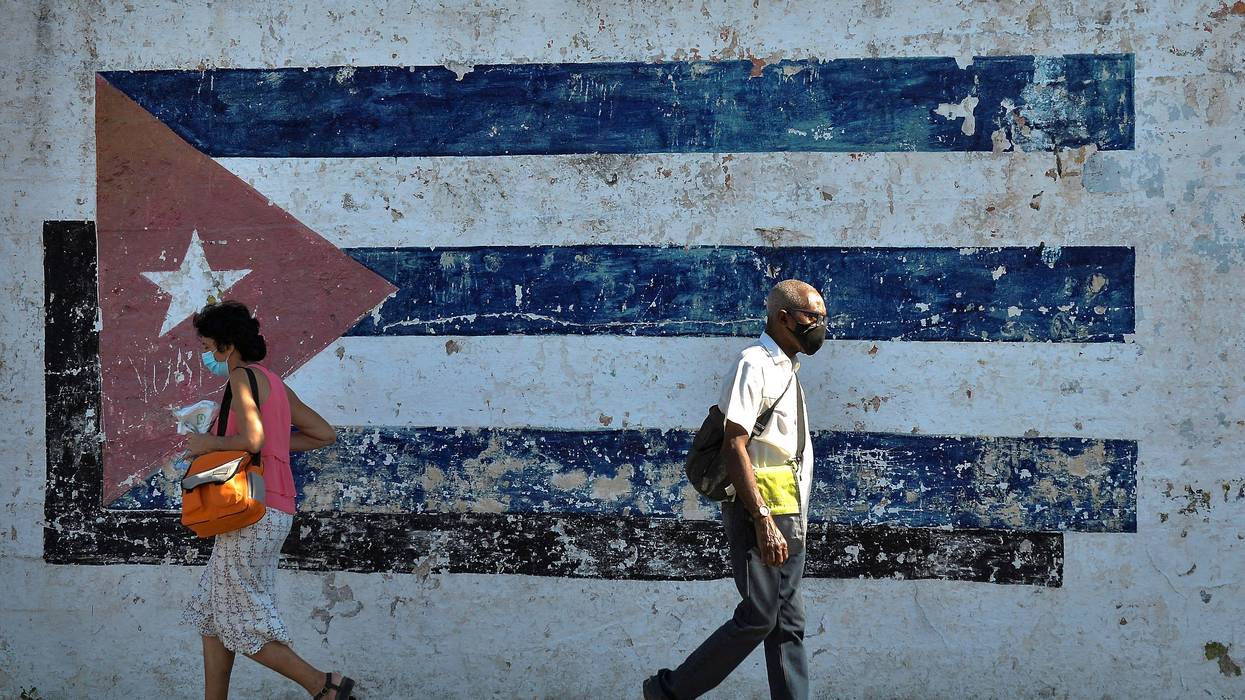
More than 10,000 people and 100 progressive advocacy groups have signed an open letter urging U.S. President Joe Biden to reverse the Trump administration's terrorism designation for Cuba and to reinstate Obama-era policy with the Caribbean island.
"Your policies toward Cuba, which have been more aligned with those of President [Donald] Trump than President [Barack] Obama, are hurting the well-being of the Cuban people and run counter to the will of the majority of U.S. citizens," says the letter, organized by peace campaigners at CodePink. "An important policy change that we urge you to take immediately is to remove Cuba from the list of State Sponsors of Terrorism."
Just days before Biden's inauguration, Trump's Secretary of State Mike Pompeo was roundly criticized for putting Cuba back on the U.S. State Department's list of "State Sponsors of Terrorism."
The Obama White House--in which Biden served as vice president--had removed Cuba from the department's blacklist in 2015, writing that "(i) the Government of Cuba has not provided any support for international terrorism during the preceding six-month period; and (ii) the Government of Cuba has provided assurances that it will not support acts of international terrorism in the future."
In a statement attempting to justify his last-minute decision to re-designate Cuba a "state sponsor of terrorism," Pompeo accused Cuba of "repeatedly providing support for acts of international terrorism in granting safe harbor to terrorists" and engaging "in a range of malign behavior across the region."
These were references to Cuba's refusal to extradite members of Colombia's National Liberation Army (ELN) over alleged involvement in a 2019 bomb attack in Bogota and to the nation's ongoing support for Venezuelan President Nicolas Maduro, who survived a U.S.-backed coup attempt in 2019.
As the new letter explains:
ELN representatives were in Cuba as part of an internationally recognized process of peace negotiations, similar to the one Cuba hosted with the FARC [Revolutionary Armed Forces of Colombia], which was supported by the United States, Norway, Colombia and other nations. In addition, the recently elected Colombian president, [Gustavo] Petro, has asked Cuba to serve as the host country again for peace talks with the ELN, erasing any lingering concern or justification that the United States may have of Cuba's role as anything but a guarantor country for peaceful dialogue.
As a result of Pompeo's terrorism classification, which U.S. Secretary of State Antony Blinken has yet to undo after 20 months, Cuba has been forced to endure additional "sanctions and international financial restrictions that limit Cuba's ability to carry out critical financial transactions, including those needed to advance its efforts to combat the pandemic," the letter notes.
Related Content

Cuba has been dispatching doctors to various parts of the world to help tackle Covid-19, and it has launched an effort to share its homegrown vaccine technology with other countries to expand global supply. In defiance of decades of harmful U.S.-led sanctions, the biggest export of the small island nation, which has a lower child mortality rate than its more powerful and hostile neighbor to the north, is medical care.
Despite Democratic lawmakers' entreaties and Biden's own campaign pledge to abandon Trump's "failed" approach to Cuba--which included implementing more than 200 punitive policies following Obama-era efforts at normalization--the White House has imposed other sanctions in recent months, intensifying Washington's 60-year embargo on the Caribbean island.
"The economic deprivations to which U.S. sanctions contribute have resulted in the mass migration of Cubans, which is currently a major challenge to U.S. interests in border security, as well as causing a humanitarian crisis for the same Cuban people that your administration claims to support," states the letter.
Biden's recent easing of travel restrictions to Cuba is poised to "help Cuban Americans connect with their families," but that's far from enough to redress the deteriorating economic conditions harming millions of people on the island, the letter continues.
When the Obama administration certified the removal of Cuba from the State Department's blacklist in 2015, it declared that the U.S. would "continue to have differences with the Cuban government, but our concerns over a wide range of Cuba's policies and actions fall outside the criteria that is relevant to whether to rescind Cuba's designation as a State Sponsor of Terrorism."
Signatories to the letter contend that "the same situation exists today."
"The United States does have clear differences with the Cuban government--as they do with many governments--but we also have both national and international interests in supporting global pandemic coordination" and in mitigating "Cuba's humanitarian crisis that is causing tens of thousands of Cubans to seek dangerous passage to the United States," says the letter.
At the start of his presidency, Biden said that Cuba's status as a so-called state sponsor of terrorism was "under review," the letter points out.
"Given that removal from the list requires an inquiry into any terrorism-sponsored activity before providing a rescission request to Congress, we request that your administration immediately complete that review and initiate proceedings to remove Cuba from the list," it adds. "Such a move will advance legitimate U.S. security and humanitarian interests and help the future of the Cuban people."
CodePink plans to deliver the letter to various progressive lawmakers this week, including Sen. Bernie Sanders (I-Vt.), Rep. Ilhan Omar (D-Minn.), and Rep. Jim McGovern (D-Mass.). McGovern was one of a few members of Congress who urged Biden to provide aid to Cuba in the wake of last month's catastrophic oil fire.
The anti-war group also intends to deliver the letter to "opposition figures that continue to advocate for hostility toward Cuba," including Sens. Ted Cruz (R-Texas) and Marco Rubio (R-Fla.), as well as Rep. Maria Elvira Salazar (R-Fla.).