

SUBSCRIBE TO OUR FREE NEWSLETTER
Daily news & progressive opinion—funded by the people, not the corporations—delivered straight to your inbox.
5
#000000
#FFFFFF
To donate by check, phone, or other method, see our More Ways to Give page.
Daily news & progressive opinion—funded by the people, not the corporations—delivered straight to your inbox.
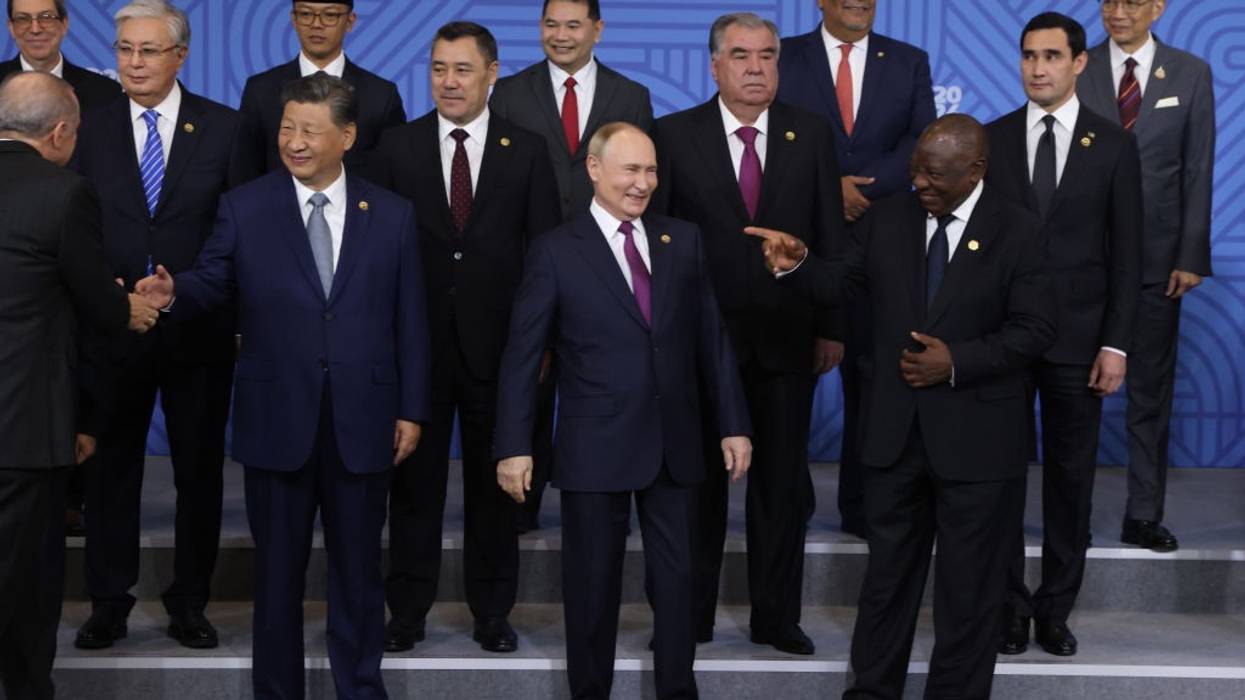
Simply put, the majority of the world does not want or accept U.S. hegemony, and is prepared to face it down rather than submit to its dictates.
The recent BRICS Summit in Kazan, Russia should mark the end of the Neocon delusions encapsulated in the subtitle of Zbigniew Brzezinski’s 1997 book, The Global Chessboard: American Primacy and its Geostrategic Imperatives. Since the 1990s, the goal of American foreign policy has been “primacy,” aka global hegemony. The U.S. methods of choice have been wars, regime change operations, and unilateral coercive measures (economic sanctions). Kazan brought together 35 countries with more than half the world population that reject the U.S. bullying and that are not cowed by U.S. claims of hegemony.
In the Kazan Declaration, the countries underscored “the emergence of new centres of power, policy decision-making and economic growth, which can pave the way for a more equitable, just, democratic and balanced multipolar world order.” They emphasized "the need to adapt the current architecture of international relations to better reflect the contemporary realities,” while declaring their “commitment to multilateralism and upholding the international law, including the Purposes and Principles enshrined in the Charter of the United Nations (UN) as its indispensable cornerstone.” They took particular aim at the sanctions imposed by the U.S. and its allies, holding that “Such measures undermine the UN Charter, the multilateral trading system, the sustainable development and environmental agreements.”
Time has run out on the neocon delusions, and the U.S. wars of choice.
The neocon quest for global hegemony has deep historical roots in America’s belief in its exceptionalism. In 1630, John Winthrop invoked the Gospels in describing the Massachusetts Bay Colony as a “City on the Hill,” declaring grandiosely that “The eyes of all people are upon us.” In the 19th century, America was guided by Manifest Destiny, to conquer North America by displacing or exterminating the native peoples. In the course of World War II, Americans embraced the idea of the “American Century,” that after the war the U.S. would lead the world.
The U.S. delusions of grandeur were supercharged with the collapse of the Soviet Union at the end of 1991. With America’s Cold War nemesis gone, the ascendant American neoconservatives conceived of a new world order in which the U.S. was the sole superpower and the policeman of the world. Their foreign policy instruments of choice were wars and regime-change operations to overthrow governments they disliked.
Following 9/11, the neocons planned to overthrow seven governments in the Islamic world, starting with Iraq, and then moving on to Syria, Lebanon, Libya, Somalia, Sudan, and Iran. According to Wesley Clark, former Supreme Commander of NATO, the neocons expected the U.S. to prevail in these wars in 5 years. Yet now, more than 20 years on, the neocon-instigated wars continue while the U.S. has achieved absolutely none of its hegemonic objectives.
The neocons reasoned back in the 1990s that no country or group of countries would ever dare to stand up to U.S. power. Brzezinski, for example, argued in The Grand Chessboard that Russia would have no choice but to submit to the U.S.-led expansion of NATO and the geopolitical dictates of the U.S. and Europe, since there was no realistic prospect of Russia successfully forming an anti-hegemonic coalition with China, Iran and others. As Brzezinski put it:
“Russia’s only real geostrategic option—the option that could give Russia a realistic international role and also maximize the opportunity of transforming and socially modernizing itself—is Europe. And not just any Europe, but the transatlantic Europe of the enlarging EU and NATO.” (emphasis added, Kindle edition, p. 118)
Brzezinski was decisively wrong, and his misjudgment helped to lead to the disaster of the war in Ukraine. Russia did not simply succumb to the U.S. plan to expand NATO to Ukraine, as Brzezinski assumed it would. Russia said a firm no, and was prepared to wage war to stop the U.S. plans. As a result of the neocon miscalculations vis-à-vis Ukraine, Russia is now prevailing on the battlefield, and hundreds of thousands of Ukrainians are dead.
Nor—and this is the plain message from Kazan—did U.S. sanctions and diplomatic pressures isolate Russian in the least. In response to pervasive U.S. bullying, an anti-hegemonic counterweight has emerged. Simply put, the majority of the world does not want or accept U.S. hegemony, and is prepared to face it down rather than submit to its dictates. Nor does the U.S. anymore possess the economic, financial, or military power to enforce its will, if it ever did.
The countries that assembled in Kazan represent a clear majority of the world’s population. The nine BRICS members (Brazil, Russia, India, China, and South Africa as the original five, plus Egypt, Ethiopia, Iran, and the United Arab Emirates), in addition to the delegations of 27 aspiring members, constitute 57 percent of the world’s population and 47 percent of the world’s output (measured at purchasing-power adjusted prices). The U.S., by contrast, constitutes 4.1 percent of the world population and 15 percent of world output. Add in the U.S. allies, and the population share of the U.S.-led alliance is around 15 percent of the global population.
The BRICS will gain in relative economic weight, technological prowess, and military strength in the years ahead. The combined GDP of the BRICS countries is growing at around 5 percent per annum, while the combined GDP of the U.S. and its allies in Europe and the Asia-Pacific is growing at around 2 percent per annum.
Even with their growing clout, however, the BRICS can’t replace the U.S. as a new global hegemon. They simply lack the military, financial, and technological power to defeat the U.S. or even to threaten its vital interests. The BRICS are in practice calling for a new and realistic multipolarity, not an alternative hegemony in which they are in charge.
American strategists should heed the ultimately positive message coming from Kazan. Not only has the neocon quest for global hegemony failed, it has been a costly disaster for the US and the world, leading to bloody and pointless wars, economic shocks, mass displacements of populations, and rising threats of nuclear confrontation. A more inclusive and equitable multipolar world order offers a promising path out of the current morass, one that can benefit the U.S. and its allies as well as the nations that met in Kazan.
The rise of the BRICS is therefore not merely a rebuke to the U.S., but also a potential opening for a far more peaceful and secure world order. The multipolar world order envisioned by the BRICS can be a boon for all countries, including the United States. Time has run out on the neocon delusions, and the U.S. wars of choice. The moment has arrived for a renewed diplomacy to end the conflicts raging around the world.
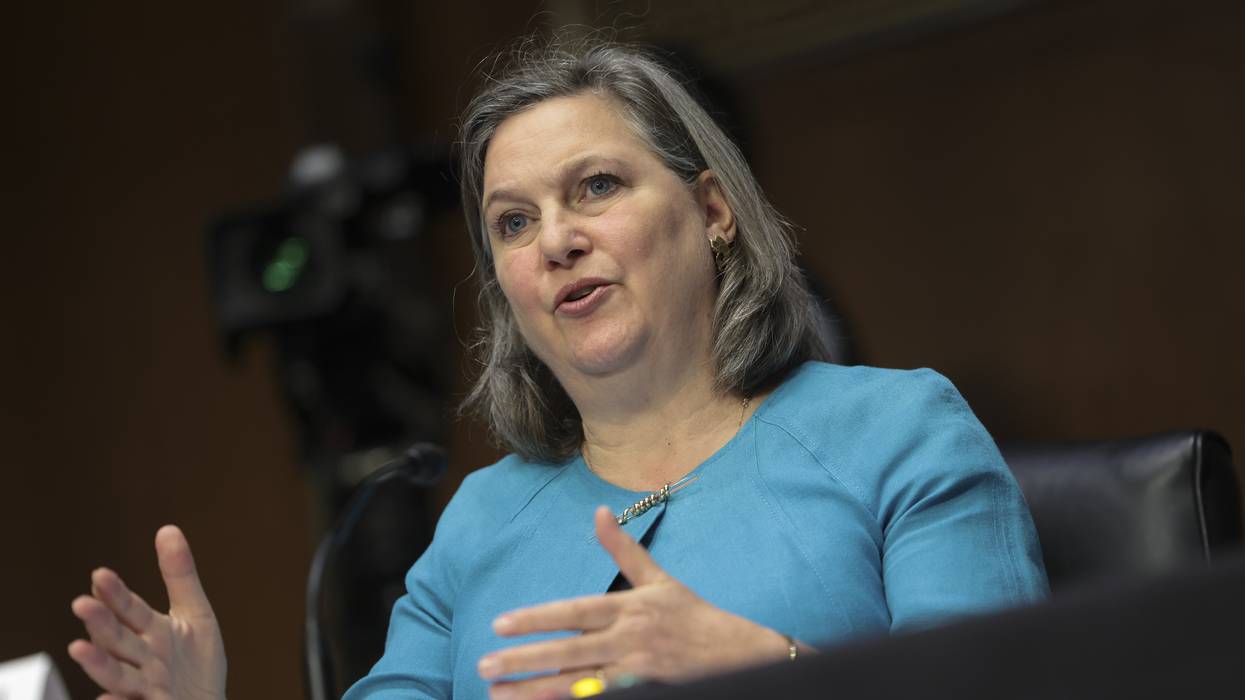
If feminists remain silent or support this Bush-era neocon simply because she is a woman, Victoria Nuland might just burn down the world in a nuclear fire.
When President Biden nominated Victoria Nuland as Undersecretary of State, CODEPINK feminists objected to her nomination out of concern she would bring pain and heartache to mothers and daughters as she fomented war in their midst. Instead of promoting diplomacy, Nuland lights matches wherever she meddles, agitating for war in Afghanistan, and now Ukraine.
If feminists remain silent or support this Bush-era neocon simply because she is a woman, Victoria Nuland might just burn down the world in a nuclear fire.
With drones already attacking the Crimean peninsula and long range US rockets on the way, Nuland’s push to cross another one of Putin’s red lines only ensures more death, destruction and ecocide in Ukraine.
The fact that Nuland was given a diplomatic job in the Biden administration in the first place never ceases to amaze because her record reads like a war criminal’s rap sheet.
For the women of Ukraine, the illegal Russian invasion-which Nuland provoked over the years with NATO expansion — has led to heightened sex trafficking and increased gender violence. According to the United Nations and relief organizations, this includes not only rape as a weapon of war, but “intimate partner violence and sexual harassment. “ With Ukraine under martial law and men aged 18–60 forced to the front lines, young women refugees-often unaccompanied-are vulnerable to abuse at border crossings.
The fact that Nuland was given a diplomatic job in the Biden administration in the first place never ceases to amaze because her record reads like a war criminal’s rap sheet.
Nuland served as Vice President Dick Cheney’s deputy national security adviser from 2003–2005, during the illegal US invasion and occupation of Iraq, a painful chapter in US history that left over a million Iraqis dead and thousands of US soldiers in body bags.
In 2005, Nuland became ambassador to NATO, where she lobbied Europe to participate in the disastrous U.S. occupation of Afghanistan. In persuading other governments the US could win that war, she sold a lie across Europe to prolong a near 20-year occupation that left Afghanistan broke, with six million children and adults at risk of starvation.
In May 2013, Nuland was nominated to act as assistant secretary of state for European and Eurasian affairs, where she was supposed to employ diplomacy in relations with Russia, Ukraine and other former Soviet states.
Instead, Nuland and the White House hurled $5 billion taxpayer dollars at Ukraine to overthrow its democratically elected President and engineer a transition government to privatize Ukraine and prepare for war with Russia. After Nuland passed out pastries during the Maidan coup, before President Viktor Yanukovych fled under a hail of bullets, Nuland was caught in a scandal involving a leaked phone call.
On the phone with US ambassador Geoffrey Pyatt, Nuland was secretly recorded saying “F .. the EU” if the European Union did not approve of her choices to run Ukraine’s transition government. The West gasped at her use of profanity. The more egregious profanity, however, was her insistence on manipulating the political affairs of another country to provoke Russia.
Nuland has repeatedly stated that she wants to destabilize other regions in Russia’s nuclear neighborhood: Belarus and Kazakhstan, because they are too friendly with Russia. What critics say she really wants is regime change in Russia, a country of 193 million people, 150 different ethnic minorities and 6,000 nuclear weapons.
On this International Women’s Day, President Biden would be well-advised to fire Victoria Nuland and hire a diplomat who embraces a feminist foreign policy centered around peace.
What could go wrong?
Nuland’s mission to sacrifice Ukrainian lives to take back Crimea-annexed by Russia after the 2014 coup-could drag other European nations onto the battlefield to start World War III.
On this International Women’s Day, President Biden would be well-advised to fire Victoria Nuland and hire a diplomat who embraces a feminist foreign policy centered around peace.
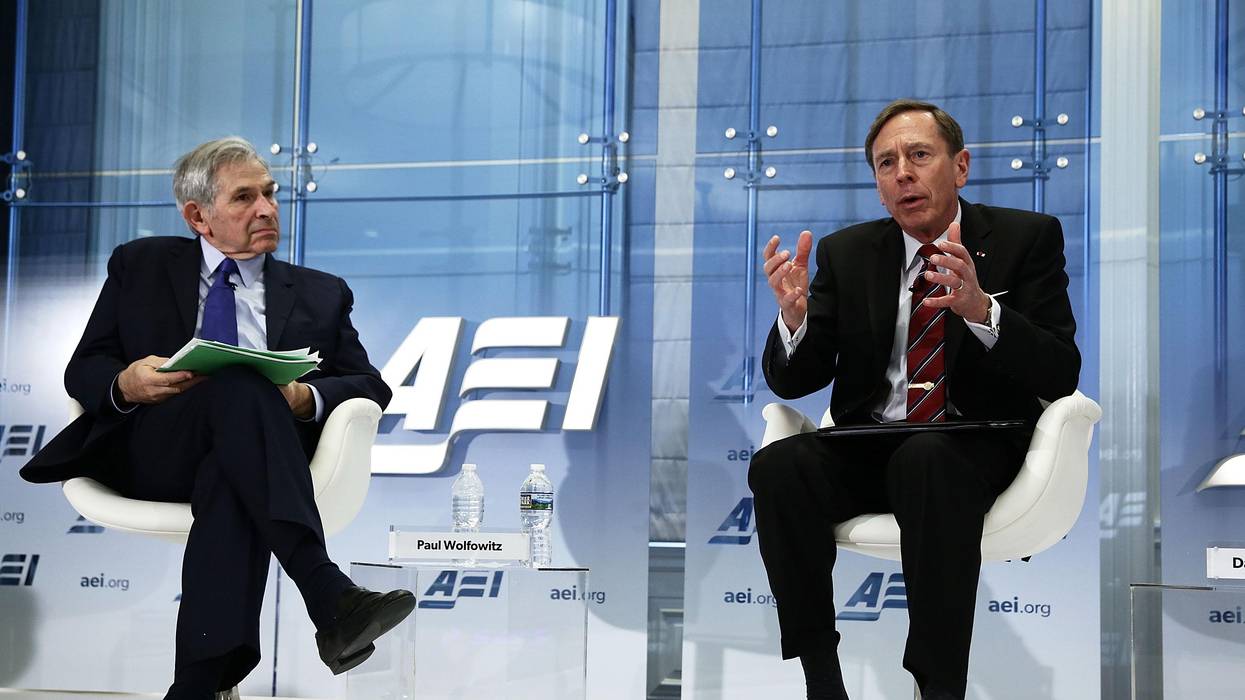
The war in Ukraine is the culmination of a 30-year project of the American neoconservative movement. The Biden Administration is packed with the same neocons who championed the US wars of choice in Serbia (1999), Afghanistan (2001), Iraq (2003), Syria (2011), Libya (2011), and who did so much to provoke Russia's invasion of Ukraine. The neocon track record is one of unmitigated disaster, yet Biden has staffed his team with neocons. As a result, Biden is steering Ukraine, the US, and the European Union towards yet another geopolitical debacle. If Europe has any insight, it will separate itself from these US foreign policy debacles.
The neocon outlook is based on an overriding false premise: that the US military, financial, technological, and economic superiority enables it to dictate terms in all regions of the world.
The neocon movement emerged in the 1970s around a group of public intellectuals, several of whom were influenced by University of Chicago political scientist Leo Strauss and Yale University classicist Donald Kagan. Neocon leaders included Norman Podhoretz, Irving Kristol, Paul Wolfowitz, Robert Kagan (son of Donald), Frederick Kagan (son of Donald), Victoria Nuland (wife of Robert), Elliott Cohen, Elliott Abrams, and Kimberley Allen Kagan (wife of Frederick).
The main message of the neocons is that the US must predominate in military power in every region of the world, and must confront rising regional powers that could someday challenge US global or regional dominance, most important Russia and China. For this purpose, US military force should be pre-positioned in hundreds of military bases around the world and the US should be prepared to lead wars of choice as necessary. The United Nations is to be used by the US only when useful for US purposes.
This approach was spelled out first by Paul Wolfowitz in his draft Defense Policy Guidance (DPG) written for the Department of Defense in 2002. The draft called for extending the US-led security network to the Central and Eastern Europe despite the explicit promise by German Foreign Minister Hans-Dietrich Genscher in 1990 that German unification would not be followed by NATO's eastward enlargement. Wolfowitz also made the case for American wars of choice, defending America's right to act independently, even alone, in response to crises of concern to the US. According to General Wesley Clark, Wolfowitz already made clear to Clark in May 1991 that the US would lead regime-change operations in Iraq, Syria, and other former Soviet allies.
The neocons championed NATO enlargement to Ukraine even before that became official US policy under George W. Bush, Jr. in 2008. They viewed Ukraine's NATO membership as key to US regional and global dominance. Robert Kagan spelled out the neocon case for NATO enlargement in April 2006:
[T]he Russians and Chinese see nothing natural in [the "color revolutions" of the former Soviet Union], only Western-backed coups designed to advance Western influence in strategically vital parts of the world. Are they so wrong? Might not the successful liberalization of Ukraine, urged and supported by the Western democracies, be but the prelude to the incorporation of that nation into NATO and the European Union--in short, the expansion of Western liberalhegemony?
Kagan acknowledged the dire implication of NATO enlargement. He quotes one expert as saying, "the Kremlin is getting ready for the 'battle for Ukraine' in all seriousness." The neocons sought this battle. After the fall of the Soviet Union, both the US and Russia should have sought a neutral Ukraine, as a prudent buffer and safety valve. Instead, the neocons wanted US "hegemony" while the Russians took up the battle partly in defense and partly out of their own imperial pretentions as well. Shades of the Crimean War (1853-6), when Britain and France sought to weaken Russia in the Black Sea following Russian pressures on the Ottoman empire.
Kagan penned the article as a private citizen while his wife Victoria Nuland was the US Ambassador to NATO under George W. Bush, Jr. Nuland has been the neocon operative par excellence. In addition to serving as Bush's Ambassador to NATO, Nuland was Barack Obama's Assistant Secretary of State for European and Eurasian Affairs during 2013-17, where she participated in the overthrow of Ukraine's pro-Russian president Viktor Yanukovych, and now serves as Biden's Undersecretary of State guiding US policy vis-a-vis the war in Ukraine.
In the "battle for Ukraine," the neocons were ready to provoke a military confrontation with Russia by expanding NATO over Russia's vehement objections because they fervently believe that Russia will be defeated by US financial sanctions and NATO weaponry.
The neocon outlook is based on an overriding false premise: that the US military, financial, technological, and economic superiority enables it to dictate terms in all regions of the world. It is a position of both remarkable hubris and remarkable disdain of evidence. Since the 1950s, the US has been stymied or defeated in nearly every regional conflict in which it has participated. Yet in the "battle for Ukraine," the neocons were ready to provoke a military confrontation with Russia by expanding NATO over Russia's vehement objections because they fervently believe that Russia will be defeated by US financial sanctions and NATO weaponry.
The Institute for the Study of War (ISW), a neocon think-tank led by Kimberley Allen Kagan (and backed by a who's who of defense contractors such as General Dynamics and Raytheon), continues to promise a Ukrainian victory. Regarding Russia's advances, the ISW offered a typical comment: "[R]egardless of which side holds the city [of Sievierodonetsk], the Russian offensive at the operational and strategic levels will probably have culminated, giving Ukraine the chance to restart its operational-level counteroffensives to push Russian forces back."
The facts on the ground, however, suggest otherwise. The West's economic sanctions have had little adverse impact on Russia, while their "boomerang" effect on the rest of the world has been large. Moreover, the US capacity to resupply Ukraine with ammunition and weaponry is seriously hamstrung by America's limited production capacity and broken supply chains. Russia's industrial capacity of course dwarfs that of Ukraine's. Russia's GDP was roughly 10X that of Ukraine before war, and Ukraine has now lost much of its industrial capacity in the war.
The most likely outcome of the current fighting is that Russia will conquer a large swath of Ukraine, perhaps leaving Ukraine landlocked or nearly so. Frustration will rise in Europe and the US with the military losses and the stagflationary consequences of war and sanctions. The knock-on effects could be devastating, if a right-wing demagogue in the US rises to power (or in the case of Trump, returns to power) promising to restore America's faded military glory through dangerous escalation.
Instead of risking this disaster, the real solution is to end the neocon fantasies of the past 30 years and for Ukraine and Russia to return to the negotiating table, with NATO committing to end its commitment to the eastward enlargement to Ukraine and Georgia in return for a viable peace that respects and protects Ukraine's sovereignty and territorial integrity.
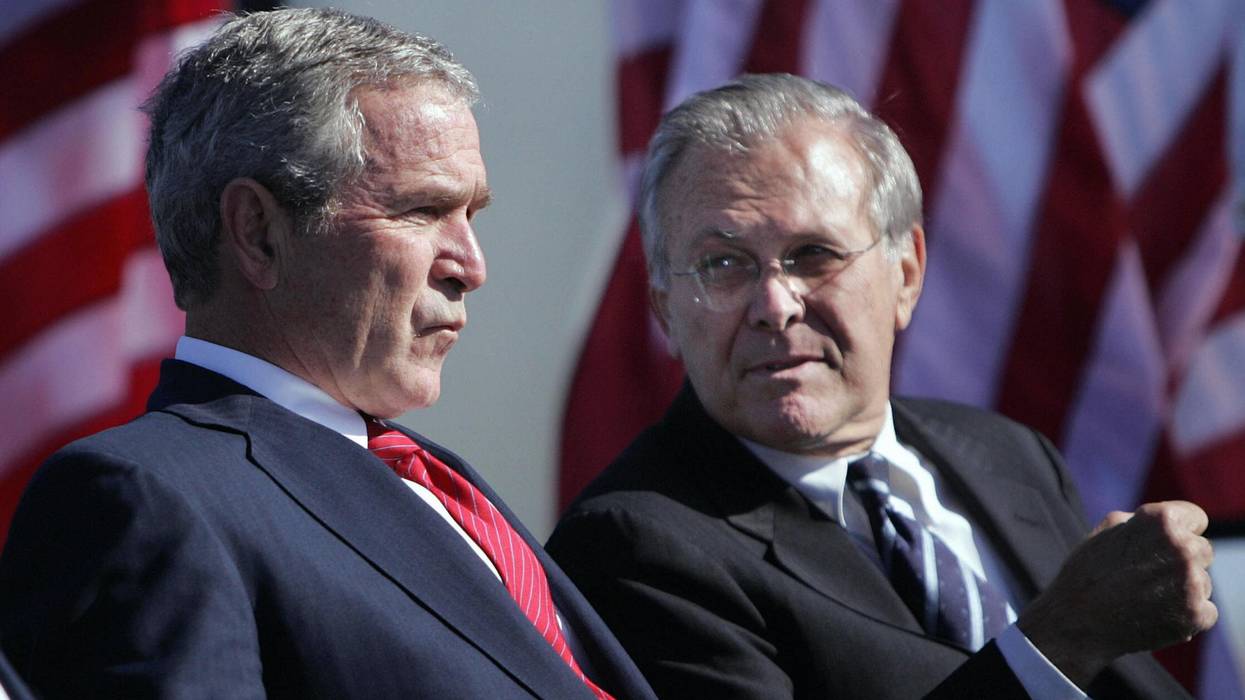
Donald Rumsfeld, the former U.S. congressman, aide to several Republican presidents, and two-time defense secretary whose torture-laden tenure and ruinous legacy were defined by his lies in service of an unending war that's killed at least hundreds of thousands of people, died Tuesday at age 88.
"Donald Rumsfeld is responsible for thousands and thousands of deaths and enriching himself in the process. The least we can do is to forever link his name with 'war criminal.'"
--Veterans for Peace
By the time he was chosen as then-President George W. Bush's secretary of defense, Rumsfeld had already been a Navy veteran, four-term Republican U.S. congressman, and adviser to former Presidents Richard Nixon and Gerald Ford--for whom he had served as defense secretary.
In the early 1980s, President Ronald Reagan repeatedly dispatched Rumsfeld as a special envoy to Iraq, whose brutal dictator Saddam Hussein was at the time an important U.S. ally. An infamous handshake between Rumsfeld and Hussein led to the transfer of deadly chemical and biological materials from the U.S. and allies to Iraq. Hussein subsequently weaponized the components and unleashed weapons of mass destruction on both Iranian troops--with the assistance of the Reagan administration--and Iraqi Kurds during the genocidal (pdf) Anfal campaign.
As Bush's defense secretary, Rumsfeld--who served as CEO or chairman of companies including General Instrument and Gilead Sciences--recruited an inner circle of former corporate executives to oversee Pentagon operations, including Air Force Secretary James G. Roche (Northrop Grumman), Navy Secretary Gordon England (General Dynamics), and Army Secretary Thomas E. White (Enron). So great was the influence of the arms industry in the department during Rumsfeld's tenure that one commentator described it as "Department of Defense, Inc."
An ardent imperialist, Rumsfeld was a leading luminary of the neoconservative movement and a prominent leader of the Project for the New American Century (PNAC), whose other members included Bush administration officials such as Dick Cheney, John Bolton, Elliott Abrams, and Paul Wolfowitz.
PNAC hawks--who envisioned and strategized regime change in Iraq and elsewhere even before 9/11--lobbied vigorously for the 2003 invasion of Iraq, even though they knew the country had no connection with the September 11, 2001 attacks on the U.S. or weapons of mass destruction. When pressed on this last point, Rumsfeld offered perhaps his most infamous explanation:
As we know, there are known knowns; there are things we know we know. We also know there are known unknowns; that is to say we know there are some things we do not know. But there are also unknown unknowns--the ones we don't know we don't know.
In the rushed run-up to invade Iraq, Rumsfeld dutifully disseminated Bush administration lies about Hussein's nonexistent nuclear program, while laughably asserting that the Iraq invasion had "literally nothing to do with oil."
The invasion of Iraq, at first called Operation Iraqi Liberation (OIL) began in the dark of night with a Navy SEAL raid on two offshore Iraqi oil platforms. The New York Times--which parroted many of the administration's Iraq lies--hailed this as the first "victory in the battle for Iraq's vast oil empire."
"Five days or five weeks or five months, but it certainly isn't going to last any longer than that."
--Donald Rumsfeld, on how long the Iraq War would last
Rumsfeld predicted a quick and easy war in Iraq. "Five days or five weeks or five months, but it certainly isn't going to last any longer than that," he declared in November 2002 with cocksure miscalculation. Although former President Barack Obama officially ended the Iraq War in December 2011, U.S. troops are still stationed there today--and President Joe Biden bombed the country earlier this week.
When U.S. forces conquered Baghdad, one of the first sites they secured was the Oil Ministry headquarters. Meanwhile, the Iraqi National Museum, which housed priceless ancient artifacts spanning Mesopotamia's 5,000-year history, was being looted. Thousands of statues, manuscripts, and countless other treasures, some of them among the oldest objects created by civilized humans, were stolen while nearby U.S. troops did nothing.
"Stuff happens," Rumsfeld flippantly replied when faced with images of the looting. "The images you are seeing on television you are seeing over and over, and it's the same picture of some person walking out of some building with a vase, and you see it 20 times, and you think, 'My goodness, were there that many vases? Is it possible that there were that many vases in the whole country?'"
Thousands of U.S. troops would die during the course of the U.S.-led invasion and occupation of the country, along with hundreds of thousands of Iraqis. The latter were practically ignored by Bush officials. When Rumsfeld was asked why the public only hears about the number of American war dead and not about Iraqi casualties, he cooly replied that "we don't do body counts on other people."
Rumsfeld was also an instrumental figure in the Bush administration's torture program. He signed off on torture techniques used by U.S. troops at Guantanamo Bay, Abu Ghraib, and elsewhere--places where prisoners were sometimes tortured to death. He also issued a directive allowing torturers to withhold medical care to prisoners under interrogation who had injuries as serious as gunshot wounds. Later, Rumsfeld would require doctors to certify that detainees slated for torture were certified "medically and operationally" fit for abuse.
When the Abu Ghraib torture photo scandal broke, Rumsfeld--after outing the courageous soldier who exposed the abuse--lied about what he knew.
Gen. Antonio Taguba, author of an Army report (pdf) on U.S. torture at Abu Ghraib, said he met with Rumsfeld and other Pentagon brass just before the defense secretary testified to the Senate about abuse at the notorious prison. Taguba, who had seen thousands of photos of detainee abuse, says Rumsfeld asked him if what was happening in the Iraqi prison was abuse or torture.
"I described a naked detainee lying on the wet floor, handcuffed, with an interrogator shoving things up his rectum and said: 'That's not abuse. That's torture.' There was quiet,'" the general recalled.
Yet Rumsfeld testified before the Senate that nobody in the Pentagon had seen the Abu Ghraib torture photos.
However, a Senate Armed Services Committee investigation concluded that "Rumsfeld's authorization of interrogation techniques... was a direct cause of detainee abuse."
The senators additionally asserted that it was "unconscionable and false" for leading Bush officials to blame a "few bad apples" in the military for detainee abuse in order to avoid accountability.
While fighting a war purportedly meant to defeat terrorism in some parts of the world, Rumsfeld supported terror elsewhere. Pursuing allies in the so-called War on Terror, Rumsfeld courted dictators including Uzbekistan's Islam Karimov--who boiled political opponents alive--and the Iranian exile militants Mujahedin-e Khalq (MEK), a State Department-designated terrorist organization.
"On the bright side, Donald Rumsfeld gets to shake hands once again with Saddam Hussein AND Nixon."
--John Fugelsang, comedian
Meanwhile, a Senate Foreign Relations Committee report concluded that Rumsfeld let bin Laden escape in December 2001. The report also said Rumsfeld's failures ultimately left Americans more vulnerable to terrorism.
It wasn't as if Rumsfeld did not understand the real root causes of anti-U.S. terrorism. In 2004, he commissioned a task force to study the subject. It concluded that "Muslims do not 'hate our freedom,' but rather, they hate our policies." The task force report cited "American direct intervention in the Muslim world," U.S. support for dictators in countries including Saudi Arabia and Egypt, and, most of all, "the American occupation of Iraq and Afghanistan."
Yet Rumsfeld remained an unrepentant cheerleader for war and empire until the end. Medea Benjamin, the co-founder of the women-led peace group CodePink who famously confronted the former defense secretary over his war crimes, tweeted that "his legacy of wars in Iraq and Afghanistan lives on."
"Donald Rumsfeld was a merciless war criminal who presided over systemic torture, massacres of civilians, [and] illegal wars," tweeted journalist and The Intercept co-founder Jeremy Scahill. "That's his legacy and how he should forever be remembered."
Daily Beast senior national security correspondent Spencer Ackerman wrote, "The only thing tragic about the death of Donald Rumsfeld is that it didn't occur in an Iraqi prison."
"Do not mourn the defense secretary," said Ackerman. "Mourn his victims. There were nearly too many to tally, but his Pentagon refused to count anyway."
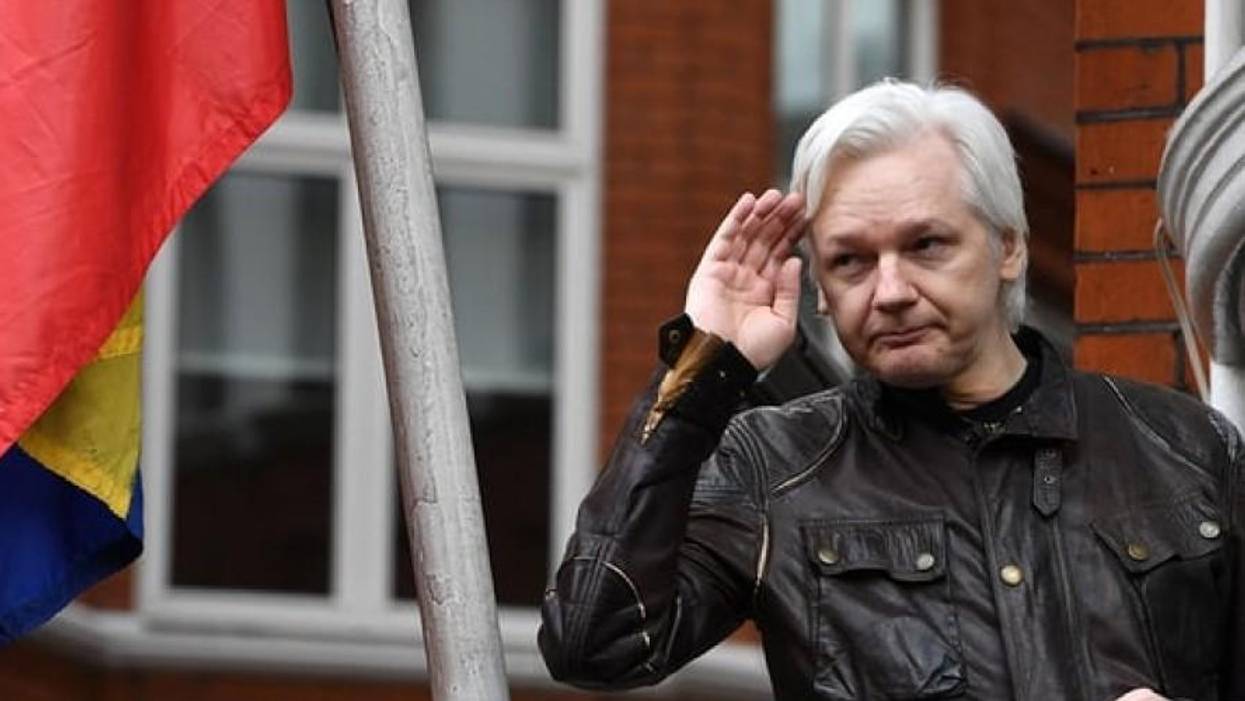
As Julian Assange awaits his fate, socked away in maximum security lockdown in Great Britain, his supporters and friends--many of whom believe he is one of the most significant publishers of our time--are vigiling, writing, and speaking out in support of his work and calling for his immediate release.
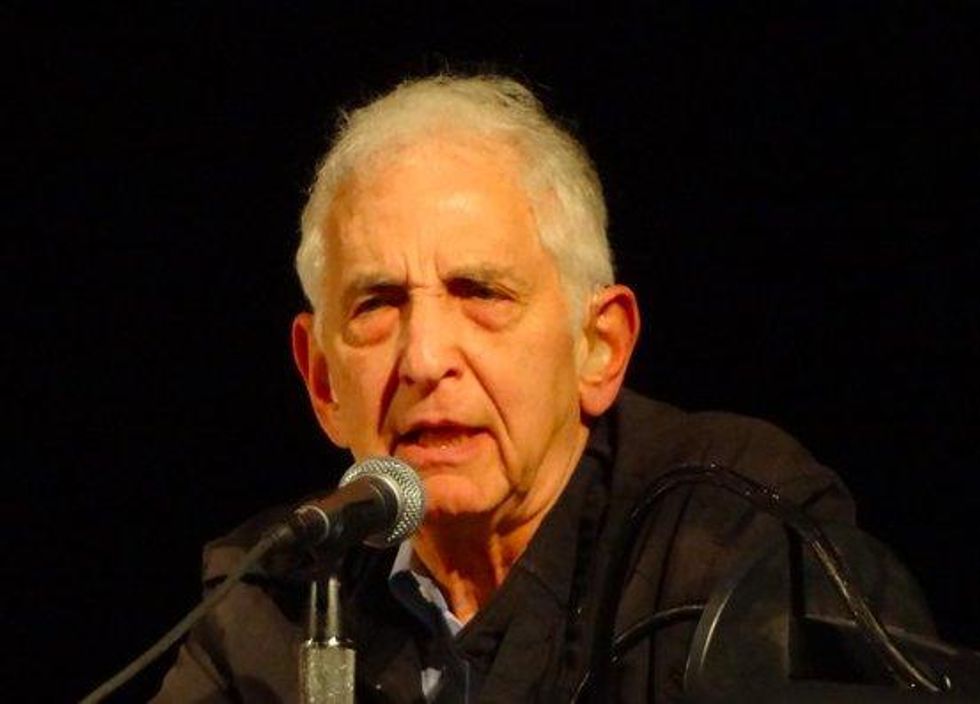
I spoke to legendary Pentagon Papers whistleblower Daniel Ellsberg the morning after Assange was dragged out of the Ecuadorian Embassy in London, with the eyes of the world watching the scene unfold in real time.
Ellsberg says he is both outraged and deeply concerned about the impact this case might have on the free press. "Without whistleblowers," Ellsberg tells me in the following interview, "we would not have a democracy."
Q: You have been watching what has been going on with Julian Assange for some time. What do you make of what has just happened?
Daniel Ellsberg: It is not a good day for the American press, or for American democracy. Forty-eight years ago, I was the first journalistic source to be indicted. There have been perhaps a dozen since then, nine under President Obama. But Julian Assange is the first journalist to be indicted. If he is extradited to the U.S. and convicted, he will not be the last.
The First Amendment is a pillar of our democracy and this is an assault on it. If freedom of speech is violated to this extent, our republic is in danger. Unauthorized disclosures are the lifeblood of the republic.
Q: Some people say Assange was just a hacker. Others, including many major news organizations, felt that he was a legitimate source of information. What is the significance of WikiLeaks? Did it change history in a way similar to how the Pentagon Papers changed our knowledge of the Vietnam War?
Ellsberg: It would be absurd to say that Julian Assange was just a hacker. As a young man he was a hacker, and his philosophy is sometimes called "hacker philosophy," referring to radical transparency, which goes beyond what I would agree with in some cases, in terms of not wanting to redact or curate any of the information at all. His theory is to lay it all out for the public and I think that can have some dangers for privacy in some cases. But that is not involved here.
In this case he was doing journalism of a kind which I think other outlets are jealous of and don't practice as much as they should. This information was actually first offered by Chelsea Manning to The New York Times and The Washington Post, but neither one showed any interest in it. That is how it came to Julian Assange and WikiLeaks.
The collateral murder video shows up-front murder being done [in an airstrike in Baghdad in July 2007]. You see unarmed people in civilian clothes being gunned down and then as they are crawling away, wounded, being pursued until they are dead. That was murder. Not all killing in war is murder, although a lot of it is in modern war. Other people were watching that video when [Manning] saw it. They were all shocked by it, [but] she was the one who decided that people should be told about this.
Without whistleblowers, our foreign policy would be almost entirely covert. We don't have as many whistleblowers as we need to have any kind of public sovereignty.
That took great moral courage on her part, for which she paid ultimately with seven and a half years in prison, ten and a half months in solitary confinement. She was recently imprisoned again for refusing to cooperate with a grand jury that clearly is pursuing Julian Assange, hoping to get information beyond what she testified to in her hearings and court trials. . . .
She objects to grand juries in general, as unconstitutional and undemocratic in their secret proceedings. That is the same attitude my co-defendant in the Pentagon Papers trial, Anthony Russo, took forty-eight years ago. He refused to testify secretly to a grand jury. In fact, he offered to testify if they would give him a transcript that would show him exactly what he said and hadn't said. They wouldn't accept that and he spent over a month in jail before they decided instead to indict him. Chelsea is taking the same position now and showing the kind of moral courage that she has shown all along.
Julian, meanwhile, is being charged with having gone beyond the limits of journalism by helping Manning to conceal her identity with a new username. He is also charged with having encouraged her to give him documents. That is criminalizing journalism. I can't count the number of times that I have been asked for documents by journalists or for more documents. She had already given hundreds of thousands of files to Assange and he wanted more. This is the practice of journalism.
Q: There wouldn't really be much journalism without documents. People used to depend on eyewitness accounts but what beats a document?
Ellsberg: I have been asked what I would do today in the digital era. I would still give them to The New York Times in the hopes that they would print the documents at length. Not many papers take the space to do that and that is why I chose The New York Times. But it was four months after I gave them to Neil Sheehan when they actually published them. During that time he didn't tell me that the Times was working on it. Nowadays I would not wait, I would give it to WikiLeaks or put it on the net myself.
Q: But Assange was focused on trying to protect his sources. This made it possible for more people to participate and that got on the nerves of the powers that be.
Ellsberg: None of his sources except Chelsea have been identified. Actually, Chelsea chose the wrong person to confide in, Adrian Lamo, who immediately informed on her. In terms of getting documents that are crucial, that is done every day. Very often the documents are not printed. The journalist just uses them to make sure that he or she has a valid story. A document is more likely to identify a source, as happened in the case of the Intercept, I am sorry to say.
Q: Finally, why is it important to protect whistleblowers? This is obviously meant to frighten off anyone with information.
Ellsberg: Without whistleblowers, our foreign policy would be almost entirely covert. We don't have as many whistleblowers as we need to have any kind of public sovereignty. Unfortunately, people are simply not willing to risk their job or their clearance or their freedom.
In the past, before me and before President Obama, there were very few prosecutions. Freedom of the press was always held to preclude holding journalists and editors accountable for informing the public. This could be a major change. With classified information, which is nearly everything in the foreign policy field, the writer cannot predict what will be embarrassing in the future, what will appear criminal, what will be considered poor judgment. So they classify everything and it stays classified.
Only a tiny percentage of classified information deserves any protection from the public. A great deal of it the public needs and deserves to have. Most leaks were actually authorized, even though they were against regulations, because they served the interest of some boss in the system. They are really given for the benefit of the agency's budget, or whatever. A small percentage are whistleblowing in the sense of revelation of wrongdoing or deception or criminality, information that the public should know, to avoid a war, for instance.
Q: What other information that the public has the right to see might still be bottled up?
Ellsberg: Eighteen years after it began, we still don't have the Pentagon Papers for Afghanistan. I am certain that they exist, within the CIA and the Pentagon and the White House, stacks of classified estimates that say stalemate is irrevocable in Afghanistan: We can stay there as long as we want but we will never serve American interests any more than now, which is essentially zero, unless it is to free the President of the charge that he has lost a war.
I think these estimates have been there from before the war but we have never seen them. How many people really want to get involved in a war with Russia and Assad in Syria? The estimates would reveal that, and we ought to have those.
It is now up to us to make sure that the First Amendment is preserved.
A war with North Korea or Iran would be catastrophic and I am sure there are many authoritative statements to that effect. But if John Bolton persuades Trump to get involved in such a war, it will happen. It will probably happen without much disclosure beforehand, but if people did risk their careers and their freedom, as Chelsea Manning and Ed Snowden have done, we would have a much better chance that a democratic public would prevent that war from taking place.
Without whistleblowers we would not have a democracy. And there have to be people to distribute work and publish it. Julian Assange has done that in a way in which other publishers have not been willing to. Journalists should close ranks here against this abuse of the President's authority, and against Britain and Ecuador for violating the norms of asylum and making practically every person who has achieved political asylum anywhere in the world less secure.
It is now up to us to make sure that the First Amendment is preserved.

The Trump administration is laying siege to Iran. Taking pages from the Iraq War playbook, senior officials paint a picture of a rogue, outlaw, terrorist regime bent on acquiring nuclear weapons and whose "malign activities" are the cause of all the chaos in the Middle East. They know what they are doing. They have done it before. They are building a case for war.
The "maximum pressure" campaign by the White House, Treasury Department, and State Department accelerated this week with the announcement that the United States would force China, India, Japan, South Korea, and Turkey to cease all imports of Iranian oil or face severe U.S. sanctions. The goal is to cut to zero all of Iran's oil exports, which account for some 40 percent of its national income. This strategy is unlikely to force the capitulation or collapse of the regime, but it very likely could lead to war.
The United States has already reimposed all the nuclear-related sanctions lifted by the Joint Comprehensive Plan of Action (JCPOA) that successfully rolled back and effectively froze Iran's nuclear program and put it under the most stringent inspections ever negotiated. The goals of the sanctions announced April 22, however, go way beyond nuclear issues.
"We have made our demands very clear to the ayatollah and his cronies," Secretary of State Mike Pompeo said in remarks to the press Monday morning. "End your pursuit of nuclear weapons. Stop testing and proliferating ballistic missiles. Stop sponsoring and committing terrorism. Halt the arbitrary detention of U.S. citizens."
All are worthy policy goals. The first, of course, has been met. The National Intelligence Estimate on Iran concluded that Iran ended its nuclear weapons program in 2003. There is no evidence that the program has restarted. Instead, in true Trumpian fashion, the administration simply asserts the counterfactual. It claims that the program has restarted, with slippery phrases about seeking weapons or references to long-ended activities. The media, overloaded with the Mueller report and a daily cascade of lies, does not challenge these claims.
The Role of Bolton
It is no accident that National Security Advisor John Bolton, the man who declared unequivocally in November 2002, "We are confident that Saddam Hussein has hidden weapons of mass destruction and production facilities in Iraq," is now the chief strategist behind the drive towards war--with Mike Pompeo happily riding shotgun.
Both are manipulating a distracted and largely uninformed president into a confrontation he may not actually want. Although Trump came into office promising to cancel the JCPOA painstakingly negotiated by the Obama administration and our allies, he was initially held in check by the united front of his military, intelligence, and diplomatic advisors.
Then, Trump ousted Rex Tillerson and replaced him with Mike Pompeo. He fired H.R. McMaster and appointed John Bolton. He accepted the resignation of Jim Mattis as secretary of defense and replaced him with a former Boeing executive more interested in contracts than policy. Bolton has had a clear field ever since. With minimal or no inter-agency discussion, Bolton quickly dispensed with the Iran accord, but he did not stop there.
By Christmas 2018, Bolton had dismantled what remained of U.S.-Iran relations. The United States reinstated all sanctions on Iran that were previously lifted by the Iran accord, and the State Department pulled out of the 1955 Treaty of Amity between the United States and Iran, which provided a "legal framework for bilateral relations." As a result, Iran's currency hit a historic low and the country witnessed waves of economic protests. Bolton used his national platform to publicly send bellicose warnings to the regime with statements like, "If you cross us, our allies, or our partners...there will indeed be hell to pay."
The Terrorism "Connection"
The "maximum pressure" campaign escalated in 2019. When terrorists attacked the Iranian Revolutionary Guard Corps (IRGC)--an official branch of Iran's military--killing 27 and wounding 13, the State Department offered no condolences. When widespread flooding devastated Iranian cities and infrastructure, claiming 60 lives in one week, the United States faulted the regime for the "mismanagement that has led to this disaster."
The campaign hit a crescendo on April 8, 2019--exactly one year to the day after Bolton's appointment--with the unprecedented move of designating the IRGC a "Foreign Terrorist Organization." It now appears alongside the Islamic State, al-Qaeda, and Boko Haram on this list. That day Pompeo delivered a statement to the press and public in which the words "terror," "terrorism," and "terrorist" appeared 21 times.
This designation brings at least the IRGC and perhaps the entire nation within arm's reach of the 2001 Authorization for Use of Military Force, legislation originally written to provide a legal basis for the invasion of Afghanistan in the wake of 9/11. The 2001 AUMF gives the president wide scope for the unilateral use of force against any parties or individuals associated with the 9/11 attacks, a point not lost on Pompeo.
For over a year, the Trump administration, and Pompeo in particular, has been exaggerating the connection between Iran and al-Qaeda to claim legal justification for military action against Iran under the 2001 AUMF. In 2017, the CIA released additional records from the bin Laden files, ostensibly "to enhance public understanding of al-Qaeda." Wrote former CIA analyst Ned Price:
But this release by Pompeo wasn't about transparency. Pompeo is playing politics with intelligence, using these files in a ploy to bolster the case against Iran by reinvigorating the debate on its terrorist ties. While the politicization of intelligence is more than sufficient cause for concern, the fact that he appears to be returning to the Bush administration's pre-Iraq war playbook underscores the danger. This effort reeks of former vice president Dick Cheney's consistent false allegations of links between Saddam Hussein's Iraq and the 9/11 attacks, a nexus the Bush administration debunked only after we had lost too much in blood and treasure.
Bolton, Pompeo, and their allies in and out of government continued to hype the Iran-al-Qaeda link. In May 2018, announcing the U.S. abrogation of the nuclear agreement, Trump made a point of saying that "Iran supports terrorist proxies and militias such as...al-Qaeda." In a speech at the Heritage Foundation later that month, Pompeo said: "Today we ask the Iranian people: Is this what you want your country to be known for, for being a co-conspirator with Hezbollah, Hamas, the Taliban, and al-Qaeda?"
Experts have disparaged the administration's claims, noting the longstanding hostility between Iran, a Shia-majority nation, and the radical Sunni group. A definitive New America study published in late 2018 found no evidence that Iran and al-Qaeda collaborated in carrying out terrorist attacks. That hasn't stopped the administration from continuing the insinuations.
In testimony before the Senate Foreign Relations Committee, Pompeo went out of his way to construct explicit connections between al-Qaeda and the IRGC with multiple statements like: "there is no doubt there is a connection between the Islamic Republic of Iran and Al-Qaeda. Period, full stop."
Invoking the AUMF
Senator Rand Paul (R-KY) zeroed in to the subtext of Pompeo's repetitive al-Qaeda-Iran connections. If the administration determines a valid link between al-Qaeda and the Iranian government, it may be able to declare war on Iran by using the 2001 AUMF, bypassing Congress entirely. So, Senator Paul pressed Pompeo on that point, asking him if he believes that the 2001 AUMF applies to Iran or Iran's Revolutionary Guard. Pompeo dodged the question: "I would prefer to leave that to the lawyers, Senator." Neither Bolton nor Pompeo has yet provided a clear answer.
The administration's plan is clear: keep beating the twin drums of terrorism and nuclear threat. Bolton and Pompeo will use both to justify more sanctions and more provocations. They have a highly disciplined, coordinated messaging strategy. They establish the following false claim, as Bolton did this January in a conversation with Prime Minister Netanyahu of Israel: "Despite getting out of the Iran nuclear deal, despite the sanctions, we have little doubt that Iran's leadership is still strategically committed to achieving deliverable nuclear weapons." The claims are then echoed, as this one was in a Twitter video a few weeks later. And again by U.S. Special Representative for Iran Brian Hook, in a New York Times op-ed, demanding that Iran "behave like a normal, peaceful nation: end the pursuit of nuclear weapons, stop testing ballistic missiles, stop sponsoring terrorist proxies." And again this week by Pompeo, in announcing the oil sanctions, when he demanded that Iran "end [its] pursuit of nuclear weapons."
It does not matter that U.S. intelligence assessments--as well as Israeli intelligence and the International Atomic Energy Agency--confirm that Iran is complying with the JCPOA. Or that Saudi Arabia has likely funded al-Qaeda and other Sunni terrorist groups. Or that the US invasion of Iraq is the principle cause of Middle East chaos today. Trump officials will cherry-pick information, package it, and amplify it across a willing echo chamber--exactly as the Bush administration did in the lead up to the Iraq war.
The real question is whether America will fall for it again.

On April 12, 2019, the International Criminal Court said that it would not pursue a war crimes investigation against the U.S. military for its actions in Afghanistan. A very thick file was closed in The Hague.
Almost a decade ago, on February 12, 2010, U.S. Special Operations Forces arrived at the home of Haji Sharabuddin in Khataba (Paktia Province, Afghanistan). The family of Sharabuddin was celebrating the birth of a grandson. Inside the home were close family members (including a police investigator and a government prosecutor) as well as the vice-chancellor of Gardez University, Sayed Mohammed Mal. At 3 a.m., the U.S. forces attacked the home, killing five members of the family including Sharabuddin's son--Mohammed Dawood--who was the police investigator. After the killing, the soldiers carried the bodies into the house and removed the bullets with a knife. They did not want to leave evidence of their actions. They then ransacked the home--including stealing money--and left. The U.S. military said that those whom they killed were insurgents. Both the Afghan Independent Human Rights Commission and the Criminal Investigations Department of the Afghan Ministry of the Interior found this allegation to be false. A war crime had been committed here.
But, thanks to the withdrawal of the International Criminal Court, this crime--and hundreds of others--will neither be properly documented nor will there be justice for the victims and survivors. Thousands of family members, who know very well what happened in little villages like Khataba and Nangalam, will have no recourse either to an admission of guilt or punishment for the killers. The killing in Nangalam was by a U.S. helicopter on March 1, 2011. The pilots fired on nine boys, killing them all. "My son Wahidullah's head was missing," said Haji Bismillah. "I only recognized him from his clothes." The U.S. apologized for the killing but did nothing other than that.
One village and one town after another has families with stories of such violent and senseless deaths. This U.S. war on Afghanistan, which has been ongoing since 2001, has produced an unknown death count with unknown numbers of war crimes (by the U.S. troops, by the Afghan armed forces and by the Taliban). Afghanistan remains an open sore of crime and impunity.
The ICC
It was for good reason that the Afghan government of Hamid Karzai became a member of the International Criminal Court in 2003. There was pressure on Karzai from the U.S. government not to join the ICC, but he prevailed. It was hardly a victory. The ICC came out of the Rome Statute, which was drafted in 1998 and which came into force in 2002. The United States signed the original treaty, but then refused to ratify it. Worse, the U.S. Congress passed the American Service-Members' Protection Act of 2002 to discourage any cooperation with the ICC if the behavior of U.S. soldiers came under scrutiny. U.S. Senator Jesse Helms referred to the ICC as the International Kangaroo Court. Even if Afghanistan became a member of the ICC, no one in the U.S. establishment thought that this would have any consequences.
But prosecutors in the court had other ideas. In 2006, the ICC investigators opened a "preliminary investigation" into war crimes in Afghanistan. They were interested in war crimes committed by the U.S. forces, by Afghan forces and by the Taliban. An investigator, a few years later, told me that they had found "captivating evidence" of war crimes--mostly related to the torture centers run by the Central Intelligence Agency and by U.S. military intelligence. They sought more material evidence not only by interviewing former prisoners but also through access--which they did not get--to U.S. official documents.
In 2007, the Afghan parliament--a parliament of warlords--passed a law that gave immunity to all for war crimes committed in the country. This was a blanket--and shameful--immunity that was only in May 2017 amended to allow the country to be in compliance with the Rome Statute.
In 2010, WikiLeaks provided some of this evidence in the Afghan war logs, in whose 90,000 pages there was some--but not sufficient--documentation of various operations run by the U.S. forces. This did not shape the ICC investigation, which proceeded with deliberate intent with interviews and with scrutiny of whatever documentation was available.
On November 20, 2017, with almost a decade of careful investigation behind it, the ICC released a report with a bland title: "Situation in Afghanistan: Summary of the Prosecutor's Request for authorization of an investigation pursuant to article 15." The significant sentence of the brief report is the following: "Finally, the information available provides a reasonable basis to believe that members of the United States of America... armed forces and members of the Central Intelligence Agency... committed acts of torture, cruel treatment, outrages upon personal dignity, rape and sexual violence against conflict-related detainees in Afghanistan and other locations, principally in the 2003-2004 period." This did not mean that the crimes of 2010 and 2011 would not be investigated--only that the focus was on this early period and would later expand to include the entire span of the ongoing war.
The ICC's special prosecutor--Fatou Bensouda--asked the court to allow a full investigation of war crimes in Afghanistan. She received a green light.
Trump's Men
A year later, on September 10, 2018, U.S. National Security Adviser John Bolton said that if the ICC continues with its work on the U.S. war crimes docket, the U.S. government would place sanctions on the ICC and even criminally prosecute ICC officials in U.S. courts. This was not just for the ICC investigation of U.S. war crimes in Afghanistan, but also if the ICC persisted in its work on Israeli war crimes against the Palestinians.
Investigators at the ICC said, at that time, that gloom descended on their department. The sense was that the investigation would not be allowed to proceed. But, for the time being, there was no immediate attempt within the ICC to shut down the investigation. The process continued, with Bensouda's team building up the case against the United States--and others--for war crimes in Afghanistan.
It is important to bear in mind that the evidence was in the plain light of day. In 2005, the New York Times published a 2,000-page U.S. army investigation on the killing of Habibullah and Dilawar at Bagram in December 2002. None of the soldiers charged with the murder of these two men were convicted. All charges were dropped. But the evidence against them was clear in the army report (please see Alex Gibney's Oscar-winning documentary, Taxi to the Dark Side, 2007).
The ICC's special prosecutor, Fatou Bensouda, who was in charge of this file, visits the UN Security Council in New York City to deliver her report to the member states of the UN. For this, Bensouda--like other foreign nationals who work in the UN--must get a U.S. visa. On March 15 of this year, U.S. Secretary of State Mike Pompeo said that the United States would deny a visa to ICC personnel if they continue to investigate U.S. war crimes. A few weeks later, on April 5, the United States revoked Bensouda's visa. This was an act of immense hostility, little remarked in the press.
The pressure on the ICC from Trump's men rose. It would have taken international outcry to prevent them from getting their way. The revocation of Bensouda's visa was met with silence. The UN said nothing, nor did the member states. It was this silence that had a chilling effect on the ICC. On April 12, a three-judge panel rejected Bensouda's request for the investigation. This pre-trial chamber comprised of Antoine Kesia-Mbe Mindua of the Congo, Tomoko Akane of Japan and Rosario Salvatore Aitala of Italy. They decided that an investigation into U.S. war crimes in Afghanistan "would not serve the interests of justice."
So it goes.
This article was produced by Globetrotter, a project of the Independent Media Institute.

Here's a statement it might be hard to disagree with: American war is off the charts.
Still, I'd like to explain -- but I'm nervous about doing so. I know perfectly well that the next word I plan to write will send most of you tumbling elsewhere in a universe in which "news" is the latest grotesque mass shooting; the craziest tweet from you-know-who; celebrities marching into court over college-admissions scandals; or even a boy, missing for years, who suddenly turns up only to morph into a 23-year-old impostor with a criminal record. How can America's wars in distant lands compete with that? Which is why I just can't bring myself to write the next word. So promise me that, after you read it, you'll hang in there for just a minute and give me a chance to explain.
Okay, here goes: Somalia.
A country in the horn of Africa, it once glued American eyeballs, but that was so last century, right? I mean, there was that bestselling book and that hit Hollywood movie directed by Ridley Scott (Blade Runner, Alien!) about the disaster early in Bill Clinton's presidency that came to be known as Black Hawk Down (aka the battle of Mogadishu).
In the age of Donald Trump, wasn't that a million presidencies ago? Honestly, can you even tell me anymore what in the world it was all about? I couldn't have, not without looking it up again. A warlord, starvation, U.S. intervention, 18 dead American soldiers (and hundreds of dead Somalis, but that hardly mattered) in a country that was shattering. President Clinton did, however, pull out those troops and end the disastrous mission -- and that was that, right? I mean, lessons learned. Somalia? Africa? What in the world did it all have to do with us? So Washington washed its hands of the whole thing.
And now, on a planet of outrageous tweets and murderously angry white men, you probably didn't even notice, but more than two years into the era of Donald Trump, a quarter-century after that incident, American air strikes in... yep, Somalia, are precipitously on the rise. Last year's 47 strikes, aimed at the leaders and fighters of al-Shabaab, an Islamist terror outfit, more than tripled the ones carried out by the Obama administration in 2016 (themselves a modest increase from previous years). And in 2019, they're already on pace to double again, while Somali civilians -- not that anyone (other than Somali civilians) notices or cares -- are dying in significantand rising numbers. And with 500 troops back on the ground there and Pentagon estimates that they will remain for at least another seven years, the U.S. military is increasingly Somalia-bound, Congress hasn't uttered a peep on the subject, and few in this country are paying the slightest attention.
So consider this a simple fact of the never-ending Global War on Terror (as it was once called): the U.S. military just can't get enough of Somalia. And if that isn't off the charts, what is? Maybe it's even worth a future book (with a very small print run) called not Black Hawk Down II but U.S. Down Forever and a Day.
And now that I've started on the subject (if you still happen to be reading), when it comes to the U.S. military, it's not faintly just Somalia. It's all of Africa. After all, this country's military uniquely has a continent-wide Africa Command (aka AFRICOM), founded in 2007. As Nick Turse has often written for TomDispatch, that command now has its troops, thousands of them, its planes, and other equipment spread across the continent, north to south, east to west -- air bases, drone bases, garrisons, outposts, staging areas, you name it. Meanwhile, AFRICOM's outgoing commanding general, Thomas Waldhauser, only recently told Congress why it's bound to be a forever outfit -- because, shades of the Cold War, the Ruskies are coming! ("Russia is also a growing challenge and has taken a more militaristic approach in Africa.")
And honestly, 600-odd words in, this wasn't meant to be a piece about either Somalia or Africa. It was meant to be about those U.S. wars being off the charts, about how the Pentagon now feeds eternally at the terror trough, al-Shabaab being only a tiny part of the slop it regularly digests. So, for the seven of you still reading, let me change the subject to something a little more appealingly -- to quote a well-known authority -- "ridiculous" when it comes to American war.
A "Ridiculous" War
Maybe you won't be surprised to learn that what I have in mind is the war in Afghanistan, another of Washington's off-the-charts affairs. It might even qualify as the original one (if you don't count Vietnam, which would take you back to the Neolithic Age of the U.S. military's infinite wars). Lest you think I only mean the war that began in Afghanistan after the terror attacks of 9/11, think again. I'm talking about the American war in that distant land that started in 1979, the decade-long conflict in which the U.S. supported extreme Islamists (including a young Saudi named Osama bin Laden) -- they were our guys, then -- to successfully force the Red Army out of Afghanistan.
That was in 1989, 30 years ago, and a triumphant Washington promptly took more than a decade-long holiday, while a brutal set of civil wars continued in already devastated Afghanistan and the Taliban rose to power in most of the country. Then, as in Somalia, having learned their lesson (the wrong one, of course), George W. Bush, Dick Cheney, and crew decided after 9/11 to emulate... well, the Red Army (even though the Soviet Union had imploded a decade earlier) and occupy the Afghan capital, Kabul. For the only great power left on the planet, facing a lightly armed extremist group, what could possibly go wrong?
Seventeen and a half years later, Congress has rarely focused on the war (not) to end all wars and there are still 14,000 American troops (and the usual set of private contractors) there, along with enough U.S. air power to... well, blow up a lot but not change anything decisively. Of course, the Taliban was long ago sent to hell in a hand basket...
...Whoops! The Taliban in 2019 is stronger and in control of more territory than at any moment since it was driven from power in November 2001. Staggering billions of American taxpayer dollars have gone into the "reconstruction" of that land to little effect (while the domestic infrastructure of the United States has begun to crumble without significant new federal investment). Meanwhile, the security forces of the American-backed Afghan government have been taking casualties at a reportedly unsustainable rate.
After not paying much attention to all of this for something like a decade and a half, the American people did, however inadvertently, vote into the White House a presidential candidate who had long had dissident thoughts about the Afghan War. Typical was this 2012 tweet of his: "Why are we continuing to train these Afghanis who then shoot our soldiers in the back? Afghanistan is a complete waste. Time to come home!"
And it's not a set of thoughts Donald Trump tossed overboard once he entered the Oval Office either. Only the other day, he ludicrously praised the "great strides in Afghanistan" that the U.S. military and NATO are(n't) making in an awkward meeting with that alliance's secretary general (in which he also managed to claim that his father -- distinctly from the Bronx, New York -- had been born and raised in Germany). He then doubled back and termed the Afghan War "ridiculous" and "unfortunate." And last December, soon after he announced that he was pulling all U.S. troops out of Syria (on which more in a moment), he essentially demanded that the U.S. military cut its forces in Afghanistan from 14,000 to 7,000 as part of its route (not rout!) out. That number was assumedly meant to include the 3,000 troops he had been persuaded to add to U.S. forces there in his first year in office.
As it happened, however, the Pentagon had its own forward-looking ideas on how to "withdraw" from Afghanistan. Having already turned that war into thelongest in American history, the high command was now evidently vying for another awe-inspiring record: the longest withdrawal of American forces from a war zone ever -- a three-to-five-year span of time with perhaps an initial cut of 7,000 somewhere in the months to come (though I wouldn't hold my breath on the subject). In that way, they were working to produce an American war of at least 21 years (USA! USA!), while perhaps also hoping to outlast this president and get one willing to commit to forever war forever.
Admittedly, the Trump administration has also launched peace talks with the Taliban and who knows where they might lead sooner or later. Still, when it comes to the "ridiculous" war the president continues to belittle, give credit where it's due. It remains robustly, even disastrously, ongoing and off the charts.
The Trump Surge
And none of that compares to Trump's Syrian debacle. In December, the president publicly overruled his advisers and ordered that the 2,000 U.S. troops stationed in that country be withdrawn within 30 days. "We have won against ISIS," he declared in a video posted on Twitter. "Our boys, our young women, our men -- they're all coming back, and they're coming back now."
I think of what followed as "the Trump surge," the third of the era. The first, of course, was General David Petraeus's 2007 surge into Iraq with more than 20,000 American troops. Its aim: to turn the disastrous occupation of that country that followed George W. Bush's May 2003 "mission accomplished" moment into a raging success. Petraeus, in fact, made his reputation on that turn-around of a surge... until, of course, it wasn't, and by then he had moved on.
The second surge was President Obama's decision to send more than 30,000 new U.S. troops into Afghanistan in 2009 -- and, of course, you know how that turned out. (See above.)
Now, appropriately enough, we've had an upside down, inside-out surge in Syria. Honestly, it could have been a Saturday Night Live routine, complete with Alec Baldwin.
In response to Trump's withdrawal decision, Secretary of Defense James Mattis promptly resigned and was almost instantly lauded as an all-American hero by a Congress and a media in an uproar over the decision. We're talking, of course, about "Mad Dog" Mattis, the former Marine general who so classically said of fighting the Taliban, "It's a hell of a hoot. It's fun to shoot some people. I'll be right up there with you. I like brawling."
And then, in February, as the pressure on the president ramped up, there was the first partial retreat. Think of it as the beginning of a withdrawal from the withdrawal. The news leaked out that, in a "concession" to Pentagon officials, 200 U.S. troops would be left in Syria "for a period of time." It only took another day for that number to rise to 400. Then, in mid-March, the Wall Street Journal reported that, in reality, 1,000 troops would be left in that country, a figure promptly and definitively denied ("factually incorrect") by no less a personage than the chairman of the Joint Chiefs of Staff, General Joseph Dunford. By month's end, however, that factually incorrect figure had been confirmed -- 1,000 U.S. personnel would indeed remain indefinitely, or at least until the fall of 2020.
Where the Trump surge will go from here we simply don't know as the subject has largely dropped from the news.
The President From Riyadh?
Meanwhile, don't forget the war that, unlike Afghanistan and Syria, Donald Trump may not be able to imagine ending, the only one on which, since 2001, Congress has taken a stand. I'm thinking, of course, about the grim U.S.-backed Saudi and Emirati war in Yemen. As April began, Congress passed a resolution calling on the president to "remove United States Armed Forces from hostilities in or affecting" Yemen within 30 days. (Of course, you already know how well such 30-day deadlines work when it comes to America's wars.) In the single most obvious situation in which a war (or at least American involvement in it) might possibly be ended, in which the president with the help of Congress might actually override the national security state's urge to fight on anywhere and everywhere, President Trump may sign the second veto of his term in office and successfully nix the congressional resolution.
And if so, who could be surprised. It's obviously the wrong off-the-charts war for the president from Riyadh to end -- or have I, like the president himself, gotten confused about which Trump was born where?
Oh yes, and talking about learning one's lessons, as well as truly going off the charts...
As the 2020 elections approach, watch out. There's one possible American war still to come in the Greater Middle East. You know, the one that won't be off the charts, that's bound to turn out well given the deep pool of experience and reflection on American war making that will have preceded it. I'm thinking, of course, about a potential war with Iran (the one the Bush administration's top officials wished for before they bogged down so disastrously in Iraq and Afghanistan). President Trump's foreign-policy team -- National Security Advisor John Bolton(a relicof the Bush years) and Secretary of State Mike Pompeo -- are visibly dying (if that's the right word) for just such a war and the president who ripped up the Obama administration's Iran nuclear deal, recently declared Iran's Revolutionary Guards a terror group, and has been threatening Iran ever since, seems all too open to it as well.
So, for the last few of us still here thinking about American wars, I would say that when it comes to off the charts, it's possible that you ain't seen nothin' yet.

I'm as curious as the next person about the Mueller report, Donald Trump's tax returns and Jody Wilson-Raybould's inner thoughts, but is there really no room amidst all the media chatter for the news that the chances of nuclear war are "higher than they've been in generations."
That was the frightening assessment the United Nations Security Council received last week from UN disarmament chief Izumi Nakamitsu, and it made barely a ripple in the media.
For that matter, Trump's decision in February to withdraw from a key nuclear treaty, signed amid great hope 32 years ago by Ronald Reagan and Mikhail Gorbachev, was deemed worthy of about 24 hours of news coverage.
Even as climate change is finally penetrating the mainstream news cycle, the media has all but lost interest in nuclear war.
Commentators rarely find time to remind us that all-out war between the U.S. and Russia, the two most heavily armed nuclear combatants, would be 100,000 times more destructive than Hiroshima. Billions of people would die in raging fires and from radioactive fallout, with the rest of humanity freezing or starving to death in the ensuing nuclear winter.
Unlike the climate change battle, where a worldwide movement is managing to push the issue onto the political agenda, the fight to rid the world of nuclear weapons has become widely regarded as hopeless, a genie that can't be re-bottled.
This sense of hopelessness -- promoted by the arms industry -- is misplaced.
While it's true that there's no way to un-invent nuclear weapons, the most dangerous threat they pose could be eliminated. Indeed, such a goal is within reach.
That's the conclusion of a number of experts, including former military analyst Daniel Ellsberg. Best known for leaking the Pentagon papers in the 1970s, Ellsberg also worked as a nuclear war planner for the Kennedy administration.
In his recent book, The Doomsday Machine, Ellsberg argues that probably the greatest nuclear threat today is accidental nuclear war -- that is, a false electronic alarm triggering a pre-emptive strike by either the U.S. or Russia. Over the years, there've been a number of chillingly close calls.
This mind-bending concept -- the end of human civilization due to a computer error -- is made possible by the continuing presence in the two countries of hundreds of land-based missiles kept on hair-trigger alert, ready to launch on warning.
If warning data indicate a nuclear attack may be underway, a process kicks in with incomprehensibly-tight timelines. The U.S. Strategic Command's top officer would have time to provide only a 30-second briefing to the president, who would then have 12 minutes (or less) to weigh the options, according to Bruce Blair, a nuclear security expert at Princeton University.
These timelines render impossible a meaningful decision by even the most astute, high-functioning human being, let alone Donald Trump.
While disarmament experts agree the ultimate goal is eliminating all nuclear weapons, Ellsberg and others insist that a more immediate goal of removing this exceptionally dangerous, hair-trigger situation could be accomplished, bilaterally or even unilaterally -- while still maintaining nuclear deterrence against an enemy first strike.
Indeed, along with a number of high-ranking ex-generals, both George W. Bush and Barack Obama argued during their presidential bids for dramatically reducing hair-trigger status in the U.S. nuclear arsenal, although both men failed to follow through in office.
Trump is now heading in the opposite direction, embarking on a massive modernization of U.S. nuclear weapons, urged on by his ultrahawkish national security adviser John Bolton, a long-time proponent of nuclear buildup.
Yet there is stunningly little pushback as the Trump administration proposes to increase the vastly over-bloated U.S. military budget from $720 billion last year to $750 billion this year. The Democrats are largely acquiescent, agreeing to $736 billion.
All this leaves Americans -- and the rest of the world -- less safe.
As the popular science writer Carl Sagan once noted: "The nuclear arms race is like two sworn enemies standing waist deep in gasoline, one with three matches, the other with five."
Taking away all the matches is the ultimate goal. Meanwhile, it would be gratifying to see a vigorous popular movement aimed at preventing a lit match from accidentally dropping into the gasoline.

Snarling Donald Trump, after being selected as President by the Electoral College, brought one undeniable quality to the office - a lifetime of bullying people below him. During his career as a failed gambling czar and corporate welfare king, deceitful Donald bullied his employees, (many of whom are undocumented), consumers, and creditors (profitably jumping ship before he bankrupted his shareholders).
He honed his bullying skills through his television program - The Apprentice - where he dramatically kicked participants off the show each week using his catchphrase, "You're fired!"
Donald has fired many of the officials he appointed. He was, however, too cowardly and discourteous to fire his appointees directly or privately. He would fire them by tweets or have someone on his staff perform the deed, while he would publicly degrade and humiliate the same people he had often flattered.
Past Presidents have privately expressed unhappiness with a subordinate official and let officials resign "to spend more time with the family" or use some other face-saving explanation.
Not vengeful, ego-maniac Donald. He needs to blame everyone but himself for all his blunders, stupidity, and misjudgments. All the time!
Most recently, he fired his Secretary of Homeland Security, Kirstjen Nielsen, holding her responsible for the increase in southern border crossings. But it was loudmouth Trump himself who induced the latest surge of immigration. Desperate immigrant families fled countries (often U.S. backed dictatorships) upon hearing Trump's threat to completely close the border and stop permitting entry for asylum-seekers escaping violence, chaos and persecution.
After naming Jeff Sessions, his first 2016 campaign supporter in the Senate, Attorney General Trump went berserk when Sessions did the right thing and recused himself in March 2017 from supervising the Mueller probe of Russian interference in the 2016 elections.
Time and time again, Trump would publicly unleash invectives about Sessions--whom he initially showered with praise. Right after the 2018 elections, Trump sent his Chief of Staff, former General John F. Kelly, to order Session' resignation. Trump couldn't muster the minimal courage to do it himself. But then what can you expect of a gung-ho war promoter who evaded the draft after he graduated from a military academy.
Soon it was Kelly's turn. Trump harangued Kelly privately and publicly for months - Kelly told associates that he had never been treated so crudely. Trump pushed Kelly out. Before that he pushed out his once praised Secretary of State, Rex Tillerson, whom he later called "dumb as a rock."
Soon Trump started letting it be known that he was displeased with former General Jim "Mad Dog" Mattis, the Secretary of Defense. It seems that Mattis, who is loved by his soldiers, was trying to restrain the true "mad dog outlaws" - John Bolton, Trump's national security advisor, and Mike Pompeo, Trump's second Secretary of State. Both of these militant warmongers didn't like Mattis' restraint, as is often the case with men who have never seen bloody combat. Flatterers of Trump, these two lawless lawyers (Bolton of Yale Law School and Pompeo of Harvard Law School) may yet embroil the U.S. in an unlawful, undeclared war. Their first preference is Iran.
After Mattis departed, Trump kept verbally going after him. He tried to camouflage Mattis' resignation, under pressure, as a "retirement." When that didn't work he exclaimed "What's he done for me?" It wasn't enough that Mattis reluctantly went along with Trump's grandstanding order by sending soldiers to the Mexican border where, under federal law, they could do no fighting, only housekeeping tasks.
Trump had David Shulkin, the head of the Veteran's Affairs, fired because he tried to persuade Trump not to move veteran's health care into the hands of avaricious corporate vendors.
Trump has fired many other high ranking officials as well. James Comey, the former head of the FBI, and just last week the head of the Secret Service Randolph Alles, are examples. And after officials leave, he keeps blasting them. Psychologically unstable, he even continues his assault on deceased Senator John McCain. Donald's replacements, such as the immensely cruel corporatist, Mick Mulvaney, acting White House Chief of Staff, almost invariably, have to meet the test of unctuous flatterers.
What is remarkable is that after most of these people are "unceremoniously expelled" and their reputations damaged, they slink away without fighting back. (The fired VA chief did make the rounds of TV interviews for a week making his case).
The fired officials are not without their circles of significant influence. They have serious fears about Trump's impulsiveness, his indifference to pressing realities, his weaknesses for flatterers and Donald Trump's dangerous agenda for our country. James Comey has been writing op-eds critical of Trump, but not urging any mobilization of his establishment colleagues against Trump's re-election.
It has been argued that the people Trump has thrown out cannot get real traction to resist, Trump because he flatters the armed forces and cunningly lavishes them with larger budgets than they even request. He takes on the Federal Reserve - the bastion of the big banks - but he gives banks special tax escapes and pushes for dangerously weaker regulation of Wall Street.
None of this should diminish the declared patriotic aversion of former Trump administration officials to what Trump is doing to the country on many fronts. What they can do is start a third party Republican-style challenge to Trump and give more than a few million, reasonable, and troubled Republicans a place to go in 2020.