SUBSCRIBE TO OUR FREE NEWSLETTER
Daily news & progressive opinion—funded by the people, not the corporations—delivered straight to your inbox.
5
#000000
#FFFFFF
To donate by check, phone, or other method, see our More Ways to Give page.
Daily news & progressive opinion—funded by the people, not the corporations—delivered straight to your inbox.
In a new year that promises to be as wretched, rancorous and bloody as the last one - cue oil lust and delusions of empire - we opt to celebrate the stirring hope and promise of newly elected Democratic Socialist and New York City Mayor Zohran Mamdani, who has embraced diversity, collectivism, and the rare chance to shape "lives we (will) fill with freedom" when for too long "freedom has belonged only to those who can afford to buy it." Lesson for now: (Good) change happens.
Yeah, we know the bad kind does too, like America's heedless, illegal attack on and kidnapping from the sovereign Venezuela, "actions of a rogue state" overseen by an addled, clueless, slurring commander-in-chief (sic) making fake claims and struggling to stay upright during his own purportedly exultant news conference on storming "blind into Caracas." Add in preening drunktank bully Hegseth bragging, "America is back!" - to deadly quagmires - and spineless lil' Marco disparaging a country, ostensibly Cuba, "run by incompetent, senile men" - oops - and their brazen disregard of legal mandates to consult with Congress by dismissing that entire, pesky branch of government as "so so weak" - all told, the insane, unschooled act of hubris that is their inevitably catastrophic return to "naked imperialism" is best summed up by James Fallows: "Good God."
Which is why we'd rather bask, at least briefly, in Mamdani's stunning rise, and in the opportunity he represents "to transform and reinvent." "A moment like this comes rarely," he said at his jubilant inauguration, "and rarer still is it the people themselves whose hands are the ones upon the levers of change." Promising to govern "expansively and audaciously," Mamdani, 34, was ceremonially sworn in on New Year's Day by Bernie Sanders, a key political mentor, after taking his official oath the night before from A.G. Letitia James in the City Hall subway station. Both times, he put his hand on two Qurans - one a historic copy from the New York Public Library, and one that belonged to his father. Both times his wife Rama Duwaji, a 28-year-old designer and artist, stood by his side, and he repeatedly underscored themes of unity, equity, diversity and populism.
Mamdani arrived at his inauguration ceremony, not in a limo, but in a motorcade of taxis, a nod to a hunger strike he undertook with cabbies in 2021. In a hat tip to the trains crucial to millions of New Yorkers' daily commutes - in Mamdani's case from Queens - the PA announcer was Bernie Wagenblast, the trans subway system worker whose recorded voice endlessly warns riders, "Please stand away from the platform edge." Mandy Patinkin sang Over the Rainbow with the kids of Staten Island's PS 22 Chorus. Singer-songwriter Lucy Dacus sang the workers'/women's rights anthem Bread and Roses. Along with Bernie, AOC gave a fiery speech - "We have chosen courage over fear" - poet Cornelius Eady performed his poem Proof - "This is our time" - and Public Advocate Jumaane Williams, a son of Grenada immigrants, wept as he repeated with the crowd, "I won't lose hope."
In his soaring speech to the raucous crowd, Mamdani insisted again and again that government should work to improve people’s lives, that its job is to meet the needs of the many not the elite few, that New York, "this gorgeous mosaic," belongs to its people, all of whom deserve an equal share in its governance. "I was elected as a Democratic Socialist, and I will govern as a Democratic Socialist," he said. "Here, where the language of the New Deal was born, we will return the vast resources of this city to everyday people...Construction workers in steel-toed boots and halal cart vendors whose knees ache from working all day," "neighbors who carry a plate of food to the elderly couple down the hall," "those in a rush who still lift strangers’ strollers up subway stairs, and every person who makes the choice day after day, even when it feels impossible, to call our city home."
He also stressed, whatever their vote or politics, "If you are a New Yorker, I am your Mayor. Regardless of whether we agree, I will protect you, celebrate with you, mourn alongside you, and never, not for a second, hide from you." Eloquently, he vowed, "Together, we will tell a new story of our city," summoning neither "a tale of one city, governed by the 1%" nor "a tale of two cities, rich versus poor." "It will be a tale of eight-and-a-half million cities, (each) a universe, (each) woven together...The authors of this story" will speak Mandarin, Yiddish, Creole; will pray in mosques, shuls, churches or not at all; will be Russian Jews, Italians, Irish, black homeowners who triumphed over longtime redlining, young people in apartments whose "walls shake when the subway passes," and, drawing cheers, Palestinians "who will no longer have to contend with a politics that speaks of universalism and then makes them the exception."
On his first work day, he visited a rent-stabilized building to announce three executive orders aimed at improving/creating affordable housing: A Mayor's Office to Protect Tenants facing off against landlords and two task forces - to review city properties flippable into affordable, and to identify/eliminate regulatory roadblocks to building new housing. From the start, Mamdani's campaign boasted a singular accessibility, from his inaugural, hilarious street video - he holds a "Let's Talk Election" sign as many troop past him or report they voted for Trump - to his walking the 13-mile length of Manhattan "because New Yorkers deserve a Mayor they can hear, see and even yell at if they need to. We out here." A couple of weeks ago, already elected, he kept up that tradition with a 12-hourThe Mayor Is Listening event, inviting his wildly diverse constituents to sit down and tell him what's on their minds.
Ultimately, 144 of them did, sitting across from him at the Museum of the Moving Image, often with their kids, to tell him of their hopes and fears - cuts in Medicaid and mental health services, subways that don't feel safe, busses that don't run when they need them after work, students who spend hours on busses, floods and heat, changing migratory patterns of birds, the need to "put fresh food in front of New Yorkers," especially tomatoes, the "stain on the city" that is Riker's Island, the retaliation tenants face for speaking up, the sweeps homeless people endure only to return to the same spot four hours later having lost all their stuff, the terror, nightmares, sense of impotence around ICE, like "an attack on the entire city." One tearful woman, "I dream of being taken away, being sent to a foreign country, not seeing my mother and my baby brother again. Please protect people like me."
Many spoke of affordability, or its lack: People whose families lived for generations in neighborhoods they had to leave, who can't find a place with their new baby, who've spent decades in an apartment but now fear being homeless, who can barely afford groceries: "It's a punchline to buy anything here." A single mother asks how universal child care would work. "It's for everyone," he says gently. "Like public schools." A queer, asylum-seeking Russian, having lost her country, hasn't yet felt part of her new city or its "spaces of power" until now, with him, and starts to cry. Samina, a woman from Pakistan, thanks him carefully, softly, almost whispering, for his empathy: "When I go outside, I see happiness on people's faces, hope, light. You have changed people's hearts, you have created a softening in their hearts. Please continue to be our light and hope in this difficult time." He smiles, thanks her, grasps her hand. She leaves, he weeps.
He listens, nods, scribbles notes on a small pad, laughs at the tomatoes, promises to strengthen sanctuary policies to have no police "collusion" with ICE. He thanks a seven-year-old boy for worrying about homeless people, hugs the Russian woman who says she is excited for the first time about politics, nods he too is troubled by the accelerating climate crisis. At the end of the long, rich day, he is asked how he feels: "That was a lovely, lovely day. I feel like my cup is full with what New Yorkers have shared with me." He notes their breadth of interests, their fluency in the issues, "the reality of the stakes they live with every day." "These are people who give themselves to the city, and they rarely get much back," he says. "This is why we try so hard. It was beautiful. The bravery was incredible."
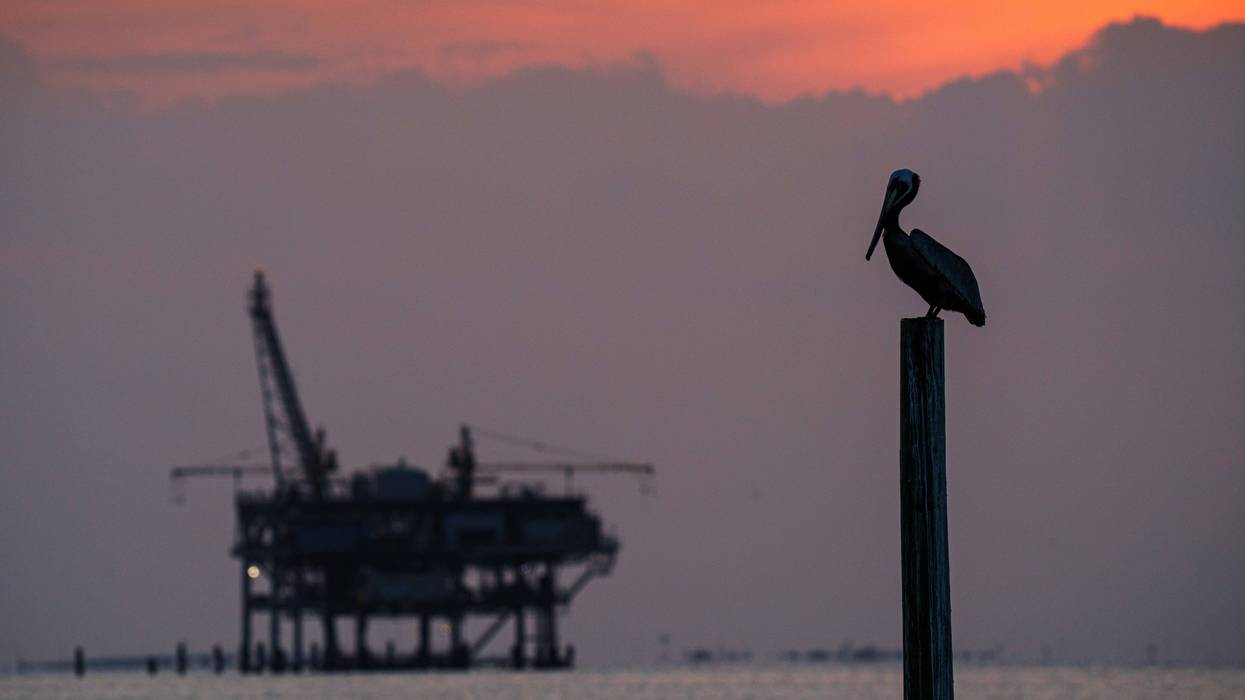
The top Democrats on a pair of key US Senate panels ended negotiations to reform the federal permitting process for energy projects in response to the Trump administration's Monday attack on five offshore wind projects along the East Coast.
Senate Environment and Public Works Committee Ranking Member Sheldon Whitehouse (D-RI) and Energy and Natural Resources Committee Ranking Member Martin Heinrich (D-NM) began their joint statement by thanking the panels' respective chairs, Sens. Shelley Moore Capito (R-W.Va.) and Mike Lee (R-Utah), "for their good-faith efforts to negotiate a permitting reform bill that would have lowered electricity prices for all Americans."
"There was a deal to be had that would have taken politics out of permitting, made the process faster and more efficient, and streamlined grid infrastructure improvements nationwide," the Democrats said. "But any deal would have to be administered by the Trump administration. Its reckless and vindictive assault on wind energy doesn't just undermine one of our cheapest, cleanest power sources, it wrecks the trust needed with the executive branch for bipartisan permitting reform."
Earlier Monday, the US Department of the Interior halted Coastal Virginia Offshore Wind off Virginia, Empire Wind 1 and Sunrise Wind off New York, Revolution Wind off Rhode Island and Connecticut, and Vineyard Wind 1 off Massachusetts, citing radar interference concerns.
Governors and members of Congress from impacted states, including Whitehouse and Senate Minority Leader Chuck Schumer (D-NY), condemned the announcement, with Whitehouse pointing to a recent legal battle over the project that would help power Rhode Island.
"It's hard to see the difference between these new alleged radar-related national security concerns and the radar-related national security allegations the Trump administration lost in court, a position so weak that they declined to appeal their defeat," he said.
This looks more like the kind of vindictive harassment we have come to expect from the Trump administration than anything legitimate.
— Senator Sheldon Whitehouse (@whitehouse.senate.gov) December 22, 2025 at 12:59 PM
Later, he and Heinrich said that "by sabotaging US energy innovation and killing American jobs, the Trump administration has made clear that it is not interested in permitting reform. It will own the higher electricity prices, increasingly decrepit infrastructure, and loss of competitiveness that result from its reckless policies."
"The illegal attacks on fully permitted renewable energy projects must be reversed if there is to be any chance that permitting talks resume," they continued. "There is no path to permitting reform if this administration refuses to follow the law."
Reporting on Whitehouse and Heinrich's decision, the Hill reached out to Capito and Lee's offices, as well as the Interior Department, whose spokesperson, Alyse Sharpe, "declined to comment beyond the administration's press release, which claimed the leases were being suspended for national security reasons."
Lee responded on social media with a gif:
Although the GOP has majorities in both chambers of Congress, Republicans don't have enough senators to get most bills to a final vote without Democratic support.
The Democratic senators' Monday move was expected among observers of the permitting reform debate, such as Heatmap senior reporter Jael Holzman, who wrote before their statement came out that "Democrats in Congress are almost certainly going to take this action into permitting reform talks... after squabbling over offshore wind nearly derailed a House bill revising the National Environmental Policy Act last week."
That bill, the Standardizing Permitting and Expediting Economic Development (SPEED) Act, was pilloried by green groups after its bipartisan passage. It's one of four related pieces of legislation that the House advanced last week. The others are the Mining Regulatory Clarity Act, Power Plant Reliability Act, and Reliable Power Act.
David Arkush, director of the consumer advocacy group's Climate Program, blasted all four bills as "blatant handouts to the fossil fuel and mining industries" that would do "nothing to help American families facing staggering energy costs and an escalating climate crisis."
"We need real action to lower energy bills for American families and combat the climate crisis," he argued. "The best policy response would be to fast-track a buildout of renewable energy, storage, and transmission—an approach that would not just make energy more affordable and sustainable, but create US jobs and bolster competitiveness with China, which is rapidly outpacing the US on the energy technologies of the future.
Instead, Arkush said, congressional Republicans and President Donald Trump "are shamefully pushing legislation that would only exacerbate the energy affordability crisis and further entrench the dirty, dangerous, and unaffordable energy of the past."
New polling from The Guardian on Monday bolstered recent analyses that have shown low consumer confidence and job creation numbers and higher household costs and unemployment: Americans are struggling under President Donald Trump's economic policies, and they increasingly believe the White House—for all Trump's claims that the economy is strong—is to blame.
The poll, conducted by Harris for the news outlet between December 11 and 13, found that respondents were twice as likely to say their financial security is getting worse as they were to report an improvement.
Nearly half of those surveyed said their financial situation is worsening, and 57% said they perceived that the US is in a recession—although that would be defined by two quarters of negative growth in the US economy, which the country has not experienced at this point.
Despite that, the poll—along with recent focus groups including members of Trump's 2024 base, held by Syracuse University and reported on Monday by NBC News—illustrated how Trump's focus on imposing tariffs on countries around the world and his promotion of policies that have raised household bills for millions of people have left Americans feeling pessimistic about their own financial health and that of the country.
Democratic voters were far more likely than Republicans to tell Harris that their financial security is getting worse, with 52% of the latter saying so compared with 27% of the former.
But 54% of independent voters agreed that they are struggling more financially, despite Trump's recent claim that he would give the economy a grade of "A-plus-plus-plus-plus-plus.”
"We have seen a shift among these voters collectively, cracks in their faith, more questioning, oscillating, or outright change of heart about Trump."
Respondents from across the political spectrum were more likely than ever before to blame the White House for their financial struggles, Harris said.
More than three-quarters of Democrats blamed Trump's policies and "government management of the economy," along with 72% of independents and more than half of Republicans—55%.
Analyses this year have shown Trump's tariffs, which he claimed soon after taking office would "liberate" Americans from the national debt, are raising costs for small businesses and making it harder for them to stay afloat, and are passing on higher prices to consumers—resulting in ballooning grocery bills for millions of Americans.
Trump made lowering grocery prices a central promise of his campaign last year, along with repeatedly pledging that he was "going to get your energy prices down by 50%.”
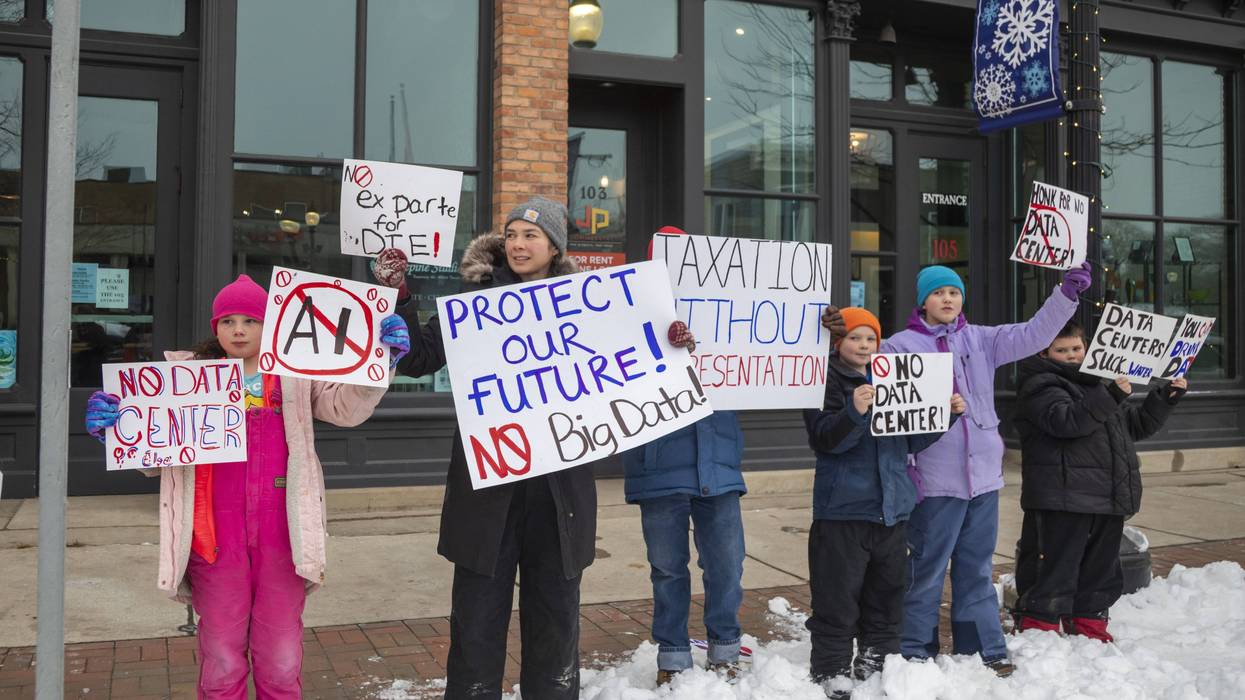
But the president's embrace of artificial intelligence and the expansion of data centers—something he and congressional Republicans have aggressively pushed states to allow despite public disapproval—is unlikely to result in lower utility prices for households. Those costs have risen by 13% since Trump took office, with the president's cancellation of renewable energy projects to blame as well as energy-sucking data centers.
The focus groups held by Syracuse recently found that voters who supported the president last year have rapidly grown discouraged by his economic policies, including his tariffs, which one participant called "a tax on the American people."
"That’s who pays for it, so I don’t support it,” David S. of New Jersey told NBC. “The people who are buying those imports are paying the tax.”
With less than a year until voters are set to decide if Republicans should keep their majorities in the US House and Senate, fewer than half of the people surveyed in four focus groups said they believed Trump has made it a priority to fight inflation and reduce their costs. Robert L. of Virginia told Syracuse researchers that the president's recent comments painting a sunny picture of the economy were "delusional."
Another Virginia voter, Justin K., said the president has been focused on "prosecuting his political enemies" and "pardoning people" and has not "tried at all" to tackle the rising cost of living.
A number of those surveyed said they had decided to back Democratic candidates Abigail Spanberger and Mikie Sherrill in this year's gubernatorial elections in Virginia and New Jersey just a year after supporting Trump.
"Many of these voters gave President Trump a long runway well into the summer because they believed that he understands how business works better than they do and that his own fortune would eventually translate to enriching the country and their own finances," Margaret Talev, director of Syracuse University’s Institute for Democracy, Journalism, and Citizenship, told NBC on Monday.
"But as the year wore on, we have seen a shift among these voters collectively, cracks in their faith, more questioning, oscillating, or outright change of heart about Trump," Talev said. "What we almost never see is a wish for a do-over vote or a rush toward Democrats for the answer."
With millions of Americans facing health insurance premium hikes and Affordable Care Act tax credits expiring at midnight, critics, including congressional Democrats, called out Republicans on Capitol Hill for kicking off 2026 with a nationwide healthcare crisis.
"When the clock strikes midnight, the fallout of the GOP's premium hikes will ripple throughout the nation," Protect Our Care chair Leslie Dach said in a Wednesday statement. "This new year brings a healthcare catastrophe unlike anything this nation has ever seen. Hardworking Americans will be sent into crippling medical debt, emptying out their savings just to see a doctor. Others will be forced to live without the life-saving coverage they need. Untold tens of thousands will die from preventable causes."
"And hundreds of hospitals, nursing homes, and maternity wards will shutter or be at risk of disappearing out of thin air," Dach warned. "When the American people go to the ballot box in November, they won't forget who's responsible for all of this chaos and carnage. They won't forget who's responsible for their skimpier coverage, sky-high premiums, and vanishing hospitals."
Republican lawmakers declined to extend ACA subsidies in their so-called One Big Beautiful Bill Act (OBBBA), which is also expected to slash an estimated $1 trillion in Medicaid spending over the next decade, leading to health clinic closures, while giving more tax breaks to the ultrawealthy. Even the longest federal government shutdown in history—which a handful of moderate Senate Democrats ultimately ended without any real concessions—couldn't convince the GOP to extend the expiring tax credits.
Senate Minority Leader Chuck Schumer (D-NY), who has faced calls to step down over his handling of both shutdowns this year, stressed in a Wednesday statement that the healthcare crisis beginning Thursday "was entirely preventable—caused by Republican obstruction and total inaction."
"Millions of Americans will lose their healthcare, and millions more will see their costs spike by thousands of dollars," he continued. "Millions of hardworking families, small business owners and employees, older Americans, and farmers and ranchers will face impossible choices."
Specifically, about 22 million people who receive subsidies face higher premiums next year, and experts warn nearly 5 million people could become uninsured if the tax credits aren't extended. That's on top of the at least 10 million people expected to lose Medicaid coverage over the next decade, thanks to the OBBBA that President Donald Trump signed into law this summer.
Noting that the expiring subsidies are set to leave millions of Americans without health insurance, House Minority Leader Hakeem Jeffries (D-NY) declared on social media Wednesday, "Republicans don't give a damn."
The Chicago Tribune on Wednesday shared the story of Eleanor Walsh, of St. John, Indiana. She and her husband, who are both self-employed, paid around $9,100 for health insurance this year. In 2026, it will increase to $23,400. To save money, they are going with another plan, which has a $10,130 deductible for each of them, she told the newspaper.
"We're going through every expense we have," said Walsh, whose family has over $10,000 in medical debt from her husband's recent open-heart surgery. "It's going to be a rough year."
In Alta, Wyoming, Stacy Newton and her husband similarly run small businesses and buy health insurance through the ACA marketplace. She was diagnosed with chronic leukemia last year. The cheapest option to cover the couple and their teenage kids next year includes a $3,573 monthly premium, or nearly $43,000 for the year, with a $21,200 deductible.
"It's terrifying... We're not rich, we're not poor. We're a standard, middle-class family, and somehow now I can't afford health insurance," Newton told the Washington Post. "If my leukemia acts up, I'm up a creek... I just don't have a solution yet."
"I just officially canceled my ACA marketplace insurance for 2026," she told the paper earlier this week. "How on Earth is this going to unfold for millions of people in America?"
While Americans are forced to make coverage decisions before open enrollment ends in mid-January, without any promise of the subsidies returning, Schumer signaled that Democrats are still fighting for a fix in Washington, DC.
"Senate Republicans had multiple chances to work with Democrats to stop premiums from skyrocketing—and every time, they blocked action," he said. "While Republicans chose to do nothing and ignore the pain families will feel starting tomorrow, Senate Democrats are fighting to lower costs, protect coverage, and make life more affordable—not harder—for American families."
Four Republicans in the House of Representatives have signed on to a discharge petition to force a January vote on Democratic legislation to extend the credits for three years. Roll Call reported Tuesday that "with the knowledge that a procedural vote on a similar bill was rejected in the Senate, a bipartisan group of senators is working on a compromise to extend the credits."
However, as the outlet also pointed out, Senate Majority Leader John Thune (R-SD) has called Democrats' three-year extension of the tax credits a "waste of money."
Sen. Chris Van Hollen (D-Md.)—one of the lawmakers who has used the current healthcare debate to renew demands for Medicare for All—took aim at Thune on social media Monday.
Other lawmakers have kept up the battle for universal healthcare this week. Sen. Jeff Merkley (D-Ore.) said Tuesday that "everyone in America—no matter what their ZIP code is—should have access to the quality healthcare they need, when they need it. That's why I'm fighting to put us on the path to Medicare for All."
Sen. Bernie Sanders (I-Vt.)—who reintroduced the Medicare for All Act in April with Democratic Reps. Pramila Jayapal (Wash.) and Debbie Dingell (Mich.)—highlighted Sunday that "millions of Americans remain at jobs they hate for one reason: the health insurance they receive."
"That's absurd," he said. "Universal healthcare will give Americans the freedom to choose the work they want without worrying about healthcare coverage. Another reason for Medicare for All."
Absent any real progress on the ACA, let alone Medicare for All, in DC, "at least a dozen states are working to shield people from soaring health insurance costs following Congress' failure to extend Obamacare subsidies for tens of millions of Americans," Politico reported Monday.
Elected officials are taking action in states including California, Colorado, Connecticut, Maryland, and New Mexico, the last of which is the only one so far to cover all expiring subsidies, according to the outlet.
"We can carry the cost for a little bit, but at some point, we will need Congress to act," said the speaker of New Mexico House of Representatives, Javier Martínez (D-11). "No state can withstand to plug in every single budget hole that the Trump administration leaves behind."
President Donald Trump and his administration have been openly plotting to scrap the nation's top consumer protection watchdog, but a federal judge has at least temporarily put those plans on hold.
US District Judge Amy Berman Jackson ruled on Tuesday that the US Federal Reserve must continue providing funds to the Consumer Financial Protection Bureau (CFPB), rejecting the Trump administration's claims that the nation's central bank currently lacks the "combined earnings" to fund the bureau's operations.
The administration had argued that the Federal Reserve should not be making payments to the CFPB because it has been operating at a loss since 2022, when it began a series of aggressive interest rate hikes aimed at taming inflation.
However, Jackson rejected this reasoning and accused the administration of using it as a cover to defund an agency that the president and top officials such as Russell Vought, director of the Office of Management and Budget, had long expressed a desire to abolish.
"It appears that defendants’ new understanding of 'combined earnings' is an unsupported and transparent attempt to starve the CPFB of funding," the judge wrote.
The CFPB must now be funded at least until the DC Circuit of Appeals weighs in on an ongoing lawsuit brought by the National Treasury Employees Union (NTEU) against Vought over layoffs at the agency that is scheduled for hearings in February.
The NTEU took a victory lap in the wake of the ruling and taunted Vought for his defeat.
"Yet another loss for Rusty Vought," the union posted on Bluesky. "Wonder how much longer Donald is going to put up with this?"
While it will continue to receive funding for the time being, the CFPB has still seen its ability to fulfill its mission severely diminished during Trump's second term.
A Tuesday report from Reuters claimed that the CFPB is "on the brink of collapse" given that the Trump administration, congressional Republicans, and industry lawsuits have "undone a decade's worth of CFPB rules on matters ranging from medical debt and student loans to credit card late fees, overdraft charges and mortgage lending."
The report also noted that, during Trump's second term, the CFPB has "dropped or paused its probes and enforcement actions, and stopped supervising the consumer finance industries, leading to a string of resignations" at the agency.
Sen. Elizabeth Warren (D-Mass.), who first drew up plans to create the CFPB in the wake of the 2008 global financial crisis, explained the agency's importance in an interview with Reuters.
"I was stunned by the number of people in financial trouble who had lost a job or got sick but who had also been cheated by one or more of their creditors," she said. "For no agency was consumer protection a first priority, it was somewhere between fifth and 10th, which meant there was just no cop on the beat. If the CFPB is not there, people have nowhere to turn when they get cheated."
Governments throughout Latin America and beyond on Monday blasted the US military's invasion of Venezuela and its abduction of President Nicolás Maduro during an emergency meeting of the United Nations Security Council.
Samuel Moncada, the permanent representative of Venezuela to the United Nations, demanded that the Security Council call for Maduro's immediate release and condemn the US invasion of his country.
Moncada also warned that President Donald Trump's actions would lead to a dangerous unraveling of international law and return to a system in which militarily strong countries feel free to invade weaker ones with impunity.
"Allowing such acts to go without an effective answer would amount to normalizing the replacement of law by might, while eroding the very foundations of the collective security system," he said. "Today, it is not only Venezuela's sovereignty that is at stake, but the credibility of international law, the authority of this organization, and the validity of the principle that no state can set itself up as a judge, party, and executor of the world order."
Venezuela Ambassador to the @UN Samuel Moncada: "No state can set itself up as a judge, party and executor of the world order...Venezuela is the victim of these attack because of its natural resources." pic.twitter.com/j17sHZk5kA
— CSPAN (@cspan) January 5, 2026
Representatives from several other nations joined Moncada's condemnation of the US invasion.
Sérgio França Danese, permanent representative of Brazil to the United Nations, said that the US military's actions "cross an unacceptable line," and set "an extremely dangerous precedent for the entire international community."
"The acceptance of actions of this nature would inexorably lead to a scenario marked by violence, disorder, and the erosion of multilateralism, to the detriment of international law and institutions," said Danese. "As Brazil has reiterated on numerous occasions, the norms that govern coexistence among states mandatory and universal."
At the UN security council the representative of Brazil condemns the actions of the United States as a flagrant violation of international law and goes on to mention the genocide in Gaza as an example of how international governance mechanisms are being weakened. pic.twitter.com/36tEUoJtAv
— Saul Staniforth (@SaulStaniforth) January 5, 2026
Héctor Enrique Vasconcelos y Cruz, permanent representative of Mexico to the United Nations, said that the US military's actions in Venezuela "must not be allowed," as they "constitute a severe blow to the charter and to multilateralism."
Ernesto Soberón Guzmán, permanent representative of Cuba to the United Nations, accused the US of targeting Venezuela purely for reasons of imperial aggression.
"The US military attack against Venezuela has no justification whatsoever," Guzmán said. "It does not respond to any provocation, nor does it possess legitimacy. It is based on the... doctrine of peace through force, and undermines the stability and peace that had characterized our Latin American and Caribbean region for years."
Guzmán added that the "ultimate objective" of the US operation is "not the false narrative of combating drug trafficking, but control over Venezuela’s natural resources, as has been shamelessly declared by President Trump."
Cuban Representative: Its ultimate objective is not the false narrative of combating drug trafficking, but control over Venezuela’s natural resources as has been shamelessly declared by President Trump and his Secretary of State. pic.twitter.com/FDCJoFcduX
— Acyn (@Acyn) January 5, 2026
Jonathan Passmoor, acting deputy permanent representative of South Africa to the UN, accused the US of dangerously degrading the UN charter with its unprovoked attack on Venezuela.
"We all benefit from a rules-based international order based on international law," said Passmoor. "When we break these norms, we invite anarchy and an environment where might make right, ignoring the complexity of interrelations and interdependence in our modern world."
The South African ambassador also warned of the US setting dangerous precedents that could herald more global conflict.
"The belief that might is right, is reinforced and diplomacy is undermined," he said. "History has repeatedly demonstrated that military invasions against sovereign States yield only instability and deepen crisis."
[ Watch] Statement by the Republic of SouthAfrica to the United Nations Security Council Meeting on the situation in Venezuela delivered by Mr Jonathan Passmoor Acting Deputy Permanent Representative https://t.co/DPPXBKIAxO pic.twitter.com/KuQZdJqBVa
— Chrispin Phiri 🇿🇦 (@Chrispin_JPhiri) January 5, 2026
Trump over the weekend said that the US would be "running" Venezuela for the foreseeable future, although it is not clear how he plans to administer control over the nation given that the rest of Maduro's government, led by Acting President Delcy Rodriguez, remains in control of the state.
Trump told reporters aboard Air Force One on Sunday that Rodriguez would follow US orders or a fate "worse than" Maduro's awaits here.
“The Trump administration has chosen to prioritize maintaining rock-bottom taxes for big corporations to the detriment of ordinary Americans and our allies across the globe," said one critic.
The Organization of Economic Cooperation and Development is facing criticism for buckling under US demands when finalizing an update to the global minimum corporate tax agreement.
As reported by Reuters on Monday, the OECD agreed to amend a 2021 deal to enforce a 15% global minimum corporate tax to include "simplifications and carve-outs to align US minimum tax laws with global standards, accommodating earlier objections raised by the Trump administration."
Under the original framework, OECD members agreed to apply a 15% corporate tax on multinational corporations that book profits in jurisdictions that have lower tax rates.
President Donald Trump objected to this, however, and insisted that some US corporations be given exemptions that have subsequently been granted by OECD states.
US Treasury Secretary Scott Bessent said that the revised deal "represents a historic victory in preserving US sovereignty and protecting American workers and businesses from extraterritorial overreach," while noting that it allowed for US-headquartered firms to be subject only to US global minimum taxes.
Some critics, though, accused the OECD of letting the US get away with robbery.
Zorka Milin, policy director at the Financial Accountability and Corporate Transparency Coalition, warned that the deal "risks nearly a decade of global progress on corporate taxation" by allowing "the largest, most profitable American companies to keep parking profits in tax havens."
“The Trump administration has chosen to prioritize maintaining rock-bottom taxes for big corporations to the detriment of ordinary Americans and our allies across the globe," Milin added.
Alex Cobham, chief executive at Tax Justice Network, said other OECD members were only hurting themselves by caving to Trump's demands.
"By the Tax Justice Network’s assessment, France for example is already losing $14 billion a year to tax cheating US firms, Germany is losing $16 billion, and the UK is losing $9 billion," Cobham explained. "Today’s bending of the knee to Trump will cost countries billions more. But how much more? Tellingly, the OECD, which has delivered this shameful result, and OECD members have not put a number on the scale of tax losses that will result."
An analysis published last month by the Institute on Taxation and Economic Policy (ITEP) made the case that global minimum corporate taxes were needed to prevent US companies from sheltering vast profits by reporting them in nations that serve as offshore tax havens.
As an example, ITEP pointed to data showing that the profits US companies reported in notorious tax havens such as Barbados and the British Virgin Islands were more than 100% of those territories' gross domestic product, which the report noted "is obviously impossible."
ITEP went on to state that full implementation of this global minimum tax is "the best hope for blocking the types of tax avoidance that have weakened corporate income taxes all over the world" by making it "difficult for any single government (even one as powerful as the US) to ignore or weaken it."
"I am not guilty. I am a decent man. I remain the president of my country."
Venezuelan President Nicolás Maduro called himself a "prisoner of war" while pleading not guilty to narco-terrorism charges in a US court in New York City on Monday, after the Trump administration abducted him and his wife in an overnight raid that killed dozens of people.
"I am the president of Venezuela, and I consider myself a prisoner of war. They captured me in my house in Caracas," Maduro said in Spanish at the Daniel Patrick Moynihan US Courthouse. "I am not guilty. I am a decent man. I remain the president of my country."
After being seized by US forces before dawn on Saturday, Maduro and his wife, Cilia Flores, were moved to a Brooklyn jail, over the objections of New York City's recently inaugurated mayor, Zohran Mamdani, who called President Donald Trump after the military operation.
The Associated Press reported on the couple's transfer to the Manhattan courthouse early Monday:
A motorcade carrying Maduro left jail around 7:15 am and made its way to a nearby athletic field, where Maduro slowly made his way to a waiting helicopter. The chopper flew across New York Harbor and landed at a Manhattan heliport, where Maduro, limping, was loaded into an armored vehicle.
A few minutes later, the law enforcement caravan was inside a garage at the courthouse complex, just around the corner from the one where Donald Trump was convicted in 2024 of falsifying business records. Across the street from the courthouse, the police separated a small but growing group of protesters from about a dozen pro-intervention demonstrators, including one man who pulled a Venezuelan flag away from those protesting the US action.
The 25-page US indictment released Saturday claims that Maduro, who previously served in Venezuela's National Assembly and as the South American country's minister of foreign affairs, "has partnered with his co-conspirators to use his illegally obtained authority and the institutions he corroded to transport thousands of tons of cocaine to the United States."
Maduro "now sits atop a corrupt, illegitimate government that, for decades, has leveraged government power to protect and promote illegal activity, including drug trafficking," the document continues. "That drug trafficking has enriched and entrenched Venezuela's political and military elite."
Like her husband, Flores pleaded "not guilty, completely innocent," during the Monday arraignment. According to CNN, reporters observed bandages on Flores' head and her attorney, Mark Donnelly, told the presiding judge that she sustained "significant injuries during her abduction," including possibly bruised or fractured ribs.
The presiding judge is Alvin Hellerstein, a 92-year-old appointed to the Southern District of New York by former President Bill Clinton. Al Jazeera noted that he "has overseen numerous high-profile cases in his career, including relating to the 9/11 attacks and the Sudanese genocide."
"It's my job to assure this is a fair trial," said Hellerstein, who scheduled the next hearing for March 17.
The weekend abduction has sparked global protests, comparisons to the US invasion of Iraq, demands for Trump's impeachment, concerns about the involvement of American oil companies, and fears of the White House's threats of more military action elsewhere.
What Trump administration officials called a "law enforcement operation" should, in fact, "be called a massacre," said one critic.
Cuba's government said Sunday that 32 Cubans, including military and police officers, were killed by US forces during President Donald Trump's illegal invasion of Venezuela and abduction of Venezuelan President Nicolás Maduro and his wife last weekend.
“As a result of the criminal attack perpetrated by the United States government against the sister Bolivarian Republic of Venezuela... 32 Cubans lost their lives in combative actions, who carried out missions representing the Revolutionary Armed Forces and the Ministry of the Interior, at the request of counterparts in the South American country,” the office of Cuban President Miguel Díaz-Canel said in a statement.
"Faithful to their responsibilities to security and defense, our compatriots fulfilled their duty with dignity and heroically and fell, after fierce resistance, in direct combat against the attackers or as a result of the bombing of the facilities," the Cuban leader added.
Díaz-Canel also hailed the slain security forces on X, posting, "Honor and glory to the brave Cuban combatants who fell confronting terrorists in imperial uniform, who kidnapped and illegally took out of their country the president of Venezuela and his wife, whose lives our own helped to protect at the request of that sister nation."
Trump also acknowledged the deaths, telling reporters Sunday aboard Air Force One that "a lot of Cubans were killed yesterday" during what members of his administration called a "law enforcement operation."
“There was a lot of death on the other side," Trump added. "No death on our side."
Cuba's socialist government has sent thousands of teachers, doctors, technicians, and members of its security forces to support the Bolivarian Revolution launched under then-Venezuelan President Hugo Chávez in 1999. There are believed to be between 10,000 and 20,000 Cubans living in Venezuela, according to official estimates from Havana.
Venezuela said Sunday that the preliminary death toll from the US invasion stood at 80, including at least one civilian, 80-year-old Rosa González, who was reportedly killed during a strike on a residential building near Caracas' airport.
Responding to the US killing of the 32 Cubans, Institute for Policy Studies fellow Sanho Tree said on Bluesky that the operation "should be called a massacre as well as an act of aggression."
People's Forum founder Manolo De Los Santos, who is based in Cuba, lauded the 32 Cubans who "gave their lives defending Venezuela's sovereignty against Trump's murderous attack."
"They fought to defend President Maduro from being illegally kidnapped," he added. "This is the US [government's] true face: Bombing, kidnapping, and slaughter."
Saturday wasn't the first time that Cubans died defending a socialist ally against US invasion and regime change. At least 24 Cubans—including soldiers, technicians, and construction workers—were killed along with dozens of Grenadian civilians and security forces during a 1983 US invasion ordered by then-President Ronald Reagan under a set of false pretenses to overthrow the leftist New Jewel Movement government of Prime Minister Maurice Bishop. Nineteen US invaders were killed during the operation.
In addition to Venezuela, Trump—who has called himself "the most anti-war president in history" despite ordering the bombing of more countries than any of his predecessors—and members of his administration have threatened to attack or acquire land from nations and territories including Canada, Colombia, Cuba, Denmark, Greenland, Iran—which he already attacked—Mexico, Palestine, and Panama.