SUBSCRIBE TO OUR FREE NEWSLETTER
Daily news & progressive opinion—funded by the people, not the corporations—delivered straight to your inbox.
5
#000000
#FFFFFF
To donate by check, phone, or other method, see our More Ways to Give page.
Daily news & progressive opinion—funded by the people, not the corporations—delivered straight to your inbox.
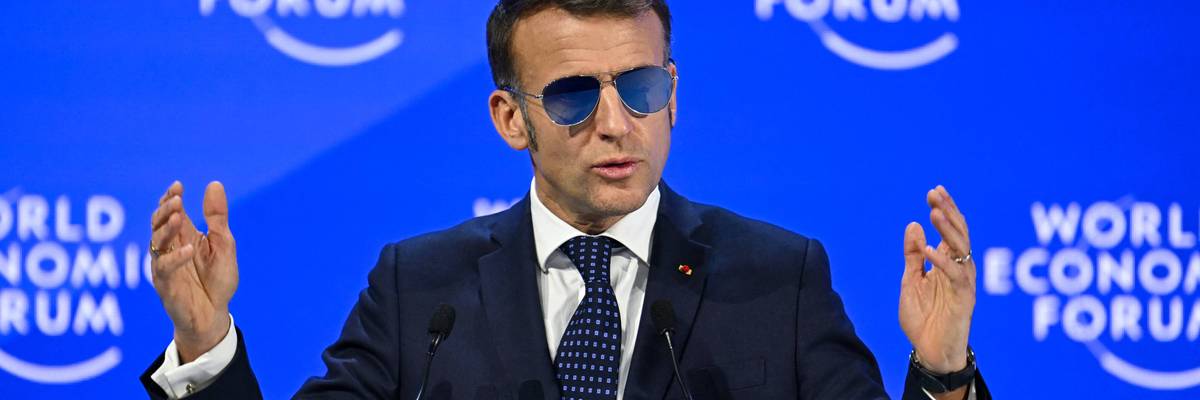
France's President Emmanuel Macron gestures as he delivers a speech during the World Economic Forum (WEF) annual meeting in Davos on January 20, 2026.
After having participated in and refused to condemn military aggression by others, the EU is ringing the alarm when that aggression threatens its shores.
Denmark and other European Union states are deploying additional troops to Greenland, world leaders are exchanging messages of concern with US President Donald Trump, Canada moves to expand its trade relations with China, and tariff warfare is being explored by both sides of the Atlantic. As the US threatens to annex Greenland, potentially putting major NATO allies against each other, the political commotion is real. The US’ imperial ambitions, combined with Greenland’s rich mineral and freshwater resources, are an understandable concern for EU leaders.
Examining the EU’s stance on recent violations of international law by the US and Israel, and expanding our analysis to include how the EU has responded to US military aggression in other regions, it is hard not to see the hypocrisy in urging the US to adhere to international law now. Let’s look at that hypocrisy up close.
When it comes to speaking out against aggression by the US and Israel, a state that bombed six countries and attacked three more in their territorial waters just in 2025, the EU’s record shows a grim example of moral gymnastics.
For example, the EU has not released an official statement condemning Israeli aggression against Yemen. Yet it had no problems accusing Yemen of what it called “indiscriminate attacks against international maritime shipping in the Red Sea, and against Israel.” When Israel bombed Iran in June 2025, which, in turn, sent rockets to Israel, the EU did not express a condemnation but its “deepest concern”:
The EU reiterates its strong commitment to regional security, including the security of the State of Israel, and calls on all sides to abide by international law, show restraint, and refrain from taking further steps which could lead to serious consequences such as potential radioactive release.
Notice how it is the security of Israel—the party that initiated military aggression in this case—that the EU chooses to mention, and not the country whose territorial integrity was infringed upon first.
What is more revealing than the refusal to express any written condemnation is the fact that the EU’s statements to this day have not been accompanied by any concrete punitive action toward Israel. There are no significant sanctions in place, and the suspension of the EU-Israel Association Agreement, a framework that guides their bilateral trade, has been proposed but not officially discussed, and is currently being pushed by a citizens’ initiative. What the EU has granted Israel for violating international law grossly and continuously has been only complete impunity. Let’s not forget that not even the July 2024 ruling by the International Court of Justice declaring Israel’s occupation of the Palestinian territories unlawful and demanding it withdraw from the territories and provide reparations was a factor for the EU to hold Israel accountable to follow through in any way.
Most recently, when the US attacked Venezuela on January 3, 2025, kidnapping its head of state, Nicolás Maduro, and his wife, and murdering tens of people and injuring over a hundred, the EU had an opportunity to condemn a violation of the United Nations Charter. Instead, as in Iran’s case, a statement encouraging both sides to refrain from further escalation of violence was issued; the aggressor was neither identified nor condemned. In fact, the EU took this opportunity to reiterate that it considers the Maduro government illegitimate, as if such a view legally justifies the breach of any state's sovereignty.
The EU has shown that, in certain cases, it can condemn one country’s attacks on another sovereign state. To spot this, contrast the abovementioned language with how Russia’s attacks on Ukraine have been assessed in official EU communications. Here, Russia’s military aggression and the infringements of Ukraine’s territorial sovereignty are clearly condemned, sometimes even “strongly”—language the EU still has not applied to Israeli military actions in Gaza.
In Russia’s case, the aggressor is identified; it is not about both sides being encouraged to refrain from further escalation. Suddenly, we see a firm stance and the EU’s ability to identify the violations of basic international law principles.
The EU’s decision to continually bow down to and appease the US, the world’s military strongman, either out of fear or a lack of moral compass (or both), has left Europe in a situation it might never have expected: the potential for US aggression to turn on one of its member states.
Speaking at the World Economic Forum at Davos, Switzerland, Emmanuel Macron said it was “not a time for new imperialism or new colonialism,” a phrase that only Eurocentric thinking can produce, completely disregarding the US history of the past six decades around the world.
Because there is nothing new about US imperialism, and if we look at which countries sent troops to support the US' illegal invasions over the past two decades, we see neither the EU nor Denmark is an innocent bystander in this neocolonial quest. “We have fought shoulder-to-shoulder with your soldiers in Afghanistan and Iraq,” says Julie Rademacher, chair of Uagut, an organization for Greenlanders in Denmark, on Democracy Now!, suggesting this collaboration in the US-led military endeavors should make Europe immune to becoming one of them.
Now, we will see whether diplomacy can curb the US’ imperial ambitions in Europe, something both military support and the EU's lack of moral leadership have only emboldened around the world.
Dear Common Dreams reader, It’s been nearly 30 years since I co-founded Common Dreams with my late wife, Lina Newhouser. We had the radical notion that journalism should serve the public good, not corporate profits. It was clear to us from the outset what it would take to build such a project. No paid advertisements. No corporate sponsors. No millionaire publisher telling us what to think or do. Many people said we wouldn't last a year, but we proved those doubters wrong. Together with a tremendous team of journalists and dedicated staff, we built an independent media outlet free from the constraints of profits and corporate control. Our mission has always been simple: To inform. To inspire. To ignite change for the common good. Building Common Dreams was not easy. Our survival was never guaranteed. When you take on the most powerful forces—Wall Street greed, fossil fuel industry destruction, Big Tech lobbyists, and uber-rich oligarchs who have spent billions upon billions rigging the economy and democracy in their favor—the only bulwark you have is supporters who believe in your work. But here’s the urgent message from me today. It's never been this bad out there. And it's never been this hard to keep us going. At the very moment Common Dreams is most needed, the threats we face are intensifying. We need your support now more than ever. We don't accept corporate advertising and never will. We don't have a paywall because we don't think people should be blocked from critical news based on their ability to pay. Everything we do is funded by the donations of readers like you. When everyone does the little they can afford, we are strong. But if that support retreats or dries up, so do we. Will you donate now to make sure Common Dreams not only survives but thrives? —Craig Brown, Co-founder |
Denmark and other European Union states are deploying additional troops to Greenland, world leaders are exchanging messages of concern with US President Donald Trump, Canada moves to expand its trade relations with China, and tariff warfare is being explored by both sides of the Atlantic. As the US threatens to annex Greenland, potentially putting major NATO allies against each other, the political commotion is real. The US’ imperial ambitions, combined with Greenland’s rich mineral and freshwater resources, are an understandable concern for EU leaders.
Examining the EU’s stance on recent violations of international law by the US and Israel, and expanding our analysis to include how the EU has responded to US military aggression in other regions, it is hard not to see the hypocrisy in urging the US to adhere to international law now. Let’s look at that hypocrisy up close.
When it comes to speaking out against aggression by the US and Israel, a state that bombed six countries and attacked three more in their territorial waters just in 2025, the EU’s record shows a grim example of moral gymnastics.
For example, the EU has not released an official statement condemning Israeli aggression against Yemen. Yet it had no problems accusing Yemen of what it called “indiscriminate attacks against international maritime shipping in the Red Sea, and against Israel.” When Israel bombed Iran in June 2025, which, in turn, sent rockets to Israel, the EU did not express a condemnation but its “deepest concern”:
The EU reiterates its strong commitment to regional security, including the security of the State of Israel, and calls on all sides to abide by international law, show restraint, and refrain from taking further steps which could lead to serious consequences such as potential radioactive release.
Notice how it is the security of Israel—the party that initiated military aggression in this case—that the EU chooses to mention, and not the country whose territorial integrity was infringed upon first.
What is more revealing than the refusal to express any written condemnation is the fact that the EU’s statements to this day have not been accompanied by any concrete punitive action toward Israel. There are no significant sanctions in place, and the suspension of the EU-Israel Association Agreement, a framework that guides their bilateral trade, has been proposed but not officially discussed, and is currently being pushed by a citizens’ initiative. What the EU has granted Israel for violating international law grossly and continuously has been only complete impunity. Let’s not forget that not even the July 2024 ruling by the International Court of Justice declaring Israel’s occupation of the Palestinian territories unlawful and demanding it withdraw from the territories and provide reparations was a factor for the EU to hold Israel accountable to follow through in any way.
Most recently, when the US attacked Venezuela on January 3, 2025, kidnapping its head of state, Nicolás Maduro, and his wife, and murdering tens of people and injuring over a hundred, the EU had an opportunity to condemn a violation of the United Nations Charter. Instead, as in Iran’s case, a statement encouraging both sides to refrain from further escalation of violence was issued; the aggressor was neither identified nor condemned. In fact, the EU took this opportunity to reiterate that it considers the Maduro government illegitimate, as if such a view legally justifies the breach of any state's sovereignty.
The EU has shown that, in certain cases, it can condemn one country’s attacks on another sovereign state. To spot this, contrast the abovementioned language with how Russia’s attacks on Ukraine have been assessed in official EU communications. Here, Russia’s military aggression and the infringements of Ukraine’s territorial sovereignty are clearly condemned, sometimes even “strongly”—language the EU still has not applied to Israeli military actions in Gaza.
In Russia’s case, the aggressor is identified; it is not about both sides being encouraged to refrain from further escalation. Suddenly, we see a firm stance and the EU’s ability to identify the violations of basic international law principles.
The EU’s decision to continually bow down to and appease the US, the world’s military strongman, either out of fear or a lack of moral compass (or both), has left Europe in a situation it might never have expected: the potential for US aggression to turn on one of its member states.
Speaking at the World Economic Forum at Davos, Switzerland, Emmanuel Macron said it was “not a time for new imperialism or new colonialism,” a phrase that only Eurocentric thinking can produce, completely disregarding the US history of the past six decades around the world.
Because there is nothing new about US imperialism, and if we look at which countries sent troops to support the US' illegal invasions over the past two decades, we see neither the EU nor Denmark is an innocent bystander in this neocolonial quest. “We have fought shoulder-to-shoulder with your soldiers in Afghanistan and Iraq,” says Julie Rademacher, chair of Uagut, an organization for Greenlanders in Denmark, on Democracy Now!, suggesting this collaboration in the US-led military endeavors should make Europe immune to becoming one of them.
Now, we will see whether diplomacy can curb the US’ imperial ambitions in Europe, something both military support and the EU's lack of moral leadership have only emboldened around the world.
Denmark and other European Union states are deploying additional troops to Greenland, world leaders are exchanging messages of concern with US President Donald Trump, Canada moves to expand its trade relations with China, and tariff warfare is being explored by both sides of the Atlantic. As the US threatens to annex Greenland, potentially putting major NATO allies against each other, the political commotion is real. The US’ imperial ambitions, combined with Greenland’s rich mineral and freshwater resources, are an understandable concern for EU leaders.
Examining the EU’s stance on recent violations of international law by the US and Israel, and expanding our analysis to include how the EU has responded to US military aggression in other regions, it is hard not to see the hypocrisy in urging the US to adhere to international law now. Let’s look at that hypocrisy up close.
When it comes to speaking out against aggression by the US and Israel, a state that bombed six countries and attacked three more in their territorial waters just in 2025, the EU’s record shows a grim example of moral gymnastics.
For example, the EU has not released an official statement condemning Israeli aggression against Yemen. Yet it had no problems accusing Yemen of what it called “indiscriminate attacks against international maritime shipping in the Red Sea, and against Israel.” When Israel bombed Iran in June 2025, which, in turn, sent rockets to Israel, the EU did not express a condemnation but its “deepest concern”:
The EU reiterates its strong commitment to regional security, including the security of the State of Israel, and calls on all sides to abide by international law, show restraint, and refrain from taking further steps which could lead to serious consequences such as potential radioactive release.
Notice how it is the security of Israel—the party that initiated military aggression in this case—that the EU chooses to mention, and not the country whose territorial integrity was infringed upon first.
What is more revealing than the refusal to express any written condemnation is the fact that the EU’s statements to this day have not been accompanied by any concrete punitive action toward Israel. There are no significant sanctions in place, and the suspension of the EU-Israel Association Agreement, a framework that guides their bilateral trade, has been proposed but not officially discussed, and is currently being pushed by a citizens’ initiative. What the EU has granted Israel for violating international law grossly and continuously has been only complete impunity. Let’s not forget that not even the July 2024 ruling by the International Court of Justice declaring Israel’s occupation of the Palestinian territories unlawful and demanding it withdraw from the territories and provide reparations was a factor for the EU to hold Israel accountable to follow through in any way.
Most recently, when the US attacked Venezuela on January 3, 2025, kidnapping its head of state, Nicolás Maduro, and his wife, and murdering tens of people and injuring over a hundred, the EU had an opportunity to condemn a violation of the United Nations Charter. Instead, as in Iran’s case, a statement encouraging both sides to refrain from further escalation of violence was issued; the aggressor was neither identified nor condemned. In fact, the EU took this opportunity to reiterate that it considers the Maduro government illegitimate, as if such a view legally justifies the breach of any state's sovereignty.
The EU has shown that, in certain cases, it can condemn one country’s attacks on another sovereign state. To spot this, contrast the abovementioned language with how Russia’s attacks on Ukraine have been assessed in official EU communications. Here, Russia’s military aggression and the infringements of Ukraine’s territorial sovereignty are clearly condemned, sometimes even “strongly”—language the EU still has not applied to Israeli military actions in Gaza.
In Russia’s case, the aggressor is identified; it is not about both sides being encouraged to refrain from further escalation. Suddenly, we see a firm stance and the EU’s ability to identify the violations of basic international law principles.
The EU’s decision to continually bow down to and appease the US, the world’s military strongman, either out of fear or a lack of moral compass (or both), has left Europe in a situation it might never have expected: the potential for US aggression to turn on one of its member states.
Speaking at the World Economic Forum at Davos, Switzerland, Emmanuel Macron said it was “not a time for new imperialism or new colonialism,” a phrase that only Eurocentric thinking can produce, completely disregarding the US history of the past six decades around the world.
Because there is nothing new about US imperialism, and if we look at which countries sent troops to support the US' illegal invasions over the past two decades, we see neither the EU nor Denmark is an innocent bystander in this neocolonial quest. “We have fought shoulder-to-shoulder with your soldiers in Afghanistan and Iraq,” says Julie Rademacher, chair of Uagut, an organization for Greenlanders in Denmark, on Democracy Now!, suggesting this collaboration in the US-led military endeavors should make Europe immune to becoming one of them.
Now, we will see whether diplomacy can curb the US’ imperial ambitions in Europe, something both military support and the EU's lack of moral leadership have only emboldened around the world.