

SUBSCRIBE TO OUR FREE NEWSLETTER
Daily news & progressive opinion—funded by the people, not the corporations—delivered straight to your inbox.
5
#000000
#FFFFFF
To donate by check, phone, or other method, see our More Ways to Give page.
Daily news & progressive opinion—funded by the people, not the corporations—delivered straight to your inbox.
"The Trump administration is putting the logo of a semi-private, partisan entity, which is widely reported to be corrupt, on the Social Security cards of newborn babies."
As the Social Security Administration's unveiling Thursday of a 250th anniversary commemorative Social Security card coincided with a congressional report on President Donald Trump's use of the semiquincentennial to enrich himself—including by deceiving donors—advocates demanded answers from Trump officials on the decision to turn "Social Security cards into political propaganda."
The SSA unveiled the new cards, set to be issued to all babies born between July 2-December 31, 2026, and the "Freedom 250" logo that will be emblazoned on them, tying the government documents to the semi-private entity that has pushed for Trump's far-right agenda to be at the forefront of the country's 250th anniversary celebration.
Nancy Altman, president of the advocacy group Social Security Works, noted that in the 90 years since the first Social Security card was issued in 1936, "the design has never been politicized."
"Now, the Trump administration is putting the logo of a semi-private, partisan entity, which is widely reported to be corrupt, on the Social Security cards of newborn babies. They claim ‘no additional cost to families or taxpayers’, but the cost has to come from somewhere."
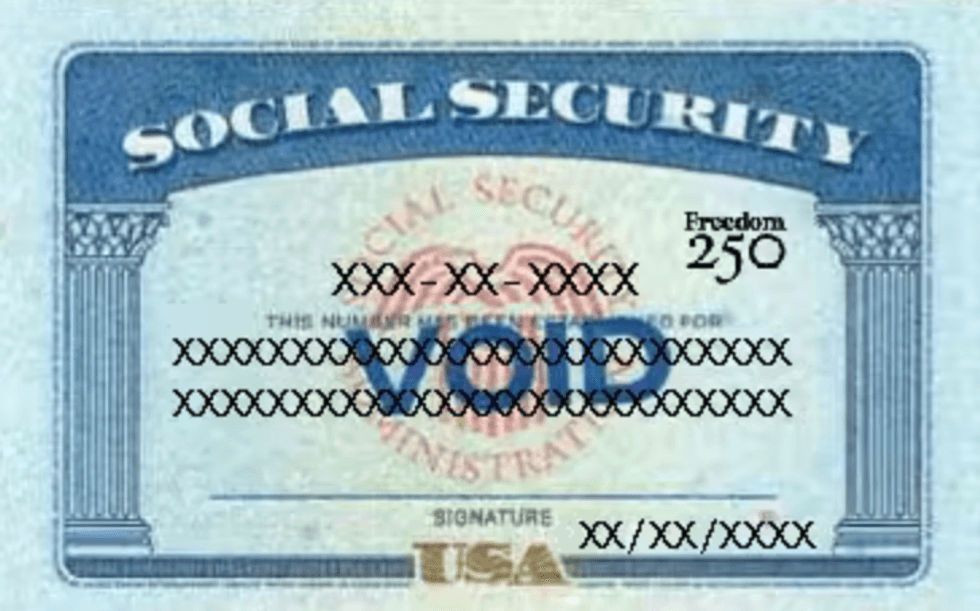 A commemorative Social Security card with a Freedom 250 logo. (Photo by Social Security Administration)
Altman referred to a report released Thursday by the US House Natural Resources Committee’s Oversight and Investigations Subcommittee, titled "From Vanity to Insanity: How the White House Cheated the American People Out of Their 250th Birthday."
The 55-page report found that Freedom 250, which is funded through taxpayer dollars as well as donations from a number of companies with regulatory business before the government, including Palantir, ExxonMobil, and Oracle, secretly diverted funds intended for the congressionally chartered, bipartisan initiative America 250, and misled donors by providing them with Freedom 250's banking information instead.
"This is abuse of Social Security, a nonpartisan institution which Trump claimed he would not hurt."
The report also detailed how Freedom 250, with former employees of the Department of Government Efficiency (DOGE), has collected Americans' personal data and has "sold access to the president and courted foreign money in America's name."
"Freedom 250’s website quietly collects an extraordinary amount of information about the people who visit it," reads the report. "Its own privacy disclosure states that Freedom 250 collects everything a user shares with it and, when a user or devices permits, tracks precise geolocation data down to 'latitude, longitude, velocity, [and] bearing.' It logs each click across the site and captures the information users type into forms, including home addresses and contact information, and sends it back to the server of the organization that designed and created the website—in this case the National Design Studio, staffed by ex-DOGE employees."
The subcommittee explained how Freedom 250 "circulated sponsorship packages starting at $500,000 and climbing above $10 million, backed by a 'historic photo opportunity' with President Trump. Its CEO solicited foreign governments, corporations, and individuals at the World Economic Forum in Davos to fund the president’s priorities. If foreign funds reach the president's vanity projects, the report finds the conduct would clearly violate the Constitution's foreign emoluments clause."
Altman emphasized, in light of the committee's findings, that "DOGE has been found in court to have mishandled our private Social Security data, and these cards may provide another opportunity for that abuse of Americans’ most personal, sensitive information."
The use of the Freedom 250 logo on Social Security cards is "corrupt and inappropriate," said Social Security Works.
The group called on SSA Commissioner Frank Bisignano to disclose whether the administration is paying a licensing fee to Freedom 250, release "any and all contracts between the Social Security Administration and Freedom 250," and reveal whether Freedom 250 will have "access to data associated with beneficiaries of Social Security cards bearing their logo."
"This is abuse of Social Security, a nonpartisan institution which Trump claimed he would not hurt," said Altman. "Like issuing passports with Trump’s visage and signature, putting his name on the Kennedy Center, and destroying the East Wing of the White House, turning Social Security cards into political propaganda reveals yet again Trump’s contempt for the American people he is supposed to be serving.“
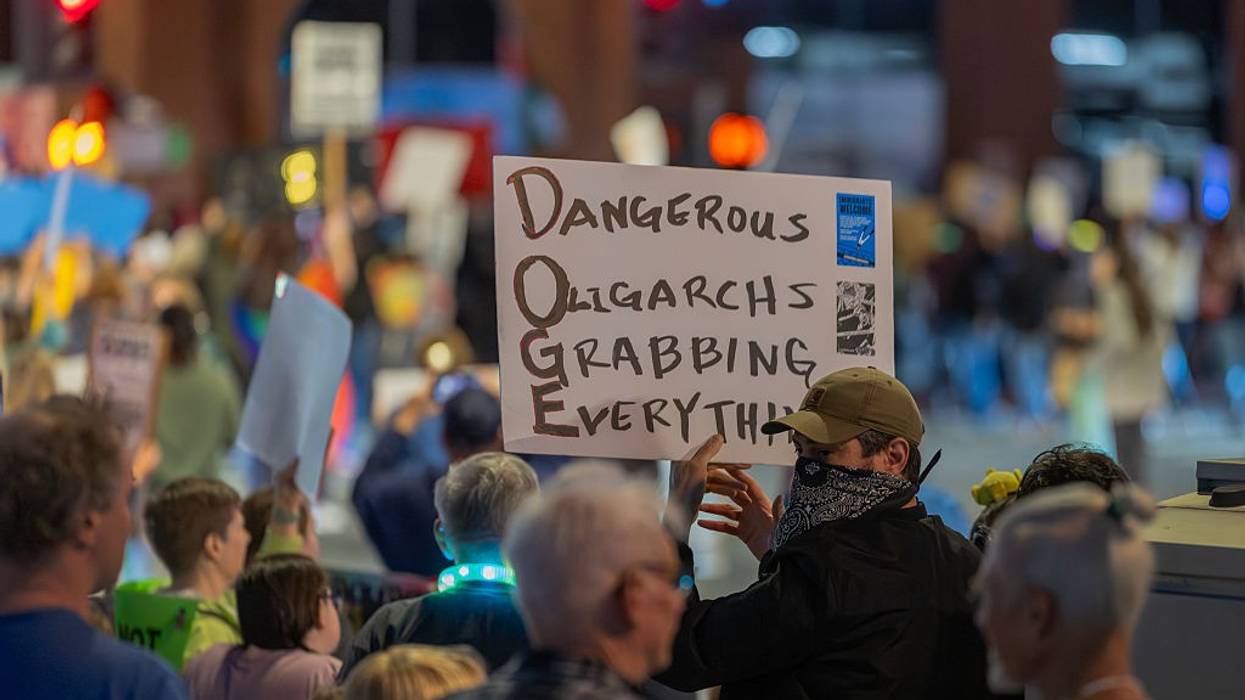
One critic accused the Trump administration of plotting "financial murder" against millions of people.
A federal whistleblower has revealed plans by the Elon Musk-led Department of Government Efficiency to falsely list millions of people in the Social Security database as dead in a scheme to pressure them to leave the US.
In an interview published Friday by The Washington Post, former Social Security Administration (SSA) executive Jeremiah Schofield outlined a DOGE-concocted scheme that would have potentially cut people off from wages, banking, and government benefits by falsely listing them as dead.
Schofield said a DOGE employee told him in a phone call that they wanted to add 2.7 million living people to SSA's "Death Master File," cutting them off from essential financial services so they would either leave the country voluntarily or show up to local SSA offices to complain, where they would be promptly arrested.
“That call was one of the most disappointing calls I’ve been in in my 25-year career,” Schofield, who left the SSA in October, told the Post. “I was shocked. I couldn’t believe what I was hearing.”
While immigrants were the primary target of the scheme, Schofield said that the list of people created by DOGE included some US citizens and lawful permanent residents.
One anonymous former SSA employee who spoke with the Post outlined the serious ramifications for the 2.7 million people had they been added to the Death Master File.
“If you’re on the [Death Master File] you can’t have a bank account," they explained, "you can’t get credit, so no apartment, no way to save money, no way to get paid, no way to get on insurance or carry health insurance. It has a ton of devastating effects.”
Schofield said he refused to carry out the DOGE employee's request after consulting with SSA lawyers who said falsely marking living people as dead would likely be illegal.
The plan was ultimately shelved, and the Trump administration claimed in recent court filings that it has revoked DOGE employees' access to SSA data.
Nancy Altman, president of Social Security Works, said that Schofield's whistleblower report was yet another example of President Donald Trump's administration abusing its power and weaponizing the federal government.
"Trump ran on a promise to protect Social Security," Altman said, "but this whistleblower report is the latest evidence of how he really views it: As nothing more than a weapon to wield against his enemies."
Altman added that removing living people from the database is essentially "financial murder."
"It means losing access to your bank account, your health insurance, and your credit cards," Altman explained. "It means getting kicked out of your home. It means that your life is destroyed."
Whistleblower Aid, the nonprofit legal assistance organization representing Schofield, said their client's claims show "no one is safe from this type of weaponization of our Social Security data."
"If the administration is permitted to ‘kill people off’ and ruin their lives to pursue its anti-immigrant agenda," the group added, "it will be able to use the same cruel and illegal tactics against anyone who has a Social Security number.”
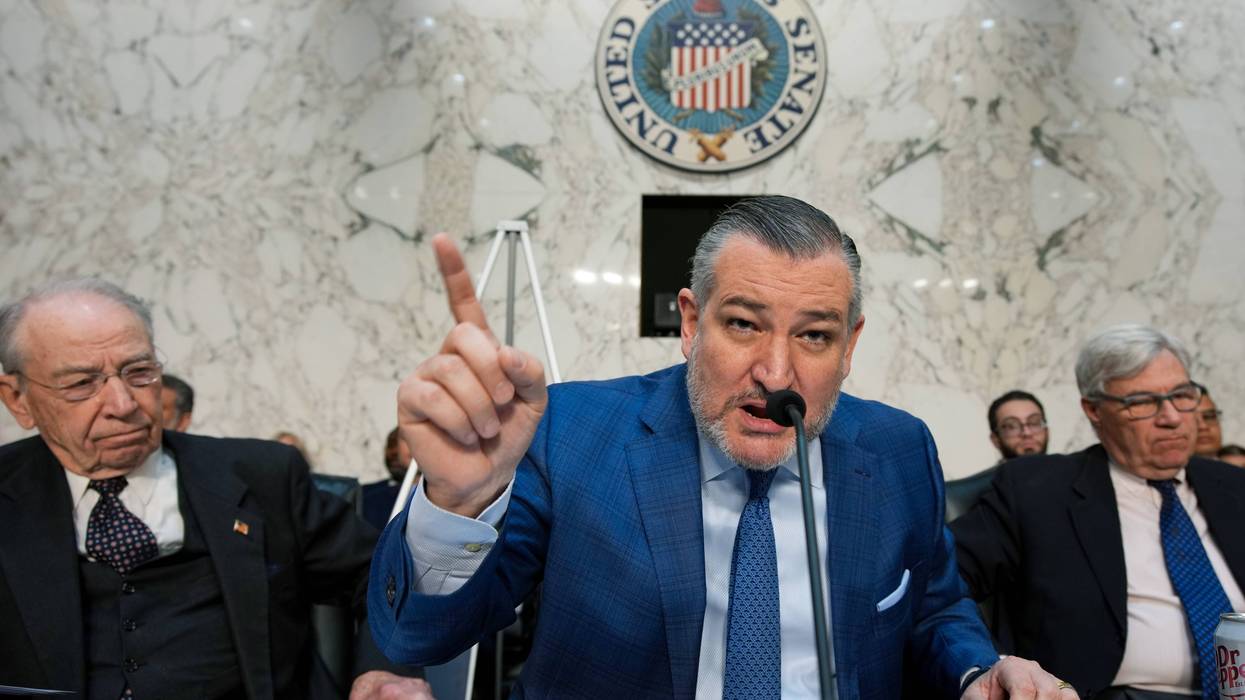
One advocate said the Texas Republican laid bare the "two-pronged strategy to push Social Security privatization: Creating the Trump accounts with one hand and gutting the Social Security Administration with the other."
Republican Sen. Ted Cruz said during a public conference this week that the so-called Trump Accounts established under the GOP's 2025 budget law represent a viable path toward Social Security privatization—something the Texas lawmaker described as a "dirty little secret."
During a panel discussion at the Milken Institute Global Conference in California, Cruz said that "conservatives in America, for 50 years... have been trying to do Social Security personal accounts." Cruz, who lamented the failure of Bush-era efforts to privatize Social Security, described such personal accounts as vehicles into which the payroll taxes that finance current Social Security benefits could be diverted.
In the not-too-distant future, Cruz envisioned, "we're going to be able to go to parents and say, 'Hey, you know that Trump Account your kid has? ... Wouldn't you like to be able to keep a portion of your tax payments that you're paying already and, instead of sending it to Uncle Sam, wouldn't you like to have a Trump Account just like your kid does?'''
"My prediction is, within five years, that is going to have a really compelling constituency," the Texas Republican added.
🚨🚨🚨
Ted Cruz says the quiet part out loud…
Trump Accounts are a scheme to privatize Social Security.
HANDS OFF OUR EARNED BENEFITS! pic.twitter.com/Oo3owRF7bM
— Social Security Works ❌👑 (@SSWorks) May 8, 2026
Linda Benesch, vice president of communications at the progressive advocacy group Social Security Works, told Common Dreams that Cruz's comments laid bare the "two-pronged strategy to push Social Security privatization: Creating the Trump Accounts with one hand and gutting the Social Security Administration with the other."
Benesch pointed to the remarks of an anonymous Social Security Administration (SSA) worker, who warned in comments to The New Yorker earlier this week that privatization advocates plan to point to the decimated agency and declare, "Look how Social Security sucks."
"They’ve been trying to privatize it for decades," said the SSA worker. "Now this will give them the excuse.”
Benesch said Friday that Cruz is "giving away the other half" of the Republican scheme by promoting the eventual expansion of Trump Accounts, investment vehicles under which children born between January 1, 2025 and December 31, 2028 are eligible for $1,000 in "seed money" from the federal government. Parents of eligible children can contribute up to $5,000 per year to the accounts.
Cruz's comments are not the first time a Republican official has openly characterized Trump Accounts as a potential avenue for Social Security privatization.
"In a way, it is a backdoor for privatizing Social Security," US Treasury Secretary Scott Bessent said last summer. "Social Security is a defined benefit plan paid out that—to the extent that if all of a sudden these accounts grow, and you have in the hundreds of thousands of dollars for your retirement—then that's a game changer, too."
It’s been twenty years since Bush tried to do Social Security private accounts and they still haven’t realized workers’ Social Security taxes pay for *current retiree* benefits and not future benefits so you can’t do this without cutting current retiree benefits. https://t.co/eq9OnuhXVr pic.twitter.com/vguJN6pfuO
— Brendan Duke (@Brendan_Duke) May 8, 2026
Axios reported Friday that "the idea that Trump Accounts could replace or augment Social Security is something that has been talked about behind closed doors with lawmakers."
"But no one has wanted to touch that third rail, at least publicly," the outlet added, citing a person familiar with the private conversations.
Max Richtman, president and CEO of the National Committee to Preserve Social Security and Medicare, noted in a Friday statement that polling has found little support for privatizing Social Security, with a 2022 survey finding that just 15% of American voters back the idea.
"Turning over Americans’ hard-earned benefits to Wall Street would expose future retirees to unnecessary risk while lining the pockets of the financial elites who donate to Republicans," said Richtman. "Ted Cruz, Donald Trump, and their Republican allies should realize that the people will not stand for privatization of their hard-earned benefits, and we in the advocacy community will continue to ensure that it never happens."
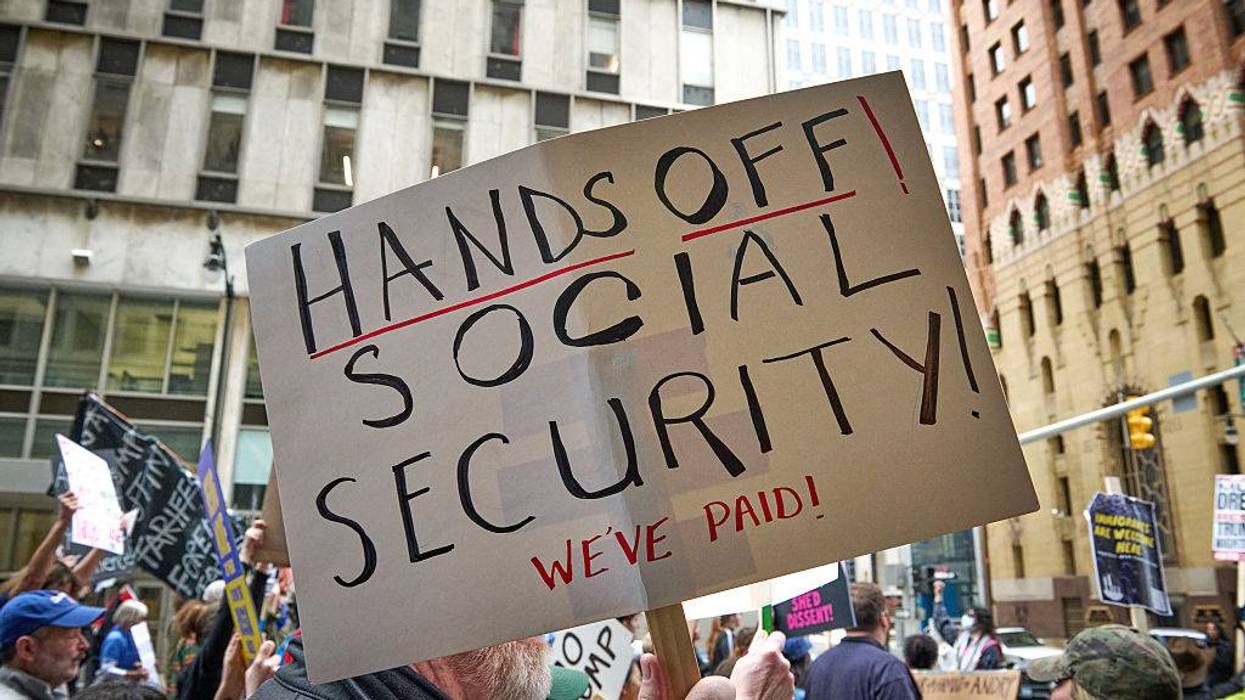
New revelations show an IG report about wait times for people seeking help or services was altered after it was submitted to the administration.
A Social Security advocacy organization on Thursday blasted the Trump administration for covering up damaging information contained in an inspector general report released in December.
According to The Washington Post, a report from the Social Security Administration's (SSA) inspector general (IG) about call wait times for beneficiaries was altered to make it seem as though wait times to speak to representatives had been reduced to under 10 minutes per call.
"An unpublished draft of the report... showed that the inspector general had planned to report another metric—called the 'total wait time'—to measure the overall time it takes for callers to be connected with an SSA employee," the Post explained. "According to that draft report, in 2025 total wait time averaged 46 minutes to over two hours."
The Post added that this "information was deleted from the draft after the agency reviewed it before publication."
Nancy Altman, president of Social Security Works, responded to the report by saying that "now we know why [President Donald] Trump fired the inspector general at Social Security," noting that the SSA IG was one of several fired across multiple agencies at the start of Trump's second term.
Altman then argued that the attack on inspectors general was part of a broader effort by the Trump administration to dismantle government transparency all together.
"Inspectors general are the American peoples’ eyes and ears in these agencies," said Altman. "The Trump administration is undermining that oversight at every turn. Under this administration, the IG has no ability to conduct independent oversight. There is no meaningful check on the Trump administration’s Social Security sabotage."
Democratic communications consultant Jesse Lee linked the damage to the SSA documented in the draft IG report to efforts by Elon Musk's Department of Government Efficiency (DOGE), which went on a firing spree of federal workers last year.
"So DOGE did a smash and grab at the Social Security Administration, breaking into the most sensitive data, firing phone and in-person case workers," Lee wrote. "Trump appointee waved around an IG report claiming wait times were fine—after burying the real report saying they were up to two hours."
"Americans deserve timely, honest answers about what happened, whose information may have been exposed, what will be done to protect them going forward," said one campaigner.
Critics of the Department of Government Efficiency are sounding the alarm after the Washington Post reported Tuesday that the Social Security Administration's inspector general is investigating a whistleblower complaint accusing a former DOGE staffer of trying to share information from SSA databases with his private employer.
The Post didn't name the former DOGE software engineer, the company, or the whistleblower. However, the reporters spoke with the whistleblower and other unnamed sources, and also reviewed the related complaint as well as a letter from the acting inspector general to top members of four congressional committees.
The ex-DOGE staffer allegedly told multiple colleagues that he possessed two key databases of sensitive information on over 500 million living and dead US citizens, "Numident" and the "Master Death File," and once he removed personal details, he wanted to plug the remaining data into his company's system.
The newspaper noted that "the complaint does not allege that the engineer was successful in uploading the data to the company's system," and "a lawyer who represents the former DOGE member told the Post he denied all alleged wrongdoing."
The reporting adds to a long list of concerns and criticism provoked by DOGE, which President Donald Trump launched shortly after taking office. Billionaire Elon Musk was the de facto leader of the government-gutting initiative until he departed the administration last May.
Responding to the report on Musk's social media platform X, Congressman John Larson (D-Conn.), a longtime defender of Social Security, declared that "we need a full congressional investigation and answers!"
DOGE was never about efficiency or saving $—it was about handing Social Security over to Wall Street, dismantling public services & making it impossible to hold corporations accountable. That's why federal workers have been sounding the alarm—and we won't stop fighting back. #wetookanoath
[image or embed]
— Federal Workers United (@fedworkersunited.bsky.social) March 10, 2026 at 4:54 PM
House Committee on Oversight and Government Reform Ranking Member Robert Garcia (D-Calif.) announced that he is expanding his investigation of DOGE-related data leaks at the SSA over the allegations. He said in a statement that "the deeply disturbing whistleblower information obtained by the committee shows the Trump administration's callous disregard for the safety and security of Americans' most sensitive information."
"Not only has an ex-DOGE bro been accused of running around with the social security information of every American on a flash drive, he also may have the ability to edit and manipulate data at the Social Security Administration at will," Garcia continued. "This is dangerous and outrageous, and Oversight Committee Democrats will fight for transparency and accountability."
Richard Fiesta, executive director of the Alliance for Retired Americans, similarly said: "Allegations that a 'DOGE bro' may have removed highly sensitive Social Security data onto a thumb drive should set off alarm bells across the country. Social Security holds some of the most personal information Americans have, including Social Security numbers, birth and health records, and lifetime earnings histories. If these reports are accurate, it is a stunning, illegal data security breach."
"Americans deserve timely, honest answers about what happened, whose information may have been exposed, what will be done to protect them going forward," he argued. "Anyone involved must be held accountable to the fullest extent of the law. Congress and the Social Security inspector general must move quickly to get the facts and ensure that all involved in this reported data breach are punished."
Criminal theft of the American people's private Social Security data.
[image or embed]
— Social Security Works (@socialsecurityworks.org) March 10, 2026 at 2:51 PM
Public Citizen co-president Lisa Gilbert also demanded accountability. She said that "this massive, illegal, and horrific breach of Americans' most sensitive data has confirmed the very fears we've been warning about for over a year—that the Trump administration allowing DOGE to infiltrate our government without oversight created fertile ground for abuse, and in this case of an exceptionally egregious kind."
"These are the kinds of breaches that Public Citizen had previously sued the government to prevent," she added. "Federal and state officials must ensure the misuse of this data ends immediately and that all private copies of Social Security data are destroyed. Prosecutors should open a criminal investigation immediately and, if the evidence supports it, prosecute this case aggressively."
The DOJ filing also appeared to corroborate claims that DOGE employees improperly tried to make "a live copy of the country’s Social Security information" on a third-party cloud platform.
The US Department of Justice acknowledged last week that two members of the Department of Government Efficiency may have improperly accessed Social Security data at the request of an unidentified organization whose goal is challenging US election results.
In a court filing dated January 16, the DOJ revealed that the unidentified organization last March reached out to two DOGE employees, who were working at the Social Security Administration (SSA), and requested that they "analyze state voter rolls that the advocacy group had acquired."
"The advocacy group’s stated aim was to find evidence of voter fraud and to overturn election results in certain states," the DOJ wrote. "In connection with these communications, one of the DOGE team members signed a 'Voter Data Agreement,' in his capacity as an SSA employee, with the advocacy group."
The filing said that SSA has "not yet seen evidence that SSA data were shared with the advocacy group," but that it had reviewed emails indicating that "DOGE team members could have been asked to assist the advocacy group by accessing SSA data to match to the voter rolls."
The DOJ also revealed that the SSA in December 2025 made referrals of the two DOGE employees to the US Office of Special Counsel for possible violations of the Hatch Act, which bars federal government employees from using their positions for political purposes.
Politico, which first reported on the DOJ filing, noted that the disclosure "came as part of a list of 'corrections' to testimony by top SSA officials during last year’s legal battles over DOGE’s access to Social Security data," and also included revelations that "DOGE team members shared data on unapproved 'third-party' servers and may have accessed private information that had been ruled off-limits by a court at the time."
The admission that DOGE employees shared data on a third-party server bolsters an explosive whistleblower complaint filed in August from former SSA chief data officer Charles Borges, who alleged that DOGE officials have been responsible for “serious data security lapses” that “risk the security of over 300 million Americans’ Social Security data.”
At the heart of Borges’ complaint was an effort by DOGE employees to make “a live copy of the country’s Social Security information in a cloud environment” that “apparently lacks any security oversight from SSA or tracking to determine who is accessing or has accessed the copy of this data.”
Should hackers gain access to this copy of Social Security data, the Borges complaint warned, it could result in identity theft on an unprecedented scale and lead to the loss of crucial food and healthcare benefits for millions of Americans. In a worst-case scenario, the complaint said, the government may also have to give every American a new Social Security number “at great cost.”
Democrats in Congress must hold hearings to protect beneficiaries.
There is no part of the federal government that Americans depend on more than the Social Security Administration. It is the agency that is charged with administering the earned benefits of millions. Unfortunately, after one year into President Donald Trump’s second term, SSA is in disarray. The Washington Post recently took an in-depth look at the SSA and reported among other things that:
Long-strained customer services at Social Security have become worse by many key measures since President Donald Trump began his second term, agency data and interviews show, as thousands of employees were fired or quit, and hasty policy changes and reassignments left inexperienced staff to handle the aftermath.
Exaggerated claims of fraud, for example, have led to new roadblocks for elderly beneficiaries, disabled people, and legal immigrants, who are now required to complete some transactions in person or online rather than by phone. Even so, the number of calls to the agency for the year hit 93 million as of late September—a six-year high, data shows.
SSA officials are likely to respond to the Washington Post story by pointing out that a recent SSA inspector general argued that SSA has made major improvements. Fox News reported that:
The inspector general’s report concluded that SSA’s telephone performance improved during fiscal year 2025 largely because of operational changes, including the rollout of a new cloud-based telecommunications platform, expanded automation, and staffing realignments. The platform, implemented in August 2024, allowed SSA to increase call capacity, expand self-service options, and monitor performance in real time, according to the report.
There is one catch with the inspector general’s report, and, to paraphrase Joseph Heller, it is one heck of a catch. This summer SSA changed “the type of data it reports publicly, removing information like callback wait times.” SSA Commissioner Frank Bisignano told members of Congress over the summer that SSA changed the metrics because reporting the wait times might discourage people from calling the agency. Yes, you read that correctly. So, rather than fixing the problem SSA decided to not share the data. This might be a solution to a public relations problem, but it is not going to help beneficiaries in the slightest.
There is no doubt about the fact that 2025 was a tumultuous time for SSA. The year began with Elon Musk, the then head of the Department of Government Efficiency (DOGE), calling Social Security a Ponzi scheme; and, in an address to Congress in January President Trump said that there were “shocking levels of incompetence and probable fraud” in Social Security and that people up to 160 years old were receiving Social Security benefits. None of these accusations, of course, proved to be true. While Trump and Musk’s spurious claims have faded away, the damage they have done to SSA lingers on.
If Republicans on Capitol Hill are not interested in exercising their duty to provide oversight, Democrats must step up to the plate.
The current congressional leadership has shown zero interest in exercising any oversight responsibility on any issue foreign or domestic. Congress’ lack of interest or will to scrutinize the Trump administration led Virginia Democratic Sen. Mark Warner to ask, “Is congressional oversight dead? Where does this end? If none of my Republican colleagues raises an issue, does this mean we are ceding all oversight?”
While they are not in the majority, Democrats on Capitol Hill are not powerless. They can still hold hearings of their own. These hearings would not be part of the legislative process. They would however give Democrats the platform they need to speak up for the American people. There is good news here for those who care about Social Security. The ranking Democrat on the Ways and Means Subcommittee on Social Security is Rep. John Larson of Connecticut who has fought for years to protect Social Security. Larson is the perfect person to shine a light on the current state of affairs at SSA.
If Republicans on Capitol Hill are not interested in exercising their duty to provide oversight, Democrats must step up to the plate. Seventy-five million Social Security beneficiaries are counting on them to protect their earned benefits.
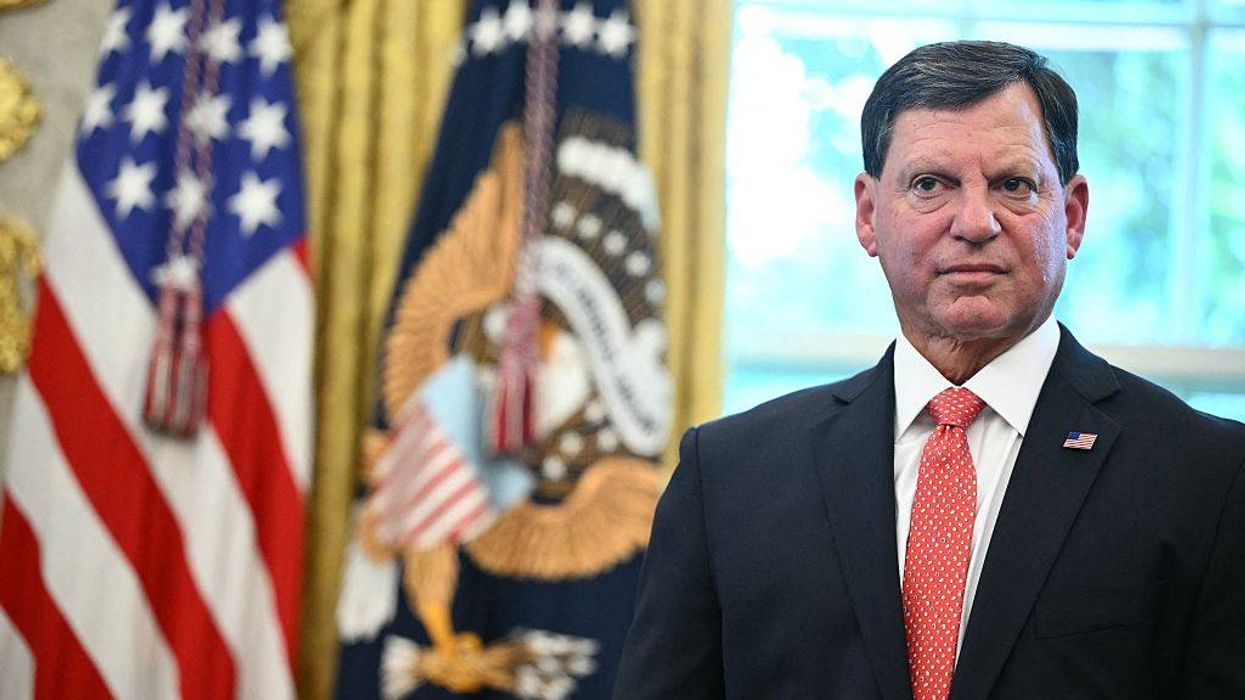
In-depth reporting from the Washington Post found the Social Security Administration is dealing with "record backlogs that have delayed basic services to millions of customers."
An in-depth report published by the Washington Post on Tuesday offers new details about the damage being done to the Social Security Administration during President Donald Trump's second term.
The Post, citing both internal documents and interviews with insiders, reported that the Social Security Administration (SSA) is "in turmoil" one year into Trump's second term, resulting in a customer service system that has "deteriorated."
The chaos at the SSA started in February when the Trump administration announced plans to lay off 7,000 SSA employees, or roughly 12% of the total workforce.
This set off a cascade of events that the Post writes has left the agency with "record backlogs that have delayed basic services to millions of customers," as the remaining SSA workforce has "struggled to respond to up to 6 million pending cases in its processing centers and 12 million transactions in its field offices."
The most immediate consequence of the staffing cuts was that call wait times for Social Security beneficiaries surged to an average of roughly two-and-a-half hours, which forced the agency to pull workers employed in other divisions in the department off their jobs.
However, the Post's sources said these employees "were thrown in with minimal training... and found themselves unable to answer much beyond basic questions."
One longtime SSA employee told the Post that management at the agency "offered minimal training and basically threw [transferred employees] in to sink or swim."
Although the administration has succeeded in getting call hold times down from their peaks, shuffling so many employees out of their original positions has damaged the SSA in other areas, the Post revealed.
Jordan Harwell, a Montana field office employee who is president of American Federation of Government Employees (AFGE) Local 4012, said that workers in his office no longer have the same time they used to have to process pay stubs, disability claims, and appointment requests because they are constantly manning the phones.
An anonymous employee in an Indiana field office told the Post that she has similarly had to let other work pile up as the administration has emphasized answering phones over everything else.
Among other things, reported the Post, she now has less time to handle "calls from people asking about decisions in their cases, claims filed online, and anyone who tries to submit forms to Social Security—like proof of marriage—through snail mail."
Also hampering the SSA's work have been new regulations put in place by Tesla CEO Elon Musk's Department of Government Efficiency that bar beneficiaries from making changes to their direct deposit information over the phone, instead requiring them to either appear in person at a field office or go online.
The Indiana SSA worker told the Post of a recent case involving a 75-year-old man who recently suffered a major stroke that left him unable to drive to the local field office to verify information needed to change his banking information. The man also said he did not have access to a computer to help him change the information online.
"I had to sit there on the phone and tell this guy, 'You have to find someone to come in... or, do you have a relative with a computer who can help you or something like that?'" the employee said. "He was just like, 'No, no, no.'"
Social Security was a regular target for Musk during his tenure working for the Trump administration, and he repeatedly made baseless claims that the entire program was riddled with fraud, even referring to it as "the biggest Ponzi scheme of all time."

The Trump administration keeps making it harder to access earned benefits.
Reporting from Kaiser Health News out this week demonstrates that the Trump administration continues to make it more difficult for people to access the Social Security benefits they have earned.
This time, the villain is a phone chatbot, which is an artificial intelligence (AI) tool. Obviously, it only makes sense for the Social Security Administration (SSA) to use new tools to become more efficient and help beneficiaries access the system. The question is: Does this or any other technology work for beneficiaries? Last month, SSA reported that fully 41% of all calls had been handled by the AI chatbot. There was no data indicating whether beneficiaries were satisfied with the AI chatbot.
This push toward the increased use of AI at SSA should come as no surprise as the agency’s commissioner, Frank Bisignano, is a former Wall Street executive with a background in technology—in particular around payment processing. Bisignano fully admits that he has little background in Social Security. As ABC News reported in May:
Frank Bisignano, a former Wall Street executive, said during a town hall with Social Security managers from around the country on Wednesday that he wasn’t seeking a position in the Trump administration when he received a call about leading the SSA. “So, I get a phone call and it’s about Social Security. And I'm really, I’m really not, I swear I’m not looking for a job,” Bisignano said, according to an audio recording of the meeting obtained by ABC News. “And I’m like, ‘Well, what am I going to do?’ So, I’m Googling Social Security. You know, one of my great skills, I’m one of the great Googlers on the East Coast.”
In theory, the SSA AI chatbot should give beneficiaries prompt and efficient service. Instead, the reporting from Kaiser Health News shows that too many people are getting non-helpful and unrelated responses. The evidence here is certainly anecdotal, but it is nonetheless very significant. Interestingly, the Biden administration was trying to develop an AI chatbot but concluded it was not ready for public usage.
Bisignano’s previous work experience in the financial tech world of payments processing is in some ways like the SSA mission. Obviously, SSA processes millions of payments a month. However, there is a real fundamental difference that must be at the forefront of the discussion: Beneficiaries are far different from customers.
We got a real clear signal as to Bisignano’s state of mind in late June when during a congressional hearing he replied to a Democrat questioning him about staffing levels by saying: “You referred to SSA being on an all-time staffing low; it’s also at an all-time technological high...” Once again, I would argue that technology is a great tool, but it must be used to increase access and build confidence that people will receive the benefits they earned in a timely manner.
SSA has not released any clear statistics about how the AI chatbot is performing. It may not be the best information, but it is worth noting the SSA Facebook page paints a decidedly mixed picture of the AI chatbot.
Concern about SSA’s ability to provide efficient customer service is not limited to congressional Democrats. Back in May, a number of House Republicans sent Commissioner Bisignano a letter saying that:
We commend and support the continued efforts to make our bloated bureaucracy more efficient for the American people. However, we must use caution and consider the impact any changes would have so there are no disruptions in services for our seniors and disabled who depend on the Social Security Administration to receive retirement benefits and supplemental security income.
SSA’s use of an AI chatbot needs to be seen as part of a larger pattern of obfuscation. Consistently, the Trump administration has acted to make it harder for beneficiaries to access their own earned benefits, whether it is through cutting staff or using artificial intelligence. These intentional behaviours drive down satisfaction and confidence in the program.
None of this needs to be that complicated. SSA just needs to focus on meeting the needs of beneficiaries or, as Democratic Sen. Elizabeth Warren of Massachusetts put it, “We should be making it as easy as possible for people to get the Social Security they’ve earned.”
Social Security Administration chief data officer Charles Borges described "fear and anxiety over potential illegal actions resulting in the loss of citizen data" in his resignation letter.
A federal worker who filed a shock whistleblower report alleging that employees of the Department of Government Efficiency had potentially compromised Americans' Social Security data abruptly resigned on Friday.
In a letter obtained by independent journalist Melissa Kabas, Social Security Administration (SSA) chief data officer Charles Borges said that he was "involuntarily" stepping down from his position at the agency due to "serious... mental, physical, and emotional distress" caused in the wake of his whistleblower report.
Borges said that after filing his report with the help of the Government Accountability Project, he was subjected to "exclusion, isolation, internal strife, and a culture of fear" that created a hostile work environment and made "work conditions intolerable."
Borges then recounted that he filed the whistleblower report because he was concerned that Department of Government Efficiency (DOGE) employees had uploaded Americans' Social Security information onto a cloud server that he believed was vulnerable to external hackers.
"As these events unfolded, newly installed leadership in IT and executive offices created a culture of panic and dread, with minimal information sharing, frequent discussions on employee termination, and general organizational dysfunction," Borges claimed. "Executives and employees were afraid to share information or concerns on questionable activities for fear of retribution and termination."
Borges concluded by saying that the total lack of visibility into the actions of DOGE employees who were handling Americans' most sensitive data created a sense of "fear and anxiety over potential illegal actions resulting in the loss of citizen data."
The report, whose existence was made public earlier this week, contends that Borges has evidence of a wide array of wrongdoing by DOGE employees, including "apparent systemic data security violations, uninhibited administrative access to highly sensitive production environments, and potential violations of internal SSA security protocols and federal privacy laws by DOGE personnel."
At the heart of Borges' complaint is an effort by DOGE employees to make "a live copy of the country's Social Security information in a cloud environment" that "apparently lacks any security oversight from SSA or tracking to determine who is accessing or has accessed the copy of this data."
Should hackers gain access to this copy of Social Security data, the report warns, it could result in identity theft on an unprecedented scale and lead to the loss of crucial food and healthcare benefits for millions of Americans. The report states that the government may also have to give every American a new Social Security number "at great cost."