

SUBSCRIBE TO OUR FREE NEWSLETTER
Daily news & progressive opinion—funded by the people, not the corporations—delivered straight to your inbox.
5
#000000
#FFFFFF
To donate by check, phone, or other method, see our More Ways to Give page.
Daily news & progressive opinion—funded by the people, not the corporations—delivered straight to your inbox.
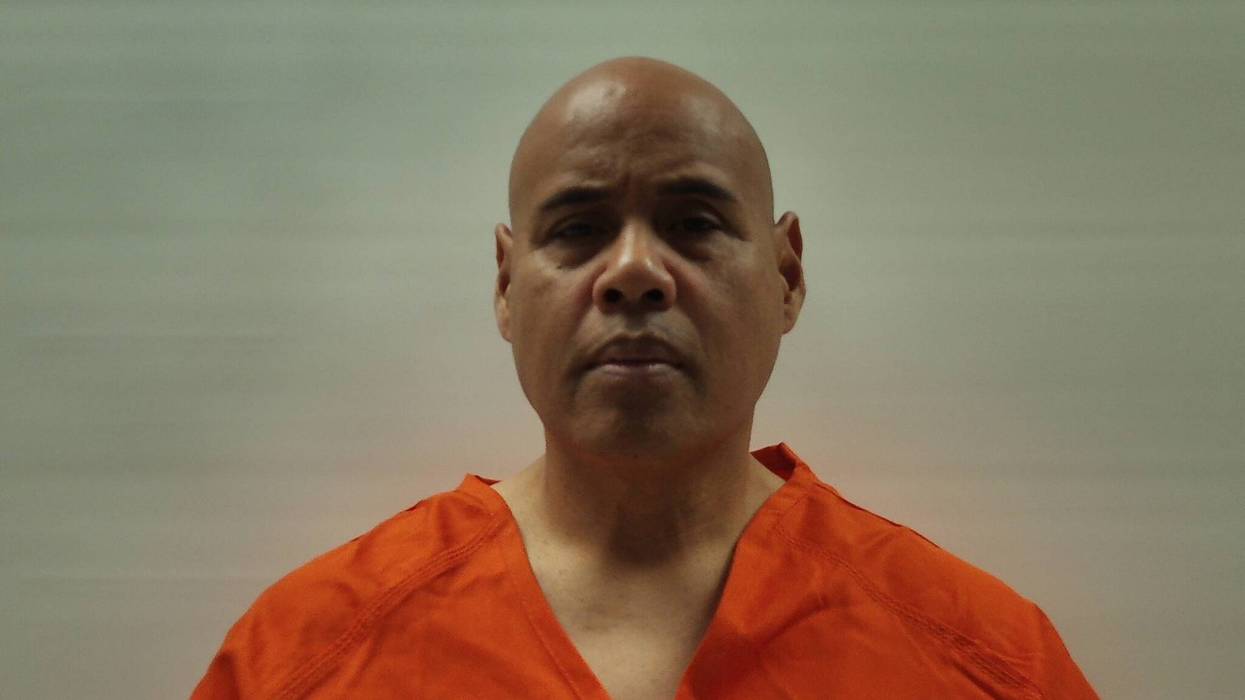
"By refusing to extradite Castro, Greg Abbott is turning Texas into a sanctuary state for violent criminals," said Minnesota Attorney General Keith Ellison.
A US Immigration and Customs Enforcement officer accused of shooting an unarmed man in Minneapolis and then lying about the incident walked free from a jail in Texas on Thursday as Gov. Greg Abbott refuses to honor Minnesota's extradition request.
Christian Castro, 52, was released from the Cameron County jail shortly after dawn, roughly three months after his May 29 arrest on a Minnesota warrant. Castro faces four felony counts of second-degree assault and one misdemeanor count of falsely reporting a crime.
Hennepin County, Minnesota prosecutors allege that Castro fired through the front door of a Minneapolis home, striking 24-year-old Venezuelan immigrant Julio César Sosa-Celis in the leg on January 14 during the Operation Metro Surge enforcement blitz in the Twin Cities Area, part of the Trump administration's deadly mass deportation effort.
Castro claimed afterward that Sosa-Celis and another man had attacked an ICE officer with a broom and snow shovel—an account investigators say was contradicted by surveillance footage, witness statements, and physical evidence. Criminal charges initially filed against Sosa-Celis were later dismissed.
On Wednesday, US District Judge Fernando Rodriguez Jr. of the Southern District of Texas—an appointee of President Donald Trump—denied Minnesota's request for a temporary restraining order that would have prevented Castro's release and declined to compel Abbott to sign the extradition warrant. The Republican governor has so far not yet formally responded Minnesota's extradition request.
Abbott has argued that Castro did not flee Minnesota to escape prosecution but was instead ordered back to Texas by federal authorities. And while Rodriguez acknowledged the possibility that Castro could flee to Mexico, the judge concluded that the court lacked any authority to force Abbott to act before he makes his decision on extradition.
The Texas governor has also attempted to condition resolution of the extradition request upon Minnesota officials' acknowledgment of the alleged fraud Trump used as a pretext for Operation Metro Surge.
Minnesota Attorney General Keith Ellison, a Democrat, denounced Castro's release in a social media post asserting that "Greg Abbott has a black-letter legal and constitutional duty to sign the rendition warrant to return fugitive Christian Castro to Minnesota—full stop."
"By refusing to extradite Castro, Greg Abbott is turning Texas into a sanctuary state for violent criminals," Ellison added. "Regardless of today’s ruling, I will keep fighting so that Agent Castro will face justice in Minnesota."
Abbott retorted: "You guys are such bad lawyers. You showed up unprepared, uninformed, and unpersuasive. You don't know the law, and it showed."
Minnesota "is the literal definition of a sanctuary state because you refuse to assist in enforcing immigration laws," the Texas governor said. Minnesota does not have a statewide sanctuary law.
"I'll put Minneapolis at the top of the list for future bus drop-offs if we ever have a president like Joe Biden again," Abbott added, referring to his deadly campaign of busing migrants to Democrat-led sanctuary cities and even the home of former Vice President Kamala Harris at a cost to Texas taxpayers of over $221 million.
Anders Folk, a former federal prosecutor now running for Hennepin County attorney, agreed with Ellison, writing on X that "Gov. Abbott is playing political games."
"Christian Castro should be extradited to Minnesota to stand trial," he added. "Accountability requires nothing less. This ruling essentially makes Texas a sanctuary state for ICE agents accused of violating state law."
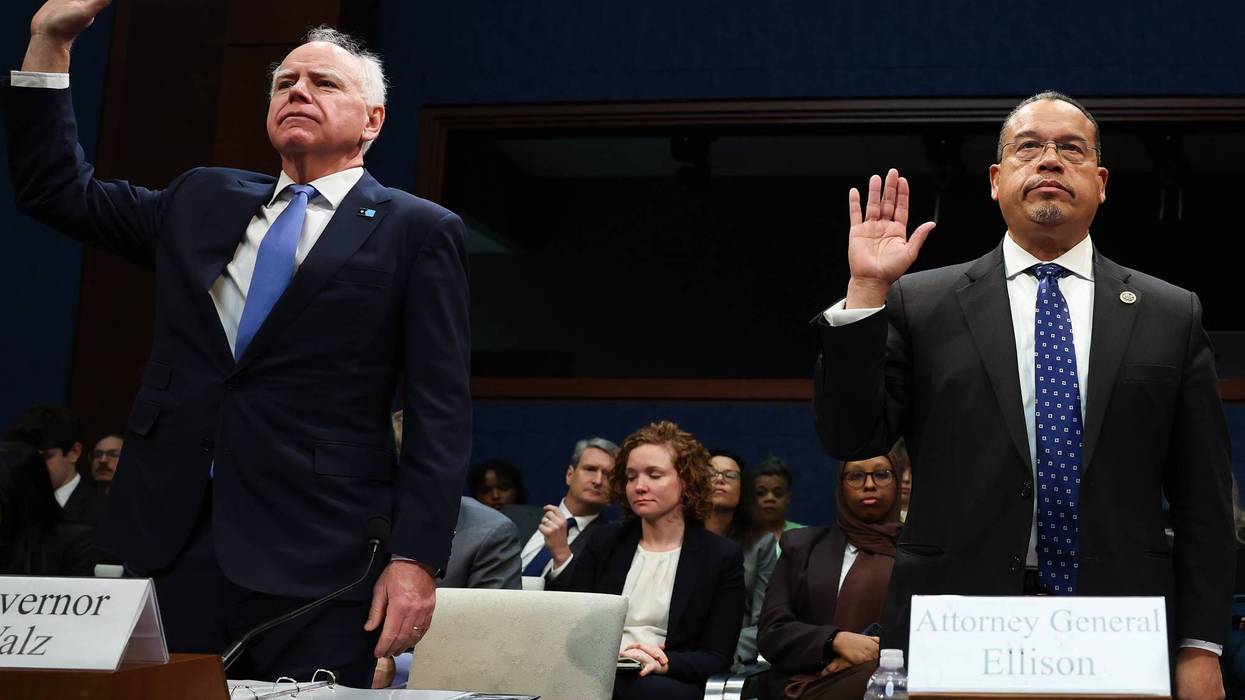
"It is deeply troubling to see official powers and public resources diverted away from serving the people and instead aimed at pursuing political adversaries," said Keith Ellison.
Minnesota Attorney General Keith Ellison forcefully pushed back against Vice President JD Vance's Monday night announcement on Fox News and social media that he had referred the state AG and Democratic Gov. Tim Walz to the US Department of Justice following allegations in a GOP congressional report that the pair was aware of fraud involving federal funds and failed to stop it.
"The allegations in the House Republican report are unfounded, and Vice President Vance's referral is a political stunt from an administration that uses the machinery of government to target its perceived opponents while extending leniency to those aligned with its interests," Ellison told CNN, highlighting how his office has investigated and prosecuted allegations of fraud involving public programs.
"It is deeply troubling to see official powers and public resources diverted away from serving the people and instead aimed at pursuing political adversaries," added Ellison, who is seeking another term in November. "That is not what government is for, and it diminishes public trust in our institutions."
Dozens of people were charged in Minnesota as a result of a federal probe into abuse of taxpayer funds during the Covid-19 pandemic that began under former President Joe Biden and related investigations that have continued since President Donald Trump returned to office last year. Trump has repeatedly used the cases to attack Somali Americans with racist rants, as well as to target Democratic politicians.
The new referral is not the first time the Trump administration has targeted Ellison and Walz, the 2024 Democratic vice presidential candidate who dropped his bid for another term as governor early this year. The DOJ subpoenaed the pair and other top Minnesota officials in January as part of its investigation into an alleged conspiracy to impede Immigration and Customs Enforcement (ICE) officers sent to the Twin Cities by the president—a probe the governor denounced as part of a broader trend of the administration "weaponizing the justice system."
As the White House faced intense national backlash for the deadly operation in Minnesota, Trump appointed Vance as "fraud czar" in February, and the vice president swiftly announced that the administration would pause some Medicaid funding for the state over fraud concerns. Walz said at the time that "this has nothing to do with fraud" and "is a campaign of retribution. Trump is weaponizing the entirety of the federal government to punish blue states like Minnesota."
In March, Walz and Ellison testified before the Republican-led House Committee on Oversight and Government Reform about the fraud cases, clashing with GOP lawmakers. At the time, the panel released an interim version of the report that was published on Monday. The Minnesota Star Tribune noted that the March edition "prompted House Democrats on the Oversight Committee to publish a competing report accusing Republicans of singling out Minnesota for political purposes."
Even before Vance's referral, spokespeople for Walz and Ellison were deeply critical of the final report, which claims that they "were aware of widespread fraud in federally funded social services programs for years, possessed the legal and procedural authority to stop payments and ban fraudulent providers from participating in these programs, but repeatedly failed to act."
As MPR News reported:
"This committee has proven time and time again to be nothing more than a joke. They continue to rehash Covid-era fraud to distract from endless wars, gas prices, ICE, and the president’s insider trading," [said] Teddy Tschann, a spokesperson for Walz. "Gov. Walz is glad to see fraudsters are going to prison. If the committee is concerned about corruption, they should investigate why President Trump continues to let fraudsters out of prison."
Walz’s office noted that several changes have been made over the last few years to address fraud, including new legislation creating an Office of the Inspector General, which will have independent power to investigate fraud.
Brian Evans, a spokesperson for Attorney General Keith Ellison, said, "Republicans in Congress issued a report riddled with inaccuracies and misrepresentations in an effort to politicize the issue of fraud, instead of actually helping Minnesota protect tax dollars and go after fraudsters."
In addition to releasing the updated report, the Oversight Committee's chair, Rep. James Comer (R-Ky.) sent a letter to Vance about it. The vice president then announced his referral on Jesse Watters' show, and posted his letter to the DOJ on social media.
While Oversight Committee Republicans celebrated Vance's post on social media, journalist Marcy Wheeler responded, "This fraud effort has ALWAYS been an attempt to distract from far bigger right-wing crimes, especially by Trump."

“In Minnesota, we believe in equal justice under the law," said Minnesota Attorney General Keith Ellison. "That means nobody is above the law, including agents of the federal government."
A US Immigration and Customs Enforcement agent was arrested in Texas on Friday after he was charged by Minnesota officials for allegedly shooting a Venezuelan immigrant during an ICE operation in Minneapolis and lying about what happened.
Christian Castro, 52, was deployed as part of President Donald Trump’s mass deportation push in the Twin Cities, dubbed “Operation Metro Surge,” and was charged by Hennepin County Attorney Mary Moriarty earlier this month with four counts of felony assault and one count of falsely reporting a crime.
The charges stem from the shooting of Venezuelan national Julio Cesar Sosa-Celis at his home on January 14 as ICE agents pursued his roommate, another Venezuelan immigrant named Alfredo Alejandro Aljorna.
According to The New York Times, Castro was arrested Friday after being tracked down by investigators with the Minnesota Bureau of Criminal Apprehension (BCA). Texas Rangers and agents with the Department of Homeland Security Office of the Inspector General carried out the arrest, according to the Minnesota-based Sahan Journal.
“Today’s arrest is a critical step forward in our prosecution of Mr. Castro,” Moriarty said. “The BCA’s investigative work was instrumental in this process, and we’re grateful for their collaboration as we pursue accountability for this incident on behalf of Mr. Sosa-Celis, his family, and our community.”
Sosa-Celis and Aljorna were originally charged by the US Department of Justice (DOJ), after Castro claimed that he had shot in self-defense when the men assaulted him with a broom and a shovel, claims that were parroted by then-Department of Homeland Security (DHS) Secretary Kristi Noem and department spokesperson Tricia McLaughlin.
But the charges were later dropped after video of the incident and an examination of X-ray evidence demonstrated that Castro's claims were false. Castro and another agent were subsequently placed on administrative leave by DHS while they were investigated internally for lying under oath.
“In Minnesota, we believe in equal justice under the law. That means nobody is above the law, including agents of the federal government,” said Minnesota Attorney General Keith Ellison following news of Castro's arrest on Friday. “I am pleased to hear Christian Castro has been taken into custody and will stand trial for the crimes he allegedly committed in Minnesota. Justice demands no less.”
Castro is the second ICE agent to be charged by Moriarty's office for their role in Operation Metro Surge, which civil rights groups and Minnesota officials have characterized as a lawless immigration crackdown involving racial profiling, warrantless arrests, violent raids, and multiple shootings by federal agents.
Another agent, Gregory Morgan Jr., was charged last month with two counts of felony second-degree assault after he allegedly pulled a gun on two local residents during a traffic stop. Morgan turned himself in to local authorities last week and was released on bond.
Ellison also sued the Trump administration in March for refusing to cooperate with the state investigation into the shooting of Sosa-Celis, and other probes into the fatal shootings of two US citizens.
Moriarty's office has not yet brought charges against ICE officer Jonathan Ross, who fatally shot Minneapolis mother Renee Good in January, or Border Patrol agent Jesus Ochoa and Customs and Border Protection officer Raymundo Gutierrez in connection with the deadly shooting of Department of Veterans Affairs nurse Alex Pretti later that month.

"The American people deserve a Department of Justice that fights for us, and it's a tremendous shame that Trump's DOJ would rather sell us out to Big Oil," said Minnesota Attorney General Keith Ellison.
Just weeks after the Minnesota Supreme Court allowed the state's climate deception lawsuit against the fossil fuel industry to move into discovery, President Donald Trump's Department of Justice took action in federal court on Monday to block the case.
Minnesota Attorney General Keith Ellison first sued the American Petroleum Institute, ExxonMobil, Koch Industries, and its subsidiary Flint Hills Resources in state court for orchestrating and executing a "campaign of deception" regarding the fossil fuel-driven climate emergency "with disturbing success" in 2020.
The industry has been fighting to kill the case since then, and the DOJ on Monday filed a complaint in the District of Minnesota against both the state and Ellison. In a related statement, Associate Attorney General Stanley Woodward declared that "President Trump promised to unleash American energy dominance, and Minnesota officials cannot undermine his directive by mandating that their woke climate preferences become the uniform policy of our nation."
"Minnesota's attempt to impose a national regulation on global greenhouse gas emissions not only is preempted by federal law, but also undermines affordable and reliable American energy, weakening the national and economic security of the United States," Woodward continued, summarizing the argument made in the new federal filing.
While the fossil fuel entities targeted by Minnesota welcomed the Trump DOJ's intervention, Ellison made clear that he was undeterred.
"In 2020, I sued Big Oil for lying to Minnesotans about the true causes of climate change, then sticking us with the bill for the harms it is causing," Ellison said. "Six years later, we are still waiting to go to trial because Big Oil has pulled every procedural trick in the book to delay facing the consequences of their unlawful actions."
"This frivolous and meritless lawsuit is just their latest attempt to hide from accountability, and I will move to have it dismissed immediately," he pledged. "The American people deserve a Department of Justice that fights for us, and it's a tremendous shame that Trump's DOJ would rather sell us out to Big Oil."
Richard Wiles, president of the Center for Climate Integrity, which supports cases against polluters, also ripped the federal filing.
"This is a desperate effort to shield the architects of Big Oil's decadeslong climate deception from facing accountability," said Wiles. "Big Oil and the Trump administration are clearly terrified that Minnesota's lawsuit will reveal exactly how these defendants defrauded the public about the dangers of fossil fuels. Federal courts dismissed the Trump administration's last two attempts to stop states from taking Big Oil companies to court. This naked political intimidation tactic should meet the same fate."
Trump was backed by Big Oil during the 2024 election and campaigned on a promise to "drill, baby, drill." Since returning to office, he's aimed to serve industry interests in a range of ways, including last year's executive order directing the US attorney general to protect "American energy from state overreach."
The Justice Department noted in its Monday statement that last year, its Environment and Natural Resources Division "filed complaints against Hawaii, Michigan, New York, and Vermont to stop those states' unconstitutional climate actions."
Dozens of state and local governments have filed cases similar to Ellison's in Minnesota. The US Supreme Court is preparing to hear arguments related to one from Colorado that dates back to 2018: Suncor Energy Inc. v. County Commissioners of Boulder County.
Meanwhile, Trump and Big Oil's allies in Congress are also working to protect polluters. Last month, Sen. Ted Cruz (R-Texas) introduced a bill that, if passed, would "prohibit liability against those engaged in the mining, extraction, production, refinement, transportation, distribution, marketing, manufacture, or sale of energy for damages or injunctive or other relief from the use of their products, and for other purposes."
Wiles noted at the time that "Big Oil companies have raked in massive profits at the pump while lying to the American people about the catastrophic harm of their products, and now they want to deny Americans their rightful day in court and stick taxpayers with the bill for the mess they made."
"If fossil fuel companies have done nothing wrong," he asked, "why do they need immunity?"

Minnesota Attorney General Keith Ellison called the verdict "a win for everyone who thinks concert tickets are too damn expensive."
Antitrust advocates celebrated on Wednesday after a jury found that Live Nation and is subsidiary Ticketmaster were illegal monopolies who for decades systematically overcharged customers for concert tickets.
As reported by The Associated Press, the verdict against Live Nation and Ticketmaster could cost the two entities "hundreds of millions of dollars, just for the $1.72 per ticket that the jury found Ticketmaster had overcharged consumers in 22 states," and they could be forced to sell off some of the venues they own.
The case against Live Nation, which was brought by 33 states and the District of Columbia, was initially led by the US Department of Justice. However, under President Donald Trump, the DOJ last month reached a last-minute settlement with the company that would not require it to be broken up.
The state attorneys general, however, vowed to see the case through and were rewarded with a big verdict in their favor.
New York Attorney General Letitia James celebrated the verdict, describing it as "a landmark victory to protect New Yorkers from harmful monopolies."
Minnesota Attorney General Keith Ellison called the verdict "a win for everyone who thinks concert tickets are too damn expensive," and declared himself "proud to have brought this lawsuit."
District of Columbia Attorney General Brian Schwalb noted Live Nation "has raked in billions in profits from an illegal monopoly that coerces venues, restricts artists, and exploits fans," and called the verdict "a massive win in the fight for fairness for local venues, artists, and fans."
Lina Khan, former chair of the Federal Trade Commission under President Joe Biden, hailed the verdict, but said it was just "a key first step towards ending Live Nation’s monopolistic control and securing real relief for those it harmed."
Lee Hepner, senior legal counsel at the American Economic Liberties Project, said the verdict was "decades in the making," and he cited iconic Seattle band Pearl Jam's fight against Ticketmaster in the 1990s to illustrate just how long it's taken to hold the company accountable.
"Pour one out for Pearl Jam, who testified before Congress in 1993 about Ticketmaster's abuse of the live concert industry," he commented.
The Roosevelt Institute took a shot at the Trump DOJ for bailing on the case, and noted the verdict against Live Nation "only happened because state AGs kept pushing after a federal settlement that let the companies off the hook."
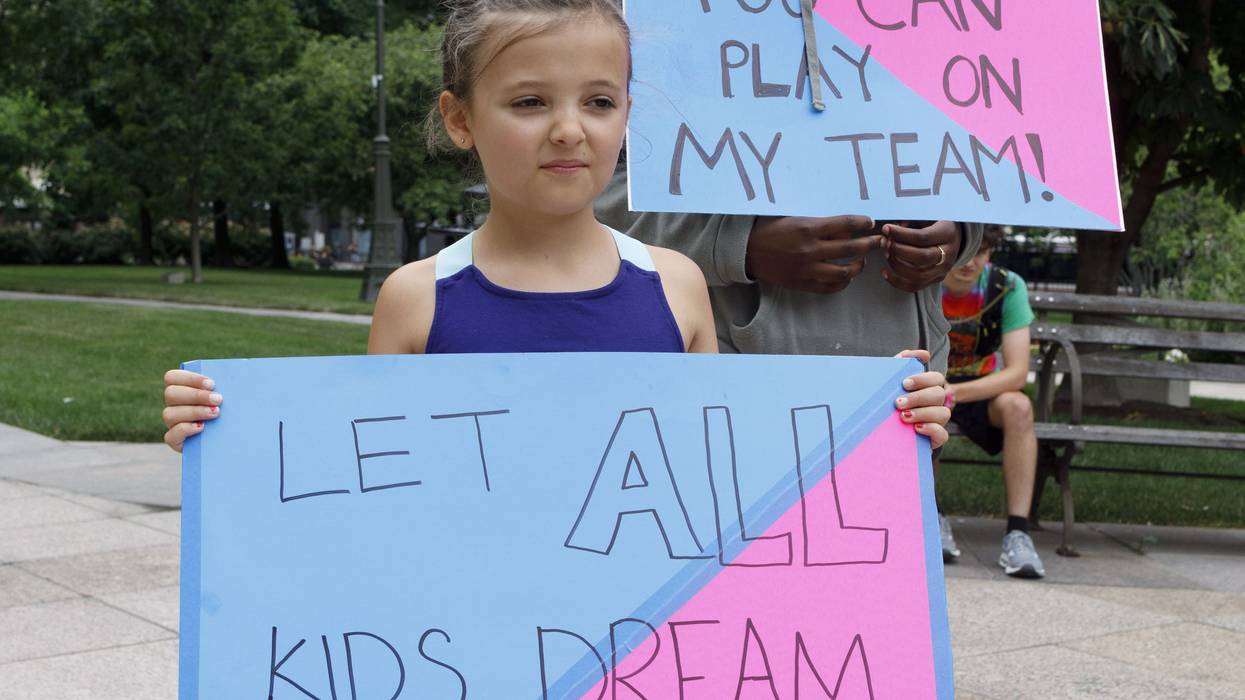
"It is astonishing that any president would try to target, shame, and harass children just trying to be themselves, let alone a president with so many actual problems to address," said the state attorney general.
The US Department of Justice on Monday continued President Donald Trump's crusade against transgender youth competing in sports in line with their identity by suing the Minnesota Department of Education and the state's high school league.
"The United States files this action to stop Minnesota's unapologetic sex discrimination against female student athletes," says the complaint, filed in a federal court in the state by the DOJ's Civil Rights Division.
"The state of Minnesota, through its Department of Education, and the Minnesota State High School League require girls to compete against boys in athletic competitions that are designated exclusively for girls and share intimate spaces, such as multiperson locker rooms and bathrooms, with boys," the complaint continues. "This unfair, intentionally discriminatory practice violates the very core of Title IX of the Education Amendments of 1972."
The Associated Press noted that "the administration has filed similar lawsuits against Maine and California, and has threatened the federal funding of some universities over transgender athletes, including San José State in California and the University of Pennsylvania."
Tim Leighton, a spokesperson for the league, told the AP that it does not comment on threatened or pending lawsuits. According to The New York Times, Emily Buss, a spokesperson for the state department, said Minnesota's leadership was reviewing the complaint while remaining "committed to ensuring every child—regardless of background, ZIP code, or ability—has access to a world-class education."
While Trump and his allies have aimed to stop all trans women and girls from competing as they identify—including at the 2028 Olympic Games in Los Angeles—the fight with Minnesota specifically traces back to the president's February 2025 executive order, after which the administration began investigating the state.
The Minnesota Department of Education gets over $3 billion in federal funding. Democratic state Attorney General Keith Ellison sued to stop the administration from pulling that money last April. In September, the US departments of Education and Health and Human Services concluded that the state agency and league violated Title IX, and the case was referred to the DOJ in January.
In a Monday statement, Ellison said that the DOJ's lawsuit "is just a sad attempt to get attention over something that's already been in litigation for months."
"Donald Trump is currently facing an unpopular war that he launched, rising gas prices, massive health insurance price hikes, and a partial government shutdown caused in part by his ICE agents killing two Minnesotans in broad daylight," Ellison said, referring to Immigration and Customs Enforcement. "It is astonishing that any president would try to target, shame, and harass children just trying to be themselves, let alone a president with so many actual problems to address."
The DOJ filing about trans student-athletes came less than a week after Ellison and other Minnesota officials sued the Trump administration over its refusal to cooperate with state investigators probing the killings of Renee Good and Alex Pretti by federal immigration agents earlier this year, as well as the shooting of Julio Cesar Sosa-Celis, who was wounded but survived.

"It's gutter racism with real consequences," one critic said of Trump's rhetoric.
President Donald Trump went on a racist tirade on Thursday where he targeted both the Somali-American community and Minnesota Attorney General Keith Ellison.
During a Cabinet meeting, the president once against lashed out at Minnesota residents of Somali descent, whom he said "come from a crooked country, disgusting country, one of the worst countries in the world."
"They come to our country, low IQs, and they rob us blind," Trump said of the Somali-American community. "They rob us blind because we have crooked politicians and dirty cops."
The president then turned his attention specifically to Ellison, the Minnesota attorney general who in 2006 became the first Muslim elected to a statewide office in the US when he won the race to represent Minnesota's 5th District in the US House of Representatives.
Trump: "In Minnesota, it's very Somalia-oriented. These people come from a crooked country, disgusting country, one of the worst countries in the world. They come to our country -- low IQs -- and they rob us blind. Stupid people, and they rob us blind." pic.twitter.com/2TRhf2gAMn
— Aaron Rupar (@atrupar) March 26, 2026
"The attorney general's a dirty cop, that's my opinion," said Trump, who in 2024 was convicted on 34 felony counts of falsifying business records. "And something should be done about him."
Ellison hit back at Trump in a social media post.
"If Donald Trump thinks Minnesotans will turn on our neighbors, he doesn’t understand this state," wrote Ellison. "When he surged ICE here and killed two Minnesotans, we stood up for each other, not against each other. Trump’s racist tirades can’t distract from the fact that his reckless and deeply unpopular war is driving up inflation, raising gas prices, and making life unaffordable for Minnesotans."
The Minnesota attorney general added that "while Trump desperately protects the Epstein class and pardons outrageous fraudsters, I’ve been prosecuting and convicting them."
Aaron Reichlin-Melnick, senior fellow at the American Immigration Council, slammed Trump for his "outright bigotry against an entire ethnic minority," which he said "continues to stain this country."
Reichlin-Melnick also referenced a recent New York Times report about a lawsuit alleging that the US Department of Justice has been expediting Somalis' immigration cases and denying them fair hearings.
"It’s gutter racism with real consequences," said Reichlin-Melnick of Trump's rhetoric. "The government itself has been ordered to target this minority group for special disfavor."
Trump drew criticism in December when he described Somali immigrants as "garbage."
“I don’t want them in our country, I’ll be honest with you,” Trump said. “Their country’s no good for a reason. Their country stinks, and we don’t want them in our country. I can say that about other countries too... We’re going to go the wrong way if we keep taking in garbage into our country."

"Alex Pretti was killed by DHS agents in broad daylight in front of all of our eyes," said Ellison. "Both the rule of law and the sense of justice we all carry within us demand a full, fair, and transparent investigation into his death."
Minnesota Attorney General Keith Ellison on Sunday condemned the Trump administration's response to federal agents' killing of intensive care nurse Alex Pretti in Minneapolis over the weekend as "flat-out insane," noting that video footage of the shooting discredits the narrative rushed out by top officials.
"This is their employee who they trained—apparently, allegedly,” Ellison, a Democrat, told the Washington Post in an interview. "So for them to jump out there and say, ‘He’s done nothing wrong, the victim is a bad person,’ is flat-out insane and is a complete break with what we consider to be reasonable law enforcement behavior. It fails every test of professionalism.”
The Department of Homeland Security (DHS) claimed following the shooting that Pretti "approached US Border Patrol officers with a 9 mm semi-automatic handgun," aiming to "maximum damage and massacre law enforcement." DHS Secretary Kristi Noem declared that "this is a violent riot when you have someone showing up with weapons and are using them to assault law enforcement officers.”
Stephen Miller, the White House deputy chief of staff, described Pretti as a "would-be assassin."
Video footage of the killing quickly exposed the Trump administration's narrative as a demonstrative lie.
"I think that reasonable people watching the video could conclude that [Pretti] had a gun and a holster, that it was taken off of him in plain view on the video, and that after that, he was shot," Ellison told the Post. "I think that a person who saw those things would not be hallucinating."
Ellison is set to appear before a federal judge on Monday as part of Minnesota's lawsuit against the Trump administration over Immigration and Customs Enforcement activities and deadly abuses in the state.
"I share the intense grief and anger of so many that another Minnesotan—Alex Pretti, 37 years old, an ICU nurse who served veterans—was fatally shot during the Trump administration’s Operation Metro Surge," Ellison said in a statement. "On Monday, my office and I will be in court arguing to end this illegal and unconstitutional occupation of our cities and the terror and violence it’s inflicting. This must stop. Now.”
"The federal government appears to have taken measures that directly led to the destruction of evidence."
In a filing submitted hours after Pretti's killing, Ellison and other Minnesota officials asked a federal court to prevent DHS and the Trump Justice Department from concealing or destroying evidence related to the shooting.
"According to reports, federal personnel may have seized cell phones, taken other evidence from the scene, and detained witnesses," the filing states. "It is unclear whether federal personnel otherwise processed the scene—let alone how carefully. Then just a few hours after the shooting, federal personnel left, allowing the perimeter to collapse and potentially spoiling evidence."
"From a law enforcement perspective, this is astonishing," the filing continues. "The federal government’s actions are a sharp departure from normal best practices and procedure, in which every effort is taken to preserve the scene and the evidence it contains... [T]he federal government appears to have taken measures that directly led to the destruction of evidence."
The US District Court for the District of Minnesota granted the request for a temporary restraining order, ruling that the Trump administration is "enjoined from destroying or altering evidence related to the fatal shooting involving federal officers that took place in or around 26th Street and Nicollet Avenue in Minneapolis on January 24, 2026, including but not limited to evidence that Defendants and those working on their behalf removed from the scene and/or evidence that Defendants have taken into their exclusive custody."
Ellison applauded the court's decision, saying in a statement that the ruling protects the integrity of Minnesota's investigation into Pretti's killing.
“Alex Pretti was killed by DHS agents in broad daylight in front of all of our eyes," said Ellison. "Both the rule of law and the sense of justice we all carry within us demand a full, fair, and transparent investigation into his death. We will not settle for less."

"This Department of Justice investigation, sparked by calls for accountability in the face of violence, chaos, and the killing of Renee Good, does not seek justice," said Gov. Tim Walz.
The US Department of Justice on Tuesday subpoenaed top Minnesota officials, including Democratic Gov. Tim Walz, as part of the DOJ's investigation into alleged conspiracy to impede the thousands of federal immigration agents sent to the Twin Cities by President Donald Trump—a probe Walz has condemned as part of a broader trend of the administration "weaponizing the justice system."
Walz—who ran for vice president in 2024—was similarly critical of the grand jury subpoenas, which were also served to state Attorney General Keith Ellison, Minneapolis Mayor Jacob Frey, Saint Paul Mayor Kaohly Her, Hennepin County Attorney Mary Moriarty, and Ramsey County Attorney John Choi.
"Mr. President, Minnesota invites you to see our values in action," Walz began a lengthy statement shared on social media. "But let me be absolutely clear: The state of Minnesota will not be drawn into political theater. This Department of Justice investigation, sparked by calls for accountability in the face of violence, chaos, and the killing of Renee Good, does not seek justice."
"It is a partisan distraction," Walz declared, detailing how the flood of immigration agents is negatively impacting communities and arguing that the Trump administration should focus on "restoring trust, accountability, and real law and order, not political retaliation."
After US Immigration and Customs Enforcement's Jonathan Ross fatally shot Good earlier this month, Trump and others in his administration called the deceased 37-year-old mother of three a "domestic terrorist" and claimed the ICE officer was acting in self-defense, a narrative betrayed by numerous videos, eyewitness accounts, and detailed analyses of the shooting.
As protesters continued to fill Minnesota's streets, Ellison and the Twin Cities sued the US Department of Homeland Security—which includes Customs and Border Protection (CBP) and ICE—in hopes of ending what the attorney general called a "federal invasion." The ACLU quickly followed with a class action lawsuit aimed at ending DHS agents' unlawful stops and arrests.
In a Tuesday statement about the subpoena, Ellison noted the suit he recently filed on behalf of the state:
Less than two weeks ago, federal agents shot and killed a Minnesotan in broad daylight. Now, instead of seriously investigating the killing of Renee Good, Trump is weaponizing the justice system against any leader who dares stand up to him.
Today, my office has received a criminal grand jury subpoena from the Department of Justice. It is a subpoena for records and documents related to my office's work with respect to federal immigration enforcement, not for me personally. Everything about this is highly irregular, especially the fact that this comes shortly after my office sued the Trump administration to challenge their illegal actions within Minnesota.
Let's be clear about why this is happening: Donald Trump is coming after the people of Minnesota, and I'm standing in his way. I will not be intimidated, and I will not stop working to protect Minnesotans from Trump's campaign of retaliation and revenge."
Frey—who told ICE to "get the fuck out of Minneapolis" after Ross killed Good—said Tuesday that "when the federal government weaponizes its power to try to intimidate local leaders for doing their jobs, every American should be concerned."
"We shouldn't have to live in a country where people fear that federal law enforcement will be used to play politics or crack down on local voices they disagree with," he continued. "In Minneapolis, we won't be afraid. We know the difference between right and wrong, and, as mayor, I'll continue doing the job I was elected to do: keeping our community safe and standing up for our values."
Christina Harvey, executive director of the progressive advocacy group Stand Up America, also asserted that the DOJ's probe "isn't a legitimate search for wrongdoing. It's an attempt to intimidate elected officials who are demanding justice for the killing of Renee Good and trying to protect their communities from Trump's chaotic immigration crackdown."
"Trump is once again weaponizing the DOJ against his political opponents while shielding his own DHS secretary and ICE agents from accountability as they violate due process, use lethal violence against American citizens, and show a clear disregard for human life," she continued. "This administration mistakes bullying for strength and believes it is above the law."
If US Attorney General Pam Bondi "really cared about justice, she'd be investigating the killing of Renee Good," Harvey added, "not harassing public servants for doing their jobs."
News of the subpoenas came as Greg Bovino, commander at large for CBP, and Marcos Charles, executive associate director of ICE, defended federal agents' operations during a Tuesday afternoon press conference, with the former claiming that "what we do is legal, ethical, and moral."
Sharing a video of Bovino's remarks on social media, journalist Aaron Rupar simply said, "Bovino lies shamelessly."
This article has been updated with comment from Stand Up America.
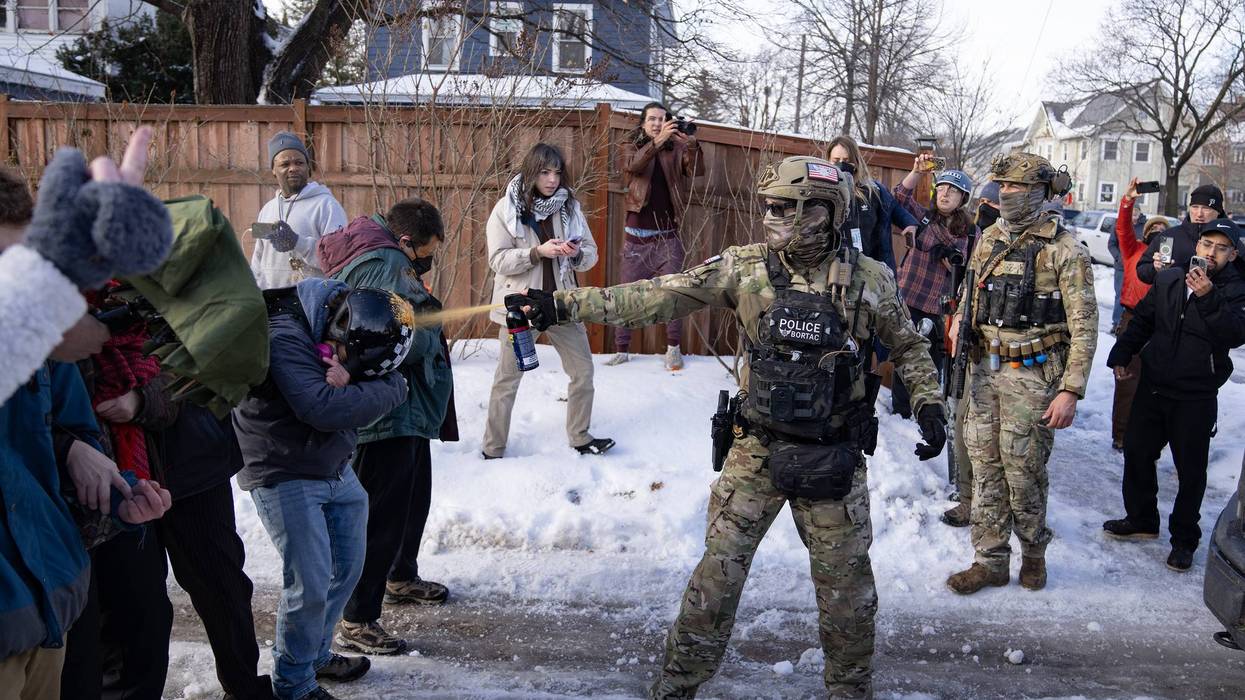
"This is an important preliminary win for all Minnesotans exercising their constitutional right to peaceful protest and witness," state Attorney General Keith Ellison said.
Federal officers cannot retaliate against, detain, or attack people who are peacefully protesting and observing immigration enforcement operations in the Minneapolis area, a federal judge ruled on Friday.
The ruling comes a little more than a week after Immigration and Customs Enforcement (ICE) agent Jonathan Ross shot and killed legal observer Renee Nicole Good, supercharging protests against an immigration enforcement operation in the Twin Cities that the Department of Homeland Security claims is its largest ever.
"This is an important preliminary win for all Minnesotans exercising their constitutional right to peaceful protest and witness," Minnesota Attorney General Keith Ellison wrote on social media in response to the ruling. "Thanks and congratulations to the ACLU and the plaintiffs for standing strong for this bedrock principle."
The ruling was issued by Biden appointee and US District Judge Kate Menendez, who is based in Minneapolis. It restricts federal officers involved in "Operation Metro Surge"—an immigration-enforcement blitz in the Minneapolis area—from retaliating against, arresting or detaining, or targeting with nonlethal munitions such as pepper spray anyone "engaging in peaceful and unobstructive protest activity," including observing ICE operations.
"We are relieved that in Tincher v. Noem et al. the court has issued a preliminary injunction. The ACLU-MN is hopeful that it will prevent further First Amendment violations like the ones that have been harming Minnesotans since the start of 'Operation Metro Surge.'"
Menendez further stipulated that people could not be detained for following ICE and other immigration enforcers with their vehicles if they were not interfering with the agents.
"The act of safely following Covered Federal Agents at an appropriate distance does not, by itself, create reasonable suspicion to justify a vehicle stop," Menendez said.
The ruling is a preliminary injunction in response to Tincher v. Noem et al., a lawsuit brought by the American Civil Liberties Union of Minnesota (ACLU-MN) in December 2025 on behalf of six community members who said their constitutional rights were violated by ICE in response to their protests.
Plaintiff Susan Tincher, for example, wrote that she was arrested merely for driving to the place where an ICE operation was taking place.
“I was on a public street,” Tincher in a statement. “I did not cross any lines. I did not interfere with anything. I did not disobey an order. I asked a single question–‘are you ICE?’–and almost immediately, officers rushed me, grabbed me, and slammed me face-first into the snow.”
Since the lawsuit was filed, ICE activity in the Twin Cities continued to escalate, culminating with an influx of 2,000 agents on January 6 and the shooting of Good the next day.
On January 8, the day after Good's murder, the plaintiffs' lawyers sent an emergency letter to the judge urging action.
"Thousands of peaceful observers and protesters turned out in the streets of the Twin Cities in the wake of Ms. Good’s murder," the letter reads in part. "Peaceful observers and protesters turned out again today, they will turn out again tomorrow, and they will continue turning out every day until Operation Metro Surge is over. These Minnesotans who are peacefully exercising their core constitutional rights to speak and gather continue to be met with unconstitutional and terrifying violence at the hands of federal agents on a daily basis, including unwarranted pepper spraying and unfounded arrests... And things appear to be getting worse, not better: Even more federal agents are being deployed to Minnesota at this very moment."
The ACLU-MN applauded the fact that Menendez had moved to restrain ICE.
"We are relieved that in Tincher v. Noem et al. the court has issued a preliminary injunction. The ACLU-MN is hopeful that it will prevent further First Amendment violations like the ones that have been harming Minnesotans since the start of 'Operation Metro Surge,'" the group wrote on social media.
Beyond Good's killing, the ruling follows several other high-profile incidents of ICE violence in Minnesota, including a nonlethal shooting of a man at a traffic stop and the hospitalization of three children after ICE tear-gassed the van they were driving in.
Menendez's decision came the same day that news broke that President Donald Trump's Department of Justice was investigating local leaders who had criticized ICE activity, including Minnesota Gov. Tim Walz and Minneapolis Mayor Jacob Frey.