SUBSCRIBE TO OUR FREE NEWSLETTER
Daily news & progressive opinion—funded by the people, not the corporations—delivered straight to your inbox.
5
#000000
#FFFFFF
To donate by check, phone, or other method, see our More Ways to Give page.
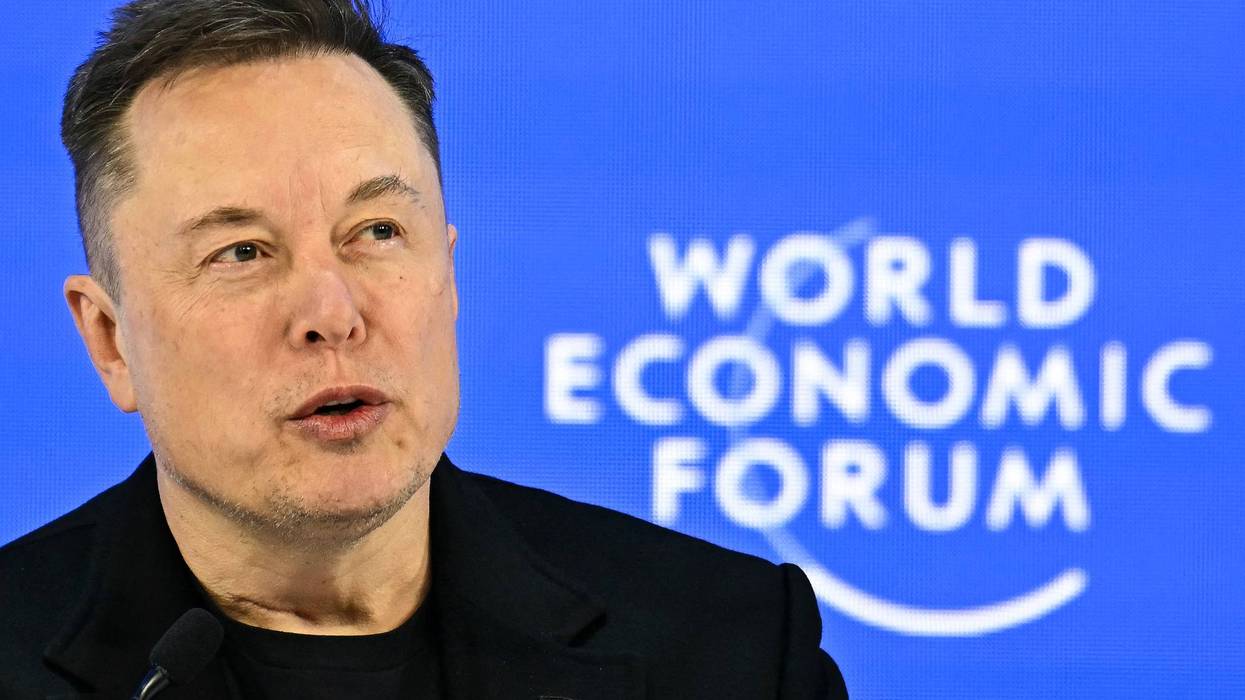
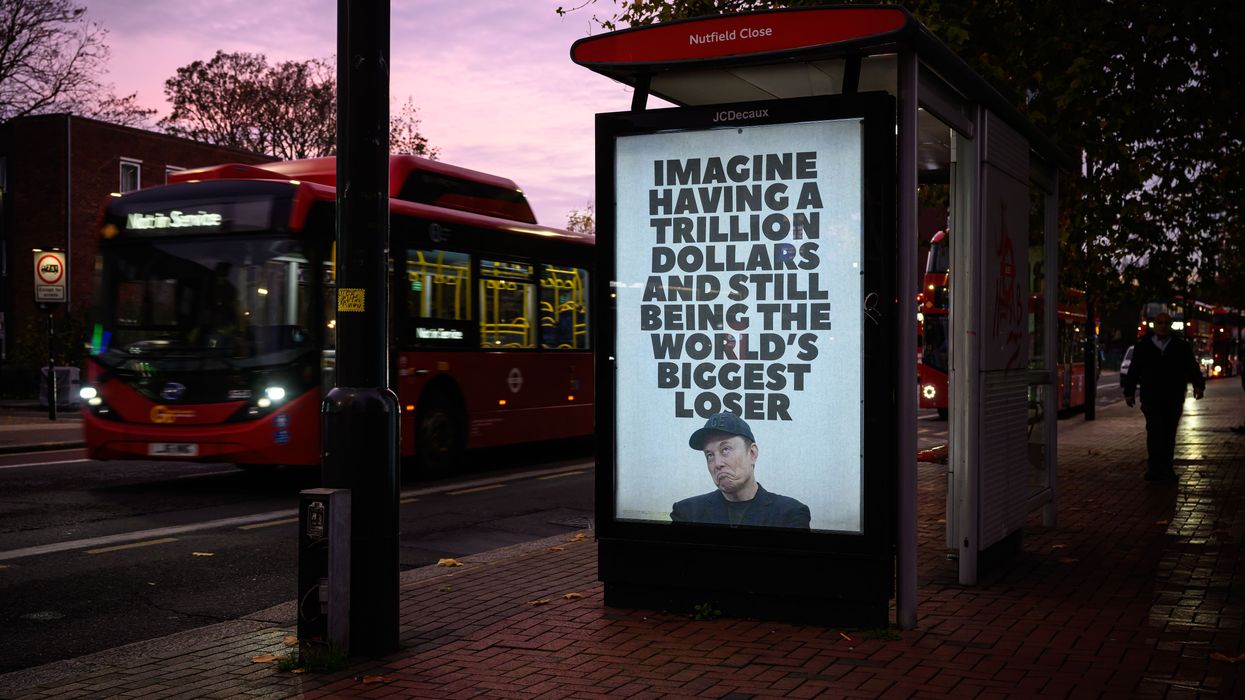
Rooted in apartheid South Africa, built on a foundation of unethical business practices, and boosted by staggering sums of corporate welfare, Musk's fortune soared to even greater heights after he played a key role in buying the 2024 election for President Donald Trump and other Republican candidates by pouring over a quarter billion dollars into their campaign coffers.
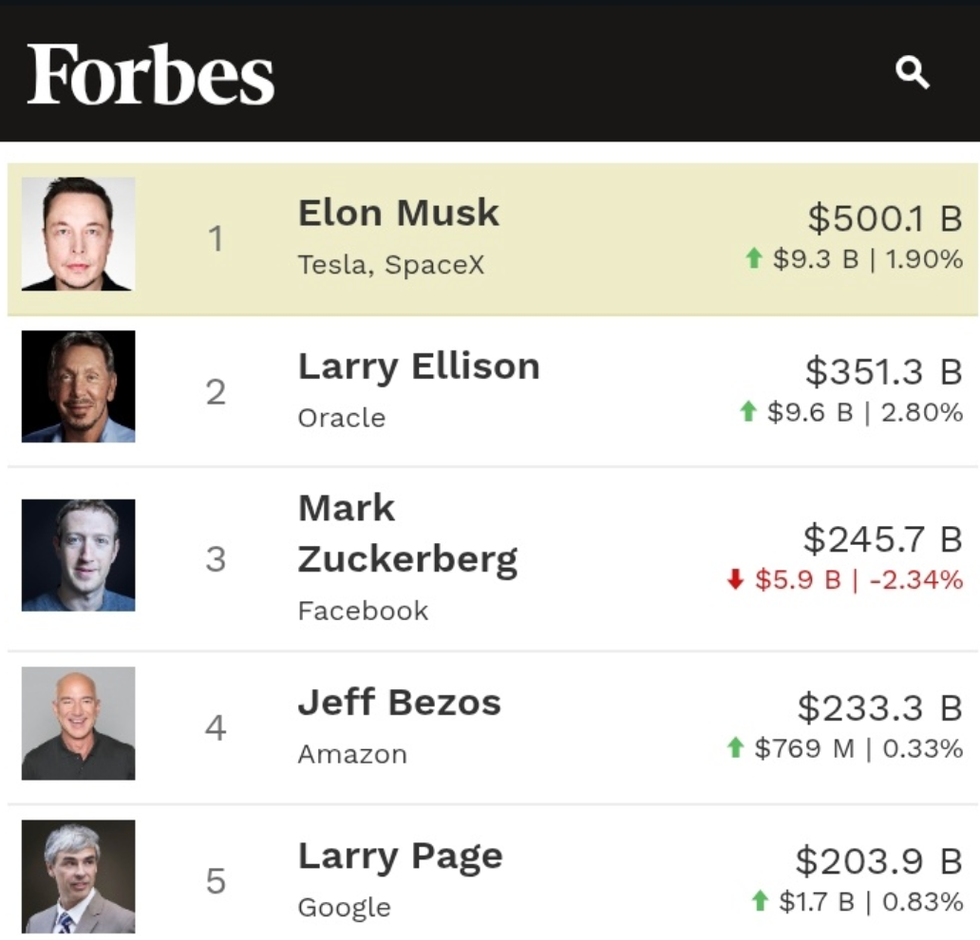
As Forbes noted:
Worth just $24.6 billion in March 2020, soaring Tesla shares made him the fifth person ever worth $100 billion, in August 2020. He became the world’s richest person for the first time in January 2021, with a nearly $190 billion net worth. Then, in September 2021, he became the third person ever worth $200 billion (after Amazon’s Jeff Bezos and Frenchman Bernard Arnault of luxury goods conglomerate LVMH). Musk went on to hit $300 billion in November 2021 and $400 billion in December 2024.
Musk was rewarded for his 2024 largesse by being named the de facto head of the so-called Department of Government Efficiency (DOGE), a job he has since left after overseeing the Project 2025-inspired evisceration of numerous federal agencies.
As progressives argue that the existence of billionaires is a public policy failure, Musk apparently no longer wants to be one. That's because he's seeking to leave the realm of mere multicentibillionaires behind and become the world's first trillionaire. Such an outcome is possible under a compensation package recently proposed by Tesla's board, and Forbes says it could happen by 2033.
Addressing this possibility, Musk—who has long warned about the existential threat posed by artificial intelligence, even as his companies pioneer such technology—said on his social media site X last year that “it’s not about ‘compensation’, but about me having enough influence over Tesla to ensure safety if we build millions of robots."
“If I can just get kicked out in the future by activist shareholder advisory firms who don’t even own Tesla shares themselves, I’m not comfortable with that future," he added.
Progressive observers expressed dismay at the news of Musk's latest money milestone.
Campaign for New York Health executive director Melanie D'Arrigo said Wednesday on social media that "Elon Musk hitting $500 billion while 60% of Americans can’t afford basic necessities is what it looks like when billionaires buy elections to get laws written to benefit themselves at the expense of everyone else."
"Elon Musk is a result of decades of policy failures," she added.
Podcaster Brian Allen alluded to United Nations World Food Program Director David Beasley's challenge to Musk to contribute toward the $6.6 trillion needed to combat world hunger.
"He could’ve solved it 83 times, but chose to buy Twitter, pump Dogecoin, and lay off workers instead," Allen said of Musk. "Welcome to late-stage capitalism."
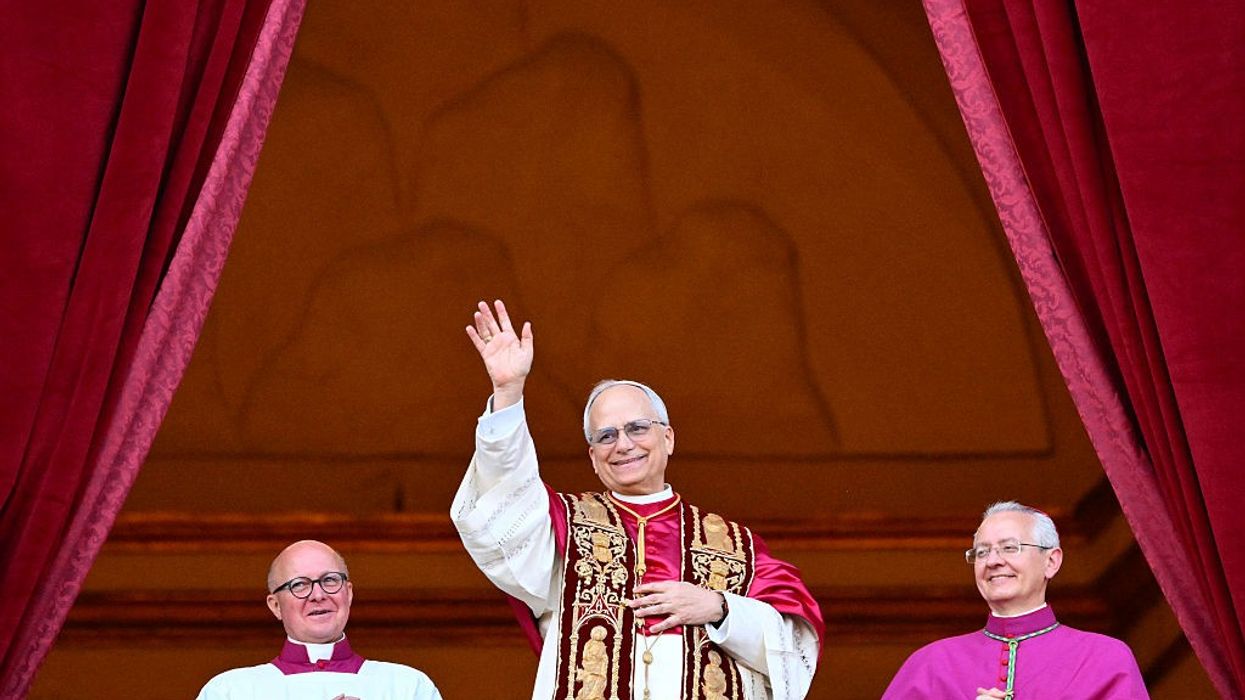
Pope Leo appears to be particularly baffled by the Tesla pay package that could turn Elon Musk into the world’s first trillionaire.
“What does that mean and what’s that about?” the Pope asked. “If that is the only thing that has value anymore, then we’re in big trouble.”
We are indeed in big trouble. But we are not without solutions.
Sen. Bernie Sanders (I-Vt.) and Rep. Rashida Tlaib (D-Mich.) are spearheading an effort behind one particularly promising solution: hefty tax hikes on companies with huge gaps between their CEO and median worker pay.
Their recently introduced Tax Excessive CEO Pay Act would base the CEO-worker pay ratio on five-year averages of the total compensation for a firm’s highest-paid executive and median worker. The tax increases would start at 0.5 percentage points on companies with gaps of 50 to 1 and top out at five percentage points on firms that pay their CEO more than 500 times median worker pay.
How much might specific companies owe under the bill if they refuse to narrow their gaps? At the Institute for Policy Studies, we ran the numbers on 10 leading US corporations with large pay ratios. We found, for example, that Walmart, with a five-year average pay gap of 1,091 to 1, would have owed as much as $929 million in extra federal taxes in 2024 if this legislation had been in effect.
Amazon, with an even wider gap of 1,995 to 1 and higher profits, would’ve owed as much as an additional $3.1 billion last year.
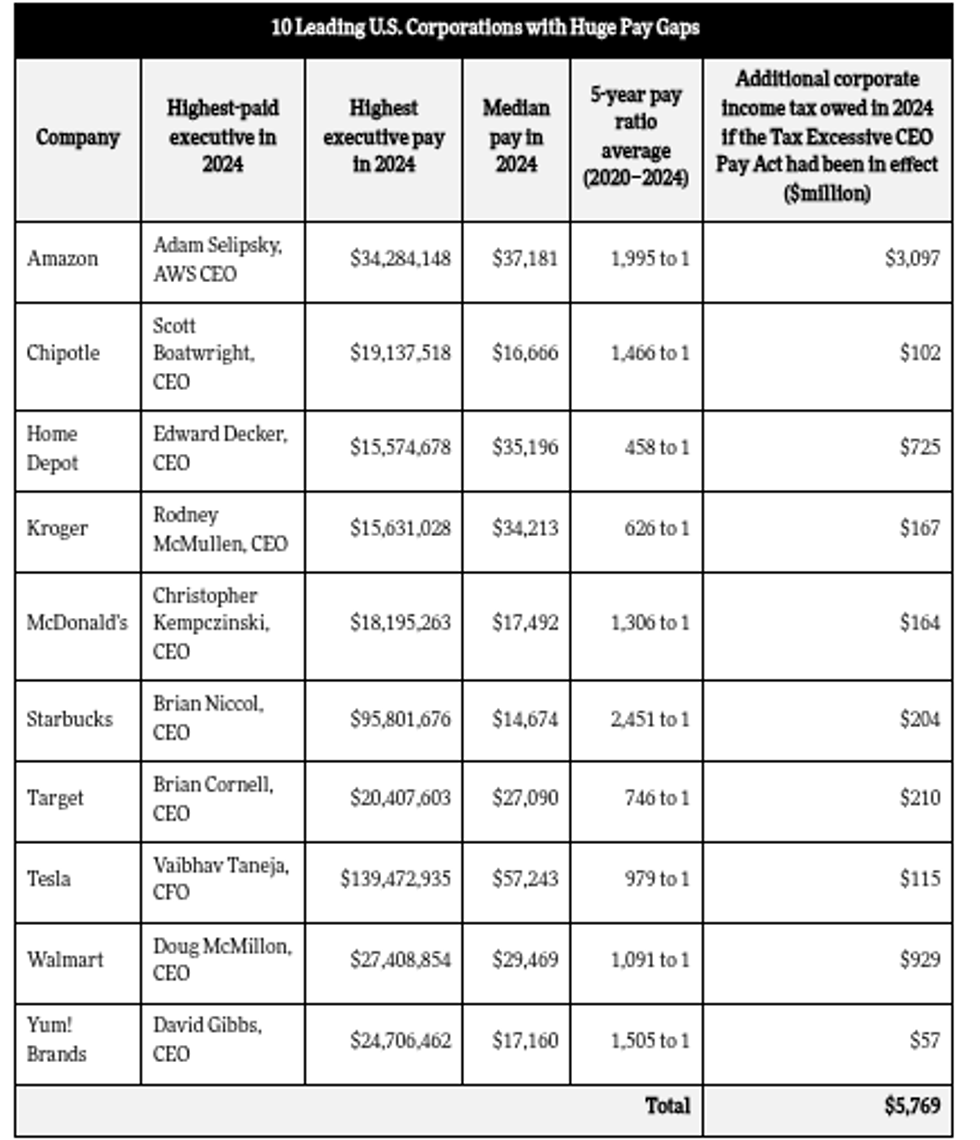 Source: Institute for Policy Studies analysis of compensation data in proxy statements and US pre-tax income figures from 10-K filings.
Home Depot would have owed as much as $725 million more in 2024 taxes under this legislation. Like most of these companies, the home improvement giant can’t claim to be short on cash. Over the past six years, they’ve blown nearly $38 billion on stock buybacks, a maneuver that artificially inflates a CEO’s stock-based pay. With the money the firm spent on stock buybacks, Home Depot could’ve given every one of their 470,100 employees six annual $13,423 bonuses.
Sen. Sanders pointed out that if Elon Musk receives the full $975 billion compensation package that Tesla’s board has proposed, Tesla could owe up to $100 billion more in taxes over the next decade under this legislation.
“The Pope is exactly right,” wrote Sanders in a social media post. “No society can survive when one man becomes a trillionaire while the vast majority struggle to just survive—trying to put food on the table, pay rent, and afford healthcare. We can and must do better.”
“Working people are sick and tired of corporate greed,” Rep. Tlaib added in a press release. “It’s disgraceful that corporations continue to rake in record profits by exploiting the labor of their workers. Every worker deserves a living wage and human dignity on the job.”
Additional original co-sponsors of the Tax Excessive CEO Pay Act include: Sens. Elizabeth Warren (D-Mass.), Chris Van Hollen (D-Md.), Peter Welch (D-Vt.), Ed Markey (D-Mass.), and 22 members of the House of Representatives.
Polling suggests that Americans across the political spectrum would support the bill. One 2024 survey, for instance, found that 80% of likely voters favor a tax hike on corporations that pay their CEOs more than 50 times more than what they pay their median employees. Large majorities in every political group gave the idea the thumbs up, including 89% of Democrats, 77% of Independents, and 71% of Republicans.
In these hyperpolarized times, Americans of diverse backgrounds, faiths, and political perspectives seem to share enormous common ground on at least one problem facing our nation: the extreme economic divides within our country’s largest corporations.