

SUBSCRIBE TO OUR FREE NEWSLETTER
Daily news & progressive opinion—funded by the people, not the corporations—delivered straight to your inbox.
5
#000000
#FFFFFF
To donate by check, phone, or other method, see our More Ways to Give page.


Daily news & progressive opinion—funded by the people, not the corporations—delivered straight to your inbox.
"Voters across the country supported candidates who pledged to cut energy costs, end corruption, and take on corporate greed. That’s the exact framework we need to push a bold clean energy and polluter pays agenda," Jamie Henn of Fossil Free Media said.
Tuesday's historic rebuke of President Donald Trump's policies and party was also a major victory for the climate and environment, campaigners said, as Democratic control of Congress gives lawmakers a chance to check the president's pro-pollution and pro-extinction agenda.
Up and down the ballot, voters elected candidates who champion climate action and holding wealthy polluters accountable while rejecting data centers and tech and fossil-fuel spending blitzes.
"Voters just overwhelmingly repudiated the most anti-environmental, pro-fossil fuel administration in US history," Jamie Henn, the director of Fossil Free Media, told Common Dreams. "This was a historic climate victory in disguise. Voters across the country supported candidates who pledged to cut energy costs, end corruption, and take on corporate greed. That’s the exact framework we need to push a bold clean energy and polluter pays agenda."
"Climate politics are back on the table, and we plan to fight for them."
"Last night’s election opens the door for plenty more states to pass climate legislation, like climate superfund bills, and block industry attempts to hold back clean energy or immunize themselves from climate damages," Henn said.
While climate and the environment took a backseat in election rhetoric and reporting to issues like affordability and corruption, many winning candidates who champion reducing inequality and challenging corporate greed—such as Sen.-elect Abdul El-Sayed (D-Mich.) and Reps.-elect Chris Rabb (D-Pa.), Claire Valdez (D-NY), and Melat Kiros (D-Colo.)—also back policies such as a Green New Deal and holding polluting industries accountable. Also in Michigan, Democratic Rep.-elect Will Lawrence was a co-founder of the climate focused Sunrise Movement.
"Ardent advocates of climate and environmental action and justice who loudly rejected Trump and the Republican attack on both are now heading to and returning back to Congress and to offices across the nation," environmental investigative journalist Antonia Juhasz wrote on social media. "It’s officially a Green Wave too."
Kidus Girma, Sunrise Movement's campaign director, told Common Dreams that on Tuesday, "Young people proved that progressive ideas like the Green New Deal are just as popular in central Michigan as they are in Brooklyn."
"Working people in America no matter where they live want the same thing—good green jobs, a pause on data centers, and a system that works for people, not billionaires," Girma said. "Climate politics are back on the table, and we plan to fight for them."
SUNRISE CO-FOUNDER @WeWill2026 IS HEADED TO CONGRESS!!!A climate leader just unseated a Republican by running against data centers. Green New Deal, here we come. https://t.co/k2r87awJZg
— Sunrise Movement 🌅 (@sunrisemvmt) November 4, 2026
Climate advocates pointed out that issues such as the high price of gas due to Trump's illegal war on Iran are intimately connected with the dependence on a fossil fuel industry that is empowered to profit from energy crises.
"Climate change may not have dominated the election, but the consequences of our dependence on fossil fuels certainly did," said Cassidy DiPaola, the communications director at Fossil Free Media and spokesperson for the Make Polluters Pay campaign, in a statement. "Americans are struggling with high gas prices, rising energy bills, and mounting climate disaster costs while Big Oil rakes in record profits and spends millions buying influence in Washington."
Further, the backlash against the AI data centers build-out, reflected in massive wins for data centers moratoriums and anti-data center candidates, is also a major climate victory, as the Sierra Club projects that the use of fossil fuels to power new data centers will increase power sector emissions by 42% by 2030 when compared with 2025 levels, undoing 15 years of climate progress in electricity generation.
"Millions of voters cast their ballots in frustration over data centers, corporate greed, and Trump’s egregious giveaways to fossil fuel CEOs and other industry cronies," Brett Hartl, the national political director at the Center for Biological Diversity Action Fund, said in a statement.
Elizabeth Bast, executive director at Oil Change Action, said in a statement that "voters send a clear message: They’re fed up with Trump’s agenda of fossil fuel giveaways, illegal and immoral wars, and unchecked data center expansion that makes their lives more expensive while lining the pockets of Big Oil and Big Tech,"
Bast continued: "Affordability and accountability were voters’ top concerns this election cycle. Both are inseparable from fossil fuel dependence. Americans have spent an additional $101 billion on gas since the start of Trump’s war on Iran, highlighting the dangers of fossil fuel reliance. Meanwhile, Trump increased his wealth by tens of millions through stock trades made profitable by his war—a blatant example of this administration’s corruption."
One major theme of the midterms was the ability of the "many" to beat the "money," as El-Sayed put it in his victory speech. Big spending by the American Israel Public Affairs Committee and Big Tech oligarchs including Elon Musk failed to force their preferred candidates over the finish line.
This was equally true of Big Oil, as Emily Atklin detailed in a race-by-race breakdown for Heated. On the national level, Chevron, Koch, Energy Transfer, and the American Petroleum Institute gave a combined $25 million to keep Republicans in charge of Congress, only to see the Democrats retake both the House and Senate. Chevron also gave $200,000 each to losing GOP candidates Ken Paxton in Texas and Sen. Susan Collins in Maine.
Lawrence, the Sunrise Movement alum, triumphed over the combined forces of Musk and other GOP insiders in what was the nation's most expensive House race.
"Lawrence mobilized voters and volunteers by his long-standing commitment to putting working-class families over billionaire polluters and data center developers. His campaign estimates it knocked more doors than any other House Democratic race," Oil Change's Bast said.
Mya Lega, a Lawrence campaign spokesperson, told Common Dreams: “Michiganders want our land, air, and water protected from AI data centers, polluters, and corporate oligarchs. Will Lawrence built his career on standing up to them. In the House, he’ll be a leading voice against the Trump administration’s rollbacks on environmental protections and handouts to corporations and oligarchs.”
The victory of people over money was true of more local races as well, as in Georgia where voters flipped the Georgia Public Service Commission to Democratic control despite fossil fuel spending on behalf of Republican candidates, while voters in Colorado rejected an industry-backed attempt to enshrine a right to use or sell natural gas in the state constitution.
This is...a much bigger deal than you might think. So many thanks to everyone at @thirdactorg.bsky.social and elsewhere who fought so hard for this winthecurrentga.org/2026/11/03/d...
[image or embed]
— Bill McKibben (@billmckibben.bsky.social) November 4, 2026 at 8:19 AM
"Fossil fuel money is one of the most powerful forces in American politics. It is the biggest obstacle we face in preserving a livable climate for everyone on Earth," Atkin wrote. "But it is not invincible. Not even close."
Further, the appetite for getting money out of politics was reflected in votes on energy and climate issues. In Michigan, voters approved Proposition 2 to bar publicly regulated utilities from giving funds to state and local candidates. And nationwide, more than 65 congressional candidates who had signed the No Fossil Fuel Money Pledge won their races.
“Big Oil and Big Tech have poured enormous amounts of money into this election to protect their power and profits," Bast of Oil Change wrote. "Across the country, candidates who refuse fossil fuel money have won elections, proving that Big Oil's money is no match for the power of organized communities."
Beyond climate and energy concerns, Defenders of Wildlife celebrated Tuesday's results as a check on Trump's gutting of protections public lands and endangered species.
“For those of us working to protect America's wildlife and wild places, this is a moment of renewed hope and possibility," the group's president and CEO, Andrew Bowman, said in a statement. “Over the past two years, we have faced extraordinary challenges, including relentless efforts to weaken the Endangered Species Act, roll back protections for public lands, and undermine decades of conservation progress."
Bowman continued: "A new Congress offers opportunities to defend bedrock environmental laws, strengthen congressional oversight, and advance conservation priorities that have faced significant political headwinds. It also creates new possibilities for bipartisan cooperation around something we know transcends political divisions: America's shared commitment to wildlife and our natural heritage."
Following Tuesday's win, climate and environmental campaigners urged victorious candidates to consider their election as a mandate to protect public health and the environment and to hold polluters accountable for harm and corruption.
They also urged current members of Congress to reject the Bipartisan American Affordability and Jobs Act (BAAJA), a bill that advocates argue would gut current regulations to clear the way for more fossil fuel and data centers projects.
“The midterm results are a rallying cry for Democrats to use their newfound power to rein in Trump. Democrats must not cut deals in the lame duck that bolster Trump and give Republicans wins but instead lay the foundation to end Trump’s corrupt anti-environmental crusade for good," the Center for Biological Diversity's Hartl said.
“Voters gave Democrats control of Congress to advance policies that uplift communities, not offer sweetheart giveaways to corporate polluters and data centers, like the Senate permitting reform bill,” Hartl continued. “Trump has done so much damage to our public lands, wildlife habitats, and clean air and water protections in the last two years. Democrats must take ownership of their new mandate right now and start changing the conversation in Congress.”
"For newly elected leaders looking to establish themselves as champions of the working class, taking on Big Oil is an obvious place to start."
Earthworks policy director Lauren Pagel warned: "In the coming weeks this administration and current Congress will treat the lame-duck session like a fire sale on essential environmental and health protections and the rights of tribal governments. It is critical we stop them before they do even more damage to our air, water, land, sacred places, and the health of our communities."
She argued that this started with rejecting BAAJA: "This legislation that the Senate will likely consider next week would permanently undercut the ability of communities to say no to dangerous oil, gas, and mining projects in their backyards."
Bast of Oil Change agreed, saying: "Democrats have a clear mandate to rein in Big Oil and Big Tech. They must seize the opportunity to do so, first by rejecting the currently proposed permitting deal... and then by taxing Big Oil’s windfall profits in the incoming Congress."
The Environmental Protection Network (EPN), an organization made up of more than 800 former employees of the Environmental Protection Agency, called on the new Congress to hold Trump's EPA to account for failing in its mission to protect people and the environment from pollution and to restore it to its prior function and scientific rigor.
“Americans understand that when corporations aren't held accountable for their pollution, ordinary families end up paying the price,” EPN's senior director of public affairs, Marc Boom, said in a statement. “Our polling shows that 81% of registered voters surveyed believe the costs of pollution are being shifted onto families. The incoming Congress has an opportunity and a responsibility to hold EPA and the rest of the federal government accountable and make sure they're doing their jobs to protect public health and leave families safer, not sicker.”
Others urged the new Congress to take the opportunity to hold Big Oil accountable as well.
So when are we scheduling the live hearings with Big Oil CEOs?
— Jamie Henn (@jamieclimate) November 4, 2026
"Americans are struggling with high gas prices, rising energy bills, and mounting climate disaster costs while Big Oil rakes in record profits and spends millions buying influence in Washington," DiPaola said in a statement. "Voters made clear they're fed up with corporate greed and politicians who put wealthy donors ahead of working families. Now Democrats have a chance to prove they're serious about changing that. For newly elected leaders looking to establish themselves as champions of the working class, taking on Big Oil is an obvious place to start."
She continued: "We want to see oil executives hauled before Congress to answer for their profiteering and political influence. We want a windfall profits tax that puts money back in working people's pockets, climate superfund laws that make polluters pay for the damage they've caused, and an end to Big Oil's push for special legal immunity. Democrats have won the power to take on one of the wealthiest and most politically connected industries in America, and we expect them to use it."
Aaron Regunberg, who directs Public Citizen’s Climate Accountability Project, agreed.
"Democrats across the country ran on a pledge to lower the costs of essentials and take on corporate corruption. They just won a massive mandate to do just that. And you can't achieve those goals without fighting for Big Oil accountability," he told Common Dreams.
He continued: "Democrats have an opportunity to crack down on fossil fuel profiteering and haul Big Oil CEOs in to investigate their corrupt dealings with Trump. It would be a huge mistake to not seize this huge opportunity."
"We are going to end the war."
Democratic Senate Leader Chuck Schumer on Wednesday indicated that his party will defund President Donald Trump's illegal war with Iran when it takes over as the majority next year.
While speaking with reporters, Schumer (D-NY) was asked how Democrats planned to end the war, which Trump launched without congressional authorization in February.
"We are going to end the war," said Schumer. "We already have some Republicans who have joined us in ending the war. And the Founding Fathers had the power of the purse as one of the ways of deterring a president who does war without the consent of the American people."
Q: How are Democrats going to end the war?SCHUMER: The Founding Fathers had the power of the purse as one of the ways of deterring a president who does war without the consent of the American people https://t.co/UZdb601W7h
— Aaron Rupar (@atrupar) November 4, 2026
Democrats on Tuesday secured majorities in the US House of Representatives and the Senate, and Democrats will have at least 54 members in the congressional upper chamber.
Earlier this year, four Republicans in the Senate—Sens. Rand Paul (R-Ky.), Susan Collins (R-Maine), Bill Cassidy (R-La.), and Lisa Murkowski (R-Alaska)—voted with the vast majority of Democrats to pass a war powers resolution aimed at compelling Trump to end the Iran War.
Sen. John Fetterman (D-Pa.) was the lone Democrat to oppose the measure.
While Cassidy and Collins will leave office at the end of this year, a full majority in both chambers of Congress will enable Democrats to go beyond passing war powers resolutions and cut off funding for the US Department of Defense until Trump agrees to wind down the conflict.
Schumer's remarks on defunding the war came shortly after Vice President JD Vance posted a message on social media acknowledging that voter dissatisfaction with the war, and the subsequent rise in energy prices caused by the closure of the Strait of Hormuz, were the major reasons for Republicans' defeat.
"The reason we lost is the war," Vance wrote. "The president himself said so last night. If you'd like to argue it was worth it, that losing the Senate for the next six years was worth it, then do so. Argue it was a worthwhile cost to pay. Agree or disagree, that's at least honest. But everyone knows why we lost."
Vance's statement also earned the endorsement of Donald Trump Jr., who may or may not have understood that it was an implicit criticism of his father's decision-making.
"Every word of this," the president's eldest son—who, along with Vance, may run for the White House in 2028—wrote in response to the vice president.
"If you spend enough on ads, you really can get people to vote against their own interests," lamented one observer.
Proposition 40, the California proposal for a one-time 5% tax on the state's billionaires, appeared headed for defeat Wednesday after a spending blitz exceeding $300 million by some of the state's wealthiest residents helped turn a potentially landmark effort to make plutocrats pay their fare share into one of the most expensive ballot fights in state history.
With around 60% of expected votes counted, Prop 40—also known as the California Billionaire Tax—was losing by a 56% to 44% margin, according to CalMatters and The Associated Press, which had not yet projected the final outcome due to the significant number of uncounted ballots.
The measure, which is sponsored by Service Employees International Union-United Healthcare Workers West, would impose a one-time 5% tax on the wealth of California residents and trusts worth more than $1 billion. Affecting approximately 200 billionaires, Prop 40 would generate tens of billions of dollars to help fund healthcare, food assistance, and public education programs facing funding pressures, including cuts resulting from President Donald Trump's attacks on Medicaid, Supplemental Nutrition Assistance Program, and other social safety net lifelines.
Polling showed a majority of California voters—55%—supporting Prop 40 last December, buoyed by the backing of prominent national figures like Sen. Bernie Sanders (I-Vt.), Congressman Ro Khanna (D-Calif.), and former US Labor Secretary Robert Reich.
In early 2026, Google co-founder Sergey Brin and other tech billionaires began pouring money into efforts to oppose the initiative and support competing ballot measures, Propositions 41 and 42, which were specifically designed to undermine or nullify Prop 40.
Democratic California Gov. Gavin Newsom also came out against Prop 40. Critics accused the potential 2028 presidential contender of trying to bamboozle voters with a plan for a national billionaire income tax, knowing that very rich people actually have relatively little income when compared with their investments and other assets that would be subject to taxation under Prop 40.
By June, Prop 40 was polling under 50%. By October, with a deluge of anti-Prop 40 ads flooding the airwaves and internet, support barely topped 40%.
According to CalMatters, billionaires and business interests spent $316.7 million on the campaign against Prop 40, including spending on Props 41 and 42. Most of that money was raised by Building a Better California, a political action committee funded by prominent tech executives, venture capitalists, and business leaders.
As Common Dreams reported Tuesday, opponents of Prop 40 outspent supporters of the measure by a staggering 250: 1 margin.
"We won’t need much analysis to identify what swayed voters," Yousef Baig wrote for CalMatters. "The playbook for defeating the tax was simple: Stoke economic fears and confuse Californians."
Baig continued:
Prop 40’s authors may have even doomed their own campaign with an amendment provision that opponents seized on. If a supermajority—two-thirds of the Legislature—wanted to retool the tax, they could, so long as “the statute is consistent with and furthers the purposes of the 2026 Billionaire Tax Act.” Opponents created ads proclaiming politicians would use this clause to come after our retirement accounts.
It lit up social media. Some Californians are so cynical that they figured 7 out of 10 state lawmakers would vote to extend a billionaire tax to people with fewer zeros and commas invested. It also made one of Brin’s countermeasures, Proposition 42, an easy sell. It would bar taxes on personal property and its passage would make it almost impossible to enact a similar tax in the future. It was ahead in the count Wednesday morning.
"If there is a glimmer of hope, it is that Brin and other billionaires stepped into the sunshine," Baig said. "The record spending and attack ads and political gamesmanship was done out in the open. Many Californians took notice, whether they backed Prop 40 or not."
"The state’s billionaires may have avoided this wealth tax," he added, "but voters won’t forget how some of the richest people on the planet behaved when fairness was on the ballot."
"Mississippi has never been a lost cause," said Colom, who could be the state's first Black senator since Reconstruction. "We've been a betrayed cause."
Scott Colom is on the verge of a historic upset in Mississippi, where he could become the state's first Democrat elected to the US Senate in more than four decades.
As of Wednesday afternoon, Decision Desk HQ showed Colom, a Black prosecutor and criminal justice reform advocate, holding a razor-thin margin of 1,864 votes over Republican Sen. Cindy Hyde-Smith with more than 95% of ballots counted.
Even on a night when Democrats clobbered the GOP up and down the map and won decisively in states as red as Texas, South Carolina, Kansas, and Iowa, very few analysts believed Mississippi—where President Donald Trump won by nearly 23 points in 2024—would be competitive, let alone a nail-biter that dragged into the next day.
But NBC election analyst Steve Kornacki explained Wednesday morning that with thousands of votes left to count in overwhelmingly Democratic Hinds County, “Colom could absolutely win this.”
In a 5-4 decision that now looms large, the US Supreme Court shot down Republican efforts to stop the counting of mail-in ballots postmarked on or before Election Day that arrive afterward. Those ballots, which can continue arriving until November 10, may ultimately decide the election.
Even if Colom falls short, his strong showing was evidence of what the NAACP, the nation’s oldest civil rights organization, described as "historic voter turnout" in Black communities, in response to Republicans' attack on the Voting Rights Act.
Following the Supreme Court's Louisiana v. Callais decision earlier this year, several GOP-controlled states, including those in the Deep South, moved to redraw congressional and state legislative districts in ways that voting rights advocates warned would dilute Black voting power.
On the campaign trail, Colom described Callais as "a threat to our democracy" and said Republican Gov. Tate Reeves, who proposed legislative maps that would have drawn Black lawmakers out of their districts, was seeking to stop Black voters from "being able to pick leaders they want."
When the court’s conservatives kneecapped the Voting Rights Act, they inspired a fierce backlash among Black voters across the South," explained reporter Jim Saksa in an analysis for Democracy Docket. "Massive Black turnout helped Democrats coast to victory in Georgia and made the Senate races in Mississippi and Louisiana the tightest seen in decades."
Voter turnout in Mississippi is on pace to be about 40% higher than in the last midterm election in 2022. In majority-Black Hinds County, which contains Jackson, unofficial results showed nearly 76,500 votes for the two leading US Senate candidates alone, about 44% more than the total number of ballots cast four years ago.
"The story of this election is not just about who won," said Dominik Whitehead, chief of field for the NAACP. "It's about the Black wave of voters who understood what was at stake and made their voices heard."
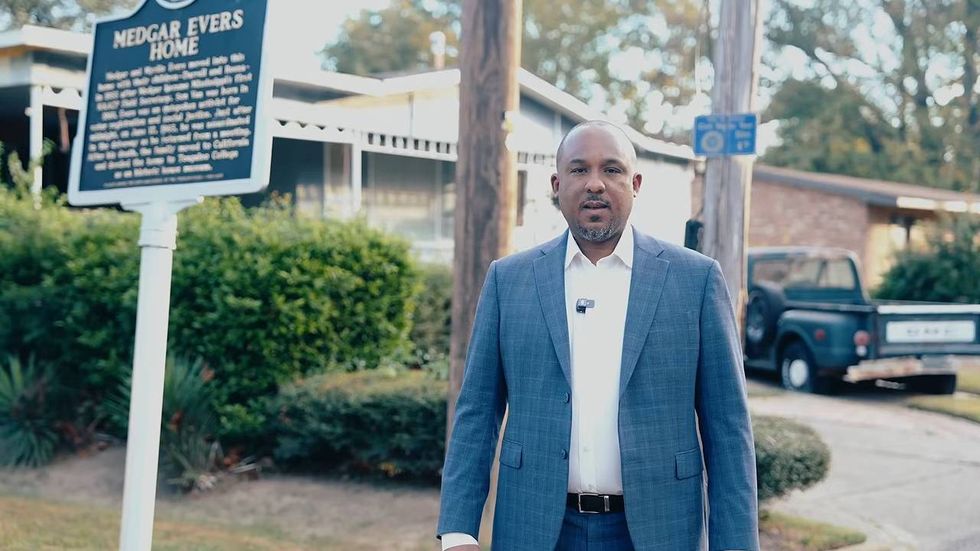
Colom didn’t have to water down his platform much to achieve tremendous gains, even in a deep-red state. As political strategist Paul Hilder explained, he “ran on a ‘commonsense’ economic populist platform aimed at daily life: gas, groceries, healthcare, and closing hospitals, plus Medicaid expansion.”
In the nation’s poorest state, where nearly 1 in 5 residents rely on Medicaid or the Children’s Health Insurance Program, this message was potent. It was especially effective against Hyde-Smith, who has comfortably won her previous elections and was relentlessly criticized for dismissing voters’ concerns about high prices.
For example, in DeSoto County, which Trump carried by 24 points in 2024, Colom led Hyde-Smith by more than six points in early returns.
"[Colom] won many switchers, and the Republican vote collapsed," Hilder said. "Swing voters are more volatile than ever, especially when they’re economically hard-pressed. They respond to common sense, and they’ve decided Trump and the Republicans are not on their side."
Mississippi has not elected a Democrat to the US Senate since Sen. John C. Stennis, a conservative segregationist, won his seventh term in 1982. And although it has the highest proportion of Black residents of any US state, Mississippi has not sent a Black senator to Washington since Reconstruction, when Republican Blanche K. Bruce, who was born into slavery, was elected by the state Legislature.
Colom told NPR last week he’s always believed change was possible and that it has failed to materialize only because of neglect by national Democrats, who have long written the state off as unwinnable.
"The reality is, Mississippi has never been a lost cause," he said. "We've been a betrayed cause."
"He cultivated a whole generation of young leaders through the movement he spawned who are now winning seats everywhere."
The movement that led to at least 18 progressive victories in congressional races and 42 left-wing winners down-ballot "started with a man with 1% vote and three people at his announcement" of his presidential bid in 2015, said one organizer Tuesday night as Democrats won control of the US Senate and House, a majority of governorships, and made major gains in state legislatures.
"Bernie made the path" for progressive politicians to win crucial elections, said a labor organizer based in San Francisco, referring to Sen. Bernie Sanders (I-Vt.). "This wave has been a long time coming."
She was one of several observers who drew the connection from Sanders' unsuccessful but mobilizing presidential runs in 2016 and 2020, and his relentless centering of economic justice in his campaigns and legislative work, to the wave of victories Tuesday night by outspoken economic populists including Sens.-elect Abdul El-Sayed (D-Mich.) and Troy Jackson (D-Maine) and Reps.-elect Melat Kiros (D-Colo.), Donavan McKinney (D-Mich.), and Rebecca Cooke (D-Wis.).
"What a night for the movement Bernie has been building for decades," said Jeremy Slevin, Sanders' senior adviser and communications director, listing dozens of the candidates who were endorsed by the senator and ran on platforms demanding Medicare for All, housing justice, civil rights, and an end to the influence of powerful corporations on US politics.
RoseAnn DeMoro, a labor organizer and former executive director of National Nurses United and the California Nurses Association, recalled how, as her organization campaigned for Sanders in 2016 and 2020, "we educated, agitated, organized, gained the most principled allies, incredible people, like Abdul El-Sayed."
"And last night—we won!" said DeMoro.
She added: "Thank you, Bernie Sanders, for working your heart out to change this country. Your 'long game' should be very gratifying today."
A decade after he first ran for president, the proposals Sanders pushed in 2016 have been embraced by large majorities of Democratic voters, and even Americans across the political spectrum. His signature proposal, Medicare for All, dismissed then by former presidential candidate Hillary Clinton as something that would "never, ever come to pass," is supported by 66% of US adults, according to a KFF poll taken last month, with 52% of respondents still supporting the idea if it would "eliminate private health insurance companies."
The US House held its first-ever hearings on Medicare for All in 2019, and some of the Democratic Party's most popular members—Rep. Alexandria Ocasio-Cortez (D-NY), elected in 2018, and New York City Mayor Zohran Mamdani, elected in 2025—are outspoken proponents of the plan.
On Tuesday night, said Josh Orton of Demand Justice, "across the country, in red states and blue, Democratic candidates adopted the fight Bernie led for years: for the people against the powerful. You lead that fight and welcome everyone to join you, you win."
Even candidates who did not campaign alongside Sanders, such as Democratic Sen.-elect James Talarico and Gov.-elect Gina Hinojosa in Texas, put forward platforms that showed clear signs of Sanders' influence on US politics. Hinojosa told The New York Times that "the one fight in this country is about economic power" as she explained why she identifies as a "populist" rather than a progressive, and Talarico spoke out against "the billionaires who own the social media platforms, who own the cable news networks, who own the politicians fighting on our screens."
"The people at the top work so hard to keep us angry and divided because our unity is a threat to their wealth and their power," Talarico said, suggesting a call for the working-class solidarity Sanders has urged at his Fighting Oligarchy rallies.
Will Steakin of Politico said he was "not sure any Democratic surrogate campaigned as hard as Sanders this cycle," counting 58 rallies since the Fighting Oligarchy Tour, attended by 340,000 people, and "20 rallies in October alone."
Posting a montage of the rallies, set to David Bowie's "Starman," the senator himself said that Americans "across the country, in rural and urban areas," had "said NO to oligarchy, and YES to an agenda that fights for the working class."
Last night saw some of the greatest progressive victories in modern American history. All across the country, in rural and urban areas, Americans said NO to oligarchy, and YES to an agenda that fights for the working class.Congratulations to the following candidates:U.S. SENATEAbdul El-Sayed (MI)Peggy Flanagan (MN)Troy Jackson (ME)U.S. HOUSEBob Brooks (PA-7)Rebecca Cooke (WI-3)Sam Forstag (MT-1)Adam Hamawy (NJ-12)Melat Kiros (CO-1)Brad Lander (NY-10)Will Lawrence (MI-7)Donavan McKinney (MI-13)Brian Poindexter (OH-7)Analilia Mejía (NJ-11)Claire Valdez (NY-07)Randy Villegas (CA-22)Aisha Wahab (CA-14)
— Bernie Sanders (@BernieSanders) November 4, 2026
"I am so happy that Bernie Sanders is with us today to be able to see the fruits of his labor. He cultivated a whole generation of young leaders through the movement he spawned who are now winning seats everywhere," historian Asad Dandia said of the 85-year-old senator. "Thank you, Bernie."
"From coast to coast, Americans are demanding a country that works for all of us, not just corrupt politicians and billionaires."
Progressive lawmakers and advocacy organizations said Wednesday in the aftermath of Democrats' historic midterm victory that the party has a mandate to use its majorities in the US House and Senate to advance an ambitious legislative agenda and deliver the kind of transformative change that voters demanded at ballot boxes across the country.
Rep. Greg Casar (D-Texas), chair of the Congressional Progressive Caucus, called the midterm results "a mandate to deliver big change," emphasizing that the real work has just begun.
"Deliver on the big change people are demanding," Casar wrote in a message to his fellow Democrats. "End the war. Stop ICE’s reign of terror. Root out corruption. Raise wages. Stop price gouging. Get money out of politics. Strengthen unions."
"No complacency," he added.
Top Democrats signaled in the immediate aftermath of the party's midterm rout of President Donald Trump's Republican Party that they would not hesitate to begin investigating alleged corruption—a major issue for voters, according to exit polls—and other wrongdoing by the White House and its allies.
House Democratic leader Hakeem Jeffries (D-NY), who is in line to become speaker in the new Congress, said Wednesday that his caucus would also work to "make significant and decisive progress on addressing the affordability crisis"—though legislative efforts could by stymied by Trump's veto power.
Progressives—bouyed by victories in key races across the country—implored Democrats to use every bit of power that voters gave them to pursue bold change and lay the groundwork for retaking the White House in 2028, warning against a return to the status quo politics that delivered the country into the grasp of Trump and the GOP in the first place.
"Use every committee, hearing, and budget negotiation. Follow the contracts and conflicts of interest. Put executives and administration officials under oath," Joseph Geevarghese, executive director of the advocacy group Our Revolution, said in a statement Wednesday. "Fight for concrete gains and make Trump answer for what he blocks. We know we won’t win everything at once. People need to see Democrats using every bit of power they have to fight for them."
Geevarghese also called on Sen. Chuck Schumer (D-NY) to step aside as leader of the Senate Democratic caucus, arguing that the fight ahead "requires leadership ready to meet the moment."
"The blue wave was powered by a progressive wave. We are the center of gravity in this party, and we intend to drive the agenda. People deserve a new New Deal: a $25 living wage, stronger unions, affordable housing, taxes on billionaires and a sustained fight for Medicare for All," said Geevarghese. "If Democrats retreat into caution and fail to improve people’s lives, they will rebuild the distrust Trump exploited. The people organized for change. We organized to win. Now we organize to make Democrats deliver."
New York City Mayor Zohran Mamdani also weighed in on the implications of Tuesday's election results, saying at a press conference that "what last night told us is that Americans are tired of being told that their needs are unrealistic, by politicians who have been bought by the wealthiest people in the country."
"This country has elected a new generation of leadership, a generation with a mandate to lower the cost of living, to build not bomb, to never betray the working people who entrusted them with power," said Mamdani. "And I hear often that the politics that we're fighting for here in New York City are not possible outside of city limits. And what last night showed us is that working people are the majority, whether we are speaking of Austin or Ann Arbor or Astoria. It is time to put those same people first in our politics."
"Those in control of the House have the power and responsibility to hold this lawless president accountable through impeachment.”
A campaign launched on Wednesday is urging Democrats to use their new majorities in the US House of Representatives and Senate next year to impeach and remove President Donald Trump.
In announcing its "Time to Impeach" campaign, nonprofit legal advocacy organization Free Speech For People said impeachment proceedings against the president should begin on the very first day of the next Congress.
The group noted that 147 House Democrats in September voted to advance impeachment articles against Trump filed by Rep. Al Green (D-Texas), who accused the president of abusing his powers by letting federal immigration enforcement officials run roughshod over people's constitutional rights.
Free Speech For People also said it has already gathered more than 1.1 million signatures for its online petition to impeach the president.
"Members of Congress swear an oath to support and defend the Constitution," said Alexandra Flores-Quilty, campaign director at Free Speech For People. "When the new Congress convenes in January, those in control of the House have the power and responsibility to hold this lawless president accountable through impeachment."
John Bonifaz, president of Free Speech For People, said impeachment was the only acceptable remedy "to address a corrupt and dangerous executive who tramples on the Constitution and the rule of law."
"If Congress fails to act, it will set a dangerous precedent that Trump—and any president hereafter—can operate above the law," Bonifaz stressed. "The Constitution demands that we impeach and remove Trump from public office."
Despite the group's advocacy for aggressive action, House Democratic Leader Hakeem Jeffries (D-NY) signaled that he is not in any rush to begin impeachment proceedings.
"I haven't had a single member of the House Democratic caucus talk to me about impeachment," Jeffries told reporters on Wednesday. "We've been relentlessly focused on affordability and accountability. Because the House is a separate and coequal branch of government... and the days of the House of Representatives functioning like a wholly owned subsidiary of the Trump administration are over."
Jeffries: "I haven't had a single member of the House Democratic caucus talk to me about impeachment. We've been relentlessly focused on affordability and accountability."
[image or embed]
— Aaron Rupar (@atrupar.com) November 4, 2026 at 12:32 PM
Jeffries emphasized this means that Congress under his leadership will "serve as a check and balance on an out-of-control executive branch."
In an interview with the Baltimore Banner published Wednesday, Rep. Jamie Raskin (D-Md.), who is in line to take over as chair of the House Judiciary Committee next year, would not take a third impeachment of the president off the table.
"We’re not afraid to impeach Donald Trump," said the Maryland Democrat. "We’ve done it twice. He has 50% of all the presidential impeachments in American history."
Raskin also addressed critics who said that impeaching Trump a third time should be off the table given there is little chance of him being convicted in the US Senate.
"[Impeachment] cannot be a fetish, but it also can’t be a taboo either,” Raskin said. “It is one of the people’s major instruments of constitutional self-defense against a president who continues to act like a king or an emperor."
"Will Democrats finally get it?" asked one progressive expert. "Americans are tired of war. They want a new foreign policy."
Nearly three-quarters of Americans who voted in Tuesday's midterm elections said that President Donald Trump's illegal war of choice on Iran was a significant factor in their vote, a figure that opponents of US militarism said underscored the need for the Democrats to become a true anti-war party.
According to NBC News exit polling, 74% of voters called the ongoing US-Israeli war on Iran a "crucial" or "major" factor in their vote, with Democrats winning 63% of people who responded that way. Meanwhile, 63% of voters said the Trump administration made the wrong decision in taking military action against Iran, compared with 37% who said it was the right decision.
"There will be a lot of infighting and arguing over what happened and why that is," Vice President JD Vance said Tuesday in a lengthy social media post. "One of the pollsters I really respect told me that our economic messaging wasn’t sharp enough down the stretch. I’m sure that’s true."
"But the real reason we lost is obvious to almost everyone," the vice president continued. "The reason we lost is the war. The president himself said so last night."
Indeed, Trump acknowledged that the war harmed Republicans, telling Fox News, "I think a part of it was Iran," but nevertheless defended the 35-week military campaign, insisting that "people understood the importance of what I've done with Iran."
In an interview with The Wall Street Journal, Trump was similarly unapologetic, declaring: "I did the right thing. I would have done it again."
Numerous observers contended that Tuesday's results offered an opportunity for Democrats to do more than simply capitalize on Republican mistakes.
"Among other things, this is an absolute rebuke of the war in Iran. Democrats would be wise to heed that lesson and truly become the anti-war party," said commentator Ben Rhodes—who, while serving as a senior national security adviser to then-President Barack Obama, supported US intervention in countries including Iraq, Libya, and Syria, as well as Obama's wider drone war campaign.
Geopolitics scholar Van Jackson opined on social media that "if Democrats remain the party of the national security state, they will lose everything in 2028. If they become the anti-war party, they’ll consolidate this wave with the presidency."
A Wednesday analysis on the libertarian site Reason by Matthew Petti argued that Democrats now have an opportunity to exercise Congress' constitutional power over the war, including by withholding military funding.
Petti noted that Rep. Ro Khanna (D-Calif.) told Fox News last week, "The House and the Senate should stop the funding for any further actions in the Iran War," just like "we did to stop the Vietnam War."
However, Petti cautioned that Democratic electoral victories usually don't lead to anti-war foreign policy.
"Party leadership that is willing to attack Republicans' execution of the war may not share a principled anti-war commitment," he wrote, recalling how Democrats who swept the 2006 midterms over public anger with the Iraq War but then struggled to use their control of both chambers of Congress to end it.
Sen. Chris Van Hollen (D-Md.) wants his party to cut off funding for Trump's war and said Democrats can do so by demanding explicit restrictions on war spending as a condition of supporting the fiscal year 2027 government funding bill that expires next month.
"Right now, the continuing resolution goes through December 11," Van Hollen told The Lever on Tuesday. "And my view is that Democrats should not advance spending to continue to fund this war."
"The Vietnam War ended only when Congress defunded it," he added. "This is an illegal war, and we need to make sure that taxpayer monies are not used to continue an illegal war."
Institute for Middle East Understanding executive director Margaret DeReus pleaded on social media, "For the love of all that is good, Democrats, do not squander this."
"The voters have given you a mandate. Use it. Be the party of working people. Be the anti-war party. Be the anti-corruption party," she added. "We cannot go back to business as usual."
Matt Duss, a former top aide to US Sen. Bernie Sanders (I-Vt.) who serves as executive vice president at the Center for International Policy, noted that "Trump ran and won as an anti-war candidate in 2024 because Democrats left that lane wide open for him."
"Voters have just brutally punished him and the GOP for breaking that promise. Will Democrats finally get it?" Duss added. "Americans are tired of war. They want a new foreign policy."
Although Angie Nixon wasn't among the Democrats who helped her party reclaim the US Senate on Tuesday, the democratic socialist's near-win in Florida—without establishment support—sent a clear message about what might be possible in the Sunshine State going forward.
After a "stunning" primary victory over establishment-backed Lt. Col. Alex Vindman in August, Nixon—a 42-year-old Black businesswoman and state representative from Jacksonville who belongs to both Democratic Socialists of America and the Working Families Party (WFP)—secured 48% of the vote in the general election, compared with Republican Sen. Ashley Moody's 50.9%, with over 95% of ballots tallied as of Wednesday afternoon.
Nixon refused to back off her progressive platform after her primary win, continuing to campaign on Medicare for All, free childcare, paid family and sick leave, a national rent freeze and eviction moratorium, a universal jobs program, ending wars, getting big money out of politics, and taxing billionaires in a state written off by the Democratic Party throughout the 21st Century.
"I'm proud of the race we ran. We helped drive turnout and broke the supermajority in the state House and Senate. 2028 is around the corner. LFG!" Nixon said on social media late Tuesday. "We invested in grassroots organizers and partnered with candidates down ballot. I'm so proud of the work we did helping to flip 17 House seats. Many of whom were candidates we partnered with in the primary. Imagine what would have happened if we had more investment early on."
As people across the country took note of her close race—and some called out the national Democratic Party and its leadership for not pouring into the contest—Nixon added early Wednesday, "Invest in the South."
Jonathan Cohn, political director of the group Progressive Mass, said on social media that "Angie Nixon sadly didn't win, but for a race the national party did not invest in, she did damn well."
Amanda Litman, president of Run for Something, which recruits and supports young Democrats to seek elected office, said that she's "not sure there's a federal candidate in the country who worked as hard—with as little national help—as Angie Nixon. What a star."
Stressing that Florida, now Trump's home state, "is the absolute epicenter of MAGA," political commentator Kyle Kulinski highlighted that "a democratic socialist nearly pulled off one of the biggest upsets in political history. What a tremendous campaign from Angie Nixon."
WFP national director Maurice Mitchell said in a statement that "we are incredibly proud of Angie's campaign and our part in it. But there is no hiding our anger, because this race was winnable."
"In the face of outsized spending and racist attacks, Angie's people-centered campaign came within inches of defeating an incumbent senator," he emphasized. "The Democratic establishment failed to invest in Angie, because she wasn't their preferred candidate."
"The Working Families Party is proud to have been the first national organization to endorse Angie," he continued, "and we're committed to recruiting and running powerful leaders like her all across the South."
Some critics directly called out Senate Minority Chuck Schumer (D-NY), who's expected to lead the chamber again when Democrats officially reclaim their majority in January.
"Never forget that Angie Nixon lost by three points after being snubbed by Schumer and the Dem establishment for running on a progressive, DSA-backed platform this cycle," said Jack Petocz, senior director of programs and communications at Gen-Z for Change.
Although Schumer didn't bother with the race, Nixon was endorsed by national leftist leaders, including Sen. Bernie Sanders (I-Vt.), Rep. Alexandria Ocasio-Cortez (D-NY), and Congressional Progressive Caucus Chair Emerita Pramila Jayapal (D-Wash.).
As the results rolled in late Tuesday, Jeremy Slevin, Sanders' communications director and senior adviser, pointed out that "Bernie held four rallies for Angie Nixon, had four staffers on the ground, contributed $330,000 to support her directly, and raised another $266,000. She's currently within about 2 points. Imagine if the establishment hadn't written this race off."
Jayapal said late Tuesday that "even though Angie Nixon did not pull it out, she ran an incredibly competitive race, and drove up votes down ballot for other candidates. She was underestimated and overspent at every step, but she never stopped being who she was and running on bold, progressive values. Thank you, Angie!!"
At The American Prospect, Naomi Bethune and James Baratta noted that "Moody will have to run again for a full term in 2028. Given how close the matchup between Moody and Nixon ended up, the energetic progressive insurgent is expected to try again."
“In state after state and race after race, Big Tech has failed to deliver—and everyday Americans have won,” said Mitch Jones, deputy director of Food and Water Action.
The results of both ballot initiatives and legislative elections Tuesday night underscored what numerous polls have shown for months: Despite President Donald Trump's insistence to the contrary, Americans don't want data centers in their communities and are demanding that Big Tech, including artificial intelligence companies, be reined in.
Dozens of cities and towns across the country—including in Ohio, which has been pushed as a hub for the expansion of energy-sucking, water-guzzling data centers—resoundingly voting for moratoriums on their construction, blocking proposed projects like a $2 billion data center Amazon had planned for Sunbury, Ohio.
In all, communities across the US passed 43 out of 44 initiatives that proposed banning or pausing construction on data centers or infrastructure of a certain size.
Sunbury, a small city of less than 9,000 residents, mobilized to pass a ban on data centers larger than 25 megawatts, with more than 78% of voters supporting the moratorium.
The ban "gives us more of a say in the outcome of what happens in our community,” Trey Dockendorf, who helped organize the campaign, told WCMH. Amazon had planned to begin construction in 2028 and property tax breaks for the massive facility could have spanned more than 30 years.
"People do not want data centers where they can ruin neighborhoods, ruin communities, or put people at risk," Larry Thode, who lives near the proposed site for the Amazon project, told 10TV.
Wide margins were reported in elections across the country and in towns across Ohio, where 21 initiatives appeared on ballots.
More than 82% of voters in Granville approved a ban on all data center construction in the village, along with 76% of voters in Hubbard and 77% of people in Urbana.
Farm Action president Angela Huffman recounted how her community of Upper Sandusky also rallied around a proposed moratorium, which was backed by more than 76% of residents.
After Smartland Energy proposed a $900 million center in the town last year, residents "filled public meetings, challenged the proposed approval process, and pressed city officials for answers," wrote Huffman, eventually pushing Smartland to withdraw its zoning request.
She continued:
Local residents worked with attorneys at Conserve Ohio, who drafted the charter amendment that ultimately became Ordinance 85-14.
The amendment would prohibit construction of data centers with an electrical demand or peak load exceeding 25 megawatts.
To place it on the November ballot, we needed to collect signatures from registered city voters.
We were initially told that 155 valid signatures would be sufficient. We collected well beyond that number, knowing some signatures would be rejected during verification.
On August 3, we submitted petitions containing 301 signatures. Of those, 192 were accepted.
We then learned that the city’s charter required 212 valid signatures. That left us 20 valid signatures short.
With just hours remaining before the filing deadline, we headed back out to collect signatures, determined not to let months of work fall short.
On August 5, we submitted another 50 signatures. Election officials accepted 37. Our final total was 229 valid signatures, just 17 more than required.
We had qualified for the November ballot.
Ohioans also elected Democrat Amy Acton to be governor, after a campaign in which Acton supported a statewide moratorium on data centers, and unseated Republican Sen. Jon Husted, whom Democratic Sen.-elect Sherrod Brown derided as "the face of data centers," pointing to his support for tech giants' investment in Ohio when he served as lieutenant governor.
Maine was home to the second-highest number of data center-related ballot initiatives, and voters overwhelmingly supported measures banning construction for 180 days or, in the case of North Berwick, indefinitely for data centers larger than 25,000 square feet.
“Let’s not destroy our nice Maine environment to help produce this thing, and have water droughts and everybody surrounded by really loud noise," Kayley Buzzell of Sabattus told The Maine Monitor. The town voted 66-33% in favor of a moratorium on data centers of 10,000 sq ft or 20 megawatts or more, until May 2027.
Other victorious Democratic gubernatorial candidates who pledged to fight the unregulated growth of data centers, which Trump has aggressively pushed as AI giants poured tens of millions of dollars into the midterm elections, include Govs.-elect Keisha Lance Bottoms in Georgia and Gina Hinojosa in Texas. Hinojosa consistently called for an immediate moratorium on data center development, and Lance Bottoms advocated for a temporary statewide pause and accountability to stop companies from driving up residents' electricity costs.
And in South Carolina, Sen.-elect Annie Andrews (D) labeled her opponent, Republican Sen. Darline Graham, "Data Center Darline" as a super political action committee aligned with the industry spent $1.5 million on advertising for Graham.
The victories of citizen-led ballot initiatives and vocally anti-AI candidates against well-funded allies of Big Tech served as a "clear rebuke of the unchecked AI data center build-out," said Food and Water Action.
“Voters across the country have emphatically rejected the push for AI data centers. In state after state and race after race, Big Tech has failed to deliver—and everyday Americans have won,” said Mitch Jones, deputy director of the group. “Not only in Washington, but in state capitols and village halls across the country, newly elected leaders are poised to stand up to the unregulated, reckless build-out of hyperscale data centers wherever they are proposed."
“Congressional Democrats now have a mandate to stand up to Big Tech," said Jones. "They must start by rejecting the pro-polluter 'permitting reform' bill before them in the lame duck Congress. And a desperately needed moratorium on new data center construction must be enacted, so lawmakers and community leaders have the time to determine if—not how—this out-of-control industry can ever be safely regulated.”
"They are going to need to plant new forests for all of the subpoenas we’ll be printing," said Sen. Ed Markey.
After Democrats took back both chambers of the US Congress Tuesday, Rep. Robert Garcia, the incoming Democratic chair of the House Oversight Committee, had two words for President Donald Trump and his family: “Lawyer up.”
With solid majorities in the House and Senate, Democrats will have much greater power to conduct hearings, demand documents, and summon witnesses to testify under oath beginning in January.
“They are going to need to plant new forests for all of the subpoenas we’ll be printing,” said Sen. Ed Markey (D-Mass.).
Democrats are expected to aggressively probe the depths of what Garcia (D-Calif.) called “an unprecedented amount of corruption” by the “Trump crime family.”
Trump has added billions of dollars to his personal wealth during his second term. Garcia said Democrats plan to examine Trump’s cryptocurrency empire and whether foreign governments and businesses have used it to purchase political favors.
He said Democrats intend to investigate Donald Trump Jr.’s personal investments and his involvement with companies that have received government contracts. The business dealings of Trump’s son-in-law Jared Kushner, who has been accused of using foreign diplomacy to line his own pockets, will also be investigated.
Responding to voter concerns about the cost of living, which fueled Democratic wins across the map on Tuesday, Garcia said “any CEO that has been ripping off the American public” should prepare to face scrutiny, particularly those whose companies have engaged in price gouging, abused government contracts, or financially benefited from their relationships with Trump.
Punchbowl News noted several powerful executives and officials who could be under the gun:
Expect the tech executives closest to [Trump], including SpaceX’s Elon Musk, Meta’s Mark Zuckerberg, and Nvidia’s Jensen Huang, to be early targets for House Oversight, [the House Energy and Commerce Committee], and [the Senate Commerce, Science, and Transportation Committee]. Democrats will also want to grill OpenAI’s Sam Altman and Anthropic’s Dario Amodei about their [artificial intelligence] products.
“Anyone who has been in bed with the Trumps” is going to have “no choice but to respond to our questions,” Garcia said of businesses alleged to have gotten favorable treatment due to their relationship with the president’s family.
The US Department of Justice (DOJ) will also face scrutiny over its handling of the investigation into the late sex criminal Jeffrey Epstein. A report last month by Democrats on the House Judiciary Committee said the DOJ “appears to be covering up” evidence of Trump’s relationship with the billionaire predator and laid out accounts involving 11 women who connect Trump to Epstein’s alleged sex trafficking operation—five of them have accused the president of sexual assault in Epstein’s presence.
Garcia said Tuesday that in contrast to the closed-door hearings conducted under Republican control, he plans to hold “real public hearings” that “center the survivors” of Epstein’s abuse.
Abuses by US Immigration and Customs Enforcement (ICE) and the US Department of Homeland Security (DHS) will also be examined.
At least 62 people have died in ICE custody since Trump returned to office, while federal immigration agents have opened fire on people in at least 32 incidents, killing nine and injuring 15, including US citizens and immigrants who appeared to pose no threat. Agents have also been documented committing widespread civil rights violations, using excessive force, and engaging in racial profiling.
“Oversight Democrats have documented hundreds of incidents of abuse and misconduct by DHS immigration enforcement agents, and every single one of them deserves a full investigation,” Garcia said in April in a statement with Rep. Summer Lee (D-Pa.).
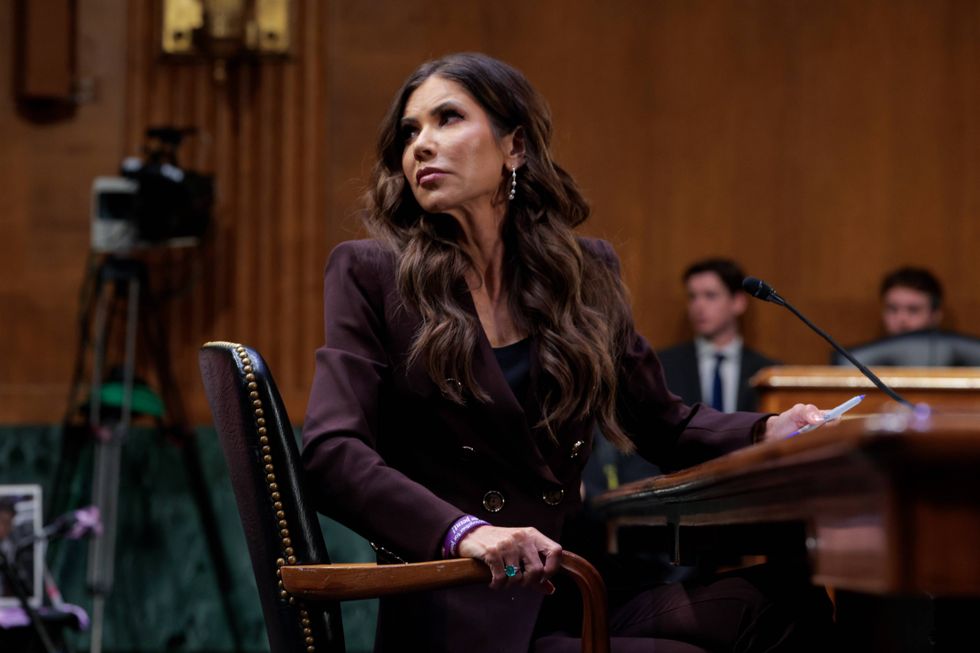
Garcia has stressed that "it can't just be the agents" who face accountability, but anyone “involved in the abuses of ICE."
“The agents are taking direction in some cases from others, and policy is being written to encourage that level of activity and that level of elimination of due process,” he said, adding that he wants “accountability at all levels, and that starts at the top.”
Garcia signaled that top DHS officials, including former Secretary Kristi Noem and her top aide Corey Lewandowski, could face scrutiny over a $220 million taxpayer-funded advertising campaign featuring Noem and allegations that she and Lewandowski used their positions for personal gain. The DOJ was reported in October to have opened a criminal investigation into Lewandowski over whether he personally profited from his government role.
Garcia will likely oversee only a fraction of the inquiries into Trump and his allies’ conduct launched by a Democratic Congress.
Rep. Adam Smith (D-Wash.), the incoming chair of the House Armed Services Committee, is expected to dig into Trump’s decision to launch an unauthorized aggressive war against Iran, as well as its financial cost, attacks on civilians, and the administration’s shifting justifications for the now eight-month-old conflict.
He also said he would examine the legality of Trump's unauthorized strikes on boats in the Caribbean and eastern Pacific, which have killed at least 243 people and have been described as illegal extrajudicial assassinations by human rights groups. He also called for more transparency surrounding the Trump administration's regime change operation and commandeering of oil in Venezuela, and its crippling blockade and threats to invade Cuba.
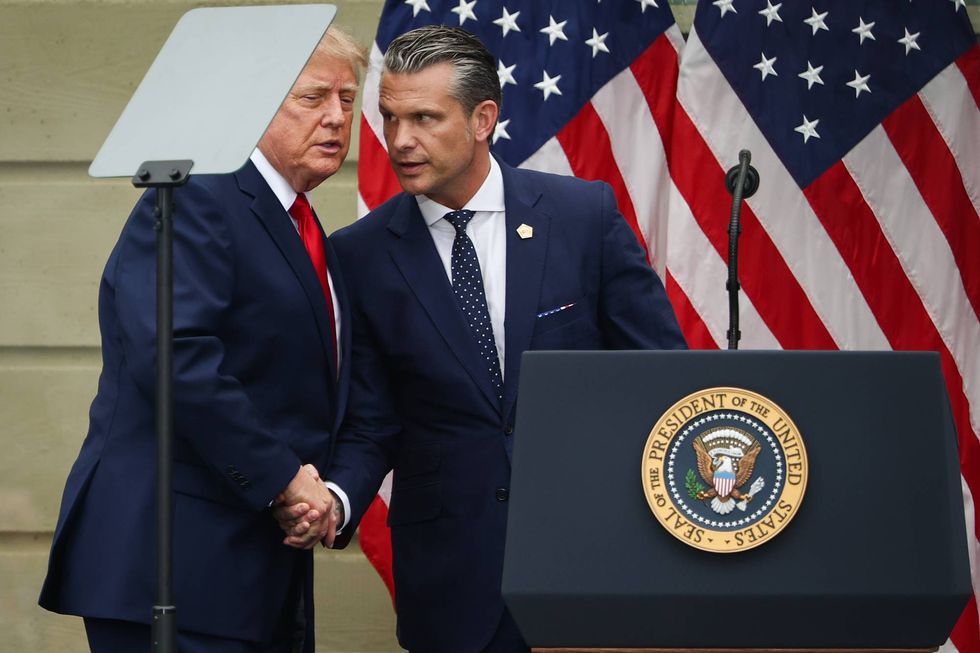
Smith, who has served in Congress for nearly three decades, described Defense Secretary Pete Hegseth as less transparent than anyone who previously held the position.
"Since I became ranking member, I have had the cellphone number of every single secretary of defense," he told The Washington Post earlier this week. "Hegseth does not speak to me."
He has said, "There are Republicans who would support impeaching Hegseth who might not support doing it to Trump."
But that doesn't mean Trump is safe. Rep. Jamie Raskin (D-Md.), the incoming chair of the House Judiciary Committee, said Tuesday that he would not rule out pursuing a third impeachment of Trump, though he cautioned that Democrats would have to weigh it against their other priorities.
Raskin, who managed Trump’s historic second impeachment, called it "one of the people's major instruments of constitutional self-defense against a president who continues to act like a king or an emperor."