

SUBSCRIBE TO OUR FREE NEWSLETTER
Daily news & progressive opinion—funded by the people, not the corporations—delivered straight to your inbox.
5
#000000
#FFFFFF
To donate by check, phone, or other method, see our More Ways to Give page.
Daily news & progressive opinion—funded by the people, not the corporations—delivered straight to your inbox.
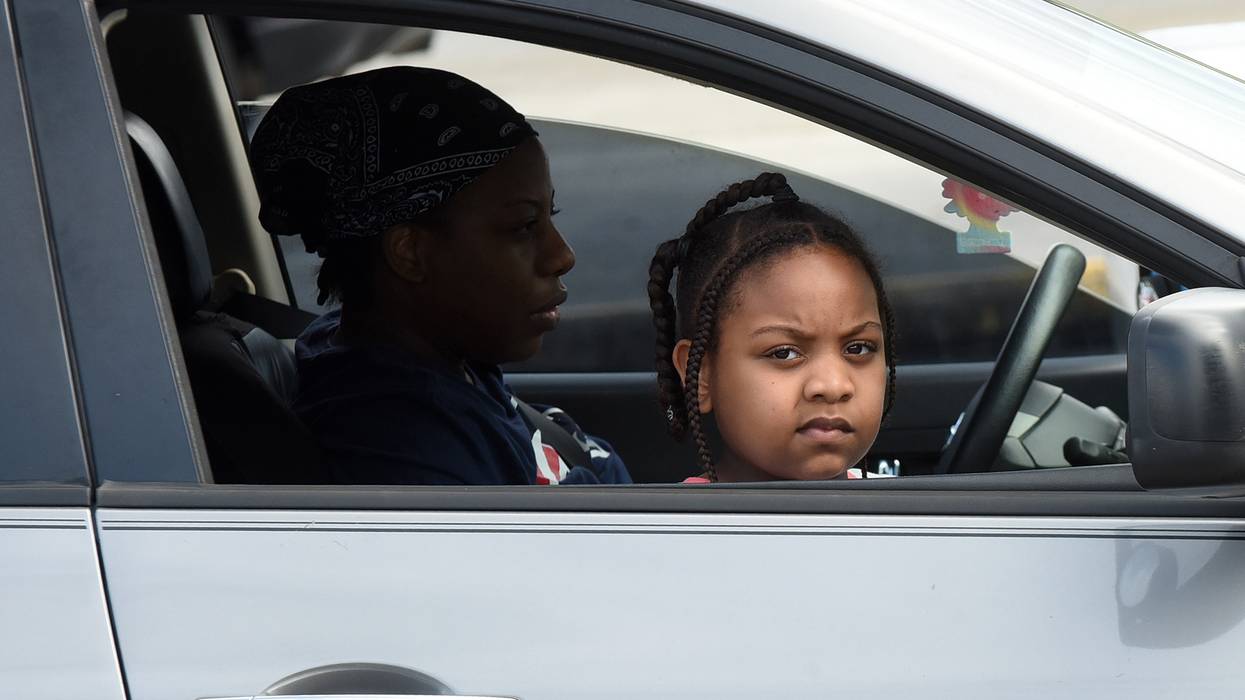
If we are serious about supporting families, then we need to stop romanticizing hardship and start investing in mothers in real, tangible ways.
Happy Mother’s Day—because that’s what you’re supposed to say, right?
Motherhood is always dressed up in soft language like community, support, and…“it takes a village.” But I have learned in real time that not all of us actually have one.
I am raising my sons without consistent help, without a built-in break, without the kind of support people assume is just there. Everything falls on me emotionally, financially, and physically, and I still have to show up every single day like I am not carrying all of it alone. And when I do pull back, when I protect my energy or go quiet, it is not because I am distant. It is because I am overwhelmed.
There is this unspoken expectation that mothers, especially single mothers, are just supposed to figure it out, hold it together, and do it gracefully. But the truth is, a lot of us are doing the work of an entire village by ourselves, and nobody wants to say that part out loud.
In Baltimore's guaranteed income pilot, of which I was a part, data shows that I'm not alone: Young parents reported less stress and more stability, and those improvements lasted even after the payments stopped.
And this is where the conversation needs to shift, because how I feel about motherhood and how motherhood is structured in this country are two very different things.
I love being a mother. My children are everything to me. They are the reason I keep going when I am tired, when I am stretched thin, when I feel like there is nothing left to give. But love does not remove the weight. It does not pay bills. It does not create time, energy, or support where there is none. Loving my children deeply does not make the system around me any less difficult to navigate.
When people talk about motherhood like it is just a personal experience, like it begins and ends with love and sacrifice, they miss something critical.
Because motherhood is also structural. It is economic. It is shaped by whether or not you have resources, support, and stability. And when those things are missing, love alone is not enough to carry the load.
That is exactly why I stand behind guaranteed income strongly.
Because when there is no village, money becomes the closest thing to stability, something that's within our control.
It is about investing in the people who hold families together.
It is about acknowledging reality.
Caregiving is labor. Raising children is labor. Holding a household together on your own is labor.
Guaranteed income gives mothers breathing room. It gives us the ability to make decisions from a place of stability instead of survival.
It means not having to choose between rest and responsibility, between being present with our children or being consumed by stress.
In Baltimore's guaranteed income pilot, of which I was a part, data shows that I'm not alone: Young parents reported less stress and more stability, and those improvements lasted even after the payments stopped.
Right now, too many mothers are forced into impossible trade-offs. Work more and lose time with your kids. Stay present and fall behind financially. Ask for help and risk being judged. Stay silent and carry it alone. These are not personal failures. These are policy failures.
People love to celebrate strong mothers, but strength should not have to come from constant struggle. Strength should not be built on exhaustion. And survival should not be the standard we measure good parenting by.
If we are serious about supporting families, then we need to stop romanticizing hardship and start investing in mothers in real, tangible ways. Guaranteed income is one of those ways. It is not a cure-all, but it is a foundation. It is a recognition that mothers should not have to break themselves just to keep their households afloat.
Because the truth is, many of us are not asking for a village anymore…
We are building without one.
We are showing up every day, making a way out of no way, holding everything together with very little support and even less margin for error.
And still, we keep going.
So yes—Happy Mother’s Day.
Not the polished version. Not the performative one. But the real one.
Happy Mother’s Day to the mothers who carry what no one sees, who love without limit, who build without a village, and who keep showing up anyway. You are not invisible. You are powerful. And you are worthy of more than survival.
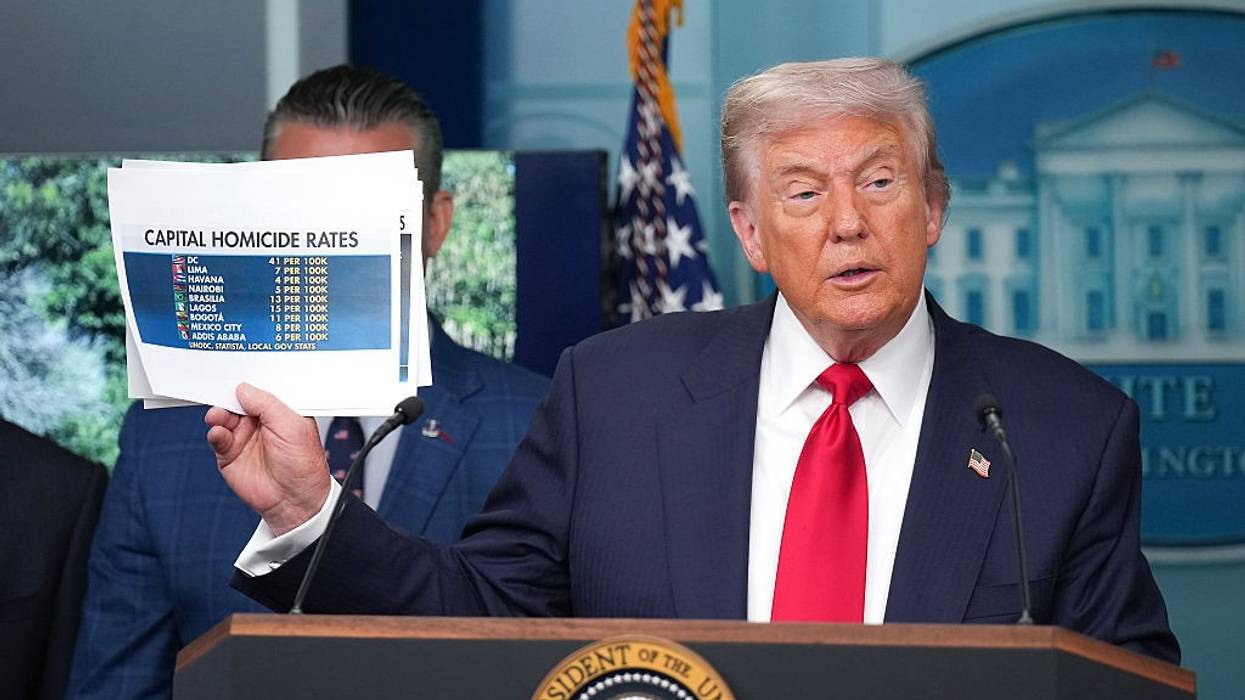
Despite these trends, many Americans are persuaded by persistent claims that crime is rising, even when they are not. Critics say the media's rampant coverage of violent crime has helped to warp their perceptions.
When U.S. President Donald Trump deployed the National Guard to Washington, D.C. on Monday and claimed during a press conference that the city was overrun by "crime, bloodshed, bedlam, and squalor and worse," critics were quick to point out that crime had actually been falling in the nation's capital.
Violent crime in D.C. has dropped by 26% since this time in 2024, which was already a 30-year low, according to data from the police department.
During that same surreal press conference, Trump threatened to have federal law enforcement occupy several other U.S. cities—Los Angeles, Baltimore, Oakland, New York, and Chicago.
"We're not gonna lose our cities over this," Trump said Monday morning. "And this will go further," he said, referring to his federal crackdown.
Trump said the cities he plans to target are "bad, very bad," concerning crime. But he didn't cite any specifics. Likely because there aren't any.
After temporary upticks in the wake of the Covid-19 pandemic, crime rates continued the precipitous decline that has been going on for decades. According to nationwide data released on August 5 by the FBI, both violent and property crime rates continued to drop throughout 2024, reaching their lowest points since at least 1969.
Like with D.C., in every single one of the cities he named, crime is actually falling, in some cases reaching historic lows.
Contrary to Trump's characterization that "lawlessness...has been allowed to fester," the Los Angeles Police Department reported last month that homicides had fallen by 20% in the first half of the year and that the city was on pace for the lowest number of killings in more than 60 years.
Violent crime is on the decline more generally across the city, with fewer aggravated assaults, gun assaults, sexual assaults, domestic violence incidents, robberies, and carjackings this year than in the first half of 2019, when Trump was still in his first term.
Baltimore, which Trump has derided as "filthy" and "so far gone" on crime, is likewise the safest it's been in 50 years, with a historically low homicide rate that has declined by 28% over the past year alone. Violent crime has more generally decreased by 17% from the previous year, while property crime has decreased by 13%.
In April 2025, the city saw just five homicides, the fewest in any month since 1970. In Popular Information, journalist Judd Legum noted how this dramatic shift has followed a change in approaches to policing in the city under Democratic Mayor Brandon Scott:
Scott, who was first elected in 2020, has brought the city's homicide rate down by treating violent crime as a public health crisis. That means treating violent crime as a symptom of multiple factors, including racism, poverty, and past violence. Addressing violent crime as a public health issue involves going beyond arresting people after violence is committed and taking proactive and preventative measures...
Under Scott, Baltimore has fought violent crime not only through policing but through a network of programs that provide support for housing, career development, and education.
Chicago has likewise seen a historic drop in homicides, with fewer this year than in any previous year in the past decade and a 30% decline in both shootings and homicides from the previous year. Violent crime on the whole, meanwhile, is 25% lower than it was in 2019—a larger drop than many other cities have seen.
Midyear data from Oakland's police department shows that overall crime is down 28% from the previous year, with the most significant drops in robbery, burglary, and theft crimes. Homicides, meanwhile, dropped 24%. This decrease continues the trend from 2024, when homicides also dropped by double digits.
Trump's ally in Gracie Mansion notwithstanding, crime is also down considerably in New York City. From January to May 2025, the city experienced the lowest number of murders in recorded history, marking an astonishing 46% decrease from the previous year.
And while—unlike most cities—overall crime is still higher in the Big Apple than it was before the pandemic, that comes at the tail end of a total collapse in its violent crime rate over the past four decades. In 1990, there were 30 homicides per 100,000 people, compared with just 3.2 homicides it is on track for in 2025.
Despite these trends, many Americans are persuaded by persistent claims that crime is rising, even when they are not.
In October 2024, even as crime rates were cratering around the country, 64% of Americans still told a Gallup poll that they believed it was on the rise. And even when Americans believe crime is down where they live, they tend to believe it is increasing nationally.
Alec Karakatsanis, a civil rights attorney and author of the book Copaganda: How Police and the Media Manipulate Our News, wrote on X Monday that the press's incessant decontextualized coverage of violent crime has helped to lend credibility to Trump's narrative that it is rising.
"How is this possible? What lays the groundwork for such ludicrous claims?" he asked. "The news media has been fearmongering for years."
According to a survey by Pew Research in 2024, local news covers crime more than any other topic, with the exception of the weather. And although violent crime occurs at about one-fifth the rate of property crime, Americans are shown news stories about it at about the same rate.
Karakatanis says, journalists at major news outlets like The Washington Post have uncritically spread the claim that crime is "out of control" despite its precipitous decline—a narrative that has been seized upon by Republicans hoping to enact authoritarian measures.
The Associated Press has been criticized for its coverage on Monday of Trump's deployment of the National Guard, which Mother Jones reporter Dan Friedman said on Bluesky "manages to treat the objective fact of declining crime in D.C. like it's a difference of opinion" between Trump and Democratic Mayor Bowser.
Really bad AP lead here manages to treat the objective fact of declining crime in DC like it' difference of opinion between Trump and Mayor Bowser.
[image or embed]
— Dan Friedman (@dfriedman.bsky.social) August 11, 2025 at 1:15 PM
"No publication, not the AP, not The New York Post, needs to accept Trump's claim that crime in D.C. suddenly constitutes an emergency as plausible and ignore the actual reasons for this authoritarian move," he added.
"If we get to walk back from the brink," Karakatsanis said, "there must be a rigorous reckoning among people of good will about how mainstream institutions tolerated, accepted, peddled, and even celebrated the lies and mythologies of the far-right."
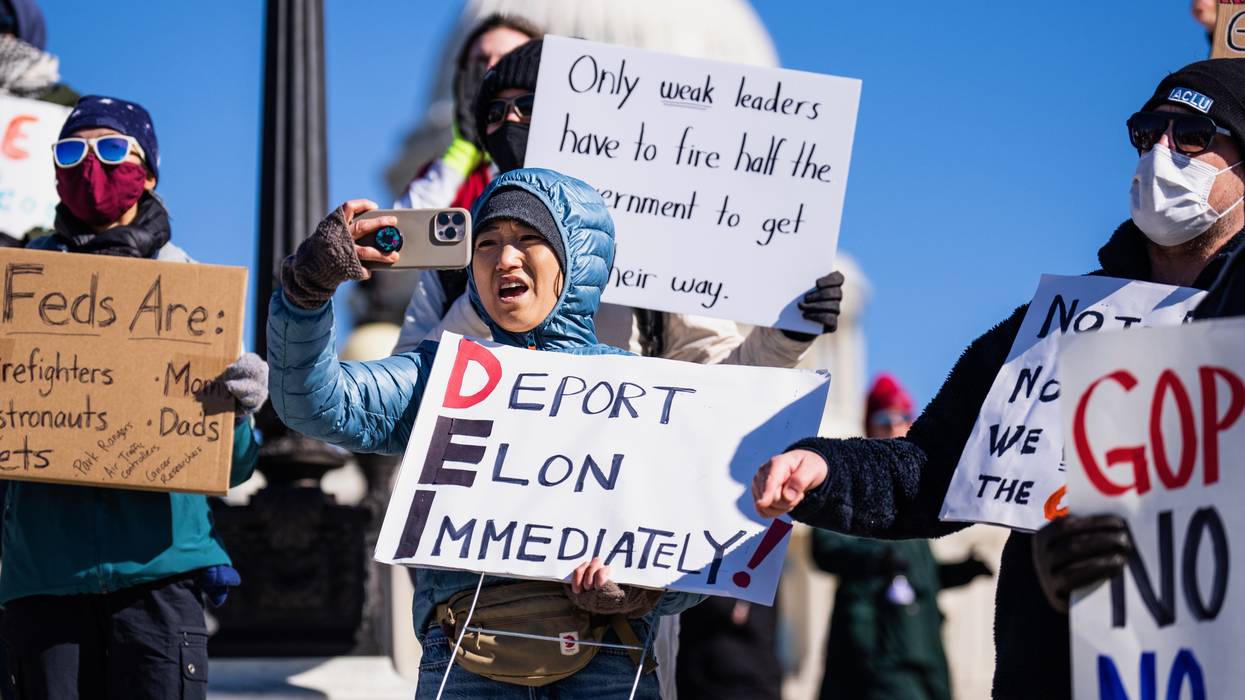
"We are grateful for the court's decision to pause these harmful executive orders while it takes a careful look at how the orders blatantly violate our Constitution," said one advocate.
U.S. President Donald Trump's efforts to rid the federal government and corporations of programs that promote inclusive hiring practices hit a roadblock Friday evening when a federal judge in Maryland granted a preliminary injunction blocking portions of Trump's executive orders, saying they would "likely" be found to violate the First Amendment.
The ruling pertained to two executive orders the president issued in the first days of his second term in the White House, which directed federal agencies to end all "equity-related" contracts and required federal contractors to certify that they don't promote "diversity, equity, and inclusion" (DEI)—frameworks used by companies, schools, and other organizations to ensure historically marginalized groups have opportunities and see their histories included in school curricula.
The latter provision, argued the coalition that sued over the orders in Maryland, suppresses the First Amendment right to freedom of speech.
The term DEI has been invoked repeatedly by right-wing politicians who have blamed pro-diversity hiring practices for the deadly plane crash near Washington, D.C. late last month and the wildfires that devastated Los Angeles last month, and Trump's billionaire backer and "special government employee" Elon Musk has called DEI "immoral" and "just another word for racism."
Trump's orders targeting DEI have already led to purges of federal workers while corporations including Google, Deloitte, and Target have announced an end to DEI programs and universities have faced the possibility of federal investigations into suspected DEI practices—which are designed to ensure the inclusion of military veterans, first-generation college students, women, people with disabilities, and people of color, among other groups.
U.S. District Judge Adam B. Abelson in the District of Maryland on Friday said Trump's orders promote "textbook viewpoint-based discrimination."
"The government's threat of enforcement is not just targeted towards enforcement of federal law," said the judge, who was appointed by former President Joe Biden. "Rather, the provision expressly targets, and threatens, the expression of views supportive of equity, diversity, and inclusion."
The preliminary ruling was handed down in a case filed by advocacy group Democracy Forward on behalf of the American Association of University Professors, the National Association of Diversity Officers in Higher Education (NADOHE), Restaurant Opportunities Centers United, and the mayor and city council of Baltimore earlier this month.
Skye Perryman, president and CEO of Democracy Forward, said in a statement that the U.S. Constitution "protects all Americans—whether you are a university professor or a restaurant worker—from unlawful intrusion on speech, ideas, and expression and entitles all Americans to fair process. The Trump administration's anti-equity directives violate these core protections."
"We are grateful for the court's decision to pause these harmful executive orders while it takes a careful look at how the orders blatantly violate our Constitution," said Perryman. "As our complaint states, in the United States, there is no King."
Paulette Granberry Russell, president and CEO of NADOHE, called the ruling "a crucial victory for higher education and academic freedom and also vindicates the legitimacy of the efforts by individuals, institutions, and organizations nationwide to foster inclusion in ways that have been uncontroversially legal for decades."
"This ruling underscores that ensuring equity, diversity, and inclusion are the very goals of federal anti-discrimination law, not a violation of the law," said Russell. "NADOHE applauds the court for recognizing the irreparable harm of the Trump administration's executive orders in abridging and chilling unquestionably protected speech and in threatening enforcement action based on unconstitutionally vague and undefined standards."
Baltimore Mayor Brandon Scott, a Democrat, said Trump's orders "are not only unconstitutional but also clearly oppose our country's core values."
"Our country prides itself on being a melting pot where everyone has equal opportunity to achieve and live the American Dream," said Scott.
The mayor added that as the federal court continues to examine the case, the plaintiffs will fight Trump's pro-discrimination efforts "with every legal tool available, as demonstrated by our ongoing lawsuit."
"This executive order endangers critical federal funding for Baltimore and countless other communities, putting jobs and livelihoods at risk. Moreover, it seeks to establish a legal framework to attack anyone or any organization that dares to celebrate our diversity," Scott continued. "Such actions are fundamentally un-American. We are a nation built on diversity, unity, and the belief that everyone deserves a fair chance."
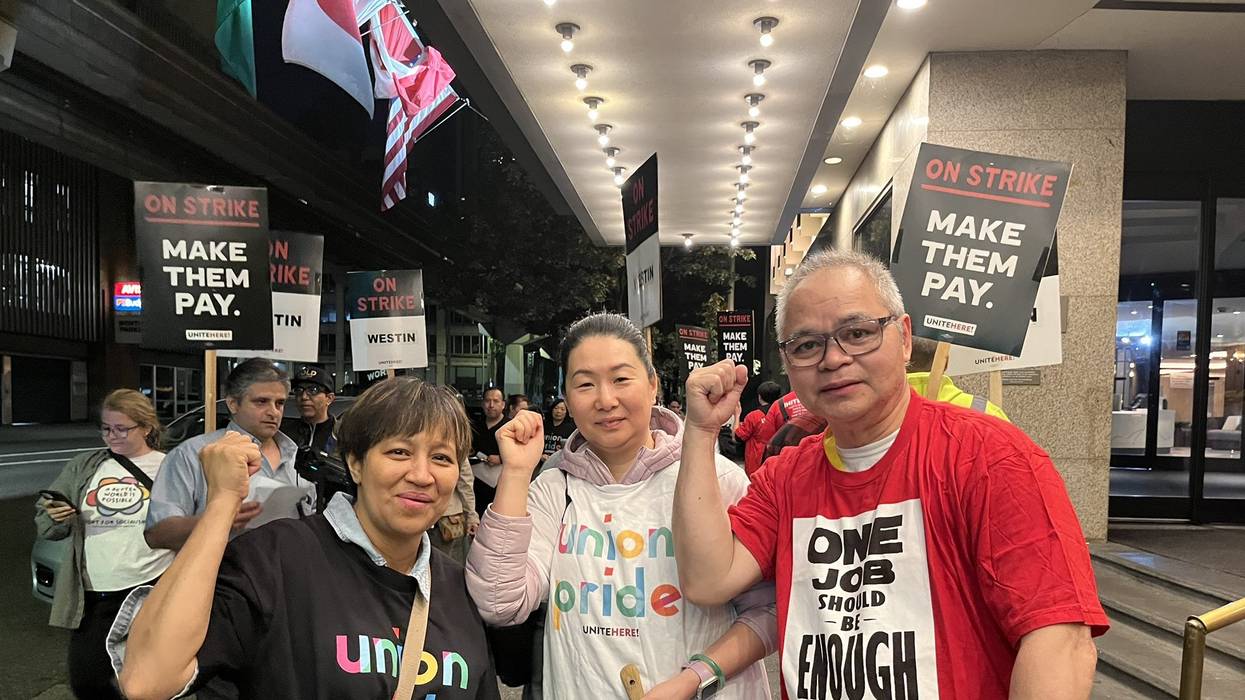
"We refuse to accept wages that can't support our families. It's insulting. And it ends now."
After approximately 10,000 hotel workers across the United States walked off the job over the weekend ahead of Labor Day, the strikes not only continued but grew on Monday, with employees of the Hilton Baltimore Inner Harbor taking to the streets.
In Maryland's biggest city, workers with UNITE HERE Local 7 carried signs that said, "Respect our work," "One job should be enough," and "Make them pay."
Sharing a video of the picket line on social media, the union said: "We refuse to accept wages that can't support our families. It's insulting. And it ends now."
The Baltimore workers joined staff from two dozen other hotels in Boston, Greenwich, Honolulu, Kauai, San Francisco, San Diego, San Jose, and Seattle who started their strikes on Sunday and plan to stay on the picket line through Tuesday.
"10,000 hotel workers across the U.S. are on strike because the hotel industry has gotten off track," UNITE HERE international president Gwen Mills said in a statement. "During Covid, everyone suffered, but now the hotel industry is making record profits while workers and guests are left behind. Too many hotels still haven't restored standard services that guests deserve, like automatic daily housekeeping and room service."
"Workers aren't making enough to support their families," she emphasized. "Many can no longer afford to live in the cities that they welcome guests to, and painful workloads are breaking their bodies. We won't accept a 'new normal' where hotel companies profit by cutting their offerings to guests and abandoning their commitments to workers."
Striking workers echoed the messages from Mills and their signs. Christian Carbajal, a market attendant who has worked for 15 years at the Hilton Bayfront in San Diego, said that "I'm on strike because I don't want hotels to become the next airline industry."
"I used to work in room service, but after Covid, they closed my department. Now I work in the grab-and-go market," Carbajal continued. "Guests complain to me that they can no longer get a steak delivered up to the room, and the tips aren't what they used to be. I'm making less than I used to, and now two families share my house because we can't afford the rent anymore. The hotels should respect our work and our guests."
Elena Duran, who has worked as a server at Marriott's Palace Hotel in San Francisco for 33 years, similarly said that "since Covid, they're expecting us to give five-star service with three-star staff."
"A couple weeks ago, we were at 98% occupancy, but they only put three servers when we used to be a team of four or five," Duran noted. "It's too much pressure on us to go faster and faster instead of calling in more people to work."
Mary Taboniar, who has been a housekeeper at the Hilton Hawaiian Village in Honolulu for six years, said that "I have to work a second job because my job at the hotel is not enough to support my kids as a single mom."
"I'm living on the edge where I'm not sure if I'll be able to pay our rent and groceries or provide my family with healthcare," Taboniar added. "It's so stressful. One job should be enough."
Daniela Campusano, who has been at Hilton's Hampton Inn & Homewood Suites in Boston's Seaport District for a dozen years, also said she is not making enough as a housekeeper.
"I'm on strike because I need higher wages. I currently have two jobs, and I work about 65 hours a week," Campusano said. "Everything is so expensive now—all my monthly bills have increased, and I need to earn more money so I can help my daughter pay for her university studies. One job should be enough."
Fellow housekeeper Rebeca Laroque, who has been at the Hyatt Regency Greenwich for the past 12 years, explained that "I'm on strike because I need more wages, I need the health insurance, and I need less rooms."
"I work so hard and come home exhausted at the end of the day, but I still don't make enough money to pay my bills," Laroque said. "Going on strike is a huge sacrifice, but it's something I have to do because I need a better life for me and my two kids."
Other groups and lawmakers expressed solidarity with the striking hotel workers, including the AFL-CIO, the Association of Flight Attendants-CWA, the National Employment Law Project, the United Auto Workers, and U.S. Reps. Pramila Jayapal (D-Wash.) and Ro Khanna (D-Calif.).
Along with corporate price gouging that is driving up prices, hotel workers have been impacted by practices including stock buybacks. An Institute for Policy Studies analysis released last week shows that Hilton and Marriott are among the 20 largest low-wage employers who have poured millions of dollars into share repurchases since 2019.
Meanwhile, Americans' support for organized labor has hit a seven-decade high, according to Gallup recent polling. Citing that survey, U.S. Sen. Bernie Sanders (I-Vt.) said Monday that "the working people of our country are increasingly aware of the unprecedented level of corporate greed and power we are now experiencing, and the outrageous level of income and wealth inequality that exists."
"They understand that never before in American history have so few had so much, while so many continue to struggle," he added. "And they are fighting back."
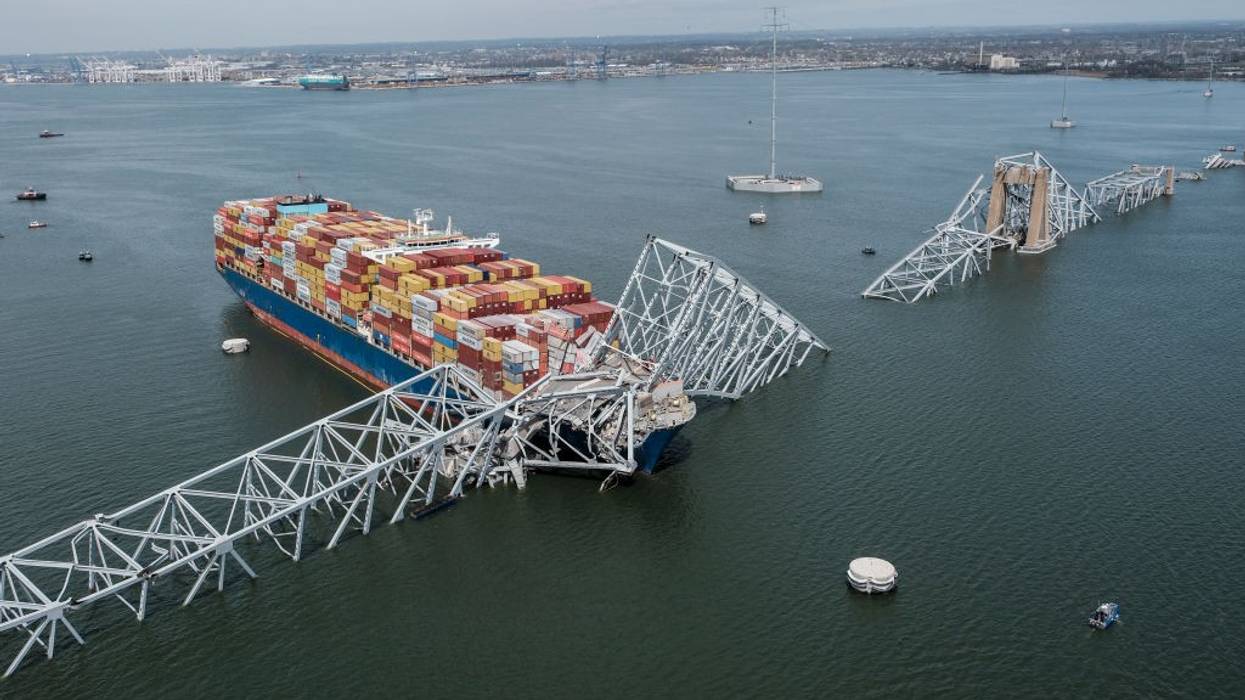
As we remember those who lost their lives in the bridge disaster, let's not forget the people who are killed by structural violence every day in Baltimore.
Baltimore's mayor was the target of racist social media attacks after he spoke to reporters about the collapse of the Key Bridge. That's disgusting, but it's hardly surprising. Racism is carved into the city's very infrastructure. It has reshaped its neighborhoods, highways, and mass transit.
The destruction of the Francis Scott Key Bridge was tragic. But the bridge's primary purpose wasn't to serve Baltimore; it was to get around it. It certainly wasn't built for Baltimore's low-income residents, many of whom don't even have cars. What good is a bridge to people who don't own an automobile?
The numbers are startling on that score. Nationally, only 8.3 percent of American households don't have a car. But in Baltimore's Sandtown neighborhood, that figure is 58.4 percent. It's 48.9 percent in Southwest Baltimore and 47.9 percent in Upton/Druid Heights.
These neighborhoods are under siege. In Upton/Druid Heights, for example, 58 percent of children live in poverty. That's nearly six times higher than the overall state of Maryland.
People are dying in Baltimore — not from the drive-by shootings you see in the news from time to time, which have a relatively low body count. The large-scale dying comes from the city's structural drive-by, reflected in the bridges, tunnels, and highways that let interstate travelers bypass Baltimore as if it wasn't even there.
That's not to say infrastructure isn't a good investment. The structural drive-by is seen in the investments that don't happen.
Although the Key Bridge carried local traffic, its essential function was to move passengers and cargo along the interstate highway system. But another infrastructure project, which never got the green light, would have helped Baltimore's lower-income neighborhoods more.
The Red Line, a proposed addition to the city's rail system, would have linked lower-income, majority Black neighborhoods to jobs in other parts of the city –– in Camden Yards, the Inner Harbor, and the universities, medical centers, and corporations on the east side of town. But the Red Line was never built. After a string of delays, Republican Governor Larry Hogan — now, puzzlingly, the leading candidate for senator in this predominantly Democratic state — killed the project for good.
Journalist Alon Levy put it succinctly in his article on the decision, headlined "How You Can Tell Larry Hogan's Decision to Kill the Red Line Was Racially Discriminatory." Here's how: Hogan killed Baltimore's Red Line but promoted the Purple Line in richer, whiter Montgomery County. That led to a Title VI civil rights lawsuit and a federal investigation at the close of the Obama administration. But the investigation was killed after Trump took office, and the lawsuit lost momentum.
Transportation infrastructure has a long segregationist history, in Baltimore and across the country. The mid-twentieth century highway construction boom fueled white flight from urban centers. But white flight began even earlier in Baltimore, as journalist Alec MacGillis explains, with the construction of a pioneering streetcar system in the early twentieth century. That gave rise to white "streetcar suburbs" like Catonsville and Oakenshawe.
White flight made it easier to systematically neglect a city's remaining, Black neighborhoods. So did the real-estate practice of "blockbusting," which lowered the value of working-class white homes by preying on racist fears over integration. As University of Maryland Prof. W. Edward Orser documents, "blockbusting" in Baltimore allowed real estate companies to buy White homes at a loss and then sell them to Black families at inflated prices. Working-class Whites were robbed of an asset, Black families were robbed through overcharging, and segregation got worse.
Not that housing discrimination was anything new in Baltimore. It pioneered residential segregation in 1910, when the City Council passed a law designating city blocks as White or Black. (It was later struck down by the Supreme Court.)
People forget that Maryland is below the Mason-Dixon line and slavery was legal there until 1864. Advertisements for the "sale" of enslaved people were once common in the Baltimore Sun.
Today, as in the past, structural violence kills. Life expectancy in Upton/Druid Heights is 62.9 years, but it's 83.1 years in Roland Park, the city's richest neighborhood – where most households have more than one car. That's a twenty-year gap in life expectancy.
The Maryland Transportation Authority (MTA), which operated the Key Bridge, often neglects the needs of lower-income people. An electronic EZ-Pass is required to pay tolls, for example, and they are difficult to obtain without a bank account. (The Federal Reserve reports that 13 percent of Black households are unbanked.)
The MTA's floundering "traffic relief plan," crafted under Hogan, would have increased traffic in parts of the DC area and raised tolls for many drivers through a "public-private investment" that would have siphoned off highway revenue for private profit and imposed "dynamic pricing" –surge pricing that could change as often as every five minutes, driving tolls out of the reach of many area residents. It would also have given a private company control over more than 100 miles of the DC area's high-speed lanes.
Fortunately, Hogan's privatization scheme floundered after pushback from local officials and his Democratic successor. So has his other "public-private partnership," the Purple Line. But the intent was clear — and it was not to serve the Black, Brown, and White lower-income people of Maryland.
Transportation was even used against high school students during the 2015 protests over the police killing of Freddie Gray. As MacGillis writes,
"Just after Freddie Gray's memorial service had concluded, and headed for Mondawmin Mall, the transit hub for some 5,000 of them, they found several hundred police waiting ... They also found that the bus lines through the hub were suspended, as was service at the Mondawmin subway station ..."
"It was almost as if authorities were trying to engineer the confrontation that ensued between the growing mass of stranded youths and the outnumbered cops," MacGillis adds.
But these are merely the latest battles in a war that has lasted for four hundred years. The Susquehannock people were hunting in what is now Baltimore when Europeans declared the Province of Maryland in 1634. They soon became refugees in their own native land. The scattered bands that survived eventually merged into other tribes – which were also driven from the region.
Call it the first drive-by.
As we remember those who lost their lives in the bridge disaster, let's not forget the people who are killed by structural violence every day in Baltimore.
The lives of Miguel and the five other workers filling potholes on Baltimore’s Francis Scott Key Bridge have been cut short, but the hatred of immigrants, sadly, is alive, well and growing this election year.
Immigrants helped build this country, a fact no amount of racism or xenophobia can erase. Immigrants, including children, work in fields and factories, driving our economy. A group of immigrant men were working late last Tuesday night, filling potholes on Baltimore’s Francis Scott Key Bridge.
At 1:27 am, the Dali, a massive cargo vessel, 948-feet long and laden with roughly 4,700 shipping containers, lost power and rammed into the bridge, causing it to collapse. Two survived the disaster, six died. Only two of their bodies have been recovered from the cold, murky water of the Patapsco River.
Their tragic deaths occurred as increased immigrant arrivals are being exploited by former President Donald Trump and his right-wing extremist allies to foment division and to boost Trump’s presidential campaign. Just hours after the bridge collapse, Fox News host Maria Bartiromo, interviewing Florida Republican Senator Rick Scott, attempted to link the maritime disaster to immigrants at the U.S.’ southern border:
“I want to understand the threats or the potential threats that this country is facing right now given the wide open border, the fact that we don’t know who is in the country. The FBI is looking… to ensure there was no foul play.”
“While we’re being talked about as like this invading horde that’s coming to destroy the country, what does this story actually show us? That immigrants are filling our potholes at night so that we can have a smooth drive to work in the morning.”
This is the same dog-whistle racism that Trump invoked in 2015, launching his first campaign: “When Mexico sends its people…They’re bringing drugs. They’re bringing crime. They’re rapists.” Trump continues his white supremacist ranting, saying at a recent Ohio campaign rally, “I don’t know if you call them people… These are animals and we have to stop it.”
Maximillian Alvarez, editor-in-chief of the Baltimore-based Real News Network, interviewed coworkers of the deceased. He said on the Democracy Now! news hour, “While we’re being talked about as like this invading horde that’s coming to destroy the country, what does this story actually show us? That immigrants are filling our potholes at night so that we can have a smooth drive to work in the morning.”
The six who died while working on the Key Bridge were hardworking men, from Mexico, Guatemala, Honduras, and El Salvador.
Miguel Luna was a welder, a 49-year-old father and grandfather, a native of the Usulután Department in El Salvador, ravaged by the U.S.-backed Salvadoran military and paramilitaries in the 1980s. He played on the professional soccer team in the town of Berlin in his home region. His widow, Maria del Carmen, owns a food truck. Miguel was a beloved member of his community.
Miguel and another victim of the collapse, Maynor Suazo Sandoval, were members of CASA, an immigrant rights non-profit founded in 1986 to build solidarity with those impacted by the U.S.-backed violence in Central America. CASA wrote, “Maynor migrated from Honduras over 17 years ago, and he alongside his brother Carlos were active members in the activist committee of Owings Mills… Carlos said ‘He was always so full of joy, and brought so much humor to our family.’ He was a husband, and father of two.”
Details are still emerging of the other named victims, Alejandro Hernandez Fuentes, 35, of Mexico and Dorlian Ronial Castillo Cabrera, 26, of Guatemala. Their bodies were found inside a pickup truck, submerged in the river. Two more victims, also reportedly from Mexico and Guatemala, remain unnamed by their respective governments.
Millions of enslaved people also built this country, a point worth remembering as we mourn the immigrant laborers on the Key Bridge. The bridge was named after Francis Scott Key since, while watching the British navy bombard Fort McHenry in 1814, not far from where the bridge was built in the 1970s, Key wrote the poem that would become the national anthem. His poem has four stanzas, the first made famous as “The Star Spangled Banner.” Key was a slave owner, and denounced those who fled enslavement in 1814 to fight against the United States, for the British, who promised them freedom in return.
“No refuge could save the hireling and slave, From the terror of flight or the gloom of the grave,” Key wrote in his poem, words left out of the national anthem, but which nevertheless noticeably rhyme with “Land of the free and home of the brave.” This should be considered by those tasked with naming the replacement bridge.
The lives of Miguel and the five other workers have been cut short, but the hatred of immigrants, sadly, is alive, well and growing this election year. Pledges from President Joe Biden to quickly open Baltimore’s port to commerce parallel campaign rhetoric on both sides to “shut down” the southern border to people seeking asylum.
“Immigrants like Miguel are building bridges to connect communities, not building walls to divide them,” CASA wrote, eulogizing Miguel Luna. Let those words inspire an embrace of immigrant communities, an anthem we can all rally around.
The Maersk-chartered MV Dali—which lost propulsion just before the collision—not only was involved in a previous crash, but was also briefly detained last year over problems with its propulsion system.
The mega-container ship that lost propulsion before toppling Baltimore's Francis Scott Key Bridge in a Tuesday morning collision was involved in a previous crash, and was cited last year for propulsion-related problems.
Newsweek reported that the Maersk Line Limited-chartered MV Dali—which crashed into the Interstate 695 Patapsco River crossing just before 1:30 am, causing the span to collapse and sending a construction crew into the water—collided with a wall in the harbor at Antwerp, Belgium in 2016. The accident, which was reported by Vessel Finder and other outlets at the time, was attributed to errors made by the ship's master and pilot.
The 9-year-old Dali was also detained by port officials in San Antonio, Chile last June after inspectors discovered a problem related to the vessel's "propulsion and auxiliary machinery," according to The Washington Post, which cited records from the intergovernmental shipping regulator Tokyo MOU.
The ship's owner, Grace Ocean Private Ltd., and operator, Synergy Marine, "have been sued at least four times in U.S. federal court on allegations of negligence and other claims tied to worker injuries on other ships owned and operated by the Singapore-based companies," according to The Associated Press.
Maersk was also sanctioned last year by the U.S. Labor Department for allegedly stopping employees from reporting safety concerns, documents published by The Lever revealed.
According to a July 14, 2023 Labor Department letter to Maersk regarding an Occupational Safety and Health Administration investigation, the Danish company "suspended and then terminated" a worker "in retaliation for reporting unsafe conditions and contacting the U.S. Coast Guard."
The fired employee "engaged in numerous protected activities" including reporting a leak and the need for repairs to a ship's cargo hold bilge system, alcohol use aboard the vessel by crew members, and inoperable equipment including an emergency fire pump and lifeboat block and releasing gear.
The search for six construction workers who were on the bridge when it collapsed into the river was suspended until Wednesday, according to The Associated Press. The workers are presumed dead by their employer, Brawner Builders. Local media reported that multiple vehicles plunged into the river and that two workers—one of whom was briefly hospitalized—were rescued from the water.
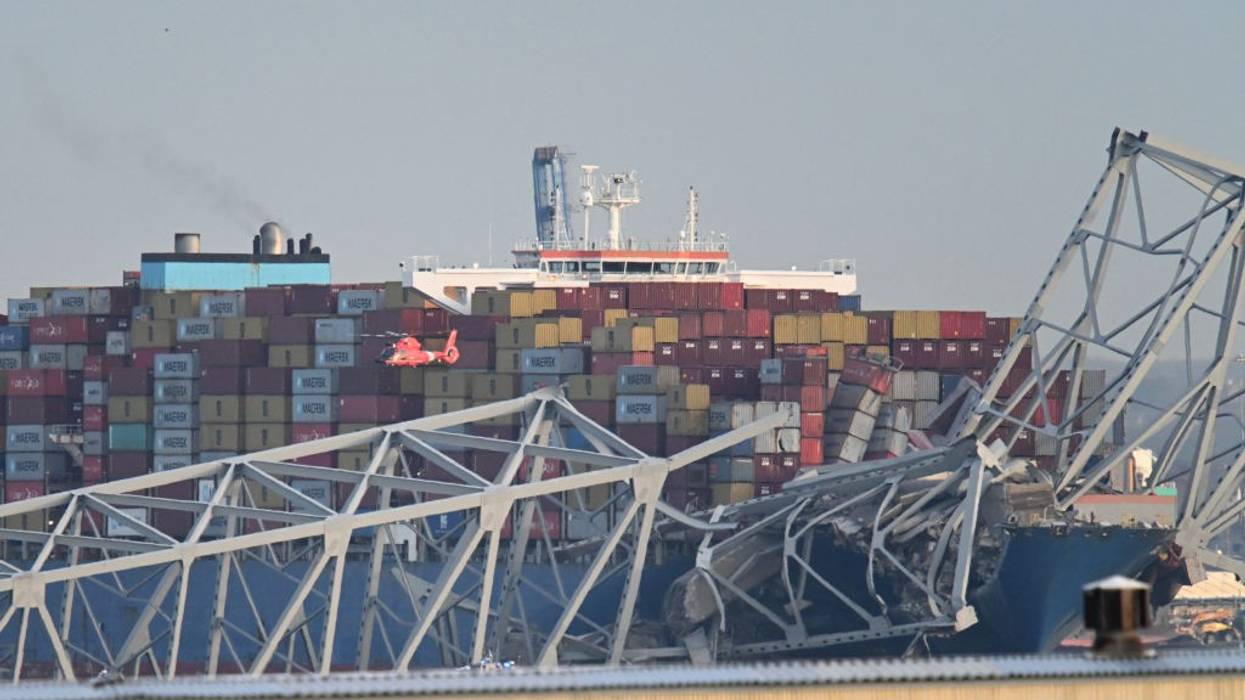
Maryland Congressman Jamie Raskin said he was "deeply concerned for the safety and well-being of everyone affected by the collapse of the Francis Scott Key Bridge in Baltimore."
A state of emergency was declared in Maryland early Tuesday morning after a large cargo ship slammed into the Francis Scott Key Bridge in Baltimore, leading to its total collapse and sending a number of vehicles and people into the Patapsco River.
As the Baltimore Sun reports:
In a Tuesday morning news conference, just a few hours after the incident, Baltimore Fire Department Chief James Wallace said authorities are "still very much in an active search and rescue posture" noting they are searching for "upwards of seven individuals" and that sonar has detected the presence of vehicles in the water. There is no indication that the event was intentional, Wallace said.
"This is a tragedy that you could never imagine … It looked like something out of an action movie," Mayor Brandon Scott said.
In a later press conference, officials said that two members of a construction crew that was on the bridge at the time of the collision had been rescued while six others remained unaccounted for.
The terrifying footage of the bridge's collapse—which CNN correspondent Omar Jimenez commented was "almost unbelievable" to watch—is circulating widely on news channels and social media:
This video is almost unbelievable. The Francis Scott Key Bridge in Baltimore literally collapsed this morning after it was struck by this large ship. pic.twitter.com/rYuy4U2r7H
— Omar Jimenez (@OmarJimenez) March 26, 2024
U.S. Transportation Secretary Pete Buttigieg said Tuesday that he had spoken with Mayor Scott and well as Maryland Governor Wes Moore and was helping to coordinate federal assistance.
"Rescue efforts remain underway and drivers in the Baltimore area should follow local responder guidance on detours and response," said Buttigieg.
Moore said in a statement he had declared a state of emergency and that work was underway to "quickly deploy federal resources" to the area.
"We are thankful for the brave men and women who are carrying out efforts to rescue those involved and pray for everyone's safety," said Moore. "We will remain in close contact with federal, state, and local entities that are carrying out rescue efforts as we continue to assess and respond to this tragedy."
Early reporting indicated that no crew members aboard the container ship, which sails under a Singapore flag, were injured or missing. A local harbor pilot was also said to be on board at the time of the crash.
"Deeply concerned for the safety and well-being of everyone affected by the collapse of the Francis Scott Key Bridge in Baltimore," said Rep. Jamie Raskin (D-Md.) following the accident. "I'm profoundly thankful to first responders on the scene and will track rescue efforts by local, state, and federal authorities."
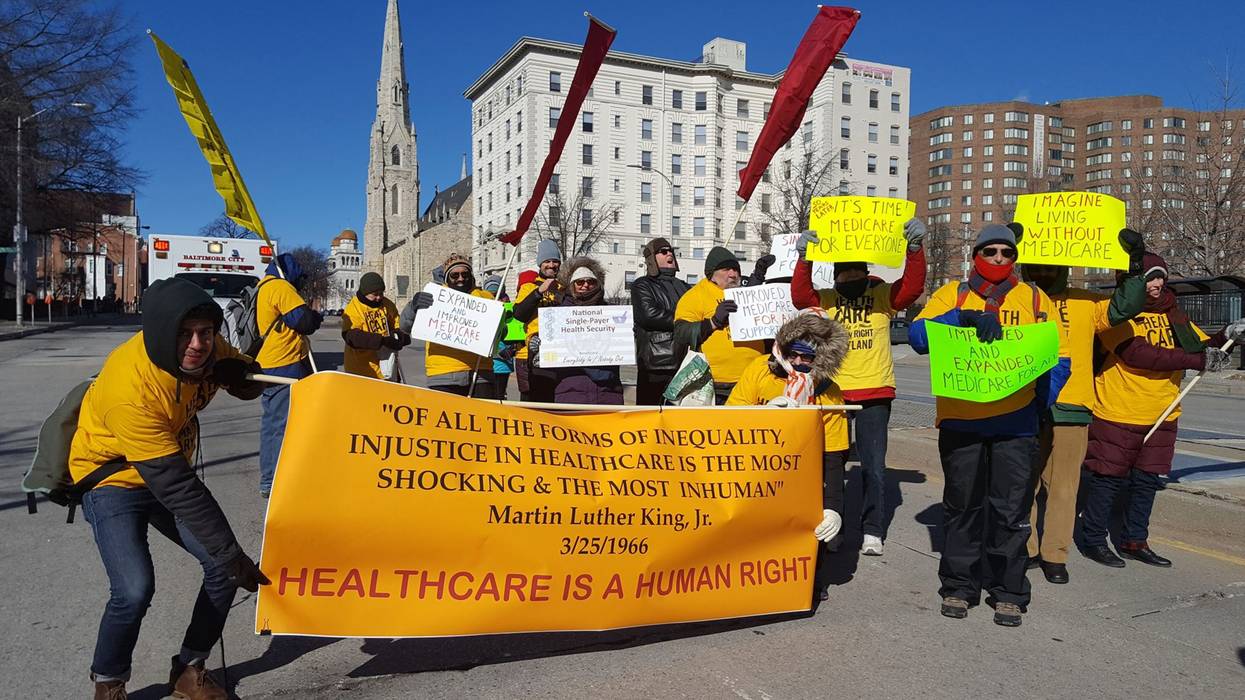
"Every Baltimore resident deserves healthcare whenever they need it," said one local pastor who backed the resolution. "It's time to join every other developed nation in making healthcare a guaranteed human right."
Baltimore on Monday became the latest of over 100 U.S. municipalities to officially endorse a national healthcare program, commonly called Medicare for All.
The passage of a Medicare for All resolution—introduced by Democratic Baltimore City Councilmembers Kristerfer Burnett and Odette Ramos—puts Maryland's largest city in a growing group of municipalities including Philadelphia, San Francisco, Seattle, Los Angeles, Atlanta, Denver, Austin, and Washington, D.C. that have endorsed federally funded universal healthcare programs.
"I want to thank the advocates who have been pushing these resolutions across the country to try and show that there are municipalities that understand that our constituents, in order to fully thrive, need access to healthcare," Burnett said Monday.
"No one should be forced to make the desperate choice between paying for insulin or groceries."
Local Rev. Alvin C. Hathaway Sr., pastor of the Union Baptist Church, told the consumer advocacy group Public Citizen that "every Baltimore resident deserves healthcare whenever they need it."
"No one should be forced to make the desperate choice between paying for insulin or groceries," Hathaway added. "It's time to join every other developed nation in making healthcare a guaranteed human right."
According to U.S. Census Bureau figures cited by Public Citizen, more than 1 in 5 Baltimore residents live in poverty, with 6.7% of residents under age 65 uninsured.
The Baltimore City Health Department published a report in 2020 that said, in part:
It is impossible to discuss the health and well-being of Baltimore City's residents without applying the lens of health equity and systemic disparities. While the overall mortality rate in Baltimore City has declined over the past decade, the city still has a mortality rate nearly 30% higher than the rest of the state, and ranks last on key health outcomes compared to other jurisdictions in Maryland.
This reality is compounded by a series of complicated systemic social, political, economic, and environmental obstacles. With more than 1 in 3 of Baltimore's children below the federal poverty line and more than 30% of Baltimore households earning less than $25,000 per year, income, poverty, and race have an enormous impact on health outcomes.
Jean Ross, president of National Nurses United, said that "every day, we nurses see the human cost of our patients delaying care or going without care, simply because they can't afford it, and that's why we need Medicare for All."
"We're grateful to the city of Baltimore for joining more than 100 other cities around the country in passing a resolution in support of Medicare for All," Ross added. "The grassroots movement to guarantee healthcare to all in the United States is growing every day."
Earlier this year, U.S. Sen. Bernie Sanders (I-Vt.) joined Reps. Pramila Jayapal (D-Wash.) and Debbie Dingell (D-Mich.) in reintroducing Medicare for All legislation.
"The American people understand, as I do, that healthcare is a human right, not a privilege," Sanders said at the time. "As we speak, there are millions of people who would like to go to a doctor but cannot afford to do so. That is an outrage."
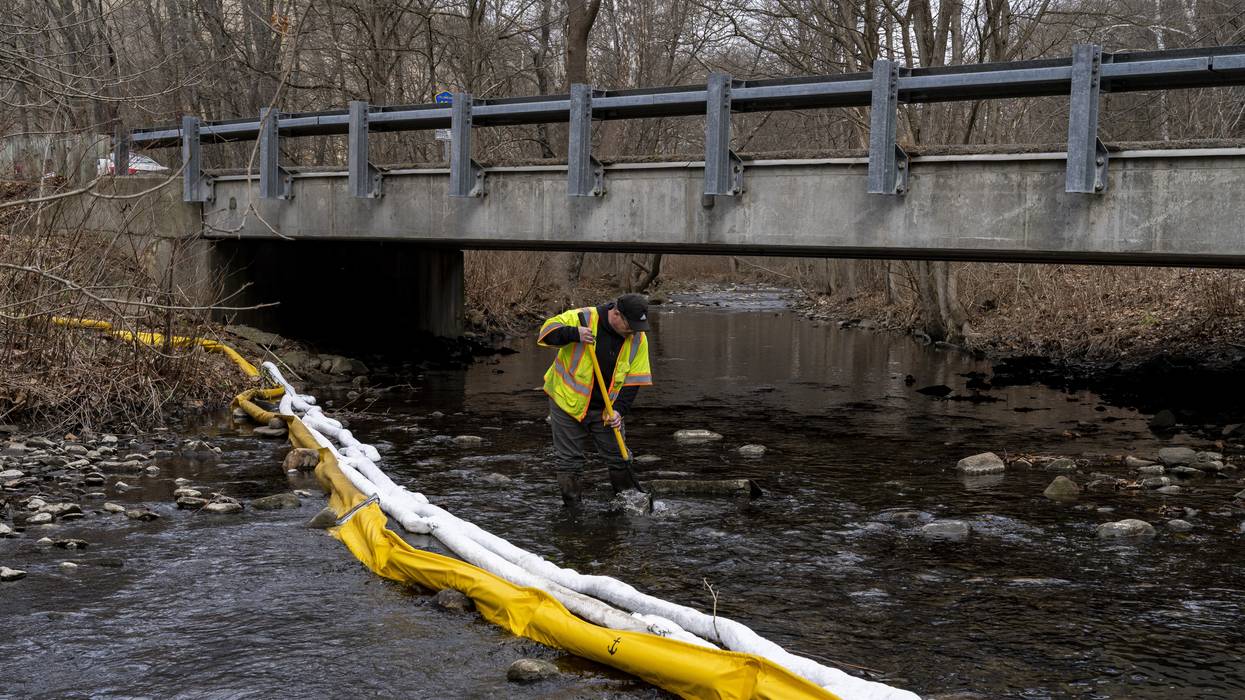
"Too often cities with high rates of concentrated poverty and environmental degradation are asked to shoulder the burden for corporate malfeasance," said a Democratic City Council member. "East Palestine and Baltimore deserve better."
A local Democratic lawmaker in Baltimore on Tuesday credited community members and clean water advocates for helping to secure an environmental victory, as the City Council unanimously approved a resolution to block shipments of contaminated wastewater from East Palestine, Ohio.
Days after water treatment company Clean Harbors informed Baltimore and Maryland officials that it intended to receive 675,000 gallons of contaminated wastewater containing vinyl chloride and per- and polyfluoroalkyl substances (PFAS) from the site of a toxic train derailment in February, Councilmember Zeke Cohen introduced a resolution on Monday to stop the shipment.
The treatment facility where the wastewater would be going, the resolution noted, has been operated by the state since March 2022 "due to catastrophic failures at the facility that led to illegal releases of partially treated sewage."
"Ongoing sludge management issues" have also been identified as a cause of a recent explosion at the plant, which treats water that ultimately flows into the Chesapeake Bay, and the neighborhoods surrounding the facility "have an air toxics risk in the 80th-100th percentile and wastewater discharges in the 90th-100th percentile, nationally."
"The decision to send at least 675,000 gallons (that's at least 20 train cars) of contaminated water to an already environmentally overburdened community is reckless," tweeted Cohen on Monday as he introduced the resolution. "We stand in solidarity with the people of East Palestine. We understand all too well the long-term costs of environmental injustice."
"But now is not the time, and our city is not the place to clean up Norfolk Southern's mess," he added, referring to the rail company responsible for the derailment in East Palestine.
Environmental justice group Blue Water Baltimore demanded to know last week why U.S. Environmental Protection Agency (EPA) officials "believe it is appropriate to send the toxic waste that is too dangerous for East Palestine to the shores of Baltimore."
"It is entirely inappropriate to further stress-test this facility by adding even more toxic contaminants to the waste-stream from wastewater produced outside of the watershed," said the group.
The February 3 derailment involved several train cars carrying vinyl chloride and has so far led Norfolk Southern to remove more than eight million gallons of wastewater from the town, shipping it to facilities in states including Michigan and Texas.
Residents of East Palestine have reported symptoms including headaches and vomiting since leaders told them the town was safe to return to following a brief evacuation. Soil near the crash site has been found to contain levels of dioxin that far exceed the cancer risk threshold recommended by scientists.
Democratic Baltimore Mayor Brandon Scott said late Monday that following the City Council's unanimous adoption of Cohen's resolution, city lawyers concluded he could legally modify a sewage permit and halt City Harbors' plan, which was overseen by the EPA.
"Thank you to Mayor Scott for taking bold and decisive action to deny Clean Harbors from discharging toxic water from East Palestine into our wastewater collection system," said Cohen.
The council member said the victory "was made possible because elected officials listened to voices on the ground."
Residents of the Houston area spoke out last month about plans to inject toxic wastewater from East Palestine into the ground in a suburban area, and Oklahoma Gov. Kevin Stitt, a Republican, blocked a shipment of contaminated soil earlier this month.
"Too often cities with high rates of concentrated poverty and environmental degradation are asked to shoulder the burden for corporate malfeasance," said Cohen on Monday. "East Palestine and Baltimore deserve better."