
SUBSCRIBE TO OUR FREE NEWSLETTER
Daily news & progressive opinion—funded by the people, not the corporations—delivered straight to your inbox.
5
#000000
#FFFFFF
To donate by check, phone, or other method, see our More Ways to Give page.


Daily news & progressive opinion—funded by the people, not the corporations—delivered straight to your inbox.
Think about it this way, maybe it's the Democratic Party which has become deplorable to the working class.
Did the working class, especially its white members, elect Donald Trump again because they are basically racist, sexist, homophobic, and xenophobic? Are they craving a strongman who can protect white supremacy from a flood of immigrants and put the woke liberals in their place? Didn’t Harris lose primarily because she’s a woman of color?
More than a few progressives, as well as the New York Times, believe these are plausible explanations for Harris’s defeat. I’m not so sure.
The working class started abandoning the Democrats long before Trump became a political figure, let alone a candidate. In 1976, Jimmy Carter received 52.3 percent of the working-class vote; In 1996, Clinton 50 percent; In 2012, Obama 40.6 percent; and in 2020, Biden received only 36.2 percent.
This decline has little to do with illiberalism on social issues. Since Carter’s victory, these workers have become more liberal on race, gender, immigration and gay rights, as I detail in my book, Wall Street’s War on Workers.
These voters of color don’t fit comfortably into that basket of deplorables Hillary Clinton described, but they are a part of the working class that’s been laid off time and again because of corporate greed.
Furthermore, my research shows that mass layoffs, not illiberalism, best explains the decline of worker support for the Democrats. In the former Blue Wall states of Pennsylvania, Michigan, and Wisconsin, for example, as the county mass layoff rate went up the Democratic vote went down. The statistical causation, of course, may be off, but the linkage here between economic dissatisfaction and flight from the Democratic Party is straightforward.
Did the Working Class Give Trump 1.9 Million More Votes?
Trump improved his vote total from 74.2 million in 2020 to 76.1 in 2024, an increase of 1.9 million. Did the white working class support him more strongly this year?
No. According to the Edison exit polls, Trump’s share of the non-college white vote dropped from 67 percent in 2020 to 66 percent in 2024. (For 2020 exit polls see here. For 2024 see here.)
In fact, the largest increase for Trump this year came from non-white voters without a college degree. Trump’s percentage of these voters jumped from 26 percent in 2020 to 33 percent in 2024. These voters of color don’t fit comfortably into that basket of deplorables Hillary Clinton described, but they are a part of the working class that’s been laid off time and again because of corporate greed.
The Defection of the Border Democrats
Perhaps the most astonishing collapse of the Democratic vote is found in the Texas counties along the Rio Grande. Take Starr County, population 65,000, most of whom are Hispanic. Hillary Clinton won that county by 60 percent in 2016. Trump won it this year by 16 percentage points, a massive shift of 76 percentage points, almost unheard of in electoral politics. Trump won 12 of the 14 border counties in 2024, up from only five in 2016. Interviews suggest that these voters are very concerned by uncontrolled border crossings, inflation, and uncertainly in finding and maintaining jobs in the oil industry.
(I hear whispers among progressives that Hispanic men just don’t like women in leadership positions. Yet just across the Mexican border, Hispanic men seemed quite comfortable recently electing a female president.)
The Big Story Is the Overall Decline of the Harris Vote
Harris received 73.1 million votes in 2024, a drop of 8.3 million compared with Biden’s 81.3 million votes in 2020. That’s an extraordinary decline. Who are these voters who decided to sit it out?
So far, while the final votes are tallied and exit polls are compiled, it looks like they are a very diverse group—from young people upset about the administration’s failure to restrain Israel to liberals who didn’t like watching Harris go after suburban Republicans by palling around with arch-conservatives Liz and Dick Cheney.
Personally, I think many working-class voters of all shades sat on their hands because Harris really had so little to offer them. Harris was viewed as both a member of the establishment and a defender of it, and the establishment hasn’t been too considerate of working-class issues in recent decades.
Many working-class voters of all shades sat on their hands because Harris really had so little to offer them.
Harris’ highly publicized fundraising visit to Wall Street certainly made that clear. And in case we missed that signal, her staff told the New York Times that Wall Street was helping to shape her agenda. It’s very hard to excite working people by arguing, in effect, that what’s good for Wall Street is also good for working people.
The John Deere Fiasco
For me, the symbolic turning point was the Harris campaign’s pathetic response to the John Deere company’s announcement about shipping 1,000 jobs from the Midwest to Mexico. Trump jumped on it right away, saying that if Deere made that move, he would slap a 200-percent tariff on all its imports from Mexico. If I were a soon-to-be-replaced Deere worker, that would have gotten my attention.
The Harris campaign responded as well, but not in a way that would convince workers that she really cared about their jobs. The campaign sent billionaire Mark Cuban to the press to claim such a tariff would be “insanity.” He and the campaign said not one word about the jobs that would soon be lost. Trump promised to intervene. Harris promised nothing.
The sad part is that the Biden-Harris campaign could have at least tried. They had the power of the entire federal government. They could have cajoled and bullied, waved carrots and sticks. In short, they could have easily made a visible public effort to prevent the export of those good-paying jobs by a highly profitable corporation that was spending billions of dollars on stock buybacks to enrich Wall Street and it’s CEO. Here was a chance to defend jobs against overt greed. Instead, they essentially told working people that Harris wasn’t willing to fight for those jobs.
But Didn’t the Working-Class Abandon Sherrod Brown?
I haven’t yet found any comprehensive demographic data about Brown and his working-class support. We do know, however, that he ran well ahead of Harris. Brown lost his Senate race by 3.6 percent in Ohio compared to a Harris loss by 11.5 percent.
Rather than blaming working-class voters for not rejecting Trump out of hand, the Democrats should reflect on the failure of their brand and their failure of nerve.
Brown knew that he was carrying a heavy load as a Democrat, especially because of the passage of NAFTA, which was finalized during Bill Clinton’s presidency. As Brown put it: “The Democratic brand has suffered again, starting with NAFTA…. But, what really mattered is: I still heard it in the Mahoning Valley, in the Miami Valley, I still heard during the campaign about NAFTA.”
Brown, as a loyal Democrat, was stuck with that dubious brand, and with Harris, as she was clobbered in Ohio. Tom Osborne, the former local labor leader and a refreshing political newcomer, shed the Democratic Party burden by running as an independent in Nebraska. He lost his Senate race by 6.8 percent compared to 10.9 percent for Harris. Brown did better than Osborne but it’s highly likely that both did much better than Harris with working-class voters.
Maybe the Democratic Party Has Become Deplorable to the Working Class
Rather than blaming working-class voters for not rejecting Trump out of hand, the Democrats should reflect on the failure of their brand and their failure of nerve.
Will the Democrats learn from this debacle and change their ways? I’m not optimistic. They are the defenders of the liberal elite establishment and have grown very comfortable (and prosperous) in that role.
We may not have all the data we desire or need as yet, but we know this much: something has to change. And that change is not going to come from the old guard of this deplorable Democratic Party establishment.
The Ohio Democrat lost his seat because "the billionaire-backed crypto industry donated $40 million to his right-wing opponent," lamented one labor journalist.
The Republican Party's capture of the U.S. Senate this week was made possible in part by massive spending from the nascent but increasingly influential cryptocurrency industry, which pumped more than $40 million into a successful effort to topple pro-worker progressive Sen. Sherrod Brown in favor of luxury car dealer Bernie Moreno.
Crypto industry spending helped make Ohio's closely watched Senate race the most expensive in the state's history, with Moreno's campaign boosted by around $40.1 million from the super PAC Defend American Jobs—part of what OpenSecrets described as the "triad" of allied pro-crypto groups pouring cash into the 2024 election.
The Washington Post noted that Moreno "founded a blockchain firm called Ownum in 2018" and "has long immersed himself in blockchain technology, a registry of ownership that essentially underpins all cryptocurrency."
A spokesman for Fairshake, another member of the crypto PAC triad, took credit for Moreno's victory in a statement after the election was called in the Republican's favor and condemned Brown's
support for regulating the industry. Fairshake received tens of millions of dollars in donations from the cryptocurrency exchange giant Coinbase—some of which may have been illegal spending, according to the watchdog group Public Citizen, given that the company is a federal contractor.
"Sherrod Brown was a top opponent of cryptocurrency and thanks to our efforts, he will be leaving the Senate," said Fairshake's Josh Vlasto. "Senator-elect Moreno's come-from-behind win shows that Ohio voters want a leader who prioritizes innovation."
Crypto executive Tyler Winklevoss boasted in a social media post, "The crypto army is striking!"
"Sherrod Brown—crypto public enemy, Elizabeth Warren co-conspirator, and Gary Gensler crony—was just ousted by Bernie Moreno for Ohio Senate," wrote Winklevoss, the co-founder of Gemini.
Labor reporter Steven Greenhouse wrote Wednesday that it is "obscene" that Brown lost his seat because "the billionaire-backed crypto industry donated $40 million to his right-wing opponent."
"Sherrod Brown is one of the most pro-worker, pro-middle-class members of the U.S. Senate," Greenhouse added. "He truly fights for workers."
"The strategy was a brazen attempt to buy influence while keeping the public unaware of what they were supporting."
While the Ohio Senate contest was "the biggest single target of crypto money this cycle," as CNBC put it, the industry spread its money widely, backing both Republicans and Democrats in races across the country—underscoring its attempt to gain influence over future regulatory fights in Congress.
Overall, crypto groups spent more than $130 million in support of candidates for federal office this cycle. A tracker created by the Stand With Crypto Alliance estimates that 263 "pro-crypto candidates" were elected to the House and 18 to the Senate in Tuesday's contest.
Former President Donald Trump's victory over Vice President Kamala Harris was also seen as a win for the industry, with Bitcoin's price
spiking to a new all-time high on Wednesday. During his campaign, Trump vowed to make the U.S. "the crypto capital of the planet."
"Tonight the crypto voter has spoken decisively—across party lines and in key races across the country," gushed Brian Armstrong, the CEO of Coinbase. "Americans disproportionately care about crypto and want clear rules of the road for digital assets. We look forward to working with the new Congress to deliver it."
But one critic, Better Markets president Dennis Kelleher, cast doubt on the industry's self-serving narrative that the 2024 results amounted to a ringing endorsement of cryptocurrency.
In an op-ed for the San Francisco Chronicle on Thursday, Kelleher pointed out that pro-crypto PACs adopted "generic anodyne names" and bankrolled ads that didn't even mention cryptocurrency.
"It's as if Ford ran an ad campaign and never mentioned its cars," Kelleher wrote. "The strategy was a brazen attempt to buy influence while keeping the public unaware of what they were supporting. This way, the industry can claim the now-elected officials they backed have a mandate from the public to support crypto interests—even though they don't."
"At every turn, companies are cutting corners on the path to record profits, and American consumers are paying the price," one expert testified.
Progressive policy experts took aim at corporate greed and profiteering during a Thursday U.S. Senate hearing on "shrinkflation," the process of reducing the size or quantity of a product while selling it at the same price.
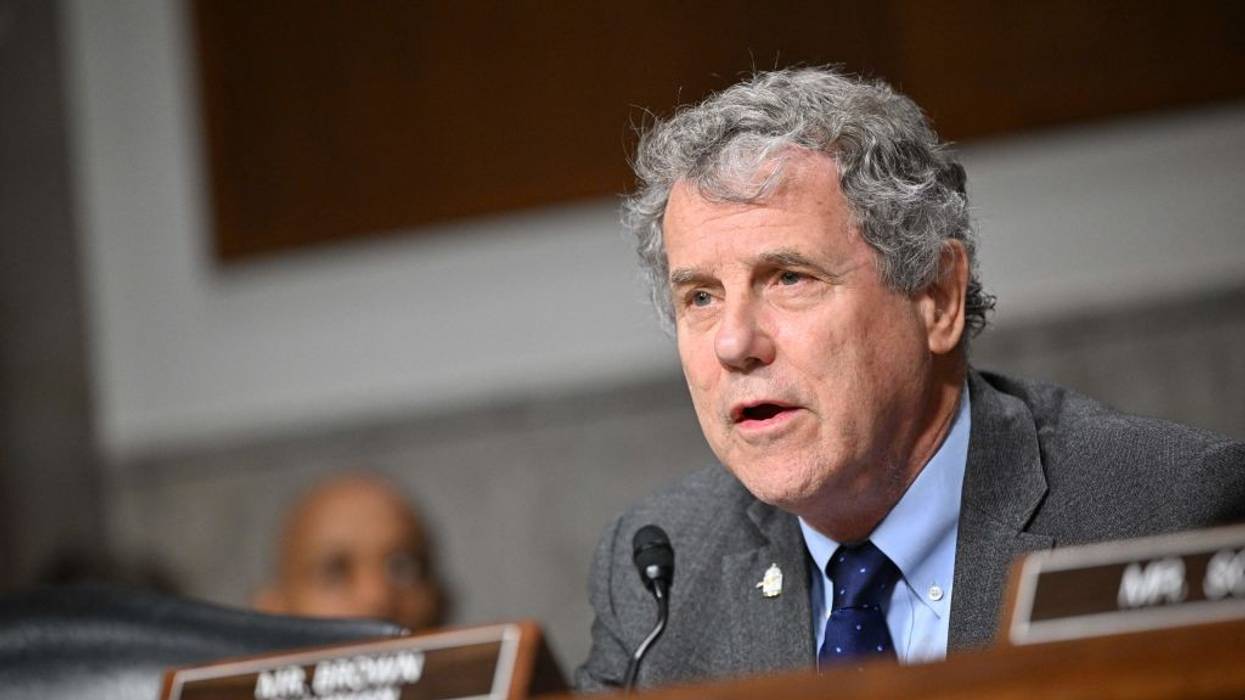
At the Senate Committee on Banking, Housing, and Urban Affairs hearing—entitled "Higher Prices: How Shrinkflation and Technology Can Impact Consumers' Finances"—Chair Sherrod Brown (D-Ohio) began by acknowledging that "prices today are far too high, and families are having a harder time finding a fair price, seeing more of their paycheck vanish into thin air."
"All of this is happening while corporate profits hit record highs," the senator continued. "Let's be clear: The fact that prices and corporate profits are going up at the same time is no coincidence. A study by the Kansas City Fed found that corporate profits drove half of the price increases in 2021."
Bilal Baydoun, director of policy and research at the Groundwork Collaborative, testified that "in America today, a fair price, let alone a sweet deal, is harder and harder to come by. In the age of corporate concentration and high-powered algorithms, pricing is in the midst of a troubling transformation, and the price tag as we know it may become a relic of the past."
"At every turn, companies are cutting corners on the path to record profits, and American consumers are paying the price," he continued. "In a practice known as 'shrinkflation,' companies discreetly reduce the size or volume of common household items—everything from jars of peanut butter to bars of soap—to charge consumers more for less."
"For some essential goods like household paper towels, shrinkflation accounted for roughly 10% of the price increase consumers experienced over the last four years," Baydoun added. "Indeed, big profits increasingly come in smaller packages."
Accountable.US president Caroline Ciccone and other executive members of the group submitted a statement for the record asserting that "the American people are fed up with corporate greed and price gouging."
The statement continues:
Even as inflation has gone down, prices remain too high. Americans understand that corporate greed is a major driver of costs that make it difficult for their families to make ends meet.
Corporate profits have exploded since 2020, and a recent study by our partners at the Groundwork Collaborative found that for much of 2023, corporate profits drove 53% of inflation. Comparatively, over the 40 years before the pandemic, profits drove just 11% of price growth. In the final three months of 2023, corporate profits reached an all-time high of $2.8 trillion, according to Commerce Department data.
"From Big Food to corporate landlords to Big Pharma, CEOs across industries keep raising prices despite bragging of bigger and bigger profits and stock rewards for wealthy investors," said Liz Zelnick, director of Accountable.US' Economic Security & Corporate Power program. "These executives clearly didn't need to raise prices so high, but they did it anyway because they could."
"Yet one by one," she added, "conservative Senate Banking Committee members today gave a free pass to their corporate megadonors and instead disingenuously blamed the Biden administration's actions against junk fees and price gouging that are actually working to lower costs for everyday families. They should get their priorities in check."
Earlier this year, Brown and Sen. Bob Casey (D-Pa.) introduced a bill "to crack down on companies shrinking their products and raising their prices."
The Shrinkflation Prevention Act would:
"We need members of Congress to grow spines and stand up to more of these corporate lobbyists," Brown said during Thursday's hearing. "We need our colleagues to join us in efforts like this, to lower prices and stop these tactics that distort the market, stifle competition, and make it harder for Americans to afford the cost of living."
In their new book, Tom Schaller and Paul Waldman write as if economic class no longer exists or matters.
I don’t like to slam books, especially those ahead of mine on the best seller list. It might seem like petty jealousy. But one recent release, White Rural Rage by Tom Schaller and Paul Waldman, is seriously flawed.
For starters, the authors write as if economic class no longer exists or matters. According to this book, all rural white people, or at least most of them, share similar racist attitudes. Class distinctions between bosses and workers, rich and poor, are meaningless.
Because Schaller and Waldman view the world through their anti-class, whiteness lens, they don’t consider the possibility that working-class voters share common attitudes across geographies. Contrary to their thesis, the research for my book found no discernable differences in attitudes on hot-button social issues between urban, suburban, and rural white working-class voters.
When Democrats, like Sherrod Brown, show the courage to fight against Wall Street’s war on workers they gain working-class support.
As Democratic Party pollster Mike Lux reports, “These voters wouldn’t care all that much about the cultural difference and the woke thing if the Democrats gave more of a damn about the economic challenges they face deeply and daily.”
Schaller put his cards on the table during an interview on MSNBC, during which he called rural Americans “the most racist, xenophobic, anti-immigrant, anti-gay geo-demographic group in the country.”
The authors also claim it is getting worse. In defending themselves in The New Republic, they write that “as the rest of the country moved away from Donald Trump [in 2020] rural whites lurched toward him by nine points, from 62% to 71%.”
But voting for Trump is not the same as being a bigot. In fact, the data in my book shows that white working-class voters, rural and otherwise, are growing more liberal, not illiberal on key social issues.
“Are you in favor of granting ‘legal status to all illegal immigrants who have held jobs and paid taxes for at least three years and not been convicted of any felony crimes?’” (Cooperative Election Study)
White working-class in favor:
2010: 32.1%
2020: 61.8%
“Should gay or lesbian couples be legally permitted to adopt children?” (American National Elections Study)
White working-class in favor:
2000: 38.2%
2020: 76.7%
“Agree that most Blacks just don’t have the motivation or willpower to pull themselves out of poverty.” (General Social Survey)
1996: 56.8%
2021: 32.8%
Furthermore, our data, which is derived from three large multi-year voter surveys, shows that from 20-50% of white working-class non-Democrats are liberal on social issues.
If white rural racism is the key to all politics, then why do significant numbers of rural voters in Ohio support Sen. Sherrod Brown, who in 2018 ran about 12% ahead of President Joe Biden in 2020? In fact, Brown, who votes liberal on social issues up and down the line, ran significantly ahead of Biden in every rural county.
Brown’s connection to working-class voters might have something to do with his willingness to take on Wall Street for ripping off workers again and again. It works politically because enough of those supposedly bigoted white workers care a lot more about never-ending job instability than they do about wokeness.
In his excellent review (and evisceration) of White Rural Wage, Nicholas Jacobs, a political scientist, points out that:
Democrats who give in to the simplistic rage thesis are essentially letting themselves off the hook on the politics, suggesting that rural Americans are irrational and beyond any effort to engage them.
It’s not white rural rage. It’s not irrational rage either. Rather it’s very clear-eyed working-class anger as insatiable corporate greed tears up their lives.
When Democrats, like Sherrod Brown, show the courage to fight against Wall Street’s war on workers they gain working-class support.
Maybe it’s time for a little more Democratic Party rage?
It’s hard for any of us to buck the conventional wisdom that downplays mass layoffs and extols billionaires, but the Ohio Democrat is doing just that.
When I recently learned that Senator Sherrod Brown (D, OH) had reissued his 2019 essay, called “Wall Street’s War on Workers: Stock Buybacks,” I was shocked. My new book is called Wall Street’s War on Workers, and also focuses in part on the job-destructive impact of stock buybacks.
Who stole what from whom?
Senator Brown didn’t know about my book, his essay was written before I started my book, and despite deep research I did not see his essay until two weeks ago. So, I was surprised, but I immediately understood why we both adopted the same big picture framework to understand the economy, and similar language to share our understanding with working people.
To keep my job, I don’t have to run against Wall Street’s cash. But Sherrod Brown is taking a risk, maybe a big risk.
As a labor educator, I’ve found that the big-picture framework is as important, maybe even more important, than facts and figures. In our complex world, problems hit working people from all angles — job insecurity, job loss, the high costs of housing, discrimination, kids who can’t afford to move out, and on and on. To make sense of this mosaic, a framework helps hold the pieces together. In our educational program we see clearly that working people are hungry for a coherent explanation that connects the dots. And without a compelling alternative, the pressing need for frameworks can lead towards conspiracy theories.
Brown and I are using the Wall Street War on Workers big picture framework for four reasons.
Clearly, Brown does not believe that Ohio working people are fixated on anti-wokeness and blinded by racism, homophobia, and xenophobia. He understands that working people of all shades and colors are much more interested in maintaining their livelihoods than railing against wokeism. My book provides compelling data that also shows increasing working-class liberalism, not illiberalism, on hot-button issues like immigration, gay rights, and racism. Ohio’s embrace of a constitutional amendment in 2023 that wrote abortion access into the state’s constitution confirms Brown’s intuitions and my findings.
It's one thing, however, for a labor educator to use the “Wall Street’s War on Workers” framework. To keep my job, I don’t have to run against Wall Street’s cash. But Sherrod Brown is taking a risk, maybe a big risk. And he’s not running away from the challenge or being mealy-mouthed about how Wall Street is ripping off the working class.
His carefully documented essays show how big financial firms pressure corporations to hold down wages, please Wall Street through mass layoffs, and use stock buybacks to enrich Wall Street at the expense of working people. Recently, he has put out a statement called “Taking on Wall Street and Housing,” which has a great deal in common with my February 28th newsletter, “Wall Street to Working-Class Homebuyers: Fuggeddaboutdit!”
Here are a few of Brown’s passages that highlight his (our!) big picture framework.
Why aren’t the Democrats learning more from Brown?
It seems like a no-brainer for the Democrats to use the Wall Street framework to reconnect to the working-class folks they have lost and are losing. In the research for my book, it became clear that about 15-20 million Republican and Republican-leaning white working-class voters are socially liberal. It is political malpractice to write them off.
It seems like a no-brainer for the Democrats to use the Wall Street framework to reconnect to the working-class folks they have lost and are losing.
A major part of the problem is that many Democrats believe there’s nothing much that can be done about mass layoffs – that layoffs are the inevitable result of the unstoppable forces of new technologies and global trade. It’s as if even liberal politicians don’t want to look too closely at how the deregulation of Wall Street, aided and abetted by both political parties since the 1980s, has enriched Wall Street at the expense of working people, and especially at the expense of job stability. It’s far easier to blame AI and the like.
Clearly, the effort to create new jobs via infrastructure bills is far less controversial. In those bills, the government provides major subsidies for corporations while opening up new job possibilities for working people. Win-win!
But those investments won’t stop the Wall Street-induced mass layoffs that are ripping through the economy each and every day. Nor are there any real brakes being placed on Wall Street’s use of job-destructive stock buybacks and leveraged buyouts to enrich the wealthy. Win-lose!
Unfortunately, there may also be baser motives at play. The richer Wall Street becomes, the more it can influence politics through donations and lobbying. Some politicians, it seems, also have their eyes out for lucrative jobs after leaving office as a Wall Street lobbyists or private equity/hedge fund operatives.
Upton Sinclair identified this problem as he ran for the governor of California in 1934. In his book, “I, Candidate for Governor: And How I Got Licked,” he famously wrote: “It is difficult to get a man to understand something, when his salary depends on his not understanding it.”
It’s hard for any of us to buck the conventional wisdom that downplays mass layoffs and extols billionaires. But Sherrod Brown is doing just that. If he beats the odds again in 2024 and wins, the Democratic Party should follow his lead.
For working people to gain the stable jobs and decent incomes they truly deserve, Wall Street needs to be reined in…and soon.
What the Nobel Prize-winning economist and prominent columnist fails to see again and again is that many, if not most, rural mass layoffs in the last four decades, are the result of out-and-out greed by corporate interests and the investor class.
It’s not easy for a labor educator like me to take on Paul Krugman, a Nobel laureate and New York Times columnist. Krugman is a liberal, par excellence, a Keynesian who is trying to counter America’s slide into autocracy. Which is why someone has to hold him accountable for failing to take on Wall Street.
Krugman is puzzled by working people who have been economically devastated, yet are falling for charlatans who talk a big game of resentment but do little to help them.
That devastation, he argues, is caused by technological change, which “has made America as a whole richer, but…has reduced economic opportunities in rural areas.”
Maybe rural working-class voters are growing sour on the Democrats because the Democrats are growing sour on them.
It’s a timeless story, he tells us, with new technologies replacing people in farming, mining, and manufacturing. Rural areas, once so dependent on jobs now replaced by machines, have inevitably suffered as the country has shifted to knowledge and services-centered jobs clustered in urban areas. This is inevitable, he warns, and all we can do is mitigate the pain and suffering. End of story.
No.
What Krugman fails to see again and again is that many, if not most, rural mass layoffs in the last four decades, are the result of Wall Street’s out-and-out greed. This greed was enabled by financial-sector deregulation starting in the Reagan years and accelerating during Clinton’s two terms. Wall Street kills jobs not because of technological advances but because it’s easier to make money by extracting wealth from productive enterprises than by allowing those productive enterprises to continue to prosper.
Deregulation, however, created a virtual gold rush of Wall Street hustlers who have extracted wealth from corporations, creating an army of laid-off workers and devastated communities. Leveraged buyouts, which were infrequent before 1980 because of regulatory controls, have become ubiquitous.
Since then, Wall Street hedge funds and private equity companies have bought tens of thousands of companies using borrowed money, often up to 90 percent of the purchase price. That debt is then placed on the purchased company’s books. For the company to service that debt, cost-cutting is required, and cutting costs almost always requires mass layoffs. As Forbes magazine notes:
“All too often when private equity professionals tout their cost cutting strategies, they do not mention that cost cutting means firing people and taking away their livelihoods.”
Forbes’ observation is confirmed by studies that show that leveraged buyouts cost jobs.
Another Wall Street weapon is the stock buyback. Until 1982, when buybacks were deregulated, no corporation could use more than two percent of its profits to buy back its own shares. Why? Because stock buybacks were considered a form of stock manipulation, changing a stock’s price without changing the underlying condition of the company. (Reducing the number of shares, automatically increases the earnings per share.) In recent years nearly 70 percent of all corporate profits have gone to stock buybacks, greatly enriching the largest Wall Street players.
How do these companies pay for those buybacks? Usually mass layoffs. In fact, companies often buy back stocks just before announcing mass layoffs.
This game is now on at The Walt Disney Company, where activist investors (actually short-term stock sellers) led by Nelson Peltz are trying to force Disney to move wealth to them. As Peltz recently put it: “Fundamentally and crudely, we want the stock to go up.”
Roy Disney understands exactly what that means:
“These activists must be defeated. They are not interested in preserving the Disney magic but stripping it to the bone to make a quick profit for themselves.”
“Stripping it to the bone” means mass layoffs in the Magic Kingdom. This has zilch to do with technological progress.
So it was with Bed, Bath and Beyond and Toys “R” Us and hundreds of other firms bankrupted by Wall Street’s aggressive tactics. Krugman surely knows none of this was caused by technological change.
Krugman’s take on Coal Country is shaped by a similar technological myopia. Consider Mingo County, West Virginia, population 22,573. It is 95.9 percent white, a very poor county in a very poor state that ranks 48th out of 50 states in education and dead last in infrastructure and health care. Mingo County’s household median income is less than half the national average.
In the early 20th century, Mingo County was the epicenter of the great coal wars. After Franklin Delano Roosevelt and his New Deal embraced labor unions, Mingo County coal workers in the United Mineworkers saw their wages and benefits rise, and safety conditions improve. They became loyal Democrats rewarding Bill Clinton with 69.7-percent of the Mingo County vote in 1996.
But by 2020, Mingo’s Democratic voters were an endangered species with Joe Biden receiving only 13.9 percent of the vote.
Why did Mingo County voters switch away from the Democrats? Rising racism doesn’t explain why Barack Obama received more than three times the vote share (42.1 percent) in 2008 that Joe Biden did in 2020.
Krugman correctly identifies the decline of coal jobs as the likely cause for workers abandoning the Democratic Party. Our research finds that in 1996, approximately 3,300 Mingo County workers were employed in the coal industry. By 2020, that number had dropped to 300. This was the largest loss of coal jobs in any county in the entire country.
Krugman once again places the blame on inevitable technological change—in this case strip-mining. He’s right that mountaintop removal requires far fewer workers than traditional underground coal mining. But does it really reflect technological progress? No, it’s just using existing technology, dynamite and big trucks, to tear down the land into an open pit and pollute everything below it. It shouldn’t have been allowed in the first place. Progress, it is not.
There are other complex market forces, such as Eastern coal giving way to competitive pressures from Western coal, the rise of fracking, and a general move away from coal pollution as causes of job loss. But even as these markets shifted, Wall Street feasted on the industry carcass doing all it could to deprive coal miners of their retiree benefits, according to an exposé by The Guardian. That’s not progress either.
Krugman is quick to point out that the richer areas of the country have provided the tax dollars to subsidize a wide range of programs to support rural America. He writes, “there are huge de facto transfers of money from rich, urban states like New Jersey to poor, relatively rural states like West Virginia.” And indeed, Mingo County offers an extensive list of government services on its website:
Medicaid, WVCHIP, Medicaid for Long-Term-Care, Medicare Premium Assistance Programs, Non-Emergency Medical Transportation (NEMT), Supplemental Nutrition Assistance Program (SNAP), Emergency Assistance, Indigent Burial Program, Refugee Resettlement, Tel-Assistance, SNAP E&T, Low Income Energy Assistance Program (LIEAP), 20% Discount Utility program, Temporary Assistance for Needy Families (TANF), School Clothing Allowance (SCA) and Other Needs Assistance Disaster Programs
What’s missing? Socially useful jobs for thousands of coal miners who are willing and able to work.
While coal jobs were vanishing, the Democrats held the presidency for 16 of 24 years. Yet the party of working people failed to develop the jobs dislocated workers needed. That’s because direct public job creation was off the policy table. “The era of big government is over,” said Bill Clinton in his 1996 inaugural address.
While coal jobs were vanishing, the Democrats held the presidency for 16 of 24 years. Yet the party of working people failed to develop the jobs dislocated workers needed.
Instead, the Democrats increasingly relied on the private sector to create new jobs.
How did free enterprise work out in Mingo County?
Drug capitalism stepped in to fill the void, turning Mingo into the opioid prescription capital of America! One small but enterprising drug store there, for example, put out one prescription a minute in 2019, making it the 22nd largest opioid provider in America. It’s unlikely that former coal miners would reward the Democrats for Big Pharma’s unconstrained drug-pushing binge.
Krugman certainly knows that mass layoffs affect politics. He might even agree with the research in my book, Wall Street’s War on Workers, which shows that as the rate of mass layoffs in a county in the Blue Wall States has increased, the Democratic vote has declined. But we radically diverge when it comes to why.
Krugman says that the decline comes from the kind of white rural rage described by Tom Schaller and Paul Waldman, who write:
Republican politicians, and their conservative media allies trigger the worst instincts and most deep-seated fears of rural White Americans…. They are constantly told that horrible people who live in and govern our cities – racial and religious minorities, feminists, homosexuals, White liberals, and Democrats in general – threaten the survival of the traditionalist, White Christian values venerated by so many who reside in the rural White heartland.
Or to put it more bluntly, rural white folks are so dumb and so racist that they can be easily manipulated by this kind of Republican trash talking.
If Krugman wants a more liberal society, then he should join with Senator Brown in waging war on Wall Street.
Krugman would do better by exploring a study by Katherine Cramer and Jonathan Cohen, who report:
When asked what drives the economy, many Americans have a simple, single answer that comes to mind immediately: "greed." They believe the rich and powerful have designed the economy to benefit themselves and have left others with too little or with nothing at all.
Maybe rural working-class voters are growing sour on the Democrats because the Democrats are growing sour on them. Senator Chuck Schumer, in 2016, was positively enthusiastic about writing off the working class:
For every blue-collar Democrat we lose in western Pennsylvania, we will pick up two moderate Republicans in the suburbs in Philadelphia, and you can repeat that in Ohio and Illinois and Wisconsin.
Krugman and many others accept at face value the rural racist depiction. But our research shows that Hillary Clinton’s infamous “basket of deplorables,” holds no more than three percent of the entire white working class. This cohort, in fact, has grown considerably more liberal over the past several decades, not illiberal, on key divisive social issues. And our data finds no difference between white working-class urban, rural, and suburban voters on contentious social issues.
Democratic Senator Sherrod Brown of Ohio is proof positive that fighting against Wall Street is good politics. In fact, he just republished an essay he wrote in 2019 entitled, “Wall Street’s War on Workers: Stock Buybacks.” And he hasn’t pulled away from supporting the rights of women, minorities, immigrants, and the LGBTQ+ communities. He understands that working-class rage has a lot more to do with economic rip-offs than culture wars.
In the 2018 election Brown, a Democrat, retained his Ohio Senate seat by 6.8 percent, a state that Trump won by 8 percent in 2020.
If Krugman wants a more liberal society, then he should join with Senator Brown in waging war on Wall Street. He needs to understand that the white working class, whether in Staten Island or Mingo County, craves jobs stability. To stop the needless destruction of jobs, working people are more than ready to support those willing to challenge Wall Street’s greed.
But is Paul Krugman?
"Folks like us, who live along or near the tracks, refuse to be treated as collateral damage in the way of big railroads' profits," said Congressman Chris Deluzio.
On the eve of the first anniversary of a toxic train derailment in East Palestine, Ohio, residents, lawmakers, and members of U.S. President Joe Biden's administration are renewing calls for Congress to swiftly pass federal legislation boosting rail safety.
In a Friday letter, U.S. Rep. Chris Deluzio (D-Pa.) urged House Speaker Mike Johnson (R-La.) to "bring the Railway Saftey Act to the floor for a vote before Congress adjourns for the August recess," highlighting that the bill is backed by Democratic and Republican lawmakers as well as the Biden administration and former President Donald Trump, the GOP presidential frontrunner.
Deluzio, who introduced the House version of the bill with Rep. Nick LaLota (R-N.Y.), noted that the Norfolk Southern train derailed and released hazardous materials "less than a mile from the Pennsylvania state line and the homes and farms of my constituents."
"Without dwelling on the resulting health problems, environmental scare, and general lack of trust that I still regularly hear from my constituents, I instead want to empathize that we cannot accept congressional inaction, and how the February 3, 2023 derailment could have been much worse," the congressman wrote. "Folks like us, who live along or near the tracks, refuse to be treated as collateral damage in the way of big railroads' profits."
"Over the last two centuries, railroad companies have wielded their power and influence to protect their profits and avoid commonsense safety measures, allowing them to cut corners and pad the pockets of their corporate shareholders at the expense of the American people," he explained. "After the East Palestine derailment, the big railroad lobby sprang into action once again and lobbied members of Congress—directing them to do nothing to make rail safer and risk cutting into their profits."
The Railway Saftey Act—led in the Senate by Sens. Sherrod Brown (D-Ohio) and JD Vance (R-Ohio)—contains provisions to enhance safety procedures for trains carrying hazardous materials, reduce the risk of wheel bearing failures, require well-trained two-person crews, force carriers to face higher fines for wrongdoing, support communities impacted by disasters, and invest in safety improvements.
Brown and Vance have also issued fresh calls for action this week.
"Over the last year, I've visited East Palestine repeatedly, and our staff is there even more often," Brown said Tuesday. "Each time, we ask residents what we can do. They want the support and the compensation they are owed, but they do not want this derailment to define them. I don't want that either, and I don't want any other community in Ohio or around the country to have to deal with a disaster like this ever again."
"As I've told the people of East Palestine—and as I keep telling them: I'm here for the long haul," he added. "I will always fight for the people of East Palestine. I will always fight to hold Norfolk Southern accountable. And I will always fight to make our railways safer."
As Nexstar's Reshad Hudson reported Tuesday:
Vance says he's working with Brown to get the needed support for the bill.
"It's not going to eliminate every train crash, but it hopefully can make these things much less common because they happen way too often,” Vance said.
According to Roll Call, U.S. Transportation Secretary Pete Buttigieg told reporters this week that his department has "done our part" and "we are pressing industry to do their part, Congress needs to act as well."
"Any congressional leader of any party who is serious about railroad safety should support funding for railroad safety inspections... and should support the Railway Safety Act," he said.
While the outlet noted that delays in the House are partly tied to a forthcoming national Transportation Safety Board investigation report, the bill's sponsors and Buttigieg are largely blaming industry opposition, with the secretary saying that "in the past, there have been times when Congress stood up against the railroad lobby... they should do that now."
The White House announced this week that Biden plans to visit East Palestine sometime in February "to meet with residents impacted by the Norfolk Southern train derailment and assess the progress that his administration has helped deliver in coordination with state and local leaders to protect the community and hold Norfolk Southern accountable."
The White House also reiterated the administration's support for the Railway Safety Act—a bill that is backed by workers but also contains loopholes that "you can run a freight train through," as Eddie Hall, national president of the Brotherhood of Locomotive Engineers and Trainmen, warned last year.
Other measures before Congress include the Railway Accountability Act—led by Brown along with Sens. John Fetterman (D-Pa.) and Bob Casey (D-Pa.), who are also fighting to pass the Railway Safety Act.
Demands for congressional action on rail safety and more have also continued to pour out of East Palestine and surrounding communities—particularly from people who remain displaced and are suffering a wide range of symptoms.
"What I've been experiencing is some of the fear that I've never known in almost all of my 70 years," Stella Gamble, a grandmother of nine who lives less than a mile from the derailment, said in a testimony shared by The Real News Network. "I am so afraid for my grandchildren and for the other children in this town. My granddaughters have rashes on their skin. They've been having female issues. They get massive headaches."
"I think that the whole thing behind everything that's happened here is the same as it is everywhere else in this country. It's all about the money," Gamble added. "Everything about it is the money, and they will gladly sacrifice a few thousand Appalachians to keep their trains going through here... We're just a sacrifice. That's how I feel. And I feel like my grandkids are being sacrificed, too."
Sen. Elizabeth Warren said she doesn't "understand why we are being asked to confirm someone whose plan for strengthening Social Security is to gut its protection."
Democrats on the U.S. Senate Finance Committee raised alarm Wednesday over the nomination of American Enterprise Institute senior fellow Andrew Biggs to serve on the Social Security Advisory Board, pointing to his long record of supporting privatization efforts and benefit cuts.
President Joe Biden first nominated Biggs to the independent board in 2022 and renominated him early last year following the end of the 117th Congress. By nominating Biggs, a conservative, to the post, Biden adhered to the board's tradition of bipartisanship.
But during the finance committee's confirmation hearing for Biggs and other nominees, Sen. Elizabeth Warren (D-Mass.) said that she doesn't "understand why we are being asked to confirm someone whose plan for strengthening Social Security is to gut its protection" to a spot on the Social Security Advisory Board (SSAB), which advises lawmakers, the president, the Social Security commissioner on how to bolster the New Deal program.
"In all fairness to Mr. Biggs, his views are not extreme outliers," Warren added. "His plan is Republicans' plan. Republican policymakers have spent years trying to undermine Social Security by pushing to reduce benefits, to raise the retirement age, and to cut payroll taxes that keep the program alive."
Warren pressed Biggs on whether he supports raising taxes on the wealthy to ensure Social Security's solvency over the long term, as Democratic lawmakers have proposed. In 2023, millionaires stopped paying into Social Security just two months into the year thanks to a cap on the amount of income subject to the program's payroll tax.
Biggs said he would "prefer not to" lift the payroll tax cap.
"So you oppose it, OK," Warren responded. "Raising the payroll tax income cap so that the wealthiest Americans pay their fair share would extend Social Security's solvency by 75 years. But if you take raising revenue from the wealthiest people off the table, then that leaves one option to extend Social Security's solvency, and that is benefit cuts."
Sen. Sherrod Brown (D-Ohio) pointed to Biggs' tenure on a George W. Bush administration commission that suggested partially privatizing Social Security by allowing workers to move a portion of their payroll tax contributions into private accounts, a change that would have compromised the program's primary funding source.
"I'm concerned about your record on Social Security, as you know," Brown said Wednesday, adding that Biggs and his allies support letting "Wall Street gamble with people's guaranteed retirement security."
"You advocated privatizing Social Security," said Brown. "You and your allies back off that sometimes, saying you're not—but you have been."
Biggs told Brown that he does not support privatizing Social Security, breaking with his previous view. Biggs also said that his proposed frameworks for Social Security reform have not included raising the retirement age—but acknowledged he has said in the past that it's not an "unreasonable idea."
During a Senate Finance Committee subcommittee hearing in 2013, Biggs said the "idea that we can't have a higher retirement age I think it just flies in the face of the fact that people did, in fact, retire later in the past, and today's jobs are less physically demanding than they were in the past."
Wednesday's hearing came two weeks after the Republican-controlled House Budget Committee voted largely along party lines to advance legislation to create a fiscal commission for the nation's trust fund programs. Opponents of the bill say it's a ploy to fast-track cuts to Social Security and Medicare.
Social Security Works, a progressive advocacy group, warned Wednesday that "if confirmed to the SSAB, Andrew Biggs would influence policymakers to push for Social Security cuts."
"This would devastate working class families, while creating another way for billionaires to avoid paying their fair share into the system," the group wrote on social media.
"We urge the commission to continue to focus on its vital work preserving market integrity and protecting the public, uphold the letter and spirit of the Dodd-Frank Act, and withdraw the proposed rule."
A trio of Democratic U.S. senators on Monday wrote to Commodity Futures Trading Commission Chair Rostin Behnam expressing their "serious reservations" with the agency's proposed rule on seeded funds and money market funds, a policy the lawmakers warned would "undermine the goals of Dodd-Frank" by rolling back the already weakened financial oversight law.
Passed in the wake of the 2008 global financial meltdown, the Dodd-Frank Wall Street Reform and Consumer Protection Act—which was partially rolled back during the Trump administration—overhauled federal financial regulation. In a letter to Behnam, Sens. John Fetterman (Pa.), Sherrod Brown (Ohio), and Tina Smith (Minn.) assert that the CFTC's proposed rule is a "step in the wrong direction" that would increase market instability by decreasing collateral requirements for certain transactions.
The Global Markets Advisory Committee, largely made up of finance industry insiders, recommended the proposed rule in 2020 during the Trump administration.
As the letter explains:
The proposed rule would reduce or eliminate initial margin requirements for up to three years for a subset of swap market participants. "Initial margin" is the collateral that participants must set aside when entering swap agreements. Initial margin requirements, along with "variation margin" and other capital requirements, protect counterparties to a swap in the event of a default. Dodd-Frank set up comprehensive rules for swap agreements after they significantly contributed to the 2008 financial crisis and the federal government was forced to bail out Wall Street.
"The 2008 financial crisis showed the dangers that swaps can pose to economic stability, and Dodd-Frank directed regulators, including the CFTC, to require initial margin for uncleared swaps specifically to reduce those risks," the senators wrote. "It is vital for the CFTC to continue upholding its Dodd-Frank mandate and to maintain high standards and safeguards for this important market."
"We urge the commission to continue to focus on its vital work preserving market integrity and protecting the public, uphold the letter and spirit of the Dodd-Frank Act, and withdraw the proposed rule," the lawmakers added.
The collapse earlier this year of Silicon Valley Bank and Signature Bank—both of which benefited from regulatory relief thanks to the 2018 rollback—brought renewed scrutiny on Dodd-Frank's Republican-engineered shortcomings. Sen. Mike Crapo (R-Idaho), who wrote the 2018 banking deregulation law, insisted in March that "there is no need for regulatory reform" in the wake of the banks' failures.
Robert Weissman, president of the consumer advocacy group Public Citizen, responded to Crapo's assertion by writing that "you have to be hard-core committed to mindless free-market fundamentalism—or truly in thrall to your donors—to insist there's no need for new regulations after Silicon Valley Bank."
Last month, Sen. Elizabeth Warren (D-Mass.) also wrote a letter to Behman sharing her concerns about the proposed rule. Noting the policy's 2020 introduction, Warren said in her October 10 letter that "it is unclear why the commission is choosing to propose these rules now, three years later, without conducting its own additional analyses of whether the changes are necessary or will strengthen the stability of the domestic financial system."
"I strongly urge the commission not to loosen the existing rules and not to roll back important Dodd-Frank Act reforms," Warren added.
"The time has come for the United States Senate to go on record in support of UAW workers and against corporate greed," said Sen. Bernie Sanders.
Just over a month after the United Auto Workers members at Ford, General Motors, and Stellantis walked out to demand improvements in pay, benefits, and labor conditions, U.S. Sens. Bernie Sanders and Sherrod Brown on Wednesday introduced a resolution expressing official solidarity with the strikers.
The three-page Senate resolution explains that while executives get "exorbitant" compensation packages, many UAW members, with an average starting wage of just $17 an hour, "cannot afford to buy the cars they make and struggle to afford the basic necessities of life, including groceries, housing, childcare, and prescription drugs."
"These companies need to bargain in good faith and agree to a fair contract that honors the dignity of work."
Echoing his previous comments on the strike, Sanders (I-Vt.) stressed that "the fight the UAW is waging has everything to do with the outrageous level of corporate greed and arrogance on the part of senior executives in the automobile industry and their backers on Wall Street."
"At a time when the Big Three automakers have made $250 billion in profits over the past decade, it is absolutely unacceptable that wages for the average autoworker have gone down by 30% in the past 20 years after adjusting for inflation," the Senate Health, Education, Labor, and Pensions (HELP) Committee chair continued.
"If these companies could afford to spend $9 billion on stock buybacks and dividends last year, they can afford to sign a contract that treats their workers with the respect and the dignity that they deserve. Enough is enough," he added. "The time has come for the United States Senate to go on record in support of UAW workers and against corporate greed. That is what this resolution is all about."
Along with Sanders and Brown (D-Ohio), the resolution is backed by another 31 Democrats and Sen. Josh Hawley (R-Mo.).
"We stand in solidarity with autoworkers in Ohio and around the country as they demand the Big Three automakers respect the work they do to make these companies successful," said Brown. "Any union family knows that a strike is always a last resort—autoworkers want to be on the job, not on the picket line."
"UAW workers made sacrifices to save the American auto industry," he added. "Now the Big Three are making record profits—all workers are asking for is their fair share. These companies need to bargain in good faith and agree to a fair contract that honors the dignity of work."
The UAW's ongoing "Stand Up Strike" did not begin with all of the nearly 150,000 affected workers walking out at once; instead, certain locals have been called on to do so, and the union has increased the number throughout talks. There are now more than 34,000 members on strike.
UAW president Shawn Fain confirmed last week that the union would no longer wait until the end of each workweek to announce any strike expansions, saying that "we're entering a new phase of this fight and it demands a new approach."
"We're not waiting until Fridays anymore," he said on a livestreamed address. "Now there's only one rule—pony up."
Speaking Monday at the Ford Rouge Complex outside Detroit, executive chair Bill Ford—the great-grandson of company founder Henry Ford—urged UAW members to "end to this acrimonious round of talks," according to CNBC. He said: "Choosing the right path is not just about Ford's future and our ability to compete. This is about the future of the American automobile industry."
In response, Fain declared that "Bill Ford knows exactly how to settle this strike. Instead of threatening to close the Rouge, he should call up [Ford CEO] Jim Farley, tell him to stop playing games and get a deal done, or we'll close the Rouge for him."
"It's not the UAW and Ford against foreign automakers," the union leader said. "It's autoworkers everywhere against corporate greed. If Ford wants to be the all-American auto company, they can pay all-American wages and benefits. Workers at Tesla, Toyota, Honda, and others are not the enemy—they're the UAW members of the future."
Polling last month showed that a majority of U.S. voters across the political spectrum support the UAW strike. Democratic President Joe Biden joined striking workers on a picket line in late September, a historic first for a sitting U.S. president.