

SUBSCRIBE TO OUR FREE NEWSLETTER
Daily news & progressive opinion—funded by the people, not the corporations—delivered straight to your inbox.
5
#000000
#FFFFFF
To donate by check, phone, or other method, see our More Ways to Give page.
Daily news & progressive opinion—funded by the people, not the corporations—delivered straight to your inbox.
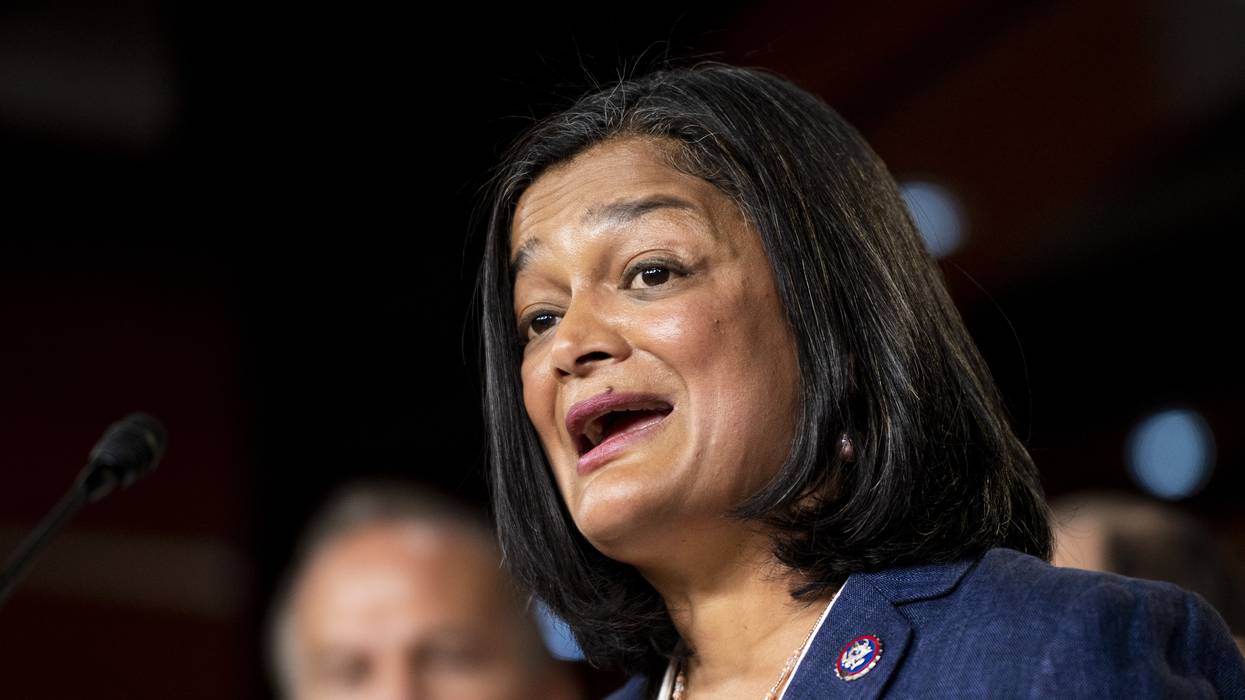
Agencies have used their subpoena power "to surveil, intimidate, and suppress the free speech of ordinary citizens and even the free press," said the Democrats.
Under the Trump administration, said Rep. Pramila Jayapal and Sen. Ron Wyden this week, federal agencies' use of subpoena power to surveil Americans has become "institutionalized" in what the two Democrats called "brazen abuses of authority."
Jayapal (Wash.) and Wyden (Ore.) wrote to US Supreme Court Chief Justice John Roberts and the acting comptroller general of the Government Accountability Office (GAO), Orice Brown, regarding what they called federal agencies’ decades-long practice of attempting "to coerce indefinite silence from private companies that receive subpoenas for customer information."
While federal agencies have the congressionally vested authority to serve companies and service providers with administrative subpoeanas when they are seeking information about the provider's customer or client, the recipient generally maintains the "First Amendment right to notify their customers of the demand, allowing the actual targets of the subpoenas the opportunity to assert their own legal rights or challenge the demand in court," wrote Jayapal and Wyden.
If secrecy is required in a specific case, the agency can apply to a court for a time-limited nondisclosure order, but in the vast majority of cases, the lawmakers said in a statement, "the agencies may not gag recipients of subpoenas."
That appears to have changed under the Trump administration.
Wyden and Jayapal pointed to one incident from July 8, 2025, when Harvard University received three immigration subpoeanas from US Immigration and Customs Enforcement (ICE) regarding international students, which contained "boilerplate requests for silence."'
"The absurdity of this secrecy demand was demonstrated the very next day, when the Department of Homeland Security (DHS) issued a press release celebrating the very enforcement action it had just directed Harvard to keep secret," wrote the lawmakers.
Homeland Security Investigations (HSI), which operates under ICE, has summons authority only for records relating to customs issues such as illegal imports or unpaid customs dues.
However, HSI has used its subpoena power "to surveil, intimidate, and suppress the free speech of ordinary citizens and even the free press"—in one case trying to reveal the identity of an anonymous Instagram user who had criticized and publicized ICE operations, according to the lawmakers.
Earlier this week, The Guardian reported that HSI had used the subpoenas to secretly obtain six months' worth of phone records for Georgia Fort, a Minneapolis-based journalist who, along with former CNN anchor Don Lemon, was arrested in January for covering an anti-ICE protest at a church.
While the secrecy demands that come with subpoenas "carry no force of law," said the lawmakers, "their coercive effect is extremely successful. This leaves customers entirely in the dark about government incursions into their personal data."
Jayapal and Wyden noted that federal agencies were demanding secrecy from subpoenaed companies and third parties for decades before President Donald Trump took office.
For over four decades, they said, the Department of Justice (DOJ) "has treated extra-legal gag requests as standard operating procedure,
regularly instructing the recipients of grand jury subpoenas not to disclose the government's demands."
"Given the severe, asymmetric power dynamics between federal law enforcement and civilian businesses—particularly when the subpoena recipient is a business operating within a highly regulated industry—many corporate legal departments will naturally read an official prosecutorial 'request' for silence as an implied command, choosing compliance over risking scrutiny from federal regulators," wrote Wyden and Jayapal. "This coercive silence is particularly insidious because it targets corporate policies intended to protect consumers. For nearly every American industry, including telecommunications, technology, and healthcare, Congress has neither required nor prohibited notice of subpoenas. Absent a court order or statute saying otherwise, notice to customers is a protected exercise of free speech that furthers government transparency and customer privacy."
The lawmakers called on the GAO to conduct a comprehensive audit of the DOJ and DHS as well as the agencies they oversee regarding their use of gag requests in subpoenas.
Such an audit would "help ensure that agencies do not abuse their subpoena authorities at the expense of privacy and free speech rights," said Jayapal and Wyden.
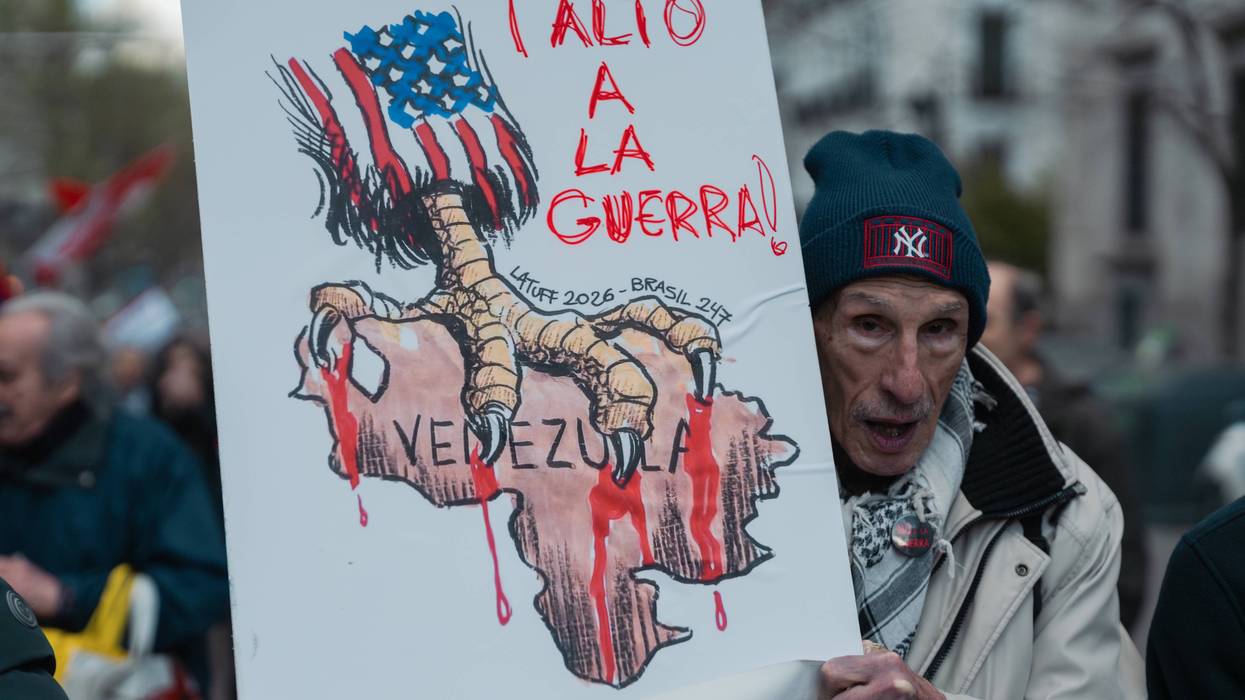
“We need to build a durable and lasting coalition of progressives that can take on the right-wing forces and answer them with the necessary call of the people,” said Congresswoman Pramila Jayapal.
A delegation of progressive congressional lawmakers and candidates is set to head to Uruguay this week to take part in a conference focused on Pan-American solidarity amid the resurgence of both US imperialism and right-wing governments in the hemisphere.
The third Pan-American Congress, to take place in the Uruguayan capital Montevideo, will bring together progressive legislators from North, Central, and South America and the Caribbean to discuss what organizers describe as hemispheric cooperation based on "solidarity between peoples" and "sovereignty among nations"—a vision sharply at odds with what critics have dubbed US President Donald Trump's "Donroe Doctrine" militant imperialism.
The US delegation will be led by Rep. Pramila Jayapal (D-Wash.), joined by Rep. Jesús “Chuy” García (D-Ill.), Democratic congressional candidate Dr. Adam Hamawy of New Jersey, and three members of Democratic Socialists of America also running for Congress: Claire Valdez and Darializa Avila Chevalier of New York and Chris Rabb from Pennsylvania.
"We need to build a durable and lasting coalition of progressives that can take on the right-wing forces and answer them with the necessary call of the people,” Jayapal said in a video posted to social media.
We need a foreign policy based on partnership, exchange, and mutual respect.I spoke with @elpais.com about joining the upcoming Panamerican Congress and the need to fight back against far-right extremism across the globe. Read more here:
[image or embed]
— Congresswoman Pramila Jayapal (@jayapal.house.gov) August 17, 2026 at 12:46 PM
Sen. Bernie Sanders (I-Vt.) is slated to address the conference remotely. Congressional Progressive Caucus Chair Greg Casar (D-Texas) will not attend but expressed his support for “pushing back against right-wing radicalization, tackling the climate crisis, and addressing our joint economic crisis.”
In an interview with El País published over the weekend, Japayal called the conference "an opportunity to hear from our Latin American counterparts about what is happening on the ground: how US foreign policy is affecting them and how we can work together to build a progressive movement and combat far-right disinformation. The United States is doing a lot of pain with our Donroe Doctrine."
Jayapal is leading a letter signed by Sanders, Casar, García, and seven other progressive Democrats asking Secretary of State Marco Rubio "to answer for the regional implications of the 'Trump Corollary' to the Monroe Doctrine, and ground US foreign policy toward the Western Hemisphere on the principles of mutual respect and advancement of human rights."
"The interventions conducted under the banner of the ‘Donroe Doctrine' appear to follow a partisan playbook: the endorsement of favored candidates, the placement of political allies, the weaponization of tariffs and sanctions, and, where those fail, the application of direct military force," the lawmakers wrote. "These are tactics that destabilize our hemisphere and endanger our neighbors."
Before this year's Panamerican Congress, I'm demanding the Trump administration answer for their "Donroe” Doctrine.It follows a partisan playbook of tactics that destabilize our hemisphere and endanger our neighbors.
[image or embed]
— Congresswoman Pramila Jayapal (@jayapal.house.gov) August 17, 2026 at 3:30 PM
Two of the letter's signatories, Reps. Nydia Velázquez (D-NY) and Delia Ramirez (D-Ill.), earlier this year introduced the New Good Neighbor Act, a bill inspired by the short-lived period when the Franklin D. Roosevelt administration pursued policies of nonintervention and improved diplomatic relations with Latin America in the 1930s.
Since returning to the White House just last year, Trump—who campaigned as the "peace president"—has bombed and invaded Venezuela to abduct President Nicolás Maduro and his wife, launched airstrikes against what he claims without evidence are drug-smuggling boats in the Caribbean Sea and Pacific Ocean, and deployed troops to Ecuador as part of a joint campaign against alleged drug gangs dubbed Operation Total Extermination.
Trump has also ordered the military to plan an invasion to seize the Panama Canal, threatened to “take” Cuba, possibly attack Mexico and Colombia, invade and annex Greenland, and somehow make Canada the “51st state.”
That’s just in the Western Hemisphere. Overall, Trump has bombed seven countries around the world since returning to the White House and 10 nations over the course of his two terms—including Iran, where he launched an increasingly protracted illegal war in concert with Israel.
Just last week, Ramirez dismissed as a "cheap piece of imperialist propaganda" a video published by the State Department hailing the Monroe Doctrine, which was cited to justify numerous US wars of aggression, conquest, destabilizing invasions, the overthrow of democratically elected governments, and support for pro-Washington military dictatorships.
Issued in December 1823 by President James Monroe as Spanish colonies in the Americas won their independence, the eponymous doctrine states that European powers should not establish new colonies or interfere politically in the independent states of the Western Hemisphere. While it was partly a response to European attempts to restore colonial rule in Latin America, the Monroe Doctrine also asserted US hegemony over the Americas.
According to John Coatsworth, a historian specializing in Latin America, the US has launched at least 41 interventions that successfully overthrew governments in the Americas since 1898. The number of US military interventions in the region is much higher.
Former Colombian President Ernesto Samper, who is attending the conference, told The Hill on Monday that the resurgence of right-wing leaders, including Abelardo de la Espriella in his country, is “leading us toward a form of neofascism."
Samper said that Trump's "hegemonic aggression" in the Americas shows that the hemisphere "deserves a progressive and sensible response, which I hope will emerge from this forum."

"Free speech is a constitutional right that we must all stand up and protect," the progressive congresswoman said.
US Rep. Pramila Jayapal on Wednesday joined First Amendment defenders in condemning the University of Washington’s cancellation of a planned lecture by controversial socialist streamer Hasan Piker and implored all Americans to stand up for free speech.
The University of Washington (UW) vaguely explained earlier this week that Piker's scheduled January 2027 appearance as part of the school's Speaker Series was canceled after "it was determined that the process for organizing this event did not meet the necessary level of rigor for university-hosted events."
"Going forward, procedures will be updated to ensure the standards we have for university-hosted events like the Speaker Series are met, particularly so that we can help elevate the level of dialogue on divisive topics during a polarized time in our country," the school added.
Japayal (D-Wash.), a UW alumna, said on social media: "As a member of the Judiciary Committee, I have been absolutely clear that free speech is a constitutional right that we must all stand up and protect. I have been communicating my concerns about the cancellation of the Hasan Piker event directly to the university, and they have informed me that they are doing an internal review to ensure this never happens again."
As a Member of the Judiciary Committee, I have been absolutely clear that free speech is a Constitutional right that we must all stand up and protect. I have been communicating my concerns about the cancellation of the Hasan Piker event directly to the University... (1/2)
[image or embed]
— Congresswoman Pramila Jayapal (@jayapal.house.gov) August 13, 2026 at 11:22 AM
Piker—who has millions of subscribers and followers on Twitch and other platforms—responded to the cancellation by accusing UW officials of caving to a "barrage of botted emails" from Israel supporters.
"If this had happened to Charlie Kirk or if this had happened to Ben Shapiro, this would be the number one news story on Fox News for a month," he said, referring to the assassinated Turning Point USA (TPUSA) co-founder and the co-founder of the right-wing Daily Wire.
In fact, TPUSA spokesperson and Charlie Kirk Show producer Andrew Kolvet opposed Piker's cancellation, writing on X: “Let the radical Mao-loving communist Hasan Piker speak, so long as he can resist the urge to call for the death of his political opponents. Universities do this to TPUSA often and blame some admin error etc. It’s wrong.”
The Anti-Defamation League—which has faced heavy criticism for conflating opposition to Israel's wars, illegal occupation and settler colonization, ethnic cleansing, and apartheid with hatred of Jewish people—accuses Piker of "a history of rhetoric that sanitizes violence and denigrates Jewish people."
Piker's most controversial statements include calling some ultra-Orthodox Jews "inbred psychopaths," calling Zionism a "mental illness," dismissing sexual violence perpetrated by Hamas against Israelis on and after the October 7, 2023 attack, calling Hamas "a thousand times better than Israel," and saying the United States "deserved" the al-Qaeda attacks carried out on September 11, 2001 in response to decades of US militant imperialism in Muslim nations. Piker subsequently apologized for his "inbred" comment; he also called his 9/11 remarks "inappropriate."
Piker and his uncle, The Young Turks founder Cenk Uygur, were recently banned from entering the United Kingdom, whose Labour government declared that their presence in the country “may not be conducive to the public good.”
The UW cancellation came four months after the US Department of Justice launched an investigation into the school's handling of alleged antisemitism on campus, which saw a crackdown on pro-Palestine protests during Israel's annihilation of Gaza—described by a United Nations commission of inquiry, international experts, nearly 20 national governments, and people around the world as a genocide.
Ironically, UW officials in 2024 dismantled a sukkah—a temporary outdoor hut built during the annual Sukkot festival—erected by Jewish students opposing Israel's onslaught.
The nonprofit civil liberties group Foundation for Individual Rights and Expression (FIRE) also condemned UW's decision to cancel Piker's speech, arguing on X that "if the decision was based on process—and not public backlash or criticism—UW should be transparent about what standards were not met and how they were applied."
"Public universities can set standards for events," FIRE added. "But they can’t use those standards as cover for canceling a speaker because of their views."

"Members of Congress are continuing to buy and sell stocks as if they’re on Wall Street," said Rep. Pramila Jayapal. "We need a FULL ban on congressional stock trading."
Congressional lawmakers from both major parties who have purchased stock in Elon Musk's SpaceX—including some serving on committees whose work intersects with the company's business—are facing increasing scrutiny over potential conflicts of interest, CNBC reported Tuesday.
According to CNBC's Luke Fountain and Justin Papp, six lawmakers—Reps. William Timmons (R-SC), John McGuire (R-Va.), Dan Meuser (R-Pa.), Gil Cisneros (D-Calif.), Jared Moskowitz (D-Fla.), and John James (R-Mich.)—or members of their immediate families bought between roughly $83,000 and $245,000 in SpaceX shares combined. All of the purchases occurred within six days of SpaceX's June 12 initial public offering.
Although all of the purchases were legal and there is no evidence of insider trading, Fountain and Papp noted that "five of the lawmakers serve on committees whose work intersects with SpaceX’s defense, satellite, [artificial intelligence], federal contracting, or securities businesses."
Responding to the report, Rep. Pramila Jayapal (D-Wash.) took to social media to call for a full ban on congressional stock trading.
Members of Congress are continuing to buy and sell stocks as if they’re on Wall Street.They’re not doing it for the interest of their constituents — it’s in the interest of their pockets.We need a FULL ban on congressional stock trading.
[image or embed]
— Congresswoman Pramila Jayapal (@jayapal.house.gov) July 28, 2026 at 1:00 PM
Last week, the House of Representatives passed the Stop Insider Trading Act in a bipartisan vote; however, the current legal framework is primarily based on preventing self-dealing and boosting disclosure, not a trading ban.
Last year, Jayapal introduced the bipartisan Restore Trust in Congress Act, and Krishnamoorthi (D-Ill.) revived the ETHICS Act, both of which would "prohibit members of Congress, their spouses, and dependent children from owning or trading individual stocks, securities, commodities, or futures."
Monday's disclosure comes as SpaceX is already facing intense scrutiny over its growing influence in Washington, DC. In 2023, environmental groups sued the Federal Aviation Administration over approvals allowing expanded Starship launches in South Texas, arguing the agency violated federal environmental law by failing to adequately assess impacts on nearby wildlife refuges and endangered species amid a string of failed launches in which rockets exploded.
Earlier this year, tribal and conservation groups filed a lawsuit aiming to stop the US Fish and Wildlife Service from handing over 715 acres of the Lower Rio Grande Valley National Wildlife Refuge in South Texas to SpaceX in exchange for 683 acres elsewhere.
While conservationists contend that SpaceX launches and explosions threaten wildlife and sensitive habitats, astronomers have warned that the company's rapidly expanding Starlink satellite constellation is cluttering near-Earth orbit, degrading dark skies, and interfering with astronomical observations.
Critics have also raised concerns about Musk's relationship with federal regulators, with questions repeatedly raised surrounding the independence of agencies responsible for overseeing SpaceX as the company seeks further launch approvals.
While Musk's short-lived stint as the de facto head of the so-called Department of Government Efficiency ended last year, a mix of former employees from Musk companies SpaceX, Tesla, and xAI were granted access or assigned to at least 15 executive branch agencies during 2025, according to reporting by The Washington Post, The New York Times, NPR, Wired, and other outlets.

"We cannot allow this illegal, unconstitutional war in Iran to continue," said Rep. Pramila Jayapal, who introduced the House resolution.
For the second time in as many months, the Republican-controlled House of Representatives narrowly passed a war powers resolution directing President Donald Trump to end his illegal war on Iran, but later on Thursday GOP senators and Democrat John Fetterman blocked a similar measure in the upper chamber.
H.Con.Res.89, introduced by Rep. Pramila Jayapal (D-Wash.) and sponsored by 15 Democrats and one Republican, passed by a vote of 214-208, with co-sponsor Rep. Thomas Massie (R-Ky.) and three other GOP lawmakers—Reps. Tom Barrett (Mich.), Warren Davidson (Ohio), and Brian Fitzpatrick (Pa.)—breaking ranks to cast "yes" votes.
“Today’s bipartisan vote on my war powers resolution to end this war in Iran was a big victory for the vast majority of the American people who want President Trump to end this illegal war and focus on their lives right here at home," Jayapal said in a statement. "A majority of this Congress voted to end the war yet again, and sent yet another clear order to the president that Congress will not continue to tolerate this illegal war."
"The vote also put pressure on Republicans to stand up for their constituents and the Constitution," the congresswoman continued. "Out of respect for our US servicemembers, civilian lives in Iran and Lebanon, the American taxpayers, and our Constitution, we cannot allow this illegal, unconstitutional war in Iran to continue."
Massie said ahead of Thursday's vote: "American servicemen and women are dying, and gas and fertilizer prices are soaring. It’s time to end this war."
At least 18 US troops have been killed and more than 430 others have been wounded during the 145-day US-Israeli war of choice. Iran's Health Ministry said earlier this week that more than 3,500 Iranians, including at least 496 women and 384 children and infants, have been killed by US and Israeli attacks. More than 26,500 Iranians, including at least 4,000 women and 1,621 children, have been wounded.
Around 30 people have been killed by Iranian counterattacks targeting US-allied Mideast nations, while a simultaneous Israeli war on Lebanon has killed or wounded upward of 15,000 people, according to Lebanese officials.
"Trump needs to end his illegal war now," Rep. Yassamin Ansari (D-Ariz.) said on social media.
Jayapal said in her statement: “From the beginning, this war has had no clear mission, no strategy, no end goal. Congress has not been consulted. And hostilities have been driven over and over again by a president who won his election by promising to end forever wars. This administration has clearly gotten us into a war they have no clue how to get us out of."
Later on Thursday, US senators voted 47-49 against advancing a similar war powers resolution introduced by Sen. Chris Van Hollen (D-Md.) out of the Senate Foreign Relations Committee. Sen. Susan Collins (R-Maine) crossed the aisle to vote with nearly all Democratic caucus members, while Fetterman (D-Pa.) joined all other present Republicans in voting against the measure. GOP Sens. Katie Britt (Alabama), Mitch McConnell (Ky.), Lisa Murkowski (Alaska), and Rand Paul (Ky.) missed the vote.
"When are Senate Republicans going to stand up?" Senate Minority Leader Chuck Schumer (D-NY) said on the chamber floor. "Senate Republicans lose credibility with the American people with every vote they take against ending Trump's war."
Minority Leader @SenSchumer (D-NY) urges GOP to support Iran war powers resolution: "When are Senate Republicans going to stand up? … Senate Republicans lose credibility with the American people with every vote they take against ending Trump's war." pic.twitter.com/XyCTq1TdKj
— CSPAN (@cspan) July 23, 2026
During his second term, Trump has ordered US military attacks or operations in Ecuador, Iran, Iraq, Nigeria, Somalia, Syria, Venezuela, and Yemen and a campaign of high-seas boat bombings in the Caribbean Sea and Pacific Ocean. The self-described "peace president" has ordered attacks on 11 countries through his two terms in office—the aforementioned nations, plus Afghanistan, Libya, and Pakistan during his first administration.
Trump has also threatened to attack, seize, or acquire by other means Canada, Colombia, Cuba, Greenland, and Mexico. He is also reportedly weighing strikes on Mali targeting al-Qaeda-affiliated militants.
The War Powers Resolution of 1973—also known as the War Powers Act—requires the president to notify Congress within 48 hours of committing troops to military action and limit such action to 60 days, with a 30-day withdrawal period, unless lawmakers declare war or issue an authorization for the use of military force.
Congressional Democrats and legal experts have rejected Trump’s dubious argument that quitting his negotiated ceasefire with Iran resets the War Powers Resolution’s 60-day limit; absent congressional authorization, the statutory clock generally starts from the first US strike and continues uninterrupted until military action ends.
The first war powers resolutions passed during Trump's presidency came in 2019, when the House and Senate ordered the president to end unauthorized US military involvement in the Saudi-led war in Yemen. The Senate subsequently failed to override Trump's veto of the directive.
Last month, both the House and Senate passed resolutions directing Trump to halt his war on Iran. The president has almost entirely ignored the directives, prompting Rep. Gregory Meeks (D-NY)—who authored both an unsuccessful war powers resolution in a bid to stop the US boat bombings and the successful Iran order passed last month—to say Thursday that he will try to sue the administration for failing to obey Congress.
"I'm dropping a resolution today... that we should be suing the administration for not following... the resolution that was passed in both the House and Senate," Meeks told reporters outside the Capitol, where lawmakers are set to go on summer recess.
"When we get back next week, I'm going to force a vote on that, so that we can now go to the courts and sue the administration for not following the will of Congress."
Congress already passed one resolution last month, but Trump has defied it, claiming that his latest attacks are part of a new war against Iran.
Democrats introduced another war powers resolution in the US House of Representatives on Wednesday that they hope will strengthen their efforts to stop President Donald Trump from continuing to escalate his war with Iran.
Both houses of Congress already passed a war powers resolution in June, but it was not signed by Trump and lacked the force of law.
Trump has refused to comply with its order to withdraw troops from hostilities in the region, claiming that his renewed attacks on Iran this month constitute a new conflict that resets the 60-day countdown before Congress can intervene.
According to Politico, Rep. Gregory Meeks (NY), the ranking Democrat on the House Foreign Affairs Committee, expects the resolution to come to the floor for a vote on Thursday, just before Congress adjourns for a five-week summer recess.
The resolution, introduced by Rep. Pramila Jayapal (D-Wash.) on Wednesday, is expected to have the support of every Democrat, as well as Reps. Tom Barrett (R-Mich.), Brian Fitzpatrick (R-Pa.), Warren Davidson (R-Ohio), and Thomas Massie (R-Ky.), who voted for the last resolution.
A co-sponsor of the bill, Rep. Jason Crow (D-Col.), said on Wednesday that Democrats, as well as these "Republicans of courage and conscience," were united in their goal of sending "a message that this war has got to stop."
Jayapal said recent developments, including the deaths of four US soldiers over the past week, had raised the urgency of ending the war now.
"This war has killed 18 US service members, cost billions of taxpayer dollars, and displaced millions of civilians," she noted.
A new resolution may also strengthen a separate effort by Rep. John Larson (D-Conn.), who is planning to introduce legislation that would block any additional federal funding for attacks against Iran not authorized by Congress. He also said he was preparing a lawsuit challenging Trump's continuation of the war without congressional approval, which he has called "legally baseless."
As the administration requests tens of billions more in military spending in order to fund the war, Democrats in the Senate last week blocked debate on the annual National Defense Authorization Act (NDAA).
The House passed the NDAA on Wednesday with limited Democratic support, though it did not contain the separate Iran War funding package.

After more than a decade of implementation, Fresh Bucks offers evidence that targeted investments in healthy food can improve food security, increase fruit and vegetable consumption, and help reduce nutritional inequality.
Seattle launched Fresh Bucks in 2012. The initiative seeks to “eliminate disparities in healthy food access for communities most burdened by food insecurity, economic hardship, and environmental injustices,” according to the program website. Specifically, according to city data, Black and Hispanic households in Seattle are twice as likely to experience food insecurity—which is defined as “limited or uncertain availability of nutritionally adequate and safe foods, or limited or uncertain ability to acquire acceptable foods in socially acceptable ways” by the US Department of Agriculture (USDA).
Today, Seattle’s Fresh Bucks initiative serves approximately 17,000 income-qualified households each month with benefits dedicated to purchasing fruits and vegetables. Research suggests the investment is paying off. A 2025 study by the University of Washington found that participating households experienced a 31% higher rate of food security than comparable households without the benefit. Additionally, the City of Seattle’s food insecurity dashboard shows aggregate declining insecurity rates since 2018.
The Fresh Bucks program also improves diet quality—not simply by increasing the quantity of food families can buy, but by making nutritious food more affordable. According to the same UW study, Fresh Bucks participants were 37% more likely than households on the program’s waitlist to consume at least three daily servings of fruits and vegetables.
A nationwide Fresh Bucks program would not reverse recent cuts to federal nutrition assistance, but it offers a practical, evidence-based way to reduce hunger while addressing one of inequality’s most basic dimensions: whether families can afford healthy food.
Those gains matter because access to healthy food remains deeply unequal. A 2017 study published in the International Journal of Environmental Research and Public Health found that healthier diets rich in fruits and vegetables often cost significantly more than heavily processed alternatives, which creates a financial barrier that affects lower-income households most. When income determines access to nutritious food, it reinforces broader inequalities in health and well-being.
Community leaders in neighborhoods served by Fresh Bucks say they see those challenges firsthand.
“In White Center and historically underinvested communities across King County, we see every day how rising grocery costs continue to strain working families, seniors, immigrants, and households already navigating increasing housing and living expenses,” Aaron Garcia, executive director of the White Center Community Development Association, said in a press release on new legislation to expand the program. “Access to healthy, culturally relevant food should not be determined by income—it should not be considered a luxury,” Garcia said.
White Center illustrates why programs like Fresh Bucks matter. One of the Seattle area’s most diverse communities, more than 61% of its residents are people of color and 27% were born outside the US. The neighborhood was historically targeted for redlining, which continues to shape poverty rates and income inequality across the Seattle region.
Census data show White Center has below-average household and per capita incomes and a poverty rate higher than the Seattle-Tacoma-Bellevue metropolitan average. Residents of South Seattle, including White Center, face disproportionately limited access to grocery stores offering fresh, nutritious produce. Some advocates describe these neighborhoods not as food deserts, but as examples of “food apartheid”: the racial, geographic, and economic inequities that stratify society and dictate who has access to healthy food and who is relegated to nutritionally deficient diets.
Fresh Bucks was designed to confront those disparities in Seattle by making healthy food more affordable for families who have historically faced the greatest barriers to accessing it.
On the national level, Rep. Pramila Jayapal (D-Wash.), whose congressional district includes Seattle, argued that the city’s local innovation can become a model to address broader food insecurity.
“[…] Seattle is once again leading the way with the Fresh Bucks program, which is successfully keeping people fed with nutritious food and reducing hunger,” Jayapal said. “We must pass this legislation to expand the program nationwide and get families in every corner of the country healthy produce they can afford.”
Jayapal introduced the Fresh Bucks for Fresh Produce Act on July 2. Modeled on Seattle’s program, the legislation would establish a pilot program within the US Department of Agriculture, providing households earning 80% or less of their area’s median income with $60 each month to purchase fresh fruits and vegetables.
The proposal comes as federal food assistance is moving in the opposite direction. Recent analysis from the Center on Budget and Policy Priorities found that participation in the Supplemental Nutrition Assistance Program (SNAP) has fallen by more than 4 million people after Trump’s budget reconciliation bill passed last June—roughly a 10% decline. Meanwhile, the Trump administration recently eliminated roughly $1 billion in food purchases for schools and food banks by ending the Local Food Purchasing Assistance Program.
Other federal policies have also increased food costs. As The New York Times reported in May, executive tariffs on imported steel have driven up the cost of canned fruits and vegetables, because packaging accounts for roughly one-third of wholesale prices. Those increases disproportionately affect households that depend on affordable pantry staples such as canned corn and beans.
Public opinion indicates opposition to these trends. A 2025 Data for Progress survey found broad bipartisan support for SNAP and other efforts to help families afford food. A nationwide Fresh Bucks program would not reverse recent cuts to federal nutrition assistance, but it offers a practical, evidence-based way to reduce hunger while addressing one of inequality’s most basic dimensions: whether families can afford healthy food.
The proposed federal pilot would allow policymakers to test whether Seattle’s results can be replicated elsewhere. After more than a decade of implementation, Fresh Bucks offers evidence that targeted investments in healthy food can improve food security, increase fruit and vegetable consumption, and help reduce nutritional inequality.
That evidence is especially valuable as the USDA has suspended its annual report tracking food insecurity, making it more difficult to measure the full scope of hunger nationwide. Seattle’s experience suggests that local governments can serve as laboratories for policies that address inequality—and that successful municipal innovations may provide models for broader adoption.

"As families struggle to keep food on the table, Congress must prioritize work on efforts to lower costs and help Americans stay afloat," said the Washington Democrat.
As Americans face rising grocery prices under President Donald Trump and rally behind progressive policies and primary candidates, US Rep. Pramila Jayapal on Thursday introduced a bill that shows what kind of proposals could become reality with more Democrats like her in Congress.
Inspired by a program in her own district in Washington state, the chair emerita of the Congressional Progressive Caucus introduced the Fresh Bucks for Fresh Produce Act, which would create a pilot program at the US Department of Agriculture (USDA) that gives households earning 80% or less of their area's median income $60 per month to buy fruits and vegetables.
The USDA pilot would be modeled on Seattle's Fresh Bucks initiative, in which enrolled households "experience a 31% higher rate of food security and consume at least three daily servings of fruits and vegetables 37% more often than those assigned to a program waitlist," according to University of Washington (UW) research published last August.
"I would classify both of those numbers as pretty large," study co-author Jessica Jones-Smith a professor at UW and University of California, Irvine, said at the time. "We don't routinely see interventions that work that well. It's a pretty big impact on diet in terms of what we can do from a policy perspective and expect to make a difference in food insecurity."
In Seattle—generally ranked as an expensive but livable metropolis—a single person living within city limits on a monthly income of $7,070, or $84,850 a year, can apply for the program. For a family of four, it's $10,095 per month, or $121,150 annually. In January, the city the welcomed over 4,500 more local households off its waitlist and increased monthly benefits from $40 to $60.
Those enrolled in Seattle's program can buy "fresh fruits and vegetables at supermarkets, and fresh, frozen, canned, and dried fruits and vegetables (with no added fats, sugars, or salt) at farmers markets and independent grocers" that accept Fresh Bucks cards.
Adam Porter, who directs the Meals on Wheels program at the Seattle-based Sound Generations, said Thursday that "older adults across King County are facing impossible choices as grocery prices continue to rise. Seattle's Fresh Bucks program has had a substantial impact on our clients' health and quality of life: We have seen firsthand how a targeted produce benefit can increase health equity, improve food security, and keep food dollars circulating locally.
"A USDA pilot modeled on that success would be a meaningful step toward healthier households and stronger community food systems nationwide," Porter continued. In addition to his organization, groups endorsing Jayapal's bill include the Center for Biological Diversity, Coalition for Organic and Regenerative Agriculture, Farm Action Fund, Food & Water Watch, National Education Association, Southern Poverty Law Center, White Center Community Development Association (WCCDA), and over a dozen more.
"In White Center and historically underinvested communities across King County, we see every day how rising grocery costs continue to strain working families, seniors, immigrants, and households already navigating increasing housing and living expenses," said WCCDA executive director Aaron Garcia. "Access to healthy, culturally relevant food should not be determined by income—it should not be considered a luxury."
"At WCCDA, we believe thriving communities require systems that make healthy food accessible, affordable, and attainable—and that investments in food access are investments in community health, economic stability, and opportunity," Garcia said. "We strongly support Congresswoman Jayapal's leadership in advancing innovative solutions that respond to the realities families face today while strengthening local food systems and neighborhood businesses that give us our vibrancy."
"Expanding the proven Seattle Fresh Bucks model through a federal pilot offers an opportunity to increase food security, support local producers and retailers, and help communities across the country build healthier, more resilient futures," he added.
Jayapal has celebrated recent primary wins by leftists in New York, and on Thursday, with the November midterms just four months away, she called out her Republican colleagues—who are trying to hang on to their narrow majorities in both chambers of Congress after using them to pass cuts to federal food and healthcare programs while giving more tax breaks to the rich.
"As families struggle to keep food on the table, Congress must prioritize work on efforts to lower costs and help Americans stay afloat," said Jayapal, who is joined in sponsoring the bill by Democratic Reps. Alma Adams (NC), Nanette Barragán (Calif.), Chris Deluzio (Pa.), Shomari Figures (Ala.), Jahana Hayes (Conn.), Eleanor Holmes Norton (DC), Andrea Salinas (Ore.), Adam Smith (Wash.), and Shri Thanedar (Mich).
"While Republicans in Congress enacted legislation to raise food prices and are hell-bent on cutting food assistance, Seattle is once again leading the way with the Fresh Bucks program, which is successfully keeping people fed with nutritious food and reducing hunger," she said. "We must pass this legislation to expand the program nationwide and get families in every corner of the country healthy produce they can afford."
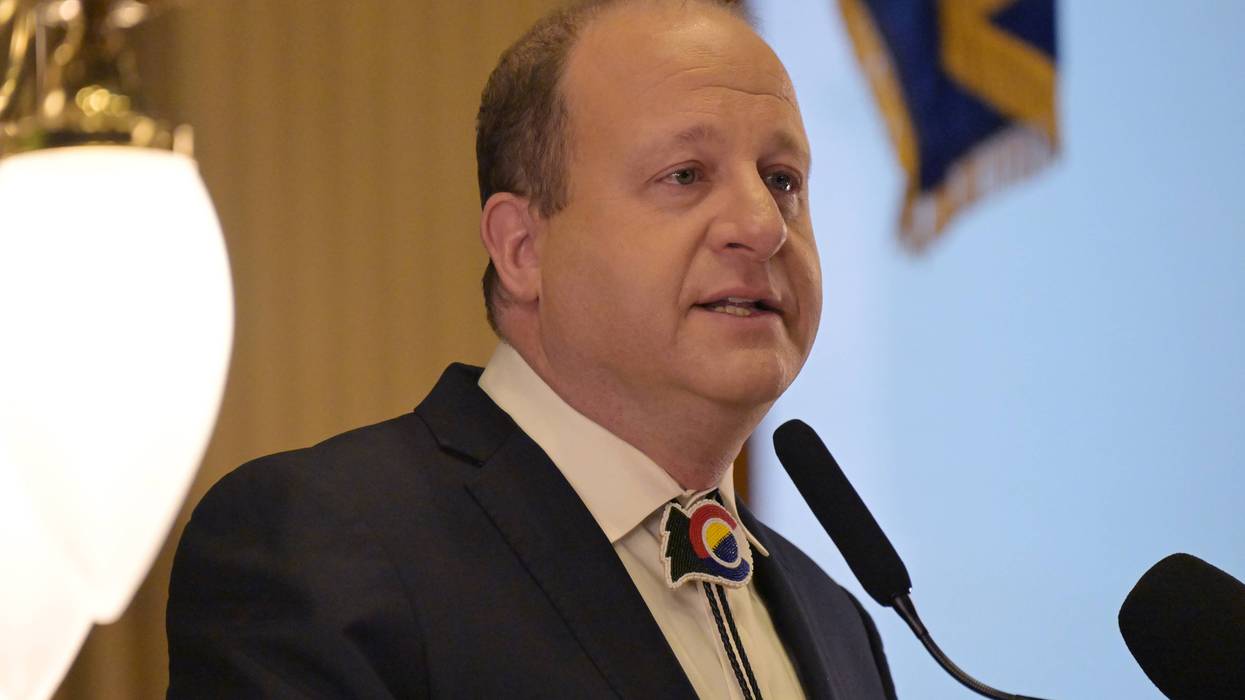
"Firing people who oppose you is also a page out of Trump's playbook," said US Rep. Pramila Jayapal.
US Congresswoman Pramila Jayapal on Thursday accused Democratic Colorado Gov. Jared Polis of conduct commonly seen from President Donald Trump's after Polis fired two members of the state clemency board, citing their decision to speak out publicly against his release of former county Clerk Tina Peters.
In 2024, Peters was sentenced to nine years in prison for tampering with voting equipment in an effort to prove the false claim that the 2020 election was rigged against Trump. The president, who faced his own legal challenges for spreading the falsehood and trying to overturn the election, issued a symbolic pardon for Peters and pressured Polis to commute her sentence, which Polis did in May, angering members of his own party and democracy advocates.
Two members of the state clemency board, Hannah Seigel Proff and Azra Taslimi, were among those who opposed Polis' decision, and they went against the board's usual custom of maintaining secrecy about its proceedings to reveal that the entire board had twice voted unanimously to reject Peters' bid for a shorter sentence, only to be overruled by the governor.
On Wednesday, Proff and Taslimi told The New York Times that they'd received dismissal letters from Polis, who told them they had "breached the required duty of confidentiality by publicly divulging board members’ votes."
Jayapal (D-Wash.) said Polis' commutation of Peters's sentence was akin to acting like the January 6, 2021 attack on the US Capitol by election-denying Trump supporters "didn't happen."
"Firing people who oppose you is also a page out of Trump's playbook," said the congresswomen.
The board members also revealed that Polis had passed over other deserving applications for parole before he allowed Peters to walk free on June 1.
"We have reviewed hundreds of applications that moved us to tears," they wrote in an op-ed at The Denver Post. "People who spent decades atoning for a single terrible decision, who attended college or seminary behind bars, completed countless programs, developed curricula for other incarcerated people, mentored young offenders, and raised thousands of dollars for victims’ rights organizations."
"Along with nine other members of the board, we have read applications supported by prosecutors who tried the case, by prison wardens who watched the transformation happen, and even by victims themselves," they continued. "And we have seen the governor fail to act or delay many of these applications."
A spokesperson for Polis told the Times that their decision to divulge the two unanimous votes against Peters' release threatened the "credibility of the board." Taslimi told 9NEWS Denver that Polis' real message in deciding to fire the two board members "is that the public doesn't have the right to know that his own advisory board told him no, twice, unanimously."
"That's not protecting the process, that's protecting himself from scrutiny," said Taslimi.
Gov. Jared Polis passed over other deserving inmates to give clemency to Tina Peters, according to two members of his clemency board who revealed Polis overruled the unanimous recommendation of his experts. Polis has now fired both of them. pic.twitter.com/N2bc8uxSc7
— Kyle Clark (@KyleClark) July 2, 2026
The two dismissed board members noted in their op-ed that Peters, unlike many of the people who have submitted clemency applications that have been rejected by Polis, has "expressed no contrition" for the crime she was convicted of.
"Within hours of her release, Peters appeared on a podcast and immediately resumed her attacks on the integrity of US elections," they wrote. "She repeated the debunked conspiracy theory that voting machines cheated Donald Trump out of reelection in 2020 and portrayed herself as a martyr to the effort to expose it. She called her release a miracle."
"The governor said he was moved by her admission that she made a mistake," they added. "She walked out of prison and told the world she made no mistake at all."
Proff told 9NEWS that she might regret her decision to speak out if her fellow board members were "disappointed" in her public revelations about the panel's operations.
"But I really have a feeling that the person who's upset," said Proff, "is the one that was using our board as backing for a politically unpopular and unjust decision."

"This is unprecedented and further proof that ICE and their private, for-profit prison contractors should not be sent another cent of taxpayer dollars."
Congresswoman Pramila Jayapal on Monday demanded accountability for the Trump administration officials responsible for the "unprecedented" number of people who have died while detained by US Immigration and Customs Enforcement during President Donald Trump's second term.
"Yesterday, I was notified of the 50th death in ICE custody since Trump returned to office," Jayapal (D-Wash.)—the ranking member of the House Subcommittee on Immigration Integrity, Security, and Enforcement—said on social media. "This is unprecedented and further proof that ICE and their private, for-profit prison contractors should not be sent another cent of taxpayer dollars. There must be accountability."
According to ICE's public database, 51 people have died while detained by the Department of Homeland Security (DHS) agency during Trump's second term, including two people who were killed in a sniper attack on an ICE administrative and processing center in Dallas. At least 10 of the deaths were men who killed themselves, according to an Associated Press investigation published late last month.
ICE recently announced it would stop reporting the deaths of people recently released from ICE detention. The reporting policy, enacted in 2021, was meant to assure accountability and prevent the agency from offloading severely ill detainees.
Many of the deaths were preventable, say experts who point to systemic understaffing and DHS policy choices that weaken detainee care and employee oversight.
Jayapal's call comes as ICE detainees across the nation are resisting abuse in concentration centers across the nation, through hunger strikes and other civil disobedience, as well as via lawsuits.
Hundreds of detainees at Delaney Hall in Newark, New Jersey—which is operated by prison profiteer GEO Group—are participating in a hunger and labor strike over unsanitary conditions, inedible food, poor medical care, and prolonged detention, while federal agents have attacked people outside the facility including protesters and a sitting US senator.
Similar strikes and other acts of resistance are either ongoing or recently occurred at Adelanto Processing Center and its Desert View Annex in California, North Lake Processing Center in Michigan, Moshannon Valley Processing Center in Pennsylvania—all run by GEO Group—and other lockups. Detainees who participate in hunger strikes or speak to reporters say they have been placed in solitary confinement and subjected to other retaliation.
Despite—some critics say because of—reports of widespread abuses, DHS recently shut down its Office of the Immigration Detention Ombudsman (OIDO), which was created by an act of Congress signed into law during Trump's first term amid rampant systemic abuse of migrants including detainee deaths, family separation, and severe overcrowding. OIDO had the power to receive detainee complaints, investigate alleged abuse or misconduct, inspect detention facilities, and report systemic problems to DHS leaders and Congress.
Jayapal, who is an immigrant, has been one of Congress' most vocal critics of Trump's xenophobic immigration crackdown. She was a leading voice for the replacement of former DHS Secretary Kristi Noem and has visited several ICE detention centers—and been blocked from conducting official oversight duties at one of them.
She also introduced the Dignity for Detained Immigrants Act, a proposal "to end the use of private, for-profit detention centers, end the use of mandatory detention, update and implement robust minimum requirements for care, and conduct urgent oversight at other facilities across the country.”
Last week, Jayapal highlighted a report published by the office of DHS Inspector General Joseph Cuffari that detailed violations of food safety and medical care standards, excessive use of force, and other improprieties at the Winn Correctional Center in Louisiana, which is run by prison profiteer LaSalle Corrections.
“This DHS OIG report details what we have heard from detained immigrants across the country—that these detention centers have violated numerous required standards and are putting people’s health and safety at serious risk," Jayapal said in a statement. "And this report verifies what many immigrants have stated is happening at these private, for-profit detention centers across the country."
"DHS must immediately withdraw funding from the numerous detention centers that consistently do not meet the minimum required standards for housing immigrant detainees," the congresswoman added. "For those that remain, DHS must require facilities to take immediate corrective action and engage in serious oversight of these for-profit prison operators who are prioritizing their cash coffers over meeting basic health and safety standards."