
SUBSCRIBE TO OUR FREE NEWSLETTER
Daily news & progressive opinion—funded by the people, not the corporations—delivered straight to your inbox.
5
#000000
#FFFFFF
To donate by check, phone, or other method, see our More Ways to Give page.


Daily news & progressive opinion—funded by the people, not the corporations—delivered straight to your inbox.
The working class deserves its own political organization, independent of the Democratic Party, in order to win back its rightful place in our political system.
I recently attended a webinar sponsored by the Working Families Party, entitled Winning Back the Working Class. Everyone attending seemed to share the view that the working class has drifted away from the Democratic Party and that Democrats must change their messaging in order to win these voters back and prevail against MAGA Republicans.
The presenters provided sophisticated polling analyses, looking closely at the issues that matter most to working-class voters and what turns them off about the Democratic Party. The bottom line was that the Democrats needed to put forward a strong, progressive economic-populist agenda.
While I share the desire to derail MAGA in the coming elections, I find the “winning back” framework problematic. For starters, why do Democrats need to be convinced that a progressive economic platform should be adopted? A party that was truly in tune with the working class should arrive there on its own. And clearly it has not. Why?
In this case, the obvious answer may be the right one: the Democratic Party establishment does not believe in progressive populism. It is not comfortable, for example, with forcefully attacking job insecurity by guaranteeing a job at a living wage for everyone who wants to work and cannot find employment in the private sector. It does not want to provide universal health insurance or dramatically facilitate union organizing in order to empower working people.
Ideologically, Democratic leaders are more comfortable with a liberal version of trickle-down economics—one that lets corporations play the central role in the economy. It expects rising prosperity to flow from government policies that enhance private investment and profits. Getting rich is shared value and woven into the party’s culture as thousands of consultants, pollsters, and operatives compete for a share of the billions of dollars spent during each election cycle.
At best, the populist economic messaging is just a tactic for gaining votes. Working-class voters know it and look elsewhere.
Given that the Democratic Party is not fundamentally a working-class party, how will the adoption of more populist messaging change its character? It won’t—and, again, working-class voters know it.
In fairness to these progressive analysts, they understand that much more is needed. They want Democrats to recruit and run more working-class candidates, which would demonstrate a deeper commitment to working-class concerns. Over time, more working-class candidates could help transform the party into something closer to a working-class party and help solve the “winning back” problem. But everyone knows it won’t happen anytime soon.
The Working Families Party has been recruiting and supporting progressive candidates in Democratic Party primaries for many years. The party sees its mission, as best I can tell, as transforming the Democratic Party by advancing a working-class agenda within the Democratic Party and in state legislatures. It has been effective in states such as New York, Connecticut, and New Jersey, helping secure increases in the minimum wage, paid family leave legislation, and higher taxes on millionaires.
But something important is missing from its reliance on polling-and-messaging. If the Working Families Party were a working-class party, then its working-class base—not pollsters—would be developing its platform through some kind of bottom-up, face-to-face process. One can imagine dozens of grassroots meetings during which working people discuss and debate the issues they want their party to fight for. Polling can certainly play a role in testing issues with a wider electorate and bringing new concerns to the base for discussion. But the workers in the Working Families Party should be shaping the agenda.
Perhaps I am being naive or nostalgic, but isn’t that what progressive populist parties should do?
There is also the question of where the “winning back” should occur. Transforming the Democratic Party is only possible where the party actually exists. In vast areas of the country, it has withered away, making “winning back” impossible.
I took a quick look at nine Great Plains and central states: Oklahoma, Kansas, Nebraska, Missouri, Iowa, South Dakota, North Dakota, Montana, and Idaho.
In these places, there is no party to win the working class back to.
One option is simply to concede roughly half the country to MAGA forces. But it would be a grave mistake to abandon the tens of millions of working-class voters who live outside blue and purple areas. Many of them may have voted red in the last election, attracted by populist rhetoric designed to attract them, but at the end of the day, they’re not going to be satisfied by what the Republicans deliver. Where do they go?
That leaves another option: build a new party of working people that concentrates on the red areas where Democrats have abandoned the field. Such an effort could begin with candidates like Dan Osborn, who has stepped into the working-class political vacuum in deep-red Nebraska. He ran well ahead of Kamala Harris in 2024 and is currently polling competitively against Pete Ricketts. There is room for many more candidates like him in these one-party states.
Building something new is a heavy lift, to be sure, and it will take time. But the discussion about why and how to do it must begin now. We need to remove the blinders that prevent us from seeing that an alternative to the Democratic Party must be built—a new party, of and by working people, is needed to fill this vast political vacuum.
The call to “win back the working class to the Democrats” needs to be turned inside out. The working class deserves its own political organization, independent of the Democratic Party, in order to win back its rightful place in our political system. Only then can working people speak in their own voice about how to build an economy that serves people rather than wealth—one that attacks runaway inequality and job insecurity.
****
The questions raised in this essay are explored in much greater depth in my new book, The Billionaires Have Two Parties, We Need One of Our Own: How Working People Can Build Independent Political Power.
The book examines why so many working people have abandoned the Democratic Party, why independents are now the largest political bloc in many states, what voters in the heartland actually want from politics, and whether a new working-class political organization can be built without acting as a spoiler.
Drawing on new polling and historical research, it argues that working people can build independent political power even in places where the Democratic Party has ceased to function as a competitive second party.
If these arguments resonate with you, I hope you’ll take a look at the book.
"If the Democratic Party wants to beat Republicans and win back a majority in November, they need to listen to their voters and usher in a new generation of fighters."
Progressive candidates have swept to victory against establishment opponents in Democratic primary races across the US, including on Tuesday, as voters turn out in support of working-class champions who have spurned corporate money and vowed to pursue transformative change at the national, state, and local levels.
The Working Families Party (WFP) celebrated a five-for-five sweep for the US House candidates it backed in California primaries, as Mai Vang, Connie Chan, Aisha Wahab, Randy Villegas, and Angela Gonzales-Torres each advanced to the November general election. As Common Dreams reported, Villegas—who is running to unseat incumbent Rep. David Valadao (R-Calif.)—advanced despite the Democratic Congressional Campaign Committee's intervention in support of his opponent Jasmeet Bains, a corporate Democrat.
WFP noted that the wins in California followed upset victories by Chris Rabb in Pennsylvania's 3rd Congressional District and Analilia Mejia in New Jersey's 11th District.
“Voters are seeing through the bullshit and voting for candidates who aren’t in the pocket of billionaires and corporate interests,” Ravi Mangla, WFP's national press secretary, said in a statement. “In New Jersey, Pennsylvania, and now California, WFP candidates have defied the odds and won shock victories over do-nothing corporate Democrats. We're electing a new generation of leaders who won't put up with being pushed around by billionaire elites."
WFP, along with US Sen. Bernie Sanders (I-Vt.) and other progressives, also backed Graham Platner in Maine, where he won a landslide victory over Democratic Gov. Janet Mills on Tuesday.
Politico reported that other Sanders-backed candidates in US congressional races "include Adam Hamawy and Analilia Mejia in New Jersey, Sam Forstag in Montana, Brian Poindexter in Ohio, and Bob Brooks in a key Pennsylvania swing district."
"The senator’s support has been instrumental in powering unknown candidates to major wins this cycle, a demonstration of just how much political influence the 84-year-old progressive leader still commands," Politico noted.
.@grahamformaine has won his primary election for Senate in Maine.
The choice in Maine is clear. Graham has built one of the most exciting grassroots movements in the country by bringing together working people around a bold vision. pic.twitter.com/PsD3qBZx3p
— Working Families Party 🐺 (@WorkingFamilies) June 10, 2026
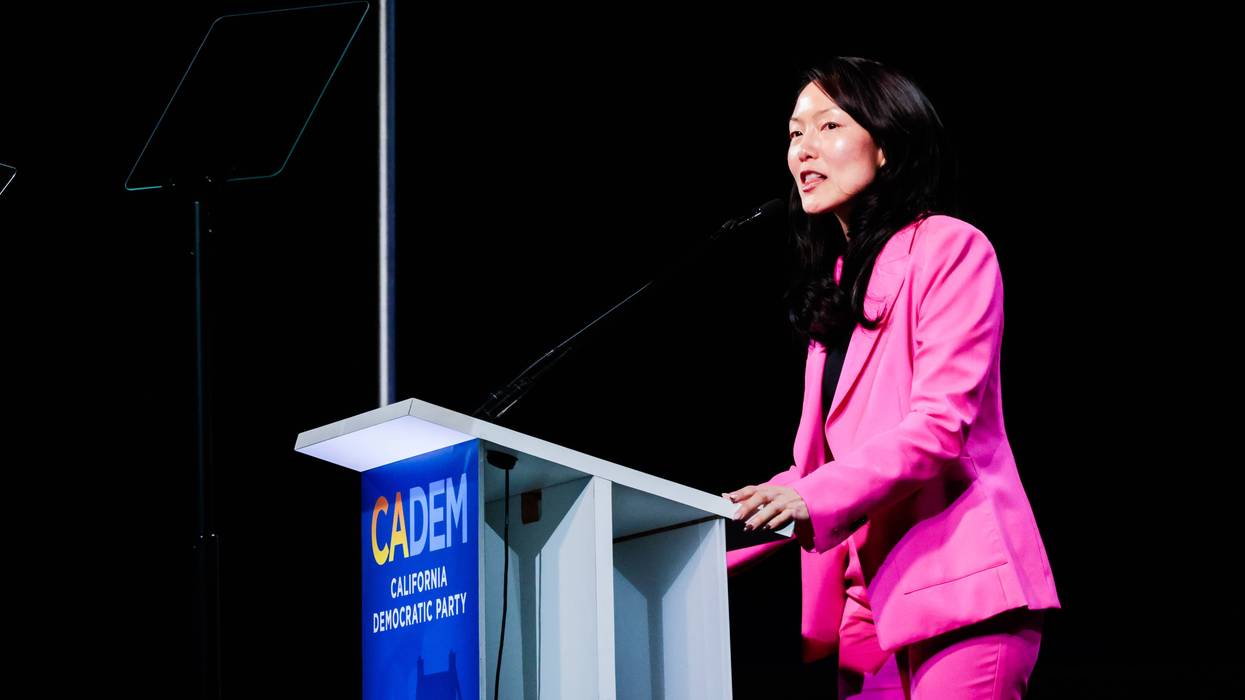
Justice Democrats, the grassroots group working to replace corporate Democrats with progressives across the country, is celebrating primary wins by Jane Kim, who is running to serve as California's insurance commissioner, and Mai Vang, who is vying to represent California's 7th Congressional District in the US House.
As of this writing, Vang has received more votes in the jungle primary than incumbent Rep. Doris Matsui (D-Calif.).
“Sacramento is ready to move on from the corporate dynasty that has represented it for 50 years and elect a true working class champion to fight for their families in Washington,” said Alexandra Rojas, the executive director of Justice Democrats. “Mai represents the Sacramento being left behind by Doris Matsui and the promise of representation that fights the corporations raising our prices and ICE contractors enabling our communities to be terrorized—instead of cashing their checks."
"If the Democratic Party wants to beat Republicans and win back a majority in November," Rojas added, "they need to listen to their voters and usher in a new generation of fighters like Mai, to excite our base and lead this party forward."
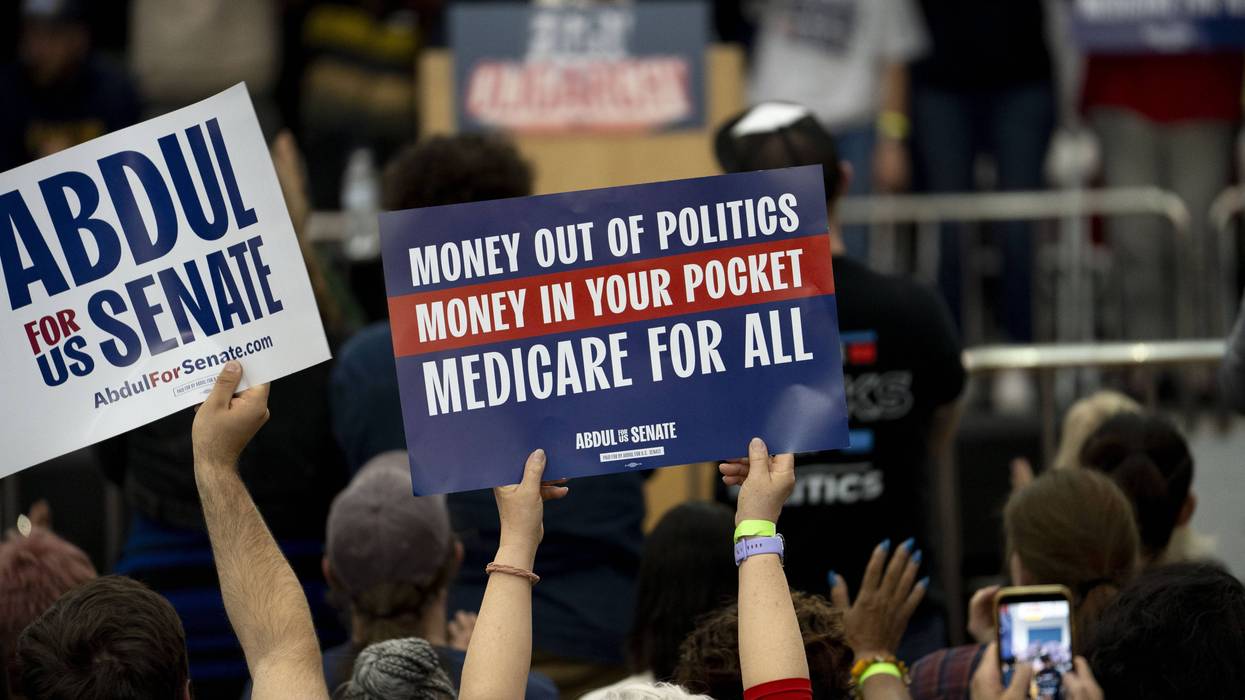
"We’re excited to work with Abdul to win Medicare for All, create good union jobs, and end the influence of big money in politics," said the progressive party.
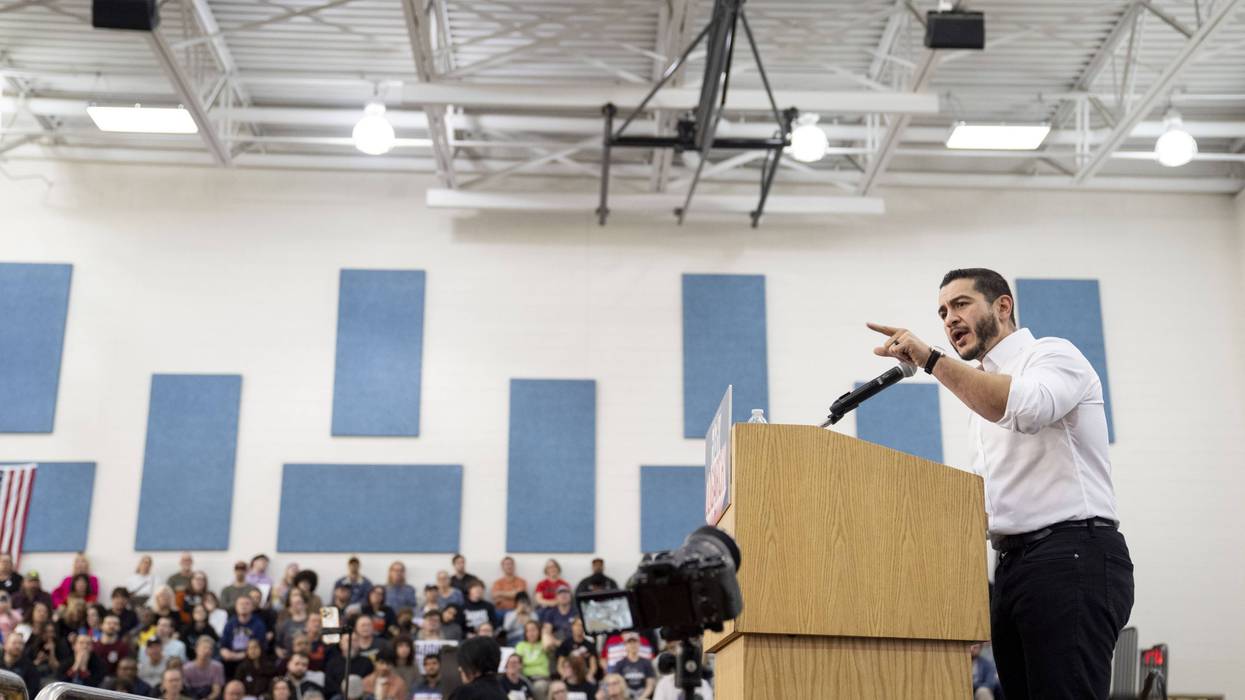
Following the victories of Working Families Party-endorsed progressive candidates like Rep. Analilia Mejia in New Jersey and Pennsylvania state lawmaker Chris Rabb, who won a Democratic US House primary last week, the organization announced Tuesday that it is "all in" on former public health official Abdul El-Sayed's primary campaign in the key state of Michigan.
“Abdul has dedicated his career to making government work for regular people and fighting to improve our broken healthcare system,” Maurice Mitchell, WFP’s national director, said in a statement. “He’s not afraid to stand up to Donald Trump, Elon Musk, or any of the greedy billionaires screwing over our communities."
El-Sayed's race for the August 4 primary has been contentious, with his two opponents—Rep. Haley Stevens and state Sen. Mallory McMorrow (8) elevating attacks on their opponent's decision to campaign with left-wing streamer and commentator Hasan Piker, an outspoken critic of Israel and US military support for the country.
Following those attacks, El-Sayed was shown to gain momentum in polls; he was 10 points ahead of Stevens and 11 points ahead of McMorrow in a survey by Mitchell Research and Communications earlier this month, and 80% ahead among voters under the age of 45.
El-Sayed is a strong supporter of Palestinian rights—differentiating him from Stevens, who has received donations from the American Israel Public Affairs Committee, and McMorrow, who has criticized Israel's assault on Gaza but also reportedly wrote a position paper for the influential pro-Israel lobby group.
But the push for Medicare for All, which he published a book about, has been an even more central focus of his political career.
Stevens and McMorrow both reportedly support a public option, and the latter candidate asserted in a recent interview that "the support for a true single payer system isn't there yet"—despite the fact that Medicare for All had the support of 78% of Democrats and 65% of overall American voters in a Data for Progress poll late last year, and has been found to have broad support in other surveys in recent years.
"We’re excited to work with Abdul to win Medicare for All, create good union jobs, and end the influence of big money in politics," said Mitchell on Tuesday.
On social media, the group highlighted public health successes El-Sayed led while heading Detroit’s Health Department and the Wayne County’s Department of Health, Human, and Veterans Services in Wayne County, Michigan, which serves 1.8 million residents.
"He is the kind of candidate we need in office," said WFP.
Distill Social, a Michigan-based grassroots news organization, said the endorsement "says a lot" to voters weighing their options ahead of the August primary.
WFP's "lane is clear: workers, healthcare, clean water, corporate accountability, and a government that actually fights for people," said the group.
El-Sayed said the group "understands that finding and keeping a good job, guaranteed healthcare, being able to afford a home, and having the freedom to spend time with your family aren't radical ideas. They should be the baseline."
"I'm honored to earn their endorsement," said El-Sayed.
The Democratic Congressional Campaign Committee decided to boost conservative candidate Jasmeet Bains instead of progressive Randy Villegas.
The Democratic Party's congressional campaign arm faced backlash on Monday for boosting the more conservative US House candidate in California's 22nd District, where two Democrats are vying to unseat GOP Rep. David Valadao.
The Democratic Congressional Campaign Committee (DCCC) has added Jasmeet Bains, a California State Assembly member, to its "Red to Blue" program, which gives chosen candidates fundraising and organizational support as they seek to flip Republican seats. The DCCC's decision to elevate Bains over Randy Villegas, an educator and political newcomer endorsed by Sen. Bernie Sanders (I-Vt.) and major unions such as the United Auto Workers, was seen as the latest example of Democratic leaders seeking to thwart a progressive candidate with genuine grassroots momentum.
"Just like they did in Maine and Michigan, the Democratic establishment is again putting its thumb on the scale—not to support the stronger candidate, but the candidate who will bend to party leadership and its corporate donors," said Ravi Mangla, national press secretary for the Working Families Party (WFP), which has backed Villegas.
“Randy Villegas is the top Democratic fundraiser in the race, despite not taking a penny from corporate interests," said Mangla. "He’s racked up more key endorsements than his opponent. And he’s the only candidate with the energy and momentum to beat David Valadao in November."
In a statement, Villegas called the DCCC's move "undemocratic" and said that "voters have the power to choose who represents our community, not DC elites and corporate interests."
"This is why I will continue to knock on every door and meet voters where they’re at to ensure we take our working families to DC," Villegas added.
California primaries are nonpartisan, so the incumbent Valadao will face Bains and Villegas in the June 2 contest. The top two vote-getters will advance to the general election.
The American Prospect's Emma Janssen reported last week that Bains and Villegas "represent two opposing approaches that Democrats across the country have articulated as the key to beating Republicans."
"Bains is running a more conservative campaign—what some, including Villegas, have called 'Republican Lite,'" Janssen noted. "Villegas, on the other hand, is running to the left and has been endorsed by progressive leaders."
Villegas has accused Bains of "flip-flopping on a variety of issues," including Medicare for All and whether Israel's assault on Gaza rises to the level of genocide. Villegas has joined human rights organizations, legal experts, and many others in answering the latter in the affirmative.
Bains, who is endorsed by Democratic Majority for Israel, previously said she believes Israel has committed genocide in Gaza before reversing herself.
“It’s clear that Assemblymember Bains is willing to change her answers or sell her answers to the highest bidder and the highest donor, and that she doesn’t actually stand for anything but whatever her corporate donors tell her to do,” Villegas told the Prospect. “Her flip-flopping on all these issues is disappointing, but it’s also not surprising from somebody who has failed to actually stand up for our communities in Sacramento.”
In its endorsement of Villegas published on Sunday, McClatchy Media’s California editorial board wrote that "Bains and Valadao represent a status quo shaped by complacency," whereas Villegas "is the embodiment of the Central Valley’s values."
"At 30, Villegas reflects a growing generational divide within the Democratic Party. Like many young progressives, he is frustrated by the party’s lack of action on crucial issues such as universal healthcare and the war in Gaza," the editorial continued. "There is room for Villegas to deepen his expertise on certain policy issues, but he brings a fresh perspective. He believes in hard work and family. He has far more in common with his district than his opponents."
This story has been updated to include a statement from Randy Villegas.
"I’m going to say what too many politicians won’t: The system is rigged, the obscenely wealthy are profiting from it, and working people deserve more than scraps."
As Democrats plan boycotts and counterprogramming to President Donald Trump's State of the Union address next week, progressives are readying their own response to resist not just the historically unpopular commander-in-chief, but the centrist faction of their own party.
For years, the State of the Union has served as a platform for rising stars in the opposition party. The Democrats are rolling out the newly minted Virginia Gov. Abigail Spanberger, a darling of the party establishment whose inaugural committee boasts an army of corporate backers—including Amazon and Capitol One, lobbying groups for the gambling industry and car dealerships, and multiple tobacco companies.
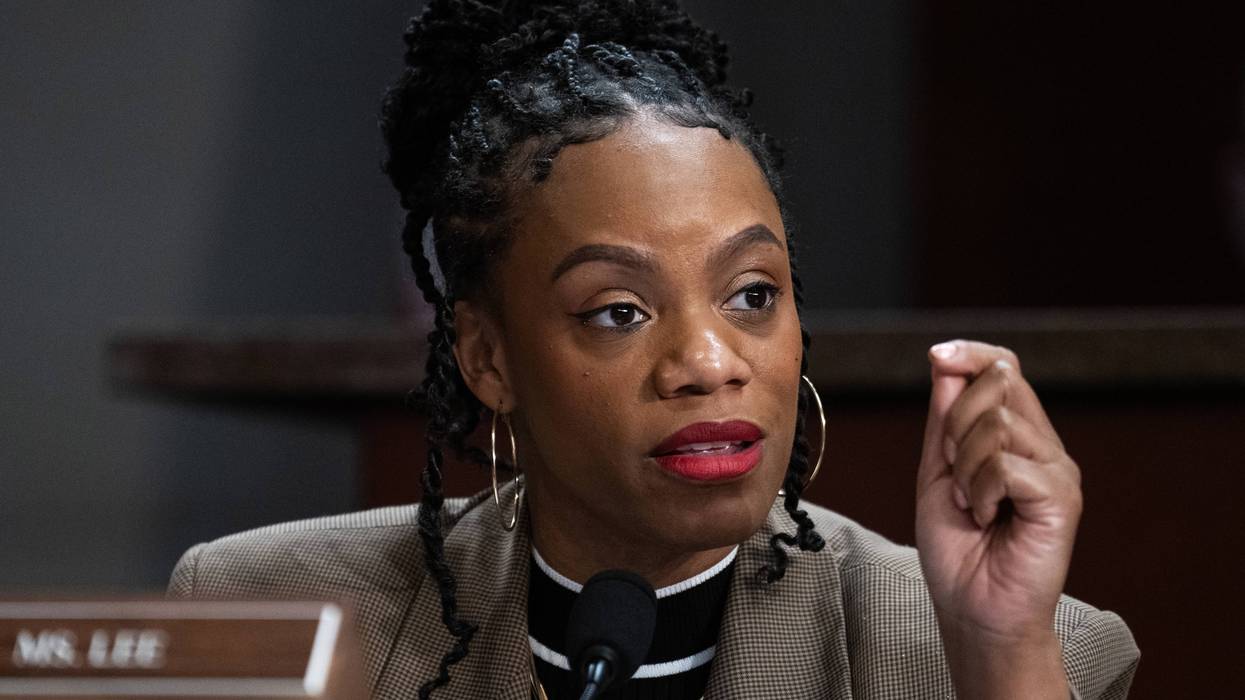
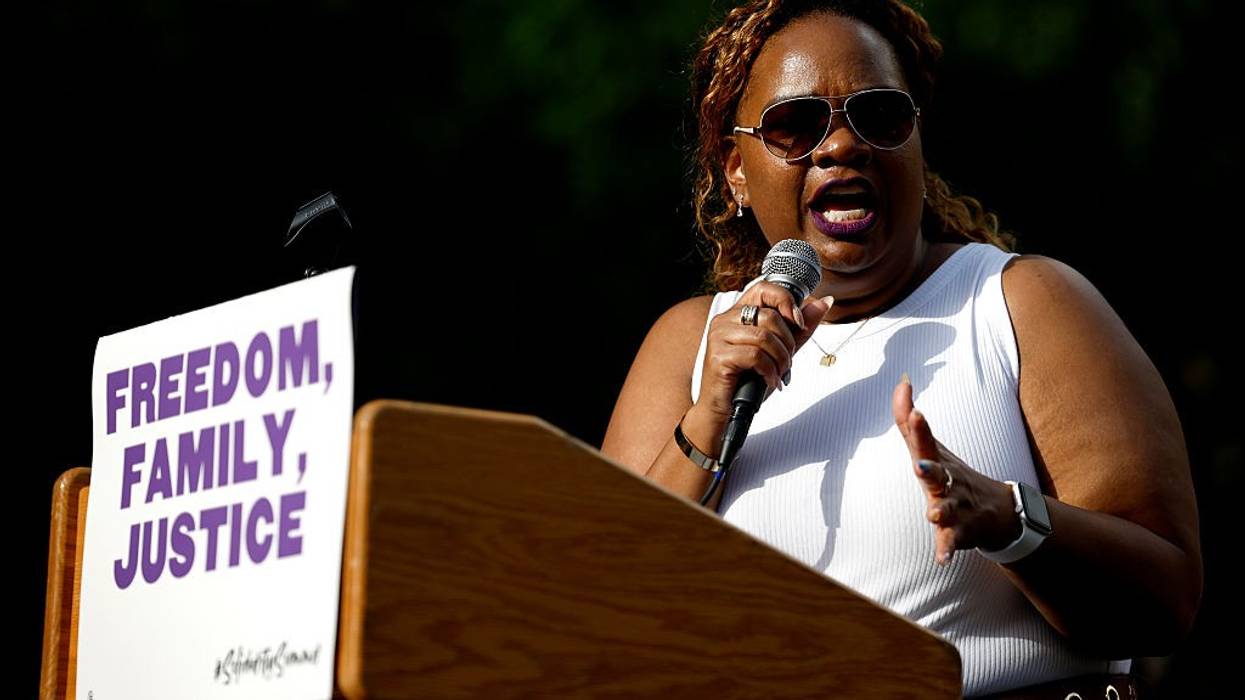
Seeking to push an alternative vision, the left-wing Working Families Party (WFP) has chosen Rep. Summer Lee (D-Pa.), whom national director Maurice Mitchell described as "fearless, rooted in working-class communities, and unafraid to take on both MAGA extremism and corporate power."
Previous WFP speakers have included Reps. Ayanna Pressley (D-Mass.), Rashida Tlaib (D-Mich.), and Delia Ramirez (D-Ill.).
"I’m going to elevate the voices of the people in my district and across the country who are angry, scared, and fed up with an administration that’s done nothing to help and a lot to hurt everyday people,” Lee said. “I’m going to say what too many politicians won’t: The system is rigged, the obscenely wealthy are profiting from it, and working people deserve more than scraps.
"Now more than ever," she continued, "we need a political home for people who are ready to fight back against Trump’s corruption and cruelty, and the corporate politics that made him possible.”
Her address comes at a pivotal moment for the Democratic Party's future. Despite the sinking popularity of Trump and soaring expectations of a blue wave in this November's midterms, polls show that Democratic voters are overwhelmingly dissatisfied with their party's leadership, believing it has failed to forcefully take on corporate power and pursue policy priorities like universal healthcare and increased taxes on the rich.
Contrary to Spanberger, a former congresswoman who consistently voted to hike military spending and called on former President Joe Biden to avoid pursuing an ambitious FDR-style social spending agenda, Lee has championed Medicare for All, a wealth tax on the richest Americans, and Green New Deal legislation while being one of Congress' fiercest critics of the US's unconditional military support for Israel.
"Summer Lee is the kind of leader this moment demands," Mitchell said. “At a time when voters are losing faith in the two-party status quo, the Working Families Party is building a disciplined, independent political force that can defeat Trump and actually deliver on jobs, wages, healthcare, and more.”
"People across Pennsylvania did not put time, money, and energy into supporting his campaign just to elect a Democrat who votes against our interests time and time again," said a campaigner for the Working Families Party.
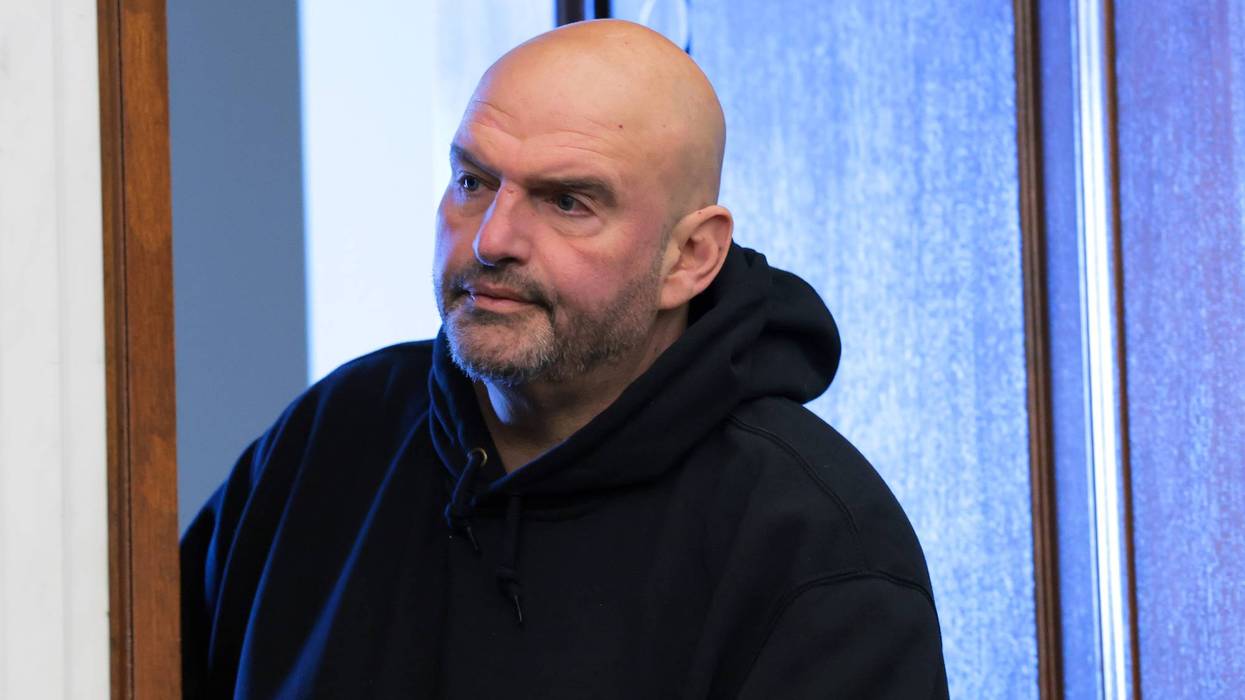
The Pennsylvania Working Families Party rolled out an online "hub" on Friday to support a primary challenger to the state's US senator, John Fetterman.
The WFP, an independent party that often supports Democrats with a populist economic agenda, backed Fetterman's 2022 Senate bid when he ran in the general election as a champion of many progressive causes. But the group now says he "sold out working Pennsylvanians" after pivoting hard to the right on key issues.
It launched the campaign to oust him in November after he voted with Republicans to reopen the government without an extension of Affordable Care Act (ACA) subsidies, which is expected to spike health insurance premiums for over 22 million Americans this year.
“While Sen. John Fetterman (D-Pa.) is supporting Trump’s use of American tax dollars to ‘run’ Venezuela or buy Greenland, 500,000 Pennsylvanians are about to see their healthcare premiums rise because of the Republican budget bill he supported,” said Nick Gavio, mid-Atlantic communications director for the Working Families Party and a former Fetterman staffer. “People across Pennsylvania did not put time, money, and energy into supporting his campaign just to elect a Democrat who votes against our interests time and time again. We need new leadership.”
The website provides past Fetterman donors who feel betrayed by the senator with a form letter to "request a refund" of past contributions from the campaign. It also contains a "Sell-out Tracker," which seeks to "track every bad position" he has taken.
In addition to his vote to reopen the government, the group notes that Fetterman has voted to confirm 50% of Trump's Cabinet picks. He was the only Democrat who voted to confirm Attorney General Pam Bondi and Ambassador to Israel Mike Huckabee, and one of the very few to vote in favor of Secretary of Homeland Security Kristi Noem.
It also accuses him of "betraying vulnerable people" by supporting Republican legislation that eliminates due process for undocumented immigrants, cheering US Immigration and Customs Enforcement (ICE) amid its mass deportation crusade, and giving full-throated support to Israel's genocidal war in Gaza and Trump's strikes on Iran.
The site also highlights Fetterman's tendency to neglect the basic duties of his job as a senator, which he has admitted he skips to spend more time with his family and because he finds them “overwhelmingly procedural.”
Fetterman has one of the worst attendance records in the Senate, having missed over 100 votes since April 2024 and skipped 44 out of 45 meetings for committees he was assigned to between January and May 2025.
He has also said he hosts very few town halls in order to avoid protesters, who have shown up to voice their discontent with his support for Israel, among other controversial positions.
As the site points out, while some other Democrats fought tooth and nail in a losing effort to stop Republicans from passing massive safety-net cuts in this summer's budget reconciliation package, Fetterman told Politico, "I just want to go home" and complained that he'd missed his family's trip to the beach.
So far, no prominent Pennsylvania Democrats have offered themselves up as potential primary challengers for Fetterman, who comes up for reelection in 2028.
Top names, including former Rep. Conor Lamb, who ran against Fetterman in the 2022 Democratic primary, and Philadelphia area Rep. Madeleine Dean have said they would not challenge Fetterman if he ran for another term.
Meanwhile, Rep. Brendan Boyle (D-Pa.), who called Fetterman "Trump's favorite Democrat" last year, told NOTUS he'd be open to running against him.
The Pennsylvania Working Families Party said it is collecting donations that it will use to help "identify, recruit, and elect a real working class champion to replace Fetterman in the US Senate."
The group told NBC News that it has already amassed more than 425 people interested in either running against Fetterman themselves or volunteering their time or donating to help the effort to unseat him.
"I don't think there’s been a better and more right time for a third party to emerge in this country that speaks to the interest of everyday working people," said Maurice Mitchell, national director of the Working Families Party.
The Working Families Party is gearing up to have a banner year in the 2026 midterms at a time when political trends show the Republican Party led by President Donald Trump heading for a major loss.
The party, which is now active in 18 states, is preparing to "ramp up its involvement in primary elections, supporting candidates that emphasize working-class politics and seek to disrupt the political status quo," according to a Monday report in the Guardian.
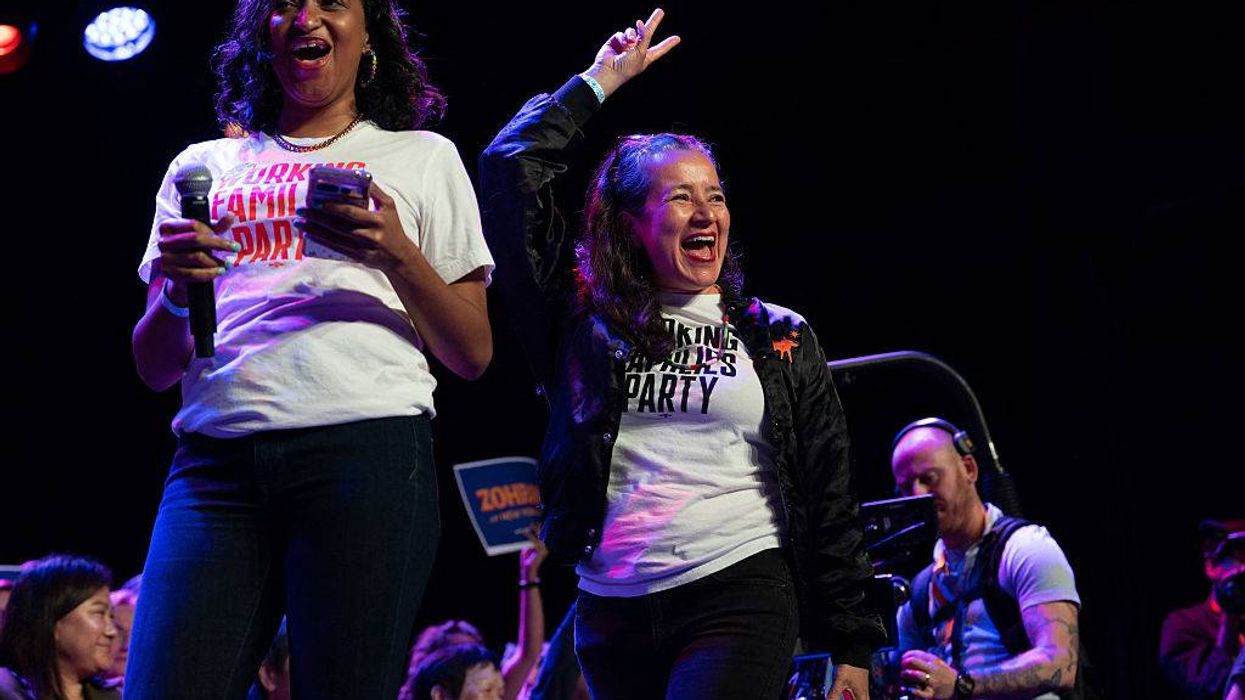
The Working Families Party (WFP) had a number of victories in 2025, highlighted by its election of democratic socialist Zohran Mamdani as mayor of New York City.
Maurice Mitchell, national director of the WFP, told the Guardian that he thinks now is the right time for a populist progressive insurgency given that both Democrats' and Republicans' brands are underwater with US voters.
"Less and less people are identifying as being a Democrat or Republican," he said. "I don't think there’s been a better and more right time for a third party to emerge in this country that speaks to the interest of everyday working people. I believe that our time has come."
Although the WFP has traditionally worked within the confines of Democratic Party primary politics, the party this year elected some candidates in the New Jersey General Assembly that lacked backing from state Democratic Party bigwigs.
"This is really the first time that there’s been Working Families candidates that ran outside of the Democratic Party structure, and so we’re building what that future looks like and what it means," Katie Brennan, a New Jersey assemblywoman-elect endorsed by the WFP who won without official Democratic Party backing, told the Guardian. “They've grown and have been making progress year in and year out, and this next year will be big for us. Now we’re in the statehouse, and what does that mean? I think it’ll continue to bring attention to the Working Families party."
One issue that the WFP hopes will propel its candidates to victory in 2026 is the nationwide backlash to artificial intelligence data centers.
In an announcement made earlier this month, the WFP said it is recruiting candidates to run against building AI data centers, which have been blamed for spiking utility bills and draining water resources, in their local communities.
“Billionaires are getting richer from data centers, while working people see their electricity and water bills go through the roof,” said Ravi Mangla, national press secretary for the WFP. "Fortunately, regular people are joining with their neighbors to push back against these big tech takeovers. We’re inviting local leaders who are fighting back to consider running for the seats where decisions about data centers are being made.”
Another reason the party may sense an opportunity is that the Trump-led GOP appears headed for brutal elections in 2026.
Polling expert G. Elliot Morris published an analysis on Monday showing that Trump's current net approval rating of -16 percentage points will likely translate into a "landslide electoral defeat" for Republicans next year.
Morris added that Trump's approval on the issue of inflation was "downright catastrophic," and noted that the president has been bleeding support even in states that voted for him by decisive margins last year.
"Trump’s approval rating is not just underwater because of Democratic resistance," he observed. "Lots of independents and Republicans disapprove of how he’s running the country, too. In fact, the decline from Trump’s vote margin in 2024 is steeper in redder parts of the country."
"We must end any form of political violence—and reject those who try to exploit it," one Democratic congresswoman asserted.
Senior Trump administration officials on Monday made fresh threats to crack down on a nonexistent left-wing "domestic terror movement" following last week's assassination of Charlie Kirk—a move that critics called an attempt to exploit the far-right firebrand's murder to advance an authoritarian agenda targeting nonviolent opposition.
Even as investigators work to determine the motive of Kirk's killer, members of Trump's inner circle and supporters have amplified an unfounded narrative of a coordinated leftist movement targeting conservatives.
According to The New York Times:
On Monday, two senior administration officials, who spoke anonymously to describe the internal planning, said that Cabinet secretaries and federal department heads were working to identify organizations that funded or supported violence against conservatives. The goal, they said, was to categorize left-wing activity that led to violence as domestic terrorism, an escalation that critics said could lay the groundwork for crushing anti-conservative dissent more broadly.
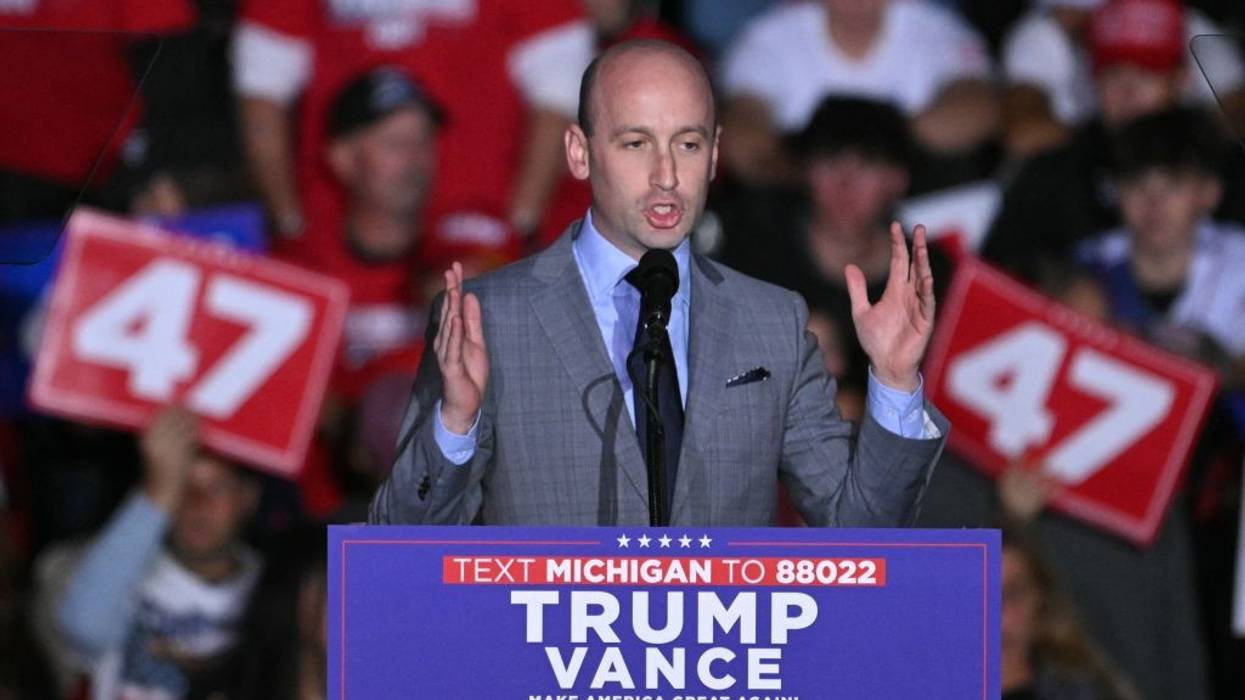
Appearing on the latest episode of "The Charlie Kirk Show" podcast—which was guest hosted by US Vice President JD Vance—White House Deputy Chief of Staff Stephen Miller said that "we are going to use every resource we have at the Department of Justice, Homeland Security, and throughout this government to identify, disrupt, dismantle, and destroy these networks and make America safe again for the American people."
"It will happen, and we will do it in Charlie’s name," Miller vowed.
Vance said during the podcast that he wanted to explore “all of the ways that we’re trying to figure out how to prevent this festering violence that you see on the far left from becoming even more and more mainstream."
“You have the crazies on the far left who are saying, ‘Oh, Stephen Miller and JD Vance, they’re going to go after constitutionally protected speech,'” the vice president said. “We’re going to go after the network that foments, facilitates, and engages in violence."
Vance, who like Trump and numerous supporters claim to champion free speech, also took aim at "people who are celebrating" Kirk's killing.
Another unnamed administration official told the Times Monday that government agencies would be investigating people, including those accused of vandalizing Tesla electric vehicles and dealerships and allegedly assaulting federal immigration agents, in an effort to implicate US leftists in political violence.
Vance and Miller's threats ignored right-wing violence—which statistically outpaces left-wing attacks—including the recent assassinations of Democratic Minnesota House Speaker Melissa Hortman and her husband Mark Hortman, who were murdered in June by a right-wing masked gunman disguised as a police officer.
Investigative reporter Jason Paladino reported last week that the US Department of Justice apparently removed an academic study previously published on the National Institute for Justice's online library showing that "since 1990, far-right extremists have committed far more ideologically motivated homicides than far-left or radical Islamist extremists, including 227 events that took more than 520 lives" versus "42 ideologically motivated attacks that took 78 lives" committed by "far-left extremists."
“Militant, nationalistic, white supremacist violent extremism has increased in the United States. In fact, the number of far-right attacks continues to outpace all other types of terrorism and domestic violent extremism.”The Trump DOJ scrubbed this study from their website.
[image or embed]
— Mehdi Hasan (@mehdirhasan.bsky.social) September 12, 2025 at 6:43 PM
Responding to Miller's remarks, New Republic staff writer Greg Sargent noted on social media that "Stephen Miller was directly involved in one of the largest acts of organized domestic political violence the United States has seen in modern times, the January 6 [2021] insurrection."
Congresswoman Diana DeGette (D-Colo.) weighed in Monday on Miller's attempt to exploit Kirk's murder, writing on the social media site Bluesky that "it's never acceptable to kill someone for their political beliefs. But the Trump [administration] exploiting the shooting of Charlie Kirk to follow their authoritarian instincts and crack down on the left is incredibly disturbing."
"We must end any form of political violence—and reject those who try to exploit it," she added.
Democratic California Gov. Gavin Newsom noted Monday on social media that Miller "has already publicly labeled the Democratic Party as a terrorist organization."
"This isn’t about crime and safety," Newsom added. "It’s about dismantling our democratic institutions. We cannot allow acts of political violence to be weaponized and used to threaten tens of millions of Americans."
The progressive Working Families Party (WFP) said Monday on social media that "JD Vance and Stephen Miller want to use the horrifying murder of Charlie Kirk to target and dismantle pro-democracy groups."
"Their comments call to mind some of the darkest periods in US history," WFP continued. "They're dividing people based on what box we ticked on our voter registration."
Vance and Miller "want to stoke fear and resentment to justify their un-American crackdowns on free speech, mass abductions of working people, and military takeovers of our cities," WFP added. "This isn't going to fly. We’ve survived crises like this before as a country, and we can choose to live in a place where our political freedoms are protected, where we settle disagreements with words not weapons, and where no one has to fear losing a loved one to gun violence."
"Working people deserve leaders who will fight for them, not grovel at the feet of their billionaire donors," said Maurice Mitchell of the Working Families Party, one of the groups involved in the new coalition.
A coalition of dozens of labor groups and other progressive activist organizations has launched a new $50 million initiative to flip the U.S. House of Representatives in 2026 with a coalition of working-class voters.
The political action committee, Battleground Alliance PAC, announced Wednesday that it will seek to flip at least 35 Republican-held districts for Democrats by mobilizing voters angry about the Trump administration's assault on the social safety net and authoritarian attacks on civil liberties.
The groups will target their efforts toward mobilizing voters who have been hit the hardest by the Republican agenda.
"These are parents who will lose healthcare for their kids, families struggling after [Supplemental Nutrition Assistance Program] cuts, seniors not being able to afford their medication, people struggling with higher utility bills, and workers who've watched billionaires get tax breaks while their wages stay flat," the group said Wednesday. "They're not just participating, they're at the center of leading this effort to take back control and make their voices heard at the ballot box next November."
The coalition is attempting to build upon the successes of Battleground New York, which mobilized progressive voters in 2024 to flip back many seats lost to Republicans during the previous cycle. Amid the daily outrages of President Donald Trump's second term, they believe that success can be replicated nationally.
"People are angry for a reason," said Stephanie Porta, campaign manager for the Battleground Alliance. "They've seen their rights stripped, their wages stagnate, their bills skyrocket, their healthcare attacked—and they're done waiting. This isn't about the usual D.C. politics. This is about the majority of Americans saying: enough is enough."
Among the groups taking part in the alliance are the Service Employees International Union (SEIU), Working Families Party, Planned Parenthood Votes, Indivisible, and MoveOn.
The announcement of Battleground Alliance came on the same day that the Congressional Progressive Caucus outlined its major priorities for 2026 in a briefing to reporters.
"Working people in America are getting screwed by corrupt politicians and big corporations that are driving costs up and keeping pay and benefits down," said the caucus's chair, Rep. Greg Casar (D-Texas).
Casar and his colleagues introduced four "task forces" that "go directly at those big problems facing Americans: fighting corruption and corporate greed in order to lower costs and win better pay and benefits."
The Battleground Alliance is taking a similar approach, focusing on the material effects of the Trump agenda on working people.
" GOP members of Congress betrayed their constituents when they voted to kick 17 million Americans off their health care," said Maurice Mitchell, national director of the Working Families Party. "Working people deserve leaders who will fight for them, not grovel at the feet of their billionaire donors. We're ready to organize in districts all across the country to kick out members of Congress who lied to their constituents and voted for this disastrous budget."
The group is planning to pour $1 million into the most competitive districts in the country, targeting Republicans who voted for Trump's massive budget legislation.
Some of the Republican targets it has already singled out include Rep. David Valadao, whose district in California's San Joaquin Valley is majority Latino and has one of the highest Medicaid enrollment rates in the country; and Rep. Ryan Mackenzie, whose Allentown, Pennsylvania district now has 25,000 people at risk of losing food stamps as a result of the law.
"Working people are done watching politicians in Washington hand out favors to the wealthy while our communities struggle to afford care, housing, and food," said April Verrett, president of SEIU. "Through 2026 and beyond, we will continue to organize in places that they've tried to ignore because that's where real change begins."
Noting that corporations, large landlords, developers, and donors "want to keep him out of the mayor's office," India Walton urged Zohran Mamdani's campaign to "stay ahead of the messaging and stay on doors."
Democratic socialist Zohran Mamdani on Tuesday beat disgraced former New York Gov. Andrew Cuomo in the Democratic NYC mayoral primary—but progressives within and beyond the city don't expect the billionaire class and party establishment that lined up against him to give up so easily. Going into the general election, those who believe in Mamdani's vision are encouraging him and his supporters to maintain the momentum of the movement they've built.
"This is a foot-on-the-gas kind of moment," RootsAction senior strategist India Walton told Common Dreams.
Walton knows about what she speaks. In June 2021, the community activist and healthcare worker defeated incumbent Byron Brown in the Democratic primary for mayor of Buffalo, New York's second-largest city. However, following a bruising general election race, Brown won in November as a write-in candidate—dashing the hopes of Walton's working-class agenda.
"Folks like myself and Zohran have not fallen out of the sky," Walton said. "We have our roots in organizing, and to be able to turn out 40,000 volunteers speaks volumes about how Zohran has been on the frontlines of movements and of issue-based campaigns. And when people know that you have a moral compass and you are fighting for them, they are motivated to come out for you—not only to vote but to volunteer, and I think that we have to believe for ourselves, as progressives, that not only is our message resonant, but our relationships are vital to continuing to see these kinds of wins."
"The way that you combat fear and lies is by having one-on-one conversations with people, because if it comes on a glossy mailer, it's easy to believe."
As Mamdani and his supporters—in New York City and across the country—turn their focus to the general election, Walton said, "we need more people out, more people in the media, cheering him on, congratulating him, and talking about how progressive values do win elections."
"Do what is in your lane to do right: if you can donate five dollars, then donate five dollars; if you can spend an hour phone banking then spend an hour phone banking; if you can make a piece of original art and send it to the campaign to be used on campaign materials, do that," she said. "Whatever it is in your spirit, whatever time, talent, and treasure you have, do that, because this is gonna take all of us in order to make sure that he makes it over the finish line, and it's gonna send a resounding message in November, what this country wants, what this country needs, and what a city that really sets the stage for the tone of the rest of the nation could be."
Walton also cautioned that "I think that we should have every reason to be suspicious of people who endorsed Andrew Cuomo and now want to jump on the Zohran train, because they're only there for their own self-interest."
"I think that a part of where I made a mistake was trying to cozy up to the corporate Democrats who rejected me in the first place," she said, reflecting on her 2021 loss. Mamdani can "keep the tent big," because "we know other people are gonna wanna come along when the train is moving," she noted, "but you don't have to put them in your inner circle."
Billionaires, including former New York City Mayor Michael Bloomberg, and corporate interests, such as DoorDash, poured money into Cuomo's primary race. "There's gonna be more of that," as well as attacks on Mamdani from "folks who traditionally donate to Republicans," Walton warned. "It's corporations. It's large landlords. It's developers. It's the donor class. It's the billionaires and the 1% who want to keep him out of the mayor's office."
As Common Dreams has reported, members of the U.S. oligarchy—including Republican President Donald Trump, an erstwhile New Yorker who publicly melted down about Mamdani's primary win, and billionaires like Bill Ackman—are "terrified" that the democratic socialist may be the city's next mayor.
Warren to CNBC's Joe Kernen as he fear-mongers about Mamdani being a socialist: "Where is your outrage over a Republican Party that is saying 'We want to fund every more tax giveaways for billionaires ... while we take healthcare away from everyone else'"
[image or embed]
— Aaron Rupar (@atrupar.com) June 26, 2025 at 9:03 AM
On Thursday, the billionaire hedge fund manager Ackman, who has made his distaste for Mamdani well known, announced he would lavishly back any "superhero" candidate who emerged to challenge the Democratic primary winner in the general election. Ackman said large amounts of donor money would "pour in" for a candidate who could take on Mamdani's proposals for more affordable housing, healthcare, food, and transportation in the city.
Walton urged Mamdani's campaign to "stay ahead of the messaging and stay on doors. The way that you combat fear and lies is by having one-on-one conversations with people, because if it comes on a glossy mailer, it's easy to believe and people don't have time to go doing their own research, but if someone knocks on your door and has a three-minute conversation with you about who Zohran is, what he's done, and why you should vote for him, that's so much more meaningful than getting a piece of mail."
It's not yet clear exactly who Mamdani, a current member of the New York State Assembly, will face in the general election. Cuomo is considering his next move after conceding Tuesday night—but the ex-governor, who resigned from that post during a sexual harassment scandal, is openly teasing a potential independent run.
"I said he won the primary election," Cuomo told The New York Times in a phone call shortly after his concession speech. "I said I wanted to look at the numbers and the ranked-choice voting to decide about what to do in the future, because I'm also on an independent line. And that's the decision, that's what I was saying. I want to analyze and talk to some colleagues."
The city's current controversial mayor, Eric Adams, is already running as an independent for another term—and, as Semafor reported Wednesday, in the wake of Mamdani's win, the ex-cop has suddenly found "'overwhelming support' from NYC's desperate business elites."
As Gothamist detailed Wednesday, the other candidates are the Republican nominee, Guardian Angels founder Curtis Sliwa, who "is back on the GOP ballot line four years after Adams trounced him in the general election," and defense attorney Jim Walden, a former federal prosecutor "running a centrist campaign on yet another independent line."
Tuesday's results may be enough to deter Cuomo from launching another campaign for this cycle. As progressive Democratic strategist Waleed Shahid wrote Wednesday for Zeteo:
Mamdani's victory redrew the map of what's possible in New York City politics. He didn't win on the backs of white gentrifiers alone; he built a multiracial, cross-class coalition that reached from the brownstones of Park Slope in Brooklyn to the apartment towers of Jackson Heights in Queens. He ran up margins in progressive enclaves like Park Slope, East Village, and Cobble Hill, but also won working-class, immigrant-heavy neighborhoods across Queens and Brooklyn—Bangladeshi, Chinese, Latino, Arab, Indo-Caribbean. He was the highest performer in Queens among Latino and South Asian precincts and carried South Asian strongholds like Richmond Hill and Jackson Heights, and East Asian precincts like Sunset Park, Chinatown, and Flushing. Most strikingly, he flipped Oakland Gardens, a swing district in Queens... long seen as part of Cuomo's base. Mamdani didn't just activate the left; he broke into communities that conventional wisdom says don't vote socialist. And he did it with a disciplined message on public goods and affordability, backed by a massive, relentless volunteer field operation.
During the primary race, Mamdani battled Islamophobic threats and unfounded allegations of antisemitism. The Muslim victor and fellow candidate Brad Lander, who is Jewish, also endorsed each other—encouraging voters to take advantage of the city's rank choice voting system by listing both men on their ballots and leaving Cuomo unranked.
Other prominent Jewish people and groups also backed Mamdani—including Jewish Voice for Peace (JVP) Action, which "endorsed Zohran on the first day he launched his campaign because we knew this would be a historic opportunity for our movements," the group's political director, Beth Miller, said in a Wednesday statement.
"Trump-supporting billionaires and hateful politicians spent millions of dollars trying to smear Zohran and use the New York Jewish community as a political pawn to drive division. They failed," Miller continued. "Jewish New Yorkers joined the broad and diverse coalition of this campaign to elect a mayor who will fight with us for the humanity, dignity, and freedom of all people—from NYC to Palestine."
"For decades, traditional political wisdom said that in order to win elections, politicians shouldn't speak about Palestinian rights, or hold the Israeli government accountable to international law," she pointed out. "But Zohran's historic victory last night that toppled a political dynasty shows that people are done with that tired, racist, and hateful old version of politics. Our future is not about any one politician. It's about all of us. It's about our movements and what everyday people can build when we come together."
While billionaire Jeff Bezos is popping champagne bottles in Venice with his rich celebrity friends at his $20 million wedding, he wants to lecture struggling New Yorkers that Zohran Mamdani is bad for New York City.The same Bezos-owned Washington Post that pulled its endorsement of Kamala Harris.
[image or embed]
— Keith Boykin (@keithboykin.bsky.social) June 26, 2025 at 12:01 PM
In a Thursday opinion piece for The Guardian, Ben Davis, who worked on the data team for U.S. Sen. Bernie Sanders' (I-Vt.) 2020 Democratic presidential campaign, noted that "Mamdani is the progeny of the Democratic Socialists of America (DSA), the U.S.'s largest socialist organization in a century."
"He is among the many young people inspired by Bernie Sanders' 2016 presidential campaign," Davis wrote. "Mamdani was built by the DSA and the young left-wing milieu that emerged after the Sanders campaign. They cannot be separated. Not his charisma or campaign style. He is a product of the movement."
Sanders endorsed Mamdani last week and told Politico after the primary election: "Look, he ran a brilliant campaign. And it wasn't just him. What he understood and understands—campaign's not over—is that to run a brilliant campaign, you have to run a grassroots campaign. So instead of taking money from billionaires and putting stupid ads on television, which the people increasingly do not pay attention to, you mobilize thousands and thousands of people around the progressive agenda that speaks to the needs of working-class people, and you go out and you knock on doors."
"You cannot run a grassroots campaign unless you excite people. You cannot excite people unless you have something to say. And he had a lot to say," Sanders explained. "He said that he wants to make New York City livable, affordable for ordinary people, that the wealthiest people in New York City are going to start to have to pay their fair share in taxes so that you can stabilize the outrageously high costs of housing in New York, which, by the way, is a crisis all over this country. That you could deal with transportation in a sensible way, deal with childcare, deal with healthcare, deal with the needs of ordinary working-class people."
Sanders—who has responded to Trump's second term and Republican control of Congress by taking his Fighting Oligarchy Tour around the country—framed Mamdani's win as an opportunity for Democratic Party leaders to learn important lessons after devastating losses during the last cycle: "We need an agenda that speaks to working-class people, activates millions of people around this country to get involved on that agenda. Take on the billionaire class, take on oligarchy. That's how you win elections."
"I think they have a lesson to learn, and whether or not they will, I have my doubts," the senator said of Democratic leadership. "If you look at the dynamics of this campaign, what you have is older folks voting for Cuomo, the billionaire class putting in millions of dollars into Cuomo, all of the old-time establishment candidates and politicians supporting Cuomo, and he lost."
In an early signal that Sanders may be right about the party leadership not learning any new lessons, Axios reported Thursday that "many Democratic leaders and donors are panicking" about Mamdani's win—noting that some party leaders have congratulated but not endorsed him, while other officials continue to speak out against him.
Responding to that report on social media, Nina Turner, a former progressive congressional candidate from Ohio, and David Hogg, a gun violence prevention advocate recently ousted as vice chair of the Democratic National Committee after pushing for primary challenges to "asleep-at-the-wheel" Democrats in blue districts, both pointed in jest to a longtime part line: "Vote blue no matter who."
Hogg this week also joined a growing chorus of progressives using Mamdani's victory to call for primary challenges against the Democratic establishment, and to launch campaigns prioritizing working-class priorities.
🎴 Mamdani's insurgent campaign—backed by grassroots activists and first-time voters—overcame tens of millions of dollars."This wasn't just a local upset," said Joseph Geevarghese, leader of Our Rev. "It's a referendum on the direction of the Democratic Party."@newsweek.com: tinyurl.com/4j6pmr5z
[image or embed]
— Our Revolution (@our-revolution.bsky.social) June 26, 2025 at 12:28 PM
"People are tired of a status quo that isn't working for them. Zohran Mamdani's campaign has sent shockwaves across the country and shown what's possible when candidates have the courage to stay true to their values and speak authentically to working people," said Maurice Mitchell, national director of the Working Families Party, which is working to elect the primary winner.
Victor Rivera, co-founder and executive director of Beyond the Ballot, another organization backing Mamdani, said in a statement that "America's largest city just sent a clear message: Billionaire rule is on borrowed time."
"New Yorkers are done with a politics that serves luxury developers, hedge fund landlords, and police lobbyists. Zohran's victory proves that ordinary people, tenants, workers, students, and immigrants, are reclaiming power for the people," added Rivera, whose group is made up of Gen Z organizers fighting "both far-right extremism, and the corporate wing of the Democratic Party."
In a Wednesday fundraising email with the subject line "Zohran Mamdani," Sanders argued that "we cannot stop with just one primary victory in New York City," and promoted candidates including Abdul El-Sayed, a U.S. Senate hopeful in Michigan, and Troy Jackson, who is running for governor of Maine.
The senator also highlighted four candidates seeking seats in the U.S. House of Representatives: Rebecca Cooke in Wisconsin, Adelita Grijalva in Arizona, Donavan McKinney in Michigan, and Robert Peters in Illinois.
"The political future of our country rests upon the very simple principles that working people need to stand together EVERYWHERE to fight back against corporate greed and create an economy that works for all of us, and not just billionaires and large corporations," he said. "We need to elect people up and down the ballot who have the guts not only to stand up to Trumpism, but to take on the monied interests and fight for a working class that has been ignored for far too long."