

SUBSCRIBE TO OUR FREE NEWSLETTER
Daily news & progressive opinion—funded by the people, not the corporations—delivered straight to your inbox.
5
#000000
#FFFFFF
To donate by check, phone, or other method, see our More Ways to Give page.
Daily news & progressive opinion—funded by the people, not the corporations—delivered straight to your inbox.
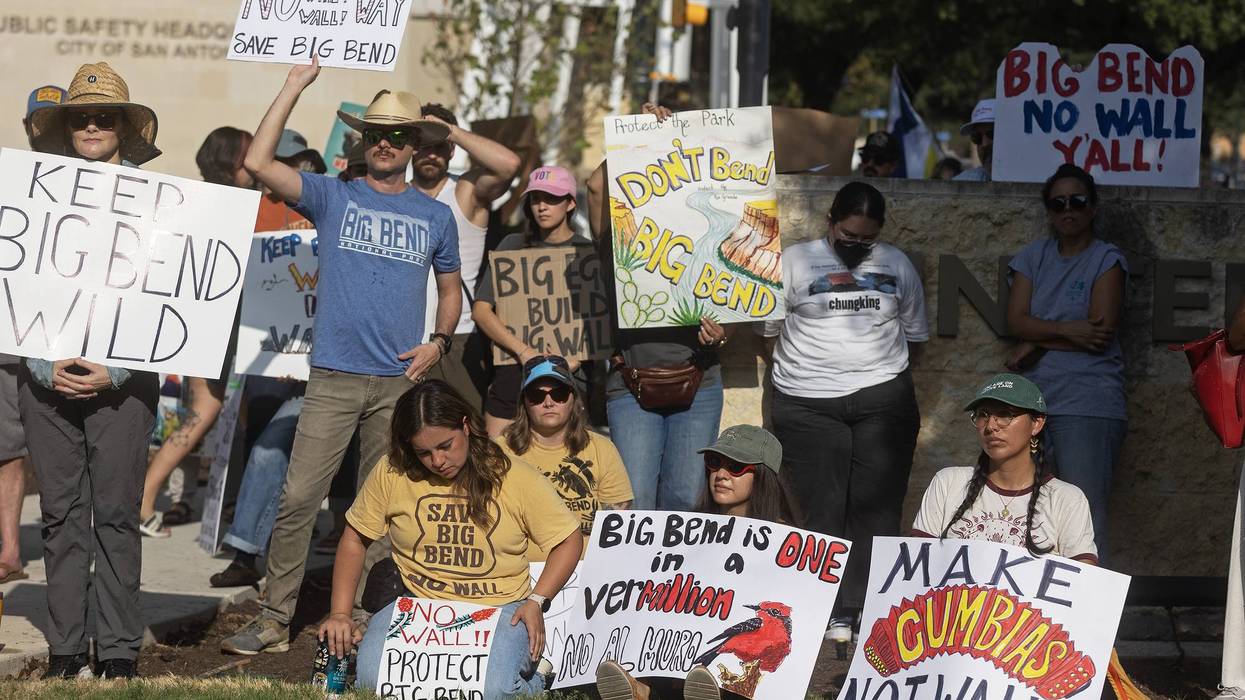
"This fight is far from over," said one campaigner. "We won’t rest until Big Bend’s environmental protections are fully restored and the illegal waiver that allowed so much destruction is gone for good.”
A federal judge in El Paso on Friday temporarily blocked the Trump administration from continuing construction of border barriers, roads, and other infrastructure across the Big Bend region, a win for environmentalists, landowners, and other Texans from across the political spectrum who are united in their opposition to the project.
US District Judge Kathleen Cardone—who was appointed by former President George W. Bush—granted a preliminary injunction sought by the Center for Biological Diversity (CBD) and other plaintiffs.
"The court finds that plaintiffs are likely to succeed on the merits of at least one of the claims in [their] suit, that there is a likelihood that they will suffer serious, irreparable harm without an injunction, and that the balance of the equities and the public interest weigh in their favor," Cardone wrote in her two-page decision.
BIG WIN FOR BIG BEND!! A federal judge just issued an emergency injunction to block border barrier and road construction across the #BigBend region. The injunction will remain in place while the court considers a lawsuit challenging the federal government’s waiver to fast-track construction.
— Center for Biological Diversity (@biologicaldiversity.org) October 2, 2026 at 2:18 PM
Cardone's order immediately prohibits the Department of Homeland Security and its agencies from building “border barrier or related infrastructure” or engaging in “any construction or ground-disturbing activities” in the Big Bend Sector until they comply with applicable laws. It also stays the effect of three Trump administration waivers that had allowed officials to bypass numerous federal protections.
“This is a historic victory for Big Bend and everyone who loves this wild corner of Texas,” said Laiken Jordahl, CBD's national public lands advocate. “No administration has the right to destroy a crown-jewel national park for political theater."
"With a federal court ordering the bulldozers to stop, Big Bend gets to breathe," Jordahl added. "But this fight is far from over. We won’t rest until Big Bend’s environmental protections are fully restored and the illegal waiver that allowed so much destruction is gone for good.”
Clara Bensen, director of communications for No Big Bend Wall and a board member of Conserve Big Bend, also welcomed the ruling.
"For months we've watched the federal government send bulldozers into a national park that belongs to all of us. Today a federal judge told them to stop," she said in a statement.
"Since we learned the Trump administration planned to seize public and private land and destroy the Big Bend region as we know it, this community has come together across the political aisle to fight back," Bensen added. "The government tried to ignore the law to build unnecessary border infrastructure, and the court made clear it can't. This is a victory, but we are not letting our guard down."
🚨 BREAKING NEWS: A federal judge just HALTED the destruction of Big Bend.This is a massive victory for the landowners, local communities, and everyday Texans who stood up to protect one of our state's greatest treasures.The fight isn't over, but today, the people won.
[image or embed]
— Clayton Tucker (@claytontuckertx.com) October 2, 2026 at 2:16 PM
The ruling comes after contractors began bulldozing roads and building other infrastructure in and around Big Bend National Park in August, including near Santa Elena Canyon and Mariscal Mountain. US Customs and Border Protection (CBP) temporarily halted construction on August 17, but that pause expired earlier this week.
The Trump administration has argued that the project—which initially included plans for a 30-foot-high reinforced steel wall—is necessary to achieve what it calls “operational control” of the border. Plaintiffs in the case challenged the administration's determination under Section 102 of the Illegal Immigration Reform and Immigrant Responsibility Act of 1996 that the region is an area of “high illegal entry,” noting that the government's claim is contradicted by its own statistics.
The Big Bend Sector is among the least-trafficked portions of the southern border, accounting for roughly a quarter of the international boundary's length, but no more than 3% of annual migrant apprehensions. The sector recorded just 1.3% of total border apprehensions in 2025, according to CBP data.
Plaintiffs in the case argued that the administration unlawfully used extraordinary powers to waive environmental and other laws, including the Endangered Species Act, National Park Service Organic Act, and National Wild and Scenic Rivers Act. Indigenous groups alleged violations of the Native American Graves Protection and Repatriation Act and the Archaeological and Historic Preservation Act.
At Friday's hearing, Rio Grande river guide and landowner Danny William Miller described the prospect of a barrier cutting across his property and blocking access to the river as “a bullet to the head," according to The Big Bend Sentinel.
Miller testified that once the landscape is altered, it cannot simply be restored. His guide work, he said, would become “a tour of the military-industrial complex, rather than a tour of the wilderness.”
Another local resident, Bill Guerra-Addington, told the court, “They’re taking the river away from us, and it’s devastating.”
Friday's injunction is temporary. The underlying lawsuit will continue, and the broader legal battle over Trump's Big Bend border project—and the administration's legally dubious waivers—remains unresolved. On Wednesday, US District Judge Orlando Garcia, an appointee of former President Bill Clinton, rejected a request from an Indigenous group and business owners for a temporary restraining order in one of several separate cases seeking to halt work on the project.
Still, National Parks Conservation Association president and CEO Tiernan Sittenfeld called Cardone's order “a victory for Big Bend and for all of America’s national parks.”
"While national park advocates are grateful for this halt to border construction in Big Bend, the devastating toll it has already taken on this national park must be studied and remediated," she said. "The administration must repair the damage it has done to the beautiful, fragile desert ecosystems that make Big Bend National Park one of America’s most iconic places."
“The administration’s border plan at Big Bend has faced strong bipartisan opposition from local landowners, experienced local borderland sheriffs, and conservationists alike," Sittenfeld added. "Big Bend is no place for border barriers. It’s time for the administration to come to the table with the border communities that know Big Bend best, repair the damage from this ill-conceived project, and find new solutions.”
s
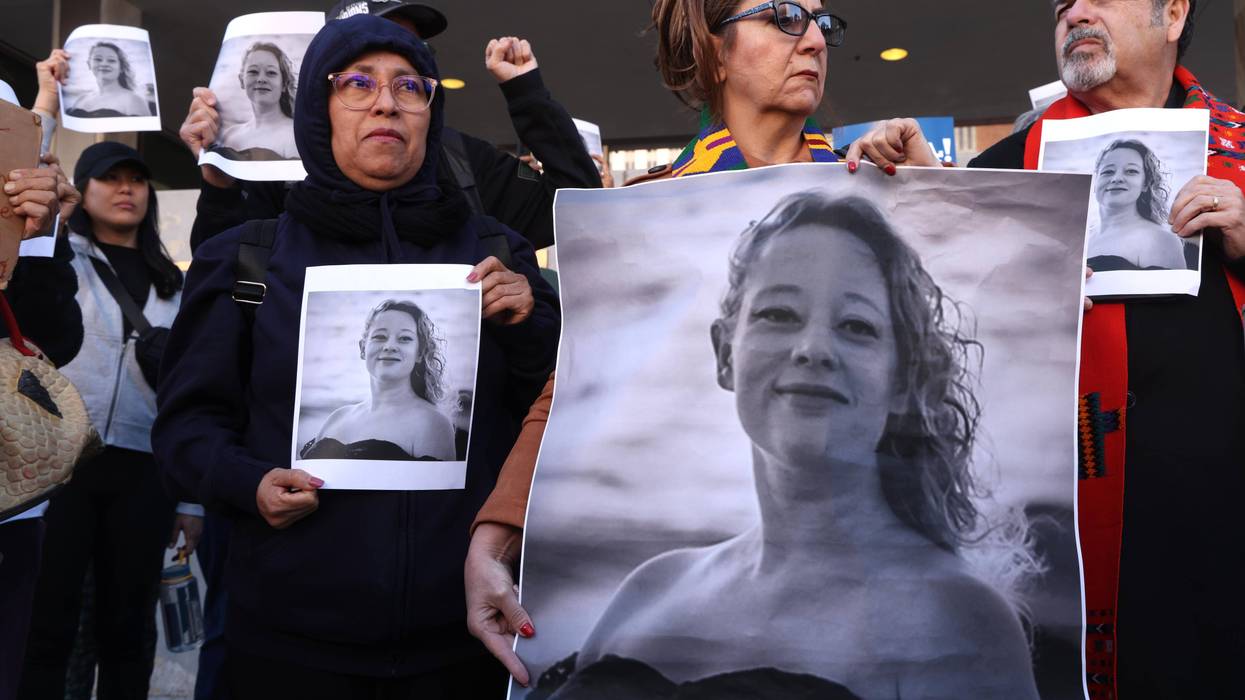
"I stand here with fierce determination to do what is right for my sister, for her children, and for our country—and that is to insist on accountability," her brother said.
Relatives of Renee Good filed a pair of lawsuits against the federal government and immigration officials on Thursday over both the US citizen's killing at the hands of an immigration agent and an alleged conspiracy to interfere with civil rights in Minnesota's Twin Cities.
US Immigration and Customs Enforcement agent Jonathan Ross fatally shot Good, a 37-year-old writer, poet, and mother of three, in Minneapolis on January 7, while ICE was deployed there as part of President Donald Trump's "Operation Metro Surge."
Filed in the US District Court for the District of Minnesota on behalf of her partner, Becca Good, and brother, Brent Ganger—the trustee for next of kin, including her children—the complaint against the United States lays out the details of the shooting and what followed, alleging wrongful death, battery, assault, false imprisonment, intentional infliction of emotional distress, and negligence.
The suit notes that Renee Good had primary custody of her 6-year-old son and provided primary care for her 12- and 15-year-olds. In addition to highlighting the "immense physical, mental, and emotional pain" she suffered in her final moments, it stresses that "Renee's children, parents, and siblings have been forever deprived of the economic support, services, advice, comfort, assistance, protection, and companionship of someone who was monumentally important to them and who cared for them deeply."
Becca Good, who was in the vehicle with her partner and their dog during the shooting, shared in a Thursday statement that "every morning, she is my first thought. I think about how the kids are growing up without their mama, and how I will grow old without the love of my life. I think about how we should have had 40 more years together. But I also think about what she would have wanted after all of this."
"As we have tried to navigate our own massive loss, I am also devastated by how many other lives have been destroyed in this darkest of times," said Good, whose partner's death was shortly followed by immigration agents' fatal shooting of Alex Pretti on January 24, also in Minneapolis. "So many other families are dealing with the loss of their loved ones; to everyone who has had to witness it—the pain of this moment extends far beyond our family."
"What happened to us should never happen to any family," she stressed. "No child should grow up without a parent because of it. No one should lose their sister or their daughter. No one should have to live without their soulmate. Accountability—real accountability—is the only way to make sure that no other family has to go through what we have."
That's where the second complaint comes in. It names not only Ross but also Trump Homeland Security Adviser Stephen Miller, former Homeland Security Secretary Kristi Noem and her adviser Corey Lewandowski, "border czar" Tom Homan, former acting ICE Director Todd Lyons, former Border Patrol Commander-at-Large Greg Bovino, and 10 other federal agents.
"These two civil complaints seek to remedy two distinct, but related wrongs. We seek accountability for the unconscionable and unconstitutional use of force by a federal agent that killed Renee on January 7th. But we also seek accountability for the discriminatory and violent operation that placed Jonathan Ross on Portland Avenue that day," explained Benjamin Berkman, senior attorney at Romanucci & Blandin, the firm representing the family.
"Those in the highest rungs of power authorized armed, masked men to terrorize Minnesotans on the basis of their perceived race or national origin," the lawyer said. "To achieve that goal, they also sought to silence community members who refused to look away. Congress passed the Ku Klux Klan Act to hold accountable those who conspire to deny the equal protection of the laws. Today's filings intend to do just that."
While Trump has sent ICE into various US communities since returning to office last year after running on a promise to pursue mass detention and deportations, the invasion of the Twin Cities followed a series of his racist statements directed at the area's Somali immigrants and their families. The filing alleges that "Operation Metro Surge was conceived, ordered, and carried out to satisfy the president's expressed animus toward people of Somali origin and Hispanic people."
In practice, the operation involved "masked agents roving public streets and targeting people of Somali descent and origin and Hispanic individuals without regard to immigration status," the complaint says. It highlights that "like many members of their community," Becca and Renee Good, two white women, "were concerned about ICE's conduct and its effect on their friends and neighbors."
As with the first filing, the second also lays out the details of the shooting and its aftermath: "Renee was driving the couple's Honda Pilot" and stopped on Portland Avenue, the document says. "Exercising her First Amendment rights, Becca exited the vehicle and began filming ICE activity while Renee remained in the car and honked her horn to warn her neighbors."
It details the confrontation with masked agents, including one who "turned away the aid offered to her as she lay dying," and attempts by the Department of Homeland Security, ICE's parent agency, to blame Renee Good for her own death—including claims, contradicted by video evidence, that she "weaponized her vehicle" in "an act of domestic terrorism."
Antonio M. Romanucci, the law firm's founding partner, emphasized that "unquestionably, unequivocally, neither Renee nor Becca was the worst of the worst. They were exactly as their name says—Good folks. No one was armed. No one was a domestic terrorist. They had their pet dog in the car."
"Indeed, Renee told masked agents she wasn't mad at them; her last words clearly reflected her state of mind. Renee had the right to speak, express herself, assemble, observe, and leave the scene unharmed and alive," he continued. "Today, these lawsuits are the beginning of the ultimate legal weapon in uncovering the truth behind this unlawful use of deadly force and the nefarious conspiracies behind the invasion of American cities by American law enforcement officers."
Renee Good's brother, Ganger, declared Thursday that "I stand here with fierce determination to do what is right for my sister, for her children, and for our country—and that is to insist on accountability."
"What happened to her on January 7th and what has happened to far too many people in the last year is not what America is about," he added. "We can and must do better, and the Constitution must be the roadmap back to decency and the rule of law."
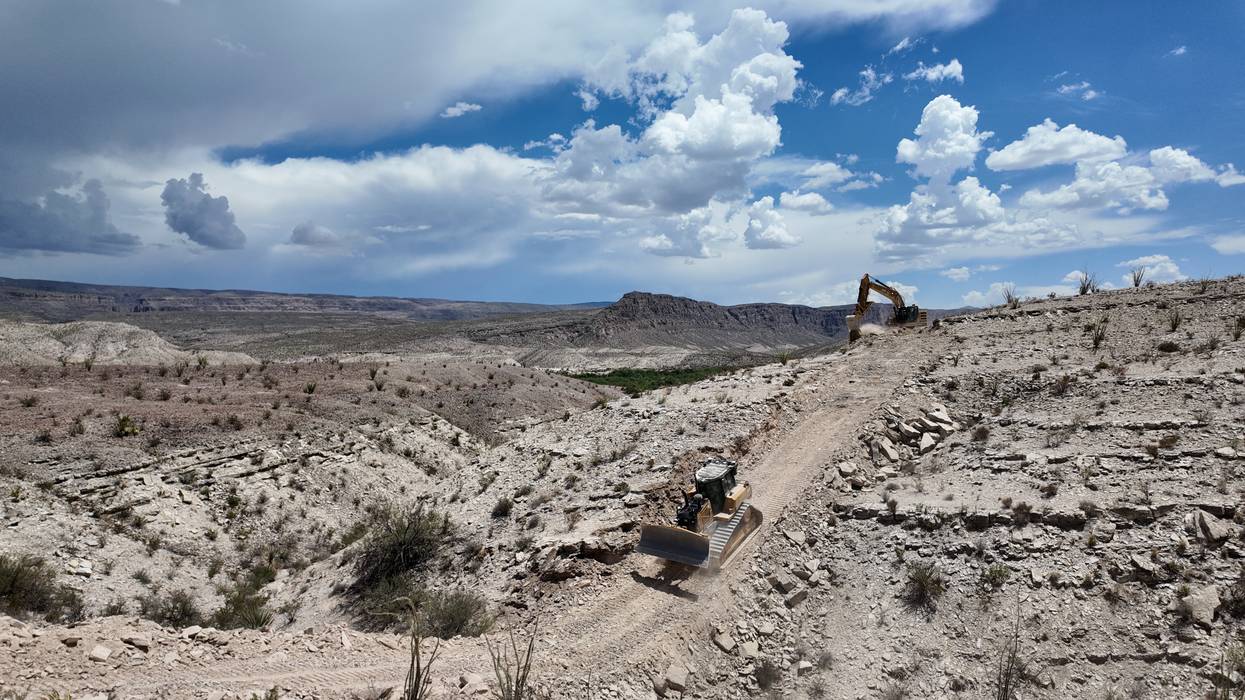
"We won't let them destroy the wildest place in Texas without a fight," the Center for Biological Diversity vowed.
The Trump administration on Wednesday allowed a temporary pause on border construction in and around Big Bend National Park in Texas to expire, prompting renewed vows from conservationists and other opponents to fight the contentious project in court.
Laiken Jordahl, the national public lands advocate at the Center for Biological Diversity (CBD), posted a court document stating that US Customs and Border Protection (CBP)k "will lift the pause on ground-disturbing activities" related to the Department of Homeland Security's (DHS) plan to build border barriers and other destructive infrastructure across one of the most remote and environmentally sensitive stretches of the US-Mexico border.
The government said Tuesday in a court filing that CBP is “actively considering adjustments” to the project “that would reduce its scope and avoid or minimize potential impacts, based on input received from the National Park Service and other stakeholders."
However, those possible changes did not assuage opponents of the project, who span the political spectrum.
“We are disappointed, and urge the Department of Homeland Security to extend this pause,” Emily Thompson, executive director of the Coalition to Protect America’s National Parks, said Wednesday. “Continuing with construction of border barriers, roads, and associated infrastructure inside Big Bend National Park will do unprecedented damage to the park.”
Thompson continued:
Big Bend National Park stands out for its unique desert landscape. With more nesting bird species than any other national park, towering canyon walls, and the largest international dark sky reserve in the entire world, Big Bend is an integral addition to our nation’s natural heritage. The Trump administration's plan to build a border wall through the park threatens all of this, heightening flood risk, inundating the skies with lights, and cutting off migration patterns for wildlife. Building in Big Bend would be mutilating an extraordinary landscape at a massive cost to the taxpayer—with little ultimate benefit.
Bob Krumenaker, chair of Keep Big Bend Wild and a former Big Bend National Park superintendent, asserted that “border security already works" in the park "without the need for intrusive construction."
"The Border Patrol, the National Park Service, and local sheriffs already operate an effective surveillance system with ground and aerial patrols and unobtrusive, wireless sensors," he noted. "The rugged terrain, huge distances, and harsh desert weather in the national park and in Mexico across the Rio Grande make this the least active section of the entire southern border for illegal crossings."
CBD and other plaintiffs are already seeking a preliminary injunction in federal court. US District Judge Kathleen Cardone—an appointee of former President George W. Bush—is scheduled to hear testimony and evidence Friday in El Paso on the request to halt construction while the groups' lawsuit proceeds. The plaintiffs argue that the Trump administration unlawfully waived dozens of federal laws to accelerate construction.
Indigenous peoples and their advocates have criticized DHS for waiving laws, including the Native American Graves Protection and Repatriation Act and the Archaeological and Historic Preservation Act, to enable the project's construction.
In a statement issued Wednesday, CBD described some of the damage already done by construction in service of Trump's deadly immigration crackdown:
Bulldozers started tearing into Big Bend National Park near the iconic Santa Elena Canyon in early August and were documented plowing new routes for vehicle barriers into both the east and west sides of Mariscal Mountain. Contractors have stockpiled heavy equipment across the Big Bend region, where staging yards have been cleared, worker camps built, and water wells drilled.
"We'll be in court... in El Paso demanding a permanent halt to the destruction," CBD said. "We won't let them destroy the wildest place in Texas without a fight.
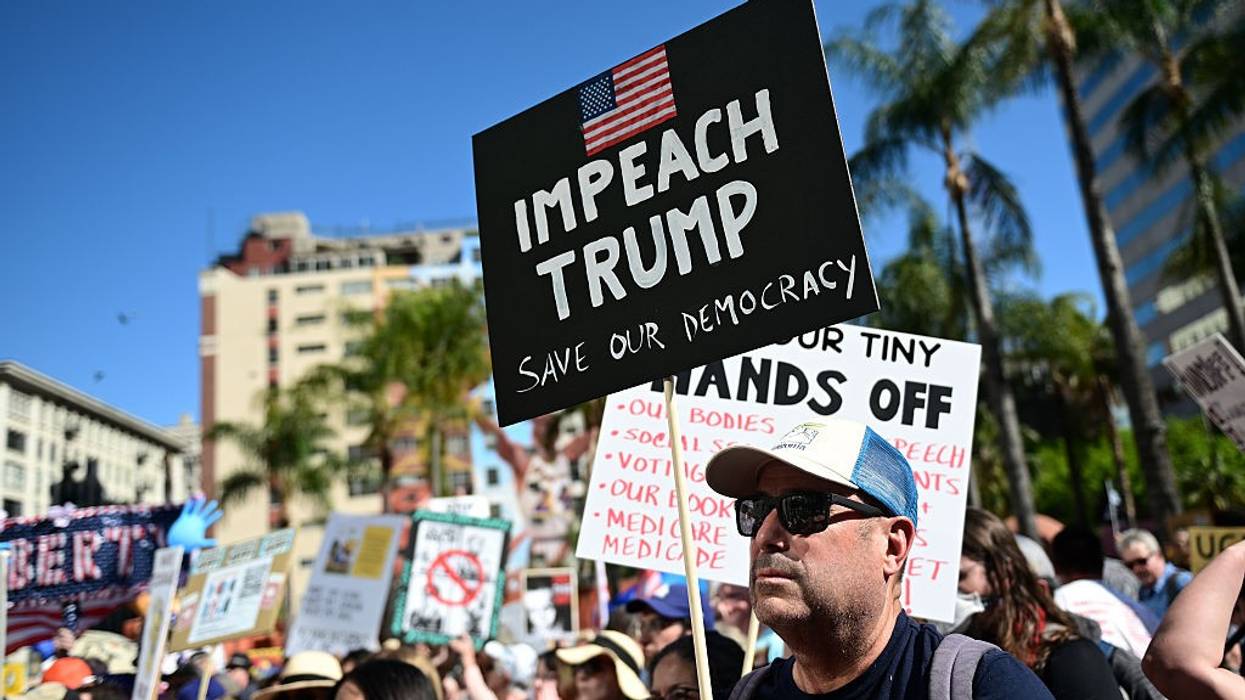
"We should not have to remind you that using government funding to create or air political ads like the ones that have been running over the last few days is illegal and a shockingly corrupt misuse of taxpayer dollars."
As critics condemn President Donald Trump's trio of taxpayer-funded advertisements as illegal propaganda and "an impeachable offense," The Wall Street Journal and leading congressional Democrats revealed Tuesday that the administration appears to have used US Department of Homeland Security funding to pay for the ads.
Citing unnamed sources, the Journal reported that "Trump personally pushed for the ads and has been involved in their creation," and that the money came from US Customs and Border Protection, an agency of DHS. Top Democrats in the Senate and House of Representatives said the administration apparently used CBP funding allocated in Republicans' One Big Beautiful Bill Act last year.
Senate Appropriations Committee Vice Chair Patty Murray (D-Wash.) and Homeland Security Subcommittee Ranking Member Chris Murphy (D-Conn.) on Tuesday sent a letter to DHS Secretary Markwayne Mullin about the "outrageous scheme" of using "Americans' hard-earned tax dollars to bankroll the obscene political ads celebrating President Trump."
The pair noted that on September 19, the Office of Management and Budget approved a release of money to CBP, including "$20 million in new funding under the line item 'Commemorative Events,' which we suspect may well be the funding tapped to run this government propaganda."
"We should not have to remind you that using government funding to create or air political ads like the ones that have been running over the last few days is illegal and a shockingly corrupt misuse of taxpayer dollars," they told Mullin, a former senator who voted for the GOP's 2025 budget package.
Specifically, as the watchdog Public Citizen detailed in a Tuesday complaint to the Federal Communications Commission, the Federal Trade Commission, and broadcasters, the three campaign ads "appear to violate the federal law against using taxpayer funds to finance propaganda (5 USC §3107) and related provisions of the appropriations laws as well as the Hatch Act (5 USC §7324)."
Margaret Dylus-Yukins, senior legal counsel for ethics at the nonpartisan Campaign Legal Center, highlighted on Monday that the unlawful ads come on top of the war chest that Trump has raised—mostly from rich people and corporations—since the last election for the super political action committee (PAC) MAGA Inc.
"At a minimum, this is an appalling abuse of taxpayer dollars, particularly when hundreds of millions of private dollars are already flowing into US elections—and Trump has personally helped raise enormous sums from wealthy special interests for a super PAC devoted to advancing his political agenda," Dylus-Yukins said.
Axios on Tuesday corroborated the Journal's reporting that "Trump is personally selecting which government-funded ads his administration is airing ahead of the midterms," and one unnamed official claimed that "this is just the beginning."
With the midterm elections that will determine control of Congress just five weeks away, the administration has claimed the ads are "public service announcements." Murray and Murphy called that defense "as absurd as it is offensive," and pointed out that "the White House has failed to answer our most basic questions about where these funds coming from and who is responsible."
"The American people deserve answers about how this president is literally stealing their tax dollars to air campaign ads celebrating himself—while doing nothing to help them afford healthcare or housing. These ads need to immediately come off the air, taxpayers need to be paid back for this theft, and everyone responsible needs to be held accountable for this corrupt and illegal propaganda," the senators argued, demanding answers to a list of questions within 48 hours.
House Appropriations Committee Ranking Member Rosa DeLauro (D-Conn.) and House Appropriations Homeland Security Subcommittee Ranking Member Henry Cuellar (D-Texas) also spoke out Tuesday, saying that "after gutting $1 trillion from Medicaid, stripping healthcare coverage from millions of Americans, giving the very richest Americans and large corporations massive tax breaks, adding more than $4 trillion to the deficit, and more than quadrupling funding for mass deportations, it turns out the Trump administration used Republicans' One Big Beautiful Bill to pay for President Trump’s political ads."
"When Democrats reclaim control of Congress next year, the House Appropriations Committee will work to uncover and reverse misuses of taxpayer money like this and hold those who abused their power accountable," that pair pledged.
With Trump's approval rating dropping—largely due to poor economic conditions exacerbated by his illegal Iran War—Republicans are increasingly at risk of losing their current majorities in one or both chambers. In the House, that would likely mean not only DeLauro chairing the Appropriations Committee, but also Reps. Robert Garcia (D-Calif.), Jim Himes (D-Conn.) Jamie Raskin (D-Md.) respectively leading the Oversight, Intelligence, and Judiciary committees.
"For two years, Trump and his family have run the presidency like a family business, getting richer by the billions while Republicans in Congress held the door open," Congressional Integrity Project senior adviser Jeremy Funk said in a Tuesday statement.
Pointing to "Gulf money" for Trump's son-in-law Jared Kushner, "Pentagon contracts" for Donald Trump Jr., the first family's lucrative cryptocurrency schemes, and "now taxpayer-funded ads starring Trump himself," Funk charged that "every one of these rackets depended on a Republican Congress that refused to ask a single question."
"That era ends in January," he declared. "Jim Himes, Robert Garcia, and Jamie Raskin, and every other Democratic committee chair, has the receipts, and soon they'll have the gavels and subpoena power. Trump's cronies are already lawyering up. They should be. Accountability is coming for all of them."
House Minority Leader Hakeem Jeffries (D-NY), who could become speaker if Democrats reclaim the chamber, made clear in an interview with The Associated Press published on Saturday that "we are going to hold the crooks accountable," and "we haven’t ruled anything out," including impeachment.
While some elected Democrats and political commentators have argued that impeaching Trump a historic third time wouldn't be a good use of the party's time—particularly as the Senate acquitted him in both of the previous cases—Jeffries' comments came just days after Congressman Steve Cohen (D-Tenn.), who is retiring after this term, introduced over two dozen more articles of impeachment against the president.
Meanwhile, Richard Painter, a University of Minnesota law professor who served as the White House ethics lawyer under former President George W. Bush, told The New York Times on Sunday that the use of federal funds for the ads could be "an impeachable offense."
"This is very dangerous," Painter said. "We do not allow government-sponsored propaganda in the United States."
This article has been updated with reporting from Axios.
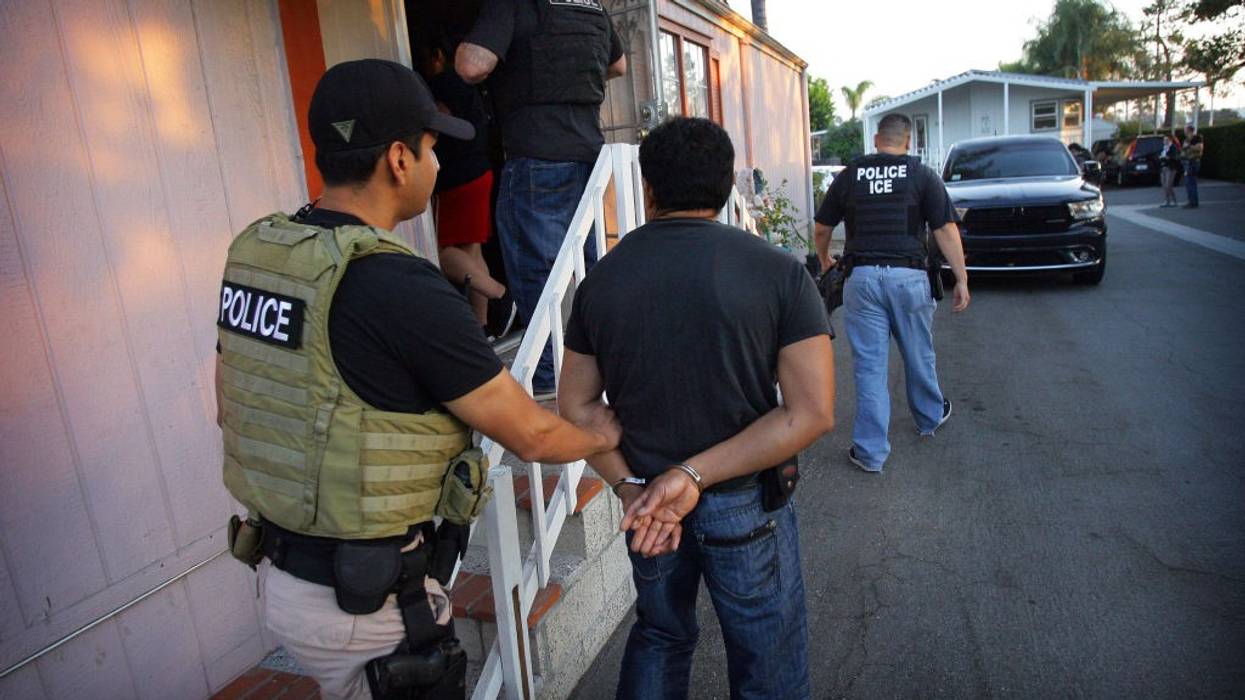
“The detentions are happening in a flash—we’re talking, like, 90 seconds from the time ICE shows up to that person being driven away,” said one immigration attorney.
The Trump administration may have deliberately toned down its highly visible, militarized immigration raids that generated widespread backlash, but US Immigration and Customs Enforcement is arresting more people than ever, an investigation published Monday by The Guardian revealed.
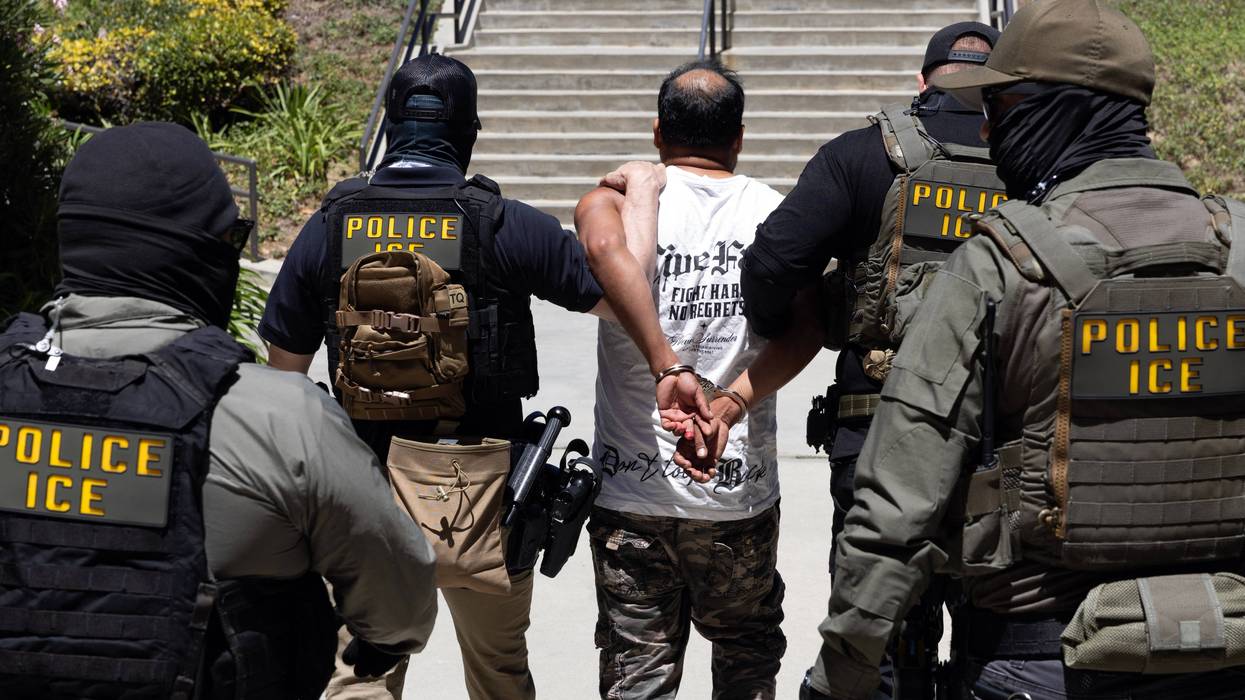
The British newspaper examined what it called the increasingly “invisibilized” immigration dragnet reaching into workplaces, airports, traffic stops, convenience stores, and communities far from the US-Mexico border, declaring "ICE is everywhere."
“Before, [ICE] were storming around, making a lot of noise,” Gracie Willis, a rapid-response attorney with the National Immigration Project, told The Guardian. “Now, they are moving more quietly.”
"More quietly" does not mean fewer arrests. In fact, The Guardian reported that ICE apprehended nearly 50,000 people in July, a record high. The agency has also more than doubled its workforce this year to more than 22,000 officers and staff after Congress provided the Department of Homeland Security with $75 billion in additional funding.
As of September 15, ICE had also signed more than 2,500 agreements allowing state and local law enforcement agencies to participate in federal immigration enforcement.
“The detentions are happening in a flash—we’re talking, like, 90 seconds from the time ICE shows up to that person being driven away,” Willis said. “And often they are moving very quietly, with very soft feet.”
The shift in tactics came after the administration's highly publicized operations provoked intense opposition, especially following a series of fatal shootings, including of American citizens.
President Donald Trump said earlier this year that “maybe we could use a little bit of a softer touch,” while Homeland Security Secretary Markwayne Mullin told senators that "my goal in six months is that we’re not in the lead story every single day.”
Still, immigration attorney Kate Lincoln-Goldfinch told The Guardian that “we’re seeing a lot of racial profiling" in immigration enforcement, adding that agents “might have their sights set on a big job site... and just slowly patrol that site and just take people in day after day until nobody’s going to work there anymore.”
The Guardian investigation comes amid continued condemnation of ICE's methods.
Amnesty International published a report last week based on interviews with 154 people affected by enforcement operations in Chicago, Minneapolis-St. Paul, New Orleans, and Washington, DC, documenting allegations including racial discrimination, arbitrary detention, excessive force, unlawful surveillance, incommunicado detention, and inhumane detention conditions.
“Masked and armed federal agents attacking people in the streets with impunity doesn’t make our communities safer—it puts everyone in danger,” said Amnesty International USA Executive Director Nadia Daar. “ICE is fundamentally broken and cannot be fixed.”
An increasing number of Republicans—especially those facing tough reelection battles—are criticizing the administration's heavy-handed immigration enforcement.
A campaign ad for Congresswoman Monica De La Cruz (R-Texas) even features a woman whose husband the lawmaker helped free from immigration detention.
“I have been very direct with the White House, with leadership, that enforcement policy should be focused on the criminals and on the cartels that are terrorizing our communities,” De La Cruz said last week during an interview on "The Joe Pags Show."
“They should not be on hardworking immigrants that are navigating the immigration process," she added.
In July, Democratic lawmakers sent a letter to Department of Homeland Security officials noting that agents had shot at least 22 people during Trump's second term, and that in multiple cases, federal authorities had made allegations against shooting victims that were later contradicted by evidence.
More than 50 people have died in ICE custody since Trump returned to the White House last year.
"Remember when Donald Trump promised to get rid of ‘waste, fraud, and abuse’ in Washington?" said one senior Democratic senator. "Well, GAO continues to uncover incompetence and waste at the highest levels of ICE."
The Trump administration's deadly immigration crackdown has not only resulted in widespread abuse of detained immigrants, it has also wasted millions of dollars on facilities and services that were never used, were quickly abandoned, or were far more expensive than necessary, according to an audit published Thursday by the Government Accountability Office.
The nonpartisan congressional watchdog found that US Immigration and Customs Enforcement (ICE) has poured billions of dollars into six detention expansion initiatives since January 2025 without the comprehensive planning needed to determine whether the investments were necessary, affordable, or capable of meeting federal detention standards.
"ICE pursued this and the other initiatives without necessary analysis and planning," the GAO said, concluding that the agency's approach has already resulted in "millions of dollars of waste."
The report contends that "urgent planning" is "needed to avoid further waste of taxpayer dollars."
Heather MacLeod, director of Homeland Security and Justice at GAO, said Friday that "we just saw a real lack of planning overall."
"The lack of planning has really led to stops and starts which have ultimately resulted in waste," she added.
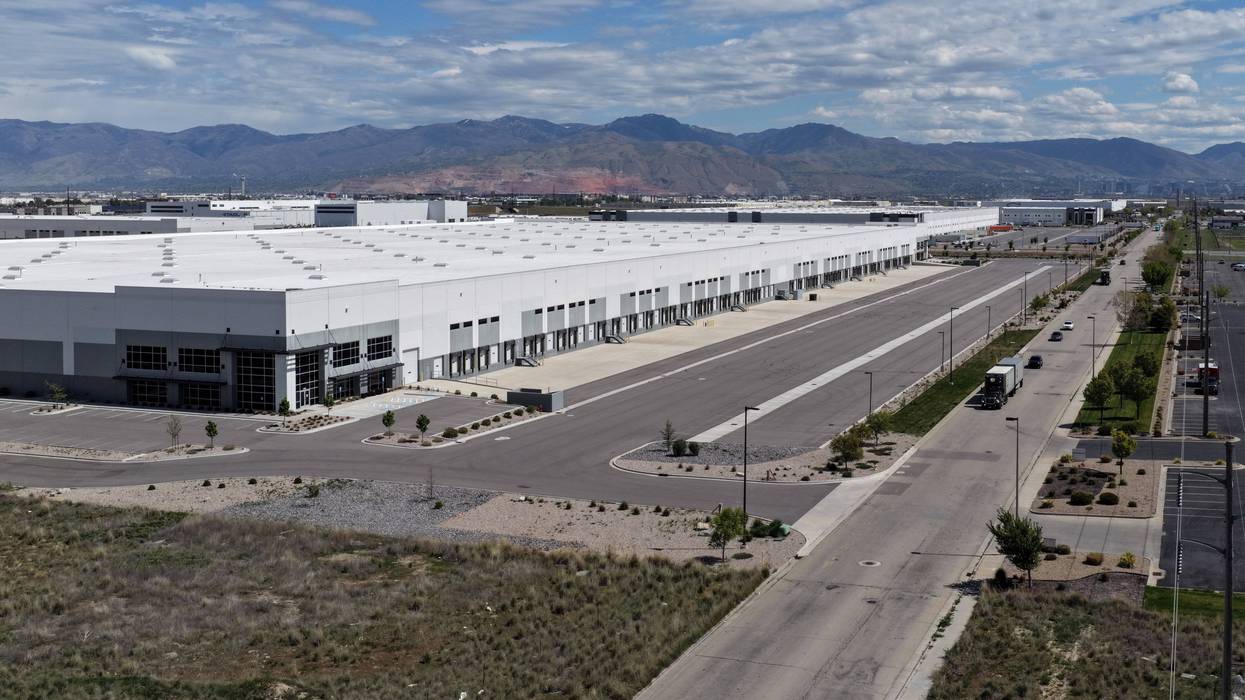
Among the most striking examples highlighted in the report is the administration's purchase of 11 warehouses for roughly $1.07 billion, with plans to convert them into detention centers. ICE subsequently decided to sell seven of the properties. More than $20 million had already been spent on costs—including security and zoning assessments—that cannot be recovered.
In May, More Perfect Union detailed how members of Trump's inner circle were cashing in on the warehouse-buying spree.
The GAO also exposed spending for almost no apparent use at Guantánamo Bay. For example, after Trump ordered officials to expand immigration detention capacity at the US military base in Cuba, the Pentagon assembled tents intended to accommodate thousands of people. However, DHS subsequently determined that the tents failed to meet ICE detention standards and they were dismantled, costing approximately $2.85 million.
Meanwhile, an average of just 16 immigrants per day were detained at Guantánamo during fiscal year 2026. Pentagon and State Department inspectors general had previously found that roughly $68 million had been committed for immigration detention there between October 2024 and May 2026, while ICE separately committed approximately $43 million through June 2026.
The report also highlights the now-shuttered Florida facility commonly known as Alligator Alcatraz. The Federal Emergency Management Agency awarded Florida a $608.4 million detention support grant, even though there was no agreement or contract authorizing the facility to detain immigrants, according to senators who requested an investigation into the matter.
The GAO's findings came after Congress approved an unprecedented $45 billion for ICE detention expansion under Trump's so-called One Big Beautiful Bill Act, a boon for the private prison industry. Yet the agency still lacks a comprehensive strategic plan governing how many beds it needs, where they should be located, or how to account for detainees' medical and other needs.
This, as more than 50 people have died in ICE custody during Trump’s second term.
ICE has also failed to adequately consider long-term affordability, according to the new report. As of July, the agency had spent $2.5 billion purchasing warehouses and detention facilities but had only estimated operating costs for the first three years—even though some of the funding supporting the expansion expires after fiscal year 2029.
A separate GAO investigation published in June found millions in waste and serious safety and operational deficiencies at Camp East Montana at Fort Bliss in El Paso, Texas. The nation's largest immigrant detention facility opened last year under a $1.3 billion contract.
Responding Friday to the new GAO report, a DHS spokesperson told CBS News that ICE is "working at turbo speed on cost-effective and innovative ways to deliver on the American people's mandate for mass deportations of criminal illegal aliens."
Senate Minority Whip Dick Durbin (D-Ill.) said on social media in response to the GAO revelations: "Remember when Donald Trump promised to get rid of ‘waste, fraud, and abuse’ in Washington? Well, GAO continues to uncover incompetence and waste at the highest levels of ICE."
"Americans are outraged at ill-conceived immigration detention projects," he added, "and it’s time to hold DHS and ICE responsible."
"The SAVE database has known errors, including incorrectly flagging numerous eligible citizens... as noncitizens," an election security expert told Common Dreams.
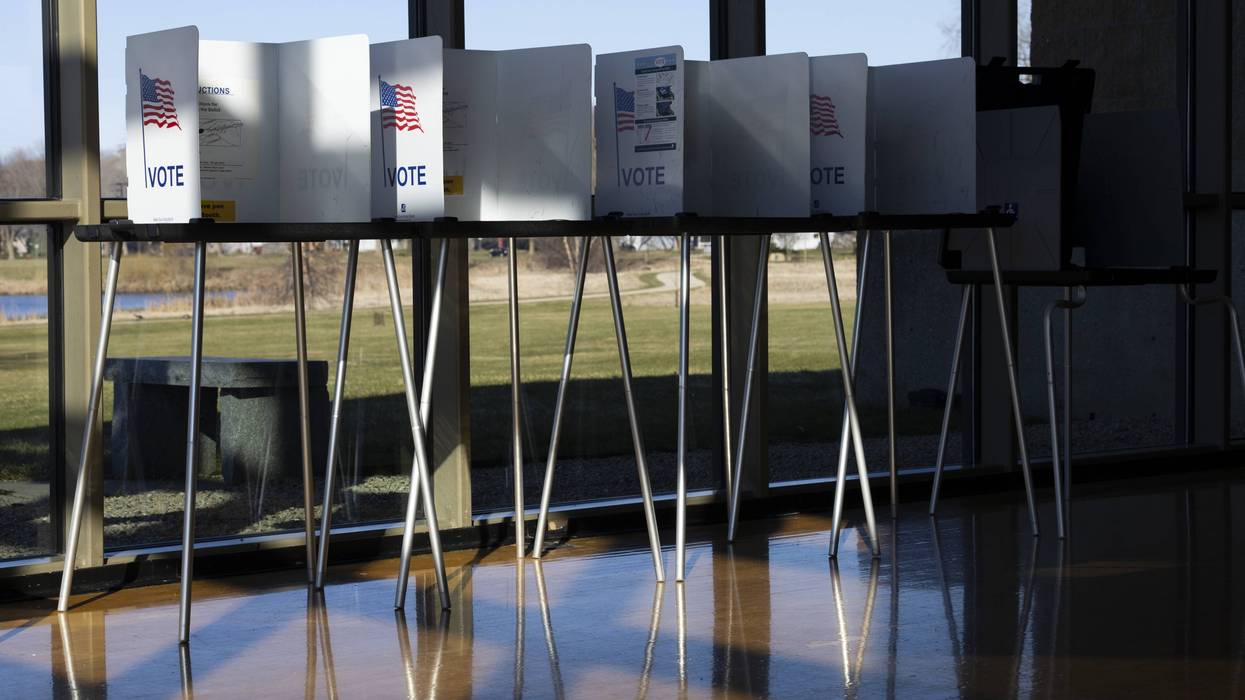
Many eligible voters may be at risk of having their voter registrations wrongfully canceled just weeks before the midterms after the US Supreme Court cleared the way on Friday for the Trump administration to screen voters using a database known for flagging naturalized citizens.
In a 6-3 decision, the court's conservative majority lifted a lower court order that blocked the Department of Homeland Security (DHS) from using and expanding the Systematic Alien Verification for Entitlements (SAVE) database—whose original purpose was to check if noncitizens qualified for government benefits—to trawl through state voter rolls and link them to information supposedly confirming citizenship.
The expanded SAVE system relied upon by the Trump administration has also incorporated federal immigration and Social Security records that can be outdated.
"Because Social Security data was never intended for verifying voter eligibility, [the Social Security Administration] has no reason to keep people’s immigration status up to date in cases where it isn’t relevant for their benefits," explained Nancy Altman, president of Social Security Works, on Friday.
"As a result," she said, "US citizens could wrongfully lose their right to vote."
Investigations and court records have documented eligible US citizens being wrongly targeted by voter-purge systems using flawed citizenship data. In Missouri and Texas, for example, investigations have found that the system wrongly flagged hundreds of eligible voters as noncitizens, often those born outside the US who have since become naturalized.
Halting the SAVE system's implementation in June, Judge Sparkle Sooknanan of the US District Court in Washington, DC, wrote that the Trump administration had “haphazardly combined and repurposed the private information of millions of Americans, including citizenship data that they knew to be unreliable."
But the Supreme Court's conservatives wrote on Friday, in an unsigned majority opinion, that the lower court's block on the use of SAVE impeded “the federal government’s efforts to assist state and local agencies in the proper administration of the midterm elections.”
In her dissent, the liberal Justice Ketanji Brown Jackson emphasized that "the harm caused by burdening or disenfranchising even a few lawful voters outweighs the nonexistent harm that the government experiences when it is prevented from taking an action that it likely lacks the authority to take."
The court did not issue a final ruling on SAVE's legality to scrutinize voting rolls. But the timing—less than six weeks before the November 3 midterm elections—means the administration can potentially use it to direct states to identify and purge purported noncitizens on their voter rolls.
"The Supreme Court’s decision today wrongly lifts the burden from DHS and puts it on the shoulders of voters," Pamela Smith, president and CEO of the election security nonprofit Verified Voting, told Common Dreams. "The SAVE database has known errors, including incorrectly flagging numerous eligible citizens, such as recently naturalized citizens, as noncitizens."
"Now more than ever," she said, "voters must check their registration well in advance of Election Day to ensure they are not swept up in a flawed system through no fault of their own."
Jon Sherman, the litigation director for the Fair Elections Center, told Common Dreams that the court's ruling did contain a "silver lining." It "acknowledged that the National Voter Registration Act cuts off systematic voter removal programs 90 days before a federal election." However, voters could still be individually flagged as potential noncitizens.
The use of citizenship data is part of a larger effort by Trump to "nationalize" voting to clamp down on what he claims, without evidence, is a rash of noncitizens voting. He has used unsubstantiated claims of mass illegal voting to justify his efforts to overturn his loss in the 2020 election to former President Joe Biden.
Earlier this month, the Supreme Court refused to let Trump enforce another portion of his voting executive order, which would have had the US Postal Service block mail-in ballots in states that did not turn over information about mail-in voters to the federal government.
There is little evidence that noncitizen voting, or voter fraud more generally, is a significant problem: The right-wing Heritage Foundation's nationwide database of alleged instances of voter fraud identifies just 99 total cases of suspected noncitizen voting dating back to the year 2000.
A Brookings Institution review of that data in 2024 found that across several swing states, all forms of fraud impacted less than one vote for every million, far below what would be needed to swing an election.
"The Supreme Court’s decision to allow DHS and states to use an error-ridden system is completely unacceptable and didn’t need to happen this close to the election," said Virginia Kase Solomón, the president and CEO of the watchdog group Common Cause. "This DHS system, which the federal government itself admits is flawed, has always been part of the Trump administration’s campaign to interfere in our elections and sow distrust—and it will fail."
The legal challenge to the SAVE database was brought by the League of Women Voters and several state affiliates, along with the Electronic Privacy Information Center (EPIC), who are represented by Democracy Forward, Citizens for Responsibility and Ethics in Washington (CREW), and the Fair Elections Center.
The coalition said Friday's decision was "profoundly disappointing, as it puts millions of Americans at risk of being unlawfully targeted by the administration’s unreliable voter purge database weeks before the midterm elections."
"However, this case is not over," it said. "The DC District Court ruled that the expanded SAVE program violated multiple laws. We will be doing everything in our power to protect Americans’ voting and privacy rights by ensuring that the district court decision stands."
Rep. Delia Ramirez (D-Ill.) said that with Friday's ruling, the Supreme Court had upheld a "Trump administration voter-suppression tactic."
"It's disappointing that the Supreme Court decided to capitulate to and enable an authoritarian, again," she said. "States must hold the line and do everything in their power to protect voting rights and our democracy!"
"By setting aside those unconstitutional policies, the court has restored the rule of law."
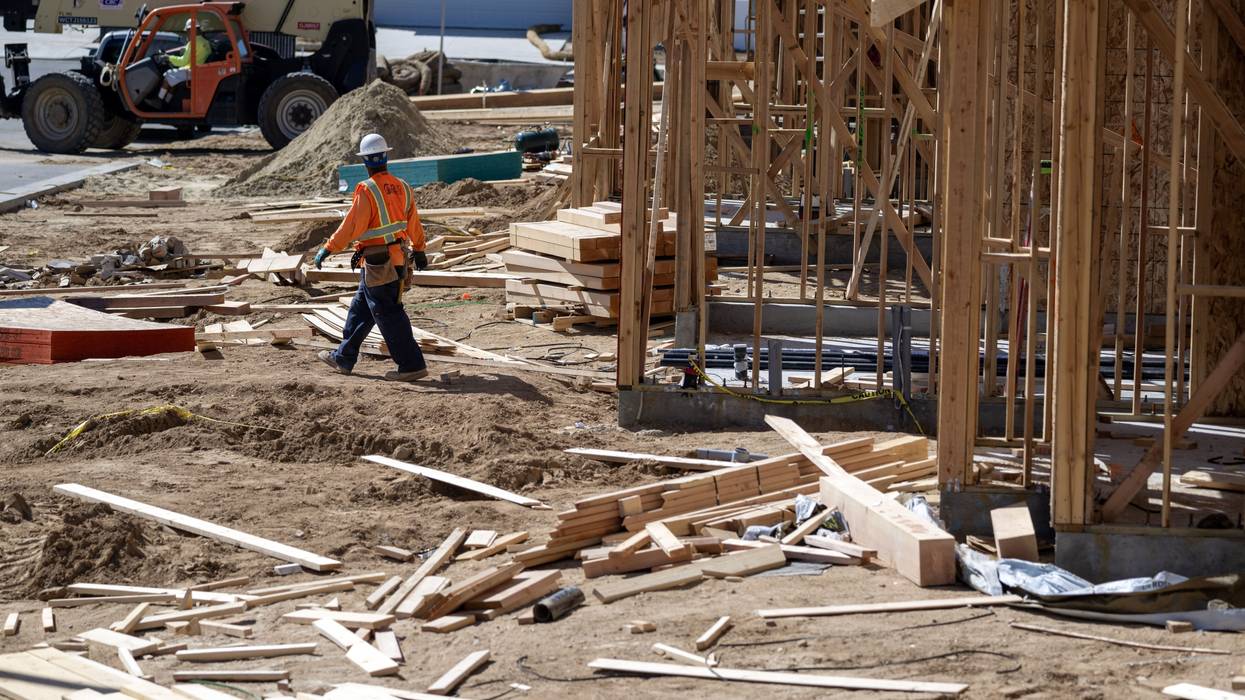
A federal judge on Monday handed down a decision in a case brought by US citizen Leo Garcia Venegas, who was detained three times in the Trump administration's immigration raids at construction sites—but the court's order, said advocates, will protect workers across the country from federal agents' warrantless, violent raids.
Chief US District Judge Jeffrey U. Beaverstock in the US District Court for the Southern District of Alabama temporarily blocked Department of Homeland Security officers from conducting raids at construction sites. He issued stays on three DHS policies while Venegas' case proceeds and said agents had likely violated his Fourth Amendment rights.
The three practices Beaverstock blocked include DHS' warrantless entry policy; its preemptive detention policy, which allows agents to detain a person simply based on suspicion, even without evidence, that they are an undocumented immigrant; and its continued detention policy, which permits officers to hold a person even after they show evidence of citizenship or lawful presence in the US.
Those policies have resulted in three arrests of Venegas since the spring of 2025, including one instance in which masked officers followed him home from the construction site where he worked, ripped him from his car, tackled him to the ground, and handcuffed and shackled him—all while he was trying to show them his REAL ID to prove his citizenship.
“They can suddenly show up and detain you without having done anything,” Venegas testified in May. “Now I don’t feel free to drive, to go to work, or go to the store.”
The Institute of Justice, which is representing Venegas, noted that the Trump administration has urged all Americans to get their REAL ID cards—which, in most states, have a symbol like a star on them to comply with new rules—and Venegas' state of Alabama issues the cards only to citizens or those who are lawfully present. Yet a DHS official testified in Venegas' case that REAL ID cards do not prove that someone is authorized to be in the US.
"Venegas was not promptly released following the production of his REAL ID to officers. Instead, the officers disregarded the veracity of his documentation and continued to detain him," reads the court order. "A policy that permits such action is likely to run afoul of the Fourth Amendment."
In the ruling, Beaverstock also noted that DHS last year had claimed Venegas tried to interfere with officers when he was first detained in May 2025—something that video of the arrest did not support.
DHS also claimed that the agency treats construction sites as "open fields" where agents do not need a warrant or even a reason to search the premises and make arrests—but Venegas works in closed construction sites that are posted with "No Trespassing" signs, and was working inside a house that was in the finishing stages of being built when he was arrested for a second time last June.
"Agents walked inside a house where Leo was working, surrounded him, and ordered him to follow them," said the Institute for Justice last year when Venegas sued the Trump administration. "Again, Leo produced his REAL ID. Again, the agents refused to accept it. They marched him out of the development and detained him alongside other workers they had grabbed—only releasing him (and other lawful residents) 20 minutes later after confirming his citizenship."
Beaverstock wrote that "the government has not convinced this court that the warrantless entry into a structure—which undisputedly occurred during the June encounter—does not implicate the Fourth Amendment."
Jared McClain, senior attorney at the Institute for Justice, called the judge's decision "a huge blow to DHS’ lawless enforcement practices."
“The government stood up in court and argued that they don’t need warrants to enter private construction sites and round up all the workers, and that they can’t trust government-issued IDs," said McClain. "By setting aside those unconstitutional policies, the court has restored the rule of law. Construction workers like Leo can finally go to work in peace again.”
Rights that apply to some people are not rights. They are privileges with an expiration date, and that date moves every single time this country gets scared.
For my family, the story of September 11 didn’t end when we went to bed after a day of fear and confusion.
We were attacked during what was my first week of 9th grade. I was looking out my classroom window at the Twin Towers with a classmate as we inadvertently witnessed the first plane hit the building. We were in shock. More kids gathered at the windows as a particular silence fell over the group. We eventually moved to a bigger room with more students, but with blinds pulled down. The sound of the second plane hitting the building made the blinds pop.
I don't remember much else about that day except that the room went quiet in a way I'd never heard a room go quiet before. But I vividly remember what would happen in the days after.
The city's grief curdled into something else for people who looked like me. Harassment on the streets. Windows broken. Women with their hijabs pulled off on the street. Fathers, brothers, grandfathers were pulled out of homes and businesses across the city and questioned like suspects, not for anything they'd done, but for what mosque they prayed at or what their passport said.
Twenty-five years later, the machine that was built to watch a few of us is watching most of us.
By the following year, tens of thousands of other men were required to register in person at the immigration office because of where they were born. Between September 2002 and 2003, 83,519 men registered at intake windows across the country. Of those, 13,799 were placed in deportation proceedings. Yet, only 11 were found to have any connection to terrorism, by the government's own count at the time. A program that processed 83,000 people and tried to deport almost 14,000 of them.
Six months into that registration program, on March 1, 2003, the federal government opened the Department of Homeland Security, which folded 22 agencies into a single new department built to do that kind of work at scale. But this mandate’s impact on communities wasn't an abstraction to me. It was the agency that had just decided my brother didn't belong in our city, with a budget line and a headquarters and a mission that would live long past our nation’s trauma.
I started organizing more deeply because of what happened to my neighbors and family that year. Twenty-five years of doing this work has taught me one specific thing: The machine doesn't stay pointed where it started. It isn't only Arab and Muslim families anymore who get treated as a threat first and people second.
This year, Congress gave Immigration and Customs Enforcement $45 billion just for new detention spaces, a 265% jump that gives ICE a bigger detention budget than the entire federal prison system, plus another $30 billion for enforcement operations on top of that. No one has properly enumerated what threat justifies a budget that size. I don't think there is one. Rather, it's a machine that's been fed for 25 years and has simply gotten larger with more zeroes attached.
What happened to Muslim and Arab families after 9/11 is not identical to what's happening to immigrant families now. But what I recognize is narrower than that. It’s how a government decides that fear of a few individuals justifies suspicion of entire communities, and how fast the list of suspects grows once the infrastructure to monitor and process them is in place.
After 9/11, I learned the difference between charity and power. Charity helps people survive a system. Power changes what the system is permitted to do to those in society. I've spent my adult life on the side of building power, not because immigrants are just useful, exceptional, or because of their economic contributions, but because rights that apply to some people are not rights. They are privileges with an expiration date, and that date moves every single time this country gets scared.
Twenty-five years later, however, it's landing on more doors than it did in 2002. Others have said it countless times, but if some of us don't have rights, none of us do. It's the exact lesson this country refused to learn in 2002, when 11 real cases were enough to justify tracking 83,000 people, and the tracking was made permanent instead of undone. Twenty-five years later, the machine that was built to watch a few of us is watching most of us.
We must fight for every single one of us because we have all witnessed what happens when we do not. I watched it through a classroom window when I was 14. I have spent every year since making certain that the next community in the crosshairs does not face it the way mine did, alone and expected to be grateful for whatever protection somebody decided to spare us.
This anniversary is absolutely a time when we need to reflect on what we lost that day as New Yorkers and as Americans. It's also about whether we're finally willing to notice what we built right after it, and this time agree not to let it keep growing.

“Donald Trump and his administration are obsessed with election conspiracy theories and operate under the wrong assumption that they are above the law—they are not."
US Senate Minority Leader Chuck Schumer and Democratic Sen. Alex Padilla on Monday accused the Trump administration of directing federal immigration officers to violate state laws in an aggressively quixotic campaign to identify supposed “unlawful voters,” warning that the operation could ensnare American citizens and undermine the November midterm elections.
At a press conference, Padilla (Calif.) and Schumer (D-NY) cited a whistleblower disclosure alleging that US Citizenship and Immigration Services (USCIS) personnel were instructed to access sensitive state voter records by misrepresenting their identities and falsely claiming authorization to obtain individual voters’ information.
According to the disclosure:
An anonymous federal whistleblower disclosed that USCIS headquarters has directed USCIS Fraud Detection and National Security Directorate (FDNS) officers to use individuals’ personal information to search state voter registration systems—likely resulting in thousands of violations of state laws. If necessary, officers are even told to lie and misrepresent themselves as voters on state election agency websites. USCIS leaders are directing officers to generate law enforcement records against so-called “unlawful voters” based on adding “magic” to data which in many cases will be inaccurate. Tens or hundreds of thousands of people in all 50 states, including naturalized US citizens, are being swept up in this rushed effort in the lead-up to Election Day.
The New York Times noted that the whistleblower disclosure "offers an inside view of what the Department of Homeland Security is calling the 'Unlawful Voter Initiative,'" which the paper revealed earlier this month.
According to the whistleblower, hundreds of FDNS employees were abruptly pulled from their regular immigration and national security work to investigate alleged noncitizen voting—a practically nonexistent occurrence.
For example, a Brennan Center for Justice analysis of around 23.5 million votes cast during the 2016 election cycle found 30 suspected cases of noncitizens voting, or 0.0001% of all votes cast. A 25-year-audit in Republican-controlled Georgia found zero votes cast by noncitizens.
The two senators said in a joint statement that the whistleblower's allegations "are especially alarming because they come just weeks before the November 2026 midterm elections."
"The administration is publicly asserting, without evidence, that large numbers of noncitizens are unlawfully registered to vote and deploying federal law enforcement resources to investigate those claims," they added.
Schumer warned that the US Department of Homeland Security "is sending hundreds of officers who should be focused on our security on a wild goose chase to prove [President Donald] Trump’s long-debunked election conspiracy theories—and DHS is telling officers to lie to do it."
"This new DHS initiative is nothing more than an unlawful order by the government to silence the voices of Americans," he added.
Padilla said that “Donald Trump and his administration are obsessed with election conspiracy theories and operate under the wrong assumption that they are above the law—they are not."
“The whistleblower’s disclosure outlines shocking allegations of unlawful and unethical conduct that includes potentially thousands of violations of state law and the use of highly questionable data, which they refer to as ‘supplemental magic,’ to falsely flag naturalized US citizens as ineligible voters in federal law enforcement records," the son of Mexican immigrants continued.
"At the same time, USCIS is directing employees to ignore the law in search of voters’ personal information because this administration’s unlawful attempts to coerce states to hand over their voter rolls have been rejected by the courts," Padilla said. "I thank the whistleblower for the bravery and integrity to come forward with these shocking reports and for standing up for the rule of law."
Padilla added that US Homeland Security Secretary Markwayne Mullin "must be transparent and shut down this sham ‘investigation’ now."
On Sunday, Padilla and Schumer sent a letter to Mullin and USCIS Director Joseph Edlow accusing DHS of prioritizing "manufacturing evidence for election conspiracy theories, rather than FDNS’ fraud detection and national security mission."
"The disclosure shows how DHS is deploying federal law enforcement resources to go around those judicial rulings and gather state voter information by any means, regardless of state laws," the senators continued. "Further, the administration’s continued claims of election fraud signal its intent to use this unreliable evidence of 'unlawful voters' in ways that can disenfranchise eligible voters, disrupt state and local election administration, and subject election officials to additional unwarranted threats of prosecution."
The lawmakers demanded that DHS and USCIS "be transparent about what they intend to do with the unreliable records they are generating, immediately stop this initiative and related activities, and remove any TECS or other law enforcement or administrative records generated from it."
The legal nonprofit advocacy group Democracy Defenders Fund—which is representing the whistleblower—said Monday that its client "feels it is their duty to come forward and reveal potentially unlawful conduct related to the 'unlawful voteri nitiative.”
"Our client is understandably extremely concerned about retaliation by administration officials should their identity become known," the group continued. "As such, we ask that reasonable steps be taken to maintain their anonymity throughout the whistleblowing process."
"The whistleblower makes this disclosure out of concern that law enforcement records used against individuals, including US citizens, being created through potentially unlawful means and based upon unreliable information," Democracy Defenders Fund added. "That is a dangerous abuse of the power of the federal government. We respectfully submit this disclosure for inquiry and investigation."
League of Women Voters of the United States CEO Celina Stewart said in a statement that “if these reports are true, this is not merely alarming. It is a five-alarm fire for American democracy."
"Allegations that federal workers were pressured to fabricate evidence and falsely frame citizens as criminals strike at the heart of the Constitution and the rule of law," she continued. “The power of government must never be used to manufacture suspicion, silence dissent, or, as reported, create false justification for investigations. Yet these reports suggest an effort to further fuel unfounded narratives about our elections while placing eligible voters at risk of intimidation and government scrutiny."
“Every eligible voter deserves to participate in our democracy free from fear, harassment, or wrongful investigation," Stewart added. "The federal government has a duty to protect constitutional rights, not undermine them through unreliable data, flawed processes, or political pressure."