SUBSCRIBE TO OUR FREE NEWSLETTER
Daily news & progressive opinion—funded by the people, not the corporations—delivered straight to your inbox.
5
#000000
#FFFFFF
To donate by check, phone, or other method, see our More Ways to Give page.


Daily news & progressive opinion—funded by the people, not the corporations—delivered straight to your inbox.
Which is not really one question, but several.
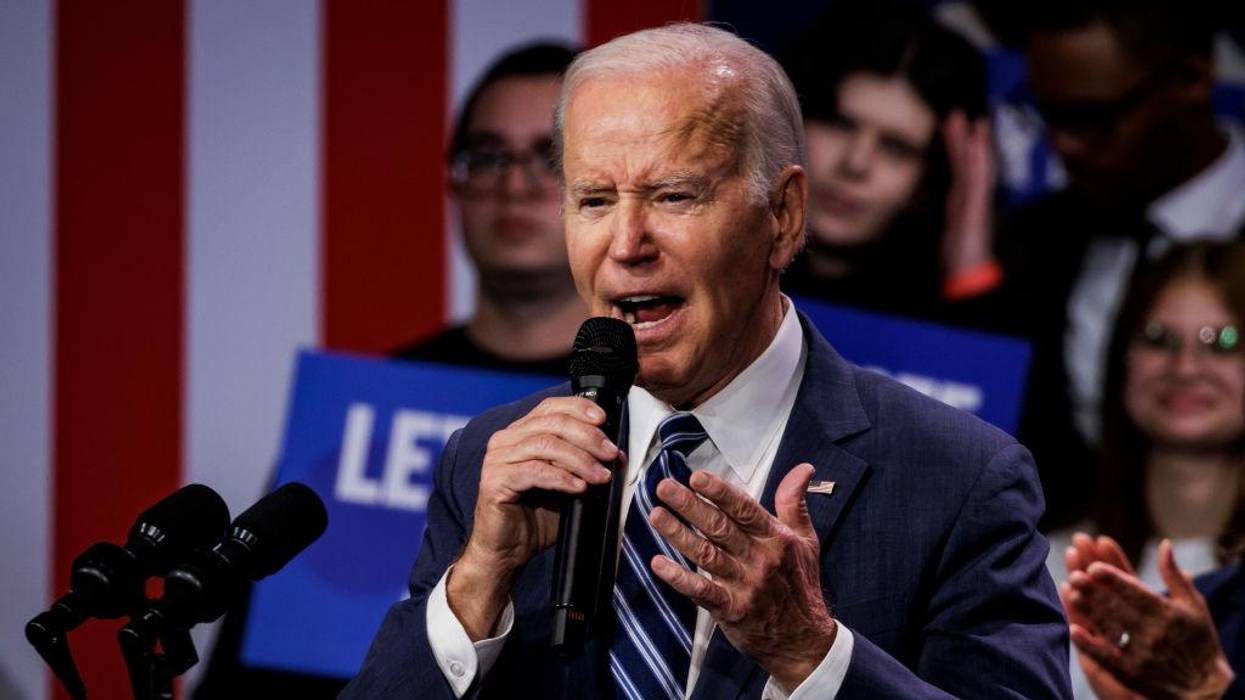
Reports that Justice Department investigators on Friday seized more than a half-dozen documents, some of them classified, from President Biden’s residence in Wilmington, Delaware — including documents from his time as a senator and others from his time as vice president — have shaken Washington, worrying some Democrats about Biden’s viability as a candidate in 2024.
The imminent departure of Ron Klain, Biden’s chief of staff, is also being read as a sign that Biden and his administration are turning a corner — reviving questions about whether our 80-year-old president should run again.
But the discussion about Biden’s reelection conflates five different questions. Reporters, pollsters, and pundits continue to confuse them. A clear-eyed view requires that the five be addressed separately. Herewith:
(1) Has Biden done a good job so far? My answer is by and large, yes. He wasn’t able to achieve nearly everything he aimed for when Democrats controlled both houses of Congress, but Democrats held only a razor’s edge majority against an increasingly rabid GOP, and Senators Joe Manchin and Kyrsten Sinema put up additional roadblocks. Biden’s accomplishments on the economy, climate, infrastructure, and defending democracy have been significant nonetheless — far more significant than his lapses on withdrawing from Afghanistan and mistakenly keeping some classified documents. While not a stirring speaker or a charismatic public presence, he has shown steadiness and resolve. And he has staffed his administration with highly capable and dedicated people.
(2) Should he run again if he wants to? Almost certainly. Unless a president commits such heinous acts in the first term that their party can’t possibly support their reelection, an incumbent president always has the prerogative of running for a second term. Of course, there’s no guarantee that they’ll get a free pass for the nomination (recall Senators Eugene McCarthy’s and Bobby Kennedy’s assaults on LBJ and Teddy Kennedy’s bid against Jimmy Carter). But I don’t see a serious Democratic opponent on the horizon. Biden should have a straight shot.
(3) If not Biden, who else? This is a trick question, because as long as Biden says he’ll be the Democratic nominee, other highly qualified Democrats are unlikely to identify themselves. There’s still time for them to do so if Biden steps aside. Two years before they were elected president, few people had heard of Bill Clinton or Jimmy Carter. But unless Biden announces within the next six months or so that he won’t be running again, it will be difficult for potentially attractive Democratic candidates to gain enough traction to have a good chance in 2024.
(4) Will Biden be the best candidate to beat Trump or whomever else Republicans are likely to nominate, given his age? This is a very tough call. Last year a New York Times/Siena College poll showed nearly two-thirds of Democrats didn’t want Biden to run again, and concerns about his age ranked at the top of the list. Younger people were even more adamant that Biden is too old. To be sure, he’s beaten Trump once, which would suggest he can do it again. And a sitting president has many advantages over a non-incumbent. But Trump will almost certainly frame the election just as Trump frames everything else — strength versus weakness — and will use Biden’s age against him (even though Trump is only four years younger). If the Republicans put up a younger candidate, the age issue will loom even larger.
(5) Would he be a capable leader of theUnited States when he’s in his mid-80s? I’ve had the privilege of working with four presidents, and I can tell you from my experience and observation that the job of the American presidency is physically and mentally grueling, even for people in their 40s, 50s, and 60s. If reelected, Biden would be 86 at the end of his second term (assuming he made it through to the end). That’s deeply worrying, given what we know about the natural decline of the human brain and body. This isn’t an “ageist” prejudice against those who have reached such withering heights so much as an understanding that people in their mid-80s do wither.
My bottom line: (1), yes. (2), yes. (3), we can’t know. (4), doubtful. (5), almost certainly no.
But don’t take my word for it. In the months ahead, each of these five questions needs to be thoroughly debated.
Opinion pieces recently have been comparing and contrasting what is going on in the year 2020 with what Americans went through in 1968. One such piece in the Washington Post focused on riots, pandemics, and the law-and-order theme in presidential campaigns. Others have focused on causally unrelated events: each year had a viral health crisis, influenza in 1968, Covid-19 in 2020; and each had a landmark space mission.
We want to focus on events relating to the continuing racial problems in our country. 2020 and 1968 look alike, but they are not. The extreme racial violence leading into 1968 was different in at least three ways.
Although most of the victims of racist violence in 1968 were African Americans, some were young white men and women. They risked and gave their lives working for racial justice.
First, although most of the victims of racist violence in 1968 were African Americans, some were young white men and women. They risked and gave their lives working for racial justice. Their deaths horrified, shamed, and disturbed the consciences of white Americans, old and young, except in places where deeply rooted racism was the longstanding way of life for white citizens.
Andrew Goodman (20 years old) and Michael Schwerner (24) from New York City worked alongside African American James Chaney (21) of Meridian, Mississippi for the Congress of Racial Equality. They were abducted, shot point-blank, and buried like animals in an earthen dam (June 21, 1964) near Philadelphia, Mississippi.
Thirty-eight-year-old James Reeb was a white protestant minister with a wife and four children. He was committed to the idea that "you cannot make a difference for African-Americans while living comfortable in a white community." In early March, 1965, as a member of the Southern Christian Leadership Conference, he left his family at home in predominantly African American Roxbury, Massachusetts and went to Selma, Alabama in order to join the protest marches. He was clubbed to death while walking with two other white clergymen back to their lodgings outside the 'negro' area of Selma (March 9, 1965). Rev. Clark Olsen, who survived this brutal attack, recalls hearing the three of them called "n- lovers" and then the sickening thud of the wooden club smashing Reeb's skull.
Viola Luizzo, age 39, had grown up in extreme poverty in Georgia and Tennessee and felt profound sympathies for African Americans living as 'slaves by another name' in the Jim Crow South. She felt called to leave her husband and five children to travel from Detroit, Michigan to Selma, Alabama in March 1965. She was shot twice in the head by members of the Ku Klux Klan while shuttling marchers and volunteers by car from Montgomery to Selma.
Second, prominent leaders in the national government and civil rights organizations were themselves relatively young and deeply committed to ending racism. In fact, we are writing this piece on the anniversary (June 11, 1963) of President John F. Kennedy's televised address to the nation explaining what civil rights are and why southern universities needed to be integrated.
Those who led us as a people had experience, real and vicarious, of the brutality of war and the inhumanity of poverty and prejudice. Martin Luther King, Jr. who had begun working for civil rights when he was 25, was murdered in Memphis, Tennessee, on April 4, 1968 in the prime of his life. Medgar Evers, a WWII veteran, a lawyer and tireless state field secretary of the NAACP, was murdered in his driveway by rifle fire by a member of the White Citizens' Council in Jackson, Mississippi on June 12, 1963. Evers was 37.
John F. Kennedy, a war veteran with an understanding of anti-Irish and anti-Catholic prejudice, and his brother Robert F. Kennedy were 46 and 43 respectively when they were murdered by gunfire. The Kennedys were children of privilege and elite education, but they came to know, as James Brown would put it, "what it is and what it is."
JFK had introduced civil rights legislation in Congress in April 1963 and RFK, as attorney general, had sent 400 federal marshals to Montgomery, Alabama in May 1961 to protect MLK and other civil rights activists. On May 24, 1963, RFK, while attorney general, held a small informal gathering on race relations with a dozen prominent African Americans including author James Baldwin and singers Harry Belafonte and Lena Horne. Jerome Smith, a Freedom Rider who had been jailed and beaten in Mississippi, came along. Smith did not mince words. He described being arrested and beaten while Justice Department officials stood by and took notes. RFK's conversion was not instantaneous like Saul's on the road to Damascus. But he eventually grasped the day-to-day realities of racism and acted to stop racism.
With Vietnam a constant public issue, RFK could declare, "How long can we say to a Negro in Jackson, 'When war comes you will be an American citizen, but in the meantime you're a citizen of Mississippi--and we can't help you'?"
The third major difference was the Vietnam War and the draft. Phase 1 of the Tet Offensive and the prolonged siege of U.S. Marines at Khe Sanh from January to July 1968 were determining factors in turning public opinion against the war. With Vietnam a constant public issue, RFK could declare, "How long can we say to a Negro in Jackson, 'When war comes you will be an American citizen, but in the meantime you're a citizen of Mississippi--and we can't help you'?" The universal draft exposed every young American coming of age to mortal danger. It made many families think about Saigon and Khe Sanh and about Jackson and Selma and Montgomery at the same time.
The contrast with 2020 is clear. Right now, we have neither a critical mass of mainstream Americans nor young dedicated leaders in political office who feel deeply enough about what is going on to do more than debate the acceptable boundaries of police use of force and how to keep targeted minorities from responding to acts of violence with violence. On the positive side, Rev. Al Sharpton sees reason for hope in the racial and gender diversity of the protesters at recent peaceful demonstrations. If we are to reach another new frontier, we may have to rely on each other--a remarkable 'ask' in the time of Covid-19, but one that many people, young and old, seem to be answering. We can draw upon models of moral courage and moral leadership in the 1960s.
We have martyred victims in 2020 who are calling us to do more than demonstrate. 2020 is not 1968, but it could be.
The Progressive Editor's note: This commentary first appeared on the website of The Progressive on May 27, 2013. This year on Memorial Day, we repost it in memory of all people working for change in our world--some are honored and remembered, others lesser known. Some are quiet essential workers, risking their lives while helping individuals day-to-day in this time of global pandemic.
For Memorial Day, it is customary to remember the soldiers who died for our country.
But I'm not one for custom, so, on this day, I'd like to remember the peace and justice activists who died for our country.
I remember, of course, Martin Luther King, Jr., and Malcolm X, and Bobby Kennedy.
I remember Medgar Evers, an organizer with the NAACP, who was gunned down in Mississippi in 1963 while wearing a t-shirt that said, "Jim Crow Must Go."
I remember James Chaney, Andrew Goodman, and Michael Schwerner, murdered in 1964 for trying to register black citizens to vote in Mississippi.
I remember Mark Clark and Fred Hampton of the Black Panthers, murdered by Chicago cops in 1969.
I remember Jeff Miller, Allison Krause, William Knox Schroeder, and Sandra Lee Scheuer, slain at Kent State by the Ohio National Guard on May 4, 1970.
I remember Phillip Gibbs and James Green, slain by police at Jackson State just 11 days later.
I remember Charles Horman and Frank Teruggi, murdered by Pinochet's thugs in Chile in 1973.
I remember Karen Silkwood, anti-nuclear activist, killed in a highly suspicious car crash in 1974.
I remember Ben Linder, killed by the contras in Nicaragua in 1987.
I remember Judi Bari, one of the leaders of Earth First!, killed by a bomb in her car in 1999.
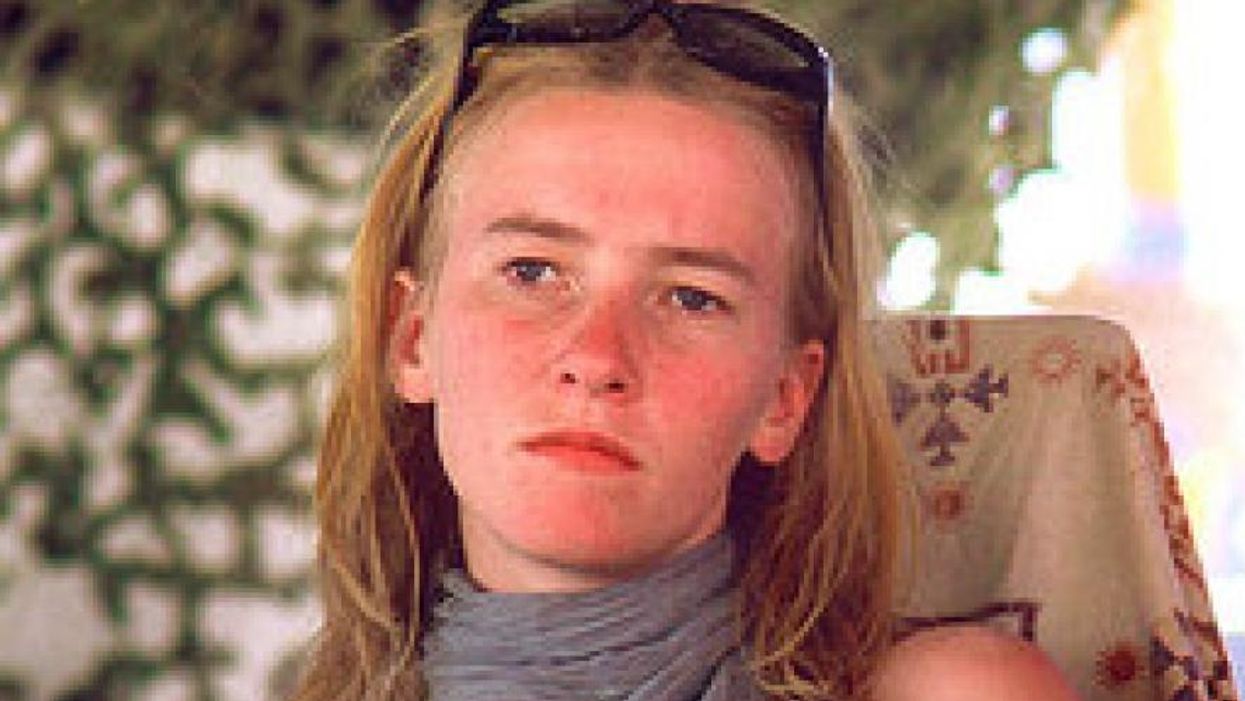
I remember Rachel Corrie, crushed to death ten years ago by an Israeli armored bulldozer in Gaza.
They all deserve a Memorial Day salute.
Fifty years have passed since the one that changed everything for my generation, the crucial turning point when the promise of the 1960s turned to a defeat and despair that still weighs on our thoughts of what might have been. It was a roller coaster year of emotional highs and lows, when unlikely dreams suddenly seemed possible, only to be dashed time and again. It marked the end of my political innocence, born in the magic of John Kennedy's Camelot. No other year has left such vivid memories for me, though it may be that this year, 2018, will be even more decisive for the future of America.
The year began with great hopes that the seemingly endless war in Vietnam might end soon. An anti-war Democrat, the cerebral Minnesota senator Eugene McCarthy, had challenged President Johnson in the upcoming presidential primary election. Soft-spoken and anything but radical, he impressed on us the necessity of cutting long hair and beards and putting on white shirts and ties to go "Clean for Gene" when we knocked on doors to get out the vote. Given little chance at first, his popularity was suddenly enhanced by developments across the Pacific.
In early February, during the Vietnamese New Year's celebration, National Liberation Front (the Americans called them "Viet Cong") troops attacked throughout South Vietnam, capturing the famed "Citadel" in Hue and other prominent posts formerly thought impregnable. Although their casualties in the so-called "Tet Offensive" were enormous, the Vietnamese struck fear into American troops and their supporters back home. President Johnson had claimed we were winning the war and our enemies would soon be on their knees. There was a "light at the end of the tunnel," he said. Just be a bit more patient and we'd all see it.
But the light at the end of the tunnel turned out to be the headlights of an onrushing train. If the enemy was indeed mortally wounded, it could not have mounted so many attacks in so many places at once, often with the inside help of South Vietnamese Army soldiers thought loyal to the U.S. The American response was to inflict horrible casualties on combatants and non-combatants alike. Since it was often impossible to know which Vietnamese were loyal to us and which were not, it was deemed necessary to kill everyone who might be suspect, destroying whole villages to "save" them. Napalm, a terrifying jellied gasoline that cooked people alive, was dropped indiscriminately.
Shocking photographs surfaced, of young girls running naked from a wall of flames, of suspected traitors being summarily assassinated without investigation of their supposed disloyalty; in one case, in lurid, living color, crimson gushed like a fountain from the head of a man shot at point-blank range. These images, and the Tet Offensive, shocked many otherwise placid Americans and led to a shift in public opinion. Then too, the coffins continued to return home in large numbers, carrying the bodies of sons and husbands, fresh-faced children barely out of their teens, if that.
An anti-war activist, I was 21 then and about to vote in my first election. I began door-belling for McCarthy shortly after Tet, in Superior, Wisconsin, an industrial port city, while I was attending Wisconsin State University there. While most pollsters expected McCarthy to be trounced by Johnson in the first primary election in New Hampshire on March 14, he ran a close race trailing the President by only seven percentage points. Might he have a chance? Opportunistically or otherwise, another critic of the war, New York senator Robert Kennedy, then entered the race. Now, the leading living scion of one of America's most beloved political families was also hammering Johnson from the campaign trail.
With the Wisconsin primary scheduled for early April, I traveled to Madison in late March to meet with other McCarthy organizers. While things were looking up, we had no idea of what to expect on the evening of March 31, when we gathered in the student union at the University of Wisconsin to watch a "special announcement" from the president. First, Johnson declared a moratorium on bombing attacks on North Vietnam; the anti-war pressure was getting to him. Then, we sat in stunned silence while Johnson announced his withdrawal from the race. "I shall not seek, nor will I accept my party's nomination for President of the United States," he said, looking haggard and defeated.
It seemed unreal. Johnson had surrendered; the war would end. I think now of LBJ as the lead victim in a Greek tragedy. But for his hubris in persisting to escalate the Vietnam War, Johnson might have entered the history books as one of America's greatest presidents, carried there by his commitment to civil rights and the elimination of poverty. Instead, he died reviled and almost forgotten. Even then, I felt a bit sorry for him. But that night we dashed by the hundreds into the streets cheering, singing and dancing. No more would the anti-war protestors be chanting "Hey, hey LBJ, how many kids did you kill today?" It was bitterly cold in the snowy streets of Madison that night, but none of us noticed. We celebrated with pitchers of beer and drove back to Superior with headaches the next day, happy to have them.
Memphis and its aftermath
On April 2, I voted in my first election ever. With Johnson still on the ballot, McCarthy won an overwhelming victory in the Wisconsin primary. Now, the contest would be between him and Kennedy, and I would have been happy with either of them. But my euphoria was short-lived. Only two days later, civil rights leader Martin Luther King was assassinated in Memphis, Tennessee, where he'd gone to support striking sanitary workers. Some inner cities exploded in anger. In Indianapolis, Bobby Kennedy braved an angry crowd to urge the non-violence that King had espoused. The next morning a hushed pall hovered over the university student union in Superior. Several of the black students were fighting back tears; knowing the anger they must be feeling. Feared they might hold all whites responsible for the slaying. Shockingly, I also overheard several fraternity boys at one table suggesting that King had gotten what was coming to him. Their dialogue was peppered with the N word and references to "good riddance."
I found it hard to concentrate on schoolwork the rest of that semester. But despite the King tragedy, my overall mood remained hopeful. Students were beginning to exercise power in American universities, carrying out sit-down strikes at prestigious academic institutions like Columbia. Women and gays were protesting discrimination. In France, the students were joining factory workers in a general strike, and in Communist Czechoslovakia, they were deeply engaged in a reform process called "Prague Spring," which promised "Socialism with a human face." Polls began showing that a majority of voters opposed the war, and the victory of either McCarthy or Kennedy seemed almost inevitable.
In May, McCarthy soundly defeated Kennedy in the Oregon primary. But by that time, my allegiance had shifted to Bobby. I was appalled when McCarthy, after his victory in solidly white, middle-class Oregon, suggested that only the ignorant and uneducated supported his rival. It struck me as a putdown of the poor, and racist as well. I was impressed by Kennedy's compassion for the poverty-stricken miners of Appalachia, the Hispanic farm workers of California and their charismatic leader, Cesar Chavez, inner-city African-Americans and the hidden poor on Indian reservations. While McCarthy was eloquent about the fiasco in Vietnam, Kennedy offered more hope of uniting the war protestors with union members, minorities and the poor.
When school ended, I hitchhiked home to visit my family in San Francisco. I arrived in California just as its Presidential primary election was ending on June 5. The last person who gave me a ride told me Kennedy was leading in the exit polls and dropped me off at a campsite near Donner Lake, barely over the border from Nevada. The next morning, the first driver to give me a ride was surprised that I hadn't heard the news. "They killed Kennedy," he said. "Shot him in LA last night just as he was about to claim victory."
During the next week I could barely contain my grief. I watched the news footage of Kennedy on the floor of the Ambassador Hotel in Los Angeles, bleeding to death. The reports suggested a lone gunman, Sirhan Sirhan, but I suspected that someone or something must have been behind him. With his big victory in California, Kennedy would surely have sailed to the Democratic nomination and almost certainly defeated his Republican opponent.
Kennedy's funeral seemed surreal. Even Tom Hayden, the SDS radical, was a pallbearer. He had come to trust Bobby, despite the latter's wealth and establishment connections. Kennedy's brother Edward eulogized him simply as a man who "saw wrong and tried to right it, saw pain and tried to heal it, saw war and tried to stop it."
While at home for a month, I read constantly--the literature of the New Left. A growing body of New Left analysis, including C. Wright Mills' The Power Elite and G. William Domhoff's Who Rules America? argued that our democracy was largely an illusion. A "military-industrial complex" of interlocking boards of directors containing the same elite players, dominated our politics as a "ruling class." Eisenhower had warned of its dangerous influence in his farewell presidential address. Other books documented the power of this elite over foreign policy, describing how the CIA had overthrown Arbenz in Guatemala, Mossadegh in Iran, and other elected leaders, to protect the profits of American corporations.
At the same time, most of these writers acknowledged that Soviet "socialism" was certainly no better, and probably even worse, than the corporate capitalism they challenged at home. Their hopes were buoyed by the July publication of Soviet physicist Andrei Sakharov's samizdat, On Progress, Peaceful Co-existence and Intellectual Freedom. A powerful critic of Stalinism in Russia, Sakharov suggested a middle way between Communist dictatorships and capitalist inequality. It seemed to be emerging in places like Sweden and Czechoslovakia.
Beginning of the end
Back in Superior, my friends and I watched troubling news on television, when on August 21, Soviet tanks crushed the democratic uprising in Prague. A few days later, the Democratic Convention began in Chicago. While Hubert Humphrey's nomination was a foregone conclusion with Kennedy gone from the race, Eugene McCarthy still had considerable support for a floor fight. I watched with pride as Don Peterson, a Wisconsin businessman I'd worked with on the McCarthy campaign, nominated the brilliant African-American leader Julian Bond as a Vice Presidential candidate. But Humphrey and his chosen running mate, Ed Muskie, were anointed as the nominees by the Party's conservative establishment, who controlled most of the delegates.
Chicago Mayor Richard Daley, an old-liner, ran the convention with an iron fist. Protestors gathered outside, some of them "Yippies" (for "Youth International Party") who had nominated a pig for President. But there were many others who still believed in the system and had worked hard for McCarthy or Kennedy. They shouted their opposition to the undemocratic nature of the convention. Like Bull Connor in the streets of Birmingham, Alabama, Daley sent his police to gas and club them--an investigative committee later called the action "a police riot."
On the convention floor, Peterson and Connecticut Senator Abraham Ribicoff rose to report that the police were beating people up outside. Mayor Daley audibly shouted a Jewish slur at Ribicoff. Reporters covering the convention were roughed up by Daley's police. The battle inside and out stretched into the night. When it was over, I felt a slow realization that the times we thought were changing would change glacially if at all.
The Fall of our discontent
That fall, my friends and I continued to organize vigils and protests. Richard Nixon, the Republican nominee for President, promised a "secret plan" to end the war while condemning antiwar protestors in the name of what he termed "the silent majority." Hubert Humphrey, the Democratic candidate, was a mixed bag at best, in the thinking of my friends and myself. We admired his earlier stand for civil rights, dating back to 1948. He was also a strong advocate of anti-poverty measures. But he'd stuck with Johnson on the war. I made up my mind to vote for a third-party candidate, the comedian Dick Gregory. But considering the alternative of a Nixon presidency, I still hoped Humphrey would prevail. He didn't; in November, Hubert Humphrey lost by a whisker to Nixon.
Salvador and Luz
At the end of the month, I was invited to attend an event called the Hemispheric Conference Against the War in Vietnam being held in the Canadian city of Montreal. A group of us from Superior joined another from our twin city of Duluth, Minnesota, for a long bus ride to the conference. It was held in a cavernous auditorium with perhaps a thousand people in attendance. Speakers included well-known American radicals such as the Black Panther leader Eldridge Cleaver. Their rhetoric was loudly anti-American and pro-socialist. The war in Vietnam was described as an imperial venture fought for oil and other resources. The most revered of the speakers was a man I'd never heard of until then. An elderly and elegant gentleman wearing a fine wool sweater and dark-rimmed glasses, he spoke in Spanish, with translation. His speech was strongly-worded, but thoughtful and not merely rhetorical. I was able to shake his hand later and tell him I appreciated it.
His name was Salvador Allende, and he was, at that time, a senator in the Chilean government and the leader of its Socialist Party. Two years later, he would be elected president of Chile, thus setting off a three-year American effort to destabilize his government. He died in the bloody military coup that overthrew him on September 11, 1973. I will always consider it an honor to have met him.
But what I remember most from the conference was the small, sad-eyed young woman from Mexico that I also met there. She had short dark hair and big eyes that seemed to be searching for something far away. In broken and halting English, she told me a story. Her name was Luz, which means "light" in Spanish, but her story was decidedly dark.
Two months earlier, on the night of October 2, she and other Mexican university students had gathered in a great open space called the Plaza of the Three Cultures near the center of Mexico City. They had marched there from several universities to protest the upcoming Olympic Games, which had displaced hundreds of poor Mexico City residents from their homes. Their protest was completely peaceful, but the response of the police and guardsmen sent by the government to control them was not. Snipers fired randomly into the crowd, killing hundreds of students and bystanders. With the size of the crowd, it was difficult to flee. Some of her friends were killed; she watched their blood darken the stones in the plaza before finally escaping the violence.
She was fighting hard to hold back tears as she told me her horrifying tale. I found her inexpressibly lovely and wanted only to tell her things would be all right. She had come to the conference with several other student leaders from the Olympic protest. I told her I had watched the games on television and she brightened when I mentioned the black-gloved protest by two of the United States' finest sprinters, Tommie Smith and Jon Carlos, as they received their medals on the podium while the Star-Spangled Banner blared behind them, a protest similar to Colin Kaepernick's half a century later. Luz, too, had watched it. It was her only positive memory of the games.
I never saw Luz again after that night. On the long bus trip back to Wisconsin, I couldn't get her out of my mind and a song came to me. I wrote it down as soon as I got back home, and later sang it for my friends in the little coffeehouse on campus.
SONG FOR LUZ, 1968
From the bridges of Prague
To the boulevards of Paris
To the dusty streets of Mexico,
And all across my country from Boston to Berkeley
There's a feeling of change in the winds that blow.
There's a generation looking for a new beginning
And a glimmer of hope in the rising sun
And our sparkling eyes and songs prophesize
That a whole new way of life has begun.
And you in your city and I in mine
Are adding our bodies to the protest line
And dreaming of a time when all humankind will be free.
Oh, but in between, so many troubles you've seen.
So many bombs...so many bullets...so many shattered dreams...
In the Three Cultures Plaza you gathered to meet.
They met you, but with snipers, and left your friends all dead in the street.
"Now don't disturb the Olympics," the imperial orders came,
"Anybody who protests will receive still more of the same,
We'll stop your life's flicker and we'll even erase your name."
They released the doves to fly. You watched them in the sky
And you wanted to try to catch what they symbolize.
But your dove couldn't sing. She had blood on her broken wing
And you started to cry, but now dry out your eyes.
For maybe tomorrow you'll wake up and find
The long years of sorrow were worth all the pain
For all of your struggles have been left behind
Though memories remain, it wasn't in vain.
And because of you, and what you've been through,
The ones who are born then will sing in the rain.
I wanted to believe the words of the song were true, but I really didn't feel that way. A month later, a year that began with great hope, ended with little. The New Left would splinter and descend into violence as Nixon escalated the war. Forty years would pass before I would experience again the hope I had before August of 1968, before we would dance in the streets again, as so many did when Obama was elected. Suddenly it was possible to believe again, but the forces of hate and greed did not go quietly into that magic night. They have come back with a vengeance and a cruelty that makes Nixon seem benign by comparison.
Fifty years ago, anti-war protesters swarmed the streets of Chicago during the Democratic National Convention to reject the Vietnam War, state violence, and injustice. In the process they turned the city into a veritable battleground over the fate of American democracy.
"The whole world is watching!" protesters chanted in response to police violence in August 1968. That one phrase encapsulated much of the radical social justice insurgency of not only that year but also the entire decade of the 1960s. As the nation mourned the April assassination of Dr. Martin Luther King Jr. and June killing of New York senator and presidential candidate Robert F. Kennedy, thousands of radical activists came to Chicago to try and shame the Democratic Party into publicly adopting a peace plank that some hoped would lead to an end to war.
The college students, hippies, anti-war activists, and ordinary Americans who traveled to Chicago in the summer of 1968 were, however imperfect, patriots who spoke truth to power and paid the price in blood, arrests, and controversy. While journalists and historians at times point to Chicago as the site of the Democratic Party's defeat and Richard Nixon's subsequent victory in the November presidential election, something more important happened that the nation has yet to recover from.
In Chicago the American Dream collided with brutal truths about war, violence, and corruption. How could the same nation that regarded itself as the freest nation on earth bomb one of the poorest in the name of democracy? Who were the elected officials who rationalized war as the only road toward peace? What role did citizens have in shaping a democracy that seemed to have lost its moral compass?
These remain some of the most enduring questions for our own age, where perpetual war, police brutality, and political malfeasance at the highest levels of government have evolved from the spectacular to the mundane. In 1968 Chicago Mayor Richard Daley's deployment of tens of thousands of law enforcement officials to maintain security and order in the city was derided as "Gestapo tactics" inside the Democratic Convention -- even as a majority of Americans voiced approval of violence as a substitute for justice. By 2014, the sight of police officers in military fatigues and tanks patrolling the streets of Ferguson, Missouri, became the cost of maintaining a hard peace in the absence of justice.
Yet the imperfect idealism that animated protesters in Chicago endures. Forty years after police routed demonstrators advocating a more just society, thousands gathered in Grant Park to peacefully celebrate the election of the first black president in American history. President Barack Obama's two terms in the White House symbolized a measure of hope and progress for the generation who marched in 1968 and those who now stand on their shoulders. Their actions 50 years ago reflect the virtue and value of what Obama characterized as the most important title in our nation: citizen.
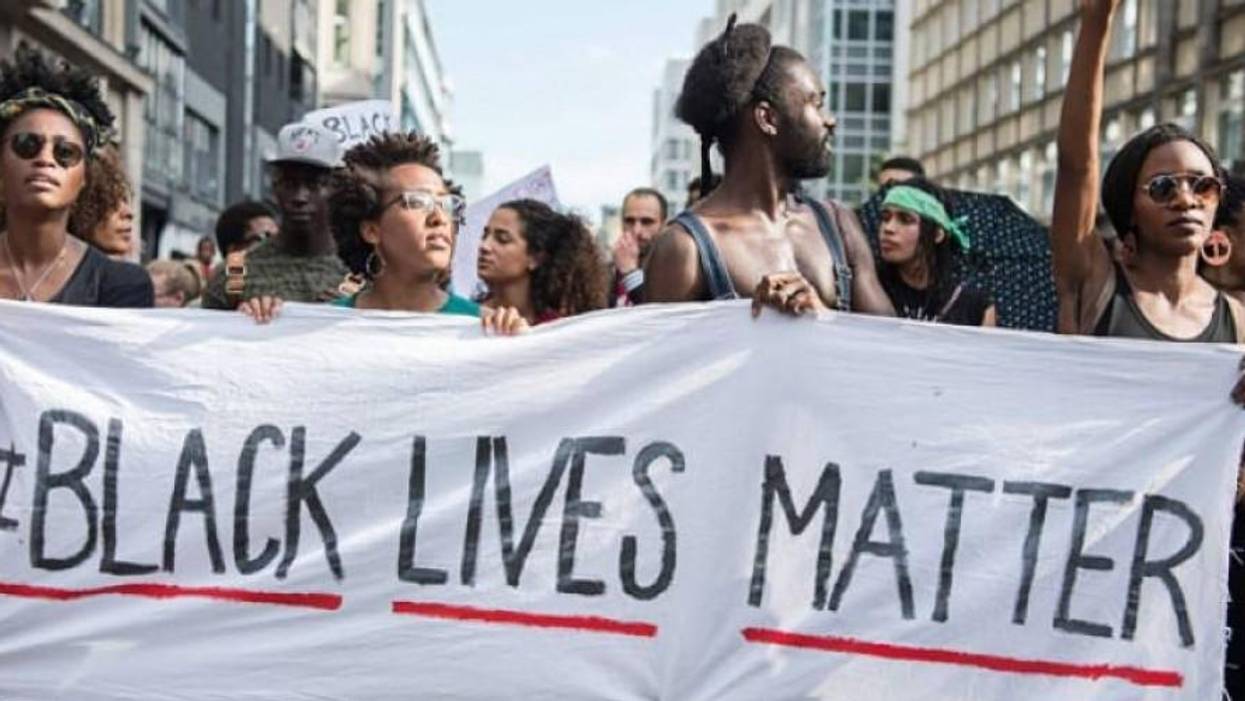
Black Lives Matter protests have linked the entire criminal justice system to a system of structural racism and inequality that activists in 1968 confronted on the streets of Chicago. Police brutality and political corruption targeted by demonstrators 50 years ago continue to shape the very face of American democracy. The Justice Department under the Trump administration has steadily eroded criminal justice reforms enacted by Eric Holder and Loretta Lynch that were designed to reduce mass incarceration, eliminate sentencing inequality, and promote effective community policing across the nation -- in an effort to ratchet down racial tensions after urban rebellions in Ferguson and Baltimore.
The violent and illegal tactics the police used to crush dissent in Chicago have, in the ensuing half-century, been largely erased in favor of a narrative claiming that radical political extremism had taken over the Democratic Party's left wing. In fact, the protesters outside the halls of power in Chicago represented the mainstream of American political values in their ambition to end war, racism, poverty and violence both domestically and internationally.
Their demands turned into a generational conflict, pitting the Democratic Party establishment represented by Chicago Mayor Richard Daley and Vice President Hubert Humphrey against an insurgent coalition of youthful activists determined to transform the nation even at any cost.
Daley, a longtime ally of President Lyndon Johnson, deployed an army of police officers to maintain law and order in the city. Tom Hayden, the main author of the influential Port Huron Statement and a civil rights activist who had been beaten in Mississippi while working for civil rights, was perhaps the most well-known political radical in Chicago. Youth International Party (Yippies) leaders Abbie Hoffman and Jerry Rubin attracted further publicity by practicing politics as performance art, including nominating a pig for president in an effort to remark on the absurdity of the American political system.
Authorities were not amused. On Sunday, August 25, the day before the convention opened, Chicago police attacked demonstrators in Lincoln Park, setting the stage for a week of violent clashes. Daley forces targeted journalists covering events inside the convention and on the streets for violent retribution, including correspondents Dan Rather and Mike Wallace, who were assaulted by security guards inside the convention.
In contrast to the unified display showcased at the Republican National Convention in Miami earlier in the month, the Democrats were in chaos. The party's dreams of a Great Society faltered over an increasingly rancorous debate about the Vietnam War. Vietnam raised larger issues about the future of American democracy, especially around the themes of militarism, racism, and materialism that Dr. King had decried before his death and that Bobby Kennedy wrestled with during his short presidential campaign.
Ironically, these issues all converged on Wednesday, August 28, the fifth anniversary of the 1963 March On Washington. That evening over 10,000 demonstrators gathered in Grant Park (later the site of Barack Obama's victory speech in November 2008) clashed with police officers who brutalized men, women and innocents as well as those engaged in violent acts. In response, protesters descended upon the Hilton Hotel, where DNC delegates were staying and television cameras and journalists were headquartered. Vice President Hubert Humphrey watched in despair as police assaulted protesters in clashes that spilled out onto the streets and drew innocent bystanders into a web of violence.
Chicago reminds us of the deep historical roots behind contemporary political divisions. The partisan rancor that marks contemporary American political culture remains rooted in the violently brutal conflicts on display there a half-century ago. The internecine war for the soul of American democracy continues in our own time, as the rage and fear tapped almost 50 years apart by Richard Nixon and Donald Trump have continued to mesmerize successive generations of Americans. Social justice movements, from 1968 to our own time, remind us that the whole world is watching.
If a nation has the ways and means to solve a social problem that is devastating millions of its citizens' lives, but it fails to act, doesn't that mean resolving the problem depends more on moral values than on coming up with new economic policies?
The social problem I am talking about is poverty. Poverty has always been an issue that's been framed--one way or another - by morality. For those who view the poor with moral indignation, the solution is to enact policies designed to punish; and for those who apply empathy, the goal is to create programs that are geared to empower and uplift the poor.
What I perceive, based on personal experience -I've worked with many public and private groups on the issues of homelessness and poverty and I've experienced homelessness myself- is that one's moral perspective on the poverty issue usually defines how one goes about finding and implementing solutions to it.
The dividing line seems to be whether you think poverty is caused by people lacking the basic resources they need in order to have stable families, good educational opportunities, and jobs; or, you think that people do not have these basic resources because they lack the personal attributes and social skills needed to earn them, as was implied by columnist David Brooks in a New York Times editorial last year.
I think it's unfair to expect that people who don't have access to basic needs--like adequate food, housing, and health care--should live normal and productive lives. To then punish them on top of that--by denying work and income supports, for example-- is not only immoral, it's irrational as well.
Early on in the battle to end poverty in America, the moral high ground was held by those with an empathic approach to alleviating poverty, in words and actions.
President Roosevelt proclaimed: "The test of our progress is not whether we add more to the abundance of those who have much; it is whether we provide enough for those who have little." He followed up those words with the New Deal, giving rise to Social Security and the modern liberal/progressive movement in America.
In his Inaugural Address in 1961, President Kennedy said: "If a free society cannot help the many who are poor, it cannot save the few who are rich." He then announced a "New Frontier": policies that extended jobless benefits, aid to children, increased Social Security and the minimum wage, and financed public affordable housing.
After Kennedy's assassination, LBJ championed the Great Society and the War on Poverty: "... Neither you nor I are willing to accept the tyranny of poverty, nor the dictatorship of ignorance, nor the despotism of ill health, nor the oppression of bias and prejudice and bigotry. We want change. We want progress." And he backed those words up with the Civil Rights Acts of 1964 and 1968, The Food Stamp Act of 1964, The Voting Rights Act of 1965, and the Housing and Urban Development Act of 1965.
In 1967, Martin Luther King wrote that "poverty has no justification in our age." He compared it to "the practice of cannibalism at the dawn of civilization, when men ate each other because they had not yet learned" to produce their own food. "The time has come for us to civilize ourselves by the total, direct and immediate abolition of poverty." He launched the Poor Peoples Campaign in 1968 to try to "gain economic justice for low-income people in the United States." He was assassinated that year.
Bobby Kennedy took up the mantle as advocate for the poor and during his presidential campaign declared: "I believe that, as long as there is plenty, poverty is evil." He, too, was assassinated--just two months after King.
Even President Nixon continued to build on many of these progressive policy reforms. In 1969 he called for "an end to hunger," expanded the food stamp program, and then created the Supplemental Security Income (SSI) program in 1972.
I was born in the 1950s and lived through each of these periods of inspiration, hope and optimism; each were followed--inevitably, it came to seem--by death and anguish. The sudden, tragic loss of our most gifted and promising political and moral leaders left many in my generation traumatized and deeply scarred.
In the wake of the political carnage of the 1960s, and the national emotional hangover that only worsened with Vietnam and Watergate, Ronald Reagan came onto the national scene in the 1970s with openly racist disdain for the poor. His stump speeches included references to "welfare queens" taking "government handouts" while driving a "Cadillac"; and "strapping young bucks" using food stamps to buy "T-bone steaks."
Does anyone think for a moment that if Bobby Kennedy, Martin Luther King or Malcolm X were still alive then that they would have let him get away with that racist vitriol unchallenged? But Reagan did, and he backed up his words with actions.
He took particular aim at programs and services that were effectively reducing poverty and preventing homelessness prior to his election. In his own version of a perfect storm for the poor, Reagan gutted the budget of Housing and Urban Development (HUD); discarded the Mental Health Systems Act of 1980, and as a result scores of people suffering from mental illness became displaced, homeless and/or incarcerated rather than treated in community mental health centers; and he changed the political narrative about poverty and homelessness--from one that acknowledged it as a national problem, to one that framed it as a matter of personal choice.
As President Reagan said in a 1984 interview with Good Morning America regarding the unprecedented surge in homelessness: "People who are sleeping on the grates...the homeless...are homeless, you might say, by choice."
It's a legacy we are still unable to escape more than a quarter century since he left office. How many of us liberal and progressive leaders are willing to take on Ronald Reagan's view of America that has seeped so deeply into our national psyche?
I'll start the dance. I'm a writer and David Brooks is a writer. So I'll call him out. Your editorial in the NY Times that singled out single mothers as being one of the chief causes of poverty in America? The last thing a single mother needs is a lecture from you on the "cultural roots of the problem" of poverty that are "really the inescapable core of the thing." What she really needs is a job that pays a wage that is sufficient to house and feed herself and her children; affordable quality childcare so she can work; and access to health care is probably a pretty damn good idea too.
If our current busting-at-the-seams economy can't provide a living wage for her because it's so grotesquely skewed to enhance the wealth of the already wealthy than it's our responsibility--as proudly empathic liberals and progressives--to force our politicians to enact programs that will protect, serve and empower ALL of our citizens equally and together.
A presidential election campaign approaches its climax, as Barack Obama and Mitt Romney criss-cross the land in search of the last few votes. But my thoughts have turned to a couple of candidates from long ago, who have been back in the news these past few days.
One is George McGovern, best known for his landslide defeat at the hands of Richard Nixon 40 years ago and who, his family has announced, died this morning in a hospice in his native South Dakota. The other is Robert Kennedy, indirect subject of a new documentary on HBO devoted to his widow Ethel, among the last living contemporary links to Camelot.
The program wasn't particularly good - too much family frolicking, too little about the Kennedy tragedies, The New York Times's reviewer complained. "All this introspection, I hate it," says Ethel, now 84, at one point. But it was a reminder of what the country lost with the assassination of RFK, whose short-lived candidacy in 1968 remains one of the great "what ifs" of 20th-century American history: how different things might have been if he had gone on to defeat Nixon at that year's election.
But the mere names of Bobby Kennedy and George McGovern get you thinking: whatever happened to the old-fashioned American liberalism under whose banner they so proudly fought? Not today's diluted "liberalism" as practiced by Obama, and which is little more than a schoolyard taunt hurled by right-wing talk-show hosts, but the liberalism that set out to right the wrongs of American society, first and foremost the scourge of poverty.
For Bobby, the reality of what he would call "the disgrace of the other America" struck home during his 1967 "Poverty Tour" of the Mississippi Delta. In McGovern's case, the concern was on a global scale, ever since President John F Kennedy appointed him director of the Food for Peace program in 1962.
Listen to Obama and Romney, and you'd imagine poverty had vanished. During their debate last week, the President didn't mention the P-word once. Romney did five times but, one suspects, mainly in an effort to make amends for his infamous remarks about the 47 per cent of Americans who consider themselves "victims" and would never vote for him.
But his dominant concern, like Obama's, was the middle class. Hardly a sentence was uttered during the debates without a reference to it: jobs for the middle class, tax cuts for the middle class, healthcare for the middle class, and so on. In the US, the middle class is a pretty elastic entity, a metaphor for ordinary Americans who had already seen their income stagnate for more than a decade before being clobbered by the Great Recession. Depending on the income model you use, they account for between a third and three-quarters of the population. They're a huge number of voters, and appeals to them make perfect political sense.
But the poor are with us too - more so than ever. According to the Census Bureau, 15 per cent of Americans, or more than 46 million people, live below the poverty line, defined as an annual income of $23,000 for a family with two children. Of those, six million live in extreme poverty, with an income of half that or less.
Poverty, of course is relative, and a family on $23,000 would be fabulously wealthy in parts of Africa where people have to live on $2 a day. But we're talking not about the Congo or Liberia, but the most powerful country on earth, and the US today has the highest poverty rate of any rich nation.
While welfare programs of the 1960s and 1970s may have taken the edge off what RFK saw in Mississippi, the children "with bellies swollen by hunger", the basic problem has not disappeared. Since the 2008 crash, six million Americans have slipped back into poverty while tens of millions more who cling to the politicians' cherished "middle class" feel the cold breath of poverty at their necks. But no one talks about it like that, and up to a point you can see why.
The political spectrum has shifted to the right since liberalism's high-water mark in the 1960s; a relaunch of Lyndon Johnson's "Great Society" is inconceivable. In the Ayn Rand universe inhabited by the modern Republican Party, it's every man for himself. Welfare recipients are held to be lazy scroungers, and during the primaries Newt Gingrich's most reliable applause line was to mock Obama as "the food stamp president".
But something deep down is wrong. "Redistribution" may rank second only to "liberal" as the dirtiest word in the conservative political lexicon. But the return of poverty rates to a level not seen in a quarter of a century is just another facet of the ever-growing income inequality in the US, where the richest 1 per cent have a greater share of the cake than at any time since the Great Crash of 1929. Politicians still worship at the altar of the American Dream, the notion that anyone can make it big in the US, no matter how poor their origins. The fact is that social mobility, as measured by academic studies, is less here than in coddled, sclerotic Europe.
Soon after LBJ became president, an ally warned him not to squander his political capital on worthy but hopeless causes, such as civil rights and poverty. According to the biographer Robert Caro, Johnson's reply was: "Well, what the hell's the presidency for?" As you ponder cautious Obama, you think of Johnson, of Bobby Kennedy and George McGovern. Where are their likes today?
Rhode Island has a long reputation of being a solidly
Democratic state.
Rhode Island has a long reputation of being a solidly Democratic state. Republicans in positions of power are so scarce that the fact that we have a Republican governor, Gov. Donald Carcieri, must be attributed partially to the gender of his Democratic opponent. If she had been a he, with her history in public office, we would be enjoying her second term. In the aftermath of Hillary Clinton's success in RI, things may have changed for female politicians but back when Gov. Carcieri was elected, running-while-woman virtually guaranteed her defeat.
Thus it has been a source of wonder to me that my students, who had always tended to be apathetic and often, to my surprise, considering how Democratic RI is, conservative, suddenly took an active and hostile position towards George W. Bush. It appears that his legacy in the Ocean State is to have made many of them openly antagonistic to conservatives and especially, to him.
I noticed the change a couple of years ago. Perhaps my students had laughed off Bill Clinton's priapic misadventures because times were good; one can afford to be indulgent of peccadilloes if one's pockets are full. I noticed the hostility to Bush early in his administration. In one class discussion, the anti-Bush jeers turned to hostility and one student even suggested that someone should just shoot him. When these political discussions arise, I tend to pull back and let them have at it, telling them that I want them to think for themselves, not to parrot what I think. But on this occasion I jumped in and told him, "You must NEVER say that again; you should not even think it. You have no idea how devastating a political assassination is to a country or the effects it has on our people. Nothing is worth killing a president. If you don't like him, work to defeat him in the next election."
I never mentioned this incident outside my classroom. Once Obama started to run, I, like every liberal in the country, was afraid to mention the subject; we don't want to "tempt the evil eye." Everyone who is old enough to remember the sixties is seared by the memory of those terrible days when first John F. Kennedy was killed and then, less than five years later, the Rev. Martin Luther King, Jr. and New York Senator Bobby Kennedy were killed in close succession. I was too young to vote when Bobby was killed but I was old enough to feel the emptiness in our public life and to work for a candidate who could make a difference. Thus my first political involvement was to stuff envelopes for Bobby's campaign. It was a small thing but it gave me a sense of ownership; a sense that I was contributing to making our country a better place. On that terrible night, when I heard that he had been shot, I felt like our dreams were like balloons, flying high and then shot out of mid-air.
If Bobby had lived, Nixon would not have become president; the Vietnam war would have ended sooner; Henry Kissinger would have stayed in his rat hole; and thousands of Cambodians and Vietnamese would have survived the war. Our country would not have come to the edge of chaos because of the manipulations of Nixon and his plumbers. If, if, if...
There are still questions about JFK's and the Rev. King's assassinations, allegations that highly-placed political leaders and government agencies were involved, as well as disputes over the validity of the official findings. And there are scars on the body politic: Who really trusts the government? George W. Bush and Dick Cheney have raised governmental secrecy, incompetence, and duplicity to new heights resulting in an even deeper distrust of government that that left by Richard Nixon.
We are on the brink of electing Barack Hussein Obama, a black man, to the presidency. He appears to have the gifts needed to restore our faith in government and to inspire our citizens to ask, in John F. Kennedy's words, what they can do for our country. Unfortunately, his middle name, Hussein, is the same as that of an old enemy, and Obama is similar to that of another old enemy, Osama bin Laden. I wonder how they would play it if he were named Barry Jefferson Lincoln? You need not worry; he's black; they would find a different way to play the race card; racists always do.
By trying to characterize him as being different from us, and associate him with Arabs, therefore, terrorists, John McCain, the Republican nominee, and Sarah Palin, his feckless running mate, have found an effective way to play the race card and stir up the kind of race hatred that led to the 1960s' assassinations while feigning innocence. Republicans think they can treat this as a gambit in a game but they are tone-deaf to the tenor of the times. With people losing their homes, jobs, savings, and retirements, the hunt will be on for a scapegoat. When it happened in Germany, Hitler rose to the occasion and provided leadership and a convenient scapegoat: The Jews. Then they went after the Gypsies or Roma, the homosexuals, and the political dissidents.
Born in 1964, Sarah Palin is too young to remember the assassinations of the sixties but John McCain remembers and if he continues to allow race hatred to leech into his campaign unabated, we will all pay the price for it. With America's history of hatred fresh our in our common memory, we know that once this ugliness is let out of the box, it will be impossible to restrain. Like a plant suddenly exposed to light, air, and water, it grows wildly in response to the nutrients it couldn't get while in containment.
Some point to McCain's half-hearted attempts to stop the hatred emerging at his campaign rallies and argue that he isn't a racist. Unless he uses the bully pulpit of his candidacy forcefully to stop hate in its tracks, he will not escape the characterization. Racism corrodes and destroys public life. He may claim that he is not a racist but if he allows it to flourish in his campaign and is willing to harvest its fruits, then he is a racist and should be unmasked as such.
In this season of 1968 nostalgia, one anniversary illuminates today. It is the rise and fall of Robert Kennedy, who would have been elected president of the United States had he not been assassinated in June 1968. Having travelled with Kennedy up to the moment of his shooting at the Ambassador Hotel in Los Angeles on 5 June, I heard The Speech many times. He would "return government to the people" and bestow "dignity and justice" on the oppressed. "As Bernard Shaw once said," he would say, "'Most men look at things as they are and wonder why. I dream of things that never were and ask: Why not?'" That was the signal to run back to the bus. It was fun until a hail of bullets passed over our shoulders.
Kennedy's campaign is a model for Barack Obama. Like Obama, he was a senator with no achievements to his name. Like Obama, he raised the expectations of young people and minorities. Like Obama, he promised to end an unpopular war, not because he opposed the war's conquest of other people's land and resources, but because it was "unwinnable".
Should Obama beat John McCain to the White House in November, it will be liberalism's last fling. In the United States and Britain, liberalism as a war-making, divisive ideology is once again being used to destroy liberalism as a reality. A great many people understand this, as the hatred of Blair and new Labour attest, but many are disoriented and eager for "leadership" and basic social democracy. In the US, where unrelenting propaganda about American democratic uniqueness disguises a corporate system based on extremes of wealth and privilege, liberalism as expressed through the Democratic Party has played a crucial, compliant role.
In 1968, Robert Kennedy sought to rescue the party and his own ambitions from the threat of real change that came from an alliance of the civil rights campaign and the anti-war movement then commanding the streets of the main cities, and which Martin Luther King had drawn together until he was assassinated in April that year. Kennedy had supported the war in Vietnam and continued to support it in private, but this was skilfully suppressed as he competed against the maverick Eugene McCarthy, whose surprise win in the New Hampshire primary on an anti-war ticket had forced President Lyndon Johnson to abandon the idea of another term. Using the memory of his martyred brother, Kennedy assiduously exploited the electoral power of delusion among people hungry for politics that represented them, not the rich.
"These people love you," I said to him as we left Calexico, California, where the immigrant population lived in abject poverty and people came like a great wave and swept him out of his car, his hands fastened to their lips.
"Yes, yes, sure they love me," he replied. "I love them!" I asked him how exactly he would lift them out of poverty: just what was his political philosophy? "Philosophy? Well, it's based on a faith in this country and I believe that many Americans have lost this faith and I want to give it back to them, because we are the last and the best hope of the world, as Thomas Jefferson said."
"That's what you say in your speech. Surely the question is: How?"
"How . . . by charting a new direction for America."
The vacuities are familiar. Obama is his echo. Like Kennedy, Obama may well "chart a new direction for America" in specious, media-honed language, but in reality he will secure, like every president, the best damned democracy money can buy.
Embarrassing Truth
As their contest for the White House draws closer, watch how, regardless of the inevitable personal smears, Obama and McCain draw nearer to each other. They already concur on America's divine right to control all before it. "We lead the world in battling immediate evils and promoting the ultimate good," said Obama. "We must lead by building a 21st-century military . . . to advance the security of all people [emphasis added]." McCain agrees. Obama says in pursuing "terrorists" he would attack Pakistan. McCain wouldn't quarrel.
Both candidates have paid ritual obeisance to the regime in Tel Aviv, unquestioning support for which defines all presidential ambition. In opposing a UN Security Council resolution implying criticism of Israel's starvation of the people of Gaza, Obama was ahead of both McCain and Hillary Clinton. In January, pressured by the Israel lobby, he massaged a statement that "nobody has suffered more than the Palestinian people" to now read: "Nobody has suffered more than the Palestinian people from the failure of the Palestinian leadership to recognise Israel [emphasis added]." Such is his concern for the victims of the longest, illegal military occupation of modern times. Like all the candidates, Obama has furthered Israeli/Bush fictions about Iran, whose regime, he says absurdly, "is a threat to all of us".
On the war in Iraq, Obama the dove and McCain the hawk are almost united. McCain now says he wants US troops to leave in five years (instead of "100 years", his earlier option). Obama has now "reserved the right" to change his pledge to get troops out next year. "I will listen to our commanders on the ground," he now says, echoing Bush. His adviser on Iraq, Colin Kahl, says the US should maintain up to 80,000 troops in Iraq until 2010. Like McCain, Obama has voted repeatedly in the Senate to support Bush's demands for funding of the occupation of Iraq; and he has called for more troops to be sent to Afghanistan. His senior advisers embrace McCain's proposal for an aggressive "league of democracies", led by the United States, to circumvent the United Nations.
Amusingly, both have denounced their "preachers" for speaking out. Whereas McCain's man of God praised Hitler, in the fashion of lunatic white holy-rollers, Obama's man, Jeremiah Wright, spoke an embarrassing truth. He said that the attacks of 11 September 2001 had taken place as a consequence of the violence of US power across the world. The media demanded that Obama disown Wright and swear an oath of loyalty to the Bush lie that "terrorists attacked America because they hate our freedoms". So he did. The conflict in the Middle East, said Obama, was rooted not "primarily in the actions of stalwart allies like Israel", but in "the perverse and hateful ideologies of radical Islam". Journalists applauded. Islamophobia is a liberal speciality.
The American media love both Obama and McCain. Reminiscent of mating calls by Guardian writers to Blair more than a decade ago, Jann Wenner, founder of the liberal Rolling Stone, wrote: "There is a sense of dignity, even majesty, about him, and underneath that ease lies a resolute discipline . . . Like Abraham Lincoln, Barack Obama challenges America to rise up, to do what so many of us long to do: to summon 'the better angels of our nature'." At the liberal New Republic, Charles Lane confessed: "I know it shouldn't be happening, but it is. I'm falling for John McCain." His colleague Michael Lewis had gone further. His feelings for McCain, he wrote, were like "the war that must occur inside a 14-year-old boy who discovers he is more sexually attracted to boys than to girls".
The objects of these uncontrollable passions are as one in their support for America's true deity, its corporate oligarchs. Despite claiming that his campaign wealth comes from small individual donors, Obama is backed by the biggest Wall Street firms: Goldman Sachs, UBS AG, Lehman Brothers, J P Morgan Chase, Citigroup, Morgan Stanley and Credit Suisse, as well as the huge hedge fund Citadel Investment Group. "Seven of the Obama campaign's top 14 donors," wrote the investigator Pam Martens, "consisted of officers and employees of the same Wall Street firms charged time and again with looting the public and newly implicated in originating and/or bundling fraudulently made mortgages." A report by United for a Fair Economy, a non-profit group, estimates the total loss to poor Americans of colour who took out sub-prime loans as being between $164bn and $213bn: the greatest loss of wealth ever recorded for people of colour in the United States. "Washington lobbyists haven't funded my campaign," said Obama in January, "they won't run my White House and they will not drown out the voices of working Americans when I am president." According to files held by the Centre for Responsive Politics, the top five contributors to the Obama campaign are registered corporate lobbyists.
What is Obama's attraction to big business? Precisely the same as Robert Kennedy's. By offering a "new", young and apparently progressive face of the Democratic Party - with the bonus of being a member of the black elite - he can blunt and divert real opposition. That was Colin Powell's role as Bush's secretary of state. An Obama victory will bring intense pressure on the US anti-war and social justice movements to accept a Democratic administration for all its faults. If that happens, domestic resistance to rapacious America will fall silent.
Piracies and dangers
America's war on Iran has already begun. In December, Bush secretly authorised support for two guerrilla armies inside Iran, one of which, the military arm of Mujahedin-e Khalq, is described by the state department as terrorist. The US is also engaged in attacks or subversion against Somalia, Lebanon, Syria, Afghanistan, India, Pakistan, Bolivia and Venezuela. A new military command, Africom, is being set up to fight proxy wars for control of Africa's oil and other riches. With US missiles soon to be stationed provocatively on Russia's borders, the Cold War is back. None of these piracies and dangers has raised a whisper in the presidential campaign, not least from its great liberal hope.
Moreover, none of the candidates represents so-called mainstream America. In poll after poll, voters make clear that they want the normal decencies of jobs, proper housing and health care. They want their troops out of Iraq and the Israelis to live in peace with their Palestinian neighbours. This is a remarkable testimony, given the daily brainwashing of ordinary Americans in almost everything they watch and read.
On this side of the Atlantic, a deeply cynical electorate watches British liberalism's equivalent last fling. Most of the "philosophy" of new Labour was borrowed wholesale from the US. Bill Clinton and Tony Blair were interchangeable. Both were hostile to traditionalists in their parties who might question the corporate-speak of their class-based economic policies and their relish for colonial conquests. Now the British find themselves spectators to the rise of new Tory, distinguishable from Blair's new Labour only in the personality of its leader, a former corporate public relations man who presents himself as Tonier than thou. We all deserve better.
(c) 2008 The New Statesman
On April 27 1968 the vice president, Hubert Humphrey, announced his presidential candidacy. It was a particularly troubled moment in America's recent history. Just three weeks after Martin Luther King's assassination, the cities were still scarred by riots while the country as a whole was deeply divided over the Vietnam war.
Presumably seeking to capture the mood of the nation, Humphrey started his speech thus: "Here we are, the way politics ought to be in America, the politics of happiness, the politics of purpose, the politics of joy; and that's the way it's going to be, all the way, too, from here on out." Within six weeks Bobby Kennedy had been assassinated.
America's self-image as the home of unrelenting progress - a nation of historic purpose and unrivalled opportunity where tomorrow will always be better than today - is the linchpin of its political and popular culture. Optimism, it seems, is a truly renewable national resource. It was used to build Bill Clinton's "bridge to the 21st century" in 1992, and powered the alarm clocks for Reagan's "new morning in America".
"The American, by nature, is optimistic," said John F Kennedy. "He is experimental, an inventor and a builder who builds best when called upon to build greatly." This optimism is the source for much of what makes the US simultaneously so revered and reviled, dynamic and deluded, around the world.
On one hand it articulates a hope, bordering on certainty, that a better world is not just feasible but already in the making. Released from the hogties of tradition and formality, such confidence is driven by possibility rather than the past. Winston Churchill once said he "preferred the past to the present and the present to the future". An American politician who wanted to get elected would say precisely the opposite. This optimism underpins the notions of class fluidity and personal reinvention at the core of the American dream. Where others might ask "Why?", it asks "Why not?". Such is the root of so much that is great about America's economy, culture and politics.
On the other hand this optimism has within it the notion that the US is the exclusive repository of these hopes and the sole means by which a better world can be made. Unfettered by history, consensus or empirical evidence, it is driven by myth rather than material circumstances. Even as class rigidity entrenches and personal reinvention slips, the dream remains. Like Stephen Colbert's spoof of George Bush, it has the capacity to "believe the same thing Wednesday that [it] believed on Monday, no matter what happened Tuesday". It posits America as the world's future whether the world wants it or not. Such is the root of so much that is terrible about America's economy, politics and foreign policy.
This sense of optimism has been in retreat in almost every sense over the past few years. According to Rasmussen polls, just 21% of Americans believe the country is on the right track, a figure that has fallen by more than a half since the presidential election of 2004. Meanwhile only a third think the country's best days are yet to come, as opposed to 43% who believe they have come and gone - again a steep decline on three years ago. These are not one-offs. In the past 18 months almost every poll that has asked Americans about their country's direction has produced among the most pessimistic responses on record - a more extended period than anyone can remember since Watergate.
America, in short, is in a deep funk. Far from feeling hopeful, it appears fearful of the outside world and despondent about its own future. Not only do most believe tomorrow will be worse than today, they also feel that there is little that can be done about it.
There are three main reasons. Closest to home is the economy. Wages are stagnant, house prices in most areas have stalled or are falling, the dollar is plunging, and the deficit is rising. A Pew survey last week showed that 72% believe the economy is either "only fair" or poor and 76% believe it will be the same or worse a year from now. Globalisation is a major worry. Of 46 countries polled recently, the US had the least positive view on foreign trade and one of the least positive on foreign companies.
The sense that things will improve for the next generation has all but evaporated. Another Pew poll from last year found that only 34% of Americans expected today's children to be better off than people are now - down from 55% shortly before President Bush came to power.
Second is the Iraq war and the steep decline in America's international standing it has prompted. A global-attitudes Pew poll from last year showed that 65% of Americans believe the country is less respected by the rest of the world than it was - double the figure of 20 years ago. The fact that only half those polled thought this was a problem is telling.
For if the war in Iraq were going well then this probably wouldn't matter. But it isn't. All surveys show that for some time a steady majority of the public believe the war was a mistake, is going badly and that the troops should be withdrawn. One of the central factors in which America's self-confidence was predicated - global hegemony based on unrivalled military supremacy - has been fundamentally undermined.
Last week Lieutenant General Ricardo Sanchez, the former top commander of US troops in Iraq, spelled out the national despair, branding the war a "nightmare with no end in sight".
Which brings us, finally, to the political class. Once again the American public have lost faith. The rot starts at the top. Almost as soon as they elected Bush in 2004 they seemed to regret it. Since Katrina, his favourability ratings have been stuck in the 30s and show no signs of moving - or at least not upwards. Bush's only comfort is that public approval of the Democratically controlled Congress is even worse, hovering just below where it was shortly before the 2006 elections. In other words, however Americans believe their country will return to the right track, they no longer trust politicians to get them there.
Little suggests that anything will change any time soon. After four years of being told they were winning a war they have been losing and are better off when they are not, Americans are more wary of political happy talk than they have been for a long time. But that doesn't mean they want to hear sad talk instead, even if it happens to be true. For the central problem is not that they were lied to - though that of course is a problem - but that they have constantly found some of these lies more palatable than the truth. Bush may have exploited the more problematic aspects of this optimism. But he did not create them. Enough of the American public had to be prepared to meet him halfway to make his agenda possible.
Herein lies the challenge for the presidential candidates in the coming year - how to respond to this pessimistic mood without reflecting or discussing its root causes: to lay out a plausible explanation of how Americans can get their groove back, without examining how they got in this rut in the first place.