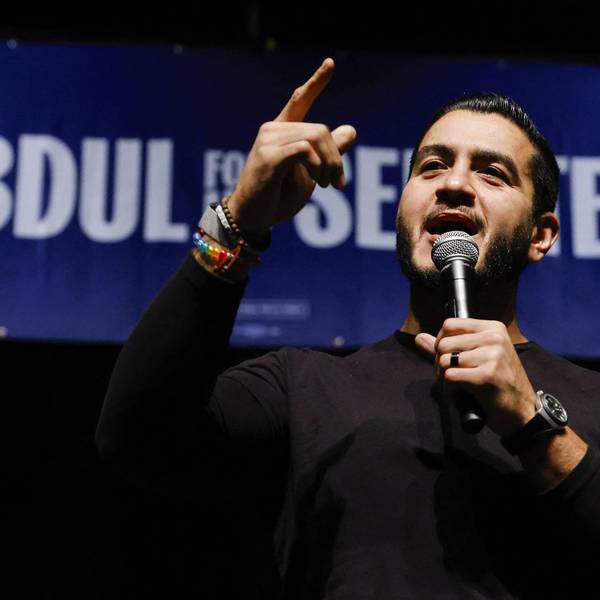
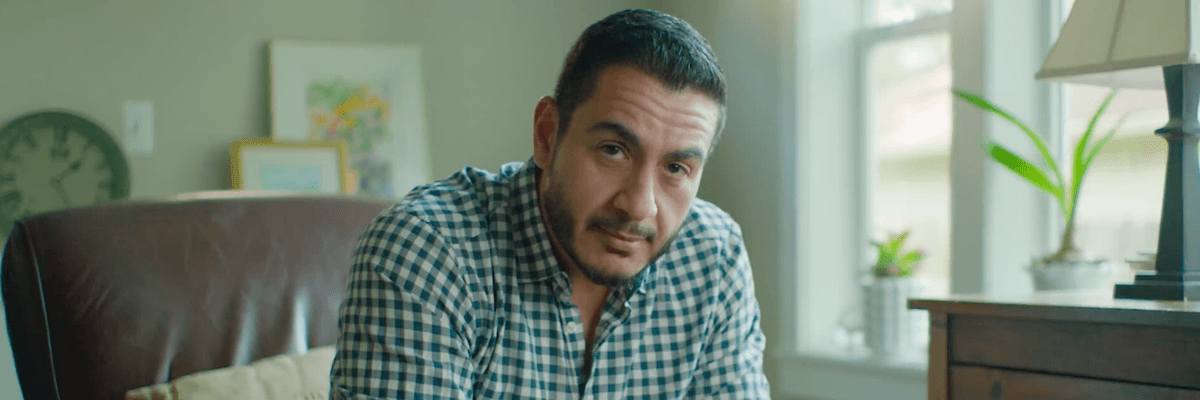
Dr. Abdul El-Sayed, Democratic US Senate candidate in Michigan, appears in an ad released October 19, 2026, in which he confronted Republican attacks on his Muslim faith.
'My Name Is Abdul': El-Sayed Confronts Trump's Racist, Anti-Muslim Attacks Head-On in New Ad
"In response to attacks about his faith, Abdul doubles down on who he is," said one observer.
In his latest campaign ad released late Monday, Dr. Abdul El-Sayed, the Democratic US Senate candidate in Michigan, struck a resilient and matter-of-fact tone that suggested the recent racist attacks on him, his Arabic name, and his Muslim faith are no secret—but he has no plans to try to hide his identity to appease Republicans and Democrats who have claimed he's an "extremist" or accused him of terrorist ties.
"My name is Abdul," said El-Sayed in the 30-second ad. "It means servant. I pray every day. I reflect on my role in this life, on this Earth—how we leave it better than we found it."
He continued by linking his own faith traditions to those of millions of Michiganders who also "pray"—many of whom, he suggested, "feel hopeless" in President Donald Trump's America, as they face rising costs and struggle to afford groceries, healthcare, childcare, and other essentials.
As a man of faith, I pray every day. Faith is a thing there’s just too little of in Washington. https://t.co/1OUOb51AC8
— Dr. Abdul El-Sayed (@AbdulElSayed) October 19, 2026
The ad, subtly connecting El-Sayed's Muslim faith to people of all belief systems across Michigan, comes as Trump and others ramp up Islamophobic attacks on the progressive former public health official, with two weeks to go until Election Day.
The president explicitly, baselessly slandered El-Sayed as "a jihadist" at one recent rally, mocking his name as he told the crowd that El-Sayed "is a member of the Muslim Brotherhood." The Republican Senate candidate in Michigan, former Rep. Mike Rogers, has also attempted to tie El-Sayed to the political movement that was founded in Egypt in 1928.
On Monday, as El-Sayed's ad was released, Trump took aim at the candidate's name once again, calling him by his middle name, Mohamed.
"He knows my name is Abdul," El-Sayed said of the president earlier this month. "He says it every day. But he’s not just attacking me. He’s attacking all of us. He thinks so low of us. He thinks he can use my name and my faith to distract us from the suffering his policies are inflicting on us at the pump, at the grocery store, and at the doctor’s office. He thinks we don’t know any better. It’s time for change."
The Republican claims regarding El-Sayed's ties to the Muslim Brotherhood made their way into an exchange the candidate had with a town hall attendee identified as "Tommy" in Caro, Michigan over the weekend, where Tommy demanded that El-Sayed "disavow" the group.
“Sure. Yeah, absolutely,” El-Sayed said, before challenging Tommy to explain why he was asking a Muslim candidate to do so.
This is Tommy. Tommy had a question about my allegiances. Listen to the end to hear about his. https://t.co/p09eMtsh0x
— Dr. Abdul El-Sayed (@AbdulElSayed) October 18, 2026
Anti-Muslim attacks have come from both sides of the aisle since El-Sayed began his campaign, with Democratic strategists spending months fixating on his decision to campaign with popular Twitch streamer Hasan Piker and tying the candidate to Piker's earlier remarks about September 11 and Israel.
On Monday, former Michigan Democratic Party chair Lon Johnson accused El-Sayed of "extremism" and said his rhetoric threatens Jewish communities, calling on Democrats in the state to "leave the Senate race blank" to represent "a rejection of ideological absolutism." El-Sayed is a strong supporter of Palestinian rights and, like a majority of Americans, is deeply critical of US support for Israel as it continues its assault on Gaza and the West Bank.
In the ad released Monday, El-Sayed suggested that "faith" like his could bring positive change to Washington, DC, where political leaders have long claimed that big changes to systems in the US—such as its for-profit healthcare system, which El-Sayed strongly believes must be replaced by Medicare for All—would be impossible to make.
"Faith is a thing that there's just too little of in Washington," he said. "We don't have faith in our future. We don't have faith that we can actually fix things."
Mussab Ali, a former school board official in Jersey City, New Jersey, said the ad took "courage" to release.
"I think this might be the first time in American history you’ve seen a Muslim candidate demonstrate a part of their prayer in an ad like this," said Ali. "In response to attacks about his faith, Abdul doubles down on who he is."
We are at a crossroads
This country and this world are at a monumental crossroads. In a few short weeks, US voters will have an opportunity to beat back the forces of fascism and confront the billionaires who are rigging the economy, our media system, and our democracy, making it increasingly impossible for ordinary people to get by. We’re not just talking about the election. We’re talking about what must be done once these fascist elements are vanquished from power. We need a bolder set of solutions than what either major party has so far been willing to offer and a working-class movement ready to fight like hell for it. Trump didn't emerge from nowhere. The conditions that fueled MAGA authoritarianism were created by decades of radical neoliberal economic policies and a corrupt political system dominated by corporate interests. They slashed taxes on the super-rich, promising that the benefits would trickle down. They said giveaways to the corporate titans would make life more affordable for the rest of us. It was all bullshit. And when a bitter, betrayed populace searches for someone to blame, right-wing demagogues have little trouble finding scapegoats. People know when they're being lied to, but you won't hear any of this from the corporate media. Only independent journalism—powered and funded by people who believe in building a better world—can deliver truly trustworthy daily news. Our Fall Campaign is underway, and we need your help. To power our newsroom through the rest of the year, we need to raise $125,000 by midnight on October 31. So if you share our vision, please contribute whatever you can to sustain our work. |
In his latest campaign ad released late Monday, Dr. Abdul El-Sayed, the Democratic US Senate candidate in Michigan, struck a resilient and matter-of-fact tone that suggested the recent racist attacks on him, his Arabic name, and his Muslim faith are no secret—but he has no plans to try to hide his identity to appease Republicans and Democrats who have claimed he's an "extremist" or accused him of terrorist ties.
"My name is Abdul," said El-Sayed in the 30-second ad. "It means servant. I pray every day. I reflect on my role in this life, on this Earth—how we leave it better than we found it."
He continued by linking his own faith traditions to those of millions of Michiganders who also "pray"—many of whom, he suggested, "feel hopeless" in President Donald Trump's America, as they face rising costs and struggle to afford groceries, healthcare, childcare, and other essentials.
As a man of faith, I pray every day. Faith is a thing there’s just too little of in Washington. https://t.co/1OUOb51AC8
— Dr. Abdul El-Sayed (@AbdulElSayed) October 19, 2026
The ad, subtly connecting El-Sayed's Muslim faith to people of all belief systems across Michigan, comes as Trump and others ramp up Islamophobic attacks on the progressive former public health official, with two weeks to go until Election Day.
The president explicitly, baselessly slandered El-Sayed as "a jihadist" at one recent rally, mocking his name as he told the crowd that El-Sayed "is a member of the Muslim Brotherhood." The Republican Senate candidate in Michigan, former Rep. Mike Rogers, has also attempted to tie El-Sayed to the political movement that was founded in Egypt in 1928.
On Monday, as El-Sayed's ad was released, Trump took aim at the candidate's name once again, calling him by his middle name, Mohamed.
"He knows my name is Abdul," El-Sayed said of the president earlier this month. "He says it every day. But he’s not just attacking me. He’s attacking all of us. He thinks so low of us. He thinks he can use my name and my faith to distract us from the suffering his policies are inflicting on us at the pump, at the grocery store, and at the doctor’s office. He thinks we don’t know any better. It’s time for change."
The Republican claims regarding El-Sayed's ties to the Muslim Brotherhood made their way into an exchange the candidate had with a town hall attendee identified as "Tommy" in Caro, Michigan over the weekend, where Tommy demanded that El-Sayed "disavow" the group.
“Sure. Yeah, absolutely,” El-Sayed said, before challenging Tommy to explain why he was asking a Muslim candidate to do so.
This is Tommy. Tommy had a question about my allegiances. Listen to the end to hear about his. https://t.co/p09eMtsh0x
— Dr. Abdul El-Sayed (@AbdulElSayed) October 18, 2026
Anti-Muslim attacks have come from both sides of the aisle since El-Sayed began his campaign, with Democratic strategists spending months fixating on his decision to campaign with popular Twitch streamer Hasan Piker and tying the candidate to Piker's earlier remarks about September 11 and Israel.
On Monday, former Michigan Democratic Party chair Lon Johnson accused El-Sayed of "extremism" and said his rhetoric threatens Jewish communities, calling on Democrats in the state to "leave the Senate race blank" to represent "a rejection of ideological absolutism." El-Sayed is a strong supporter of Palestinian rights and, like a majority of Americans, is deeply critical of US support for Israel as it continues its assault on Gaza and the West Bank.
In the ad released Monday, El-Sayed suggested that "faith" like his could bring positive change to Washington, DC, where political leaders have long claimed that big changes to systems in the US—such as its for-profit healthcare system, which El-Sayed strongly believes must be replaced by Medicare for All—would be impossible to make.
"Faith is a thing that there's just too little of in Washington," he said. "We don't have faith in our future. We don't have faith that we can actually fix things."
Mussab Ali, a former school board official in Jersey City, New Jersey, said the ad took "courage" to release.
"I think this might be the first time in American history you’ve seen a Muslim candidate demonstrate a part of their prayer in an ad like this," said Ali. "In response to attacks about his faith, Abdul doubles down on who he is."