SUBSCRIBE TO OUR FREE NEWSLETTER
Daily news & progressive opinion—funded by the people, not the corporations—delivered straight to your inbox.
5
#000000
#FFFFFF
To donate by check, phone, or other method, see our More Ways to Give page.


Daily news & progressive opinion—funded by the people, not the corporations—delivered straight to your inbox.
When someone is apathetic to a group identity, or denies an ethnic cleansing, sometimes the simplicity of one name, a face, a young girl dreaming about her future despite the uncertainty of her death, can clarify the human impact of genocide.
There are few tools left for a young girl coping with the reality of surviving a genocide, and so she writes in her journal.
Rachel Corrie was 23 years old when she left her hometown of Olympia, Washington in 2003 to volunteer in Rafah and Gaza City. It was her second time ever leaving the United States.
While in the occupied territories in Israel, Rachel wrote furious to-do lists about possible next steps she should take as a volunteer acclimating to a new country. From getting a new phone number to call her mom, to calling the other organizers she worked with, her journals quickly filled with reminders about the next important thing she needed to do, and the larger questions she wrestled with as she dreamed and planned for her future.
In the safety of her diary, Rachel reckoned with the US military-industrial complex and Israeli soldiers shooting at children, and how these forces overshadowed the nonviolent activism she engaged in.
Rachel, Anne, and Aysenur are dead because genocide does not differentiate the joyful young girl from the villainized political “threat” to the supremacist military state.
On March 16, 2003 Rachel Corrie stood outside the home of a Palestinian family to position herself as an unwavering obstacle in the face of a bulldozer driven by Israeli soldiers intending to violently wreck the 600th Palestinian home that week. Despite her privileged white skin and neon orange jacket demanding the protections that an American citizen is supposedly entitled to, the bulldozer pushed her down a mound of dirt and drove over her body, crushing and killing her while an audience of activists and families watched in powerless dismay.
Rachel’s journal entries and emails to her parents in the weeks leading up to her murder were collected and curated into a play called My Name is Rachel Corrie. Recently, I watched a powerful production of this play at the Mirage Theatre in Kendall, Florida and it reminded me of three other girls whose documentation of their daily life became a historic tool for the world to understand a genocide, and how the precarity of the life and death of one young girl can touch a million hearts and humanize the victims who experience war.
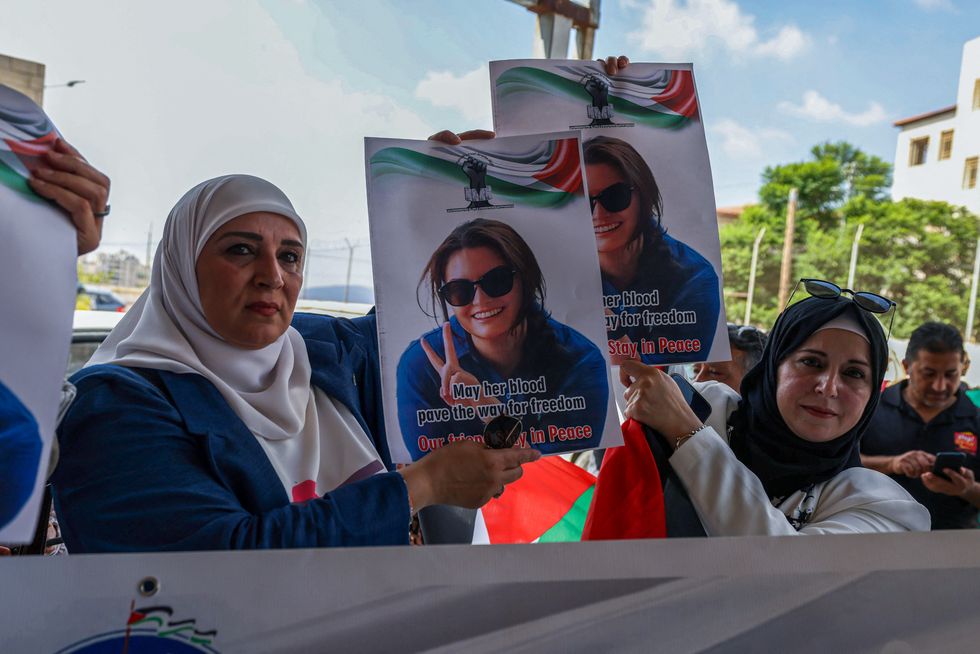
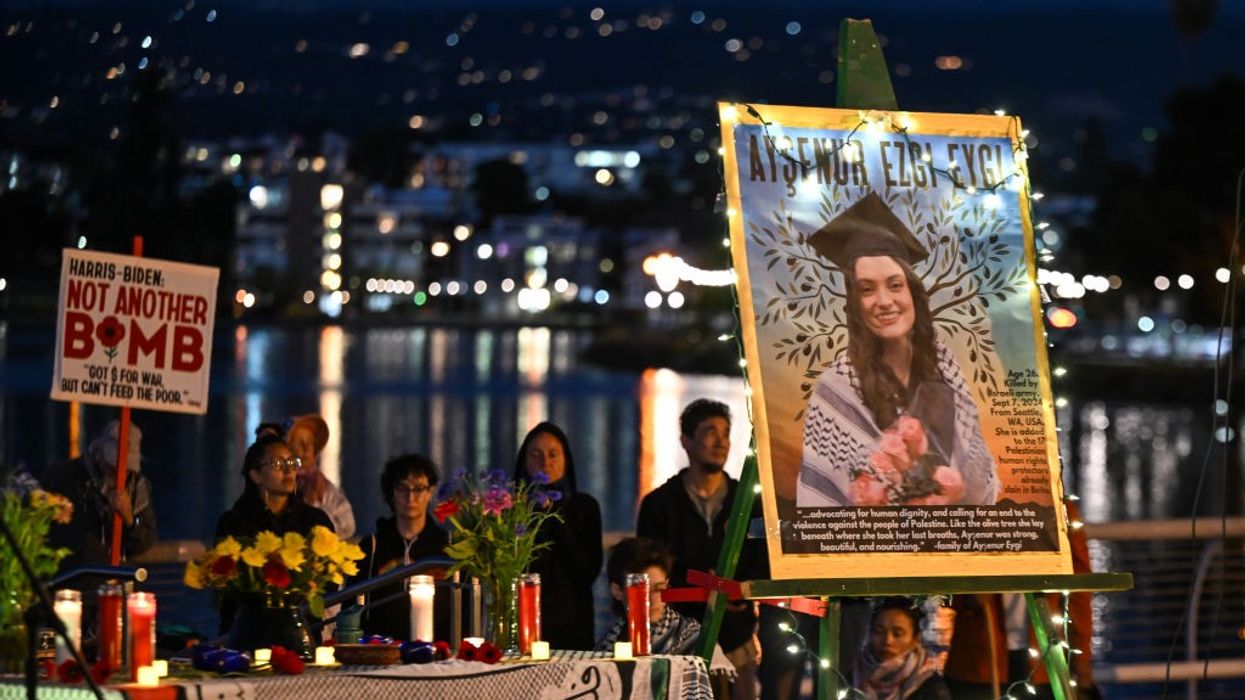
The story of Rachel Corrie mirrors that of Aysenur Ezgi Eygi, another American from Washington who went to volunteer in the West Bank in 2024 after graduating college. Like Rachel, Aysenur was moved by the ongoing oppression of Palestinians, and the current genocide. She traveled to the West Bank and was trained in nonviolent activism practiced to show resistance to injustice without provoking violent reaction. On September 6, 2024, just three days into her volunteer mission, Aysenur peacefully ended a protest, followed Israeli military orders to vacate and disperse, and was standing with other activists in an olive orchard when an Israeli soldier shot her through her head. This murder of a US citizen happened during the Biden administration, and despite urgency from Aysenur’s congressional Rep. Pramila Jayapal (D-Wash.), her murder was never prosecuted as a war crime, violation of international law, or example of a larger practice of unjustified murders Israeli soldiers have committed since 1948.
Rachel Corrie and Aysenur Ezgi Eygi were young, hopeful, and driven by a deep sense of compassion and justice. They were courageous to risk their safety by volunteering in Gaza and the West Bank, but no volunteer participating in a peaceful demonstration should be murdered. The loss of two extremely bright girls with impressive futures ahead is devastating and cruel.
When discussing young girls who keep diaries during genocides, I don’t need to introduce the world to Anne Frank, or the power of her diary as an educational tool about the Holocaust that has been translated into dozens of languages across the world. Her father, Otto Frank, decided to publish Anne’s diary to memorialize his grief, love, and pride for his daughter’s unbridled spirit and unfinished life, and thanks to him millions of non-Jewish people are introduced to the Holocaust and emotionally moved to believe that an atrocity like that should never happen again.

My mom is a Holocaust educator who takes hundreds of Florida students every year through a model of the annex Anne Frank hid in. She introduces students to this girl named Anne who was around their age when she hid from Nazis, and died of typhus in Bergen-Belsen concentration camp just weeks before it was liberated by British forces.
While my Mom and I often disagree about the politics of Israel, we share an extensive education on the Holocaust, and the firm values that human rights should be respected, and that never again means never again for anyone. During one of our disagreements about whether or not a genocide was occurring in Gaza, I reminded her of our shared values, and shared the name of a young girl my age: Bisan Owda.
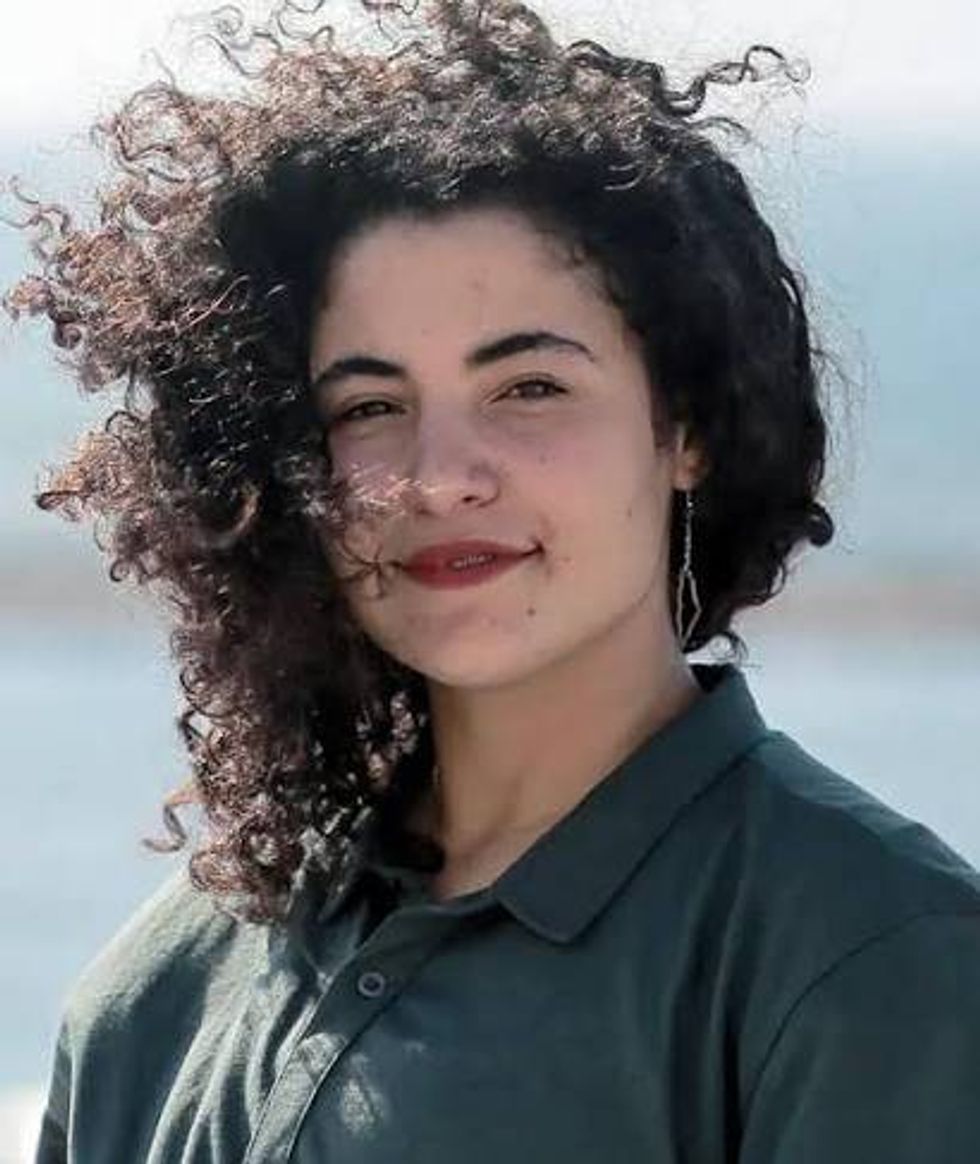
Bisan is a 29-year-old journalist in Gaza, whose charm and unwavering spark of life reaches millions of people across the world through her daily Instagram videos titled: It’s Bisan from Gaza, and I’m Still Alive. I told my mom that Bisan’s Instagram posts remind me of a modern Anne Frank’s diary, and that every time I see her face on my feed I am relieved she survived another day of these three years of Hell.
Rachel Corrie, Anne Frank and Aysenur Ezgi Eygi are dead, but I hope Bisan Owda lives to see the end of this genocide, and a world where Palestinians have the same safety, peace, dignity, and sovereignty that others are granted, entitled to, and have the privilege and power of possessing. Now that my mom knows Bisan’s name and watches her Instagram videos, she also hopes that Bisan survives this genocide.
When someone is apathetic to a group identity, or denies an ethnic cleansing, sometimes the simplicity of one name, a face, an innocent spirit, a young girl dreaming about her future despite the uncertainty of her death, can clarify the human impact of genocide.
Her name is Rachel Corrie. Anne Frank. Aysenur Ezgi Eygi. Bisan Owda
She is one precarious life in a war of indiscriminate massacre. One flower in a bloodied field.
Rachel, Anne, and Aysenur are dead because genocide does not differentiate the joyful young girl from the villainized political “threat” to the supremacist military state.
Bisan is still alive. We can follow her story, share her name, and find the individual humanity that she shares with the millions of Palestinian children, mothers, fathers, uncles, and brothers immensely suffering that all deserve to live in peace with dignity.

One American eyewitness cited in the case says Israeli occupation forces "directly targeted with intent to kill" Ayşenur Ezgi Eygi.
Turkey's Terror Crimes Investigation Bureau has reportedly filed charges of "premeditated murder" against the Israeli soldiers who, according to eyewitnesses, deliberately targeted a Turkish-American activist who was fatally shot in the head while peacefully protesting the expansion of Israel's illegal settlements in the occupied West Bank.
Anadolu reported Sunday that the Turkish agency is classifying the September 6 killing of 26-year-old International Solidarity Movement (ISM) volunteer Ayşenur Ezgi Eygi as a "crime against humanity."
The agency submitted evidence including eyewitness statements, photos, video footage, and an autopsy report to the Ankara Chief Public Prosecutor's Office as part of an effort to identify the Israel Defense Forces (IDF) soldiers responsible for Eygi's killing.
Last month, the Turkish Foreign Ministry said the country intends to seek international arrest warrants for those who killed Eygi.
Eygi, a recent University of Washington graduate, was shot during a march in Beita against Israel's apartheid settlements. American activist Alex Chabbott said Israeli soldiers fired tear gas immediately after the march began. Chabbott and other witnesses said they heard gunshots coming from a nearby rooftop and then saw Eygi lying on the ground and bleeding profusely from her head.
Chabbott said Eygi was "directly targeted with intent to kill." British activist Dominic Robin Sedol accused IDF soldiers of shooting with "the intent to kill Ayşe directly." Jonathan Pasternak, an Israeli activist who attended the march with Eygi, said the troops "had directly targeted Ayşenur."
While admitting that it is "highly likely" that Israeli troops shot Eygi, IDF officials have called the killing "unintentional," claiming the fatal shot "was not aimed at her, but aimed at the key instigator of... a violent riot in which dozens of Palestinian suspects burned tires and hurled rocks" at occupation forces.
Progressive members of U.S. Congress, rights groups, and others including the parents of Rachel Corrie—the U.S. ISM volunteer crushed to death in 2003 by an IDF bulldozer while trying to stop the demolition of Palestinian homes in the West Bank—have joined Eygi's family in calling for an independent investigation of the activist's killing.
However, U.S. President Joe Biden—who has approved billions of dollars in military aid as part of his "unwavering" support for Israel—was widely denounced for repeating the IDF's claim that Eygi was accidentally killed when a bullet "ricocheted off the ground."
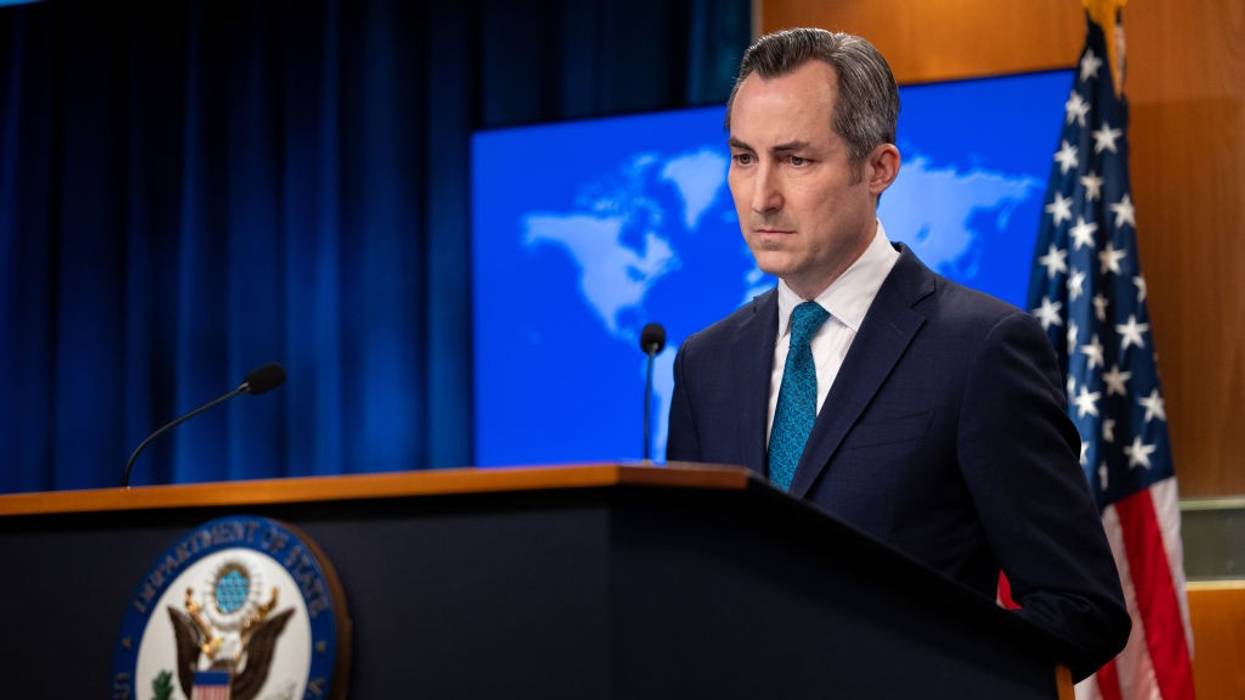
Secretary of State Antony Blinken—who called Eygi's killing "unprovoked and unjustified"—nevertheless signaled that there would be no U.S. probe of the incident, prompting Congresswoman Rashida Tlaib (D-Mich.), the only Palestinian American in Congress, to lament that the Israeli military "can kill Americans and get away with it."
Last week, a group of Department of Justice lawyers sent a letter to U.S. Attorney General Merrick Garland calling for an investigation into Israel's killing of Americans including Eygi, Kamel Ahmad Jawad, Jacob Flickinger, Tawfiq Abdel Jabbar, Mohammad Khdour, Omar Assad, and Shireen Abu Akleh.
On Friday, more than 500 people gathered at the University of Washington in Seattle for an "evening of reflection" on Eygi's life and activism.
"We deserve to know what happened," Özden Bennett, Eygi's older sister, said during the event, according to The Daily. "We deserve to know who killed her, and we deserve to know why. We're asking once again, for President Biden, Vice President [Kamala] Harris, and Secretary of State Blinken, who we still have not heard from, to act."
"The U.S. cannot continue to turn a blind eye to the illegal actions of the extremist Israeli government," the senator said.
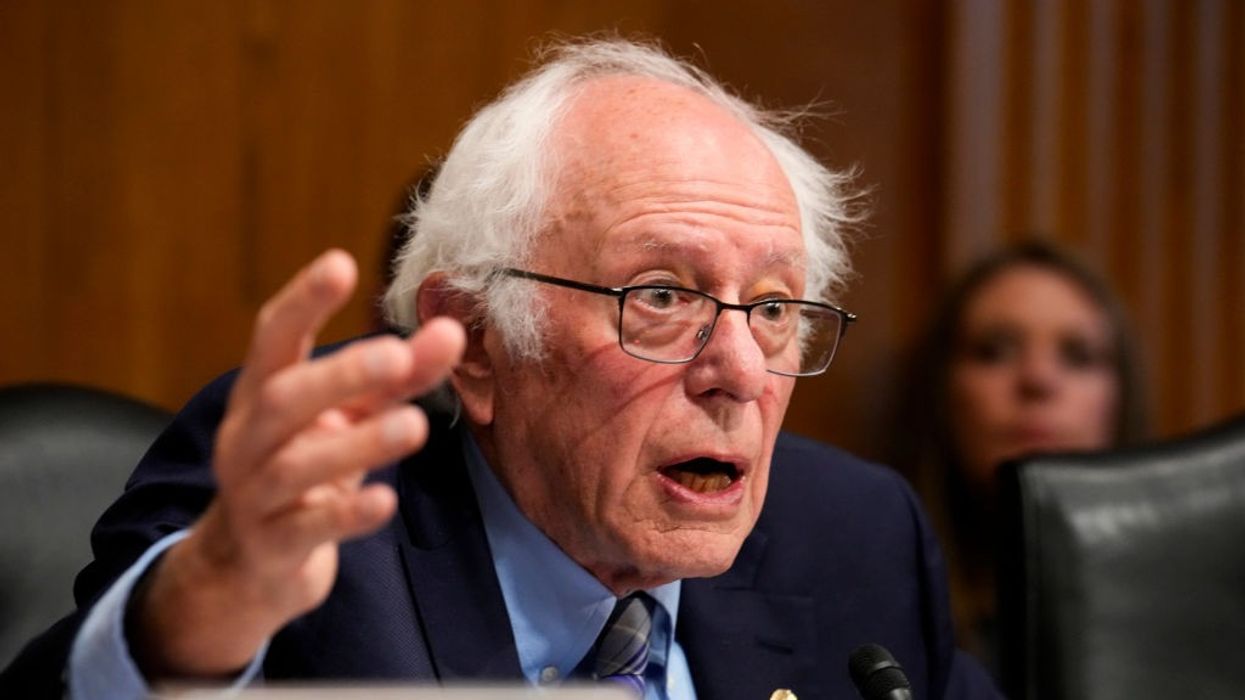
Days after Secretary of State Antony Blinken signaled that there would be no U.S. inquiry into Israel's killing of Turkish American activist Ayşenur Ezgi Eygi in the occupied West Bank last week, Sen. Bernie Sanders on Friday called on the Department of Justice to open an investigation of the young campaigner's death.
Eygi, a 26-year-old activist with the International Solidarity Movement (ISM) and recent graduate from the University of Washington, was shot in the head, allegedly by an IDF sniper, during a September 6 demonstration in Beita against Israel's illegal apartheid settlements. Eyewitnesses said Israeli forces killed Eygi with "a deliberate shot to the head."
"There will be no accountability if the United States defers to the extremist Israeli government to investigate its own actions."
Sanders noted that both U.S. President Joe Biden and Vice President Kamala Harris, the 2024 Democratic presidential nominee, both called for "full accountability" for Eygi's killers.
"Let's be clear: There will be no accountability if the United States defers to the extremist Israeli government to investigate its own actions," he said in a statement.
Sanders continued:
There was no accountability when 17-year-old Tawfic Abdel Jabbar, an American citizen from Louisiana, was shot and killed in January. He was a senior in high school.
There was no accountability when another 17-year-old American, Mohammad Khdour from Florida, was shot and killed in February.
There was no accountability when Dylan Collins, an American journalist for Agence France-Presse, was targeted by Israeli tank fire in October. Six journalists were wounded in the attack, which killed Reuters journalist Issam Abdallah. The group was clearly marked as press.
There was no accountability when American journalist Shireen Abu Akleh was shot in the head by the Israeli military in May 2022. She was also clearly marked as press.
And there was no accountability when another American, 78-year-old Omar Assad, died after being bound and gagged by Israeli security forces.
"None of these Americans were armed," Sanders stressed. "None of them posed a threat."
Sanders also mentioned the hundreds of Palestinians—including more than 140 children—who have been killed by Israeli occupation forces and settler colonists in the West Bank since October.
"There has been no accountability for repeated Israeli settler attacks, enabled by security forces, on Palestinian towns and villages," he said. "No meaningful response to the burning of Palestinian homes and businesses."
"This is a clear pattern," Sanders contended. "These are not mistakes. This is policy: Shoot first, ask no questions later."
"These are not mistakes. This is policy: Shoot first, ask no questions later."
"By continuing to credulously accept the explanations of an extremist Israeli government whose stated goal is to annex the West Bank and push Palestinians off their land, the United States makes a mockery of its values and abdicates its responsibility to investigate and respond to attacks on its citizens," the senator said.
"The U.S. Justice Department must open its own, independent investigations into these attacks on American citizens by the Israeli security forces," he asserted. "The FBI should immediately collect testimony and forensic evidence. And President Biden must act to bring real pressure to bear to change Israeli policy."
"The United States cannot continue to turn a blind eye to the illegal actions of the extremist Israeli government," Sanders added. "We cannot allow American citizens and innocent Palestinians to be killed with impunity. We must act."
Sanders' admonition came a day after a trio of Democratic U.S. lawmakers from Washington state—Sens. Patty Murray and Maria Cantwell and Congressional Progressive Caucus Chair Pramila Jayapal—demanded the Biden administration investigate Eygi's death.
The parents of Rachel Corrie—a 23-year-old American ISM activist who was crushed to death by a U.S.-supplied bulldozer while trying to prevent the demolition of Palestinian homes in 2003—this week also called for an independent investigation into Eygi's killing.
While admitting that it is "highly likely" that Israeli troops killed Eygi, IDF officials called the killing "unintentional," claiming the fatal shot "was not aimed at her, but aimed at the key instigator of... a violent riot in which dozens of Palestinian suspects burned tires and hurled rocks" at occupation forces.
Biden came under fire for repeating Israel's claim, with observers noting that time and again, journalistic and other investigations have concluded that Israeli forces deliberately targeted their victims.
In stark contrast to the U.S. response to Eygi's killing, Turkey—of which she was also a citizen—said it would seek international arrest warrants for whoever shot her.
International Criminal Court Prosecutor Karim Khan is trying to obtain arrest warrants for Israeli Prime Minister Benjamin Netanyahu, Israeli Defense Minister Yoav Gallant, and a trio of Hamas leaders—at least one of whom has been assassinated.
"There needs to be consequences," said Craig Corrie. "These are American weapons that are being used. That's against U.S. law, and it should be stopped."
The parents of Rachel Corrie—the American activist crushed to death by a U.S.-supplied Israeli military bulldozer in 2003 in the illegally occupied West Bank—this week called for an independent investigation into the Israel Defense Force's killing last week of a Turkish American Palestine defender who was volunteering in the territory.
Ayşenur Ezgi Eygi, a 26-year-old who recently graduated from the University of Washington, was volunteering with the International Solidarity Movement (ISM)—of which Corrie was a member—when she was shot in the head, allegedly by an IDF sniper, during a demonstration in Beita against Israel's illegal apartheid settlements.
Eyewitnesses said Israeli forces killed Eygi with "a deliberate shot to the head" for no reason.
While admitting that it is "highly likely" that Israeli troops killed the young woman, IDF officials called the killing "unintentional," claiming the fatal shot "was not aimed at her, but aimed at the key instigator of... a violent riot in which dozens of Palestinian suspects burned tires and hurled rocks" at occupation forces.
Cindy and Craig Corrie, Rachel's parents, told The Guardian Wednesday that Eygi's killing reopened old wounds.
"You feel the ripping apart again of your own family when you know that's happening to another family. There's a hole there that's never going to be filled for each of these families," Craig Corrie told the British newspaper.
"It's very personal," he added. "This one, you know, is very close, and there's so many similarities."
During a Monday interview with Democracy Now! co-host Amy Goodman, Cindy Corrie said news of Eygi's killing was "very disturbing and emotional for us."
"It's a parent's nightmare," she added. "And so, Friday morning, knowing that there was another family... who was getting that same kind of news was just very, very disturbing. And we continue to just feel deeply about what that family is experiencing right now."
U.S. President Joe Biden was widely denounced Tuesday after repeating an IDF claim that Eygi was accidentally killed when a bullet "ricocheted off the ground."
While calling Eygi's killing "totally unacceptable" and "unprovoked and unjustified," Secretary of State Antony Blinken has signaled that there will be no U.S. investigation of the incident, prompting Congresswoman Rashida Tlaib (D-Mich.)—the only Palestinian American member of Congress—to lament that the Israeli military "can kill Americans and get away with it."
Human rights defenders argue that the U.S. government repeatedly fails to hold Israel accountable or demand justice when it kills Americans. In addition to Corrie and Eygi, Israeli occupation forces have killed U.S. citizens including Al Jazeera correspondent Shireen Abu Akleh, whose killing was deemed intentional by multiple investigations.
An elderly Palestinian American man, Omar Assad, died in January 2022 after Israeli occupation forces dragged him from his vehicle and then blindfolded, gagged, and handcuffed him during a traffic stop in Jiljilya.
No one has been punished for either of these killings.
This year, Israeli forces have killed at least three Americans in the West Bank alone.
As Truthout's Sharon Zhang reported Tuesday:
In January, an Israeli settler and Israeli soldiers killed 17-year-old Tawfiq Ajaq, shooting him in the head while he was on his way to a barbecue in a local grove. Israeli military vehicles prevented an ambulance from reaching him for 15 minutes, and he was pronounced dead on arrival at a medical facility. Ajaq was born in Louisiana, and had only moved to the West Bank nine months prior.
Then, just weeks later, Israeli forces killed Mohammad Khdour, shooting him in the head while he was driving to a hillside where people often held barbecues. Khdour was 17 years old and a senior in high school who hoped to return to the U.S. to study law when he graduated.
"If you're the U.S., you know that there's going to be no accountability from the Israeli side," Bill Van Esveld, the acting Israel/Palestine associate director for Human Rights Watch, told The Guardian. "So the reason [the U.S.] is not pursuing it in cases where there's clear, credible evidence from credible sources of unlawful use of force, lethal force... the only explanation for that is political."
Craig Corrie told Goodman that "it's upsetting to our family to hear our State Department again, and I would expect them to say, that they are trying to find out the facts and looking to Israel for that."
"Israel does not do investigations, they do cover-ups," he stressed.
"Our family worked for an investigation into Rachel's killing, and we wanted some consequences out of that," Corrie added. "And we hoped—even though we didn't know the names of the people that would be killed in the future, we hoped that that would stop and it would not happen."
IDF officials denied intentionally killing Corrie, despite court testimony from army officers that Corrie and other activists were legitimate military targets who were "doomed to death" for resisting Israeli occupation forces during the Second Intifada, or general Palestinian uprising.
The IDF called Corrie's death a "regrettable accident" while blaming the ISM activists for their own harm because they had placed themselves "in a combat zone."
Another ISM campaigner, Tom Hurndall, was shot in the head by an IDF sniper in the West Bank as he attempted to rescue Palestinian children from an Israeli tank that was firing in their direction. The shooting—which occurred a month after Corrie's killing—left Hurndall in a coma; he died nine months later in a hospital in his native Britain. Hurndall's killer was convicted in an Israeli court of manslaughter and served six years of an eight year prison sentence.
While Rachel Corrie once wrote that she felt protected by "the difficulties the Israeli army would face if they shot an unarmed U.S. citizen," there were no such difficulties, just as there were no repercussions after Israeli warplanes killed 34 American sailors and wounded 173 others during a 1967 attack on the USS Liberty—an attack numerous top U.S. officials believed was deliberate.
Cindy and Craig Corrie sued Israel over their daughter's killing. Their case was dismissed in 2012, with the presiding judge ruling that the activist's death was the "result of an accident she brought upon herself."
Cindy Corrie told Goodman that Blinken—then a national security adviser to then-Vice President Biden—told them in 2010 that there had "not been a thorough, credible, and transparent investigation" into Rachel's case.
Craig Corrie called for more than just an investigation into Eygi's killing.
"There needs to be consequences," he told Goodman. "These are American weapons that are being used. That's against U.S. law, and it should be stopped."
With carnage persisting in Gaza, it's easy enough to say that Israel’s prime minister Benjamin Netanyahu has shown us who he is. But so has President Biden, and so have the most powerful Republicans and Democrats in Congress.
"When someone shows you who they are,” Maya Angelou said, “believe them the first time."
That should apply to foreign-policy elites who show you who they are, time after time.
Officials running the Pentagon and State Department have been in overdrive for more than 250 days in support of Israel’s ongoing slaughter of Palestinian civilians in Gaza. Supposedly dedicated to defense and diplomacy, those officials have worked to implement and disguise Washington’s war policies, which have taken more lives than any other government in this century.
Among the weapons of war, cluster munitions are especially horrific. That’s why 67 Democrats and an equal number of Republicans in the House of Representatives voted last week to prevent the U.S. government from continuing to send those weapons to armies overseas.
But more than twice as many House members voted the other way. They defeated a Pentagon funding amendment that would have prohibited the transfer of cluster munitions to other countries. The lawmakers ensured that the U.S. can keep supplying those weapons to the military forces of Ukraine and Israel.
As of now, 124 nations have signed onto a treaty banning cluster munitions, which often wreck the bodies of civilians. The “bomblets” from cluster munitions “are particularly attractive to children because they resemble a bell with a loop of ribbon at the end,” the Just Security organization explains.
But no member of Congress need worry that one of their own children might pick up such a bomblet someday, perhaps mistaking it for a toy, only to be instantly killed or maimed with shrapnel.
The Biden administration correctly responded to indications (later proven accurate) that Russia was using cluster munitions in Ukraine. On Feb. 28, 2022, White House spokeswoman Jen Psaki told journalists that if the reports of Russian use of those weapons turned out to be true, “it would potentially be a war crime.”
Back then, the front page of the New York Times described “internationally banned cluster munitions” as “a variety of weapons—rockets, bombs, missiles and artillery projectiles—that disperse lethal bomblets in midair over a wide area, hitting military targets and civilians alike.”
Days later, the Times reported that NATO officials “accused Russia of using cluster bombs in its invasion,” and the newspaper added that “anti-personnel cluster bombs . . . kill so indiscriminately they are banned under international law.”
But when the Ukrainian military forces ran low on ammunition last year, the U.S. administration decided to start shipping cluster munitions to them.
“All countries should condemn the use of these weapons under any circumstances,” Human Rights Watch has declared.
BBC correspondent John Simpson summed up a quarter-century ago: “Used against human beings, cluster bombs are some of the most savage weapons of modern warfare.”
As the Congressional Research Service reported this spring, cluster munitions “disperse large numbers of submunitions imprecisely over an extended area.” They “frequently fail to detonate and are difficult to detect,” and “can remain explosive hazards for decades.”
The CRS report added: “Civilian casualties are primarily caused by munitions being fired into areas where soldiers and civilians are intermixed, inaccurate cluster munitions landing in populated areas, or civilians traversing areas where cluster munitions have been employed but failed to explode.”
The horrible immediate effects are just the beginning. “It’s been over five decades since the U.S. dropped cluster bombs on Laos, the most bombed country in the world per capita,” Human Rights Watch points out. “The contamination from cluster munitions remnants and other unexploded ordnance is so vast that fewer than 10 percent of affected areas have been cleared. An estimated 80 million submunitions still pose a danger, especially to curious children.”
The members of Congress who just greenlighted more cluster munitions are dodging grisly realities. The basic approach is to proceed as though such human realities don’t matter if an ally is using those weapons (or if the United States uses them, as happened in Southeast Asia, Yugoslavia, Afghanistan, Iraq and Yemen).
Overall, with carnage persisting in Gaza, it's easy enough to say that Israel’s prime minister Benjamin Netanyahu has shown us who he is. But so has President Biden, and so have the most powerful Republicans and Democrats in Congress.
While the U.S. has been supplying a large majority of the weapons and ammunition imported by Israel, a similar approach from official Washington (with ineffectual grumbling) has enabled Israel to lethally constrict food going into Gaza.
During his State of the Union address in early March, Biden announced plans for the U.S. to build a port on the Gaza coast to bring in food and other vital aid. But his speech didn’t mention the Pentagon’s expectation that such a seaport could take 60 days to become operational.
At the time, a Common Dreams headline summed up the hollowness of the gambit: “Biden Aid Port Plan Rebuked as ‘Pathetic’ PR Effort as Israel Starves Gazans.” Even at full tilt, the envisioned port would not come anywhere near compensating for Israel’s methodical blockage of aid trucks—by far the best way to get food to 2.2 million people facing starvation. “We are talking about a population that is starving now,” said Ziad Issa, the head of humanitarian policy for ActionAid. “We have already seen children dying of hunger.”
An official at Save the Children offered a reality check: “Children in Gaza cannot wait to eat. They are already dying from malnutrition, and saving their lives is a matter of hours or days—not weeks.” The Nation described “the tragic absurdity of Biden’s Gaza policies: the U.S. government is making elaborate plans to ameliorate a humanitarian catastrophe that would not exist without its own bombs.”
And this week—more than three months after the ballyhooed drumroll about plans for a port on the Gaza coast—news broke that the whole thing is a colossal failure even on its own terms.
“The $230 million temporary pier that the U.S. military built on short notice to rush humanitarian aid to Gaza has largely failed in its mission, aid organizations say, and will probably end operations weeks earlier than originally expected,” the New York Times reported on June 18. “In the month since it was attached to the shoreline, the pier has been in service only about 10 days. The rest of the time, it was being repaired after rough seas broke it apart, detached to avoid further damage or paused because of security concerns.”
As Israel’s crucial military patron, the U.S. government could insist on an end to the continual massacre of civilians in Gaza and demand a complete halt to interference with aid deliveries. Instead, Israel continues to inflict “unconscionable death and suffering” while mass starvation is closing in.
Maya Angelou’s advice certainly applies. When the president and a big congressional majority show that they are willing accomplices to mass murder, believe them.
It’s fitting that Angelou, a renowned poet and writer, gave her voice to words from Rachel Corrie, who was crushed to death one day in 2003 while standing in front of an Israeli army bulldozer as it moved to demolish a Palestinian family’s home in Gaza.
A few years after Corrie died, Angelou recorded a video while reading from an email that the young activist sent: “We are all born and someday we’ll all die. Most likely to some degree alone. What if our aloneness isn’t a tragedy? What if our aloneness is what allows us to speak the truth without being afraid? What if our aloneness is what allows us to adventure—to experience the world as a dynamic presence—as a changeable, interactive thing?”One Palestinian journalist said the slain American activist "became a worldwide symbol of freedom and a source of inspiration for everyone who dreams of a world of justice and peace."
Palestinian rights activists on Thursday remembered the life and legacy of Rachel Corrie, the American human rights defender who was crushed to death by an Israeli military bulldozer on March 16, 2003 while trying to shield a Palestinian home from demolition in occupied Gaza.
"Rachel was 23 when she was killed. She could have satisfied her conscience by protesting against global injustice in a demonstration in America or by calling for a boycott of the aggressors," Palestinian journalist and activist Ahmed Abu Artema—who is from Rafah, where Corrie was killed—wrote for Mondoweiss.
"But her high sense of morality was not satisfied with these symbolic gestures," he added. "Her conscience would not rest without complete involvement, without standing side-by-side with us. That's why she came to Palestine."
Hanan Ashrawi, a Palestinian politician, scholar, and activist, called Corrie "an icon of resistance, freedom, and self-sacrifice."
"Palestine is forever grateful," she added. "Always in our hearts. Rest in love and peace."
Corrie, who hailed from Olympia, Washington, was a volunteer with the International Solidarity Movement (ISM), a Palestinian-led group resisting the Israeli occupation of Palestine through nonviolent direct action.
"No amount of reading, attendance at conferences, documentary viewing, and word-of-mouth could have prepared me for the reality of the situation here," Corrie wrote to family and friends on February 7, 2003, adding that she had "very few words to describe" what she saw in Gaza.
"An 8-year-old child was shot and killed by an Israeli tank two days before I got here," she said.
"I feel like I'm witnessing the systematic destruction of a people's ability to survive," Corrie told a reporter two days before she was killed.
On the afternoon of March 16, Corrie received an urgent call from ISM activists telling her to rush to the home of Samir Nasrallah, a pharmacist who lived with his wife and three children near the Egyptian border in Rafah. Israel Defense Forces (IDF) troops were in the process of destroying homes in the area and ISM activists feared the Nasrallah's residence was next, as it was one of the few houses left standing in the area.
Corrie hurried to the home, clad in a fluorescent orange jacket and carrying a megaphone. As the IDF's American-made Caterpillar D9R armored bulldozer approached Nasrallah's home, Corrie stood in its path and was fatally injured. She was rushed to a nearby hospital, where she died.
Corrie was not the last ISM activist to be killed or seriously wounded by Israeli forces. A month after her death, 21-year-old British student Tom Hurndall was shot in the head by an IDF sniper as he attempted to rescue Palestinian children from an Israeli tank that was firing in their direction. The shooting left Hurndall in a coma; he died nine months later in a London hospital.
IDF officials denied intentionally killing Corrie, despite court testimony from army officers that Corrie and other activists were legitimate military targets who were "doomed to death" for resisting Israeli occupation forces.
An IDF investigation concluded that Corrie had not been crushed to death by the bulldozer, despite an Israeli autopsy that concluded her death was caused by "pressure on the chest with fractures of the ribs and vertebrae of the dorsal spinal column and scapulas, and tear wounds in the right lung."
The IDF called Corrie's death a "regrettable accident" while blaming the ISM activists for their own harm because by "placing themselves in a combat zone."
Efforts in the United States by Corrie's family, activist groups, and U.S. Rep. Brian Baird (D-Wash.) to achieve accountability and justice for Corrie bore no fruit.
While Corrie once wrote that she felt protected by "the difficulties the Israeli army would face if they shot an unarmed U.S. citizen," there were no such difficulties, just as there were no repercussions after Israeli warplanes killed 34 American sailors and wounded 173 others during a 1967 attack on the USS Liberty—an attack numerous top U.S. officials believe was deliberate.
In 2012, an Israeli court ruled against Corrie's parents, who had sued the IDF, with the judge claiming the activist's death was the "result of an accident she brought upon herself."
Former U.S. President Jimmy Carter condemned the ruling as a confirmation of the "climate of impunity which facilitates Israeli human rights violations."
"Rachel's case was cast aside by Israel's colonial courts. But Rachel won," Abu Artema wrote Thursday. "She became a worldwide symbol of freedom and a source of inspiration for everyone who dreams of a world of justice and peace."
"Israel may have killed her," he added, "but Rachel Corrie lives on in all of us."
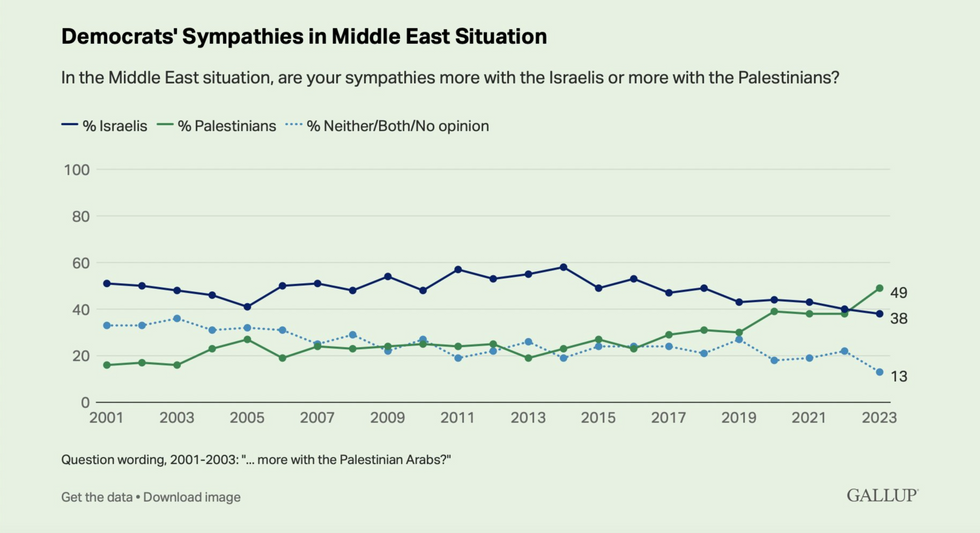
In a sign of a major shift in U.S. public perception that's largely generational, U.S. Democrats favor Palestinians by an 11-point margin. A decade ago, the gap was 36% in favor of Israelis.
Gallup poll results revealed Thursday that while, for the first time, more U.S. Democratic voters now sympathize with Palestinians than with Israelis, left-leaning respondents also "want solutions that respect Israel's needs as well."
According to the survey of 1,008 U.S. adults, 49% of Democrats said they sympathize more with Palestinians, while 38% favored Israelis and 13% chose neither side or said they sympathize equally with both. A decade ago, 55% of Democrats sympathized more with Israelis, while only 19% said they had more sympathy for Palestinians.
Republican respondents overwhelmingly continue to favor Israelis, with 78% saying they sympathize with them, compared with just 11% for Palestinians. Independents backed Israelis by 17 percentage points, 49%-32%.
Gallup noted:
Aside from partisan differences, Gallup continues to see generational distinctions in how U.S. adults view the Palestinian-Israeli conflict. Net sympathy toward Israel—the percentage sympathizing more with the Israelis than the Palestinians—is solidly positive among older generations, including baby boomers (+46 points), Generation X (+32), and the silent generation (+31). By contrast, millennials are now evenly divided, with 42% sympathizing more with the Palestinians and 40% with the Israelis, yielding a -2 net-Israel sympathy score.
There are too few adult members of Generation Z (aged 18 to 22) in the recent poll to report, but the limited available data suggest their views on this question are similar to millennials'.
"Today's attitudes reflect an 11-percentage-point increase over the past year in Democrats' sympathy with the Palestinians," Gallup said. "At the same time, the percentages sympathizing more with the Israelis (38%) and those not favoring a side (13%) have dipped to new lows."
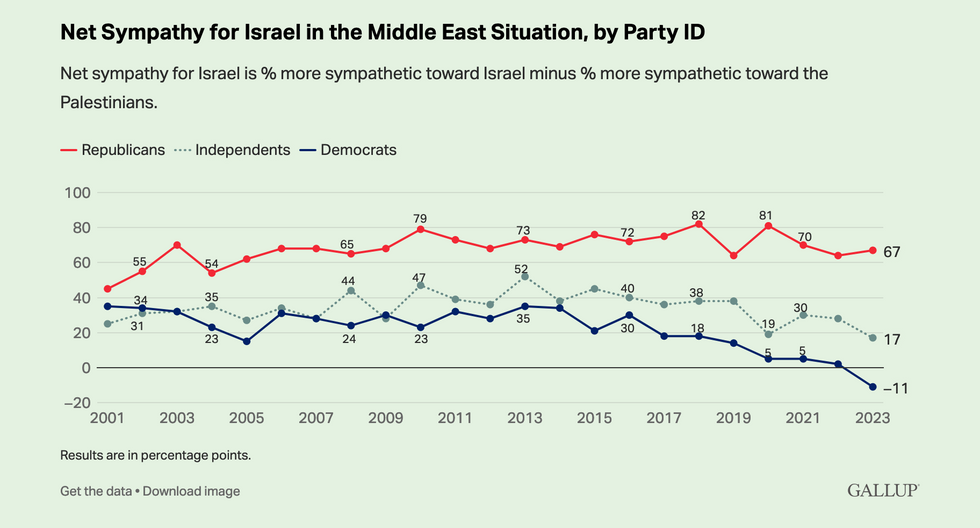
Gallup said "the high number of Palestinians killed" by Israeli forces last year—the deadliest year for West Bank residents since the end of the second intifada a generation ago—"could partly explain the most recent shift in Democrats' perspective."
The rise to power of far-right Israeli politicians and parties—who are escalating policies of apartheid and Jewish supremacy at the expense of Palestinian lives, land, and liberty—and the increasingly vocal opposition by congressional Democrats to Israeli crimes including apartheid, illegal occupation, ethnic cleansing, and settler colonization have played a role in the shift as well.
"Just a few years ago, it would have been unthinkable to have 12 members of Congress refer to Israeli occupation as colonialism, so I have no doubt that the needle on Palestinian human rights is moving," Rep. Rashida Tlaib (D-Mich.), the first Palestinian-American woman elected to Congress, said in 2021.
Gallup also said "Democrats' waning religiosity" could be a factor in declining support for Israel, as "sympathy for Israel has historically been highly correlated with religion."
The poll was published on the 20th anniversary of the killing of Rachel Corrie, an American volunteer with the International Solidarity Movement who was crushed to death by a Caterpillar bulldozer supplied by the U.S. to the Israeli military while trying to shield Palestinian homes from demolition.
Progressive U.S. lawmakers on Thursday joined relatives of Shireen Abu Akleh in demanding the Biden administration thoroughly and transparently investigate the Israeli military's killing of the Palestinian-American journalist, with one congressman introducing a bill that would require such a probe.
"From Day One the Israeli government has denied Shireen's murder. There is no reason for them to be conducting an investigation."
"We want to know who pulled the trigger, and why," said Victor Abu Akleh, a nephew of the 51-year-old Al Jazeera reporter, outside the U.S. Capitol. "And we want there to be accountability for the system that gave the green light, so that other families don't suffer the way that we have. The reality, of course, is that in Palestine, our family's grief is not unique."
Speaking at the press conference, Rep. Andre Carson (D-Ind.) announced the Justice for Shireen Act, proposed legislation that would require the State Department and FBI to investigate Abu Akleh's killing and publish a report on their findings.
"We need answers to hold the perpetrators fully accountable," said Carson, who called the killing an "attack on the Fourth Estate, the free press, which is vitally important to our society."
"From Day One the Israeli government has denied Shireen's murder. There is no reason for them to be conducting an investigation," he continued. "It makes it more important for our government to conduct our own investigation. Shireen needs justice. Every American killed abroad is entitled to our protection. Every human killed, American or not, deserves justice, Palestinians included."
Demanding that the Biden administration investigate the killing of U.S. citizens by Israeli forces, Rep. Rashida Tlaib (D-Mich.)--who is Palestinian-American--said Abu Akleh's death "was not an accident."
Tlaib said it was "shameful" that "Shireen's family is forced to come here and demand that the State Department and our government... hold her killers accountable and prevent this awful tragedy from repeating itself again and again and again."
"Maybe, for some of my colleagues, they need to take out the word 'Palestinian' from 'Palestinian-American' for her life to matter," she speculated. "We have different standards applied when it comes to Israel even as they kill Americans, including 78-year-old Omar Asad or... Rachel Corrie," the 23-year-old International Solidarity Movement volunteer crushed to death in 2003 by an Israeli bulldozer while trying to prevent the destruction of Palestinian homes in Gaza.
Related Content

"When Americans are killed abroad it is more or less standard procedure for our government to open an investigation. But when the murderers wear Israeli uniforms, there is complete silence," Tlaib lamented. "Poor Rachel Corrie's family to this day has been waiting for justice since 2003 and still nothing... I knew when her family didn't get justice that Israel would have impunity for future killings of Americans."
Reps. Betty McCollum (D-Minn.), Ilhan Omar (D-Minn.), Ayanna Pressley (D-Mass.), and Alexandria Ocasio-Cortez (D-N.Y.) also spoke at the press conference. Ocasio-Cortez asserted that President Joe Biden should meet with Abu Akleh's relatives.
"Shireen and her family deserve to be treated the same way that any other American would be in this situation," the Squad member insisted. "An American journalist was killed abroad by a foreign army, by a sniper. This situation demands a thorough and objective investigation."
In a Wednesday Washington Post opinion piece, Lina Abu Akleh, Shireen's niece, noted that multiple investigations--including by United Nations officials and media outlets such as the Post and The New York Times--all concluded the journalist was killed by Israeli fire.
"Yet I read with bewilderment a statement that the Biden administration issued on July 4," she wrote. "Based on reviewing and summarizing the Israeli government and Palestinian Authority's investigations, the United States concluded that Israel was likely responsible for my aunt's killing, but that there was no reason to believe that it was intentional."
"I was alarmed. Why was the Biden administration repeating Israel's spin, given the lengths that the Israel military has gone to manipulate the events around Shireen's killing?" she asked. "Israel initially blamed Palestinians, circulating a misleading video that human rights organizations quickly debunked. Then, an Israeli military spokesman went so far as to suggest that journalists such as Shireen are 'armed' with cameras."
Related Content

Abu Akleh lamented that a Wednesday meeting with U.S. Secretary of State Antony Blinken failed to secure a commitment to investigate her aunt's killing.
"We fully understand the U.S. government's role in fueling the belief of Israeli leaders and soldiers that they enjoy impunity for their actions," she wrote. "Yet this is why it is all the more urgent for my family to impress this message upon the administration: Biden can stop this pattern. He can pledge to pursue meaningful accountability for my aunt, starting with a commitment to conduct an independent U.S. investigation in Shireen's case."
Progressive U.S. lawmakers on Wednesday joined calls for the Biden administration to conduct an independent investigation into the death of an elderly Palestinian-American man in Israeli military custody earlier this month.
"This racist violence and impunity is only possible because of the apartheid government of Israel, supported by the U.S., continues to systematically dehumanize Palestinians."
"Israeli soldiers' cruel treatment of U.S. citizen Omar Assad was inhumane--they abused him, then left him to die in the cold without medical attention," tweeted Rep. Jesus "Chuy" Garcia (D-Ill.).
Rep. Rashida Tlaib (D-Mich.)--the first Palestinian-American woman elected to Congress--tweeted that she is joining Sen. Tammy Baldwin (D-Wis.) and Rep. Gwen Moore (D-Wis.) in asking the Biden administration to investigate the 78-year-old former Milwaukee grocer's January 12 death.
Rep. Andre Carson (D-Ind.) also joined his colleagues' call, tweeting that Assad's "loved ones deserve answers, and any act of wrongdoing demands accountability."
A leaked summary of an Israeli Defense Forces (IDF) probe confirmed that Assad was pulled from his car before being blindfolded, gagged, and zip-tied while being detained at a construction site in Jiljilya in the occupied West Bank.
In a rare admission, IDF officials on Tuesday called the deadly incident "a grave and unfortunate event resulting from a moral failure and poor decision-making on the part of the soldiers."
According to the IDF, the soldiers who detained Assad believed he was sleeping when they cut the zip ties binding his hands and left him face-down in the abandoned building where he was being held.
Witnesses said Assad, who suffered from heart problems, had gone blue in the face by the time the soldiers left. A Palestinian autopsy concluded Assad died of a heart attack "caused by psychological tension due to the external violence he was exposed to."
Assad's relatives also want a U.S. investigation, which they say "is necessary to help us bring about justice and accountability, not just for the sake of our father, but for the sake of the countless Palestinians who are killed by the Israeli military with impunity," according to a family statement. "No family should have to endure this kind of loss."
U.S. State Department Spokesperson Ned Price on Tuesday said the United States "expects a thorough criminal investigation and full accountability in this case."
The AP reported Tuesday that the IDF plans to reprimand the commander of the battalion involved in Assad's death, and that "the platoon commander and company commander will both be removed from their positions and barred from commanding roles for two years."
The Israeli human rights B'Tselem noted that Israel rarely holds its soldiers accountable for killing or harming Palestinians, and that Assad's case is likely receiving special attention because he was a U.S. citizen.
"Investigations usually take years and usually close with nothing," Dror Sadot, the group's spokesperson, told the AP. "This is very unusual."
Omar Shakir, the Israel and Palestine director for Human Rights Watch, said in a statement that "Israeli authorities have closed the doors to domestic justice, leaving Palestinians facing a wall of impunity for decades. When countries fail to support efforts to hold perpetrators of grave human rights abuses accountable, they contribute to perpetuating the systematic repression of millions of Palestinians and senseless loss of life."
Garcia said: "Though Israel has acknowledged the officers' misconduct, the system that allowed this to happen remains firmly in place. Would there have been any action taken had this not received international attention from Congress and the media?"
Attempts to hold Israel accountable for the 2003 death of Rachel Corrie--an American activist with the International Solidarity Movement who was crushed to death by an IDF armored bulldozer while attempting to prevent the demolition of Palestinian homes in then-occupied Gaza--were unsuccessful.
Human rights advocates reacted angrily Sunday to a leaked report suggesting that no Israeli soldiers are likely to be charged in connection with the fatal detention of an elderly Palestinian-American man by occupation forces in a West Bank town earlier this month.
"Yet another example of why Israel cannot be trusted to investigate its own violations."
"This is a policy: Israel does not prosecute those responsible for harming Palestinians, thus making their lives miserable," the Israeli human rights group B'Tselem tweeted.
The Washington Post, citing a Hebrew-language report on the Israeli news site Ynet, said Sunday that a leaked summary of an Israeli Defense Forces (IDF) probe into the death of Omar Assad confirmed that the 78-year-old former Milwaukee grocer was dragged from his vehicle, blindfolded, gagged, and handcuffed before falling silent while being detained at a construction site in Jiljilya on January 12.
The report summary said that IDF soldiers did not provide medical assistance to Assad, despite the presence of an army medic.
Assad suffered from heart problems. Witnesses said that by the time the Israeli troops left Jiljilya after detaining him for an hour, his face was ashen blue from a lack of oxygen. Islam Abu Zaher, a physician who tried to resuscitate Assad almost immediately after the troops left, said he died from an apparent heart attack.
The report suggested that none of the IDF soldiers involved "would be indicted, nor have they been suspended."
An IDF spokesperson, Lt. Col. Amnon Shefler, said last week that troops apprehended Assad "after he resisted a check, a routine check, where he was questioned. And because of his lack of cooperation and his behavior, that is why they stopped him."
The IDF said Sunday that "it should be clarified that no decisions have yet been made regarding the investigation case."
B'Tselem tweeted, "Maybe this time, when it comes to its citizen, the United States for a change will do something in response to the crimes committed by its good friend."
Palestinian-American writer and activist Susan Abulhawa said Sunday that "Omar Assad was an American citizen. We need the Department of Justice to convene a grand jury to indict and extradite his killers, because no non-Jew can get justice in Israel."
The Post says the U.S. State Department has asked Israel to conduct a "thorough investigation" of Assad's death.
After Rachel Corrie, an American activist volunteering with the International Solidarity Movement, was crushed to death by an IDF armored bulldozer while defending Palestinian homes in occupied Gaza in 2003, Dan Shapiro, the U.S. ambassador at the time, expressed his dissatisfaction with Israel's investigation of the incident. Attempts by Corrie's family to hold Israel accountable for the woman's death ultimately proved futile.