

SUBSCRIBE TO OUR FREE NEWSLETTER
Daily news & progressive opinion—funded by the people, not the corporations—delivered straight to your inbox.
5
#000000
#FFFFFF
To donate by check, phone, or other method, see our More Ways to Give page.
Daily news & progressive opinion—funded by the people, not the corporations—delivered straight to your inbox.
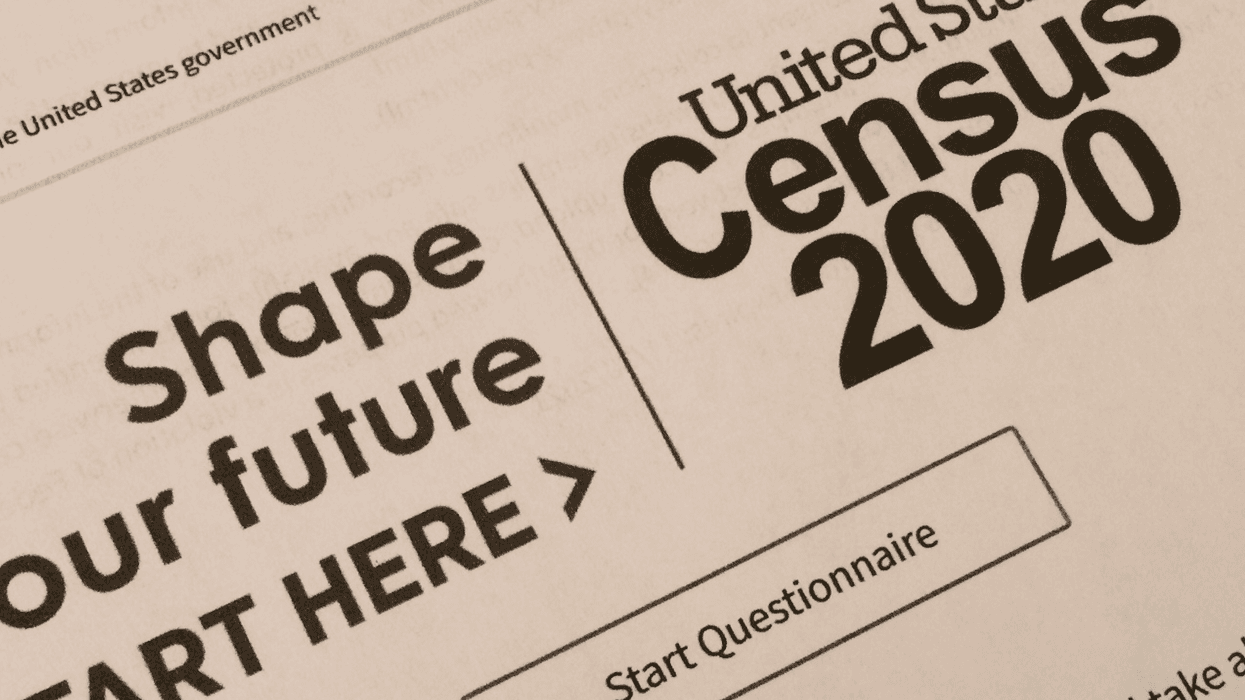
“The Constitution is clear. Every person living in the United States, regardless of immigration status, must be counted in the Census,” said New York Attorney General Letitia James.
The Trump administration on Wednesday formally proposed sweeping changes to the 2030 US Census that could exclude millions of people from the population count, alter congressional representation in favor of Republicans, and shift the distribution of federal resources among states.
The proposal—which was published in the Federal Register and is subject to a 30-day public comment period—redefines a person's “usual residence” as the place where they legally spend the most days during the Census count period, with tax records such as returns and W-2s used as evidence.
Most significantly, people who are not US citizens or permanent residents as of April 1, 2030, would be excluded from the apportionment count altogether, a sharp departure from the 2020 census, which counted foreign citizens living in the United States regardless of immigration status as required by the Constitution.
The proposed change is rooted in a disputed interpretation of the Constitution’s reference to the “whole number of persons” in each state, with the administration arguing that “persons” should be understood through the historical concept of “inhabitants” and membership in the political community.
Under the proposal, Census questionnaires would also be barred from asking about race, ethnicity, or sexual orientation, arguing that such information is outside the Census' core constitutional purpose.
Some of the proposed changes track closely with Project 2025, the Heritage Foundation-led plan to expand executive power and shrink the federal government.
Left-leaning legal experts asserted that the changes proposed by the Trump administration violate the 14th Amendment, which mandates congressional apportionment based on “the whole number of persons in each state,” regardless of their immigration status.
"The Constitution is clear. Every person living in the United States, regardless of immigration status, must be counted in the Census," Democratic New York Attorney General Letitia James said on social media.
"We stopped the Trump administration's Census attacks in 2020, and we're exploring our legal options to fight back again," she added, referring to successful lawsuits to stop the administration's efforts to end the Census count early, add a citizenship question, and exclude undocumented immigrants from congressional apportionment.
In 2019, US Supreme Court Chief Justice John Roberts wrote for the majority in Department of Commerce v. New York that the Trump administration's rationale for the proposed citizenship question “seems to have been contrived."
Responding to Wednesday's announcement, William Roberts, senior vice president of rights and justice at the Center for American Progress (CAP), said in a statement that "the administration’s proposal is a flagrant assault on our democracy, designed to manipulate voting maps and dilute the political representation of diverse American communities."
"Eliminating questions on race, ethnicity, and sexual orientation strips our government of critical data needed to ensure vital resources are extended to the communities who need them most; and notably, it would also make it more difficult to enforce the Voting Rights Act of 1965," he continued.
"Furthermore," Williams stressed, "excluding undocumented immigrants and noncitizens from congressional apportionment directly violates the [14th] Amendment’s mandate to count the 'whole number of persons in each state.'"
"CAP condemns this blatant attempt to weaponize the Census for political gain," he added. "Congress has final authority over the census, and the public has 30 days to write their representatives and oppose this rule."
One voting rights advocate said the administration "is abusing the Census Bureau data to generate sensational headlines that Trump wants."
As he gears up to sow doubt about this year's midterms, President Donald Trump is once again attempting to use the government to lend legitimacy to his long-debunked claims that he was cheated out of the 2020 election.
In a Tuesday post to Truth Social, Trump shared a report from the US Census Bureau, which he said "proves that over 24,000 Noncitizens voted illegally" after an analysis of 128 million voter records.
"I WON THE ELECTION," he declared, adding that the bureau would soon analyze the remaining 32 million voting records and that the number of illegitimate votes would "explode."
The report Trump was referring to was real, but highly unusual. The seven-page document posted on the Census Bureau website did not list any authors.
While the use of the "Census Bureau" label implies an air of seriousness and professionalism, Misty Heggeness, a former senior adviser for the Census Bureau, told Democracy Docket that the lack of clear authorship signified that it was "suspect of any integrity or rigor" and said it would be hard to trust unless career bureau staff put their name on it.
Sure enough, NPR reported on Wednesday that "work on the analysis was not conducted by career civil servants at the Census Bureau, and the team behind it included individuals affiliated with the America First Policy Institute," a Trump-aligned think tank that has helped to turn the president's election denial narrative into Republican policy.
The group has helped to push for aggressive voting rights restrictions in states, and its director for "election integrity" policy, Thomas Lane, was involved in the effort to create a slate of fake electors in Arizona, one of several states where Trump claimed to have won in 2020.
Earlier this year, according to CNN, Trump "installed a group of partisan analysts" from AFPI inside the Census Bureau. But their identities have not been publicly disclosed, and other bureau officials who spoke to NPR did not identify which AFPI officials worked on the new report "because they fear retaliation at work."
Bureau officials told CNN that the lack of listed authors suggests that the career employees were "sidelined."
Experts who reviewed the report have identified several "fatal" flaws that make its conclusions difficult to take seriously.
The authors of the report used a commercial voter database and matched its records to those from the Internal Revenue Service, Social Security Administration, State Department, and Department of Homeland Security, and matched noncitizen records to those identified as voters in 2020.
As Yunior Rivas and Jim Saksa of Democracy Docket explained, there are numerous problems with this approach:
Record matching... is fallible. The Census Bureau previously published research in 2014 specifically devoted to measuring false matches in the same identification system...
Census researchers have previously warned that the likelihood of successfully linking administrative records can vary across demographic groups, potentially introducing bias when researchers analyze only records they can confidently match.
That limitation is particularly significant when the result in question is relatively small compared with the enormous volume of records being searched: A mistaken link between an eligible citizen’s voter record and another person’s immigration record could produce a false positive.
The report also does not address another obvious danger: mistaking a naturalized citizen for a noncitizen due to an older immigration record... If evidence of a person’s citizenship is missing or fails to link correctly, the methodology can treat the existing noncitizen record as evidence of the person’s status at the time they voted. The report does not estimate how frequently such a misclassification could occur.
Aaron Reichlin-Melnick, a fellow at the American Immigration Council noted that the system used to find noncitizen voters is "riddled with false positives." According to the Texas Tribune, when states like Texas and Missouri used the tool, it resulted in hundreds of voters being flagged incorrectly.
But even if the Census Bureau report were factually bulletproof, it would be far short of what Trump needs to claim that he "won" the election. The number of supposedly illegitimate votes is not anywhere near enough to swing the result in any of the states where Trump lost to former President Joe Biden, who won the national popular vote by more than 7 million.
The report claims to have found 1,100 noncitizen votes in Arizona, which Biden won by 10,457; 400 noncitizen votes in Georgia, which Biden won by 11,779; and 500 noncitizen votes in Wisconsin, which Biden won by 20,682. Since voting is secret, there is also no basis to assume that all of these votes went to Biden.
Commerce Secretary Howard Lutnick, whose department contains the Census Bureau, has said the report was "just the beginning" and that the next one "will likely show tens of thousands of additional illegal voters.”
But the first report says it analyzed the vast majority of those who voted in 2020. Assuming that the remaining 32 million votes had similar match rates, it would only generate about 6,000 more supposedly illegitimate votes.
Even if every single one of those votes went for Biden, which can't be proved, it would still not be enough to swing a single state to Trump, let alone enough for him to declare victory.
Trump used this report to call for Congress to pass his "SAVE America Act," which would abolish most forms of mail-in voting and introduce new proof of citizenship requirements that voting rights experts have warned would lead millions of eligible voters to be wrongly kicked off the rolls.
He has also signed an executive order directing states to verify their voter lists against a federal citizenship verification system that has been found to erroneously flag many eligible voters.
Amanda Carpenter, an editor at the nonpartisan group Protect Democracy, said the Census Bureau report was "nothing but junk data science" and that Lutnick "is abusing the Census Bureau data to generate sensational headlines that Trump wants."
"He has been searching for these massive pots of fraudulent votes for years," Carpenter said. "It is like they are looking for the Loch Ness Monster. It does not exist, but they keep searching, and hoping, and lying and pointing to something shadowy that you kind of have to squint real hard at to pretend is there, but it isn't."
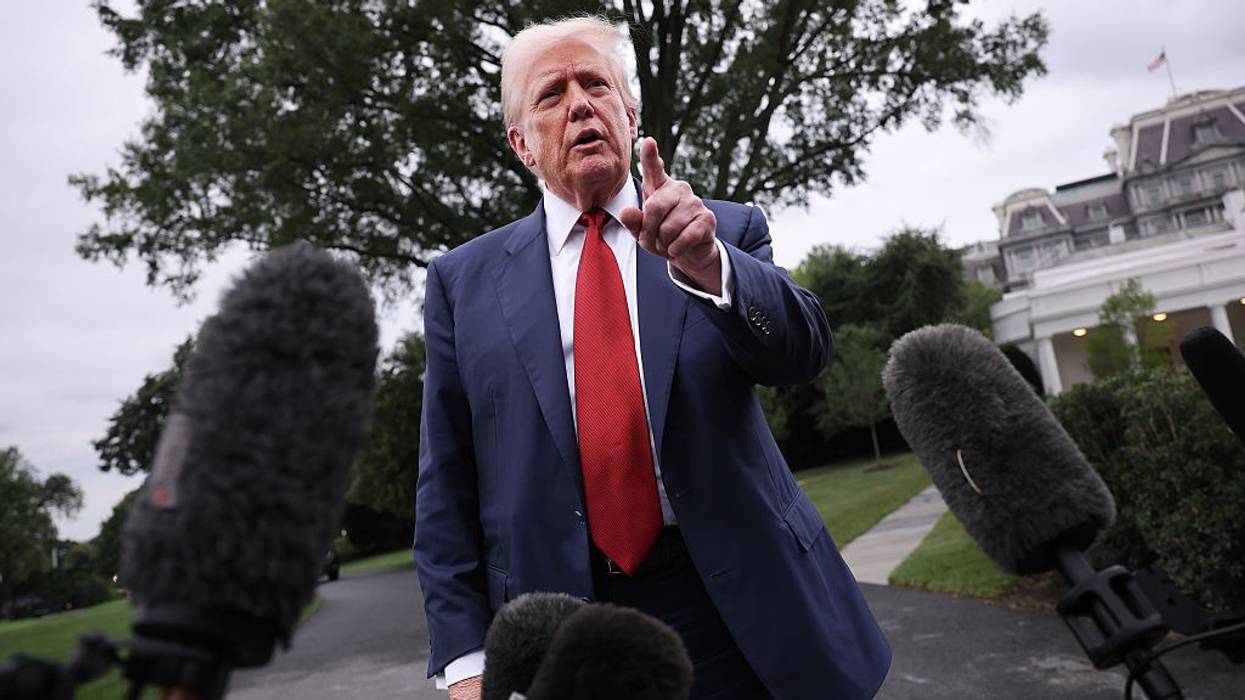
"Donald Trump has no power to alter either the timing or who is counted," said one prominent elections attorney.
U.S. President Donald Trump on Thursday pushed for a new census to be drawn up in a move that would flatly violate the United States Constitution, which states explicitly that the census shall be conducted once every ten years and shall count all people within each state.
In a post on his Truth Social page, Trump said that he had "instructed our Department of Commerce to immediately begin work on a new and highly accurate CENSUS based on modern day facts and figures and, importantly, using the results and information gained from the Presidential Election of 2024."
The president then added that "people who are in our Country illegally WILL NOT BE COUNTED IN THE CENSUS."
Many constitutional law experts, however, were quick to point out that Trump lacks any kind of power to demand the creation of a mid-decade census that excludes undocumented immigrants under the United States Constitution.
Anthony Michael Kreis, a professor of constitutional law at Georgia State College of Law, wrote on X that the "Constitution's text is plain" regarding the census and it doesn't allow for anything resembling Trump's plan to exclude undocumented immigrants from the count.
Kreis specifically pointed to the changes to the census made by the 14th Amendment, which demands that the census count "the whole number of persons in each State," as a legal dagger in the heart of Trump's scheme.
"The 14th Amendment's mandate that the census 'count[s] the whole number of persons in each State' governs us in no uncertain terms," he argued.
Elections attorney Marc Elias similarly dismissed Trump's plan as a flagrant violation of the Constitution.
"The Constitution dictates that the census is a count [of] 'all persons' conducted every 'ten years,'" he wrote on Bluesky. "Donald Trump has no power to alter either the timing or who is counted."
The United States Supreme Court in 2019 blocked the first Trump administration from adding a question about residents' citizenship to the 2020 census, and it's not clear how Trump's order for a new census excluding undocumented immigrants would be different from his prior attempt.
In addition to questions of constitutional legality, Trump's plan also has issues when it comes to sheer logistics.
Michael McDonald, a political scientist at the University of Florida, argued that Trump's plan is wildly impractical given the resources and time needed to successfully conduct an accurate census.
"Just from a logistical standpoint it is not feasible to conduct a 'new' mid-decade census with accuracy," he wrote on Bluesky. "To give a sense of the scale of what is required, preparations are already underway for the *2030* census. This will add chaos to the Census Bureau and degrade the accuracy of the 2030 census."
CNN political reporter Aaron Blake also noted on X that it's unclear that excluding undocumented immigrants from the census would even be much of a political boon for the GOP. As evidence, Blake pointed to a 2020 estimate from Pew Research Center projecting that Republican-controlled states such as Florida and Texas would each lose a seat if their undocumented immigrant populations weren't counted, which would balance out projected GOP gains in Alabama and Ohio under such circumstances.
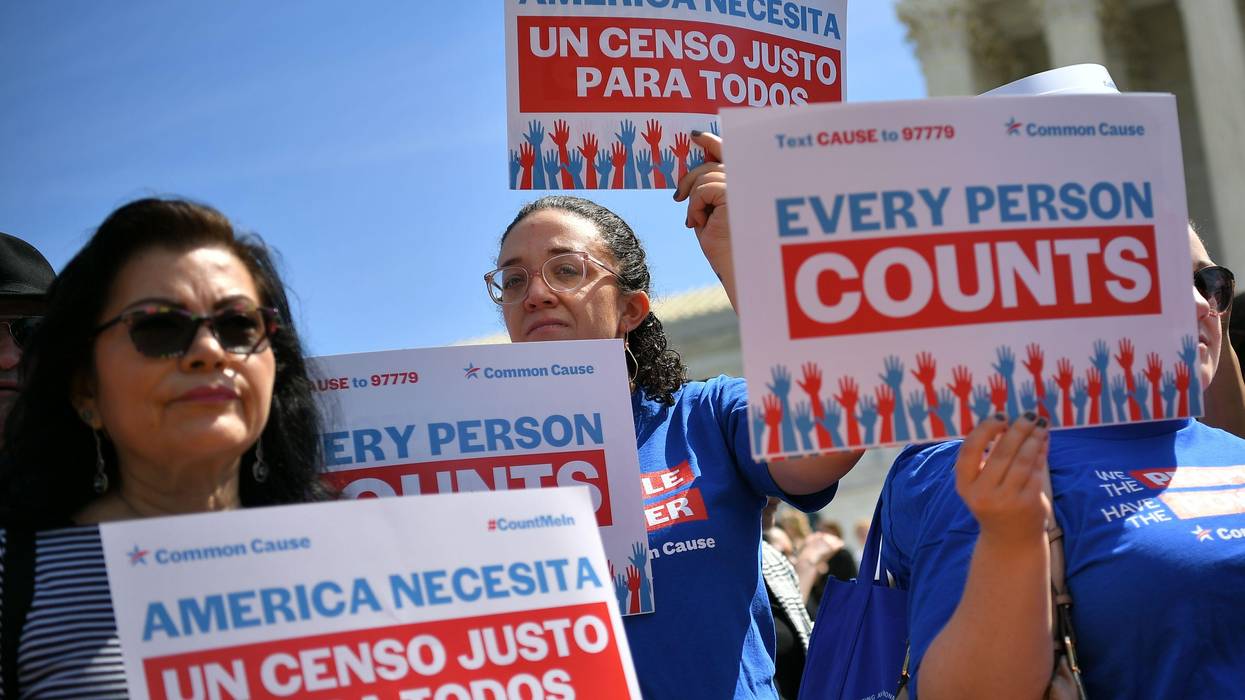
A U.S. House of Representatives panel probing the Trump administration's attempt to add a citizenship question to the 2020 census on Wednesday released a memorandum underscoring that the failed effort was politically motivated.
"The documents ultimately obtained by the committee... shed additional light on the depth of partisan manipulation in the 2020 census."
The memo focuses on documents that were finally shared with the panel in January after former President Donald Trump's commerce secretary and attorney general, Wilbur Ross and William Barr, were held in contempt of Congress for refusing to turn over requested materials.
"The documents ultimately obtained by the committee--including the legal memorandum prepared for Secretary Ross and secret communications between Trump administration lawyers and political appointees--shed additional light on the depth of partisan manipulation in the 2020 census, including senior officials' focus on using a citizenship question to alter apportionment counts and their illegal attempt to develop a pretext," the memo states.
"These documents exposed the vulnerability of our national statistical system to partisan manipulation and highlighted the need for Congress to protect the constitutionally mandated census from abuses of power and political interference," the memo continues.
As the panel's report lays out, the documents from the departments of Commerce and Justice (DOJ) show that:
"Lest anyone doubted that what the Trump administration was up to was wrong, these documents show that even the Trump administration itself knew that what it was doing was illegal," Thomas Wolf, deputy director of the Democracy Program at the Brennan Center for Justice, told The Washington Post on Wednesday.
Civil rights groups have long slammed the Trump administration's push for inserting a citizenship question into the census--which informs the allocation of federal funding and the drawing of political voting maps--as a bid to benefit Republican candidates for office.
John C. Yang, president and executive director of Asian Americans Advancing Justice - AAJC, one of the groups that challenged the Trump effort, nodded to that critique on Wednesday.
"The documents released today demonstrate the depths to which political actors sought to corrupt a basic function enumerated in the Constitution: the counting of all people in America every 10 years," Yang told The New York Times. "Secretary Ross chose to pursue his political goals through whatever means available."
Both the committee's memo and chair, Rep. Carolyn Maloney (D-N.Y.), pointed to the findings as further evidence of the need for reforms--specifically those included in the Ensuring a Fair and Accurate Census Act that she introduced last week.
"For years, the Trump administration delayed and obstructed the oversight committee's investigation into the true reason for adding a citizenship question to the 2020 census, even after the Supreme Court ruled the administration's efforts were illegal," Maloney said in a statement Wednesday.
Though the high court's 2019 decision effectively blocked the inclusion of the citizenship question and a federal court ruled against a July 2020 Trump memorandum intended to exclude undocumented immigrants from the census, a government analysis confirmed this year that minorities were significantly undercounted.
Maloney said that the committee's new memo "pulls back the curtain on this shameful conduct and shows clearly how the Trump administration secretly tried to manipulate the census for political gain while lying to the public and Congress about their goals."
The congresswoman added that "it is clear that legislative reforms are needed to prevent any future illegal or unconstitutional efforts to interfere with the census and chip away at our democracy."
"My bill, the Ensuring a Fair and Accurate Census Act, is commonsense legislation that will help prevent a similar crisis from occurring again and will protect one of our nation's most vital democratic institutions from partisan exploitation," she continued, calling on the Democrat-controlled House to swiftly pass the legislation "to safeguard the integrity and independence of the U.S. Census Bureau."
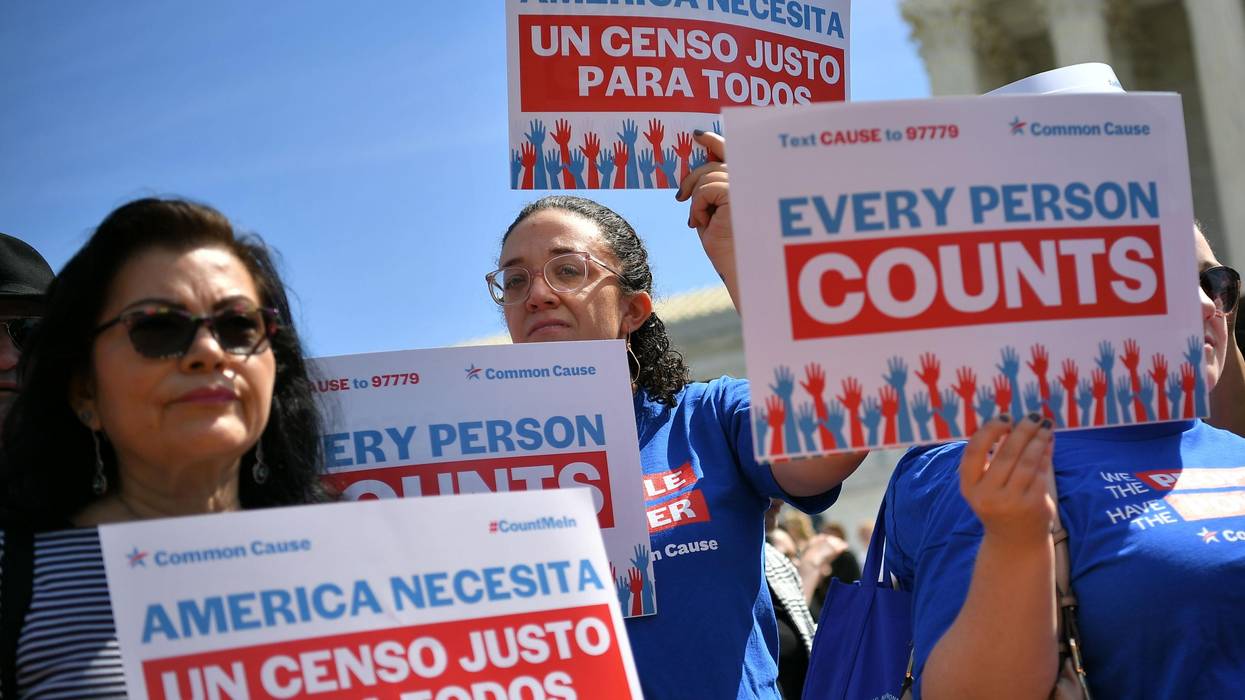
Latino Americans were significantly undercounted in the 2020 U.S. Census, according to an analysis released Thursday by the Census Bureau--a result which advocacy groups said was what former President Donald Trump's administration intended to happen when it attempted to change the decennial survey.
"This was intentional."
The census miscounted the U.S. population by 18.8 million people--an overall count that was relatively consistent with past surveys but that saw communities of color undercounted at higher rates than in past years.
Following Trump's efforts to add a citizenship question and to stop undocumented immigrants from being counted for the apportionment of U.S. House seats, the undercount of Latino people tripled from 1.54% in 2010 to 4.99% in 2020.
"This was intentional," said Rep. Joaquin Castro (D-Texas), warning that "the undercount will strip Latino communities of government funding and electoral power."
The undercount for people who identify as "some other race" was also statistically significant compared to the results in 2010, rising from 1.63% to 4.34%. Black Americans and Indigenous people were also undercounted, but at lower rates than the other groups.
Meanwhile, white Americans were overcounted at double the rate found in 2010.
"These numbers are devastating," Marc Morial, president of the National Urban League, told the Post. "The warnings we gave, the concerns that we raised, were absolutely true, and today we find ourselves with a census that is neither complete nor accurate."
The Census Bureau was challenged by numerous factors in 2020, as the coronavirus pandemic delayed the survey and wildfires in the West kept census-takers from reaching people who had not filled out the questionnaire online.
Critics said as the bureau was preparing to take the census that Trump's push to include a question about whether household members were U.S. citizens would intimidate Latino residents out of responding--warning that significant damage was done even after the former president's efforts failed.
Trump also moved up the deadline for finishing the count, leading to concerns of inaccuracies among census experts.
"Terrible demographic data has many consequences in our communities, especially in public health."
"I lay this at the feet of Donald Trump and [former Commerce Secretary] Wilbur Ross and their efforts to disrupt the census and make it as difficult as possible for Latinos to participate," Arturo Vargas, chief executive of the Latino advocacy group NALEO Educational Fund, told the Post.
"I said from the beginning when the first numbers were released that I smelled smoke," he added, referring to an analysis released in September by the American Statistical Association. "Today we learned that the 2020 Census was a five-alarm fire."
Census data is used to determine the allocation of $1.5 trillion in annual funding for communities based on how many residents are reported, including funds for Medicaid, public housing, the Supplemental Nutrition Assistance Program, and highway planning. The numbers are also used to apportion U.S. House seats and draw congressional district maps.
"Terrible demographic data has many consequences in our communities, especially in public health," said epidemiologist Jessica Malaty Rivera.
Damon Hewitt, president and executive director of the Lawyers' Committee for Civil Rights Under Law, said the undercounting of communities of color "robs us of the opportunity to be the directors of our fate, reducing our representation and limiting our power while depriving policymakers of the information they need to make informed decisions about where the next hospital will be built or where the next school should be located."
"This undercount means we are saddled with inaccurate numbers for the next decade," he added. "The consequences are serious."
Correction: An earlier version of this article stated that 18.8 million people had been undercounted by the 2020 U.S. Census. The article has been changed to reflect that 18.8 million people were miscounted rather than undercounted.
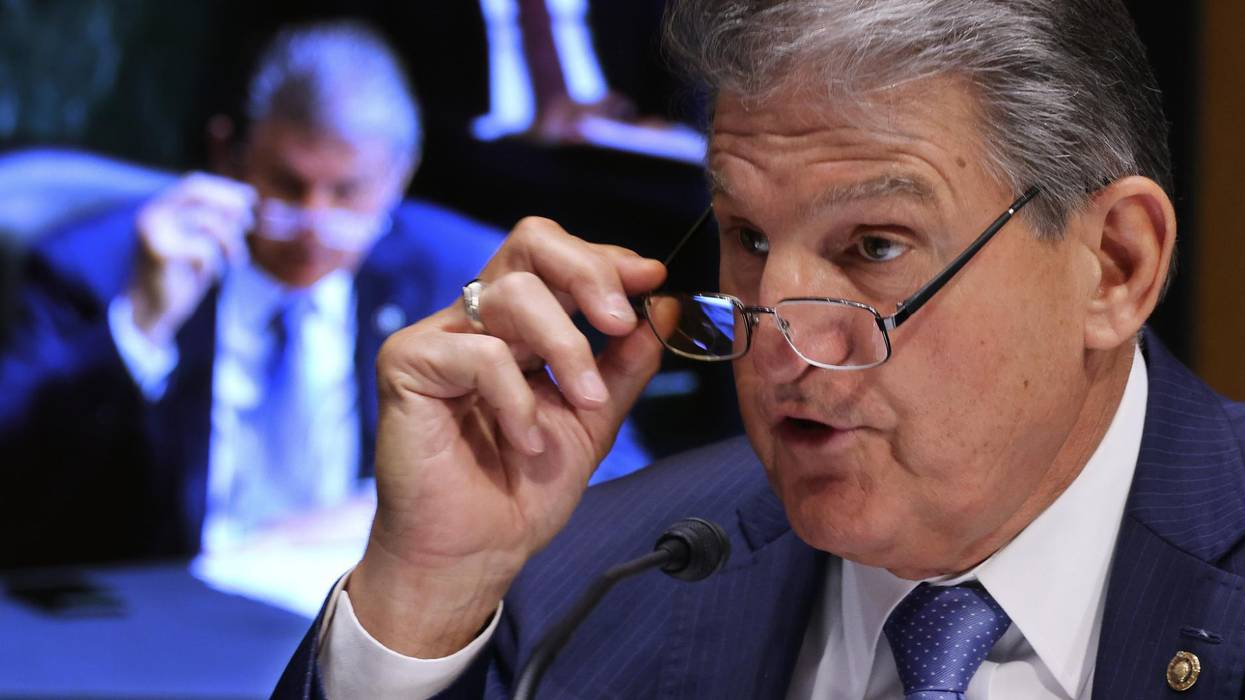
Sen. Joe Manchin won praise from the Daily Caller and Fox News contributors while infuriating voting rights advocates on Tuesday with his suggestion that scrapping the filibuster and passing sweeping, popular pro-democracy reforms would spark a second insurrection just months after a right-wing mob stormed the U.S. Capitol.
The West Virginia Democrat's comments came in a wide-ranging interview with Vox. With an evenly split upper chamber in which Vice President Kamala Harris breaks tie votes, the party's most conservative senator plays a key role in advancing or thwarting the legislative efforts of President Joe Biden and Democratic congressional leaders. In contrast to his discussions with Republicans about Biden's infrastructure proposal, Manchin publicly insists he is "not a roadblock" to the president's agenda.
The For the People Act, which passed the Democrat-controlled House in March and is backed by Biden, aims to modernize voting registration, restore the Voting Rights Act, end gerrymandering, increase election security and campaign transparency, empower small donors, and implement various ethics reforms. A wave of voter suppression bills introduced this year by GOP state lawmakers has bolstered demands for enacting it.
As Vox senior politics correspondent Andrew Prokop reported Tuesday:
Some filibuster reformers hope that, as the year goes on, the reality of Republican obstruction will become clear to Manchin and he'll be driven to change his mind--that Senate rules will in the end be just as negotiable to him as the details of Biden's stimulus bill. For instance, reformers hoped a GOP filibuster of Democrats' big voting rights bill, the For the People Act, could spur holdout senators to change the rules to pass it, because it's so important.
Manchin recoils at the very idea. "How in the world could you, with the tension we have right now, allow a voting bill to restructure the voting of America on a partisan line?" he asked. He says that 20 to 25% of the public already doesn't trust the system and that a party-line overhaul would "guarantee" that number would increase, leading to more "anarchy" like that at the Capitol on January 6. He added: "I just believe with all my heart and soul that's what would happen, and I'm not going to be part of it."
Manchin, who has repeatedly made clear that he is opposed to abolishing the 60-vote legislative filibuster, insisted to Prokop that he will not be "that one vote that would basically destroy it." The senator also reportedly believes his strategy to force bipartisanship is working, saying that because fellow Democrats know he is "adamant" about it, "there have been more talks of compromise now."
While the right-wing media embraced Manchin's remarks on the For the People Act--which polling has shown is popular among Democratic, Independent, and Republican voters--and the filibuster, progressive critics didn't hold back in their responses to his warning about possibly triggering a repeat of the January attack by supporters of former President Donald Trump and his "Big Lie" about the 2020 election.
"I believe this is called 'letting the terrorists win,'" tweeted Justice Democrats spokesperson Waleed Shahid, responding to a Twitter thread in which Prokop highlighted key takeaways from the Manchin interview.
Others quickly piled on. Among them was Evan Weber, co-founder and political director of the Sunrise Movement, who said that it appears Manchin "only cares about the 'distrust in the system' from predominantly white supporters of Donald Trump, not from the Black, Brown, and young Americans being locked out of representation by restrictive voting laws and gerrymandering."
Weber was not alone in acknowledging existing and potential future barriers to casting ballots. As Jordan Zakarin of More Perfect Union put it, referencing the new census numbers that determine congressional apportionment: "Florida, Texas, and Georgia are all gaining a congressional seat. Joe Manchin just invited Republicans to gerrymander each of them."
Responding sarcastically to Manchin's question--"How in the world could you, with the tension we have right now, allow a voting bill to restructure the voting of America on a partisan line?"--Michael McDonald, a University of Florida professor who specializes in U.S. elections, said, "Yeah, like that's not happening anywhere right now."
As Common Dreams previously reported, the Republican-controlled Florida state Senate marked Confederate Memorial Day on Monday by passing a voter suppression bill that is similar to a law enacted by the Georgia GOP in March. The vote provoked new demands for protecting voting rights with federal legislation.
"Republicans in dozens of states and on the Supreme Court are passing voting restrictions along party lines and will only grow emboldened if they see that Dems in Congress won't do anything about it because of GOP unity against voting rights," Daily Kos Elections staff writer Stephen Wolf warned Tuesday.
Pod Save America co-host Dan Pfeiffer, who served as a senior adviser to former President Barack Obama, tweeted that "Republicans are restructuring American elections on a partisan [basis] with laws designed to stop people from voting in state after state and Manchin's response is to do nothing."
In the words of writer Thor Benson: "Manchin is determined to reward the insurrectionists."

Progressives expressed concern Thursday following reports that President-elect Joe Biden has chosen Rhode Island Gov. Gina Raimondo to be commerce secretary.
"Raimondo, a former venture capitalist, is the wrong pick--and the American public agrees," the Revolving Door Project--a group that's urged Biden to reject corporate-aligned Cabinet selections--said in a statement. "According to November polling, nearly 70% of respondents oppose President-elect Biden appointing Raimondo to any Cabinet position."
Raimondo, a charter school advocate who backed former New York City Mayor Michael Bloomberg during the Democratic presidential primary--had previously been under consideration to be Biden's Department of Health and Human Services chief but withdrew her name from consideration last month amid grounded accusations her "record on health is a total disaster."
The Daily Poster reported in December:
As governor, Raimondo has slammed proposals to expand Medicare to cover everyone. Amid the pandemic in August, her administration approved health insurance companies' steep premium increases that were criticized by the state's Democratic attorney general as "unnecessary and ill-advised." Health insurers have been raking in record profits, with fewer people seeking care because of the pandemic.
Raimondo has also pushed for Medicaid cuts that nursing home workers warned would result in unsafe staffing levels--and in April, she issued an executive order sought by healthcare industry lobbyists that shielded nursing homes from lawsuits when their business decisions injure or kill people. The order was later expanded to shield nursing homes, hospitals, and other healthcare providers.
Reasons to object to Raimondo as commerce secretary, says the Revolving Door Project, stretch even further. The group pointed on Thursday to a number of examples:
- Raimondo has a long history of prioritizing the needs of Wall Street above those of working Rhode Islanders--and helping the wealthy donors who boost her campaigns. "[Raimondo's] so-called 'pension reform' slashed school teachers and other state workers pension benefits by 3%, but increased fees paid to Gina and her Wall Street pals by 2.5% and 4% respectively." --Leading forensic auditor and former SEC attorney, Edward Siedle wrote in Forbes [...]
- In the name of a balanced budget, Raimondo tried to strip Rhode Island's lowest-income areas of 50% of a key aid fund mid-pandemic. "Rhode Island's cities and towns are disputing the legality of a 50% cut by the Raimondo administration in a $12.4-million aid program for 'distressed' communities, including 'some with the highest Covid-19 case rates in the state.' The administration put city and town leaders on notice that it was likely to go ahead with the cut that Gov. Gina Raimondo proposed to lawmakers in January." --Providence Journal
That background is especially concerning given that "the work of the Commerce Department impacts all Americans," the group added, pointing to the department's potential to help decrease prescription drug costs because of its control of the U.S. Patent and Trademark Office; control over climate research given that it runs the National Oceanic and Atmospheric Administration; possibility to "fix the broken 2020 Census process"; and power to achieve "a progressive trade policy" as the department oversees the International Trade Administration.
"Raimondo's loathing of the needy and love of financial power is exactly the behavior Democrats have spent four years rightly decrying in Trump Treasury Secretary Steven Mnuchin," the Revolving Door Project states on its No Corporate Cabinet website.
As such, Biden giving any executive position to the Democratic governor "would represent a profound and bitter betrayal of trust."
That sentiment was echoed by labor activist RoseAnn DeMoro responding to reports of Raimondo's selection, as well as reports of Boston Mayor Marty Walsh as Biden's labor secretary.
"Serious slap in the face to workers and to Sen. Bernie Sanders," DeMoro said in a Thursday tweet.

The U.S. Supreme Court's six right-wing justices on Friday disappointed democracy defenders and handed the outgoing administration at minimum a temporary victory regarding President Donald Trump's effort to exclude undocumented immigrants from the 2020 census count--which will be used to allocate U.S. House of Representative seats to states--by concluding that "judicial resolution of this dispute is premature."
The punt in Trump v. New York is the latest development in a lengthy legal battle that followed the high court in 2019--when it had a different composition--blocking the Trump administration's attempt to include a citizenship question on the census. In the more recent ruling, the majority of justices said (pdf) that "consistent with our determination that standing has not been shown and the case is not ripe, we express no view on the merits of the constitutional and related statutory claims presented."
Justice Stephen Breyer, joined by Justices Sonia Sotomayor and Elena Kagan, pushed back in a dissent, writing:
Under a straightforward application of our precedents, the plaintiffs have standing to sue. The question is ripe for resolution. And, in my view, the plaintiffs should also prevail on the merits. The plain meaning of the governing statutes, decades of historical practice, and uniform interpretations from all three branches of government demonstrate that aliens without lawful status cannot be excluded from the decennial census solely on account of that status. The government's effort to remove them from the apportionment base is unlawful, and I believe this court should say so.
The case was filed by Arnold & Porter, the national ACLU, and its New York, Southern California, and Texas affiliates on behalf of New York Immigration Coalition, Make the Road New York, CASA, American-Arab Anti-Discrimination Committee, ADC Research Institute, FIEL Houston, and AHRI for Justice. A group of state and local governments also challenged the president's relevant memorandum.
The Supreme Court weighed in after the Trump administration appealed a lower federal court's ruling in September against, as the lawsuit put it, "President Trump's lawless attempt to exclude undocumented immigrants from the 'persons' who must be counted in the census for purposes of apportioning congressional seats to states."
Dale Ho, who directs the ACLU's Voting Rights Project and argued the case, said in a statement Friday, "This Supreme Court decision is only about timing, not the merits."
"This ruling does not authorize President Trump's goal of excluding undocumented immigrants from the census count used to apportion the House of Representatives," Ho explained. "The legal mandate is clear--every single person counts in the census, and every single person is represented in Congress. If this policy is ever actually implemented, we'll be right back in court challenging it."
NPR noted that "the litigation added difficulty for an already burdened Census Bureau, which geared up for the nationwide rollout of the census count just as the Covid-19 pandemic began hitting with full force in April. And the Census Bureau indicated this fall that it might not be able to meet the Dec. 31 deadline for reporting its figures."
"Nor has the bureau been able to ascertain what portion of those people living in the United States are not here legally," NPR pointed out.
Keshia Morris Desir, census and mass incarceration project manager at the group Common Cause, put the court's dismissal into political context by calling for action from President-elect Joe Biden, whose inauguration is set for January 20, 2021.
"In our census and the redistricting process, every person and community counts," Morris Desir said. "But the Trump administration has made clear its intention to attempt to erase millions of people from the apportionment process and is once again trying to use the census as a political weapon to disempower communities of color."
Highlighting that three lower courts have deemed the administration's attempt to exclude undocumented immigrants as unlawful on statutory and constitutional grounds, she emphasized that "the Constitution, as amended, says every person should be counted in the census, which is the way we've done it for all of modern history. The census is about lifting all of our voices. Our communities are entitled to fair representation. If undocumented people aren't counted, we all lose."
"Given the timing of today's decision from the Supreme Court, it is doubtful that [the] Trump administration will be able to enforce its July 2020 apportionment memorandum that was at question in this case," she added. "Moving forward, Common Cause urges President-elect Biden to rescind the Trump memorandum."

Rep. Alexandria Ocasio-Cortez posted a video to social media Friday offered a detailed list of legislation, congressional investigations, and grassroots organizing she has led since taking office nearly two years ago--an apparent rebuttal to numerous conservatives and centrist Democrats who have dismissed the congresswoman as popular but ineffective.
Other progressives around the world, she said in the video, have recently shared similar videos describing their accomplishments while in office.
"Since I'm coming to the end of my first term in office, I thought we'd try to do the same," Ocasio-Cortez said before running through the work she has done to help represent the interests of people in need of affordable housing, those who are incarcerated, immigrants, and others in her district and across the country.
The congresswoman started the long list with her amendment to the House Commerce, Justice, Science, and Related Agencies Appropriations Act in 2019, which shifted $5 million away from Drug Enforcement Agency funding to ensure the money went to a bipartisan bill to address the opioid crisis through treatment rather than incarceration and drug enforcement.
Ocasio-Cortez also explained her work to repeal the Faircloth Amendment, which for decades blocked the construction of new public housing units.
"Repeal is key to tackling our housing crisis," the congresswoman said last summer when the measure was included in the House Democrats' Moving Forward Act, aimed at upgrading and decarbonizing the nation's infrastructure.
Along with Sen. Ed Markey (D-Mass.), Ocasio-Cortez authored and introduced the Green New Deal, securing the support of 115 co-sponsors in the Senate and the House.
The congresswoman also authored the Just Society package, which would modernize how the U.S. government measures poverty, make immigrants eligible for federal safety net programs, create programs to help incarcerated people re-enter society after serving their sentences, and offer other kinds of support to struggling Americans.
All in all, the congresswoman has introduced more amendments to legislation than 90% of her freshman colleagues in the House, and has cosponsored 78 bills including 14 that were signed into law.
"And that's before we get to our investigations," she said. "My question lines helped pressure Big Pharma into bringing down the price of PrEP to prevent HIV transmission; exposed TransDigm, a defense contractor, into returning $16.1 million in price-gouged profits to the public... We got President Trump's former lawyer, Michael Cohen, to state on the record that President Trump was engaging in tax fraud."
During the early days of the coronavirus pandemic, when New York City became the epicenter of the global public health crisis, Ocasio-Cortez and her staff conducted 200,000 community check-in calls; delivered 80,000 meals to families; and ensured teachers, small businesses, and essential workers got 100,000 masks.
The multilingual U.S. Census outreach effort she spearheaded as the Trump administration's citizenship question threatened to depress participation, especially in congressional districts with large Hispanic populations, helped ensure residents filled out the census--and will now secure "over $58 million to our district," Ocasio-Cortez said.
Though Ocasio-Cortez was a surrogate for Sen. Bernie Sanders (I-Vt.) in the Democratic presidential primary, she immediately set to work to help elect President-elect Joe Biden last spring after he became the presumptive nominee--both by pushing him to adopt a policy agenda which would give millions of Sanders supporters and young voters a reason to support him and by encouraging voter turnout.
"I co-chaired the Climate Unity Task Force with Secretary Kerry to help shape President-elect Biden's $2 trillion climate policy," Ocasio-Cortez said.
The task force convinced Biden to accelerate his timetable for achieving net-zero carbon pollution from the electricity sector and to devote more money to transitioning to renewable energy.
"Progressives get the job done," tweeted Evan Weber, co-founder of the Sunrise Movement, in response to Ocasio-Cortez's video.
Recently, the congresswoman has found unique ways to engage with voters by hosting matches of the popular online game Among Us on her Twitch platform.
During a game last month, she talked to Canadian New Democratic Party leader Jagmeet Singh about policies in Canada that invest in the wellbeing of working people, while raising over $200,000 for people facing eviction and food insecurity amid the pandemic.
That effort followed her first public Among Us game in October, in which she urged young people to vote for Biden and asked British players to explain the benefits of their country's National Health Service. One political observer called the event "biggest get out the vote rally of 2020."
Ocasio-Cortez released Friday's video just over a week after conservative Democratic Sen. Joe Manchin of West Virginia accused the congresswoman of being "more active on Twitter than anything else" while also claiming that the U.S. government cannot afford its popular, 55-year-old Medicare program, much less expand it to all Americans--despite mounting evidence to the contrary.
"I find it amusing when politicians try to diminish the seriousness of our policy work, movement organizing, and grassroots fundraising to 'she just tweets,'" Ocasio-Cortez said at the time.

One in six U.S. families with children don't have enough to eat this holiday season, a national emergency exacerbated by the coronavirus pandemic and the unemployment crisis it has generated. Over the past several days, remarkable reporting in the Washington Post and National Geographic, among other outlets, has explored this alarming trend.
"It's been hard to survive. Money is low. No jobs. Hard to find work."
--Randy Young, Houston
According to Feeding America, the largest hunger relief organization in the U.S., more than 50 million people will experience food insecurity by the end of the year. Among U.S. children, the figure rises to one in four. The group, which runs a network of some 200 food banks across the nation, says it distributed over half a billion meals last month alone, a 52% increase from an average pre-pandemic month.
The latest U.S. Census Bureau pandemic survey, published earlier this month, found that fewer than half of U.S. households with children were "very confident" they could afford to provide enough food for their families in the next month.
As is so often the case when it comes to matters of economic inequality, Black, Latinx, and Indigenous communities are disproportionately impacted by the hunger crisis. Among the 25 U.S. counties experiencing the worst food insecurity, only four have majority white populations, all of them in rural Kentucky. Census Bureau data reveals that fully 27% of Black and 23% of Latinx households with children reported not having enough to eat over the past week--compared with just 12% of white families.
"This is a story about racial and ethnic disparities--both food insecurity and the story of coronavirus," Emily Engelhard, managing director of Feeding America's research unit, told National Geographic. "The populations and geographies that started in the most disadvantageous state of food insecurity are the ones that are getting hit the hardest" during the pandemic.
"People are seeing hunger like they've never seen it before," Trisha Cunningham, president of the North Texas Food Bank--where cars lined up for miles and people slept in their vehicles waiting for Thanksgiving food boxes--told National Geographic. On November 14, its busiest day on record, North Texas Food Bank provided groceries--including 7,000 whole turkeys--to more than 25,000 people.
In northeastern Ohio, the Greater Cleveland Food Bank planned to distribute 12,000 meals, a 5,000-meal increase from a year ago.
"We're now seeing families who had an emergency fund but it's gone and they're at the end of their rope," Kristin Warzocha, president of the Greater Cleveland Food Bank, told the Guardian. "We're going to be doing this for a really long time, and that's frankly terrifying given the impact hunger has on physical health, learning and development for children, and parents' stress."
In Texas' second-largest city, the San Antonio Food Bank distributes eight semi-trucks full of food every day, but still was forced to resort to rationing due to soaring need.
" Covid-19 has taken so much, people's jobs, their loved ones, and now we're just trying to stop it from taking Thanksgiving," San Antonio Food Bank CEO Eric Cooper told CNBC. "Pre-pandemic we were feeding around 60,000 people a week, and now we're seeing around 120,000... and most of those are new to the food bank. They've never had to ask for help before."
Indeed, among the thousands of cars that lined up starting in the pre-dawn hours for free Thanksgiving meals at Houston's NRG Stadium last weekend, there were more than a few luxury makes.
"I was just telling my mom, 'You look at people pulling up in Mercedes and stuff, come on,'" Randy Young, a recently laid-off cook at the stadium who was waiting in line with his elderly mother, told the Post. "If a person driving a Mercedes is in need of food, you know it's bad."
"It's been hard to survive," Young said. "Money is low. No jobs. Hard to find work."
Loudoun County, Virginia is per capita the wealthiest county in the nation, with a median household income of just under $140,000. Yet the Post reports Loudoun Hunger Relief recently handed out meals to 887 households in one recent week, a 300% increase from pre-pandemic activity.
"We are continuing to see people who have never used our services before," Jennifer Montgomery, Loudoun Hunger Relief's executive director, told the Post.
In the nation's largest city, Food Bank for NYC president Leslie Gordon told France 24 that "even before the pandemic, there were 1.5 million residents here across the five boroughs who didn't always know where their next meal was coming from or what it would be, and that's escalated considerably to nearly two million of our neighbors."
"Across the country demand has not let up, and food banks do everything they can to make sure families have food on the table for Thanksgiving," Zuani Villareal, a spokesperson for Feeding America told the Guardian. "There's no end in sight, but we can't be the only solution."
Celia Call, CEO of Feeding Texas, stressed to the Post that "without sustained aid at the federal level, we'll be hard-pressed to keep up" with demand. "We're just bracing for the worst," she added.
Several progressive lawmakers tweeted the Post article over the past two days. One of them, Rep. Ro Khanna (D-Calif.), said that "Congress has the power to address this crisis," and asked, "Why aren't we doing it?"