

SUBSCRIBE TO OUR FREE NEWSLETTER
Daily news & progressive opinion—funded by the people, not the corporations—delivered straight to your inbox.
5
#000000
#FFFFFF
To donate by check, phone, or other method, see our More Ways to Give page.
Daily news & progressive opinion—funded by the people, not the corporations—delivered straight to your inbox.
Earlier this week, Bank of America and Citigroup also said they were leaving the Net-Zero Banking Alliance.
On Thursday, the Wall Street titan Morgan Stanley became the latest financial institution to leave the Net-Zero Banking Alliance, a United Nations-convened group of banks committed to "aligning their lending, investment, and capital markets activities with net-zero greenhouse gas emissions by 2050."
The defections keep piling up. Earlier this week, Bank of America and Citigroup said they were leaving the alliance, and earlier in December Goldman Sachs Group and Wells Fargo announced they were doing the same.
“We will continue to report on our progress as we work towards our 2030 interim financed-emissions targets,” Morgan Stanley told Bloomberg in an email.
While Morgan Stanley didn't offer an explanation for the exit, according to Reuters, financial firms have repeatedly found themselves in the crosshairs of some members of the GOP who argue that corporate efforts to limit fossil fuels run afoul of antitrust law.
Last summer, the Republican members of the House Judiciary Committee published a report accusing financial institutions colluding to impose "radical environmental, social, and governance (ESG) goals on American companies." Their probe was largely focused on another climate group, Climate Action 100+, which is made up of financial institutions who strive to engage companies they invest in on climate issues. That coalition has also experienced a number of defections.
In December, 11 GOP-led states sued three asset managers in federal court, arguing that the firms had "artificially constrained the supply of coal, significantly diminished competition in the markets for coal, increased energy prices for American consumers, and produced cartel-level profits" for the firms in violation of antitrust law.
Despite the stated goals of the Net-Zero Banking Alliance, Morgan Stanley and other firms who are a part of the alliance have remained a major financial life lines for fossil fuel companies.
According to a report published by a group of NGOs in 2023, 56 of the largest banks in the Net-Zero Banking Alliance—including Morgan Stanley—have provided nearly $270 billion in the form of loans and underwriting to more than 100 "major fossil fuel expanders," from Saudi Aramco to ExxonMobil to Shell.
"Wall Street banks need to walk the walk, and their regulators, clients, and shareholders need to do more to hold them accountable."
Sierra Club on Wednesday issued a report showing that the United States' six largest banks lag behind in efforts to meet 2030 and 2050 climate emissions targets they've set, as they continue to pour billions of dollars into fossil fuel financing every year.
The 29-page report, Leaders or Laggards: Analyzing Major U.S. Banks' Net-Zero Commitments, assesses the progress of JPMorgan Chase, Citigroup, Bank of America, Wells Fargo, Goldman Sachs, and Morgan Stanley on efforts to meet 2030 targets, exclusion policies, and climate disclosure policies—the overall aim is to track their progress toward net-zero across their portfolios by 2050, which each has pledged to do.
"The role of major banks is critical for ensuring a sustainable and prosperous future," Ben Cushing, director of the Sierra Club's Fossil-Free Finance campaign, said in a statement.
"We cannot solve the climate crisis if they continue with business as usual," he added. "While the largest U.S. banks have committed to reaching net-zero emissions by 2050, they are evidently not yet on track to make it happen."
"Wall Street banks need to walk the walk, and their regulators, clients, and shareholders need to do more to hold them accountable," he concluded.
Major US banks @Chase @BankofAmerica @Citi @WellsFargo @GoldmanSachs @MorganStanley could actually make progress toward net-zero by:
1️⃣ Improving 2030 targets
2️⃣ Strengthening exclusion policies
3️⃣ Enhancing transparencyhttps://t.co/CcZzTCrGKi pic.twitter.com/PpPDXTApfQ
— Sierra Club (@SierraClub) October 9, 2024
The report's titular question is answered in the concluding section. "In general, the targets and exclusion policies of the major U.S. banks fall far behind international best practices and what is required in order to achieve their own climate commitments," it says.
"[They] have serious improvements to make in order to ensure their 2030 targets and financing policies are truly aligned with the goal of reaching net-zero by 2050," it also says.
The report provides detailed standards that banks must uphold if they want their net-zero policies to be "robust," and lays out examples of how each bank is failing to meet them.
The six banks are "relatively equal" in terms of their progress toward net zero, but there are some differences between them, the report says.
For example, only Citigroup and Wells Fargo have committed to reduce absolute emissions in the oil and gas sector—a key standard. The other four banks have merely set "emissions intensity" targets. Wells Fargo is the only one of the six to declare that its carbon accounting for 2030 won't include offsets or removal.
Bank of America, for its part, has backtracked on earlier climate pledges. Previously, the bank promised not to directly fund oil and gas drilling in the Arctic, but in December it announced it would simply apply "enhanced due diligence" to such projects.
One key standard that banks should employ is separating their emissions bookkeeping for lending and underwriting, the report says. Underwriting accounts for roughly half of banks' fossil fuel financing but is harder for the public to track than lending.
"Some banks limit their sectoral targets to cover lending, but exclude underwriting, creating a massive loophole through which billions of dollars can still be poured into heavily emitting sectors and projects," the report says.
In general, the report urges more standardization of climate accounting methods along with improved transparency and disclosure policies.
Four of the six banks are in fact in the top five on the list of global banks financing the fossil fuel industry since the Paris agreement was signed, according to the latest Banking on Climate Chaos report, released in May. And when only financing for companies expanding oil and gas projects are considered, rather than just continuing to extract from existing reserves, the U.S. banks remain at the top.
"By far the most essential action that banks must take to reach their net-zero goals is to commit to ending support for expansion of fossil fuel production," the Sierra Club report says, citing Banking on Climate Chaos.
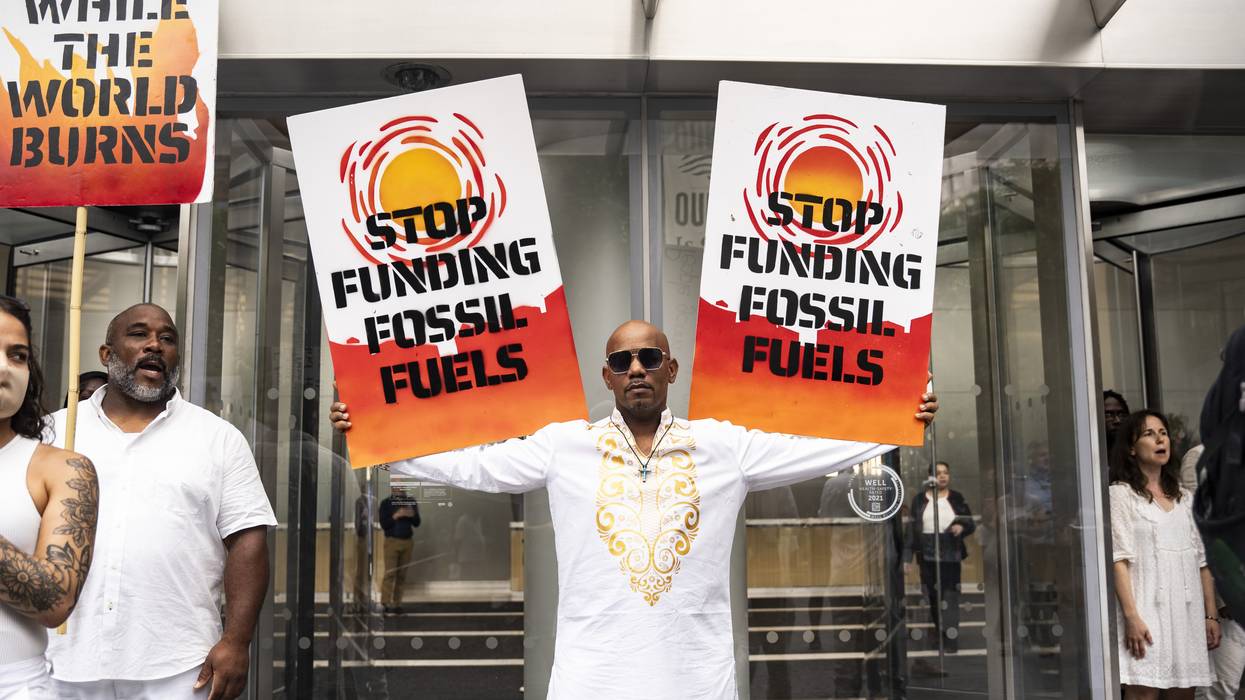
"We cannot profit off of death and destruction," one participant said. "We must love each other and the Earth."
Two dozen faith leaders and their supporters were arrested on Tuesday after chaining themselves to the doors of Citigroup's New York City headquarters to protest its financing of the climate emergency.
Around 50 people participated in the protest, which is part of the Summer of Heat series of actions demanding that Wall Street—and Citi in particular—stop funding oil, gas, and coal.
"I am here because I believe that there is a god in everyone and that calls us to take responsibility for destruction done in our name," Lina Blout of Earth Quaker Action Team said as she was being arrested. "We are all connected. We must live for the planet and each other, and not short-term profit."
Citi was the leading financier of fossil fuel expansion since the Paris agreement entered into force in 2016, spending $204 billion on the development of new oil, gas, and coal. It was also the second leading funder of fossil fuels over all, at nearly $400 billion. In addition to ditching climate-warming energy sources, participants in Summer of Heat want banks like Citi to "exponentially" up funding for renewables, respect the human rights of Indigenous and local communities, and contribute to a "climate reparations fund."
"We cannot profit off of death and destruction," Blout said. "We must love each other and the Earth."
Tuesday's action, led by GreenFaith, was part of the Summer of Heat's Faith Week, running from July 28 to August 3.
"We the people will not tolerate the bad practices of companies like Citi to fund and invest in oil companies who kill our world and it's future."
"Our faiths teach us that the Earth is a sacred trust and we are responsible for its care," GreenFaith wrote on social media. "Why is Citi continuing to violate that trust by giving hundreds of millions of dollars to oil and gas companies? We're here telling Citi: We can do better. We must do better!"
The faith leaders, dressed in white, converged on Citi at around 7:50 am Eastern Time. A total of eight people locked themselves to the doors, causing "chaos" as employees tried to enter for work. The blockade lasted for around half an hour.
"If you've got to walk through a gauntlet of protesters and cops to get to your job maybe you're working at the wrong place," nonprofit consultant Valerie Costa wrote in response to footage of the protest.
Among those arrested at the action were two frontline leaders from the U.S. Gulf Coast, which has been treated as a sacrifice zone by the oil and gas industry for decades.
"There is no future if we were to allow big oil and gas industries who produce death chemicals and products that will wipe out society," Debra Sullivan Ramirez, the president, CEO, and founder of Mossville Environmental Action Now, who was arrested Tuesday, told Common Dreams. "We the people will not tolerate the bad practices of companies like Citi to fund and invest in oil companies who kill our world and it's future."
In one incident, Citi security tried to force open a door while a protester was still chained to it, and then to yank him away from the door. When police joined in, the protester fell down.
"Police were contorting his legs behind the door," another demonstrator said, adding that "it looked painful."
Tuesday's protest brings the total number of arrests from Summer of Heat actions up to more than 450 since June 10, according to organizers.
It also follows a week that saw the four hottest days on record and comes as a heat dome is expected to descend upon much of the U.S., putting the Southwest, Southeast, and Great Plains at particular risk for potentially deadly heat, the Union of Concerned Scientists (UCS) warned.
"Fossil-fuel driven climate change has increased the frequency and severity of extreme heat events over the last half century," UCS said.
The group urged local, state, and national authorities to take immediate measures to protect people such as implementing heat plans, ensuring access to cooling centers, and enshrining protections for outdoor workers.
"But ultimately," UCS said, "limiting the number of days of extreme heat in the long term necessitates that policymakers and decision-makers in all sectors of society do their part to cut heat-trapping emissions, halt the decades-long deception and obstruction by fossil fuel companies that has enabled runaway climate change, phase out fossil fuels, and accelerate the transition to a clean and just energy system."
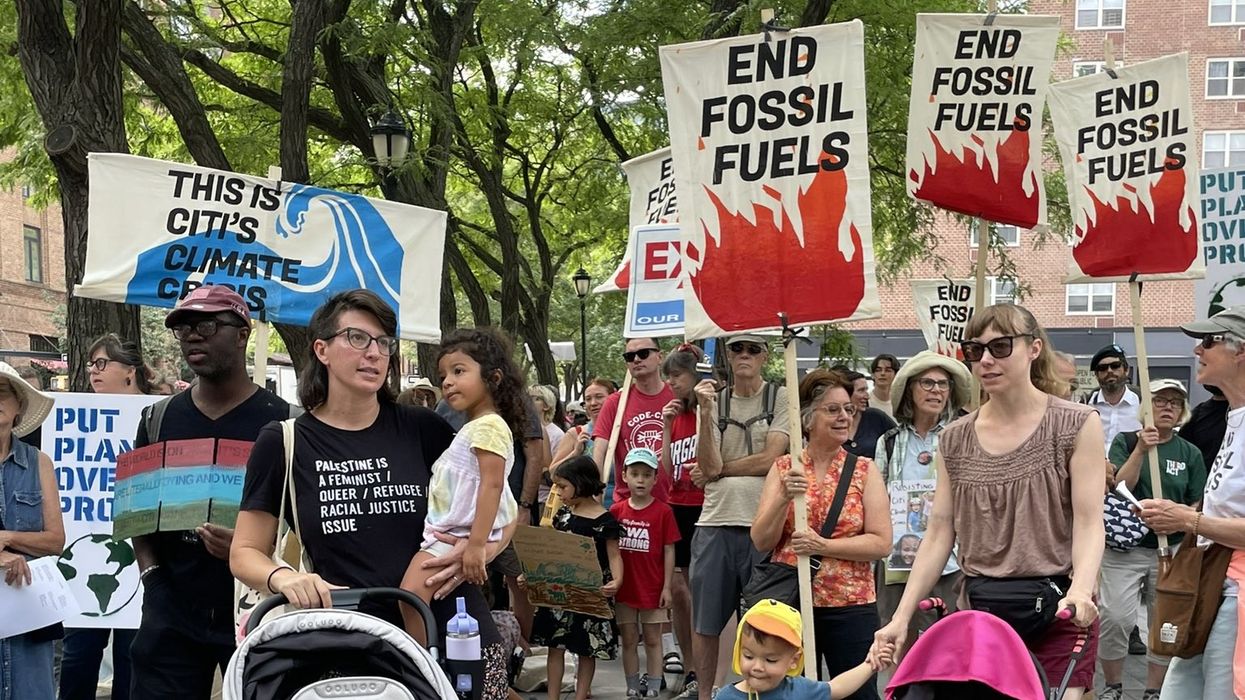
Dozens of climate campaigners were arrested for protesting the multinational bank's financing of new fossil fuel development.
Hundreds of activists, largely mothers and their kids, protested outside Citigroup CEO Jane Fraser's luxury apartment building in New York City on Saturday, calling for the multinational bank she leads to stop funding fossil fuel expansion.
The protest, at which 59 people were arrested, was part of the Summer of Heat, a program of nonviolent direct action led by five climate advocacy groups that has targeted Citigroup because it's a leading funder of the fossil fuel industry.
The activists set up a memorial on the sidewalk outside Fraser's building dedicated to the tens of millions of children who've been displaced because of climate change in recent years.
Marlena Fontes, a director at Climate Defenders who organized the action, explained the impact of climate change on her family in a speech to gathered protesters. She said that when haze from Canadian wildfires covered New York City last year, her son was afraid, and her one-year-old daughter had an asthma attack.
"She was just one of many, many children on this planet who are being affected by the climate crisis," Fontes said.
BREAKING: NYPD arrests grandparents, parents, students, scientists and clergy outside of @Citibank CEO Jane Fraser’s NYC penthouse.
Citi keeps pouring billions into oil, gas and coal projects killing our kids. Jane can’t hide from responsibility. #SummerofHeat pic.twitter.com/0FUBStYvuK
— New York Communities for Change (@nychange) July 27, 2024
The protestors marched from Citigroup's headquarters to the apartment building, located a few blocks away. About 200 or 300 people took part in the protest, and 59 were arrested; the police were on site before they even arrived, Alicé Nascimento, policy director at New York Communities for Change, one of the Summer of Heat organizing groups, told Common Dreams. The other organizing groups are Climate Defenders, Climate Organizing Hub, Stop the Money Pipeline, and the youth-led Planet Over Profit.
BREAKING: Hundreds of parents and climate activists are about to descend onto the luxury apartment complex of Jane Fraser, the high powered CEO of @Citibank, the world’s biggest funder of fossil fuel expansion.
We’re taking the crisis to her doorstep. #SummerofHeat pic.twitter.com/50zGKVBwjT
— New York Communities for Change (@nychange) July 27, 2024
Summer of Heat, which began actions in early June, has turned out to be aptly named, as the summer has been full of deadly heatwaves in the U.S. and across the northern hemisphere. Saturday's action came following a week of extreme global temperatures: Monday was the hottest day in recorded history, breaking a record set just the day before. United Nations Secretary-General António Guterres on Thursday called for coordinated global action to deal with extreme heat, including by transitioning away from fossil fuels.
Corporations like Citigroup make that transition far more difficult, campaigners say. Citigroup was responsible for providing more financing to companies developing new fossil fuel projects than any other bank in the world for the period from 2015 to 2023, according to a Banking on Climate Chaos report published in May. In terms of overall financing to fossil fuel companies, Citigroup ranked second in the world, behind only JPMorgan Chase, at nearly $400 billion during that period.
Saturday's action was the first of the summer targeted at Fraser's home, though a smaller group of campaigners did protest there in February. Fraser has in the past expressed a willingness to take a climate into account in Citigroup's dealings.
Rachel Rivera, a member of New York Communities for Change, spoke to the gathered protesters about the struggles that her family has faced in the past and in the recent extreme heat. She was displaced during Hurricane Sandy in 2012 and lost loved ones in Puerto Rico to Hurricane Maria in 2017. A mother of six, she said that last week her 10-year-old daughter had to be hospitalized and intubated due to respiratory seizures brought on by the extreme heat.
"Jane Fraser should walk a mile in my shoes," she said.
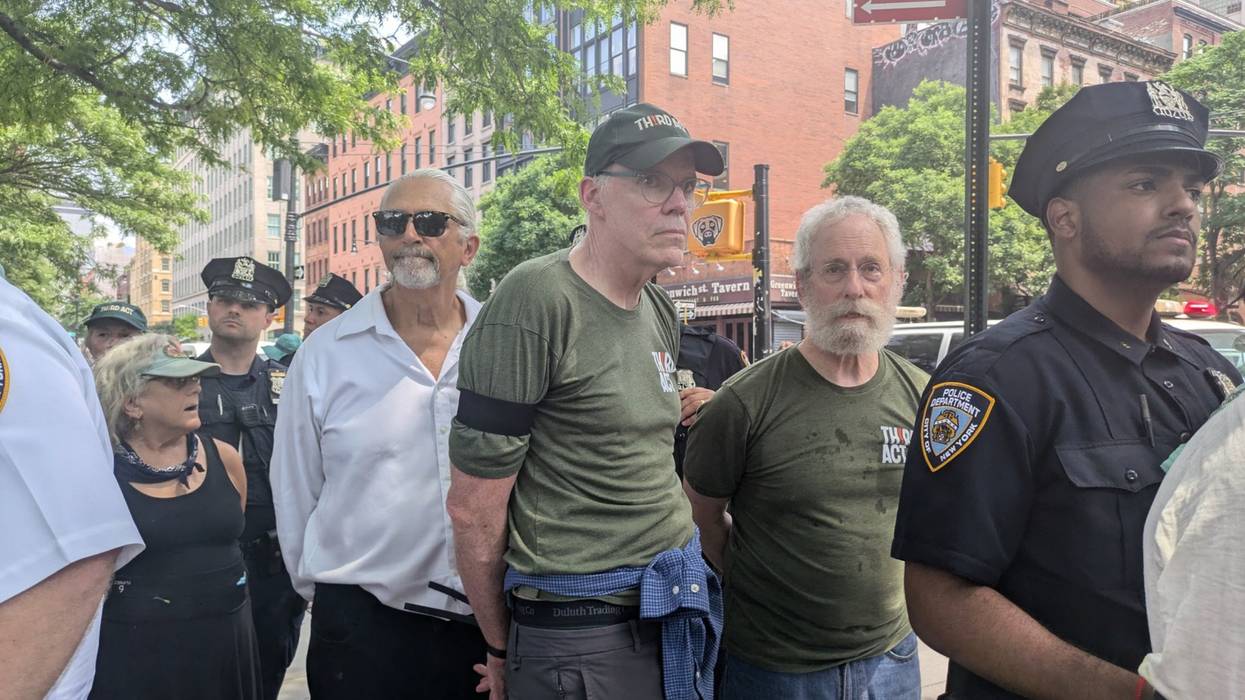
"We are on the cusp of a ruined planet, and the big banks like Citi are funding it, to the tune of trillions," said one organizer.
As Earth sizzles during what's likely to be its hottest summer on record amid a worsening planetary emergency, dozens of elder climate campaigners including 350.org co-founder Bill McKibben were arrested Monday in New York while protesting Wall Street giant Citigroup's continued fossil fuel financing.
Members of the group Third Act—who are mostly aged 60 and older—led a "funeral procession" near Citigroup's Manhattan headquarters in remembrance of the senior citizens who have died during recent dangerous heatwaves and to call out the bank "for being the number one funder of fossil fuel expansion in the world," according to Summer of Heat, which is organizing a series of ongoing climate protests.
Summer of Heat said McKibben was one of 46 demonstrators arrested Monday, and that "with today's protest, there have now been 305 total arrests in this summer's historic campaign of relentless, disruptive protests to stop Wall Street funding the oil, coal, and gas projects that are making our planet unlivable."
According to Summer of Heat:
Older Americans are worried about growing climate extremes and how Wall Street is using their savings to harm the planet and their grandchildren's future. Third Act supporters are retired teachers, healthcare professionals, lawyers, union members, parents, grandparents, great aunts, uncles, and now activists. They are taking action—together with youth and families—to make a difference! They are calling on banks like Citi to invest in a peaceful and livable world for all.
"It might feel very hot to us, but it was 122 degrees (Fahrenheit) in New Delhi two weeks ago. Lots and lots and lots of people died," McKibben told protest participants before his arrest. "Things like this now happen every day around the world, and they happen worst [and] first in the places that have done the least to cause this crisis."
"This is the deepest question of justice the world has ever come across," McKibben added. "And the bank that we're outside has done more than almost any institution on Earth to make it worse. Given full warning by scientists of all kinds for the last 30 years, they have decided instead to try to make profit off the end of the world."
Margaret Bullit-Jonas, an Episcopalian priest and author who took part in Monday's protest, said that "Citibank is destroying the world that God loved into being and entrusted to our care."
"At this decisive moment in history, we teeter on the brink of climate chaos," she added. "Now is the time for Citibank to choose life and to stop financing fossil fuels."
Third Act members were joined by activists from various climate, environmental, and social justice groups. Summer of Heat organizer Liv Senghor said that the campaign "is an intergenerational and intersectional movement."
"We know that there is no climate justice without social justice," Senghor said. "And we know that if we do not stop financial institutions like Citibank right now, we will all feel the deadly consequences today, tomorrow, and for generations to come."
HipHop Caucus president and CEO Rev. Lennox Yearwood Jr. asserted that "to limit ongoing damage, and ensure a bright future for the next generations, we need bold action now to curb emissions, transition to clean energy, and to help households and communities mitigate current and future risks."
Gus Speth, a former U.S. Council on Environmental Quality chair, warned that "we are on the cusp of a ruined planet, and the big banks like Citi are funding it, to the tune of trillions."
"It's time for the Citigroup board of directors to wake up to their responsibility," he added. "Citi talks about environmental sustainability but practices environmental destruction."
Citigroup contends that it is "supporting the transition to a low-carbon economy through our net zero commitments and our $1 trillion sustainable finance goal," and that its "approach reflects the need to transition while also continuing to meet global energy needs."
However, since the 2015 signing of the Paris agreement, Citi has provided $204.46 billion in financing for new fossil fuel projects, according to Stop the Money Pipeline, a Summer of Heat co-organizer.
"From the Bronx to the Gulf South, Black, Latine, Asian, Indigenous, and low-income communities living on the frontlines of the climate crisis—and the ones least responsible for it—face the highest asthma rates and staggering cancer rates while an unprecedented number of people are dying from heat waves," Summer of Heat said.
"Instead of staying home and hiding from the heat, organizers are calling on all New Yorkers and climate defenders from across the globe to take to the streets and demand that Wall Street stop destroying our future," the group added.
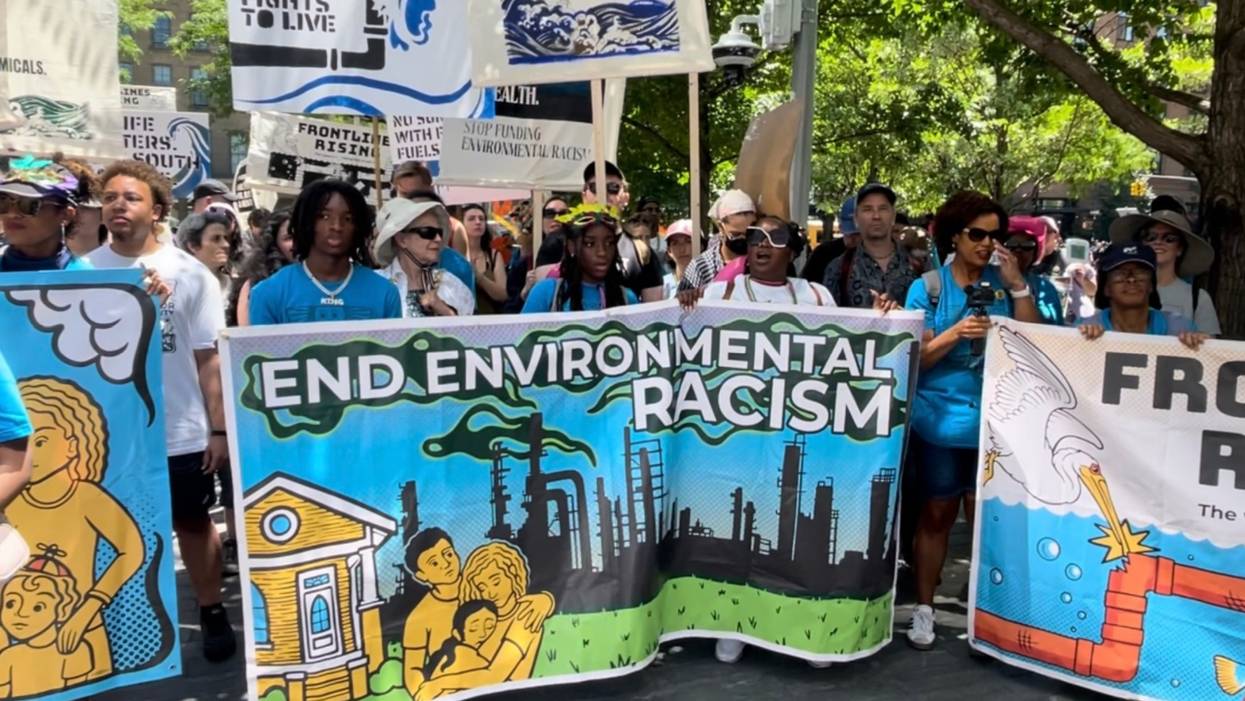
Scores of activists were arrested Friday during a protest outside Citigroup's New York City headquarters, where demonstrators condemned what organizers called the megabank's "racist investments devastating Black and brown communities" and fueling the worsening climate emergency.
Around 1,000 people including environmental leaders from the Gulf Coast of Texas and Louisiana gathered at Zuccotti Park in Lower Manhattan's Financial District, where they rallied before marching to "demand that Wall Street stop funding the fossil fuel projects causing environmental devastation in mostly Black and brown communities in the Gulf South and across the globe."
The march ended at Citigroup's headquarters on the west side of Lower Manhattan, where organizers from New York Communities for Change said 68 people were arrested. The group said a total of 259 activists have been arrested during ongoing Summer of Heat on Wall Street protests, which it organized along with Stop the Money Pipeline, Climate Defenders, and Planet Over Profit.
"On Monday, climate activists from the Gulf South and allies held a roving speak out in front of financial institutions backing the fossil fuel industry, including KKR, BlackRock, and Bank of America," New York Communities for Change said. "On Wednesday, protesters held a civil disobedience action in front of the insurance conglomerate Chubb, which insures petrochemical projects destroying the climate in the Gulf South and around the globe."
One of the protest's organizers, Roishetta Ozane—who founded the Vessel Project of Louisiana—said that "projects that kill our communities like Freeport LNG (liquefied natural gas), Cameron LNG, Corpus Christi LNG, and others would not exist without the backing of financial institutions like Citigroup."
"Money made from them is blood money," Ozane added. "Since they destroy our homes, we're coming to pay them a visit. We will break this cycle of violence and exploitation now because later is too late. We want Citigroup to stop funding fossil fuels and to stop hurting our communities and our families."
As Stop the Money Pipeline coordinator Alec Connon explained in an opinion piece published earlier this month by Common Dreams:
Since the adoption of the Paris agreement in 2015, Citi has provided $204.46 billion in financing to the company's most rapidly developing new coal, oil, and gas fields. Remarkably, Citi has provided more money to those oil and gas companies than even JPMorgan Chase―the bank that climate activists like to call the 'Doomsday Bank.'
To be clear, I'm talking here only about the financing Citi has provided for companies developing new oil and gas reserves, not merely investing in infrastructure to keep the oil pumping from existing reserves. When we take into account financing to all fossil fuel companies, Citi has provided a little shy of $400 billion to coal, oil, and gas companies since 2015.
Citigroup contends that it is "supporting the transition to a low-carbon economy through our net zero commitments and our $1 trillion sustainable finance goal," and that its "approach reflects the need to transition while also continuing to meet global energy needs."
However, Climate Defenders organizing director Marlena Fontes countered that "Citi's business model is frying our planet."
"Every credible climate scientist says that we can't afford to put one more penny into fossil fuels, but Citi is the number one funder of fossil fuel expansion in the world," Fontes added. "Until Citi stops funding fossil fuels, they can expect resistance from everyday people like us who want our children to be able to play outside without coughing on wildfire smoke or getting sick from deadly heatwaves."
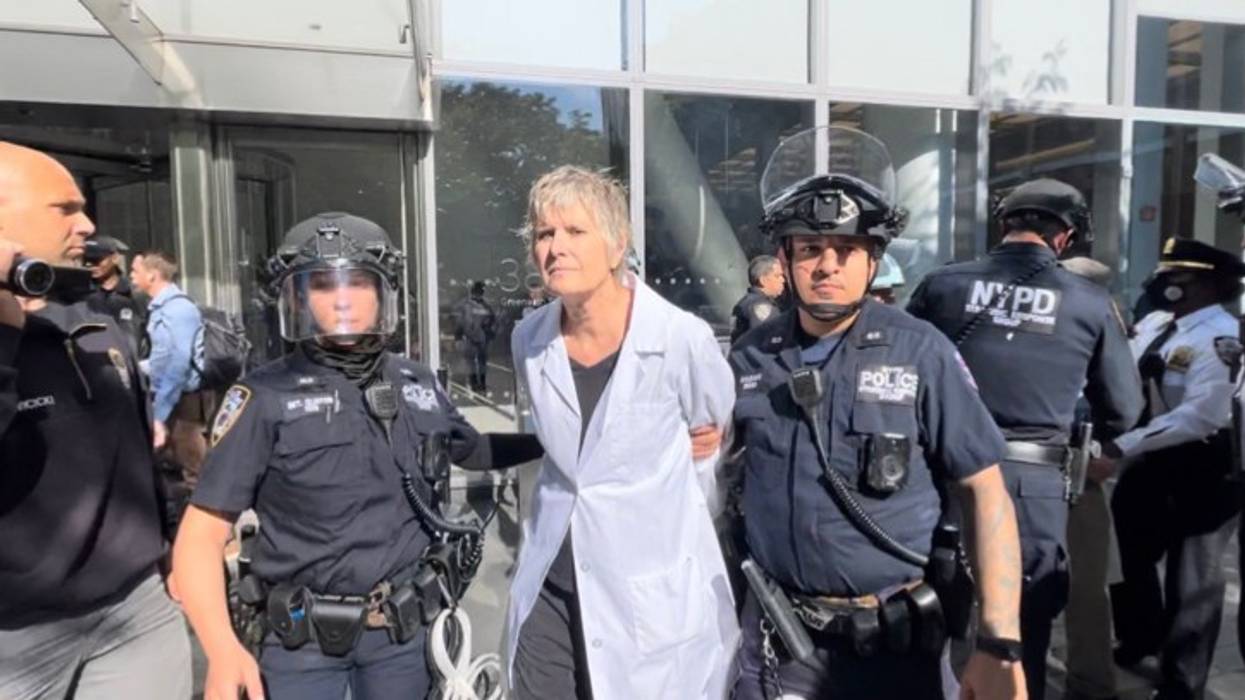
I am here today to say to Citi that if you won’t listen to the data of scientists, you will need to listen to the bodies of scientists blocking your doors.
Editor's note: The following is a speech read by Sandra Steingraber before being arrested outside Citigroup’s New York City headquarters on June 12, 2024.
My name is Sandra Steingraber. I have a PhD in biology, and I’ve worked as a scientist my whole adult life.
Here are two things biologists are worried about.
The first thing is happening in the ocean. When fossil fuels are burned and CO2 fills the atmosphere, some of it falls into the sea.
When carbon dioxide touches water, it turns into carbonic acid: H2CO3.
Acid makes calcium carbonate (CaCO3) dissolve. Seashells are made of calcium carbonate. So fossil fuels are turning our oceans into pits of acid, and animals made of shells are starting to dissolve.
I did not become a biologist to write eulogies for the species I study.
All together, the babies of animals with shells are called zooplankton.
Zooplankton are the basis of the marine food chain.
If you dissolve their parents, zooplankton disappear—along with the fish who eat them.
One half of the world’s human population depends on fish for protein. The pH of the oceans is now on track to crash the world’s fish stocks. As a biologist I worry about that.
Now let’s go on land and look at bees. Bumblebees also have babies, and they need to stay cool. So adult bees beat their wings like a thousand little ceiling fans to cool the bee nursery. But they can’t keep up due to more intense heatwaves. Baby bees are dying. Populations are crashing.
Bees help plants have sex. Bees turn flowers into fruits, nuts, vegetables. One-third of the food we eat is made for us by bees. And they do it for free. It’s called an ecosystem service.
If we lose the bees, crops fail. This is how the ecological crisis becomes a human rights crisis. Biologists are worried about this
I have studied climate change since 1982. I’ve testified. I’ve sent letters to the White House. I’ve met with the science adviser. I went to the Paris climate talks. But CO2 levels just reached a new high, and Citigroup is financing the arsonists.
Citi has poured $396 billion dollars into the fossil fuel industry just since 2016.
So, I am here today to say to Citi that if you won’t listen to the data of scientists, you will need to listen to the bodies of scientists blocking your doors. Today my body is a data point. And all together, all these data points on this blockade line make a trend. The trend is that when extinction rates accelerate, scientists get louder.
My message to Citi CEO Jane Fraser: I did not become a biologist to write eulogies for the species I study. I am morally obligated to use my knowledge to defend life against extinction and oppose those who finance it.

"I invite you to join us, at any level of risk tolerance," said one participant in the New York demonstration. "It feels deeply meaningful—even joyful—to be a part of this movement and to stand on the right side of history."
Police arrested 28 people, including several scientists, protesting outside Citigroup's headquarters in New York City on Wednesday as climate campaigners continued a series of actions targeting the bank for financing oil and gas projects.
Dozens of scientists and allies, some wearing white lab coats, marched to the bank's entrances holding signs and banners with messages like "The Science Is Clear," as they condemned Citigroup for financing nearly $400 billion in fossil fuel extraction in the eight years after the 2015 Paris agreement was signed.
Several scientists gave speeches before or as they were being arrested.
"I have studied climate change since 1982," Sandra Steingraber, a biologist and retired scholar in residence at Ithaca College, said in a speech outside the Wall Street giant's entrances. "I've testified. I've sent letters to the White House. I've met with the science advisor. I went to the Paris Climate talks. But carbon dioxide levels just reached a new high, and Citi here is financing the arsonists."
Police arrested Steingraber, who, as she was being taken away in handcuffs, declared: "I'm not interested in writing eulogies for the species that I study!"
BREAKING: Scientists arrested for blockading the doors of @citibank, the world’s second largest funder of fossil fuels.
Citi is ignoring the science, so we’re bringing the crisis to their doorstep. #SummerofHeat pic.twitter.com/7sIvfr7kML
— New York Communities for Change (@nychange) June 12, 2024
The scientists' protest was part of a series of climate actions undertaken as part of the Summer of Heat, a program organized by Climate Defenders, Climate Organizing Hub, New York Communities for Change, Planet Over Profit, and Stop The Money Pipeline (STMP).
A total of 28 people were arrested Wednesday, including several scientists, Alec Connon, STMP co-director, told Common Dreams. Dozens of campaigners were also arrested at Citigroup's headquarters on both Monday, in a highly-attended kickoff to the summer activism series, and Tuesday, in an orca-themed follow-up.
During Wednesday's protest, the scientists delivered a joint letter, published Monday by the Union of Concerned Scientists and addressed to Citigroup's leadership, urging the bank to stop financing fossil fuel projects scientists delivered a letter addressed to Citigroup's leadership urging the bank to stop financing fossil fuel projects.
Activist pressure on major banks has risen in recent years following revelations—notably in the annual Banking on Climate Chaos report, published by nonprofit groups—about the key role they've played in funding oil, gas, and coal projects. The most recent report found that the world's 60 largest banks had provided $6.9 trillion in funding to the fossil fuel industry in the eight years after the Paris Agreement.
The pressure has had an effect on some banks: HSBC and, more recently, Barclays have declared that they would stop financing new oil and gas projects. However, the Bureau of Investigative Journalism has reported that HSBC remains involved in fossil fuel deals.
Bank loans to fossil fuel companies are used not just to continue extraction at existing sites but also to explore and develop new reserves, even though the International Energy Agency has said there can be no more such development if climate goals are to be met. Citigroup has funded more new extraction than any bank in the world, the Banking on Climate Chaos report found.
Yet in response to Monday's action, Citigroup claimed it was part of the transition to a green economy.
"Citi respects the advocacy of climate activists, and we are supporting the transition to a low-carbon economy through our net zero commitments and our $1 trillion sustainable finance goal," a bank spokesperson said a statement, according to media outlets. "Our approach reflects the need to transition while also continuing to meet global energy needs."
The statement did not win over climate activists. "This is the sort of bald-faced corporate lie that could cost us our planet," Peter Kalmus, a NASA climate scientist, wrote in a Newsweek op-ed published Wednesday.
Kalmus attended Wednesday's protest. Standing outside Citigroup's headquarters, he said, "We've written thousands and thousands of papers and they have not listened to us. They're fools. They’re stupid. They're being unwise. They have to start listening to scientists."
Summer of Heat organizers have events planned throughout the summer. In the op-ed, Kalmus reached out to readers to join the effort.
"I invite you to join us, at any level of risk tolerance," he wrote. "In my experience, and in the experience of many other climate activists I know, civil disobedience has been a very effective way to create social change. And a big change is happening: A transition from a profit-above-life, colonial-extractivist, genocidal mindset, to a loving, sharing, interconnected mindset. It feels deeply meaningful—even joyful—to be a part of this movement and to stand on the right side of history."
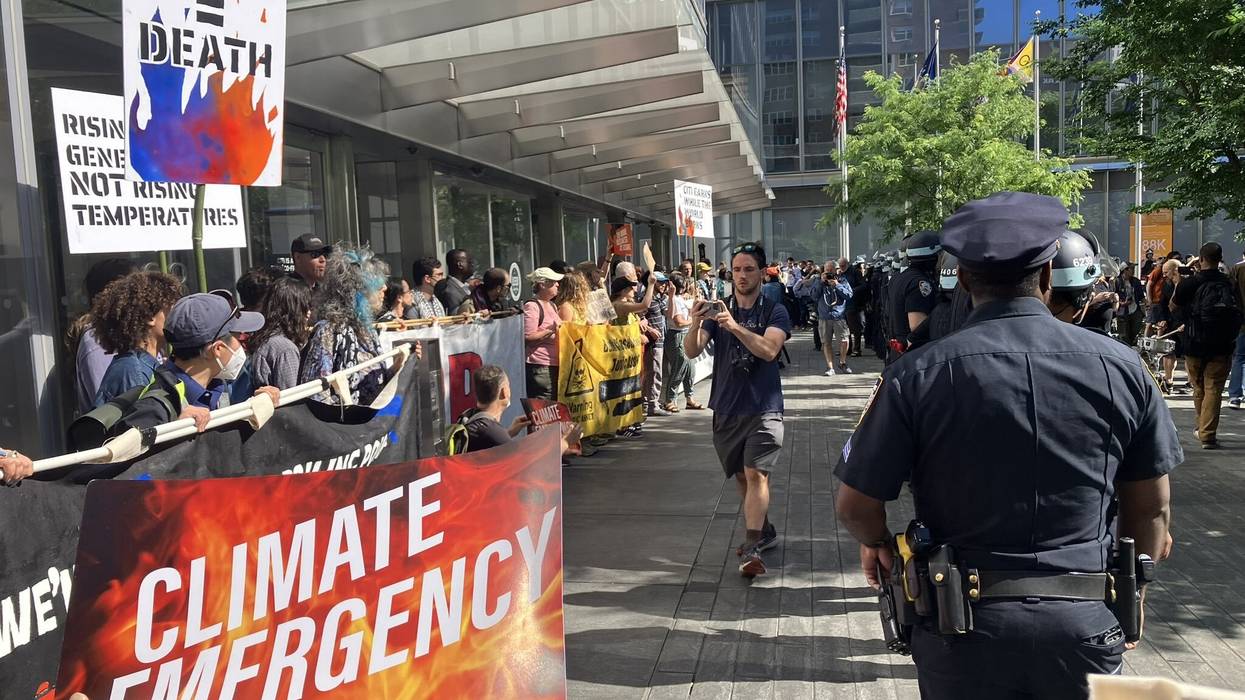
"The atmosphere is electric as hundreds gather to shut down Citibank's Global HQ," one group declared. "We are here to demand a future free from fossil fuels."
To kick off a season of climate activism, Summer of Heat campaigners on Monday morning blockaded the entrances to Citigroup's headquarters in New York City to protest the bank's role in perpetuating climate breakdown.
The campaigners locked arms and held banners at the doors to the Citigroup offices, blocking hundreds of employees from entering, according to social media posts by Climate Defenders, one of the organizations behind the Summer of Heat. They are targeting Citigroup, owner of Citibank, because the conglomerate financed more fossil fuel expansion than any bank in the world in the eight years after the 2015 Paris agreement was signed. Monday is the first day of a series of nonviolent direct actions the organizations have planned under the Summer of Heat banner.
"The atmosphere is electric as hundreds gather to shut down Citibank's Global HQ," Climate Defenders announced on social media. "We are here to demand a future free from fossil fuels."
"Big banks like Citi must stop financing fossil fuels and funding climate chaos!" Stop the Money Pipeline, one of the other convening organizations, wrote on social media.
🚨BREAKING: Hundreds of Climate Activists have shut down @Citibank’s Global HQ in Tribeca, blocking off all entrances. @Citi is the largest funder of fossil fuel expansion since the Paris agreement. #SummerOfHeat #StopFossilFuelFinancing 🌍✊ pic.twitter.com/I9pcbRRlem
— Climate Defenders (@ClimateDEF) June 10, 2024
Police have begun arresting some of the activists, video and social media posts from Climate Defenders and other organizations show. Renata Pumarol, deputy director of Climate Defenders, told Common Dreams that dozens had already been arrested by 10:50 am ET on Monday, but didn't yet have an exact figure.
The arrests were expected and didn't dampen morale among the protesters.
"Arrests are happening now!" Stop the Money Pipeline announced on social media. "Our message is clear: If you keep funding the fossil fuel companies that are disrupting our climate and lives, we will disrupt your ability to do business."
"Citibank is the largest investor in expanding fossil fuels," a protestor wearing a lab coat with a Scientist Rebellion badge said as he was being arrested by police. "It is a crime. It is a crime against the planet."
Scientist explains why he’s getting arrested at @Citi @Citibank HQ today, the largest financier of fossil fuel expansion #summerofheat #endfossilfuels pic.twitter.com/j9xisYvMhM
— Climate Defenders (@ClimateDEF) June 10, 2024
In support of the action, the Union of Concerned Scientists (UCS) on Monday published an open letter to Citigroup CEO Jane Fraser calling for the bank to stop funding new fossil fuel projects.
"The financial industry must recognize the physical harms and economic risks it is exacerbating by enabling fossil fuel expansion, and rapidly adopt new policies that align with a safer climate future," the letter states.
UCS plans to hand deliver the message on Wednesday at a "Scientists Speakout" Summer of Heat event outside the Citigroup headquarters, its statement said. That's just one of many upcoming events that organizers have planned.
"All summer long, we're going to be shutting down and blockading the headquarters of Citigroup and other banks financing new coal, oil, and gas projects," Alec Connon, co-director of Stop the Money Pipeline, told Common Dreams. "We're calling on New Yorkers and people from all over the country and work to join us. The time to hold Wall Street accountable for its role in the climate crisis is now."

"We know that they're enabling the fossil fuel industry, and we know that to end the fossil fuel era, banks like Citibank must stop funding fossil fuels," an organizer said.
Climate activists will engage in nonviolent direct action at Citigroup's headquarters in New York next week to protest the bank's large-scale financing of fossil fuel companies, organizers told Common Dreams on Friday.
Five climate action organizations have banded together to create the "Summer of Heat," a monthslong activism program targeted at Citigroup and other Wall Street companies for their role in the climate crisis.
The world's 60 largest banks provided fossil fuel companies with more than $6.9 trillion in financing in the eight years after the Paris agreement was signed in 2015, a report published by nonprofit groups in May showed. Citigroup, which owns Citibank, has poured the most financing money into new extraction projects of any bank in the world and is the second-worst in terms of overall fossil fuel financing at nearly $400 billion since 2015.
On Monday, climate organizers will seek to change that. "We're starting big," Climate Defenders deputy director Renata Pumarol told Common Dreams. "We're starting with a complete shutdown of Citi headquarters in New York. We have a 150 people."
Actions at Citigroup headquarters will continue all week, she said.
Climate Defenders is one of five convening organizations of Summer of Heat, along with Climate Organizing Hub, New York Communities for Change, Stop the Money Pipeline, and the youth-led Planet Over Profit. The groups believe that consistent activism over a prolonged period will be more effective than one-off actions, and so, since November, they've been planning a series of summertime protests, Pumarol said.
"We know that big banks are heavily investing in coal, oil, and gas, and we know that they're enabling the fossil fuel industry, and we know that to end the fossil fuel era, banks like Citibank must stop funding fossil fuels," she said.
She said she was inspired by the 75,000-strong March to End Fossil Fuels in New York City in September. That week, climate activists, including many from the same groups leading Summer of Heat, also organized a blockade at Citigroup's headquarters, denying employees access to the building; 25 were arrested. In April, they returned for two more days of direct action at the headquarters, calling it a prelude to the Summer of Heat; more than 50 were arrested.
 Climate activists block entry to Citi headquarters on September 14, 2023. (Photo: Ken Schles)
Organizers chosen Citigroup not just because they consider it to be a bad actor but also because they sense that the company might be responsive to public pressure, Pumarol said. It was the first Wall Street bank to take a stand on gun policy, setting restrictions on sales made by business partners amid a national debate following a mass shooting in Parkland, Florida. Citigroup CEO Jane Fraser has also expressed an interest in changing business course on account of the climate, Pumarol noted.
In addition to Citigroup, Summer of Heat organizers have asset managers and insurance companies such as KKR, Blackrock, AIG, and Chubb in their crosshairs, the program website says. They have what they say will be a fun-filled summer of activism planned, including even a "road trip" to the Hamptons in August to "disrupt the vacations of Wall Street's fat cat CEOs and executives making a killing off of killing the planet," according to their media advisory.