SUBSCRIBE TO OUR FREE NEWSLETTER
Daily news & progressive opinion—funded by the people, not the corporations—delivered straight to your inbox.
5
#000000
#FFFFFF
To donate by check, phone, or other method, see our More Ways to Give page.


Daily news & progressive opinion—funded by the people, not the corporations—delivered straight to your inbox.

Representative Pramila Jayapal (WA-07), chair of the Congressional Progressive Caucus, and Representative Ilhan Omar (MN-05), whip of the Congressional Progressive Caucus, issued the following statement on the House passage of the Keep Kids Fed Act, legislation to extend the U.S. Department of Agriculture (USDA)'s waiver authority to provide school meals for millions of children across the country:
"No child in the richest country in the world should go hungry. We are thrilled that the House of Representatives once again stepped up to extend school meal waivers. The USDA waivers provided essential flexibility for families to get food, and to ensure schools can keep providing nutritious meals for children across the country -- as many as 10 million children received free breakfast and lunch each day under this program. While those waivers were scheduled to expire this month, the need has not. Especially given the inflated cost of food and the continuing challenges of COVID, we cannot allow 95 million meals to be missed by kids this summer. The impact of this program has been unequivocal: 95 percent of school nutrition staff reported the waivers helped reduce child hunger, 89 percent said they eased the burden on parents and guardians, and 82 percent said they support academic achievement.
"That data shows us why school meals have been the lifeblood of working class communities for decades: hungry kids can't learn. House Democrats have acted decisively to protect children's health and keep meals affordable. With promising bipartisan consensus emerging in the Senate to extend these waivers, we urge the upper chamber to quickly pass the House bill and send it to the President's desk without delay. Going forward, Congress should enact the Universal School Meals Program Act to make nutrition support permanent and ensure our children never face an emergency hunger cliff again. No family should be punished for needing to rely on school meals to get their kids the food they need -- and we have the legislative tools to make they don't ever again."
The bill passed today comes after aggressive advocacy from the Progressive Caucus to address the issue immediately, and builds on legislation from CPC members. In March 2020, Representative Omar introduced and passed the MEALS Act, a bill that directly authorized these school meal waivers and protected students' access to school meal benefits during the coronavirus pandemic. Representatives Omar, Suzanne Bonamici (OR-01), and James McGovern (MA-02) also introduced and led the passage of the Pandemic Child Hunger Prevention Act, which increased the flexibility and availability of school meals so that children who rely on the meals had access to them even as schools were closed. Representatives Omar and Gwen Moore (WI-04), along with Senator Bernie Sanders (I-VT), introduced the Universal School Meals Program Act to permanently provide free breakfast, lunch, dinner, and a snack to all school children regardless of income, eliminate school meal debt, and strengthen local economies by incentivizing local food procurement.
The Congressional Progressive Caucus (CPC) is made up of nearly 100 members standing up for progressive ideals in Washington and throughout the country. Since 1991, the CPC has advocated for progressive policies that prioritize working Americans over corporate interests, fight economic and social inequality, and advance civil liberties.
(202) 225-3106"Every six months, we might get a food parcel once. It's barely enough," said one mother. "We are forced to eat whatever is in front of us."
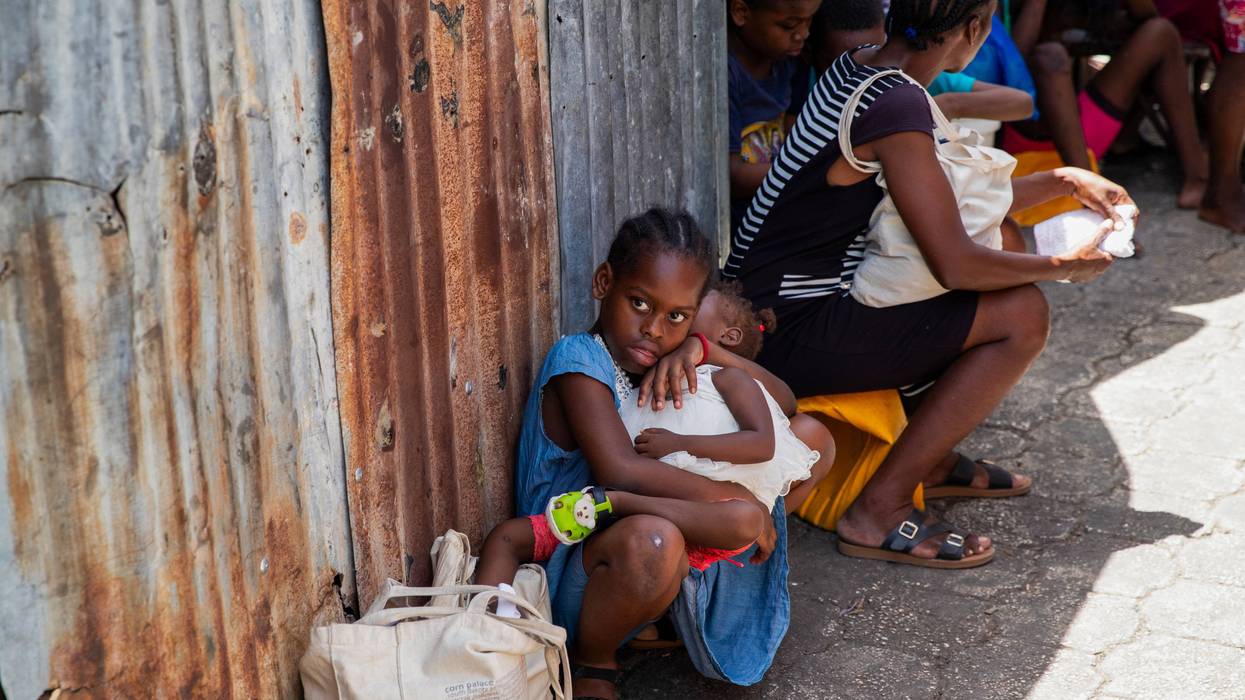
A ceasefire was declared between Israel and Hamas seven months ago, but just as the deal has not stopped the killing of hundreds of Palestinians in Gaza, it has failed to alleviate the acute malnutrition crisis that was created when Israel began blocking almost all humanitarian aid in October 2023.
The international aid group Doctors Without Borders, also known by its French name, Médecins Sans Frontières (MSF), on Wednesday accused Israel of imposing a "manufactured malnutrition crisis" that is proving particularly devastating for pregnant and breastfeeding women, newborns, and infants.
At four clinics operated by MSF in Gaza between late 2024 and early 2026, medical teams found higher levels of miscarriage among mothers who experienced malnutrition.
The group also analyzed data on 201 mothers of newborns who required treatment in neonatal intensive care units at Nasser Hospital in Khan Younis and Al-Helou Hospital in Gaza City between June 2025 and this past January. More than half of the mothers had been affected by malnutrition at some point in their pregnancy.
Ninety percent of the babies had been born prematurely and 84% had low birth weight.
"Neonatal mortality was twice as high among infants born to mothers affected by malnutrition compared to those born to mothers without malnutrition," said MSF.
Samar Abu Mustafa, a displaced mother from Abasan al-Kabira, said she was diagnosed with malnutrition while pregnant with her 3-month-old baby.
"I don't know how I will provide diapers and milk, nor how I will provide food for my other daughters. There is no income and no support," said Abu Mustafa. "There is nothing apart from food parcels from the World Food Program and community kitchens. Every six months, we might get a food parcel once. It's barely enough. It is all rice and lentils. We are forced to eat whatever is in front of us."
"For a long time, we haven't eaten anything nutritious and the baby does not get enough milk from me, so I am forced to provide formula, but I don’t have money for it," she said. "I have just one remaining can of milk."
Mercè Rocaspana, MSF's medical referent for emergencies, emphasized that malnutrition in the exclave was "almost nonexistent" before Israel began bombarding Gaza and blocking humanitarian aid—an action Israeli and US officials persistently claimed Israel was not taking before the ceasefire was reached, even as the number of deaths from starvation climbed to nearly 500.
“The malnutrition crisis is entirely manufactured,” said Rocaspana. "For two and a half years, the systematic blockade of humanitarian aid and commercial goods, on top of insecurity, have severely restricted access to food and clean water. Healthcare facilities have been forced out of service and living conditions have profoundly deteriorated. As a result, vulnerable groups of people are at heightened risk of malnutrition.”
Before the war, there were no dedicated therapeutic medical feeding units in Gaza's hospitals, but MSF teams admitted more than 500 infants under six months of age to outpatient feeding programs between October 2024-December 2025—programs that the bombardment has made impossible for many families to complete.
"Of those admitted, 91% were at risk of poor growth and development. By December, 200 infants were no longer in the program—only 48% of them were cured, while 7% died, another 7% were referred to a program for older children, and a staggering 32% defaulted due in part to insecurity and displacement."
The 20-point ceasefire agreement stipulated that at least 600 aid trucks must enter Gaza daily and that border crossings must be reopened, but as Common Dreams reported in April, five leading aid groups gave "humanitarian aid access" a failing grade in a scorecard rating conditions in Gaza six months after the deal was reached.
Israel was still restricting deliveries, and food items sold in Gaza were anywhere from 3% to 233% more expensive than they were before the war started.
Al Jazeera's Hind Khoury reported Thursday that only 150 aid trucks are being allowed in daily.
Last week, the United Nations Office for the Coordination of Humanitarian Affairs said that while there's been a 72% increase in the amount of humanitarian aid reaching Palestinians in Gaza since the ceasefire was brokered, 11% of coordinated humanitarian missions are still being denied.
"Many lives have been saved in Gaza because of scaled up humanitarian effort since the ceasefire. But much more to do: We need to sustain access, protection of civilians, neutrality, and partnership," said Tom Fletcher, UN under-secretary general for humanitarian affairs.
Gaza: Six months into the ceasefire, hunger continues to shape daily life and malnutrition levels remain high.@WFP is on the ground supporting those most in need, but aid alone is not enough for full recovery. pic.twitter.com/gABZySEjFI
— United Nations (@UN) May 6, 2026
Sahar Nafez Salem, who lives with her children in a tent in Khan Younis, told MSF that her family has been relying on a charity kitchen to eat.
"We eat lunch from it and save some for dinner," she said. "We try to manage getting lunch for our poor children every Friday, so we can bring them joy, but all week long, almost everything is from charity kitchens... The last time I received aid was during Ramadan... There is rice and lentils... Other things, like vegetables, are expensive. We can't get them all the time. So sometimes we go without vegetables for months."
"These rising costs are hitting us at the wrong time here," said one farmer of the high prices of diesel and fertilizer.
US Agriculture Secretary Brooke Rollins on Thursday claimed American farmers are heading toward a "golden age," even as President Donald Trump's policies are increasingly driving them into financial distress.
During an appearance on Fox Business, Rollins discussed Trump's upcoming meeting with Chinese President Xi Jinping to talk trade between the two countries.
"For our farmers and our ranchers, for farm security, for food security, making sure our farmers can prosper as they move into what will hopefully be a golden age under this president, these trade deals are very important," Rollins said. "But the president also understands that the over-reliance on a country like China has massive implications from a national security standpoint."
Brooke Rollins: "Farmers are moving into hopefully what will be a golden age under this president" pic.twitter.com/y2FRfZZVR3
— Aaron Rupar (@atrupar) May 7, 2026
American farmers took a big financial hit in 2025 after China cut off purchases of US soybeans in retaliation for Trump's "Liberation Day" tariffs.
The problems facing US farmers have gotten even worse since Trump illegally launched a war with Iran in late February, as the prices of fertilizer and diesel soared after Iran shut down the Strait of Hormuz.
According to a Monday report from Wisconsin Public Radio, there is little immediate relief coming for US farmers even if Trump ends his war with Iran and the Strait of Hormuz immediately reopens.
Shawn Arita, associate director of the Agricultural Risk Policy Center, told WPR that price projections show fertilizer prices will likely remain high throughout the rest of the year.
In fact, even if the strait were to reopen soon, the center projects that fertilizer prices will remain 13% higher than they were before the war started through all of next year and into 2028.
"We have seen that even in the most optimistic scenario," Arita explained, "we're going to see elevated prices on the nitrogen as well as phosphate side that continues on through the fall and moving into 2027."
Bill Knudson, agriculture economist at Michigan State University, told WPR that it will also take time to get shipping back to normal should the strait reopen soon because there are still an estimated 2,000 vessels stranded there that will take time to clear out.
"You’re not going to see a return to normal for several months, even if the Strait of Hormuz was opened relatively quickly," Knudson explained, "because you’ve got to get all those ships out of there."
The Guardian on Thursday published interviews with US farmers who explained how the combined hit of the president's trade wars and the Iran war have hurt them financially.
New York-based farmer Blake Gendebien told The Guardian that "these rising costs are hitting us at the wrong time here," as the price of offroad diesel has nearly doubled since last April.
"It’s a massive cost for farmers that are already barely, barely getting by," Gendebien explained.
North Carolina-based cotton farmer Julius Tillery told The Guardian that he's had to overhaul his planting process this year to minimize his use of diesel fuel.
“I’m very careful on my planting dates," said Tillery, who also revealed he's been eating more ramen noodles to save money. “I can’t afford to plant crops in bad climates, so the production window becomes smaller.”
"Our fossil-fueled economy is rigged in favor of oil giants," said a Greenpeace campaigner. "Whether it’s war or wildfires, they profit, we pay."
An analysis published Thursday in the wake of Shell's banner earnings report shows that the largest European oil giants reaped $22 billion in combined profits during the first three months of 2026 thanks to war-driven oil price surges, which are inflicting major financial pain on millions of families across the globe.
The analysis by the London-based advocacy organization Global Witness finds that BP, Shell, TotalEnergies, Eni, Equinor, and Repsol have recorded their highest quarterly profits since 2022, in the aftermath of Russia's invasion of Ukraine. Amid the US-Israeli war on Iran, the six oil behemoths saw their combined profits jump by 43% in the first quarter of this year compared to the same period in 2025.
Shell on Thursday reported $6.9 billion in profits during the first quarter of 2026—or $53,241 per minute.
"As lives are destroyed through war and people everywhere fear rising bills, it’s galling to see oil giants like Shell raking in obscene amounts of money," said Patrick Galey, head of news investigations at Global Witness. "These are clearly the spoils of war. It's time to break free from the fossil fuel doom loop—we need robust taxes on big polluters to insulate households from price shocks and to fund a cheaper, cleaner, more stable energy future for all.”
The environmental group 350.org said Shell's earnings report "lays bare the immense siphoning of money from households, businesses, and public budgets to the oil industry." The group has warned that oil price spikes caused by the Iran war could result in $1 trillion in extra costs for families, businesses, and governments worldwide if the Strait of Hormuz remains closed.
“While people around the world struggle with soaring energy costs, Shell is raking in billions in added profit," Anne Jellema, 350's executive director, said Thursday. "The same crisis that is driving these windfalls is pushing millions closer to hunger and hardship. Governments must act now to tax these excess profits and use the money to protect vulnerable households and expand affordable, homegrown renewable energy."
US oil giants are expected to see similarly massive profits in the coming months, as gas prices remain above $4.5 per gallon on average nationwide, costing American consumers billions at the pump. The Guardian noted Thursday that "consensus estimates show ExxonMobil’s second-quarter earnings will more than double from a year ago, while Chevron profits are expected to increase by 56% for the year."
Greenpeace campaigner Maja Darlington said Thursday that skyrocketing profits amid growing hardship for millions show that "our fossil-fueled economy is rigged in favor of oil giants."
"Whether it’s war or wildfires, they profit, we pay," said Darlington. "We don’t need to let the fossil fuel industry hold us to ransom and pass on the costs of endless wars and limitless pollution. The cost of living crisis, the climate crisis, the Middle East crisis—these are all oil industry operating costs. We need to stop subsidizing them, introduce new taxes to make them pay, and start taxing their obscene profits properly."