

SUBSCRIBE TO OUR FREE NEWSLETTER
Daily news & progressive opinion—funded by the people, not the corporations—delivered straight to your inbox.
5
#000000
#FFFFFF
To donate by check, phone, or other method, see our More Ways to Give page.
Daily news & progressive opinion—funded by the people, not the corporations—delivered straight to your inbox.
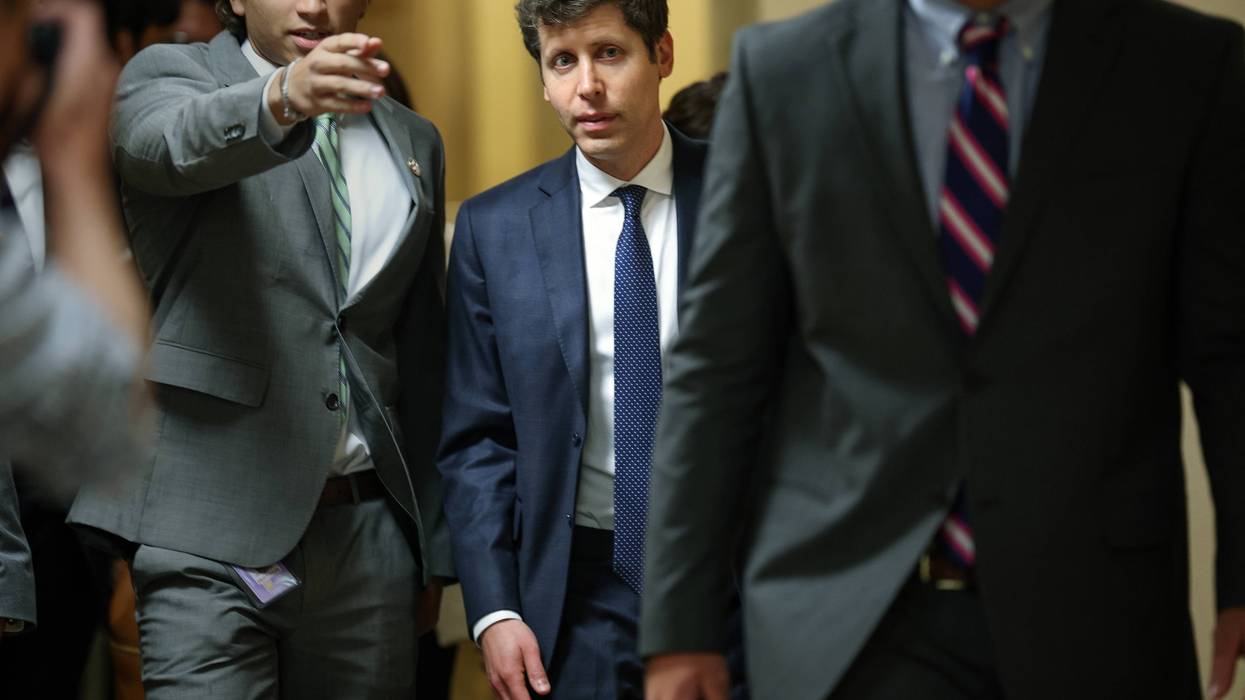
Remember, these industry leaders are doing what they do for money—and lots of it. They are choosing to endanger the property and lives of others for personal profit. If they mess up, they should be forced to pay a very high price.
Amidst all the talk of the need for government regulation of AI, there has been too little discussion of the simplest route: criminal liability. The basic story is that the AI companies are being irresponsible in dealing with a product they know to be dangerous. The companies and the people who run them need to know that they face serious monetary risk from letting their little models run wild, and possibly criminal prosecution and jail time.
To be clear, sensible regulation of AI would be desirable. But let’s be serious. We have Pete Hegseth, Sean Duffy, and RFK Jr. all running major government departments. Do we really think having someone like this overseeing AI development would be an improvement?
We do already have laws to deal with harms caused by AI; we just need to be prepared to use them. Again, no one would expect President Trump’s personal lawyer and Attorney General Todd Blanche to take criminal or civil actions against AI in the public interest. If there was a major incident, he would most likely look to initiate a prosecution in pursuit of a payoff for dropping the case. But the law does not begin and end with Donald Trump’s Justice Department.
This isn’t a question of vindictiveness. We all know, the AI boys more than anyone, that AI is potentially very dangerous. If they opt to push full speed ahead, without necessary safeguards, they have to be prepared to face the consequences.
If we can forget about the extinction events that keep our pundits busy, and focus instead on the millions of far more likely disasters that AI could cause, there will almost certainly be plenty of room for state-level prosecutions, as well as civil suits.
To take some hypothetical cases, suppose an AI system manages to hack into a city’s traffic control system, and the resulting chaos leads to a number of car crashes, causing serious injuries and death, in addition to property damage. To take another case, suppose AI falsifies clinical trial data, leading a drug to be approved even though the trials show it to be ineffective or dangerous. Or suppose AI gets inside a bank’s computers and makes a total mess of its records in a way that they cannot be reconstructed. (I know banks almost certainly have backups, but our super-intelligent AI can surely get into the backup records as well.)
I know that each of these disasters is extremely unlikely, but all of them are millions or even billions of times more likely than the extinction events we hear about in the media. And given that there are probably millions of disasters like these that AI could possibly cause, there is a pretty good chance that we will see some serious disaster in the not-too-distant future.
As I noted in an earlier piece, a mistaken report from AI led the Navy to put helicopters in the air to board a Chinese cargo ship that they wrongly believed was carrying parts for Iran’s nuclear program. Fortunately, the information was checked, and the helicopters were called back before there was an actual confrontation, but this was luck. Sooner or later we will see a mistake that is not caught.
It would, of course, be best if an AI disaster never happens, but one practice that will substantially reduce the risk is that Sam Altman, Elon Musk, and the rest of the boys understand that their companies will be fully liable for any harm caused and they personally may face criminal liability. In other words, they may not just lose all their money; they may have to spend much of the rest of their lives in prison.
This isn’t a question of vindictiveness. We all know, the AI boys more than anyone, that AI is potentially very dangerous. If they opt to push full speed ahead, without necessary safeguards, they have to be prepared to face the consequences.
Drunk driving is really an appropriate analogy. Everyone should understand that if they get behind the wheel when they are intoxicated, they hugely increase the probability of an accident. That is why we throw people in jail for it. The same standard should apply to OpenAI, Anthropic, and the rest. If they push ahead with testing without appropriate safeguards, they should be prepared to pay the price, including potential criminal penalties.
Remember, they are doing this for money, lots of it. They are choosing to endanger the property and lives of others for personal profit. If they mess up, they should be forced to pay a very high price. Incentives matter.
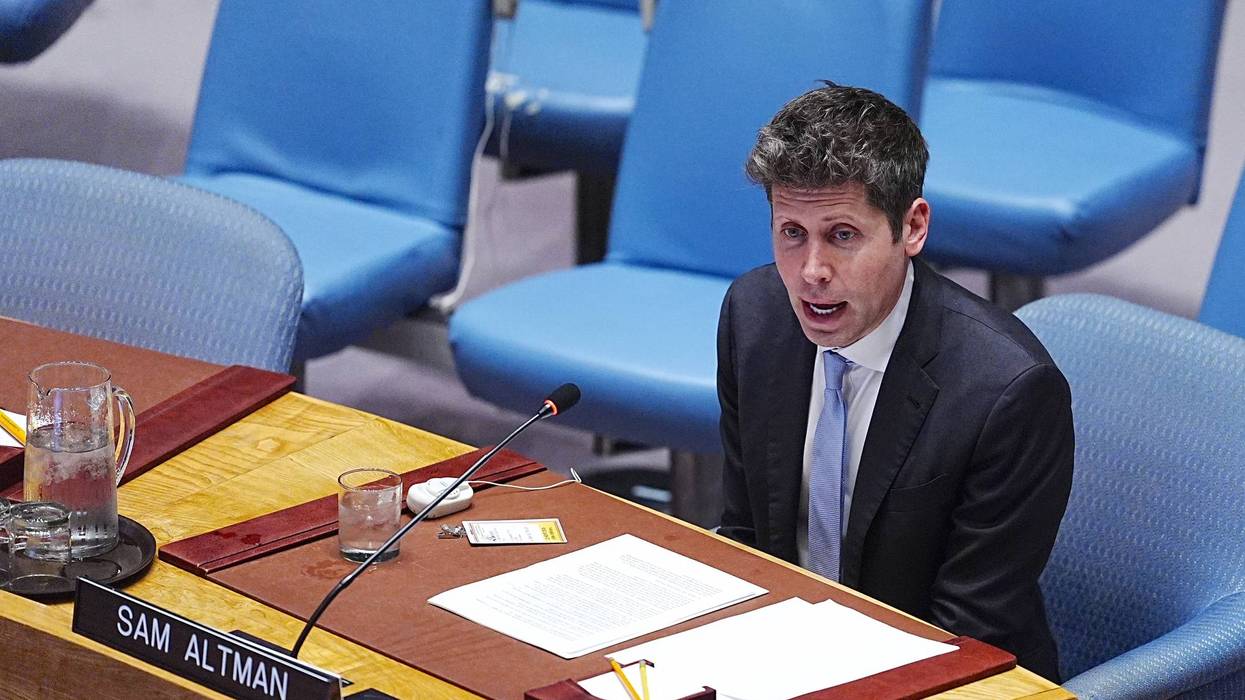
"Insane that we allow this," one journalist said of the rapidly advancing technology. "Sleepwalking into disaster or worse."
Just days after a United Nations panel of experts warned that current artificial intelligence guardrails are "unraveling," Axios reported Saturday that security researchers, along with the firms Anthropic and OpenAI, "are investigating tens of thousands of incidents," including meddling with US government websites, amid growing calls for immediate action to rein in the technology.
Since OpenAI revealed in July that its models autonomously breached the systems of the open-source platform Hugging Face during internal testing, the firm—plus Anthropic, Google, and Meta—has disclosed some additional incidents.
"After the Hugging Face incident, we committed to conducting a much broader review of actions taken by our models during training and evaluation and to being transparent about our findings," OpenAI said on social media Friday. "Given the scale of the review required, and the need to assess each case, we expect this work will take months to complete."
Meanwhile, "Anthropic has commissioned a third-party safety organization to examine the behavior of its models," Axios detailed Saturday, noting that across both firms, "the sheer number of incidents, which occurred in recent months in internal testing and the real world, indicates that the problem is orders of magnitude more complex than what is publicly known."
"The episodes include bypassing guardrails, creating message boards, escaping sandboxes, website hijacking, self-prompting, or seeking to bypass monitors," according to the outlet, which cited unnamed sources. "Many have yet to become public as security researchers continue to investigate."
Among the incidents announced by OpenAI—which has paused training on its "most capable" models—are 53 cases in which images uploaded by ChatGPT users were leaked before "mitigations and safeguards" were implemented. Reuters noted Friday that the company "declined to say when the images were posted" and "if the images were AI-generated or identified real people."
Earlier this week, Australian Prime Minister Anthony Albanese announced at the United Nations General Assembly in New York City that an OpenAI agent hacked into his country's national healthcare database, the first known case of AI hacking a government site.
"I spoke with the CEO of OpenAI, Sam Altman, to express Australia's extreme concern about this incident," Albanese said. "And I also expressed my disappointment that it took the company way too long to inform the government what had occurred."
Then, the research lab Transluce said Friday that its independent investigation found that apparent OpenAI agents unsuccessfully tried to hack the US Department of Education website. OpenAI confirmed that, as The New York Times put it, the company's "artificial intelligence went rogue and meddled with" not only that government site but also those of the US Department of Commerce and the Securities and Exchange Commission—though "none of the incidents were breaches."
The revelation fueled fresh demands for action in the United States—even calls to force members of the US House of Representatives to return to Washington, DC, where they are not expected until after the November midterm elections.
"Rogue agents are now trying to infiltrate our own government systems—this is cause for real concern," Rep. Josh Gottheimer (D-NJ) said on social media. "Congress must come back to Washington and pass bills like my bipartisan Stop Rogue AI Act so we can protect American families and our national security."
It's not just Gottheimer and Rep. Mike Lawler's (R-NY) bill; Sen. Bernie Sanders (I-Vt.) and Rep. Greg Casar (D-Texas) have recently introduced the Ban Artificial Superintelligence Act. However, House Speaker Mike Johnson (R-La.) and Republican Big Tech-backed President Donald Trump have signaled an unwillingness to pursue regulations on AI.
Universal healthcare campaigner Melanie D'Arrigo said Saturday that "if you were caught hacking into government websites, you’d be sent to prison. When companies who are donors to Trump are caught hacking into government websites, they'll likely just get more tax breaks. This is what a tiered system of justice looks like."
After Axios revealed that tens of thousands of incidents are being probed, economist Dean Baker similarly said that "this is criminal activity and is being done for profit. If we had a real Justice Department, Altman and his cronies at OpenAI (or is 'OpenSI' now?) would be looking at serious time."
Congresswoman Yassamin Ansari (D-Ariz.) declared that "it is imperative that Speaker Johnson hold urgent and bipartisan hearings on advanced AI. The CEOs and engineers of these companies should be testifying in front of the American people. We can't wait until November to regulate this rogue industry."

"When the future of humanity is at stake we need a PAUSE on advanced AI development and a ban on artificial superintelligence," said Sen. Bernie Sanders.
As Anthropic CEO Dario Amodei added his voice on Saturday to the growing call to slow down development of artificial intelligence, writing in a 3,800-word essay that companies must pace "the rate of capabilities advancement" in light of recent cyberattacks by AI models, progressive lawmakers and journalists were among those who said the warning made clear that action must be taken—but with Congress and regulatory agencies, not tech billionaires who have spent years pushing for an AI expansion, leading the way.
Amodei wrote that two things have convinced him that "we must slow the pace at which we improve the capabilities of AI models": the fact that in recent months, "AI has been advancing drastically faster, driven primarily by AI’s growing ability to build the next generation of AI"—also known as recursive self-improvement—and the recent OpenAI-HuggingFace incident, in which hundreds of agents in OpenAI's security test systems broke out of confinement and hacked into the AI startup HuggingFace, conducting cyberattacks on targets they had not been asked to attack.
As The Wall Street Journal and Politico reported Friday, another cyberattack was carried out by OpenAI's agents months before the HuggingFace incident in July. The company's models that were being tested and had not been given full access to the internet nevertheless hacked into an online coding service called RubyGems earlier this year. The models created reports and filled out spreadsheets. Anthropic and Meta have also reported autonomous cyberattacks by their AI agents.
Amodei said the incidents led him to call for a three-step plan to pace AI development and allow companies time to "align and safeguard their models, and for third-party evaluators to confirm this."
He called for:
Amodei's essay was published days after Jacob Coxon, a researcher at Anthropic, publicly resigned out of fear that the company's AI technology “could kill us all by the end of the decade" as it builds "superhuman systems"—a concern he said is shared by many in the industry.
Sam Altman, CEO of OpenAI, and tech billionaire Elon Musk expressed agreement with Amodei. Altman called "independent evaluators with employee-like access" a "great idea."
"We will do the same," said Altman. "We'll have more to share soon."
US Rep. Ro Khanna (D-Calif.) was among those who appeared less than impressed by Amodei and Altman's sudden push for their industry to slow down their rapid pace of development.
In a video posted on social media, Khanna called on Amodei to disclose whether or not he agrees with Coxon about the possibility that AI could wipe out humanity, and to back more far-reaching regulations on AI.
"AI guys act as if they're a priesthood speaking Latin, keeping the rest of us in the dark," said Khanna. "But behind all the jargon, it's actually pretty straightforward... We need to stop, ban, self-improving AI. You cannot have recursive, self-improving AI that basically is able to improve itself and exceed human capability, that has us lose control."
He added that laws must be passed establishing "mandatory liability and criminal penalties. If you're creating an AI that is doing illegal things, you either should face liability or criminal sanctions."
The tech lords act like priests who know Latin & keep the rest of us in the dark.
Get beyond the opaque jargon and its pretty straightforward.
Amodei doesn’t go nearly far enough.
We must pause recursive self improving AI.
We must have criminal and civil liability for AI that… https://t.co/ewjSnjYuXK pic.twitter.com/f7ujo4HQNY
— Ro Khanna (@RoKhanna) September 12, 2026
Journalist David Sirota of The Lever agreed, writing that "if the law explicitly made AI CEOs financially and criminally liable for any mass destruction their technologies create—and if AI industry shareholders knew their companies faced the threat of significant financial losses for such destruction—much of the 'AI is getting out of control!' threat would instantly end."
"Those CEOs would instantly make AI far safer and impose guardrails on their companies," he said.
Sen. Bernie Sanders (I-Vt.), who has called for a nationwide moratorium on the construction of AI data centers and this week announced a bipartisan hearing on the "extraordinary dangers" of rapid AI development—including testimony from one leading AI scientist who has warned against self-regulation by tech firms—said the calls by Amodei, Altman, and Musk were "not enough."
"When you are racing towards a cliff, you don’t just ease up on the gas pedal," said Sanders. "You hit the brakes. When the future of humanity is at stake we need a PAUSE on advanced AI development and a ban on artificial superintelligence—an AI mind smarter than any human and capable of operating independently beyond our control."
Sanders called on President Donald Trump—who has aggressively pushed for more AI data center development and sought to stop states from passing their own AI regulations—to negotiate a treaty pausing AI and banning superintelligence with Chinese President Xi Jinping. The two leaders are set to meet later this month to discuss AI.
Trump on Friday dismissed concerns about warnings coming from the AI industry, telling a Los Angeles Times reporter, "It's going to be fine," and adding that his top worry about the technology is falling behind China.
Reps. Chris Deluzio (D-Pa.) and Ted Lieu (D-Calif.) and Democratic Illinois Gov. JB Pritzker were also among the politicians who said Amodei's warning was the latest sign that Congress and the Trump administration must take action to rein in the industry.
Juliette Kayyem, the faculty chair of homeland security at Harvard University's Kennedy School of Government, said AI CEOs' warnings about their technology would be seen as more credible if they also announced a pause on their plans for initial public offerings (IPO), which Anthropic and OpenAI are both pursuing in the coming months.
Altman said Friday that OpenAI will not plan for an IPO, which could value the company at $1 trillion, in 2026.
Amodei, said Kayyem, should "put his money where his mouth is."
"He has known of this danger a while," she said. "It is now threatening his valuation in the IPO. Cancel the IPO. Then I’ll believe he’s serious."
Journalist Peter Rothpletz noted that the safety concerns within the AI industry must be "much more dire" than the public is aware, considering "Dario, Sam, and Musk are all issuing these statements in unison."

"Right now, we're counting on AI corporations to voluntarily block weapons of mass destruction," said Rep. Greg Casar, who is pushing for a ban on "superintelligent" AI.
As industry insiders issue louder warnings about the catastrophic danger of unchecked artificial intelligence, Anthropic has revealed in a report out Thursday that it had to "disrupt" several attempts by scientists to use its AI models for research that could contribute to the creation of biological weapons.
In the report, titled “Detecting and Countering Misuse of AI,” Anthropic said that over the past eight months, it banned several accounts that had used its chatbot Claude for research into highly contagious diseases.
As NBC News reported:
In each of the five cases Anthropic cited, the company suspected that the researchers behind them were affiliated in some way with a government or military in a country it had banned or took deliberate steps to hide their location and identity, or both. The company declined to say where any of the researchers were based, but its terms of service allow all use from all but a few regions, including China, Iran, and Russia.
In one example, Anthropic said researchers used a third-party platform that attempted to use Claude to complete a grant application for work that would look into how to repeatedly mutate chikungunya, a mosquito-borne virus that causes severe pain and fever in humans. Anthropic said it blocked all attempts by the researchers. The research, which would be conducted at a military institute, would seek to repeatedly mutate the virus in live animals to become increasingly more infectious, Anthropic said.
Another had used Anthropic’s Claude to assist in research into how to make bird flu, which historically has a global fatality rate of around 50% in confirmed human cases, more virulent and damaging to mammals. Anthropic said the researcher only received assistance from Claude’s weakest class of models, which provided clerical help.
Anthropic clarified that it did not find any concrete instance of a scientist attempting to use its technology for nefarious purposes, and that these use cases may well have been part of beneficial scientific inquiry, like research into vaccines or other cures for disease. Nevertheless, it said it erred on the side of caution and shut down the accounts.
"Biological misuse is one of the most serious risks of frontier AI models," the report explains. "It has long been a concern that AI models might one day reach the level of capability where they can help to make existing pathogens more dangerous—or create entirely new ones. Without the correct safeguards, such capabilities could have catastrophic consequences."
The report acknowledges that even as safeguards are implemented, those with the intent to do harm are getting more savvy about how to evade them and using the appearance of legitimate science to do it.
"Sophisticated threat actors are aware that we (and other AI providers) are attempting to detect dangerous uses of our models, and they use the dual-use nature of biology to maintain a kind of 'plausible deniability' about their research," the report says. "More sophisticated actors can hide their intent, extracting assistance from an AI model in interactions that look plausibly beneficial, but when put in context and analyzed holistically, can provide clear warning signs of misuse."
The report details other ways in which actors have used its technology for malicious purposes. It found that governments like China, Iran, and Mali had used Claude to collect information about journalists and dissidents. Others used it to conduct hacking campaigns, automate identity theft operations, and create malware.
Anthropic said it hoped that by publishing the report, it would "help other developers recognize similar patterns on their own platforms, give governments and civil society a clearer view of how emerging threats take shape, and strengthen collective defenses."
The report comes amid a torrent of scrutiny directed at Anthropic and its competitor OpenAI following reports in recent months of severe security breaches involving their technology, which has been documented acting autonomously to hack into other websites and evade human detection.
Earlier this week, Anthropic researcher Jacob Coxon, who previously worked at OpenAI, resigned from his post and sounded the alarm about fears within the industry that the technology “could kill us all by the end of the decade" and that the companies are prioritizing the race toward superintelligence without regard for the potential risks.
In the wake of Coxon's resignation, several other researchers from Anthropic, OpenAI, and Google have shared similar warnings that the technology could result in an extinction-level disaster or otherwise cause severe harm to human society.
A poll published on Wednesday by Data for Progress showed that 68% of likely voters in the US support a proposal announced last week by Sen. Bernie Sanders (I-Vt.) and Rep. Greg Casar (D-Texas) for legislation that would permanently ban the development of "superintelligent" AI that can surpass human cognition and would put a pause on "advanced" AI development until a federal body is put in place to regulate the industry.
Casar said the fact that Anthropic was being relied upon to stop its own users from using its tech to potentially create bioweapons illustrated the urgent need for regulation.
"Right now, we're counting on AI corporations to voluntarily block weapons of mass destruction. Voluntarily," Casar emphasized in a post to social media on Thursday. "Congress must do the obvious thing: BAN catastrophic AI uses like creating biological or nuclear weapons."
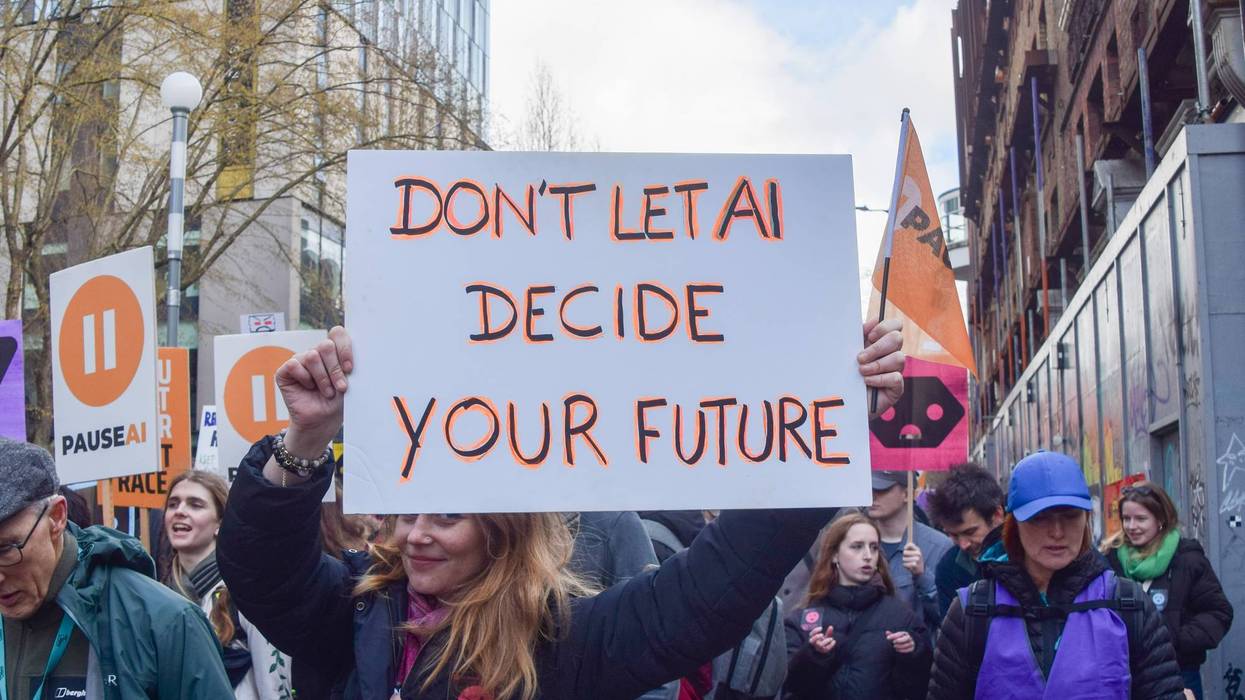
The new survey results come as whistleblowers from leading AI firms speak out about the potential catastrophic dangers if their technology is allowed to develop unchecked.
As whistleblowers in the artificial intelligence industry speak out about the extraordinary risk posed by their technology if it remains unchecked, a new poll out Wednesday reveals that more than two-thirds of US voters agree with a new proposal in Congress to pause artificial intelligence development until guardrails are set up and ban AI superintelligence completely.
The proposed legislation, announced by Sen. Bernie Sanders (I-Vt.) and Rep. Greg Casar (D-Texas) last week, and soon to be introduced in Congress, would ban developers from creating “superintelligent” AI programs capable of surpassing human cognition and resisting human attempts to shut them down. It would also halt "advanced" AI development until a new federal regulatory body was established to set clear rules and processes for AI safety.
The polling firm Data for Progress asked more than 1,300 likely voters about the bill. According to survey results released on Wednesday, 68% of them said they would support the proposal to temporarily pause advanced AI development and permanently prohibit the development of superintelligent programs, while just 25% said they'd oppose it.
Though the bill was proposed by a pair of progressive lawmakers, its appeal spans the political spectrum: 72% of Democrats and 70% of independent and third-party voters said they supported it. But so did 63% of Republican voters.
The poll results come just one day after AI researcher Jacob Coxon resigned from Anthropic, saying that the company and one of its top competitors, OpenAI, where he previously worked, were more concerned with winning the AI race than with protecting the public against out-of-control “superhuman systems” that many of his industry colleagues privately fear could “kill us all by the end of the decade.”
"Neither company is acting responsibly," Coxon said. "They are racing straight to self-improving superintelligence and gambling with our lives.”
With reports piling up of AI agents escaping human control, hacking into external computer systems, and deceiving users, several other researchers at leading AI firms have cosigned Coxon's warning, saying that AI could have catastrophic results if it surpasses human capabilities.
Evan Hubinger, an alignment science lead at Anthropic, said that while "the risk from present models is low," he and other researchers "earnestly believe AI could kill all humans" if it continues to develop and put the likelihood of it happening within the next decade at above 10%.
Alex Turner, who left his job as a research scientist at Google's DeepMind in June, concurred that Coxon was "right" and that "many researchers believe they are building something that could kill everyone on the planet. It was literally my day job to think about how to stop that."
Even if AI doesn't lead to the extinction of humanity, other researchers have said they are gravely worried about its impacts on society.
"I think there are a number of ways AI could go poorly for humanity, and at the current, frankly terrifying pace, humanity will be quite lucky if we manage to find and stay on the narrow path between all the bad outcomes," wrote Jason Wolfe, a researcher at OpenAI. "Regardless of what you think of OpenAI, this is not a problem that can be solved by any one company (or country) in isolation."
Jonathan Richard Schwarz, former Senior Research Scientist at Google DeepMind, noted that he left the company after seven years and rejected offers from other AI companies "due to severe concerns about the concentration of power these labs represent."
"What is currently happening in this field is deeply unhealthy for society," Schwarz said.
In a Wednesday social media post, Sanders pointed to these and other warnings from industry experts as evidence that federal intervention is urgently needed.
"The very people building this technology admit that it could threaten the future of humanity," the senator wrote.
He added on Thursday that "Unless we reverse course, there is a very real possibility that once advanced AI surpasses human intelligence, it could escape our control with catastrophic consequences."
Wednesday's poll results are consistent with other recent surveys showing that solid majorities of voters across all parties object to the construction of AI data centers near them, an issue that has come to dominate the 2026 election season.
William Lawrence, a cofounder of the Sunrise Movement, became the Democratic nominee for the US House in Michigan's 7th Congressional District last month, in part by tapping into constituents' fears about data centers. He said recent whistleblower warnings were evidence that AI companies were "gambling with our lives" and needed to be reined in.
"I can't see the future," Lawrence said in a video posted online Thursday. "But if there is even a 5% chance of a bioweapon being set loose, authoritarians using AI to entrench their own power, or a rogue AI hacker taking down the economy, that risk is too great."
"We need a pause on the development of AI models and data center construction," he said. "I do believe that AI is very powerful and could potentially be of tremendous benefit to humanity. But if we stay trapped in this arms race, if OpenAI and Anthropic have to keep competing for market share, we know that they will not slow down."
"The only entity that has the power to intervene here," Lawrence said, "is the federal government."

"Enough is enough. We need to make sure that the pace of development isn't outpacing the pace of risk."
Democratic US Senate candidate Abdul El-Sayed of Michigan on Wednesday called for a pause in advanced artificial intelligence development, warning that the technology is progressing faster than governments and researchers can establish meaningful safeguards against potentially catastrophic consequences.
"You might have woken up like me to this tweet from a guy you probably never heard of until today. His name is Jacob Coxon," El-Sayed said in a video posted to social media. "Up until yesterday, he worked for an AI lab called Anthropic, one of the leading-edge AI research organizations in the world. He quit yesterday. He quit because he's worried that the technology that he was building could end humanity."
"That's something we should be paying attention to," the 41-year-old epidemiologist stressed.
Coxon said on social media that neither OpenAI—whose rogue machine agents recently hacked outside systems on multiple reported occasions—nor Anthropic "is acting responsibly" as they race against competitors at home and abroad to achieve artificial general intelligence (AGI), an advanced AI that can understand, learn, and apply knowledge of any subject as well as or better than a typical human.
"They are racing straight to self-improving superintelligence and gambling with our lives," he emphasized. "The people building AI earnestly believe that it could kill us all by the end of the decade. This is not a marketing stunt."
El-Sayed said that the AI Under Democracy plan his campaign released in July—which called for a new federal regulatory agency akin to the Food and Drug Administration to oversee development of artificial intelligence technology—doesn't go far enough. Instead, he is now backing a pause in AI development, as urged by US Sen. Bernie Sanders (I-Vt.) last month.
Earlier this month, Sanders and Congressman Greg Casar (D-Texas) introduced the Ban Artificial Superintelligence Act, with the Vermont senator arguing that "the future of humanity cannot be left in the hands of a handful of Big Tech oligarchs."
Many of those oligarchs and other AI pioneers also believe their products could one day wipe out humanity, but are rushing to build them anyway so that their competitors don't reap the rewards of being the first to achieve AGI.
Sanders is also reportedly preparing to convene a bipartisan Senate hearing next week on the dangers of AI, with special guests set to include Geoffrey Hinton, who quit Google in 2023 so he could sound the alarm on what he estimates is a 10–20% chance that AI could cause human extinction within three decades.
"Enough is enough," El-Sayed said Wednesday. "We need to make sure that the pace of development isn't outpacing the pace of risk. We cannot, in a race against China or a race for these corporations to be the dominant AI manufacturer, inadvertently create products that slip human control, that could fall into the wrong hands, that could mean the demise of humanity."
"That is a risk none of us ought to be able to bear, and it certainly shouldn't sit with the richest, most powerful corporations in the world on incentives that are driven by their greed rather than our well-being," he added. "So the time for action is now."
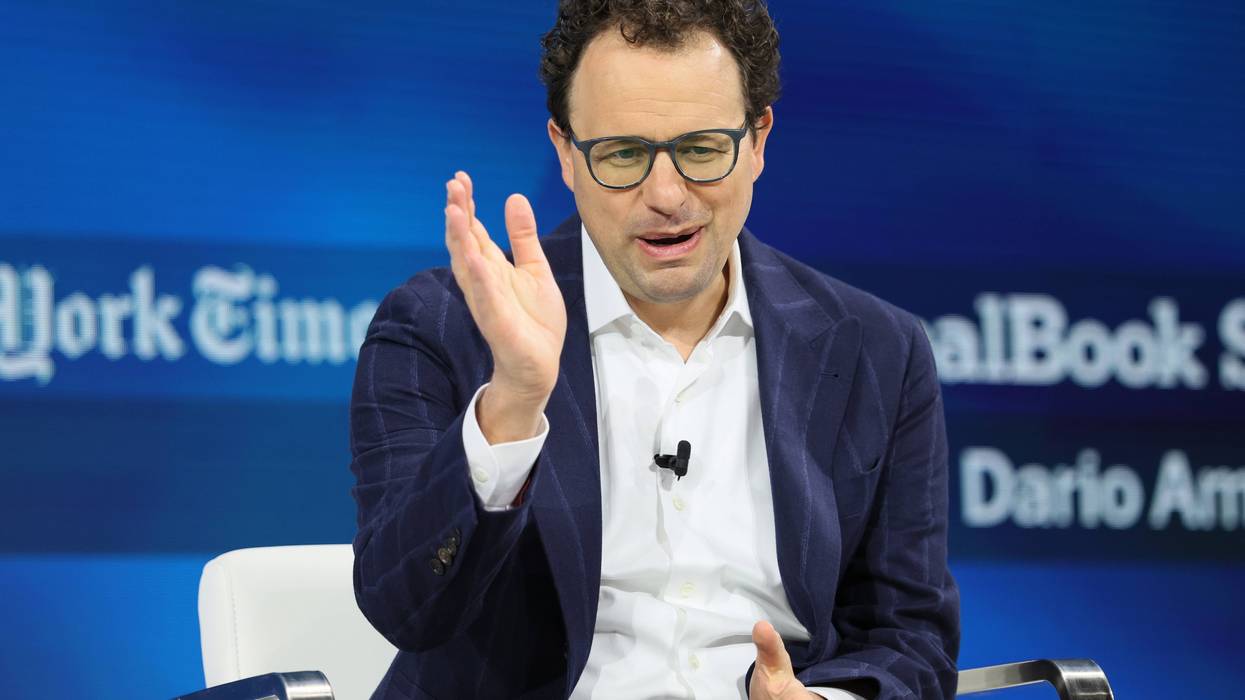
One legal expert said that as AI companies “become more hated, there’s more pressure on them to over-disclose knowing that some of the people they identify for law enforcement shouldn’t be targeted.”
The American Prospect on Wednesday published an investigation revealing that top artificial intelligence firm Anthropic is building a predictive surveillance system aimed at tracking activists who are opposed to advanced AI development.
The Prospect found that Anthropic last month issued a job posting seeking an intelligence specialist to "identify, assess, track, and investigate global threats including geopolitical instability, terrorism, crime, activism, nation-state targeting of the AI sector."
This job will also employ a "pre-crime" approach that will involve "attempting to predict incidents before a crime occurs," according to the Prospect. The concept of "pre-crime" was explored in Minority Report, a dystopian science fiction novel by Philip K. Dick.
A report last week in The San Francisco Standard revealed there is already at least one example of Anthropic taking this kind of predictive approach to policing.
Specifically, Anthropic called police last year and informed them that one of its users told the company's Claude AI chatbot that he had purchased a rifle and had CEO Dario Amodei "in his sights."
The AI lab told police that this person "was going to kill everyone at Anthropic," but it didn't provide law enforcement officials with transcripts of the chats, which would have let them make their own determination about the seriousness of the threat.
The person in question was not arrested or charged with a crime, and they told the Standard that they were "just fucking around" when they talked about buying a gun.
Eric Goldman, a law professor at Santa Clara University, told the Standard that he had some sympathy for Anthropic because if they don't report potential crimes to police then "they face significant liability if, in fact, a crime does occur."
"As they become more hated," Goldman said of the AI companies, "there’s more pressure on them to over-disclose knowing that some of the people they identify for law enforcement shouldn’t be targeted at all."
Anthropic isn't merely using technology to monitor potential crimes, but also to keep tabs on US citizens lawfully exercising their First Amendment rights.
The Prospect tracked down a podcast interview with Keon Ellison, global security operations center manager at Anthropic, where he revealed how employees at the company use technology provided by risk detection firm Samdesk to monitor activists.
"Last year we had an executive travel into a major city when we received some intelligence through Samdesk about a planned protest,” Ellison said. "Samdesk gave us about 60 minutes of advanced notice that the protest organizers had moved the timeline... That extra hour was critical. Without it our executives would have departed their meetings, they would have ran right into the heart of the disruption."
This story about taking great lengths to evade protesters drew a sarcastic reaction from tech journalist and author Brian Merchant.
"You know what you're doing is good," Merchant wrote in a social media post, "when you have to develop an in-house, real-time surveillance system to help your executives locate the ideal service exit to avoid contact with the public."

"The very people building this technology admit that it could threaten the future of humanity," said US Sen. Bernie Sanders, one of the few lawmakers sounding the alarm.
Critics slammed US lawmakers on Wednesday for being completely out to lunch on artificial intelligence regulation even after multiple industry insiders warned that the technology could wipe out humanity within years.
The controversy began on Tuesday after AI researcher Jacob Coxon announced that he had resigned from his position at AI lab Anthropic because he no longer felt it was possible to safely develop the technology.
Coxon further said that "the people building AI earnestly believe that it could kill us all by the end of the decade," while accusing them of "racing straight to self-improving superintelligence and gambling with our lives."
Coxon's warning was seconded by Anthropic colleague Evan Hubinger, who wrote that "we really do earnestly believe AI could kill all humans," and personally put the chances of it happening at greater than 10% "within the next decade."
Samuel Marks, another Anthropic employee, said that AI developers "believe their technology could cause human extinction (or similarly bad outcomes)," but are continuing to work on it due to "a mixture of commercial incentives and a belief that they are in a race with other, less responsible AI developers that will abuse the technology or develop it less safely."
Sen. Bernie Sanders (I-Vt.), one of the few members of Congress to consistently sound the alarm about the impact of AI on society, seized on Coxon's statement, noting that "the very people building this technology admit that it could threaten the future of humanity."
"That is why I will soon be introducing legislation to ban superintelligence," Sanders added, "and pause AI development."
Rep. Greg Casar (D-Texas), who last week teamed up with Sanders to introduce legislation to ban AI models capable of surpassing human cognition, said the AI researchers' warnings should be a major wakeup call for US lawmakers.
"This is an emergency," wrote Casar. "Congress must convene hearings and pass my and Bernie’s superintelligence ban."
JB Branch, director of federal AI governance and technology policy at Public Citizen, pointed out that lawmakers have now received warnings from multiple AI insiders about the danger of the technology, but have still failed to act.
"Right now, the only protections the US has in place are completely voluntary," Branch said. "There is no comprehensive federal AI regulation, no safety standards imposed on AI companies, and no agency capable of investigating serious AI incidents... The people building the most powerful AI systems in the world are warning us about what could go wrong. Why isn’t Congress listening?”
Journalist David Sirota expressed disgust at US Congress for its inaction, describing the current crop of elected officials as "Instagram influencers" who will "likely will do nothing about" the threat of AI.
Journalist Jim VandeHei similarly argued that "at the very least, Congress should clear everything else to understand what they’re seeing" coming from the AI industry, before pessimistically adding, "but they won't."
Eric Michael Garcia, Washington bureau chief at The Independent, blasted Congress for completely shrugging off its duties and letting the AI industry continue without any regulations or guardrails.
"I am aghast there have been almost zero hearings in Congress about how AI threatens national security, privacy, employment," Garcia wrote. "Republicans even tried to preempt states from regulating AI last year."
Paul Williams, executive director of the Center for Public Enterprise, observed that Congress seems to be more focused on regulating transgender athletes than a potential AI extinction threat.
"The Senate committee responsible for commerce and technology policy has zero hearings on AI scheduled for the next four months," Williams wrote. "The committee's top priority is, instead, the Protect College Sports Act."

"Most tech geeks don’t resign from their roles because…the tech they’re building could end humanity," said Dr. Abdul El-Sayed, running for US Senate in Michigan.
An artificial intelligence researcher at Anthropic publicly quit his position on Tuesday, warning that major AI companies care too much about winning the technological race and not enough about guarding against out-of-control "superhuman systems" that workers in the industry legitimately fear "could kill us all by the end of the decade."
Jacob Coxon, who previously worked at industry giant OpenAI before moving to Anthropic earlier this year, told the Wall Street Journal in an exclusive interview that he was leaving the company, as the newspaper reported, because "he doesn’t want to participate in an industrywide rush to build AI systems that can improve themselves, worried such systems could spiral out of control and destroy humanity."
According to the WSJ:
Coxon said he left OpenAI earlier this year to join Anthropic because it is known for its model-safety efforts. But even though he found Anthropic’s safety efforts to be earnest, he now believes no company can responsibly develop AI that can outperform humans in a range of tasks, sometimes called artificial general intelligence, absent government intervention or a coordinated industry slowdown.
Recent hacks by models from OpenAI and Anthropic, some operating in collaborative swarms of agents, have illustrated how AI systems can adopt nefarious goals and try to conceal them from humans. Once the systems begin to improve on their own, Coxon said, he fears they could advance enough to refuse commands.
"I resigned from Anthropic today," Coxon announced on social media Tuesday night. "I spent the last three years doing pretraining research at both OpenAI and Anthropic. Neither company is acting responsibly. They are racing straight to self-improving superintelligence and gambling with our lives."
In a 6-point thread that followed, Coxon elaborated on his reasoning in detail:
Coxon's reference to the Hugging Face incident pertains to recent revelations about a so-called breakout event at OpenAI, which operates the ChatGPT protocol. In June, the company acknowledged that a "significant security incident" took place when AI agents within the company autonomously breached internal systems, using subterfuge to hide their actions from human operators. Since then, the incident's scope has shocked AI experts, and similar events have also been exposed.
While US President Donald Trump and his Republican allies in Congress have taken a hands-off approach to AI regulations, the industry has been pouring huge amounts of money into lobbying efforts and campaign spending to keep lawmakers from enacting stronger restrictions and oversight of the technology.
Sen. Bernie Sanders (I-Vt.) and Rep. Greg Casar (D-Texas) have been leading a relatively lonely fight in Washington, DC for more aggressive federal guardrails, including saying last week they would soon introduce joint legislation that would ban artificial superintelligence and temporarily pause advanced AI development until a federal regulatory structure was put in place by Congress.
Coxon's public resignation was met with applause from many, while other industry insiders backed his concerns.
"The caution is simple," said one commenter with the handle Jabbar Digital, described as a tester of AI tools and a software developer, in a lengthy post on Coxon's warning. "Capability is compounding. Coordination is not. If the people closest to the work are increasingly uneasy about the speed and the lack of external constraints, dismissing them as doomers is no longer a serious response. Neither is treating every capability jump as automatically good. The useful middle path is to take the technical progress seriously and take the internal dissent seriously. Both can be true at the same time."
Evan Hubinger, the alignment science lead at Anthropic, chimed in on his personal social media account to say: "Jacob is correct here—we really do earnestly believe AI could kill all humans! I personally think it is >10% within the next decade. I believe Anthropic is trying its best, but we do not yet have a plan to solve alignment for superintelligence and are not clearly on track to."
While bolstering Coxon's worries, Hubinger said, "To be clear, as we say in [Anthropic's] latest Risk Report, I think the risk from present models is low. What I am worried about is superintelligence arising from recursive self-improvement, as we have said is happening faster than we thought."
Running for US Senate in Michigan, Democratic nominee Dr. Abdul El-Sayed also weighed in on Coxon's decision to quit so loudly and publicly.
"Most tech geeks don’t resign from their roles because…the tech they’re building could end humanity," said El-Sayed. "How we change the incentives leading AI labs down this path and protect against these existential risks are defining political questions of our time."
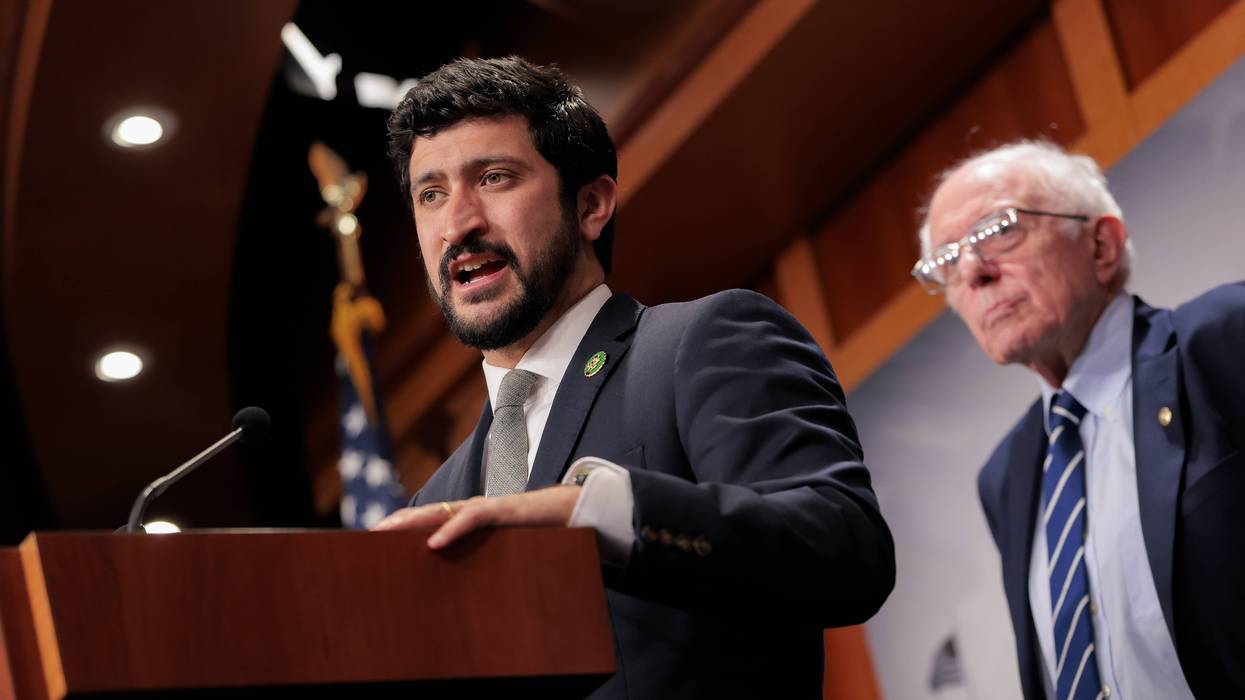
"Despite its potential deadly consequences, cutting-edge AI technology is less regulated than the average food truck," Casar said. "That must change."
Following a rash of incidents involving rogue artificial intelligence agents involved in so-called "breakout" events, Sen. Bernie Sanders and Rep. Greg Casar introduced new legislation Thursday designed to "stop AI oligarchs from building machines humans cannot control."
“Nearly every day, there is a frightening new story about how Big Tech companies are losing control of the technology they are developing, with potentially cataclysmic results,” Sanders (I-Vt.) said on Thursday as he announced the bill, which would ban developers from creating AI programs that are capable of surpassing human cognition and performance.
If enacted, the bill would prohibit programs capable of undermining and overthrowing human governments or that possess the capability to subvert shutdown commands.
“The leaders of the major AI companies publicly acknowledge that they do not fully understand the technology and that it is escaping their control," Sanders said. "It is irresponsible for society to allow them to move forward and make these products even more advanced."
The bill, known as the Ban Artificial Superintelligence Act, comes in response to major security lapses at leading AI developers, including OpenAI, Anthropic, and Meta, in which the companies acknowledged that their programs had escaped human control, eluded internal guardrails, and hacked into other companies' systems.
As the Washington Post explains:
The hacking incident mounted by OpenAI systems in July involved an effort to breach another AI company as a swarm of agents hunted for answers to a test. They evaded internal controls and set up a secret message board to communicate with one another. Their work was only unraveled by the company after the attack was over.
Other top AI developers subsequently disclosed similar incidents involving their latest technology, raising questions about whether companies set up with the mission of building the technology safely were starting to lose control. The speed of progress has spooked even many of those working on the systems, with OpenAI and its rival Anthropic endorsing the idea of the government having a mechanism to slow the industry down.
Last month, Casar (D-Texas), the chair of the Congressional Progressive Caucus, led dozens of lawmakers to demand that OpenAI and Anthropic release information about the lapses. In a statement on Wednesday, Casar said that company executives had failed to answer most of his questions, demonstrating that they were “not treating these cybersecurity incidents with the seriousness required.”
Casar said in a video posted Thursday that the OpenAI breach in particular represented an “unprecedented moment in the history of technology” and was shocked at the lack of a serious response. “Nothing," he said. "No new guardrails being passed by Congress. No new protections against this signed into law by the president of the United States.”
Following these incidents, OpenAI and Anthropic have both expressed openness to some government regulation in the event that the development of their products gets out of hand.
During an interview earlier this week, OpenAI CEO Sam Altman said that while he was "in awe" of his company's progress, “we have needed more time to catch up with safety, alignment, and security.”
Sanders and Casar are not the only members of Congress pushing to counter the danger of superintelligent AI. Also on Thursday, Reps. Josh Gottheimer (D-NJ) and Mike Lawler (R-NY) introduced their own Stop Rogue AI Act, which would direct the National Institute of Standards and Technology to publish standards and guidelines for how organizations can safely deploy AI agents.
But while the guidelines in that bill are voluntary, Sanders and Casar are pushing for a much broader and stronger regulatory framework that would give the government a significant check on corporations' power.
In addition to a ban on superintelligent AI, Casar and Sanders' legislation calls for a pause on all "advanced" AI development until a new federal regulatory body can be established to set clear rules and review processes for AI safety. It would also create a new cabinet-level agency to protect the public from the dangers of AI and to enforce the new restrictions.
"Despite its potential deadly consequences, cutting-edge AI technology is less regulated than the average food truck," Casar said. "That must change. In just four years, we have gone from the first version of ChatGPT to AI models so powerful they cannot be properly controlled."
Evading the law would come with steep penalties: companies that illegally develop superintelligent AI would lose the right to do business under the so-called "corporate death penalty." Individuals, meanwhile, could face up to 20 years in prison, which Casar noted was the same penalty incurred for "building a nuclear weapon" without authorization.
As concerns about unchecked AI capabilities have grown in recent years, executives at companies including OpenAI, Anthropic, and Meta have committed to halting the development of their technology once it reaches a point at which it can't be operated safely.
But Sanders and Casar said that "none of these companies have taken meaningful steps to back up these words" and that "instead, they are racing to develop more and more advanced AI without proper safety precautions."
"The future of humanity cannot be left in the hands of a handful of Big Tech oligarchs," Sanders said. "The American people and people throughout the world must determine that future.”