

SUBSCRIBE TO OUR FREE NEWSLETTER
Daily news & progressive opinion—funded by the people, not the corporations—delivered straight to your inbox.
5
#000000
#FFFFFF
To donate by check, phone, or other method, see our More Ways to Give page.
Daily news & progressive opinion—funded by the people, not the corporations—delivered straight to your inbox.

"You are currently arming, funding, and defending a genocide in Gaza. That is how history will remember you."
U.S. Secretary of State Antony Blinken was accused of stark hypocrisy on Saturday after he condemned the Myanmar military's genocide against the Rohingya people while simultaneously aiding Israel's genocidal assault on the Gaza Strip.
Marking the seventh anniversary of Myanmar's vicious ethnic cleansing of the stateless Rohingya, Blinken wrote on social media that "the United States continues to honor the victims and stand with the survivors as they seek justice and accountability for these atrocities."
Blinken also issued a statement highlighting the U.S. State Department's "extensive documentation of the atrocities and abuses committed against Rohingya and all civilians"—a sharp contrast with the Biden administration's reluctance to assess Israeli atrocities against Palestinians in the Gaza Strip.
"You are currently arming, funding, and defending a genocide in Gaza," Middle East researcher and analyst Assal Rad wrote in response to Blinken's statement. "That is how history will remember you, not your empty words."
U.S. Rep. Rashida Tlaib (D-Mich.) also weighed in, telling Blinken to "just stop trying to act like you care about genocide or human rights."
Under Blinken's leadership, the U.S. State Department has approved massive arms transfers to Israel—including a recent $20 billion sale—and provided diplomatic cover for the country's far-right government on the world stage, dismissing as "meritless" the South Africa-led genocide case against Israel at the International Court of Justice.
Israel has killed more than 40,400 people in Gaza since the October 7 Hamas-led attack. Most of those killed in Israel's assault have been women and children—including thousands of infants and toddlers.
In addition to perpetrating horrific war crimes in Gaza—often with U.S. weaponry—Israel has sold arms to Myanmar's military, even after the 2021 military coup.
"According to documents and sources who spoke with Haaretz," the Israeli newspaper reported last September, "the government-owned Israel Aerospace Industries and the Israeli arms maker Elbit Systems maintained their trade with Myanmar despite an international arms embargo on the country, and despite a 2017 ruling by Israel's High Court of Justice and the Israeli government's own 2018 statement saying it stopped such sales."
"Israel's longstanding relations with the different regimes controlling Myanmar have involved arms trade since the mid-20th century," Haaretz continued. "Even in the years in which the country was openly ruled by its military junta, Israel refused to stop the trade. The trade was maintained through the Rohingya genocide of 2016-17."

As a treaty conference began, the human rights group called for an end to arms transfers to Israel and said that unlawful deals have led to "devastating loss of life" in Gaza, Sudan, and Myanmar.
Amnesty International on Monday called for an end to arms transfers to countries including Israel, Sudan, and Myanmar, saying they cause "devastating loss of life" and contravene the Arms Trade Treaty, the parties to which are meeting in Geneva, Switzerland this week.
The United Nations treaty was signed by well over 100 countries in 2013 and went into effect in 2014, though 27 signatories, including the United States, the world's largest arms exporter, still haven't ratified the deal, which regulates the trade of conventional weapons including non-nuclear bombs, shells, and missiles.
"Numerous governments continue to brazenly flout the rules, leading to a huge loss of life in conflict zones," Patrick Wilcken, an Amnesty researcher, said in a statement. "It is time for state parties to live up to their legal obligations and fully implement the Arms Trade Treaty, to prohibit the flow of arms to countries when it is known they would be used for genocide, crimes against humanity, war crimes or if it could be used to commit or facilitate serious violations of international human rights or humanitarian law."
A decade since the signing of the Arms Trade Treaty some of the world’s biggest arms exporters are openly flouting the rules
This is leading to a devastating loss of life in conflict zones such as #Gaza, #Sudan & #Myanmar
States must adhere to the treatyhttps://t.co/lMBWcOfMeG
— Stefan Simanowitz (@StefSimanowitz) August 19, 2024
Amnesty called the transfer of arms to Israel a "stark example" of governments' failure to comply with the Arms Trade Treaty (ATT). Though the U.S. is not a state party, as a signatory, it has a duty not to undermine the treaty's object and purpose, Amnesty's statement indicated.
"States parties and signatories, including the USA—the largest provider of arms to Israel—continue to license arms transfers to Israel in spite of overwhelming evidence of war crimes committed by Israeli forces," Wilcken said.
Experts have criticized the Biden administration for not pushing for ratification of the ATT, which the Obama administration helped devise but couldn't get through Congress. In 2019, then-President Donald Trump announced that he was "unsigning" the treaty, a symbolic act.
U.S.-manufactured weapons have been used in several unlawful Israeli airstrikes documented by Amnesty. Two such strikes on Gazan homes in October together killed 43 civilians, including 19 children and 14 women, and the bombing of another family home in Rafah in January killed 18 civilians, including 10 children and four women. The latter attack used a GBU-39 small diameter bomb manufactured by Boeing.
Amnesty released a report in April detailing the use of U.S.-made weapons in Israeli attacks that the rights group argued could constitute war crimes. American weapons have since been linked to several more devastating strikes, including the "tent massacre" in Rafah in late May, which killed at least 45, mostly women and children.
As @amnesty marks the 10th anniversary of the Arms Trade Treaty, we’re calling on states parties to urgently implement their obligations under this treaty and stop the transfer of arms to Israel.https://t.co/fqWQIh5RhQ
— amnestypress (@amnestypress) August 19, 2024
Amnesty has long called for a full arms embargo on Israel and armed Palestinian groups "because of longstanding patterns of serious violations of international human rights and humanitarian law, including war crimes." Hamas and allied groups killed more than 1,100 Israelis in a brutal massacre on October 7.
The U.S. has delivered major arms to at least 107 countries since 2019 and accounts for 42% of global arms transfers, according to the Stockholm International Peace Research Institute (SIPRI).
In addition to highlighting U.S. arms dealing, Amnesty drew attention to China's role in two conflict zones, Sudan and Myanmar.
China, a state party to the ATT since 2020, is among the countries that have imported weapons and military equipment into Sudan, which has been locked in a horrifying civil war since April 2023 and, as a result, faces the world's worst displacement crisis and the prospect of a wide-scale famine that experts have warned could be the worst the world has seen in decades.
China has also supplied Myanmar's military junta, which retook power in a 2021 coup, Amnesty said.
"The Myanmar military has used these weapons to repeatedly attack civilians and civilian objects—often destroying or damaging schools, religious buildings and other key infrastructure—in the three years since carrying out a coup," Wilcken said.
The advocacy group Control Arms has issued updates of the Geneva conference on social media.
Amnesty is one of many nonprofit groups, including the Women's International League for Peace and Freedom, that have called for ATT state parties to stop transferring weapons to Israel.
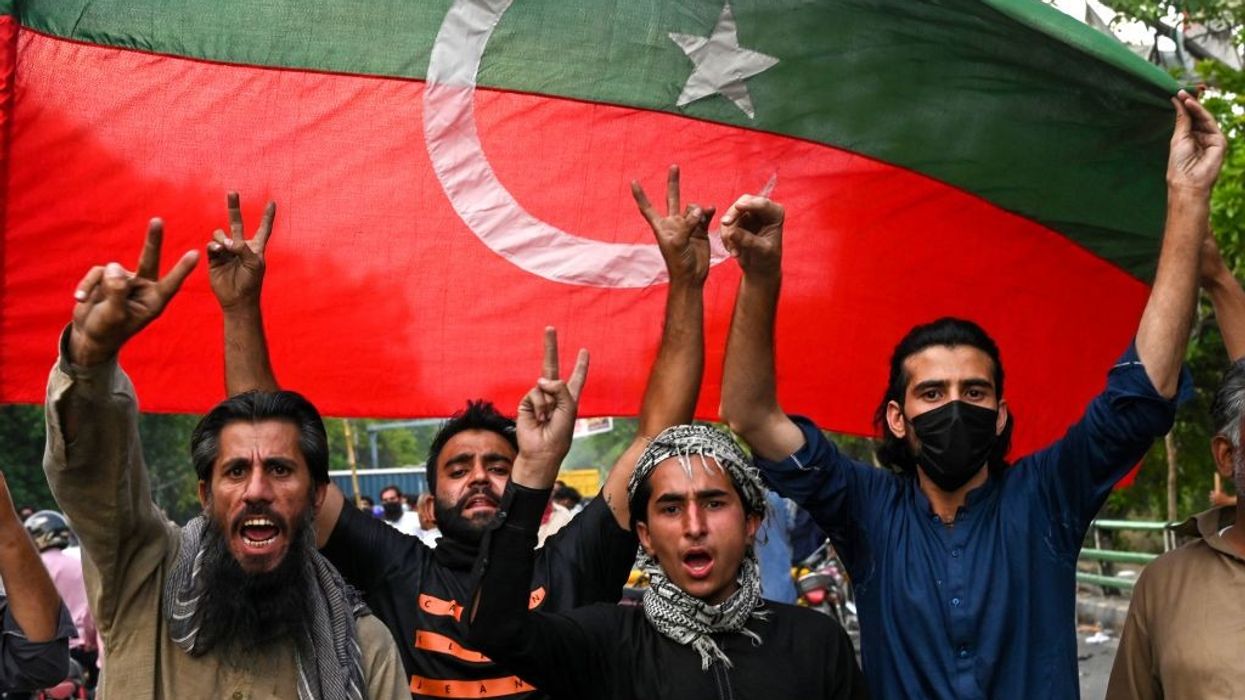
Some of these nations have been dealing with simmering unrest which could erupt this year and seize the global spotlight.
Sadly, 2023 was a violent one on the global stage. War broke out between Israel and Hamas in Gaza, leading to the deaths of thousands of Palestinians and hundreds of Israelis, including many children on both sides. And the bitter war between Russia and Ukraine continued with no end in sight.
As a result of the focus on these two conflicts, other countries have dropped off the radar for many people. Some of these nations have been dealing with simmering unrest, however, which could erupt in 2024 and seize the global spotlight.
So, where should we be watching in the coming year? Here are five places where I believe civil conflicts or unrest could worsen and potentially lead to violence.
Myanmar descended into chaos in 2021 when a military coup overthrew the democratically elected government led by Aung San Suu Kyi and sparked widespread civil protests that eventually morphed into an armed resistance.
The country, home to 135 ethnic groups, has rarely known peace. For years before the coup, there was a ongoing, low-grade civil conflict between the military and several minority ethnic groups who have long sought control over natural resources in their regions and independence from the state.
This exploded after the coup as ethnic militia groups joined forces with pro-democracy fighters from the Bamar majority protesting the junta.
The country’s civil war may worsen considerably in 2024 and regain international attention.
Their resistance escalated in late 2023 with a coordinated northern offensive dealing the military its most significant losses in many years.
Insurgents won control of towns and villages on the northeastern border with China, including control over key trade routes. This led to renewed fighting in western Rakhine state, as well as in other areas.
The tenacity of the resistance of these minority groups, paired with the refusal of the military to compromise, suggests the country’s civil war may worsen considerably in 2024 and regain international attention.
In Mali, a nation in the turbulent Sahel region of Africa, tensions escalated throughout 2023 and now threaten to erupt into full-scale civil war.
Mali has long battled insurgent activity. In 2012, Mali’s government fell in a coup and Tuareg rebels, backed by Islamist militants, seized power in the north.
A United Nations peacekeeping mission was established in 2013 to bring stability to Mali. Then, in 2015, key rebel groups signed a peace agreement with the Mali government.
With the 2015 peace agreement now all but dead, we can expect increased volatility in 2024.
After two more coups in 2020 and 2021, military officers consolidated their power and said they would restore the state’s full territorial control over all of Mali. The regime insisted the U.N. peacekeeping mission withdraw from the country, which it did in June 2023. Subsequently, violence broke out between the military and rebel forces over future use of the U.N. bases.
In November, the military, reportedly backed by Russia’s Wagner Group, took control of the strategic northern town of Kidal which had been held by Tuareg forces since 2012. This undermines the fragile peace that has held since 2015.
It is unlikely the military will regain complete control over all rebel-held areas in the north. At the same time, insurgents are emboldened. With the 2015 peace agreement now all but dead, we can expect increased volatility in 2024.
In 2019, widespread civil protest broke out in Lebanon against leaders who were perceived not to be addressing the day-to-day needs of the population.
The situation continued to deteriorate, with a reshuffled government, escalating economic crisis, and a massive port explosion that exposed corrupt practices.
Most recently, the war between Israel and Hamas has threatened to spill over to Lebanon, home to the Hezbollah militant group, which claims to have an army of 100,000 fighters.
The International Monetary Fund criticized Lebanon in September for a lack of economic reform. The Lebanese government has also failed to reach agreement on appointing a president, a post that has been vacant for more than a year.
This risks undermining the fragile power-sharing arrangement in Lebanon in which the key political posts of prime minister, speaker, and president are allocated to a Sunni-Muslim, Shia-Muslim, and Christian Maronite, respectively.
Most recently, the war between Israel and Hamas has threatened to spill over to Lebanon, home to the Hezbollah militant group, which claims to have an army of 100,000 fighters. Importantly, this jeopardises tourism as a key hope for Lebanon’s economic recovery.
These factors may precipitate a more serious economic and political collapse in 2024.
Since Pakistan’s independence in 1947, the military has played an interventionist role in politics. Though Pakistani leaders are popularly elected, military officials have at times removed them from power.
In 2022, Pakistani Prime Minister Imran Khan fell out of favor with Pakistan’s militant leaders. He was subsequently ousted from power in a parliament vote and later arrested on charges that his supporters claim are politically motivated.
Violent demonstrations broke out nationwide after his arrest—a display of anger against the military that was once unthinkable.
Pakistan also faces spillover from instability in neighboring Afghanistan and increased terror attacks. These security challenges have been compounded by a struggling economy and ongoing costs from the devastating 2022 floods.
Pakistan is expected to hold parliamentary elections in February 2024, after which the current military caretaker government is expected to transfer power back to civilian rule. Many are watching the military closely. If this transfer of power does not take place, or there are delays, civil unrest may result.
Sri Lanka faced a debilitating economic crisis in 2022 that led to critical fuel, food, and medical shortages. Civil protests caused then-President Gotabaya Rajapaksa to flee the country. He was quickly replaced by current President Ranil Wickremesingh.
Stability returned in 2023 as Sri Lanka began implementing economic reforms as part of a bailout agreement with the International Monetary Fund. However, widespread dissatisfaction with political elites and the underlying drivers of the country’s economic hardship have not been addressed.Elections are also due in Sri Lanka by late 2024. While Wickremesingh, the incumbent, is likely to run for a second term, he has low trust with the public. He is viewed as too close to corrupt political elites.
This dissatisfaction could lead to renewed protests—particularly if the economy stumbles again—in a repeat of the situation that led to Rajapaksa’s ousting in 2022.
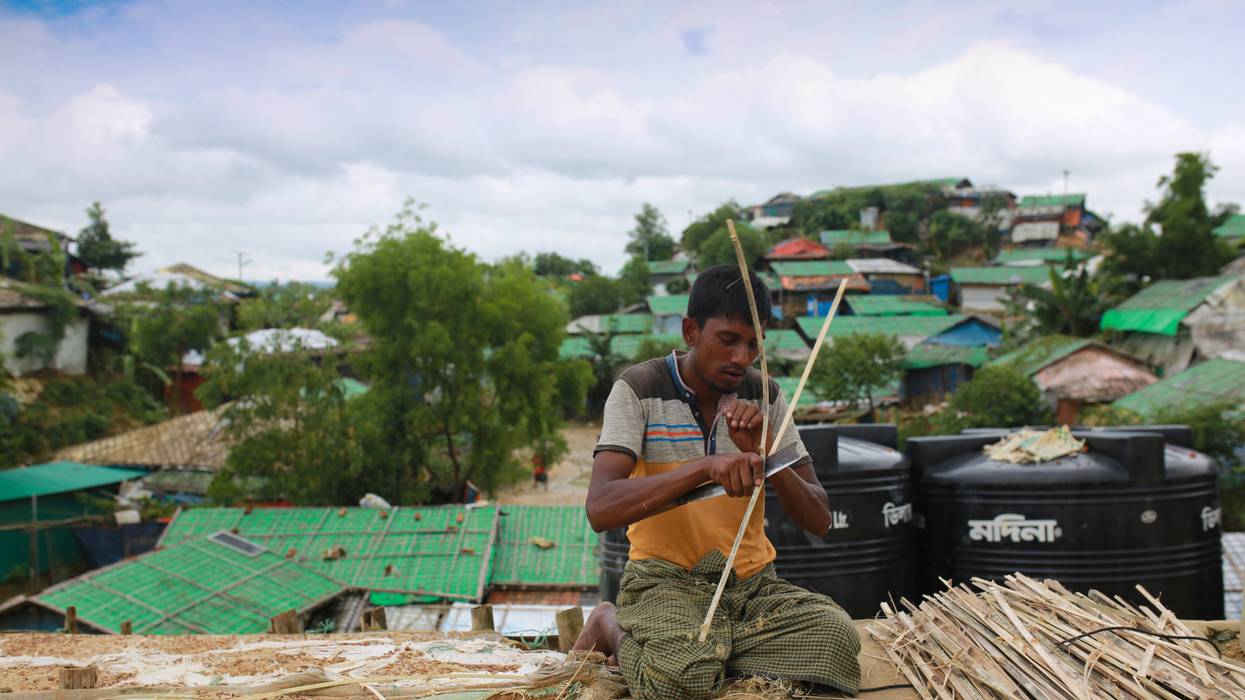
"This is a near worst-case scenario for one of the most storm surge flood vulnerable regions in the world," one scientist warned. "I hate to say it but we're looking at a potential mass casualty event."
Officials in Bangladesh and Myanmar are preparing Friday to evacuate hundreds of thousands of people as a tropical storm turbocharged by the fossil fuel-driven climate crisis strengthens in the Bay of Bengal.
Cyclone Mocha is forecast to intensify further before making landfall on Sunday between western Myanmar and the Bangladeshi city of Cox's Bazar, home to the world's largest refugee camp. Roughly 1 million Rohingya people forced to flee Myanmar amid the country's ongoing genocide against them live in the highly exposed district.
"This is a very, very scary storm," tweeted environmentalist and author Bill McKibben, pointing to its severity and current path.
"The government of Bangladesh needs to develop an inclusive evacuation plan."
The evacuation of more than 500,000 people from the Bangladeshi coast "is expected to start Saturday with 576 cyclone shelters ready to provide refuge to those who are moved from their homes," The Associated Press reported, citing government administrator Muhammad Shaheen Imran.
Bangladesh, a delta nation with more than 160 million residents, is already prone to extreme weather disasters, and that's increasingly the case as the warming Indian Ocean generates more intense and longer-lasting cyclones as well as heavier rainfall.
The impoverished Rohingya refugees living in Cox's Bazar are especially vulnerable to the incoming storm, and it's unclear how many, if any, of them are included in the Bangladeshi government's evacuation plans.
United Nations Refugee Agency spokesperson Olga Sarrado told Reuters that preparations are underway for a partial evacuation of the camp, if necessary. The World Health Organization is also setting up nearly three dozen mobile medical teams and 40 ambulances, along with emergency surgery and cholera kits for the camp.
"Still reeling from a devastating fire in March that destroyed more than 2,600 shelters and critical infrastructure, over 850,000 refugees risk losing their homes and livelihoods," the International Rescue Committee (IRC) warned in a statement. "Strong wind, heavy rains, and subsequent flash floods and mudslides could destroy shelters, community centers, and health clinics, depriving thousands of essential services and humanitarian aid."
"In preparation, more than 3,000 Rohingya refugees have been trained to respond to flooding and mudslides," said the IRC, which is "scaling up its emergency response in Cox's Bazar." According to the organization: "Three mobile medical teams will be deployed to remote areas in the camps and communities to provide emergency medical treatment. Additionally, a mobile protection unit designed for emergency settings will offer protection services to vulnerable groups such as women, girls, the elderly, and those with disabilities."
IRC Bangladesh director Hasina Rahman lamented how "time and again, we have seen the devastating impact of extreme weather events in Cox’s Bazar. Since 2017, countless shelters, schools, health clinics, and safe spaces for survivors of gender-based violence have been decimated as a result of floods and mudslides, as well as preventable tragedies such as the fire in March this year."
"As a low-lying country with major cities in coastal areas, Bangladesh is particularly vulnerable to climate change, which makes annual weather events—such as cyclones—more intense and frequent," said Rahman. "The impacts—loss of life, destroyed crops, challenges to livelihoods, damage to homes and infrastructure—are often borne by the people and communities who have contributed least to the climate crisis: Bangladesh, for example, emits less than 1% of global CO2 emissions."
While a rapid and just clean energy transition and other far-reaching transformations are needed to mitigate the causes of global warming, developing nations like Bangladesh cannot "cope with continued weather shocks without support that addresses the effects of climate change, such as early warning systems, anticipatory action, improving infrastructure to protect against flooding, and investment into climate adaptation," Rahman noted.
"It is crucial to fortify shelters and critical infrastructure," Rahman continued. "This involves using durable construction materials to strengthen community facilities like child-friendly spaces, learning facilities, and mosques, which serve as safe points during emergencies."
"Additionally, the government of Bangladesh needs to develop an inclusive evacuation plan in collaboration with U.N. agencies, humanitarian organizations, and the refugee and host communities," she stressed. "The plan should prioritize access to emergency shelters, ensuring family unity, and the protection of vulnerable groups, including women, children, the elderly, and individuals with disabilities."
The U.N.'s International Organization for Migration (IOM) observed that "last year, the camps escaped devastation from the Bay of Bengal cyclone Sitrang, which killed 35 people, displaced over 20,000, and caused over $35 million in damages in other parts of the country."
Cyclone Mocha, the first to form in the bay this year, "strengthened Friday into the equivalent of a category 1 Atlantic hurricane and is moving north at 11 kilometers per hour (7 miles per hour)," CNN reported, citing the Joint Typhoon Warning Center. "The storm's winds could peak at 220 kph (137 mph)—equivalent to a category 4 Atlantic hurricane—just before making landfall on Sunday morning."
India's Meteorological Department on Friday projected that "a storm surge of up to 2.5 meters (8.2 feet) was likely to inundate low-lying coastal areas in the path of the cyclone at the time of landfall," including Cox's Bazar, the outlet noted.
To assist refugees and local host communities as they brace for Cyclone Mocha, IOM said that it "is strengthening camp infrastructure, preparing for medical emergencies, and supporting volunteers in cyclone preparedness."
The U.N. Office for the Coordination of Humanitarian Affairs (OCHA) also expressed "grave concerns" about the storm's potential impacts on "already vulnerable and displaced communities" in neighboring Myanmar, where a military junta rules.
"Of particular worry is the situation facing 232,100 people who are displaced across Rakhine. Many of the [internally displaced person] camps and sites in Rakhine are located in low-lying coastal areas susceptible to storm surge," said OCHA. "The suffering of more than a million displaced people and other communities in the northwest is also expected to worsen over the coming days as the ex-cyclone moves inland bringing heavy rain. Displaced people in the northwest are already living in precarious conditions in camps, displacement sites, or in forests often without proper shelter."
In May 2008, Cyclone Nargis inundated Myanmar, killing more than 138,000 people, uprooting 800,000, and affecting 2.4 million.
"Extreme weather hazards will occur more frequently due to climate change in the years ahead. The linkages between climate change, migration, and displacement are increasingly pressing worldwide," IOM pointed out. "To avert, mitigate, and address displacement linked to climate disasters and strengthen people's resilience," the U.N. agency urged policymakers around the world "to implement sustainable climate adaptation, preparedness, and disaster risk reduction measures."
Despite knowing that extracting and burning more coal, oil, and gas will exacerbate the deadly effects of the climate emergency, profit-hungry fossil fuel executives are still planning to expand drilling with the continued support of many governments.
While COP27 delegates agreed to establish a loss and damage fund—after failing to commit to phasing out the fossil fuels that are causing so much harm—previous efforts to ramp up climate aid from the Global North to the Global South have fallen far short of what's needed due to the stinginess of wealthy countries, especially the United States.

Sweltering temperatures have devastated numerous Asian countries this month, eliciting demands for lifesaving climate action.
Hundreds of millions of people throughout Asia are suffering Wednesday as a deadly heatwave turbocharged by the fossil fuel-driven climate crisis continues to pummel large swaths of the continent, with little relief in sight—reigniting calls for immediate action to slash greenhouse gas pollution.
Record-high temperatures have been observed in several Asian countries this month, including at 109 weather stations across 12 Chinese provinces on Monday. Scorching heat in India, meanwhile, has killed more than a dozen people and forced school closures this week.
Last Friday, Bangkok-based climatologist and weather historian Maximiliano Herrera described the ongoing predicament as the "worst April heatwave in Asian history." Since then, additional records have been shattered in Southeast Asia.
Over the weekend, temperatures in Thailand surpassed 45°C (113°F) for the first time in recorded history. The Bangladeshi capital of Dhaka saw its hottest day in decades when temperatures soared past 40°C (104°F) on Saturday, causing road surfaces to melt. On Monday, temperatures in Myanmar surged to 44°C (111°F), a record for April. Laos is among the latest Asian countries to set a new all-time high, reaching 42.7°C (109°F) on Tuesday.
"Earlier this month, Thai authorities issued a health alert for several provinces as the heat index was forecast to reach 50.2°C [122°F] in the Bang Na district of the capital Bangkok. The heat index is what the temperature 'feels like' and considers both air temperature and humidity to measure its impact," CNN reported Wednesday. "On Tuesday, Thai Prime Minister Prayut Chan-o-cha expressed concern over 'dangerously high temperatures in various parts of Thailand' and said in Bangkok's Bang Na area, temperatures 'could reach 52.3°C [126°F].'"
"April and May are typically the hottest months of the year for South and Southeast Asia as temperatures rise before monsoon rains begin and bring some relief. But the heat in Thailand has been compounded by an intense smoggy season that has caused pollution levels to spike," CNN noted. "The tourist hotspot of Chiang Mai in the north ranked as the world's most polluted city for seven straight days as smoke from forest fires and widespread crop burning deteriorated the air quality. At least one hospital in the city said it had reached 'full ward capacity' as patients sought medical treatment for respiratory issues."
Fears are mounting that dangerously high temperatures could persist in Thailand beyond the typical summer months, potentially resulting in drought and crop failures.
" Pakistan, India, Nepal, and Bangladesh have all seen temperatures topping 40°C (104°F) for many days," CNN noted. "Heatwaves in India usually take place between March and July, but in recent years these hot spells have become more intense, more frequent, and longer" due to global warming.
As The Guardian reported Wednesday:
In recent years, India has become particularly vulnerable to extreme heat and experts fear this year could be even worse. The April heatwave has battered north and east Indian states, with this week the meteorological department issuing an orange warning of a severe heatwave in parts of Bihar, Jharkhand, Odisha, Andhra Pradesh, and West Bengal, all states with a high proportion of rural workers and laborers who are forced to work outside even as temperatures and humidity soar.
Six cities in north and east India recorded temperatures above 44°C (111°F) on Tuesday, and the heatwave is projected to continue until at least Friday.
Last April and May, the Indian subcontinent experienced a brutal heatwave that caused multiple deaths and intensified glacial melt, which contributed to calamitous flooding in Pakistan in August.
China also endured a historic heatwave and drought last year, though it occurred later, from June through August.
The heatwave currently hammering much of Asia is occurring in the context of roughly 1.3°C of global temperature rise since the late 1800s.
Recent data shows that annual emissions of carbon dioxide, methane, and nitrous oxide increased again in 2022, pushing atmospheric concentrations of the three main heat-trapping gases to all-time highs.
Before last year's COP27 climate summit—which ended, like the 26 prior meetings, with no concrete blueprint to rapidly move away from planet-heating fossil fuels—the United Nations warned that existing emission reduction targets and policies are so inadequate that there is "no credible path" currently in place to achieve the Paris agreement's goal of limiting planetary heating to 1.5°C above preindustrial levels, beyond which impacts will grow increasingly deadly, especially for people in low-income countries who bear the least responsibility for the crisis.
The U.N. made clear that only "urgent system-wide transformation" can prevent catastrophic temperature rise of up to 2.9°C by 2100. Nevertheless, oil and gas corporations—bolstered by trillions of dollars in annual public subsidies—are still planning to expand fossil fuel production in the coming years, prioritizing short-term profits over the lives of those who will be harmed by the resulting climate chaos.
The Intergovernmental Panel on Climate Change's (IPCC) latest synthesis says that heatwaves and other extreme weather disasters will become more common and severe with each additional degree of global temperature rise.
One 2022 study included in the IPCC assessment found that "heatwaves will be between three and 10 times more often by the turn of the century," CNN reported Wednesday. "In the tropics, which encompasses much of Asia, people could be exposed to dangerous heat most days of the year, the study found. Days of 'extremely dangerous heat'—which is defined as 51°C (124°F)—could double and experts say those levels of heat push the limits of human survivability."
The U.N. warned last year that in the absence of swift decarbonization, extreme heat is projected to kill as many people by the end of the century as all cancers and infectious diseases combined, with disproportionate impacts on people in impoverished nations. By mid-century, more than 2 billion children are projected to be at risk of suffering from frequent heatwaves.
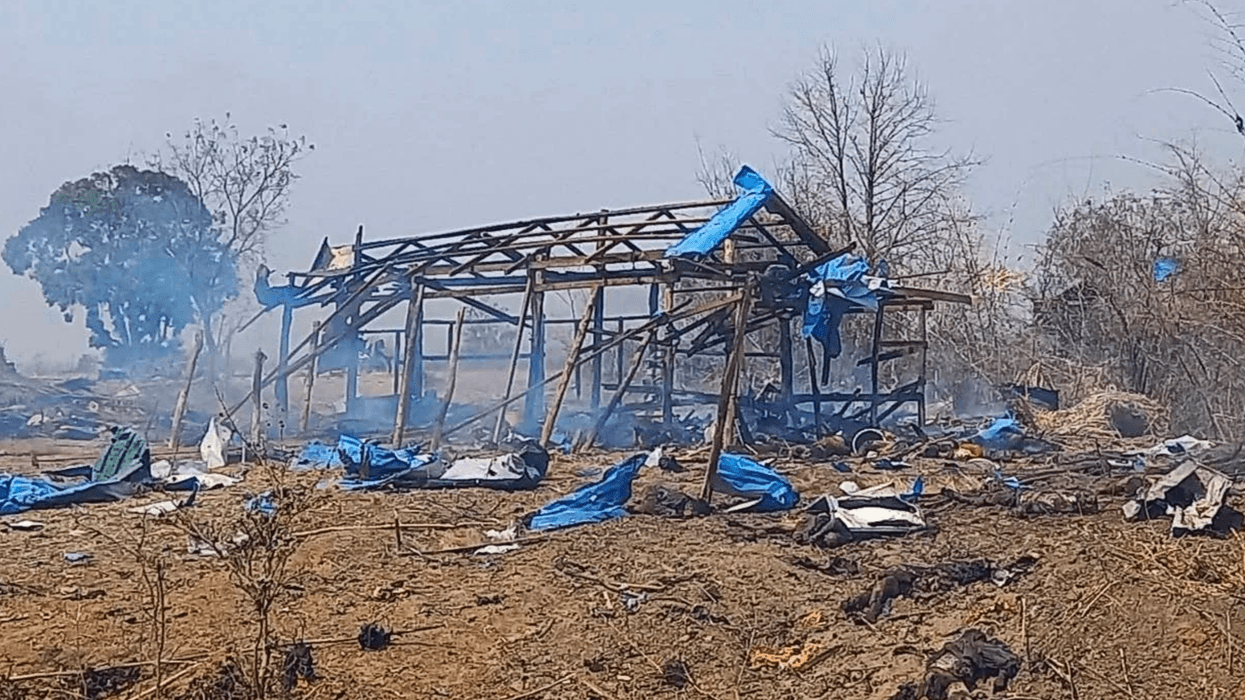
"Supplies of aviation fuel reaching the military enable these war crimes," warned one human rights campaigner. "These shipments must stop now."
More than 100 people including at least 30 children were reportedly killed Tuesday in airstrikes by Myanmar's military dictatorship targeting opponents of the coup regime.
Witnesses and members of the opposition National Unity Government told reporters that a military jet and Mi-35 helicopter gunship bombed and strafed a gathering marking the opening of a new office of the People's Defense Force (PDF), a militant resistance group, in the village of Pa Zi Gyi, Kanbalu Township in the country's northwestern Sagaing region.
"This was a war crime," Byar Kyi, a resistance fighter who helped recover victims' bodies, told The New York Times. "The place they attacked was not a military target."
Tom Andrews, the United Nations' special rapporteur for human rights in Myanmar, tweeted: "The Myanmar military's attacks against innocent people, including today's airstrike in Sagaing, [are] enabled by world indifference and those supplying them with weapons. How many Myanmar children need to die before world leaders take strong, coordinated action to stop this carnage?"
One villager told the BBC that the jet bombed Pa Zi Gyi at about 7:00 am local time, followed by a sustained 20-minute attack by the helicopter.
Local residents and journalists uploaded gruesome photos and videos showing dead and dismembered children, many of their bodies burned or blasted beyond recognition, lying strewn about the bombed-out village in the wake of the attack.
"The corpses cannot be identified since they are all scattered in body parts—legs and heads," one rescue worker told The Irrawaddy, an anti-junta news site. "After gathering them all, we burned them."
"The corpses cannot be identified since they are all scattered in body parts—legs and heads."
A resident of a neighboring village told the same publication that "at the moment it's hard to say exactly how many casualties there were."
"We haven't been able to retrieve bodies and body parts, as the area where the air strike occurred is still burning," they added.
Regional media also reported at least 11 deaths in a Monday airstrike on a high school run by the Chin National Defense Force in Falam Township, Chin state.
Myanmar's military—which seized power in a February 2021 coup—frequently targets anti-regime strongholds including Sagaing and Chin state. According to a BBC analysis published at the end of January, there have been over 600 aerial attacks by the junta's forces since the coup.
Last September, a pair of military helicopters attacked a school in Sagaing, killing at least 11 children, according to the United Nations children's agency. The following month, regime warplanes bombed an outdoor concert in Kachin state, killing at least 80 people.
"The military continues its mindless war on our country's own people. Their sole aim is to consolidate power through death and destruction. They will not succeed," National Unity Government Acting President Duwa Lashi La said in a Tuesday Facebook post.
"We will continue our fight for a new Myanmar," he added. "Our goal is a Myanmar in which such atrocities cannot occur and where power derives from the will of the people, not force of arms."
Human rights groups amplified calls to suspend aviation fuel shipments to Myanmar's military in the wake of the latest airstrikes.
"The relentless air attacks across Myanmar highlight the urgent need to suspend the import of aviation fuel," Montse Ferrer, Amnesty International's business and human rights researcher, said in a statement.
"Amnesty reiterates its calls on all states and businesses to stop shipments that may end up in the hands of the Myanmar Air Force," Ferrer continued. "This supply chain fuels violations of international humanitarian law, including war crimes, and it must be disrupted in order to save lives."
Referring to the Association of Southeast Asian Nations, Ferrer added: "Instead of taking a back seat, ASEAN must step up and play a leading role in resolving the human rights catastrophe in Myanmar. The United Nations Security Council must find ways to push through effective actions to hold the Myanmar military accountable, including by referring the situation in the country to the International Criminal Court."
The European Union and countries including Canada, the United Kingdom, and the United States have moved to block the sale, supply, and shipment of aviation fuel to the Myanmarese regime and associated companies and businesspeople.
However, a March report from Amnesty International, Global Witness, and Burma Campaign U.K. showed Asian and European companies continued to be involved in supplying Myanmar's military with aviation fuel.
"Since the military's coup in 2021, it has brutally suppressed its critics and attacked civilians from the ground and the air. Supplies of aviation fuel reaching the military enable these war crimes," Ferrer said last month. "These shipments must stop now."
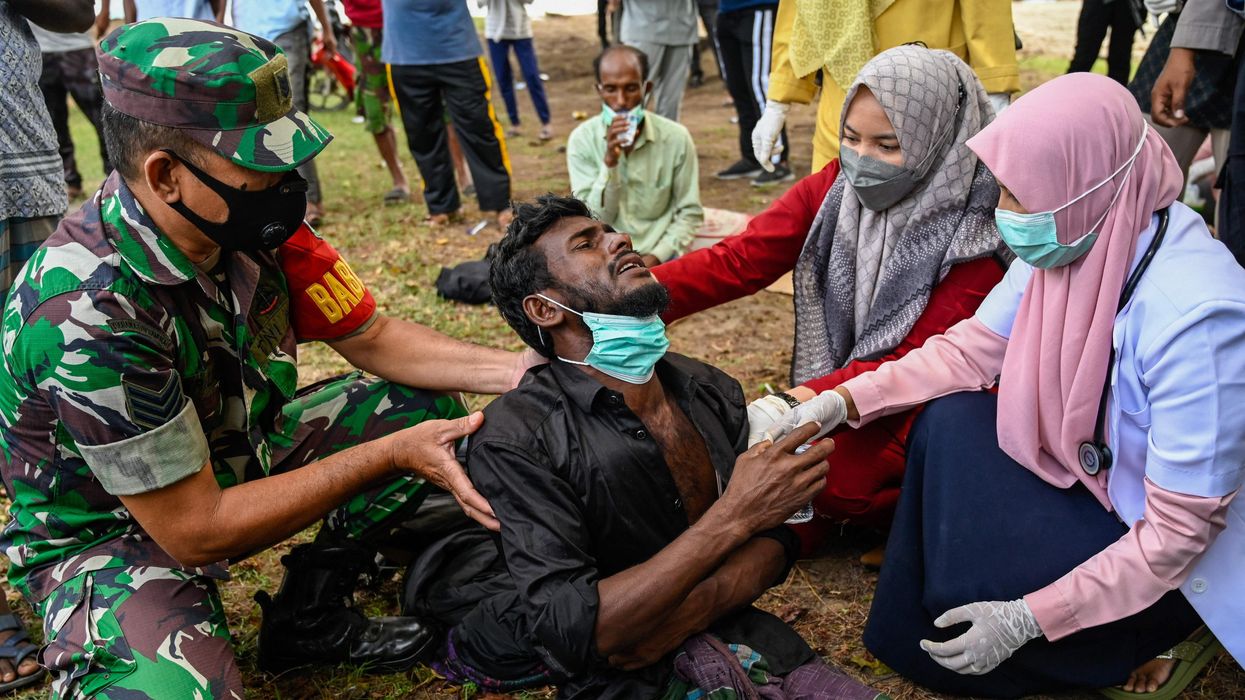
However, around 180 other Rohingya are feared dead amid reports their overcrowded boat sank after setting sail from Bangladesh earlier this month.
The rescue of hundreds of Rohingya refugees by fishers and local authorities in Indonesia's Aceh province was praised Tuesday as "an act of humanity" by United Nations officials, while relatives of around 180 Rohingya on another vessel that's been missing for weeks feared that all aboard had perished.
The United Nations High Commissioner for Refugees (UNHCR) said that "Indonesia has helped to save 472 people in the past six weeks from four boats, showing its commitment and respect of basic humanitarian principles for people who face persecution and conflict."
"We feel like we got a new world today... We could see their faces again. It's really a moment of joy for all of us."
"UNHCR urges other states to follow this example. Many others did not act despite numerous pleas and appeals for help," the Geneva-based agency added. "States in the region must fulfill their legal obligations by saving people on boats in distress to avoid further misery and deaths."
Ann Maymann, the UNHCR representative in Indonesia, said in a statement that "we welcome this act of humanity by local communities and authorities in Indonesia."
"These actions help to save human lives from certain death, ending torturous ordeals for many desperate people," she added.
The Syndey Morning Herald reports residents of Ladong, a fishing village in Aceh, rushed to help 58 Malaysia-bound Rohingya men who arrived Sunday in a rickety wooden boat, many of them severely dehydrated and starving.
The following day, 174 more starving Rohingya men, women, and children, were helped ashore by local authorities and fishers after more than a month at sea.
Mohammed Rezuwan Khan, whose 27-year-old sister Hatamonesa was aboard the boat with her 5-year-old daughter, told Pakistan's Arab News that "we feel like we got a new world today."
“We could see their faces again. It's really a moment of joy for all of us," he said of his family. Speaking of his sister, he added that "she thought that she would die in the voyage at sea."
Babar Baloch, the UNHCR regional spokesperson in Bangkok, stated that 26 people had died aboard the rescued vessel, which left Bangladesh a month ago.
"We were raising alarm about this boat in early December because we had information that it was in the regional waters at least at the end of November," he said. "So when we first got reports that it was somewhere near the coast of Thailand, we approached authorities asking them to help, then when it was moving towards Indonesia and Malaysia we did the same."
"After its engine failure and it was drifting in the sea, there were reports of this boat being spotted close to Indian waters and we approached and asked them as well and we were also in touch with authorities in Sri Lanka," Baloch continued.
"Currently as we speak, the only countries in the region that have acted are Indonesia, in big numbers, and Sri Lanka as well."
According to the BBC, the Indian navy appears to have towed the boat into Indonesian waters after giving its desperate passengers some food and water. The boat drifted for another six days before it was allowed to land.
"Currently as we speak, the only countries in the region that have acted are Indonesia, in big numbers, and Sri Lanka as well," Baloch said. "It is an act in support of humanity, there's no other way to describe it."
Relatives of around 180 other Rohingya who left Bangladesh on December 2 said Tuesday that they fear the overcrowded vessel has sunk in the Andaman Sea. Mohammad Noman, a resident of a Rohingya refugee camp in Cox's Bazar, Bangladesh, told The Guardian that his sister was aboard the boat with her two daughters, who are 5 and 3 years old.
"Every day we called up the boat two or three times on the boatman's satellite phone to find out if my sister and her two daughters were all right. Since December 8, I have failed to get access to that phone," he said. "I know some other people in Cox's Bazar who made phone calls to the boat every day and stayed in contact with their relatives there. None of them has succeeded to reach the phone after December 8."
The captain of another vessel transporting Rohingya refugees said he saw the distressed boat swept up in stormy seas sometime during the second week of December.
"It was around 2:00 am when a strong wind began blowing and big waves surfaced on the sea. [Their] boat began swaying wildly, we could gauge from a flashlight they were pointing at us," he told The Guardian. "After some time, we could not see the flashlight anymore. We believe the boat drowned then."
More than a million Rohingya Muslims are crowded into squalid refugee camps in southern Bangladesh after having fled ethnic cleansing, apartheid, and other violence and repression in Rakhine state, Myanmar, which is ruled by a military dictatorship. Since 2020, thousands of Rohingya have fled the camps by sea.
Hundreds have died during the perilous journey. If the sinking of the boat with 180 aboard is confirmed, it would make 2022 the deadliest year for Rohingya at sea, according to UNHCR.
UNHCR's Baloch stressed that "countries and states in the region have international obligations to help desperate people."
"We have been calling on states to go after people smugglers and human traffickers as they are responsible for putting people on those death-trap boats, but victims have to be saved and saving human life is the most important act," he told the Morning Herald.
"The refugee issue and saving lives cannot just be left to one country, it has to be done collectively, together in the region," he added.
Tun Khin, a Rohingya activist and refugee who now heads the Burmese Rohingya Organization U.K., took aim at regional power Australia, which has been criticized for decades over its abuse of desperate seaborne asylum-seekers, nearly all of whom are sent to dirty, crowded offshore processing centers on Manus Island and Nauru to await their fate.
"Australia has too often set a shameful example for the region through its treatment of refugees," he told the Morning Herald.
"These people are facing genocide in Burma," Khin added, using the former official name of Myanmar. "It is a hopeless situation for them in Bangladesh, there is no dignity of life there."

"These are human beings—men, women, and children," said one U.N. expert. "We need to see the states in the region help save lives and not let people die."
A United Nations refugee advocate on Friday joined human rights defenders in imploring South and Southeast Asian nations to rescue nearly 200 Rohingya refugees "on the verge of perishing" after drifting on the Andaman Sea for weeks—an ordeal that's already reportedly claimed around 20 lives aboard the vessel.
The refugees—who are fleeing ethnic cleansing and other severe state repression in their native Myanmar—have been packed aboard the unseaworthy boat for as long as a month without adequate food or water, the office of the United Nations High Commissioner for Refugees (UNHCR) said in a statement.
"While many in the world are preparing to enjoy a holiday season and ring in a new year, boats bearing desperate Rohingya men, women, and young children, are setting off on perilous journeys in unseaworthy vessels."
"It is devastating to learn that many people have already lost their lives, including children," Indrika Ratwatte, UNHCR's Asia and Pacific director, said on Friday, lamenting that the refugees' plight has been "continuously ignored" by countries in the region.
"This shocking ordeal and tragedy must not continue," Ratwatte continued. "These are human beings—men, women, and children. We need to see the states in the region help save lives and not let people die."
Using his phone, the captain of the stranded boat told Mohammed Rezuwan Khan, whose sister and 5-year-old niece are on the vessel, that "we're dying here."
Khan told The Washington Post on Friday that he has lost contact with his relatives aboard the vessel and that he is "very concerned" for their well-being.
"I ask the international community to not let them die," Khan added. "Rohingya are human beings. Our lives matter."
According to UNHCR:
Since the first reports of the boat being sighted in Thai waters, UNHCR has received unverified information of the vessel being spotted near Indonesia and then subsequently off the coast of the Andaman and Nicobar Islands of India.
Its current location is reportedly once more back eastwards, in the Andaman sea north of Aceh.
UNHCR has repeatedly asked all countries in the region to make saving lives a priority and requested the Indian marine rescue center earlier this week to allow for disembarkations.
While the Sri Lankan navy and local fishers acted rapidly to rescue over 100 Rohingya from a boat in distress in the Indian Ocean last weekend, no such assistance has been rendered to the vessel drifting in the Andaman Sea.
"International humanitarian law requires the rescue of people at sea when they are in distress, and their delivery to a place of safety," Amnesty International stressed in a tweet Thursday. "Further delays to alleviate this suffering or any attempts to send Rohingya back to Myanmar where they face apartheid are unconscionable."
Two weeks ago, a Vietnamese commercial ship en route to Myanmar rescued 154 Rohingya refugees from a sinking boat before turning them over to Burmese authorities, who reportedly arrested the migrants.
On Thursday, United Nations Special Rapporteur on Myanmar Tom Andrews said that nations in the region "should prevent any loss of life and urgently rescue and provide immediate relocation" to the stranded Rohingya.
"Too many Rohingya lives have already been lost in maritime crossings."
"Too many Rohingya lives have already been lost in maritime crossings," asserted Andrews, a former Democratic U.S. congressman from Maine. "Increasing numbers of Rohingya have been using dangerous sea and land routes in recent weeks, which highlights the sense of desperation and hopelessness experienced by Rohingya in Myanmar and in the region."
UNHCR has reported a 600% increase of mostly Rohingya people endeavoring perilous sea journeys from Myanmar and Bangladesh in 2022. The agency says at least 119 people have died or gone missing this year.
"While many in the world are preparing to enjoy a holiday season and ring in a new year, boats bearing desperate Rohingya men, women, and young children, are setting off on perilous journeys in unseaworthy vessels," Andrews said.
"The international community must step forward," he added, "and assist regional actors to provide durable solutions for the Rohingya."

The United States--whose military has killed more foreign civilians than any other armed force on the planet since the end of World War II--on Friday joined 79 other nations in signing a declaration aimed at protecting civilians from explosive weapons in populated areas.
"It is time for all states to endorse and implement the declaration to help civilians and their communities during and after conflict."
The signing of the declaration at the Explosive Weapons in Populated Areas (EWIPA) Conference in Dublin, Ireland follows three years of international negotiations. While the U.S., U.K., France, and 20 other NATO members signed the agreement, major military powers including Russia, China, India, and Israel did not.
The declaration's signatories committed to "strengthening the protection of civilians and civilian objects during and after armed conflict, addressing the humanitarian consequences arising from armed conflict involving the use of explosive weapons in populated areas, and strengthening compliance with and improving the implementation of applicable international humanitarian law."
Irish Foreign Minister Simon Coveney said in a statement that "today's political declaration sets out actions to be taken in military operations to strengthen the protection of civilians."
"Its implementation will change how militaries operate in populated areas, including a commitment around restricting or refraining from the use of explosive weapons when their use may be expected to cause harm to civilians or civilian objects," he added.
Laura Boillot, coordinator for the International Network on Explosive Weapons (INEW), which includes 49 advocacy groups, said that "this declaration sends a clear message that using explosive weapons in populated areas causes unacceptable civilian suffering and devastation and must stop."
"It is time for all states to endorse and implement the declaration to help civilians and their communities during and after conflict," she added.
According to the U.K.-based group Action on Armed Violence (AOAV), an INEW member, over 90% of the people killed or injured by explosive weapons around the world are civilians.
AOAV explained:
The declaration requires states to impose limits on the use of explosive weapons in populated areas, which is the leading cause of harm to civilians in conflicts today. It also requires states to assist victims and affected communities both during and after conflict and to address the long-term suffering that stems from the use of explosive weapons in populated areas.
Of note, of the 80 countries who signed up to the declaration, 57 have witnessed explosive violence in their own territories since 2010. Over two-thirds of explosive violence incidents witnessed by the signatory countries were in populated areas, and in those incidents 87% of victims have been civilians--almost 25,000 people.
The new declaration comes as civilians are being killed, injured, displaced, and traumatized in countries around the world in conflicts and actions including Russia's invasion of Ukraine; Russian, Turkish, and U.S.-led coalition bombing and artillery bombardment of Syria; Syrian government attacks; Saudi-led coalition airstrikes in Yemen; Houthi rebel attacks; bombing and shelling by Myanmar forces targeting Kachin, Karen, and Rohingya people; Israeli attacks on Palestine; and, until recently, French bombing of Mali and the Tigray war in Ethiopia.
Unmanned aerial drone and other airstrikes by U.S. forces also continue in nations including Afghanistan, Somalia, and Syria during the 21-year, open-ended War on Terror--in which more than 387,000 civilians have been killed, according to the Costs of War Project at Brown University's Watson Institute for International and Public Affairs.
"We are encouraged by the number of countries that have signed the declaration today," Federico Borello, executive director of the Washington, D.C.-based Center for Civilians in Conflict, another INEW member, said in a statement. "However the protection of civilians is the responsibility of all states. We call on countries that have not signed yet the political declaration to join in this international effort to protect civilians from bombing and shelling in towns and cities."
INEW's Boillot asserted that "the adoption of this declaration is a milestone, but it is not the end of the journey. We have a long path ahead of us--one that will require committed and sustained work from all of us, in the spirit of partnership and collaboration that has been the hallmark of the process to date."
"Only by continuing to work together in a collaborative, committed, and transparent manner, and by never forgetting the people at the heart of our efforts, can we ensure that the declaration's goals will be pursued with the urgency and unwavering commitment they deserve," she added.

Five years ago this month, white supremacists murdered Heather Heyer in Charlottesville, Virginia, spurring Joe Biden to run for president and later sign a bill named after Heather to fight hate crimes. Five years ago this month, Hurricane Harvey devastated Texas and Louisiana, and Congress responded with a $15 billion relief bill. And five years ago this month, the Burmese military launched a genocidal attack on Rohingya Muslims. But mass atrocities continue in my native land and the U.S. has done little to stop it. It's time for the U.S. to take bold action to end impunity and create peace, security, and stability in Burma.
The U.S. must do more to stop the Burmese military's brutality.
The Burmese military has been waging war against its own citizens for decades. My aunt and uncle were among the military's victims in the late 1970s, and I was forced to leave Burma in 1995 to escape the violence. On August 25, 2017, the military launched a scorched-earth campaign of terror against the Rohingya Muslim minority that hasn't stopped since. In five years of bombing, rape, and murder, the Rohingya people are being systematically erased. Entire villages, like Tula Toli and Inn Din, have been destroyed. These brutal attacks have forced more than 740,000 refugees to flee their homeland, the largest human exodus in Asia since the Vietnam War. There is only one word for these atrocities: genocide.
Impunity has only emboldened the Burmese military to continue their crimes. In February 2021, the military overthrew the elected government and inserted a self-made caretaker, known as the State Administration Council (SAC). The junta has spread violence across the country, torturing and killing those who stand up for their basic rights. On July 23 this year, the junta executed four activists -- Phyo Zeya Thaw, Kyaw Min Yu, Hla Myo Aung, and Aung Thura Zaw -- after convicting them in sham trials. They are now among more than 2,100 civilians the junta has killed since 2021.
Why is the Burmese military able to keep perpetrating this genocide? Because the international community, including the U.S., is letting it happen. Last year, the Association of Southeast Asian Nations (ASEAN) published a five-point peace consensus, but that has done nothing to stop the bloodshed. Meanwhile, the U.S. has deferred to ASEAN instead of taking action. In March 2022, Secretary of State Antony Blinken did declare that the military committed genocide against the Rohingya people, but he failed to announce any real consequences. In early August, Blinken attended an ASEAN meeting, where one minister excused inaction by saying "even Superman cannot solve" the crisis.
Every day that action isn't taken against the junta, the Burmese people pay the price with their lives. Before the execution of those four activists in July, thirty-five unarmed civilians--including two humanitarian aid workers--were burned to death in a military massacre last Christmas Eve. Will the first anniversary of those horrific murders pass this December without any U.S. action?
There are five tangible steps the Biden administration must take now to hold the junta accountable and support the people of Burma. First, it must cut off the junta's revenue sources by imposing sanctions on military-owned companies and their cronies, including Myanmar Oil and Gas Enterprises. Second, it must stop the flow of arms to the junta by coordinating a global arms embargo and sanctions on the supply of aviation fuel. Third, it must ensure humanitarian aid gets into the hands of internally displaced people (IDPs), and not the junta. Fourth, it must designate a safe zone for IDPs who have nowhere to go. Fifth, it must refer the junta to the International Criminal Court for war crimes and crimes against humanity. These five important steps offer a clear path forward for U.S. action.
To be sure, the U.S. is struggling with many of its own challenges at home. But that doesn't mean we can simply stand by as the lives and freedoms of 54 million people in Burma are under attack. As President Biden said in April following Russia's illegal invasion of Ukraine, "We either back the Ukrainian people as they defend their country or we stand by as the Russians continue their atrocities and aggression in Ukraine." The same is true for Burma. The junta was one of the few entities around the world to endorse Russia's invasion, and Russia has been one of the main suppliers of arms to the junta. The Biden administration's robust response to the atrocities in Ukraine proves that where there's a will, there's a way. Just a fraction of the action taken against Russia would be transformational in Burma's struggle for democracy and human rights.
I have lost half of my immediate family members to the Burmese military. Too many others in Burma have suffered similar losses as every day brings new horrors under a genocidal regime. The people of Burma have been crying out for justice for years, but for years those cries have been ignored. The U.S. must do more to stop the Burmese military's brutality. It is up to the Biden administration if the U.S. will be marking the next anniversary of the Rohingya genocide with deadly silence.