SUBSCRIBE TO OUR FREE NEWSLETTER
Daily news & progressive opinion—funded by the people, not the corporations—delivered straight to your inbox.
5
#000000
#FFFFFF
To donate by check, phone, or other method, see our More Ways to Give page.


Daily news & progressive opinion—funded by the people, not the corporations—delivered straight to your inbox.
"We do everything with love to assist people, but the reality right now is that we don’t have enough resources," said one Cuban doctor, who added that "the main cause of everything is the USA."
The Trump administration's oil blockade of Cuba—an escalation of the 65-year US stranglehold on the socialist island's economy—is killing Cubans amid a severe shortage of electricity and critical basic medical supplies, doctors and nurses there told reporters this week.
"I can’t tell you how many deaths, but I’m sure there are more than in the same period last year,” Dr. Alioth Fernandez, chief anesthesiologist at William Soler Pediatric Hospital in Havana, told The New York Times in an article published Friday. “I see it in shift handovers, in colleagues’ comments, and in children I’ve operated on.”
Cuba's universal healthcare system is internationally known. Its "Army of White Coats" has been deployed around the world, both to provide routine and specialized care, as well as during emergencies such as the Haiti earthquake, Sierra Leone Ebola outbreak, and Covid-19 pandemic in Italy.
Despite decades of success under increasingly adverse conditions, Cuba's vaunted health system is under tremendous strain, due in no small part to the cumulative effects of generations of US economic sanctions.
"Since I was born, this is the most difficult time, without any doubt," José Carlos, a resident intern at Havana Cardiology Institute, told the Canadian Broadcasting Corporation on Thursday. "We do everything with love to assist people, but the reality right now is that we don’t have enough resources."
The lack of fuel is limiting ambulance service and keeping many doctors and other medical professionals from commuting to hospitals that are canceling surgeries and discharging patients early. As Common Dreams reported earlier this week, more than 96,000 Cubans—including 11,000 children—are waiting for surgery due to the fuel shortage.
"Everything is hitting us—energy, resources, transportation," Carlos told the CBC.
When the lights go out, neonatal nurses use hand-pumped ventilators to keep infants alive. Without power, hospitals and clinics can't administer chemotherapy cycles or dialysis treatments.
“I don’t know how long we can keep going,” Xenia Álvarez, the mother of a 21-year-old man who suffers a rare genetic disease and requires full-time use of a ventilator, told The New York Times.
Shortages of basic medicines and supplies are forcing doctors to substitute medications, delay treatments, or even ask patients' relatives to find supplies themselves. Antibiotics, painkillers, and medications to treat chronic diseases are scarce, as are gloves, syringes, and diagnostic equipment. Hospital staff also report difficulty maintaining sterile conditions.
While the US government claims that humanitarian goods like medicine are exempt from sanctions, critics counter that the fuel blockade, along with severe restrictions on banking and shipping, effectively block many medical supplies from reaching the island. The Trump administration has also been pressuring countries into expelling the lifesaving Cuban medical teams, sparking widespread outrage and condemnation.
After the Fidel Castro-led revolution that ousted the US-backed dictatorship of Fulgencio Batista, the United States imposed an economic embargo on the island that has been perennially condemned by an overwhelming majority of United Nations member states for 33 years. Cuba says US sanctions have cost its economy more than $200 billion in inflation-adjusted losses.
US Secretary of State Marco Rubio recently admitted that the economic chokehold is meant to force political change in Cuba while simultaneously disparaging the Cuban economy as "dysfunctional."
Rubio also said that although President Donald Trump is currently focused on the US-Israeli war of choice on Iran—one of seven nations attacked since the self-proclaimed "president of peace" returned to the White House—he would "be doing something with Cuba very soon."
Trump said earlier this month that he believes he'll "be having the honor of taking Cuba," language echoing the 19th century US imperialists who conquered the island along with Puerto Rico and the Philippines from Spain.
In addition to patients, the crisis in Cuba is also taking a physical and psychological toll on Cuban doctors—who, even with a recent raise earn just 100 pesos, or about $2.40, per 12-hour shift. This, in a country in which a dozen eggs cost nearly $10. Many doctors rely upon side hustles to get by.
"Doctors' pay is just for basic things," said Carlos. "It doesn’t allow you to buy many things in the supermarket or go to a restaurant or a hotel, or things like that."
Breakdowns and burnout are on the rise.
"I've seen doctors cry," one physician, who wished to remain anonymous for fear of retaliation, told Reuters. "With this crisis, they cry. They've stopped working, they've become depressed. You can see it on their faces."
Despite the worsening situation, Carlos told the CBC that he does not want to leave Cuba, and blamed the US for the crisis.
"The main cause of everything is the USA," he said. "I have no doubt about that."
Some do want to leave, blaming their own government as well the US embargo for Cuba's suffering. Others are taking things one day at a time.
"We don’t know what will happen," a nurse who gave only her first name, Rita, told the CBC, "so we just keep working."
The mounting—and preventable—deaths in Cuba are prompting renewed calls for the US to lift sanctions on Cuba.
"No patient deserves this. Trump's cruel Cuban blockade is killing people unnecessarily," National Nurses United, the largest US nurses' union, said on social media Friday. "Depriving Cubans of essential resources needed to sustain life and health is an unconscionable violation of human rights. Nurses say: End the blockade now!"
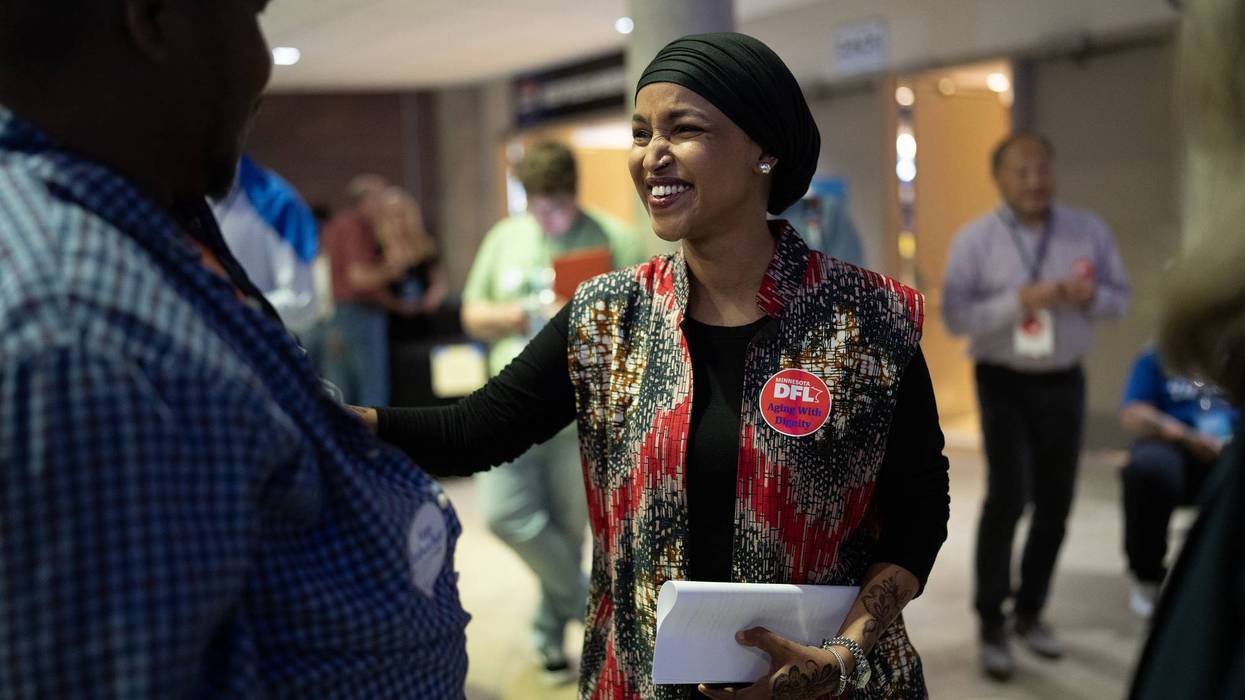
Congresswoman Ilhan Omar (D-Minn.) also weighed in during a Thursday floor speech in which she said that "Cuba poses no threat to us, yet we are strangling an entire nation with economic warfare."
Trump's oil blockade is strangling an entire nation.
Families are going without food. Water systems are failing. Hospitals are struggling to stay open. This is economic warfare.
I'm calling for an immediate end to this cruel and indefensible blockade. Hands off Cuba. pic.twitter.com/MNybPNlBHn
— Rep. Ilhan Omar (@Ilhan) March 26, 2026
"Families are going without food. Water systems are failing. Hospitals are struggling to stay open," she continued. "These tactics are designed to suffocate an island into submission. Make no mistake: This unconscionable suffering is occurring because Trump is trying to force regime change."
"Hands off Cuba," Omar added. "End the blockade now."
One advocacy group leader highlighted that "$200 billion is enough to materially change the lives of Americans," from establishing universal pre-K education to building over 100,000 housing units.
As US President Donald Trump on Thursday confirmed reporting that he's seeking $200 billion more from Congress to continue waging his unpopular war of choice on Iran, Rep. Ilhan Omar was among those forcefully pushing back.
"We're told there's no money for universal healthcare or to end hunger in this country. But somehow $200 billion more for war will likely move through Congress without question," said the progressive Minnesota Democrat, who fled civil war in Somalia as a child. "Not another penny for another endless war."
Since Trump and Israeli Prime Minister Benjamin Netanyahu started bombing Iran late last month—creating a spiraling crisis that has now killed and injured thousands of people across the Middle East, plus damaged civilian infrastructure in multiple countries—anti-war lawmakers and organizations have delivered similar messages.
"While they kick 17 million Americans off their healthcare, Republicans want to spend billions on Trump's reckless war of choice," Rep. Greg Casar (D-Texas), chair of the Congressional Progressive Caucus, said in early March. "Hell no."
Last week, shortly after Pentagon officials told Congress that just the first six days cost Americans more than $11.3 billion, over 250 groups collectively told lawmakers on Capitol Hill to "vote against any additional funding for Trump's unconstitutional war."
At the time, the reported figure was a quarter of what it is now: $50 billion. The coalition noted that the funding "would be enough to restore food assistance for 4 million Americans that was taken away in the tax and budget reconciliation bill, establish universal pre-K education, and pay for the annual construction of more than 100,000 units of housing, among other possible priorities."
After Trump confirmed that he wants four times more than expected, one coalition member, the Institute for Middle East Understanding (IMEU) Policy Project, took to social media to highlight other ways the money could be spent to improve the lives of working Americans, from school meals and paid leave to funding all levels of education.
Another coalition member, Public Citizen, released a Thursday statement in which co-president Robert Weissman ripped Trump's spending request as "grotesque beyond words."
According to Weissman:
It should properly be understood not just as a request to replenish supplies, but to expand, escalate, and perpetuate the illegal, unconstitutional, unpopular and devastating war on Iran. Congress should understand that approving any portion of this funding opens the gates for one, two, and potentially many more war funding requests in the future.
How dare the administration propose this gargantuan sum to expand an illegal war of choice at the same time it has rammed through deep cuts in healthcare and food assistance, refuses to spend foreign assistance at a cost of millions of lives, and has cut spending on protecting clean air, maintaining our national parks, investing in health research, protecting consumers from fraud, and so much more.
$200 billion is enough to materially change the lives of Americans and truly make our country stronger. It would be enough to restore food assistance to the 4 million Americans and Medicaid to the 15 million Americans who will lose those crucial supports under the Republican reconciliation bill; establish universal pre-K education; pay for the annual construction of more than 100,000 units of housing; double the budget of the Environmental Protection Agency; and expand Medicare to cover dental, vision, and hearing.
Weissman argued that "every member of Congress should announce, right now, that they will reject this monstrous war funding proposal, before it is formalized."
Despite rising casualties across the Middle East and polls showing that the US assault on Iran is unpopular, even with Trump voters, a few Democrats voted with nearly all Republicans in the Senate and House of Representatives earlier this month to reject war powers resolutions intended to end Trump's Operation Epic Fury. The upper chamber blocked a similar effort late Wednesday.
"Innocent civilians will pay with their lives to force regime change," warned US Rep. Ilhan Omar.
US Rep. Ilhan Omar on Wednesday condemned the Trump administration's oil blockade against Cuba as part of an "economic war designed to suffocate an island" and force regime change, a longtime goal of Secretary of State Marco Rubio and other right-wing American officials.
"The US oil blockade on Cuba is cruel and despotic," Omar (D-Minn.), the deputy chair of the Congressional Progressive Caucus, wrote in a social media post as fuel and food shortages and public health outcomes in Cuba continued to worsen due to the Trump administration's ramping up of the decades-long strangulation of the island nation's economy.
Omar, who visited Cuba along with other progressive lawmakers in 2024, warned that "innocent civilians will pay with their lives to force regime change," and called for the immediate lifting of the US blockade, which most of the international community views as illegal.
Omar's demand came after the Wall Street Journal reported that "children are being sent home from school early, people can barely afford basic food like milk and chicken, and long lines have sprung up at gas stations" as the Cuban people reel from the Trump administration's decision to deprive the country of oil from Venezuela—previously Cuba's largest supplier—and threaten economic retaliation against any nation that sends fuel to the Caribbean island.
"The last oil delivery to the country was a January 9 shipment from Mexico, which has since halted supplies under US pressure," the Journal noted. "President Trump’s executive order on January 29 called Cuba 'an unusual and extraordinary threat' and warned of new tariffs for any country that supplies oil to the island. The new measures go on top of a comprehensive set of US sanctions on Cuba that began in the early 1960s."
One Cuban, 36-year-old Raydén Decoro, told the Cuba-based Belly of the Beast that "the future is extremely uncertain, but something has to happen, somehow, because we’re the ones suffering the most."
"Electricity is impossible to get, food is getting more and more expensive," said Decoro. "Right now, fuel is only available in dollars, and inflation keeps rising."
Earlier this week, Omar joined other progressives in the US House in introducing a resolution calling for the annulment of the Monroe Doctrine, an assertion of US dominance of the Western Hemisphere that the Trump administration has openly embraced and expanded.
The resolution, led by Reps. Nydia Velázquez (D-NY) and Delia Ramirez (D-Ill.), calls for "the termination of all unilateral economic sanctions imposed through executive orders, and working with Congress to terminate all unilateral sanctions, such as the Cuba embargo, mandated by law."
“This administration's aggressive stance toward Latin America makes this resolution critical," said Velázquez. "Their 'Donroe Doctrine' is simply a more grotesque version of the interventionist policies that have failed us for two centuries."