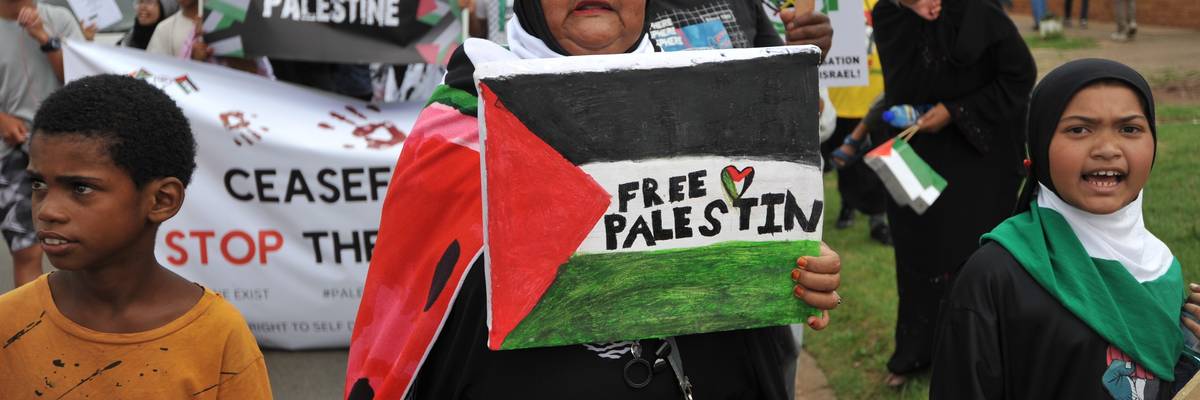
South Africans hold a Free Palestine March on December 16, 2023 in Eldorado Park, South Africa.
South Africa Initiates Case Against Israel at International Court of Justice
The African country, one journalist noted, "fought for its own liberation against an apartheid regime supported for decades by the U.S."
"No one knows apartheid like those who fought it before," said one Palestinian rights advocate on Friday in response to the news that South Africa has taken a "historic" new step to hold Israel accountable for its relentless bombardment and violent yearslong occupation of Gaza—calling on the International Court of Justice to declare that Israel has breached its obligations under the Genocide Convention.
The Department of International Relations and Cooperation (DIRCO) in South Africa said it is "gravely concerned with the plight of civilians caught in the present Israeli attacks on the Gaza Strip due to the indiscriminate use of force and forcible removal of inhabitants" and called on the ICJ to take action to force Israel to "immediately cease" its current attacks on Gaza's 2.3 million residents.
The motion was filed as the death toll in Gaza surpassed 21,500 people and tens of thousands of displaced residents fled an Israeli ground offensive, as airstrikes continued in southern Gaza.
Noting that South Africa has consistently condemned all attacks on civilians, including the assault by Hamas on southern Israel on October 7, the country's representatives at the ICJ said Israel's bombardment of Gaza is "genocidal in character because they are intended to bring about the destruction of a substantial part of the Palestinian national, racial, and [ethnic] group."
"The acts in question include killing Palestinians in Gaza, causing them serious bodily and mental harm, and inflicting on them conditions of life calculated to bring about their physical destruction," reads the application filed at the ICJ.
South Africa took its latest action regarding Israel less than two weeks after President Cyril Ramaphosa announced the government had submitted documents to the International Criminal Court (ICC) supporting its demand, made in November with several other countries, that the court investigate Israel for war crimes.
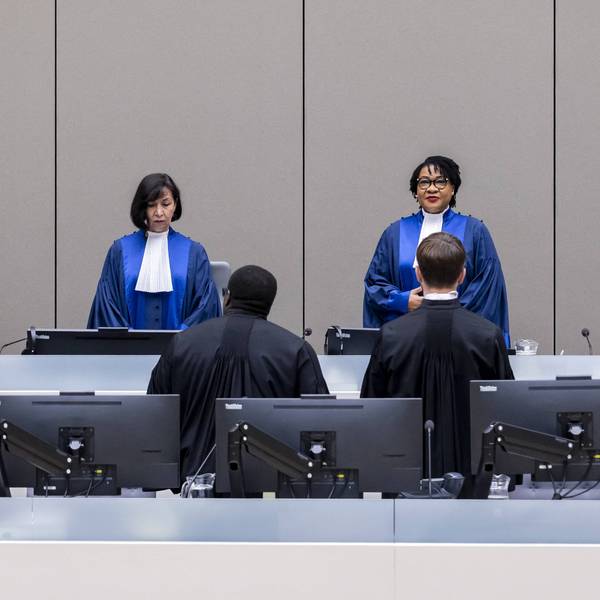
While the ICC prosecutes individuals and governments for committing war crimes, the ICJ operates under the United Nations to rule on disputes between countries. The ICJ's orders are binding for Israel, as the country is a U.N. member state.
South Africa has joined international human rights experts—including the U.N.'s top expert on human rights in occupied Palestine—in saying Israel's blockade of Gaza and violent treatment of those in the enclave and the West Bank is a form of apartheid, comparing Israeli policies to the racial segregation that was imposed for nearly five decades by the white minority that controlled South Africa.
Last month, the government voted to suspend diplomatic ties with Israel until Prime Minister Benjamin Netanyahu's government agrees to a permanent humanitarian cease-fire.
"South Africa has continuously called for an immediate and permanent cease-fire and the resumption of talks that will end the violence arising from the continued belligerent occupation of Palestine," the government said Friday.
Journalist Jeremy Scahill was among those who recognized the significance of South Africa's application at the ICJ, noting that the country "fought for its own liberation against an apartheid regime supported for decades by the U.S.," which is backing Israel's assault on Gaza despite international outcry and protests within the United States.
"The U.N. Genocide Convention must be upheld. Israel must be held accountable," said former U.N. human rights official Craig Mokhiber, who resigned from the Office of the High Commissioner for Human Rights (OHCHR) in October in protest of the U.N.'s failure to stop Israel's massacre of civilians. "International law must be preserved."
At the ICJ, South Africa called for an expedited hearing on Israel's actions and asked the court to indicate provisional measures under the Genocide Convention to "protect against further, severe, and irreparable harm to the rights of the Palestinian people."
Article 2 of the Genocide Convention, adopted in 1948, states that genocide includes acts committed with the "intent to destroy, either in whole or in part, a national, ethnic, racial, or religious group."
Marwan Bishara, Al Jazeera's senior political analyst, pointed out Friday that "the three leading Israeli officials have declared the intent" to wipe out Gaza's population.
Bishara noted that Israeli President Isaac Herzog said in October that all civilians in Gaza are "responsible" for Hamas' attack on southern Israel, days after Defense Minister Yoav Gallant said the military would collectively punish the enclave's population, who he called "human animals."
Netanyahu also said this week that so-called "voluntary migration" of Gaza residents is the ultimate objective of Israel's assault.
On Friday, the spokesperson for Israel's Foreign Affairs Ministry, Lior Haiat, dismissed South Africa's motion as "baseless" and a "despicable and contemptuous exploitation of the court."
Despite top officials' recent statements, Haiat said the government has "made it clear that the residents of the Gaza Strip are not the enemy."
Omar Shakir, Israel and Palestine director for Human Rights Watch, called South Africa's move "a vital step to propel greater support for impartial justice."
We are at a crossroads
This country and this world are at a monumental crossroads. In a few short weeks, US voters will have an opportunity to beat back the forces of fascism and confront the billionaires who are rigging the economy, our media system, and our democracy, making it increasingly impossible for ordinary people to get by. We’re not just talking about the election. We’re talking about what must be done once these fascist elements are vanquished from power. We need a bolder set of solutions than what either major party has so far been willing to offer and a working-class movement ready to fight like hell for it. Trump didn't emerge from nowhere. The conditions that fueled MAGA authoritarianism were created by decades of radical neoliberal economic policies and a corrupt political system dominated by corporate interests. They slashed taxes on the super-rich, promising that the benefits would trickle down. They said giveaways to the corporate titans would make life more affordable for the rest of us. It was all bullshit. And when a bitter, betrayed populace searches for someone to blame, right-wing demagogues have little trouble finding scapegoats. People know when they're being lied to, but you won't hear any of this from the corporate media. Only independent journalism—powered and funded by people who believe in building a better world—can deliver truly trustworthy daily news. Our Fall Campaign is underway, and we need your help. To power our newsroom through the rest of the year, we need to raise $125,000 by midnight on October 31. So if you share our vision, please contribute whatever you can to sustain our work. |
"No one knows apartheid like those who fought it before," said one Palestinian rights advocate on Friday in response to the news that South Africa has taken a "historic" new step to hold Israel accountable for its relentless bombardment and violent yearslong occupation of Gaza—calling on the International Court of Justice to declare that Israel has breached its obligations under the Genocide Convention.
The Department of International Relations and Cooperation (DIRCO) in South Africa said it is "gravely concerned with the plight of civilians caught in the present Israeli attacks on the Gaza Strip due to the indiscriminate use of force and forcible removal of inhabitants" and called on the ICJ to take action to force Israel to "immediately cease" its current attacks on Gaza's 2.3 million residents.
The motion was filed as the death toll in Gaza surpassed 21,500 people and tens of thousands of displaced residents fled an Israeli ground offensive, as airstrikes continued in southern Gaza.
Noting that South Africa has consistently condemned all attacks on civilians, including the assault by Hamas on southern Israel on October 7, the country's representatives at the ICJ said Israel's bombardment of Gaza is "genocidal in character because they are intended to bring about the destruction of a substantial part of the Palestinian national, racial, and [ethnic] group."
"The acts in question include killing Palestinians in Gaza, causing them serious bodily and mental harm, and inflicting on them conditions of life calculated to bring about their physical destruction," reads the application filed at the ICJ.
South Africa took its latest action regarding Israel less than two weeks after President Cyril Ramaphosa announced the government had submitted documents to the International Criminal Court (ICC) supporting its demand, made in November with several other countries, that the court investigate Israel for war crimes.
While the ICC prosecutes individuals and governments for committing war crimes, the ICJ operates under the United Nations to rule on disputes between countries. The ICJ's orders are binding for Israel, as the country is a U.N. member state.
South Africa has joined international human rights experts—including the U.N.'s top expert on human rights in occupied Palestine—in saying Israel's blockade of Gaza and violent treatment of those in the enclave and the West Bank is a form of apartheid, comparing Israeli policies to the racial segregation that was imposed for nearly five decades by the white minority that controlled South Africa.
Last month, the government voted to suspend diplomatic ties with Israel until Prime Minister Benjamin Netanyahu's government agrees to a permanent humanitarian cease-fire.
"South Africa has continuously called for an immediate and permanent cease-fire and the resumption of talks that will end the violence arising from the continued belligerent occupation of Palestine," the government said Friday.
Journalist Jeremy Scahill was among those who recognized the significance of South Africa's application at the ICJ, noting that the country "fought for its own liberation against an apartheid regime supported for decades by the U.S.," which is backing Israel's assault on Gaza despite international outcry and protests within the United States.
"The U.N. Genocide Convention must be upheld. Israel must be held accountable," said former U.N. human rights official Craig Mokhiber, who resigned from the Office of the High Commissioner for Human Rights (OHCHR) in October in protest of the U.N.'s failure to stop Israel's massacre of civilians. "International law must be preserved."
At the ICJ, South Africa called for an expedited hearing on Israel's actions and asked the court to indicate provisional measures under the Genocide Convention to "protect against further, severe, and irreparable harm to the rights of the Palestinian people."
Article 2 of the Genocide Convention, adopted in 1948, states that genocide includes acts committed with the "intent to destroy, either in whole or in part, a national, ethnic, racial, or religious group."
Marwan Bishara, Al Jazeera's senior political analyst, pointed out Friday that "the three leading Israeli officials have declared the intent" to wipe out Gaza's population.
Bishara noted that Israeli President Isaac Herzog said in October that all civilians in Gaza are "responsible" for Hamas' attack on southern Israel, days after Defense Minister Yoav Gallant said the military would collectively punish the enclave's population, who he called "human animals."
Netanyahu also said this week that so-called "voluntary migration" of Gaza residents is the ultimate objective of Israel's assault.
On Friday, the spokesperson for Israel's Foreign Affairs Ministry, Lior Haiat, dismissed South Africa's motion as "baseless" and a "despicable and contemptuous exploitation of the court."
Despite top officials' recent statements, Haiat said the government has "made it clear that the residents of the Gaza Strip are not the enemy."
Omar Shakir, Israel and Palestine director for Human Rights Watch, called South Africa's move "a vital step to propel greater support for impartial justice."
- ICC Given Names of 40 Israeli Commanders to Investigate for War Crimes ›
- South African Lawmakers Vote to Cut Diplomatic Ties With Israel ›
- South Africa Joins Growing List of Countries Cutting Ties With Israel Over 'Genocide' in Gaza ›
- As Death Toll in Gaza Rises, Israeli Officials Fear Possible Genocide Charges From ICJ ›
- 100+ Global Rights Groups Urge Support for South Africa's Genocide Case Against Israel at ICJ ›
- Turkey, Malaysia Back South Africa's ICJ Genocide Case Against Israel ›
- 800+ Global Groups Back South Africa's Genocide Case as ICJ Prepares for Hearing ›
- 'There Must Be Accountability': Tlaib, Bush Back ICJ Case Against Israel ›
- ICJ Hears 'Overwhelming and Devastating' Arguments in ICJ Gaza Genocide Case ›
- Genocide Experts Say Israeli Legal Arguments 'Ring Hollow' at ICJ ›
- Opinion | To Save Israel, the US is Destroying the International System It Once Constructed | Common Dreams ›
- Israel's Response to ICJ Order to Halt Rafah Assault? More Bombing | Common Dreams ›
- Opinion | The Global Future Hinges on Holding Israel Accountable for Its Crimes in Gaza | Common Dreams ›
"No one knows apartheid like those who fought it before," said one Palestinian rights advocate on Friday in response to the news that South Africa has taken a "historic" new step to hold Israel accountable for its relentless bombardment and violent yearslong occupation of Gaza—calling on the International Court of Justice to declare that Israel has breached its obligations under the Genocide Convention.
The Department of International Relations and Cooperation (DIRCO) in South Africa said it is "gravely concerned with the plight of civilians caught in the present Israeli attacks on the Gaza Strip due to the indiscriminate use of force and forcible removal of inhabitants" and called on the ICJ to take action to force Israel to "immediately cease" its current attacks on Gaza's 2.3 million residents.
The motion was filed as the death toll in Gaza surpassed 21,500 people and tens of thousands of displaced residents fled an Israeli ground offensive, as airstrikes continued in southern Gaza.
Noting that South Africa has consistently condemned all attacks on civilians, including the assault by Hamas on southern Israel on October 7, the country's representatives at the ICJ said Israel's bombardment of Gaza is "genocidal in character because they are intended to bring about the destruction of a substantial part of the Palestinian national, racial, and [ethnic] group."
"The acts in question include killing Palestinians in Gaza, causing them serious bodily and mental harm, and inflicting on them conditions of life calculated to bring about their physical destruction," reads the application filed at the ICJ.
South Africa took its latest action regarding Israel less than two weeks after President Cyril Ramaphosa announced the government had submitted documents to the International Criminal Court (ICC) supporting its demand, made in November with several other countries, that the court investigate Israel for war crimes.
While the ICC prosecutes individuals and governments for committing war crimes, the ICJ operates under the United Nations to rule on disputes between countries. The ICJ's orders are binding for Israel, as the country is a U.N. member state.
South Africa has joined international human rights experts—including the U.N.'s top expert on human rights in occupied Palestine—in saying Israel's blockade of Gaza and violent treatment of those in the enclave and the West Bank is a form of apartheid, comparing Israeli policies to the racial segregation that was imposed for nearly five decades by the white minority that controlled South Africa.
Last month, the government voted to suspend diplomatic ties with Israel until Prime Minister Benjamin Netanyahu's government agrees to a permanent humanitarian cease-fire.
"South Africa has continuously called for an immediate and permanent cease-fire and the resumption of talks that will end the violence arising from the continued belligerent occupation of Palestine," the government said Friday.
Journalist Jeremy Scahill was among those who recognized the significance of South Africa's application at the ICJ, noting that the country "fought for its own liberation against an apartheid regime supported for decades by the U.S.," which is backing Israel's assault on Gaza despite international outcry and protests within the United States.
"The U.N. Genocide Convention must be upheld. Israel must be held accountable," said former U.N. human rights official Craig Mokhiber, who resigned from the Office of the High Commissioner for Human Rights (OHCHR) in October in protest of the U.N.'s failure to stop Israel's massacre of civilians. "International law must be preserved."
At the ICJ, South Africa called for an expedited hearing on Israel's actions and asked the court to indicate provisional measures under the Genocide Convention to "protect against further, severe, and irreparable harm to the rights of the Palestinian people."
Article 2 of the Genocide Convention, adopted in 1948, states that genocide includes acts committed with the "intent to destroy, either in whole or in part, a national, ethnic, racial, or religious group."
Marwan Bishara, Al Jazeera's senior political analyst, pointed out Friday that "the three leading Israeli officials have declared the intent" to wipe out Gaza's population.
Bishara noted that Israeli President Isaac Herzog said in October that all civilians in Gaza are "responsible" for Hamas' attack on southern Israel, days after Defense Minister Yoav Gallant said the military would collectively punish the enclave's population, who he called "human animals."
Netanyahu also said this week that so-called "voluntary migration" of Gaza residents is the ultimate objective of Israel's assault.
On Friday, the spokesperson for Israel's Foreign Affairs Ministry, Lior Haiat, dismissed South Africa's motion as "baseless" and a "despicable and contemptuous exploitation of the court."
Despite top officials' recent statements, Haiat said the government has "made it clear that the residents of the Gaza Strip are not the enemy."
Omar Shakir, Israel and Palestine director for Human Rights Watch, called South Africa's move "a vital step to propel greater support for impartial justice."
- ICC Given Names of 40 Israeli Commanders to Investigate for War Crimes ›
- South African Lawmakers Vote to Cut Diplomatic Ties With Israel ›
- South Africa Joins Growing List of Countries Cutting Ties With Israel Over 'Genocide' in Gaza ›
- As Death Toll in Gaza Rises, Israeli Officials Fear Possible Genocide Charges From ICJ ›
- 100+ Global Rights Groups Urge Support for South Africa's Genocide Case Against Israel at ICJ ›
- Turkey, Malaysia Back South Africa's ICJ Genocide Case Against Israel ›
- 800+ Global Groups Back South Africa's Genocide Case as ICJ Prepares for Hearing ›
- 'There Must Be Accountability': Tlaib, Bush Back ICJ Case Against Israel ›
- ICJ Hears 'Overwhelming and Devastating' Arguments in ICJ Gaza Genocide Case ›
- Genocide Experts Say Israeli Legal Arguments 'Ring Hollow' at ICJ ›
- Opinion | To Save Israel, the US is Destroying the International System It Once Constructed | Common Dreams ›
- Israel's Response to ICJ Order to Halt Rafah Assault? More Bombing | Common Dreams ›
- Opinion | The Global Future Hinges on Holding Israel Accountable for Its Crimes in Gaza | Common Dreams ›