

SUBSCRIBE TO OUR FREE NEWSLETTER
Daily news & progressive opinion—funded by the people, not the corporations—delivered straight to your inbox.
5
#000000
#FFFFFF
To donate by check, phone, or other method, see our More Ways to Give page.
Daily news & progressive opinion—funded by the people, not the corporations—delivered straight to your inbox.
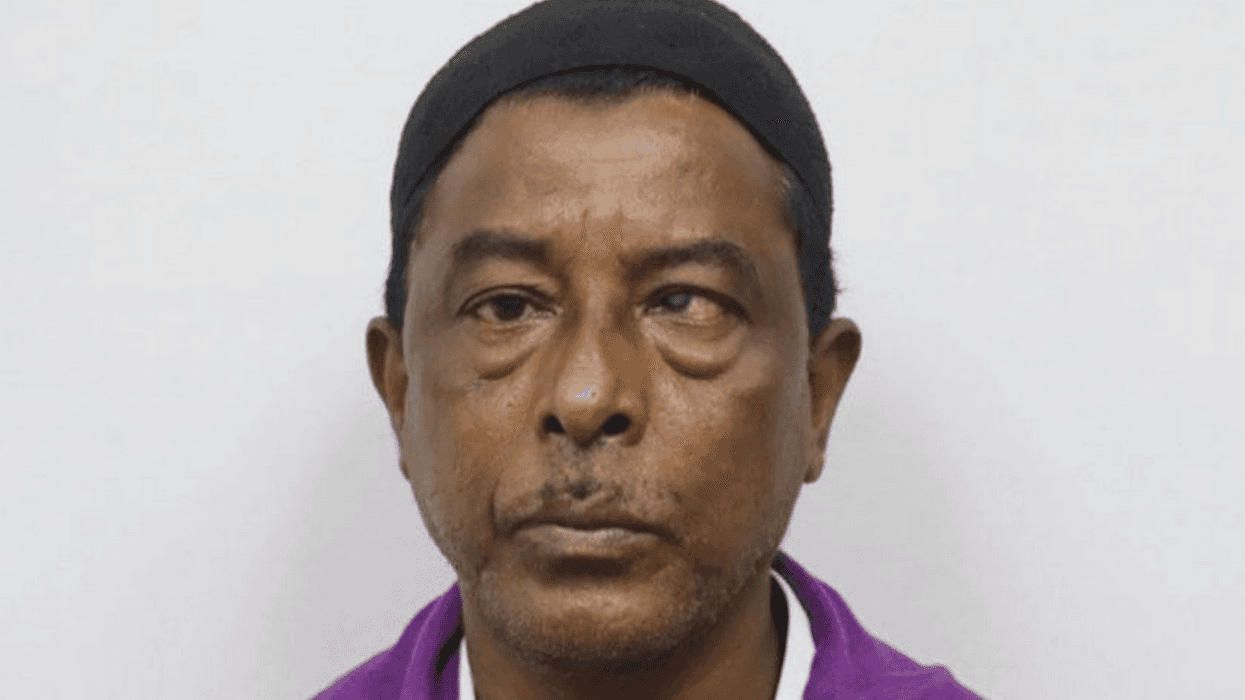
"The absolute disregard for his well-being by the DHS agents is ghastly. He should be alive today," said one advocate for refugees.
The Trump administration's response was swift following the news that the death of a nearly blind New York man who was left by US Border Patrol agents in the freezing cold was ruled a homicide—and it made clear that the Department of Homeland Security has no intention of taking accountability for the agents' actions that preceded the 56-year-old's death.
But state Attorney General Letitia James warned that despite the deflections of the administration, her office would continue to review "the circumstances and treatment that led" to the death of Nurul Amin Shah Alam, a Rohingya refugee, in February.
"Mr. Shah Alam fled genocide to build a life in this country," James said. “Instead, he was abandoned and left to suffer alone in his final hours. No New Yorker should be treated this way.”
As Common Dreams reported, Shah Alam was found dead on a Buffalo, New York street five days after Border Patrol agents dropped him off at a closed coffee shop. They had not informed Shah Alam's family or lawyer where he was, making it impossible for him to find his way home as extreme winter weather hit Buffalo. In addition to being visually impaired, Shah Alam was unable to speak or read English.
The "manner of death," said the county medical examiner's office, "was homicide."
The medical examiner emphasized that on death certificates, "homicide" refers to "death resulting from the volitional act of another, which may include negligent acts or omissions," and does not imply the intent to cause someone's death.
The designation does "not indicate criminality, which is the purview of the judicial system," said the office.
Dr. Gale Burstein, the Erie County Department of Health commissioner, announced Wednesday that Shah Alam's death had been directly caused by complications from a perforated ulcer that had formed when hypothermia decreased blood flow and weakened the lining of his intestines.
Shah Alam experienced “severe stress” and that “stress was felt to be hypothermia, being in very cold temperatures, and dehydration, so no access to liquids," said Burstein.
The perforated ulcer doubtlessly caused "severe pain," the health commissioner added at a news conference.
“If that is not repaired in a short period of time, it can cause death, which is what we have, we felt we’ve seen in this instance,” said Burstein. “It’s a medical emergency.”
On Thursday morning, hours after the officials announced the homicide determination and described the health crisis Shah Alam experienced in his last days as he walked through the streets of Buffalo in subfreezing temperatures, DHS said on social media that the account of Shah Alam's death was "another hoax being peddled by the media and sanctuary politicians to demonize our law enforcement."
“This death had NOTHING to do with Border Patrol. Mr. Shah Alam passed almost A WEEK AFTER he was released by Border Patrol," said the agency before listing a number of allegations regarding the man's "serial violent criminal rap sheet."
The charges DHS referred to were related to an incident in February 2025, when Shah Alam was detained after getting lost on the way home from a store where he had purchased two curtain rods to use as walking sticks. He ended up on the porch of a woman who called the police, who later accused him of swinging a rod “in a menacing manner," which his lawyer denies.
Police body camera footage shows him saying, “OK” and dropping one end of the curtain rod when an officer told him to put it on the ground.
Shah Alam was charged with assault, trespassing, and possession of a weapon and taken to Erie County Holding Center, where he was held for a year.
He was released in late February after his family posted bail. The local police alerted Border Patrol, which sent two agents to pick Shah Alam up from jail. His son was waiting outside the jail to take him home, The New York Times reported, but the agents took him to a closed Tim Hortons location instead and left him there, describing their actions as giving Shah Alam a "courtesy ride."
The agency claimed after Shah Alam's death was reported in February that he had shown “no signs of distress, mobility issues, or disabilities requiring special assistance."
After officials announced their findings regarding Shah Alam's death on Wednesday, his son, Mohamad Faisal Nurul Amin, told The Guardian: “When I got the call from the medical examiner, my body went into shock. I felt like I was going to throw up. I couldn’t move. Someone told my mother, and she was devastated. I am still depressed.”
Jeremy Konyndyk, president of Refugees International, said Shah Alam's fate amounted to "death-by-policy."
"In Minnesota, DHS often released detainees in secluded areas in freezing evening conditions with no alert to family. It seemed calculated to endanger people. Very similar to what they did here," he said.
Afaf Nasher, executive director of the New York chapter of the Council on American-Islamic Relations, said the medical examiner's ruling confirms what Shah Alam's "family and community feared from the beginning: This was not a tragic accident, but a preventable and deeply disturbing loss of life."
“We call for an immediate, independent criminal investigation into the actions of the US Border Patrol agents who abandoned a nearly blind refugee miles away from his home in freezing conditions," said Nasher. "No one, regardless of immigration status, should ever be treated with such disregard for their safety and basic human dignity.”
The Erie County district attorney's office told The Guardian it had requested the autopsy report regarding Shah Alam's death.
“We are committed to seeking the truth and upholding justice,” the office said.
Gov. Kathy Hochul, a Democrat, said in a statement that "the cruelty and inhumanity" of the actions that preceded Shah Alam's death "should shock the conscience of every American."
“As more details of this case emerge, I want to be crystal clear: Every individual involved in the death of Mr. Shah Alam must be held fully accountable," said Hochul. "To ensure a fair and impartial investigation, the Erie County district attorney must continue his investigation and, if warranted by the evidence, prosecute to the fullest extent of the law.”

Nurul Shah Alam was found dead on a Buffalo street this week, days after being released from a county jail and dropped at a closed coffee shop by Border Patrol agents.
Surveillance footage taken at a Tim Hortons donut shop in Buffalo, New York contradicts the US Department of Homeland Security's claim that Border Patrol agents dropped Nurul Shah Alam, a 56-year-old nearly blind Rohingya refugee, at a "warm, safe location" after he was released from jail last week, days before he was found dead.
The video obtained by the Buffalo-based outlet Investigative Post late Wednesday showed a white van pulling up to the shop at about 8:18 pm Eastern, more than an hour after the store—except its drive-thru window—had closed for the night.
A man identified by the Investigative Post as Shah Alam is seen walking by the drive-thru window and then approaching the locked door before walking across the parking lot.
Breaking: IPost has obtained footage showing a Border Patrol van dropping off Nurul Shah Alam at a closed Tim Hortons last Thursday.
Shah Alam, nearly-blind & unable to enter the shop, then wandered the city for days. He was found dead Tuesday.https://t.co/fCtRtaxaU9 pic.twitter.com/VkEqgiAUVe
— Investigative Post (@ipostnews) February 27, 2026
The Border Patrol agents who dropped off Shah Alam—who spoke no English and was blind in one eye with partial, blurry vision in the other—appeared to make no attempt to ensure the Tim Hortons was actually a "safe, warm location" that he could access. The van pulled out of the parking lot less than a minute after Shah Alam was seen exiting it.
When the news broke Wednesday that Shah Alam's body had been found on a Buffalo street days after he was dropped off following his release—and after subfreezing temperatures hit the Western New York city over the weekend—a spokesperson for Border Patrol said the agents had "offered him a courtesy ride, which he chose to accept to a coffee shop" that was "determined to be a warm, safe location near his last known address."
They also claimed that Shah Alam, who used a walking stick to get around before his arrest last year, "showed no signs of distress, mobility issues, or disabilities requiring special assistance."
The agents never notified Shah Alam's wife and children or his lawyers that he had been dropped off.
"So when [the Department of Homeland Security] says they 'offered him a courtesy ride to a warm, safe location'... they mean they abandoned him in the parking lot of a closed Tim Hortons in the middle of a winter evening in Buffalo," said Jeremy Konyndyk, president of Refugees International. "They lie about EVERYTHING."
Shah Alam had been detained at the Erie County Holding Center since February 2025, when he got lost on the way home from a store where he'd purchased a curtain rod to use as a walking stick. He ended up in the backyard of a woman who called the police, who later reported Shah Alam was swinging the rod "in a menacing manner"—a claim his lawyer denies.
The Investigative Post also obtained police body camera footage of the arrest, which shows Shah Alam saying, "OK" and dropping one end of the curtain rod when an officer told him to put the stick on the ground. The footage also showed the officers Tasering Shah Alam and tackling him to the ground.
After the incident, Shah Alam was charged with assault, trespassing, and possession of a weapon—his walking stick—and held at Erie County Holding Center until last Thursday, after he took a plea deal. He agreed to plead guilty to trespassing and possession of a weapon and was able to avoid immigration detention even though Border Patrol had issued a detainer on him after the arrest, saying he was eligible for deportation.
Buffalo Mayor Sean Ryan told the Investigative Post Thursday that upon finding the Tim Hortons closed last week, Border Patrol should have taken Shah Alam back to the Erie County Holding Center, where sheriff's deputies who knew his family from their frequent visits to the jail could have called them.
“The lawyer was not informed, and the family is just saying, ‘You had our contact information, you had our address,'” a family friend named Khaleda Shah, told the outlet. “Why not drop him at the address that’s on file for him? Why not bring you back to the holding center, rather than Tim Hortons?”
When New York Times columnist Nicholas Kristof posted on X about Shah Alam's death on Thursday, DHS responded with its claim that the agents had brought him to a safe location.
"Video shows that it was night and the coffee shop was closed, so he never entered it," Kristof replied, "Instead, mostly blind and in need of a cane, unable to speak English, he tried to walk home through the freezing night—because your agents never called his family or lawyer but seem to have left him to die. Do you see how your credibility is undermined when you repeatedly make claims that are later contradicted by video evidence? Why should we trust statements from an agency with such a record of deceit?"
DHS had not publicly responded at press time.
Refugees International was among those calling for a full investigation into Border Patrol's "abandonment" of Shah Alam.
Daniel P. Sullivan, the group's director Africa, Asia, and the Middle East, noted that the US determined in 2022 that the Myanmar military had committed genocide against the Rohingya people, and Shah Alam was resettled in the US in 2024 after surviving the violence and persecution.
"The death of Shah Alam comes in the midst of ongoing violent immigration enforcement operations by [Customs and Border Protection and Immigration and Customs Enforcement] agents that have led to widespread abuse and neglect of legally resettled refugees as well as deaths of immigrants and American citizens alike," said Sullivan.
"Refugees International, once again, strongly condemns the Trump administration’s hateful and dehumanizing targeting of those who seek refuge," he said. "We express solidarity with Mr. Shah Alam’s family, the broader Rohingya community, and all of our neighbors who face increased uncertainty and risks of harm due to the Trump administration’s current policies.”
He also said that one member of the Rohingya community had told the organization that Shah Alam's "safe haven became a tragedy for him.”
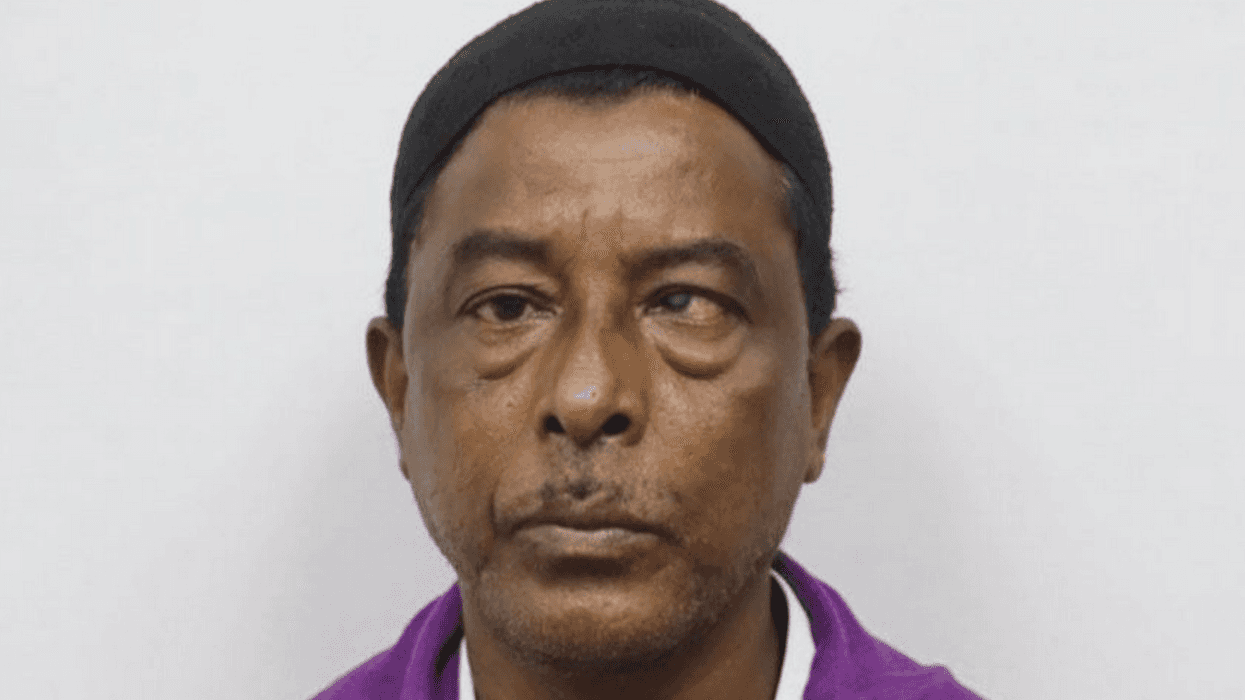
"There must be a full investigation and real accountability from US Customs and Border Protection," said one lawmaker.
The latest chapter in what one historian called "the ongoing horror story of American immigration enforcement" unfolded in Buffalo, New York this week after Nurul Amin Shah Alam, a 56-year-old Rohingya refugee from Myanmar, was released from a county jail where he'd been held for a year.
As Buffalo-based outlet the Investigative Post reported Wednesday, the nearly blind man was found dead on Tuesday evening, five days after US Border Patrol agents who had picked him up from the jail dropped him off at a coffee shop. They neglected to inform his lawyer or family where he was, making it impossible for Shah Alam to find his way home in sub-freezing temperatures.
Shah Alam, who was blind in one eye and had partial, blurry vision in the other, had gotten lost one day in February 2025 and ended up on a woman's porch with a curtain rod he used as a walking stick.
The woman called the police, who ordered Shah Alam to drop his "weapon"—the walking stick—and then Tasered, beat, and arrested him.
Shah Alam, who could not speak English and did not understand the police officers' orders, was charged with assault, trespassing, and possession of a weapon and taken to Erie County Holding Center.
His family, which includes a wife and two sons, chose not to bail him out of the county jail. His arrest had come a month into President Donald Trump's second term, and they feared US Immigration and Customs Enforcement would detain him if he was released and send him to a detention center out of state.
Benjamin Macaluso, an attorney with Legal Aid Bureau who was representing Shah Alam, told the Investigative Post that he had been released on bail last week after reaching a deal with the Erie County District Attorney’s office, agreeing to plead guilty to trespassing and possession of a weapon. The agreement allowed him to avoid detention by federal immigration agents even though authorities had previously placed an immigration detainer on Shah Alam.
Despite that, the Erie County Sheriff’s Office contacted US Border Patrol to pick Shah Alam up from the Holding Center. When the agents determined Shah Alam was not eligible for immigration detention, Border Patrol told the Investigative Post, they "offered him a courtesy ride, which he chose to accept to a coffee shop.”
An agency spokesperson claimed the nearly blind man "showed no signs of distress, mobility issues, or disabilities requiring special assistance."
Mohamad Faisal, one of Shah Alam's two sons, told Al Jazeera that his father was not able to read, write, or use electronic devices.
Macaluso told the Investigative Post that Shah Alam's family spent days searching for him in the cold before his body was found. The lawyer also said he had expected Shah Alam to be taken to an ICE detention center in Batavia, New York to be released.
A spokesperson for City Hall in Buffalo told the Investigative Post that homicide detectives were "investigating the circumstances and timeframe of events leading up to his death, following his release from custody," but said homicide and exposure to the elements had been ruled out as the cause of death by a medical examiner.
US Rep. Grace Meng (D-NY) was among those who called for a "full investigation" into Border Patrol's decision to leave Shah Alam miles from his home despite his disability.
Buffalo Mayor Sean Ryan, a Democrat, accused US Customs and Border Protection, which oversees Border Patrol, of a "dereliction of duty" and said the agency's treatment of Shah Alam was "inhumane."
"US Customs and Border Protection must answer for how and why this happened," said Ryan. "Buffalo is a city that welcomes refugees and believes government should protect human dignity, not endanger it. US Customs and Border Protection failed that basic standard."
Chuck Park, a Democrat who is running for Congress in New York's 6th District, said the New York for All Act, which would prohibit state and local law enforcement from collaborating with federal immigration agencies, would have prevented the sheriff's office from calling Border Patrol upon Shah Alam's release.
Alexandre Burgos of the New York State Hate and Bias Prevention Unit invited community members to a gathering to demand accountability to Shah Alam's death.
"We are coming together to demand accountability and transparency in the case of Nurul Amin Shah Alam," reads a flyer for the event, scheduled for Thursday evening at 5:30 pm Eastern at Lafayette High School in Buffalo.

Amnesty International says Big Tech's consolidation of power "has profound implications for human rights, particularly the rights to privacy, nondiscrimination, and access to information."
One of the world's leading human rights groups, Amnesty International, is calling on governments worldwide to "break up with Big Tech" by reining in the growing influence of tech and social media giants.
A report published Thursday by Amnesty highlights five tech companies: Alphabet (Google), Meta, Microsoft, Amazon, and Apple, which Hannah Storey, an advocacy and policy adviser on technology and human rights at Amnesty, describes as "digital landlords who determine the shape and form of our online interaction."
These five companies collectively have billions of active users, which the report says makes them akin to "utility providers."
"This concentration of power," the report says, "has profound implications for human rights, particularly the rights to privacy, nondiscrimination, and access to information."
The report emphasizes the "pervasive surveillance" by Google and Meta, which profit from "harvesting and monetizing vast quantities of our personal data."
"The more data they collect, the more dominant they become, and the harder it is for competitors to challenge their position," the report says. "The result is a digital ecosystem where users have little meaningful choice or control over how their data is used."
Meanwhile, Google's YouTube, as well as Facebook and Instagram—two Meta products—function using algorithms "optimized for engagement and profit," which emphasize content meant to provoke strong emotions and outrage from users.
"In an increasingly polarized context, the report says, "this can contribute to the rapid spread of discriminatory speech and even incitement to violence, which has had devastating consequences in several crisis and conflict-affected areas."
The report notes several areas around the globe where social media algorithms amplified ethnic hatred. It cites past research showing how Facebook's algorithm helped to "supercharge" dehumanizing rhetoric that fueled the ethnic cleansing of the Rohingya in Myanmar and the violence in Ethiopia's Tigray War.
More broadly, it says, the ubiquity of these tech companies in users' lives gives them outsized influence over access to information.
"Social media platforms shape what millions of people see online, often through opaque algorithms that prioritize engagement over accuracy or diversity," it says. "Documented cases of content removal, inconsistent moderation, and algorithmic bias highlight the dangers of allowing a handful of companies to act as gatekeepers of the digital public sphere."
Amnesty argues that international human rights law requires governments worldwide to intervene to protect their people from abuses by tech companies.
"States and competition authorities should use competition laws as part of their human rights toolbox," it says. "States should investigate and sanction anti-competitive behaviours that harm human rights, prevent regulatory capture, and prevent harmful monopolies from forming."
Amnesty also calls on these states to consider the possible human rights impacts of artificial intelligence, which it describes as the "next phase" of Big Tech's growing dominance, with Microsoft, Amazon, and Google alone controlling 60% of the global cloud computing market.
"Addressing this dominance is critical, not only as a matter of market fairness but as a pressing human rights issue," Storey said. "Breaking up these tech oligarchies will help create an online environment that is fair and just."

An advocate who has worked with the ICC said the order "actively undermines international justice efforts and obstructs the path to accountability for communities facing unthinkable horrors."
In a federal court in Maine on Friday, two human rights advocates argued that U.S. President Donald Trump's economic and travel sanctions against International Criminal Court Prosecutor Karim Khan violates their First Amendment rights, because of Trump's stipulation that U.S. citizens cannot provide Khan with any services or material support as long as the sanctions are in place.
The lawsuit was filed by the ACLU on behalf of Matthew Smith, co-founder of the human rights group Fortify Rights, and international lawyer Akila Radhakrishnan.
Trump targeted Khan with the sanctions over his issuing of an arrest warrant for Israeli Prime Minister Benjamin Netanyahu and former Israeli Defense Minister Yoav Gallant, whom he accused of war crimes and crimes against humanity in Gaza.
The plaintiffs argued that stopping U.S. citizens from working with Khan will bring their work investigating other atrocities to a halt.
Smith has provided the ICC with evidence of the forced deportation and genocide of the Rohingya people in Myanmar, but he said he has been "forced to stop helping the ICC investigate horrific crimes committed against the people of Myanmar, including mass murder, torture, and human trafficking."
"This executive order doesn't just disrupt our work—it actively undermines international justice efforts and obstructs the path to accountability for communities facing unthinkable horrors," Smith said in a statement.
"The Trump administration's sanctions may discourage countries, as well as individuals and corporations, from assisting the court, making it harder to bring alleged perpetrators from Israel and other countries to trial."
Charlie Hogle, staff attorney with the ACLU's National Security Project, said it was "unconstitutional" to block the plaintiffs and other humanitarian groups in the U.S. from "doing their human rights work" with the ICC.
Radhakrishnan, who focuses on gender-based violence in Afghanistan, said she was "bringing this suit to prevent my own government from punishing me for trying to hold the Taliban accountable for its systematic violence against women and girls from Afghanistan."
In March, Amnesty International warned that Trump's sanctions would "hinder justice for all victims for whom the [ICC] is a last resort," particularly those in Gaza and the occupied Palestinian territories.
The court "relies on its member states to cooperate in its investigations and prosecutions, including by arresting individuals subject to ICC arrest warrants," said Amnesty. "The Trump administration's sanctions may discourage countries, as well as individuals and corporations, from assisting the court, making it harder to bring alleged perpetrators from Israel and other countries to trial."
"Ultimately, the sanctions will harm all of the ICC's investigations, not just those opposed by the U.S. government," said the group. "They will negatively impact the interests of all victims who look to the court for justice in all the countries where it is conducting investigations, including those investigations the U.S. ostensibly supports—for example in Ukraine, Uganda, or Darfur."

"Rather than learning from its reckless contributions to mass violence in countries including Myanmar and Ethiopia, Meta is instead stripping away important protections that were aimed at preventing any recurrence of such harms."
An expert on technology and human rights and a survivor of the Rohingya genocide warned Monday that new policies adopted by social-media giant Meta, which owns Facebook and Instagram, could incite genocidal violence in the future.
On January 7, Meta CEO Mark Zuckerberg announced changes to Meta policies that were widely interpreted as a bid to gain approval from the incoming Trump administration. These included the replacement of fact-checkers with a community notes system, relocating content moderators from California to Texas, and lifting bans on the criticisms of certain groups such as immigrants, women, and transgender individuals.
Zuckerberg touted the changes as an anti-censorship campaign, saying the company was trying to "get back to our roots around free expression" and arguing that "the recent elections also feel like a cultural tipping point toward, once again, prioritizing speech."
"With Zuckerberg and other tech CEOs lining up (literally, in the case of the recent inauguration) behind the new administration's wide-ranging attacks on human rights, Meta shareholders need to step up and hold the company's leadership to account to prevent Meta from yet again becoming a conduit for mass violence, or even genocide."
However, Pat de Brún, head of Big Tech Accountability at Amnesty International, and Maung Sawyeddollah, the founder and executive director of the Rohingya Students' Network who himself fled violence from the Myanmar military in 2017, said the change in policies would make it even more likely that Facebook or Instagram posts would inflame violence against marginalized communities around the world. While Zuckerberg's announcement initially only applied to the U.S., the company has suggested it could make similar changes internationally as well.
"Rather than learning from its reckless contributions to mass violence in countries including Myanmar and Ethiopia, Meta is instead stripping away important protections that were aimed at preventing any recurrence of such harms," de Brún and Sawyeddollah wrote on the Amnesty International website. "In enacting these changes, Meta has effectively declared an open season for hate and harassment targeting its most vulnerable and at-risk people, including trans people, migrants, and refugees."
Past research has shown that Facebook's algorithms can promote hateful, false, or racially provocative content in an attempt to increase the amount of time users spend on the site and therefore the company's profits, sometimes with devastating consequences.
One example is what happened to the Rohingya, as de Brún and Sawyeddollah explained:
We have seen the horrific consequences of Meta's recklessness before. In 2017, Myanmar security forces undertook a brutal campaign of ethnic cleansing against Rohingya Muslims. A United Nations Independent Fact-Finding Commission concluded in 2018 that Myanmar had committed genocide. In the years leading up to these attacks, Facebook had become an echo chamber of virulent anti-Rohingya hatred. The mass dissemination of dehumanizing anti-Rohingya content poured fuel on the fire of long-standing discrimination and helped to create an enabling environment for mass violence. In the absence of appropriate safeguards, Facebook's toxic algorithms intensified a storm of hatred against the Rohingya, which contributed to these atrocities. According to a report by the United Nations, Facebook was instrumental in the radicalization of local populations and the incitement of violence against the Rohingya.
In late January, Sawyeddollah—with the support of Amnesty International, the Open Society Justice Initiative, and Victim Advocates International—filed a whistleblower's complaint against Meta with the Securities and Exchange Commission (SEC) concerning Facebook's role in the Rohingya genocide.
The complaint argued that the company, then registered as Facebook, had known or at least "recklessly disregarded" since 2013 that its algorithm was encouraging the spread of anti-Rohingya hate speech and that its content moderation policies were not sufficient to address the issue. Despite this, it misrepresented the situation to both the SEC and investors in multiple filings.
Now, Sawyeddollah and de Brún are concerned that history could repeat itself unless shareholders and lawmakers take action to counter the power of the tech companies.
"With Zuckerberg and other tech CEOs lining up (literally, in the case of the recent inauguration) behind the new administration's wide-ranging attacks on human rights, Meta shareholders need to step up and hold the company's leadership to account to prevent Meta from yet again becoming a conduit for mass violence, or even genocide," they wrote. "Similarly, legislators and lawmakers in the U.S. must ensure that the SEC retains its neutrality, properly investigate legitimate complaints—such as the one we recently filed, and ensure those who abuse human rights face justice."
The human rights experts aren't the only ones concerned about Meta's new direction. Even employees are sounding the alarm.
"I really think this is a precursor for genocide," one former employee told Platformer when the new policies were first announced. "We've seen it happen. Real people's lives are actually going to be endangered. I'm just devastated."

"You are currently arming, funding, and defending a genocide in Gaza. That is how history will remember you."
U.S. Secretary of State Antony Blinken was accused of stark hypocrisy on Saturday after he condemned the Myanmar military's genocide against the Rohingya people while simultaneously aiding Israel's genocidal assault on the Gaza Strip.
Marking the seventh anniversary of Myanmar's vicious ethnic cleansing of the stateless Rohingya, Blinken wrote on social media that "the United States continues to honor the victims and stand with the survivors as they seek justice and accountability for these atrocities."
Blinken also issued a statement highlighting the U.S. State Department's "extensive documentation of the atrocities and abuses committed against Rohingya and all civilians"—a sharp contrast with the Biden administration's reluctance to assess Israeli atrocities against Palestinians in the Gaza Strip.
"You are currently arming, funding, and defending a genocide in Gaza," Middle East researcher and analyst Assal Rad wrote in response to Blinken's statement. "That is how history will remember you, not your empty words."
U.S. Rep. Rashida Tlaib (D-Mich.) also weighed in, telling Blinken to "just stop trying to act like you care about genocide or human rights."
Under Blinken's leadership, the U.S. State Department has approved massive arms transfers to Israel—including a recent $20 billion sale—and provided diplomatic cover for the country's far-right government on the world stage, dismissing as "meritless" the South Africa-led genocide case against Israel at the International Court of Justice.
Israel has killed more than 40,400 people in Gaza since the October 7 Hamas-led attack. Most of those killed in Israel's assault have been women and children—including thousands of infants and toddlers.
In addition to perpetrating horrific war crimes in Gaza—often with U.S. weaponry—Israel has sold arms to Myanmar's military, even after the 2021 military coup.
"According to documents and sources who spoke with Haaretz," the Israeli newspaper reported last September, "the government-owned Israel Aerospace Industries and the Israeli arms maker Elbit Systems maintained their trade with Myanmar despite an international arms embargo on the country, and despite a 2017 ruling by Israel's High Court of Justice and the Israeli government's own 2018 statement saying it stopped such sales."
"Israel's longstanding relations with the different regimes controlling Myanmar have involved arms trade since the mid-20th century," Haaretz continued. "Even in the years in which the country was openly ruled by its military junta, Israel refused to stop the trade. The trade was maintained through the Rohingya genocide of 2016-17."
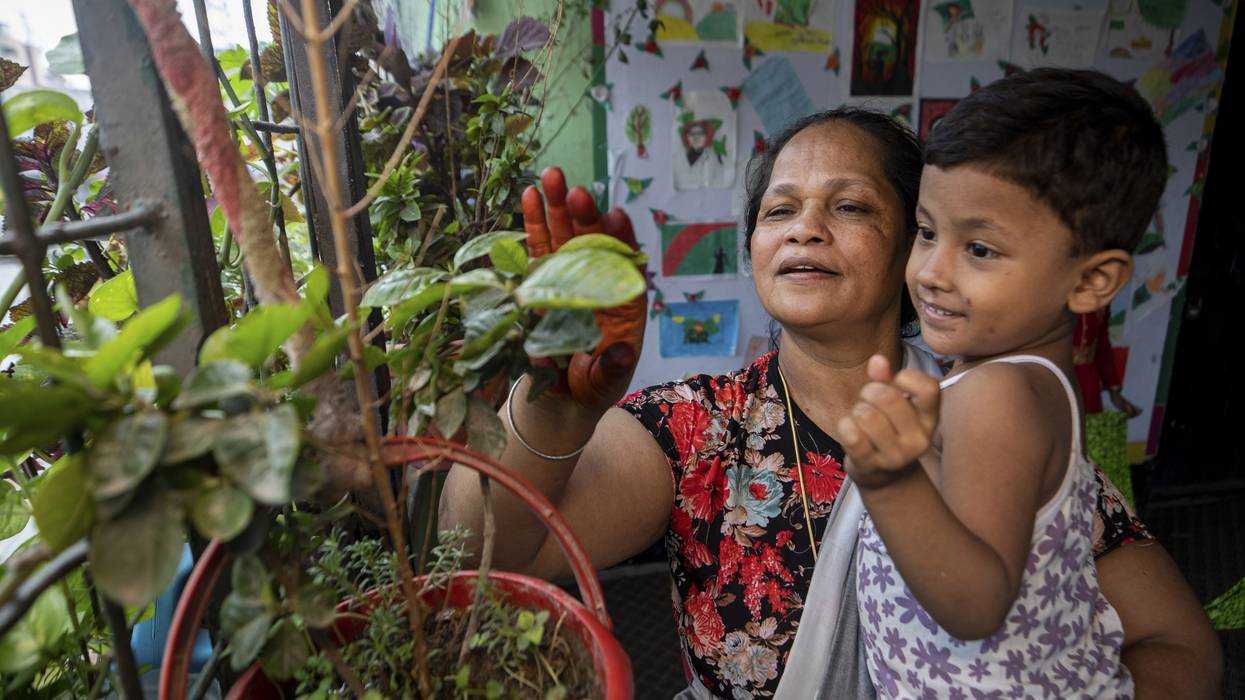
As we celebrate Mother's Day, let us recognize the importance of accessible maternal health services for regions in crisis and the significant role that maternal healthcare plays in driving sustainable socioeconomic development.
As we celebrate Mother's Day, I am inspired by the incredible strength and resilience of mothers worldwide. But as an obstetrician-gynecologist who has treated patients in crisis regions around the world, I am reminded of the countless mothers globally who struggle to keep their children healthy and safe, often in the face of insurmountable obstacles. Through my travels, I have witnessed firsthand the devastating consequences that can result when women do not have access to the basic maternal health services they need. The consequences of inadequate maternal health services are heartbreaking, from preventable complications during pregnancy and childbirth to the devastating loss of a child.
It is because of this preventable heartbreak that I decided to travel last fall to southern Bangladesh with MedGlobal, an organization that has established a maternity and birth center in Somitipara, a neighborhood in Cox's Bazar where the maternal mortality rate is 44% higher than the national average. I saw the immense challenges that Bangladeshi and Rohingya refugee mothers face daily, from lack of access to clean water and adequate nutrition to the trauma of being displaced from their homes and communities. It was both painful and inspiring to see the strength and resilience of these mothers as they fought to give their children a better life.
During my mission to Cox's Bazar, I was grateful to train two groups of local doctors and midwives using standard curriculum designed to strengthen their clinical skills and improve maternal mortality and morbidity. I witnessed the incredible need for this work, providing prenatal and obstetrical services to women who would otherwise deliver unattended without any services or safety net. Prior to arriving, I understood the importance of having more practitioners trained in lifesaving obstetrics in order to care for the high volume of refugees and internally displaced persons, and it was a blessing to witness the high-quality, empathetic care these women received at the clinic and its Mother's Club—which educates expectant mothers on sexual and reproductive health.
As a mother, I cannot imagine the pain and suffering these women endure when they cannot provide for their children's basic needs. But I am also inspired by their strength and courage in the face of adversity, and I am more committed than ever to working towards a future where every mother and child has access to the care and resources they need to thrive.
It is up to all of us to work towards a world where every mother and every child not only survives but can live a healthy and fulfilling life.
According to a recent report by the United Nations Maternal Mortality Estimation Inter-Agency Group, there were at least 3,700 maternal deaths in Bangladesh in 2020. Despite significant efforts to reduce under-five mortality rates and maternal mortality ratios in Bangladesh, considerable challenges remain: Half of all maternal deaths are caused by preventable conditions like hemorrhage, infection, high blood pressure, delivery complications, and unsafe abortion. Extremely young mothers are particularly vulnerable to complications such as obstetric fistula. Tragically, 14 newborns die every hour in Bangladesh, many occurring at home and without medical intervention.
Only 41% of the demand for maternal healthcare professionals is currently being met; access to skilled birth attendants and maternal care is limited in many parts of the country, with almost half of all births taking place at home without the help of professionals. Additionally, the lack of preparedness and availability of primary care, including union health and family welfare centers, has left thousands of mothers in rural and hard-to-reach areas without access to standard delivery care.
The situation is even more dire for Rohingya refugees, who have fled violence and persecution in Myanmar and are now living in overcrowded and unsanitary conditions in refugee camps in Bangladesh. Many of these women have experienced traumatic events, including sexual violence, and desperately need maternal health services.
Ensuring access to maternal health services in Bangladesh is crucial for the immediate well-being of mothers and their children but also for the long-term prospects of the entire country. When mothers die, families are left without their primary caregiver, and children are deprived of the nurturing and guidance they need to grow and thrive. This can have a profound impact on the social and economic development of the entire community. Research has shown that investing in maternal health can have a multiplier effect, leading to improved education, greater economic opportunities, and a more prosperous and stable society.
While at the center, I had the privilege of meeting several mothers and their babies. It was heartwarming to see the joy on their faces as they held their newborns and gut-wrenching to realize the alternative had they not received adequate healthcare. It is important to recognize that the situation in Bangladesh is not unique. Around the world, millions of women do not have access to the essential maternal health services that can make all the difference between life and death for them and their babies. This is particularly true for refugees and vulnerable populations, who often face additional barriers to accessing healthcare.
As we celebrate Mother's Day, let us remember the strength and resilience of mothers around the world and recognize the importance of accessible maternal health services for regions in crisis and the significant role that maternal healthcare plays in driving sustainable economic and social growth. It is up to all of us to work towards a world where every mother and every child not only survives but can live a healthy and fulfilling life.
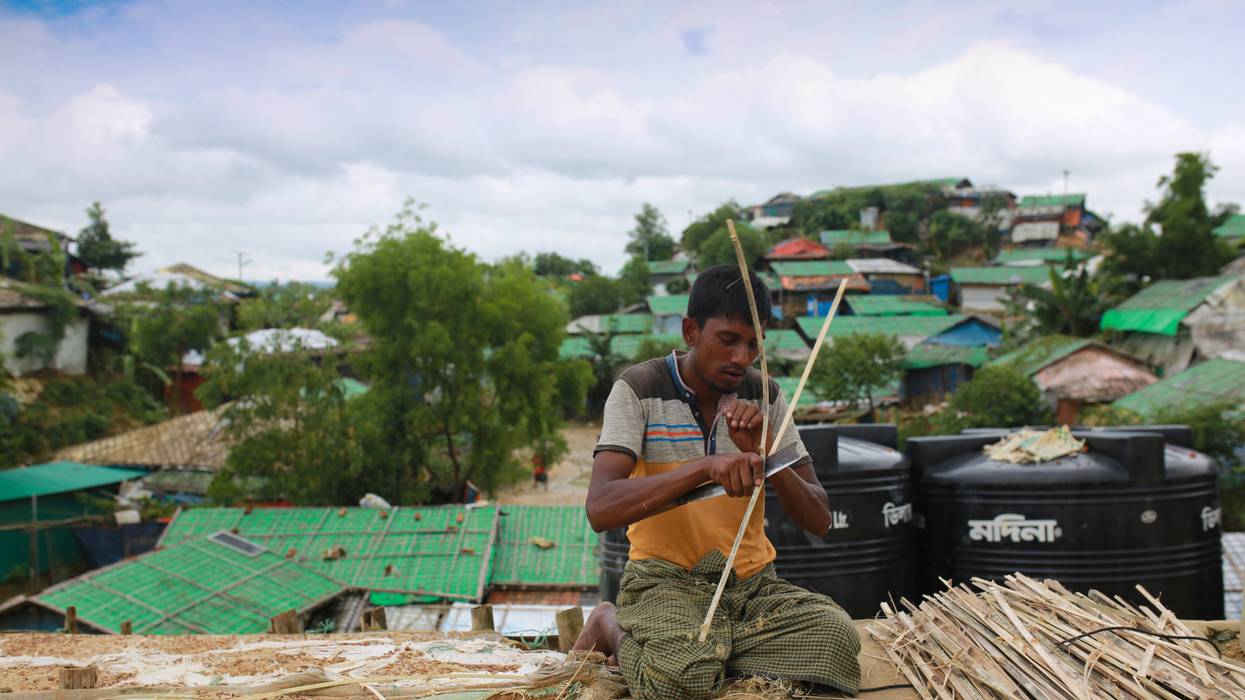
"This is a near worst-case scenario for one of the most storm surge flood vulnerable regions in the world," one scientist warned. "I hate to say it but we're looking at a potential mass casualty event."
Officials in Bangladesh and Myanmar are preparing Friday to evacuate hundreds of thousands of people as a tropical storm turbocharged by the fossil fuel-driven climate crisis strengthens in the Bay of Bengal.
Cyclone Mocha is forecast to intensify further before making landfall on Sunday between western Myanmar and the Bangladeshi city of Cox's Bazar, home to the world's largest refugee camp. Roughly 1 million Rohingya people forced to flee Myanmar amid the country's ongoing genocide against them live in the highly exposed district.
"This is a very, very scary storm," tweeted environmentalist and author Bill McKibben, pointing to its severity and current path.
"The government of Bangladesh needs to develop an inclusive evacuation plan."
The evacuation of more than 500,000 people from the Bangladeshi coast "is expected to start Saturday with 576 cyclone shelters ready to provide refuge to those who are moved from their homes," The Associated Press reported, citing government administrator Muhammad Shaheen Imran.
Bangladesh, a delta nation with more than 160 million residents, is already prone to extreme weather disasters, and that's increasingly the case as the warming Indian Ocean generates more intense and longer-lasting cyclones as well as heavier rainfall.
The impoverished Rohingya refugees living in Cox's Bazar are especially vulnerable to the incoming storm, and it's unclear how many, if any, of them are included in the Bangladeshi government's evacuation plans.
United Nations Refugee Agency spokesperson Olga Sarrado told Reuters that preparations are underway for a partial evacuation of the camp, if necessary. The World Health Organization is also setting up nearly three dozen mobile medical teams and 40 ambulances, along with emergency surgery and cholera kits for the camp.
"Still reeling from a devastating fire in March that destroyed more than 2,600 shelters and critical infrastructure, over 850,000 refugees risk losing their homes and livelihoods," the International Rescue Committee (IRC) warned in a statement. "Strong wind, heavy rains, and subsequent flash floods and mudslides could destroy shelters, community centers, and health clinics, depriving thousands of essential services and humanitarian aid."
"In preparation, more than 3,000 Rohingya refugees have been trained to respond to flooding and mudslides," said the IRC, which is "scaling up its emergency response in Cox's Bazar." According to the organization: "Three mobile medical teams will be deployed to remote areas in the camps and communities to provide emergency medical treatment. Additionally, a mobile protection unit designed for emergency settings will offer protection services to vulnerable groups such as women, girls, the elderly, and those with disabilities."
IRC Bangladesh director Hasina Rahman lamented how "time and again, we have seen the devastating impact of extreme weather events in Cox’s Bazar. Since 2017, countless shelters, schools, health clinics, and safe spaces for survivors of gender-based violence have been decimated as a result of floods and mudslides, as well as preventable tragedies such as the fire in March this year."
"As a low-lying country with major cities in coastal areas, Bangladesh is particularly vulnerable to climate change, which makes annual weather events—such as cyclones—more intense and frequent," said Rahman. "The impacts—loss of life, destroyed crops, challenges to livelihoods, damage to homes and infrastructure—are often borne by the people and communities who have contributed least to the climate crisis: Bangladesh, for example, emits less than 1% of global CO2 emissions."
While a rapid and just clean energy transition and other far-reaching transformations are needed to mitigate the causes of global warming, developing nations like Bangladesh cannot "cope with continued weather shocks without support that addresses the effects of climate change, such as early warning systems, anticipatory action, improving infrastructure to protect against flooding, and investment into climate adaptation," Rahman noted.
"It is crucial to fortify shelters and critical infrastructure," Rahman continued. "This involves using durable construction materials to strengthen community facilities like child-friendly spaces, learning facilities, and mosques, which serve as safe points during emergencies."
"Additionally, the government of Bangladesh needs to develop an inclusive evacuation plan in collaboration with U.N. agencies, humanitarian organizations, and the refugee and host communities," she stressed. "The plan should prioritize access to emergency shelters, ensuring family unity, and the protection of vulnerable groups, including women, children, the elderly, and individuals with disabilities."
The U.N.'s International Organization for Migration (IOM) observed that "last year, the camps escaped devastation from the Bay of Bengal cyclone Sitrang, which killed 35 people, displaced over 20,000, and caused over $35 million in damages in other parts of the country."
Cyclone Mocha, the first to form in the bay this year, "strengthened Friday into the equivalent of a category 1 Atlantic hurricane and is moving north at 11 kilometers per hour (7 miles per hour)," CNN reported, citing the Joint Typhoon Warning Center. "The storm's winds could peak at 220 kph (137 mph)—equivalent to a category 4 Atlantic hurricane—just before making landfall on Sunday morning."
India's Meteorological Department on Friday projected that "a storm surge of up to 2.5 meters (8.2 feet) was likely to inundate low-lying coastal areas in the path of the cyclone at the time of landfall," including Cox's Bazar, the outlet noted.
To assist refugees and local host communities as they brace for Cyclone Mocha, IOM said that it "is strengthening camp infrastructure, preparing for medical emergencies, and supporting volunteers in cyclone preparedness."
The U.N. Office for the Coordination of Humanitarian Affairs (OCHA) also expressed "grave concerns" about the storm's potential impacts on "already vulnerable and displaced communities" in neighboring Myanmar, where a military junta rules.
"Of particular worry is the situation facing 232,100 people who are displaced across Rakhine. Many of the [internally displaced person] camps and sites in Rakhine are located in low-lying coastal areas susceptible to storm surge," said OCHA. "The suffering of more than a million displaced people and other communities in the northwest is also expected to worsen over the coming days as the ex-cyclone moves inland bringing heavy rain. Displaced people in the northwest are already living in precarious conditions in camps, displacement sites, or in forests often without proper shelter."
In May 2008, Cyclone Nargis inundated Myanmar, killing more than 138,000 people, uprooting 800,000, and affecting 2.4 million.
"Extreme weather hazards will occur more frequently due to climate change in the years ahead. The linkages between climate change, migration, and displacement are increasingly pressing worldwide," IOM pointed out. "To avert, mitigate, and address displacement linked to climate disasters and strengthen people's resilience," the U.N. agency urged policymakers around the world "to implement sustainable climate adaptation, preparedness, and disaster risk reduction measures."
Despite knowing that extracting and burning more coal, oil, and gas will exacerbate the deadly effects of the climate emergency, profit-hungry fossil fuel executives are still planning to expand drilling with the continued support of many governments.
While COP27 delegates agreed to establish a loss and damage fund—after failing to commit to phasing out the fossil fuels that are causing so much harm—previous efforts to ramp up climate aid from the Global North to the Global South have fallen far short of what's needed due to the stinginess of wealthy countries, especially the United States.
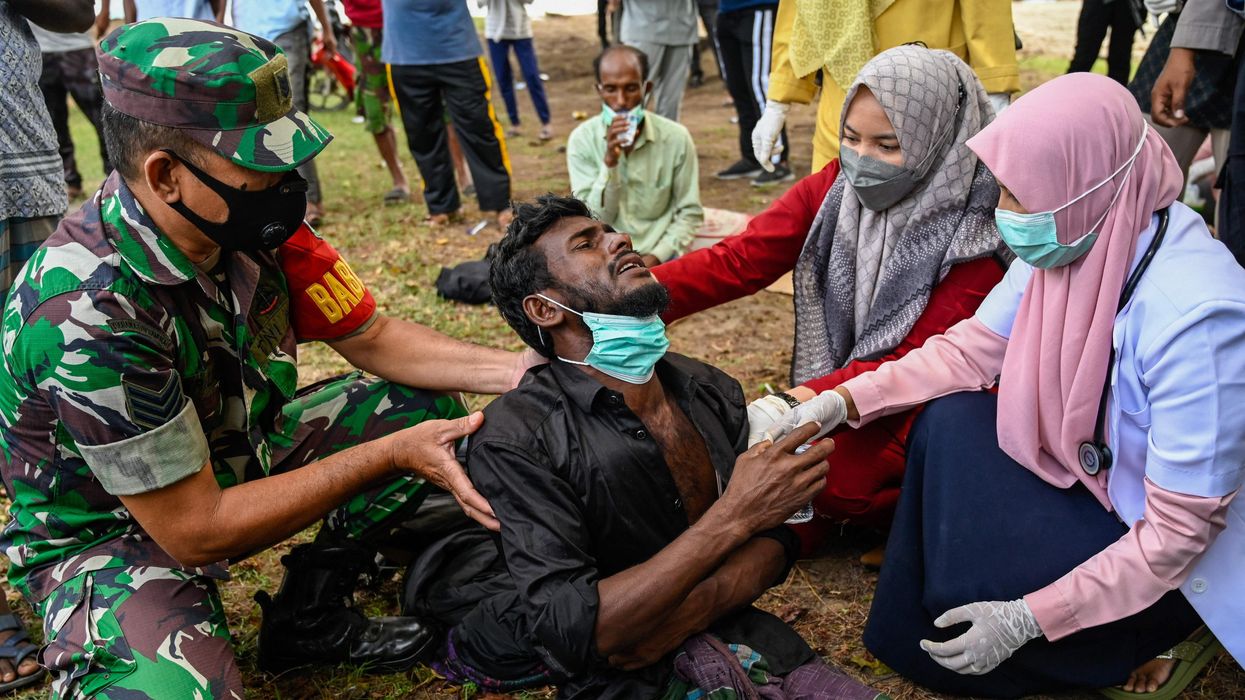
However, around 180 other Rohingya are feared dead amid reports their overcrowded boat sank after setting sail from Bangladesh earlier this month.
The rescue of hundreds of Rohingya refugees by fishers and local authorities in Indonesia's Aceh province was praised Tuesday as "an act of humanity" by United Nations officials, while relatives of around 180 Rohingya on another vessel that's been missing for weeks feared that all aboard had perished.
The United Nations High Commissioner for Refugees (UNHCR) said that "Indonesia has helped to save 472 people in the past six weeks from four boats, showing its commitment and respect of basic humanitarian principles for people who face persecution and conflict."
"We feel like we got a new world today... We could see their faces again. It's really a moment of joy for all of us."
"UNHCR urges other states to follow this example. Many others did not act despite numerous pleas and appeals for help," the Geneva-based agency added. "States in the region must fulfill their legal obligations by saving people on boats in distress to avoid further misery and deaths."
Ann Maymann, the UNHCR representative in Indonesia, said in a statement that "we welcome this act of humanity by local communities and authorities in Indonesia."
"These actions help to save human lives from certain death, ending torturous ordeals for many desperate people," she added.
The Syndey Morning Herald reports residents of Ladong, a fishing village in Aceh, rushed to help 58 Malaysia-bound Rohingya men who arrived Sunday in a rickety wooden boat, many of them severely dehydrated and starving.
The following day, 174 more starving Rohingya men, women, and children, were helped ashore by local authorities and fishers after more than a month at sea.
Mohammed Rezuwan Khan, whose 27-year-old sister Hatamonesa was aboard the boat with her 5-year-old daughter, told Pakistan's Arab News that "we feel like we got a new world today."
“We could see their faces again. It's really a moment of joy for all of us," he said of his family. Speaking of his sister, he added that "she thought that she would die in the voyage at sea."
Babar Baloch, the UNHCR regional spokesperson in Bangkok, stated that 26 people had died aboard the rescued vessel, which left Bangladesh a month ago.
"We were raising alarm about this boat in early December because we had information that it was in the regional waters at least at the end of November," he said. "So when we first got reports that it was somewhere near the coast of Thailand, we approached authorities asking them to help, then when it was moving towards Indonesia and Malaysia we did the same."
"After its engine failure and it was drifting in the sea, there were reports of this boat being spotted close to Indian waters and we approached and asked them as well and we were also in touch with authorities in Sri Lanka," Baloch continued.
"Currently as we speak, the only countries in the region that have acted are Indonesia, in big numbers, and Sri Lanka as well."
According to the BBC, the Indian navy appears to have towed the boat into Indonesian waters after giving its desperate passengers some food and water. The boat drifted for another six days before it was allowed to land.
"Currently as we speak, the only countries in the region that have acted are Indonesia, in big numbers, and Sri Lanka as well," Baloch said. "It is an act in support of humanity, there's no other way to describe it."
Relatives of around 180 other Rohingya who left Bangladesh on December 2 said Tuesday that they fear the overcrowded vessel has sunk in the Andaman Sea. Mohammad Noman, a resident of a Rohingya refugee camp in Cox's Bazar, Bangladesh, told The Guardian that his sister was aboard the boat with her two daughters, who are 5 and 3 years old.
"Every day we called up the boat two or three times on the boatman's satellite phone to find out if my sister and her two daughters were all right. Since December 8, I have failed to get access to that phone," he said. "I know some other people in Cox's Bazar who made phone calls to the boat every day and stayed in contact with their relatives there. None of them has succeeded to reach the phone after December 8."
The captain of another vessel transporting Rohingya refugees said he saw the distressed boat swept up in stormy seas sometime during the second week of December.
"It was around 2:00 am when a strong wind began blowing and big waves surfaced on the sea. [Their] boat began swaying wildly, we could gauge from a flashlight they were pointing at us," he told The Guardian. "After some time, we could not see the flashlight anymore. We believe the boat drowned then."
More than a million Rohingya Muslims are crowded into squalid refugee camps in southern Bangladesh after having fled ethnic cleansing, apartheid, and other violence and repression in Rakhine state, Myanmar, which is ruled by a military dictatorship. Since 2020, thousands of Rohingya have fled the camps by sea.
Hundreds have died during the perilous journey. If the sinking of the boat with 180 aboard is confirmed, it would make 2022 the deadliest year for Rohingya at sea, according to UNHCR.
UNHCR's Baloch stressed that "countries and states in the region have international obligations to help desperate people."
"We have been calling on states to go after people smugglers and human traffickers as they are responsible for putting people on those death-trap boats, but victims have to be saved and saving human life is the most important act," he told the Morning Herald.
"The refugee issue and saving lives cannot just be left to one country, it has to be done collectively, together in the region," he added.
Tun Khin, a Rohingya activist and refugee who now heads the Burmese Rohingya Organization U.K., took aim at regional power Australia, which has been criticized for decades over its abuse of desperate seaborne asylum-seekers, nearly all of whom are sent to dirty, crowded offshore processing centers on Manus Island and Nauru to await their fate.
"Australia has too often set a shameful example for the region through its treatment of refugees," he told the Morning Herald.
"These people are facing genocide in Burma," Khin added, using the former official name of Myanmar. "It is a hopeless situation for them in Bangladesh, there is no dignity of life there."