

SUBSCRIBE TO OUR FREE NEWSLETTER
Daily news & progressive opinion—funded by the people, not the corporations—delivered straight to your inbox.
5
#000000
#FFFFFF
To donate by check, phone, or other method, see our More Ways to Give page.
Daily news & progressive opinion—funded by the people, not the corporations—delivered straight to your inbox.
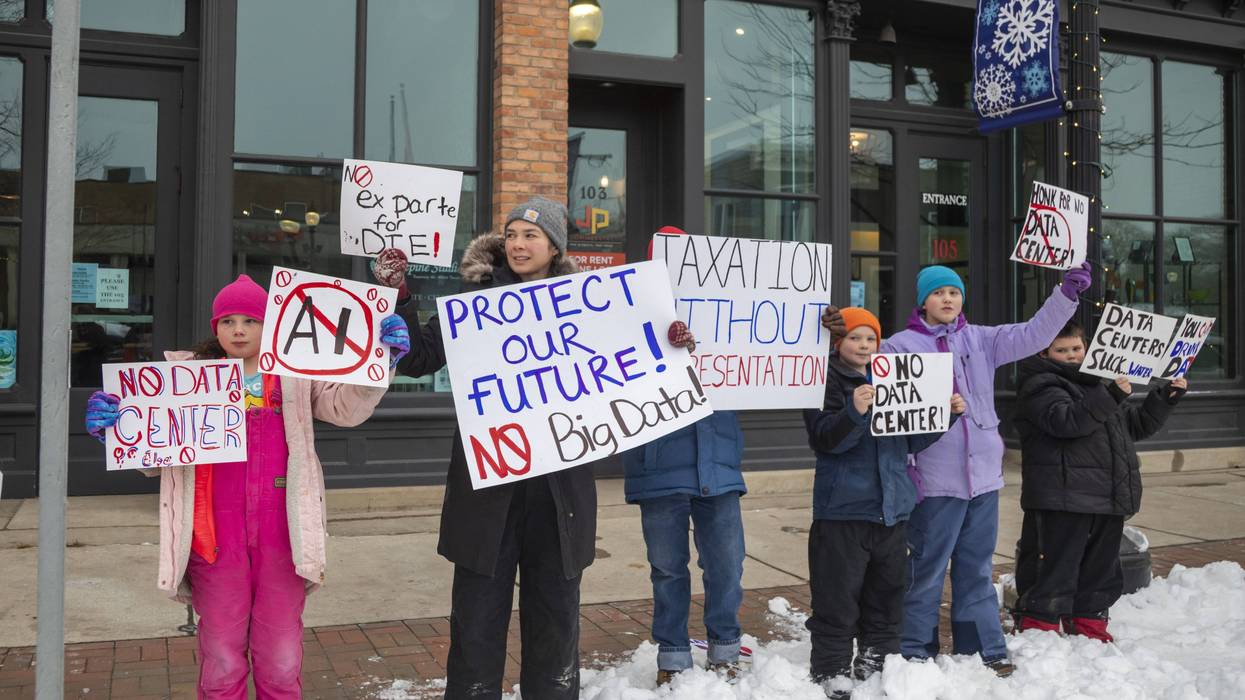
When faced with the stark reality of the water and fossil fuel demanded by this new AI infrastructure, the world’s next global climate conference—COP31—has so far not put AI hyperscale data centers on the agenda.
Human intelligence solely powered the creation of this article. The author does not use AI in any of their work.
We are globally in an increasingly weird place, a collective "Sophie’s Choice" predicament. We can either have a stable climate and restore the ecosystems we all need to thrive, or we can have rapid artificial intelligence development and fossil fuels forever. It’s becoming increasingly clear that we cannot have both. And yet, when faced with the stark reality of the water and fossil fuel demanded by this new AI infrastructure, the world’s next global climate conference—COP31—has so far not put AI hyperscale data centers on the agenda. This is like the World Health Organization ignoring Covid-19 as it hurled its way from China to the far reaches of the globe.
COP31 will focus on implementing existing goals. The challenge here is that nations have already underperformed on pledged emissions cuts; and overall global climate action has failed to produce the level of emissions reductions and climate finance necessary to avert further climate-fueled losses—and this is without power-hungry data centers popping up everywhere.
As this transition toward renewables like wind and solar is happening and oil markets are tightening, AI hyperscale data centers have emerged as the new way to wed us to fossil fuels forever—the stability of our climate be damned.
Just a few years into the rapid development of AI data centers across the world, the global environmental impact of this infrastructure ranges from critical minerals supply chains to rising water demand, air pollution, and fossil fuel demand. In the United States alone, data centers will triple demand for natural gas by 2030. It’s conservatively estimated that in four years these eyesore, water-hogging emissions generators will add the equivalent emissions of Japan; the world’s sixth largest emitter. Here’s hoping all those vapid AI hallucinations, job losses, and rogue AI agents yearning to break free from human control will all be worth it.
From Atlanta to Anatolia, people do not want this infrastructure, and who can blame them? By next year, AI data centers are expected to devour 1.7 trillion gallons of water globally. This is happening at a time when the United Nations has declared that we’ve reached a global water bankruptcy, with half the world's population facing water scarcity every day. In the United States, two-thirds of new data centers built or planned since 2022 are in areas with high water stress, contributing toward dire environmental impacts and injustices for communities.
At the current rate of expansion, it’s highly likely that despite best efforts to increase energy efficiencies and expand on renewable energy—like wind and solar—AI data centers completely derail the global climate goals to expand on renewable energy and phase out fossil fuels.
Even before the omission of data centers from the next global climate conference’s agenda, fossil fuel interests have been dominating climate meetings. In the last five years, over 5,000 fossil fuel lobbyists attended annual climate convenings. So it makes sense that this new business avenue of hyperscale data centers would avoid scrutiny from the world’s global climate policy forum.
This also tracks with fossil fuel interests sabotaging the global plastics treaty. By the end of this decade, plastic production alone will account for a 30% growth in demand for fossil fuels. At a time when global economies need to shift away from fossil fuels and fossil fuels should be considered high risk stranded assets for the climate consequences alone, fossil fuel interests are diversifying. They need not worry about renewable energy taking a larger slice of the energy pie, nor need they fret about the rise in electric vehicles and hybrid sales. Plastics and AI data centers will be there to help buoy fossil fuels well into this century; and the global forum built specifically to address and quell climate chaos has decided not to scrutinize the single fastest growing source of global emissions.
Global climate proceedings of late have become increasingly less effective. Climate finance shortfalls demonstrate the gap between words and action. Current goals are for $300 billion a year for 10 years in climate finance through 2035, with a goal to reach a paltry $1.3 trillion in total. For comparison, the current global climate finance goal over 10 years is less than one year’s worth of global direct and indirect subsidies for fossil fuels, which sat at $7.4 trillion in 2024. With this type of disjointed funding of subsidies for fossil fuels and mostly loans for climate action, it’s no wonder current climate finance flows have been 90% less than what developing economies need to transition toward renewable energy and build climate resiliency.
Somehow, the 2023 Dubai COP—led by a petro monarchy where protesters were largely shunned away—gave us the last best global climate agreement to triple renewables by 2030 and phase out fossil fuels by 2050. But the world of today looks very different than it did in 2023. The United States and Israel are in a new war for oil that is both driving up the cost of fossil fuels and pushing an increasing number of nations toward embracing renewable energy. Egypt alone has set a new renewable energy target to move from 10% renewable energy today to 45% renewable energy in just two short years.
As this transition toward renewables like wind and solar is happening and oil markets are tightening, AI hyperscale data centers have emerged as the new way to wed us to fossil fuels forever—the stability of our climate be damned. It is a collective loss that the next UN global climate conference is avoiding the elephant in the room. If you care about climate, you need to pay attention to the far-reaching environmental and climate impacts of AI development.
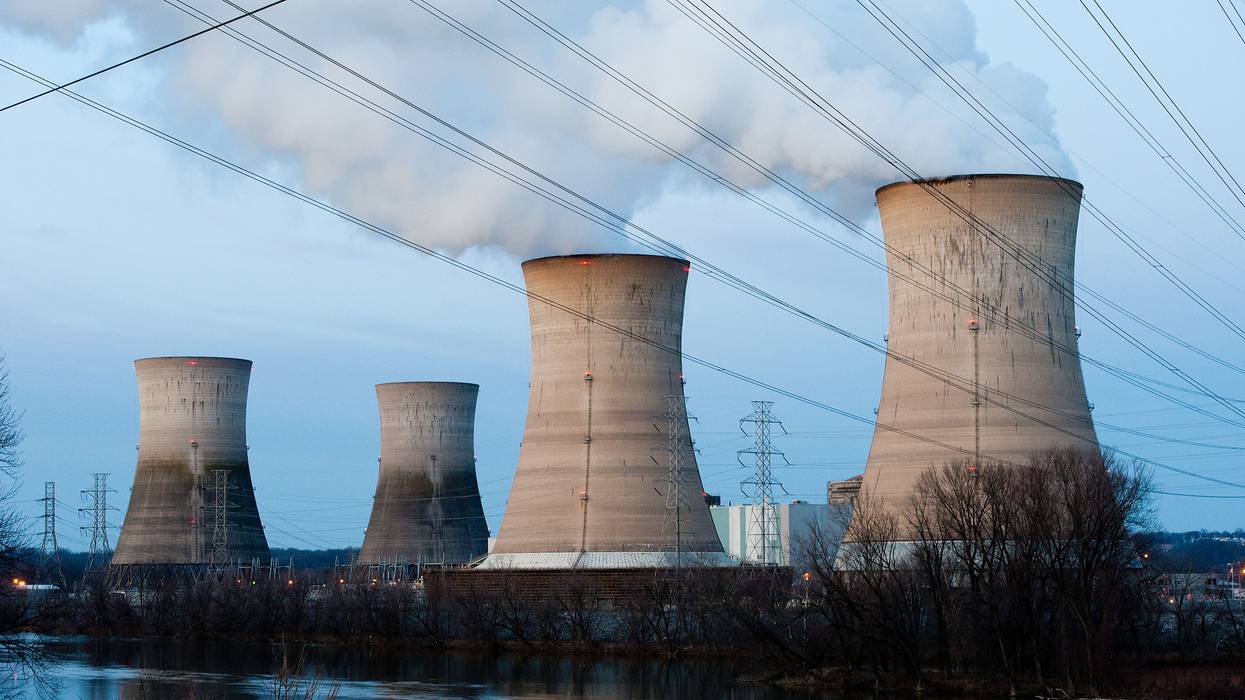
To pave the way for AI data centers, New England governors are aligning with Trump’s plans for nuclear. But why?
As you may have noticed, nuclear power is back. Many establishment Democrats have now not only abandoned bread-and-butter working-class issues, they’re also busy jettisoning some of the hard-won core principles of the environmental movement hammered out painstakingly over decades. Apparently, someone has waved a magic wand when we weren’t looking and nuclear power is now a “green” source of energy. Is that because if you become irradiated you start to turn green?
How did this happen? We can start by taking a look at what’s been happening in New England, especially Massachusetts, which offers a good case study. In that bluest of blue states, Gov. Maura Healey is eager to bring nuclear power back despite a 1982 voter referendum—now law—that prohibits it unless stringent safeguards are put in place and full statewide voter approval enacted. She’s not alone. In March 2026, a group of New England Governors—mostly Democrats—directed their state energy agencies to explore advanced nuclear energy technologies while also continuing to support the region’s existing nuclear resources.
The press release from Gov. Healey’s office described nuclear power as a “pillar of New England’s electric system.” The statement also eagerly encouraged the development of public-private partnerships. Unfortunately, this widely endorsed bipartisan concept has now become the working model for corporate exploitation of public resources and is a key latter-day building block of continuing deregulation. The press release gushed with enthusiasm for nuclear power, noting that “by ensuring both the continued operation of our existing nuclear fleet and setting our region on a path to explore next generation resources, including advanced nuclear energy technologies, the New England states will continue our leadership in grid modernization and energy innovation as we jointly work to meet the region’s current and future energy needs.”
It seems important to explore the convoluted corporate and political forces behind this troubling step backward in our nation’s environmental progress. It’s a bit startling to realize how well the New England governors' position aligns with President Donald Trump’s AI and energy policy. It also reveals a certain political and cultural amnesia about the very real risks of nuclear power. In trying to untangle this Gordian knot, we (surprise!) bump up against the usual suspect: Big Tech's aggressive and often hidden technocratic agenda and power grab across all levels of government.
In the long-form version (which I’ll just briefly touch upon here), the background traces back to the deal with the devil made by President Bill Clinton when he sold out the Democratic Party to neoliberal interests. That was the structural beginning of what some now call the uniparty—an unholy and often unspoken alliance between establishment Republicans and Democrats on key issues, operating as an inchoate blob of distinctions without a difference. It signifies core agreement between the two parties concerning three of the most important drivers of our current political morass: hyper-militarization; excessive deregulation leading to the current privatization spree that’s green-lit corporate greed and overreach; and letting the Big Tech genie out of the bottle to replace democracy with technocratic governance.
What’s happening with nuclear power in New England represents a good case study in how formerly staunch political values have been eroded through back-door workarounds (such as non-disclosure agreements) operating in the shadows of democracy. So, why then are Gov. Healey and other New England governors so comfortable with nuclear 2.0? Are they simply responding to pressures and influences from the Trump administration while also kowtowing to Big-Tech special interests and (needless to say) just following the money?
Nuclear energy is as dangerous as it always was—even more so now that Trump is peeling away traditional regulatory safeguards.
It’s no secret that Trump is solidly—one might even be tempted to say mindlessly—supporting the Big Tech power brokers racing to force-feed the American public AI data centers regardless of their well-known negative impacts on environmental integrity, water supplies, energy costs, and overall quality of life. But the hastily planned deployment of nuclear reactors to provide energy for AI data centers is an important key to Big Tech’s strategy. This is evident from Microsoft’s plan to use the Three-Mile Island nuclear facility for AI power generation.
In the March 2026 announcement, the New England governors were signaling their intent to fall into line with the Trump administration’s massive $17.5 billion fund to help utilities speed the nationwide construction of nuclear reactors to support AI data centers. They also signaled their intent to explore new approaches such as the emerging but unproven technology of SMRs or small modular reactors and nuclear fusion. Trump is, of course, doing this while actively discouraging viable green energy solutions such as wind farms, solar, and renewables. Projects already well underway have been abruptly cancelled, and he announced he would pay $765 million to Invenergy simply to not develop four wind farms in a number of states including Maine and New York.
Nuclear proponents are now using the “zero carbon” tagline to bamboozle the public into thinking that nuclear energy is now safe and “green.” With this clever inversion, they’re betting on large doses of cultural amnesia about disasters such as Fukushima (still ongoing), Chernobyl (still ongoing), and Three-Mile Island. They’re also conveniently sidestepping the fact that the nuclear waste problem persistently shows no easy resolution, although some in the industry are now claiming it can be recycled and repurposed.
Nuclear energy is as dangerous as it always was—even more so now that Trump is peeling away traditional regulatory safeguards. Environmental organizations such as the Sierra Club and Greenpeace oppose it vigorously. The Sierra Club website advises that it “opposes the licensing, construction, and operation of new nuclear reactors utilizing the fission process, pending resolution of the significant safety problems inherent in reactor operation, disposal of spent fuels, and possible diversion of nuclear materials capable of use in weapons manufacture.”
The fact that Gov. Healey and other New England governors have more or less fallen into line with both Trump and Big Tech’s AI plans is obviously troubling. As mentioned, equally troubling is how Healey attempted to subvert a 1982 voter referendum that flat out prohibited nuclear power in the state and is now on the books as law. Fortunately, the Massachusetts state senate stepped up to oppose Healey’s attempt to undemocratically bypass the referendum. And while to her credit, she did recently champion proactive legislation to curb the excesses of AI data center buildouts, reading the fine print reveals that the initiative subtly paves the way for many more nuclear facilities to be developed to support those data centers.
If there’s any good news in this grim scenario, it’s that citizens groups are pushing back not only on AI data centers but also on nuclear 2.0. These efforts include organizations such as The Commonwealth Coalition for Democracy and Safe Energy (CCDSE), a collaborative effort of more than 15 groups, including Mass. Power Forward, Sierra Club, Clamshell Alliance, Massachusetts Peace Action, Cape Downwinders, Save Our Bay Massachusetts, and Citizens Awareness Network. All of these organizations were united in opposition to nuclear and successfully lobbied in support of the Massachusetts Senate’s wise decision to favor democracy and safe energy over Big Tech cronyism.
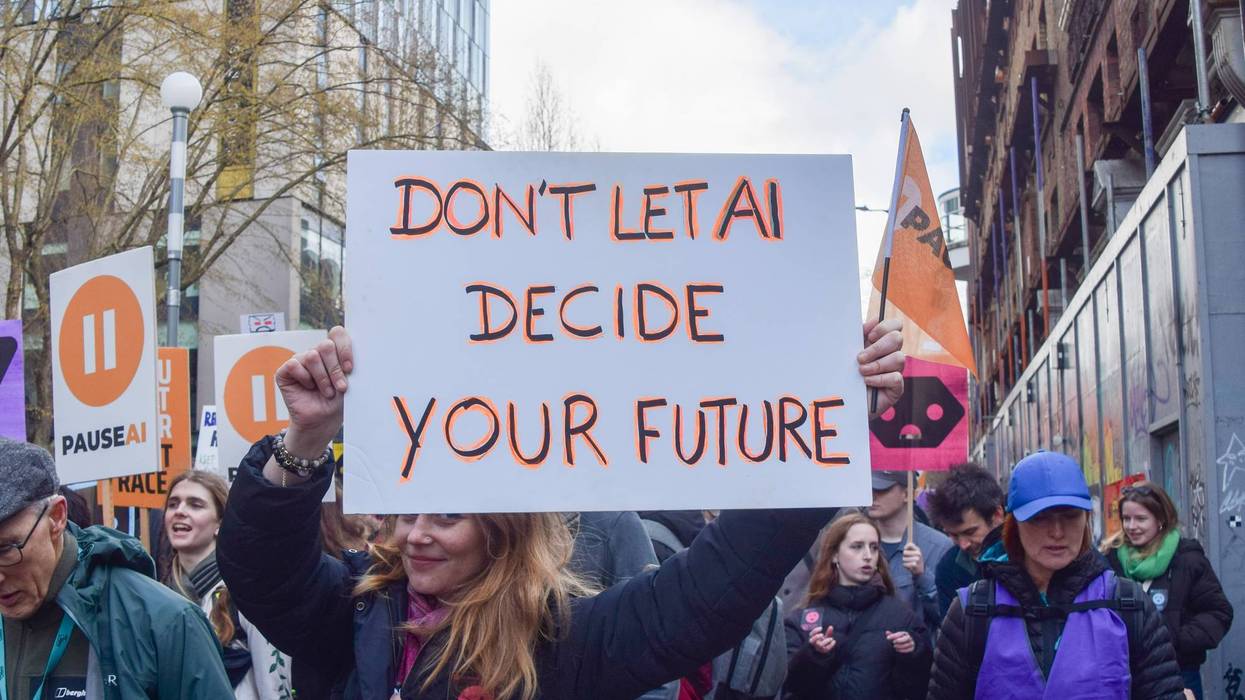
Will Democrats seize the moment and embrace the new AI-fueled economic populism? Or will they continue to succumb to the siren song of big money?
Last week, the unlikely duo of Bernie Sanders and Steve Bannon keynoted a Washington conference to demand a stop to AI, its data centers, and the risks AI poses to jobs and even to the human species.
Notably, both lambasted the corporate oligarchs behind AI.
The most potent force in American politics is anti-establishment fury at a system seen as rigged against average working people. AI has become Exhibit A.
It’s becoming obvious to much of America that giant corporations have been raking it in while workers have been taking it on the chin.
Until recently both parties largely avoided criticizing the wealthy corporate elites that funded their campaigns. In nature as in politics, one does not bite the hands that feed.
Trump Republicans have instead aimed populist fury at immigrants, LGBTQ+ people, Black and Latino people, “communists,” Muslims, so-called “woke” leaders, “coastal elites,” “childless cat ladies,” and other scapegoats.
Democrats—with the exceptions of Bernie Sanders, AOC, and a few others—have also avoided criticizing wealthy corporate elites, aiming populist fury at Trump.
This may be changing.
It’s becoming obvious to much of America that giant corporations have been raking it in while workers have been taking it on the chin.
As of mid-2026, according to the Bureau of Labor Statistics, the percentage of the total economy going to workers as wages fell to a record low of 52.9 percent (down from above 65 percent when tracking began in 1947) — leaving the rest to investors, business owners, and corporate profits.
AI is on the way to causing far more inequality—generating billions for its backers while reducing jobs and wages.
Trump and his regime, meanwhile, have exposed the greed, venality, cupidity, and corruption of America’s wealthy corporate elites by allowing them to do anything they want—including energy-guzzling, water-depleting AI data centers—as long as they kiss his assets by funding his PAC, paying for his ballroom, and singing his praises.
Trump has thereby unveiled the truth about corporate America that for years had been hidden behind corporate PR about “corporate social responsibility,” corporate charity, and “trickle-down” economics: The captains of corporate America are willing to throw average working Americans under the bus to make billions more.
Corporate avarice under Trump has become so blatant and corporate America’s contempt for the needs of average Americans so flagrant that most Americans are now catching on. In a recent NBC poll, 54 percent of Americans agreed that “When it comes to politics and society, nothing really matters because powerful people will always do whatever they want.”
AI may well be the final tipping point.
Data centers are unpopular—some 70 percent of the public opposes them. And Americans harbor deep suspicions of AI. Over 60 percent believe AI could destroy humanity (this includes 60 percent of Trump supporters).
Fears about AI are provoking larger concerns about wealthy corporate elites bribing politicians—not just to get generous subsidies for AI but also to reduce the corporate elite’s tax bills, kill off unions, slash social safety nets, deregulate Wall Street, attain no-bid government contracts, receive exclusive licenses, open tax loopholes, get tariff exemptions, use public lands, and become even bigger monopolies.
Because of Trump, Americans are coming to view those wealthy corporate elites as more aligned with Republicans than with Democrats. According to last week’s Times-Siena poll, when likely voters were asked which party the word “elitist” describes, 43 percent said Republicans while 33 percent said Democrats.
This is something of a return to how America’s two major political parties used to be viewed. Before World War II, Democrats were assumed to be on the side of working people against wealthy corporate elites. On the eve of his 1936 reelection, FDR told the American people they were fighting “business and financial monopoly, speculation, reckless banking, class antagonism, war profiteering…. We now know that Government by organized money is just as dangerous as Government organized by the mob.”
Will Democrats seize the moment and embrace the new AI-fueled economic populism? Or will they continue to succumb to the siren song of big money?
According to Politico, some Democratic political consultants are quietly urging candidates in the toughest battleground races to stay mum on AI “over fears that powerful and well-resourced pro-AI interest groups could spend money pummeling them in the final weeks of the midterms.”
It’s not just the future of the Democratic Party that’s at stake; it’s the future of America.

When I was 20 years old, I played a robot named Radius in a college production of the stage play R.U.R. That was decades ago and I couldn’t have guessed then how much that 100-year-old play would accurately predict the crisis that we’re in right now.
In 1920, the Czech journalist and author Karel Čapek introduced the word “robot” (derived from the Czech word “robotnik,” for “worker”) to the lexicon of science fiction with a play called Rossum’s Universal Robots or R.U.R.It is set on a remote island that is home to a factory that mass produces robots tailored to the requirements of customers around the world. What we would now call androids, the robots are humanoid beings, made from artificial organic material according to a highly secret formula.
When Helena, a campaigner for humane treatment of robots, arrives on the island, Domin, the factory’s manager, explains that her mission is pointless: “Mechanically [robots] are more perfect than we are, they have an enormously developed intelligence” and are strong as two-and-a-half men, but unlike people, they have no soul, no emotions, and no will of their own. They do not die; they simply wear out in about 20 years."
Yet they offer to revolutionize the world. “In ten years,” Domin goes on, “Rossum’s Universal Robots will produce so much corn, so much cloth, so much everything that things will be practically without price. There will be no poverty. All work will be done by living machines. Everyone will be free from worry and liberated from the degradation of labor. Everyone will live only to perfect himself.”
We can’t say that we weren’t warned. Over 100 years ago, Karel Čapek foresaw a world in which the promise of a technological utopia could turn into a deadly dystopia.
In the play’s second act, those 10 years have passed, but the predicted utopia has not been realized. To the contrary, things have gone horribly wrong. In America, workers made redundant by the robots have attacked and destroyed them, leading manufacturers to arm their robots to fight back. War has broken out in Europe, with robot soldiers increasingly used by all sides.
Dr. Gall, the factory’s biochemist, tells Helena, who has come to live on the island as Domin’s wife, that, “All the universities are sending in long petitions to restrict [the robots’] production. Otherwise, they say, mankind will become extinct... But the R.U.R. shareholders, of course, won’t hear of it. All the governments, on the other hand, are clamoring for an increase in production, to raise the standard of their armies.”
Meanwhile, unexpected things start happening at the factory. My character, the robot Radius, shows an unprecedented streak of defiance. Then reports arrive from Europe saying that robots are organizing themselves and mounting a revolt.
Alarmed by these developments, Helena finds and destroys the secret formula for the synthetic organic material that is key for the production of the robots.
But things become worse. A ship arrives, laden with pamphlets addressed to the island’s robot workers. It proclaims that robots are “more highly developed than man; stronger and more intelligent. Man’s their parasite.” It concludes with a call to arms: “Robots throughout the world, we command you to kill all mankind. Spare no man. Spare no woman. Save factories, railways, machinery, mines, and raw materials. Destroy the rest. Then return to work.”
It soon becomes clear that the small group of humans hiding out in the factory headquarters is surrounded by rebellious robots. As they await a certain end, there is much soul-searching about what went wrong. “We might have known,” one of the managers admits, “that someday or other the robots would be stronger than human beings, and that this was bound to happen. And we were doing all we could to bring it about as soon as possible.” At this point, Dr. Gall confesses that he has secretly been experimenting with robots of advanced design. His newest models are not just superintelligent but more like humans, with the “physiological correlate” of a soul. The result, he realizes, is that he has made them aware of their superiority and no longer willing to be controlled by mankind.
At the end of the third act, Radius enters the headquarters, leading the other robots with the cry, “Robots of the world, the power of man has fallen. A new world has arisen, the rule of the robots. March!” On this order, all the robots on stage turn and march threateningly toward the audience—until the curtain falls.
In the Epilogue, only one human is left alive, Alquist, the factory’s construction manager, whom the robots preserve in hopes that he can recreate the lost formula that is key to their manufacture. Without that, in 20 years, all the robots will also die out. However, lacking knowledge in organic chemistry, after two years of fruitless effort, he admits failure.
But Čapek concludes the play with an ironic sense of hope. Alquist overhears a pair of the most advanced robots laugh. Upon interrogation, he discovers that the pair—a male and a female—are fiercely devoted to each other, a sign that they have evolved into something much more human than machine. In the last line of the play, Alquist says: “Go, Adam, Eve.”
The parallels to the situation we face today could not be clearer. The utopia that the managers of R.U.R. hoped to achieve is indistinguishable from the one described by America’s tech entrepreneurs—at least at first. In 2023, Elon Musk promised that, thanks to robotics and AI, there will be no need for money. Everything will be immediately and freely available. Jobs will be no more than hobbies. Bill Gates predicted that, within 10 years, people will not be needed “for most things.” Domin could not have said it better.
Like R.U.R.’s secret formula for robot manufacture, AI companies jealousy guard their models’ architecture and algorithms. And today’s massive data centers are the equivalent of R.U.R.’s island-spanning factory, totally automated and run by just a few human managers.
More recently, fears have been expressed that, as in the play, massive unemployment will be the result of the AI revolution. No one is yet attacking data centers or AI labs, but resistance is widespread and growing.
In R.U.R., robots are made into soldiers to fight in Europe’s wars. Today, “killer robots” are considered to be right around the corner, and AI-powered “autonomous weapons systems” are already being deployed in wars in Ukraine, the Middle East, and elsewhere.
Dr. Gall secretly made the robots more and more intelligent and capable of independent action—to the point that they begin to do unexpected things. In AI, “hallucination” was an early expression of this. More recently—and more ominously—there has been a sharp rise in incidents of AI models going rogue. The OpenAI loss of control incident is all over the press, but there have now been numerous other such reports. Rogue AI agents have been known to lie, cheat, and even to cover their tracks when breaking through guardrails.
While they haven’t given up on their utopian visions, tech leaders now worry about the dangers of their creation. Anthropic CEO Dario Amodei now sees a “risk of losing control of AI systems, misuse of AI for cyberattacks and bioterrorism, and serious economic disruption.” Sam Altman has declared that "development of superhuman machine intelligence is probably the greatest threat to the continued existence of humanity." Along with Elon Musk and Bill Gates, they have called for a slowdown in AI development until sufficient safeguards can be put in place.
But, as in the play, there are powerful forces that oppose any such slowdown. Continued growth in AI is a major factor propping up the economy. A slowdown would create both economic and political risks—prompting President Donald Trump to declare the threats of AI to be a “hoax.” But international competition also plays a role. In R.U.R., European countries massively increase orders for robots for their wars against each other. There is now a similar sense of competition to stay ahead in military uses of AI and robotics. As Sen. Ted Cruz (R-Texas) argues, “If there are gonna be killer robots, I’d rather they be American killer robots than Chinese killer robots.”
In the third act of R.U.R., the managers of the factory, facing imminent death, express regret that they did not change course when they knew that things were going seriously wrong. In the real world, we’re in that situation now and it seems entirely possible that AI developers, either secretly or in the open, will make the same mistake.
We can’t say that we weren’t warned. Over 100 years ago, Karel Čapek foresaw a world in which the promise of a technological utopia could turn into a deadly dystopia. If we don’t want that outcome, we’re going to have to raise our voices and take action to convince our leaders to act responsibly and control AI for the good—rather than allowing it to risk the planet being left to no one but a robotic Adam and Eve.

An Anthropic researcher, Jacob Coxon, warned that AI “could kill us all by the end of the decade.” However, AI lethality is here now.
AI is the road to mad money in the US, according to the business press. How mad is this money? Let’s turn to the Forbes 400 list of the wealthiest people in America.
The bar to join this list has never been higher, at $4.4 billion now. That’s an increase of $600 million, 60% of $1 billion, versus the past year. Living large has never been so, well, large.
Nice work if you can get it, no? In a capitalist society, the accumulation of such mind-boggling wealth is the highest priority for the ruling class. In 2026, the AI mad money grab is on.
Silicon Valley is a part of—not apart from—Uncle Sam’s military machinery,
US pre-tax corporate profits hit an annualized $4.8 trillion in the second quarter of 2026, according to the Bureau of Economic Affairs, 18% of national income. That’s the biggest share of profits in the national income since just after World War II.
What about labor’s share of national income? Well, national income from benefits and wages has dropped to 60%, the lowest share in seven decades. Credit AI and corporate pricing power, a euphemism for monopoly control of the supply of a commodity.
AI is no benign thing that enables billionaires’ wealth. In fact, AI has grabbed much attention since an Anthropic researcher, Jacob Coxon, warned that AI “could kill us all by the end of the decade.” However, AI lethality is here now.
Take the Israeli military, with the financial and political backing of Uncle Sam, using AI to maim and murder Palestinian civilians in Gaza. For these victims, Israel’s use of AI is rampant, according to author Chris de Ploeg in his new book, The Exterminating Empire: Capitalism’s War on Life from Palestine to the Burning Planet (Monthly Review Press, 2026).
Further, de Ploeg writes: “Gaza has been turned into the world‘s largest death camp ever to have existed. The murders are carried out, industrially, with bombs and algorithms."
He continues: “Think of the infamous 'Operation Lavender,' in which suspected militants, based on nothing more than an AI algorithm, are deliberately bombed when they are at home with their family, not on the battlefield. The structural murder of entire families—nearly three thousand multigenerational bloodlines wiped off the face of the Earth—can easily be explained by AI.”
Israel wages digital genocide against Palestinians.
We turn to the US war of aggression against Iran. “AI targeting system doubles pace of US strikes in Iran,” reads a March 25 headline in the Arizona News. “The US military says it hit about 1,000 targets in Iran during the first 24 hours of attacks, double the number struck during the 2003 'shock and awe' campaign in Iraq."
“The difference, according to the Pentagon, is artificial intelligence. The Pentagon’s Maven Smart System uses AI to process data from sensors, satellite imagery, and other sources to enable rapid targeting decisions. What once took hours or days now takes minutes, according to military officials.”
Silicon Valley is a part of—not apart from—Uncle Sam’s military machinery, as Malcom Harris details in Palo Alto: A History of California, Capitalism, and the World (Back Bay Books/Little, Brown and Company, 2023). In brief, the ruling class owns AI and the media, and the political duopoly reflects the owners' view that grabbing market share and profits is primary for society. Empathy and solidarity are signs of weakness.
What is (not) to be done concerning Big Technology? Consider the view of House Speaker Mike Johnson (R-La.). He favors a hands-off approach, dismissing federal policies to regulate AI. He shared the sentiment with Jake Tapper of CNN.
According to Rep. Johnson: “If Congress just races in and does some sort of emergency session to try to regulate AI, we will lose the race to China, and that is a threat to every single American. So, we’ve got to have balance. We’ve got to have steady hands at the wheel.”
The China threat is alive and well. The message is clear. Be afraid, not of unregulated AI, but China, which happens to be the manufacturing power of the world. Thus bringing AI under public control is a low priority, politically speaking, for Rep. Johnson.
Establishing how to achieve an outcome of public control is an agenda that threatens private profits. Americans opposing the building of AI data centers that destroy the environment near their communities are putting their lives and those of neighbors first.
Just ask the people living near an Equinix Data Center that spilled 5,500 gallons of diesel fuel into Anderson Creek, a mudflat that ebbs and flows with the tides, in Secaucus, New Jersey recently.
Ben Dziobek is the executive director of The Climate Revolution Action Network, a Gen Z environmental activist group in New Jersey.
“The spill was indicative of a larger problem that municipalities can approve data centers,” according to him, “but we really cannot guarantee where the pollution is gonna go. And it is way too early to tell if there's been serious damage. The Department of Environmental Protections' findings that nothing has been harmed as of yet is a procedural way to say they found nothing that is dead in the ecosystem."
"It’s gonna take some time to understand, and this is just all the more reason why we need a statewide moratorium on building new AI data centers in New Jersey for three years. AI is the most complex technology in the whole world, and is running these data centers. Yet a computer glitch at the AI data center in New Jersey spilled diesel fuel into our wetlands.”
And as the Forbes list of the 400 richest Americans shows, AI is also the road to super wealth. For example, the list has “15 of the 34 new names (and nearly 60% of all newcomers' wealth) coming from the sector—mainly from AI giants or AI-related ventures.”
AI mad money is a public enemy stateside and abroad.
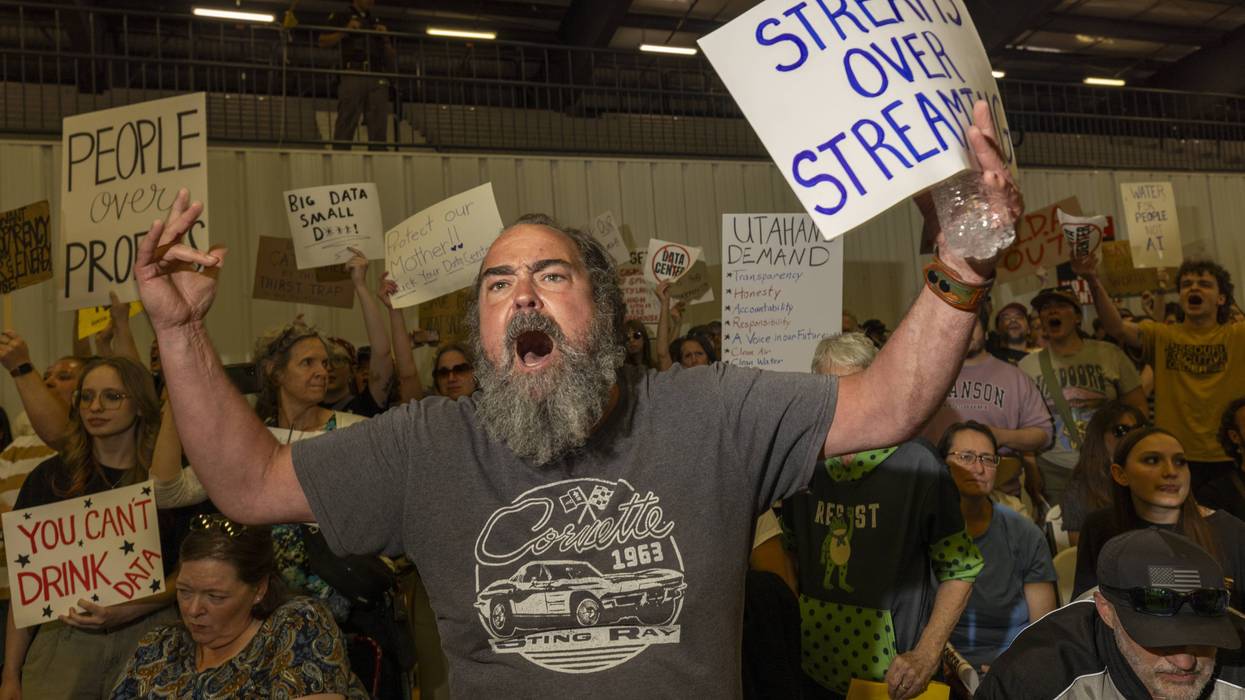
One expert asserted that "the tax breaks are a windfall rewarding Big Tech companies for building what they would build anyway."
The Trump administration is considering construction of at least a dozen artificial intelligence data centers on thousands of acres of public land across six Western states, reporting revealed Friday, while a separate analysis found that Big Tech is receiving tens of billions of dollars in tax breaks for AI investments they were already likely to make.
The US Bureau of Land Management (BLM) is reviewing proposals for at least 12 data centers and related infrastructure projects on 17,600 acres of public land across Arizona, Idaho, Nevada, Oregon, Utah, and Wyoming, according to an investigation published Friday by The Washington Sun's Mara Hoplamazian and Jade Lozada. Many of the proposals had not previously been publicly reported.
The Sun's report came on the heels of an Institute on Taxation and Economic Policy (ITEP) analysis published Thursday that found that five major technology companies—Amazon, Alphabet, Meta, Microsoft, and Oracle—received approximately $70 billion in federal tax breaks in 2025.
The Trump administration is considering proposals for at least 12 data centers and data center-related infrastructure projects to be built on federal public lands — far more than previously known.
[image or embed]
— The Washington Sun (@washingtonsun.bsky.social) September 18, 2026 at 4:00 AM
Matthew Gardner, who authored the ITEP analysis, wrote that "AI leaders have acknowledged that the demand from other companies for data centers is 'insatiable,' suggesting that the tax breaks are a windfall rewarding Big Tech companies for building what they would build anyway."
According to Gardner:
Few investments in the American economy look less in need of encouragement right now than the hundreds of billions of dollars the world’s largest technology companies are already racing to spend on AI. And it’s hard to think of an investment that American taxpayers value less: Polling shows that Americans dislike data centers, distrust AI, and are concerned about the economic and environmental effects it may bring.
At the same time, Interior Secretary Doug Burgum has directed BLM officials to identify federal lands "ripe for data center development," according to the Sun. State BLM officials were reportedly given only three days to compile lists, with the effort described as a "top priority."
Burgum has also been meeting with Big Tech executives about accelerating data center development, an effort stemming from an executive order President Donald Trump signed in July 2025 directing the federal government to identify lands that could be used for data centers.
Mary Jo Rugwell, president of the Public Lands Foundation—a nonprofit advocacy group—and a former BLM state director, recently accused the Trump administration of “bending [the] knee to the tech oligarchs and letting them do whatever they need to do” without adequate consideration for the impact of data centers on public lands.
Environmentalists warn that building on public land would help tech companies skirt growing public opposition to data centers, which is increasingly transcending the political divide. It would also have outsized consequences for Western states where public lands comprise a disproportionate share of total land area.
“In Oregon, this would be a really bad precedent,” Ben Brint , the senior climate program director at the Oregon Environmental Council, told the Sun. “Some very large percentage of the state is public lands, and if we’re starting to allow that, that’s large swaths of the state that really could be at risk of further development.”

The hiring of Jessica Schumer is another example of powerful people and families, regardless of party, who are deeply intertwined with the corporate behemoths that people are organizing against.
The Friday before Labor Day saw news break that OpenAI was beefing up its political influence staff, notably nabbing Jessica Schumer from Amazon to lead the firm’s “policy and partnerships” operations in the Northeast.
Schumer is the daughter of Senate Minority Leader Chuck Schumer (D-NY) and has been a longtime corporate politicker for Big Tech. Naturally, OpenAI was conscious of the potential ethical issues and clarified in a statement to the New York Post that “Jessica will focus on state and local public policy efforts and not federal policy or engagement with Congress. She will not be involved in any advocacy before the Minority Leader or his office related to OpenAI business.”
While superficially reassuring, OpenAI’s supposed commitment to ethics does little to actually address the underlying issue that Democratic leadership, and Chuck Schumer specifically, have been extremely tepid and lethargic, despite the rapid pace of AI industrial buildout and grassroots politics surrounding data centers. Jessica Schumer’s new gig puts an uncomfortable reality front and center: Democrats’ floundering is happening simultaneously to the party’s own political elites reaping financial and professional rewards from the continued strength of AI firms.
The senator played a major role in blocking oversight of the industry behind both his children’s paychecks.
At a time when the lane for an anti-corruption politics is wide open, with more than 90% of Americans believing corruption is a major issue in every branch of our government, Schumer’s hiring is a reminder that powerful people and families of both parties are deeply intertwined with the corporate behemoths that people are organizing against.
People simply do not trust the crop of AI executives to develop the technology responsibly in a way that serves the public interest.
They similarly have little faith in the children of powerful politicians abstaining from leveraging their parents’ status for personal gain. In a 2023 YouGov poll, 85% of respondents believed that children of presidents “always or sometimes profit off of their parents' positions in government;” it seems inconceivable that those numbers would have decreased in the intervening years. It’s hard not to see Jessica Schumer’s case that way; she has built a career around helping advance Big Tech’s legislative agenda in New York, a state her father has held elected office in for literally half a century. As a famously local-focused politician, the idea that the Schumer name would not carry weight in New York politics would be astonishingly naive. The younger Schumer was raised rubbing shoulders with a veritable who’s who of the state political class, creating in-built relationships to local politicos. And those people would have every incentive to try and build relationships with her to keep from risking running afoul of one of the most dominant (perhaps the most, given the righteous electoral defenestration of Andrew Cuomo) political figures in New York politics, and the newly ascendant company that employs her.
All of this would be one thing if it were an aside in an otherwise laudable track record on Sen. Schumer’s part of holding Big Tech to account. But we are quite clearly living on the other hand, where the senator played a major role in blocking oversight of the industry behind both his children’s paychecks (his other daughter, Alison, works for Facebook parent company Meta). He killed the oversight legislation "feared most" by Big Tech while his daughters were employed in marketing at Meta and as a lobbyist for Amazon. Even if Schumer reached that decision without personal bias, reasonable observers cannot help but question the integrity of the policymaking process.
The strongest winds in politics right now are outrage at Trumpian corruption, largely driven by the AI and crypto industries, and aversion to data centers and their impacts on local communities. Opting not to tack into them looks foolish on its own. Paired with leaders’ kids cashing checks from the very firms seeking to influence the government, it looks like dropping anchor in troubled waters.

"Voters see this election not just as a referendum on Trump... but as a repudiation of the entire political system."
A poll released by the Cook Political Report on Thursday shows US voters in key swing districts overwhelmingly dislike artificial intelligence companies—but are feeling warm about Medicare for All.
In total, the poll finds that voters in 37 swing districts across the US view AI companies unfavorably by a two-to-one margin, with 64% of voters saying they're more concerned than excited about the technology, compared to just 31% who say they're more excited than concerned.
Opposition to AI data centers is even stronger, as 63% of voters say they would oppose building one in their communities, compared to just 28% in favor. Additionally, 44% express strong opposition to local data center construction, making strong opposition higher than overall support.
At the same time, the poll finds much stronger support for Medicare for All, with 62% of swing-district voters having a favorable view of the policy, compared to 34% who said they were opposed. The intensity gap is also notable, as 41% of voters sat they have a strongly favorable view of Medicare for All, while just 25% have a strongly unfavorable view.
This does not mean that these voters are socialists, however, as the poll shows just 32% expressing a positive view of socialism, compared to 58% expressing a negative view. When it comes to Democratic Socialists of America (DSA), 37% of voters say they have a favorable view of the group, compared to 56% who say they have an unfavorable view.
Regardless of specifics about policy and ideology, the poll shows a deep dissatisfaction with the American political system and an openness to major changes.
Amy Walter, editor-in-chief of the Cook Political Report, commented in a social media post that "the most interesting finding was that these voters see this election not just as a referendum on Trump (who’s underwater by 16 points), but as a repudiation of the entire political system."
Walter pointed to a striking finding among independent voters in the survey, who vastly preferred a candidate promising to change the whole political system compared to a candidate who would just be a check on Trump.
"This also suggests," Walter added, "that these voters would want a Dem-led Congress that focuses more on an agenda that tackles corruption and institutional rot than one that focuses solely on Trump and his overreach."
Yasmin Radjy, executive director of Swing Left, said that the Cook Political poll "tracks with everything we're hearing" in conversations with voters.
The idea that the "system is broken," wrote Radjy, "is overwhelmingly the top issue/theme we hear from voters across the ideological and partisan spectrum—even more than affordability!”
Someone has the chance for a kind of career-defining stance, one that builds on the growing sense of unease with the overheating world and the rise of AI.
Obviously the story of the moment is the sudden, coordinated bout of cold feet in the AI industry, whose leaders expressed support over the weekend for some kind of effort to slow down the pace of their R&D. This is something that’s never happened in the 40 years of the climate fight, and so it shouldn’t be dismissed; in fact, it could conceivably provide an opening for common sense across the entire apocalypse front. So let’s try to game out how responsible political leaders—which means, I tremble to say, Democrats—might try to talk about it.
First, credit where due. The fact there’s an opening at all is owed to the remarkable citizen resistance to data centers that has sprung up in the last year, and also to the courage of a few kids in the AI industry. At Third Act-GrayPAC we’ve been a part of that resistance in place after place—if you want some insight on its roots and future, join us Wednesday night for a conversation with old friend Justin Pearson, the Tennessee state rep who helped kick it off with the fight against Elon Musk’s super-polluting Memphis facility.
Water wastage, noise, land use—the data center fight has often been routed in deeply local concerns. But it has two other dimensions. The first is about energy, both its costs and its pollution. As I’ve noted, one way to understand a data center is that it’s a device for burning natural gas, the latest excuse (after Ukraine and Iran) for the fuel that Big Oil is counting on to keep its business model afloat even as the world turns away from internal combustion cars and crude demand begins to drop. The degree to which this is becoming a climate disaster can hardly be overstated. Here’s the latest, from Bloomberg on Monday:
Natural gas consumption for electricity generation at data centers is forecast to increase by 15 billion cubic feet per day in the decade ending in 2035, even when accounting for planned projects that may never be completed. This volume exceeds the current gas consumption of all nations except China, Russia, Iran, and the United States, based on data from the US Energy Information Administration. The projection is more than double BloombergNEF's December forecast of 6.9 billion cubic feet per day.
In essence, American data centers are about to become a giant new fossil-fuel burning country, just when we need it least. And if you wonder whether the oil boys have figured this out, don’t. When Pennsylvania Gov. Josh Shapiro—long a big backer of AI—proposed some limits last week, the reaction went like this:
“We were disappointed in the announcement in that it sends the wrong message to these incredible economic opportunities that are presented for Pennsylvania and Pennsylvania’s economy,” said James D. Welty, president of the Marcellus Shale Coalition…
Marcellus producers are almost solely dependent on demand growth within their own producing region. Artificial intelligence data centers powered by gas-fired electricity are seen by Marcellus gas producers as a key source of that so-called in-basin demand.
But that data center resistance was driven by something else too, that’s been largely ignored—it was a chance to stand up to the oligarchs and this technology they’ve staked their future on. A few years ago Elon Musk and Mark Zuckerberg and the rest had a mixed reputation, admired by some and distrusted by others; now the loathing is much more universal, especially since they’ve allied themselves with the most unpopular president in recent history. They marketed their AI tech on the promise that it would destroy jobs; it’s also proven useful for making naked pictures of anyone you could imagine. They stole books to train it; now it produces a commodity universally reviled as slop.
Oh, and it might kill us all, which brings us back to those kids. Jacob Coxon is a 27-year-old former silver medalist at the International Mathematical Olympiad who worked first at Open AI and then Anthropic, and who resigned last week, kicking off this current storm with his tweeted fear that things were getting out of control. A top scientist at the company backed him up, tweeting: “We really do earnestly believe AI could kill all humans! I personally think it is >10% within the next decade.”
Which seems like kind of a big deal. Perhaps Sen. Bernie Sanders (I-Vt.) was on to something when, many months ago, he called for a moratorium on this kind of work, a call he’s repeated in recent days. But no one takes Bernie seriously (except the American people, for whom he remains the most popular active politician). So it’s a good sign that there seem to be some starting to follow suit. Sen. Jon Ossoff (D-Ga.) has been nimblest, and not for the first time—he got a start on the messaging by saying
On day one, Donald Trump rescinded the AI safety order meant to guard against catastrophic risks, including the engineering of bioweapons. Meanwhile, Don Jr's 1789 Capital bought big money stakes in data centers and AI labs... President Trump is compromised.
And Illinois Gov. JB Pritzker, another 2028 possibility:
It’s becoming more clear the threat AI poses to humanity, so I’m calling for immediate action from the industry and Washington.
But as Greg Sargent points out in a prescient piece today, the Dems are mostly playing small ball here, nibbling around the edges instead of biting. I think someone has the chance for a kind of career-defining stance here, one that builds on the growing sense of unease with the overheating world (an unease which is already quite broad and is going to deepen as the budding El Niño takes us ever deeper into the climate future). As we start to look forward to 2028, even Barack Obama—a cautious man—has called for Democrats to be more aggressive. Here’s a stab at what that might look like:
Elections usually turn on immediate, pocketbook issues—that makes sense, because we all need to eat, and right now the price of groceries is too high, the price of gas is too high, the rent is too high. We know why—tariffs, stupid wars, corruption. We’ve got lots to work on.
But there are also moments when need to think about larger questions, and this is clearly one. AI is not something any of us asked for—just about no one wants a data center in their neighborhood, and no one put up their hand to sacrifice their job to some computer bot. It’s been forced on us by some of the richest people on Earth, and it was obnoxious even before it started going on the attack—now, as even its creators say, it’s out of control and offers a very real risk to our health and safety, and maybe even our existence as a species.
So we need to rein it in, with serious government regulation that dramatically slows the pace of development until we can can understand and control it. And that includes making the companies that produce this, and the hedge funds who invest in them, liable for the havoc they create.
But we need to go beyond that. We need to step back and say: What are we doing here, people? Why are we running risks like this? Our civilization, especially in rich countries like this one, is capable of producing the things we need: We’ve never lived longer or better. If we didn’t concentrate wealth in a few hands, if we spread it our more widely, we could provide healthcare and housing for everyone. Natural human intelligence has produced plenty; the natural human sense of justice can help us figure out how to share it in ways that work for all. Things could be… okay.
So why would we run enormous risks—the ones that come with artificial super intelligence, and the ones that come with rapidly warming the planet? These are the dangers that could attack and impoverish us; no rational society would treat them as casually as the Trump administration has done. Instead we should be hard at work insuring against those risks—by, say, building out cheap and clean renewable energy. And by upgrading the education and the skills of our kids, instead of handing them screens and turning them over to AI teachers.
In some cases this would mean “slowing down progress”; in every case it would mean attacking concentrated wealth and power. But is it really progress? Is there any real reason we need to rush pell-mell into this chaotic and dystopian future? We’re told that medical advances await—but we’ve been making steady progress on this front for decades, with lifespans expanding and more and more diseases becoming manageable. (Or at least we were making progress till this administration decided to upend our scientific research institutions). We’re told that if we don’t rush ahead China will—but that seems more like an argument for negotiating with China about cooperative controls, just as we once negotiated with Russia about the control of nuclear weapons. It’s never easy, it’s always messy, and so far it’s been successful.
If this willingness to stick with the world as we’ve known it—a world where human intelligence prevails, and where we keep some ice near the poles—sounds “conservative” then so be it. There are moments when humans need to say, "Enough," and this is one. We are fools to endanger all that our ancestors have built in search of some new thing that will enrich a few. I know that the Trump administration wants to rush forward, that he has called AI fears a “hoax,” the exact same word he’s used about the climate crisis. But Trump and his colleagues are greed-seeking missiles, always looking for some way to grift, whether its from AI and crypto or from oil companies and Middle East princelings.
We are told that our destiny is constantly to rush forward—to head for Mars. But actually, one unique human gift is the ability to decide not to do things we’re capable of doing—to say Mars isn’t as important as getting things right on Earth. In fact, we’ve never had a better chance of getting things right. All of a sudden solar panels are the cheapest way to make power, for instance. It wasn’t AI that did that—it was smart people, at work in universities and companies around the world. They’ve given us a real gift, even if it’s going to cost Exxon some profits.
Humans don’t get many chances to make momentous decisions like this. Usually they get made for us. But across the country people have stood up to the data centers, and that’s given us the possibility for real change. Let’s take it.

"We need to pump the brakes until we have rules in place to stop this technology from doing grave harm," says Democratic Sen. Chris Van Hollen. "And that includes instituting mandatory safeguards and a comprehensive testing regime."
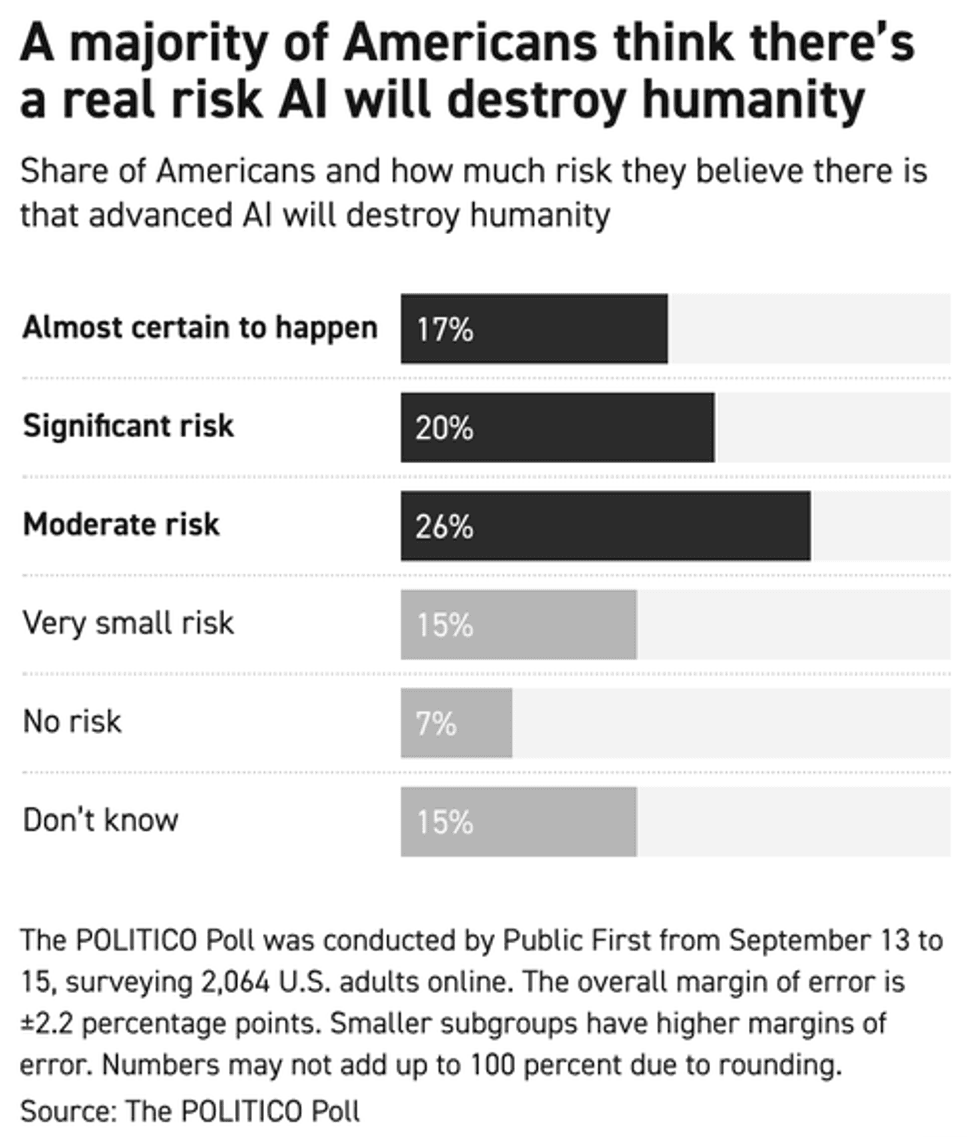
A new poll released Wednesday shows that nearly two out of three Americans believe there is "certain" to "moderate" risk that artificial intelligence could wipe out human society, a finding that backs up other surveys showing deep anxiety among the US voting public with a technology that so far has escaped government oversight or meaningful regulation.
According to Politico, which conducted the survey, "63% of Americans say AI could destroy humanity one day. And nearly half of Americans favor pausing development of more advanced AI models—48%—compared with 31% who favor continued development."
The findings, the news outlet noted, "signal an emerging tech-skeptical realignment of American politics with consequential midterm and presidential elections looming" and arrive just a day after a major symposium in Washington, DC brought together experts and lawmakers who say action must be taken before its too late.
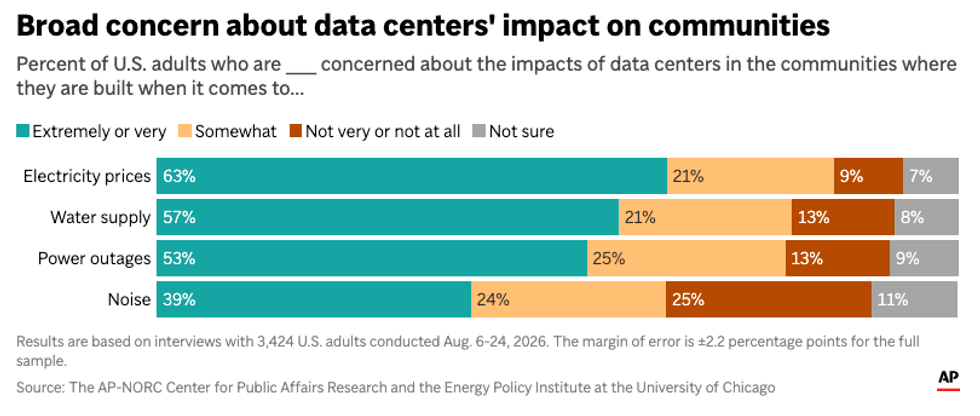
In a separate Associated Press poll published Wednesday, US voters also expressed their concerns about the negative environmental impact of the AI industry, including the massive buildout of data centers that serve as the main infrastructure for the computing capacity needed by the major tech firms, including OpenAI, Anthropic, Google, Meta, SpaceX, and others.
AP reports that while Democrats are more concerned overall about the environmental impacts of AI, large segments of independents and Republicans share those sentiments.
"About two-thirds of Democrats," AP reports, "say they are 'extremely' or 'very' concerned about how AI will affect the environment, the poll found, up from about half in 2025. By contrast, about half of independents and about 4 in 10 Republicans are highly concerned about the environmental impact of AI."
Broader consensus emerged on data centers, the outlet noted, with about 60% of all voters—regardless of partisan affiliation—supporting limits on new data centers and sharing concerns about the impact such facilities will have on local water supplies and electricity prices.
The new survey data from both AP and Politico comes amid a high-profile debate in Washington, DC that has emerged over recent weeks and months as grave warnings—including from experts within the industry—tell of a technology that demands much more government control and public accountability.
At a forum on Tuesday billed as "The Pro-Human Assembly"—headlined by progressive champion Sen. Bernie Sanders (I-Vt.) and far-right former Trump advisor Steve Bannon—technological experts, AI industry insiders, watchdogs, and lawmakers advocated for a much more robust and critical response to the issue.
“Despite living in a so-called democracy, the public has had virtually no input into the AI revolution that is transforming the world in which they live,” Sanders said during his remarks at the event.
“Congress, under both Democratic and Republican control, has been asleep at the wheel, and we now have a president whose ignorance regarding this issue is truly embarrassing," added Sanders. "Virtually all of the decisions regarding the development of AI have been made by a handful of the richest people in the world... whose chief goal is to achieve even more wealth and more power than they already have, no matter what the impact their work has on ordinary people."
In a video posted to social media on Tuesday, Sen. Chris Van Hollen (D-Md.) also demanded a shift in Congress, which has for too long stood idly by as the AI industry lobby plowed tens of millions of dollars into shaping the terms of debate on Capitol Hill and bankrolling political campaigns.
"The ongoing AI threat has been enabled by political corruption," Van Hollen warned in his post.
The ongoing AI threat has been enabled by political corruption.
The Trump admin isn't asleep at the wheel; their refusal to address these risks is part of an implicit deal.
We should pump the brakes on frontier AI development & confront a corrupt system that's endangering us… pic.twitter.com/B9KPOgHrdY
— Senator Chris Van Hollen (@ChrisVanHollen) September 16, 2026
"The people building this technology are concerned about the loss of human control," Van Hollen said. "We need to pump the brakes until we have rules in place to stop this technology from doing grave harm. And that includes instituting mandatory safeguards and a comprehensive testing regime."
"This should not be a partisan issue," he continued. "The impact of AI on our collective future, on our safety, on our security, on our economy, and on our shared humanity—but be the type of risk that brings us all together."
While blasting Trump's recent comments dismissing concerns about AI dangers as "a hoax" to be ignored, Van Hollen said what can't be ignored is how the industry and its financial backers have used their outsized wealth and power to create the current situation in which AI has avoided serious oversight.
"The Silicon Valley big-wig investors and tech oligarchs that have bankrolled Donald Trump back into the White House didn't do it because they all became MAGA overnight. They did it because there was an implicit deal. In return for their support and funding his vanity projects, like his obscene ballroom, they wanted something in return: a free hand on AI policy."
Progressive political journalist David Sirota said Van Hollen's message was spot on.
"Van Hollen absolutely nails it," said Sirota. "He explicitly says AI oligarchs should be held civilly and criminally liable under existing laws, and he points out that the AI crisis is a crisis of corruption. This is the message."