

SUBSCRIBE TO OUR FREE NEWSLETTER
Daily news & progressive opinion—funded by the people, not the corporations—delivered straight to your inbox.
5
#000000
#FFFFFF
To donate by check, phone, or other method, see our More Ways to Give page.
Daily news & progressive opinion—funded by the people, not the corporations—delivered straight to your inbox.
So much darkness. Along with all the rest, in quick succession, the shootings at Brown and Bondi Beach, the murder of director and activist Rob Reiner and his wife Michele, and then the responses. To the beloved Reiner's awful end, a sick man-child spewed vile, loathsome filth that "says it all" about who he is. To the hateful attack on Jews, a Muslim man stood up for humanity with selfless grace and courage, a beacon of hope. Cometh the hour, cometh the man.
Rob Reiner, 78, and his producer wife Michele Singer Reiner, 68, were found dead in their L.A. home on Sunday; their troubled son Nick, 32, was arrested and booked for murder for their gruesome deaths. Reiner was not just Hollywood aristocracy, All In the Family's pacifist "Meathead" who went on to become the buoyant director of classics like This Is Spinal Tap, Stand By Me, The Princess Bride, When Harry Met Sally; he was a fierce, thoughtful defender of democracy and decades-long advocate for causes he believed in - marriage equality, child development services, and taxing the rich for worthwhile goals like funding universal preschool with, brilliantly, a tobacco tax. A savvy political organizer willing to speak out "when silence was simply easier," said one friend, "Rob chose clarity. He stood for truth and accountability, unapologetically." His work featured "a deep belief in the goodness of people - and a lifelong commitment to putting that belief into action," said Barack Obama. "Together, he and his wife lived lives defined by purpose."
In grotesque contrast is the doddering malignant narcissist and "one of the worst humans to have ever poisoned the planet" who responded to the tragedy by raving it was due to Reiner's "massive, unyielding, and incurable affliction (of) TRUMP DERANGEMENT SYNDROME (as we) surpassed all goals and expectations of greatness." The gist of reactions: "There are moments when politics ends, and morality begins...Trump is just a shit human being." Others: "Insane," "Fucking grotesque,” “a monstrosity,”, “DESPICABLE,” "This is a sick man." Evangelical Russell Moore: "How this vile, disgusting, and immoral behavior has become normalized (is) something our descendants will study in school." "Goodness is determined by the way you move through this world," pastor John Pavloviitz writes. "Objectively speaking, (Trump) is the very worst humanity has produced," a "moral bottom-feeder" without scruples as are those who persist in supporting him. "He is simply a bad human being." In other words, said one sage on the grievous loss of Reiner, "In a world full of Archie Bunkers, be a Meathead."
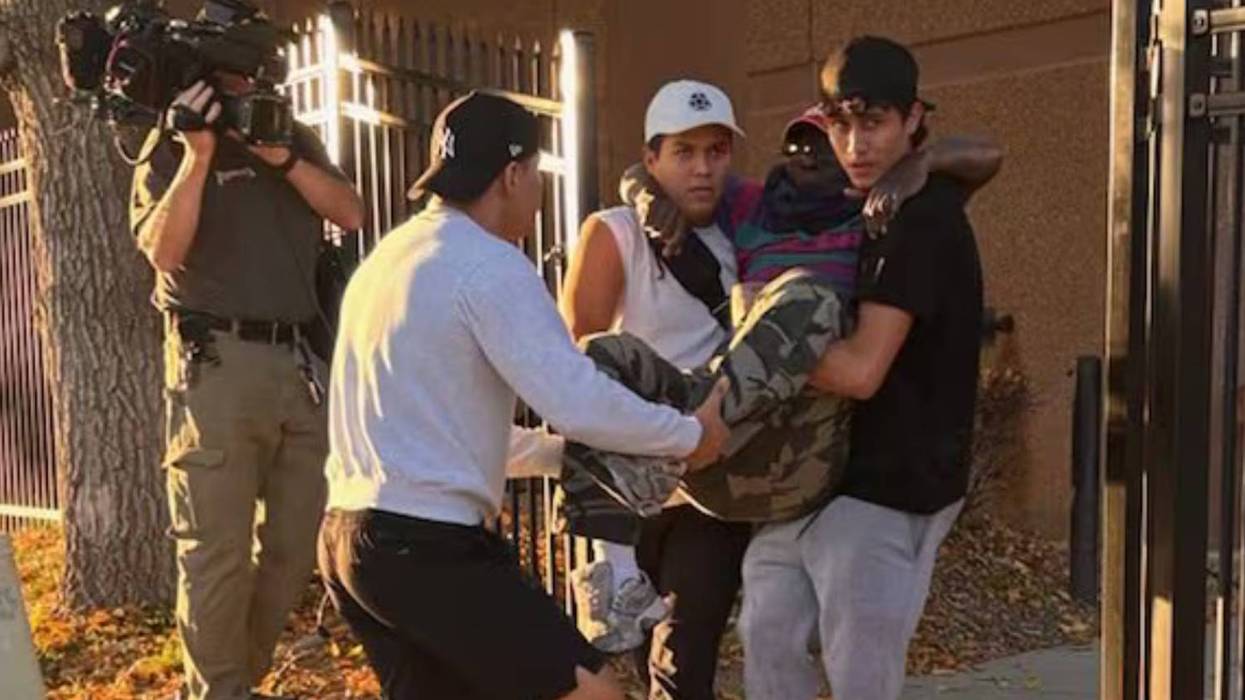
Or, on the other side of the world, an Ahmed el-Ahmed, the heroic, 43-year-old Muslim Syrian, small tobacco shop and fruit stand owner, father of two young daughters and Australian citizen who, in now-viral video, crept up between cars to wrestle with and disarm one of two father-son shooters who killed 15 people Sunday night at a Hanukkah celebration at Sydney's popular Bondi Beach. In the riveting video we see Ahmed, who has no experience with guns, seize the rifle and tentatively point it at the shooter, who stumbles to the ground, stands dazed and small with no weapon, and scrambles away. Ahmed gently leans the gun against a tree, and raises one hand in the air to show police he's innocent of any crime. Later, his cousin Jozay Alkanj.Alkanj said the two had gone out to get coffee, walked by the event, and had just been offered some food when gunfire suddenly erupted. Ahmed turned to his cousin and said, "I’m going to die - please see my family and tell them I went down to try to save people's lives."
- YouTube www.youtube.com
Later footage shows the gunman, the 50-year-old father of the pair, join his son at a small bridge, grab another weapon, and continue firing. Either he or the son, 24, eventually hit Ahmed four or five times, in the arm and shoulder. Police later killed the father, who reportedly arrived in Australia in 1998 on a student visa and had amassed six guns, all legally, over the past decade. The Australian-born son was shot and wounded by police, and is in the hospital. Ahmed is at St. George Hospital in Kogarah; he lost a lot of blood and is now recovering from his first surgery, with at least two more to follow. Sam Issa, his immigration attorney, said Ahmed arrived in the country in 2006, had to overcome multiple obstacles and appeals before getting citizenship in 2022, and feels "indebted" to the Australian community. "He makes a great citizen, and he has worked very hard," he said. "Ahmed is a humble man. He just did what he was compelled to do as a human being on that day."
Another cousin, Mustafa al-Asaad, said Ahmed told him in the hospital he didn't know what came over him in that moment, but "God gave me strength." "When he saw people dying and their families being shot, he couldn't bear it," he said. "It was a humanitarian act more than anything else. It was a matter of conscience." Ahmed's parents, Mohamed Fateh al-Ahmed and Malakeh Hasan al-Ahmed only arrived in Sydney two months ago, and hadn't seen their son since 2006. "I feel pride and honor because my son is a hero of Australia," said his father Mohamed, who added Ahmed had "served with the police. He has the passion to defend people." He stressed Ahmed "wasn’t thinking about the background of the people he’s saving, he doesn’t discriminate between one nationality and another." Echoing him, Prime Minister Anthony Albanese noted they'd just seen both the worst and best of humanity: “We have seen Australians today run towards danger in order to help others, and strangers."
For many, the grim - and in Australia, rare - horror of another mass shooting was partly eased by a the bravery of a Syrian-Australian migrant they saw as "the best of us in the darkest of times." "In a moment of chaos and danger, he stepped forward without hesitation," wrote organizers of a GoFundMe that's raised over $2 million for Ahmed and his family. "No one expects to be a hero, but when the moment came, he was." Moved donors called Ahmed "a beacon of hope for what mankind can be when we stand as one," "a shining light in an otherwise bleak time," "a Righteous among the Nations," "a light of hope for the world." A Muslim man saving Jewish families, one wrote, "shows the world what truly matters - humanity above all else." Outside the hospital, strangers brought flowers. Said one woman: "My husband is Russian, my father is Jewish, my grandpa is Muslim. This is not only about Bondi, this is about every person." Said Ahmed inside, groggy as he was wheeled into surgery: "Pray for us."
.
A protective shield built over the remains of the Chernobyl nuclear power plant in Ukraine is no longer capable of blocking radiation, the International Atomic Energy Agency warned late last week.
In a statement published on Friday, the IAEA said that its researchers have confirmed that the New Safe Confinement (NSC) shield has "lost its primary safety functions," including the ability to confine radiation, after it was damaged by a Russian drone strike in February.
On the positive side, the researchers found "no permanent damage" to the system's load-bearing structures and monitoring systems. Nonetheless, IAEA director general Rafael Mariano Grossi said that urgent work needed to be done to rebuild the shield.
"Limited temporary repairs have been carried out on the roof, but timely and comprehensive restoration remains essential to prevent further degradation and ensure long-term nuclear safety," he emphasized.
Grossi noted that IAEA had a permanent team working at the site and vowed that the agency "will continue to do everything it can to support efforts to fully restore nuclear safety and security at the Chernobyl site."
Shaun Burnie, a senior nuclear specialist at Greenpeace, told the New York Times that the damage caused to the NSC isn't cause for immediate concern, although that would change if the damage to the shield went without repairs for a long period of time.
"If there was to be some event inside the shelter that would release radioactive materials into the space inside the New Safe Confinement, because this facility is no longer sealed to the outside environment, there’s the potential for radiation to come out," said Burnie. "I have to say I don’t think that’s a particularly serious issue at the moment, because they’re not actively decommissioning the actual sarcophagus."
The NSC was first put into place in 2016 to enclose the emergency sarcophagus over Chernobyl's number 4 nuclear reactor that was constructed by Soviet officials in the wake of the 1986 disaster at the nuclear plant.
A new poll shows US voters' approval of President Donald Trump's handling of the economy has hit an all-time low, even as the president and his officials insist the economy is the best in the world.
The latest Associated Press-NORC Center for Public Affairs Research poll released Thursday found that only 31% of voters approve of Trump's handling of the economy, the lowest figure in that survey throughout either of his two terms in office. Overall, 68% of voters said that the current state of the economy was "poor."
What's more, Trump's approval rating on the economy among Republican voters now stands at just 69%, a strikingly low figure for a president who has consistently commanded loyalty from the GOP base.
Despite the grim numbers, the president and his administration have continued to say that the US is now in the middle of an economic boom.
During a Thursday morning interview on CNBC, Commerce Secretary Howard Lutnick said that the US now has "the greatest $30 trillion economy in the world."
"We are doing great," Lutnick said. "Nothing bad is happening. Greatness is happening. We grew at 4% GDP! Come on!"
Lutnick: "Jay Powell is too afraid to lead the greatest $30t economy in the world. We should be leading with our front foot. Instead we are always leaning back as if something bad is happening. We are doing great. Nothing bad is happening. Greatness is happening. We're growing 4%… pic.twitter.com/uWqrlwpllE
— Aaron Rupar (@atrupar) December 11, 2025
Lutnick's message echoes the one Trump delivered earlier this week during a rally in Pennsylvania, where he said that voters' concerns about being able to afford basics such as groceries, electricity, and healthcare were a "hoax" concocted by Democrats.
"Prices are coming down very substantially," Trump falsely claimed during his speech. "But they have a new word. You know, they always have a hoax. The new word is affordability."
Trump on the US economy: “I said it the other day. And a lot of people misinterpreted it. They said ‘Oh he doesn’t realize prices are high.’ Prices are coming down very substantially. But they have a new word. You know, they always have a hoax. The new word is affordability.” pic.twitter.com/JkErFnkT1D
— Sahil Kapur (@sahilkapur) December 10, 2025
As NPR reported on Thursday, data shows that the prices of groceries and electricity have continued to rise throughout Trump's second term, directly contradicting his claims that prices are "coming down."
University of Michigan economist Betsey Stevenson told NPR that Trump is playing with fire by making false claims about prices when US consumers can see costs persistently going up.
"Trump's claims about inflation are false, and you can go to the grocery store and see it yourself," Stevenson said.
Even some members of Trump's own party are growing wary of him insisting that America is experiencing an unprecedented economic boom when voters feel otherwise.
Sen. Lisa Murkowski (R-Alaska) told The Hill that Trump's insistence on making happy talk about the economy would not fly with voters.
"You can’t call it a hoax and suggest that people are going to believe it," she said. "What you say matters."
An anonymous Republican senator also told The Hill that they were concerned about the optics of Trump building a massive luxury ballroom in the White House at a time when Americans say they are struggling financially.
"The cost of living just makes life very difficult on people," the senator stressed.
And Sen. Shelley Moore Capito (R-W.Va.) gently pushed back on Trump's messaging by telling CNN that "a lot of people are still having trouble making ends meet" in her state.
José Antonio Kast, a far-right former lawmaker, won over 58% of the vote in Chile's runoff elections on Sunday over Jeannette Jara, the labor minister under outgoing left-wing President Gabriel Boric, to become the nation's next president.
The win came despite Kast's open admiration for General Augusto Pinochet, who ended civilian rule in Chile after taking power through a coup d'etat in 1973, overthrowing its democratically elected socialist leader in a US Central Intelligence Agency-backed plot and implementing a radical program of economic austerity.
Until he was ousted by a democratic referendum in 1990, Pinochet governed Chile as a military dictatorship rife with human rights abuses, resulting in his indictment by a Spanish court in 1996 for crimes against humanity. His regime assassinated or "disappeared" nearly 3,200 people, while tens of thousands were tortured and more forced into exile.
Human rights groups have accused Kast and his family—the patriarch of which was a member of the Nazi Party who fled to Chile in 1950—of collaboration with the Pinochet regime's detention of opponents. The president-elect's brother was a minister for Pinochet during the dictatorship.
Kast will be the first president of Chile since its return to democracy to have campaigned for and voted “Yes” in the 1988 plebiscite for the dictator to stay in power for another eight years despite his reign of terror.
But rather than distance himself from Pinochet's legacy, Kast has described himself as his spiritual successor.
In 2017, during his first of three presidential campaigns, Kast told a local newspaper that “if he were alive,” Pinochet “would vote for me.” Kast later described Pinochet as someone who brought “order” to Chile, comments that the Buenos Aires Times wrote in 2021, “railed many who are still scarred by this dark period in the country’s history.”
But Kast's nostalgia for that period of repression was not enough to hobble him this time around. At a time when the right is making gains across Latin America, Kast's policy agenda sits at the nexus point between the free market fundamentalism of Argentina's Javier Milei and the police state ambitions of El Salvador's Nayib Bukele.
He has pledged an economic program in the same vein as Pinochet's and, later, Milei's "shock therapy," proposing an unprecedented cut of $21 billion in public spending over his term, paired with a reduction in taxes on the wealthy.
Kast has pledged that these cuts would only affect "waste" and "political" spending, but not impact social programs that benefit Chileans. But economic analysts, including Javiera Toro, Chile's social development minister, have argued that a cut of that size would inevitably cut into the social safety net, including its popular state pension program and others related to health, housing, and education.
Kast successfully martialed fear of high crime (even though it actually fell under Boric's tenure) into outrage toward the nation's undocumented migrants—mainly from Venezuela—whom he has pledged to deport en masse. As in the US, where President Donald Trump is also spearheading a mass deportation operation, immigrants in Chile commit crimes at lower rates than those born in the country.
Last year, Kast visited the sprawling prison complex where Bukele has used emergency powers to detain tens of thousands of people as part of his sweeping war on gangs, often in punishing conditions where they've faced torture. Amnesty International described it as a "state policy of massive and arbitrary deprivation of liberty." Kast said he'd like to implement a similar policy in Chile.
Kast immediately raised fears for the future of Chile's democracy in his victory speech, vowing to form an "emergency government" when he takes power in 2026. However, he will not command a majority in Chile's legislature, which may make the delivery of his agenda more challenging.
Jenny Pribble, professor of political science and global studies at the University of Richmond, told Al Jazeera: “It remains to be seen if Kast could or would pursue such an approach, but if Chile follows the Salvadoran model, it would constitute significant democratic backsliding.”
This is a developing story… Please check back for updates…
At least 16 people are dead, including a gunman, and dozens of others were transported to various hospitals for injuries after shooters attacked a Hanukkah celebration at the iconic Bondi Beach in Sydney, Australia.
New South Wales Police confirmed that one suspect was killed and another is in custody, and a suspected improvised explosive device (IED) was found in a nearby vehicle, according to the Australian Broadcasting Corporation.
"One of the gunmen has been identified as Naveed Akram from Bonnyrigg in Sydney's southwest," ABC also reported. "An official, speaking on condition of anonymity, says Mr Akram's home in Bonnyrigg is being raided by police."
Australian Prime Minister Anthony Albanese called the shooting "a targeted attack on Jewish Australians on the first day of Hanukkah, which should be a day of joy, a celebration of faith," and "an act of evil, antisemitism, terrorism, that has struck the heart of our nation."
"There is no place for this hate, violence, and terrorism in our nation," he continued, noting that many people remain alive "because of the courage and quick action of the New South Wales Police, and the first responders who rushed to their aid, as well as the courage of everyday Australians who, without hesitating, put themselves in danger in order to keep their fellow Australians safe."
A video of one such bystander has swiftly circulated online: A man identified as Ahmed al Ahmed tackled one gunman and took his weapon. A 7NEWS reporter spoke with a cousin of the 43-year-old Muslim fruit shop owner and father of two at the hospital. The "hero," as his cousin and many others have called him, was shot twice and had surgery, but should be OK.
The video garnered attention around the world. Democratic congressional candidate and outgoing New York City Comptroller Brad Lander, who is Jewish, acknowledged the "extraordinary courage" of the man who "bravely risked his life to save his neighbors celebrating Hanukkah." Lander added: "Praying for his full and speedy recovery. And so deeply inspired by his example."
As the Associated Press noted Sunday:
Mass shootings in Australia are extremely rare. A 1996 massacre in the Tasmanian town of Port Arthur, where a lone gunman killed 35 people, prompted the government to drastically tighten gun laws and made it much more difficult for Australians to acquire firearms.
Significant mass shootings this century included two murder-suicides with death tolls of five people in 2014, and seven in 2018, in which gunmen killed their own families and themselves.
In 2022, six people were killed in a shootout between police and Christian extremists at a rural property in Queensland state.
The attack in Australia followed a deadly shooting Saturday at Brown University in Providence, Rhode Island in the United States, where such incidents are far more common.
In the largest US city, the New York Police Department said Sunday that "we are in touch with our Australian partners, and at this time we see no nexus to NYC. We are deploying additional resources to public Hanukkah celebrations and synagogues out of an abundance of caution."
American leaders and political candidates also condemned the Sunday attack, including Dr. Abdul El-Sayed, a Democratic US Senate candidate in Michigan who said that "the images out of Bondi Beach in Australia this morning of a vile, antisemitic massacre at a Hanukkah celebration are shocking, disgusting, and heartbreaking. The shooters deliberately attacked families celebrating a holiday because of their faith. There is no justification for such a cowardly act of terrorism."
"Our family is praying for the victims and their families—and for Jewish communities in Australia and around the world," added El-Sayed, who is Muslim. "I join my Jewish sisters and brothers grieving these attacks. And we stand resolved to stamp out antisemitism and hate in all its forms."
Venezuelan opposition leader María Corina Machado, the winner of the 2025 Nobel Peace Prize, is taking criticism for lending support to US President Donald Trump's campaign of military aggression against her own country.
In an interview that aired on Sunday on CBS News' "Face the Nation," Machado praised Trump's policies of tightening economic sanctions and seizing oil tankers that had been docked at Venezuelan ports.
“Look, I absolutely support President Trump’s strategy, and we, the Venezuelan people, are very grateful to him and to his administration, because I believe he is a champion of freedom in this hemisphere," Machado told CBS News.
Machado elaborated that she supported Trump's actions because the Maduro government was "not a conventional dictatorship," but "a very complex criminal structure that has turned Venezuela into a safe haven of international crime and terrorist activities."
Trump's campaign against Venezuela has not only included sanctions and the seizing of an oil tanker, but a series of bombings of purported drug-trafficking vessels that many legal experts consider to be acts of murder.
Trump has also said that he would soon authorize strikes against purported drug traffickers on Venezuelan soil, even though he has received no congressional authorization to conduct such an operation against a sovereign nation.
Machado's embrace of Trump as he potentially positions the US to launch a regime-change war in Venezuela drew swift criticism from opponents of American imperialism.
SussexBylines columnist Ross McNally questioned whether someone who is going on the record to support military aggression against her own country was really the right choice to win the Nobel Peace Prize.
"The Nobel Committee's decision to give the Peace Prize to Machado is bizarre for several reasons," he explained. "Firstly, its description of Machado’s ‘tireless work promoting democratic rights’ ignores the fact that she supported the attempted coup against democratically elected President Hugo Chávez in 2002... Alongside her encouragement for Trump’s military escalation, this jars somewhat with the Committee’s description."
The Machado interview was also criticized by Venezuelan journalist Madelein Garcia, who argued in a post on X that it was ironic to see that "the 'Nobel Peace Prize' continues thanking the US for the maximum pressure against her own country."
Going Underground host Afshin Rattansi also excoriated the Nobel Committee for overlooking Machado's support of militarism when it decided to award her a prize intended for peacemakers.
"Nobel Farce Prize Winner Maria Corina Machado is not a freedom fighter, she’s a CIA asset and de facto spokeswoman for US corporations," he wrote. "Here she is smiling gleefully at the prospect of selling $1.7 trillion of infrastructure and resources should the US carry out regime change in Venezuela and install her in Miraflores, promising 'we have a massive privatisation program waiting for you.'"
The new data comes as Tesla is removing human safety monitors from its driverless taxi fleet.
Proponents of driverless cars often tout them as a safer alternative to cars with human drivers—but such claims don't appear to be holding up so far in the case of Tesla's Robotaxis.
A Monday report from Elektrek found that Tesla Robotaxis are crashing much more frequently than cars driven by humans, as the company has now reported eight crashes of its driverless taxi fleet in Austin, Texas to the National Highway Traffic Safety Administration since July.
Elektrek also crunched some numbers based on data released by Tesla last month and estimated that the Tesla Robotaxis are involved in a crash for every 40,000 miles they drive. For comparison, the publication reported, cars driven by humans crash about once every 500,000 miles, meaning the Robotaxis so far have crashed 12.5 times more frequently than human-driven cars.
All of the Robotaxi crashes so far have occurred with human safety monitors—who have been trained to take control of the car in the event of a software error—present in the vehicles.
This is significant because, as TechCrunch reported on Monday, Tesla is starting to send out its Robotaxi fleet without safety monitors.
TechCrunch noted that "the removal of the human safety monitors brings the company a critical step closer to its goal of launching a real commercial Robotaxi service," but also said it "will most likely ramp up the scrutiny on Tesla’s ongoing testing in Austin, doubly so when the company starts offering rides in the empty cars."
Tesla's bet on Robotaxis has grown more important given that its vehicle sales in the US and around the world have been dropping significantly so far this year, in part due to a boycott campaign inspired by outrage over CEO Elon Musk's support for far-right political parties.
According to a report from Reuters, the most recent data from car software company Cox Automotive shows that US Tesla sales dropped to a four-year low last month. The news agency also pointed out that Tesla now "is offering financing deals as low as 0% on the Standard Model Y," which is "a sign of weak demand."
"The New World Disorder is here," said the head of the International Rescue Committee. "The question is whether to respond with vision, an opportunity for reinvention—or with further retreat," said the head of the International Rescue Committee.
The International Rescue Committee on Tuesday released its annual humanitarian crisis forecast, along with a stark warning that civilians in the countries on its watchlist "are on the front lines of a disintegrating international order and global action is needed to reverse course."
Sudan, Palestine, and South Sudan topped IRC's Emergency Watchlist for 2026, followed by Ethiopia, Haiti, Myanmar, Democratic Republic of Congo (DRC), Mali, Burkina Faso, and Lebanon. Afghanistan, Cameroon, Chad, Colombia, Niger, Nigeria, Somalia, Syria, Ukraine, and Yemen also made the list.
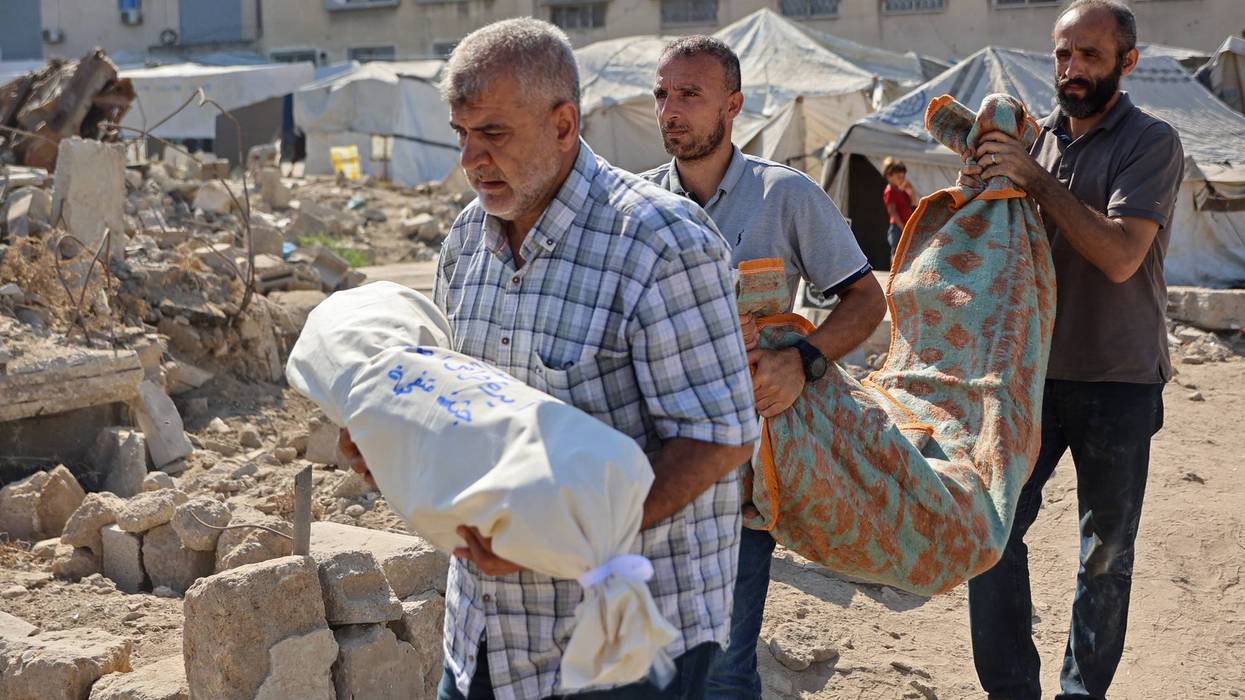
People in some of those countries—including Sudan, Palestine, and Myanmar—are enduring genocidal violence and privation, while nearly all of the other nations on the list are experiencing war or other unrest. Some are also ravaged by climate-driven extreme weather, hunger, and other crises.
"This year’s watchlist identifies a dangerous divergence: surging crises and shrinking support," IRC said on Tuesday. "Home to just 12% of the global population, watchlist countries account for 89% of those in humanitarian need and are projected to host more than half of the world’s extreme poor by 2029."
IRC noted that "117 million people are forcibly displaced" and "nearly 40 million people are facing such severe hunger" in the watchlist countries.
"While crises grow, global humanitarian funding has shrunk by 50%," the group said. "What remains is a humanitarian system underfunded, undercut, and unprepared to meet unprecedented humanitarian crises in 2026."
The world has retreated from humanitarian aid—but violence, hunger and climate threats haven't slowed down. We must not forget about the people for whom crisis is a daily reality. This is our 2026 Emergency Watchlist: www.rescue.org/watchlist2026
[image or embed]
— International Rescue Committee (@rescue.org) December 16, 2025 at 6:28 AM
IRC continued:
This “New World Disorder” is replacing the post-WWII international system once grounded in rules and rights. Defined by intensifying geopolitical rivalries, shifting alliances, and transactional deal-making, this disorder is driving a cascade of crises and eroding global support for the world’s most vulnerable. Global cooperation is unraveling; together with major aid cuts, the [United Nations] Security Council has seen a surge in vetoes, stalling responses to atrocities in Sudan, Syria, and the occupied Palestinian territory. Conflict is increasingly used as a tool for power and profit. In Sudan, warring parties and their backers are profiting from the gold trade, deepening violence and devastating civilians. Meanwhile, impunity is enabled on a dangerous scale. 2025 is on track to be the deadliest year for humanitarians. Attacks on schools have risen nearly 50%, and in Gaza, hospitals, shelters, and essential infrastructure have been bombed or cut off from aid.
“What the IRC is seeing on the ground is not a tragic accident. The world is not simply failing to respond to crisis; actions and words are producing, prolonging, and rewarding it," IRC president and CEO David Miliband said Tuesday in a statement. "The scale of the crisis in Sudan, ranking first on this year’s watchlist for the third year in a row and now the largest humanitarian crisis ever recorded, is a signature of this disorder."
Fighting between the Sudanese Armed Forces and the Rapid Support Forces—a paramilitary militia born from the Janjaweed co-perpetrators of the first Darfur genocide—continues, with all warring parties, especially the RSF, committing war crimes and crimes against humanity, according to human rights groups. The conflict in Sudan has fueled one of the world’s most acute humanitarian catastrophes, with more than 12 million people displaced and famine confirmed in Darfur's largest refuge camp last year. More than 20 million people are facing acute hunger.
In order to respond more efficiently to global humanitarian crises, IRC recommends:
“This year’s watchlist is a testament to misery but also a warning: Without urgent action from those with power to make a difference, 2026 risks becoming the most dangerous year yet," Miliband said.
That urgent action won't be coming from the United States, where the Trump administration has dramatically slashed international humanitarian assistance despite warnings that such cuts would cause millions of deaths. One of many examples stands out for sheer crassness: As South Sudanese babies and others died of cholera following the closure of local health clinics, US officials celebrated successfully slashing aid budgets and services with congratulations and cake, according to a report published Monday by ProPublica.
"Civilians in watchlist countries are paying the price today. The IRC stands with them to deliver practical solutions that save lives and restore hope," said Miliband. "But the New World Disorder is here, and winds are picking up everywhere. Disorder begets disorder. The question is whether to respond with vision, an opportunity for reinvention—or with further retreat.”
"This outcome reflects a troubling trend in the European Parliament, where the conservative bloc has increasingly aligned with far-right agendas, legitimizing polarizing demands and pushing aside science-based evidence."
Climate and human rights advocates on Tuesday blasted European Union legislators for approving a deregulation package that Amnesty International's Eve Geddie said "undermines vital climate and human rights safeguards, betraying people and the planet at a time when protections are needed most."
Members of the European Parliament (MEPs) voted 428-218 in favor of Omnibus I, which will weaken the Corporate Sustainability Reporting Directive and the Corporate Sustainability Due Diligence Directive, with 17 abstentions. The package still needs final approval from the Council of the EU, after which governments will have until mid-2028 to transpose it into national law.
Under the new text, only EU companies that employ more than 1,000 people on average and have a net annual turnover above €450 million, or $529 million, will have to conduct social and environmental reporting, and only firms with over 5,000 employees and a net annual turnover exceeding €1.5 billion, or $1.76 billion, have to carry out due diligence.
The changes, finalized in negotiations between the European Parliament and member states last week, "are expected to exempt around 80% of companies originally expected to disclose against the rules," reported Responsible Investor.
Anticipating the vote, Sebastien Godinot, senior economist at WWF European Policy Office, said Monday that "under the guise of easing regulatory burdens, the EU engaged in a race to the bottom, rushing to undo necessary safeguards that were set in place to protect our nature and climate, as well as to secure future economic prosperity."
"Instead of focusing on the successful implementation of the laws, decision-makers shifted their focus to short-term political gains, ignoring the strong evidence showing that corporate climate targets are not only feasible, but make a lot of sense for companies," he continued. "After years of positioning itself as a sustainability leader, it is disappointing to see the EU stepping back and ignoring the science meant to guide decision-making."
Mariana Ferreira, who focuses on sustainable finance at the WWF office, noted that "this outcome reflects a troubling trend in the European Parliament, where the conservative bloc has increasingly aligned with far-right agendas, legitimizing polarizing demands and pushing aside science-based evidence and warnings."
After Tuesday's vote, Human Rights Watch senior corporate accountability advocate Hélène de Rengervé lamented: "All that is left of the EU's trailblazing corporate accountability law is a skeleton... The final text means corporate interests are being prioritized over the rights of workers, communities, and environmental protection."
Gaëlle Dusepulchre of the Paris-based International Federation for Human Rights also argued that the vote "sets a serious precedent for EU policymaking by signaling a clear prioritization of corporate interests over the protection of people and the planet."
Geddie, director of Amnesty's European Institutions Office, pointed out that "this rollback is part of a bonfire of regulations and is the result of intense lobbying efforts by powerful industry actors and external pressure, including from the United States. Ignoring widespread criticism from civil society, economists, the [United Nations], and even the European Ombudsman, this rushed and opaque process also flies in the face of public opinion, which clearly shows the majority of Europeans favour human rights and environmental protection."
"Now, EU governments must strengthen key provisions when they incorporate these regulations in national law and use every available avenue to improve protections, ensure access to justice for victims, and urgently prevent further erosion of corporate accountability—especially since other deregulation packages are already in the pipeline," she stressed. "European states must not squander the opportunity to use these regulations to ensure businesses contribute to thriving communities—our future and the future of our planet rely on it."
European Coalition for Corporate Justice director Nele Meyer called the vote "a betrayal of people and communities suffering from corporate abuse around the world," and warned that it "puts member states at risk of breaching their obligation to protect human rights and prevent environmental and climate damage."
"It is deeply alarming to witness how foreign pressure shaped a file that should have been driven by evidence and by the needs of those facing the impacts on the ground," Meyer added. "While the protections have been weakened, the core due diligence duty remains. Now the law must be implemented in a way that delivers real protection for people and the planet."