
Muslims gathered at Dam Square for a street Ramadan Iftar, breaking their fast together and showing solidarity with Palestine on February 28, 2026 in Amsterdam.
Netherlands, Iceland Join Genocide Case Against Israel at International Court of Justice
With the intervention of two more nations, 18 have now joined in support of the case, initially brought by South Africa.
The Netherlands and Iceland have joined the case before the International Court of Justice, accusing Israel of genocide in Gaza.
On Wednesday, both nations filed declarations under Article 63 of the ICJ statute, which allows parties to the Convention on the Prevention and Punishment of the Crime of Genocide to intervene in cases involving the interpretation of that convention.
The case was filed in 2023 by South Africa, which cited numerous instances of Israeli leaders using genocidal rhetoric amid an onslaught of attacks against civilians.
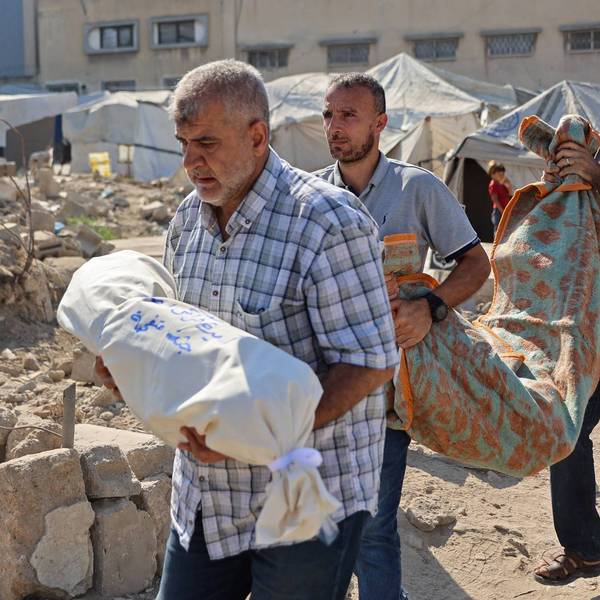
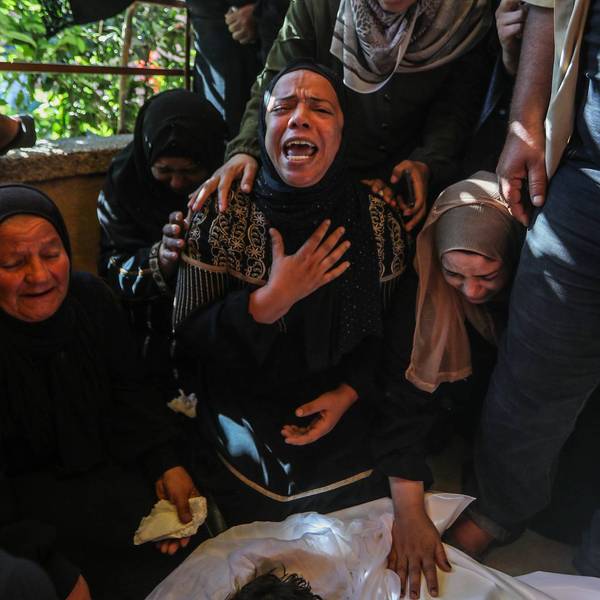
Since October 2023, official estimates from the Gaza Ministry of Health have found that more than 72,000 people have been killed, though independent reviews have placed the death toll much higher.
Several independent humanitarian organizations, including Amnesty International, Human Rights Watch, and the Israel-based organization B'Tselem, have concurred with the intervening parties that Israel's conduct has constituted "genocide."
Article II of the 1948 Genocide Convention defines "genocide" as acts "committed with intent to destroy, in whole or in part, a national, ethnical, racial or religious group." Among these acts are killing, inflicting serious bodily or mental harm, deliberately inflicting conditions of life to bring about their destruction, imposing measures to prevent births, or forcibly transferring their children to other groups.
In its filing before the ICJ, the Netherlands—home to The Hague, where the ICJ is located—argued that Israel's forcible displacement of more than 1 million civilians, killing of more than 20,000 children according to official estimates, and blocking humanitarian aid to use starvation as a weapon of war, are all acts that, when paired with statements from Israeli officials, imply genocidal intent.
The Dutch urged judges on the court to "take account of starvation or the deliberate withholding of humanitarian aid for the purpose of establishing specific intent, in particular when this occurs on the basis of a concerted plan of a consistent pattern of conduct.”
Iceland in particular emphasized Israel's conduct toward the children of Gaza, saying that "attacks on children, including killing and causing serious bodily or mental harm, require special scrutiny as they are particularly indicative of intent to destroy the group."
The pair of European nations brought the total of countries participating in the proceedings up to 18—among them are Belgium, Brazil, Belize, Colombia, Ireland, Mexico, Spain, and Turkey.
The United States, under the Trump administration, meanwhile, has cut off foreign aid to South Africa for its role in launching the case against Israel, which receives billions of dollars in US military assistance annually.
Iceland's intervention in the genocide case marks the first time it has participated in a substantive case before the ICJ, according to the Icelandic news outlet RÚV.
"With Iceland's participation in South Africa's case before the International Court of Justice, we are using our voice in support of international law and human rights," said its minister for foreign affairs, Þorgerður Katrín Gunnarsdóttir. "And we can be proud of that."
While its decisions are legally binding and could require Israel to cease violations of the Genocide Convention, the ICJ is not a criminal court.
However, Israeli Prime Minister Benjamin Netanyahu and former Defense Minister Yoav Gallant have each been issued arrest warrants as part of separate war crimes proceedings by the International Criminal Court (ICC), which have thus far not been enforced.
We are at a crossroads
This country and this world are at a monumental crossroads. In a few short weeks, US voters will have an opportunity to beat back the forces of fascism and confront the billionaires who are rigging the economy, our media system, and our democracy, making it increasingly impossible for ordinary people to get by. We’re not just talking about the election. We’re talking about what must be done once these fascist elements are vanquished from power. We need a bolder set of solutions than what either major party has so far been willing to offer and a working-class movement ready to fight like hell for it. Trump didn't emerge from nowhere. The conditions that fueled MAGA authoritarianism were created by decades of radical neoliberal economic policies and a corrupt political system dominated by corporate interests. They slashed taxes on the super-rich, promising that the benefits would trickle down. They said giveaways to the corporate titans would make life more affordable for the rest of us. It was all bullshit. And when a bitter, betrayed populace searches for someone to blame, right-wing demagogues have little trouble finding scapegoats. People know when they're being lied to, but you won't hear any of this from the corporate media. Only independent journalism—powered and funded by people who believe in building a better world—can deliver truly trustworthy daily news. Our Fall Campaign is underway, and we need your help. To power our newsroom through the rest of the year, we need to raise $125,000 by midnight on October 31. So if you share our vision, please contribute whatever you can to sustain our work. |
The Netherlands and Iceland have joined the case before the International Court of Justice, accusing Israel of genocide in Gaza.
On Wednesday, both nations filed declarations under Article 63 of the ICJ statute, which allows parties to the Convention on the Prevention and Punishment of the Crime of Genocide to intervene in cases involving the interpretation of that convention.
The case was filed in 2023 by South Africa, which cited numerous instances of Israeli leaders using genocidal rhetoric amid an onslaught of attacks against civilians.
Since October 2023, official estimates from the Gaza Ministry of Health have found that more than 72,000 people have been killed, though independent reviews have placed the death toll much higher.
Several independent humanitarian organizations, including Amnesty International, Human Rights Watch, and the Israel-based organization B'Tselem, have concurred with the intervening parties that Israel's conduct has constituted "genocide."
Article II of the 1948 Genocide Convention defines "genocide" as acts "committed with intent to destroy, in whole or in part, a national, ethnical, racial or religious group." Among these acts are killing, inflicting serious bodily or mental harm, deliberately inflicting conditions of life to bring about their destruction, imposing measures to prevent births, or forcibly transferring their children to other groups.
In its filing before the ICJ, the Netherlands—home to The Hague, where the ICJ is located—argued that Israel's forcible displacement of more than 1 million civilians, killing of more than 20,000 children according to official estimates, and blocking humanitarian aid to use starvation as a weapon of war, are all acts that, when paired with statements from Israeli officials, imply genocidal intent.
The Dutch urged judges on the court to "take account of starvation or the deliberate withholding of humanitarian aid for the purpose of establishing specific intent, in particular when this occurs on the basis of a concerted plan of a consistent pattern of conduct.”
Iceland in particular emphasized Israel's conduct toward the children of Gaza, saying that "attacks on children, including killing and causing serious bodily or mental harm, require special scrutiny as they are particularly indicative of intent to destroy the group."
The pair of European nations brought the total of countries participating in the proceedings up to 18—among them are Belgium, Brazil, Belize, Colombia, Ireland, Mexico, Spain, and Turkey.
The United States, under the Trump administration, meanwhile, has cut off foreign aid to South Africa for its role in launching the case against Israel, which receives billions of dollars in US military assistance annually.
Iceland's intervention in the genocide case marks the first time it has participated in a substantive case before the ICJ, according to the Icelandic news outlet RÚV.
"With Iceland's participation in South Africa's case before the International Court of Justice, we are using our voice in support of international law and human rights," said its minister for foreign affairs, Þorgerður Katrín Gunnarsdóttir. "And we can be proud of that."
While its decisions are legally binding and could require Israel to cease violations of the Genocide Convention, the ICJ is not a criminal court.
However, Israeli Prime Minister Benjamin Netanyahu and former Defense Minister Yoav Gallant have each been issued arrest warrants as part of separate war crimes proceedings by the International Criminal Court (ICC), which have thus far not been enforced.