SUBSCRIBE TO OUR FREE NEWSLETTER
Daily news & progressive opinion—funded by the people, not the corporations—delivered straight to your inbox.
5
#000000
#FFFFFF
To donate by check, phone, or other method, see our More Ways to Give page.
Daily news & progressive opinion—funded by the people, not the corporations—delivered straight to your inbox.
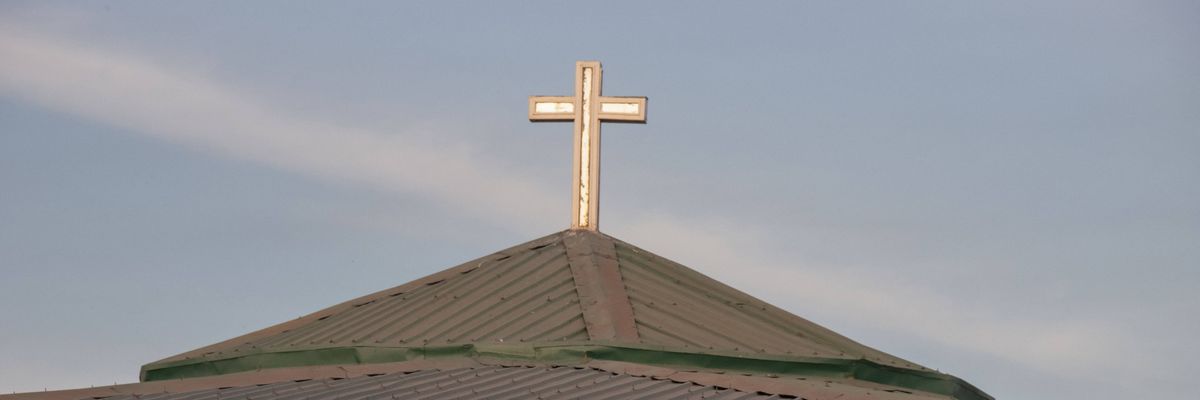
“Portraying Nigeria’s security challenges as a targeted campaign against a single religious group is a gross misrepresentation of reality,” said Nigeria's information minister.
When President Donald Trump launched a series of airstrikes in Nigeria on Christmas, he described it as an attack against "ISIS Terrorist Scum in Northwest Nigeria who have been targeting and viciously killing, primarily, innocent Christians."
But locals in a town that was hit during the strike say terrorism has never been a problem for them. On Friday, CNN published a report based on interviews with several residents of Jabo, which was hit by a US missile during Thursday's attack, which landed just feet away from the town's only hospital.
The rural town of Jabo is part of the Sokoto state in northwestern Nigeria, which the Trump administration and the Nigerian government said was hit during the strike.
Both sides have said militants were killed during the attack, but have not specified their identities or the number of casualties.
Kabir Adamu, a security analyst from Beacon Security and Intelligence in Abuja, told Al Jazeera that the likely targets are members of “Lakurawa,” a recently formed offshoot of ISIS.
But the Trump administration's explanation that their home is at the center of a "Christian genocide" left many residents of Jabo confused. As CNN reported:
While parts of Sokoto face challenges with banditry, kidnappings and attacks by armed groups including Lakurawa–which Nigeria classifies as a terrorist organization due to suspected affiliations with [the] Islamic State–villagers say Jabo is not known for terrorist activity and that local Christians coexist peacefully with the Muslim majority.
Bashar Isah Jabo, a lawmaker who represents the town and surrounding areas in Nigeria's parliament, described the village to CNN as “a peaceful community” that has “no known history of ISIS, Lakurawa, or any other terrorist groups operating in the area.”
While the town is predominantly Muslim, resident Suleiman Kagara, told reporters: "We see Christians as our brothers. We don’t have religious conflicts, so we weren’t expecting this."
Nigeria, Africa's most populous nation with more than 237 million people, has a long history of violence between Christians and Muslims, with each making up about half the population.
However, Nigerian officials have disputed claims by Republican leaders—including US Sen. Ted Cruz (Texas)—who have claimed that the government is “ignoring and even facilitating the mass murder of Christians.”
The senator recently claimed, without citing a source for the figures, that "since 2009, over 50,000 Christians in Nigeria have been massacred, and over 18,000 churches and 2,000 Christian schools have been destroyed" by the Islamist group Boko Haram.
Cruz is correct that many Christians have been killed by Boko Haram. But according to reports by the US-based Armed Conflict Location and Event Data Project and the Council on Foreign Relations, the majority of the approximately 53,000 civilians killed by the group since 2009 have been Muslim.
Moreover, the areas where Boko Haram is most active are in northeastern Nigeria, far away from where Trump's strikes were conducted. Attacks on Christians cited in October by Cruz, meanwhile, have been in Nigeria's Middle Belt region, which is separate from violence in the north.
The Nigerian government has pushed back on what they have called an "oversimplified" narrative coming out of the White House and from figures in US media, like HBO host Bill Maher, who has echoed Cruz's overwrought claims of "Christian genocide."
“Portraying Nigeria’s security challenges as a targeted campaign against a single religious group is a gross misrepresentation of reality,” said Nigerian information minister Mohammed Idris Malagi. “While Nigeria, like many countries, has faced security challenges, including acts of terrorism perpetrated by criminals, couching the situation as a deliberate, systematic attack on Christians is inaccurate and harmful. It oversimplifies a complex, multifaceted security environment and plays into the hands of terrorists and criminals who seek to divide Nigerians along religious or ethnic lines."
Anthea Butler, a religious scholar at the University of Pennsylvania, has criticized the Trump administration's attempts to turn the complex situation in Nigeria into a "holy war."
"This theme of persecution of Christians is a very politically charged, and actually religiously charged, theme for evangelicals across the world. And when you say that Christians are being persecuted, that’s a thing," she told Democracy Now! in November. "It fits this sort of savior narrative of this American sort of ethos right now that is seeing itself going into countries for a moral war, a moral suasion, as it were, to do something to help other people."
Nigeria also notably produces more crude oil than any other country in Africa. Trump has explicitly argued that the US should carry out regime change in Venezuela for the purposes of "taking back" that nation's oil.
Butler has doubted the sincerity of Trump's concern for the nation's Christians due to his administration's denial of entry for Nigerian refugees, as well as virtually every other refugee group, with the exception of white South Africans.
She said: "I think this is sort of disingenuous to say you’re going to go in and save Christianity in Nigeria, when you have, you know, banned Nigerians from coming to this country."
Dear Common Dreams reader, It’s been nearly 30 years since I co-founded Common Dreams with my late wife, Lina Newhouser. We had the radical notion that journalism should serve the public good, not corporate profits. It was clear to us from the outset what it would take to build such a project. No paid advertisements. No corporate sponsors. No millionaire publisher telling us what to think or do. Many people said we wouldn't last a year, but we proved those doubters wrong. Together with a tremendous team of journalists and dedicated staff, we built an independent media outlet free from the constraints of profits and corporate control. Our mission has always been simple: To inform. To inspire. To ignite change for the common good. Building Common Dreams was not easy. Our survival was never guaranteed. When you take on the most powerful forces—Wall Street greed, fossil fuel industry destruction, Big Tech lobbyists, and uber-rich oligarchs who have spent billions upon billions rigging the economy and democracy in their favor—the only bulwark you have is supporters who believe in your work. But here’s the urgent message from me today. It's never been this bad out there. And it's never been this hard to keep us going. At the very moment Common Dreams is most needed, the threats we face are intensifying. We need your support now more than ever. We don't accept corporate advertising and never will. We don't have a paywall because we don't think people should be blocked from critical news based on their ability to pay. Everything we do is funded by the donations of readers like you. When everyone does the little they can afford, we are strong. But if that support retreats or dries up, so do we. Will you donate now to make sure Common Dreams not only survives but thrives? —Craig Brown, Co-founder |
When President Donald Trump launched a series of airstrikes in Nigeria on Christmas, he described it as an attack against "ISIS Terrorist Scum in Northwest Nigeria who have been targeting and viciously killing, primarily, innocent Christians."
But locals in a town that was hit during the strike say terrorism has never been a problem for them. On Friday, CNN published a report based on interviews with several residents of Jabo, which was hit by a US missile during Thursday's attack, which landed just feet away from the town's only hospital.
The rural town of Jabo is part of the Sokoto state in northwestern Nigeria, which the Trump administration and the Nigerian government said was hit during the strike.
Both sides have said militants were killed during the attack, but have not specified their identities or the number of casualties.
Kabir Adamu, a security analyst from Beacon Security and Intelligence in Abuja, told Al Jazeera that the likely targets are members of “Lakurawa,” a recently formed offshoot of ISIS.
But the Trump administration's explanation that their home is at the center of a "Christian genocide" left many residents of Jabo confused. As CNN reported:
While parts of Sokoto face challenges with banditry, kidnappings and attacks by armed groups including Lakurawa–which Nigeria classifies as a terrorist organization due to suspected affiliations with [the] Islamic State–villagers say Jabo is not known for terrorist activity and that local Christians coexist peacefully with the Muslim majority.
Bashar Isah Jabo, a lawmaker who represents the town and surrounding areas in Nigeria's parliament, described the village to CNN as “a peaceful community” that has “no known history of ISIS, Lakurawa, or any other terrorist groups operating in the area.”
While the town is predominantly Muslim, resident Suleiman Kagara, told reporters: "We see Christians as our brothers. We don’t have religious conflicts, so we weren’t expecting this."
Nigeria, Africa's most populous nation with more than 237 million people, has a long history of violence between Christians and Muslims, with each making up about half the population.
However, Nigerian officials have disputed claims by Republican leaders—including US Sen. Ted Cruz (Texas)—who have claimed that the government is “ignoring and even facilitating the mass murder of Christians.”
The senator recently claimed, without citing a source for the figures, that "since 2009, over 50,000 Christians in Nigeria have been massacred, and over 18,000 churches and 2,000 Christian schools have been destroyed" by the Islamist group Boko Haram.
Cruz is correct that many Christians have been killed by Boko Haram. But according to reports by the US-based Armed Conflict Location and Event Data Project and the Council on Foreign Relations, the majority of the approximately 53,000 civilians killed by the group since 2009 have been Muslim.
Moreover, the areas where Boko Haram is most active are in northeastern Nigeria, far away from where Trump's strikes were conducted. Attacks on Christians cited in October by Cruz, meanwhile, have been in Nigeria's Middle Belt region, which is separate from violence in the north.
The Nigerian government has pushed back on what they have called an "oversimplified" narrative coming out of the White House and from figures in US media, like HBO host Bill Maher, who has echoed Cruz's overwrought claims of "Christian genocide."
“Portraying Nigeria’s security challenges as a targeted campaign against a single religious group is a gross misrepresentation of reality,” said Nigerian information minister Mohammed Idris Malagi. “While Nigeria, like many countries, has faced security challenges, including acts of terrorism perpetrated by criminals, couching the situation as a deliberate, systematic attack on Christians is inaccurate and harmful. It oversimplifies a complex, multifaceted security environment and plays into the hands of terrorists and criminals who seek to divide Nigerians along religious or ethnic lines."
Anthea Butler, a religious scholar at the University of Pennsylvania, has criticized the Trump administration's attempts to turn the complex situation in Nigeria into a "holy war."
"This theme of persecution of Christians is a very politically charged, and actually religiously charged, theme for evangelicals across the world. And when you say that Christians are being persecuted, that’s a thing," she told Democracy Now! in November. "It fits this sort of savior narrative of this American sort of ethos right now that is seeing itself going into countries for a moral war, a moral suasion, as it were, to do something to help other people."
Nigeria also notably produces more crude oil than any other country in Africa. Trump has explicitly argued that the US should carry out regime change in Venezuela for the purposes of "taking back" that nation's oil.
Butler has doubted the sincerity of Trump's concern for the nation's Christians due to his administration's denial of entry for Nigerian refugees, as well as virtually every other refugee group, with the exception of white South Africans.
She said: "I think this is sort of disingenuous to say you’re going to go in and save Christianity in Nigeria, when you have, you know, banned Nigerians from coming to this country."
When President Donald Trump launched a series of airstrikes in Nigeria on Christmas, he described it as an attack against "ISIS Terrorist Scum in Northwest Nigeria who have been targeting and viciously killing, primarily, innocent Christians."
But locals in a town that was hit during the strike say terrorism has never been a problem for them. On Friday, CNN published a report based on interviews with several residents of Jabo, which was hit by a US missile during Thursday's attack, which landed just feet away from the town's only hospital.
The rural town of Jabo is part of the Sokoto state in northwestern Nigeria, which the Trump administration and the Nigerian government said was hit during the strike.
Both sides have said militants were killed during the attack, but have not specified their identities or the number of casualties.
Kabir Adamu, a security analyst from Beacon Security and Intelligence in Abuja, told Al Jazeera that the likely targets are members of “Lakurawa,” a recently formed offshoot of ISIS.
But the Trump administration's explanation that their home is at the center of a "Christian genocide" left many residents of Jabo confused. As CNN reported:
While parts of Sokoto face challenges with banditry, kidnappings and attacks by armed groups including Lakurawa–which Nigeria classifies as a terrorist organization due to suspected affiliations with [the] Islamic State–villagers say Jabo is not known for terrorist activity and that local Christians coexist peacefully with the Muslim majority.
Bashar Isah Jabo, a lawmaker who represents the town and surrounding areas in Nigeria's parliament, described the village to CNN as “a peaceful community” that has “no known history of ISIS, Lakurawa, or any other terrorist groups operating in the area.”
While the town is predominantly Muslim, resident Suleiman Kagara, told reporters: "We see Christians as our brothers. We don’t have religious conflicts, so we weren’t expecting this."
Nigeria, Africa's most populous nation with more than 237 million people, has a long history of violence between Christians and Muslims, with each making up about half the population.
However, Nigerian officials have disputed claims by Republican leaders—including US Sen. Ted Cruz (Texas)—who have claimed that the government is “ignoring and even facilitating the mass murder of Christians.”
The senator recently claimed, without citing a source for the figures, that "since 2009, over 50,000 Christians in Nigeria have been massacred, and over 18,000 churches and 2,000 Christian schools have been destroyed" by the Islamist group Boko Haram.
Cruz is correct that many Christians have been killed by Boko Haram. But according to reports by the US-based Armed Conflict Location and Event Data Project and the Council on Foreign Relations, the majority of the approximately 53,000 civilians killed by the group since 2009 have been Muslim.
Moreover, the areas where Boko Haram is most active are in northeastern Nigeria, far away from where Trump's strikes were conducted. Attacks on Christians cited in October by Cruz, meanwhile, have been in Nigeria's Middle Belt region, which is separate from violence in the north.
The Nigerian government has pushed back on what they have called an "oversimplified" narrative coming out of the White House and from figures in US media, like HBO host Bill Maher, who has echoed Cruz's overwrought claims of "Christian genocide."
“Portraying Nigeria’s security challenges as a targeted campaign against a single religious group is a gross misrepresentation of reality,” said Nigerian information minister Mohammed Idris Malagi. “While Nigeria, like many countries, has faced security challenges, including acts of terrorism perpetrated by criminals, couching the situation as a deliberate, systematic attack on Christians is inaccurate and harmful. It oversimplifies a complex, multifaceted security environment and plays into the hands of terrorists and criminals who seek to divide Nigerians along religious or ethnic lines."
Anthea Butler, a religious scholar at the University of Pennsylvania, has criticized the Trump administration's attempts to turn the complex situation in Nigeria into a "holy war."
"This theme of persecution of Christians is a very politically charged, and actually religiously charged, theme for evangelicals across the world. And when you say that Christians are being persecuted, that’s a thing," she told Democracy Now! in November. "It fits this sort of savior narrative of this American sort of ethos right now that is seeing itself going into countries for a moral war, a moral suasion, as it were, to do something to help other people."
Nigeria also notably produces more crude oil than any other country in Africa. Trump has explicitly argued that the US should carry out regime change in Venezuela for the purposes of "taking back" that nation's oil.
Butler has doubted the sincerity of Trump's concern for the nation's Christians due to his administration's denial of entry for Nigerian refugees, as well as virtually every other refugee group, with the exception of white South Africans.
She said: "I think this is sort of disingenuous to say you’re going to go in and save Christianity in Nigeria, when you have, you know, banned Nigerians from coming to this country."