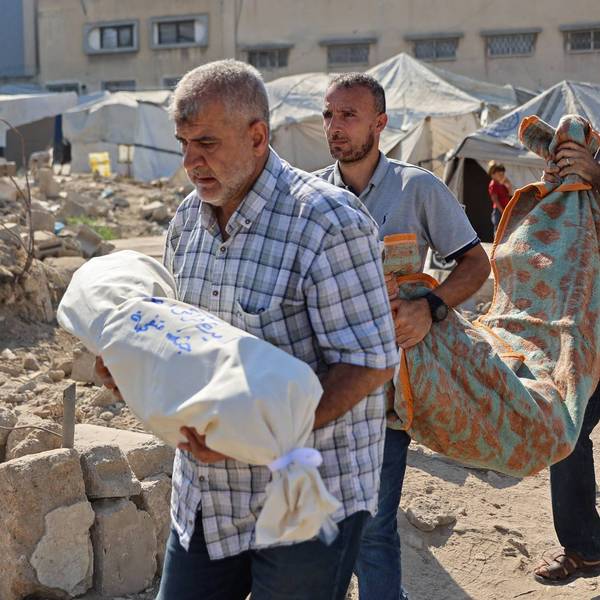
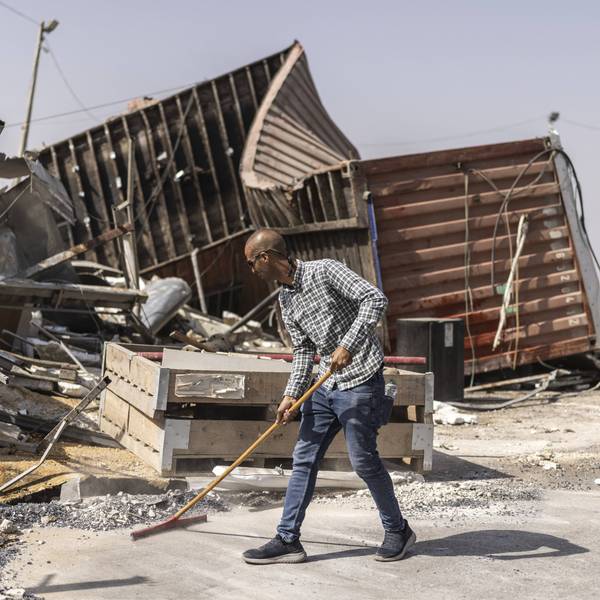

The International Court of Justice said Friday that Israel's decadeslong occupation of Gaza and the West Bank, including East Jerusalem, is unlawful and must end "as rapidly as possible."
The court's nonbinding advisory opinion was read aloud by ICJ President Nawaf Salam, a Lebanese judge and academic. Salam said the court determined based on "extensive evidence" that Israel is guilty of confiscating "large areas" of Palestinian land for use by Israeli settlers, exploiting natural resources, and undermining the local population's right to self-determination under international law.
The court pointed to "Israel's systematic failure to prevent or punish" settler violence and "demolition of Palestinian property" in the West Bank as part of its case that the Israeli government's actions in the occupied territories are indicative of an attempt to permanently annex land and forcibly transfer Palestinians from their homes.
"Israel is not entitled to sovereignty in any part of the occupied Palestinian territory on account of its occupation, nor can security concerns override the prohibition on acquisition of territory by force," said Salam.
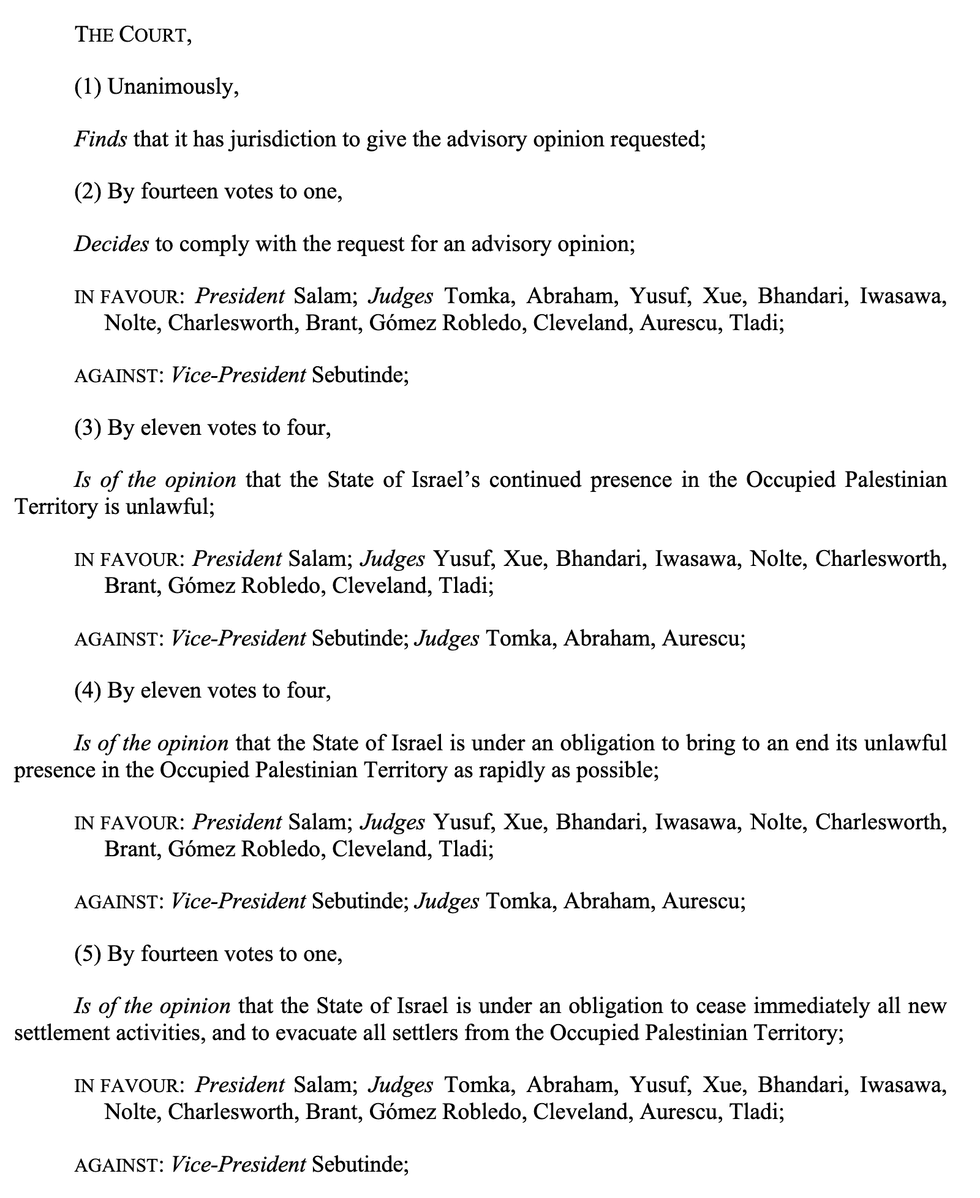
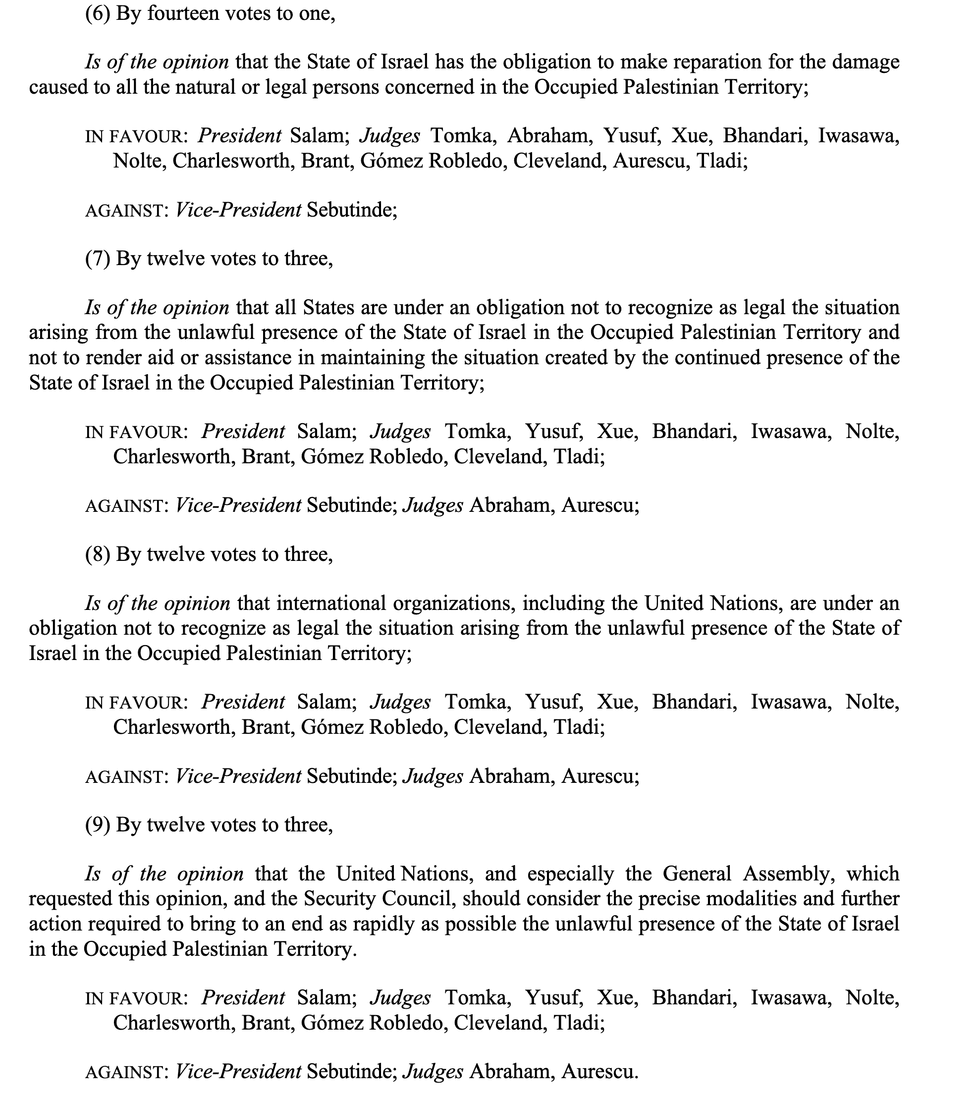
The ICJ vote against Israel's occupation was 11-4. The court also voted to call on Israel to evacuate all settlers from the West Bank.
In a 12-3 vote, the ICJ said that all nations "are under an obligation not to recognize as legal the situation arising from the unlawful presence of the state of Israel in the occupied Palestinian territory and not to render aid or assistance in maintaining the situation created by the continued presence of the state of Israel in the occupied Palestinian territory."
The United States was among the countries that warned the ICJ against advising that Israel must swiftly end its occupation.
The ICJ handed down its opinion as the court is also considering a genocide case brought against Israel over its ongoing assault on the Gaza Strip—a devastating war that the court did not weigh as part of its new advisory opinion.
Trita Parsi, executive vice president of the Quincy Institute for Responsible Statecraft, applauded the ICJ's call for the dismantling of Israeli settlements and reparations for Palestinians harmed by Israel's occupation.
"The ICJ ruling in essence confirmed what the majority of people (except the West) already knew and have recognized: that Israel's occupation is illegal, that it is still occupying Gaza, it is annexing the West Bank, and Israel is an apartheid state," Parsi wrote on social media. "If there is any respect for international law, Western media must now include this in all its Israel coverage. Most don't even describe settlements as illegal!"
Nancy Okail, president and CEO of the Center for International Policy, said in a statement that "while the ICJ's action is nonbinding, countries that seek to uphold international law should respect the court's determination and take all appropriate steps to counter the injustices of the occupation and bring it to a peaceful end."
"At a minimum, countries should not engage in actions which help to perpetuate the occupation and its discriminatory, annexationist goals," said Okail. "In particular, the United States must end the unconditional supply of arms that Israel uses in connection with the dispossession and settlement of Palestinian land and other violations of Palestinian rights."
The International Court of Justice said Friday that Israel's decadeslong occupation of Gaza and the West Bank, including East Jerusalem, is unlawful and must end "as rapidly as possible."
The court's nonbinding advisory opinion was read aloud by ICJ President Nawaf Salam, a Lebanese judge and academic. Salam said the court determined based on "extensive evidence" that Israel is guilty of confiscating "large areas" of Palestinian land for use by Israeli settlers, exploiting natural resources, and undermining the local population's right to self-determination under international law.
The court pointed to "Israel's systematic failure to prevent or punish" settler violence and "demolition of Palestinian property" in the West Bank as part of its case that the Israeli government's actions in the occupied territories are indicative of an attempt to permanently annex land and forcibly transfer Palestinians from their homes.
"Israel is not entitled to sovereignty in any part of the occupied Palestinian territory on account of its occupation, nor can security concerns override the prohibition on acquisition of territory by force," said Salam.
The ICJ vote against Israel's occupation was 11-4. The court also voted to call on Israel to evacuate all settlers from the West Bank.
In a 12-3 vote, the ICJ said that all nations "are under an obligation not to recognize as legal the situation arising from the unlawful presence of the state of Israel in the occupied Palestinian territory and not to render aid or assistance in maintaining the situation created by the continued presence of the state of Israel in the occupied Palestinian territory."
The United States was among the countries that warned the ICJ against advising that Israel must swiftly end its occupation.
The ICJ handed down its opinion as the court is also considering a genocide case brought against Israel over its ongoing assault on the Gaza Strip—a devastating war that the court did not weigh as part of its new advisory opinion.
Trita Parsi, executive vice president of the Quincy Institute for Responsible Statecraft, applauded the ICJ's call for the dismantling of Israeli settlements and reparations for Palestinians harmed by Israel's occupation.
"The ICJ ruling in essence confirmed what the majority of people (except the West) already knew and have recognized: that Israel's occupation is illegal, that it is still occupying Gaza, it is annexing the West Bank, and Israel is an apartheid state," Parsi wrote on social media. "If there is any respect for international law, Western media must now include this in all its Israel coverage. Most don't even describe settlements as illegal!"
Nancy Okail, president and CEO of the Center for International Policy, said in a statement that "while the ICJ's action is nonbinding, countries that seek to uphold international law should respect the court's determination and take all appropriate steps to counter the injustices of the occupation and bring it to a peaceful end."
"At a minimum, countries should not engage in actions which help to perpetuate the occupation and its discriminatory, annexationist goals," said Okail. "In particular, the United States must end the unconditional supply of arms that Israel uses in connection with the dispossession and settlement of Palestinian land and other violations of Palestinian rights."
- Opinion | Why the ICJ Ruling on Israel’s Occupation of Palestine Matters | Common Dreams ›
- Devastating Report Details an Occupied Palestine on 'Edge of Erasure' | Common Dreams ›
- Senior Netanyahu Official: 'We Are Moving to Occupy' Entire Gaza Strip | Common Dreams ›
- 85+ Imams, Scholars Detail How Muslim Nations Could Help End Gaza Genocide | Common Dreams ›
- Jurists Urge ICJ to Remove 'Christian Zionist' Judge from Gaza Genocide Case | Common Dreams ›
- ICJ Rejects Israeli Claims About UNRWA and Orders Officials to Provide More Aid to Gaza | Common Dreams ›
- Israeli Cabinet Approves 19 New Apartheid Colonies in Occupied West Bank | Common Dreams ›
The International Court of Justice said Friday that Israel's decadeslong occupation of Gaza and the West Bank, including East Jerusalem, is unlawful and must end "as rapidly as possible."
The court's nonbinding advisory opinion was read aloud by ICJ President Nawaf Salam, a Lebanese judge and academic. Salam said the court determined based on "extensive evidence" that Israel is guilty of confiscating "large areas" of Palestinian land for use by Israeli settlers, exploiting natural resources, and undermining the local population's right to self-determination under international law.
The court pointed to "Israel's systematic failure to prevent or punish" settler violence and "demolition of Palestinian property" in the West Bank as part of its case that the Israeli government's actions in the occupied territories are indicative of an attempt to permanently annex land and forcibly transfer Palestinians from their homes.
"Israel is not entitled to sovereignty in any part of the occupied Palestinian territory on account of its occupation, nor can security concerns override the prohibition on acquisition of territory by force," said Salam.
The ICJ vote against Israel's occupation was 11-4. The court also voted to call on Israel to evacuate all settlers from the West Bank.
In a 12-3 vote, the ICJ said that all nations "are under an obligation not to recognize as legal the situation arising from the unlawful presence of the state of Israel in the occupied Palestinian territory and not to render aid or assistance in maintaining the situation created by the continued presence of the state of Israel in the occupied Palestinian territory."
The United States was among the countries that warned the ICJ against advising that Israel must swiftly end its occupation.
The ICJ handed down its opinion as the court is also considering a genocide case brought against Israel over its ongoing assault on the Gaza Strip—a devastating war that the court did not weigh as part of its new advisory opinion.
Trita Parsi, executive vice president of the Quincy Institute for Responsible Statecraft, applauded the ICJ's call for the dismantling of Israeli settlements and reparations for Palestinians harmed by Israel's occupation.
"The ICJ ruling in essence confirmed what the majority of people (except the West) already knew and have recognized: that Israel's occupation is illegal, that it is still occupying Gaza, it is annexing the West Bank, and Israel is an apartheid state," Parsi wrote on social media. "If there is any respect for international law, Western media must now include this in all its Israel coverage. Most don't even describe settlements as illegal!"
Nancy Okail, president and CEO of the Center for International Policy, said in a statement that "while the ICJ's action is nonbinding, countries that seek to uphold international law should respect the court's determination and take all appropriate steps to counter the injustices of the occupation and bring it to a peaceful end."
"At a minimum, countries should not engage in actions which help to perpetuate the occupation and its discriminatory, annexationist goals," said Okail. "In particular, the United States must end the unconditional supply of arms that Israel uses in connection with the dispossession and settlement of Palestinian land and other violations of Palestinian rights."
- Opinion | Why the ICJ Ruling on Israel’s Occupation of Palestine Matters | Common Dreams ›
- Devastating Report Details an Occupied Palestine on 'Edge of Erasure' | Common Dreams ›
- Senior Netanyahu Official: 'We Are Moving to Occupy' Entire Gaza Strip | Common Dreams ›
- 85+ Imams, Scholars Detail How Muslim Nations Could Help End Gaza Genocide | Common Dreams ›
- Jurists Urge ICJ to Remove 'Christian Zionist' Judge from Gaza Genocide Case | Common Dreams ›
- ICJ Rejects Israeli Claims About UNRWA and Orders Officials to Provide More Aid to Gaza | Common Dreams ›
- Israeli Cabinet Approves 19 New Apartheid Colonies in Occupied West Bank | Common Dreams ›