SUBSCRIBE TO OUR FREE NEWSLETTER
Daily news & progressive opinion—funded by the people, not the corporations—delivered straight to your inbox.
5
#000000
#FFFFFF
To donate by check, phone, or other method, see our More Ways to Give page.
Daily news & progressive opinion—funded by the people, not the corporations—delivered straight to your inbox.
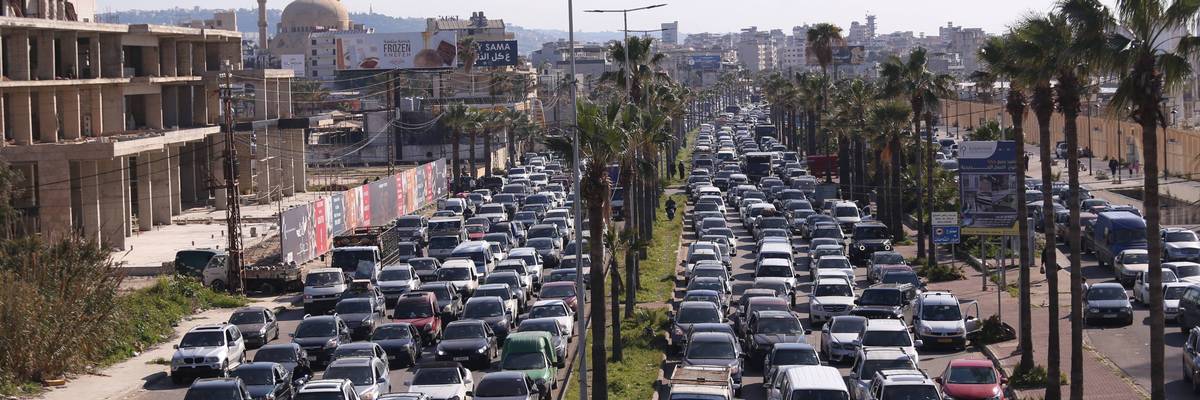
Thousands of Lebanese civilians flee their homes in southern Lebanon and the Beqaa Valley on March 2, 2026, following Israeli military strike threats and subsequent heavy aerial bombardments.
As it pushes further into Lebanon, Israel ordered around 200,000 people living south of the Litani River to "immediately" flee.
Israel ordered residents in southern Lebanon to "immediately" leave their homes as it advanced troops further into the country on Wednesday, prompting "serious concern" from the United Nations as its assault on the country ramps up.
"Residents of southern Lebanon—you must move immediately to areas north of the Litani River," Israeli military spokesperson Avichay Adraee posted in Arabic on X as Israel escalated a campaign of airstrikes and moved troops into several villages.
The region south of the Litani River spans hundreds of square kilometers and makes up about 9% of Lebanon's total territory, according to the Associated Press.
Around 200,000 people live in the area south of the river, which has served as the beginning of a buffer zone between Israel and Hezbollah since Israel's withdrawal from Lebanon in 2006 as part of United Nations Resolution 1701.
On Monday, Israel's Defense Minister Israel Katz said that he and Prime Minister Benjamin Netanyahu "have approved for the military to advance and seize additional controlling areas in Lebanon and to defend the border settlements from there."
According to Nora Ingdal, Save the Children’s Country Director for Lebanon, evacuation orders given by Israel as it entered villages in the past three days have created a situation of "pure chaos" for civilians forced to flee their homes.
Lebanon's Ministry of Social Affairs reported that about 58,000 people, including an estimated 16,000 children, had already been displaced as of Tuesday.
"Our team is hearing cases of children across Lebanon sleeping in cars, on cold pavements, and in partially damaged classrooms with cracks in the walls, while parents are sitting on the side of the streets crying, exhausted from little sleep after being unable to get into proper shelters with their children," Ingdal said.
Sana Kawtharani, a community health educator for Doctors Without Borders, described the impossible choice that over 12,000 people had to make after being ordered to leave the town of Sarafand on Tuesday, after having sought shelter there earlier.
"We know how hard it is to leave our home, our people, our villages, and our memories," Kawtharani said. "Around us in the neighborhood, some were forced to leave because they have children and elderly who are terrified by the sound of Israeli shelling."
"They carried what they could and left in cars, not knowing where they were going," she said. "There are children, the elderly, and the sick stuck on the road in very harsh conditions."
Israeli attacks in Lebanon since 2023 have killed more than 4,000 people and injured more than 16,000, according to the Lebanese health ministry, which says most of the victims have been civilians. More than 370 have been killed since a ceasefire in November 2024.
"This war began 15 months ago, and until today, it hasn't stopped," Kawtharani said. "Every day there is shelling, despite everything we hear about a ceasefire, but this has not been implemented on the ground."
Israel’s evacuation order for all of southern Lebanon came following an intensification of airstrikes overnight around Beirut the previous evening, which killed at least 12 people according to state media.
On Tuesday, Israel also reportedly carried out another "double-tap" strike in the Tyre district of southern Lebanon, killing three paramedics with the World Health Organization (WHO) and injuring six more who were in the process of helping others wounded in a previous strike.
Though Lebanon was already being struck by Israel on a near-daily basis despite the 2024 ceasefire, hostilities exploded over the weekend following Israel and the United States' attack on Iran, sparking retaliatory strikes on Israel from the Iranian-aligned militia Hezbollah.
According to Middle East Eye, Israel had authorized a barrage of strikes on Lebanon even before the first retaliatory rockets and drones were fired by Hezbollah following the killing of Iranian Supreme Leader Ayatollah Ali Khamenei on Saturday.
Israel has not reported any deaths from Hezbollah's attacks, though two soldiers sustained moderate injuries on Wednesday from anti-tank fire in southern Lebanon.
According to Lebanese authorities, Israeli strikes on dozens of sites across the country have killed at least 72 people and wounded 437 as of Wednesday.
Lebanese media reported on Wednesday that Israeli troops have pushed into the town of Khiam, which is roughly six kilometers from Israel’s border, marking their furthest advance into the country since the war broke out in 2024.
The United Nations Interim Force in Lebanon (UNIFIL), the peacekeeping force that has operated in southern Lebanon for nearly 50 years, said on Wednesday that it had “serious concern” about Israel’s order “demanding evacuation of the civilian population from UNIFIL’s area of operations to north of the Litani River.”
UNIFIL said on Wednesday that “peacekeepers observed today several [Israel Defense Forces] movements and military activities, including near El Khiam, Beit Lif, Yaroun, Houla, Kfar Kila, Kherbeh, and Kfar Shouba. All of these are happening while Israeli airstrikes and other air activities continue.”
It said these actions "not only violate Resolution 1701, but also Lebanon’s sovereignty and territorial integrity."
Dear Common Dreams reader, It’s been nearly 30 years since I co-founded Common Dreams with my late wife, Lina Newhouser. We had the radical notion that journalism should serve the public good, not corporate profits. It was clear to us from the outset what it would take to build such a project. No paid advertisements. No corporate sponsors. No millionaire publisher telling us what to think or do. Many people said we wouldn't last a year, but we proved those doubters wrong. Together with a tremendous team of journalists and dedicated staff, we built an independent media outlet free from the constraints of profits and corporate control. Our mission has always been simple: To inform. To inspire. To ignite change for the common good. Building Common Dreams was not easy. Our survival was never guaranteed. When you take on the most powerful forces—Wall Street greed, fossil fuel industry destruction, Big Tech lobbyists, and uber-rich oligarchs who have spent billions upon billions rigging the economy and democracy in their favor—the only bulwark you have is supporters who believe in your work. But here’s the urgent message from me today. It's never been this bad out there. And it's never been this hard to keep us going. At the very moment Common Dreams is most needed, the threats we face are intensifying. We need your support now more than ever. We don't accept corporate advertising and never will. We don't have a paywall because we don't think people should be blocked from critical news based on their ability to pay. Everything we do is funded by the donations of readers like you. When everyone does the little they can afford, we are strong. But if that support retreats or dries up, so do we. Will you donate now to make sure Common Dreams not only survives but thrives? —Craig Brown, Co-founder |
Israel ordered residents in southern Lebanon to "immediately" leave their homes as it advanced troops further into the country on Wednesday, prompting "serious concern" from the United Nations as its assault on the country ramps up.
"Residents of southern Lebanon—you must move immediately to areas north of the Litani River," Israeli military spokesperson Avichay Adraee posted in Arabic on X as Israel escalated a campaign of airstrikes and moved troops into several villages.
The region south of the Litani River spans hundreds of square kilometers and makes up about 9% of Lebanon's total territory, according to the Associated Press.
Around 200,000 people live in the area south of the river, which has served as the beginning of a buffer zone between Israel and Hezbollah since Israel's withdrawal from Lebanon in 2006 as part of United Nations Resolution 1701.
On Monday, Israel's Defense Minister Israel Katz said that he and Prime Minister Benjamin Netanyahu "have approved for the military to advance and seize additional controlling areas in Lebanon and to defend the border settlements from there."
According to Nora Ingdal, Save the Children’s Country Director for Lebanon, evacuation orders given by Israel as it entered villages in the past three days have created a situation of "pure chaos" for civilians forced to flee their homes.
Lebanon's Ministry of Social Affairs reported that about 58,000 people, including an estimated 16,000 children, had already been displaced as of Tuesday.
"Our team is hearing cases of children across Lebanon sleeping in cars, on cold pavements, and in partially damaged classrooms with cracks in the walls, while parents are sitting on the side of the streets crying, exhausted from little sleep after being unable to get into proper shelters with their children," Ingdal said.
Sana Kawtharani, a community health educator for Doctors Without Borders, described the impossible choice that over 12,000 people had to make after being ordered to leave the town of Sarafand on Tuesday, after having sought shelter there earlier.
"We know how hard it is to leave our home, our people, our villages, and our memories," Kawtharani said. "Around us in the neighborhood, some were forced to leave because they have children and elderly who are terrified by the sound of Israeli shelling."
"They carried what they could and left in cars, not knowing where they were going," she said. "There are children, the elderly, and the sick stuck on the road in very harsh conditions."
Israeli attacks in Lebanon since 2023 have killed more than 4,000 people and injured more than 16,000, according to the Lebanese health ministry, which says most of the victims have been civilians. More than 370 have been killed since a ceasefire in November 2024.
"This war began 15 months ago, and until today, it hasn't stopped," Kawtharani said. "Every day there is shelling, despite everything we hear about a ceasefire, but this has not been implemented on the ground."
Israel’s evacuation order for all of southern Lebanon came following an intensification of airstrikes overnight around Beirut the previous evening, which killed at least 12 people according to state media.
On Tuesday, Israel also reportedly carried out another "double-tap" strike in the Tyre district of southern Lebanon, killing three paramedics with the World Health Organization (WHO) and injuring six more who were in the process of helping others wounded in a previous strike.
Though Lebanon was already being struck by Israel on a near-daily basis despite the 2024 ceasefire, hostilities exploded over the weekend following Israel and the United States' attack on Iran, sparking retaliatory strikes on Israel from the Iranian-aligned militia Hezbollah.
According to Middle East Eye, Israel had authorized a barrage of strikes on Lebanon even before the first retaliatory rockets and drones were fired by Hezbollah following the killing of Iranian Supreme Leader Ayatollah Ali Khamenei on Saturday.
Israel has not reported any deaths from Hezbollah's attacks, though two soldiers sustained moderate injuries on Wednesday from anti-tank fire in southern Lebanon.
According to Lebanese authorities, Israeli strikes on dozens of sites across the country have killed at least 72 people and wounded 437 as of Wednesday.
Lebanese media reported on Wednesday that Israeli troops have pushed into the town of Khiam, which is roughly six kilometers from Israel’s border, marking their furthest advance into the country since the war broke out in 2024.
The United Nations Interim Force in Lebanon (UNIFIL), the peacekeeping force that has operated in southern Lebanon for nearly 50 years, said on Wednesday that it had “serious concern” about Israel’s order “demanding evacuation of the civilian population from UNIFIL’s area of operations to north of the Litani River.”
UNIFIL said on Wednesday that “peacekeepers observed today several [Israel Defense Forces] movements and military activities, including near El Khiam, Beit Lif, Yaroun, Houla, Kfar Kila, Kherbeh, and Kfar Shouba. All of these are happening while Israeli airstrikes and other air activities continue.”
It said these actions "not only violate Resolution 1701, but also Lebanon’s sovereignty and territorial integrity."
Israel ordered residents in southern Lebanon to "immediately" leave their homes as it advanced troops further into the country on Wednesday, prompting "serious concern" from the United Nations as its assault on the country ramps up.
"Residents of southern Lebanon—you must move immediately to areas north of the Litani River," Israeli military spokesperson Avichay Adraee posted in Arabic on X as Israel escalated a campaign of airstrikes and moved troops into several villages.
The region south of the Litani River spans hundreds of square kilometers and makes up about 9% of Lebanon's total territory, according to the Associated Press.
Around 200,000 people live in the area south of the river, which has served as the beginning of a buffer zone between Israel and Hezbollah since Israel's withdrawal from Lebanon in 2006 as part of United Nations Resolution 1701.
On Monday, Israel's Defense Minister Israel Katz said that he and Prime Minister Benjamin Netanyahu "have approved for the military to advance and seize additional controlling areas in Lebanon and to defend the border settlements from there."
According to Nora Ingdal, Save the Children’s Country Director for Lebanon, evacuation orders given by Israel as it entered villages in the past three days have created a situation of "pure chaos" for civilians forced to flee their homes.
Lebanon's Ministry of Social Affairs reported that about 58,000 people, including an estimated 16,000 children, had already been displaced as of Tuesday.
"Our team is hearing cases of children across Lebanon sleeping in cars, on cold pavements, and in partially damaged classrooms with cracks in the walls, while parents are sitting on the side of the streets crying, exhausted from little sleep after being unable to get into proper shelters with their children," Ingdal said.
Sana Kawtharani, a community health educator for Doctors Without Borders, described the impossible choice that over 12,000 people had to make after being ordered to leave the town of Sarafand on Tuesday, after having sought shelter there earlier.
"We know how hard it is to leave our home, our people, our villages, and our memories," Kawtharani said. "Around us in the neighborhood, some were forced to leave because they have children and elderly who are terrified by the sound of Israeli shelling."
"They carried what they could and left in cars, not knowing where they were going," she said. "There are children, the elderly, and the sick stuck on the road in very harsh conditions."
Israeli attacks in Lebanon since 2023 have killed more than 4,000 people and injured more than 16,000, according to the Lebanese health ministry, which says most of the victims have been civilians. More than 370 have been killed since a ceasefire in November 2024.
"This war began 15 months ago, and until today, it hasn't stopped," Kawtharani said. "Every day there is shelling, despite everything we hear about a ceasefire, but this has not been implemented on the ground."
Israel’s evacuation order for all of southern Lebanon came following an intensification of airstrikes overnight around Beirut the previous evening, which killed at least 12 people according to state media.
On Tuesday, Israel also reportedly carried out another "double-tap" strike in the Tyre district of southern Lebanon, killing three paramedics with the World Health Organization (WHO) and injuring six more who were in the process of helping others wounded in a previous strike.
Though Lebanon was already being struck by Israel on a near-daily basis despite the 2024 ceasefire, hostilities exploded over the weekend following Israel and the United States' attack on Iran, sparking retaliatory strikes on Israel from the Iranian-aligned militia Hezbollah.
According to Middle East Eye, Israel had authorized a barrage of strikes on Lebanon even before the first retaliatory rockets and drones were fired by Hezbollah following the killing of Iranian Supreme Leader Ayatollah Ali Khamenei on Saturday.
Israel has not reported any deaths from Hezbollah's attacks, though two soldiers sustained moderate injuries on Wednesday from anti-tank fire in southern Lebanon.
According to Lebanese authorities, Israeli strikes on dozens of sites across the country have killed at least 72 people and wounded 437 as of Wednesday.
Lebanese media reported on Wednesday that Israeli troops have pushed into the town of Khiam, which is roughly six kilometers from Israel’s border, marking their furthest advance into the country since the war broke out in 2024.
The United Nations Interim Force in Lebanon (UNIFIL), the peacekeeping force that has operated in southern Lebanon for nearly 50 years, said on Wednesday that it had “serious concern” about Israel’s order “demanding evacuation of the civilian population from UNIFIL’s area of operations to north of the Litani River.”
UNIFIL said on Wednesday that “peacekeepers observed today several [Israel Defense Forces] movements and military activities, including near El Khiam, Beit Lif, Yaroun, Houla, Kfar Kila, Kherbeh, and Kfar Shouba. All of these are happening while Israeli airstrikes and other air activities continue.”
It said these actions "not only violate Resolution 1701, but also Lebanon’s sovereignty and territorial integrity."