SUBSCRIBE TO OUR FREE NEWSLETTER
Daily news & progressive opinion—funded by the people, not the corporations—delivered straight to your inbox.
5
#000000
#FFFFFF
To donate by check, phone, or other method, see our More Ways to Give page.
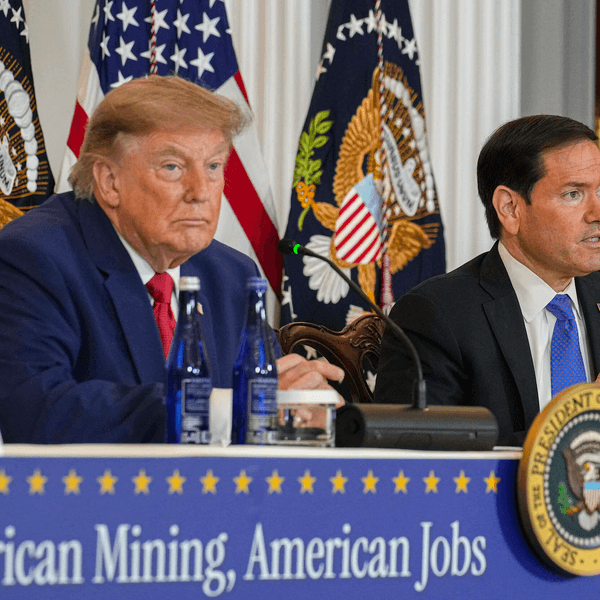
As Cuba works to restore electricity to millions of people plunged into darkness across the fuel-starved island, US Secretary of State Marco Rubio on Tuesday blamed Cuba's socialist government for the nation's economic crisis—a crisis largely caused by 65 years of US economic embargo and exacerbated by President Donald Trump's tightened fuel blockade.
"Suffice it to say that the embargo is tied to political change on the island," Rubio told reporters at the White House. "The law is codified, but the bottom line is, their economy doesn’t work. It’s a nonfunctional economy."
"That revolution—it's not even a revolution, that thing they have—has survived on subsidies," he added. "They don’t get subsidies anymore, so they’re in a lot of trouble, and the people in charge, they don’t know how to fix it, so they have to get new people in charge."
Rubio—whose parents fled the island during the rule of pro-US dictator Fulgencio Batista—dismissed Cuba's proposed economic reforms, including opening the country to investment from Cubans living abroad.
“Cuba has an economy that doesn’t work in a political and governmental system that can’t fix it. So they have to change dramatically," he said. "What they announced yesterday is not dramatic enough. It’s not going to fix it. So they’ve got some big decisions to make over there."
Rubio added that although the Trump administration is currently focused on its war of choice in Iran—one of 10 countries attacked during the two terms of the self-proclaimed "president of peace"—the US would "be doing something with Cuba very soon."
The US has been doing something with Cuba since the 19th century, when it invaded and seized the island from Spain. In the 20th century, it supported successive dictatorships and, after the Fidel Castro-led revolution ousted Batista, imposed an economic embargo on the island that has been perennially condemned by an overwhelming majority of United Nations member states for 33 years.
In addition to the embargo—which Cuba's government says has cost the nation's economy more than $200 billion in inflation-adjusted losses—the US tried to assassinate Castro many times and supported the militant Cuban exiles who launched the ill-fated Bay of Pigs invasion in 1961. Other Cuban exiles carried out numerous terror attacks targeting Cuba's economy—and sometimes innocent civilians.
In language reminiscent of the US imperialists who conquered the island in 1898, Trump told reporters Monday, “I do believe... I’ll be having the honor of taking Cuba.”
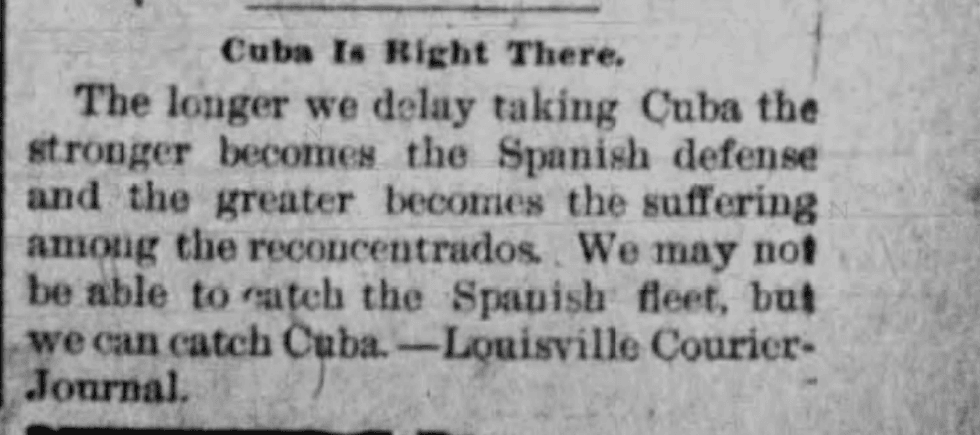 President Donald Trump's talk of "taking Cuba" harkens back to the most aggressively imperialist period in US history.
This, after Trump said last month ahead of talks with Cuban officials that he might launch what he called a "friendly takeover" of the island. The president has also boasted about the tremendous economic suffering caused by his illegal embargo and fuel blockade, which is widely unpopular and has been called a form of "economic warfare."
“Officials in the US must be feeling very happy by the harm caused to every Cuban family,” Cuban Deputy Foreign Minister Carlos Fernández de Cossío said Monday.
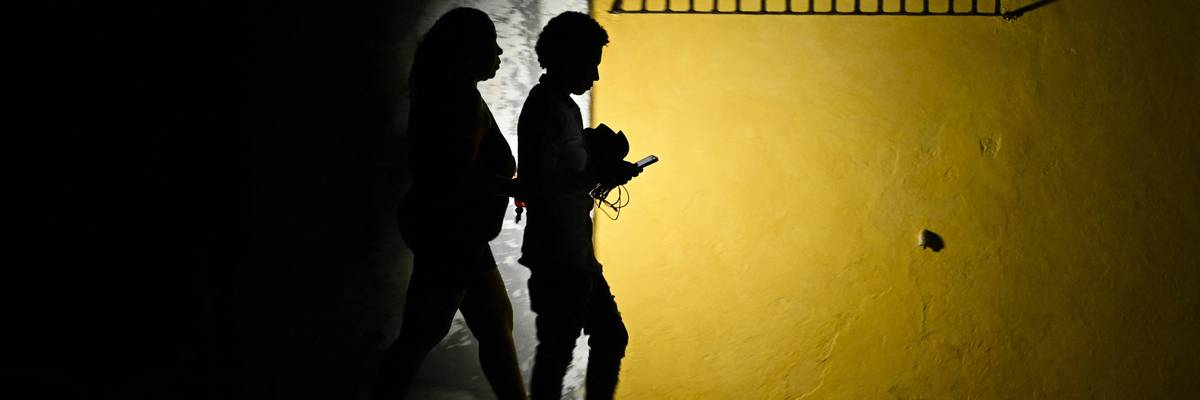
In Havana, residents hardened by decades of privation carried on the best they could without power. Some struggled in the dark.
“The power outages are driving me crazy,” 48-year-old Dalba Obiedo told The Associated Press. “Last night I fell down a 27-step staircase. Now I have to have surgery on my jaw. I fell because the lights went out.”
Cuban President Miguel Díaz-Canel last week acknowledged that high-level talks with US representatives were underway. Recent reporting by Drop Site News cited an unnamed White House official who accused Rubio—a longtime advocate for regime change in Cuba—of trying to sabotage the talks.
Some observers believe that Trump wants Díaz-Canel to face a similar fate as Venezuelan President Nicolás Maduro—who was kidnapped in January during a US invasion and is now jailed in the United States—while others warn that the United States cannot be trusted in talks, pointing to recent accusations by Oman's foreign minister, who said American negotiators duplicitously scuppered an Iran peace deal that "was within our reach."
However, instead of regime change, Trump may be seeking what some observers are calling regime compliance, which is likely why he did not move to oust Maduro's subordinates. Unlike Venezuela, Cuba has no oil, but it was once was a magnet for US investment—both legal and otherwise.
Last week, a trio of Democratic US senators introduced a war powers resolution to stop Trump from attacking Cuba without the legally required authorization from Congress. Numerous war powers resolutions concerning Iran, Venezuela, and the dozens of boats Trump claims—without providing evidence—were transporting drugs from South America have all failed to pass the Republican-controlled Congress.
As Cuba works to restore electricity to millions of people plunged into darkness across the fuel-starved island, US Secretary of State Marco Rubio on Tuesday blamed Cuba's socialist government for the nation's economic crisis—a crisis largely caused by 65 years of US economic embargo and exacerbated by President Donald Trump's tightened fuel blockade.
"Suffice it to say that the embargo is tied to political change on the island," Rubio told reporters at the White House. "The law is codified, but the bottom line is, their economy doesn’t work. It’s a nonfunctional economy."
"That revolution—it's not even a revolution, that thing they have—has survived on subsidies," he added. "They don’t get subsidies anymore, so they’re in a lot of trouble, and the people in charge, they don’t know how to fix it, so they have to get new people in charge."
Rubio—whose parents fled the island during the rule of pro-US dictator Fulgencio Batista—dismissed Cuba's proposed economic reforms, including opening the country to investment from Cubans living abroad.
“Cuba has an economy that doesn’t work in a political and governmental system that can’t fix it. So they have to change dramatically," he said. "What they announced yesterday is not dramatic enough. It’s not going to fix it. So they’ve got some big decisions to make over there."
Rubio added that although the Trump administration is currently focused on its war of choice in Iran—one of 10 countries attacked during the two terms of the self-proclaimed "president of peace"—the US would "be doing something with Cuba very soon."
The US has been doing something with Cuba since the 19th century, when it invaded and seized the island from Spain. In the 20th century, it supported successive dictatorships and, after the Fidel Castro-led revolution ousted Batista, imposed an economic embargo on the island that has been perennially condemned by an overwhelming majority of United Nations member states for 33 years.
In addition to the embargo—which Cuba's government says has cost the nation's economy more than $200 billion in inflation-adjusted losses—the US tried to assassinate Castro many times and supported the militant Cuban exiles who launched the ill-fated Bay of Pigs invasion in 1961. Other Cuban exiles carried out numerous terror attacks targeting Cuba's economy—and sometimes innocent civilians.
In language reminiscent of the US imperialists who conquered the island in 1898, Trump told reporters Monday, “I do believe... I’ll be having the honor of taking Cuba.”
President Donald Trump's talk of "taking Cuba" harkens back to the most aggressively imperialist period in US history.
This, after Trump said last month ahead of talks with Cuban officials that he might launch what he called a "friendly takeover" of the island. The president has also boasted about the tremendous economic suffering caused by his illegal embargo and fuel blockade, which is widely unpopular and has been called a form of "economic warfare."
“Officials in the US must be feeling very happy by the harm caused to every Cuban family,” Cuban Deputy Foreign Minister Carlos Fernández de Cossío said Monday.
In Havana, residents hardened by decades of privation carried on the best they could without power. Some struggled in the dark.
“The power outages are driving me crazy,” 48-year-old Dalba Obiedo told The Associated Press. “Last night I fell down a 27-step staircase. Now I have to have surgery on my jaw. I fell because the lights went out.”
Cuban President Miguel Díaz-Canel last week acknowledged that high-level talks with US representatives were underway. Recent reporting by Drop Site News cited an unnamed White House official who accused Rubio—a longtime advocate for regime change in Cuba—of trying to sabotage the talks.
Some observers believe that Trump wants Díaz-Canel to face a similar fate as Venezuelan President Nicolás Maduro—who was kidnapped in January during a US invasion and is now jailed in the United States—while others warn that the United States cannot be trusted in talks, pointing to recent accusations by Oman's foreign minister, who said American negotiators duplicitously scuppered an Iran peace deal that "was within our reach."
However, instead of regime change, Trump may be seeking what some observers are calling regime compliance, which is likely why he did not move to oust Maduro's subordinates. Unlike Venezuela, Cuba has no oil, but it was once was a magnet for US investment—both legal and otherwise.
Last week, a trio of Democratic US senators introduced a war powers resolution to stop Trump from attacking Cuba without the legally required authorization from Congress. Numerous war powers resolutions concerning Iran, Venezuela, and the dozens of boats Trump claims—without providing evidence—were transporting drugs from South America have all failed to pass the Republican-controlled Congress.
As Cuba works to restore electricity to millions of people plunged into darkness across the fuel-starved island, US Secretary of State Marco Rubio on Tuesday blamed Cuba's socialist government for the nation's economic crisis—a crisis largely caused by 65 years of US economic embargo and exacerbated by President Donald Trump's tightened fuel blockade.
"Suffice it to say that the embargo is tied to political change on the island," Rubio told reporters at the White House. "The law is codified, but the bottom line is, their economy doesn’t work. It’s a nonfunctional economy."
"That revolution—it's not even a revolution, that thing they have—has survived on subsidies," he added. "They don’t get subsidies anymore, so they’re in a lot of trouble, and the people in charge, they don’t know how to fix it, so they have to get new people in charge."
Rubio—whose parents fled the island during the rule of pro-US dictator Fulgencio Batista—dismissed Cuba's proposed economic reforms, including opening the country to investment from Cubans living abroad.
“Cuba has an economy that doesn’t work in a political and governmental system that can’t fix it. So they have to change dramatically," he said. "What they announced yesterday is not dramatic enough. It’s not going to fix it. So they’ve got some big decisions to make over there."
Rubio added that although the Trump administration is currently focused on its war of choice in Iran—one of 10 countries attacked during the two terms of the self-proclaimed "president of peace"—the US would "be doing something with Cuba very soon."
The US has been doing something with Cuba since the 19th century, when it invaded and seized the island from Spain. In the 20th century, it supported successive dictatorships and, after the Fidel Castro-led revolution ousted Batista, imposed an economic embargo on the island that has been perennially condemned by an overwhelming majority of United Nations member states for 33 years.
In addition to the embargo—which Cuba's government says has cost the nation's economy more than $200 billion in inflation-adjusted losses—the US tried to assassinate Castro many times and supported the militant Cuban exiles who launched the ill-fated Bay of Pigs invasion in 1961. Other Cuban exiles carried out numerous terror attacks targeting Cuba's economy—and sometimes innocent civilians.
In language reminiscent of the US imperialists who conquered the island in 1898, Trump told reporters Monday, “I do believe... I’ll be having the honor of taking Cuba.”
President Donald Trump's talk of "taking Cuba" harkens back to the most aggressively imperialist period in US history.
This, after Trump said last month ahead of talks with Cuban officials that he might launch what he called a "friendly takeover" of the island. The president has also boasted about the tremendous economic suffering caused by his illegal embargo and fuel blockade, which is widely unpopular and has been called a form of "economic warfare."
“Officials in the US must be feeling very happy by the harm caused to every Cuban family,” Cuban Deputy Foreign Minister Carlos Fernández de Cossío said Monday.
In Havana, residents hardened by decades of privation carried on the best they could without power. Some struggled in the dark.
“The power outages are driving me crazy,” 48-year-old Dalba Obiedo told The Associated Press. “Last night I fell down a 27-step staircase. Now I have to have surgery on my jaw. I fell because the lights went out.”
Cuban President Miguel Díaz-Canel last week acknowledged that high-level talks with US representatives were underway. Recent reporting by Drop Site News cited an unnamed White House official who accused Rubio—a longtime advocate for regime change in Cuba—of trying to sabotage the talks.
Some observers believe that Trump wants Díaz-Canel to face a similar fate as Venezuelan President Nicolás Maduro—who was kidnapped in January during a US invasion and is now jailed in the United States—while others warn that the United States cannot be trusted in talks, pointing to recent accusations by Oman's foreign minister, who said American negotiators duplicitously scuppered an Iran peace deal that "was within our reach."
However, instead of regime change, Trump may be seeking what some observers are calling regime compliance, which is likely why he did not move to oust Maduro's subordinates. Unlike Venezuela, Cuba has no oil, but it was once was a magnet for US investment—both legal and otherwise.
Last week, a trio of Democratic US senators introduced a war powers resolution to stop Trump from attacking Cuba without the legally required authorization from Congress. Numerous war powers resolutions concerning Iran, Venezuela, and the dozens of boats Trump claims—without providing evidence—were transporting drugs from South America have all failed to pass the Republican-controlled Congress.